
Ending Inventory: Mastering Calculation & Optimization for Supply Chain Success
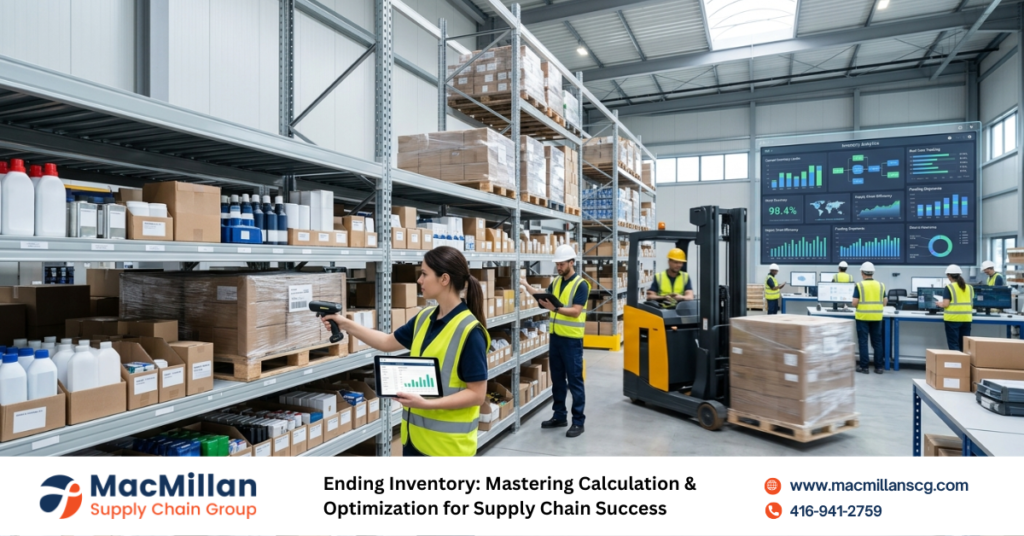
A Quick Summary and Overview Ending inventory is a crucial metric in supply chain management, representing the value of unsold goods at the end of an accounting period. Accurate calculation and optimization of ending inventory are essential for financial reporting, operational efficiency, and strategic decision-making. This comprehensive guide explores the methods for calculating ending inventory, its importance in business operations, and strategies for optimization. We’ll delve into common challenges faced by businesses and provide expert solutions to enhance your inventory management. By mastering ending inventory, you’ll be well-equipped to streamline your supply chain, improve financial accuracy, and drive business growth. Introduction In the dynamic world of supply chain management, understanding and optimizing ending inventory is a game-changer. As the final piece of the inventory puzzle, it plays a pivotal role in financial reporting, operational planning, and overall business strategy. But what exactly is ending inventory, and why is it so crucial? Ending inventory represents the monetary value of goods remaining unsold at the conclusion of an accounting period. It’s a key component of your balance sheet and directly impacts your company’s profitability calculations. Accurate ending inventory figures are essential for making informed decisions about purchasing, production, and sales strategies. In this comprehensive guide, we’ll explore the intricacies of ending inventory, from calculation methods to optimization strategies. Whether you’re a seasoned supply chain professional or new to the field, this article will provide valuable insights to help you master ending inventory management and drive your business forward. Understanding Ending Inventory and Its Importance Ending inventory, also known as closing inventory, is more than just a number on a balance sheet. It’s a crucial indicator of your business’s financial health and operational efficiency. At its core, ending inventory represents the value of goods that remain unsold at the end of an accounting period, typically a month, quarter, or year. The importance of accurate ending inventory calculations cannot be overstated. Here’s why: Financial Reporting: Ending inventory directly affects your cost of goods sold (COGS) and, consequently, your gross profit. Inaccurate figures can lead to misrepresented financial statements. Tax Implications: Over or underestimating ending inventory can impact your tax liabilities, potentially leading to compliance issues. Operational Efficiency: Knowing your ending inventory helps in planning future purchases, production schedules, and sales strategies. Performance Evaluation: It’s a key metric for evaluating the effectiveness of your inventory management practices. Cash Flow Management: Accurate ending inventory figures help in forecasting cash flow and managing working capital. By maintaining precise ending inventory records, you’re not just fulfilling an accounting requirement – you’re gaining valuable insights that can drive strategic decisions and improve your overall supply chain performance. Methods for Calculating Ending Inventory There are several methods for calculating ending inventory, each with its own advantages and implications. The choice of method can significantly impact your financial statements and tax obligations. Here are the most common approaches: Physical Count Method: This involves manually counting every item in stock. While time-consuming, it’s the most accurate method and is often used for year-end reporting. Weighted Average Cost Method: This calculates the average cost of all inventory items available for sale during a period. It’s useful when individual item costs fluctuate frequently. First-In, First-Out (FIFO): This method assumes that the oldest inventory items are sold first. It’s ideal for businesses dealing with perishable goods or in inflationary markets. Last-In, First-Out (LIFO): This assumes the newest inventory items are sold first. It can lead to lower reported profits and tax savings in inflationary periods but is not allowed under International Financial Reporting Standards (IFRS). Retail Inventory Method: Often used by retailers, this method estimates ending inventory based on the cost-to-retail price ratio. Gross Profit Method: This estimates ending inventory using historical gross profit percentages. It’s less accurate but useful for interim reporting. Choosing the right method depends on your business type, industry regulations, and specific operational needs. Consistency in applying your chosen method is crucial for accurate financial reporting and trend analysis. The Role of Technology in Ending Inventory Management In today’s digital age, technology plays a pivotal role in streamlining ending inventory management. Advanced inventory management systems and software solutions offer numerous benefits: Real-Time Tracking: Modern systems provide up-to-the-minute inventory data, reducing the need for frequent manual counts and minimizing discrepancies. Automated Calculations: Software can automatically calculate ending inventory using your preferred method, reducing human error and saving time. Predictive Analytics: AI-powered systems can analyze historical data to predict future inventory needs, helping optimize stock levels. Integration with Other Systems: Inventory software can integrate with point-of-sale systems, accounting software, and supply chain management tools for seamless data flow. Barcode and RFID Technology: These technologies enable quick and accurate inventory tracking, reducing counting errors and improving efficiency. Cloud-Based Solutions: Cloud systems allow for real-time access to inventory data from anywhere, facilitating better decision-making and collaboration. Reporting and Analytics: Advanced reporting tools provide insights into inventory turnover, stock performance, and other key metrics. By leveraging technology, businesses can significantly improve the accuracy and efficiency of their ending inventory management. This not only saves time and reduces errors but also provides valuable insights for strategic decision-making. Best Practices for Optimizing Ending Inventory Optimizing your ending inventory is crucial for maintaining financial health and operational efficiency. Here are some best practices to consider: Regular Physical Counts: Conduct periodic physical inventory counts to verify accuracy and identify discrepancies. Cycle Counting: Implement a cycle counting program where a portion of inventory is counted regularly, rather than all at once annually. ABC Analysis: Categorize inventory items based on their value and frequency of use to focus attention on high-value items. Just-in-Time (JIT) Inventory: Adopt JIT principles to minimize excess inventory and reduce carrying costs. Safety Stock Management: Maintain appropriate safety stock levels to buffer against uncertainties in demand and supply. Demand Forecasting: Use historical data and market trends to accurately forecast demand and adjust inventory levels accordingly. Supplier Relationship Management: Develop strong relationships with suppliers to ensure reliable and timely deliveries. Cross-Training Staff: Ensure multiple team members are trained in inventory management processes to maintain consistency. Regular Audits: Conduct regular audits of your inventory management processes to identify areas for improvement. Continuous Improvement: Regularly review and
Cross-Docking: Revolutionize Your Supply Chain with MacMillan Supply Chain Group
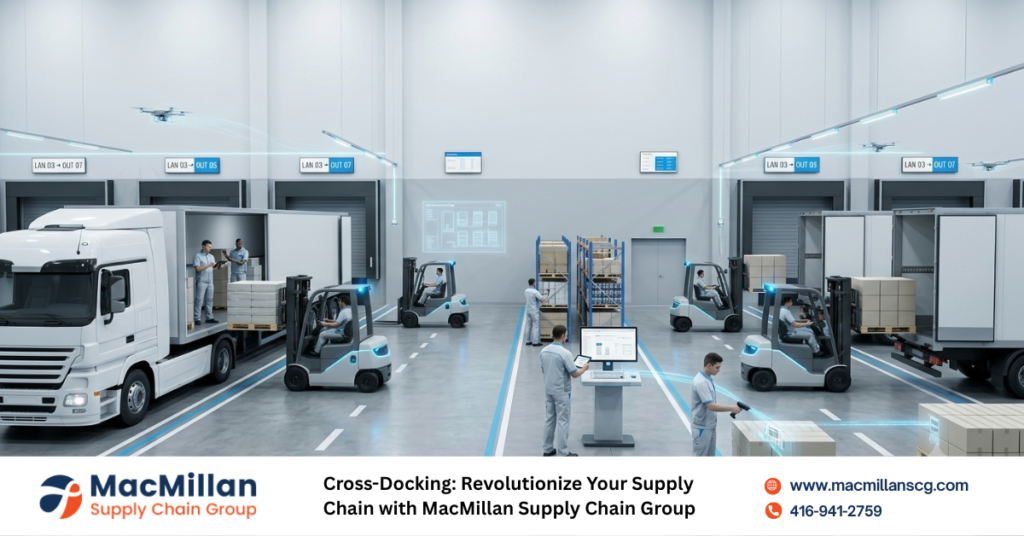
A quick summary and overview Cross-docking is a game-changing logistics strategy that eliminates the need for warehouse storage, moving products directly from inbound to outbound transportation. This innovative approach significantly reduces handling time, storage costs, and order fulfillment cycles. At MacMillan Supply Chain Group, we specialize in implementing cross-docking solutions that optimize your supply chain, enhance customer satisfaction, and boost your bottom line. Whether you’re in retail, manufacturing, or eCommerce, our tailored cross-docking services can revolutionize your logistics operations. Discover how this powerful technique can transform your business and give you a competitive edge in today’s fast-paced market. An introduction In today’s rapidly evolving business landscape, staying ahead of the competition means constantly seeking ways to optimize your supply chain. Enter cross-docking – a revolutionary logistics strategy that’s transforming the way companies handle their inventory and fulfill orders. But what exactly is cross-docking, and how can it benefit your business? Cross-docking is the practice of unloading materials from incoming trucks or rail cars and loading these materials directly into outbound trucks, trailers, or rail cars, with little or no storage in between. This process eliminates the need for warehouse storage, reducing handling time and costs while speeding up the order fulfillment process. At MacMillan Supply Chain Group, we’ve mastered the art of cross-docking, helping businesses across various industries streamline their operations, reduce costs, and improve customer satisfaction. In this comprehensive guide, we’ll explore the ins and outs of cross-docking, its benefits, and how you can implement this powerful strategy in your own supply chain. Understanding the Basics of Cross-Docking Cross-docking is a logistics practice that focuses on the quick distribution of goods with minimal handling and storage time. The process typically involves these key steps: Receiving: Inbound trucks arrive at the cross-docking facility with pre-sorted goods. Sorting: Products are quickly sorted based on their final destination. Loading: Goods are immediately loaded onto outbound trucks for delivery. There are two main types of cross-docking: Pre-distribution cross-docking: Products are allocated to specific customers before arriving at the cross-dock facility. Post-distribution cross-docking: Products are sorted and allocated at the cross-dock facility based on real-time demand. Cross-docking is particularly effective for: Perishable goods that require quick distribution High-demand products with predictable sales patterns Promotional items or seasonal merchandise Pre-packaged orders for specific customers By eliminating the need for long-term storage and reducing handling time, cross-docking can significantly improve supply chain efficiency. It’s especially valuable in industries where speed and precision are crucial, such as retail, manufacturing, and eCommerce fulfillment. At MacMillan Supply Chain Group, we tailor our cross-docking solutions to meet the unique needs of each client, ensuring optimal results regardless of industry or scale of operations. The Benefits of Implementing Cross-Docking Implementing a cross-docking strategy in your supply chain can yield numerous benefits: Reduced Warehousing Costs: By minimizing or eliminating the need for storage, cross-docking can significantly reduce warehousing expenses. Faster Order Fulfillment: Direct transfer from inbound to outbound transportation speeds up the delivery process, reducing lead times and improving customer satisfaction. Decreased Inventory Holding Costs: With less inventory stored, you’ll see a reduction in carrying costs and the risk of obsolescence. Improved Product Quality: Fewer touch points mean less chance of damage during handling and storage. Enhanced Supply Chain Visibility: Cross-docking facilities often utilize advanced tracking systems, providing real-time visibility into product movement. Increased Flexibility: Cross-docking allows for quicker responses to market changes and customer demands. Optimized Transportation: By consolidating shipments, cross-docking can lead to fuller truckloads and more efficient transportation. Reduced Labor Costs: With less need for picking, packing, and put-away activities, labor costs can be significantly reduced. Improved Cash Flow: Faster inventory turnover means improved cash flow for your business. At MacMillan Supply Chain Group, we’ve helped numerous clients realize these benefits through our expertly designed and implemented cross-docking solutions. Our tailored approach ensures that you maximize the advantages of cross-docking for your specific business needs. Implementing Cross-Docking in Your Supply Chain Successfully implementing cross-docking requires careful planning and execution. Here are key steps to consider: Assess Your Current Operations: Evaluate your existing supply chain to identify areas where cross-docking could be beneficial. Choose the Right Products: Not all items are suitable for cross-docking. Select products with consistent demand and those that don’t require special handling. Invest in Technology: Implement a robust Warehouse Management System (WMS) to coordinate incoming and outgoing shipments efficiently. Design Your Facility: Create a layout that facilitates smooth product flow from inbound to outbound docks. Train Your Staff: Ensure your team understands the cross-docking process and can execute it efficiently. Establish Strong Partnerships: Work closely with suppliers and carriers to coordinate timely deliveries and pickups. Implement Quality Control Measures: Despite the speed of cross-docking, maintain rigorous quality checks to ensure accuracy. Monitor and Optimize: Continuously analyze your cross-docking operations and make adjustments for optimal performance. Consider Starting Small: Begin with a pilot program to test and refine your cross-docking processes before full-scale implementation. At MacMillan Supply Chain Group, we guide you through each of these steps, leveraging our expertise to ensure a smooth transition to cross-docking. Our comprehensive approach covers everything from initial assessment to ongoing optimization, helping you maximize the benefits of this powerful logistics strategy. Cross-Docking in Different Industries Cross-docking has proven valuable across various industries, each with its unique applications: Retail: – Quickly move seasonal products to stores – Efficiently distribute high-demand items – Consolidate shipments from multiple vendors Manufacturing: – Streamline the flow of raw materials to production lines – Quickly distribute finished products to customers – Manage just-in-time inventory more effectively eCommerce: – Speed up order fulfillment for fast-moving products – Efficiently handle returns and exchanges – Manage flash sales and promotional events Food and Beverage: – Ensure rapid distribution of perishable goods – Manage temperature-controlled products effectively – Quickly respond to changing consumer demands Automotive: – Efficiently distribute spare parts to dealerships – Manage just-in-time delivery of components to assembly plants – Handle recalls and service campaigns effectively Pharmaceuticals: – Ensure rapid distribution of time-sensitive medications – Manage cold chain logistics efficiently – Handle product recalls quickly and effectively At MacMillan Supply Chain Group, we understand the nuances of cross-docking in
How to Avoid Stockouts: Essential Strategies for Inventory Management
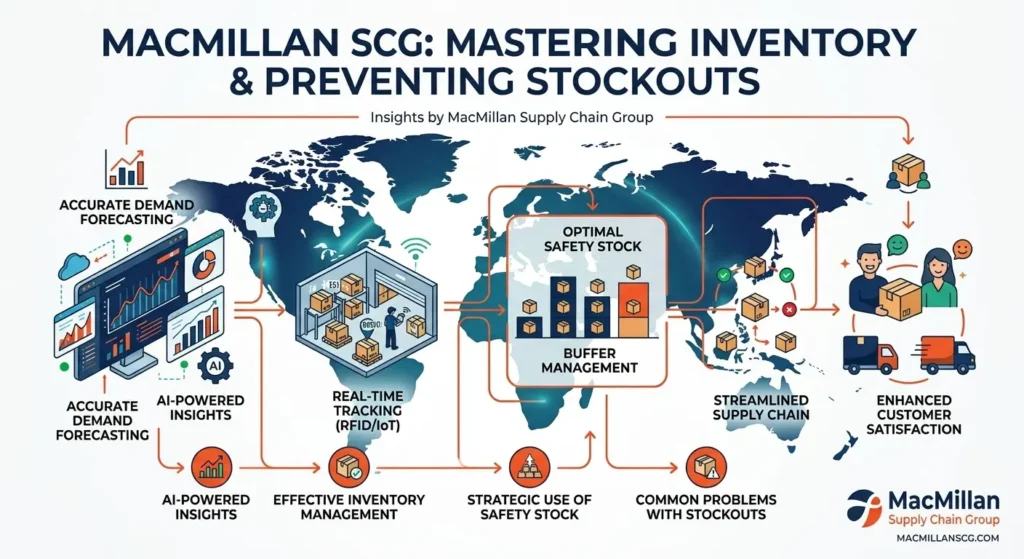
A Quick Summary and Overview Stockouts can significantly impact a business’s bottom line and customer satisfaction. This comprehensive guide delves into the causes and consequences of stockouts, offering practical strategies to prevent them. From leveraging advanced inventory management systems to implementing safety stock, we explore how businesses can optimize their supply chain operations. With insights from MacMillan Supply Chain Group, readers will learn how to enhance inventory accuracy, improve demand forecasting, and utilize buffer stock effectively. Whether you’re a small business owner or a supply chain professional, this article provides valuable information to help you maintain optimal inventory levels and avoid costly stockouts. Introduction In today’s fast-paced business environment, maintaining optimal inventory levels is crucial for success. Stockouts – situations where a product is out of stock and unavailable for purchase – can lead to lost sales, damaged customer relationships, and decreased brand loyalty. As businesses strive to meet ever-changing consumer demands, the challenge of preventing stockouts becomes increasingly complex. This article aims to provide a comprehensive understanding of stockouts, their causes, and most importantly, effective strategies to prevent them. We’ll explore how advanced inventory management techniques, accurate demand forecasting, and strategic use of safety stock can help businesses maintain a delicate balance between avoiding excess inventory and ensuring product availability. Drawing on expertise from MacMillan Supply Chain Group, we’ll delve into cutting-edge solutions and best practices that can transform your inventory management processes. Whether you’re looking to optimize your current systems or completely overhaul your approach to stockout prevention, this guide will equip you with the knowledge and tools to succeed in today’s competitive marketplace. Understanding Stockouts and Their Causes Stockouts occur when a business runs out of inventory for a particular product, leaving them unable to fulfill customer orders. This situation can arise from various factors, often interconnected within the supply chain ecosystem. Understanding these causes is the first step in developing effective prevention strategies. Common causes of stockouts include: Inaccurate demand forecasting: Failing to predict customer demand accurately can lead to underordering and subsequent stockouts. Poor inventory management: Inefficient tracking systems or human error in inventory counts can result in misleading stock levels. Supply chain disruptions: Unexpected events such as natural disasters, transportation issues, or supplier problems can interrupt the flow of goods. Long lead times: Extended periods between ordering and receiving inventory can increase the risk of stockouts during peak demand periods. Seasonal fluctuations: Failure to account for seasonal changes in demand can lead to inventory shortages during high-demand periods. Cash flow constraints: Limited financial resources may restrict a business’s ability to maintain adequate inventory levels. Product obsolescence: Rapid changes in consumer preferences or technology can lead to stockouts of in-demand items. By identifying these potential causes, businesses can develop targeted strategies to mitigate the risk of stockouts and improve overall inventory management. The Consequences of Stockouts Stockouts can have far-reaching consequences that extend beyond the immediate loss of a sale. Understanding these impacts is crucial for prioritizing stockout prevention in your overall business strategy. Lost Sales and Revenue: The most immediate effect of a stockout is the loss of potential sales. Customers unable to purchase their desired product may turn to competitors, resulting in both immediate and future revenue loss. Decreased Customer Satisfaction: Stockouts can frustrate customers, leading to a poor shopping experience and potentially damaging long-term loyalty. Reduced Brand Reputation: Frequent stockouts can erode trust in your brand, as customers may perceive the business as unreliable or poorly managed. Increased Operational Costs: Rushing to restock items can lead to higher procurement and shipping costs, eating into profit margins. Market Share Loss: Consistent stockouts can drive customers to competitors, potentially resulting in a permanent loss of market share. Inaccurate Demand Forecasting: Stockouts can skew historical sales data, making future demand forecasting more challenging. Employee Stress: Staff may face increased pressure and stress when dealing with disappointed customers and scrambling to manage stockouts. By recognizing these consequences, businesses can better appreciate the importance of implementing robust stockout prevention strategies and investing in effective inventory management solutions. Effective Inventory Management and Accuracy Maintaining accurate inventory records is fundamental to preventing stockouts. Effective inventory management involves employing strategies and tools that provide real-time visibility into stock levels, enabling businesses to make informed decisions about replenishment and allocation. Key strategies for improving inventory accuracy include: Implement Advanced Inventory Management Software: Utilize systems that offer real-time tracking, automated reordering, and integration with point-of-sale systems. Regular Cycle Counts: Conduct frequent physical inventory checks to reconcile actual stock levels with system records. ABC Analysis: Categorize inventory based on value and turnover rate to prioritize management efforts. RFID Technology: Employ Radio Frequency Identification for improved tracking and reduced human error in inventory counts. Staff Training: Ensure all employees understand the importance of inventory accuracy and are trained in proper procedures. Streamline Receiving Processes: Implement efficient procedures for checking and recording incoming inventory. Utilize Barcode Systems: Implement barcode scanning for accurate and efficient inventory tracking. By focusing on these areas, businesses can significantly improve their inventory accuracy, reducing the risk of stockouts caused by poor record-keeping or mismanaged stock levels. Accurate inventory data forms the foundation for effective demand forecasting and inventory optimization strategies. Utilizing Buffer Stock and Safety Stock Buffer stock and safety stock are crucial inventory management strategies that help businesses mitigate the risk of stockouts. While similar, these concepts serve slightly different purposes in maintaining optimal inventory levels. Buffer Stock: – Acts as a cushion against minor fluctuations in demand or supply – Helps maintain a consistent level of inventory – Typically smaller than safety stock Safety Stock: – Protects against larger uncertainties in demand or supply chain disruptions – Calculated based on factors like lead time, demand variability, and desired service level – Generally larger than buffer stock Implementing these strategies effectively involves: Analyzing Historical Data: Review past sales and supply chain performance to identify patterns and potential risks. Setting Service Level Targets: Determine the desired level of product availability to balance customer satisfaction with inventory costs. Calculating Optimal Levels: Use statistical models to determine appropriate safety stock levels for each product. Regular Review and Adjustment: Continuously monitor and adjust stock levels based
Loblaw, Costco, Walmart, Amazon: What Canadian Retailers Expect from Your 3PL
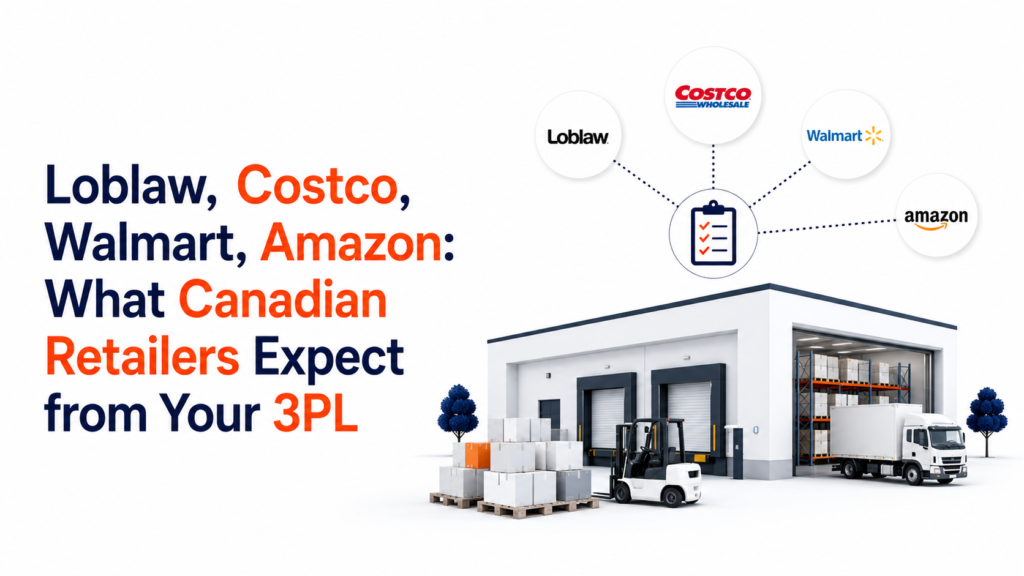
Getting Into Retail Is Hard. Staying There Is Harder. Winning a purchase order from a major retailer is a big moment. But for many brands, the real test starts after the buyer says yes. The product has to arrive correctly.The labels have to scan.The ASN has to match.The pallet has to meet requirements.The appointment has to be on time.The cartons have to be packed correctly.The inventory has to be traceable.The shipment has to be retail-ready before it ever reaches the dock. That is where many brands get exposed. A brand may have a great product, strong packaging, and growing demand — but if the logistics behind the product are not ready for retail, the relationship can get expensive quickly. Major Canadian retailers such as Loblaw, Costco, Walmart, and Amazon do not just expect products to arrive. They expect operational discipline. They expect accuracy, visibility, documentation, compliance, and consistency. That means your 3PL cannot simply be a warehouse that stores boxes. Your 3PL has to be a retail execution partner. Short Answer: What Do Major Canadian Retailers Expect from Your 3PL? Major Canadian retailers expect your 3PL to support accurate inventory, retailer-compliant labeling, EDI and ASN workflows, appointment scheduling, pallet and carton requirements, order accuracy, traceability, on-time delivery, returns handling, and clear shipment visibility. In simple terms: Retailers expect your 3PL to make your product easy to receive, easy to track, easy to sell, and hard to reject. If your 3PL cannot support those basics, your brand risks delays, chargebacks, rejected shipments, lost buyer trust, and avoidable operational costs. The Retail Reality Most Brands Learn Too Late Retail logistics is not the same as basic e-commerce fulfillment. A DTC order may be one box going to one customer. A retail order may involve purchase orders, pallet configuration, carton labeling, routing guides, delivery windows, ASN data, EDI documents, lot tracking, and strict receiving rules. That difference matters. A 3PL that performs well for online orders may still struggle with retail distribution. Why? Because retail compliance is not just about shipping. It is about following the retailer’s operating system. Each major retailer has its own expectations. The details vary by product category, vendor agreement, distribution center, shipping method, and program type. But the underlying expectation is the same: Do not create friction at receiving. When a shipment arrives at a retail distribution center, the retailer wants it to be accurate, scannable, documented, safe to handle, and easy to move through the network. Anything that slows that process down can create problems for the supplier. What Loblaw Expects: Accuracy, Traceability, and Process Control For brands selling into Loblaw or related banners, logistics discipline matters. Loblaw is a large, complex grocery and retail environment. That means vendors need to think carefully about product data, shipping documentation, delivery expectations, lot control, and recall readiness. A retail-ready 3PL should help with: Advance shipment notice support Purchase order accuracy Case and pallet labeling Lot and batch tracking Expiry-date visibility FIFO and FEFO rotation Product recall readiness Appointment scheduling Clean receiving documentation Food and consumer goods handling requirements For food and beverage brands especially, traceability is not optional. Your 3PL should know what lot arrived, where it was stored, when it shipped, and which orders it was connected to. If your brand cannot answer those questions quickly, you do not have enough visibility. Retailers need confidence that your supply chain can protect product integrity from warehouse to shelf. A weak warehouse process can turn into a buyer issue. A strong 3PL makes retail execution feel controlled, predictable, and easy to audit. What Costco Expects: Pallet Discipline, Packaging Strength, and Operational Efficiency Costco is not built for sloppy logistics. Its model depends on efficiency, clean pallet movement, durable packaging, strong presentation, and warehouse-ready product flow. For brands selling into Costco, your 3PL should understand that packaging and pallet requirements are not minor details. They are part of the retail experience. A Costco-ready 3PL should support: Proper pallet configuration Strong unitization Scannable labels Clean carton presentation Damage prevention Retail-ready display handling Club-pack or bulk-pack requirements Shipment documentation Efficient loading Appointment and delivery coordination Costco does not want fragile, messy, unstable, or difficult-to-handle freight. If a pallet is unstable, overhanging, mislabeled, damaged, or hard to receive, it creates friction. That friction can cost the brand. This is why value-added services matter. Kitting, rework, relabeling, display assembly, carton preparation, and quality checks can make the difference between a shipment that moves smoothly and one that gets flagged. For Costco suppliers, your 3PL should not be asking, “How do you want this shipped?” at the last minute. They should already be thinking about how the retailer needs to receive it. What Walmart Expects: EDI, ASN Accuracy, Labels, and On-Time Execution Walmart’s supply chain is built around structure, data, and compliance. That means your 3PL needs to be comfortable with retail documentation, EDI workflows, labels, and shipment timing. A Walmart-ready 3PL should support: EDI order workflows Advance ship notice accuracy GS1 / barcode requirements Carton and pallet labeling Purchase order matching Routing guide compliance Delivery appointment management On-time shipment execution Inventory accuracy Retail distribution center coordination The ASN is especially important because it tells the retailer what is coming before the truck arrives. If the ASN does not match the physical shipment, the receiving process breaks down. If the labels do not scan, the receiving process slows down. If the shipment is late, incomplete, or misconfigured, the supplier can face penalties or buyer frustration. For Walmart and similar retailers, “close enough” is not good enough. Your 3PL has to treat order accuracy, shipment data, and physical execution as one connected process. The best retail 3PLs do not separate warehouse work from compliance work. They know that the label, the pallet, the ASN, the appointment, and the shipment all have to tell the same story. What Amazon Expects: Label Accuracy, Inventory Prep, and Fast Processing Amazon is different from traditional retail, but it is just as strict in its own way. Whether a brand is
eCommerce Fulfillment Guide | MacMillan Supply Chain

A quick summary and overview This comprehensive guide explores the intricacies of eCommerce fulfillment, focusing on how partnering with a 3PL like MacMillan Supply Chain Group can transform your operations. We’ll delve into minimum order quantities, inventory management, and shipping costs, providing expert insights to help you navigate common challenges. Learn how our tailored solutions can optimize your supply chain, reduce expenses, and boost customer satisfaction. Whether you’re a growing startup or an established brand, this article offers valuable strategies to elevate your eCommerce fulfillment process and gain a competitive edge in the market. An introduction In today’s fast-paced eCommerce landscape, efficient order fulfillment is not just a luxury—it’s a necessity for survival and growth. As online shopping continues to surge, businesses face increasing pressure to deliver products quickly, accurately, and cost-effectively. This is where partnering with a third-party logistics (3PL) provider like MacMillan Supply Chain Group can make all the difference. Our guide will walk you through the critical aspects of eCommerce fulfillment, from understanding minimum order quantities to implementing advanced inventory management systems. We’ll explore how the right 3PL partnership can help you navigate common pitfalls, reduce operational costs, and ultimately enhance customer satisfaction. Whether you’re grappling with shipping expenses, inventory challenges, or scalability issues, MacMillan Supply Chain Group has the expertise and solutions to propel your eCommerce business forward. Understanding Minimum Order Quantities (MOQs) in eCommerce Minimum Order Quantities (MOQs) play a crucial role in eCommerce fulfillment, impacting both inventory management and cost-effectiveness. MOQs refer to the smallest number of units a supplier or manufacturer will produce in a single order. For eCommerce businesses, understanding and navigating MOQs is essential for maintaining optimal stock levels and managing cash flow. While MOQs can present challenges, particularly for smaller businesses or those with limited storage capacity, they also offer several advantages: Cost savings: Larger orders often come with volume discounts, reducing per-unit costs. Consistent supply: MOQs help ensure a steady supply of products, reducing the risk of stockouts. Quality control: Manufacturers can maintain better quality control with larger production runs. However, MOQs can also lead to overstocking, tying up capital in excess inventory. This is where partnering with a 3PL like MacMillan Supply Chain Group becomes invaluable. We can help you: – Negotiate favorable MOQs with suppliers – Implement just-in-time inventory strategies to balance MOQs with demand – Provide warehousing solutions to accommodate larger orders – Offer kitting and assembly services to maximize the value of bulk purchases By leveraging our expertise, you can turn MOQs from a potential obstacle into a strategic advantage for your eCommerce business. The Role of 3PLs in Streamlining eCommerce Fulfillment Third-party logistics providers (3PLs) have become indispensable partners for eCommerce businesses looking to optimize their fulfillment processes. By outsourcing logistics operations to a specialized 3PL like MacMillan Supply Chain Group, companies can focus on their core competencies while benefiting from expert supply chain management. Key advantages of partnering with a 3PL include: Scalability: 3PLs can quickly adjust to fluctuations in order volume, essential for seasonal businesses or those experiencing rapid growth. Cost effectiveness: Leveraging a 3PL’s established infrastructure and relationships can lead to significant cost savings in shipping and warehousing. Advanced technology: 3PLs invest in state-of-the-art inventory management and order processing systems, providing real-time visibility and analytics. Geographical reach: With strategically located warehouses, 3PLs can reduce shipping times and costs, enhancing customer satisfaction. Expertise: 3PLs bring specialized knowledge in logistics, helping navigate complex shipping regulations and optimizing supply chain efficiency. MacMillan Supply Chain Group offers all these benefits and more. Our tailored solutions adapt to your unique business needs, whether you’re handling standard products or specialized items requiring careful handling. By integrating our services into your operations, you can streamline your fulfillment process, reduce errors, and ultimately deliver a superior customer experience that drives repeat business and brand loyalty. Inventory Management: The Cornerstone of Efficient Fulfillment Effective inventory management is the backbone of successful eCommerce fulfillment. It ensures that you have the right products in the right quantities at the right time, balancing the need to meet customer demand with the cost of carrying excess stock. However, achieving this balance can be challenging, especially as your business grows and product lines expand. Key aspects of robust inventory management include: Demand forecasting: Accurately predicting future sales to optimize stock levels Real-time inventory tracking: Maintaining visibility across all sales channels and warehouses Reorder point optimization: Determining the ideal time to replenish stock ABC analysis: Categorizing products based on their importance to prioritize management efforts Cycle counting: Regular, systematic counting of inventory to maintain accuracy MacMillan Supply Chain Group excels in implementing advanced inventory management solutions tailored to your eCommerce business. Our systems provide: – Real-time inventory visibility across multiple warehouses – Automated reordering based on customizable thresholds – Integration with your existing eCommerce platforms for seamless data flow – Detailed analytics and reporting for informed decision-making – Cycle counting and regular audits to ensure accuracy By leveraging our expertise and technology, you can minimize stockouts, reduce carrying costs, and improve cash flow. This optimized inventory management translates directly into improved customer satisfaction and increased profitability for your eCommerce business. Navigating Shipping Costs and Carrier Selection Shipping costs can significantly impact an eCommerce business’s bottom line and customer satisfaction. Navigating the complex world of carrier options, rates, and service levels is crucial for maintaining competitive pricing while ensuring timely deliveries. Here’s where partnering with a 3PL like MacMillan Supply Chain Group can provide a substantial advantage. Key considerations in managing shipping costs include: Carrier diversification: Leveraging multiple carriers to optimize for cost and delivery speed Negotiated rates: Utilizing a 3PL’s volume to secure better shipping rates Packaging optimization: Minimizing dimensional weight charges through efficient packaging Zone skipping: Strategically placing inventory to reduce shipping distances and costs Returns management: Implementing cost-effective reverse logistics processes MacMillan Supply Chain Group offers comprehensive solutions to address these challenges: – Access to our network of carriers and negotiated rates – Advanced shipping software for real-time rate shopping and carrier selection – Expertise in international shipping and customs compliance – Strategic warehouse locations for optimized distribution – Customized packaging
Revolutionizing Supply Chain Management: Advanced Strategies for Inventory Optimization
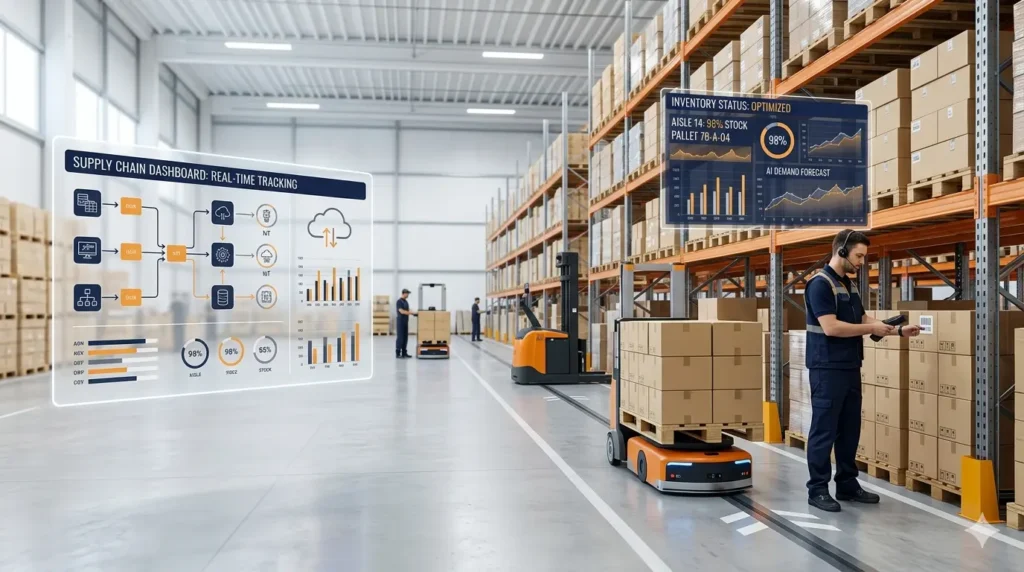
A quick summary and overview Effective inventory management is crucial for businesses seeking to optimize their supply chain operations. This comprehensive guide explores advanced techniques, innovative solutions, and the benefits of partnering with a third-party logistics provider like MacMillan Supply Chain Group. From demand forecasting to just-in-time inventory, we’ll cover strategies that can revolutionize your inventory control. Learn how outsourcing inventory management can provide access to cutting-edge technology and expertise, helping you reduce costs and improve customer satisfaction. Discover how MacMillan Supply Chain Group’s tailored solutions can address common inventory challenges and propel your business towards greater efficiency and profitability. An introduction In today’s fast-paced business environment, mastering inventory management is essential for maintaining a competitive edge. Effective inventory control can mean the difference between thriving and struggling in an increasingly complex marketplace. This article delves into advanced inventory management techniques, exploring how businesses can leverage technology, data analytics, and strategic partnerships to optimize their supply chain operations. We’ll examine the critical role of inventory management in supply chain success, discuss key steps for implementation, and explore innovative techniques that are reshaping the industry. Additionally, we’ll highlight the benefits of outsourcing inventory management to third-party logistics providers like MacMillan Supply Chain Group, offering insights into how expert partners can drive efficiency and growth. Whether you’re a small business owner looking to streamline operations or a large corporation seeking to enhance your existing systems, this guide will provide valuable insights and actionable strategies to transform your inventory management processes. The Strategic Importance of Inventory Management Inventory management is far more than just keeping track of stock levels. It’s a strategic function that can significantly impact a company’s financial health, customer satisfaction, and overall competitiveness. Effective inventory management ensures that the right products are available at the right time, in the right quantities, and at the right locations. The benefits of optimized inventory management are manifold: Cost Reduction: By maintaining optimal stock levels, businesses can reduce storage costs, minimize waste from obsolete inventory, and free up working capital. Improved Cash Flow: Efficient inventory turnover ensures that capital isn’t unnecessarily tied up in excess stock, improving overall financial flexibility. Enhanced Customer Satisfaction: Accurate inventory management prevents stockouts, ensuring that customer orders can be fulfilled promptly and accurately. Increased Operational Efficiency: Streamlined inventory processes reduce the time and resources needed for stock handling, allowing staff to focus on value-adding activities. Better Decision Making: Real-time inventory data provides valuable insights for informed decision-making on purchasing, pricing, and product development. Competitive Advantage: Businesses with optimized inventory management can respond more quickly to market changes and customer demands, outperforming competitors. By recognizing inventory management as a strategic function, businesses can unlock significant value and drive sustainable growth. The key lies in implementing the right techniques and leveraging advanced technologies to gain a comprehensive view of inventory across the entire supply chain. Key Steps in Implementing Effective Inventory Management Implementing a robust inventory management system involves several critical steps: Conduct a Thorough Inventory Audit: Begin by accurately assessing your current inventory levels, identifying slow-moving items, and understanding your inventory turnover rates. Implement Categorization Systems: Use methods like ABC analysis to categorize inventory based on value and importance, allowing for tailored management strategies. Establish Key Performance Indicators (KPIs): Define metrics such as inventory turnover ratio, carrying costs, and stockout rates to measure and monitor inventory performance. Invest in Inventory Management Software: Choose a system that provides real-time tracking, automated reordering, and comprehensive reporting capabilities. Develop Accurate Demand Forecasting: Utilize historical data, market trends, and predictive analytics to forecast future demand more accurately. Optimize Order Quantities: Implement techniques like Economic Order Quantity (EOQ) to balance ordering costs with holding costs. Streamline Receiving and Put-away Processes: Develop efficient procedures for quickly processing and storing incoming inventory. Implement Cycle Counting: Regular cycle counts can improve inventory accuracy without the disruption of full physical counts. Train Staff: Ensure all employees understand the importance of inventory management and are proficient in using the chosen systems. Continuously Monitor and Adjust: Regularly review inventory performance and adjust strategies as needed to respond to changing market conditions. By following these steps, businesses can create a solid foundation for effective inventory management, setting the stage for improved efficiency and profitability. Innovative Techniques in Modern Inventory Management The field of inventory management is constantly evolving, with new techniques emerging to address the challenges of today’s dynamic business environment. Here are some innovative approaches that are transforming inventory management: Just-In-Time (JIT) Inventory: This technique minimizes inventory holding by scheduling deliveries to arrive precisely when needed, reducing storage costs and improving cash flow. Vendor-Managed Inventory (VMI): Suppliers take responsibility for maintaining agreed-upon inventory levels, often using real-time data to make restocking decisions. Cross-Docking: This strategy involves transferring incoming shipments directly to outgoing vehicles, minimizing handling and storage time. Demand-Driven Material Requirements Planning (DDMRP): This methodology combines aspects of Material Requirements Planning (MRP) and Lean principles to create a more responsive, demand-driven system. AI and Machine Learning: Advanced algorithms can analyze vast amounts of data to improve demand forecasting accuracy and optimize inventory levels. Internet of Things (IoT): Connected devices can provide real-time tracking and monitoring of inventory across the supply chain. Blockchain Technology: This can enhance transparency and traceability in inventory management, particularly for complex supply chains. 3D Printing: On-demand production can reduce the need for storing certain types of inventory, especially for spare parts or customized items. By adopting these innovative techniques, businesses can significantly enhance their inventory management capabilities, leading to improved efficiency, reduced costs, and increased agility in responding to market demands. The Benefits of Outsourcing Inventory Management to 3PL Providers Outsourcing inventory management to third-party logistics (3PL) providers like MacMillan Supply Chain Group offers numerous advantages: Access to Advanced Technology: 3PL providers invest in state-of-the-art inventory management systems, allowing businesses to benefit from cutting-edge technology without significant capital investment. Expertise and Best Practices: 3PL specialists bring extensive knowledge and experience, implementing industry best practices to optimize inventory management processes. Scalability and Flexibility: 3PL services can easily scale up or down based on business needs, particularly beneficial for companies with seasonal fluctuations. Cost Savings: Outsourcing can reduce labor costs, warehouse expenses, and technology investments while improving inventory
AI Won’t Save a Bad Warehouse: What Brands Really Need from a Modern 3PL

AI Won’t Save a Bad Warehouse AI is everywhere in logistics right now. AI-powered forecasting.AI inventory alerts.AI warehouse optimization.AI-driven fulfillment dashboards. It sounds impressive. But here is the truth most brands need to hear: AI will not save a bad warehouse. If inventory counts are wrong, AI only makes bad decisions faster.If receiving is messy, AI cannot create clean stock records.If orders are picked without scan verification, AI cannot protect your customer experience.If your 3PL cannot tell you where your inventory is, no dashboard will fix the trust problem. For growing FMCG, food and beverage, personal care, pet care, home care, and general merchandise brands, the real question is not: “Does my 3PL use AI?” The better question is: “Does my 3PL have the systems, discipline, and visibility needed for AI to actually be useful?” Short Answer: What Technology Should a Modern 3PL Have? A modern 3PL should have a reliable warehouse management system, barcode scanning, real-time inventory visibility, order verification, ERP and e-commerce integrations, EDI capability, transportation visibility, reporting dashboards, lot and batch tracking, returns workflows, and clear exception management. AI can improve these systems, but it cannot replace the basics. Before trusting a 3PL’s AI claims, ask: Is inventory updated in real time? Are orders scan-verified? Can they track lots, batches, expiry dates, and recalls? Can the WMS connect to Shopify, Amazon, NetSuite, SAP, Microsoft Dynamics, or EDI? Can they explain exceptions before they become customer complaints? If the answer is no, AI is decoration. The Problem with “AI-First” Warehouse Marketing Many logistics companies now use the same phrases: “We use AI.”“We are data-driven.”“We offer intelligent fulfillment.”“We provide predictive analytics.” But those phrases are often vague. AI is only as good as the warehouse data behind it. Bad data creates bad recommendations. Incomplete scans create incomplete visibility. Disconnected systems create conflicting inventory numbers. A polished dashboard does not mean the operation is healthy. A brand may only discover the weakness after going live: inventory does not match, orders are delayed, returns are unclear, retail shipments miss requirements, and nobody can explain what happened. That is why brands should look past the buzzwords and evaluate the practical tech stack underneath. The Practical 3PL Tech Stack Brands Actually Need 1. A Reliable Warehouse Management System The WMS is the foundation of the warehouse. It controls receiving, storage, picking, packing, shipping, returns, and reporting. A good WMS should support: Real-time inventory updates SKU-level visibility Bin and location management FIFO and FEFO rotation Lot and batch tracking Expiry-date tracking Pick-pack-ship workflows Kitting and bundling Returns processing Retail-compliant labeling Without a strong WMS, everything else becomes fragile. 2. Barcode Scanning and Scan-to-Verify Accuracy A warehouse that relies too heavily on manual entry is a warehouse where errors can hide. Barcode scanning confirms what was received, where it was stored, what was picked, what was packed, and what was shipped. For brands, scan-to-verify workflows reduce mispicks, wrong shipments, inventory confusion, and customer complaints. AI may help optimize the process, but scanning creates the truth the system depends on. No scan discipline, no trustworthy data. 3. Real-Time Inventory Visibility Brands should not have to email their 3PL just to ask, “How much stock do we have?” A modern 3PL should provide visibility into: Available inventory Allocated inventory Damaged inventory Returned inventory Lot and batch details Expiry dates Inventory by location Inventory movement history Without real-time visibility, brands can oversell, under-order, delay promotions, or give retailers inaccurate information. 4. ERP, E-Commerce, and Marketplace Integrations Your warehouse should not operate separately from the rest of your business. A modern 3PL should connect with platforms such as: Shopify Amazon WooCommerce NetSuite SAP Microsoft Dynamics 365 Oracle Retail EDI platforms Carrier systems These integrations automate order flow, inventory updates, tracking numbers, returns data, and shipment confirmations. The goal is simple: Your sales channels, ERP, warehouse, and carriers should not be telling different stories. 5. EDI and Retail Compliance Capability For brands selling into major retailers, EDI and compliance are not optional. A retail-ready 3PL should understand: EDI workflows ASN requirements GS1-128 labels Routing guides Pallet configuration Carton labeling Delivery appointments Retail chargeback prevention Many fulfillment providers can ship DTC parcels. Retail compliance is a different game. If your 3PL cannot support retailer requirements, you risk delayed shipments, rejected deliveries, penalties, and damaged buyer relationships. 6. Lot, Batch, and Expiry Tracking For food, beverage, supplements, personal care, pet care, and date-sensitive products, lot and expiry tracking are essential. A 3PL should be able to answer: Which lot was received? Where is it stored? Which orders did it ship with? Which customers or retailers received it? What expires first? What should be quarantined? AI can help identify risk patterns, but the warehouse must first capture the right data. If lot and batch records are weak, no AI tool can rebuild a clean chain of custody later. 7. Transportation and Carrier Visibility Warehouse visibility is only part of the story. Brands also need to know what happens after orders leave the facility. A modern 3PL should support: Carrier integrations Tracking numbers Proof of delivery Shipment status updates Delivery appointment scheduling Exception alerts Parcel, LTL, and retail delivery coordination A DTC customer wants tracking.A retailer wants compliance.A brand team wants to know what went wrong before the customer does. 8. Reporting and Exception Management Dashboards are useful, but dashboards alone do not solve problems. A strong 3PL should report on: Inventory accuracy Order accuracy On-time shipping Dock-to-stock time Return processing time Damage rates Stock aging Retail compliance issues Carrier performance More importantly, the 3PL should explain what the data means. If dock-to-stock time is increasing, why?If one SKU causes frequent errors, what should change?If a retailer keeps triggering penalties, is the issue labeling, timing, paperwork, or pallet build? Good reporting turns warehouse data into decisions. What AI Can Actually Do Well This article is not anti-AI. AI can be useful when the warehouse foundation is strong. It can help with: Demand forecasting Labor planning Slotting optimization Inventory risk alerts Carrier performance analysis
Optimizing Warehouse Space: Strategies for Efficient Storage and Inventory Management
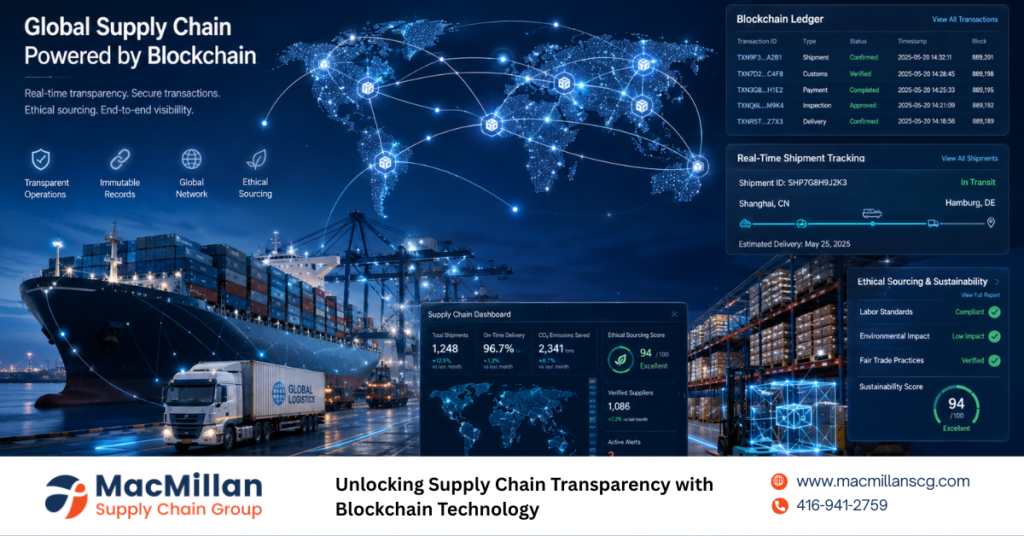
A Quick Summary and Overview Efficient warehouse space utilization is crucial for businesses looking to streamline their operations and reduce costs. This comprehensive guide explores innovative strategies for optimizing warehouse space, enhancing inventory management, and improving overall logistics efficiency. From implementing advanced storage systems to leveraging cutting-edge technology, we’ll cover the best practices that can transform your warehouse operations. With insights from MacMillan Supply Chain Group, a leader in 3PL services, you’ll learn how to maximize your storage capacity, increase productivity, and boost your bottom line. Discover how to turn your warehouse into a strategic asset for your business’s growth and success. An Introduction In today’s fast-paced business environment, efficient warehouse management is more critical than ever. As e-commerce continues to grow and consumer expectations for rapid delivery rise, businesses must optimize their warehouse space to remain competitive. However, many companies struggle with inadequate storage solutions, inefficient inventory management, and underutilized vertical space. These challenges can lead to increased operational costs, slower order fulfillment, and reduced customer satisfaction. This article will delve into effective strategies for maximizing warehouse space utilization and improving inventory management. We’ll explore how implementing these solutions can enhance your overall supply chain efficiency, reduce costs, and improve customer service. By partnering with experts like MacMillan Supply Chain Group, you can transform your warehouse operations and gain a significant competitive advantage in your industry. Implementing Vertical Storage Solutions One of the most effective ways to optimize warehouse space is by maximizing vertical storage. Many warehouses underutilize their vertical space, focusing primarily on floor-level storage. By implementing vertical storage solutions, you can dramatically increase your storage capacity without expanding your warehouse’s footprint. Consider these vertical storage options: Mezzanines: Install elevated platforms to create additional floor space for storage or operations. Pallet Racking Systems: Utilize various pallet rack configurations, such as selective, drive-in, or push-back racks, to store goods vertically. Automated Storage and Retrieval Systems (AS/RS): Implement computer-controlled systems that automatically place and retrieve loads from defined storage locations. Vertical Lift Modules (VLMs): Use these enclosed systems with vertically arranged trays to store small to medium-sized items efficiently. Multi-Level Pick Modules: Create multi-story picking areas to optimize order fulfillment processes. When implementing vertical storage solutions, it’s crucial to consider factors such as weight capacity, accessibility, and safety. Proper planning and design are essential to ensure that your vertical storage system aligns with your specific inventory needs and warehouse layout. By maximizing vertical space, you can significantly increase your storage capacity, improve inventory organization, and enhance overall warehouse efficiency. MacMillan Supply Chain Group can help you assess your warehouse layout and recommend the most suitable vertical storage solutions for your business. Optimizing Inventory Management with Advanced Technology Efficient inventory management is crucial for maximizing warehouse space utilization. By leveraging advanced technology, you can streamline your inventory processes, reduce errors, and improve overall operational efficiency. Key technological solutions for optimizing inventory management include: Warehouse Management Systems (WMS): Implement a robust WMS to track inventory levels, manage stock locations, and automate order fulfillment processes. Radio-Frequency Identification (RFID): Use RFID tags and readers to track inventory movement in real-time, improving accuracy and reducing manual labor. Barcode Scanning: Implement barcode scanning technology to streamline receiving, put-away, and picking processes. Internet of Things (IoT) Sensors: Deploy IoT sensors to monitor environmental conditions, track asset utilization, and predict maintenance needs. Artificial Intelligence (AI) and Machine Learning: Utilize AI algorithms to forecast demand, optimize inventory levels, and improve order picking efficiency. Robotics and Automation: Implement robotic systems for tasks such as palletizing, sortation, and goods-to-person picking. By integrating these technologies into your warehouse operations, you can achieve better inventory visibility, reduce stockouts and overstock situations, and optimize space utilization. MacMillan Supply Chain Group specializes in implementing and integrating advanced inventory management technologies tailored to your specific business needs. Implementing Lean Warehouse Practices Adopting lean warehouse practices can significantly improve space utilization and operational efficiency. Lean principles focus on eliminating waste, improving flow, and maximizing value for the customer. By implementing these practices, you can create a more organized and productive warehouse environment. Key lean warehouse practices include: 5S Methodology: Sort, Set in order, Shine, Standardize, and Sustain to create a clean, organized workspace. Value Stream Mapping: Analyze and optimize the flow of materials and information through your warehouse. Continuous Improvement (Kaizen): Encourage ongoing, incremental improvements in processes and operations. Just-in-Time (JIT) Inventory: Minimize excess inventory by aligning stock levels with actual demand. Visual Management: Use visual cues like floor markings, signs, and color-coding to improve organization and efficiency. Cross-Docking: Streamline the receiving and shipping process by moving goods directly from inbound to outbound without long-term storage. Standardized Work Procedures: Develop and implement standardized processes for common warehouse tasks. By implementing these lean practices, you can reduce clutter, improve space utilization, and enhance overall operational efficiency. MacMillan Supply Chain Group can help you assess your current warehouse processes and develop a customized lean implementation strategy to optimize your operations. Flexible Storage Solutions for Seasonal Fluctuations Many businesses face challenges with seasonal fluctuations in inventory levels. Implementing flexible storage solutions can help you adapt to these changes while maintaining efficient space utilization throughout the year. Consider these flexible storage options: Modular Racking Systems: Use adjustable racking that can be easily reconfigured to accommodate changing inventory needs. Mobile Racking: Implement mobile shelving units that can be moved to create aisles as needed, maximizing space utilization. Temporary Storage Structures: Use portable storage units or temporary warehouses during peak seasons. Mezzanine Flooring: Install removable mezzanine floors that can be adjusted or removed based on seasonal needs. Third-Party Logistics (3PL) Partnerships: Collaborate with 3PL providers like MacMillan Supply Chain Group to handle overflow inventory during peak seasons. Cross-Docking Strategies: Implement cross-docking for seasonal items to reduce storage requirements. Dynamic Slotting: Use data-driven slotting strategies to optimize product placement based on seasonal demand patterns. By incorporating these flexible storage solutions, you can effectively manage seasonal inventory fluctuations without compromising warehouse efficiency. MacMillan Supply Chain Group can help you develop a customized strategy to address your specific seasonal storage challenges and optimize your warehouse space throughout the year. Common Problems with Warehouse Space Optimization Our Solutions While optimizing warehouse space
Optimizing Last-Mile Delivery: Strategies and Solutions for Efficient Logistics

A Quick Summary and Overview Last-mile delivery, the final step in the supply chain process, presents unique challenges for businesses striving to meet customer expectations while maintaining operational efficiency. This article explores innovative strategies and solutions for optimizing last-mile delivery, focusing on leveraging technology, improving route planning, and enhancing customer experience. We’ll delve into common problems faced by logistics providers and showcase how MacMillan Supply Chain Group’s expertise can transform these challenges into opportunities for growth. By implementing cutting-edge solutions and best practices, businesses can significantly improve their last-mile delivery performance, leading to increased customer satisfaction and a competitive edge in the market. An Introduction In today’s fast-paced e-commerce landscape, the importance of efficient last-mile delivery cannot be overstated. As consumer expectations for faster, more reliable deliveries continue to rise, businesses face the complex task of balancing speed, cost, and quality in their logistics operations. The last mile, often the most expensive and time-consuming part of the shipping process, has become a critical differentiator in customer satisfaction and loyalty. At MacMillan Supply Chain Group, we understand the intricacies of last-mile delivery and the impact it has on your business’s success. This article aims to provide you with valuable insights into optimizing your last-mile operations, exploring innovative strategies, and highlighting solutions that can help you overcome common challenges. By the end, you’ll have a comprehensive understanding of how to enhance your last-mile delivery performance and why partnering with a logistics expert like MacMillan can be a game-changer for your business. Understanding the Complexities of Last-Mile Delivery Last-mile delivery is the final and often most challenging leg of the logistics journey, where products move from a distribution center or warehouse to the end customer’s doorstep. This critical phase accounts for a significant portion of the total shipping cost and plays a crucial role in shaping customer perception of your brand. The complexities of last-mile delivery stem from various factors: Urban Congestion: Navigating through busy city streets and traffic can lead to delays and inefficiencies. Diverse Delivery Locations: From apartments to office buildings, each destination presents unique access challenges. Customer Expectations: Modern consumers demand faster deliveries, precise time windows, and real-time tracking. Cost Pressures: Balancing the need for speed with operational costs is an ongoing challenge. Failed Deliveries: Missed attempts due to recipient absence result in additional costs and customer dissatisfaction. Environmental Concerns: The push for sustainability requires rethinking traditional delivery methods. Understanding these complexities is crucial for developing effective strategies to optimize your last-mile operations. By addressing these challenges head-on, businesses can improve delivery efficiency, reduce costs, and enhance customer satisfaction. In the following sections, we’ll explore innovative solutions and best practices to tackle these complexities and transform your last-mile delivery process. Leveraging Technology for Smarter Last-Mile Delivery In the digital age, technology plays a pivotal role in revolutionizing last-mile delivery operations. By harnessing the power of innovative tools and platforms, businesses can significantly enhance their delivery efficiency and customer experience. Here are key technologies transforming the last-mile landscape: Route Optimization Software: Advanced algorithms analyze multiple factors such as traffic patterns, delivery windows, and vehicle capacity to determine the most efficient delivery routes, reducing fuel consumption and delivery times. Real-Time Tracking Systems: GPS-enabled tracking provides both customers and businesses with live updates on package locations, improving transparency and reducing customer inquiries. Mobile Applications: Driver-focused apps streamline communication, provide turn-by-turn navigation, and allow for digital proof of delivery, enhancing operational efficiency. Artificial Intelligence and Machine Learning: These technologies enable predictive analytics, helping businesses anticipate demand, optimize inventory placement, and improve delivery scheduling. Internet of Things (IoT): Connected devices in vehicles and packages provide valuable data on delivery conditions, helping to ensure product quality and integrity throughout the journey. Automated Sorting Systems: These systems in warehouses and distribution centers speed up the order fulfillment process, reducing errors and improving delivery times. By integrating these technologies into your last-mile operations, you can achieve greater visibility, control, and efficiency throughout the delivery process. MacMillan Supply Chain Group specializes in implementing cutting-edge technological solutions tailored to your specific logistics needs, helping you stay ahead in the competitive last-mile delivery landscape. Innovative Strategies for Efficient Last-Mile Delivery To overcome the challenges of last-mile delivery, businesses must adopt innovative strategies that go beyond traditional logistics methods. Here are some forward-thinking approaches to consider: Micro-Fulfillment Centers: Establish small-scale warehouses in urban areas to reduce delivery distances and improve response times to customer orders. Crowdsourced Delivery: Leverage local, on-demand drivers to handle deliveries during peak times or in challenging areas, providing flexibility and cost-efficiency. Sustainable Transport Options: Incorporate electric vehicles, bicycles, or even drones for eco-friendly deliveries in urban environments. Click-and-Collect Services: Offer customers the option to pick up their orders from convenient locations, reducing last-mile delivery costs and providing flexibility. Time-Slot Management: Implement systems that allow customers to choose specific delivery windows, improving first-attempt delivery success rates. Parcel Lockers: Install secure, automated lockers in high-traffic areas for customers to collect their packages at their convenience. Predictive Delivery: Use data analytics to anticipate customer orders and preposition inventory, reducing delivery times. Collaborative Logistics: Partner with other businesses to share delivery resources and costs, especially in less densely populated areas. By implementing these innovative strategies, businesses can significantly improve their last-mile delivery performance, reduce costs, and enhance customer satisfaction. MacMillan Supply Chain Group can help you assess which strategies best fit your business model and assist in their seamless integration into your existing operations. Enhancing Customer Experience in Last-Mile Delivery In the competitive world of e-commerce and logistics, customer experience has become a key differentiator. Enhancing the customer experience in last-mile delivery can lead to increased loyalty, positive reviews, and repeat business. Here are essential elements to focus on: Communication: Provide clear, proactive updates throughout the delivery process, including estimated delivery times and any potential delays. Flexibility: Offer multiple delivery options, including same-day, next-day, and scheduled deliveries to cater to different customer preferences. Personalization: Use customer data to tailor delivery experiences, such as preferred delivery locations or special handling instructions. Easy Returns: Implement a smooth, hassle-free return process, including options for pickup or convenient drop-off locations. Contactless Delivery: Offer safe, contactless delivery options to
Master Demand Forecasting: Accurate Predictions for Your Business
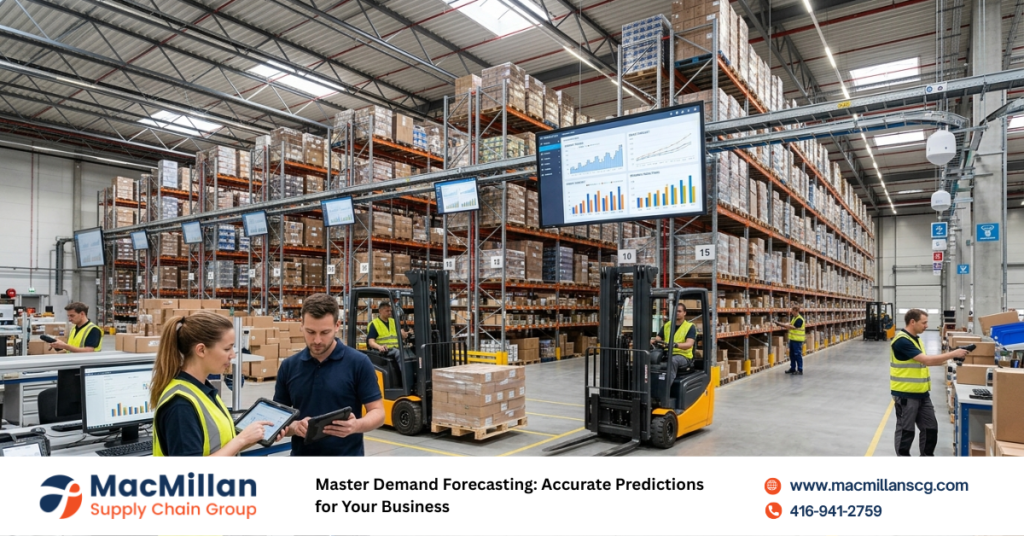
A Quick Summary and Overview Demand forecasting is a crucial process for estimating future product or service demand, enabling businesses to plan production, manage inventory effectively, and optimize supply chains. Understanding different forecasting types and methods can significantly enhance business operations and customer satisfaction. This article explores the fundamentals of demand forecasting, its benefits, challenges, and solutions. We’ll discuss how leveraging technology and 3PL partnerships can improve forecast accuracy and overall supply chain performance. By the end, you’ll have a comprehensive understanding of demand forecasting and how it can positively impact your business operations. Introduction In today’s fast-paced business environment, accurately predicting future demand is more critical than ever. Demand forecasting serves as the foundation for effective supply chain management, inventory control, and strategic decision-making. By anticipating customer needs and market trends, businesses can optimize their operations, reduce costs, and improve customer satisfaction. At MacMillan Supply Chain Group, we understand the importance of precise demand forecasting in driving business success. This article will guide you through the intricacies of demand forecasting, from its basic principles to advanced techniques and technologies. We’ll explore how businesses can overcome common challenges and leverage the power of data analytics and 3PL partnerships to enhance their forecasting capabilities. Whether you’re new to demand forecasting or looking to refine your existing processes, this comprehensive guide will provide valuable insights to help you make informed decisions and stay ahead in today’s competitive marketplace. Understanding Demand Forecasting Demand forecasting is the process of predicting future customer demand for products or services. It involves analyzing historical data, market trends, and various internal and external factors to estimate future sales volumes. This crucial business activity helps companies make informed decisions about production, inventory management, and resource allocation. There are several types of demand forecasting: Passive forecasting: Relies on historical data and assumes future demand will follow past patterns. Active forecasting: Considers dynamic factors like marketing campaigns and economic changes. Short-term forecasting: Focuses on immediate future demand, typically within weeks or months. Long-term forecasting: Predicts demand over extended periods, often years ahead. Common methods used in demand forecasting include: Time series analysis: Examines historical data to identify patterns and trends. Causal forecasting: Considers the relationship between demand and various influencing factors. Qualitative forecasting: Relies on expert opinions and market research. Delphi method: Involves gathering and refining expert opinions through multiple rounds of feedback. Choosing the right forecasting method depends on factors such as data availability, industry type, and specific business needs. Effective demand forecasting requires a combination of analytical skills, industry knowledge, and advanced tools to generate accurate predictions that drive business success. Benefits of Accurate Demand Forecasting Implementing accurate demand forecasting brings numerous advantages to businesses across various industries. Here are some key benefits: Optimized inventory management: Precise forecasts help maintain optimal stock levels, reducing both stockouts and excess inventory. This leads to improved cash flow and decreased holding costs. Enhanced customer satisfaction: By accurately predicting demand, businesses can ensure product availability when customers need it, improving overall satisfaction and loyalty. Improved production planning: Forecasts enable efficient resource allocation and production scheduling, minimizing waste and maximizing productivity. Better supply chain management: Accurate predictions allow for streamlined logistics, reduced lead times, and improved relationships with suppliers. Informed decision-making: Reliable forecasts provide valuable insights for strategic planning, budgeting, and expansion decisions. Cost reduction: By optimizing inventory and production processes, businesses can significantly reduce operational costs. Increased profitability: Improved efficiency and customer satisfaction ultimately lead to higher sales and profitability. Competitive advantage: Companies with superior forecasting capabilities can respond more quickly to market changes and outperform competitors. Risk mitigation: Accurate forecasts help businesses prepare for potential disruptions and market fluctuations. By leveraging the power of demand forecasting, businesses can enhance their overall performance, resilience, and long-term success in today’s dynamic marketplace. Challenges in Demand Forecasting While demand forecasting offers numerous benefits, it also presents several challenges that businesses must navigate: Data quality and availability: Accurate forecasting relies on high-quality, comprehensive data. Many companies struggle with incomplete or inconsistent historical data. Market volatility: Rapidly changing market conditions, consumer preferences, and economic factors can make predictions difficult. Seasonal variations: Some industries face significant seasonal fluctuations, which can complicate forecasting efforts. New product introductions: Forecasting demand for new products without historical data can be particularly challenging. External factors: Unexpected events like natural disasters, political changes, or global pandemics can disrupt even the most carefully crafted forecasts. Technology limitations: Outdated or inadequate forecasting tools can hinder accuracy and efficiency. Lack of cross-functional collaboration: Siloed departments may lead to inconsistent or conflicting forecasts across the organization. Overreliance on historical data: While past trends are important, they may not always be indicative of future demand. Balancing accuracy and cost: Highly accurate forecasting methods often require significant investment in time and resources. Interpreting results: Translating forecasts into actionable insights and decisions can be challenging for some organizations. Overcoming these challenges requires a combination of advanced technology, expert knowledge, and a commitment to continuous improvement in forecasting processes. Leveraging Technology and 3PL Partnerships To address the challenges of demand forecasting and maximize its benefits, businesses are increasingly turning to advanced technologies and 3PL partnerships: Artificial Intelligence (AI) and Machine Learning (ML): These technologies can analyze vast amounts of data, identify complex patterns, and generate more accurate forecasts. Big Data Analytics: Advanced analytics tools can process large volumes of structured and unstructured data to provide deeper insights into demand patterns. Internet of Things (IoT): IoT devices can collect real-time data on product usage, inventory levels, and market conditions, enhancing forecast accuracy. Cloud-based solutions: Cloud platforms offer scalable, accessible forecasting tools that can be easily integrated with other business systems. 3PL partnerships: Third-party logistics providers like MacMillan Supply Chain Group offer specialized expertise and advanced forecasting capabilities. Collaborative forecasting: Technologies that facilitate information sharing between suppliers, manufacturers, and retailers can improve overall forecast accuracy. Predictive analytics: These tools use historical data and statistical algorithms to predict future trends and demand patterns. Scenario planning software: These applications allow businesses to model various “what-if” scenarios and prepare for different potential outcomes. By leveraging these technologies and partnerships, businesses can significantly enhance their demand forecasting capabilities, leading to improved supply chain performance and overall business success. Common Problems with Demand