


Black Friday Fulfillment Canada: 2026 Peak Season Guide
Black Friday Fulfillment Canada: How E-commerce Brands Can Prepare for…


Black Friday Fulfillment Canada: How E-commerce Brands Can Prepare for…

When discussing e-commerce, what typically springs to mind? Most likely,…

As the busiest time of the year draws near, the…
As the busiest time of the year draws near, the…
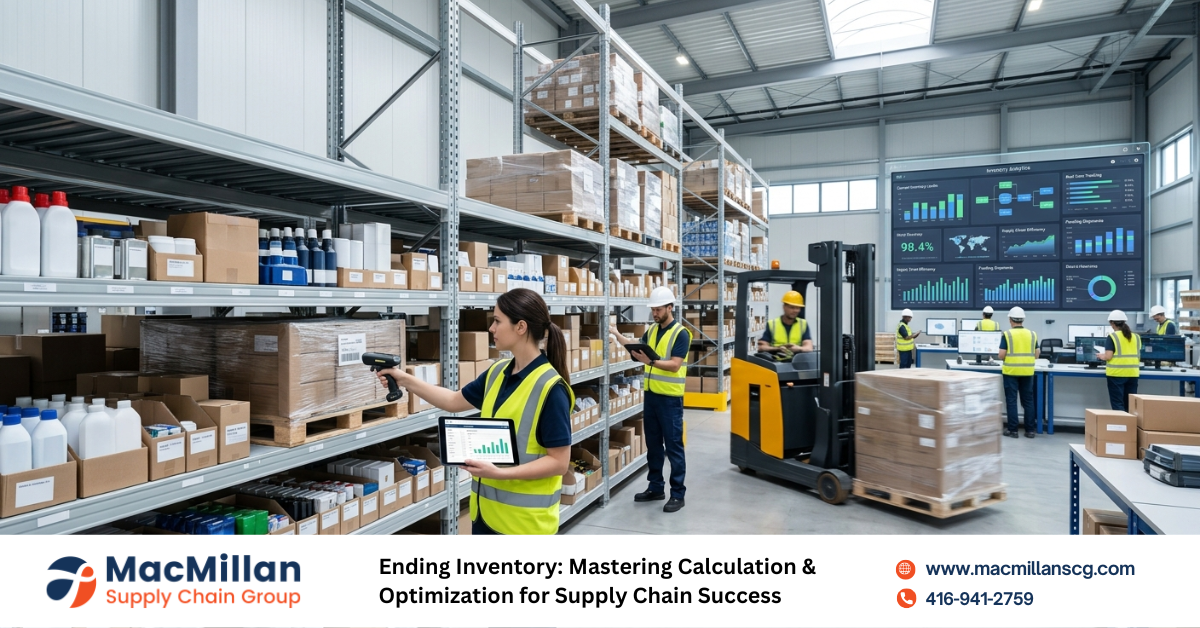
Ending inventory is a crucial metric in supply chain management, representing the value of unsold goods at the end of an accounting period. Accurate calculation and optimization of ending inventory are essential for financial reporting, operational efficiency, and strategic decision-making. This comprehensive guide explores the methods for calculating ending inventory, its importance in business operations, and strategies for optimization. We’ll delve into common challenges faced by businesses and provide expert solutions to enhance your inventory management. By mastering ending inventory, you’ll be well-equipped to streamline your supply chain, improve financial accuracy, and drive business growth.
In the dynamic world of supply chain management, understanding and optimizing ending inventory is a game-changer. As the final piece of the inventory puzzle, it plays a pivotal role in financial reporting, operational planning, and overall business strategy. But what exactly is ending inventory, and why is it so crucial?
Ending inventory represents the monetary value of goods remaining unsold at the conclusion of an accounting period. It’s a key component of your balance sheet and directly impacts your company’s profitability calculations. Accurate ending inventory figures are essential for making informed decisions about purchasing, production, and sales strategies.
In this comprehensive guide, we’ll explore the intricacies of ending inventory, from calculation methods to optimization strategies. Whether you’re a seasoned supply chain professional or new to the field, this article will provide valuable insights to help you master ending inventory management and drive your business forward.
Ending inventory, also known as closing inventory, is more than just a number on a balance sheet. It’s a crucial indicator of your business’s financial health and operational efficiency. At its core, ending inventory represents the value of goods that remain unsold at the end of an accounting period, typically a month, quarter, or year.
The importance of accurate ending inventory calculations cannot be overstated. Here’s why:
By maintaining precise ending inventory records, you’re not just fulfilling an accounting requirement – you’re gaining valuable insights that can drive strategic decisions and improve your overall supply chain performance.
There are several methods for calculating ending inventory, each with its own advantages and implications. The choice of method can significantly impact your financial statements and tax obligations. Here are the most common approaches:
Choosing the right method depends on your business type, industry regulations, and specific operational needs. Consistency in applying your chosen method is crucial for accurate financial reporting and trend analysis.
In today’s digital age, technology plays a pivotal role in streamlining ending inventory management. Advanced inventory management systems and software solutions offer numerous benefits:
By leveraging technology, businesses can significantly improve the accuracy and efficiency of their ending inventory management. This not only saves time and reduces errors but also provides valuable insights for strategic decision-making.
Optimizing your ending inventory is crucial for maintaining financial health and operational efficiency. Here are some best practices to consider:
By implementing these best practices, you can optimize your ending inventory levels, reduce carrying costs, and improve overall supply chain efficiency.
Despite its importance, many businesses struggle with accurate ending inventory management. Here are some common problems and how MacMillan Supply Chain Group can help solve them:
Inaccurate Physical Counts:
Problem: Manual counting is prone to human error, leading to discrepancies between reported and actual inventory levels.
Solution: MacMillan implements advanced barcode and RFID systems, coupled with mobile scanning devices, to ensure accurate and efficient physical counts. Our team also trains your staff in best practices for inventory counting.
Inconsistent Calculation Methods:
Problem: Switching between different calculation methods or inconsistent application can lead to inaccurate financial reporting.
Solution: We help you choose the most appropriate calculation method for your business and ensure its consistent application. Our customized inventory management systems automate calculations, reducing errors and ensuring consistency.
Poor Demand Forecasting:
Problem: Inaccurate demand forecasts can lead to overstocking or stockouts, impacting ending inventory levels.
Solution: MacMillan utilizes advanced predictive analytics and machine learning algorithms to improve demand forecasting accuracy. We analyze historical data, market trends, and external factors to help you maintain optimal inventory levels.
Lack of Real-Time Visibility:
Problem: Outdated inventory data can lead to poor decision-making and inefficiencies.
Solution: We implement cloud-based inventory management systems that provide real-time visibility into your inventory levels across all locations. This enables better decision-making and more efficient operations.
Inefficient Warehouse Management:
Problem: Poor warehouse organization can lead to lost or damaged inventory, affecting ending inventory accuracy.
Solution: MacMillan offers comprehensive warehouse optimization services, including layout design, process improvement, and implementation of warehouse management systems (WMS) to enhance inventory accuracy and efficiency.
Inadequate Inventory Valuation:
Problem: Incorrect valuation methods can lead to inaccurate financial reporting and tax issues.
Solution: Our team of experts helps you choose and implement the most appropriate inventory valuation method for your business, ensuring compliance with accounting standards and tax regulations.
Lack of Integration Between Systems:
Problem: Siloed systems can lead to data discrepancies and inefficiencies.
Solution: MacMillan specializes in integrating inventory management systems with other business applications like ERP, accounting software, and e-commerce platforms, ensuring seamless data flow and improved accuracy.
Seasonal Fluctuations:
Problem: Businesses with seasonal demand often struggle to manage inventory effectively throughout the year.
Solution: We develop customized inventory strategies that account for seasonal fluctuations, helping you optimize stock levels and cash flow year-round.
By partnering with MacMillan Supply Chain Group, you gain access to cutting-edge technology, industry expertise, and tailored solutions that address these common challenges, ultimately optimizing your ending inventory management and boosting your supply chain efficiency.
To avoid common ending inventory problems and implement effective solutions, consider the following steps:
While these steps can significantly improve your ending inventory management, implementing them effectively can be challenging without expert guidance. That’s where MacMillan Supply Chain Group comes in.
Our team of supply chain experts can provide you with tailored solutions to optimize your ending inventory management. From implementing cutting-edge technology to developing customized strategies, we’re here to help you overcome challenges and drive your business forward.
Don’t let inventory issues hold your business back. Contact MacMillan Supply Chain Group today for a free consultation. Let us help you transform your inventory management processes and boost your supply chain efficiency. Visit our website or call us to get started on your journey to inventory optimization.
A perpetual system continuously updates inventory records with each sale or purchase, while a periodic system updates inventory at set intervals. MacMillan can help you choose and implement the system that best fits your business needs.
You can reduce excess inventory by using accurate demand forecasting, monitoring sales trends, maintaining optimal safety stock levels, and reviewing inventory performance regularly. Inventory management software can also help identify slow-moving products and improve replenishment planning, reducing carrying costs while preventing stockouts.
Improving your inventory turnover ratio involves optimizing purchasing decisions, forecasting customer demand more accurately, eliminating obsolete stock, and increasing sales of slow-moving products. Regular inventory analysis and efficient replenishment strategies help maintain healthy stock levels and improve cash flow.
Safety stock acts as a buffer against unexpected demand increases or supplier delays. Maintaining the right amount of safety stock helps prevent stockouts while ensuring ending inventory remains balanced. The ideal safety stock level depends on demand variability, lead times, and service level goals.
Obsolete or damaged inventory should be identified through regular inventory audits and removed from available stock. Businesses typically write down or write off these items according to accounting standards, ensuring financial statements accurately reflect the true value of ending inventory.
The frequency of physical inventory counts depends on your business size and inventory volume. Many businesses perform a full inventory count annually while using cycle counting throughout the year to maintain inventory accuracy. Regular counts help identify discrepancies, reduce shrinkage, and improve inventory control.