
E-commerce Fulfillment Costs: Complete Guide for 2026
As the busiest time of the year draws near, the…
As the busiest time of the year draws near, the…
As the busiest time of the year draws near, the…
As the busiest time of the year draws near, the…
Did you know that only 21% of businesses feel really…
Stockouts can significantly impact a business’s bottom line and customer satisfaction. This comprehensive guide delves into the causes and consequences of stockouts, offering practical strategies to prevent them. From leveraging advanced inventory management systems to implementing safety stock, we explore how businesses can optimize their supply chain operations. With insights from MacMillan Supply Chain Group, readers will learn how to enhance inventory accuracy, improve demand forecasting, and utilize buffer stock effectively. Whether you’re a small business owner or a supply chain professional, this article provides valuable information to help you maintain optimal inventory levels and avoid costly stockouts.
In today’s fast-paced business environment, maintaining optimal inventory levels is crucial for success. Stockouts – situations where a product is out of stock and unavailable for purchase – can lead to lost sales, damaged customer relationships, and decreased brand loyalty. As businesses strive to meet ever-changing consumer demands, the challenge of preventing stockouts becomes increasingly complex.
This article aims to provide a comprehensive understanding of stockouts, their causes, and most importantly, effective strategies to prevent them. We’ll explore how advanced inventory management techniques, accurate demand forecasting, and strategic use of safety stock can help businesses maintain a delicate balance between avoiding excess inventory and ensuring product availability.
Drawing on expertise from MacMillan Supply Chain Group, we’ll delve into cutting-edge solutions and best practices that can transform your inventory management processes. Whether you’re looking to optimize your current systems or completely overhaul your approach to stockout prevention, this guide will equip you with the knowledge and tools to succeed in today’s competitive marketplace.
Stockouts occur when a business runs out of inventory for a particular product, leaving them unable to fulfill customer orders. This situation can arise from various factors, often interconnected within the supply chain ecosystem. Understanding these causes is the first step in developing effective prevention strategies.
Common causes of stockouts include:
By identifying these potential causes, businesses can develop targeted strategies to mitigate the risk of stockouts and improve overall inventory management.
Stockouts can have far-reaching consequences that extend beyond the immediate loss of a sale. Understanding these impacts is crucial for prioritizing stockout prevention in your overall business strategy.
By recognizing these consequences, businesses can better appreciate the importance of implementing robust stockout prevention strategies and investing in effective inventory management solutions.
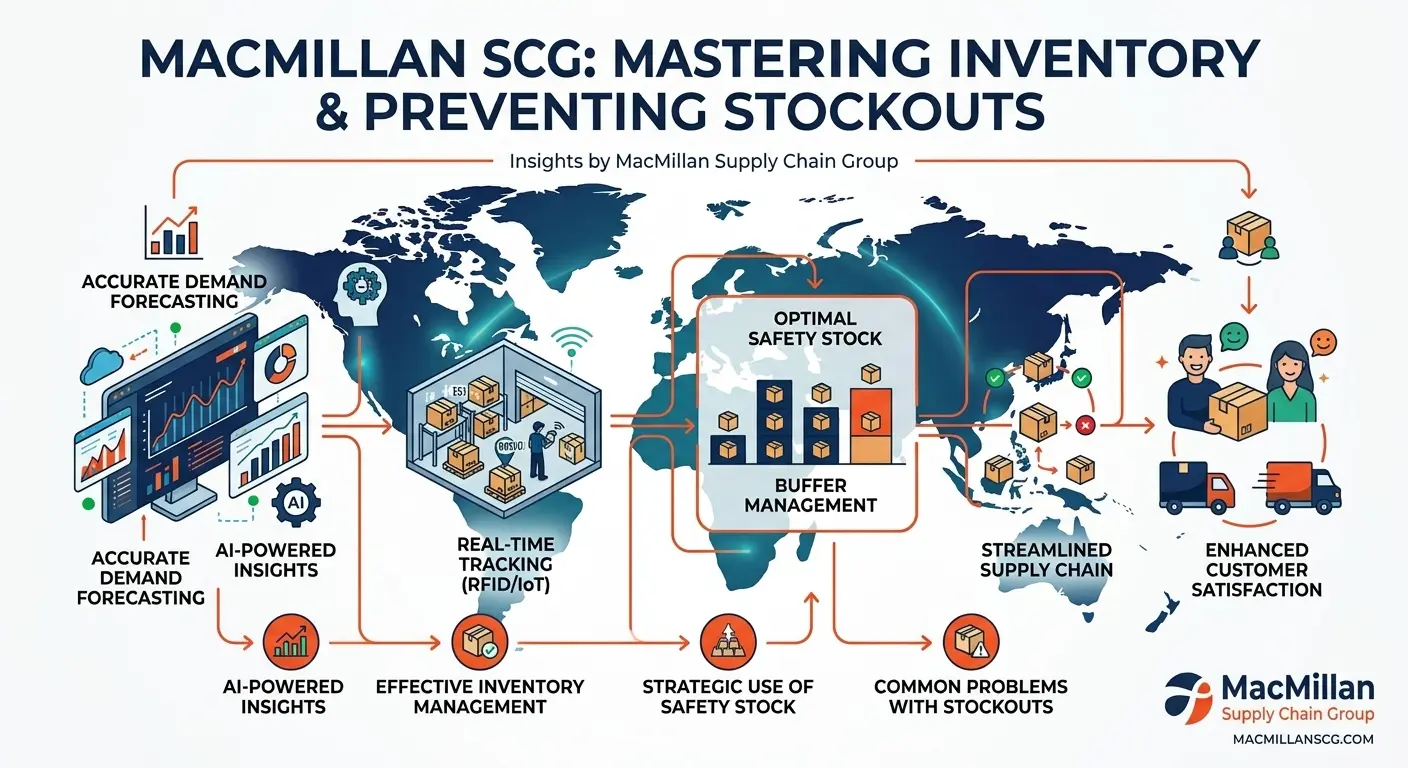
Maintaining accurate inventory records is fundamental to preventing stockouts. Effective inventory management involves employing strategies and tools that provide real-time visibility into stock levels, enabling businesses to make informed decisions about replenishment and allocation.
Key strategies for improving inventory accuracy include:
By focusing on these areas, businesses can significantly improve their inventory accuracy, reducing the risk of stockouts caused by poor record-keeping or mismanaged stock levels. Accurate inventory data forms the foundation for effective demand forecasting and inventory optimization strategies.
Buffer stock and safety stock are crucial inventory management strategies that help businesses mitigate the risk of stockouts. While similar, these concepts serve slightly different purposes in maintaining optimal inventory levels.
Buffer Stock:
– Acts as a cushion against minor fluctuations in demand or supply
– Helps maintain a consistent level of inventory
– Typically smaller than safety stock
Safety Stock:
– Protects against larger uncertainties in demand or supply chain disruptions
– Calculated based on factors like lead time, demand variability, and desired service level
– Generally larger than buffer stock
Implementing these strategies effectively involves:
By strategically utilizing buffer and safety stock, businesses can protect themselves against unexpected demand spikes or supply chain disruptions, reducing the likelihood of stockouts while maintaining efficient inventory levels.
Despite best efforts, businesses often encounter recurring issues that lead to stockouts. These common problems highlight the complexities of inventory management and the need for robust, adaptive solutions:
At MacMillan Supply Chain Group, we offer comprehensive solutions designed to address these common stockout problems and optimize inventory management:
By partnering with MacMillan Supply Chain Group, businesses can leverage our expertise and advanced solutions to transform their approach to inventory management, significantly reducing the risk of stockouts while optimizing overall supply chain efficiency.
Implementing effective stockout prevention strategies doesn’t have to be a daunting task. With MacMillan Supply Chain Group, you can transform your inventory management processes and minimize the risk of stockouts. Here’s how you can get started:
Don’t let stockouts harm your business any longer. Take the first step towards optimized inventory management by partnering with MacMillan Supply Chain Group. Contact us today to learn how our solutions can help you prevent stockouts, improve customer satisfaction, and boost your bottom line. Let’s work together to build a more resilient and efficient supply chain for your business.
A stockout occurs when a business runs out of inventory for a specific product, making it unavailable for purchase. This situation can lead to lost sales and customer dissatisfaction.
Demand forecasting uses historical sales data, seasonal trends, customer buying patterns, and market insights to predict future inventory needs. Accurate forecasting helps maintain optimal stock levels, reduces the risk of stockouts, and minimizes excess inventory, improving overall supply chain efficiency.
Safety stock is extra inventory kept on hand to protect against unexpected demand spikes or supplier delays. It is typically calculated using factors such as average demand, lead time, and demand variability. Maintaining the right level of safety stock helps ensure products remain available without tying up excessive capital.
Real-time inventory tracking provides instant visibility into stock levels across warehouses and sales channels. It enables businesses to identify low inventory early, automate replenishment, reduce inventory discrepancies, and respond quickly to changing customer demand before stockouts occur.
Yes. Our inventory management solutions integrate seamlessly with leading ERP platforms, eCommerce marketplaces, warehouse management systems (WMS), accounting software, and shipping platforms. This ensures accurate data synchronization, streamlined operations, and improved visibility across your supply chain.
We use industry-standard security measures, including encrypted data transmission, role-based access controls, secure cloud infrastructure, regular system monitoring, and routine backups. These safeguards help protect sensitive inventory data while ensuring system reliability and compliance with industry best practices.

2 Responses
Great insights on preventing stockouts. Strong inventory management is critical for maintaining service levels and avoiding lost sales—especially in fast-moving markets like Croatia and across Europe.
Thank you! We appreciate your thoughtful feedback. Glad you found the insights valuable.