Is Your Fulfillment Ready for AI Shopping in Canada?
A shopper asks an AI assistant to find a fragrance-free…
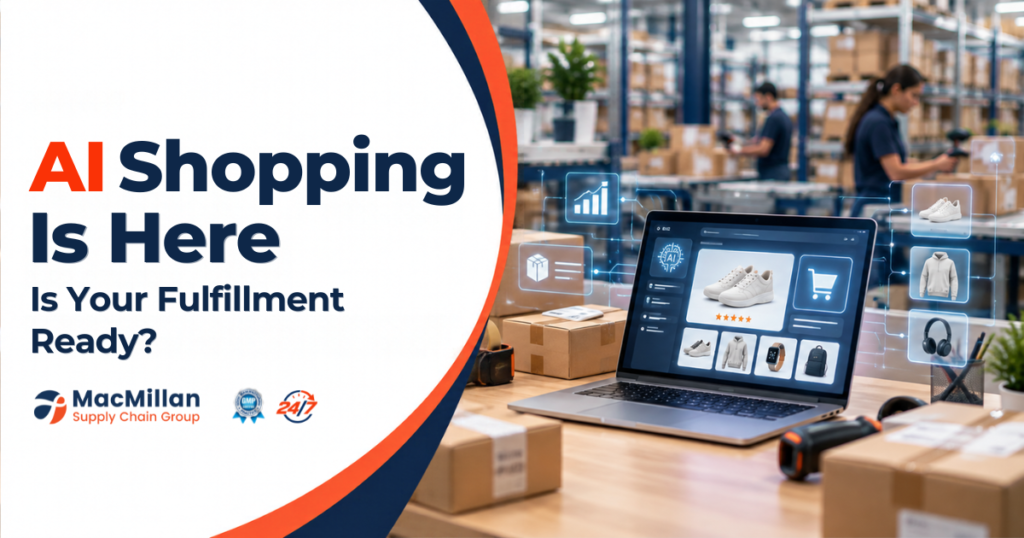
A shopper asks an AI assistant to find a fragrance-free…
As an online store business owner, offering the best customer…
The logistics industry in Canada is growing at an impressive…
In today’s competitive business landscape, staying ahead of the curve…
AI is everywhere in logistics right now.
AI-powered forecasting.
AI inventory alerts.
AI warehouse optimization.
AI-driven fulfillment dashboards.
It sounds impressive. But here is the truth most brands need to hear:
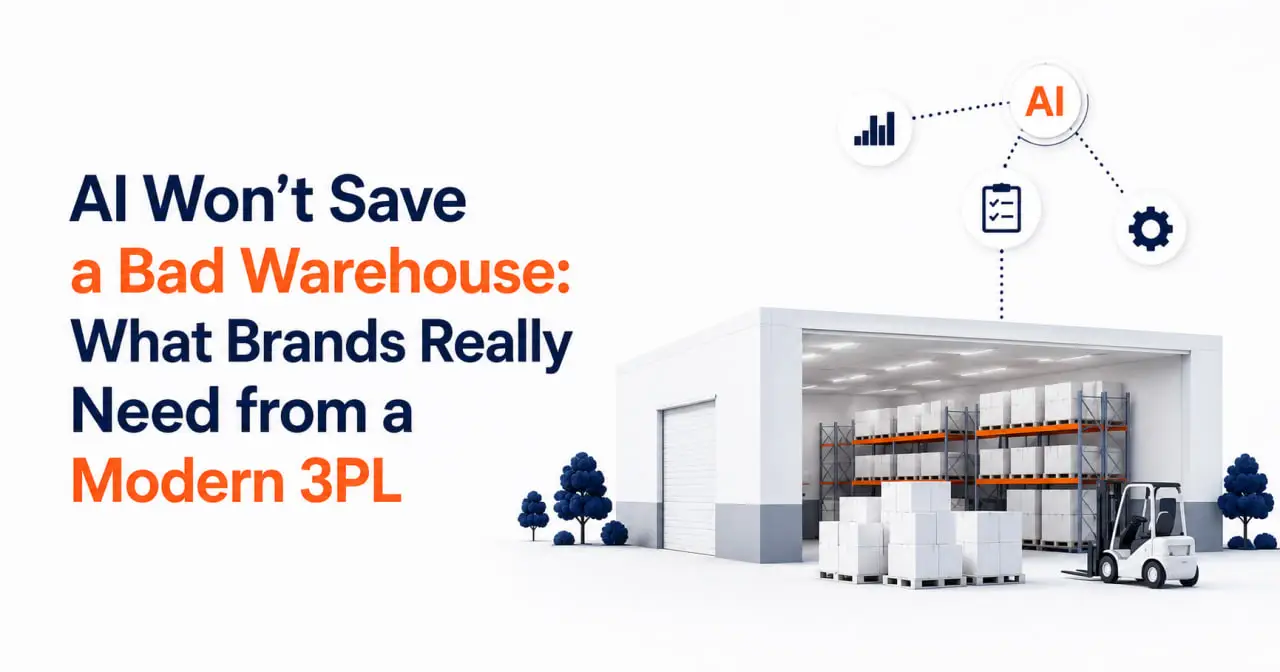
AI will not save a bad warehouse.
If inventory counts are wrong, AI only makes bad decisions faster.
If receiving is messy, AI cannot create clean stock records.
If orders are picked without scan verification, AI cannot protect your customer experience.
If your 3PL cannot tell you where your inventory is, no dashboard will fix the trust problem.
For growing FMCG, food and beverage, personal care, pet care, home care, and general merchandise brands, the real question is not:
“Does my 3PL use AI?”
The better question is:
“Does my 3PL have the systems, discipline, and visibility needed for AI to actually be useful?”
A modern 3PL should have a reliable warehouse management system, barcode scanning, real-time inventory visibility, order verification, ERP and e-commerce integrations, EDI capability, transportation visibility, reporting dashboards, lot and batch tracking, returns workflows, and clear exception management.
AI can improve these systems, but it cannot replace the basics.
Before trusting a 3PL’s AI claims, ask:
If the answer is no, AI is decoration.
Many logistics companies now use the same phrases:
“We use AI.”
“We are data-driven.”
“We offer intelligent fulfillment.”
“We provide predictive analytics.”
But those phrases are often vague.
AI is only as good as the warehouse data behind it. Bad data creates bad recommendations. Incomplete scans create incomplete visibility. Disconnected systems create conflicting inventory numbers.
A polished dashboard does not mean the operation is healthy.
A brand may only discover the weakness after going live: inventory does not match, orders are delayed, returns are unclear, retail shipments miss requirements, and nobody can explain what happened.
That is why brands should look past the buzzwords and evaluate the practical tech stack underneath.
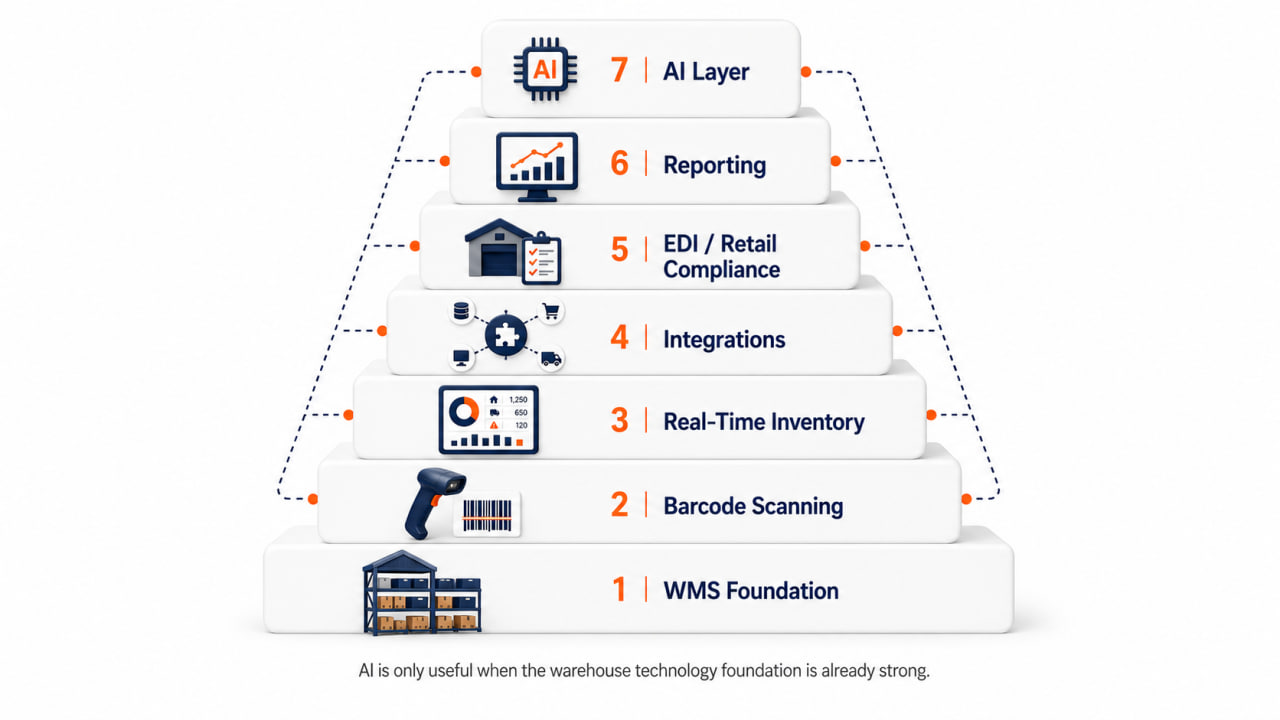
The WMS is the foundation of the warehouse. It controls receiving, storage, picking, packing, shipping, returns, and reporting.
A good WMS should support:
Without a strong WMS, everything else becomes fragile.
A warehouse that relies too heavily on manual entry is a warehouse where errors can hide.
Barcode scanning confirms what was received, where it was stored, what was picked, what was packed, and what was shipped.
For brands, scan-to-verify workflows reduce mispicks, wrong shipments, inventory confusion, and customer complaints.
AI may help optimize the process, but scanning creates the truth the system depends on.
No scan discipline, no trustworthy data.
Brands should not have to email their 3PL just to ask, “How much stock do we have?”
A modern 3PL should provide visibility into:
Without real-time visibility, brands can oversell, under-order, delay promotions, or give retailers inaccurate information.
Your warehouse should not operate separately from the rest of your business.
A modern 3PL should connect with platforms such as:
These integrations automate order flow, inventory updates, tracking numbers, returns data, and shipment confirmations.
The goal is simple:
Your sales channels, ERP, warehouse, and carriers should not be telling different stories.
For brands selling into major retailers, EDI and compliance are not optional.
A retail-ready 3PL should understand:
Many fulfillment providers can ship DTC parcels. Retail compliance is a different game.
If your 3PL cannot support retailer requirements, you risk delayed shipments, rejected deliveries, penalties, and damaged buyer relationships.
For food, beverage, supplements, personal care, pet care, and date-sensitive products, lot and expiry tracking are essential.
A 3PL should be able to answer:
AI can help identify risk patterns, but the warehouse must first capture the right data.
If lot and batch records are weak, no AI tool can rebuild a clean chain of custody later.
Warehouse visibility is only part of the story.
Brands also need to know what happens after orders leave the facility.
A modern 3PL should support:
A DTC customer wants tracking.
A retailer wants compliance.
A brand team wants to know what went wrong before the customer does.
Dashboards are useful, but dashboards alone do not solve problems.
A strong 3PL should report on:
More importantly, the 3PL should explain what the data means.
If dock-to-stock time is increasing, why?
If one SKU causes frequent errors, what should change?
If a retailer keeps triggering penalties, is the issue labeling, timing, paperwork, or pallet build?
Good reporting turns warehouse data into decisions.
This article is not anti-AI.
AI can be useful when the warehouse foundation is strong. It can help with:
But AI should be treated as an accelerator, not a substitute for warehouse fundamentals.
The right order is:
Skip the first five, and AI becomes expensive noise.
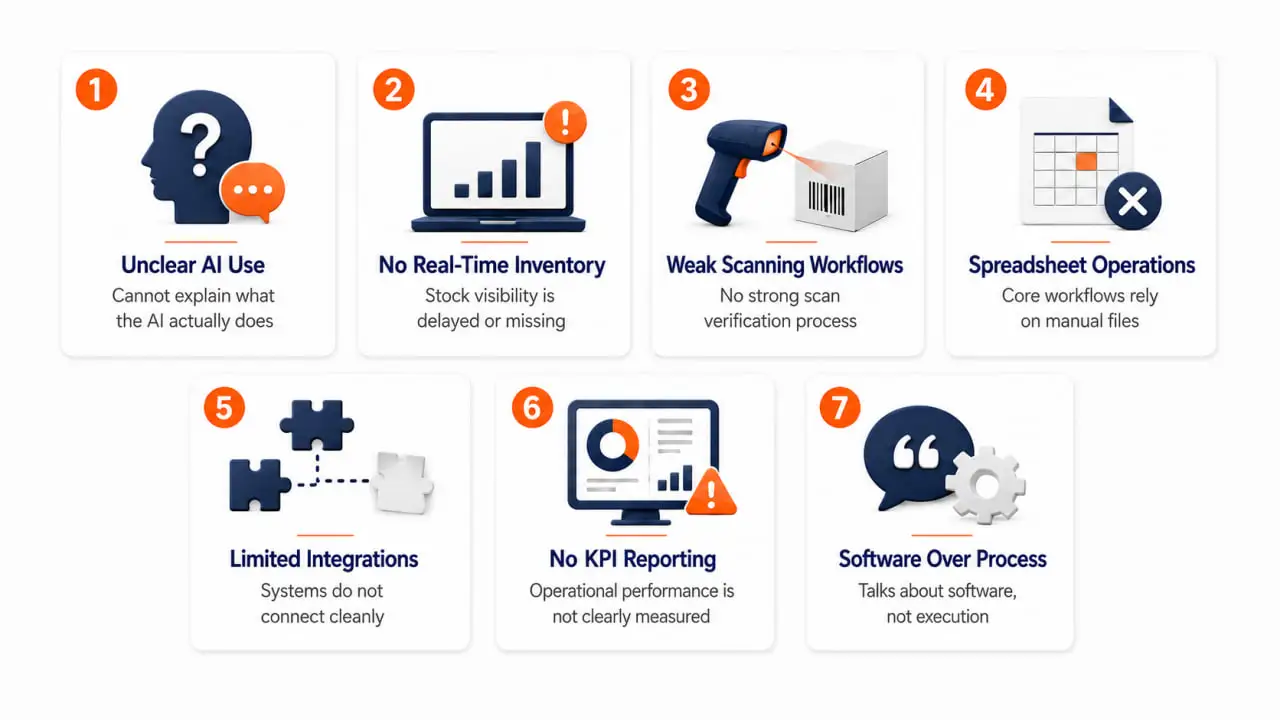
If a 3PL says it uses AI, ask follow-up questions.
Watch for these warning signs:
The best 3PLs can explain how technology supports receiving, picking, packing, shipping, returns, retail compliance, and continuous improvement.
Weak providers hide behind buzzwords.
Before choosing a 3PL, ask:
The best providers will welcome these questions.
AI is changing warehousing, but it is not magic.
It cannot fix poor receiving.
It cannot fix missing scans.
It cannot fix disconnected systems.
It cannot fix weak communication.
It cannot fix bad inventory discipline.
Brands should not choose the 3PL with the flashiest AI pitch. They should choose the 3PL with the strongest foundation.
That means:
AI should make a good warehouse better.
It should not be used to disguise a bad one.
MacMillan Supply Chain Group helps growing consumer goods brands manage warehousing, distribution, e-commerce fulfillment, transportation, retail compliance, and value-added services across Canada.
If your brand needs a 3PL partner with practical technology, real-time visibility, and operational accountability, talk to MacMillan about building a fulfillment operation that can scale.
Request a 3PL technology and fulfillment consultation.