
A Comprehensive Guide to Mastering Shopify Fulfillment Services
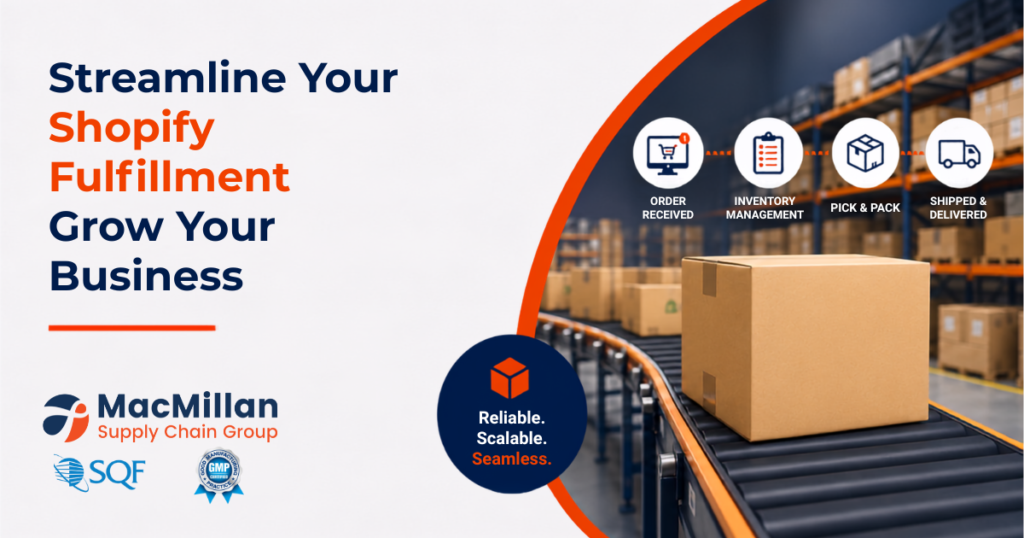
As customers become accustomed to speedy deliveries, a slow fulfillment process can lead to lost sales. For Shopify store owners aiming to grow their businesses, it’s crucial to evaluate and optimize the fulfillment process. However, planning logistics and order fulfillment can be difficult, especially for those new to e-commerce. Thankfully, numerous fulfillment service providers assist Shopify businesses in expanding their reach every day. In this guide, we will cover the fundamentals of fulfillment and delve into more topics, such as identifying the right time to enhance your fulfillment strategy and understanding the essentials of partnering with a 3PL provider such as MacMillan to streamline your operations. Why Staying on Top of Fulfillment Services is Crucial Fulfillment is a cornerstone of running a successful online store, significantly influencing the customer experience. A seamless fulfillment process ensures that orders are shipped accurately and on time providing real-time visibility. With major players like Amazon with its prime program, setting the bar with two-day delivery. MacMillan can help you meet your fulfillment needs to boost customer satisfaction, retention rates, and sales, propelling their growth and success. Overview of Shopify’s Fulfillment Options In-house Fulfillment: Manage your inventory, pack, and ship orders yourself. Suitable for small businesses but can lead to high overhead costs and time consumption as you grow. Drop shipping: Sell products without holding inventory. Purchase from manufacturers or sellers, who handle storage, packing, and shipping. 3PL Fulfillment Service Providers: Utilize 3PLs such as MacMillan that can manage the entire fulfillment process, from order alerts, tracking to delivery. This option eliminates the need for your own warehouse, as 3PLs use their own facilities. Why You Need a 3PL Shopify Fulfillment Service A third-party Shopify fulfillment service can be essential for several reasons. High order volumes, oversized products, or the need for optimized shipping can make in-house fulfillment challenging. By partnering with a fulfillment service, you can focus on other business operations. Key benefits of a 3PL services include In essence, 3PLs streamline the entire fulfillment process, from inventory storage to delivery, allowing you to maximize efficiency and minimize costs. Understanding the Shopify Fulfillment Network The Shopify Fulfillment Network (SFN) is a comprehensive network of fulfillment centers across North America designed for Shopify-integrated businesses. By leveraging SFN, you can utilize Shopify warehouses for efficient storage, picking, packing, and shipping. Key features of SFN include: Platform Integration: Seamlessly integrates with your online shop to process orders and receive inventory notifications from a single platform. Optimized Distribution: Strategically distributes your products to efficient locations, ensuring faster delivery to customers. Branded Packaging: Ships products in customized, branded packaging to enhance your brand’s image. When to Switch to Outsourced Fulfillment? Most e-Commerce businesses start small, managing inventory, order fulfillment, and shipping independently. However, as your business expands, managing these tasks on your own can become inefficient and unsustainable. Recognizing when to switch to outsourced fulfillment is crucial for continued growth. Here are the key signs that it’s time to consider outsourcing your order fulfillment: Uneven Sales: If your business has outgrown your current storage space and you’re looking to invest in a warehouse, evaluate your sales patterns first. For businesses with fluctuating order volumes, investing in a warehouse might not be cost-effective. Fulfillment companies offer adaptable warehouse services that can adjust to your needs, making them ideal for handling cynical cycles. Time Constraints on Fulfilling Orders: If you find yourself overwhelmed with order fulfillment tasks, it’s a clear indicator that you need to explore outsourced fulfillment options. This shift will allow you to focus on scaling your business rather than being bogged down by logistics. Lack of Logistics and Fulfillment Infrastructure: Outsourced fulfillment provides flexibility and infrastructure that self-fulfillment cannot match. This ensures smooth and efficient order fulfillment, allowing you to navigate foreign regulations and other logistics challenges. How to Choose a Fulfillment Service for Your Shopify Store Selecting the right logistics and fulfillment service provider is crucial for the success of your Shopify store. Here are key factors to consider: Experience in Your Industry eCommerce businesses vary significantly in their needs and customer bases. Ensure the fulfillment provider you choose has experience in your industry. Investigate which business niches they serve and which industries they specialize in to find a match that aligns with your company’s demands. Similar Existing Clients Target fulfillment companies and logistics partners that already cater to sellers in your business niche. This ensures they understand your specific needs and can provide appropriate services. Pricing Isn’t the Most Important Factor While competitive shipping costs are important, they shouldn’t be the sole deciding factor. Such as, MacMillan being the top tier provider has a transparent pricing model and provides availability and cost of services beyond basic transportation and warehousing. If your business requires custom packaging, invest in a logistics provider that can deliver this to avoid compromising product quality. Technology and Integrations Choose a fulfillment partner that stays current with technology and offers seamless integrations with your existing platform. Integration of WMS with your current systems can enhance your fulfillment process. Shopify’s advanced technology, including machine learning, optimizes inventory storage, saving you time and money. Data and Analytics Utilize data and analytics to improve your services and business operations. Partner with a logistics provider that offers real-time tracking and analytics. Shopify, for instance, provides tracking numbers for every order and customer order data, allowing you to monitor shipments and identify areas for improvement. Let MacMillan Handle your Fulfillment process MacMillan offers a unique solution, combining warehouse management software with comprehensive fulfillment services. Enhanced In-House Fulfillment If you choose to manage fulfillment internally, MacMillan enhances your logistics capabilities by automating key processes and centralizing information like real-time stock levels and shipping times on a single platform. Seamless Integration With one-click integrations with platforms such as Shopify, managing orders and processing returns becomes effortless. Advanced Fulfillment Services MacMillan Shopify-integrated fulfillment service eliminates the need for paper pick lists with its native iOS app, reducing errors by up to 99.9%. Additionally, MacMillan connects seamlessly with top carriers like
How MacMillan and Section 321 Are Revolutionizing the Canadian Logistics Landscape
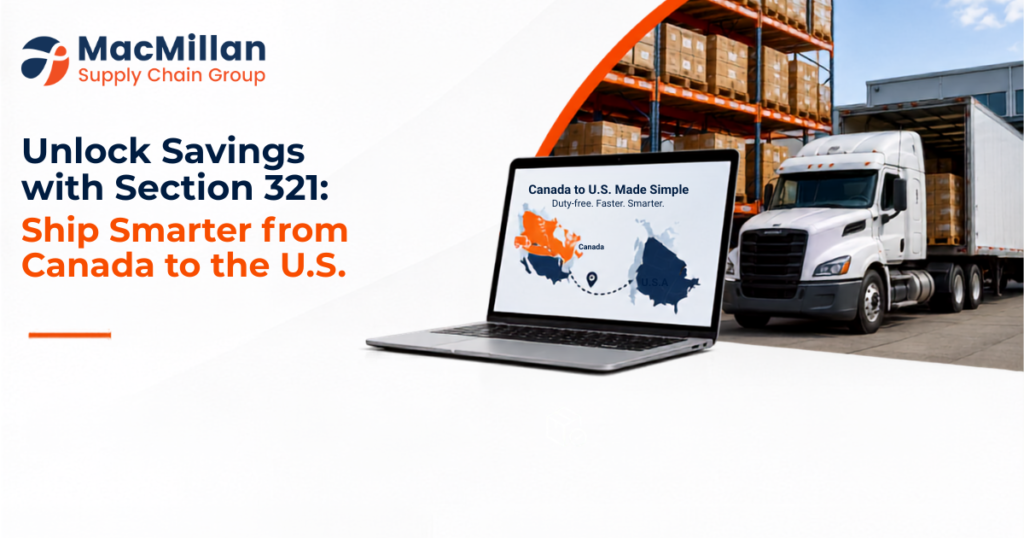
Landed cost is a crucial and often rigid component of eCommerce pricing. It encompasses all expenses, shipping, taxes, and import fees, that directly affect a company’s profitability. For example, a $5 pair of shoes can end up costing $70 in-store due to these cumulative costs. Now more than ever, e-commerce businesses are prioritizing reduced logistics costs to maximize revenue. For brands shipping from Canada, any opportunity to influence landed cost is significant. Enter Section 321. Although not a new regulation from U.S. Customs and Border Protection, the recent increase in the exemption limit from $200 USD to $800 USD per person per day has dramatically shifted the landscape for MacMillan’s Fulfillment clients and other Canadian eCommerce and logistics companies. This change presents a valuable opportunity to optimize fulfillment strategies and improve cost efficiency. In this article we dive into what is section 321? how you can use it for your advantage and how MacMillan SCG can help create value? What is section 321? – Explained Here’s a brief overview: This Section permits individual consumers to purchase and ship up to $800 USD worth of goods per day from Canada to the United States without incurring any duty fees or taxes. For eCommerce brands, this means that their products can be shipped duty-free to U.S. customers, provided that each individual order does not exceed the $800 USD daily limit. For these reasons, section 321 can give e-commerce businesses a competitive edge and reclaim revenue previously spent on taxes. This provision is applicable when importing goods from Canada into the U.S. Following MacMillan’s acquisition of Canadian warehouses in 2021, MacMillan now offers the benefits of the section for shipments originating from Canada. Moreover, how to use section to import and its long term benefits for your business. How does section 321 work? Section 321 has enabled MacMillan to capitalize on our expanded Canadian operations, introducing new strategies like zone skipping to expedite product delivery across the border. One common concern among brands is the potential for shipping delays and compromised customer service when importing goods to Canada. However, the process remains remarkably efficient, with minimal delay time between receiving goods in Canada and the U.S. Here’s how it works: Goods are imported into Canada. They can then be transported to our Canadian warehouses in Brampton and GTA area while covering 80% of the western region providing real-time visibility to the customers. Once received, the goods are checked into inventory and made available for order. When a customer places an order, MacMillan picks, packs, and labels the package with a domestic shipping label on the same day while providing tracking facilities. The package is then shipped across the border into the U.S. on that same day delivery schedules. Upon entering the U.S., the package is handed over to the chosen domestic carrier (e.g., UPS, USPS, FedEx). The package continues its journey through the U.S. to the customer’s doorstep. With this streamlined process, there’s virtually no delay, regardless of whether your products enter the U.S. or Canada first. By shipping goods a bit further, you can take advantage of duty-free benefits without sacrificing delivery speed. How e-Commerce Brands Can Maximize Savings? While the section itself doesn’t directly reduce costs, the real financial advantage comes from importing goods into Canada. Thanks to Canada’s favorable Free Trade Agreements, brands can benefit from duty deferral or duty drawback programs, which either waive or reimburse the duties on imported goods. Let’s break down the potential savings with an example: Import to Canada Item: One pair of shoes imported from China to Canada Value for Duty: $12.00 Duty Rate: 18% ($2.16) Savings: $2.16 (for just one pair of shoes) through Duty Drawback or Duty Deferral Consider the savings when scaling up to 100 or 500 pairs of shoes. While the duty rate for shoes is 18%, rates for other products can range from 20-25%. Such savings are significant and can substantially enhance your brand’s profitability. How Section 321 Can Benefit Your e-Commerce Store? After identification of what is section 321 and how it works, Section 321 can significantly lower your international fulfillment costs by enabling duty-free and tax-free imports into the U.S. Here’s how it helps: Reduced Costs: It allows for the duty-free import of low-value goods, potentially exempting shipments from Section 301 tariffs if manufactured overseas. Faster Shipments: By minimizing paperwork and using the e-Manifest electronic filing system, Section 321 speeds up customs processing and reduces delays, ensuring quicker delivery to customers. Competitive Advantage: Lower international shipping costs and the ability to bulk ship to U.S. fulfillment centers can enhance your affordability and shipping rates, leading to faster domestic delivery and improved customer satisfaction. How MacMillan Facilitates Section 321? Here’s the advantage for eCommerce brands of all sizes looking to leverage the Section model: MacMillan handles the complexities for you. Our team collaborates with clients to identify the most effective duty elimination or drawback program, simplifying the setup process. We also manage the logistics of moving products from Canadian ports to our 3PL warehouse in Brampton and the Greater Toronto Area. Brands benefit from our exceptional client service and see a direct impact on their revenue through easier, duty-free importing and shipping. As global shipping continues to evolve, adopting Section 321 with MacMillan Canada is a strategic move in navigating the future of cost-effective and efficient international logistics. Key Take Aways Section 321 represents a game-changing opportunity for eCommerce businesses looking to optimize their landed costs and enhance their fulfillment strategies. By enabling duty-free and tax-free imports of low-value goods into the U.S., Section 321 reduces overall shipping expenses and accelerates delivery times. This is particularly advantageous for brands shipping from Canada, as it allows them to leverage Canada’s favorable Free Trade Agreements and efficient logistics solutions. MacMillan SCG’s expertise in navigating Section 321 ensures that businesses can fully capitalize on these benefits, streamlining their international operations and boosting profitability. As the global shipping landscape evolves, embracing Section 321 with MacMillan is a strategic move towards more
Selecting the Optimal 3PL Fulfillment Center Location: 5 Key Factors to Evaluate
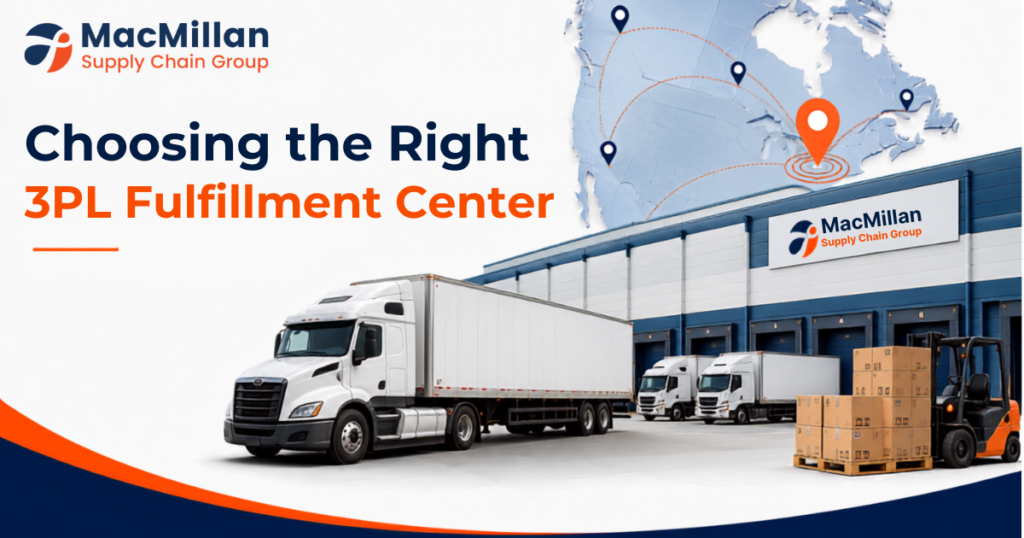
The location of your 3PL fulfillment center is crucial to the success of your logistics operations. But how do you select a 3PL partner that will enhance your efficiency and meet your requirements? In this blog, we’ll explore key factors to consider when choosing a 3PL fulfillment center and its geographic location. By understanding and applying these considerations, you can streamline order fulfillment, cut shipping costs, and boost customer satisfaction. Why does Geographic Location Matter? The location of your fulfillment center is a critical factor in your logistics strategy. Here’s why choosing the right spot can significantly impact the success of your warehousing operations: Ensuring Fast Delivery Quick and reliable delivery is essential for customer satisfaction. Many consumers now expect their orders within two days; anything longer may be deemed excessive. Choosing a fulfillment center such as MacMillan, close to major customer hubs means that orders can be processed, picked, packed, and shipped more swiftly. The shorter the distance goods must travel, the faster they reach customers, which directly enhances their satisfaction. MacMillan ensures real-time tracking and a zero-error rate for on time deliveries within the GTA and 80% of the western region, proving to be top tier Canadian warehousing provider. Managing Shipping Costs The strategic placement of your fulfillment center is key to controlling shipping expenses. By positioning fulfillment centers near customer concentrations and major highways, MacMillan avoids the high costs of long-distance shipping. This approach helps maintain competitive shipping rates and can improve overall profit margins. Location Facilitates Business Expansion As your business scales, strategic expansion becomes essential. To accommodate growing demand, you may need to add more fulfillment centers to your network. The choice of these locations is vital for preserving both customer experience and operational efficiency. Selecting optimal locations from the beginning sets the stage for a seamless transition during future expansion, ensuring that your growth is both efficient and effective. 5 Key Factors for Choosing the Right 3PL Fulfillment Center Now that you understand the importance of location for your fulfillment center, the next step is determining the best site. Here are five crucial factors to guide your decision: Proximity to Your Customer Base The foremost consideration is the location relative to your customer base. Shipping carriers use zones to calculate shipping costs and delivery times, the shorter the distance, the lower the cost and the faster the delivery. To enhance efficiency and reduce expenses, select a fulfillment center close to the majority of your customers. For a global reach, partnering with international 3PLs that have centers in various countries can help lower shipping costs and improve delivery speed. Delivery Time Expectations Delivery time directly impacts customer satisfaction. Choose a fulfillment center that can meet or exceed your customers’ expectations for delivery speed. Assess industry standards or gather customer feedback to determine acceptable delivery times and select a location that aligns with these expectations. Free Delivery Feasibility MacMillan offers free delivery which can be a major selling point, but it comes with costs. To offer free shipping without eroding your profit margins, select a fulfillment center location that optimizes shipping costs. Consider a center close to your customer base or one that provides various shipping options to manage costs effectively. Single vs. Multiple Locations Decide whether a single fulfillment center or multiple locations best suits your business. A single center may be ideal for niche businesses, or those with bulky products, simplifying logistics and reducing operational costs. Conversely, multiple centers can benefit larger or more diverse businesses by covering different regions, reducing shipping times, and providing flexibility. Availability of Value-Added Services Value-added services, such as gift wrapping, custom packaging, or personalization can enhance customer experience and differentiate your brand. If these services are important to your business, ensure that your chosen fulfillment center can accommodate them. Partner with a 3PL provider such as MacMillan equipped with the technology and expertise to offer these services effectively. Questions to ask before choosing your 3pl fulfillment Location Choosing the ideal location for your 3PL fulfillment center involves weighing several factors, and there’s no one-size-fits-all solution. Here’s a quick guide to help you make the best choice: Do I need to be close to my fulfillment center? Not necessarily. The location should primarily cater to your customer base to ensure faster and more cost-effective shipping. While proximity to the fulfillment center might offer benefits like easier coordination and local market familiarity, it’s not crucial for success. How do I decide between one or multiple fulfillment centers? One Location: Best for small or niche businesses, products requiring special handling, or limited budgets. Multiple Locations: Ideal for large, diverse businesses with a broad market, complex inventory, or higher budgets that can support the advantages of additional centers such as Walmart and its optimized fulfillment operations. Should my 3PL fulfillment center be centrally located? Central Location: Effective for reaching a broad customer base quickly and managing logistics with fewer locations. Non-Central Location: Beneficial if your customers are concentrated in specific areas or if you want more flexible shipping options and the advantages of multiple centers. Ultimately, the right location for your 3PL fulfillment center will impact shipping costs, delivery times, customer satisfaction, and scalability. Consider these factors to choose the best location for your business and customers. Partner with MacMillan: Your Trusted 3PL Solution Worried about finding the perfect location for your 3PL fulfillment center? It’s time to focus on growing your business operations and leave the logistics to the experts. 3PL Fulfillment and Prep offers reliable and professional services to elevate your fulfillment process. Say goodbye to location headaches and logistics concerns, and let us handle everything for you. Our network of strategically located fulfillment centers across the US ensures your products are stored and shipped efficiently, reducing delivery times and costs. We provide: Cutting-edge facilities and scalable equipment Advanced, integrated technology Transparent and competitive pricing Exceptional customer support Don’t let fulfillment challenges hinder your business growth. Partner with 3PL Fulfillment and Prep and let us manage your order fulfillment
White-Label 3PL and Fulfillment Services- A Complete Guide
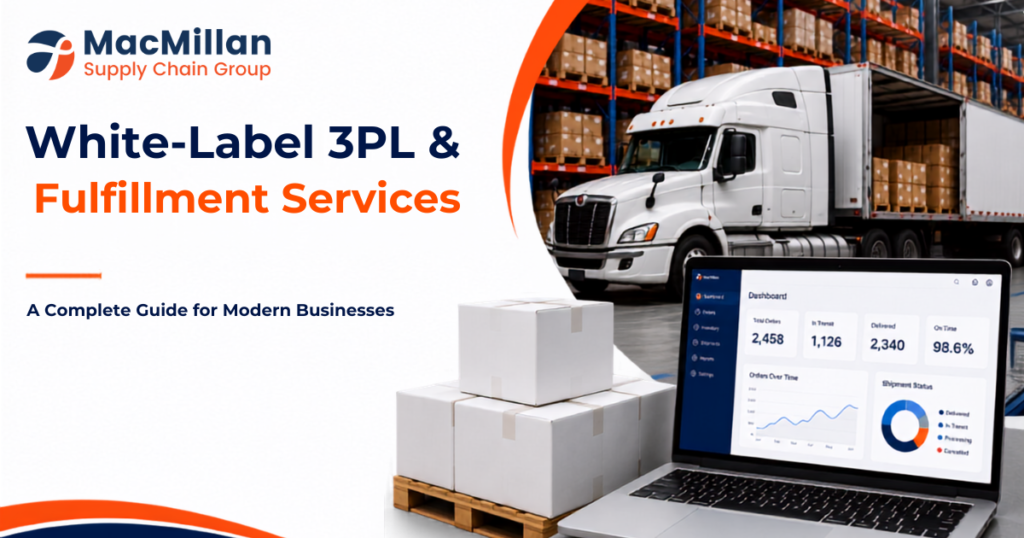
In today’s rapidly evolving and competitive business environment, companies are increasingly looking for ways to optimize their operations and enhance supply chain management. One solution that has gained notable popularity is White Label 3PL. In this blog, lets discover how white Label works and how it can benefit warehousing dynamics. What are White-Label Fulfillment Services-MacMillan? MacMillan simplifies fulfillment with its white-label services by integrating seamlessly with your online stores and sales channels, including B2B eCommerce. By connecting your platforms to our cloud-based fulfillment solution, you can select from the Warehouse Canada/ fulfillment locations throughout GTA and 80% of the western region to store your inventory. Orders are then processed and shipped from the nearest fulfillment center automatically. With the Developer API, your business can leverage our fulfillment services while maintaining a consistent brand experience. Orders will appear as if they are coming directly from your business, creating a streamlined and automated logistics solution. MacMillan handles all logistical aspects, allowing you to concentrate on enhancing the customer experience. Simply submit a Warehouse Receiving Order (WRO), send your inventory to MacMillan fulfillment centers, and we manage the rest. This service is particularly advantageous for online stores working with multiple product vendors. For instance, tech startup Postal uses MacMillan API-driven platform to optimize corporate gifting for its clients, showcasing the flexibility and efficiency of MacMillan solutions. How White Label Works: A Comprehensive Overview Understanding how White Label 3PL operates involves examining its typical workflow: Integration and Onboarding: The process begins with integrating systems and processes between the company and the 3PL provider. This includes setting up data exchange protocols, syncing inventory management systems, and establishing clear communication channels. Warehousing and Inventory Management: The 3PL provider takes on the responsibility of receiving, storing, and managing inventory within their facilities. They employ strategic storage solutions, robust inventory tracking, and rigorous quality control to ensure accuracy and minimize stock outs. Order Fulfillment: When a customer places an order, the 3PL provider manages the entire fulfillment process. This includes receiving order details, picking and packing items, and shipping them using their established carrier networks. They ensure precise order handling, efficient packaging, and prompt delivery. Technology and Reporting: Utilizing advanced logistics software, White Label 3PL providers track and manage shipments, offer real-time visibility into inventory levels, generate performance reports, and provide analytics to support data-driven decision-making. Customer Support: The 3PL provider also handles customer service functions such as inquiries, returns, and exchanges. They deliver responsive and professional support to ensure a smooth customer experience throughout the fulfillment process. By adopting this workflow, White Label 3PL providers seamlessly integrate into a company’s operations, acting as a discreet yet vital component of the supply chain. This integration allows businesses to concentrate on their core activities while relying on the 3PL’s expertise to manage logistics efficiently. Discover the Enhanced Benefits of White Label with MacMillan MacMillan’s 3PL warehousing Canada/ fulfillment services are designed to adapt to your business needs. Whether you prefer to select specific fulfillment center locations for your inventory or maintain in-house fulfillment while leveraging our advanced platform, we offer flexible solutions. With just one fulfillment center, we guarantee 100% 2-day shipping coverage across the GTA and covering 80% of western region, ensuring you meet customer expectations for speed and convenience. Our efficient shipping capabilities foster customer loyalty through reliable, fast delivery. We have strong partnerships with major carriers, enabling us to offer discounted shipping rates. We cater to various shipping needs, from international deliveries to expedited services, ensuring you have access to a wide range of options. Our integrated inventory management tools help mitigate common challenges such as inventory shrinkage, inaccurate reports, stock outs, and backorders, streamlining your operations. For businesses that are scaling up but not yet ready to outsource inventory storage, MacMillan’s Warehouse Management System (WMS) allows you to fulfill orders from your warehouse using our cutting-edge technology. Selecting the Right White Label 3PL Provider Choosing the right White Label 3PL (Third-Party Logistics) provider is essential for the success of your logistics operations and the overall customer experience. The effectiveness of your logistics strategy hinges on the capabilities, reliability, and alignment of your chosen 3PL partner. This section will guide you through the key factors to consider, the evaluation process, and the critical questions to ask when selecting a White Label 3PL provider. What are the Key Factors to Consider? Before starting the evaluation process, it’s important to identify the crucial factors when selecting a White Label 3PL provider. These factors will depend on your specific business needs, industry, and target market. However, several common elements should be evaluated: Expertise and Industry Experience Seek out a White Label 3PL provider with expertise in your industry or experience with businesses similar to yours. This ensures they understand the unique logistics challenges and requirements of your sector. Industry knowledge often leads to improved efficiency, optimized processes, and customized solutions that align with your business needs. Scalability and Flexibility Assess the scalability and flexibility of the 3PL provider’s operations. Can they meet your current needs and accommodate future growth? Evaluate their ability to quickly adjust during peak seasons or market fluctuations. An ideal White Label 3PL partner should seamlessly adapt to changing business demands, offering a smooth logistics experience regardless of volume variations. Technology and Integration Capabilities Examine the technology infrastructure of the White Label 3PL provider. Do they have advanced systems for inventory management, order processing, and real-time visibility? Can they integrate efficiently with your existing systems and platforms? Robust technology and integration capabilities are crucial for seamless communication, data exchange, and efficient logistics management. Network and Geographic Reach Consider the provider’s network and geographic reach. Do they maintain multiple warehouse locations strategically positioned to serve your target markets? Are they connected with reliable carrier networks? A well-established network ensures quicker, more cost-effective shipping, reducing transit times and delivery costs for your customers. Service Level Agreements (SLAs) Review the service level agreements (SLAs) offered by the White Label 3PL provider. These agreements should detail performance metrics, guarantees, and penalties related to order fulfillment, inventory accuracy, on-time delivery, and customer support.
5 Factors Shaping Your Shipping Costs in the 3PL Economy
Are your outbound shipping costs cutting into your 3PL’s profits? In this article, we’ll explore five key factors impacting your shipping expenses in your Canadian 3pl warehouse and offer practical strategies to help you lower them. From optimizing delivery speed to managing special handling fees, we’ll provide valuable insights to help you make informed operational decisions that save both time and money. Factor 1: Weight and Shipping Zones When shipping domestically within the US or including Canadian 3pl warehouses, two primary elements affect your costs: the destination zone and the weight of the package. Destination Zone Shipping carriers divide the area into the given zones, starting with Zone 1 at the origin point. As your package travels further from its starting point, the shipping fees rise. Here’s a breakdown of the zones and their respective mileage ranges: Zone 1: 1-50 miles Zone 2: 51-150 miles Zone 3: 151-300 miles Zone 4: 301-600 miles Zone 5: 601-1000 miles Zone 6: 1001-1400 miles Zone 7: 1401-1800 miles Weight The weight of your package directly affects shipping costs: heavier packages incur higher fees. However, weight isn’t the sole factor; the dimensions of your package are also crucial. While MacMillan offers transparent fees with no hidden charges. Finding the right balance between a package’s size and weight can help you avoid DIM weight surcharges, which are applied to larger but lighter packages. Investing in an efficient packaging design can help you optimize the size and weight of your packages, ultimately reducing unnecessary shipping expenses and boosting your Canadian 3pl warehouse operations. Shipping Calculators by Carrier: USPS: Shipping Calculator Canada Post: Shipping Calculator FedEx: Shipping Calculator UPS: Shipping Calculator International Shipping Don’t miss out on duty relief programs like Section 321. This provision can reduce your duty fees by up to 20%, offering significant savings. MacMillan Section 321, part of the Trade Facilitation and Trade Enforcement Act, simplifies shipping from Canada or Mexico to the U.S. for individual customers by providing tax and duty exemptions, quicker clearance, and less paperwork. For goods valued at $800 USD or less per person per day, Section 321 offers an excellent opportunity to cut costs and expand your market in the U.S. While some product restrictions apply, the benefits are substantial for businesses aiming to reach American consumers. Factor 2 : Delivery Speed With the rapid growth of eCommerce, fast delivery is crucial for meeting customer expectations. MacMillan has learned that while customers generally expect two-day delivery from Amazon, they are usually okay with three to four days from other businesses, as long as real-time tracking is provided. To address these needs and maintain profitability, balancing cost and delivery speed is key. 90% of customers want immediate updates, and 32% will abandon their carts if shipping times are too long, pushing 3PLs and carriers to update their distribution models. Fulfillment Trends Micro-fulfillment centers are a solution for faster delivery, strategically located in urban areas and stocked with high-demand items. Though setting up MCFs can be costly, they lower shipping expenses and enhance efficiency, benefiting companies that implement them. Last Mile Delivery Last-mile delivery constitutes 53% of shipping costs, making it critical for customer satisfaction and profitability. Challenges in this area are significant, but partnering with efficient services like Veho can improve delivery performance and reduce costs. Factor 3 : Warehouse Teams and the Packing Process Efficiency in a Canadian 3PL warehouse hinges on the effectiveness of your packing team. Here are key considerations for optimizing your operations: Training Investment Ensure your team is well-trained in SOPs, equipment use, inventory management, and customer order systems. Proper training reduces turnover and enhances productivity, ultimately boosting profits. Packing Station Efficiency Regularly evaluate your packing station to find areas for improvement. Implement one-touch stations and ergonomic designs to streamline workflow, cut labor costs, and reduce errors. Optimizing Picking Paths Efficient picking paths can significantly improve profit margins. Slow picking increases costs, which can lead to higher prices for customers. Streamline picking processes to enhance efficiency. Automation Utilization While a 95-98% order accuracy rate is standard, aiming for near 100% is ideal. However, MacMillan offers a zero percent error rate. Automation helps reduce errors and improves inventory control, saving money by minimizing mistakes Data Analysis Measure and analyze key performance indicators (KPIs) to identify inefficiencies and reduce expenses. Tracking data from receiving to shipping provides a comprehensive view of your warehouse operations, aiding in operational improvements. Key Performance Indicators (KPIs) to Monitor: Inventory Days of Supply (DSI): Measures the average number of days it takes to turn inventory into sales, including work-in-progress items. Parcel Bill Accuracy: Regularly check your parcel bills for accuracy to prevent overcharges. Detailed bills can aid in negotiating better shipping contracts. Receiving Efficiency: Calculates how efficiently your receiving area operates, measured by the volume of inventory received per hour worked. For example, 2000 goods received by two employees working 40 hours each translates to 25 goods per hour. Order Picking Accuracy: Essential for ensuring orders are filled correctly. High accuracy prevents costly mistakes and maintains customer satisfaction. Warehouse Capacity Utilization: Efficient use of warehouse space is crucial. Ideal utilization is around 80%. Calculate usable space by measuring total square footage, subtracting unusable areas, and multiplying by clearance height to determine usable volume. Factor 4 : Special Handling Fees Handling fees for hazardous and fragile items have both pros and cons: Hazmat: Revenue Generation: Special handling fees for hazardous materials help cover safety costs and boost profitability. Risk Management: To ensure safe transport, charge fees, conduct inspections, and employ trained staff. Competitive Advantage: Expertise in handling hazardous items can position a shipping company as an industry leader, attracting customers seeking specialized services. Fragile Items: Reputation: Damaged items can harm your reputation and bottom line. Ensure careful handling by using a special projects team to pre-assemble or kit items for safer transport. Factor 5 : Surcharges in Canadian 3PL Warehouse Surcharges can impact your shipping costs significantly. Key points to manage them include: Understanding Charges: Be aware of all surcharges, including those for specialized services, to avoid unexpected costs. Negotiation: Start with competitive base rates and analyze accessorial charges to select the best options. Cost Management: General rate increases can affect base rates. Use shipping cost strategies, analyze expenses,
True Cost of 3PL Fulfillment in Canada
The true cost of 3PL fulfillment in Canada includes much more than storage and pick-and-pack fees. A complete budget may include receiving, inventory storage, packaging materials, shipping, returns, technology, account management, retail compliance and seasonal surcharges. For a straightforward ecommerce order, fulfillment labour may cost only a few dollars, but carrier charges and operational exceptions can make the final cost considerably higher.This is why the lowest rate on a 3PL quote is not always the lowest-cost option. A provider offering inexpensive picking may charge separately for cartons, receiving, integrations, reporting or account support. Another provider may quote a higher base rate but include services that would otherwise appear as additional line items.Canadian businesses should compare the total cost of moving an order from inbound receiving to final delivery—not one attractive number on a rate card. What Is 3PL Fulfillment? Third-party logistics fulfillment is the outsourcing of inventory storage, order processing and shipping to an external logistics provider. The business sends inventory to the 3PL, and the provider receives, stores, picks, packs and ships orders as they are placed. A full-service 3PL may also manage wholesale orders, retail distribution, inventory reporting, returns, transportation coordination, kitting, relabelling and retailer-specific preparation. For ecommerce brands, the process often begins when an order flows from Shopify, Amazon or another sales platform into the warehouse management system. Warehouse staff then locate the products, confirm the quantities, pack the order and transfer it to the selected parcel carrier. Businesses with both ecommerce and wholesale customers may require a broader fulfillment services program. Direct-to-consumer orders may be picked by individual unit, while retail orders are prepared by case, pallet or purchase order. Average 3PL Fulfillment Costs in Canada There is no single average rate that applies to every Canadian business. A small subscription brand shipping lightweight parcels has a different cost profile from a food company storing expiry-controlled pallets or a general merchandise supplier shipping to major retailers. Published Canadian pricing examples commonly show standard pallet storage in the approximate range of C$20 to C$40 per pallet per month and basic pick-and-pack charges of roughly C$2 to C$5 per order. Some providers advertise lower starting prices, but those figures may apply only to specific order profiles, volumes or service conditions. A practical ecommerce fulfillment budget may include: Receiving and inventory check-in Monthly pallet, shelf or bin storage A base pick-and-pack fee Additional item or additional pick fees Boxes, mailers, tape, labels and protective material Carrier postage and applicable surcharges Returns processing Account, technology or monthly minimum fees These ranges should be used for early planning rather than as guaranteed market prices. The final rate depends on the provider, facility location, volume commitment and operational complexity. Receiving and Inbound Processing Fees Receiving fees cover the work required to unload incoming inventory, verify quantities, inspect visible damage, record products in the warehouse management system and move goods into storage. A 3PL may charge receiving by: Pallet Carton Container Unit Labour hour Inbound purchase order Palletized inventory with accurate labels and an advance shipping notice is generally easier to receive than a floor-loaded container containing mixed or unlabelled cartons. If the physical delivery does not match the inbound documentation, additional counting, sorting or investigation fees may apply. Receiving costs can increase when: Cartons arrive without scannable product labels. One carton contains several mixed SKUs. Products require lot or expiry-date recording. Inventory arrives damaged or without documentation. A floor-loaded container requires manual unloading. Products must be relabelled before putaway. Businesses importing containerized inventory should confirm whether container destuffing, palletization and stretch wrapping are included in receiving or quoted separately. Inventory Storage Costs Storage fees cover the warehouse space occupied by inventory. A provider may calculate storage by pallet, bin, shelf, cubic foot, square foot or individual unit. Pallet-based pricing is common for wholesale inventory, while bin or shelf pricing may be used for smaller ecommerce products. Oversized, fragile, hazardous or temperature-sensitive products may require a different storage rate. Storage is normally billed monthly, but the billing method matters. Some providers calculate the number of storage positions used on a specific date. Others use average daily occupancy or bill each pallet position that was occupied at any time during the month. The following conditions can increase storage cost: Slow inventory turnover Excess safety stock Seasonal stock arriving too early Too many low-volume SKUs Partially filled pallets Oversized or non-stackable products Long-term storage penalties Good inventory management helps reduce unnecessary storage by identifying ageing stock, slow-moving SKUs and replenishment problems before they consume valuable space. Pick and Pack Fees Pick-and-pack fees cover the labour required to locate products, confirm the order, select the correct units and prepare them for shipping. A common pricing structure includes a base fee for the first item and an additional fee for every extra item or pick. For example, an order containing one SKU may be charged one base pick. An order containing four different products may include the base charge plus three additional picks. However, the definition of a “pick” can vary. One provider may count each SKU line as a pick, while another may count every physical unit. Ten units of the same product could therefore be billed as one pick or ten picks, depending on the agreement. Pick-and-pack rates may also vary based on: Average items per order Number of active SKUs Product size and weight Fragility or special handling Order volume Same-day processing requirements Batch, zone or individual-order picking methods Businesses should ask the provider to calculate several sample orders using the proposed fee structure. This reveals the realistic cost more clearly than a headline “starting from” rate. Packaging Material Costs Packaging materials are frequently separate from the pick-and-pack fee. These costs may include boxes, padded mailers, tape, labels, void fill, protective wrapping, inserts and temperature-control materials. A lightweight product shipped in a standard mailer will usually require less packaging than a fragile item packed in a reinforced carton. Dimensional weight can also make an unnecessarily large box more expensive to ship, even when
Amazon Supply Chain Services vs Canadian 3PLs: Which Is Right for Your Business?
Amazon Supply Chain Services and Canadian third-party logistics providers can both store inventory and fulfil customer orders, but they are designed for different operational priorities. Amazon can be a strong choice for businesses focused on marketplace sales, standardized ecommerce fulfilment and access to a large delivery network. A Canadian 3PL may offer greater flexibility for retail compliance, customized packaging, B2B distribution, inventory control and direct operational support. The right choice is not simply the provider with the largest network. It is the provider that fits your sales channels, products, customers and growth strategy. For many Canadian brands, the decision comes down to one question: do you need a standardized fulfilment system, or a logistics partner that can adapt its operations around your business? What Are Amazon Supply Chain Services? Amazon Supply Chain Services brings together several logistics capabilities that can support inbound transportation, inventory storage, distribution, order fulfilment and parcel delivery. Depending on the program and eligibility, businesses may use services such as Fulfilment by Amazon, Amazon Warehousing and Distribution or Multi-Channel Fulfilment. Fulfilment by Amazon is primarily built to support orders placed through the Amazon marketplace. Sellers send inventory into Amazon’s network, and Amazon handles storage, picking, packing, shipping and certain customer-service activities. Multi-Channel Fulfilment extends parts of that network beyond Amazon orders. It allows qualifying businesses to fulfil orders from their own ecommerce websites and other sales channels using inventory stored within Amazon’s network. This model can be attractive for brands that want fast deployment, established processes and fewer day-to-day warehouse responsibilities. However, businesses still need to review service eligibility, storage rules, preparation requirements, product restrictions and fee structures carefully. What Does a Canadian 3PL Provide? A Canadian 3PL manages logistics activities on behalf of a business. Services may include warehousing, inventory management, ecommerce fulfilment, retail distribution, transportation coordination, returns, kitting and custom packaging. The difference is often in how those services are delivered. Rather than placing every customer into one highly standardized workflow, a flexible 3PL can design processes around the brand’s products, retailers, order profiles and operational requirements. For example, a company selling through Shopify, Canadian retail chains, distributors and subscription programs may need several fulfilment workflows under one roof. It may require case picking for wholesale orders, individual-unit picking for ecommerce, retailer-specific labels, promotional bundles and lot or expiry tracking. A provider offering integrated warehousing and distribution services can coordinate those activities while maintaining a clearer connection between inventory storage, order preparation and outbound transportation. Amazon Supply Chain Services vs Canadian 3PLs Comparison Area Amazon Supply Chain Services Canadian 3PL Primary strength Standardized ecommerce and marketplace fulfilment Flexible, multi-channel logistics support Amazon marketplace integration Strong Varies by provider and integration Retail compliance May not be designed around every retailer’s requirements Can support retailer-specific preparation and documentation Custom packaging Usually more standardized Can support kitting, relabelling and promotional packaging Operational communication Platform- and program-driven May provide direct account and operations support Inventory flexibility Governed by program rules and network requirements Can be adapted around the customer’s inventory model B2B and retail distribution Available capabilities depend on the program Often designed to support wholesale and retail orders Returns handling Standardized processes Can create product-specific inspection and disposition rules When Amazon May Be the Better Fit Amazon may be suitable when most of your revenue comes from the Amazon marketplace and your products fit comfortably within its fulfilment requirements. The network can reduce the need to build an internal fulfilment operation, while established technology helps automate common order-management tasks. It may also work well for straightforward ecommerce products with predictable dimensions, simple packaging needs and limited retail-compliance requirements. Amazon can be especially useful when: Your main sales channel is Amazon. Prime eligibility is commercially important. Your products follow standard storage and handling requirements. You prefer a technology-led, standardized fulfilment process. You do not require frequent custom packaging or product assembly. However, businesses should model the complete cost rather than looking at one fulfilment fee. Storage duration, inventory movement, preparation, returns and seasonal volume can all influence the final cost per order. When a Canadian 3PL May Be the Better Fit A Canadian 3PL may be more appropriate when your supply chain extends beyond a single marketplace. This is particularly relevant for brands serving national retailers, independent stores, distributors, ecommerce customers and promotional programs at the same time. A flexible provider can build different workflows for different channels. Ecommerce orders may move through a dedicated ecommerce order fulfilment process, while wholesale cases are prepared according to retailer routing guides and delivery appointments. A Canadian 3PL may be the stronger choice when: You sell through several ecommerce and retail channels. Your retailers have strict labelling, packaging or routing requirements. Your products need lot, batch or expiry-date control. You require kitting, bundles, displays or promotional packaging. You want direct communication with an operations team. You need customized reporting or system integrations. Your return process requires inspection, grading or repackaging. Canadian retailers can impose precise shipping and preparation standards. Missed appointments, incorrect labels, damaged cartons or inaccurate documentation may lead to delays and chargebacks. A provider with dedicated retail compliance preparation can help address these requirements before an order leaves the warehouse. Inventory Visibility and Operational Control Inventory visibility should be a major part of the decision. A business needs to know what is available, where it is located, which orders have been allocated and whether stock is approaching a replenishment threshold. Amazon provides inventory tools within its ecosystem, but brands operating across multiple marketplaces, retailers and warehouses may need a broader view. A 3PL with real-time inventory visibility can provide a centralized operational picture across receiving, storage, order processing and shipping activities. This becomes increasingly important as the business grows. Without reliable visibility, teams may over-order inventory, promise unavailable products or move stock between facilities unnecessarily. The issue is explored further in this guide to omnichannel fulfilment and inventory visibility. Customization, Packaging and Brand Experience Fulfilment is not only about moving a box from a warehouse to a customer. For
Unlocking Outsourced Fulfillment: Key Advantages and Obstacles
Outsourced fulfillment involves hiring a third-party logistics provider to manage inventory, order processing, packaging, and shipping, allowing businesses to focus on their core activities. This approach streamlines the supply chain and supports scalability, particularly beneficial for small and medium-sized businesses facing demand spikes. Partnering with a 3PL offers several advantages, including access to specialized expertise, advanced technology, and established supply chain relationships, all contributing to cost savings and improved customer service. Businesses can customize fulfillment services to their needs, reducing investment in infrastructure and technology. Overall, outsourced fulfillment helps companies optimize logistics, cut costs, and concentrate on growth and customer satisfaction. What are the components of outsourced fulfillment? Outsourced fulfillment involves several key components that ensure efficient order processing: Inventory Management: A 3PL such as MacMillan SCG tracks and manages inventory levels using advanced systems to prevent stock outs and ensure timely replenishment. Order Processing: The 3PL handles order confirmation, verification, and allocation through automated systems integrated with eCommerce platforms, ensuring fulfillment with accuracy and efficiency. Packaging: Proper packaging is crucial for product protection and a positive customer experience. MacMillan SCG uses industry-standard materials and may offer custom packaging options. Shipping: Leveraging their network, 3PLs select optimal shipping methods and carriers, negotiate rates, and offer various delivery options to ensure timely and safe delivery. Returns Management: The 3PL manages the entire returns process, including authorization, inspection, restocking, and refunds or exchanges, streamlining operations and enhancing customer satisfaction. Customer Service: MacMillan’s dedicated customer service teams handles inquiries, provide updates, and resolve issues, ensuring a smooth customer experience from order to delivery. Outsourcing fulfillment to a skilled 3PL allows businesses to focus on their core functions while benefiting from expert management of these crucial components, leading to improved efficiency and customer satisfaction. Outsourcing fulfillment to a 3PL offers several key advantages Expertise and Resources: MacMillan SCG provide specialized knowledge and access to advanced technology, streamlining inventory management, order processing, and shipping. Cost Savings: By outsourcing, you avoid investing in warehouses, technology, and a dedicated team. This reduces infrastructure costs and operational expenses. Scalability: 3PLs can easily adjust to fluctuating order volumes during peak times, handling increased demand without needing additional resources or infrastructure. Focus on Core Competencies: Outsourcing allows you to concentrate on strategic activities like product development and marketing, leaving logistics to the professionals. What are the considerations to follow in outsourced fulfillment? While outsourcing fulfillment offers many advantages, businesses should be mindful of potential challenges. One key concern is the loss of direct control over fulfillment processes, making it crucial to select a reliable and transparent 3PL. Data security is another significant consideration; sharing sensitive customer and inventory information requires partnering with a 3PL that implements robust security measures. Additionally, effective communication and coordination are essential for successful outsourcing, necessitating regular updates and clear communication channels to ensure smooth operations. Factors to consider when choosing a fulfillment partner When choosing between in-house fulfillment and outsourcing to a 3PL, several key factors should be evaluated: Order Volume: Large order volumes might necessitate advanced technology and infrastructure, which can be more cost-effective through a 3PL provider such as MacMillan for reliability. Product Characteristics: Products that are fragile or perishable often require specialized handling and packaging. A 3PL can offer the expertise needed for these specific requirements. Market Reach: For businesses with a broad geographic footprint or diverse customer base such as Amazon, partnering with a 3PL can enhance fulfillment efficiency and improve delivery across various locations. Ways to successfully outsource a fulfillment partner For a successful outsourcing experience, businesses should adhere to the following best practices: Thorough Research and Due Diligence: Carefully evaluate potential 3PL providers by assessing their experience, reputation, and client feedback. Clear Communication of Expectations: Define your business needs and performance criteria with the 3PL. Set clear key performance indicators (KPIs) and implement regular reporting to track progress. Transparency and Collaboration: Build a transparent and cooperative relationship with the 3PL. Regularly review performance metrics, promptly address any issues, and ensure continuous, open communication. Key Takeaways Outsourced fulfillment offers significant advantages, including specialized expertise, cost savings, scalability, and the ability to concentrate on core business activities. However, businesses must also address potential challenges, such as diminished control, data security concerns, and the need for effective communication. When deciding between in-house fulfillment and outsourcing, it’s important to consider factors like order volume, product specifics, and market reach. Adhering to best practices, such as conducting comprehensive research, setting clear expectations, and maintaining transparency, will help businesses effectively manage their outsourced fulfillment operations and enhance their overall logistics efficiency.
How AI is Transforming 3PL Warehousing in Canada (2026)
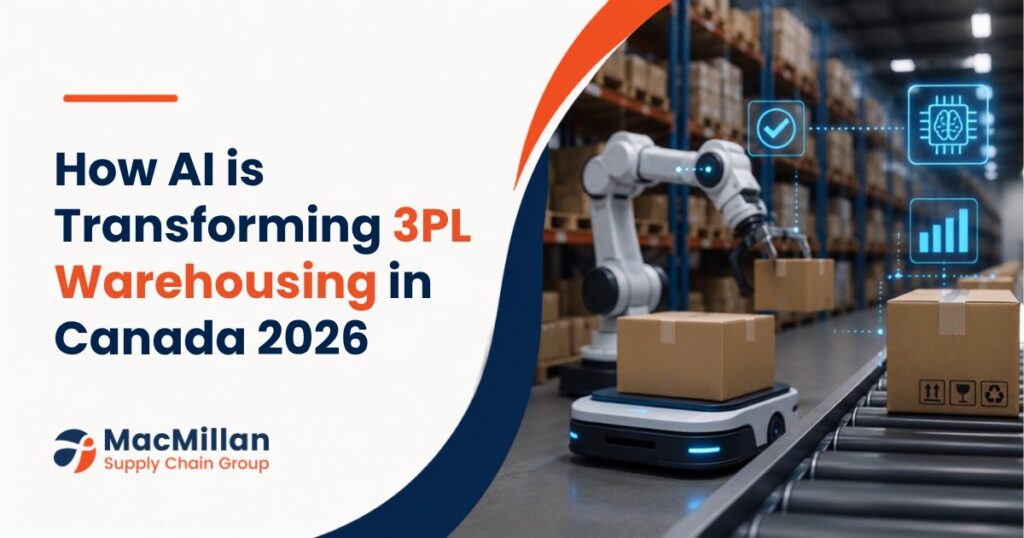
The Canadian logistics industry is undergoing its most significant transformation in decades. Artificial intelligence is no longer a futuristic concept reserved for tech giants — it has become the operational backbone of third-party logistics (3PL) providers across Ontario, British Columbia, and beyond. In 2026, AI is reshaping everything from how inventory is managed to how last-mile deliveries are optimized, giving Canadian brands a smarter, faster, and more cost-effective supply chain. For FMCG brands, e-commerce retailers, and growing businesses that rely on 3PL partners, understanding this shift is no longer optional. It is a strategic imperative. This article breaks down exactly how AI is changing the 3PL warehousing landscape in Canada and what it means for your business. The Scale of Change: Canada’s 3PL Market in 2026 Before diving into the technology, it is worth understanding the scale of this industry. Canada’s third-party logistics market is valued at approximately USD 20.7 billion in 2026, with projections to reach USD 25.59 billion by 2031 — growing at a CAGR of 4.33%. E-commerce alone accounts for over 27% of that market share and is expanding at nearly 6.67% annually. This growth is being driven by three primary forces: the explosion of online retail, rising consumer expectations for faster delivery, and the adoption of AI and automation technologies that allow 3PL providers to do more with less. Large fulfillment operations in Ontario and British Columbia have already reported productivity improvements of up to 30% after implementing AI-driven inventory systems and warehouse robotics. The question for Canadian brands is simple: is your 3PL partner keeping pace? 1. AI-Powered Demand Forecasting: Ending the Stockout Problem One of the most costly challenges in traditional warehousing is the constant struggle between overstocking and running out of inventory. Manual forecasting methods — spreadsheets, historical averages, gut instinct — simply cannot keep up with the speed and complexity of modern supply chains. AI changes this entirely. Machine learning models now analyze historical sales data, seasonal trends, promotional calendars, weather patterns, and even social media activity to produce demand forecasts that are dramatically more accurate than any human method. The result is a more intelligent, responsive inventory management system that keeps your products available when and where customers need them. Studies show that AI-based inventory optimization can reduce stockouts by 25%, improve inventory turnover by 20%, and boost profits by up to 12%. For FMCG brands managing dozens of SKUs across multiple retail channels, that is a transformative improvement. At MacMillan SCG, AI-driven demand models examine past sales, market trends, meteorological conditions, and promotional activities to enable smarter purchasing decisions, reduce excess inventory, and guarantee product availability across all channels. 2. Warehouse Automation and Robotics: Speed Without Sacrifice Traditional warehouse picking required workers to walk miles of aisles every single day. It was time-consuming, error-prone, and difficult to scale during peak periods like Black Friday or holiday seasons. AI-powered robotics have fundamentally changed this reality. Modern 3PL warehouses now deploy Autonomous Mobile Robots (AMRs) that transport goods directly to packing stations, robotic arms that handle sorting, scanning, and stacking, and AI vision systems that achieve 99.9% label-scanning accuracy. These systems do not replace human workers — they extend what human teams can accomplish. The performance numbers are compelling. Where manual picking achieves accuracy rates of 96–98%, automated AI systems push that figure above 99%. Order processing speeds can be up to four times faster than manual methods. And unlike human teams, robotic systems operate around the clock without fatigue, errors, or downtime. For brands managing high-velocity pick, pack, and ship operations, this level of precision and speed is the difference between delighting customers and losing them to a competitor. The rise of Robotics-as-a-Service (RaaS) is also democratizing access to this technology. Rather than requiring large capital investments, mid-market brands can now access enterprise-grade robotic systems through flexible subscription models — making cutting-edge automation available regardless of company size. 3. AI-Driven Warehouse Management Systems (WMS): Total Visibility, Real-Time Control A modern AI-powered Warehouse Management System is the central nervous system of a high-performance 3PL operation. It connects every element of the warehouse — dock sensors, robot telemetry, conveyor systems, order management software, and human teams — into a single, cohesive intelligence layer. The capabilities of today’s AI-native WMS platforms go far beyond simple inventory tracking. These systems provide real-time stock synchronization across multiple facilities, predictive bottleneck detection before delays occur, automated restocking triggers based on live inventory levels, and dynamic task allocation between human staff and robotic systems. MacMillan SCG’s Mantis-powered WMS gives clients complete inventory visibility from anywhere — real-time data on every SKU, every order, and every shipment. This transparency eliminates the uncertainty that typically plagues brand-3PL relationships and allows for confident, data-driven decision-making. Clients can review inventory status, track inbound containers, and monitor fulfillment performance at any time, from any device. In an era where supply chain visibility is a competitive advantage, this level of real-time intelligence is invaluable. 4. Predictive Analytics: From Reactive to Proactive Supply Chains Traditional supply chains were reactive — problems were identified after they happened and then corrected. AI-powered predictive analytics flips this model entirely. Instead of responding to disruptions, intelligent systems anticipate them in advance. By analyzing data from weather patterns, port traffic, carrier performance, and historical shipment data, AI algorithms help logistics planners make proactive decisions before delays materialize. In Canada’s busy logistics corridors — from the Port of Vancouver to the GTA’s dense distribution networks — this predictive capability is especially valuable. For food and beverage brands managing tight expiry windows and FEFO rotation, predictive analytics also plays a critical role in lot, batch, and expiry control. AI systems can flag at-risk inventory automatically, trigger replenishment before stockouts occur, and ensure compliance with retailer shelf-life requirements without manual oversight. Machine learning models also improve predictive maintenance for warehouse equipment — anticipating mechanical failures before they cause downtime, reducing maintenance costs, and maintaining consistent throughput even during peak demand periods. 5. AI in Last-Mile Delivery: Faster, Cheaper, Smarter The final mile
What Growing Beauty and Wellness Brands Should Look for in a Canadian 3PL
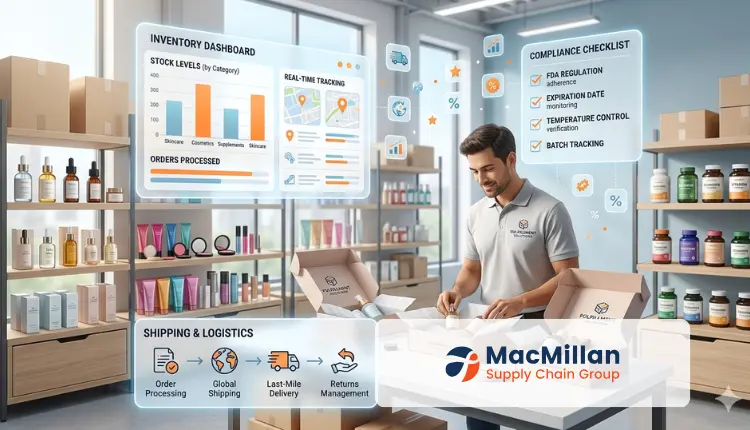
A Quick Summary and Overview For beauty and wellness brands, fulfillment is not just an operational function. It is part of the customer experience, the retailer relationship, and the brand promise. As these brands grow, they face higher SKU complexity, stricter compliance needs, more returns, faster replenishment expectations, and rising pressure to support DTC, retail, and marketplace channels at the same time. Competitor content that is working right now leans into practical buying guidance, category-specific logistics challenges, and partner evaluation criteria instead of broad “what is 3PL” education. That makes this topic ideal for attracting brands already evaluating fulfillment partners. MacMillan SCG is positioned around the capabilities these brands care about most: retail-ready warehousing, value-added kitting and labeling, real-time visibility, transportation coordination, and scalable support for consumer goods categories including nutraceuticals, cosmetics, and personal care. Introduction A beauty or wellness brand can spend years building the perfect formula, packaging, and customer story, then lose trust because of a late shipment, a damaged kit, a missing lot number, or a poor unboxing experience. That is why the right 3PL matters more as you scale. The strongest competitor articles in this category are not generic logistics explainers. They focus on the real concerns growth-stage brands have: regulatory handling, customization, fast fulfillment, retail compliance, subscription support, visibility, and smooth transition from in-house operations to outsourced logistics. Metro’s recent health and wellness fulfillment content, for example, focuses on category-specific trends and infrastructure needs, while its transition content emphasizes shipping requirements, service expectations, and how to evaluate a scalable partner. For Canadian beauty and wellness brands, choosing a 3PL is not about finding warehouse space. It is about finding a partner that can protect your product, your margins, and your customer experience. Why Beauty and Wellness Brands Need a Specialized 3PL Beauty and wellness products create logistics challenges that general fulfillment models do not always handle well. These brands often deal with: lot and batch traceability temperature or humidity sensitivity subscription and kitting workflows premium packaging expectations fast-moving launches and seasonal promotions retailer compliance requirements multi-channel inventory allocation Competitor guidance in this space consistently highlights compliance, category expertise, scalable ecommerce support, and kitting as key needs for wellness and beauty brands. MacMillan’s own positioning aligns closely with those needs. On its site, MacMillan highlights purpose-built logistics for personal care and wellness, including precise handling, customization support, subscription and gifting workflows, and multi-channel fulfillment backed by real-time visibility. 7 Things Growing Beauty and Wellness Brands Should Look for in a Canadian 3PL 1. Category-specific handling and compliance Not every 3PL is built for products that require tighter control, cleaner processes, and better traceability. Beauty, cosmetics, supplements, and personal care products often need lot tracking, expiry monitoring, and more disciplined workflows than general merchandise. MacMillan highlights GMP-ready and compliance-focused capabilities across relevant categories, including nutraceuticals and personal care, along with lot and batch tracking through its WMS-supported operations. 2. Kitting, labeling, and presentation support Beauty and wellness brands rarely ship plain, single-SKU orders forever. As brands scale, they introduce bundles, gift sets, subscription kits, seasonal launches, influencer mailers, promotional inserts, and retailer-specific packaging. This is one of the clearest patterns in competitor content too. Metro’s kitting guidance for health, beauty, and wellness ecommerce brands focuses on customer experience, consistency, and the operational importance of specialized kitting support. MacMillan’s value-added services page emphasizes GS1 barcodes, bilingual packaging, kitting, promo inserts, bundle assembly, relabeling, display builds, and lot/expiry checks, all of which are especially relevant for beauty and wellness brands scaling across channels. 3. Real-time inventory and order visibility As order volume grows, brands need more than a weekly spreadsheet. They need live visibility into stock, orders, returns, and shipment status. Competitor content increasingly treats visibility as a core buying requirement because it helps brands avoid stockouts, improve customer communication, and make faster inventory decisions. MacMillan positions real-time portal visibility, WMS-backed inventory control, KPI reporting, and data-driven insights as key parts of its offer. That matters for beauty and wellness brands managing launches, subscriptions, restocks, and omnichannel demand. 4. Retail and DTC support from one inventory pool Many growing brands do not stay DTC-only. They expand into retail, wholesale, or marketplaces while still serving direct customers. That creates complexity fast. A strong 3PL should be able to support: DTC parcel fulfillment retail replenishment channel-specific labeling accurate order routing coordinated returns shared inventory visibility This omnichannel focus is a recurring theme in current fulfillment content because brands increasingly need one partner that can support both growth and channel expansion. MacMillan states that it supports ecommerce, retail, and consumer goods fulfillment under one roof, along with value-added prep and transportation coordination built for retailer precision. 5. Subscription and promotional scalability Beauty and wellness brands often grow through repeat purchase, subscription, gifting, and promotional campaigns. Those models create spikes in complexity, not just volume. A 3PL should be able to absorb seasonal demand, launch waves, and campaign-driven kit assembly without breaking accuracy. Recent 3PL content continues to emphasize peak readiness and scaling support as major differentiators. MacMillan specifically highlights support for promotional bundles, new product launches, special campaigns, reconfiguration, and scalable labor and operational readiness for seasonal spikes. 6. Retail compliance and retailer-readiness Once a beauty or wellness brand enters retail, logistics errors become more expensive. Mislabeling, missed ASNs, wrong pallet builds, and appointment issues can trigger deductions, delays, or rejections. This is exactly why current B2B and retail fulfillment content focuses so heavily on routing guides, compliance, and execution discipline. MacMillan’s warehousing and value-added service pages stress retailer requirements such as pallet specs, label requirements, carton orientation, ASN accuracy, and retail-ready builds, which are critical for brands trying to protect retail relationships. 7. Measurable performance, not vague promises A high-growth brand should not choose a 3PL based only on sales language. It should look for process discipline and measurable performance. MacMillan’s site publishes KPI-led positioning such as 99.56% inventory accuracy, 99.5% perfect order rate, 99% on-time and in-full performance, and 99.9% shipping accuracy. Those are the kinds of signals buyers