
How You Can Enhance Customer Support Through 3PL Collaboration
Why do some brands seem to have a secret formula for customer satisfaction? Spoiler alert: It often involves an alliance with third-party logistics experts. What if your customer faces an issue, like an order mix-up, a delayed delivery, or a confusing tracking update? How would you turn that frown upside down? Exceptional customer support is the answer! 93% of customers are likely to hit that buy-again button, with brands prioritizing customer support. Your customers are looking for more than just a product. They’re looking for an experience that’s seamless, efficient, and, above all, customer-centric. And that’s exactly what a 3PL collaboration can offer with its expertise. Keen to learn how? Let’s jump into the hows and whys of enhancing your customer support through 3PL collaboration. How Does Collaborating with a 3PL Improve Customer Support? To win in today’s market, you’ve got to master customer support. Teaming up with a 3PL is a smart way to do this, as it helps you meet your customers’ expectations, gain their loyalty, and become their number-one choice. Let’s look at ways to enhance customer support through 3PL collaboration and see how these partnerships can improve your customer service. End-to-End Visibility Working with a 3PL gives you a clear view of the entire shipping process, from order placement to delivery. This lets you keep customers informed about their order status, improving their overall experience. Maintaining Your Stock A 3PL helps you sort out your inventory and warehouse management. They track and manage your stock levels in real-time, ensuring errors like overstocking or stockouts don’t happen. You’re always set to quickly fill orders, keeping customers happy. Their expertise makes your products move faster and more reliably from warehouse to doorstep. Easy Returns Working with a 3PL known for smooth return processes makes life easier for your customers. They help set up simple return steps, with easy return label printing and handy drop-off spots. This way, customers can shop worry-free, knowing returns are a breeze. Proactive Communication Partnering with a 3PL gives you access to real-time data and alerts about the shipping process. Your customer service team can proactively contact customers with updates or resolve issues, leading to a smoother experience. Speedy Solutions Partnering with a 3PL, you can quickly solve tricky customer problems related to orders, shipping, and returns. A responsive 3PL partner adapts quickly, ensuring customers don’t walk away due to delays or mishaps. 5 Ways to Make Your 3PL Collaboration Customer-Centric Why do some brands seem to have a secret formula for customer satisfaction? Spoiler alert: It often involves an alliance with third-party logistics experts. What if your customer faces an issue, like an order mix-up, a delayed delivery, or a confusing tracking update? How would you turn that frown upside down? Exceptional customer support is the answer! 93% of customers are likely to hit that buy-again button, with brands prioritizing customer support. Your customers are looking for more than just a product. They’re looking for an experience that’s seamless, efficient, and, above all, customer-centric. And that’s exactly what a 3PL collaboration can offer with its expertise. Keen to learn how? Let’s jump into the hows and whys of enhancing your customer support through 3PL collaboration. Tips to Maximize 3PL Collaboration for Customer Support Here’s how to ensure you and your 3PL are on the same page and ready to deliver great service: Set Goals Together: First, be clear about what you want, like quicker shipping or more accurate orders. Ensure your team and the 3PL understand and agree on these goals. Talk About What You Need: Tell your 3PL exactly what you’re looking for in customer support, including how fast you want to deliver and any special touches you need. This helps them match their services to what you and your customers expect. Pick the Right 3PL: Choose a 3PL with the skills, tech, and know-how that fit your business needs. They should be able to grow with you and handle any bumps along the way. Check Their Skills: Before deciding, consider what the 3PL can do. Check their tech, how far they can ship, their experience, and if they can keep up as you grow. Go with a 3PL that can adapt to your needs and help your customers stay happy. Boost Your Customer Support with MacMillan’s Expertise Enhance your customer support by partnering with MacMillan. We specialize in comprehensive logistics solutions and offer a range of services designed to cover everything you need—from e-commerce fulfillment, container destuffing, and warehousing to last-mile delivery and much more. We tackle your challenges with flexibility and tailor-made solutions. As the market and your needs evolve, we adapt swiftly, scaling our services to match demand. Our approach ensures both affordability and top-notch quality for our customers. With us, you gain access to a leading warehouse management system, offering complete visibility of your supply chain from start to finish. Discover the impact MacMillan can have on your operations. Let’s build a successful partnership that drives your business forward, ultimately leading to happy, loyal customers. Contact Us Today! Frequently Asked Questions What is 3PL collaboration? 3PL collaboration is a partnership between a business and a third-party logistics provider to manage services such as warehousing, inventory, order fulfillment, shipping, returns, and delivery. How does a 3PL improve customer support? A 3PL can improve customer support by providing faster order processing, accurate shipping updates, reliable delivery, easier returns, and better visibility across the supply chain. Can a 3PL help reduce delivery delays? Yes. A reliable 3PL can use efficient routing, inventory planning, real-time tracking, and optimized fulfillment processes to reduce delays and improve delivery performance. How does real-time tracking improve customer experience? Real-time tracking keeps customers informed about their order status and expected delivery time. It also helps customer support teams respond quickly when shipping issues occur. Can a 3PL help with returns management? Yes. Many 3PL providers manage reverse logistics, including return labels, product inspections, restocking, and return processing, making the experience easier for both businesses and customers.
How an Integrated EDI Streamlines Your Business and Reduces Operational Costs
Integrating EDI with third-party logistics (3PL) streamlines the flow of information, making these promises a reality. It ensures that orders are processed faster and more accurately, enhancing the shopping experience. However, growing businesses can find it challenging to keep up with the fast pace of orders and ensure products reach customers efficiently. An EDI integration is the crucial link that keeps every part of the supply chain in sync. Manually tracking every order, item, and shipment is challenging and prone to errors. Integrating an EDI with your ERP system—and crucially, with your 3PL provider—ensures rapid data movement and accurate landing in the intended destination every single time. Moving from paper to an EDI won’t solve everything overnight, but it’s a big step in the right direction. Whether you opt for multiple EDI tools or a comprehensive solution, setting up your EDI correctly with your 3PL is vital. Why is finding the right EDI integration crucial? Let’s explore how it can significantly benefit your business. What is an EDI and How Does It Work? Electronic Data Interchange (EDI) represents a system where business documents are exchanged between partners in a standardized electronic format, enabling computer-to-computer communication. This method supersedes traditional paper-based document exchanges, offering a more efficient, cost-effective, and error-reducing alternative. EDI eliminates the need for postal mail, fax, and email for document exchange, which often require manual intervention, slowing down processes and introducing potential errors. EDI integration enhances operational efficiency in the context of 3PL. It allows for seamless communication between 3PL providers and their clients, suppliers, and carriers. By leveraging EDI, these entities can share critical logistics information such as shipment details, order data, inventory levels, and invoices in real time. This capability accelerates logistics operations and significantly improves their accuracy and reliability. EDI facilitates immediate processing by directly flowing documents to the relevant applications, such as Order Management Systems, further streamlining the logistics and supply chain management processes. Understanding Integrated vs Stand-Alone EDI Let’s have a look at the main differences between these two types of EDI solutions: Why Switching to Integrated EDI with Your 3PL is Important? Integrated EDI cuts down on the hassle of doing things by hand and makes your business journey smoother and more successful. Here’s why switching to integrated EDI with your 3PL is important for your business: Reduce costs Integrated EDI with your 3PL slashes order processing costs and streamlines operations, making it a cost-effective choice in the long run. Speed up transactions It speeds up document exchanges with partners from days to minutes, making your business quicker. Increase accuracy Say goodbye to manual entry mistakes with integrated EDI. It automates data exchanges, leading to more accurate and reliable transactions. Boost productivity Less manual work means more time for important tasks. When you integrate EDI with your 3PL, you automate routine data tasks, allowing your team to focus on adding value. Simplify operations EDI simplifies business tasks like procurement by eliminating paper and speeding up order exchanges. Improve payments and inventory Faster document processing with EDI leads to quicker payments and tighter inventory control, saving time and money. Enhance decision-making With streamlined data and fewer errors, making informed decisions becomes easier. Integrated EDI provides a clear view of your operations, aiding strategic choices. Secure data Integrated EDI with your 3PL protects sensitive information, limiting access to authorized users in your ERP system. It also tracks document exchanges closely, ensuring compliance and security. Choosing the Right 3PL EDI for Your Business A well-chosen 3PL EDI can streamline your logistics, improve efficiency, and enhance communication between you and your 3PL partner. Here’s how to make the best choice: Compatibility: Pick a provider whose EDI system works seamlessly with your existing software and technology. Scalability: Choose a provider that can grow with your business, handling increased volume and complexity without issues. Support: Look for a provider offering strong customer support, ready to help whenever you encounter challenges. Security: Ensure they keep your data safe and meet standard security requirements. Cost-Effectiveness: Consider upfront and ongoing costs to find a solution that offers value without compromising quality. Experience: Opt for a provider with a proven track record in your industry, demonstrating their ability to meet your needs. By connecting EDI with your ERP system, you’re making everything quicker and simpler. This means lower costs, faster deals, fewer mistakes, and more time for your team to focus on what matters. Plus, it makes your whole business process smoother. Streamline Your Operations with MacMillan’s EDI Integration Solutions MacMillan simplifies the integration of EDI into your business, making the process seamless and straightforward. Our network ensures easy access to vital order and shipping data, facilitating smoother customer and partner interactions. With automated data integration into your systems and centralized EDI management, MacMillan empowers you with streamlined operations and improved decision-making capabilities. At MacMillan, we deal with extensive supply chain management and sophisticated reverse logistics capabilities. Our transportation, warehousing, and last-mile delivery services make sure your products get from our warehouse to your customer’s doorstep smoothly and on time. Let us handle the logistics so you can focus on your business. Explore MacMillan’s E-commerce Fulfillment Services, and let us be the driving force behind your thriving e-commerce strategy. Switching to an integrated EDI solution with MacMillan isn’t just about keeping pace with technology—it’s about leading the pack. Let’s move your business forward together. Contact us today! Frequently Asked Questions What is integrated EDI in third-party logistics? EDI integration in 3PL logistics connects a business’s systems with its third-party logistics provider to exchange order, shipment, inventory, and invoice data electronically. Instead of relying on manual data entry, paper documents, or email, information can flow directly between connected systems, helping businesses process orders faster, reduce errors, and improve supply chain visibility. How does integrated EDI reduce operational costs? Integrated EDI reduces operational costs by automating routine data exchange and minimizing manual order processing, data entry, and document handling. By connecting EDI with your ERP and 3PL systems, businesses can streamline transactions, reduce
How the Right White Glove Service Benefits Your Brand
You’ve sent your product out for delivery, they’ve received it, but will they remember it? With 73% of consumers saying the experience is as important as the product, you should forget about traditional drop-offs and focus on how you deliver your products. If you want to cement your brand in your customers’ minds, then delivery cannot be an afterthought; it needs to be an excellent experience, especially with items considered big and bulky. This is where white glove services step in. From the moment when the appliance or piece of furniture leaves the warehouse to when it’s in your customer’s hands, every step is an opportunity to impress, dazzle, and earn that coveted wow. As a 3PL, we understand the importance of going the extra mile. In this blog, we’ll take you through how to make your delivery experience your brand’s biggest asset by integrating white glove services. What is White Glove Service? White glove service means taking extra care of your customers’ needs with attention to detail. It ensures that your customers are happy by handling their products and services (where applicable) as carefully as possible. It means any service that goes the extra mile to meet customers’ needs. How Does White Glove Service Benefit Your Brand? Delighting the Customer with on-time delivery: Shortened delivery windows that are tracked and actually met, means no more clients waiting for deliveries, getting frustrated and annoyed. Positive Brand Image: When you handle shipments carefully, customers connect your brand with quality experiences. Word-of-Mouth Promotion: Exceptional service leads to natural word-of-mouth marketing, establishing your brand as a leader. Stand Out from Competitors: Providing white glove delivery differentiates your brand from competitors who offer only standard shipping. Increased Profitability: Specialized services often mean higher profits, making white glove delivery a valuable investment for your company. What Does White Glove Service Include? White glove service includes extra care from start to finish, ensuring everything goes smoothly. Here’s a breakdown: Specialized Packaging: Custom packaging solutions based on the item’s size, type, and fragility. Secure and Swift Shipping: Use dedicated vehicles with padding, climate control, and security surveillance features. Expert Handling and Placement: Skilled professionals ensure the safe unloading and placing of items in the desired room of choice. Installation and Assembly: Comprehensive setup services ensure the product is ready. Cleanup Services: Optional removal and disposal of packaging materials to leave spaces clean and tidy How Can You Boost Your Brand with White Glove Service? White glove service isn’t just a fancy add-on; it makes a real difference for customers and your brand. Here’s how you can make it work wonders for you: Build Trust to Keep Customers Coming Back Tailor your services to fit exactly what each customer needs, making every step of their journey with you smooth and personal. Solve problems quickly and reach out before issues grow. This cuts down on complaints and shows you care. Adding services like assembly shows you’re thoughtful and ready to help. Using skilled delivery teams makes customers trust you more, encouraging them to return when they need to make another big purchase. Make Your Services Smoother and Smarter White glove service today leans on tech and smart data, making it better and more affordable. The right tech and training mean you can handle products better and deliver faster, impressing customers. Tech helps you offer personalized services to more customers without a big cost jump. Happy customers talk. They’ll share their great experiences, bringing in more business and building your brand’s reputation. III. Improve with Feedback Ask for and really listen to what your customers say to improve your white glove service. This shows your customers that you care about what they think and want to keep getting better. Use their suggestions to develop new ideas and stay ahead of what they expect, ensuring your brand stays fresh in their minds. Choose Your White Glove Delivery Partner Wisely Here’s how to find a partner that fits your business goals and needs: Look for Speed and Flexibility You need a partner who can deliver quickly and handle big or tricky orders. They should offer flexible delivery times, including evenings and weekends, and have a solid plan for returns. Look for a range of services, from simple drop-offs to in-room setups. Demand Reliable Delivery Times Pick a partner that promises precise delivery slots so customers aren’t left waiting. They should provide real-time delivery updates to keep customers informed. Find a Partner Who Values Your Brand Your delivery team should reflect your brand positively. Ensure they are well-trained and can offer drivers who understand your products and brand values. Go for Eco-friendly Options If sustainability matters to your brand, choose a partner with green delivery practices. Check for carbon-neutral shipping and responsible return handling, like recycling or donations. Why Pick a 3PL for White Glove Service? Using a 3PL provider for white glove services is smart. We handle your special deliveries with extra care and skill. A 3PL saves you time and money, easily adjusts to your needs, reaches more places, and uses the latest tech to keep deliveries smooth. We ensure your valuable items are safe, follow all the rules, and let you focus on your main business. Choosing a 3PL means every delivery gets VIP treatment. With a provider like MacMillan, you’re sure your products and customers are in good hands, keeping them happy and returning. Boost Your Online Business with MacMillan’s Fulfillment Services Running an online shop means getting orders to customers fast and without hassle. MacMillan helps you with the logistics to do just that. We excel in taking your products from the warehouse to the last mile, ensuring a seamless customer experience, including hassle-free returns. Our approach is tailored, recognizing that each online store has its own needs and challenges. We’ve created a dependable network that makes us a go-to partner in the e-commerce space. Upgrade your e-commerce fulfillment process with MacMillan, where efficiency, reliability, and customer happiness are
How Do 3PLs Help Automotive Sellers?
Automotive retailers have historically relied on brick-and-mortar stores due to the operational challenges of warehouse fulfillment for bulky, oversized, or heavy products. However, the automotive market is well-suited for online shopping, offering buyers access to rare parts for various makes and models. 3PL service providers can significantly aid automotive sellers by offering specialized 3PL warehousing and expert fulfillment services for consumers. The role of 3PL in the automotive supply chain involves inventory management, transportation and distribution leading to cost reduction, and compliance. Moreover, this blog outlines five ways a 3PL assists automotive sellers. What is an automotive 3pl? An automotive 3PL is equipped to handle a wide range of auto parts, offering comprehensive logistics services for full-service automotive sellers. This includes 3PL warehousing capabilities to store and ship oversized merchandise such as fenders, tires, seats, and complete engines. Some of the globally recognized 3PL leaders in the automotive industry include DHL supply chain and XPO logistics, which have served as the top innovative logistics solutions in the automotive market with a strong market presence. At MacMillan SCG we excel in shipping heavy and bulky products. Our 3PL warehousing services include extra-wide aisles to accommodate large boxes and robust conveyor belts designed to handle heavy items efficiently. What is the role of 3pl in automotive supply chain? The automotive supply chain is a complex network requiring precision, efficiency, and adaptability. Third-party logistics (3PL) providers play a crucial role in this area, from optimized 3PL warehousing to efficient order fulfillment and delivery to designated area. The demand for automotive fulfillment is only getting bigger in today’s market dynamics, with the growth of online and onsite sales. This blog delves into how 3PLs enhance the automotive supply chain, from inventory management, warehousing, order fulfillment to cost reduction and technology integration for improved customer satisfaction. Enhancing inventory management: In the automotive industry, managing inventory efficiently is essential due to the vast range of parts and components, each with varying demand cycles. MacMillan as a 3pl service provider utilizes advanced inventory management systems (IMS) to track parts in real time, minimizing the risk of stockouts and overstock situations. This real-time visibility allows companies to maintain optimized inventory levels, ensuring that critical components are always available when needed. Streamlining transportation and distribution: Given the need to move heavy and bulky items like engines and transmissions. 3PLs offer specialized transportation solutions tailored to the automotive sector, including multimodal transport options. MacMillan SCG allows a geographic coverage in the Greater Toronto Area and 80% of western region coverage allowing warehousing Toronto and to help your business align networking. Reducing operational costs: By outsourcing logistics to 3PL service providers, automotive companies can significantly reduce their operational costs. 3PLs leverage economies of scale, enabling them to offer competitive pricing for warehousing, transportation, and other logistics services. Ensuring compliance and risk management: Compliance with industry regulations and standards is paramount in the automotive sector. 3pl services providers implement robust risk management practices to mitigate potential disruptions in the supply chain, including contingency planning and disaster recovery strategies. 5 ways a 3pl help automotive sellers Expert fulfillment is essential for business growth, especially for automotive sellers dealing with bulky and fragile auto parts. Here are five ways a 3pl service provider can help an automotive sellers thrive in today’s dynamic market. Inventory management and safe storage: Selling auto parts can be an inventory management challenge. With numerous parts to store, each requiring the correct version for different models, you might need to organize and secure thousands of SKUs, ready for shipment. This is where professional warehousing comes in. Logistics companies such as MacMillan SCG utilizes warehouse management systems (WMS) to track SKUs from inbound shipment through order fulfillment and shipping with a 24/7 security protocol to keep your inventory safe and tracked. Kitting: Kitting involves pre-packing items to ship together, a strategy automotive sellers use to prepare SKUs that usually sell as a group. For example, a customer ordering a steering column for a 1999 Ford Mustang might also need related parts to accompany such as a steering wheel. By using kitting, you can pre-assemble all the necessary components for rebuilding a power steering system into one convenient package. Kitting also facilitates package consolidation, saving on shipping costs. By packing small items with larger products that ship based on dimensional weight. Kitting streamlines the pick and pack process, as a picker can retrieve a single pre-assembled kit instead of multiple individual SKUs to fill an order. Assembly lines are set up to efficiently create kits ready for shipping, and the kitting process can include standard operating procedures (SOPs) to ensure each set is packed safely. Pick, Pack and Ship: An automotive 3PL service provider specializes in timely and complete order shipments. Their warehouse management system (WMS) generates efficient pick lists for warehouse staff. Technologies like RFID tags and barcoding ensure accuracy in item selection. Additionally, experienced packers use the appropriate materials and operational methodologies to pack each order professionally, ensuring it arrives in perfect condition. Cross docking: is labeling orders on the inbound dock and moving them to shipping instead of placing stock into inventory first. Cross-docking is an excellent method to allow order fulfillment and lower storage costs. When evaluating potential 3PL service providers, inquire if they offer cross-docking to enhance the speed of your order processing. Returns management: Return processing in automotive 3PL refers to the management of product returns within the automotive supply chain by 3PLs. Although high-quality automotive logistics can minimize your return rate. Thus, having reverse logistics solutions in place is still crucial. Handling returns like engine blocks or transmissions can be a challenge, partnering with a 3PL can assist you in overcoming these obstacles. Return processing in the automotive 3PL includes several key steps such as: Receiving Storing Inspection and evaluation Inventory update Disposition Reporting Scalability and shipping discounts: Shipping automotive parts, mainly the heavy or oversized ones, can incur significant expenses. Carriers often impose surcharges for packages exceeding certain weight limits, such
Choosing The Right WMS: Streamlining Warehouse Operations
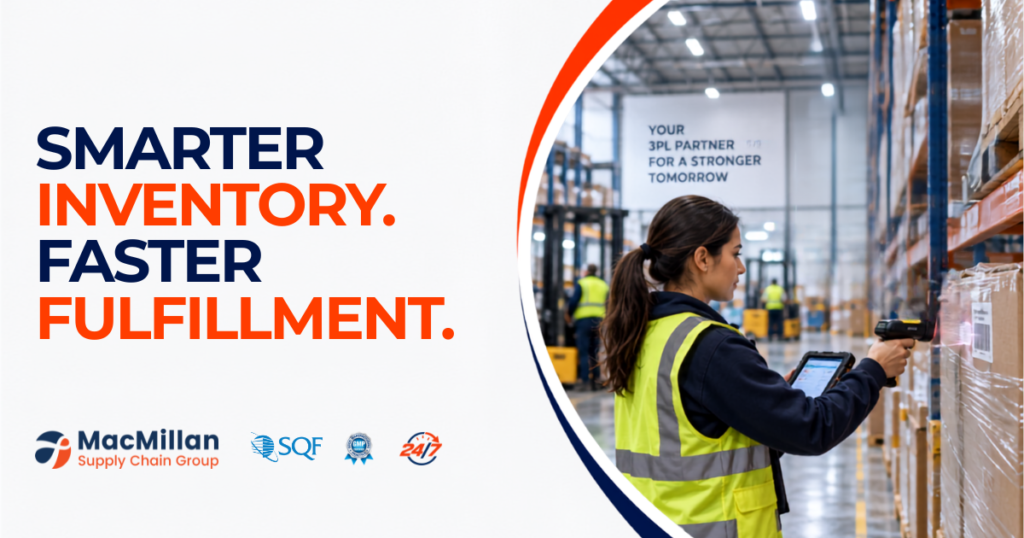
In today’s fast-paced market place, efficiency is paramount. To enhance productivity and reduce costs in 3PL warehousing operations, many businesses turn to Warehouse Management Systems (WMS). WMS software helps ensure inventory is received, stored, picked, packed, shipped in the most efficient way possible. With all these functions occurring simultaneously across different physical locations within the warehouse, it’s easy for processes to become misaligned or data to be lost. This is where WMS comes in. This article delves into WMS logistics, exploring its key features and processes. Moreover, how MacMillan SCG can manage your inventory and warehousing operations in real-time using WMS integration with your systems in order to streamline business processes. What is warehouse management system logistics? A warehouse management system, or a WMS gives you the tools, processes, automation, and reporting you need to manage your 3PL warehousing operations. A key component of WMS logistics is inventory management as it allows warehouse managers to accurately track and control inventory levels, ensuring the right products are available at the right time, thereby preventing stockouts and overstock situations. This real-time visibility into inventory levels enables better purchasing, storage, and order fulfillment decisions. WMS logistics also involves order management. A WMS system automates order processing, reducing errors and delays, and enables accuracy in order picking and packing. Warehouse space is a valuable asset, and effective space management is essential for maximizing storage capacity and operational efficiency. WMS software uses tools like slotting algorithms to determine the most suited location for each product based on demand, size, and weight. This helps in optimizing space utilization. What are the processes that make up a WMS? At its core, a WMS is a software system that automates and streamlines 3PL warehousing, acting as a central hub connecting various aspects of warehouse management. By leveraging real-time data and analytics, a WMS enables businesses to make informed decisions and optimize their warehouse processes. Inventory management: Provides visibility into inventory systems, tracking stock levels, product location and movement. Order management: Efficiently processes and fulfills customer orders, ensuring timely delivery and reducing errors while allowing order tracking. Picking and packing: Optimizes the picking and packing process, suggesting optimized routes and methods to minimize labor and time. Shipping and tracking: Organizing the shipping process by generating shipping labels, coordinating carrier pickups, and providing real-time tracking information to customers. What are the Key features of a WMS? A Warehouse Management System (WMS) offers a variety of features designed to streamline 3PL warehousing operations. Key features include: Real-time data: a WMS provides an up-to-date information on inventory levels, orders and shipments Barcode scanning: Utilizing barcode scanning technology, a WMS eliminates manual data entry, reduces errors, and enhances customer satisfaction. RFID integration: A WMS enables automatic identification and tracking of inventory through RFID technology, increasing visibility and control over stock. Automated workflows: A WMS automates repetitive tasks such as order processing and inventory replenishment, freeing up time for more strategic activities. These key features can enhance 3PL warehousing operations. For instance, implementing a wave picking strategy, where multiple orders are picked simultaneously, can reduce travel time within the warehouse and boost productivity. Benefit of implementing a WMS in 3PL Warehousing A WMS can help you build an automated and cost-effective warehouse by optimizing inventory counting, cost cutting, order status and more. Let’s have a closer look at the key advantages: More accurate inventory counts: When implemented correctly, a Warehouse Management System (WMS) provides real-time visibility into your inventory levels, improving risks of inventory shrinkage. This is achieved through barcode scanning of both incoming inventory and each unit picked for orders. The accurate visibility offered by a WMS at MacMillan SCG helps avoid stockouts by allowing you to track inventory levels accurately. Some WMS solutions also offer auto generated reminders to reorder inventory when a SKU reaches a specific threshold. Enhanced Order Accuracy: A WMS can integrate with your e-commerce platform to ensure real-time stock updates, reducing the likelihood of customers placing orders for out-of-stock items. This enhanced accuracy in inventory management leads to higher order accuracy rates and faster movement of orders through the supply chain. For businesses with inventory distributed across multiple warehouses or fulfillment centers, advanced WMS solutions can forward orders to the most strategic location, which can reduce shipping cost and delivery times. More productive warehouses: Implementing a WMS software can streamline tasks and standardize processes, ensuring that operations are performed correctly the first time, reducing the need for costly rework. Cost cutting: In the long run, a WMS delivers cost savings by: Minimizing manual errors such as stowing mistakes and mispacks Streamlining complex tasks with templates, reducing need of work Accelerating fulfillment processing, maximizes labor productivity Preventing inventory shrinkage Centralizing 3PL warehousing operations into a single platform, reducing needs for various tools. 2x Shipping: Customers demand faster shipping rates; a study shows that 57% of consumers would hesitate to use a retailer again if their delivery was late. At MacMillan with integrated WMS and proven On-time-Delivery track records we provide higher customer satisfaction. The future of WMS The future of WMS in 3PL warehousing is exciting with new technological advancements and evolving customer expectations which are shaping the industry. Some of the new trends include: Integration with ecommerce platforms: As ecommerce continues to grow, WMS will integrate with platforms like Shopify and Amazon to streamline order fulfilment processes. Automation and robotics: These technologies are set to revolutionize 3PL warehousing operations. Analytics and AI: Advanced analytics and artificial intelligence will enable businesses to extract value from warehouse data. IoT and real-time tracking: Internet of things will enable tracking of inventory and assets, providing unparalleled visibility and control. How can MacMillan’s WMS help your business? MacMillan SCG offers the best-in-class WMS helps you manage inventory in real time, reduce picking, packing, and shipping errors, and scale with ease. Using an integrated WMS, MacMillan has achieved automated tasks such as carrier selection, label printing, and documentation, which saves time, reduces errors, and improves shipment accuracy. Integration with transportation management systems
Your Guide to Launching a 3PL Business: Opportunities and Trends
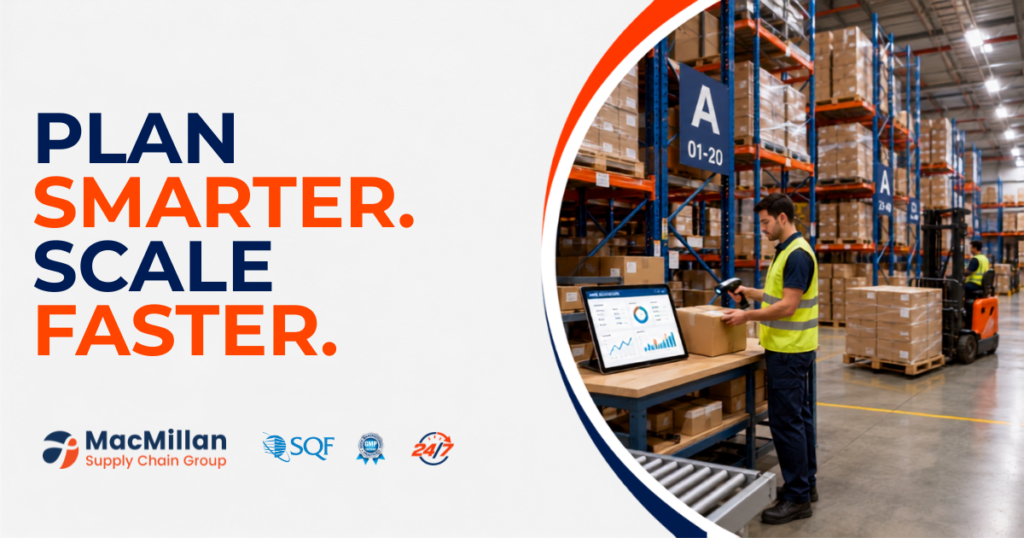
In the past two years, the logistics industry has experienced many transformative changes. These shifts are driven by technological advancements, changing customer behavior, and increased delivery traffic. The global 3PL industry is composed for substantial growth. Research indicate it will exceed $1.3 trillion by 2026 and touch $1.75 trillion by 2027, with an average annual growth rate (CAGR) of nearly 8%. Embarking on a 3PL warehousing business venture requires a thorough understanding of market trends, opportunities, and the competitive landscape. This blog will offer comprehensive insights into the core functions of a 3PL warehousing and essential steps to follow for starting a 3PL business and exploring its vast opportunities. 3 core functions when starting a 3PL The 3PL business model is revolving around inventory control and managing 3PL warehousing operations for other businesses. While the specific services and capabilities of a 3PL can vary, there are three core functions that most 3PLs offer. Let’s take a closer look at each of these fundamental operations. Inbound inventory operations: A 3PL assists customers in transferring and managing products from manufacturers or wholesalers to the 3PL’s warehouses. This involves scheduling inbound inventory and replenishment orders to ensure customers maintain appropriate stock levels. Some 3PL warehousing services solely receive inventory, while others also help create orders and manage inbound inventory. At MacMillan SCG, we provide data and support to help customers restock at optimal times, reducing the risk of stockouts and revenue loss. Our inbound teams swiftly offload goods and scan them into inventory software, or WMS systems giving you real-time visibility of available items at each location (read more about choosing the right WMS for your business) 3PL warehousing and storage: One of the most important functions 3PL warehousing includes is storing your inventory properly. Top-tier 3PLs use scanning and automation tools to maintain order accurate, real-time inventory counts to be accessible 24/7. MacMillan as a top tier 3PL warehousing provider specializes in space accommodation and handling product specifications (e.g., hazardous materials, temperature-controlled goods). Additionally, 3PLs work diligently to minimize shrinkage, optimizing both their customers and their own operations. Order fulfillment: The final component of standard 3PL warehousing service is order fulfillment. This involves picking products from stored inventory, packing them according to customized orders, and shipping these packages to the end customer. Effective order fulfillment relies on the 3PL’s strong relationships with carriers and local partners to ensure efficient distribution. To minimize costs, it is important to work with multiple carriers and maintain multiple locations. Ensuring order accuracy is a critical responsibility of the 3PL. At MacMillan, we believe in taking accountability for our services, which is why we cover the cost of any damaged orders. A fulfillment network such as Ship Bob with its most noticeable 2-Day Express shipping program which allows you to meet the high expectations set by Amazon, significantly reducing shipping costs for customers and speeds up last-mile delivery. Business Opportunity in starting a 3PL Business Starting a 3PL business offers significant benefits, the ease of online shopping, heightened by the pandemic, led to an 11.16% growth in ecommerce in 2023. This surge is driving global demand for 3PL warehousing services, as customers increasingly expect timely and accurate deliveries. Many smaller merchants, unable to manage their own logistics operations, are outsourcing their distribution and fulfillment operations to 3PL warehousing partners to remain competitive. In response, 3PL companies are making substantial changes in supply chain management, focusing on reducing delivery costs, cutting-edge technologies, and enhancing overall responsiveness. These new adaptations are key metrics for growth in the 3PL industry. Steps for starting a 3PL business Before starting a 3PL business, there are several factors to consider, here are the steps a business must follow: PART 1- EVALUATION AND SETUP Deciding 3PL type and specialization:To start a 3PL business, it’s crucial to understand industry verticals and decide on a specialization. A 3PL can focus on a specific product category, such as retail, food, apparel, or large appliances, or they can operate as an ecommerce fulfillment provider. For instance, a 3PL operating in electronics fulfillment can also handle apparel due to the similar processes involved.The chosen product specialization will form the warehouse layout, as the storage needs for apparel differs from those for appliances. This specialization also determines the appropriate pallet configurations. Additionally, 3PLs must select relevant sales channels that align with their specialized product class to maximize efficiency and market reach. Selecting the Location:The geographic location of the warehouse is a critical consideration for a 3PL owner. When selecting a warehouse location, the 3PL must prioritize proximity to where products are stored and ensure it is centrally located to 3PL warehousing activities. This strategic positioning helps the 3PL achieve fulfillment and reduce shipping costs by minimizing the distance for receiving and dispatching products. Setting up 3PL warehousing space:Each 3PL warehouse has its storage capacity tailored to the specific product category it serves. However, there are fundamental principles that 3PL warehouse managers should consider for effective layout design: For inventory movement, each warehouse should include several key areas: Reserve storage area Carton and product picking area Packing and dispatch area Cross-dock area Empty pallet and packaging area MHE charging area Shipping PART-2: TECHNOLOGICAL OPERATIONS Modern warehouse management software is essential for meeting the unique needs of customers and efficiently managing 3PL warehousing and fulfillment operations, ultimately enhancing the customer experience. Such as, MacMillan offering an integrated WMS and TMS for your systems which will optimize your business processes. Find out more. The right 3PL software:The right software helps to optimize fulfillment operations seamlessly for modern 3PL warehousing. MANAGE 3PL WAREHOUSING OPERATIONS: Implementing 3PL WMS optimizes both inbound and outbound operations by providing flexibility and real-time data visibility. It optimizes inbound processes, reducing dock-to-stock time with almost zero shrinkage, and manages the inbound workflow processes, including receiving, quality control, and put away. The WMS software enables strategies, reduces cost, automates picking, packing, sorting, and shipping processes. MANAGING CLIENT OPERATIONS: Once clients are onboarded, the right
Top 5 best Third Party Logistics Companies
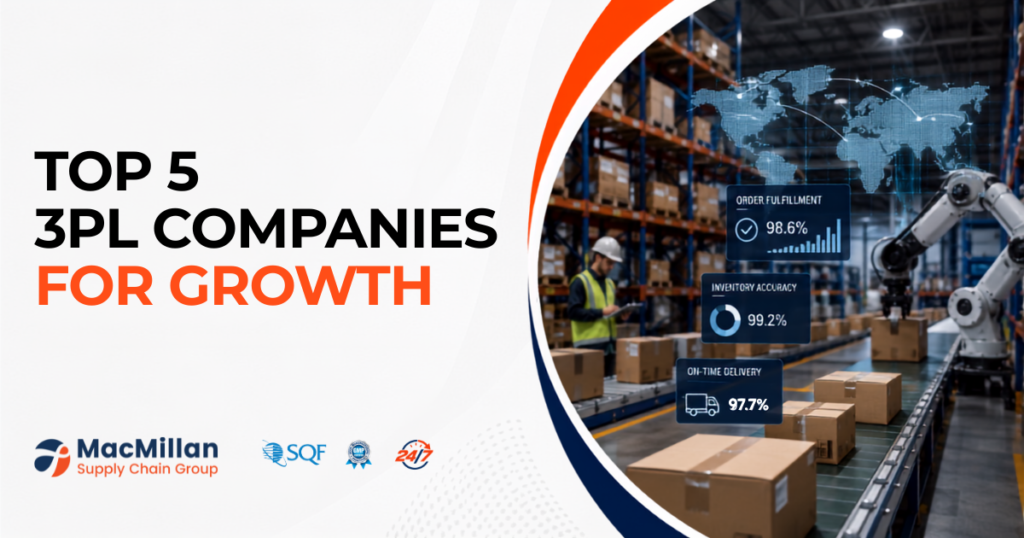
Selecting a reliable third-party logistics (3PL) provider is crucial for businesses looking to streamline their logistics operations. The top five 3PL companies listed in this blog will help you excel in various domains, offering optimized operations by analyzing their core functions and strengths to best fit your needs. To simplify your decision-making process, consider starting with any of these five reputable 3PL companies: The five best 3PL companies Here is a list of the best third party logistics providers to best fit your business requirements: Ship Hero is a robust Warehouse Management System tailored to enhance eCommerce operations by optimizing the picking, packing, and shipping processes. Its operations include inventory management, order tracking, automation rules, and seamless integration with major eCommerce platforms. Ship Bob provides exceptional fulfillment services designed to help direct-to-consumer eCommerce brands to stay competitive. By managing 3PL warehousing and logistics, Ship Bob allows businesses to focus on growth and delivering outstanding customer experiences. MacMillan SCG as a cost leader in the Top Tier 3PL warehousing provider in Canada offers you scalability and Robustness with intergraded WMS and TMS systems for you to track orders. If you are looking for a Top Tier Provider in Canada, MacMillan will not let pricing to be an issue with its transparent pricing structures with no hidden fees. XPO Logistics focuses on the usage of technology to efficiently move goods or products through its network. The company focuses on de-risking supply chains, providing businesses with visible and efficient logistics solutions. United Parcel Service, Inc. (UPS) has evolved from a small messenger service into a Fortune 500 global shipping and supply chain powerhouse. UPS is renowned for its massive reach and reliability over operational networks. If you already understand the value of a 3PL logistics provider, these five companies are top starting points for your research. If you’re still learning about 3PL companies and their benefits, keep reading for more insights. Overview of 3PL companies Third-party logistics (3PL) companies vary widely in networking and service offerings, designed to meet diverse business needs. While some 3PL companies focus on specific industries or geographic locations, others deliver customizable solutions suitable for any business. Our top five 3PL companies stand out for their proven track records, extensive networks, and customer satisfaction. Startups and small businesses often turn to 3PL companies to manage their logistics, allowing them to focus on their core strengths. Larger corporations also benefit from outsourcing logistics operations, enabling them to streamline 3PL warehousing processes and leverage specialized expertise. What are the core functions of 3PL companies? The top five 3PL companies mentioned above distinguish themselves through several key competencies that give them a competitive edge such as: Extensive network and transportation capabilities Advanced technology and Integrated tracking systems Efficient 3PL warehousing and inventory management Outstanding customer service and Feedbacks Customizable solutions to specific business needs Considering 3PL warehousing locations When selecting a 3PL provider, evaluating their fulfillment center locations and 3PL warehousing capabilities is essential. The top five 3PL companies mentioned above boast strategically located warehouses nationwide, ensuring cost-effective shipping. These companies have invested in cutting-edge warehousing facilities that emphasize visibility, security, and scalability. E-commerce platforms and sales channels supported by 3PL Effective supply chain management is crucial for e-commerce businesses to ensure timely order fulfillment. The top five 3PL companies integrate with popular e-commerce platforms like Shopify and Amazon. They also support multiple sales channels, including marketplaces like eBay and social media platforms. By leveraging the expertise of these 3PL companies, e-Commerce businesses can drive sales growth. Customer satisfaction with a 3PL company When choosing a 3PL provider, it’s important to consider their track record of customers value added feedback and communication. For instance, MacMillan SCG offers direct customer feedback for the 3pl services provided and allows on-site visits for tracking and increasing order accuracy rates. The top five 3PL companies have a proven record of delivering exceptional service and consistently exceeding customer expectations. How to get started with a 3PL service provider? Partnering with a 3PL company involves a straightforward onboarding process: Assess your third-party logistics needs Research and shortlist potential 3PL companies Request for Proposal (RFP) to 3PLs to get comprehensive information. Choose the 3PL provider that best fits your business Collaborate with the 3PL company to set up systems and processes By following these steps, you can begin leveraging the benefits of 3PL services and optimizing your supply chain operations. What is Full-service warehousing? A Full-Service warehouse offers many possibilities for your small or growing business. Generally, a full-service 3PL warehouse will cater more services than storing your products and moving them from point A to point B. additionally, a full-service warehouse offers: Key tips for choosing the best 3PL company When choosing a 3pl warehousing company to manage your warehousing and fulfillment operations we highly recommend keeping the following points in mind: Conduct Thorough Due Diligence: Inspect the potential 3PL providers and their facilities, reach out to their customers for feedback, research them online, and review their Business Bureau report. These steps can help you avoid unreliable companies and ensure the provider can handle your orders accurately and perform on-time deliveries with zero damaged rates. Examine Pricing models: Be aware that warehousing companies often omit some potential costs from their quotes to make their pricing appear more appealing. To counter this, request a comprehensive list of all charges and ask for a mock bill based on a month’s worth of data. Such as MacMillan with offers no hidden fees and has a transparent pricing structure. Assess Partnership Value: Consider whether you feel comfortable and confident in the 3PL provider’s ability to handle specialized products. If you have any doubts, don’t let lower pricing convince you to overlook a solid partnership. Evaluate the 3PL’s Connections: High-quality 3PL providers often have partnerships with other reliable service providers and local networks which can benefit you with better rates and access to necessary services and products. Avoid these mistakes while choosing a 3PL partner When selecting a
Forecasting Seasonal Demand Fluctuations

Businesses often face seasonal fluctuations in demand, driven by holidays spikes like Christmas and popular shopping events such as Boxing Day in the UK, Canada, and Australia. These periods can lead to significant order surges. So, how can a 3pl warehousing businesses capitalize on these prime shopping seasons? In this blog we can discover, how do companies such as MacMillan SCG prepare for these seasonal demand changes in terms of inventory and logistics. What is seasonal demand? Seasonal demand refers to shifts in consumer buying habits throughout the year. These changes may be driven by seasons, such as increased demand for snow boots in winter and sunglasses in summer, or special occasions like Christmas and Thanksgiving, and New Year. Fortunately for businesses, these fluctuations are among the most predictable, allowing for easier advance planning. Causes of seasonal demand fluctuations Factors involved in Seasonal Demand Forecasting? Seasonal demand forecasting involves predicting customer demand during the increase time frame of anticipated order volume increases. By analyzing historical data, and market trends MacMillan identifies when order volumes particularly rise, enabling them to purchase sufficient inventory, confirm transparent costs, and ensure delivery on time and in full (OTIF) without stockouts. MacMillan advanced operations empower brands to prepare for both seasonal and future demand. MacMillan integrated software and tracking dashboard provide real-time inventory visibility, aiding in accurate seasonal demand forecasting. Many products experience demand fluctuations based on seasonality. For instance, yard tools see increased demand during spring as people undertake spring cleaning. In summer, items like air conditioners and ice creams see a sales spike. Navigating Seasonal Demand in 3pl warehousing While demand fluctuations can be challenging for businesses, they present valuable opportunities if they are predictable. Let’s delve into how seasonal demand changes impact 3pl warehousing. The Benefits of Seasonal Demand Maximize Sales: Seasonal demand spikes, mainly during the holiday season, present a golden opportunity for well-prepared businesses to boost sales. In 2021, U.S. holiday spending reached (about $2,700 per person in the US) Proactive Inventory Planning: With these demand spikes recurring annually, businesses can proactively plan their inventory procurement. By stocking up ahead of time, they can meet increased consumer demand. Strategic Marketing: The predictable nature of these spikes allows businesses to strategically plan their marketing and sales efforts in advance. Seasonal marketing campaigns and discounts can be prepared to capitalize on peak shopping time frames. What are the risks and challenges in seasonal demand fluctuations? Utilizing an inventory planning solution that offers historical analysis and forecasting can mitigate these risks. Previous data trends help predict when and how much to restock, ensuring businesses reorder enough inventory in time for demand surges. Logistical challenges are another hurdle associated with seasonal demand spikes. Businesses may struggle to fulfill all orders due to limited workforce or resources during peak periods. Additionally, courier services like DHL often have lower capacity during these times, leading businesses to opt for alternative shipping solutions. Partnering with a 3PL warehousing provider like MacMillan can alleviate these issues. A 3PL warehousing experienced workforce handles the entire fulfillment process with visibility. Their established relationships with leading courier services ensure your delivery needs are met, even during peak seasons throughout GTA and 80% of the western region. How to Forecast Seasonal Demand and Stay Ahead Accurate forecasting is crucial for managing seasonal demand effectively. However, brands must also know how to leverage this data for proper planning. Here’s how to get ahead of seasonal demand and capitalize on peak times. Establish Seasonal Goals Start by setting goals for the year to create a blueprint for seasonal patterns and determine the stock levels needed for specific times. Establishing these goals helps evaluate performance and reconcile actual sales volume against initial targets. Collect and Analyze Historical Data Review past years’ sales to identify high-demand periods and order volumes. This ensures you maintain an adequate stock to meet customer demand and satisfaction. Key metrics to examine include forecast vs. order accuracy, forecast accuracy, inventory turnover, and order fill rate. Use Sales Insights to Rank and Segment Products Analyze historical sales data to identify demand patterns and understand how demand varies for different products throughout the year. Brands can estimate how demand changes compared to regular periods, but it’s important to remain cautious. By following these steps, brands can effectively forecast seasonal demand, maintain optimal stock levels, and maximize sales during peak periods. Taking Action With your historical data analysis and seasonal forecast in hand, it’s time to implement your plan Compare Forecasts to Historical Sales: Analyze your demand forecast against past sales data to assess prediction accuracy. This helps refine future forecasts. Maintain Supplier Communication: Ensure smooth inventory reorders and receive early warnings if suppliers can’t meet increased demand, allowing time to find alternatives. Monitor Inventory Levels: Track stock levels, reorder needs, and timing for replenishments to avoid stockouts or overstocking. Avoid Overstocking: Overstocking is costly and can hurt your bottom line. Instead, order smaller quantities more frequently to stay flexible and adapt to demand changes. Consider a 3PL Solution: Outsource your fulfillment process to a third-party logistics provider. They offer advanced inventory planning and management software, aiding in data analysis and improving forecasting accuracy. How does MacMillan manage seasonal demand fluctuations? Accurate demand forecasting is crucial for managing seasonal demand fluctuations. With MacMillan proprietary software, you can leverage historical sales data and consumer buying behavior to make precise inventory reorder plans, avoiding stockouts and overstocking. The software provides SKU-level performance tracking, helping you identify which items will see increased demand in specific seasons. It also offers real-time inventory monitoring, predicting stock longevity and alerting you when to reorder. MacMillan full-service fulfillment solution handles storage, inventory management, and order fulfillment. By informing MacMillan about expected demand spikes, you can ensure efficient management of seasonal orders without last-minute hassles. Key takeaways In today’s dynamic market, businesses often face seasonal demand fluctuations. These periods can lead to significant order surges, presenting both opportunities and challenges. MacMillan’s proprietary software leverages historical sales data and consumer behavior to make
Optimizing E-commerce Warehouse Costs: Boost profit
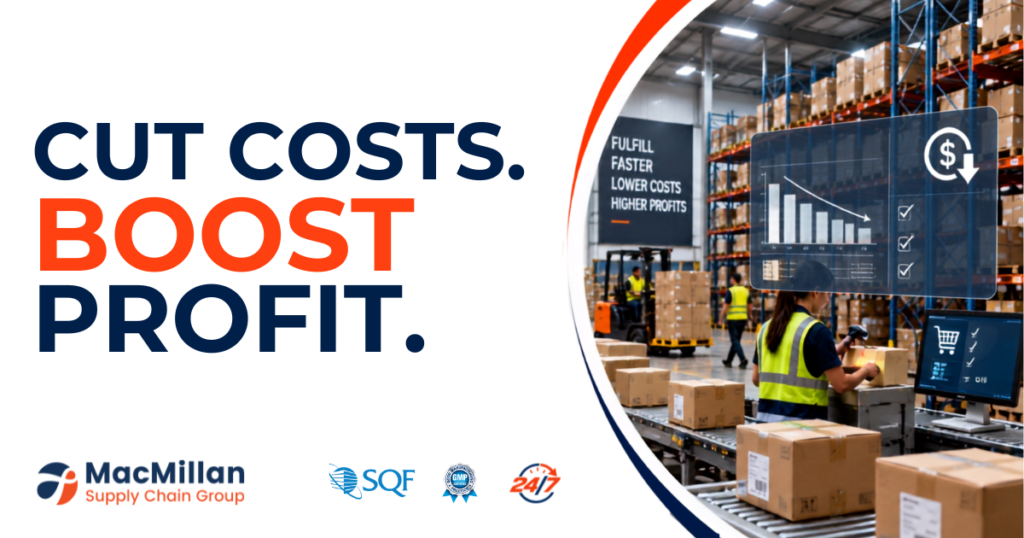
Warehousing is a significant expense. Maintaining a 3pl warehouse constitutes a portion of your overall ecommerce operational costs. Whether you’re renting or purchasing a warehouse, these expenses must be carefully considered. Optimizing your ecommerce warehouse costs is essential for boosting profitability, though it can be a challenging endeavor. To assist you, we’ve created this comprehensive guide to provide an understanding of the various 3pl warehouse costs, the methods used to calculate transparent warehouse pricing, and to help you determine whether buying or renting is the better option for your business. Furthermore, discovering strategies MacMillan uses to optimize your warehouse expenses, so they don’t erode your revenue. What factors contribute to increased 3pl warehouse cost? warehouse costs include a combination of fixed and variable expenses, which fluctuate monthly. A comprehensive understanding of the costs involved is crucial for effective logistics. Let’s delve into the main components of a 3pl warehouse costs: Rent Rent constitutes a significant portion of your warehouse expenses if you’re leasing space. It’s typically calculated based on square footage, meaning costs will vary depending on the total storage area utilized. Some 3pl warehouses also charge based on the number of items stored in the facility. Utilities Utilities such as electricity, heating/cooling, water, internet, and waste disposal are integral to 3pl warehouse operations. These costs are variable, fluctuating based on usage. For instance, heating costs may rise during winter, while electricity expenses might spike during peak seasons like the holidays when the warehouse operates overtime to meet increased demand. Labor Costs A substantial portion of warehouse operational expenses are attributed to labor. This includes wages for staff involved in various processes such as picking, packing, management, and equipment operation. Equipment Costs Equipment costs cover the purchase, rental, and maintenance of warehouse machinery. This includes forklifts, conveyor belts, pallet jacks, Automated Storage and Retrieval Systems, automated guided vehicles, and other essential equipment. Technology pricing Modern warehouses rely on technology like Warehouse Management Systems (WMS) and Inventory Management Systems providing system integration to streamline operations. MacMillan uses the latest tech-driven operations to provide real-time visibility. Order Fulfillment Costs Order fulfillment is another contributor to 3pl warehouse costs. This includes expenses for packaging materials and shipping. If you offer customized unboxing experiences, such as custom packaging, these additional charges fall under fulfillment costs. Insurance and Taxes Insurance is necessary to protect warehouses against damage, injury, or theft, with costs varying based on the types and values of goods stored. How to calculate 3pl warehousing cost? Calculating warehouse pricing involves several factors, including the chosen pricing structure and whether you opt to buy or rent the space. Fixed warehouse pricing structure Fixed variable pricing is the most popular model, where a business rents, leases, or purchases a fixed warehouse space. For rentals, a fixed monthly fee is paid for using the space, regardless of whether the full capacity is utilized. This fee is typically calculated per square foot, based on the total square footage and the cost per square foot. You can use the following formula to calculate this type of warehouse pricing: (Total rental space x Rental cost per square foot) + Operating costs = Monthly warehouse cost Depending on the type of warehouse, you may incur additional expenses for value-added services like kitting, assembly, and fulfillment. Fulfillment providers often offer these services along with distributed 3pl warehousing, allowing you to outsource the entire operation and avoid overhead costs. Another common pricing model in on-demand warehousing is the unit rates model, where charges are based on the number of transactions or units. This model may involve fixed fees per unit, pallet, transaction, or shipment. For instance, at $7 per pallet per month for 1,000 pallets, the total monthly 3pl billing cost would be $7,000. Renting VS Buying Purchasing a warehouse requires a significant initial investment, it can lead to long-term savings on monthly expenses. On the other hand, renting involves a lower initial outlay, making it ideal for smaller operations and businesses with tighter budgets. Factors involved in buying a warehouse Property Cost: (ranges between $625,000 and $750,000 for a 5,000 square foot space) Maintenance Costs: Includes setup, repairs, and ongoing upkeep Applicable Taxes Factors involved in Renting a warehouse Rental Cost: Around $8.84 per square foot in the United States, subject to increases Applicable Taxes Whether you buy or rent, you’ll still need to manage your own 3pl warehouse and fulfillment, which includes accounting for CAM charges, expenses not covered by rent or property cost. How to optimize your 3pl warehouse cost to boost profitability? Warehouse expenses significantly influence your total inventory costs and bottom line, making it crucial to optimize these costs for increased profitability. Optimize Space Utilization Maximize the use of your existing warehouse space to store more inventory with less expenditure. Improve your layout and storage systems, such as replacing racks with AS/AR systems, to better utilize vertical space and fit more inventory. Avoid Overstocking/ Seasonal fluctuation Excess inventory ties up capital and increases holding costs. MacMillan prevents overstocking by accurately forecasting demand and strategically planning procurement to align with these predictions. Improve Inventory Flow Ensure a smooth flow of goods through the warehouse to avoid bottlenecks. Arrange your space logically, placing fast-moving items near shipping docks for quicker access and turnover. Enhance Operational Efficiency Reduce overhead expenses by improving operational efficiency. Invest in automation technology and tools, such as warehouse management software and robotics, to streamline tasks and minimize labor and utility costs. Consider Outsourcing Fulfillment Outsource storage and fulfillment to 3PL warehouse providers to avoid the high costs of buying or renting warehouse space and running operations in-house. Macmillan’s approach to 3pl warehousing? Fortunately, MacMillan offers comprehensive solutions to support these strategies with its world-class warehouse management software and 3pl services. You can also adopt a hybrid approach, while MacMillan alleviates your workload and helps you reduce warehousing expenses. Outsourcing fulfillment and warehousing to MacMillan MacMillan outsourced fulfillment solution relieves you from the burdens of renting and managing your own warehouse. By keeping your inventory
Top 3PL & Logistics Companies in Canada 2026
The top 3PL and logistics companies in Canada in 2026 include providers ranging from specialized Canadian fulfillment partners to large national and global supply chain networks. MacMillan Supply Chain Group, Metro Supply Chain, Canada Cartage, DHL Supply Chain, SHIPHYPE, AMZ Prep, GoBolt and Shipfusion each serve different logistics needs, from FMCG and retail distribution to ecommerce fulfillment and enterprise contract logistics. There is no single “best” 3PL for every Canadian business. A company shipping thousands of retail cases has very different requirements from a Shopify brand processing individual consumer orders. The right provider depends on inventory profile, sales channels, geographic coverage, technology, compliance requirements and the amount of operational flexibility the business needs. This comparison focuses on where each provider may fit rather than treating company size or brand recognition as an automatic measure of service quality. What Does a 3PL Company Do? A third-party logistics provider manages some or all of a company’s logistics operations. Services can include receiving, storage, inventory management, order fulfillment, transportation, returns and value-added work such as kitting or relabelling. Some 3PLs specialize primarily in ecommerce fulfillment. Others manage complex retail distribution, dedicated warehouses, freight transportation and national supply chain programs. Businesses often outsource logistics when internal fulfillment becomes difficult to scale, warehouse costs become too high or customers require faster and more reliable delivery. For companies evaluating outsourcing for the first time, this guide to outsourcing fulfillment to a 3PL explains the operational benefits and questions to consider before making the transition. Top 3PL and Logistics Companies in Canada in 2026 Company Best Fit Key Capabilities MacMillan Supply Chain Group FMCG, retail and omnichannel brands Warehousing, fulfillment, transportation, compliance and value-added services Metro Supply Chain Large national and enterprise operations Warehousing, fulfillment, automation, transportation and last mile Canada Cartage Transportation-led national distribution Dedicated fleet, warehousing, fulfillment and freight DHL Supply Chain Large enterprises and complex contract logistics Dedicated/shared warehousing, fulfillment, automation and supply chain management SHIPHYPE Ecommerce and DTC brands Pick and pack, ecommerce fulfillment and warehousing AMZ Prep Amazon and marketplace sellers FBA preparation, ecommerce fulfillment and marketplace logistics GoBolt Ecommerce brands focused on delivery experience Fulfillment and last-mile logistics Shipfusion Growing ecommerce businesses Warehousing, pick and pack and ecommerce fulfillment 1. MacMillan Supply Chain Group Best suited for: FMCG, consumer goods, retail and omnichannel brands requiring flexible Canadian logistics support. MacMillan Supply Chain Group is a Canadian 3PL providing warehousing, fulfillment, transportation and value-added logistics services. Its operation is particularly relevant to fast-moving consumer goods businesses that need to serve retail, wholesale and ecommerce channels from connected inventory. MacMillan reports more than 300,000 square feet of racked and bulk warehouse space and provides shared and dedicated warehousing options. Its services include inventory management, retail compliance preparation, ecommerce order fulfillment, transportation coordination, container destuffing, kitting and packaging. For FMCG brands, the ability to combine storage with retail preparation can be important. A shipment for a major retailer may require different labels, pallet configurations and documentation from a direct-to-consumer order. Businesses needing these connected services can explore MacMillan’s warehousing and distribution solutions and ecommerce order fulfillment services. MacMillan may be particularly relevant for brands that want a Canadian partner capable of adapting workflows around retailer rules, product categories and promotional programs rather than relying only on standardized fulfillment processes. 2. Metro Supply Chain Best suited for: Enterprise brands requiring large-scale national distribution and sophisticated automation. Metro Supply Chain is one of Canada’s largest supply chain companies. The company reports approximately 22.5 million square feet of warehousing across more than 190 sites spanning multiple countries. Its Canadian operations include facilities serving major markets such as Toronto, Montreal, Vancouver, Calgary, Edmonton and Winnipeg. Services include warehousing, ecommerce fulfillment, B2B distribution, transportation, reverse logistics and value-added operations. Metro also places a strong emphasis on automation, robotics and business intelligence. This scale makes Metro a logical company to evaluate for organizations with complex distribution networks, large inventory volumes or national requirements. Smaller brands should still determine whether the operating model, commercial structure and account requirements are appropriate for their size. 3. Canada Cartage Best suited for: Businesses requiring warehousing alongside a strong transportation network. Canada Cartage has a long-established presence in Canadian transportation and logistics. Its network includes warehouse and fulfillment facilities in markets such as Brampton, Mississauga, Calgary, Edmonton, Vancouver, Winnipeg, Regina and Saskatoon. The company can be attractive to businesses where transportation is a major part of the logistics equation. Rather than treating warehousing and freight as completely separate activities, an integrated provider can coordinate inventory movement with outbound transportation. This can be particularly valuable for manufacturers, retailers and distributors shipping palletized freight or replenishing customers across multiple Canadian regions. When comparing a transportation-focused 3PL, businesses should examine shipment visibility, carrier options, delivery performance and how warehouse orders move into the transportation network. 4. DHL Supply Chain Best suited for: Large enterprises requiring sophisticated contract logistics and global capabilities. DHL Supply Chain operates at a different scale from many regional Canadian fulfillment businesses. Its warehousing solutions include dedicated and shared operations, inventory management, ecommerce fulfillment, cross-docking, packaging and returns management. DHL also invests heavily in automation and digital warehouse technology. Its enterprise model can suit companies operating complex supply chains across several countries or requiring highly structured contract logistics. Large manufacturers, healthcare companies, retailers and multinational consumer brands may benefit from this depth of infrastructure. However, a global enterprise 3PL is not automatically the best choice for a smaller Canadian company. The level of customization, minimum volumes, implementation complexity and account structure should all be evaluated before making a decision. 5. SHIPHYPE Fulfillment Best suited for: Ecommerce, direct-to-consumer and growing online brands. SHIPHYPE is a fulfillment-focused 3PL serving ecommerce businesses in Canada and the United States. It appears prominently in several current Canadian 3PL directories and specializes in warehousing, pick-and-pack fulfillment and shipping for online brands. The company may appeal to Shopify and DTC businesses looking for a fulfillment partner built around parcel orders rather than traditional pallet distribution. When considering an ecommerce-focused provider, brands