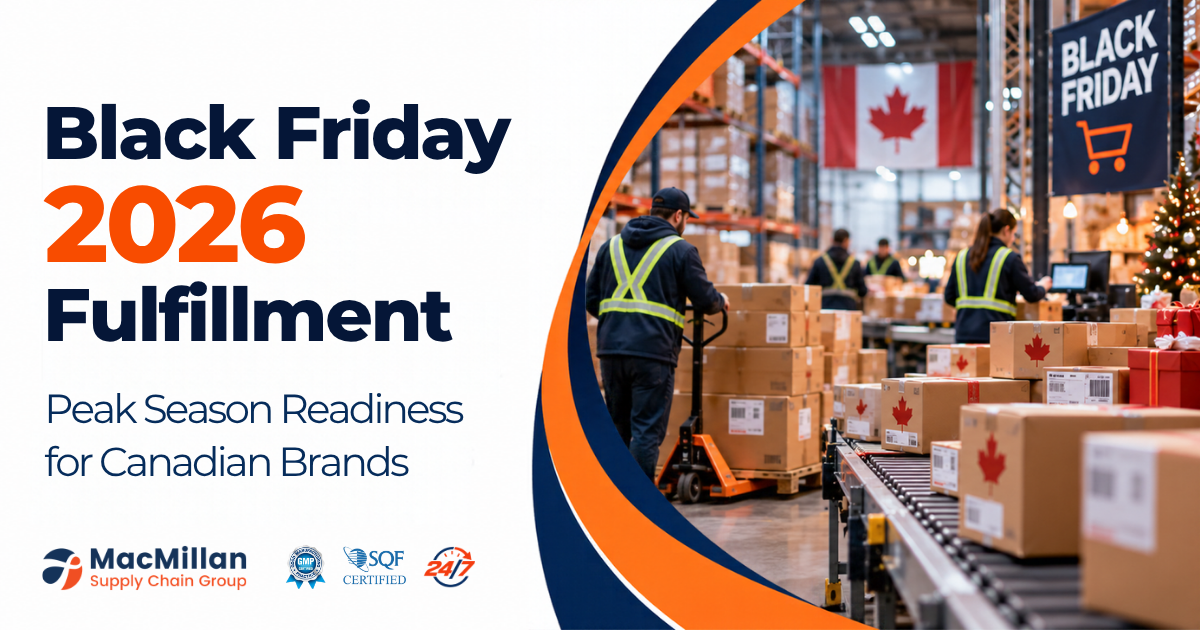
Black Friday Fulfillment Canada: 2026 Peak Season Guide
Black Friday Fulfillment Canada: How E-commerce Brands Can Prepare for…
Black Friday Fulfillment Canada: How E-commerce Brands Can Prepare for…
When discussing e-commerce, what typically springs to mind? Most likely,…
As the busiest time of the year draws near, the…
As the busiest time of the year draws near, the…
Are your outbound shipping costs cutting into your 3PL’s profits? In this article, we’ll explore five key factors impacting your shipping expenses in your Canadian 3pl warehouse and offer practical strategies to help you lower them. From optimizing delivery speed to managing special handling fees, we’ll provide valuable insights to help you make informed operational decisions that save both time and money.
When shipping domestically within the US or including Canadian 3pl warehouses, two primary elements affect your costs: the destination zone and the weight of the package.
Destination Zone
Shipping carriers divide the area into the given zones, starting with Zone 1 at the origin point. As your package travels further from its starting point, the shipping fees rise. Here’s a breakdown of the zones and their respective mileage ranges:
Weight
The weight of your package directly affects shipping costs: heavier packages incur higher fees. However, weight isn’t the sole factor; the dimensions of your package are also crucial. While MacMillan offers transparent fees with no hidden charges.
Finding the right balance between a package’s size and weight can help you avoid DIM weight surcharges, which are applied to larger but lighter packages. Investing in an efficient packaging design can help you optimize the size and weight of your packages, ultimately reducing unnecessary shipping expenses and boosting your Canadian 3pl warehouse operations.
Shipping Calculators by Carrier:
International Shipping
Don’t miss out on duty relief programs like Section 321. This provision can reduce your duty fees by up to 20%, offering significant savings. MacMillan Section 321, part of the Trade Facilitation and Trade Enforcement Act, simplifies shipping from Canada or Mexico to the U.S. for individual customers by providing tax and duty exemptions, quicker clearance, and less paperwork. For goods valued at $800 USD or less per person per day, Section 321 offers an excellent opportunity to cut costs and expand your market in the U.S. While some product restrictions apply, the benefits are substantial for businesses aiming to reach American consumers.
With the rapid growth of eCommerce, fast delivery is crucial for meeting customer expectations. MacMillan has learned that while customers generally expect two-day delivery from Amazon, they are usually okay with three to four days from other businesses, as long as real-time tracking is provided. To address these needs and maintain profitability, balancing cost and delivery speed is key.
90% of customers want immediate updates, and 32% will abandon their carts if shipping times are too long, pushing 3PLs and carriers to update their distribution models.
Fulfillment Trends
Micro-fulfillment centers are a solution for faster delivery, strategically located in urban areas and stocked with high-demand items. Though setting up MCFs can be costly, they lower shipping expenses and enhance efficiency, benefiting companies that implement them.
Last Mile Delivery
Last-mile delivery constitutes 53% of shipping costs, making it critical for customer satisfaction and profitability. Challenges in this area are significant, but partnering with efficient services like Veho can improve delivery performance and reduce costs.
Efficiency in a Canadian 3PL warehouse hinges on the effectiveness of your packing team. Here are key considerations for optimizing your operations:
Key Performance Indicators (KPIs) to Monitor:

Handling fees for hazardous and fragile items have both pros and cons:
Hazmat:
Surcharges can impact your shipping costs significantly. Key points to manage them include:
Size and Weight: Minimize shipping costs by optimizing parcel size and weight. Avoid oversized boxes and improper packaging to prevent higher fees. Choose carriers that offer flat-rate shipping or fees that align with your needs. Be mindful of dimensional weight pricing, which can increase costs for lightweight packages that occupy significant space.
Team Training: Effective Canadian 3PL warehouse operations can cut shipping costs. Invest in thorough training for your packing team on using warehouse management systems (WMS) like MacMillan uses. Proper training ensures consistent, efficient packing practices and reduces unnecessary expenses.
Equipment: Address internal errors by ensuring accurate scales and well-stocked packing stations. Implement automation rules to standardize box usage, minimizing touchpoints and improving efficiency.
Automation: Leverage automation to reduce shipping costs:
To maintain profitability, consider factors like destination, delivery speed, 3PL warehouse processes, special handling fees, and surcharges. Use tools and strategies to manage these aspects effectively, such as reducing delivery speeds or minimizing surcharge risks. Invest in efficient outbound shipping systems to see long-term savings. Start with a MacMillan demo to improve shipping efficiency.
Faster delivery increases costs; local fulfillment centers and streamlined processes can help mitigate these expenses.