
Ending Inventory: Mastering Calculation & Optimization for Supply Chain Success
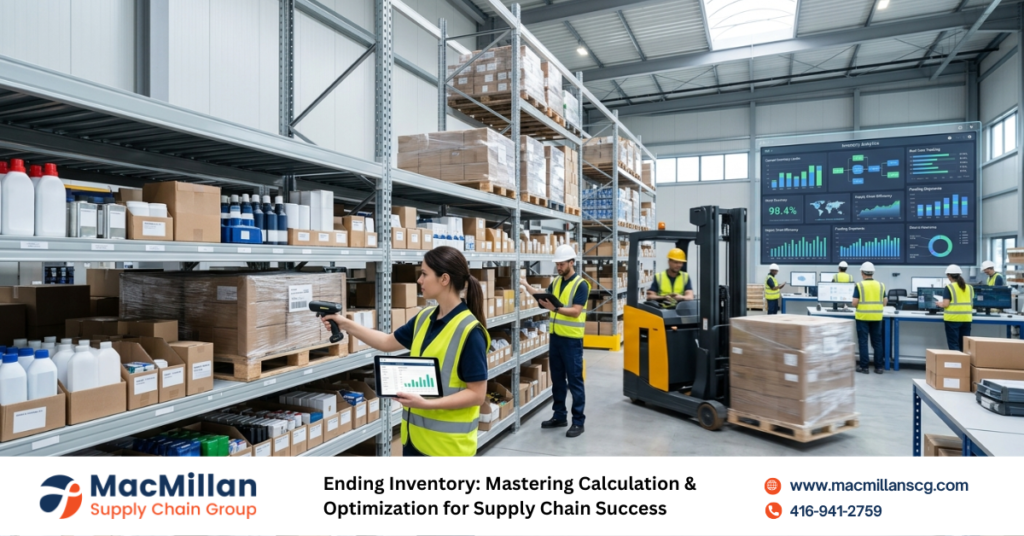
A Quick Summary and Overview Ending inventory is a crucial metric in supply chain management, representing the value of unsold goods at the end of an accounting period. Accurate calculation and optimization of ending inventory are essential for financial reporting, operational efficiency, and strategic decision-making. This comprehensive guide explores the methods for calculating ending inventory, its importance in business operations, and strategies for optimization. We’ll delve into common challenges faced by businesses and provide expert solutions to enhance your inventory management. By mastering ending inventory, you’ll be well-equipped to streamline your supply chain, improve financial accuracy, and drive business growth. Introduction In the dynamic world of supply chain management, understanding and optimizing ending inventory is a game-changer. As the final piece of the inventory puzzle, it plays a pivotal role in financial reporting, operational planning, and overall business strategy. But what exactly is ending inventory, and why is it so crucial? Ending inventory represents the monetary value of goods remaining unsold at the conclusion of an accounting period. It’s a key component of your balance sheet and directly impacts your company’s profitability calculations. Accurate ending inventory figures are essential for making informed decisions about purchasing, production, and sales strategies. In this comprehensive guide, we’ll explore the intricacies of ending inventory, from calculation methods to optimization strategies. Whether you’re a seasoned supply chain professional or new to the field, this article will provide valuable insights to help you master ending inventory management and drive your business forward. Understanding Ending Inventory and Its Importance Ending inventory, also known as closing inventory, is more than just a number on a balance sheet. It’s a crucial indicator of your business’s financial health and operational efficiency. At its core, ending inventory represents the value of goods that remain unsold at the end of an accounting period, typically a month, quarter, or year. The importance of accurate ending inventory calculations cannot be overstated. Here’s why: Financial Reporting: Ending inventory directly affects your cost of goods sold (COGS) and, consequently, your gross profit. Inaccurate figures can lead to misrepresented financial statements. Tax Implications: Over or underestimating ending inventory can impact your tax liabilities, potentially leading to compliance issues. Operational Efficiency: Knowing your ending inventory helps in planning future purchases, production schedules, and sales strategies. Performance Evaluation: It’s a key metric for evaluating the effectiveness of your inventory management practices. Cash Flow Management: Accurate ending inventory figures help in forecasting cash flow and managing working capital. By maintaining precise ending inventory records, you’re not just fulfilling an accounting requirement – you’re gaining valuable insights that can drive strategic decisions and improve your overall supply chain performance. Methods for Calculating Ending Inventory There are several methods for calculating ending inventory, each with its own advantages and implications. The choice of method can significantly impact your financial statements and tax obligations. Here are the most common approaches: Physical Count Method: This involves manually counting every item in stock. While time-consuming, it’s the most accurate method and is often used for year-end reporting. Weighted Average Cost Method: This calculates the average cost of all inventory items available for sale during a period. It’s useful when individual item costs fluctuate frequently. First-In, First-Out (FIFO): This method assumes that the oldest inventory items are sold first. It’s ideal for businesses dealing with perishable goods or in inflationary markets. Last-In, First-Out (LIFO): This assumes the newest inventory items are sold first. It can lead to lower reported profits and tax savings in inflationary periods but is not allowed under International Financial Reporting Standards (IFRS). Retail Inventory Method: Often used by retailers, this method estimates ending inventory based on the cost-to-retail price ratio. Gross Profit Method: This estimates ending inventory using historical gross profit percentages. It’s less accurate but useful for interim reporting. Choosing the right method depends on your business type, industry regulations, and specific operational needs. Consistency in applying your chosen method is crucial for accurate financial reporting and trend analysis. The Role of Technology in Ending Inventory Management In today’s digital age, technology plays a pivotal role in streamlining ending inventory management. Advanced inventory management systems and software solutions offer numerous benefits: Real-Time Tracking: Modern systems provide up-to-the-minute inventory data, reducing the need for frequent manual counts and minimizing discrepancies. Automated Calculations: Software can automatically calculate ending inventory using your preferred method, reducing human error and saving time. Predictive Analytics: AI-powered systems can analyze historical data to predict future inventory needs, helping optimize stock levels. Integration with Other Systems: Inventory software can integrate with point-of-sale systems, accounting software, and supply chain management tools for seamless data flow. Barcode and RFID Technology: These technologies enable quick and accurate inventory tracking, reducing counting errors and improving efficiency. Cloud-Based Solutions: Cloud systems allow for real-time access to inventory data from anywhere, facilitating better decision-making and collaboration. Reporting and Analytics: Advanced reporting tools provide insights into inventory turnover, stock performance, and other key metrics. By leveraging technology, businesses can significantly improve the accuracy and efficiency of their ending inventory management. This not only saves time and reduces errors but also provides valuable insights for strategic decision-making. Best Practices for Optimizing Ending Inventory Optimizing your ending inventory is crucial for maintaining financial health and operational efficiency. Here are some best practices to consider: Regular Physical Counts: Conduct periodic physical inventory counts to verify accuracy and identify discrepancies. Cycle Counting: Implement a cycle counting program where a portion of inventory is counted regularly, rather than all at once annually. ABC Analysis: Categorize inventory items based on their value and frequency of use to focus attention on high-value items. Just-in-Time (JIT) Inventory: Adopt JIT principles to minimize excess inventory and reduce carrying costs. Safety Stock Management: Maintain appropriate safety stock levels to buffer against uncertainties in demand and supply. Demand Forecasting: Use historical data and market trends to accurately forecast demand and adjust inventory levels accordingly. Supplier Relationship Management: Develop strong relationships with suppliers to ensure reliable and timely deliveries. Cross-Training Staff: Ensure multiple team members are trained in inventory management processes to maintain consistency. Regular Audits: Conduct regular audits of your inventory management processes to identify areas for improvement. Continuous Improvement: Regularly review and
Revolutionizing Supply Chain Management: Advanced Strategies for Inventory Optimization

A quick summary and overview Effective inventory management is crucial for businesses seeking to optimize their supply chain operations. This comprehensive guide explores advanced techniques, innovative solutions, and the benefits of partnering with a third-party logistics provider like MacMillan Supply Chain Group. From demand forecasting to just-in-time inventory, we’ll cover strategies that can revolutionize your inventory control. Learn how outsourcing inventory management can provide access to cutting-edge technology and expertise, helping you reduce costs and improve customer satisfaction. Discover how MacMillan Supply Chain Group’s tailored solutions can address common inventory challenges and propel your business towards greater efficiency and profitability. An introduction In today’s fast-paced business environment, mastering inventory management is essential for maintaining a competitive edge. Effective inventory control can mean the difference between thriving and struggling in an increasingly complex marketplace. This article delves into advanced inventory management techniques, exploring how businesses can leverage technology, data analytics, and strategic partnerships to optimize their supply chain operations. We’ll examine the critical role of inventory management in supply chain success, discuss key steps for implementation, and explore innovative techniques that are reshaping the industry. Additionally, we’ll highlight the benefits of outsourcing inventory management to third-party logistics providers like MacMillan Supply Chain Group, offering insights into how expert partners can drive efficiency and growth. Whether you’re a small business owner looking to streamline operations or a large corporation seeking to enhance your existing systems, this guide will provide valuable insights and actionable strategies to transform your inventory management processes. The Strategic Importance of Inventory Management Inventory management is far more than just keeping track of stock levels. It’s a strategic function that can significantly impact a company’s financial health, customer satisfaction, and overall competitiveness. Effective inventory management ensures that the right products are available at the right time, in the right quantities, and at the right locations. The benefits of optimized inventory management are manifold: Cost Reduction: By maintaining optimal stock levels, businesses can reduce storage costs, minimize waste from obsolete inventory, and free up working capital. Improved Cash Flow: Efficient inventory turnover ensures that capital isn’t unnecessarily tied up in excess stock, improving overall financial flexibility. Enhanced Customer Satisfaction: Accurate inventory management prevents stockouts, ensuring that customer orders can be fulfilled promptly and accurately. Increased Operational Efficiency: Streamlined inventory processes reduce the time and resources needed for stock handling, allowing staff to focus on value-adding activities. Better Decision Making: Real-time inventory data provides valuable insights for informed decision-making on purchasing, pricing, and product development. Competitive Advantage: Businesses with optimized inventory management can respond more quickly to market changes and customer demands, outperforming competitors. By recognizing inventory management as a strategic function, businesses can unlock significant value and drive sustainable growth. The key lies in implementing the right techniques and leveraging advanced technologies to gain a comprehensive view of inventory across the entire supply chain. Key Steps in Implementing Effective Inventory Management Implementing a robust inventory management system involves several critical steps: Conduct a Thorough Inventory Audit: Begin by accurately assessing your current inventory levels, identifying slow-moving items, and understanding your inventory turnover rates. Implement Categorization Systems: Use methods like ABC analysis to categorize inventory based on value and importance, allowing for tailored management strategies. Establish Key Performance Indicators (KPIs): Define metrics such as inventory turnover ratio, carrying costs, and stockout rates to measure and monitor inventory performance. Invest in Inventory Management Software: Choose a system that provides real-time tracking, automated reordering, and comprehensive reporting capabilities. Develop Accurate Demand Forecasting: Utilize historical data, market trends, and predictive analytics to forecast future demand more accurately. Optimize Order Quantities: Implement techniques like Economic Order Quantity (EOQ) to balance ordering costs with holding costs. Streamline Receiving and Put-away Processes: Develop efficient procedures for quickly processing and storing incoming inventory. Implement Cycle Counting: Regular cycle counts can improve inventory accuracy without the disruption of full physical counts. Train Staff: Ensure all employees understand the importance of inventory management and are proficient in using the chosen systems. Continuously Monitor and Adjust: Regularly review inventory performance and adjust strategies as needed to respond to changing market conditions. By following these steps, businesses can create a solid foundation for effective inventory management, setting the stage for improved efficiency and profitability. Innovative Techniques in Modern Inventory Management The field of inventory management is constantly evolving, with new techniques emerging to address the challenges of today’s dynamic business environment. Here are some innovative approaches that are transforming inventory management: Just-In-Time (JIT) Inventory: This technique minimizes inventory holding by scheduling deliveries to arrive precisely when needed, reducing storage costs and improving cash flow. Vendor-Managed Inventory (VMI): Suppliers take responsibility for maintaining agreed-upon inventory levels, often using real-time data to make restocking decisions. Cross-Docking: This strategy involves transferring incoming shipments directly to outgoing vehicles, minimizing handling and storage time. Demand-Driven Material Requirements Planning (DDMRP): This methodology combines aspects of Material Requirements Planning (MRP) and Lean principles to create a more responsive, demand-driven system. AI and Machine Learning: Advanced algorithms can analyze vast amounts of data to improve demand forecasting accuracy and optimize inventory levels. Internet of Things (IoT): Connected devices can provide real-time tracking and monitoring of inventory across the supply chain. Blockchain Technology: This can enhance transparency and traceability in inventory management, particularly for complex supply chains. 3D Printing: On-demand production can reduce the need for storing certain types of inventory, especially for spare parts or customized items. By adopting these innovative techniques, businesses can significantly enhance their inventory management capabilities, leading to improved efficiency, reduced costs, and increased agility in responding to market demands. The Benefits of Outsourcing Inventory Management to 3PL Providers Outsourcing inventory management to third-party logistics (3PL) providers like MacMillan Supply Chain Group offers numerous advantages: Access to Advanced Technology: 3PL providers invest in state-of-the-art inventory management systems, allowing businesses to benefit from cutting-edge technology without significant capital investment. Expertise and Best Practices: 3PL specialists bring extensive knowledge and experience, implementing industry best practices to optimize inventory management processes. Scalability and Flexibility: 3PL services can easily scale up or down based on business needs, particularly beneficial for companies with seasonal fluctuations. Cost Savings: Outsourcing can reduce labor costs, warehouse expenses, and technology investments while improving inventory
Master Demand Forecasting: Accurate Predictions for Your Business
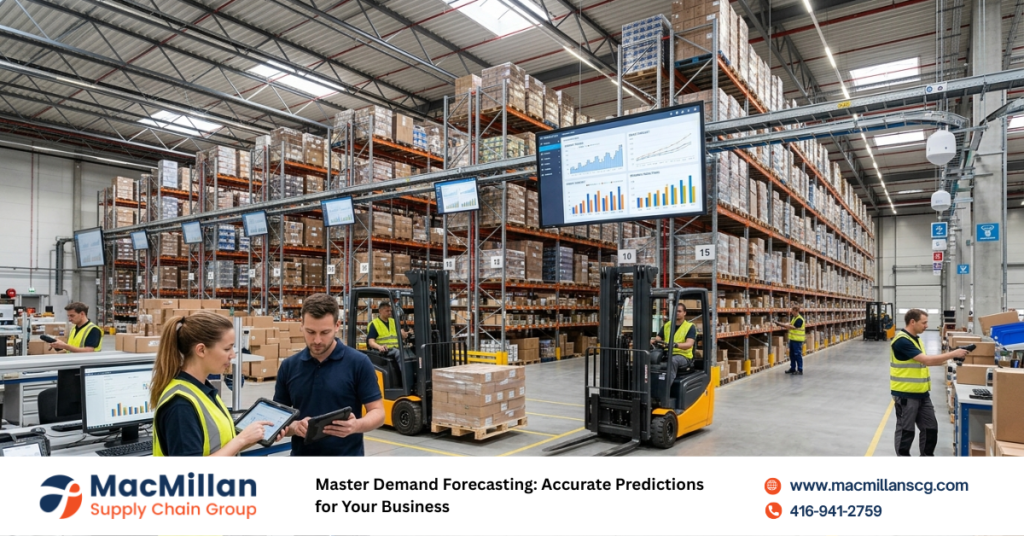
A Quick Summary and Overview Demand forecasting is a crucial process for estimating future product or service demand, enabling businesses to plan production, manage inventory effectively, and optimize supply chains. Understanding different forecasting types and methods can significantly enhance business operations and customer satisfaction. This article explores the fundamentals of demand forecasting, its benefits, challenges, and solutions. We’ll discuss how leveraging technology and 3PL partnerships can improve forecast accuracy and overall supply chain performance. By the end, you’ll have a comprehensive understanding of demand forecasting and how it can positively impact your business operations. Introduction In today’s fast-paced business environment, accurately predicting future demand is more critical than ever. Demand forecasting serves as the foundation for effective supply chain management, inventory control, and strategic decision-making. By anticipating customer needs and market trends, businesses can optimize their operations, reduce costs, and improve customer satisfaction. At MacMillan Supply Chain Group, we understand the importance of precise demand forecasting in driving business success. This article will guide you through the intricacies of demand forecasting, from its basic principles to advanced techniques and technologies. We’ll explore how businesses can overcome common challenges and leverage the power of data analytics and 3PL partnerships to enhance their forecasting capabilities. Whether you’re new to demand forecasting or looking to refine your existing processes, this comprehensive guide will provide valuable insights to help you make informed decisions and stay ahead in today’s competitive marketplace. Understanding Demand Forecasting Demand forecasting is the process of predicting future customer demand for products or services. It involves analyzing historical data, market trends, and various internal and external factors to estimate future sales volumes. This crucial business activity helps companies make informed decisions about production, inventory management, and resource allocation. There are several types of demand forecasting: Passive forecasting: Relies on historical data and assumes future demand will follow past patterns. Active forecasting: Considers dynamic factors like marketing campaigns and economic changes. Short-term forecasting: Focuses on immediate future demand, typically within weeks or months. Long-term forecasting: Predicts demand over extended periods, often years ahead. Common methods used in demand forecasting include: Time series analysis: Examines historical data to identify patterns and trends. Causal forecasting: Considers the relationship between demand and various influencing factors. Qualitative forecasting: Relies on expert opinions and market research. Delphi method: Involves gathering and refining expert opinions through multiple rounds of feedback. Choosing the right forecasting method depends on factors such as data availability, industry type, and specific business needs. Effective demand forecasting requires a combination of analytical skills, industry knowledge, and advanced tools to generate accurate predictions that drive business success. Benefits of Accurate Demand Forecasting Implementing accurate demand forecasting brings numerous advantages to businesses across various industries. Here are some key benefits: Optimized inventory management: Precise forecasts help maintain optimal stock levels, reducing both stockouts and excess inventory. This leads to improved cash flow and decreased holding costs. Enhanced customer satisfaction: By accurately predicting demand, businesses can ensure product availability when customers need it, improving overall satisfaction and loyalty. Improved production planning: Forecasts enable efficient resource allocation and production scheduling, minimizing waste and maximizing productivity. Better supply chain management: Accurate predictions allow for streamlined logistics, reduced lead times, and improved relationships with suppliers. Informed decision-making: Reliable forecasts provide valuable insights for strategic planning, budgeting, and expansion decisions. Cost reduction: By optimizing inventory and production processes, businesses can significantly reduce operational costs. Increased profitability: Improved efficiency and customer satisfaction ultimately lead to higher sales and profitability. Competitive advantage: Companies with superior forecasting capabilities can respond more quickly to market changes and outperform competitors. Risk mitigation: Accurate forecasts help businesses prepare for potential disruptions and market fluctuations. By leveraging the power of demand forecasting, businesses can enhance their overall performance, resilience, and long-term success in today’s dynamic marketplace. Challenges in Demand Forecasting While demand forecasting offers numerous benefits, it also presents several challenges that businesses must navigate: Data quality and availability: Accurate forecasting relies on high-quality, comprehensive data. Many companies struggle with incomplete or inconsistent historical data. Market volatility: Rapidly changing market conditions, consumer preferences, and economic factors can make predictions difficult. Seasonal variations: Some industries face significant seasonal fluctuations, which can complicate forecasting efforts. New product introductions: Forecasting demand for new products without historical data can be particularly challenging. External factors: Unexpected events like natural disasters, political changes, or global pandemics can disrupt even the most carefully crafted forecasts. Technology limitations: Outdated or inadequate forecasting tools can hinder accuracy and efficiency. Lack of cross-functional collaboration: Siloed departments may lead to inconsistent or conflicting forecasts across the organization. Overreliance on historical data: While past trends are important, they may not always be indicative of future demand. Balancing accuracy and cost: Highly accurate forecasting methods often require significant investment in time and resources. Interpreting results: Translating forecasts into actionable insights and decisions can be challenging for some organizations. Overcoming these challenges requires a combination of advanced technology, expert knowledge, and a commitment to continuous improvement in forecasting processes. Leveraging Technology and 3PL Partnerships To address the challenges of demand forecasting and maximize its benefits, businesses are increasingly turning to advanced technologies and 3PL partnerships: Artificial Intelligence (AI) and Machine Learning (ML): These technologies can analyze vast amounts of data, identify complex patterns, and generate more accurate forecasts. Big Data Analytics: Advanced analytics tools can process large volumes of structured and unstructured data to provide deeper insights into demand patterns. Internet of Things (IoT): IoT devices can collect real-time data on product usage, inventory levels, and market conditions, enhancing forecast accuracy. Cloud-based solutions: Cloud platforms offer scalable, accessible forecasting tools that can be easily integrated with other business systems. 3PL partnerships: Third-party logistics providers like MacMillan Supply Chain Group offer specialized expertise and advanced forecasting capabilities. Collaborative forecasting: Technologies that facilitate information sharing between suppliers, manufacturers, and retailers can improve overall forecast accuracy. Predictive analytics: These tools use historical data and statistical algorithms to predict future trends and demand patterns. Scenario planning software: These applications allow businesses to model various “what-if” scenarios and prepare for different potential outcomes. By leveraging these technologies and partnerships, businesses can significantly enhance their demand forecasting capabilities, leading to improved supply chain performance and overall business success. Common Problems with Demand
Third-Party Logistics (3PL): Streamline Your Supply Chain with MacMillan
An Introduction In today’s global marketplace, efficient supply chain management is crucial for business success. As companies strive to meet increasing customer demands and navigate complex logistics challenges, many are turning to Third-Party Logistics (3PL) providers for support. These specialized partners offer a range of services designed to optimize supply chain operations, from warehousing and inventory management to order fulfillment and transportation. MacMillan Supply Chain Group stands at the forefront of 3PL innovation, providing tailored solutions that help businesses of all sizes streamline their logistics processes. By leveraging our expertise, advanced technology, and extensive network, companies can achieve greater efficiency, reduce costs, and improve customer satisfaction. In this comprehensive guide, we’ll explore the world of 3PL services, discuss their benefits, and showcase how MacMillan’s unique approach can transform your supply chain operations. Whether you’re a small business looking to scale or a large enterprise seeking to optimize your logistics, this article will provide valuable insights into the power of 3PL partnerships. Understanding 3PL Services Third-Party Logistics (3PL) providers offer a wide range of services designed to support and optimize various aspects of a company’s supply chain operations. These services typically include: Warehousing: 3PL providers manage storage facilities, ensuring proper inventory handling and organization. Inventory Management: Advanced systems track stock levels, monitor product movement, and provide real-time visibility. Order Fulfillment: From picking and packing to shipping, 3PLs handle the entire order processing workflow. Transportation Management: 3PLs coordinate shipping, often leveraging their carrier networks for better rates and service. Reverse Logistics: Managing returns, exchanges, and refurbishments to minimize waste and maximize value recovery. Value-Added Services: Kitting, assembly, packaging, and labeling services to enhance product offerings. Technology Integration: Implementing and managing software solutions for seamless supply chain visibility and control. Consulting Services: Expert advice on supply chain optimization and strategy. MacMillan Supply Chain Group offers all these services and more, tailoring our solutions to meet the unique needs of each client. By leveraging our expertise and resources, businesses can focus on their core competencies while we handle the complexities of logistics management. This partnership approach allows companies to achieve greater efficiency, reduce costs, and improve customer satisfaction across their entire supply chain. Benefits of Partnering with a 3PL Provider Collaborating with a 3PL provider like MacMillan Supply Chain Group offers numerous advantages for businesses looking to optimize their supply chain operations: Cost Reduction: 3PLs leverage economies of scale, advanced technology, and industry expertise to lower operational costs. Scalability: Easily adjust logistics capabilities to meet fluctuating demand without significant capital investment. Focus on Core Competencies: Outsourcing logistics allows businesses to concentrate on product development, marketing, and customer relations. Access to Expertise: Benefit from the knowledge and experience of logistics professionals without the need for in-house hiring. Improved Efficiency: Streamlined processes and optimized workflows lead to faster order fulfillment and reduced errors. Enhanced Technology: Utilize state-of-the-art logistics software and systems without the burden of implementation and maintenance. Global Reach: Expand into new markets by leveraging a 3PL’s established international network and expertise. Risk Mitigation: Share logistics-related risks with a trusted partner, reducing liability and potential disruptions. Flexibility: Adapt quickly to market changes and customer demands with agile logistics solutions. Improved Customer Satisfaction: Faster, more accurate order fulfillment leads to happier customers and increased loyalty. By partnering with MacMillan Supply Chain Group, businesses can unlock these benefits and more, gaining a competitive edge in their respective industries through optimized supply chain operations. MacMillan’s Unique Approach to 3PL Services At MacMillan Supply Chain Group, we differentiate ourselves through our commitment to tailored solutions and customer-centric approach: Customized Solutions: We recognize that every business has unique needs. Our team works closely with clients to develop personalized logistics strategies that align with their specific goals and challenges. Advanced Technology Integration: We leverage cutting-edge logistics software and analytics tools to provide real-time visibility, optimize processes, and drive data-driven decision-making. Continuous Improvement: Our dedicated team constantly evaluates and refines processes to identify opportunities for efficiency gains and cost savings. Scalable Infrastructure: Our network of strategically located warehouses and distribution centers allows for flexible scaling to meet changing business needs. Industry Expertise: With years of experience across various sectors, we bring valuable insights and best practices to every client partnership. Collaborative Partnership: We view ourselves as an extension of our clients’ teams, fostering open communication and shared goals. Sustainability Focus: Our commitment to eco-friendly practices helps clients reduce their environmental impact while improving operational efficiency. Comprehensive Reporting: We provide detailed analytics and performance metrics, ensuring transparency and enabling informed decision-making. 24/7 Support: Our dedicated customer service team is always available to address concerns and provide assistance. Innovation-Driven: We continuously invest in new technologies and methodologies to stay ahead of industry trends and deliver cutting-edge solutions. Selecting the Right 3PL Partner Choosing the right 3PL partner is crucial for the success of your supply chain operations. Consider the following factors when evaluating potential providers: Service Offerings: Ensure the 3PL offers the specific services your business needs, both now and in the future. Industry Experience: Look for a provider with expertise in your industry and a track record of success with similar businesses. Technology Capabilities: Evaluate the 3PL’s technology infrastructure and its ability to integrate with your existing systems. Scalability: Choose a partner that can accommodate your growth plans and handle fluctuations in demand. Geographic Coverage: Consider the 3PL’s network of facilities and their ability to serve your target markets. Financial Stability: Assess the provider’s financial health to ensure a long-term, stable partnership. Customer References: Request and check references from current clients to gauge satisfaction levels. Cultural Fit: Look for a 3PL whose values and communication style align with your company culture. Pricing Structure: Understand the pricing model and ensure it offers transparency and value for your business. Continuous Improvement: Choose a partner committed to ongoing optimization and innovation in their services. MacMillan Supply Chain Group excels in all these areas, offering a comprehensive suite of services, industry-leading technology, and a proven track record of client success. Our commitment to tailored solutions and continuous improvement makes us an ideal partner for businesses seeking to optimize their supply chain operations. Common Problems with 3PL Systems While 3PL services offer numerous benefits, some common challenges can arise: Communication
Mastering Black Friday Logistics: Strategies for Efficient Order Fulfillment
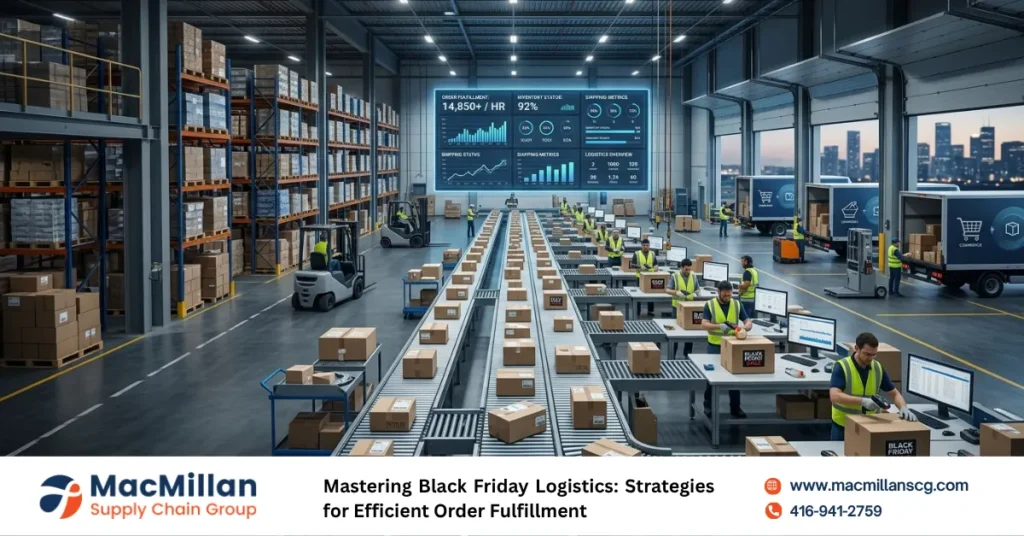
A Quick Summary and Overview Black Friday presents unique logistical challenges for businesses, with surging demand and high-volume shipping requirements. This article explores advanced strategies for mastering Black Friday logistics, focusing on efficient order fulfillment and inventory management. We’ll delve into leveraging real-time data, optimizing warehousing, managing customs and import delays, and innovations in last-mile delivery. By partnering with MacMillan Supply Chain Group, businesses can navigate these complexities, ensuring smooth operations during this peak shopping period. Our comprehensive solutions address common problems and provide tailored strategies to enhance customer satisfaction, minimize costs, and drive sales during Black Friday and beyond. An Introduction Black Friday has evolved from a single-day event to a weeks-long shopping extravaganza, putting immense pressure on supply chains worldwide. The surge in consumer demand coupled with high-volume shipping requirements tests the robustness of logistics strategies like never before. In this high-stakes environment, efficient order fulfillment and inventory management become crucial determinants of success. As businesses gear up for this annual retail phenomenon, the need for advanced logistics solutions has never been more critical. From leveraging real-time data to optimizing warehouse operations and streamlining last-mile delivery, every aspect of the supply chain must be fine-tuned for peak performance. This article will explore cutting-edge strategies and solutions offered by MacMillan Supply Chain Group to help businesses not just survive but thrive during Black Friday, ensuring customer satisfaction and driving sales in this competitive landscape. Advanced Black Friday Logistics Strategies Preparing for Black Friday demands meticulous planning and strategic execution. To meet the surge in demand, businesses must coordinate closely with suppliers, optimize inventory placement, and implement robust fulfillment processes. Advanced technologies play a crucial role in this preparation. For instance, RFID systems can significantly enhance tracking and management of stock, ensuring accurate inventory counts and reducing the risk of stockouts or overstock situations. Integrated logistics systems are key to streamlining order processing, packaging, and shipping. These systems can automatically route orders to the most efficient fulfillment center, reducing shipping times and costs. Moreover, predictive analytics can help forecast demand patterns, allowing businesses to adjust inventory levels and staffing accordingly. Leveraging partnerships with experienced third-party logistics (3PL) providers like MacMillan Supply Chain Group is invaluable for handling increased order volumes with precision and accuracy. 3PLs offer scalable solutions that can adapt to the sudden spike in demand characteristic of Black Friday. They bring expertise in warehouse management, order fulfillment, and transportation logistics, allowing businesses to focus on their core competencies while ensuring smooth operations during this critical period. By implementing these advanced strategies, businesses can significantly enhance their ability to meet customer expectations, minimize errors, and maximize sales during the Black Friday rush. Managing Real-Time Inventory and Data The utilization of real-time data is transformative in logistics, particularly during high-volume periods like Black Friday. By harnessing real-time insights, businesses can monitor inventory levels, track shipments, and manage carrier capacity effectively. This immediate visibility allows for quick decision-making and problem-solving, crucial in the fast-paced Black Friday environment. Implementing robust data analytics enables companies to optimize inventory, adjust to demand fluctuations, and improve delivery times. For instance, real-time inventory tracking can trigger automatic reordering when stock levels reach predefined thresholds, preventing stockouts. Similarly, analytics can identify slow-moving items, allowing for timely price adjustments or promotions to boost sales. Real-time order processing ensures faster response to customer needs, thereby enhancing satisfaction. It allows for immediate order confirmation, accurate delivery estimates, and proactive communication about any potential delays. This transparency builds trust and can significantly reduce customer service inquiries. MacMillan Supply Chain Group offers advanced real-time inventory and data management solutions tailored for Black Friday challenges. Our systems integrate seamlessly with your existing platforms, providing a comprehensive view of your supply chain. This integration allows for synchronized inventory across all sales channels, minimizing overselling and ensuring a smooth customer experience. Tackling Customs and Import Delays Customs and import delays pose significant risks during peak shopping events like Black Friday, potentially derailing carefully laid plans and impacting customer satisfaction. Streamlined customs clearance processes, facilitated by experienced customs brokerage services, are vital in avoiding these disruptions. Navigating complex import regulations becomes manageable with the right expertise. This includes understanding harmonized tariff schedules, complying with country-specific regulations, and preparing accurate documentation. Proactive measures, such as pre-clearing shipments and utilizing bonded warehouses, can significantly reduce the risk of delays. Partnerships with logistics experts like MacMillan Supply Chain Group can provide businesses with the support needed to mitigate these challenges. Our customs brokerage services offer: Expert knowledge of international trade regulations Advanced electronic filing systems for faster clearance Strategic relationships with customs authorities Real-time tracking of shipment status through customs Contingency planning for potential delays By leveraging these services, businesses can ensure that their products reach distribution centers or customers on time, even during the high-pressure Black Friday period. This not only prevents missed sales opportunities but also maintains customer satisfaction by meeting or exceeding delivery expectations. Effective customs and import management is crucial for businesses relying on international supply chains, ensuring a smooth flow of goods when it matters most. Innovations in Last-Mile Delivery Scaling delivery operations to meet Black Friday’s surge is one of the most challenging aspects of logistics. Innovations in last-mile delivery have gained traction, offering solutions to this perennial problem. These advancements address urban delivery complexities, reducing bottlenecks and enhancing efficiency. Flexible routing algorithms, powered by AI and machine learning, optimize delivery routes in real-time, considering traffic patterns, weather conditions, and delivery windows. This dynamic approach significantly improves delivery speed and reduces fuel consumption. Automated solutions, such as parcel lockers and autonomous delivery vehicles, are revolutionizing the last-mile landscape. These technologies offer 24/7 accessibility for package pickup and reduce the need for multiple delivery attempts, enhancing convenience for customers and efficiency for businesses. Real-time tracking and adaptive delivery networks further refine logistics operations. Customers can receive accurate ETAs and even redirect packages en route, improving the overall delivery experience. MacMillan Supply Chain Group embraces these innovations, offering cutting-edge last-mile solutions tailored to the
Maximize Exposure with Amazon Seller Fulfilled Prime: Enrollment Guide & Benefits
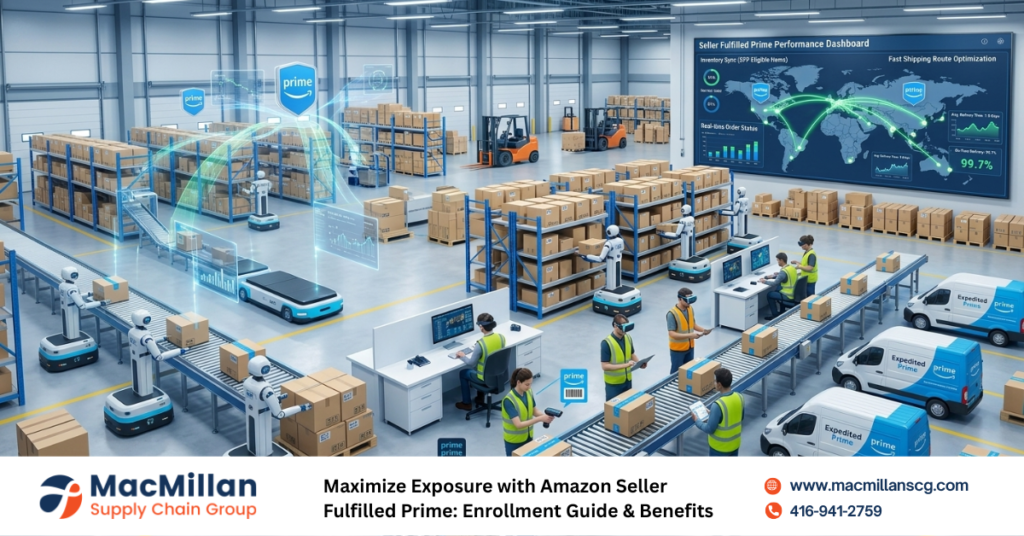
A quick summary and overview Amazon Seller Fulfilled Prime (SFP) is a coveted program that allows sellers to maintain control over their inventory while providing the perks of Prime membership, including fast two-day delivery. SFP provides significant exposure, helps increase sales, and offers customizable fulfillment solutions, features that Fulfillment by Amazon (FBA) might lack for third-party sellers. This article explores the benefits of SFP, the enrollment process, performance requirements, and common challenges. Additionally, we’ll discuss how MacMillan Supply Chain can help sellers optimize their SFP strategy, ensuring compliance with Amazon’s standards and maximizing the program’s potential for business growth. An introduction In the competitive landscape of e-commerce, securing a badge that assures premium service quality can be a game-changer. That’s precisely what the Amazon Seller Fulfilled Prime (SFP) program offers. This program allows sellers to manage logistics independently while leveraging the powerful Prime badge that signals reliability and expedited shipping to customers. By enrolling in SFP, businesses can boost their marketplace presence and sales significantly. However, understanding the nuances of the program and implementing best practices are essential to maximizing these benefits. In this comprehensive guide, we’ll delve into the intricacies of Amazon Seller Fulfilled Prime, from its core benefits to enrollment procedures and performance requirements. We’ll also explore how MacMillan Supply Chain can be your strategic partner in navigating the complexities of SFP, ensuring your e-commerce business thrives in this dynamic marketplace. What is Amazon Seller Fulfilled Prime (SFP)? Amazon Seller Fulfilled Prime is a program designed for third-party sellers who want to maintain control over their inventory and shipping processes while still offering the coveted Prime badge on their product listings. Unlike Fulfillment by Amazon (FBA), where Amazon stores and ships the products, SFP allows sellers to utilize their own warehouses or third-party logistics providers to fulfill orders. The key premise of SFP is that sellers commit to providing Prime-level service, which includes: Two-day delivery guarantee for Prime customers Compliance with Amazon’s packaging requirements Use of Amazon-approved carriers for shipping Maintaining high performance metrics By meeting these standards, sellers can display the Prime badge on their eligible products, making them more attractive to Amazon’s vast Prime customer base. This increased visibility often translates to higher sales and improved customer trust. SFP offers sellers greater flexibility in inventory management, potentially lower fulfillment costs, and the ability to offer Prime benefits on items that may not be suitable for FBA (e.g., oversized or fragile items). For businesses ready to manage these logistics, SFP presents an intriguing proposition to engage with Amazon’s immense Prime customer base while maintaining control over their operations. Key Benefits of Seller Fulfilled Prime Enrolling in Amazon Seller Fulfilled Prime offers several significant advantages for e-commerce businesses: Increased Visibility: Products with the Prime badge enjoy enhanced visibility on Amazon, often becoming the Featured Offer on product listings. This increased exposure can lead to a reported 50% or more increase in sales. Access to Prime Customers: SFP allows sellers to tap into Amazon’s large and loyal Prime membership base, who are more likely to make purchases due to the trusted Prime badge. Inventory Control: Unlike FBA, SFP gives sellers complete control over their inventory, allowing for better management and potentially reducing storage costs. Customization: Sellers can personalize their packaging and shipping experience, which can help in brand differentiation and customer satisfaction. Multichannel Fulfillment: SFP allows sellers to use their inventory for other sales channels, providing greater flexibility in their overall business strategy. Cost Efficiency: For some sellers, SFP can be more cost-effective than FBA, especially for larger items or those with slower turnover rates. Expanded Prime Eligibility: Sellers can offer Prime benefits on items that may not be suitable for FBA, such as oversized or fragile products. By leveraging these benefits, sellers can significantly enhance their Amazon presence, improve customer satisfaction, and potentially increase their profit margins. The Enrollment Process: Steps to Join SFP Joining the Amazon Seller Fulfilled Prime program involves a structured enrollment process: Eligibility Check: Ensure your seller account is in good standing and you have a Professional Seller account. Application: Express interest in the program through your Seller Central account. Prequalification: Amazon will assess your account’s performance history, including order defect rate, cancellation rate, and late shipment rate. Trial Period: If prequalified, you’ll enter a trial period, typically lasting 30 days. During this time, you must: Fulfill a minimum of 200 Prime trial orders Achieve an on-time shipment rate of 99% for Prime trial orders Use Amazon Buy Shipping Services for at least 95% of Prime trial orders Maintain a cancellation rate of less than 1% on Prime trial orders Prime Badge Activation: Upon successful completion of the trial, eligible listings will automatically display the Prime badge. Ongoing Compliance: Continue to meet Amazon’s performance requirements to maintain your SFP status. Throughout this process, it’s crucial to have robust inventory management and efficient fulfillment processes in place. Working with an experienced logistics partner like MacMillan Supply Chain can significantly smooth this transition and help ensure you meet Amazon’s stringent requirements. Performance Requirements and Challenges Maintaining Amazon Seller Fulfilled Prime status requires consistent adherence to strict performance standards: On-Time Delivery: Maintain a 99% on-time delivery rate for Prime-eligible products. Valid Tracking Rate: Provide valid tracking numbers for at least 98% of Prime orders. Cancellation Rate: Keep order cancellations below 0.5% of total Prime orders. Use of Buy Shipping Services: Utilize Amazon’s Buy Shipping Services for at least 95% of Prime orders. Delivery Speed: Offer same-day or next-day delivery for Prime orders. These requirements present several challenges: Inventory Management: Maintaining sufficient stock to avoid stockouts and cancellations. Logistics Efficiency: Ensuring consistent two-day delivery across various regions. Carrier Coordination: Working with Amazon-approved carriers to meet shipping deadlines. Peak Season Handling: Managing increased order volumes during busy periods without compromising performance. Cost Management: Balancing the costs of expedited shipping with profit margins. Customer Service: Handling pre-order inquiries while Amazon manages post-order customer service. Meeting these challenges requires a
Trump’s Tariffs Impact on Shipping: Rates, Routes, and Supply Chain Strategies
A Quick Summary and Overview The worldwide shipping industry is expected to change as a result of Donald Trump’s planned tariffs, which include a 60% tax on Chinese goods and a 10% tax on all U.S. imports. These regulations will probably result in temporary increases in shipping costs, change well known trade routes, and force companies to reconsider their supply chain plans. To effectively reduce costs and interruptions, businesses must prioritize supply chain diversification and implement flexible logistics solutions. The effects of these tariffs on the shipping sector are explored in this article, which also provides professional advice from MacMillan Supply Chain Group on how companies may effectively handle these difficulties. An Introduction The dynamics of global commerce and their effects on the shipping sector are receiving more attention as a result of Donald Trump’s possible return to the presidency. considerable hikes are proposed by his strong tariff measures, which will have a considerable impact on shipping rates and redraw established trade routes. These shifts force companies to reconsider their global supply chains in ways that go beyond simple statistics. Businesses must negotiate a terrain full of opportunities and difficulties, from changing sourcing tactics to getting ready for possible trade battles. Supply chain professionals who want to reduce risks and take advantage of new trends must comprehend these dynamics. This article explores the various ways that Trump’s tariffs have affected the shipping sector and offers insightful advice from MacMillan Supply Chain Group on how companies may adjust and prosper in this changing environment. Trump’s tariffs Increases and Frontloading Trump’s proposal to impose a sweeping 10% tariff on all U.S. imports and a staggering 60% on Chinese products has immediate consequences for international logistics. Anticipating these measures, importers are likely to frontload shipments, accelerating imports to circumvent impending duties. This rush can temporarily boost shipping volumes but will concurrently strain logistics networks, leading to congestion at ports and potential delays in customs processes. A brief spike in demand for shipping services is caused by the frontloading phenomenon, which may raise prices for all means of transportation. Significant price increases may be incurred by ocean freight in particular as businesses rush to shift goods prior to the imposition of tariffs. Port infrastructure may be overloaded by this unexpected surge in goods, leading to bottlenecks and longer lead times. This offers businesses opportunities as well as obstacles. Savvy businesses may use this time to strengthen their relationships with logistics suppliers and negotiate advantageous shipping contracts, even though rising shipping costs and possible delays are worries. Businesses can build up a buffer against future volatility by securing capacity and rates ahead of time. MacMillan Supply Chain Group advises clients to carefully analyze their import strategies, considering factors such as inventory carrying costs, storage capacity, and demand forecasts. By optimizing the balance between frontloading and just in time inventory management, companies can navigate this tumultuous period more effectively. Impact on Shipping Costs and Trade Routes The increased tariffs echo through shipping rates, creating upward pressure as logistics providers recalibrate their costs. This ripple effect extends beyond direct China U.S. routes, influencing global shipping dynamics. Consequently, importers may explore alternate supply chains or source from locales less burdened by Trump’s tariffs. These changes affect global commerce routes in addition to cost structures. In order to perhaps lessen the effects of Trump’s tariffs, we might see an increase in transshipment activities, where commodities are routed through intermediary nations. This might increase the need for services in areas that were previously underutilized, changing the preferences of shipping lanes and port usage trends. For example, when businesses diversify away from China, traffic to Southeast Asian nations may increase. Similarly, nearshoring trends may pick up speed, increasing transportation of commodities headed for the United States to places like Mexico and Central America. Both importers and shipping businesses have opportunities and challenges as a result of these changes. Volumes on some routes might decline, but on others, they might rise at an unparalleled rate. It takes a sophisticated understanding of both new business opportunities and logistics understanding to navigate this complex environment. MacMillan Supply Chain Group leverages its global network and market intelligence to help clients identify optimal routing strategies, balancing cost considerations with reliability and speed. By staying ahead of these shifting trade patterns, businesses can position themselves advantageously in the evolving global trade landscape. Supply Chain Disruptions and Diversification The anticipated Trump’s tariffs underscore the importance of diversifying supply chains. Relying heavily on any single region, particularly China, could expose businesses to undue risk, making strategic diversification paramount. By spreading sourcing across multiple countries, companies can buffer against localized disruptions and tariff-induced price hikes. This approach not only shields against immediate impacts but also fosters resilience, allowing businesses to adapt swiftly to future regulatory or market changes. However, diversification is not without challenges. It requires careful evaluation of new suppliers, understanding different regulatory environments, and potentially navigating unfamiliar logistics landscapes. Key considerations for effective supply chain diversification include: Identifying alternative sourcing locations with stable political environments and robust infrastructure Evaluating the entire cost of landing, taking into account possible customs, transportation, and compliance costs Assessing the scalability, quality standards, and capabilities of suppliers Taking into account the effects on lead times and inventory control techniques By offering thorough market assessments, supplier vetting services, and efficient logistics solutions catered to various sourcing strategies, MacMillan Supply Chain Group helps clients navigate this challenging process. Businesses may execute successful diversification strategies that strike a balance between risk reduction and operational effectiveness thanks to our worldwide experience. Supply chain professionals must diligently analyze global trends, prioritize flexibility, and continuously optimize logistics networks to stay competitive in this dynamic environment. Infrastructure Investments Although Trump’s administration recommends significant infrastructure spending, with a focus on improving ports, highways, and railroads, the real advantages are yet uncertain. By lowering transit times and expenses, improved logistics infrastructure might simplify supply chains and possibly offset certain tariff impacts. The scope and schedule of these projects are unclear,
2024 Amazon Holiday Peak Fulfillment Fees: Strategies for Seller Success
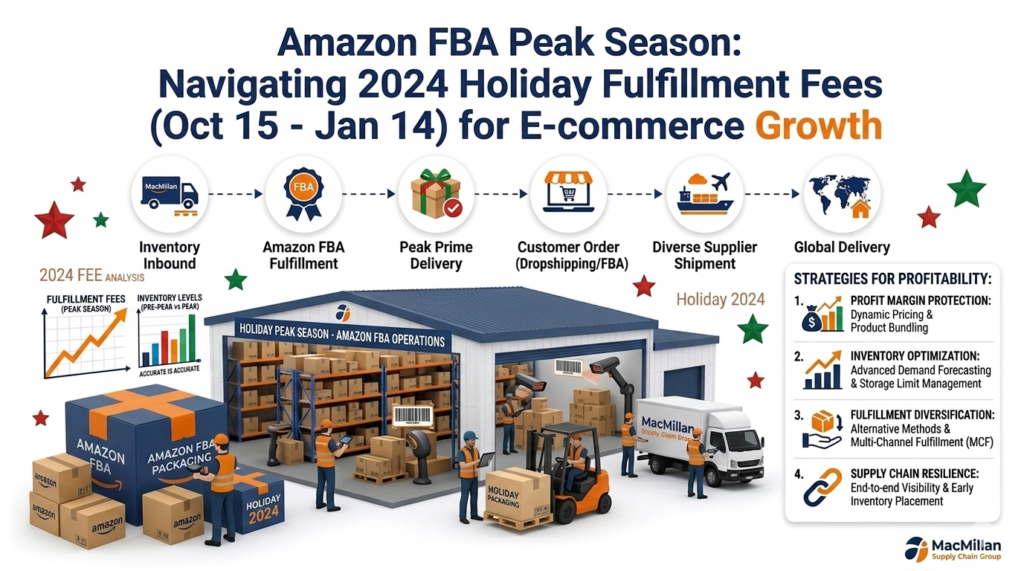
A Quick Summary and Overview Amazon’s 2024 holiday peak fulfillment fees, effective from October 15, 2024, to January 14, 2025, present both challenges and opportunities for sellers. These fees, varying by product size and weight, impact all FBA shipments in North America. Understanding and adapting to these changes is crucial for maintaining profitability during the high-demand holiday season. This article explores the fee structure, its implications, and provides expert strategies from MacMillan Supply Chain Group to help sellers optimize their operations. From pricing adjustments to inventory management, we’ll guide you through navigating these fees successfully and maximizing your holiday sales potential. An Introduction As the e-commerce landscape continues to evolve, Amazon sellers face new challenges each year. The announcement of the 2024 holiday peak fulfillment fees is no exception, bringing significant implications for businesses relying on Fulfillment by Amazon (FBA). These fees, designed to offset increased operational costs during the busy holiday season, require sellers to reassess their strategies and adapt quickly. In this comprehensive guide, we’ll delve into the intricacies of these new fees, exploring their structure, timing, and potential impact on your business. More importantly, we’ll provide you with actionable strategies and expert insights from MacMillan Supply Chain Group to help you not just survive, but thrive during this critical sales period. Whether you’re a seasoned Amazon seller or new to the platform, this article will equip you with the knowledge and tools to optimize your operations and maintain a competitive edge in the face of these new challenges. Understanding the 2024 Amazon Holiday Peak Fulfillment Fees The 2024 Amazon holiday peak fulfillment fees represent a significant shift in the e-commerce landscape. Set to take effect from October 15, 2024, to January 14, 2025, these fees will impact all products shipped through FBA in the United States and Canada. But what exactly do these fees entail? First and foremost, it’s crucial to understand that the fee structure is based on product size and weight. Smaller items may see a slight increase, while larger items could face more substantial charges. Additionally, Amazon has introduced a new fee for products priced under $10, adding another layer of complexity to the pricing strategy. The rationale behind these fees lies in Amazon’s increased operational costs during the holiday season. With higher demand comes the need for additional labor, enhanced inventory management, and more complex transportation logistics. By implementing these fees, Amazon aims to maintain its high-quality service standards while managing the seasonal surge. For sellers, this means a necessary recalibration of pricing strategies and inventory management. It’s not just about absorbing the additional costs, but rather understanding how these fees interact with your current business model and making informed decisions to maintain profitability. In the following sections, we’ll explore strategies to navigate these changes effectively. Impact on Sellers and Necessary Adjustments The introduction of the 2024 holiday peak fulfillment fees will undoubtedly have a ripple effect across Amazon’s seller ecosystem. The most immediate impact will be on profit margins, particularly for those dealing in low-priced items or large, bulky products. However, the effects extend beyond mere financial considerations. Sellers will need to reassess their entire operational strategy. This includes: Pricing Strategy: Carefully recalculating product prices to account for the new fees while remaining competitive. Inventory Management: Optimizing stock levels to avoid Amazon’s capacity limits and associated penalties. Product Selection: Potentially reevaluating which products to sell during the peak season based on profitability under the new fee structure. Fulfillment Method: Considering alternative fulfillment methods for certain products if FBA becomes less profitable. Moreover, these changes may affect seller rankings and Buy Box eligibility, as pricing adjustments could influence competitiveness. It’s crucial for sellers to maintain a delicate balance between absorbing costs and passing them on to customers. The key to success lies in adaptability and strategic planning. By understanding these impacts and making necessary adjustments, sellers can position themselves to not just weather the changes, but potentially gain a competitive advantage during the crucial holiday selling season. Strategies for Optimizing Operations During Peak Season Navigating the 2024 holiday peak fulfillment fees requires a multi-faceted approach. Here are key strategies to optimize your operations: Dynamic Pricing: Implement a dynamic pricing strategy that adjusts in real-time based on competition, demand, and the new fee structure. This ensures you remain competitive while maintaining profitability. Inventory Forecasting: Utilize advanced forecasting tools to predict demand accurately. This helps in maintaining optimal inventory levels, avoiding stockouts, and preventing excess storage fees. Product Bundle Optimization: Consider creating strategic product bundles. This can increase the average order value, potentially offsetting the impact of fees on lower-priced items. Fulfillment Method Diversification: Explore a mix of fulfillment methods. While FBA is convenient, consider using Fulfillment by Merchant (FBM) for certain products where it may be more cost-effective. Early Inventory Placement: Ship your inventory to Amazon fulfillment centers well before the peak season to ensure availability and avoid potential shipping delays. Quality Control: Focus on product quality to minimize returns, as return processing during peak season can be particularly costly. Customer Communication: Clearly communicate any necessary price adjustments to customers, emphasizing the value and benefits of your products. By implementing these strategies, sellers can navigate the challenges posed by the new fee structure while capitalizing on the increased holiday demand. The key is to remain flexible and continuously analyze performance data to make informed decisions. Leveraging Technology and Data Analytics In the face of changing fee structures and increasing competition, leveraging technology and data analytics becomes crucial for Amazon sellers. Advanced tools and data-driven insights can provide a significant edge in navigating the complexities of the 2024 holiday peak fulfillment fees. Key areas where technology can make a difference include: Automated Repricing: Utilize AI-powered repricing tools that can adjust your product prices in real-time based on competitors’ prices, demand fluctuations, and the new fee structure. Inventory Management Systems: Implement advanced inventory management software that provides accurate forecasting, helps prevent stockouts, and optimizes reorder points. Data Analytics Platforms: Use comprehensive analytics tools
Top Logistics Trends 2025 | Automation & Sustainability
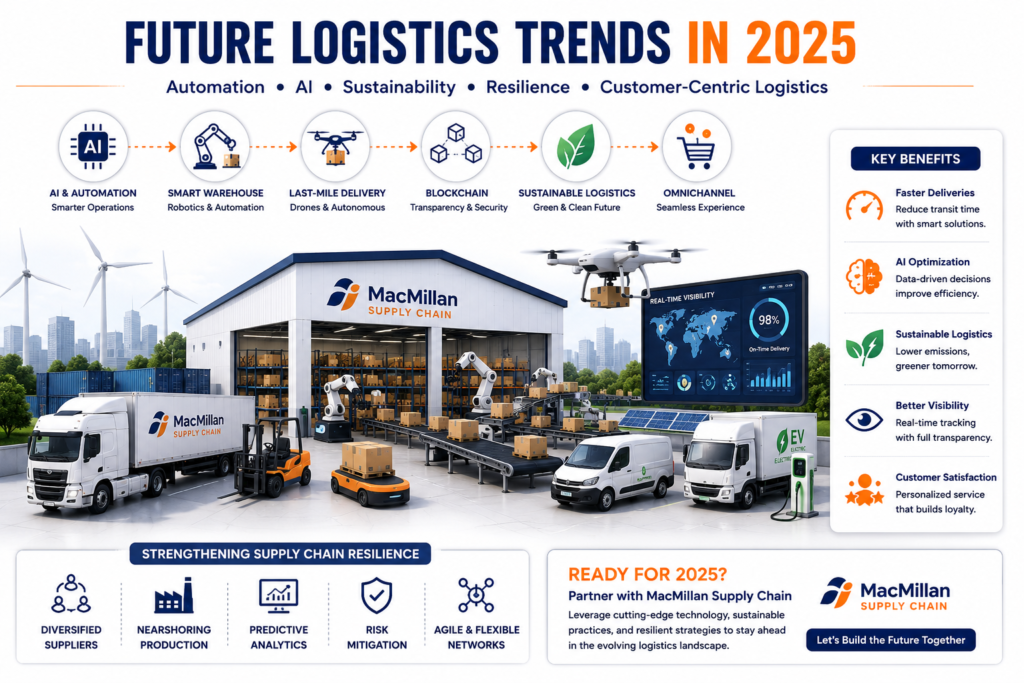
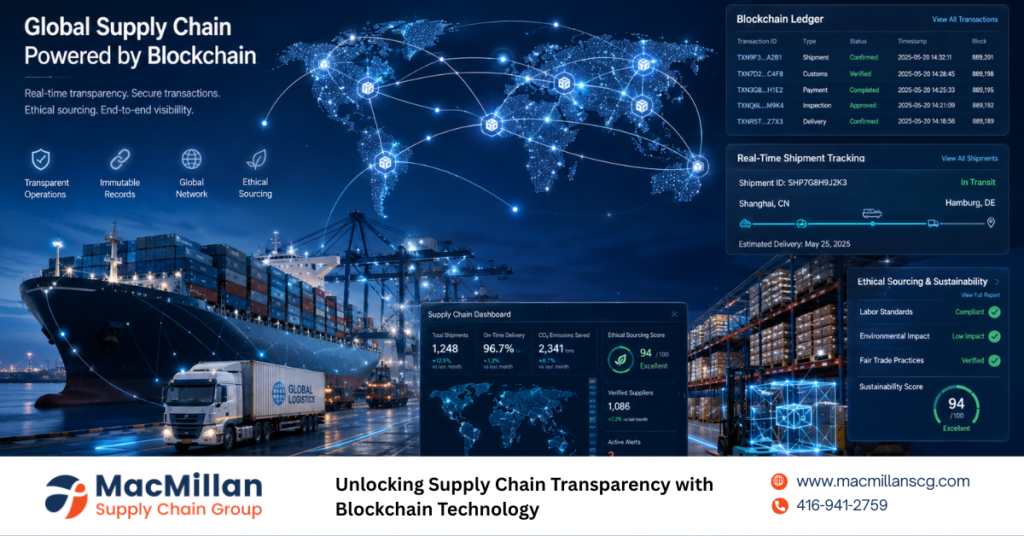
Quick Overview In 2025, logistics will be transformed by automation, AI, sustainability, and personalized services. As logistics trends evolve, companies will leverage advanced technologies to streamline operations, reduce environmental impact, and enhance customer experiences. These shifts will focus on optimizing supply chain resilience, integrating blockchain for transparency, and employing data-driven strategies to stay competitive. Introduction Logistics is undergoing a seismic shift, driven by a combination of technological advancements and the pressing need for sustainable practices. Forecasting into 2025, automation and AI emerge as pivotal players in transforming logistics operations, while sustainability initiatives become crucial for businesses striving to meet eco-friendly goals. At the nexus of innovation and necessity, MacMillan Supply Chain leads as an expert in integrating these transformative trends, poised to unlock new efficiencies and customer experiences in logistics. Automation and AI’s Role in 2025 Automation is transforming logistics and is no longer a sci-fi idea. AI powered solutions improve warehouse management, demand forecasting, and routes. Drones and self driving cars will revolutionize last-mile deliveries, cutting expenses and timeframes. These innovations result in a digital transformation for businesses like MacMillan, guaranteeing quicker, safer, and more dependable logistics services. We lead efficiency by incorporating AI systems, prepared to lead companies into the future. Embracing Sustainability in Logistics In an urgent effort to prevent climate change, logistics companies are embracing sustainability and integrating their operations with green principles. Emissions are reduced by switching to electric and hydrogen powered vehicles, while additional environmental initiatives include redesigning packaging and implementing carbon neutral tactics. Leading the charge in putting these environmental impact reduction measures into action is MacMillan. By restructuring supply chains to meet eco friendly objectives and drawing in sustainability conscious customers, working with us gives you a competitive edge. Importance of E-commerce and Omnichannel Logistics The e-commerce explosion demands an omnichannel logistics approach, requiring swift, flexible delivery methods. Companies are investing in micro-fulfillment centers near cities to guarantee faster deliveries. MacMillan partners with businesses to ensure seamless integration of these strategies, facilitating same-day and scheduled deliveries that delightedly meet customer expectations. As e-commerce evolves, staying ahead involves adopting agile, customer-centric logistic solutions that MacMillan offers expertly. Strengthening Supply Chain Resilience Disruptions in recent years highlight the critical need for supply chain resilience. Strategies like diversifying suppliers, nearshoring production, and predictive analytics of potential disruptions become essential. in MacMillan’s opinion, increases resilience and reduces risks. Companies can handle unpredictable markets with assurance, delivering smooth, effective operations. Common Problems & Our Solutions The rapid tech evolution in logistics can create gaps, causing inefficiencies or prolonged adaptation periods for businesses. Automation and AI implementation may require significant initial investment and strategic planning. Sustainability goals can also face challenges in balancing cost with effective environmental impact. Additionally, ecommerce demands flexible logistics that may overwhelm unprepared supply chains. Our Solutions: MacMillan Supply Chain works to overcome these challenges. In order to minimize risks during transitions, our skilled team creates customized automation plans that integrate advanced AI with your current systems. Our sustainability programs help companies implement environmentally friendly practices without sacrificing efficiency or affordability. Additionally, we deliberately locate fulfillment hubs for maximum reach and efficiency, modeling customer centric e-commerce logistics solutions. Placing Solutions into Practice with MacMillan Collaborate with MacMillan Supply Chain to steer clear of any logistical obstacles. We provide cutting edge automation and artificial intelligence solutions to your company, promoting resilient and sustainable operations that satisfy customer demands and market trends. To begin improving your supply chain and maintain your competitive edge in a constantly changing industry, get in touch with our experts right now. MacMillan’s experience might serve as the foundation for your company’s successful navigation of 2025’s trends if you’re looking for creative logistics solutions and excellent supply chain management. To find out how we can support your journey of transformation, get in touch with us right now. FAQS How will automation and AI reshape logistics by 2025? Automation and AI will considerably enhance logistics through processes like route optimization, demand forecasting, and warehouse management. Drones and autonomous vehicles will be crucial in refining last-mile delivery, making operations faster and more cost-effective. Why is sustainability pivotal in modern logistics? Sustainability is pivotal in modern logistics because businesses are under increasing pressure to reduce environmental impact and meet eco-friendly standards. Sustainable logistics practices, such as using electric vehicles, optimizing transportation routes, and reducing packaging waste, help lower carbon emissions and operational costs. Additionally, companies that prioritize sustainability can improve brand reputation, attract environmentally conscious customers, and stay compliant with evolving regulations. Why is Omnichannel logistics essential for e-commerce? Omnichannel logistics is essential for e-commerce because customers expect fast, flexible, and seamless delivery experiences across multiple sales channels. It enables businesses to integrate online and offline operations efficiently, ensuring accurate inventory management, faster fulfillment, and convenient delivery options such as same-day or scheduled delivery. This approach improves customer satisfaction, strengthens brand loyalty, and helps businesses stay competitive in the growing e-commerce market. What strategies bolster supply chain resilience? Strategies that bolster supply chain resilience include diversifying suppliers, nearshoring production, maintaining safety stock, and using predictive analytics to identify potential disruptions. Businesses also strengthen resilience by investing in digital technologies, improving supply chain visibility, and creating flexible logistics networks. These strategies help companies respond quickly to unexpected disruptions, minimize risks, and maintain smooth operations during uncertain market conditions. How does blockchain enhance logistics transparency? Blockchain enhances logistics transparency by creating a secure and tamper-proof digital record of transactions and product movements across the supply chain. It allows all stakeholders to access real-time information regarding shipments, inventory, and delivery status, reducing fraud and improving accountability. Blockchain also improves traceability, streamlines documentation processes, and builds trust among suppliers, logistics providers, and customers through transparent data sharing.
Conquering Ocean Freight Bottlenecks 2025: A Guide for Supply Chain Resilience
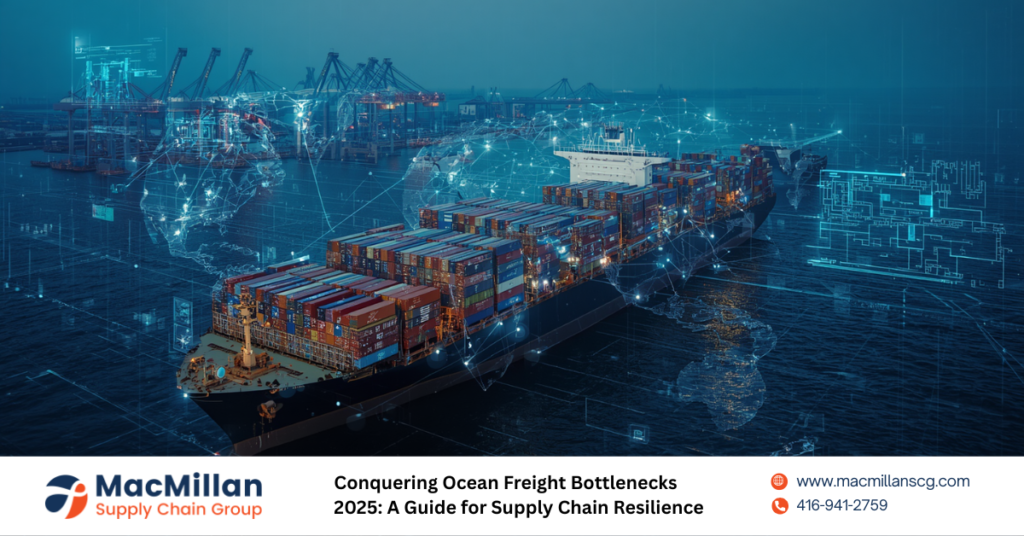
Quick Summary: As we approach Ocean Freight Bottlenecks 2025, the industry faces significant bottlenecks, including port congestion, overcapacity, and evolving regulations. Navigating these challenges requires a proactive approach to ensure supply chain resilience. MacMillan Supply Chain Group offers expert insights and tailored solutions to help businesses overcome these obstacles and maintain efficient operations. Introduction: The ocean freight landscape in 2025 presents a complex web of challenges that can disrupt even the most well-oiled supply chains. Factors such as port congestion, vessel overcapacity, and shifting regulatory frameworks are causing delays, escalating costs, and creating uncertainty for shippers worldwide. At MacMillan Supply Chain Group, we understand the critical importance of addressing these bottlenecks head-on. Our team of seasoned logistics experts provides actionable insights and customized solutions designed to help businesses navigate these turbulent waters and maintain resilient supply chains. The Persistent Challenge of Port Congestion One of the most pressing issues facing the ocean freight sector in 2025 is the persistent challenge of port congestion. Major ports across Asia, Latin America, and North America are experiencing severe delays, with some bottlenecks lasting up to three weeks in critical hubs like Busan and Singapore. These delays are often exacerbated by labor shortages, adverse weather conditions, and inefficient cargo handling processes. Navigating these congested waters requires proactive planning and a willingness to explore alternative routing strategies. At MacMillan Supply Chain Group, we leverage our deep industry expertise to identify and implement the most efficient routes, minimizing delays and avoiding bottlenecks that can cripple supply chain operations. The Double-Edged Sword of Overcapacity The surge in container vessel orders has led to a concerning issue of overcapacity within the ocean freight sector. While this might initially suggest lower freight rates, the reality is far more complex. Overcapacity can strain carrier profitability, leading to cuts in service quality, reliability, and potentially higher costs for shippers in the long run. At MacMillan Supply Chain Group, we understand that navigating these turbulent waters requires strategic planning and a deep understanding of market dynamics. By optimizing shipping schedules, negotiating favorable rates, and leveraging our extensive industry network, we help our clients capitalize on market conditions without sacrificing operational efficiency. Navigating the Evolving Regulatory Landscape As we approach 2025, the ocean freight industry is grappling with the impacts of potential policy shifts and evolving global regulatory requirements. New tariffs, compliance standards, and environmental regulations are increasing the cost and complexity of ocean freight logistics. Failure to adapt to these changes can result in costly penalties, delays, and reputational damage. At MacMillan Supply Chain Group, we prioritize staying ahead of these regulatory shifts, offering comprehensive compliance strategies and adapting swiftly to new mandates. Our focus is on reducing the operational costs associated with compliance, ensuring that our clients remain competitive despite the ever-changing regulatory landscape. The Imperative of Supply Chain Resilience In the face of these multifaceted challenges, building supply chain resilience has become an imperative for businesses seeking to maintain a competitive edge. Resilience encompasses the ability to anticipate disruptions, mitigate their impact, and rapidly adapt to changing circumstances. At MacMillan Supply Chain Group, we partner with our clients to develop robust contingency plans, diversify supply bases, and implement advanced technologies that enhance visibility and agility across the entire supply chain network. Common Problems and Our Solutions: Port Congestion: MacMillan Supply Chain Group addresses port congestion by leveraging our extensive network and deep industry knowledge to identify alternative routing options, optimizing cargo flow, and collaborating with port authorities to streamline operations. Overcapacity: We help clients navigate overcapacity challenges by optimizing shipping schedules, negotiating favorable rates, and providing strategic guidance on market trends and carrier dynamics. Regulatory Compliance: Our dedicated compliance team stays ahead of regulatory changes, offering comprehensive strategies to ensure seamless adherence to evolving mandates, minimizing disruptions and penalties. Supply Chain Disruptions: Through proactive risk management, diversification strategies, and the implementation of cutting-edge technologies, we enhance supply chain visibility, enabling rapid response and adaptation to unforeseen disruptions. How Readers Can Avoid Problems and Implement Solutions To conquer the ocean freight bottlenecks of 2025 and build resilient supply chains, businesses must take a proactive approach. Partner with MacMillan Supply Chain Group to access our extensive industry expertise, leverage our strategic solutions, and stay ahead of the curve. Our tailored approach ensures that your supply chain operations remain efficient, cost-effective, and agile in the face of evolving challenges. Contact MacMillan Supply Chain Group today to schedule a consultation and learn how our customized solutions can help your business navigate the ocean freight bottlenecks of 2025 and achieve long-term supply chain resilience. Frequently Asked Questions What are the primary causes of port congestion in 2025? Port congestion in 2025 is primarily driven by a combination of factors, including labor shortages, inefficient cargo handling processes, and adverse weather conditions exacerbated by climate change. Additionally, an imbalance in container supply and demand, as well as infrastructure limitations at major ports, contribute to the bottlenecks. How can businesses mitigate the impacts of overcapacity in the ocean freight sector? Businesses can reduce the impact of overcapacity by diversifying carriers, improving demand forecasting, and using flexible shipping strategies to control costs and maintain supply chain stability. What are the potential consequences of non-compliance with evolving regulations in the ocean freight industry? Non-compliance can lead to fines, shipment delays, cargo holds, reputational damage, and disruptions across the supply chain. How can advanced technologies help build supply chain resilience? Advanced technologies improve visibility, automate operations, and provide real-time data that helps businesses respond quickly to disruptions and improve efficiency. Why is it important to partner with a specialized logistics provider like MacMillan Supply Chain Group? Working with MacMillan Supply Chain Group helps businesses improve efficiency, reduce logistics risks, ensure compliance, and optimize overall supply chain performance.