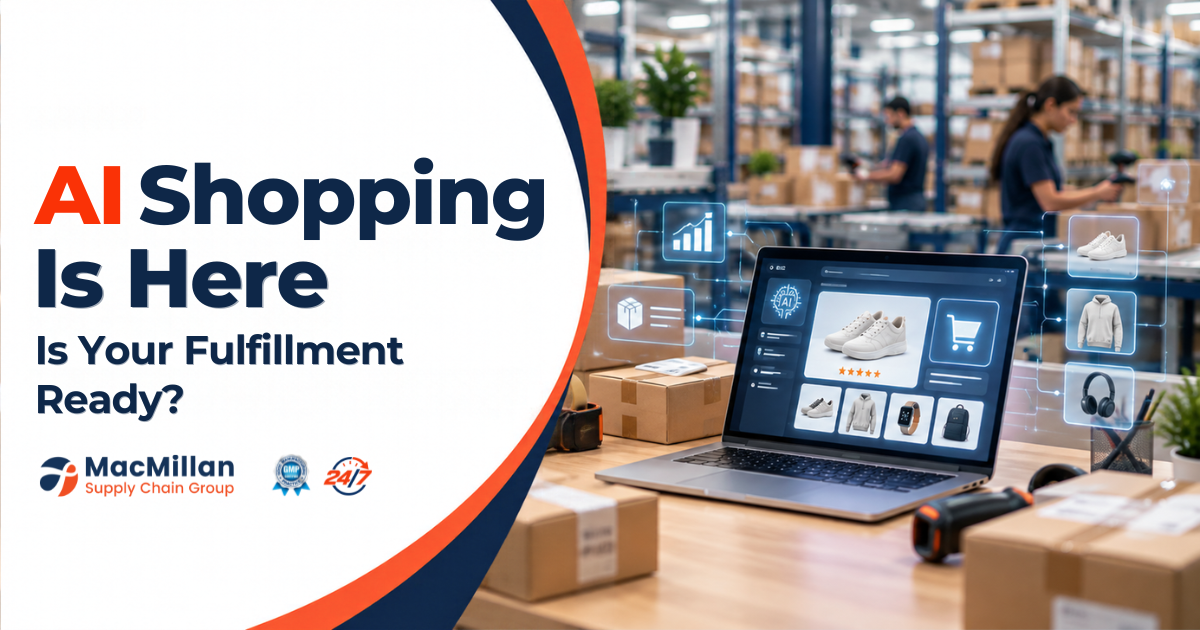
Is Your Fulfillment Ready for AI Shopping in Canada?
A shopper asks an AI assistant to find a fragrance-free…

A shopper asks an AI assistant to find a fragrance-free…
As an online store business owner, offering the best customer…
The logistics industry in Canada is growing at an impressive…
In today’s competitive business landscape, staying ahead of the curve…
Amazon’s holiday shopping season creates major opportunities for e-commerce sellers, but higher fulfillment costs can put pressure on profit margins. Understanding Amazon’s holiday peak fulfillment fees, planning inventory, and reviewing fulfillment options can help sellers prepare for increased demand.
For 2026, holiday peak fulfillment fees apply from October 15, 2026, through January 14, 2027, for applicable Amazon fulfillment programs. Sellers should review the latest fee schedules and calculate how these seasonal charges affect their products before the holiday rush begins.
In this guide, MacMillan Supply Chain Group explores how Amazon peak fulfillment fees affect sellers, how to estimate fulfillment costs, and which inventory, pricing, and supply chain strategies can help protect profitability.
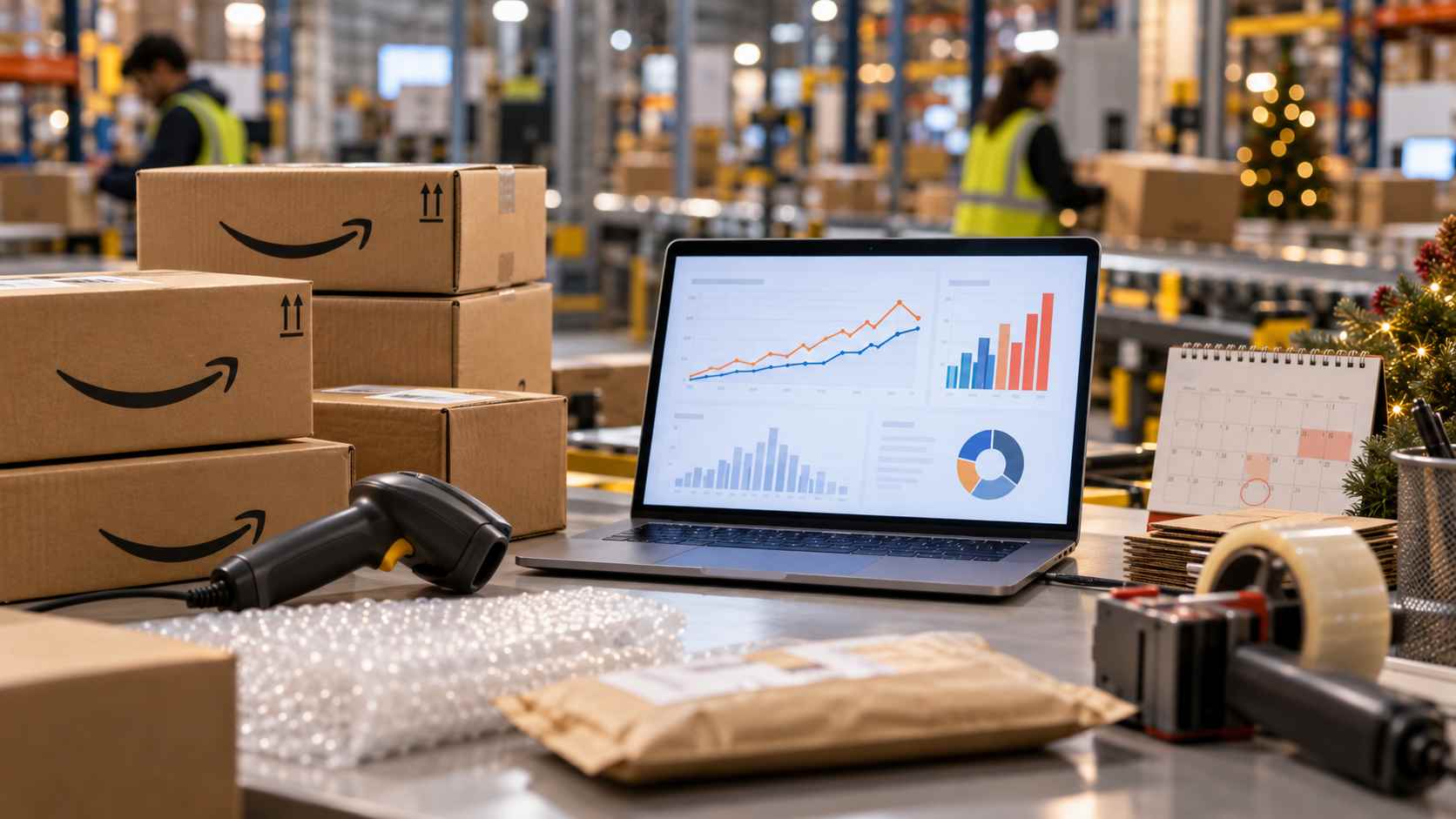
Amazon introduces holiday peak fulfillment fees during the busy holiday shopping season to account for increased fulfillment and transportation costs. These fees can affect sellers using Fulfillment by Amazon (FBA) and other eligible fulfillment programs.
For 2026, the holiday peak fee period runs from October 15, 2026, through January 14, 2027. Applicable programs include FBA, Remote Fulfillment with FBA into eligible markets, Multi-Channel Fulfillment (MCF), and Buy with Prime, subject to program-specific terms.
The amount charged depends on factors such as the marketplace, fulfillment program, product category, size tier, shipping weight, and applicable pricing tier. Sellers should not assume that every product will incur the same additional fee.
Amazon has also introduced a 3.5% fuel and logistics-related surcharge on applicable fulfillment fees in the US and Canada beginning April 17, 2026. This surcharge also applies to relevant peak fulfillment fees.
For the latest details, review Amazon’s official 2026 FBA fulfillment fee information and confirm the rates for your specific marketplace.
Seasonal fulfillment fees can affect profitability, especially for sellers with tight margins, bulky products, or high order volumes.
When fulfillment costs increase, the profit remaining from each sale may decrease. Products with low selling prices or high fulfillment expenses can be particularly sensitive to seasonal fee changes.
Sellers should calculate their expected profit per unit rather than relying only on sales revenue.
Increasing product prices may help recover additional costs, but it can also affect conversion rates and competitiveness.
Sellers need to consider demand, competitor pricing, advertising costs, and customer expectations before changing prices.
Holiday demand can make inventory planning more complicated. Overstocking may increase storage expenses, while insufficient inventory can result in missed sales opportunities.
Accurate forecasting helps sellers balance availability with inventory carrying costs.
FBA may remain suitable for many products, but alternative fulfillment methods can be worth evaluating when costs increase.
Sellers should compare total fulfillment expenses, delivery expectations, operational requirements, and customer experience before making a decision.
Before adjusting prices or inventory, sellers need a clear picture of their product-level costs.
Consider the following expenses when evaluating profitability:
Use Amazon’s Revenue Calculator to estimate fulfillment expenses and compare eligible fulfillment options.
Amazon’s Profit Analytics dashboard and Fee and Economics Preview reports can also help sellers review product-level costs.
Suppose a product sells for $30, and its costs before fulfillment total $17. If the applicable fulfillment costs increase from $5 to $5.50, the estimated profit changes as follows:
| Item | Before | During peak |
|---|---|---|
| Selling price | $30.00 | $30.00 |
| Other costs | $17.00 | $17.00 |
| Fulfillment cost | $5.00 | $5.50 |
| Estimated profit | $8.00 | $7.50 |
This simplified example shows how a $0.50 increase in fulfillment costs reduces profit by $0.50 per unit, assuming all other costs remain unchanged.
It is an illustration, not an estimate of Amazon’s actual fee increase for a particular product.
Evaluate the profitability of each product using current and projected peak-season costs. Adjust prices only when supported by cost calculations, market conditions, and customer demand.
Avoid applying the same price increase across every product without considering differences in size, weight, and margin.
Use historical sales, seasonal demand patterns, current inventory, and supplier lead times to forecast demand more accurately.
Review forecasts regularly as holiday promotions approach. This can help reduce stockouts and limit the risk of holding excess inventory after demand declines.
For additional guidance, explore E-commerce Inventory Management: 7 Best Practices.
Packaging dimensions can affect shipping and fulfillment costs. Review product packaging to determine whether unnecessary space or weight can be reduced without compromising product protection.
Accurate measurements are also important because dimensional weight may affect the applicable fulfillment fee.
Compare FBA with Fulfillment by Merchant (FBM) and other suitable fulfillment arrangements. Consider storage, labor, shipping, handling, delivery speed, and return processing—not just the fulfillment fee.
A third-party logistics (3PL) provider may offer warehousing, inventory handling, and distribution support for businesses managing multiple sales channels.
Learn more about MacMillan Supply Chain Group’s warehousing and distribution services.
Prepare inventory well ahead of major shopping events. Account for supplier production times, inbound transportation, fulfillment center receiving, and possible shipping delays.
Check Amazon’s current inventory arrival guidance and program requirements instead of relying on last year’s deadlines.
Returns can add costs and reduce the profitability of holiday sales. Review return reasons, improve product descriptions, and ensure packaging protects items during transit.
Better product information and quality control can help prevent avoidable returns and customer dissatisfaction.
Technology can help sellers respond more effectively to changing costs and holiday demand.
Repricing tools can help monitor competitor prices and market changes. Configure them around minimum acceptable margins rather than pursuing sales volume at any cost.
Inventory systems can track stock levels, monitor reorder points, and support demand forecasting. Accurate inventory data is particularly valuable when sales volumes increase quickly.
Review sales, fulfillment fees, advertising costs, returns, and other expenses at the product level.
Regular analysis helps identify products that remain profitable during peak season and those that may require a different strategy.
Visibility across suppliers, warehouses, and transportation providers helps businesses identify delays and address potential bottlenecks before they disrupt customer orders.

A third-party logistics provider can help businesses manage warehousing, inventory distribution, order preparation, and transportation coordination.
For sellers experiencing seasonal growth, outsourcing selected logistics activities may provide additional operational capacity without requiring the same level of investment in warehouse space and staffing.
MacMillan Supply Chain Group supports businesses with supply chain and logistics solutions designed to improve inventory handling and distribution planning.
Depending on the business’s requirements, a 3PL arrangement may help sellers:
The right approach depends on product characteristics, order volume, delivery expectations, and total operating costs. Sellers should compare available options before changing their fulfillment strategy.
Before peak season begins, review the following:
Working through this checklist can help sellers identify cost risks early and make more informed decisions throughout the holiday period.
At MacMillan, we help businesses navigate e-commerce fulfillment challenges with tailored warehousing, inventory management, and distribution solutions.
As Amazon sellers prepare for the 2026 holiday peak season, effective inventory planning and cost management are essential for protecting profit margins and meeting customer demand.
Our supply chain solutions help businesses improve inventory flow, streamline fulfillment operations, and prepare for seasonal demand.
Partner with MacMillan to build a flexible fulfillment strategy that supports your business during the holiday rush and beyond.
Explore MacMillan’s E-commerce Fulfillment Services to discover how we can support your operations.