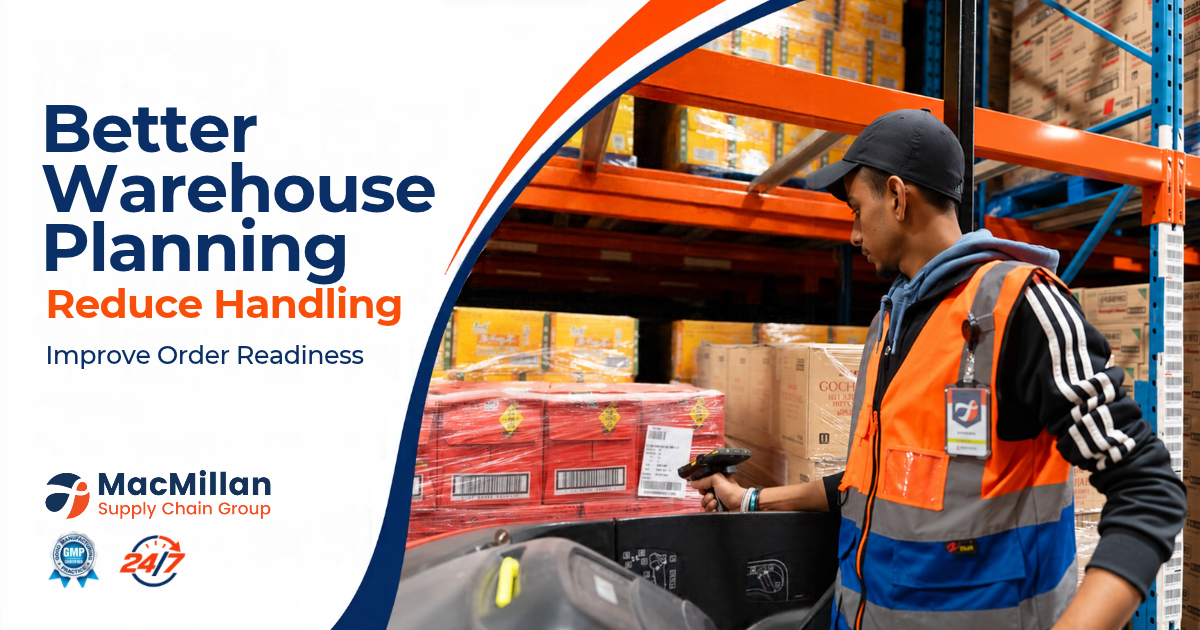
How Better Warehouse Planning Can Reduce Handling and Improve Order Readiness
The order is in the system. The products are somewhere…

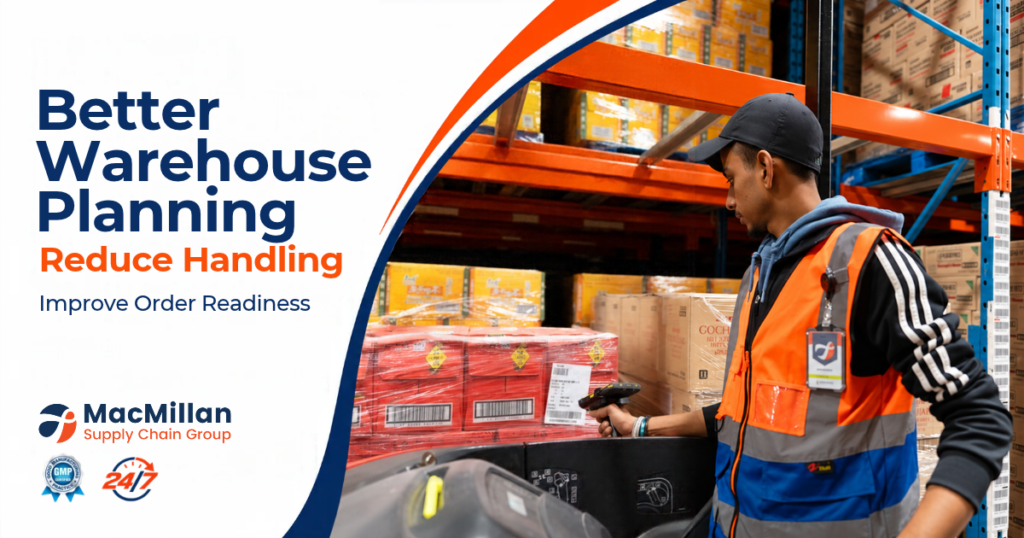
The order is in the system. The products are somewhere…
2027 Warehouse Planning Guide: How Canadian Businesses Can Control Costs…
When it comes to business, the words supply chain management…
Shipping logistics can be defined as the management and supervision…
The order is in the system. The products are somewhere in the warehouse. The carrier collection is scheduled. Yet the team still cannot get the shipment ready.
One item needs replenishing. Another is waiting for a label. A pallet has been moved to make room for an incoming delivery, and the packing team is looking for the missing cartons.
Situations like these are worth investigating before adding staff or leasing more space. Sometimes, the problem is the route products take through the building and the work required at each stop.
Better warehouse planning connects storage, receiving, replenishment, product preparation and dispatch. It can help teams spend less time searching, moving and reworking stock—and more time completing orders correctly.
This article follows an illustrative Ontario consumer-goods distributor serving retail and e-commerce customers. The scenario explains how an operation could improve its workflow. It is not a report of a MacMillan client project or measured results.
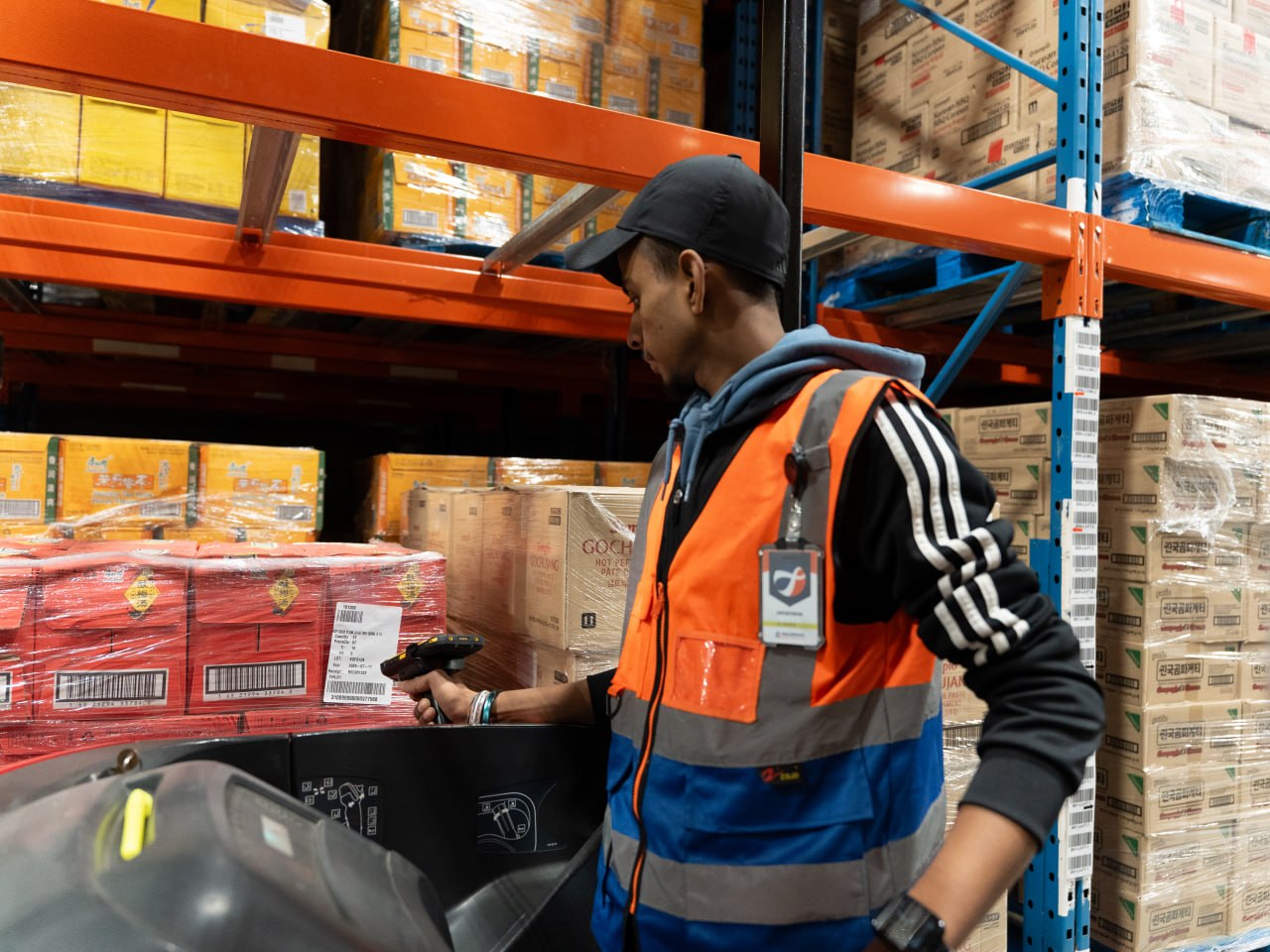
Imagine a distributor using one warehouse for full-pallet retail shipments, smaller wholesale orders and individual online purchases. The business has grown, but storage locations and work areas have developed one decision at a time.
Products go wherever space is available. Promotional assembly happens near dispatch because that is where a table fits. Returns wait beside receiving until someone has time to inspect them.
The building can hold the stock, but moving that stock into completed orders requires too much effort.
Warehouse planning needs to consider how inventory moves from arrival to shipment. Floor area matters, but so do travel distance, replenishment access, work sequencing and the availability of clear staging space.
In the illustrative distributor’s warehouse, the problems appear at different points in the day:
These issues can reinforce each other. Congested receiving delays put-away. Delayed put-away leaves pick locations short. Pickers then interrupt receiving staff to find stock needed for urgent orders.
The planning task is to break that cycle.
Handling time is the active work involved in moving or processing products within a defined workflow. Depending on what you measure, it can include unloading, transferring, replenishing, picking, packing and rework.
Keep active handling separate from waiting time. An order may require several minutes of work but spend hours waiting for a missing component or an available workstation.
An order is ready when it meets your agreed dispatch requirements. That may mean the correct products and quantities are checked, packed, labelled, documented and placed in the assigned outbound location.
For retail orders, readiness may also require approved pallet configurations, retailer labels and shipment documentation. For e-commerce parcels, it may require verified contents, protective packaging and a valid carrier label.
Define readiness before measuring it. A printed label alone does not establish that the shipment is complete or available for collection.
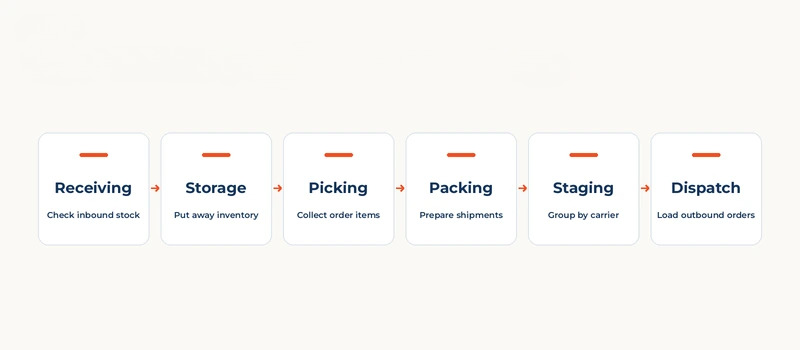
Begin by following representative products through the operation. Choose a fast-moving SKU, a slower item, a promotional bundle and an order requiring special preparation.
Record where each product moves, why it moves and where work stops. Include temporary floor locations and informal handoffs that may not appear in the documented process.
For the illustrative distributor, the first layout review would examine the crossing of inbound and outbound traffic. Separating those activities could reduce competition for floor space and make stock status easier to identify.
Test proposed changes against safe access, equipment movement and product-handling requirements. The shortest route on a drawing may be unsuitable when people, lift trucks and replenishment activity share the area.
A product ordered frequently should have a location that supports frequent access. Review order lines, pick frequency, units shipped and how often products appear together.
In our scenario, popular household products are stored deep in the warehouse because they originally arrived in large quantities. Moving suitable picking stock closer to packing could shorten repeated journeys.
However, putting every popular SKU in one small area can create congestion. Balance shorter routes with enough room for picking and replenishment.
Keep reserve stock separate where appropriate and size pick locations around expected demand. A small pick face that empties repeatedly may replace walking time with replenishment interruptions.
Good receiving preparation starts before the vehicle arrives. Confirm expected products, quantities, handling requirements and available storage destinations.
Where shipment information is available in advance, use it to plan dock time, equipment and staffing. Identify products requiring inspection, lot capture or special storage.
After unloading, record stock accurately and direct it to an approved location. Give discrepancies and damaged goods a defined exception process so they do not repeatedly enter and leave standard stock flows.
For the illustrative distributor, assigning put-away destinations before unloading could help avoid the familiar sequence of “leave it here for now” followed by another move later.
Review receiving delays alongside inventory availability. Stock that is physically inside the building may still be unavailable for orders if checks and system updates are incomplete.
Slotting means assigning products to storage and picking locations based on how they need to be handled and accessed.
Give frequently picked products accessible locations and adequate replenishment capacity. Consider weight, dimensions and safe working positions alongside speed.
Review whether slower products occupy valuable picking locations unnecessarily. Move them where access remains practical without obstructing daily work.
Adjust locations before promotions begin. A product that sells slowly most of the year may need a larger pick face during a seasonal campaign.
Practical warehouse optimization includes reviewing locations as the order mix changes, rather than treating the initial layout as permanent.
A product touchpoint is a defined handling event. For a useful review, decide whether you are counting pallet transfers, case movements, individual-item handling or another consistent unit.
Do not treat every scan as waste. Verification, traceability and safety checks may be essential. The aim is to remove handling that adds no necessary value.
In the illustrative warehouse, a promotional case might follow this route:
Some movements may be justified. Others may result from missing instructions, unavailable work areas or preparation scheduled too late.
For a confirmed campaign, the revised plan could route approved stock through a scheduled preparation area before placing finished units in a designated location. This may avoid a later retrieval-and-return cycle.
Earlier preparation is not always cheaper. Pre-kitting uncertain demand can tie up components and create dismantling work if the promotion changes.
Evaluate each proposed change using handling time, space consumed, error risk and the likelihood that prepared stock will be used.
Where suitable, cross-docking can avoid storage for goods already allocated to an outbound shipment. It requires coordinated timing, completed checks and confirmed destination readiness.
For every repeated move, ask: Why did this happen? What decision or missing information caused it? Could the necessary work happen during an existing handling step?
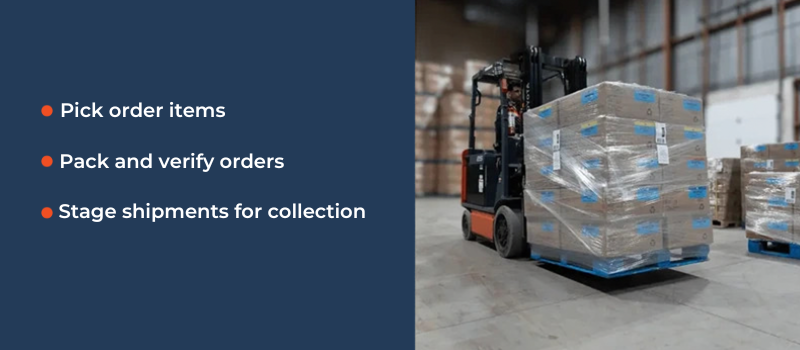
Assign clear purposes to each work area. Picking consolidation, packing, exceptions and completed shipments should not compete informally for the same floor space.
Provide packaging, labels and instructions where the work occurs. A packer walking across the building for supplies creates a delay even when picking is efficient.
Organize outbound staging by collection, route or appointment, with visible order identification. Separate completed shipments from those awaiting resolution.
Set limits on work released into each zone. If packing is already backed up, releasing more picking work can fill aisles and make urgent orders harder to locate.
Order readiness improves when known preparation requirements are planned before dispatch becomes urgent.
For the illustrative distributor, campaign planning would identify:
Use approved specifications and version control. Preparing stock early with an outdated label simply creates earlier rework.
Set sensible preparation quantities based on confirmed demand and material availability. Organized value-added services can connect product preparation with storage and outbound schedules.
A stock total cannot tell a picker everything needed to complete an order. The team also needs location, availability, lot details where applicable and whether preparation is complete.
Distinguish sellable stock from inventory on hold, allocated to another order or waiting for inspection. Record movements when they happen so physical locations and system instructions remain aligned.
For dated products, lot, batch and expiry control should support the applicable rotation and customer shelf-life requirements. The nearest unit is not always the correct unit to ship.
Reliable inventory management helps prevent orders from being released against stock that is present but not usable for that shipment.
Storage, preparation and shipping peaks may happen at different times. A retailer can build inventory before a campaign, require intense packing during it and generate returns afterward.
Plan receiving, replenishment, preparation, packing and staging capacity separately. A free storage aisle will not solve a shortage of packing stations.
Use forecast demand to reserve labour, materials and overflow arrangements where justified. Set escalation triggers for growing queues or delayed put-away.
Connect peak-season fulfillment planning with carrier schedules. Completing work after the last collection may still miss the customer’s dispatch promise.
Reduced handling can release productive time, but that is not automatically a cash saving. The business needs to decide how the recovered capacity will be used.
As a hypothetical calculation, saving 30 seconds per order across 600 comparable orders releases five labour hours. Those inputs are illustrative, not measured client results.
The value might appear as fewer overtime hours, less temporary labour or more orders completed within the existing shift. Confirm whether payroll or purchased labour actually changes before reporting financial savings.
Include any new costs, such as larger pick faces, additional replenishment or preparation materials. Compare equivalent order types so a change in product mix does not distort the result.
Choose measures that show whether work is becoming easier to complete without weakening accuracy or control.
| KPI | Practical Definition | What It Helps Reveal |
|---|---|---|
| Order cycle time | Elapsed time from a consistently defined starting event, such as order release, to dispatch readiness. | Waiting and processing delays across the workflow. |
| Pick accuracy | Correctly picked order lines divided by total checked order lines. | Whether faster picking maintains correct SKU and quantity selection. |
| Dock-to-stock time | Time from recorded receipt to verified availability in the appropriate storage location. | Receiving, checking and put-away delays. |
| Inventory accuracy | Counted records matching physical inventory, using a consistent SKU, location and lot method. | Whether system instructions reflect actual stock. |
| Orders ready on time | Orders meeting all readiness conditions by their deadline divided by orders due. | Whether the operation supports its dispatch commitments. |
| Handling time per order | Active handling minutes attributed to a defined workflow divided by comparable completed orders. | Labour effort, including replenishment and rework where included. |
Track results by relevant order type. Review older unfinished orders as well as averages, and keep the measurement method consistent before and after a change.
The comparison below shows a proposed redesign for the illustrative distributor. It describes intended workflow changes and what to verify, not achieved results.
| Area | Before Planning Changes | Proposed Workflow | Evidence to Review |
|---|---|---|---|
| Receiving | Stock waits in temporary floor locations. | Approved destinations and exception areas are assigned. | Temporary transfers and dock-to-stock time. |
| Slotting | Frequent picks require repeated long journeys. | Suitable high-demand stock has accessible pick locations. | Travel time, congestion and replenishment workload. |
| Promotional preparation | Stock is retrieved, prepared and returned shortly before dispatch. | Confirmed preparation is scheduled before order release. | Handling events, rework and unused prepared stock. |
| Packing | Employees search for supplies and specifications. | Workstations have approved instructions and materials. | Interruptions, packing time and packing errors. |
| Staging | Incomplete and completed orders share space. | Orders are separated by status and collection. | Readiness deadlines and misplaced shipments. |
| Inventory visibility | System availability includes unresolved stock. | Allocation, holds and preparation status are recorded. | Short picks and preventable order holds. |
Start with a manageable area or product group. Record a representative baseline, introduce the change and compare similar work afterward.
Include busy shifts and different order types. Ask employees whether the revised process removes work or simply moves it elsewhere.
Expand the change when measurements support it. This is how an illustrative scenario becomes a credible internal improvement project—and, eventually, a real case study.
A third-party logistics partner may help when internal space, systems or management capacity cannot support the required workflow economically.
Ask how the provider plans replenishment, handles exceptions and coordinates preparation with dispatch. Review the actual product and order mix rather than comparing storage rates alone.
MacMillan Supply Chain Group’s warehousing and distribution services describe support for inventory control, retail preparation, stock rotation and promotional requirements. Its value-added services include kitting, repacking, labelling and display preparation.
The useful next step is a discussion about your bottlenecks, service deadlines and handling requirements. Agree on what success will look like before changing operations.
A warehouse can look busy while products spend too much time waiting, travelling or being handled again. Better planning starts by identifying why that work occurs.
Begin with one recurring problem: a temporary pallet move, an empty pick location or a shipment waiting for preparation. Trace the cause, test a practical change and measure its effect on the whole workflow.
If your business needs support connecting storage, product preparation and fulfillment, speak with MacMillan Supply Chain Group about your warehouse flow and order-readiness requirements.