
Is Your Fulfillment Ready for AI Shopping in Canada?
A shopper asks an AI assistant to find a fragrance-free…


A shopper asks an AI assistant to find a fragrance-free…

As an online store business owner, offering the best customer…
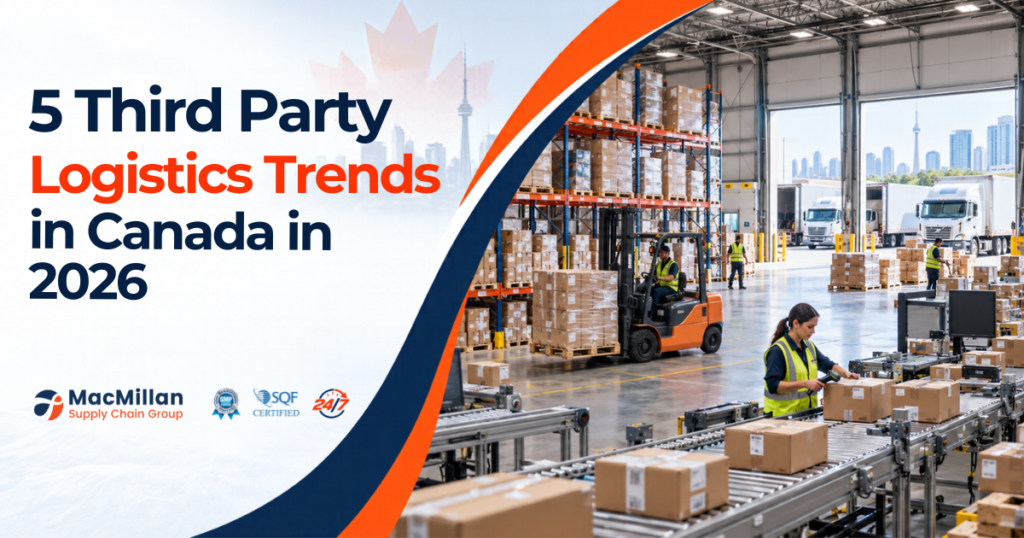
The logistics industry in Canada is growing at an impressive…

In today’s competitive business landscape, staying ahead of the curve…
Introduction
The logistics industry is synonymous with constant movement and complexity, requiring precision across its multifaceted operations. In light of increasing volumes of digitized data, the need for standardized data formats and seamless integration of digital tools has become more pronounced than ever. By adhering to industry-wide standards, logistics can boost collaboration, reduce errors, and streamline operations, ultimately leading to cost savings and environmental benefits. However, achieving these improvements necessitates overcoming significant challenges and fostering a collaborative spirit among stakeholders.
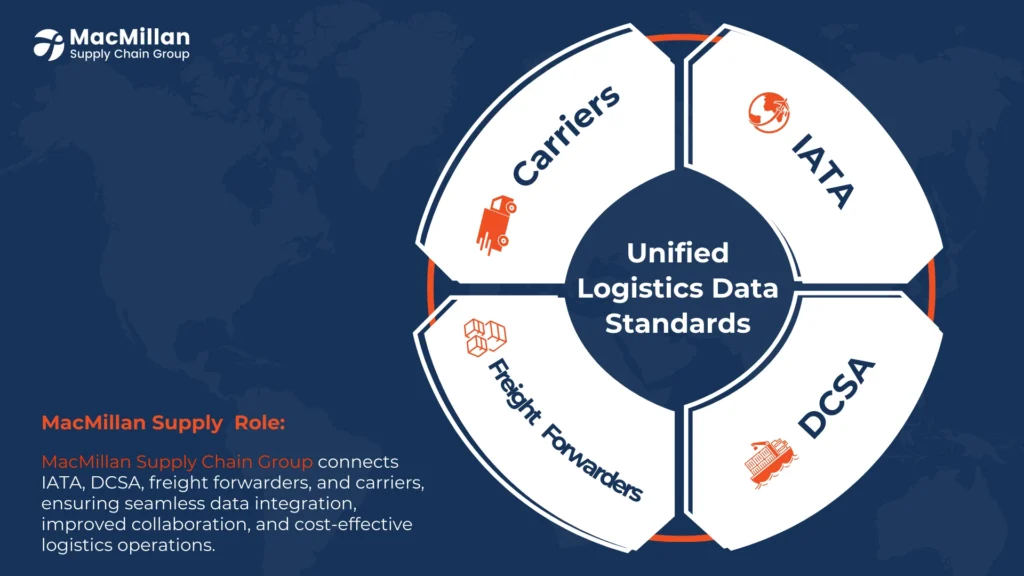
At this crucial point, uniform data standards have become essential rather than optional in the logistics sector. At the forefront, groups such as the Digital Container Shipping Association and the International Air Transport Association are actively developing these standards. But there are many challenges in the way of widespread acceptance.
Many businesses are hesitant to adopt new standards because they have invested heavily in proprietary systems and formats. Because of this hesitancy, the supply chain fractures and data silos persist, making it difficult to collaborate and communicate effectively. In addition to impeding efficiency, a lack of standardization raises the possibility of mistakes and misunderstandings.
Moreover, the lack of uniform standards makes it difficult to leverage advanced technologies such as artificial intelligence and machine learning effectively. These technologies thrive on large, consistent datasets, something that’s hard to achieve without industry-wide standards.
The goal of promoting data standards is to lay the groundwork for future developments and increase operational efficiency. The logistics sector may open the door to more advanced analytics, automation, and predictive modeling by creating a common language for data.
The increasing use of digital tools by logistics companies to handle various parts of their operations necessitates efficient integration to address the resulting system complexity. From warehouse management systems to transportation management software, and from customer relationship management tools to finance systems, the contemporary logistics environment is defined by a wide range of software solutions, each addressing specific requirements.
Without proper integration, these disparate systems can create more problems than they solve. Data silos emerge, leading to duplicated efforts, inconsistent information, and a lack of real-time visibility across operations. This fragmentation can result in missed opportunities, inefficient resource allocation, and suboptimal decision-making.
Effective integration, on the other hand, can eliminate redundant tasks, minimize errors, and significantly enhance service efficiency. By creating a unified system that enables seamless data flow across tools and departments, logistics companies can achieve a holistic view of their operations. This integrated approach enables real-time tracking, better forecasting, and more agile responses to market changes.
Furthermore, integration sets the stage for advanced analytics and business intelligence. When data from various sources is consolidated and standardized, it becomes possible to uncover deeper insights, identify trends, and make data-driven decisions that can transform the business.
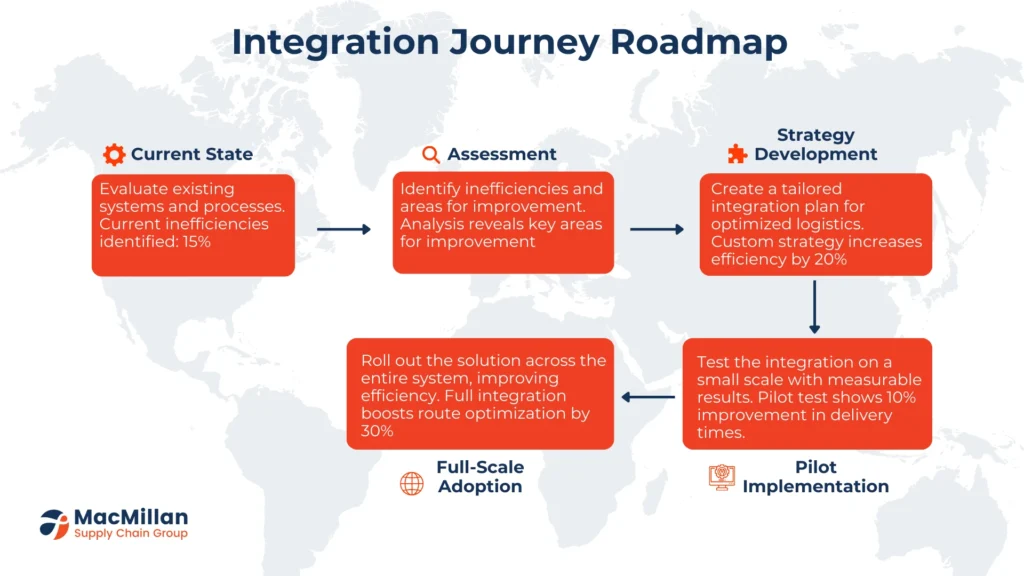
Even though implementing data standards and achieving seamless integration involve considerable obstacles, there are encouraging success stories that show the way forward. These case studies offer important insights into implementation tactics and illustrate the observable advantages of standardization and integration.
The carrier API integration offered by WebCargo is one noteworthy example. WebCargo has transformed the freight forwarder booking process by standardizing the sharing of air cargo pricing and capacity data. Faster quotation creation, real-time booking capabilities, and greater accuracy in pricing and capacity information are the results of this integration. Both carriers and forwarders have benefited from the more effective, transparent air freight market that has emerged.
Another success story comes from project44’s deployment of electronic bills of lading for less-than-truckload (LTL) shipments. By digitizing this crucial document, project44 has significantly reduced manual errors in billing processes, enhanced invoicing precision, and streamlined pickup and delivery tasks. The adoption of eBOLs has not only improved operational efficiency but also contributed to substantial cost savings and improved customer satisfaction.
These examples showcase how successful data standardization and integration can accelerate transformative progress within the industry. They highlight the importance of collaboration between different stakeholders and the need for a clear vision of the benefits that can be achieved.
Overcoming the inertia of slow adoption requires bold leadership and a compelling business case. The logistics industry stands at a crossroads where the potential benefits of standardization and integration are clear, but the path to widespread adoption remains challenging.
Industry players must cooperate to develop a cohesive framework that maximizes the utility of data standards. This collaboration should extend beyond individual companies to include industry associations, technology providers, and regulatory bodies. By working together, the industry can address common challenges, share best practices, and create standards that are truly universal and beneficial for all.
In addition to guaranteeing greater efficiency, fostering a collaborative ecosystem will stimulate innovation. New services, better customer experiences, and more sustainable operations are made possible when data can move freely and securely throughout the supply chain.
A long-term perspective that considers the revolutionary possibilities of standardized, interconnected systems rather than just short-term expenses is necessary for leadership in this field. Businesses can establish themselves as thought leaders and obtain a competitive advantage in the increasingly digital logistics market by taking the initiative to embrace and promote industry standards.
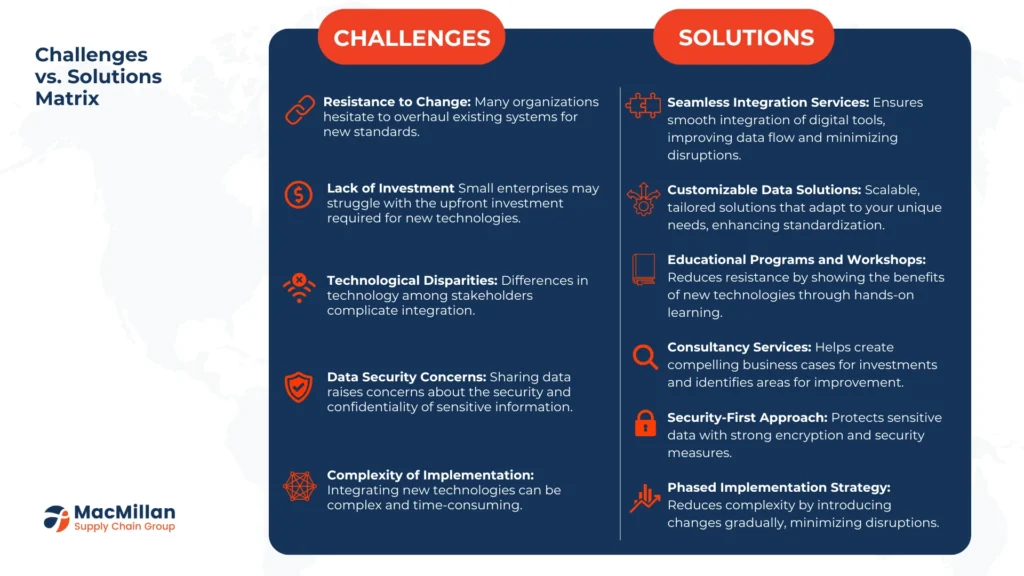
By providing comprehensive solutions that are suited to the demands of modern logistics, MacMillan Supply Chain takes an inventive approach to overcoming these obstacles:
To successfully overcome these obstacles and realize the full benefits of data integration and standardization in your logistics operations:
Don’t let the complexities of data standardization and integration hold your logistics operations back. MacMillan Supply Chain is here to guide you through every step of the process, from initial assessment to full implementation and beyond. Our tailored solutions and expert team can help you overcome challenges, streamline your operations, and achieve new levels of efficiency and competitiveness.
Ready to transform your logistics operations with cutting-edge data standards and integration? Contact MacMillan Supply Chain today for a personalized consultation and discover how we can help you stay ahead in the rapidly evolving world of logistics.
Because it is one of the world’s most important energy transit routes. Disruption there can affect freight costs, production inputs, and global trade reliability.
They can still affect transportation rates, packaging inputs, supplier costs, lead times, and inventory planning through wider energy and commodity market pressure.
It shows where sourcing is too concentrated, where visibility is weak, and where operations may not have enough flexibility to respond well.
Products tied to petrochemicals, plastics, packaging, chemicals, industrial materials, and energy-intensive transport networks can all be affected indirectly.
By improving visibility, diversifying sourcing, strengthening inventory strategy, building contingency plans, and creating more flexible logistics operations.