
Buffer Inventory: The Key to seamless Third-Party Logistics
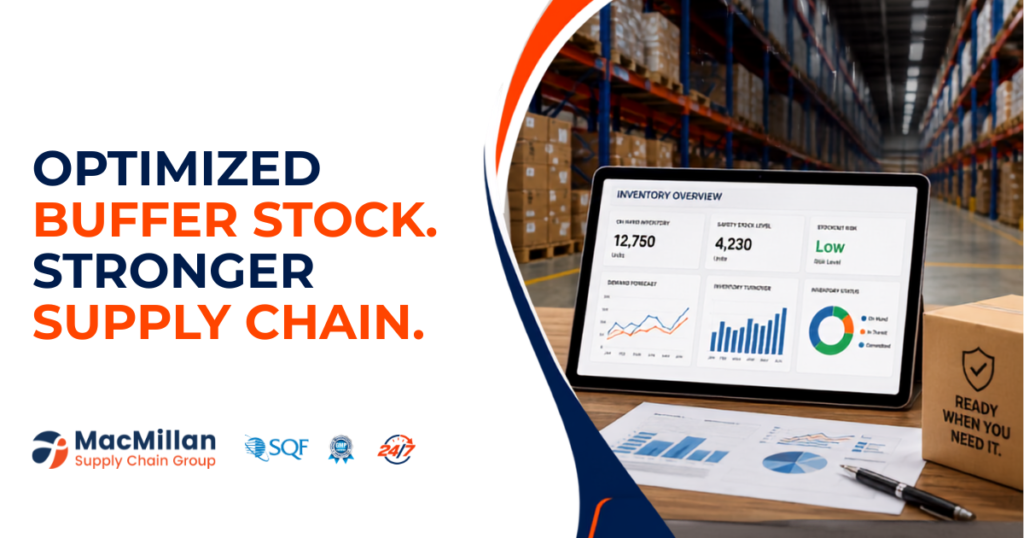
Supply chain demand spikes can often lead to out-of-stock items, risking customer satisfaction. MacMillan helps your business maintain safety stock or buffer stock to meet customer demands even during disruptions or sudden seasonal increases. While having substantial buffer stock offers a safety net in 3pl warehousing, it also incurs significant costs. By employing reliable strategies and leveraging expert insights, you can balance customer demand with optimized operations. Expertise in logistics enables you to provide an exceptional customer experience through order fulfillment, while effectively managing 3PL warehousing challenges and minimizing costs. What is buffer inventory? A buffer serves as a protective layer against potential disruptions within 3PL warehousing operations. Buffer inventory, which is also known as safety stock, or supply chain safety net is a surplus of inventory stored in a warehouse to mitigate risks, logistics failures, transportation delays or unexpected demand spikes. The amount of buffer inventory to be kept depends on several factors such as the type of products sold, average production lead times, historical inventory and order accuracy trends. While some demand changes can be anticipated, such as during flash sales or organized promotions, other increases in sales might be unexpected, as seen with face masks during the COVID-19 pandemic. Safety stock vs buffer inventory The terms “buffer inventory” and “safety stock” are often used interchangeably, both referring to the extra stock an e-Commerce business maintains to protect against potential supply operations and demand uncertainties. In some contexts, “buffer inventory” specifically refers to unexpected spikes in product demand. While “safety stock” means inventory reserved for disruptions in the 3PL warehousing operations, like supplier delays or production halts. Ultimately, both aim to ensure sufficient inventory is available to meet demand and maintain order accuracy rates. MacMillan offers trackable inventory systems for customers for higher accuracy rates and zero errors. What are the benefits of Safety stock? Maintaining buffer stock provides several advantages, minimizing the value of investing in additional inventory. Benefits of having a safety stock in 3PL warehousing are as follows: What are the strategies to optimize buffer Inventory levels? Maintaining the right amount of inventory is crucial as too much inventory can increase capital and costs. While less inventory can lead to stockouts and missed sales opportunities. Here are essential factors to consider when determining your safety stock levels: Lead Time Variability If your lead times are unpredictable, it’s important to maintain higher inventory levels to account for potential delays, ensuring you can meet demand consistently. Inventory Accuracy The accuracy of your demand forecasts directly impacts on your safety stock requirements. When forecasts are reliable, you can keep lower safety stock levels. Acceptable Service Levels Service levels refer to the percentage of time you aim to avoid stockouts. Higher service levels indicate more buffer stock. Cost of Carrying Inventory Evaluate the costs associated with maintaining inventory, including storage and the opportunity cost of tied-up capital. To optimize operations of your safety stock levels, consider the following strategies: Regularly Review and Adjust Inventory Levels: Adapt to changes in lead times, demand patterns, and service level targets. Implement Robust Demand Forecasting Methods: Enhance order accuracy to reduce the need for excessive buffer stock. Collaborate with Suppliers: Work with suppliers to reduce lead time variability and improve reliability. Monitor Inventory Performance Metrics: Continuously analyze metrics such as turnover rates frequency to identify areas for improvement. How to calculate buffer inventory levels? Determining the appropriate amount of buffer inventory is crucial for maintaining 3PL warehousing operations, but it’s not a one-size-fits-all scenario. For accurate buffer inventory, you’ll need robust analytics and reporting tools. These tools provide detailed insights such as historical order data, SKU performance, and demand forecasting. Access to this data allows you to calculate the amount of buffer inventory needed to optimize 3PL warehousing storage and ensure timely order fulfillment. Safety Stock Calculation Methods Basic Safety Stock Formula Formula: Safety Stock = (Maximum Daily Usage × Maximum Lead Time) – (Average Daily Usage × Average Lead Time) Approach: Ideal for scenarios where demand and lead times are relatively stable. Service Level Method Formula: Safety Stock = Z-score × Standard Deviation of Demand × √Lead Time Approach: Suitable for businesses aiming to meet a specific service level target, ensuring a high probability of fulfilling customer demand. Time-Based Calculations Approach: Utilize previous sales information and forecasted demand to set dynamic safety stock levels. Adjustments: Modify safety stock based on demand fluctuations, such as seasonal trends. Regularly review and update buffer levels as new data becomes available. Usage: Best for businesses with predictable demand patterns and reliable forecasting capabilities. Heizer and Render’s Method (for Lead Time Variability) Formula: Safety Stock = Z-score × √((Lead Time × Demand Variance) + (Average Demand² × Lead Time Variance)) Approach: Effective when lead times are inconsistent, incorporating both demand and lead time variability. Buffer Stock calculations: Demand and Lead Time Stability: Evaluate how stable and predictable your demand and lead times are. Data Availability and Accuracy: Ensure you have access to accurate historical sales data and reliable forecasts. Desired Service Level: Determine your service level goals and understand the costs associated with achieving them. Calculation Complexity: Assess the complexity of the chosen method and the resources required to implement and maintain it. How much safety stock 3PL warehousing needs? Managing buffer stock is an ongoing 3PL warehousing process that requires regular attention and adjustment. Here are some strategies to help optimize your safety stock: Conduct 3PL warehousing reviewsContinuously monitor inventory levels, demand patterns, and 3PL warehousing performance. Adjust buffer inventory based on evolving conditions. Prevent OverstockingRegularly assess inventory turnover rates to reduce excess stock that ties up capital and increases carrying costs. Implement strategies like Just-In-Time (JIT) or Economic Order Quantity (EOQ) to optimize stock levels. Strategically Distribute StockIf your business operates in multiple 3PL warehouses, consider strategically distributing buffer inventory across these facilities. Outsource to a 3PL like MacMillan SCG 3PL warehousing and fulfillment can be demanding, consuming time, resources, and effort. However, leveraging the capabilities of a technology-driven 3PL provider such as
3PL Warehousing and Distribution
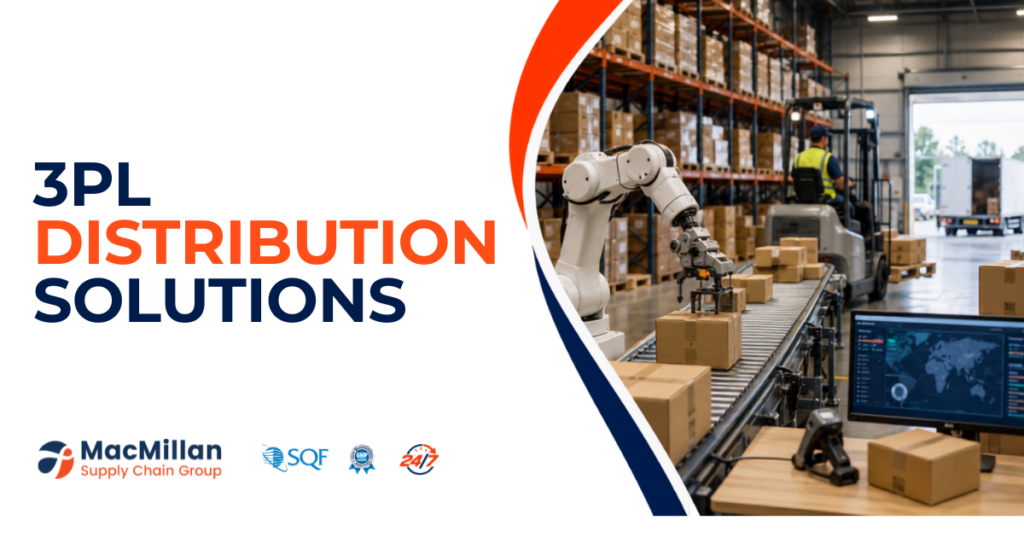
3PL providers offer outsourcing logistics and supply chain services, enabling businesses to offload product management and optimize operations. Among the various services, 3PL warehousing and distribution are essential, ensuring that products are stored and delivered to consumers safely and efficiently. This comprehensive approach helps businesses maintain optimal performance in an ever-evolving market. 3PLs offer advanced solutions such as in-depth data analytics, real-time product tracking, and sophisticated inventory management systems. What is 3pl warehousing and distribution? 3PL providers originated in the 1970s, initially offering basic transportation and warehousing services. 3PL warehousing and distribution services, provided by 3PL companies, involve the outsourced management of storage and movement of products within a supply chain. These services typically include storage, inventory management, and order fulfillment (warehousing), route optimization, carrier selection, and tracking and reporting (distribution). By outsourcing these logistics functions to a 3PL provider, businesses can focus their in-house resources on productivity and growth. What is the role of 3pl in warehousing and distribution? 3PL providers offer comprehensive warehousing and distribution services focused on the efficient storage and movement of goods. Here are the core functions and responsibilities: Warehousing Services: Storage: Providing secure space for merchandise before shipment in a 3PL warehousing system. Inventory Management: Monitoring inventory levels and making accurate projections for future needs and allowing tracking inventory for customer satisfaction. Order Fulfillment: Picking, packing, and preparing orders for shipment to consumers. MacMillan offers a 0.01% error rate with visibility. Distribution Services: Transportation Management: Coordinating the transportation of products between locations, including organizing cross-docking. Route Optimization: MacMillan provides strategic planning for efficient transportation methods and routes to ensure timely deliveries and reduced shipping costs. The presence in the GTA as well as 80% access to western regions allows aligning your target markets. Carrier Selection: Negotiating with carrier services to secure the most efficient and reliable providers at optimal prices. Tracking and Reporting: Utilizing advanced software for real-time tracking and data analytics to improve decision-making. MacMillan offers integrated WMS (Read more about selecting the right fit) and TMS (Transportation Management Systems) with your systems for reliability. This delegation allows companies to focus on product development and revenue growth, while 3PLs handle the complex and time-consuming logistics operations. What are the key 3pl warehousing and distribution services? These services play a critical role in the overall efficiency of a business’s logistics operations: Inventory Management and Control 3PL providers such as MacMillan SCG use cutting-edge warehouse management software to optimize and control stock levels. By understanding inventory needs, 3PLs can reduce carrying costs and efficiently manage inventory, ensuring businesses save on storage expenses while maintaining product availability for timely shipment. Order Fulfillment and Distribution Fulfilment involves the picking, packing, and shipping of inventory items. 3PL warehousing plays a critical role in this process by employing teams that ensure products are handled with care and speed. They collaborate directly with carrier providers to secure the most cost-effective and timely delivery options for your business. Specialized 3PL Warehousing and Storage Solutions 3PL providers offers a range of storage solutions to accommodate various product types. Whether products require standard warehousing, temperature control storage, or other facilities, 3PLs provide cost-effective solutions that keep products fresh and secure. Value-Added Services 3PLs offer a variety of additional services designed to enhance the customer experience and increase satisfaction, including: Package labeling Kitting Repackaging Return and exchange services Technology Integration for Seamless Operations To ensure seamless operations and optimized efficiency, 3PLs stay updated with the latest logistics technologies. They integrate advanced systems such as WMS, radio frequency identification (RFID), and robotic automation to enhance warehousing visibility and performance. Innovation and trends in 3PL warehousing and distribution Technological advancements and trends have majorly boosted the efficiency and productivity of 3PL operations, leading to substantial time and cost savings for companies. The impact of e-commerce As many businesses operate online, the reliance on 3PLs to manage logistics has intensified. It’s no longer practical for web-based companies to handle logistics independently. The growing demand for online shopping has created numerous opportunities for 3PL warehousing and distribution to broaden their services and facilitate large-scale operations. Omnichannel Distribution Strategies Omnichannel distribution integrates multiple sales channels, allowing customers to purchase products online and return or exchange them in-store. As businesses adopt this strategy, 3PL providers must adapt their operations to support this model. Notable examples of successful omnichannel implementation include Amazon and Walmart. Automation and Robotics in Warehousing The use of automation and robotics is increasingly important in modern 3PL warehousing. Although initially expensive, these technologies are proving to be cost-effective in the long run. These automated systems are designed to handle repetitive tasks, thereby boosting the overall productivity of warehousing facilities. Real-Time Tracking and Visibility 3PL providers have integrated tracking technologies into their logistics solutions, providing real-time updates from the distribution center to the consumer’s doorstep. This transparency offers control over shipments. Selecting the right 3PL partner With many options available, it’s essential to choose one that aligns with your needs, goals, and operational processes. Key factors to consider include the provider’s 3PL warehousing capabilities, and the importance of scalability and flexibility in meeting your business’s seasonal demands. Factors to consider while choosing your 3pl partner: No matter the size or type of your business, certain universal factors are essential when selecting a 3PL provider: Industry Experience: Your 3PL partner should have experience within your industry. While newer companies offer lower rates and larger, well-known companies may seem attractive, it’s better to choose a provider with a proven success record. Overall Capabilities: Understand your potential 3PL’s capabilities. Ensure they can accommodate your growth and expansion goals, including global commerce if that’s an objective for your business. Reputation and customer feedback: Partnering with a reputable 3PL is crucial for ensuring customer satisfaction and smooth operations. MacMillan provides transparency and direct customer feedback for a better response rate. Technical Integration: Your 3PL needs to stay ahead of technological advancements. A good partner will already be using cutting-edge technology and be prepared to integrate future
Navigating 3PL Providers for Small Businesses: A Complete Guide
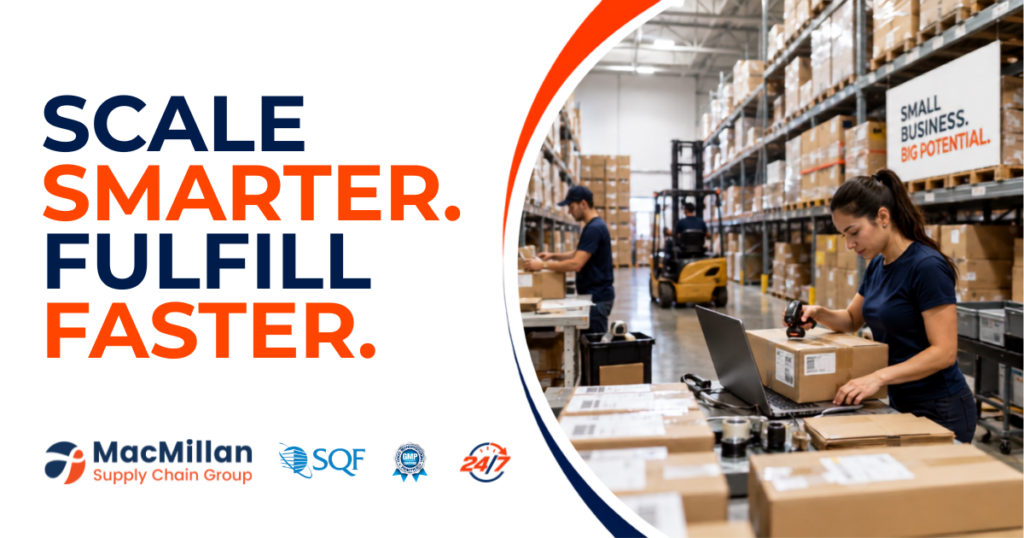
From independent entrepreneurs to thriving startups, small businesses in the ecommerce sector face unique challenges. Balancing operational costs with ensuring customer satisfaction is a multifaceted task. This is where 3PL providers come in, bridging the gap between logistics demands and available resources, allowing businesses to scale with visibility and efficiency. In this guide we will explore the services and benefits offered by 3PL providers, the advantages of outsourcing logistics to them, and the key factors to consider when selecting a 3PL partner. Additionally, we will examine how cutting-edge technology solutions, such as those provided by MacMillan, are shaping the future of third-party logistics and fulfillment operations. What is the role of 3PL provider in ecommerce? Ecommerce has reshaped the retail landscape, compelling businesses to innovate their strategies. As customer demands for faster delivery and seamless shopping experiences increase, managing logistics and fulfillment internally can be crucial. Partnering with a reliable third-party logistics 3PL provider can be transformative for ecommerce businesses, helping them navigate challenges and optimize their supply chains to boost profitability and increase visibility. How can startups benefit from outsourcing a 3PL provider? Navigating the complexities of logistics can be daunting for any business, but it is particularly challenging for small businesses and startups. Outsourcing these operations to 3PL providers offers substantial benefits, such as cost reduction, enhanced scalability, and improved customer satisfaction. 3pl providers mainly provide advantages for new or small-scale businesses such as: Navigating a 3PL provider for a small business For small businesses, entering the world of third-party logistics can be daunting. With a multitude of options available, each claiming to enhance your ecommerce operations, making the right choice can be challenging. To assist you in this process, here are some considerations to ensure you select a 3PL provider that aligns with your specific business needs. Pricing and contract clarity 3PL providers pricing structures can be intricate. Small business owners must carefully understand the breakdown of costs, including base fees, additional charges such as inbound and outbound fees, and SKU management expenses. While budget constraints are common for small businesses, it’s important to remember that the cheapest option may not always provide the value and reliability your business needs. Evaluating Warehousing and Fulfillment Capabilities A 3PL providers warehousing and order fulfillment services are critical to their offering. As a small business owner, we seek 3PL providers that offer comprehensive services such as returns management, packaging, kitting, same-day order processing, and delivery. MacMillan offers your business on-time delivery performance with zero error rates and proves to be a cultural fit as per its track record. Assessing Technological Integration Small businesses need a 3PL provider that can seamlessly integrate with their existing technology stack, providing real-time inventory management and routing capabilities. Look for compatibility with popular ecommerce platforms such as Amazon (including Amazon Seller Fulfilled Prime). Companies like MacMillan, with solutions like the WMS Integration, ensure a smooth process, minimizing potential disruptions. Evaluating Shipping Capabilities Investigate the shipping competencies of each prospective 3PL provider. Prioritize those with partnerships with major carriers like FedEx, UPS, and DHL, and the ability to secure competitive shipping rates. Given that your shipping needs might fluctuate, a provider capable of handling variable volumes and coping with your seasonal demands is important. Verifying Provider Reputation and Consistency Finally, conduct thorough research into each potential 3PL provider’s reputation proven through track records. Customer reviews and case studies can offer valuable insights into their reliability, responsiveness, and problem-solving abilities. For a small business, a dependable 3PL partner can significantly impact customer satisfaction and enhance your business reputation. Evaluating Pricing models in the 3PL Market place Understanding the pricing structure in the 3PL industry is crucial in making informed decisions. Key Factors to consider include: Common pricing strategies 3PL providers typically offer various pricing models, including transaction-based, fixed cost, cost-plus, and variable cost structures. For instance, a transaction-based model might be ideal for businesses with consistent order volumes, while a variable cost model can provide greater flexibility for those with seasonal fluctuations. Transparent cost When comparing prices, small business owners should be concerned about potential hidden costs. These can include charges for storage, inventory receiving, order picking and packing, and returns processing. Additional fees may also apply for same-day or rush orders, SKU handling, or administrative expenses. MacMillan provides a transparent pricing model with no hidden fees and additional charges which in turn increases reliability. 3PL Contract Negotiation Embrace the opportunity to negotiate with potential 3PL providers. They are accustomed to these discussions and often open to adjusting their pricing or services to secure your business. Understanding your business needs, forecasting order volumes, and utilizing this insight during negotiations is key. Assessing Value Beyond Cost While cost is important, businesses should also evaluate the value provided by their 3PL provider. For example, a provider offering real-time tracking, seamless integration with popular ecommerce platforms, and exceptional customer service may justify a slightly higher cost. Simplify your 3Pl search with MacMillan Recognizing the complexity of today’s decision-making processes, MacMillan introduces its 3pl warehousing and Fulfillment Marketplace, a solution designed to simplify the search for suitable 3PL partners. MacMillan streamlines the evaluation of 3PLs through an intuitive search and filtering experience. With its curated list of high-performing partners across various service verticals in Canada, and strategic coverage of 80% across all western regions, small businesses can construct tailored fulfillment networks to meet their unique needs. MacMillan significantly simplifies the logistics outsourcing process for small businesses. This platform empowers businesses to concentrate on core functions while benefiting from a professional, efficient, and customized logistics network. Key Takeaways In conclusion, small businesses in the logistics sector face unique challenges that require a careful balance between operational costs and customer satisfaction. 3PL providers play a crucial role in bridging the gap between logistics demands and available resources. By leveraging the right 3PL partner such as MacMillan, small businesses can optimize their supply chains, enhance profitability, and ultimately improve customer satisfaction. Frequently Asked Questions What is a
Sustainable 3PL Warehousing: 5 Key Tips For Greener Logistics
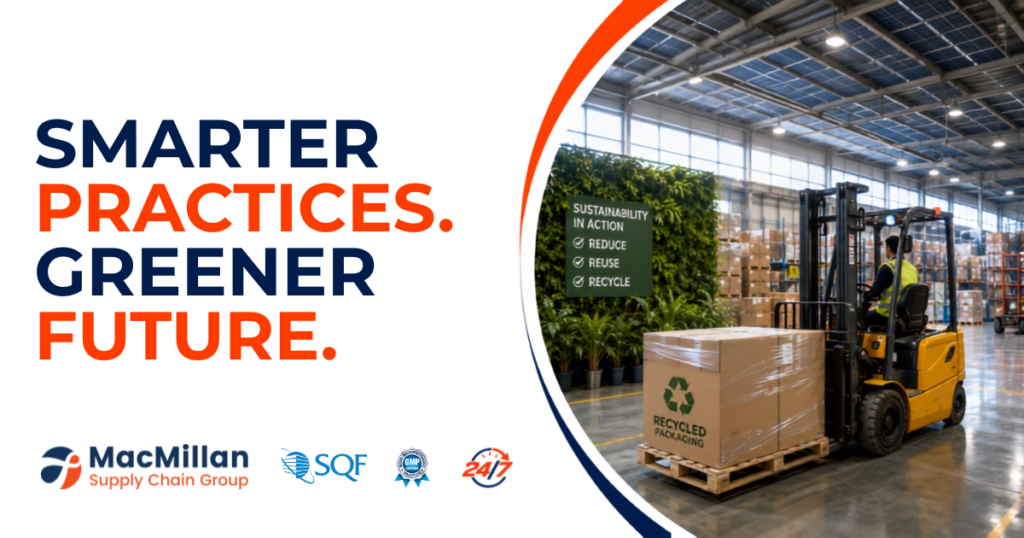
Sustainability and a greener future are crucial in 3pl warehousing and fulfillment logistics. This marketplace revolves around significant energy consumption, waste production, and transportation emissions. Despite these challenges, there are many opportunities to adopt eco-friendly practices that can reduce environmental impact and boost business efficiency. This article delves into strategies for making 3pl warehouse operations more sustainable, offering companies the dual benefits of contributing to environmental sustainability and reducing costs. What is 3PL warehouse sustainability? Warehouse sustainability involves operational processes of warehouses to be performed in an eco-friendly manner, introducing measures like energy-efficient lighting, solar power, and waste reduction programs. This approach minimizes environmental impact, conserves resources, and upholds social responsibility. However, sustainable 3pl warehouse operations offer more than just environmental benefits. When executed effectively, they can reduce energy costs by up to 20% and lower waste disposal fees through enhanced recycling and reuse strategies. Furthermore, by adopting efficient inventory management systems, businesses can avoid overstock. What are the Key factors of a sustainable 3pl warehouse? Energy efficiency plays a crucial role in sustainable warehousing. Implementing LED lighting or solar panels can reduce energy costs and carbon emissions. Additionally, waste reduction and storage optimization are key. By recycling shipping materials, adopting innovative packaging techniques, and optimizing inventory management to prevent overstocking, you can significantly optimize operations in both areas. Impact of Sustainability on 3pl Warehouse Operations Implementing sustainable practices in warehouse operations has various benefits, including: Higher Efficiency: Upgrading energy-efficient lighting and installing smart thermostats can optimize energy consumption. Cost Savings: Utilizing renewable energy sources and adopting waste reduction strategies helps in lowering utility bills and disposal costs. Reduced Carbon Footprint: Green initiatives help 3pl warehouses minimize pollution and greenhouse gas emissions. Improved Brand Image: A sustainable work environment enhances employee satisfaction and enhances the public image and repute of the brand. 5 tips for running a sustainable 3pl warehouse Choosing eco-friendly shipping practices is a key aspect of sustainable 3pl warehouse operations, but several other factors also support green principles such as: Recycling initiatives and energy management Switching to energy-efficient systems and renewable energy in warehouses is crucial for sustainability. Installing LED lighting and solar panels reduces carbon footprints, while upgrading to HVAC systems further cuts costs. E-commerce businesses can adopt eco-friendly packaging like cornstarch to minimize landfill waste and optimize package sizes to reduce material use and shipping emissions. Implementing recycling systems, with well-marked stations for materials like cardboard and plastic, further increases warehouse sustainability. Innovative Inventory Management and Automation Implementing innovative inventory management techniques, such as Just-in-Time (JIT) inventory, streamlines operations and reduces waste. This method minimizes overstocking and conserves energy. By reducing the amount of inventory on hand, companies can lower storage and tax costs, while also improving cash flow by freeing up capital previously held in inventory. Dynamic Routing Software Dynamic routing software is an advanced method for reducing carbon emissions in logistics operations. For instance, MacMillan automatically routes orders to the nearest distribution center, speeding up delivery and minimizing last-mile travel. Additionally, shipping partners like UPS use a system called ORION, which analyzes numerous route options in real-time to find the most efficient paths for delivery vehicles. This approach reduces fuel consumption and lowers the carbon footprint of logistics operations. Green Roofing Systems Green roofing systems enhance insulation, promote biodiversity, and manage stormwater. Beyond boosting energy efficiency through superior insulation, green roofs mitigate stormwater runoff, a frequent issue for large facilities. They can also reduce a building’s cooling load by up to 70%. Enhanced 3pl Warehouse Design The initial phase in optimizing your warehouse’s setup involves conducting an internal warehouse audit. This includes assessing your inventory, its placement, and its frequency of use. Segmenting zones within the warehouse for distinct activities can optimize energy consumption for lighting, heating, and cooling, aligning them with actual requirements. The future of sustainable 3pl warehouse The future of warehousing is rooted in sustainability, essential for both survival and growth. In US, the Environmental Protection Agency requires facilities, including warehouses, to report greenhouse gas emissions annually through the Greenhouse Gas Reporting Program. At MacMillan, we are committed to green logistics through:Eco-friendly packagingCarbon-neutral shippingAdvanced warehouse management systems We adopt cutting-edge sustainable technologies and practices, including:Energy-efficient warehousing solutionsAdvanced recycling systems Our efforts not only ensure regulatory compliance but also aim to set industry standards. Collaboration with partners is crucial to achieving these sustainability goals. How can sustainable warehousing reduce costs? Embracing sustainable practices like waste reduction and energy optimization directly leads to reduced operational costs, thus boosting profit margins over time. Additionally, prioritizing sustainability enhances a brand’s reputation, as today’s consumers increasingly favor eco-conscious companies, with 55% willing to pay more for such brands. By aligning operations with these values, businesses can access a growing market and potentially command premium prices. Ultimately, integrating sustainability offers a twofold advantage: cost reduction and enhanced market positioning, fostering long-term financial stability and expansion. MacMillan’s approach for long term sustainability At MacMillan, our commitment to sustainability is aligned with technology. By harnessing advanced systems and software, we streamline operations to minimize waste, enhance efficiency, and reduce our environmental footprint. Here are a few ways we achieve this: Automated Inventory Management: Our integrated inventory management software ensures optimized stock levels, reducing instances of overstock and understock. This results in less waste and a more resource-efficient approach. Route Optimization: Utilizing technology for route optimization helps us plan the most efficient fulfillment centers for product delivery. This not only ensures quicker deliveries, boosting customer satisfaction, but also reduces emissions. Material Handling Automation: We employ automated sorting systems to streamline warehouse operations, minimizing the need for manual labor and lowering energy costs associated with goods movement. Data Analytics: MacMillan leverages data analytics to assess and improve logistics sustainability. This involves analyzing transportation patterns, energy usage, and waste generation to focused areas for improvement. Key Takeaways The future of 3PL warehousing and fulfillment logistics is green. Embracing sustainability is crucial for both operational efficiency and long-term business growth. By integrating eco-friendly practices such
Optimizing Your Supply Chain: Lean Logistics for Efficiency and Growth
To eliminate all forms of waste, many companies focus on maintaining lean logistics. By aligning supply chain management with lean principles, you can enhance your brand’s operational efficiency, cut logistics costs, and provide superior customer experience. In this article, we will explore the core principles of lean logistics, analyze its benefits, and offer practical tips and best practices MacMillan uses to help you streamline your own logistics operations. Understanding Lean Logistics Lean logistics is a strategic approach to logistics management used to identify and eliminate waste within your supply chain. The primary objective is to optimize operations by removing unnecessary processes. By refining the continuous flow of products, lean logistics helps reduce costs and significantly boosts efficiency, ensuring a more effective supply chain. Key factors of Lean Logistics Lean logistics operations are driven by several key principles, such as: Waste Reduction Waste manifests in various forms in 3pl warehousing, and lean logistics aim to minimize all of them. Specifically, lean logistics focus on reducing waste in: Time: Minimizing lead times and transit times while providing real-time visibility. Materials: Reducing excess raw materials and packaging materials. Products: Preventing lost, damaged, or obsolete inventory with inventory tracking. Effort: Eliminating unnecessary tasks to better utilize human labor and minimize warehousing waste. Product Flow focus A crucial aspect of lean logistics is improving efficiency and throughput. This involves ensuring that inventory flows seamlessly through the supply chain. MacMillan focuses on processes such as order processing, picking, packing, and shipping performed accurately, without unnecessary delays or interruptions. Value Stream Mapping Lean logistics relies on differentiating value-adding elements from superfluous ones. Mapping the value chain across operations helps identify unnecessary activities, focus on delays. Lean Logistics vs. Traditional Logistics Traditional logistics prioritize outcomes over processes, focusing on executing all necessary tasks to deliver orders to customers, often with little attention to the efficiency of these tasks. This approach can result in: Outdated Processes Higher Labor and Storage Costs Excess or Obsolete Inventory However, lean logistics aims on delivering high-quality output with minimal waste of effort, and materials. Moreover, lean logistics equip brands to better navigate unexpected challenges compared to traditional logistics systems. With minimal waste and extraneous processes, it is easier to adapt to supply chain bottlenecks. Implementing Lean Logistics in E-commerce Here are several strategies companies can use to implement lean logistics management, minimizing waste and enhancing efficiency in their operations. Implement JIT Inventory Management Systems Many businesses attempt to prevent stockouts by ordering and holding large amounts of inventory. However, this approach often leads to excess inventory, increased holding costs, and eventually, deadstock. Adopting lean inventory management strategies, such as the just-in-time (JIT) system, can mitigate these issues. JIT relies on a pull system where inventory is acquired based on actual customer demand. This means that inventory is procured in small volumes and replenished to match customer demand. While JIT reduces waste and minimizes costs, it requires precise procurement timing and accurate tracking with system integrations. Implementing automatic reorder point notifications can also support your JIT strategy. These notifications tell you when inventory reaches a specific threshold, ensuring timely restocking to maintain optimal inventory levels. Enhancing Operational Efficiency in Logistics By auditing your warehouse processes and identifying inefficient activities, you can save time and effort across your supply chain operations. Consider optimizing key logistics operations such as: Inventory Receiving: Designate a specific area for receiving inventory and ensure thorough counting and inspection for potential damage. Warehouse Layout: Arrange your warehouse to allow quick and safe travel for workers, maintain wide aisles for equipment passage, and store inventory in easily accessible locations. Picking: Minimize travel time with strategic pick lists that chart optimized routes through the warehouse. Implement picking strategies like batch picking, zone picking, or wave picking to handle more orders with zero errors like MacMillan does. Packing: Ensure packers are trained to place items in boxes or bags efficiently and correctly. Automation for Enhanced Logistics operations Supply chain automation tools are essential for logistics operations and reducing manual labor. Implementing automation can include: Automated Order Processing: MacMillan uses software that quickly confirms order details and advances them to the next stage of fulfillment, eliminating the need for manual data entry and provides integrated WMS and TMS. Optimal Inventory Distribution: Usage of tools that automatically assign orders to the suitable fulfillment center, reducing shipping times and costs. Pallet Algorithms: Utilize algorithms to identify the optimal packaging size for each order automatically, enhancing packing efficiency and storage sizes. Automated Sorting Machines: Implement machines that scan each package to verify dimensions and weights, and automatically sort them into the appropriate carrier lanes. Logistics Optimization with Data and Analytics Data is crucial for identifying opportunities to streamline your logistics. By consistently monitoring and analyzing supply chain performance KPIs, inventory analytics, order data, and fulfillment metrics, you can pinpoint which aspects of your logistics operations are efficient. For instance, MacMillan ensures real-time inventory tracking which enables you to make informed decisions about reorder quantities and inventory control. This, in turn, enhances supply chain workflows and facilitates continuous improvements in the logistics operations. Advantages of Implementing Lean Logistics Implementing lean logistics in your operations offers several significant advantages: Cost Reduction Lean logistics focuses on eliminating waste and inefficiencies, which naturally reduces costs associated with unnecessary transportation, excess inventory, storage, and prolonged wait times. Improved Profitability By minimizing costs and enhancing operational efficiency, lean logistics boosts your brand’s profitability. organize order cycle times contribute to maximizing revenue generation. Enhanced Customer Satisfaction Optimized shipping logistics in lean operations ensure faster deliveries. Efficient fulfillment processes and optimal delivery routes lead to customer satisfaction. Supply Chain Flexibility Reduced lead times and streamlined processes create an agile supply chain capable of adapting quickly to market changes. Key Takeaways Implementing lean logistics is not just a strategy; it’s a pathway to transforming operations for enhanced efficiency and customer satisfaction. By aligning supply chain management with lean practices, businesses can reduce costs associated with waste, unnecessary transportation, and excess inventory. Through continuous improvement driven by
True Cost of 3PL Fulfillment in Canada
The true cost of 3PL fulfillment in Canada includes much more than storage and pick-and-pack fees. A complete budget may include receiving, inventory storage, packaging materials, shipping, returns, technology, account management, retail compliance and seasonal surcharges. For a straightforward ecommerce order, fulfillment labour may cost only a few dollars, but carrier charges and operational exceptions can make the final cost considerably higher.This is why the lowest rate on a 3PL quote is not always the lowest-cost option. A provider offering inexpensive picking may charge separately for cartons, receiving, integrations, reporting or account support. Another provider may quote a higher base rate but include services that would otherwise appear as additional line items.Canadian businesses should compare the total cost of moving an order from inbound receiving to final delivery—not one attractive number on a rate card. What Is 3PL Fulfillment? Third-party logistics fulfillment is the outsourcing of inventory storage, order processing and shipping to an external logistics provider. The business sends inventory to the 3PL, and the provider receives, stores, picks, packs and ships orders as they are placed. A full-service 3PL may also manage wholesale orders, retail distribution, inventory reporting, returns, transportation coordination, kitting, relabelling and retailer-specific preparation. For ecommerce brands, the process often begins when an order flows from Shopify, Amazon or another sales platform into the warehouse management system. Warehouse staff then locate the products, confirm the quantities, pack the order and transfer it to the selected parcel carrier. Businesses with both ecommerce and wholesale customers may require a broader fulfillment services program. Direct-to-consumer orders may be picked by individual unit, while retail orders are prepared by case, pallet or purchase order. Average 3PL Fulfillment Costs in Canada There is no single average rate that applies to every Canadian business. A small subscription brand shipping lightweight parcels has a different cost profile from a food company storing expiry-controlled pallets or a general merchandise supplier shipping to major retailers. Published Canadian pricing examples commonly show standard pallet storage in the approximate range of C$20 to C$40 per pallet per month and basic pick-and-pack charges of roughly C$2 to C$5 per order. Some providers advertise lower starting prices, but those figures may apply only to specific order profiles, volumes or service conditions. A practical ecommerce fulfillment budget may include: Receiving and inventory check-in Monthly pallet, shelf or bin storage A base pick-and-pack fee Additional item or additional pick fees Boxes, mailers, tape, labels and protective material Carrier postage and applicable surcharges Returns processing Account, technology or monthly minimum fees These ranges should be used for early planning rather than as guaranteed market prices. The final rate depends on the provider, facility location, volume commitment and operational complexity. Receiving and Inbound Processing Fees Receiving fees cover the work required to unload incoming inventory, verify quantities, inspect visible damage, record products in the warehouse management system and move goods into storage. A 3PL may charge receiving by: Pallet Carton Container Unit Labour hour Inbound purchase order Palletized inventory with accurate labels and an advance shipping notice is generally easier to receive than a floor-loaded container containing mixed or unlabelled cartons. If the physical delivery does not match the inbound documentation, additional counting, sorting or investigation fees may apply. Receiving costs can increase when: Cartons arrive without scannable product labels. One carton contains several mixed SKUs. Products require lot or expiry-date recording. Inventory arrives damaged or without documentation. A floor-loaded container requires manual unloading. Products must be relabelled before putaway. Businesses importing containerized inventory should confirm whether container destuffing, palletization and stretch wrapping are included in receiving or quoted separately. Inventory Storage Costs Storage fees cover the warehouse space occupied by inventory. A provider may calculate storage by pallet, bin, shelf, cubic foot, square foot or individual unit. Pallet-based pricing is common for wholesale inventory, while bin or shelf pricing may be used for smaller ecommerce products. Oversized, fragile, hazardous or temperature-sensitive products may require a different storage rate. Storage is normally billed monthly, but the billing method matters. Some providers calculate the number of storage positions used on a specific date. Others use average daily occupancy or bill each pallet position that was occupied at any time during the month. The following conditions can increase storage cost: Slow inventory turnover Excess safety stock Seasonal stock arriving too early Too many low-volume SKUs Partially filled pallets Oversized or non-stackable products Long-term storage penalties Good inventory management helps reduce unnecessary storage by identifying ageing stock, slow-moving SKUs and replenishment problems before they consume valuable space. Pick and Pack Fees Pick-and-pack fees cover the labour required to locate products, confirm the order, select the correct units and prepare them for shipping. A common pricing structure includes a base fee for the first item and an additional fee for every extra item or pick. For example, an order containing one SKU may be charged one base pick. An order containing four different products may include the base charge plus three additional picks. However, the definition of a “pick” can vary. One provider may count each SKU line as a pick, while another may count every physical unit. Ten units of the same product could therefore be billed as one pick or ten picks, depending on the agreement. Pick-and-pack rates may also vary based on: Average items per order Number of active SKUs Product size and weight Fragility or special handling Order volume Same-day processing requirements Batch, zone or individual-order picking methods Businesses should ask the provider to calculate several sample orders using the proposed fee structure. This reveals the realistic cost more clearly than a headline “starting from” rate. Packaging Material Costs Packaging materials are frequently separate from the pick-and-pack fee. These costs may include boxes, padded mailers, tape, labels, void fill, protective wrapping, inserts and temperature-control materials. A lightweight product shipped in a standard mailer will usually require less packaging than a fragile item packed in a reinforced carton. Dimensional weight can also make an unnecessarily large box more expensive to ship, even when
Mastering Warehouse Monitoring in 2026: Systems, Trends, and Techniques
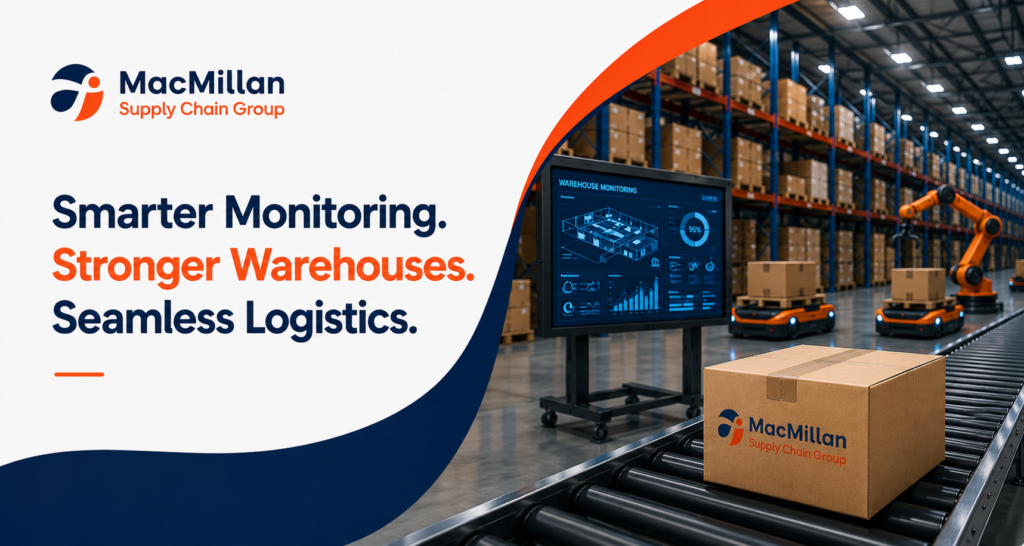
Ecommerce warehouses and logistics company’s Toronto are bustling hubs of activity. From managing daily tasks such as inventory receipt and order fulfillment to more intricate processes like cross-docking and inventory audits, keeping track of every detail can be challenging. Yet, for effective warehouse management, having accurate and real-time information on your warehousing operations is crucial. This is where warehouse monitoring in today’s age for logistics company’s Toronto becomes indispensable. With comprehensive visibility and up-to-date insights into your warehouse processes, you can significantly enhance operational efficiency. In this article, we’ll explore what warehouse monitoring entails, the advantages of a high-quality monitoring system, and the key features to consider when choosing a warehouse monitoring solution for logistics company’s Toronto. What is Warehouse Monitoring? Warehouse monitoring involves the observation, measurement, and tracking of conditions, materials, and activities within a warehouse. This practice typically employs advanced warehousing technologies, such as surveillance cameras, sensors, and IoT devices, to gather, process, and analyze data, enabling workers to make informed decisions based on real-time insights for any logistics company’s Toronto. Brands utilize warehouse monitoring systems to oversee various aspects, including: Assets Inventory Environment Energy Problems How Tech-based warehousing is Transforming Monitoring- 2024? As warehouse operations become increasingly complex, so too does the technology designed to monitor them. Gone are the days when workers spent hours manually recording data and conditions. Today, for logistics company’s Toronto, technology automates many monitoring tasks, providing deeper insights and greater efficiency. Key Components of a Warehouse Monitoring System used by MacMillan Several cutting-edge technologies are enhancing warehouse monitoring. Here are some of the most effective tools used: IoT Devices: MacMillan SCG uses The Internet of Things (IoT) network connects various devices and objects, enabling them to communicate and exchange data. IoT devices include RFID tags, sensors, and other tools that monitor inventory, warehouse locations, storage conditions, and handling processes. RFID Tags: Radio Frequency Identification (RFID) tags are scannable labels that use radio waves to identify objects. These tags allow workers to track items at different stages of the warehouse workflow. The scanned information is automatically transmitted to the warehouse management system(WMS), providing real-time visibility into inventory location and status, proven to be sustainable for any logistics company Toronto. Sensors: Wireless sensors strategically placed throughout the warehouse enable remote tracking of various elements and activities, eliminating the need for constant physical presence. LTH Sensors: Light, temperature, and humidity (LTH) sensors are crucial for maintaining optimal storage conditions. This is particularly important in cold storage warehouses, where even minor deviations in temperature can lead to spoilage. MacMillan provides customers with real-time visibility and responsiveness reducing error rates to be 0.1 percent. Additional Sensors: Certain sensors can detect smoke, providing immediate alerts in case of a fire. Others monitor movement in different areas of the warehouse, and some track air quality, which may be essential in certain industries. Alarm Systems: In large warehouses, detecting issues can be challenging, increasing the risk of damage and theft. Alarm systems are vital for prompt notifications about problems that need attention. These systems can alert you to temperature changes, unusual movements, glass breaks, and other potential issues. Surveillance Cameras: Video surveillance is a key component of warehouse monitoring for any logistics company Toronto. High-definition IP cameras offer detailed video monitoring, while advanced cameras with capabilities like heat detection and text reading provide enhanced surveillance. AI-powered smart surveillance systems further streamline the process by checking inventory availability, tracking misplaced shipments, and more. Centralized Communication Systems: Effective warehouse management relies on seamless communication across departments and locations. MacMillan SCG offers Centralized communication systems, such as wireless or wired intercoms, are essential for efficient interactions without requiring physical travel across the warehouse with geographical presence within the GTA region and 80% of the western regions throughout Canada. Centralized Software Solutions: To integrate data from various systems into a unified view, centralized software solutions are crucial. Warehouse management systems (WMS) and unified IoT platforms consolidate information into a single dashboard, allowing you to monitor stock levels, inventory movement, and order fulfillment processes without switching between multiple platforms. How to Monitor Your Warehouse Operations with MacMillan SCG? A Warehouse Management System (WMS) is crucial for tracking and managing all aspects of warehousing from a single platform. MacMillan offers a comprehensive WMS designed to enhance warehouse monitoring and streamline operations. Advanced Fulfillment Analytics MacMillan’s WMS provides advanced analytics that deliver real-time insights into your warehousing and fulfillment performance for various logistics company’s Toronto. Key metrics include: These analytics enable you to evaluate and optimize warehouse processes, identify inefficiencies, and reduce operating costs. For example, if you observe increased average fulfillment times, you can investigate and refine picking and packing strategies to enhance efficiency. Integration with Existing Systems A unified system for managing warehouse operations is essential for effective monitoring. MacMillan WMS integrates seamlessly with various ecommerce platforms and tools, minimizing the need for multiple platforms and reducing data inaccuracies. Integrations with systems like Amazon for returns management and for sales channel operations ensure that your warehouse monitoring is comprehensive and up-to-date. This cohesive approach allows for accurate inventory tracking and better management of stock levels and orders. Real-Time Inventory Tracking MacMillan’s WMS offers real-time visibility into inventory levels across different SKUs and storage locations. This ensures precise inventory counts, timely updates, and the ability to forecast inventory needs accurately. By monitoring stock levels closely, you can avoid stock outs, manage reordering efficiently, and minimize excess inventory costs. Key Takeaways Ecommerce warehouses and logistics companies in Toronto are dynamic environments where managing daily operations and complex processes can be daunting. Effective warehouse management hinges on accurate, real-time information, making advanced warehouse monitoring essential. By utilizing technologies like IoT devices, RFID tags, and sensors, logistics companies can gain comprehensive visibility into their operations, improving efficiency and responsiveness. This article explores the benefits of top-tier warehouse monitoring systems and their key components, highlighting how cutting-edge tools and centralized software solutions can streamline warehouse management and enhance operational performance in the Toronto logistics sector.
How Shipping Automation Transforms Warehouse Operations
In the fiercely competitive world of ecommerce, managing shipping costs has become increasingly crucial. Our latest survey reveals that 67% of US consumers abandon their carts due to high shipping expenses and costly 3pl fulfillment service placing significant pressure on warehouses to process orders swiftly, efficiently, and affordably. The solution? Shipping automation. This game-changing technology can transform your warehouse operations and not only 3pl warehouses near you. By automating routine tasks such as carrier selection, rate comparison, and label generation, MacMillan’s solutions integrate effortlessly. This integration streamlines your fulfillment process, minimizes errors, and enhances customer satisfaction. Why do you need automated shipping? Managing shipping manually is not only time-consuming but also prone to errors. Here’s how automating your shipping with MacMillan and can revolutionize your 3pl fulfillment service Eliminate Manual Tasks: Automate routine activities like carrier selection, rate comparison, and label printing. This allows your team to concentrate on more strategic tasks such as 3pl fulfillment services and customer service. Optimize Shipping Costs: MacMillan’s rate shopping feature ensures you receive the best possible rates for every shipment, while automation reduces errors in shipping weights and dimensions, minimizing extra 3pl billings. Ensure Accuracy: Automated processes eliminate human errors, guaranteeing accurate labels and shipping documents. This reduces the risk of delays and lost packages, speeding up your shipping process and boosting customer satisfaction. Scale with Ease: As your business grows, so do your shipping demands. MacMillan scale with you, maintaining a smooth and efficient 3pl fulfillment service regardless of order volume. Streamline Your 3pl Fulfillment service with Automated Workflows Integrating your business with MacMillan alleviates the burden of manual tasks in your 3pl fulfillment services process. No more time wasted on comparing carrier rates manually, MacMillan automatically selects the most cost-effective option based on shipment details. Generating shipping labels is simplified with a single click directly within your warehouse management system (WMS). Accuracy is enhanced with automated packing slips and commercial invoices, providing precise product details and customs documentation to ensure smooth customs clearance and delivery. Enjoy real-time tracking and visibility: you can monitor shipments live, while your customers receive automatic updates on their order status. Even returns are simplified with automated return labels and tracking, making the process easier for both your customers and warehouse staff. These benefits illustrate the transformative power of automation with MacMillan. By embracing these trends, you can significantly boost 3pl warehouse and 3pl fulfillment services efficiency, reallocate staff to more valuable roles, and enhance the overall fulfillment experience for all involved. How Automated Shipping Accelerates your business Growth? Automated shipping optimizes resources, reduces costs, and enhances your supply chain. You can start small or dive deep, focusing on key areas like: Order Picking and Packing: Reduce walking distances and errors by automating sorting, picking, and packing. Implement a Warehouse Management System (WMS) or invest in robotics like AGVs and AMRs. Inventory Management: Replace manual tracking with an automated system that manages stock levels, alerts you of shortages, and reorders inventory. Automated Shipping Labels: Use software to generate labels based on predefined rules, reducing manual data entry, errors, and saving time. Shipment Tracking: Provide real-time updates to customers to boost satisfaction and transparency, while easing the load on your customer service team. Shipping Documents: Automate the creation of invoices, packing slips, and customs declarations to save time and minimize errors. Insurance: Offer automated shipping insurance options at checkout to protect packages and build customer confidence. Customer Service: Enhance support with chatbots for 24/7 assistance, and use automation for order updates and self-service portals. Embrace automation to streamline operations, reduce errors, and elevate your customer experience. Revolutionize Your Shipping experience with MacMillan Transform your 3pl warehouse operations with the automation capabilities of MacMillan. By integrating these solutions, you’ll achieve unprecedented levels of efficiency and accuracy, overcoming logistics challenges, cutting costs, accelerating shipping times, and error free 3pl fulfilment service in Canada. Ready to enhance your shipping process and optimize fulfillment? Request a quote today to explore how MacMillan’s solutions for 3PLs or brands, combined with integration, can help you achieve your automation objectives. Key Takeaways In today’s competitive ecommerce environment, effective management of shipping costs is essential for success. With 67% of US consumers inclusive of Amazon abandoning their carts due to high shipping expenses, and the growing demands on 3PL fulfillment services, it’s clear that traditional methods are no longer sufficient. Shipping automation offers a powerful solution, transforming warehouse operations by streamlining tasks such as carrier selection, rate comparison, and label generation. MacMillan’s integration of automation technologies can significantly enhance your 3PL fulfillment services, reduce errors, optimize costs, and improve accuracy. By automating these processes, you can not only boost efficiency but also scale seamlessly with your business growth. Embrace the future of shipping with MacMillan and unlock new levels of operational excellence. Request a quote today to discover how our solutions can revolutionize your fulfillment process and drive your business forward.
Warehouse Automation and Robotics: Revolutionizing 3PL Services
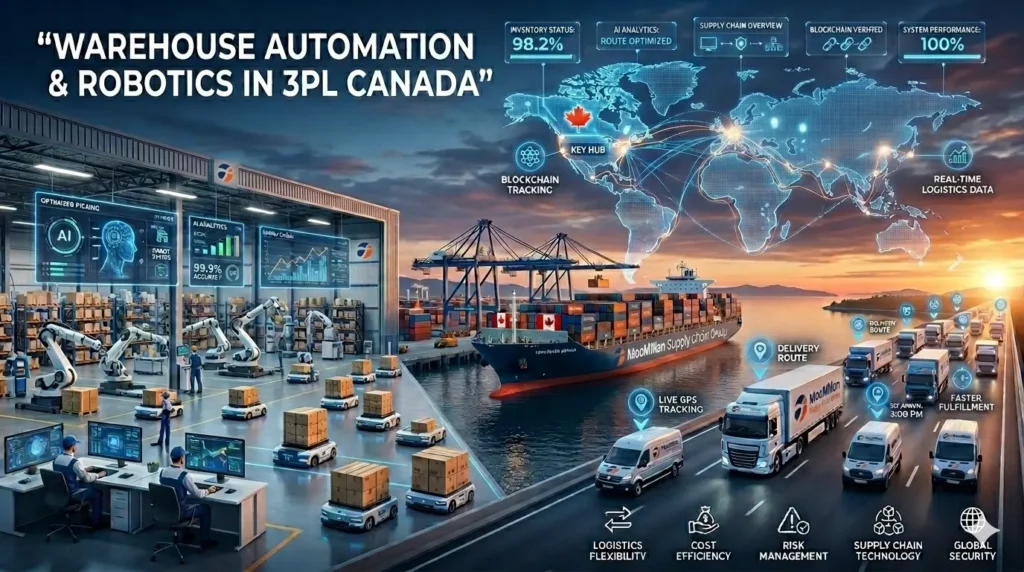
The way third-party logistics (3PL) providers function in Canada is changing due to warehouse automation and robotics. By deploying cutting-edge technologies like AI-driven systems, automated picking solutions, and real-time tracking tools, MacMillan Supply Chain Group is at the forefront of this revolution. These developments assist e-commerce companies in cutting expenses, minimizing mistakes, and expediting product delivery. Businesses in the Canadian market that require dependable fulfillment services benefit from MacMillan’s technological approach, which includes blockchain integration and robotic process automation. This article examines how these developments are changing the logistics industry and helping expanding businesses achieve better outcomes. The Evolution of 3PL Services in Canada Nowhere is the technological renaissance in the logistics sector more apparent than in Canadian fulfillment centers. Traditional warehouse operations find it difficult to keep up with the growing consumer expectations for real-time tracking and faster deliveries. In response, MacMillan Supply Chain Group has adopted robotics and warehouse automation to revolutionize the way 3PL services are provided in Canada. However, how will this change in technology affect your company? Whether you are an established retailer or an e-commerce startup, integrating cutting-edge 3PL technology can significantly increase customer satisfaction, lower costs, and improve operational efficiency. Automated picking systems and AI-driven warehouse management are examples of innovations that are no longer sci-fi ideas but rather workable solutions that are producing quantifiable outcomes now. Let’s explore how MacMillan is leveraging these cutting-edge technologies to revolutionize supply chain management across Canada. Core Technologies Driving Warehouse Automation A number of integrated technologies that function together form the foundation of MacMillan’s warehouse robotics solutions. All operations are coordinated by an AI-powered warehouse management system at the core. In addition to tracking inventory, this clever system anticipates changes in demand, learns from patterns, and automatically optimizes warehouse layouts. In logistics, repetitive tasks that previously required human intervention are handled by robotic process automation, or RPA. These consist of: Incoming shipment sorting that is automated barcode scanning and verification inventory counts and cycle counting order prioritization according to shipping deadlines Compared to more conventional approaches, MacMillan’s use of automated picking systems has shortened order fulfillment times by as much as 65%. These systems retrieve products from storage areas and move them to packing stations using a combination of robotic arms, autonomous mobile robots (AMRs), and conveyor systems. But the communication between these technologies is the true game-changer. With cloud-based warehouse systems, all of the robots, scanners, and sensors instantly exchange data, resulting in a synchronized operation that instantly adjusts to shifting priorities and conditions. Real-Time Visibility and Predictive Analytics E-commerce enterprises have historically struggled with inventory management, with stockouts and overstock scenarios having a major negative financial impact. This area of supply chain management has been completely transformed by MacMillan’s approach to inventory optimization tools. MacMillan gives customers unheard-of insight into the state of their inventory through real-time tracking and monitoring. From the time a product arrives at the warehouse until it is delivered to the final consumer, it is tracked. This visibility also includes: Present stock levels in several locations Patterns and velocity of product movement efficiency metrics for storage locations tracking of perishable goods’ expiration dates By projecting future inventory requirements, supply chain management predictive analytics enhances this visibility. To determine the ideal inventory levels, MacMillan’s demand forecasting software examines past sales data, seasonal patterns, and even outside variables like the weather or approaching holidays. MacMillan’s cold chain management in Canada guarantees product integrity during the fulfillment process for companies that deal with temperature-sensitive goods. From storage to delivery, precise environmental conditions are maintained by specialized packaging solutions and temperature-controlled zones within warehouses. How Automation Enhances Fulfillment Operations Daily fulfillment operations are where warehouse automation and robotics are most clearly used in practice. The Canadian fulfillment centers operated by MacMillan demonstrate how these technologies result in real advantages for CA e-commerce logistics. Order fulfillment time is greatly decreased by automated picking systems. Workers using traditional picking techniques may have to walk through warehouse aisles for several miles each day. On the other hand, MacMillan’s robotics deliver goods straight to packing stations, saving workers’ physical strain and removing unnecessary walking time. The improvements in accuracy are equally striking. The accuracy rates for manual picking are usually between 96 and 98 percent, which means that errors occur in 2-4 orders out of 100. With a 99.9% accuracy rate, MacMillan’s automated systems virtually eliminate expensive returns and unhappy customers. Another significant benefit in robotics is scalability. Without the typical difficulties of recruiting and training temporary employees, MacMillan can quickly scale operations during busy times like Black Friday or holiday shopping periods. The robotic fleet can be expanded with more units or work more hours, guaranteeing steady performance even in the face of volume variations. Challenges in the Logistics Industry Many 3PL providers continue to face major operational obstacles that affect customer satisfaction and profitability in spite of technological advancements: Labor Shortages and High Turnover: Picking, packing, and shipping in traditional warehouses rely largely on human labor. This dependence makes one susceptible to changes in the labor market and seasonal staffing issues. Scalability Limitations: Many 3PLs are unable to effectively manage abrupt volume increases, which causes delays during busy times when prompt fulfillment is most important. Difficulties with Inventory Accuracy: Manual inventory management frequently leads to differences between system records and actual stock levels, which can lead to overselling, stockouts, and dissatisfied customers. Limited Visibility: Traditional logistics operations frequently lack real-time tracking capabilities, leaving clients in the dark about inventory status and order progress. Inefficient Space Utilization: Traditional warehouse designs frequently squander useful space, which raises storage expenses and lowers operational effectiveness. Slow Adaptation to E-commerce Needs: A lot of well-known 3PLs find it difficult to satisfy the particular demands of e-commerce fulfillment, such as the need for quick shipping and single-item picking. High Error Rates: Human error in picking, packing, and shipping is an inevitable part of manual processes, which leads to returns, customer complaints, and a tarnished reputation for the brand. MacMillan’s Innovative Approach
The Impact of Warehouse Location on Shipping Speed and Costs
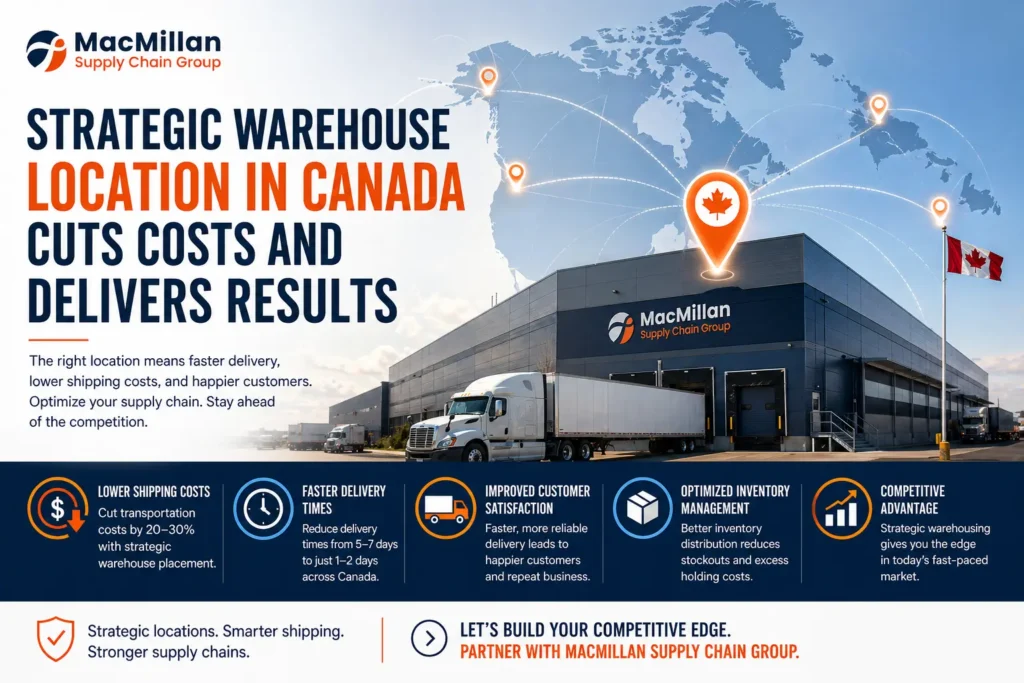
The cost and speed of product delivery to customers are directly impacted by the strategic location of warehouses. Businesses with strategically placed distribution centers in Canada can cut shipping costs by 20–30% and delivery times from 5-7 days to just 1-2 days. This article examines how warehouse location impacts cross-border logistics and last-mile delivery, as well as why companies that work with 3PL providers like MacMillan Supply Chain Group benefit from strategic Canadian warehousing solutions that give them a competitive edge. Why Your Warehouse Location Matters More Than Ever Ever ponder why some orders placed online arrive the following day while others take a week to arrive? In many cases, the warehouse location rather than the shipping method is the key. Customers expect speedy delivery at competitive prices in today’s fast-paced market. Because of this, choosing where to locate your warehouse is one of the most important aspects of your logistics plan. We at MacMillan Supply Chain Group have personally witnessed how a well-chosen warehouse location can revolutionize an organization. 40% of Canadian consumers can be reached in a day by a Toronto fulfillment center, whereas a poorly located warehouse may take three to five days to reach the same customers. The distinction has an impact on your bottom line, customer satisfaction, and competitiveness in the current market in addition to shipping speed. Let’s explore why warehouse location has become the cornerstone of successful supply chain optimization. The Distance Factor The main determinant of shipping speed is distance. Your products will arrive more quickly if your warehouse is located close to your customers. This simple idea has significant business ramifications. A package may arrive the following day if it is shipped from a fulfillment center in Toronto to a customer in Ontario. It might take three to four days to ship the same package from Vancouver to Ontario using the same shipping method. This discrepancy is due to geography rather than efficiency. The size of our nation must be taken into consideration when developing warehousing strategies in Canada. Businesses must carefully consider where to store inventory because major population centers are dispersed over thousands of kilometers. Western provinces could be adequately served by a single warehouse in Calgary, but eastern customers would have to wait days longer than necessary. The best approach? Many businesses find that an Ontario warehouse hub serves as an excellent starting point, with additional distribution centers in Canada’s western and eastern regions as they grow. This multi-node distribution approach ensures that no customer is too far from your products. Breaking Down Shipping Costs The cost of shipping a package increases with each kilometer of travel. You essentially pay for additional distance when your warehouse location is far from your customers. These expenses mount up quickly and can have a big effect on your profit margins. Take a look at these actual numbers: Transporting a 5 kg parcel inside the same province: $8–12 for shipping the identical package to more than three provinces: $18–25 Costs of last-mile delivery in cities: 53 percent of the total cost of shipping Strategic warehouse placement can significantly lower these expenses. Compared to a competitor with a single warehouse, a company with distribution centers in both Toronto and Vancouver may save 40% on shipping. Location affects more than just transportation costs. There are large regional differences in labor availability, real estate values, and utility costs. The Greater Toronto Area, for instance, has more expensive warehouse space per square foot than smaller cities, but the savings on shipping and quicker delivery times frequently make the difference. The secret is figuring out the sweet spot, which our logistics experts at MacMillan Supply Chain Group are skilled at determining, where shipping and operating costs add up to the lowest overall cost. Multi-Node vs. Centralized Distribution Should your business operate from one large warehouse or several smaller ones across Canada? This question faces every growing business, and the answer depends on your specific needs. A centralized approach with one major warehouse offers simplicity and lower facility costs. However, a multi-node distribution network with strategically placed warehouses provides faster shipping speeds and reduced shipping costs. The trade-off is more complex inventory management and higher facility expenses. Consider these approaches: Single Central Hub: Works well for specialized products with nationwide demand but lower order volume East-West Strategy: Two warehouses (typically Ontario and BC) covering eastern and western Canada Regional Network: Multiple smaller facilities near major population centers for fastest possible delivery For businesses shipping to both Canadian and American customers, cross-border logistics adds another layer of complexity. Warehouses near border crossings like Windsor or Niagara Falls can facilitate smooth US-Canada shipping while maintaining fast delivery to Canadian customers. MacMillan’s network of distribution centers in Canada allows businesses to implement the right strategy for their unique needs, whether that’s a single Ontario warehouse hub or a comprehensive national network. Urban Proximity and Delivery Speed More than half of all shipping expenses go toward the “last mile,” which is the last section of delivery from the local distribution center to the customer’s door. The location of the warehouse is essential to making the most of this costly step. Last-mile distances are shortened by urban warehouses located close to city centers, allowing for same-day or next-day delivery options. Reduced delivery expenses and fuel consumption Shorter routes result in lower carbon emissions; more scheduling flexibility for deliveries Local clients can receive same-day delivery from a Toronto fulfillment center, which is not feasible with a warehouse located outside of the city. Beyond just speed, this proximity advantage opens up possibilities for competitive service offerings that are impossible for distant warehouses to match. However, the cost of real estate is usually higher for urban warehouses. Determining whether the cost savings and shipping speed benefits of paying more for city center proximity are sufficient to make the investment worthwhile is crucial. The answer is becoming more and more “yes” for many companies catering to urban clients. The Hidden Costs of Poor Placement The consequences