
Is Your Fulfillment Ready for AI Shopping in Canada?
A shopper asks an AI assistant to find a fragrance-free skincare gift under $75 that can arrive in Calgary before the weekend. The assistant helps compare suitable products, prices and delivery options. Your brand makes the shortlist.What happens next depends on more than your product description. Is the correct gift set available? Does your delivery estimate reflect the customer’s postal code? Can your warehouse process the order before the carrier cutoff?AI shopping in Canada is making these connections between product discovery and fulfillment more important. As shoppers use AI to research and compare purchases, brands need accurate inventory, dependable order processing and delivery promises their operations can support. For Canadian e-commerce businesses, preparing for this shift starts with understanding what is changing—and which operational foundations need attention. What Is AI Shopping and Why Is It Growing in Canada? AI shopping involves using artificial intelligence to help discover products, compare options, interpret reviews or make purchasing decisions. Some experiences direct customers to a retailer’s website. Others support transactions through connected commerce systems, depending on the platform, merchant eligibility and market. Agentic commerce goes further by allowing an AI agent to perform shopping-related tasks on a customer’s behalf. However, using AI for research is different from authorizing it to complete a purchase. Canadian research shows why this distinction matters. In its 2026 Canadian holiday outlook, PwC reported that 28% of Canadian consumers planned to use AI during their holiday shopping journey, compared with 17% the previous year. Only 5% planned to use it at the purchasing stage. AI-assisted shopping can reduce the effort required to compare specifications, explore unfamiliar brands and narrow a long list of options. For retailers, that creates another route through which customers may discover products. Adoption is not uniform. Canadian brands should prepare for an additional shopping behaviour while continuing to support customers who prefer conventional search, marketplaces and physical stores. How AI Is Changing Online Shopping Behaviour Customers Can Begin With a Need Instead of a Product Name Traditional searches often start with a brand, product category or keyword. AI-assisted searches can begin with a detailed situation: a dietary preference, a compatibility requirement, a budget and a delivery deadline. A customer might ask for pet-care products suitable for travel or a cleaning bundle for a small apartment. These requests make clear product attributes, accurate pack contents and useful delivery information especially valuable. Retailers should describe what is actually included, which variants are available and which limitations apply. Broad claims such as “fast shipping across Canada” provide less useful information than destination-specific delivery estimates. Research and Purchase Remain Different Activities Ipsos research published in October 2026 found that 44% of Canadians surveyed had used AI for a shopping-related task in the previous six months, mainly for research. Only 26% would let AI make the final purchase decision. These findings suggest brands should focus on helping customers make informed decisions. They do not establish that most Canadian shoppers are handing purchasing control to autonomous agents. The operational implication is straightforward: wherever discovery begins, the retailer still needs to deliver the product and service the customer expects. Why AI Shopping Creates New Fulfillment Challenges AI-assisted discovery adds another place where product information, availability and delivery claims can be presented. When those details disagree with your operational systems, customers may encounter unexpected stockouts, revised delivery dates or cancellations. The underlying problems are familiar. What changes is the number of customer-facing surfaces that depend on accurate information. Three potential pressure points deserve attention: Availability mismatches: A product appears available even though its remaining units are allocated elsewhere. Unexpected product-level demand: A specific variant receives more attention than the broader category forecast anticipated. Promise gaps: Delivery or return information presented during discovery does not match what the retailer can provide. These are operational scenarios to prepare for, rather than guaranteed outcomes of AI shopping. Measure your own order patterns before assuming the new channel requires substantially more capacity. The Impact on Demand Forecasting and Inventory Planning Add New Signals Without Discarding Historical Demand Historical orders, promotions, seasonality and replenishment lead times remain the foundation of demand planning. AI-related referrals and channel-attributed orders can become additional inputs where your systems capture them reliably. Track performance by SKU and variant. Category-level growth may conceal a shortage of one popular size, flavour or bundle component. For example, an increase in wellness-kit sales may create a shortage of the pouch used in every kit, even when the individual products remain available. Forecasting should include components and packaging alongside finished goods. Strong e-commerce inventory management connects these demand signals with actual stock, supplier reliability and replenishment decisions. Use Scenarios Instead of Assuming Every Traffic Increase Will Convert Create a base forecast and an upside scenario for products receiving increased attention. Define what would trigger an additional purchase order, a replenishment transfer or a promotional adjustment. Avoid buying large quantities solely because AI-related visits increased. Visits may not become orders, and last-click attribution may not capture every AI-assisted purchase. Review sell-through, conversion, margin and stock availability together. Set safety stock according to demand uncertainty and replenishment risk, rather than applying one percentage to every product. Why Real-Time Inventory Visibility Matters More Than Ever A stock update is only useful when it represents inventory the business can actually promise. Physical stock includes units that may already be allocated, damaged, held for inspection or reserved for retail customers. Available-to-sell inventory should account for those restrictions. As an illustrative example, a warehouse may hold 120 units while 70 are allocated to existing orders and 10 are on quality hold. Publishing all 120 as available creates an overselling risk. Strengthen inventory visibility by: Defining which system controls each inventory record. Synchronizing reservations and availability across sales channels. Separating sellable goods from returns and quality holds. Monitoring failed updates and integration delays. Using cycle counts to investigate recurring discrepancies. “Real time” should have a practical definition. Measure the delay between a warehouse transaction and the corresponding storefront update. A fast integration cannot compensate
Work With an Ecommerce Fulfillment Company in the GTA
As an online store business owner, offering the best customer experience extends beyond having a great social media presence, email marketing or easily navigated website design. If you don’t have an e-commerce fulfillment strategy that best meets your customer’s expectations in place, you’re not going to build a community of loyal customers. What is E-commerce Fulfillment? E-commerce fulfillment refers to the entire process involved in getting an order delivered to a customer. It entails the processing, pickup, packaging and shipping of online orders to the final customer. However, it goes beyond just picking, packing and sending out orders. The best e-commerce fulfillment strategies involve an ordered procedure that results in e-commerce orders getting delivered to the end customer and in return help transform logistics into a revenue driver through improved conversions and increased sales. The following steps elaborate the individual services and workflows that sum up an e-commerce order fulfillment service. Steps in E-commerce Fulfillment Services The order fulfillment process extends through one or more distribution centers and typically includes inventory management, supply chain management, quality control, order processing and customer service in distinct steps. Order Fulfillment Services Order fulfillment services are often used interchangeably with e-commerce fulfillment. A fulfillment service refers to the act of picking, packing and getting orders delivered to customers. All e-commerce businesses are responsible for order fulfillment, whether you’re an online business that self-fulfill orders or partners with a fulfillment service provider. Partnering with MacMillan Supply Chain Group helps set your business apart from market competitors. There’s no order fulfillment process without the customer first making a purchase online, afterwards, the items are picked, packed and inspected for damage in the warehouse or fulfillment centers and then sets on their delivery journey. Order Management This is a broad concept of the overall visibility of your customer orders from when they get placed to when they get delivered. It involves receiving, tracking and fulfilling e-commerce orders across sales channels. This helps you monitor each status of any order (such as processing, pending or received, etc.), as well as being aware of when there’s a stockout or a change in customers’ buying patterns and preferences. Inventory Management Inventory management is overseeing an e-commerce business’ stocked products. It includes receiving inventory, inventory storage and restocking inventory. The most important aspect of inventory management is finding a balance between how much or how little inventory to have on hand to avoid stockouts or backorders and additional costs due to prolonged storage. E-commerce Shipping The shipping costs and delivery method you offer your customer are dependable on the type of items you’re shipping out (E.g., heavyweight, perishable or highly-valued), the delivery-goods location and destination, the delivery speeds and the technology and resources at your disposal. Small e-commerce businesses may handle their shipments themselves by using the nearest post office or a local FedEx store to deliver the goods. Bigger, more established online retailers will adopt fulfillment companies to enjoy faster and discounted shipping rates for their larger monthly order volume. Warehouse Management System Warehousing refers to storing inventory before orders are placed or fulfilled. The goods are safely and securely stored in an orderly manner for easy and quick allocation once orders are placed. Third-party logistics store inventory in their fulfilment center and ship orders to customers directly from there. Returns Management This leg of e-commerce fulfillment involves receiving, accessing and restocking returned items unless damaged or malfunctioning. This is also the stage of e-commerce fulfillment that incorporated customer service and support for handling complaints. Depending on the product condition, some e-fulfillment services let returns be sent to the e-commerce business instead of the fulfillment center. Fulfillment Software E-commerce fulfillment software is the digitized means by which inventory and order management as well as picking, packing and delivery processes are handled. It is the technology that allows a real-time connection and tracking between e-commerce fulfillment providers and business owners. International Order Fulfillment International fulfillment involves the fulfillment of goods and products to customers who live in countries outside of where your e-commerce business is based. The options available for this are either working with a fulfillment company located abroad or shipping orders from your location to other countries. You may wish to start selling in the Greater Toronto Area or offer affordable shipping to customers in Canada. Working with a skilled fulfillment expert can help you easily navigate your international shipping capabilities. Choosing The Best E-commerce Fulfillment Solution Sometimes, the line between being able to outsource e-commerce fulfillment to third-party logistics (3PLs) or continuously adopting a self-fulfillment solution can be blurry. But it helps to know the physical and financial costs associated with adopting either e-commerce fulfillment solution. The Cost of Self-Fulfillment Other certain insignificant costs come with self-fulfilling orders asides from the shipping costs. And they are easily overlooked until you get stressed out by the scarcity of an essential material needed in your order fulfillment. Examples may include tools and packing supplies, transportation costs and car maintenance, dealing with unhappy customers which may sometimes jeopardize the future business, human error due to lack of integrated technology and so on. The Cost of third party logistics (3PLs) Fulfillment The rates of most 3PLs fulfillment differ, but the common costs you’ll come across are for; the acceptance and arrangement of incoming inventory, storage costs per -SKU, shelf or pallet, custom branded packing materials, specially assembled orders (kitting) and delivery. 3PL fulfillment companies offer bulk discounted rates because they work with thousands of e-commerce businesses. E-Commerce Fulfillment in Toronto When an e-commerce business hit a certain milestone, it will either partner with 3PL or invest in the infrastructure, pieces of equipment, resources and workforce to oversee order fulfillments itself. However, partnering with a 3PL allows you to make room for investments in other critical business areas like marketing and enhancing your product. Third-party logistics companies provide high-level expertise that let online business drive fulfillment for efficiency and maximum customer satisfaction. If you’d like to work with an e-commerce
How To Improve Last Mile Delivery: Actionable Tips and Solutions
Last mile delivery is more than just the final step in the logistics chain. It culminates a customer’s shopping experience and sets the tone for future interactions. With Canada’s last mile delivery market projected to grow by 7% annually from 2023 to 2028, businesses must prioritize this crucial aspect. In this blog, we’ll delve into some actionable strategies and solutions to optimize last mile delivery. Challenges in Last Mile Delivery High Operational Costs: Last mile delivery can account for up to 30% of the logistical expenditure, with unpredictable transport routes and additional fees adding to the costs. Meeting Customer Expectations: 74% of customers are more likely to repurchase if they receive same-day delivery. Handling Bulky Items: Larger products, especially furniture, present unique challenges in packaging, transit, and installation. Supply Chain Transparency: Real-time insights into order statuses and fleet availability are essential for efficient delivery. Top Strategies and Solutions To Improve Last Mile Delivery The final step of delivering goods to customers, known as the last mile delivery, often proves to be the most complex. Here are some methods to overcome challenges faced by businesses in last mile delivery: 1. Partnering With A 3PL: Partnering with a 3PL like MacMillan is beneficial, as this can significantly reduce shipping costs for your business, especially when there’s a geographical gap between your company’s location and the majority of your customer base. This not only streamlines the delivery process but also minimizes transit times and costs, making it an ideal solution for businesses looking to enhance their last mile delivery. 3PLs use advanced technology to optimize delivery routes. 2. Offer Flexible Delivery Options: Consumers demand choice. By providing a range of delivery options, such as same-day, next-day, or even hour-specific delivery, businesses can cater to these diverse preferences, enhancing the customer experience in the last mile delivery process. 3. Expedited Shipping Capabilities: Customers expect quick delivery times. 3PLs like MacMillan can help businesses meet these expectations by offering expedited shipping options. They have the resources and technology to process orders faster and offer various shipping options, including discounts and faster delivery services. This not only satisfies customers but also helps the business grow by meeting market demands efficiently. 4. Efficient Reverse Logistics: Handling returns is a vital part of e-commerce, and 3PLs like MacMillan streamline the reverse logistics process, making it more efficient and cost-effective. They manage the complexities of returns, including transportation and restocking, and provide valuable insights into customer feedback and product performance. This service is particularly important as it helps businesses understand their customers better and reduces the time and expense involved in managing product returns. 5. Maintain Transparent Communication: One of the primary concerns customers have during the last mile delivery phase is their package’s whereabouts. Businesses can ease these concerns by offering real-time shipping status updates across various communication channels, ensuring customers are always in the loop. 6. Streamline Returns Management: An efficient return process is integral to a positive last mile delivery experience. Offering pre-printed return labels and multiple international return methods can simplify this process, reducing customer friction and ensuring continued loyalty. 7. Implement Feedback-Driven Delivery: The best insights often come from the customers themselves. By establishing a robust feedback collection system, businesses can gain valuable insights into their last mile delivery performance, allowing them to address issues and continually refine their processes. 8. Adopt Sustainable Packing Methods: As environmental concerns grow, businesses must adapt. Using biodegradable, recyclable, or even reusable packaging reduces environmental impact and connects with eco-conscious customers, enhancing brand reputation. 9. Regularly Analyze Delivery Efficiency: Data-driven decision-making is key. Regular analysis of delivery data can highlight inefficiencies, allowing businesses to implement targeted solutions to ensure their last mile delivery operations remain optimized and effective. Elevate your Last Mile Delivery with MacMillan Supply Chain Group Last mile delivery is more than just an operational task; it’s a strategic move that can set businesses apart in a competitive e-commerce market. By implementing the strategies outlined above, businesses can ensure timely, efficient, and customer-friendly deliveries, solidifying their reputation and fostering customer loyalty. At MacMillan Supply Chain Group, we understand the challenges and intricacies of last mile delivery. Whether it’s custom shipping solutions or eCommerce order fulfillment, we shape our services to fit the changing demands of businesses. Team up with MacMillan SCG to ensure a smooth, efficient, and customer-focused experience. Contact us today! Frequently Asked Questions What is last mile delivery? Last mile delivery is the final stage of the supply chain, where products are transported from a warehouse or distribution center to the customer’s doorstep. It plays a crucial role in customer satisfaction and overall delivery efficiency. What are the main challenges in last mile delivery? The main challenges include high transportation costs, traffic congestion, meeting customer delivery expectations, handling bulky items, managing returns, and maintaining real-time shipment visibility. How can a 3PL provider improve last mile delivery? A third-party logistics (3PL) provider can improve last mile delivery by optimizing shipping routes, reducing transportation costs, streamlining order fulfillment, offering expedited shipping, and managing returns efficiently. How can businesses reduce last mile delivery costs? Businesses can reduce last mile delivery costs by optimizing delivery routes, consolidating shipments, partnering with a 3PL provider, improving inventory management, and analyzing delivery performance data to identify inefficiencies. How does technology improve last mile delivery efficiency? Technology improves last mile delivery through real-time shipment tracking, route optimization, automated order processing, delivery notifications, and data analytics. These tools help businesses improve visibility, reduce delays, and deliver a better customer experience.
9 E-commerce Holiday Planning Tips for 2026
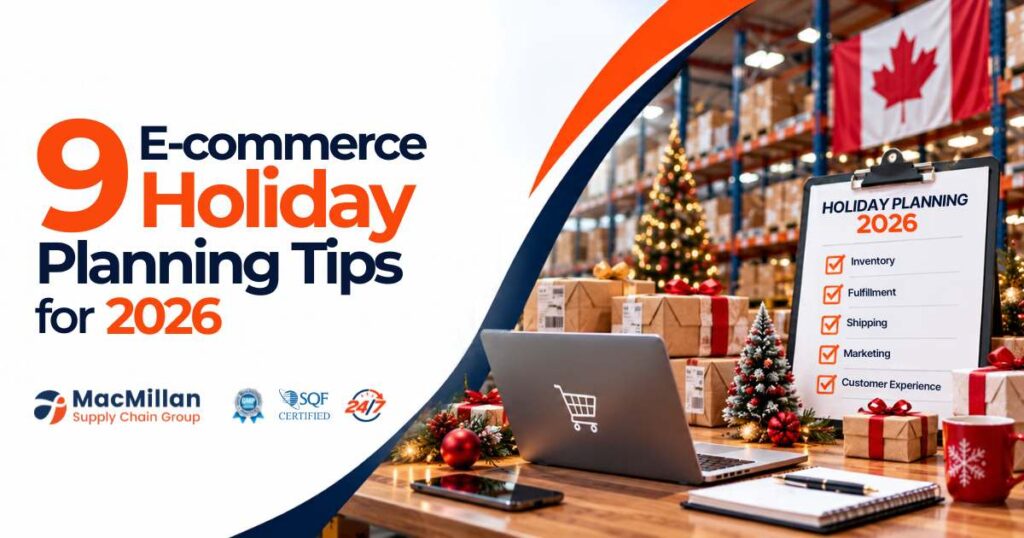
The holiday season is a period brimming with opportunities for e-commerce businesses. As online sales soar during this time, the role of efficient logistics and supply chain management becomes more crucial than ever. In this blog, we will share 9 practical strategies tailored for e-commerce businesses. These tips will help you smoothly handle the holiday rush and make the most of this busy season. Read on to discover how to navigate this crucial time of the year successfully. Your 9-Point Checklist to Prepare for E-Commerce Holiday Sales Here are 9 strategies that offer a roadmap to navigate the holiday rush successfully: Strategic Inventory Management Your holiday season success hinges on your ability to predict and prepare. It’s about striking the perfect balance—having enough stock to satisfy customer demands without overstocking. Use advanced analytics and historical sales data to predict which items will be the season’s hits. Partnering with a 3PL service like MacMillan for their warehousing and distribution expertise can be a game-changer, ensuring your inventory is managed efficiently and effectively. Reliable Transportation Management With increased order volumes and potential delays, timely and accurate deliveries become critical to customer satisfaction. A 3PL’s robust transportation management system can streamline this process, ensuring timely and reliable deliveries to keep up with customer demands. Efficient Order Fulfillment The holiday rush can make order fulfillment seem like a Herculean task. Streamlining this process is key to handling high volumes efficiently. 3PL services, like MacMillan, excel in efficient order processing and dispatching, enabling businesses to manage the holiday rush and maintain high customer satisfaction effectively. Optimizing Warehouse Operations During the holiday season, the efficiency of warehouse operations becomes crucial for e-commerce success. This is where a 3PL provider like MacMillan can make a significant impact. Their expertise in optimizing warehouse layouts, streamlining picking and packing processes, and implementing effective inventory management systems ensures that your products are efficiently stored, managed, and dispatched. This optimization leads to quicker turnaround times, reduced errors, and a smoother flow of goods from warehouse to customer, essential during the high-demand holiday period. Returns Management Optimization Post-holiday returns are an inevitable part of e-commerce. To handle this surge, an efficient return policy and process are essential. 3PLs can offer streamlined return management, turning a potential challenge into a smooth, customer-friendly experience. Scalable Technology Integration The holiday season tests the limits of your e-commerce and logistics technology. Scalability is critical to managing increased traffic and transactions. Consider a 3PL service like MacMillan that offers the latest technological solutions, providing real-time tracking and efficient inventory management, ensuring you’re always in control. Enhanced Customer Communication Clear and timely communication with customers is crucial, especially when it comes to transport time and potential delays. Automated tools for updates and tracking information keep customers informed and engaged, fostering trust and loyalty. Sustainable Practices Adopting eco-friendly packaging and transportation methods appeals to environmentally conscious consumers and sets a standard for responsible business practices. 3PLs are often at the forefront of implementing eco-friendly transport and packaging solutions, aligning with environmental responsibilities and customer values. Efficient Last-Mile Delivery Management The final step in the delivery process, known as last-mile delivery, becomes increasingly critical during the holiday season. Efficient last-mile delivery management ensures that products reach customers promptly and in excellent condition. A 3PL provider can enhance this aspect with optimized routing, real-time tracking, and effective communication with delivery personnel, all contributing to a positive customer experience and increased satisfaction during the hectic holiday shopping period. Gear Up for Holiday Success with MacMillan As the holiday season approaches, the stakes are high for e-commerce businesses. The strategies outlined in this blog are designed to help you navigate the complexities of this crucial period. Remember, the key to thriving in the holiday season lies in meticulous planning, agile execution, and the support of a reliable logistics partner. Partnering with MacMillan can transform these challenges into opportunities. With our comprehensive range of services, including warehousing, distribution, transportation management, and more, we are equipped to handle the unique demands of the holiday season. Don’t let the holiday rush overwhelm you. Reach out to MacMillan today and discover how our logistics solutions can empower your e-commerce business to achieve new heights this holiday season. Contact MacMillan! Frequently Asked Questions When should e-commerce businesses start holiday planning? E-commerce businesses should begin holiday planning several months before peak season so they have enough time to prepare inventory, staffing, fulfillment, and shipping capacity. How can businesses prepare inventory for holiday sales? Use past sales data, seasonal trends, and demand forecasts to estimate stock requirements and reduce the risk of stockouts or excess inventory. How can e-commerce brands avoid holiday shipping delays? Prepare inventory early, confirm carrier capacity, set realistic delivery deadlines, and use reliable fulfillment partners to manage higher order volumes. Why is a 3PL useful during the holiday season? A 3PL can provide additional warehouse space, flexible labor, inventory management, order fulfillment, shipping support, and returns management during peak demand. How should businesses prepare for holiday returns? Create a clear returns policy, plan extra processing capacity, track returned inventory, and restock eligible products quickly to maintain inventory accuracy.
Section 321 & Canadian 3PLs: 2026 Guide
If you’ve ever wondered why some online stores thrive while others struggle, the secret often lies in how they handle order fulfillment. Did you know that 48% of online shoppers will abandon their carts if delivery takes more than a week? These stats highlight the importance of efficient e-commerce fulfillment. Effective e-commerce fulfillment is not merely a logistical requirement but a vital element in fostering customer satisfaction and facilitating business growth. It involves establishing a seamless connection between your products and customers, thereby ensuring that each order not only fulfills a need but also reinforces the strength and reliability of your brand. In this blog, we will explore the fundamental aspects of e-commerce fulfillment, aiming to assist you in optimizing time efficiency, minimizing costs, and enhancing customer satisfaction. What Is E-Commerce Fulfillment and Why Does It Matter? E-commerce fulfillment is a critical section of your supply chain, involving the reception of bulk goods, the storage of stock-keeping units (SKUs), and the execution of order processing, which includes picking and packing, as well as the delivery of products to customers. The key processes in this segment include: Inbound Shipments: E-commerce fulfillment facilitates the arrival and placement of products on shelves in e-commerce fulfillment centers. Warehousing and Storage: It strategically stores SKUs in inventory for future orders. Order Fulfillment: It involves the meticulous process of selecting and packaging orders for dispatch. Order Delivery: The shipping phase is where orders are transported to customers. Reverse Logistics: Managing the returns process and ensuring efficient handling of returned goods. E-commerce fulfillment involves ensuring that products are stored correctly, orders are processed efficiently, and customers receive their purchases promptly and in good condition. Good fulfillment practices can lead to happier customers and more successful business operations. The E-Commerce Fulfillment Process An e-commerce fulfillment process commences upon a customer’s online purchase of a product and concludes with the delivery of that product. Let’s explore the list of various types of e-commerce fulfillment services: Order Fulfillment Services This fundamental service encompasses the selection, packaging, and dispatch of products to customers. Specialist 3PLs, such as MacMillan, enhance this process, ensuring efficiency and effectiveness for e-commerce entities. Order Management This involves the tracking of all customer orders. It includes monitoring the status of each order, analyzing customer purchasing patterns, and managing inventory levels to prevent stock shortages. Inventory Management This crucial step involves the administration of a business’s product inventory. It encompasses the storage, replenishment, and estimation of required stock levels, aiming to perfectly balance supply with customer demand. E-Commerce Shipping Shipping is the method of product delivery to customers. It varies depending on the origin and destination of the shipment, the nature of the products, and the desired speed of delivery. Businesses range from self-handling shipments to collaborating with carriers for optimized rates. Warehousing This refers to the storage of products prior to their purchase. Warehousing solutions can range from modest in-house storage to extensive warehouse facilities, with a focus on maintaining product safety and organization. Returns Management This process involves the handling of returned merchandise, including its receipt, inspection, and reintroduction into available inventory. Given the nature of online shopping, an efficient returns process is vital. Fulfillment Software This technology streamlines the fulfillment process by linking e-commerce platforms with fulfillment centers. It provides real-time updates on orders and inventory, and can strategically allocate orders to the most suitable fulfillment center. International Order Fulfillment This pertains to the fulfillment of orders for international customers, a process complicated by varying international regulations, tariffs, and taxes. Collaboration with experienced fulfillment providers is advisable to navigate these complexities. Pick and Pack Fulfillment This operation involves retrieving items from storage and preparing them for shipment upon receipt of an order. Efficiency in this process is key, whether it involves batch picking or specialized packing stations. Kitting and Assembly Employed for products that require specific assembly or arrangement before shipping, this service involves additional steps such as the combination of various components, which may require more time and resources. Each of these components plays a pivotal role in the smooth operation of an e-commerce business, contributing to overall efficiency, customer satisfaction, and business growth. Choosing the Right E-Commerce Fulfillment Model for Your Business E-commerce fulfillment is a critical aspect of any online business, impacting customer satisfaction and operational efficiency. As your business evolves, so too might your fulfillment strategy. Understanding the different models available can help you make the best choice for your business at each stage of its growth. 1. In-House Fulfillment This approach involves the complete management of the fulfillment process internally, ranging from utilizing a modest space like a spare room for initial storage to potentially expanding into a full-scale warehouse as the business grows. Why choose it? Autonomy in Operations: It provides the freedom to manage every aspect of the fulfillment process, ensuring each order adheres to the highest standards set by the business. Personalized Customer Experience: It offers the opportunity to customize packaging and include unique additions such as thank-you notes or promotional items, thereby enhancing the overall customer experience. Operational Flexibility: Enables the ability to make swift modifications to orders and address customer-specific requests or concerns promptly. Considerations: Scalability Challenges: Increasing order volumes can place substantial demands on both time and space, potentially impeding the business’s ability to grow effectively. Resource-Intensive: Requires significant investment in physical space, equipment, and staff. Managing logistics can become a complex task that diverts attention from other business areas. 2. Outsourced Order Fulfillment (3PL) Outsourced order fulfillment, commonly known as Third-Party logistics (3PL), involves delegating the entirety of supply chain management to external logistics providers. Companies like MacMillan assume responsibilities for storing, selecting, packaging, and dispatching products. Why choose it? Access to Expertise: Engaging with a 3PL provider allows businesses to benefit from their extensive experience and specialized resources, leading to more streamlined and professional fulfillment operations. Scalability: 3PL services are inherently scalable, efficiently accommodating an increase in order volumes without necessitating additional investment in space or personnel by the business. Cost
E-commerce Peak Season Fulfillment: 15 Strategies for Success
As the busiest time of the year draws near, the effectiveness of your e-commerce fulfillment in peak season strategies comes into sharp focus. This crucial period, characterized by a significant increase in sales, tests the resilience and efficiency of your e-commerce operations. During peak season in e-commerce, your business transforms into more than just a retail outlet; it becomes a dynamic center of operations. The influx of orders is not just a revenue booster but a critical test of your ability to deliver satisfaction with each package. The hurdles in e-commerce fulfillment in peak season, such as inventory management and meeting accelerated shipping requirements, are always challenging. This blog aims to equip you with 15 essential strategies for e-commerce fulfillment in peak season, ensuring your business survives and flourishes during these high-demand times. E-commerce Fulfillment in Peak Season: Factors You Should Consider Achieving peak performance in e-commerce fulfillment in peak season is crucial for sustained growth and customer satisfaction. It’s not merely about surviving the high-demand periods; it’s about leveraging these challenges as opportunities for significant improvement and growth. Think about these important questions as you customize strategies to fit your specific business requirements: How can you harness the power of technology to make your fulfillment process more efficient? Today’s technological advancements offer many tools and systems designed to optimize operations. The right technology can be a game-changer, from inventory management software to automated shipping solutions. How can you build stronger, more collaborative relationships with your suppliers and logistics partners? Solid partnerships are the backbone of successful fulfillment. Open communication, mutual understanding of expectations, and flexibility can help build a resilient supply chain ready to adapt to the dynamic demands of peak seasons. How can you utilize data and insights from previous peak seasons to refine your future strategies? Historical data is a goldmine of insights. Analyzing past performance, customer feedback, and logistical challenges can guide your planning, helping you anticipate and mitigate potential issues before they arise. Engaging with these considerations for e-commerce fulfillment in peak season can transform challenges into stepping stones for success. This approach sets a solid foundation for your business to survive and excel during the busiest times of the year. The Challenges of E-commerce Fulfillment in Peak Season During peak seasons, e-commerce businesses encounter specific challenges in e-commerce fulfillment. Recognizing and tackling these obstacles is crucial for preserving efficiency and ensuring customer satisfaction. Below is an analysis of the main challenges in e-commerce fulfillment in peak season and strategies for their effective management: Managing Increased Demand Peak seasons often bring an overwhelming increase in product demand. This surge tests the limits of inventory management and shipping logistics. To tackle this, businesses need to ensure robust stock levels. Effective demand forecasting becomes crucial here. Though high demand is a positive sign, it requires strategic planning and resource allocation to ensure seamless fulfillment. Controlling Shipping Costs Shipping costs typically rise during peak periods due to increased demand. To mitigate this, businesses can negotiate with carriers for better rates, explore diverse shipping options, optimize packaging for cost-efficiency, and consider using shipping software or fulfillment centers. Additionally, passing some shipping costs to customers while maintaining transparency can be a viable strategy. Meeting Tight Delivery Schedules During peak seasons, the expectation for swift deliveries intensifies, making e-commerce fulfillment in peak season a critical focus. Challenges such as shipping delays caused by weather or logistical issues, particularly in areas with evolving infrastructure, necessitate a robust delivery system and thorough contingency planning. Staffing for Peak Demand A common challenge in e-commerce fulfillment in peak season is the requirement for extra staff to manage the surge in orders. Efficiently recruiting and training temporary staff is vital. Having a streamlined process to rapidly onboard new employees is essential to maintain operational efficiency during these peak periods. Handling Returns and Exchanges Peak seasons can also see an uptick in returns and exchanges. Having a clear, efficient returns policy is imperative. This helps manage the increased volume and maintain customer satisfaction and trust. Anticipating and preparing for these hurdles allows for smoother operations and a more positive customer experience. Top 15 Strategies for E-Commerce Fulfillment in Peak Season Excellence Navigating e-commerce fulfillment in peak season requires more than just hard work; it calls for a meticulously crafted strategy. The challenges during these high-demand periods are numerous, yet with the appropriate approach, they offer substantial opportunities for business growth and improving customer satisfaction. Let’s delve deeper into each strategy to ensure your e-commerce business thrives during these critical times: In-Depth Advance Planning Well ahead of the busy times, it’s crucial to prepare the foundation for e-commerce fulfillment in peak season. This preparation includes securing a strong inventory level and working closely with your shipping partners. Focus on strategies for handling order surges, emphasizing flexibility and scalability in your operations. Stocking of High-Demand Products Utilize historical sales data to pinpoint products that historically see a surge in demand. Proactively stocking these items helps avoid stock shortages, ensuring you’re well-equipped to meet customer needs without interruption. Refining Reorder Procedures Streamline your inventory management for more frequent restocking, particularly for your best-selling items. Prepare your team and suppliers for swift reordering processes. Employing advanced technology can greatly aid in making this process more efficient and less prone to errors. Elevating Reorder Thresholds Proactively adjust the reorder levels for your high-demand products. By doing so, you maintain a healthier stock level, significantly reducing the likelihood of facing stockouts during peak demand. Fortifying Vendor Networks It’s important to solidify your relationships with suppliers as part of your e-commerce fulfillment in peak season strategy. Being proactive in this way guarantees they are prepared for quick and larger orders, a key factor in maintaining a fluid and responsive supply chain. Broadening Shipping Partnerships Diversify your shipping options to meet customer delivery expectations better. This includes forming new partnerships and exploring various shipping methods to manage the increased volume of deliveries effectively. Holistic Preparation of E-commerce Supply Chain and Logistics Undertake a comprehensive
Supply Chain Risk Management for E-commerce: Key Strategies
Did you know that only 21% of businesses feel really confident in their supply chain risk management? It’s quite an eye-opener. In e-commerce, the buzz around supply chain disruptions is hard to miss. From fuel shortages to the chaos at shipping ports, it’s clear that mastering supply chain risk management is a must-have for e-commerce businesses. And here’s something to ponder: barely half of these businesses are hopeful about achieving strong resilience in their supply chains in the near future. Think of the supply chain as the lifeline of e-commerce. Without effective supply chain risk management, there’s no product to sell, no inventory, and, inevitably, no revenue. The risks vary widely, including issues like product quality, unreliable suppliers, security threats, and sometimes just not having a clear view of what’s happening. If you’re running an e-commerce business, all this might sound a bit overwhelming. But don’t worry; that’s exactly what we discuss in this blog. We will dive into what supply chain risk management means for e-commerce. We’ll look at the typical hurdles you might face and give you some handy tips and strategies to keep your business running smoothly and profitably. Let’s get started! What Is Supply Chain Risk Management in E-commerce? Supply chain risk management in e-commerce is a strategic approach focused on identifying, assessing, and mitigating risks within the supply chain. This process is crucial for ensuring uninterrupted operations, reducing costs, improving efficiency, and enhancing customer satisfaction. Types of Supply Chain Risks External Risks Demand Risks: These arise from misjudging market demand, often due to inadequate insights into purchasing trends or unpredictable market shifts. Supply Risks: Occur when delays or failures in receiving essential raw materials disrupt the supply flow. Environmental Risks: Stem from socio-economic, political, or environmental factors that impact the supply chain timeline. Business Risks: Involve unexpected changes with critical partners or suppliers, such as acquisitions or financial instability. Internal Risks Manufacturing Risks: Relate to potential disruptions in production processes or workflow. Business Risks: Pertain to internal operational issues like personnel changes, management disruptions, or reporting errors. Planning and Control Risks: Result from inaccurate forecasting, poor production planning, or ineffective management. Mitigation and Contingency Risks: Arise when there is a lack of proper contingency planning for supply chain disruptions. By understanding and strategically managing these risks, e-commerce businesses can maintain a robust supply chain, which is crucial for sustaining growth and profitability in a dynamic market. The Need for Supply Chain Risk Management The importance of effective supply chain risk management cannot be overstated. With an increasingly interconnected global market, the potential for disruptions in the supply chain has risen significantly, making robust risk management strategies essential for any e-commerce business. E-commerce businesses operate in a dynamic and often unpredictable market. The rise of global sourcing and selling has expanded market reach and increased exposure to various risks. These risks can stem from various sources, including geopolitical changes, economic fluctuations, environmental factors, and technological challenges. For instance, unexpected events like natural disasters, political unrest, or a global pandemic can disrupt supply chains on a massive scale, leading to delays, increased costs, and lost sales. Swiftly identifying, evaluating, and responding to these risks is vital. Effective risk management ensures continuity of supply, helps maintain a competitive edge, and protects the company’s reputation. It also safeguards against financial losses and ensures customer satisfaction by minimizing disruptions in product availability. An Example of Supply Chain Disruption and Its Impact One of the most striking examples in recent times is the impact of the COVID-19 pandemic on global supply chains. The pandemic caused unprecedented disruptions due to lockdowns, labor shortages, and transportation halts. Many e-commerce businesses faced challenges sourcing products and fulfilling orders, leading to delays and decreased customer satisfaction. This situation highlighted the need for adaptable and resilient supply chains to withstand global crises. Effective Strategies for Supply Chain Risk Management the dynamic world of e-commerce, managing supply chain risks effectively is crucial for maintaining operational efficiency and customer satisfaction. By adopting strategic measures, businesses can preemptively address potential disruptions. Below, we will explore key strategies instrumental in mitigating supply chain management risks. Improving Supply Chain Visibility Implementing systems that provide real-time data across the supply chain enhances the ability to detect and respond to potential issues promptly. Utilizing analytics tools to identify trends and anomalies helps anticipate risks and take proactive measures. This helps improve visibility and aids in making informed decisions, ultimately reducing delays and enhancing operational efficiency. Leveraging Automation in Supply Chain Automation technologies facilitate faster and more accurate task completion, from inventory management to order processing. By minimizing manual intervention, automation decreases the likelihood of errors, often a source of delays and additional costs. This results in enhanced speed and reliability in supply chain processes, leading to cost savings and improved customer experiences. Increasing Supply Chain Agility Adopting dynamic inventory reorder points and closely monitoring real-time data for timely adjustments. Utilizing multiple distribution centers ensures quicker and more adaptable responses to market changes. Collaborating with omnichannel fulfillment providers for a more integrated and responsive supply chain. An agile supply chain can swiftly adapt to market shifts, reducing the impact of disruptions on business operations. Enhancing Demand Forecasting and Planning Employing advanced analytics to predict market demand and adjust procurement strategies accordingly. Keeping abreast of market trends and consumer behavior to anticipate demand shifts. Balancing procurement and reorder volumes based on predictive demand analysis to maintain optimal inventory levels. Effective demand forecasting minimizes the risks of overstocking or stockouts, ensuring a balanced inventory that aligns with market demands. By implementing these strategies, businesses can significantly reduce the risks associated with supply chain management. This proactive approach safeguards against potential disruptions and contributes to long-term business growth and customer satisfaction. The Role of 3PL Partners in Supply Chain Risk Management Navigating the complexities of supply chain risk management can be daunting for e-commerce businesses. A reliable third-party logistics (3PL) provider is critical in addressing these challenges. By offering specialized services, technology integration, and a comprehensive
Amazon’s Seller Fulfilled Prime: A Guide to 10x your Sales.
Following its success with Prime delivery and becoming the business standard for next day delivery, Amazon is once again changing market dynamics by providing businesses an opportunity to stand out and step into the vast amazon e-commerce marketplace. Amazon Seller Fulfilled Prime has emerged as a game changer, revolutionizing customer satisfaction and boosting online sales. The “Amazon Prime” distinction alone can significantly boost visibility, trust and ultimately sales. In addition to all these benefits, Amazon’s SFP (or Seller Fulfilled Prime) can grant your business greater control over inventory tracking, order fulfillment processes, and brand visibility while meeting the prime delivery requirements and standards. Contrasting with Fulfillment by Amazon (FBA), where Amazon handles storage, picking, packing, and shipping, SFP gives sellers more control over their fulfillment process while still meeting Amazon’s stringent standards. This guide will explore the differences between SFP and FBA, and help sellers determine if SFP is the right choice for their business. What is Amazon prime? Amazon Prime, offers free same day shipping and delivery to its customers, in response to this age-old dilemma since the inception of e-commerce. Now you may be wondering: How does same-day shipping differ from same-day delivery? Same-day shipping is when a customer’s order leaves the warehouse on the same day of purchase; Whereas, Same-day delivery takes it a step further and guarantees your order will be delivered on the same day it’s purchased. Unsure how important same-day delivery is? Take a look at these stats: What is Amazon’s Seller Fulfilled Prime and how does it differ? Amazons’ seller fulfilled prime program offered by amazon allows qualified third-party sellers to display the prime badge on their listed products and offering prime shipping benefits to customers either directly from their warehouses Canada or through a 3PL warehousing service. The Seller fulfilled program by amazon providers with more control over the fulfillment process while still meeting Amazon Prime’s strict standards. However, unlike Amazon’s “Fulfillment by Amazon program “, also known as Amazon FBA, where the handling, storing, picking and packing of the products are directly engaged by amazon itself, sellers in the SFP program can now manage these aspects themselves while still fulfilling Amazons’ strict delivery standards and procedures or by choosing a Third-party Logistics Provider (3PL) such as MacMillan Supply Chain Group. What does Amazon’s Seller Fulfilled Prime Offer? Amazon’s Seller fulfilled prime (SFP) offers a unique blend of advantages for Amazon’s sellers who want to offer Prime shipping with added flexibility and transparency of managing their own fulfillment process. The online retail landscape is now more competitive and diversified than ever. Amazon’s SFP program offers a golden chance providing greater exposure to your products and could be the decisive factor for creating long term customers. Your business can benefit with this program in several ways including: Reach your target audience VIA Amazons search engine preference: The SFP program not only allows you to list your products with a premium badge but will help you reach the most loyal customer base, Thanks to Amazon’s optimized search preferences that it gives to its prime products. Increased visibility converting into sales: The prime badge by Amazon to the products listed on SFP just like for FBA gives a prompt visibility for fast and reliable shipping which all customers love! Moreover, SPF gives you a competitive edge in winning the buy box,making it easier for the customers find and purchase. Control over inventory and branding: Having your own warehouse means having your own rules or via a 3PL provider which can give you full access and control over inventory management and intact pricing models, avoiding amazons space and charges for limited storage. Since you ship directly to your customers you can work for higher efficiency levels via packaging, inserting promotional material and making it sustainable for your brand. Potential cost cutting: SFP can save your business additional fees on long term storage that FBA cannot. You could find more competitive delivery rates through your own transporter connections or a 3PL, possibly reducing costs in comparison with FBA. Multi-channel flexibility: SFP can help you manage inventory for sales on your own social networks, websites and other offline channels. In the peak season where your business may encounter spike in demand SFP allows flexibility without Amazon’s potential restrictions. Is Amazon SFP the right choice? Determining if SFP is the right choice for your business could depend upon various factors including operational capabilities, long term goals and consumer base. While SFP offers huge advantages like expanded reach, greater satisfaction, and access to Prime members, it additionally requires meticulous attention to detail and a guarantee to meet Amazon’s stringent performance guidelines. To sum up, seller fulfillment program could be an excellent option for sellers who have an established fulfillment infrastructure or experienced 3PL relationships, the businesses wanting more control over their inventory and branding after taking into consideration the products they are offering.Listing some Pros for joining the SFP program for your business: Cost reductions: You can avoid FBA storage and fulfillment fees for large and bulky items, which can be a fair amount of money. Increased sales: Prime members are more likely to buy products with a prime badge which can lead to a boost in sales More control over your brand: You can promote your own brand by customized packing and shipping inserts rather than Amazons. While the Amazons SFP program sounds good on paper, there are some considerations to be followed before being accepted into the program. Joining the program can entail stringent requirements and increased responsibility. The sellers must meet SFP requirements that can be more complex to set up that FBA, as you are responsible for the entire fulfillment operation including inventory management, shipping logistics which can be time consuming and resource sensitive. How to sign up for Amazon’s Seller Fulfilled Prime? Here’s a step-by-step guide on how you can get started with Amazon’s Seller Fulfilled Prime program. Some pre-requisites include having a Professional sellers account, meeting Amazon’s standards for shipping performance and being
Unveiling Fulfillment Services: Myths, Costs, and Boosting Revenue
In today’s dynamic e-commerce environment, businesses continually seek methods to streamline operations, enhance customer satisfaction, and foster growth. One increasingly popular strategy is outsourcing fulfillment services. By collaborating with specialized 3PL logistics providers, companies can delegate the complexities of order processing, 3PL warehousing, and shipping. Fulfillment services cover a wide range of processes that ensure products are delivered to customers efficiently and accurately. From receiving inventory to picking, packing, and shipping orders, these services are pivotal to the success of online businesses. Are you considering outsourcing your fulfillment services? Explore the benefits, challenges, and considerations with MacMillan’s comprehensive guide on what is outsourced fulfillment. This article provides an in-depth look at how outsourcing can streamline your operations and enhance customer satisfaction. Understanding e-Commerce Fulfillment E-Commerce fulfillment is a specialized branch of fulfillment services tailored for online businesses. It involves managing inventory, processing orders, and ensuring timely delivery to customers. With the rapid growth of e-Commerce, efficient fulfillment has become more critical than ever. Common Misconceptions about eCommerce Fulfillment Several misconceptions surround e-Commerce fulfillment services. Let’s debunk some of the most common ones: Myth: e-Commerce fulfillment is only for large businesses. Contrary to popular belief, e-Commerce fulfillment services are not exclusive to large businesses. Small and medium-sized enterprises can also benefit significantly from outsourcing these services. Fulfillment providers offer flexible solutions that scale with your business needs. Myth: Outsourcing fulfillment services is too expensive. While outsourcing fulfillment services does involve costs, it can often be more cost-effective than managing everything in-house. Fulfillment providers have established networks, efficient processes, and volume discounts that can help reduce overall expenses. Myth: Outsourcing fulfillment means losing control over the customer experience. Many businesses fear that outsourcing fulfillment will lead to a loss of control over the customer experience. However, reputable fulfillment providers understand the importance of maintaining a positive customer experience and work closely with 3pl warehousing to ensure brand consistency and customer satisfaction. Key Components of Fulfillment Services Fulfillment services encompass various critical components that work together to ensure smooth order processing and delivery: Receiving Fulfillment providers meticulously inspect and verify the quantity and quality of received goods to ensure accuracy and readiness for storage. Warehousing The inventory is stored in MacMillan’s warehouses equipped with advanced tracking systems and integrated WMS for real-time visibility. Fulfillment providers ensure the proper storage, organization, and security of products, optimizing space and maintaining inventory accuracy. Picking and Packing When an order is placed, fulfillment providers such as MacMillan, pick the required items from the inventory, carefully pack them, and prepare them for shipping. Efficient picking and packing processes minimize errors rates. Shipping Fulfillment providers partner with various shipping carriers to facilitate the delivery of packages to customers. They manage all aspects of shipping, including package labeling, tracking, and handling returns if necessary. The pick and pack process are a cornerstone of efficient fulfillment services, presenting unique challenges and opportunities. What types of Fulfillment services companies offer? Fulfillment services come in various forms to meet different business needs: In-house Fulfillment Some businesses choose to handle fulfillment operations internally. While this approach allows for greater control, it can be resource-intensive and may limit scalability. Third-party Logistics (3PL) 3PL providers like MacMillan specialize in managing all aspects of fulfillment for businesses. They offer expertise, infrastructure, and scalability, making them an attractive option for businesses of all sizes looking to optimize their operations. Crowdsourced Fulfillment This emerging model leverages a network of independent contractors who handle various aspects of fulfillment, such as picking and packing, in a decentralized manner. It offers agility and cost-effectiveness, making it an appealing choice for businesses seeking flexible solutions. Costs Associated with Fulfillment When considering fulfillment services, it’s essential to understand the costs involved: Warehousing and Storage Fees Fulfillment providers charge fees for storing your inventory in their warehouses. These fees vary based on factors such as the amount of space required and the duration of storage. Pick and Pack Fees Fees for picking and packing each order are typically based on the complexity of the order and the number of items included. These fees cover the labor and materials involved in preparing orders for shipment. Shipping Fees Shipping fees cover the cost of delivering packages to customers. Fulfillment providers often negotiate discounted rates with shipping carriers, which can result in significant savings for your business. Additional Services Some fulfillment providers offer additional services like returns management, kitting, and customization. While these services may incur extra costs, they can add significant value to your business. Which Industries are benefiting from 3PL? Businesses across various industries enjoy the advantages of outsourcing fulfillment services: Online Retail: eCommerce businesses rely heavily on efficient fulfillment to provide a seamless shopping experience for their customers. Subscription Boxes: Subscription box services, which deliver curated products regularly to subscribers, require specialized fulfillment to handle the unique needs of this business model. Health and Beauty: Fulfillment providers with expertise in handling delicate or perishable products are especially beneficial for the health and beauty industry. Electronics: The electronics industry often faces rapid product turnover and complex supply chains, making it ideal for outsourcing fulfillment. Choosing the Right eCommerce Fulfillment Provider Several factors should be considered when selecting an eCommerce fulfillment provider: Experience and Expertise Look for a fulfillment provider with experience in your industry and a proven track record. They should have the expertise to handle your specific requirements efficiently. Technology and Integration Ensure that the fulfillment provider’s systems can seamlessly integrate with your eCommerce platform and other systems for inventory management, order processing, and tracking. Scalability Choose a provider that can accommodate your business’s growth and seasonal fluctuations in demand. The provider should have the resources to scale their operations accordingly. Cost and Pricing Structure Evaluate the provider’s pricing structure, including fees for warehousing, picking and packing, shipping, and any additional services. Consider the overall value they offer for the cost. Customer Support opt for a fulfillment provider that offers excellent customer support, ensuring smooth communication and issue resolution throughout the fulfillment process. Key Takeaways By partnering with specialized third-party logistics (3PL) providers, companies can offload the
Is On-Demand 3PL Warehousing Right for Your Business? Key Considerations
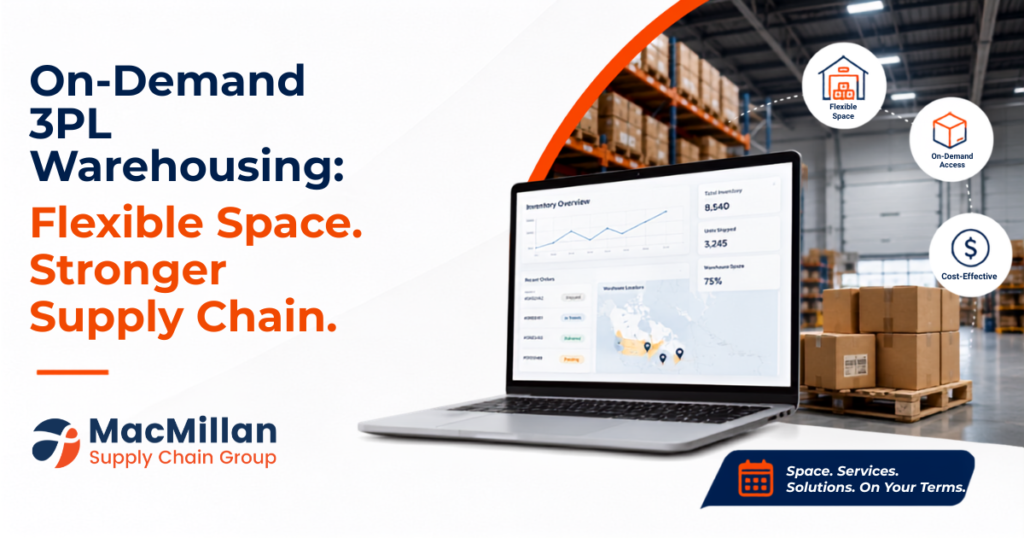
As logistics evolves, brands require flexible and scalable solutions to effectively manage their inventory and fulfillment needs. On-demand 3pl warehousing provides an innovative approach, enabling businesses to adapt to market changes and customer demands. In this article, we will delve into the concept of on-demand 3pl warehousing, explore its benefits, examine real-world applications, and guide you in determining if it is the right solution for your business. Understanding On-Demand Warehousing On-demand 3pl warehousing represents a flexible, modern approach to storage that allows businesses to rent warehouse space and services on a temporary basis. Unlike traditional warehousing, which typically involves long-term leases, on-demand warehousing enables companies to scale their storage capacity up or down in response to real-time needs. By leveraging a network of warehouses with available space, this model allows businesses to efficiently manage their inventory with greater agility and responsiveness. How Does On-Demand 3PL Warehousing Work? On-demand warehousing platforms function as intermediaries, linking businesses with a network of vetted warehouses, including third-party logistics (3PL) warehouses such as MacMillan or fulfillment centers, that have available space. These platforms typically feature an online marketplace where brands can search for warehouse providers based on specific criteria such as location, needed size, and rental duration. Designed to be user-friendly, these platforms allow businesses to quickly compare different options, view pricing, and read reviews before deciding. The pricing transparency and ease of use enable businesses to secure the right warehouse space without lengthy negotiations or commitments. Once a business identifies a suitable3pl warehouse, they can book the space for the required period, which can range from a few weeks to several months. MacMillan also offers value-added warehousing services beyond basic storage, such as inventory management, order fulfillment, and distribution. These services can be seamlessly integrated into the business’s existing supply chain management, providing a comprehensive solution that goes beyond just storage. By leveraging these additional services, businesses can ensure their inventory is managed efficiently, orders are fulfilled accurately, and products are delivered to customers on time. The flexibility of on-demand 3pl warehousing is further enhanced by advanced technological features. Real-time tracking and reporting tools always provide businesses with visibility into their inventory levels and warehouse operations. Additionally, many on-demand 3pl warehousing platforms offer integration capabilities with other systems, WMS integrations and shipping carriers. This ensures a seamless flow of information across the entire supply chain, reducing the risk of errors and improving overall efficiency. What are the examples of On-Demand 3pl Warehousing? On-demand warehousing can significantly benefit various businesses. Here are five examples of how brands have leveraged this model: Seasonal Inventory Management: A retail brand facing fluctuating demand during the holiday season (Learn more about demand fluctuations) can use on-demand warehouses to handle the surge in inventory without committing to a long-term lease. This allows the brand to scale up storage space during peak seasons and reduce it during off-peak times, optimizing costs and efficiency. Geographic Expansion: An e-commerce company expanding to new markets can use on-demand 3pl warehousing to establish a local presence quickly, reducing shipping times and costs. MacMillan allows space in strategic locations; GTA and 80% of the western regions. Short-Term Projects: Companies undertaking special short-term projects, such as limited-term or new product launches, promotional campaigns, can benefit from on-demand warehousing. This allows them to manage initial inventory spikes and timely fulfillment of orders for the duration of the project without the burden of long-term storage commitments. Overflow Management: During periods of unexpected inventory overflow, such as supply chain disruptions or sudden demand spikes, businesses can use on-demand 3pl warehousing to store excess products temporarily. Reverse Logistics: A company handling a large volume of returns, such as an online retailer during the post-holiday season, can use on-demand warehousing to manage and process returns efficiently. Temporary warehousing space can be rented to handle the influx of returned items and streamline the reverse logistics process. What are the benefits of On-Demand 3PL Warehousing? On-demand warehousing offers several key advantages for brands seeking to optimize their supply chain: Scalability: One of the primary benefits of on-demand warehousing is its scalability. Businesses can adjust their 3pl warehousing needs in response to demand fluctuations, seasonal peaks, or sudden market changes. This flexibility ensures that brands are not tied down by long-term contracts and can quickly scale operations up or down as needed. This adaptability allows companies to achieve better cash flow optimization and operational efficiency. Additionally, on-demand warehousing can support rapid business growth and geographic expansion by extending your fulfillment network to new markets. Cost-Effectiveness: By only paying for the space and services they use; businesses can significantly reduce warehousing costs. There are no long-term leases, maintenance fees, or expenses for unused space, making this model highly cost-effective. The ability to avoid large upfront investments in infrastructure, including both physical assets as well as digital assets like specialized warehouse technology- reduces financial risk, particularly for startups and small businesses. This model also minimizes the cost of carrying excess inventory by providing just-in-time storage solutions. Flexibility: On-demand warehousing provides the flexibility to utilize specialized warehouse types for specific fulfillment solutions, test new markets, launch promotional campaigns, and manage unexpected inventory surges without the burden of long-term commitments. Additionally, in situations where there is a sudden spike in orders, such as during a successful marketing campaign, on-demand warehousing ensures that the business can meet customer expectations without delay. How to Know if On-Demand Warehousing Is the Right fit? While on-demand warehousing offers numerous benefits, it may not be the best fit for all businesses. Here are some scenarios where alternative solutions might be more appropriate: High Volume Consistency: If your business consistently maintains a high volume of inventory, a long-term warehousing solution may be more cost-effective. Long-term leases can offer better rates and more stability for businesses that require constant, large-scale storage. This approach also allows for greater customization of the warehouse to meet specific operational needs. Complex Logistics: Businesses with complex logistics requirements might benefit more from a dedicated, long-term warehouse such as MacMillan that can be tailored to their specific needs. Custom warehouse solutions can address unique storage, handling, and distribution requirements that on-demand