Women Leading the Charge in Canada’s Supply Chain Revolution
As International Women’s Day approaches, the logistics and supply chain sector stands at a pivotal moment. Women now constitute 41% of the global supply chain workforce and hold 26% of C-suite roles a historic high that reflects their growing influence in reshaping how goods move, businesses operate, and communities thrive.In Canada, where effective supply chains account for more than 60% of trade, female executives are spearheading advancements in cross-border logistics, sustainable last-mile delivery, and warehouse automation. This blog highlights their accomplishments, looks at persistent challenges, and investigates how the industry could speed up the transition to gender parity.
The New Faces of Supply Chain Leadership
From Trailblazers to Transformational Executives
The once male-dominated logistics landscape is being redefined by women who combine technical expertise with collaborative leadership. Take Carol Tomé, CEO of UPS, who revolutionized the company’s 115-year-old operations by prioritizing customer-centric strategies and diversifying leadership teams (now 57% female at senior levels). Under her guidance, UPS achieved a 15% reduction in carbon intensity while expanding same-day delivery networks a testament to how inclusive leadership drives both profitability and sustainability.
Using AI-driven demand forecasting, Kathryn Wengel (EVP at Johnson & Johnson) revolutionized global supply chains in healthcare logistics during the pandemic, guaranteeing the continuous delivery of vital drugs while slashing operational costs by 22%. These stories reflect larger trends:
- 52% of women in supply chain roles now hold advanced degrees in STEM fields
- Teams led by women report 21% higher profitability than industry averages
- Female-led sustainability initiatives reduce waste by 18% more than male-led projects
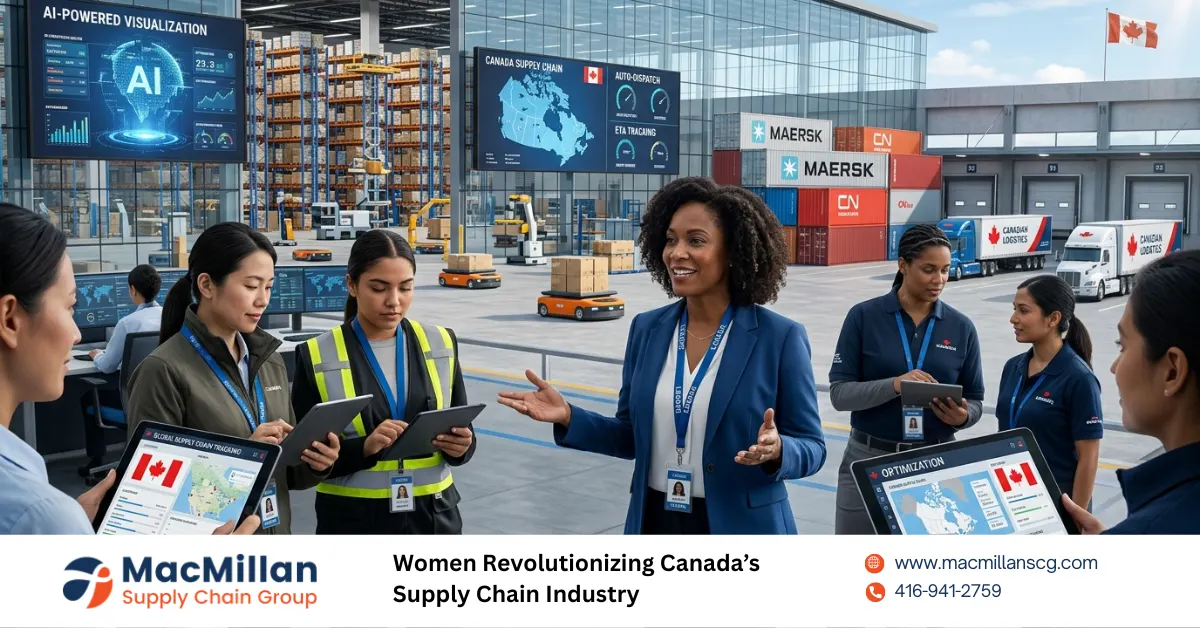
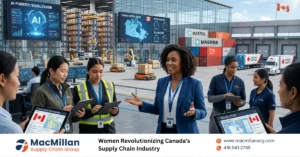
Meet the incredible women of Macmillan, who are leaders, innovators, and change-makers, shaping the future and transforming the supply chain industry.
Led transportation and logistics strategies to optimize supply chain efficiency, ensuring cost-effective operations, on-time deliveries, and seamless coordination.
The Business Imperative for Gender Diversity
Why Inclusive Teams Outperform
Diversity isn’t just ethical it’s economical. Research reveals three key advantages of gender-balanced supply chains:
1. Innovation Through Cognitive Diversity
Mixed teams solve complex problems 30% faster by combining analytical rigor (often stronger in women engineers) with systems thinking. Ivanka Janssen (CSCO at Philips), for instance, credits advancements in AI-driven warehouse robotics that reduced processing times by 40% to her female-dominated R&D team.
2. Resilience in Crisis Management
During the 2024 port strikes, companies with gender diverse leadership recovered 50% quicker by leveraging women’s strengths in stakeholder collaboration. Sheri Hinish, IBM’s Supply Chain Futurist, notes: “Women excel at building cross-functional coalitions a survival skill in today’s volatile trade environment”.
3. Customer-Centric Supply Chains
Given that 85% of consumer purchases are made by women, female supply chain executives are better able to predict changes in the market. Jennifer Han increased on-time deliveries to 98.7% at Unilever by redesigning North American distribution networks using sentiment analysis from focus groups aimed at women.
Persistent Barriers and How to Break Them
The Glass Warehouse Ceiling
Despite progress, systemic hurdles remain:
- Mid-Career Attrition: 57% of women leave logistics roles between ages 30-45 due to inflexible schedules
- Pay Gaps: Female supply chain managers earn $0.87 for every male dollar
- Representation Gaps: Only 21% of VP-level roles are held by women
Solutions Gaining Momentum
Forward-thinking companies are deploying four strategies:
A. Hybrid Work Models
Flexible scheduling (e.g., remote inventory analytics, job-sharing for dispatchers) reduced attrition by 33% at Fortune 500 retailers.
B. Mentorship Ecosystems
Programs like MIT’s Women in Supply Chain Initiative pair emerging talent with executives like Sarah Bonnaud (Estée Lauder), whose mentees achieve promotions 2.5x faster than industry norms.
C. Skills-Based Advancement
Tools like Gartner’s Career Pathfinder help women visualize growth from warehouse roles to leadership a tactic that boosted female promotions by 41% at pharmaceutical giants.
D. Parental Support Systems
Progressive policies like phased parental returns and on-site childcare at distribution hubs increased retention of working mothers by 28%.
Voices Shaping Canada’s Logistics Future
Leaders to Watch
Tiffany Soots, Principal Business Architect at First Call Logistics, reflects: “A decade ago, women were siloed in customer service roles. Today, we’re redefining freight management through data science—I’ve seen female-led teams reduce carrier costs by 19% using predictive algorithms”.
Meanwhile, Lauren Lepley (Group Supply Chain Director at Morrisons) slashed food waste by 15% using AI-powered demand planning proving that female leaders drive both efficiency and sustainability.
Building an Equitable Future
Action Steps for Companies
- Audit Promotion Practices: Adopt blind resume screenings to counteract unconscious bias.
- Invest in STEM Partnerships: Sponsor scholarships for women pursuing logistics analytics degrees.
- Amplify Role Models: Highlight leaders like Carol Tomé in recruitment campaigns to attract diverse talent.
- Reward Inclusive Leadership: Tie 20% of executive bonuses to gender parity metrics.
This International Women’s Day, Let’s Deliver Equality
The future of the supply chain industry depends on maximizing the potential of women. From sustainability directors creating carbon-neutral warehouses to AI engineers streamlining delivery routes, female talent is not only contributing but taking the lead. According to Katie Date, the founder of the MIT Initiative, “When women thrive, supply chains survive”.
To every woman in logistics: Your vision is transforming this industry. Let’s keep breaking barriers = one shipment, one innovation, and one leadership role at a time.