



Mastering Inventory Management: Strategies for Efficiency and Growth
A quick summary and overview Effective inventory management is crucial…
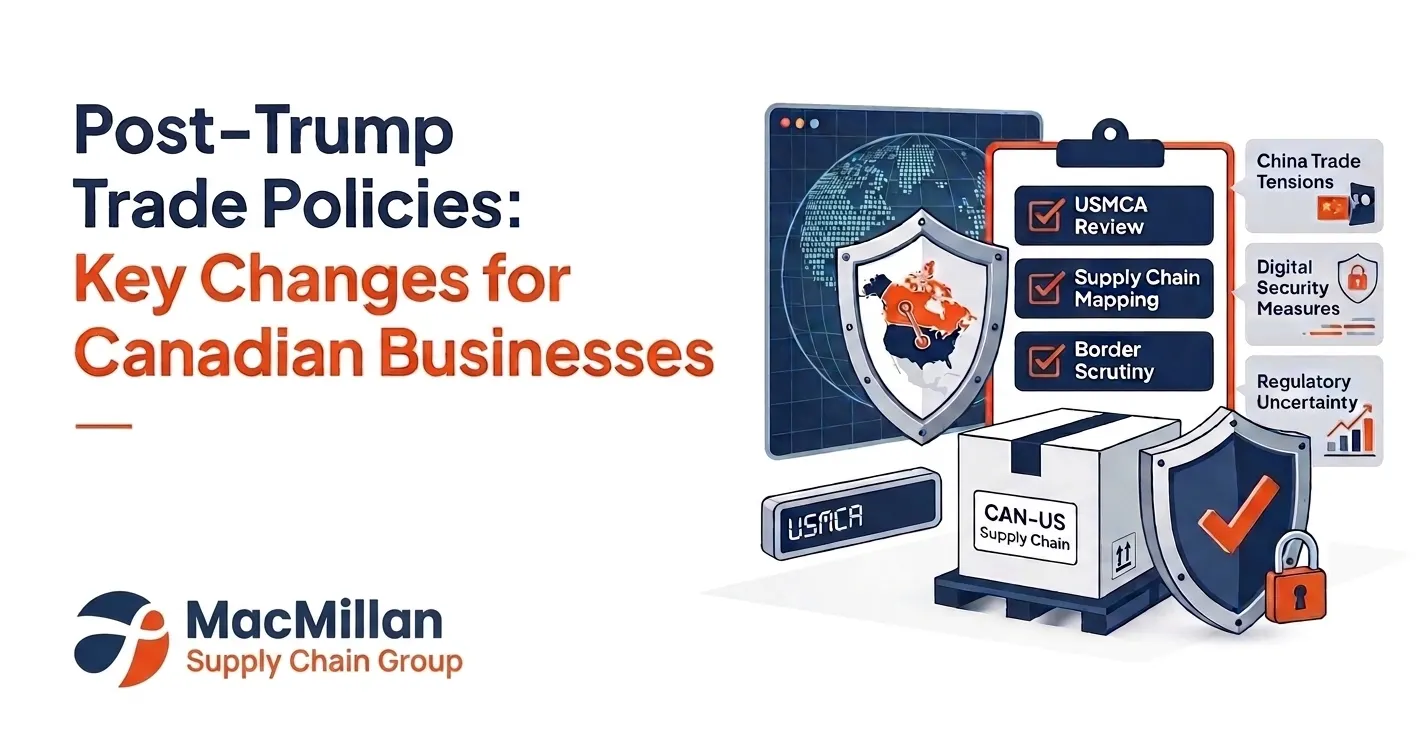

A quick summary and overview Effective inventory management is crucial…

A quick summary and overview Batch Picking is a game-changing…

A Quick Summary and Overview Black Friday presents significant challenges…
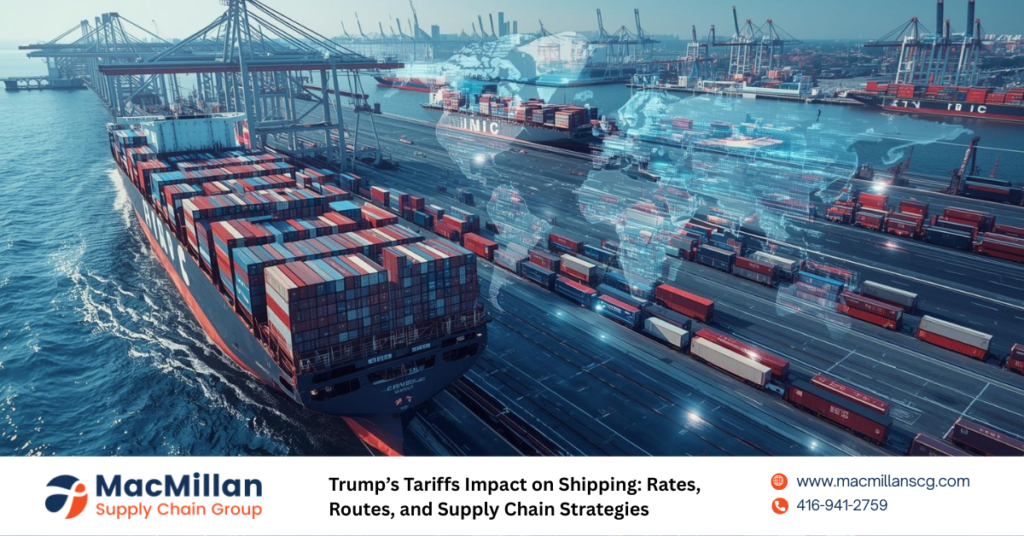
A Quick Summary and Overview The worldwide shipping industry is…
The trade policies of the post-Trump era have instigated profound shifts in the relationship between Canada and the United States. There is now a much sharper focus on domestic manufacturing and national security. All of this raises serious questions about the future of cross-border supply chains and eventually even the very concept of free trade.
The next major test for all of this is the USMCA (United States-Mexico-Canada Agreement) review in 2026. Even without any potential confounding issues that could arise between now and then, that review is already shaping up in my mind as a major possible inflection point in this relationship.
Every day, nearly $2 billion in goods and services flow between the United States and Canada, making this one of the largest bilateral economic relationships in the world. But in recent years, trade policies have changed—varying by the week or by the day—creating uncertainty for companies on both sides of the border. For Canadian businesses, the switch in trade rules presents opportunities even as it poses challenges.
What precisely has transformed in the trade environment, and what should your company be poised for? The evolution from a production-based economy to today’s—well, what exactly is today? And what will tomorrow be? Between heightened national security concerns, the forthcoming review of the new NAFTA (the USMCA), and our ongoing trade dispute with China, the trade landscape is shifting beneath our feet. For companies managing cross-border supply chains, these tectonic changes require not just attention but strategic adaptation.
In this article, we’ll break down the key policy changes, explore their real world impact on Canadian businesses, and share practical strategies to navigate this new trade environment successfully.
The current U.S. administration has maintained and expanded many trade approaches from the previous administration while adding new dimensions. At the core of post Trump trade policies is an emphasis on creating a production based economy that prioritizes North American manufacturing over imports from overseas markets.
This shift manifests in several key ways that directly affect Canadian businesses:
First, there’s a strong focus on reviewing and potentially renegotiating existing trade agreements. The USMCA (which replaced NAFTA) faces a mandated review in 2026, creating uncertainty about future trade terms. U.S. trade officials are already preparing for this review, examining how the agreement impacts American workers and industries.
Second, trade decisions are now closely linked to national security considerations. This is especially noticeable in the technology sector, where cybersecurity and data privacy concerns have an impact on legislation. The impacts of the ongoing TikTok ban show how security issues can upend established supply chains and business models.
Third, there’s increased enforcement of trade rules, with stricter monitoring of compliance across borders. Canadian exporters face more scrutiny regarding rules of origin, labor standards, and environmental practices.
For businesses operating cross border supply chains, these policy shifts require careful monitoring and strategic planning. Companies that previously relied on predictable trade flows must now prepare for potential disruptions and compliance challenges. Working with experienced logistics partners like MacMillan Supply Chain Group can help businesses stay ahead of these changes and adapt their supply chain strategies accordingly.
The relationship between Canada and the U.S. has always been complex, balancing economic interdependence with national interests. Recent post-Trump trade policies have added new dimensions to this dynamic, requiring a fresh Canadian trade strategy.
Historically, Canada has been America’s largest trading partner, with deeply integrated supply chains across numerous industries. However, this relationship has faced significant tests in recent years:
Despite these challenges, opportunities exist. The shared focus on reducing dependence on Chinese manufacturing has created openings for Canadian suppliers. Additionally, collaborative approaches to clean energy and critical minerals development present growth potential for Canadian exporters.
For businesses navigating these changes, understanding the nuances of Canada-US trade relations is essential. MacMillan Supply Chain Group helps clients leverage these evolving dynamics by optimizing cross-border logistics and ensuring compliance with changing regulations.
The USMCA review scheduled for 2026 represents a pivotal moment for businesses operating across North American borders. This mandatory assessment could maintain the status quo or trigger significant changes to the agreement that governs nearly $1.5 trillion in annual trade.
Key aspects of the USMCA review that businesses should monitor include:
For Canadian businesses, preparing for the USMCA review means conducting a thorough assessment of supply chains, identifying vulnerabilities, and developing contingency plans. This might include diversifying supplier networks, investing in compliance documentation systems, or adjusting inventory strategies to buffer against potential disruptions.
MacMillan Supply Chain Group helps clients prepare for these changes by providing visibility into complex supply chains, identifying compliance gaps, and implementing solutions that maintain business continuity regardless of how the USMCA review unfolds.
The ongoing TikTok controversy highlights how national security concerns increasingly influence trade policies. This case study offers valuable insights for Canadian businesses navigating the new security focused trade landscape.
The TikTok ban implications extend far beyond a single app. They signal a fundamental shift in how governments approach technology companies with foreign connections, particularly those with ties to China. Project Texas TikTok’s attempt to isolate U.S. operations and data demonstrates the lengths companies must go to address security concerns.
Several things can be learned by Canadian companies:
MacMillan Supply Chain Group helps clients address these challenges through secure logistics solutions that meet evolving compliance requirements. Our technology platforms provide the visibility and documentation needed to demonstrate supply chain security to partners and regulators alike.
There are a number of serious problems Canadian businesses have to deal with in trying to adapt to the trade policies of the Trump administration: Canadians are generally more friendly to global trade than Americans. We believe freer trade means more jobs and better living standards. By contrast, almost half of all Americans think trade is a bad thing. Even if you leave aside the more general anti-trump factor, the main policies that are coming out of the Trump administration are pretty much all policies that the Canadians are against.
When policy changes, it is often with very little notice, and this makes long-range planning accordingly difficult. We find that companies invest in us with far greater levels of commitment when they are certain that the rules of the economic engagement will not change unexpectedly.
Meeting multiple jurisdictional requirements has become very difficult. Varying documentation standards, differing verification processes, and diverse enforcement styles make the administrative burden nearly unbearable.
Established sourcing patterns have been disrupted by the trade tensions with China. Companies must now find alternative suppliers or relocate production. These transitions don’t come easy. They’re often fraught with cost and quality control challenges.
Tighter data security restrictions make it harder—both technically and legally—for firms to function across frontiers. They also muddy the water around some fundamental questions that arise in any discussion of digital commerce: Where can you store data? Where can you process it? Where can you access it?
Nonetheless, some industries must still grapple with the occasional threat of tariffs or even the imposition of actual duties, despite the protections offered under USMCA. This unpredictability complicates pricing strategies and profit margins. It’s a little funny, in a painful way, that the very sectors that are most productive at creating new jobs are the ones sowing new seeds of uncertainty.
Improving labor rights under the USMCA mandates better and more comprehensive documentation of workplace practices along the entire supply chain.
Ensuring compliance with rules of origin for duty-free treatment has become more difficult, especially in areas such as automotive and textiles where the thresholds for regional content have gone up.
More critical examination of shipments at the border frequently results in delays in inspection. This affects the just-in-time delivery schedule and increases logistics costs.
Limitations on new technologies restrict some partnerships and funding—especially in the rapidly growing advanced manufacturing, AI, and quantum technology sectors. Why? Because the highly selective nature of the partnerships and investments raises the possibility that the U.S. government might be enabling the export of these sensitive technologies.
Several businesses find it difficult to make clear, strategic decisions regarding their markets, suppliers, and investment priorities because there are so many parts moving in the trade environment.
At MacMillan Supply Chain Group, we’ve developed comprehensive solutions to help Canadian businesses navigate the complexities of post Trump trade policies:
By combining these solutions with our extensive logistics infrastructure and decades of experience in Canada-US trade, MacMillan Supply Chain Group helps clients not just survive but thrive in the complex post Trump trade environment.
Navigating the complexities of post-Trump trade policies doesn’t have to be overwhelming. Here’s how your business can proactively adapt with MacMillan Supply Chain Group as your partner:
Ready to transform trade policy challenges into competitive advantages? Contact MacMillan Supply Chain Group today to schedule a consultation with our trade specialists. Our team will assess your current operations and develop a customized strategy that ensures your supply chain remains resilient regardless of policy changes.
Don’t let trade uncertainty limit your business potential. Partner with MacMillan Supply Chain Group and gain the expertise, infrastructure, and technology you need to thrive in today’s complex trade environment.
Call us at: 416-941-2759 or Email: info@macmillansc.com to get started.
Canadian exporters face both challenges and opportunities under these policies. While there's increased pressure to comply with stricter rules of origin and security requirements, companies that adapt can benefit from more integrated North American supply chains. The emphasis on reducing dependency on overseas suppliers may create new opportunities for Canadian manufacturers, especially those offering products that complement rather than compete with U.S. production.
The 2026 CUSMA review may bring stricter rules around labor standards, regional manufacturing requirements, digital trade regulations, and environmental compliance. Businesses should prepare for possible updates to rules of origin, increased enforcement measures, and additional reporting requirements for cross-border trade.
Companies can reduce risk by diversifying suppliers, maintaining strategic inventory levels, improving supply chain visibility, and working with experienced logistics partners. Creating contingency plans and regularly reviewing sourcing strategies can also help businesses respond quickly to unexpected trade or border disruptions.
Businesses should maintain accurate records related to product origin, customs declarations, supplier certifications, labor compliance, environmental standards, and shipping documentation. Proper documentation helps avoid delays, penalties, and compliance issues during border inspections.
National security concerns have increased scrutiny around data privacy, cybersecurity, foreign technology partnerships, and cross-border data transfers. Canadian tech companies may need stronger security protocols, stricter vendor verification processes, and enhanced compliance measures to meet evolving regulatory expectations.
Industries most affected include automotive, steel, aluminum, technology, manufacturing, and cross-border logistics. These sectors face increased compliance requirements, tariff uncertainty, stricter sourcing rules, and growing pressure to strengthen North American supply chains.