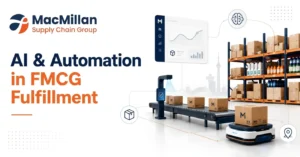
How AI and Automation Are Changing FMCG Fulfillment in Canada
A Quick Summary and Overview AI and automation are changing…
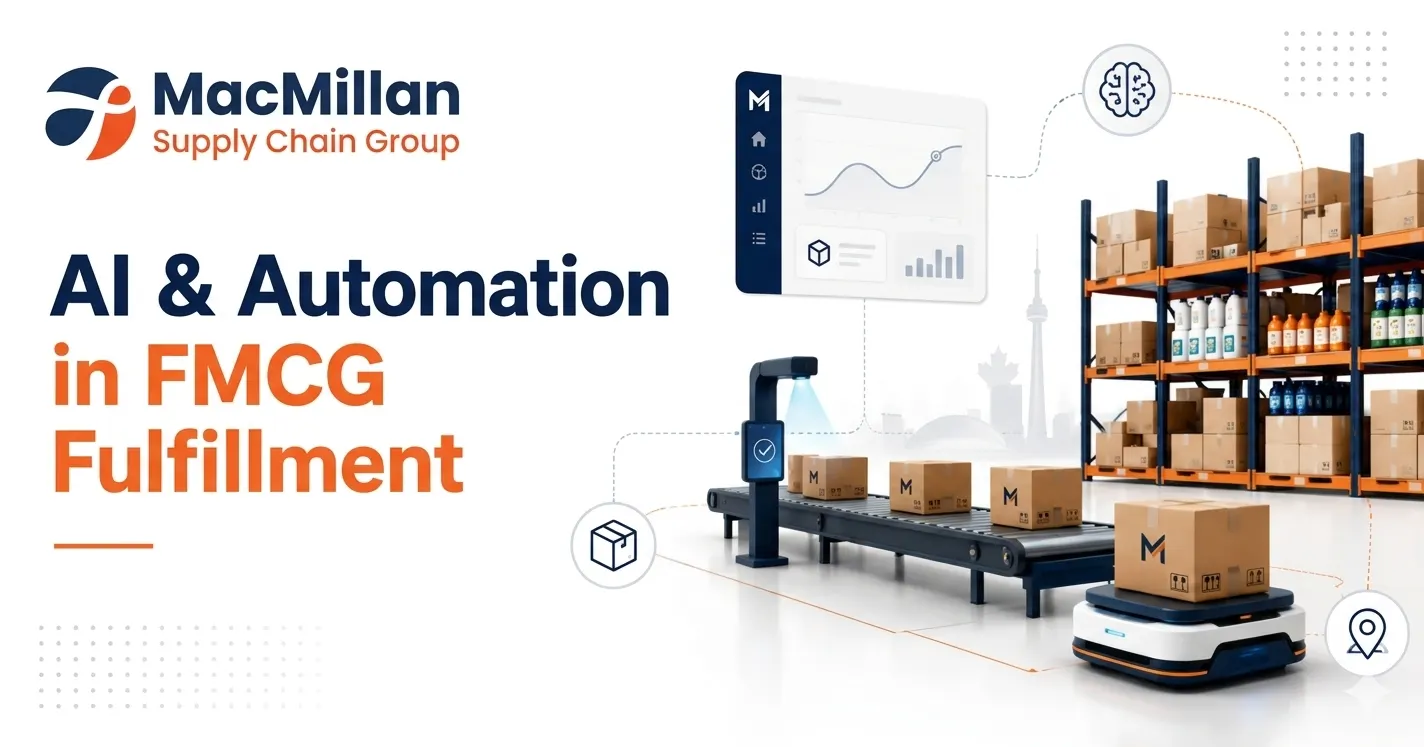
A Quick Summary and Overview AI and automation are changing…
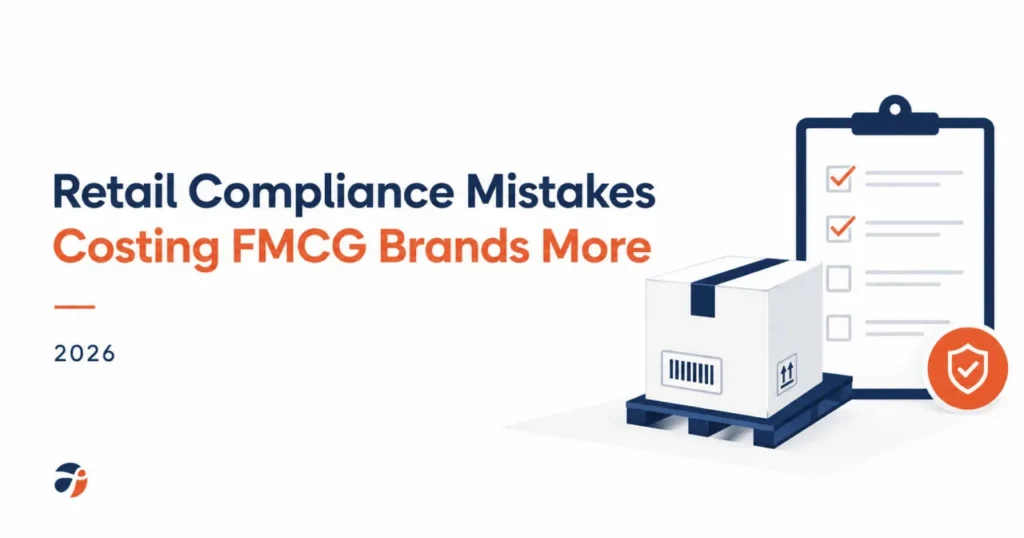
A Quick Summary and Overview Retail compliance is no longer…
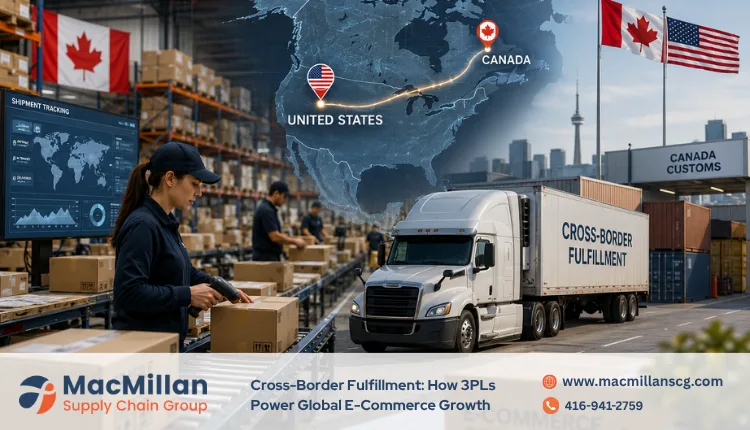
A Quick Summary and overview The e-commerce warehousing landscape is…
A Quick Summary and Overview PM Mark Carney’s administration has…
AI and automation are changing FMCG fulfillment in Canada by helping brands improve inventory accuracy, forecast demand more effectively, reduce manual errors, speed up warehouse workflows, and respond faster to changing retail and consumer demand. Current industry coverage consistently highlights robotics, predictive analytics, dynamic routing, and smarter warehouse software as major fulfillment trends shaping 2025 and beyond.
For MacMillan, this topic fits naturally. MacMillan already positions itself around data-driven visibility, WMS-powered control, AI-powered route optimization, real-time tracking, retailer-ready warehousing, and KPI-led fulfillment performance across Canada.
FMCG fulfillment has always been a speed game, but now it is also a data game.
Brands are expected to keep shelves full, support promotions, avoid stockouts, reduce waste, and deliver accurately across retail, ecommerce, and marketplace channels at the same time. That is exactly why AI and automation are becoming more important in Canadian fulfillment. They help operations move from reactive decisions to faster, more informed, more scalable execution. Current warehouse trend coverage points to AI-driven analytics, robotics, predictive maintenance, and workflow optimization as key shifts in modern fulfillment operations.
For FMCG brands, this matters because even small delays or inaccuracies can quickly affect service levels, margins, and retailer relationships. MacMillan’s own positioning reflects this reality through its focus on inventory visibility, scan-verified fulfillment, real-time tracking, and retail-ready execution.
AI and automation are not just future-facing topics anymore. They are becoming practical tools for brands trying to manage volatility, labor pressure, fulfillment speed, and inventory complexity. Recent reporting shows retailers and supply chain teams using AI to predict stockouts, improve inventory availability, and make faster replenishment decisions based on real-time demand signals.
At the warehouse level, 2026 trend coverage points to several major shifts:
That combination is especially relevant in FMCG, where product velocity is high and the cost of delay is immediate.
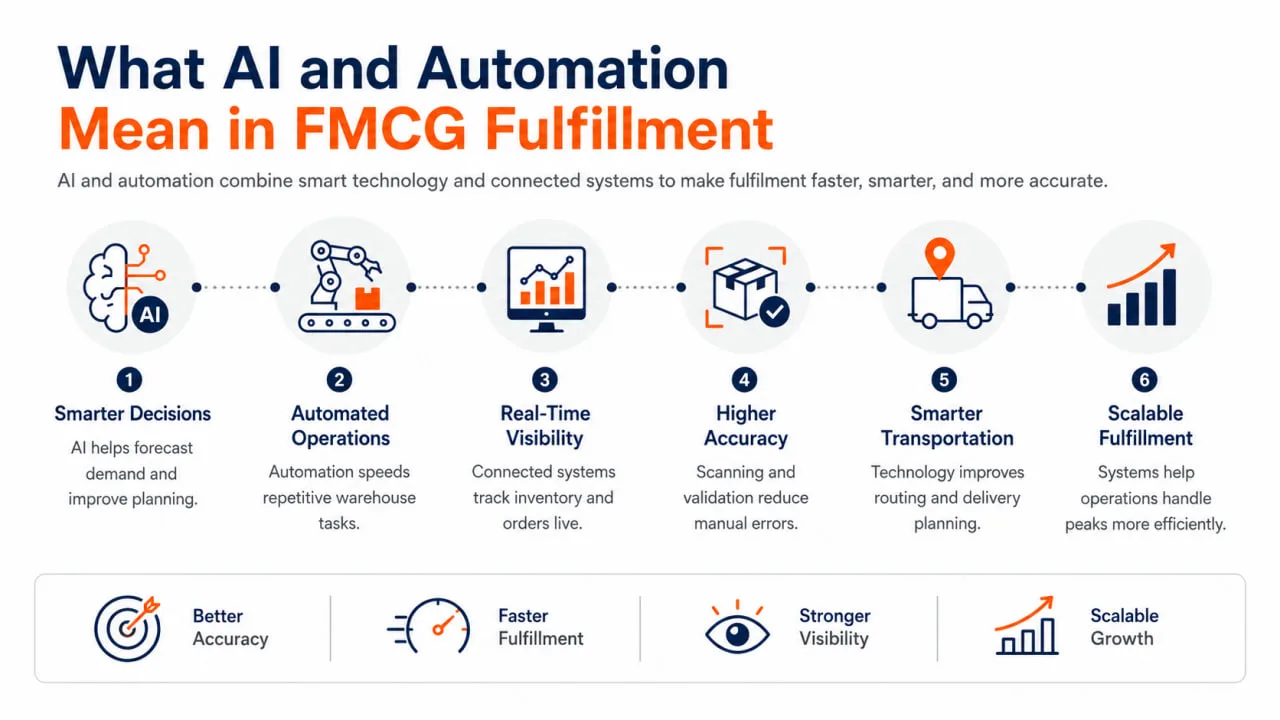
In practical terms, AI and automation in fulfillment usually refer to systems that help operations make better decisions and complete repetitive tasks faster.
That can include:
The point is not to remove people from the operation. The real value is usually in helping teams work with more accuracy, more visibility, and less wasted motion.
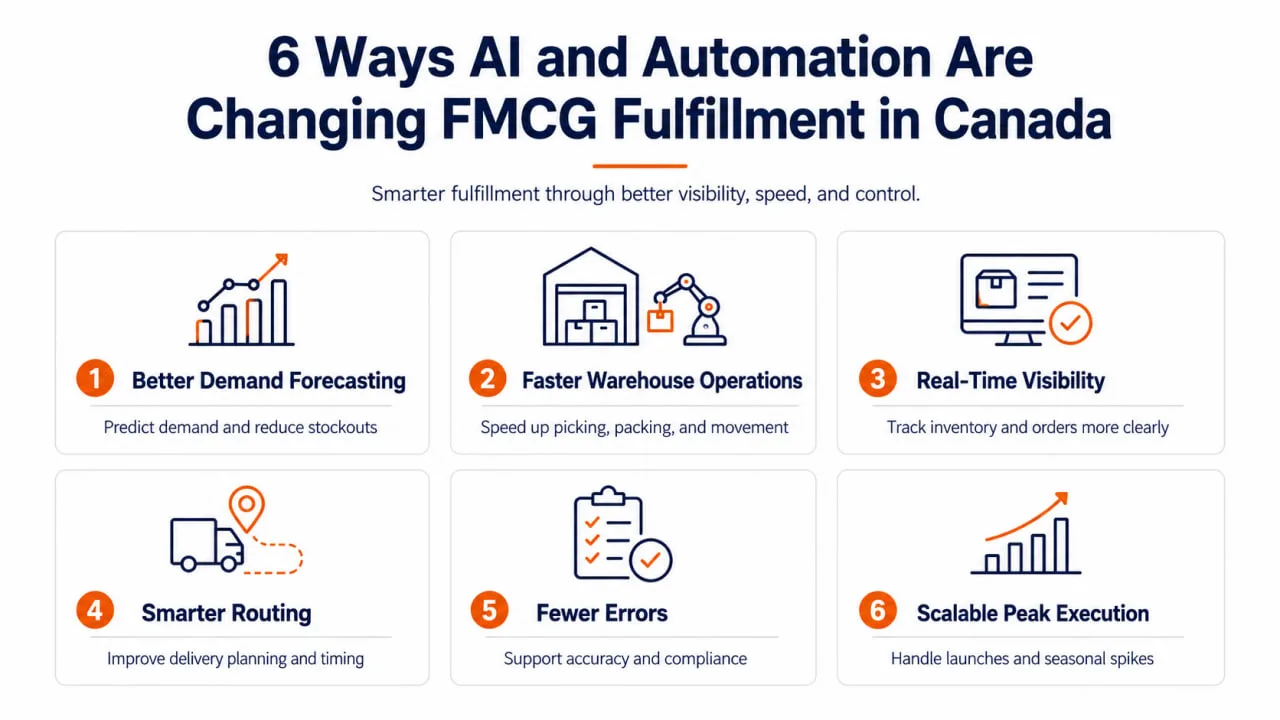
AI helps fulfillment operations move beyond static planning. Recent reporting shows AI being used to analyze lead times, current inventory, and consumer demand so teams can identify likely shortages earlier and make faster replenishment decisions.
For FMCG brands, that can mean:
MacMillan’s broader service positioning supports this approach through WMS-backed visibility, data-driven insights, and fulfillment systems designed to help brands reduce errors and improve inventory control.
Warehouse automation is becoming more common because it helps increase throughput while reducing manual handling errors. Current warehouse trend coverage highlights AS/RS systems, AGVs, and robotics as important tools for improving storage, retrieval, and order processing efficiency.
For FMCG, that matters because fast-moving products need:
MacMillan already emphasizes scan-verified fulfillment, high inventory accuracy, rapid dock-to-stock execution, and operational precision in its service messaging.
AI is only as useful as the visibility around it. Modern fulfillment systems increasingly use real-time data to help teams understand what is in stock, what is moving, what is delayed, and where intervention is needed. Exotec’s 2025 trend coverage specifically points to AI systems that track SKU behavior, reassign product locations, and optimize workflows in real time.
MacMillan’s site aligns strongly with this value proposition. It highlights real-time order status, live tracking, milestone updates, digital PODs, KPI reporting, and inventory visibility through its WMS-backed platform.
AI is not limited to the warehouse. It also improves transportation by optimizing routes, reducing delays, and increasing delivery predictability. MacMillan’s food and beverage page specifically highlights AI-powered route optimization and real-time delivery tracking, while its transportation services emphasize milestone visibility and retailer-precision execution.
For FMCG brands, smarter transportation matters because:
Automation often improves performance by reducing repetitive manual steps that create fulfillment mistakes. Scan-based workflows, automated reconciliation, barcode support, and system-driven validation all help improve order accuracy and inventory reliability. MacMillan’s promises and service pages directly reference barcode and RFID support, real-time APIs, EDI and ASN support, and automated QC workflows.
That is especially important in FMCG, where errors can lead to:
Automation helps operations scale without relying only on manual expansion. Current warehouse trend coverage notes that robotics and workflow automation are increasingly valued because they support flexibility, speed, and operational resilience as demand changes.
MacMillan’s own positioning mirrors this need. The company states that it tech-scales for promotions, seasonal spikes, and new product launches, and that its facilities support rapid pick-pack, labeling, shipping, and retail-ready prep for high-volume periods.
Even with more automation, strong fulfillment still depends on execution, oversight, and responsiveness.
AI can improve forecasting, routing, and workflow decisions, but FMCG brands still need:
That is why the strongest fulfillment models are usually not “AI only.” They combine technology with process control and experienced operations teams.
MacMillan’s brand messaging supports exactly that mix: advanced systems, transparent reporting, real-time data, and a service model built around partnership, reliability, and operational excellence.
Many brands misunderstand what good automation looks like. The most common mistakes are:
The real opportunity is not adding more tech for its own sake. It is using the right systems to improve decision-making, execution speed, and accuracy where they matter most.
A strong AI- and automation-ready fulfillment partner should offer:
MacMillan’s service stack maps well to that checklist through warehousing, transportation, ecommerce fulfillment, integrations, and value-added services.
MacMillan is well positioned for this topic because the company already emphasizes many of the capabilities brands associate with smarter fulfillment:
That makes this blog commercially relevant without forcing the angle. It reflects how modern FMCG fulfillment is actually evolving.
AI and automation are changing FMCG fulfillment in Canada by making operations more visible, more accurate, and more responsive. The biggest gains are happening in forecasting, warehouse efficiency, inventory control, routing, and peak-season scalability. Industry coverage shows that predictive analytics, robotic movement, smarter workflows, and real-time inventory decisions are now central to modern fulfillment strategy.
For FMCG brands, the question is no longer whether technology matters. It is whether your fulfillment operation is using it well enough to protect service levels, reduce errors, and scale with confidence. MacMillan SCG already positions itself around the systems, visibility, and operational execution needed to support that shift.
Talk to MacMillan SCG about building a smarter FMCG fulfillment model with better visibility, stronger accuracy, and scalable warehouse and transportation execution.