

9 E-commerce Holiday Planning Tips for 2026
The holiday season is a period brimming with opportunities for…

The holiday season is a period brimming with opportunities for…
If you’ve ever wondered why some online stores thrive while…
If you’ve ever wondered why some online stores thrive while…

Black Friday Fulfillment Canada: How E-commerce Brands Can Prepare for…
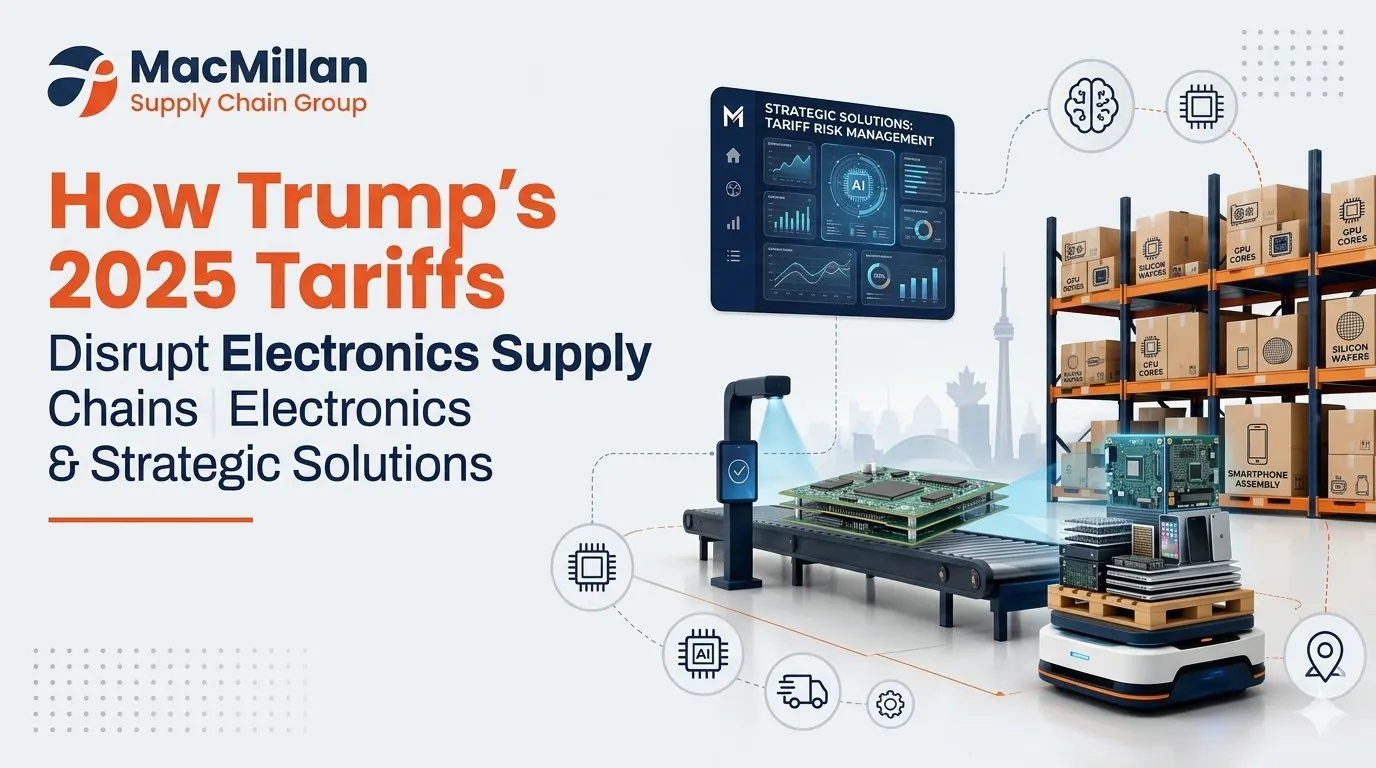
The global supply chain has always been a delicate dance of logistics, trade agreements, and geopolitical strategy.But when the U.S. government announced a 25% tariff on semiconductor imports in February 2025 a move that directly impacts electronics manufacturers, distributors, and end consumers the entire industry held its breath. For businesses relying on electronic components, from circuit boards to advanced AI chips, this decision isn’t just a headline it’s a seismic shift in how they’ll source materials, manage costs, and deliver products. Let’s break down what these tariffs mean for the supply chain and how companies can adapt without sacrificing efficiency or customer satisfaction.
The Trump administration’s latest tariffs target semiconductors, automobiles, and pharmaceuticals, with semiconductor imports facing a 25% duty. While framed as a push for domestic manufacturing and national security, the policy has sparked concerns about rising consumer prices, strained international trade relationships, and potential violations of the Information Technology Agreement (ITA-1), which mandates zero tariffs on semiconductors among participating nations.
The immediate effect? Companies like Apple, NVIDIA, and Tesla which depend heavily on Asian-made chips are grappling with higher production costs. Analysts predict these expenses will trickle down to consumers, inflating prices for everything from smartphones to electric vehicles. But the ripple effects go far beyond individual products.
Semiconductors are the lifeblood of modern electronics, and over 60% of advanced chips are manufactured in Taiwan, South Korea, and China. With tariffs adding a 25% premium to these imports, U.S. tech giants face a tough choice: absorb the costs (and shrink profits) or pass them on to consumers. Either way, the strain is palpable.
For example, TSMC the world’s largest semiconductor foundry plans to raise prices for its cutting-edge sub-7nm chips by 15% to offset tariff related expenses. This hike will cascade through the supply chain, affecting PCB manufacturers, data center operators, and even automotive companies that rely on these components for AI-driven systems.
To mitigate risks, businesses are reevaluating their sourcing strategies. Some are exploring suppliers in tariff-free regions like India, while others are investing in domestic production. However, reshoring manufacturing isn’t a quick fix. As Ashok Chandak of the Indian Electronics and Semiconductor Association (IESA) notes, “Shifting supply chains is a complex, years long process”.
Mid-sized businesses that lack the means to quickly pivot find this uncertainty especially difficult. Production schedules may be disrupted by component shipment delays or abrupt price changes, which could result in inventory shortages or unmet sales goals.
The tariffs risk violating the ITA-1, a treaty signed by the U.S. and 82 other nations to eliminate duties on IT products. If challenged, the policy could ignite legal battles or retaliatory tariffs, further destabilizing global trade. For companies operating across borders, this adds another layer of complexity to compliance and logistics planning.
Relying on a single region for components is riskier than ever. Consider partnering with suppliers in multiple countries, including those with free-trade agreements with the U.S., such as Mexico or Canada. Macmillan SCG’s cross-border logistics expertise, including 45 strategically located cross-dock facilities and a dedicated fleet of 3,000 drivers, can help streamline this transition by ensuring seamless customs clearance and reduced transit times.
Advanced analytics and machine learning are no longer optional tools they’re critical for navigating tariff-induced disruptions. Macmillan SCG’s AI-powered platform predicts delays, optimizes delivery routes, and provides real-time inventory visibility, enabling businesses to adjust procurement strategies proactively. For instance, if tariffs delay shipments from Taiwan, the system can automatically reroute orders through alternative suppliers while maintaining cost efficiency.
Just-in-time (JIT) inventory models save costs but leave little room for error. With tariffs causing unpredictability, companies are adopting “just-in-case” strategies, stockpiling critical components to buffer against shortages. Macmillan’s scalable warehousing solutions including 250,000 square feet of GMP-certified space allow businesses to store excess inventory securely while maintaining 99.4% pick accuracy for fast fulfillment.
Third-party logistics providers (3PLs) like Macmillan SCG offer more than storage and shipping they act as strategic allies in risk mitigation. From tariff classification assistance to duty drawback programs, a skilled 3PL can identify cost-saving opportunities within the new trade landscape. For example, by consolidating shipments or utilizing bonded warehouses, businesses can defer duty payments until goods are ready for market, improving cash flow.
At Macmillan SCG, we understand that tariffs aren’t just a policy issue they’re a daily operational hurdle. Here’s how we’re helping clients stay agile:
Same-Day Fulfillment: Our AI integrated WMS ensures orders ship within hours, minimizing the impact of delayed component arrivals on your delivery promises.
Customized Solutions: We customize our services to meet your risk tolerance and future objectives, whether you require shared space to cut expenses or dedicated warehousing for goods that may be sensitive to tariffs.
End To End Visibility: Monitor shipments in real time throughout our nationwide network, and use predictive analytics to identify possible delays before they become serious.
Looking Ahead: Adaptation Is the New Normal
The semiconductor tariffs are a stark reminder that global supply chains are inherently fragile. Yet, with disruption comes opportunity to innovate, collaborate, and build systems that withstand political and economic shocks. By partnering with a logistics provider that combines cutting edge technology with deep industry expertise, businesses can transform this challenge into a competitive edge.
As you navigate the complexities of tariff-driven disruption, remember: resilience isn’t about predicting the future. It’s about creating a supply chain that’s flexible enough to thrive no matter what headlines come next.
Need assistance making your supply chain future-proof? The team of professionals at Macmillan SCG is here to help you with cost minimization, supplier diversification, and tariff compliance. To arrange a consultation, get in touch with us right now.
The 2025 tariffs impose a 25% duty on imported semiconductors, primarily targeting advanced chips (sub-7nm) from Taiwan, South Korea, and China. This policy aims to boost U.S. manufacturing but risks violating international trade agreements like the ITA-1.
These tariffs disrupt electronics supply chains by increasing the cost of imported semiconductor components used in products such as smartphones, vehicles, computers, and industrial equipment. Companies that depend on suppliers from Taiwan, South Korea, and China may face higher production expenses, shipment delays, inventory shortages, and pricing instability. As a result, manufacturers and distributors must adjust sourcing strategies and logistics operations to maintain efficiency and profitability.
Businesses can reduce tariff related risks by diversifying their supplier base across multiple countries, strengthening inventory management, and investing in AI driven logistics technology for better forecasting and route optimization. Many companies are also partnering with third party logistics providers to improve customs compliance, reduce transportation delays, and maintain supply chain flexibility during market disruptions.
Small and medium sized enterprises may face greater challenges because they often have limited financial resources and less flexibility in supplier negotiations. Rising semiconductor costs, sudden shipment delays, and unstable market pricing can reduce profit margins and create production disruptions. SMEs may also struggle to maintain inventory levels or absorb additional operational expenses compared to larger corporations.
There are concerns that these tariffs may conflict with the Information Technology Agreement (ITA-1), which promotes zero tariffs on many technology products among participating nations. If challenged, the policy could trigger legal disputes, retaliatory tariffs, or trade tensions that further disrupt the global electronics and semiconductor industry.
Macmillan SCG helps businesses manage tariff related disruptions through AI powered logistics solutions, nationwide warehousing, and cross border transportation services. The company supports clients with inventory visibility, customs compliance, shipment optimization, and flexible fulfillment strategies that reduce delays and improve supply chain resilience during changing trade conditions.




2 Responses
Great experience using this platform. Everything is simple, fast, and very user-friendly. Highly recommended!”
Thank you so much for your kind words! We’re really happy to hear that you had a great experience using our platform. Your support and recommendation mean a lot to us.