Etsy Order Fulfillment in 2026: How a 3PL Helps Sellers Scale
Running an Etsy shop often starts small. A seller creates a product, receives an order, packs it at home, prints a shipping label, and sends it to the customer. That process can work perfectly well when order volumes are manageable. But as an Etsy business grows, fulfillment can quickly become one of the most time-consuming parts of the operation. More inventory means more storage space. More orders mean more picking, packing, shipping, tracking, and customer questions. Add seasonal demand, returns, multiple sales channels, and expanding product ranges, and fulfillment can begin taking valuable time away from product development and business growth. This is where a
third-party logistics provider, or 3PL, can become useful.
What Is Etsy Order Fulfillment?
Etsy order fulfillment covers everything that happens after a customer places an order until that product reaches their door. The process can include: – Receiving and storing inventory
– Processing customer orders
– Picking the correct products
– Packing and labeling orders
– Coordinating shipping
– Providing tracking information
– Processing returns
– Restocking eligible returned inventory For smaller Etsy sellers, these activities may be managed in-house. As order volume increases, however, maintaining the same level of accuracy and speed can become harder. Etsy itself continues to expand the shipping tools and third-party shipping services available to sellers, particularly for businesses managing orders and inventory across multiple platforms.
When Should an Etsy Seller Consider a 3PL?
There is no specific number of monthly orders that automatically means an Etsy seller needs a 3PL. The better question is whether fulfillment is beginning to limit the business. A seller may be ready to consider outsourcing fulfillment when inventory takes up too much space, packing orders consumes several hours each day, shipping costs become difficult to manage, or seasonal sales create operational bottlenecks. Another signal is when the seller wants to expand beyond Etsy. Managing Etsy alongside a website or other marketplaces can make
inventory visibility increasingly complicated. Without synchronized inventory data, businesses can face overselling, stockouts, duplicate work, and inaccurate stock counts. A 3PL can provide centralized storage and fulfillment infrastructure that supports this next stage of growth.
How a 3PL Supports Etsy Inventory Management
Inventory management becomes more important as an Etsy shop expands its SKU count and order volume. Instead of storing products in a home, studio, or small office, sellers can send inventory to a
3PL warehouse. The 3PL receives, organizes, stores, and tracks that inventory until orders need to be fulfilled. Modern warehouse management systems can provide businesses with better visibility into stock levels and order activity. MacMillan’s e-commerce fulfillment operations, for example, use warehouse technology to support
inventory visibility, order status tracking, and fulfillment reporting. Better visibility helps sellers make more informed decisions about replenishment and prevents inventory management from becoming dependent on spreadsheets or manual stock counts.
Picking, Packing, and Brand Presentation
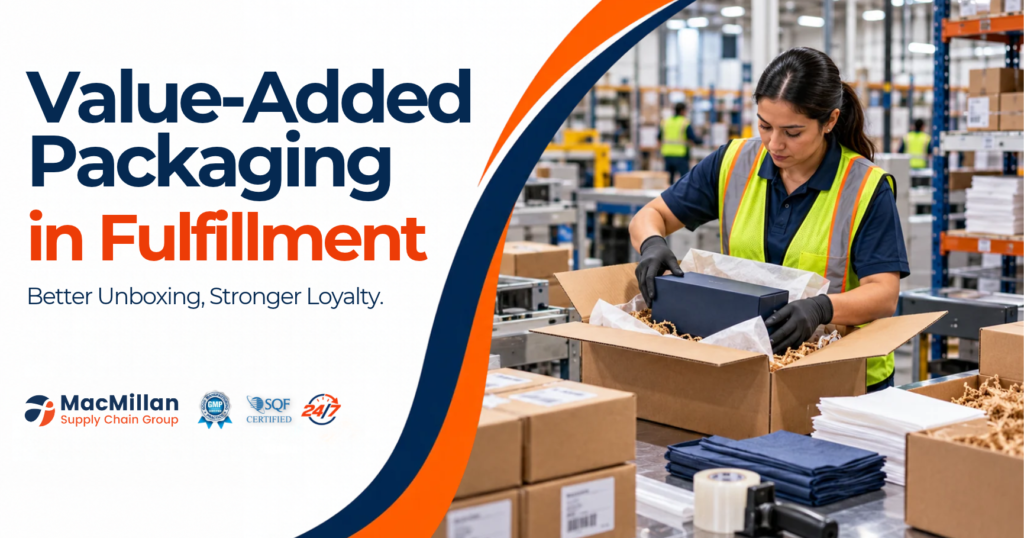
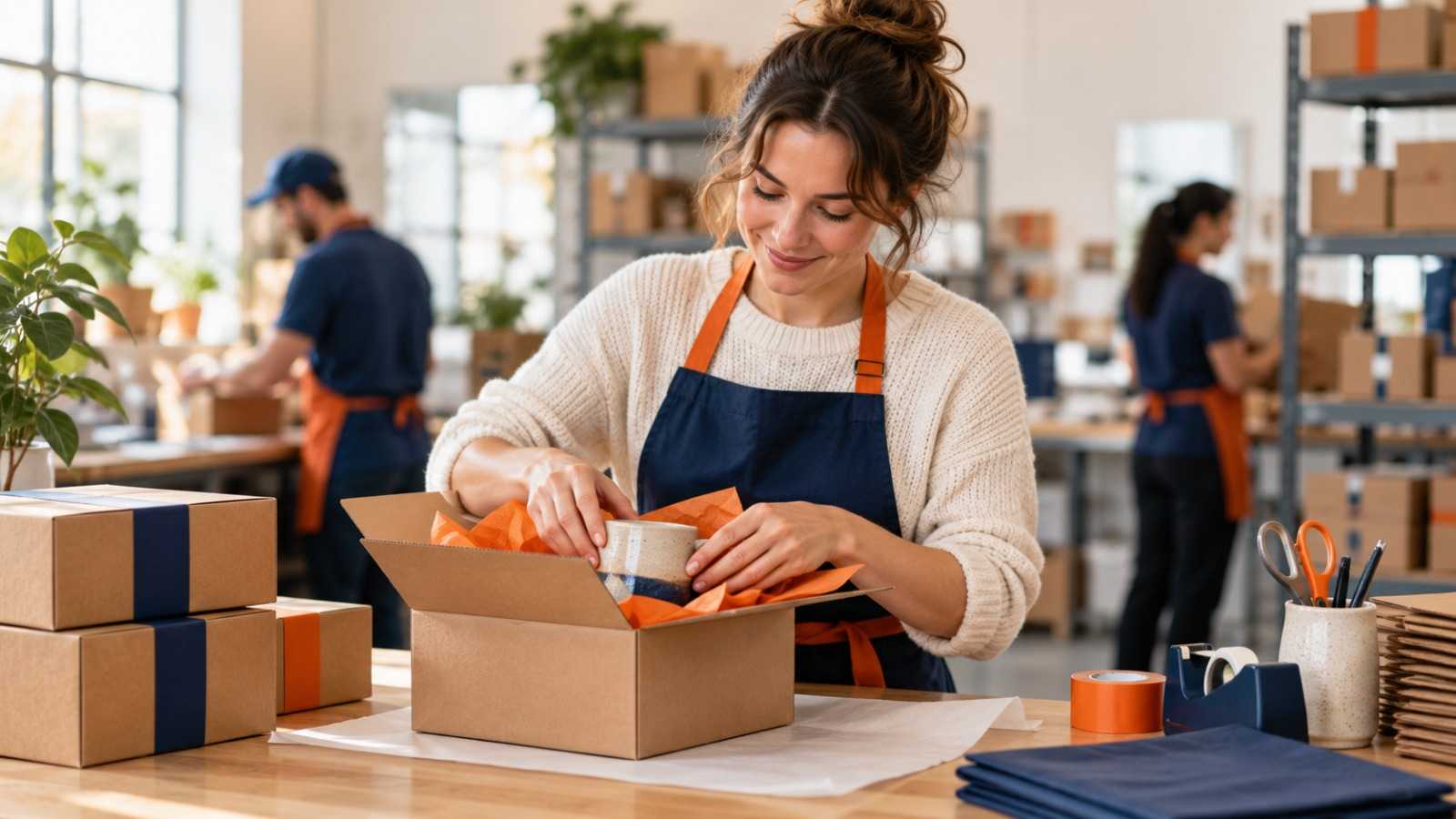
For Etsy businesses, packaging can be part of the customer experience. Customers may expect their order to arrive carefully packed and presented in a way that reflects the brand they purchased from. Using a 3PL does not necessarily mean replacing that experience with generic packaging. Depending on the fulfillment program, businesses may establish specific packing instructions, product configurations, inserts, labeling requirements, or branded packaging processes. The important factor is consistency. A structured pick-and-pack process can help ensure that customers receive the correct product while maintaining the presentation standards established by the seller.
Shipping Etsy Orders More Efficiently
Shipping is often one of the biggest operational challenges for growing e-commerce businesses. Sellers must balance shipping cost, delivery speed, tracking, carrier reliability, package size, and customer expectations. A 3PL already operating at scale can
coordinate shipments across established carrier networks and help businesses select shipping options appropriate for their order profile. Etsy is also placing greater emphasis on tools that help sellers manage shipping and orders efficiently, including services that can import orders and simplify shipping information across platforms. However, outsourcing fulfillment does not remove the seller’s responsibilities on Etsy. Under Etsy’s Shipping Policy effective July 9, 2026, sellers using a shipping or fulfillment service remain ultimately responsible for ensuring that buyers receive their orders. Sellers must also provide accurate shipping information, including where products ship from and applicable processing times. That makes choosing a dependable fulfillment partner particularly important.
Managing Etsy Peak-Season Demand
Holiday periods, promotions, successful social-media campaigns, or viral products can cause Etsy orders to increase very quickly. For an owner fulfilling every order independently, a sudden spike in demand can create delays. Orders begin accumulating. Packing materials run low. Shipping cutoffs become harder to meet. Customer inquiries increase. A 3PL provides access to warehouse infrastructure, fulfillment processes, and labor that can scale more easily when order volume changes. Instead of building permanent warehouse capacity around temporary peaks, sellers can use an
outsourced fulfillment operation designed to manage fluctuating demand. This can be particularly useful for Etsy businesses that experience strong holiday sales.
Returns Are Part of Fulfillment Too
Fulfillment does not always end when a parcel is delivered. Returned products need to be received, inspected, categorized, and—when appropriate—returned to available inventory. If
returns sit unprocessed, businesses can lose inventory visibility and delay recovering value from sellable products. A structured reverse logistics process can help sellers understand what came back, why it was returned, whether it can be resold, and when inventory should become available again. MacMillan’s e-commerce fulfillment services include structured returns handling designed to support product inspection, inventory recovery, and more efficient restocking.
In-House Fulfillment vs. 3PL Fulfillment
In-house fulfillment can remain the right option for Etsy businesses with small order volumes, highly customized products, or fulfillment processes that require significant hands-on work from the creator. A 3PL becomes more attractive when orders are standardized enough to be fulfilled systematically and the business needs greater storage, technology, labor, or shipping capacity. The decision should not be based only on
fulfillment fees. Sellers should also consider the value of their time, warehouse space, packing materials, labor, shipping rates, fulfillment errors, software, returns processing, and the operational limitations of fulfilling orders themselves. The objective is not simply to outsource logistics. It is to build a fulfillment model that can support the next stage of the business.
Choosing a 3PL for Your Etsy Business
Before selecting a fulfillment partner, Etsy sellers should evaluate whether the provider can support their specific products and customer expectations. Look at inventory visibility, order accuracy, warehouse capabilities, packaging options, technology connectivity, returns handling, shipping services, scalability, and communication. It is also important to clearly define
how orders will move from Etsy into the fulfillment workflow and how tracking and inventory information will be synchronized. A good 3PL relationship should provide more operational control through better systems and visibility—not less.
Scale Your Etsy Fulfillment with MacMillan
Growing an Etsy business should create more opportunities to develop products, strengthen the brand, and reach new customers—not simply more boxes to pack. MacMillan Supply Chain Group provides
e-commerce and order fulfillment services designed to support growing consumer brands with inventory storage, pick-and-pack operations, shipping, inventory visibility, returns management, and scalable warehouse capacity. For Etsy sellers reaching the point where fulfillment is taking too much time, space, or operational attention, moving to a 3PL can provide the infrastructure needed for sustainable growth. The goal is simple: keep fulfillment accurate and dependable as the business becomes bigger—without losing sight of the customer experience that helped the brand grow in the first place.