
Warehouse Planning Canada | 2027 Cost and Capacity Guide
2027 Warehouse Planning Guide: How Canadian Businesses Can Control Costs and Build Flexible Capacity A warehouse renewal lands on your desk. A cheaper building is available farther from your customers, while your current facility feels crowded every November and half-empty by February. Sales wants room for growth. Finance wants lower overhead. Operations wants enough space to get orders out without moving the same pallet three times. That is where useful warehouse planning in Canada begins: connecting the building decision to how the business actually operates. For 2027, the right question is not simply how much space you can afford. It is how much reliable storage and processing capacity you need, where you need it, and which commitments make sense when demand changes. The lowest warehouse rent does not necessarily produce the lowest overall logistics cost. A sound plan compares transportation, labour, inventory, service and flexibility alongside occupancy costs. Why Warehouse Planning Matters Heading Into 2027 Warehouse decisions often outlast the assumptions used to justify them. A lease signed around one major customer, one import route or one product range may still be in place after those conditions change. Retailers need room for promotions without carrying permanent peak costs. Manufacturers need dependable material flow. Importers need receiving capacity when containers arrive together. E-commerce businesses need enough picking and packing capacity to meet delivery promises. Build the 2027 plan with sales, purchasing, finance and operations together. Otherwise, purchasing may increase order quantities to save freight while the warehouse budget assumes less stock and marketing launches another product line. What Current Canadian Industrial-Market Conditions Mean for Your Decision As of November 2026, published third-quarter reports provide a useful starting point—not a forecast of your 2027 lease terms. CBRE’s Q3 2026 Canada Industrial Figures reported national availability of 5.2%, down 30 basis points from the previous quarter. National net asking rent was CAD $14.77 per square foot, down 2.4% year over year. Those figures show that recovering demand and softer asking rents can coexist. They are market indicators, not an all-in occupancy quote for a specific building. For the GTA, Colliers’ Q3 2026 Toronto report described strong absorption and declining availability alongside continued pressure on net rents. Its findings reinforce the need to assess individual submarkets and properties. Request current comparable offers. Check usable clear height, loading, power, yard access and permitted activities. Available industrial space is not automatically suitable for food storage, high-volume parcel fulfillment or your particular operating hours. Calculate the True Cost of Operating a Warehouse Separate Occupancy From Operational Costs Start with a consistent annual cost model. Include net rent and applicable additional rent, such as taxes, maintenance and insurance charges, then identify which utilities and repairs remain your responsibility. Add the costs required to make the building work: Racking, equipment, fit-out and maintenance. Wages, employer contributions, benefits, supervision and training. Warehouse software, scanners, connectivity and support. Cleaning, security, inspections and product-specific controls. Inbound handling, outbound processing and returns. Transportation, transfers, damage and avoidable rework. Keep one-time cash requirements, recurring operating expenses and depreciation distinct. Avoid counting both the full equipment purchase and its annual depreciation as annual operating costs. Test Whether the Rent Saving Survives the Move Consider a hypothetical 20,000-square-foot requirement. A CAD $2-per-square-foot annual rent saving equals CAD $40,000. If the location adds CAD $45,000 in annual transportation and staffing costs, the apparent saving disappears before relocation expenses. These are illustrative numbers, not market quotes. The same comparison should use your freight lanes, staffing assumptions and property proposals. Review total warehousing and fulfillment costs using equivalent service requirements. How Much Warehouse Space Will You Really Need in 2027? Start With Inventory Positions and Product Characteristics Collect at least a full seasonal cycle of stock records where available. Review average and maximum pallets, cartons, SKU counts, product dimensions, stackability and stock held for inspection or returns. Translate that profile into suitable storage positions. A pallet of fragile displays may not stack like cases of cleaning products. A large number of slow-moving SKUs may require more accessible locations than a small range shipped by full pallet. For illustration, if you need to accommodate 800 occupied pallet positions at an assumed 80% planning occupancy, you need 1,000 compatible positions. The 80% assumption is an example, not a universal operating target. Your layout and product mix determine workable occupancy. Allow for Processing Space and Throughput Convert positions into floor area using an actual layout. Include receiving, staging, pick faces, packing, returns, safety clearances and circulation. Confirm rack design and building constraints before treating vertical space as usable capacity. Then test throughput separately. Can the docks receive the busiest inbound day? Can replenishment keep pickers supplied? Can packing clear orders before carrier collection? A warehouse can have spare storage and still lack dispatch capacity. Document both storage and processing limits before choosing a building. Understand the Cost of Unused and Underutilized Space Empty space creates fixed costs without necessarily supporting sales. It may still require rent, heating, lighting, security and maintenance. Separate necessary working room from speculative expansion. Receiving areas and clear aisles are productive capacity even when they are not holding stock. An unused block leased for a possible customer contract is a different commitment. Review occupancy by month and zone. If expansion demand is uncertain, compare permanent space with a smaller core operation and contracted overflow. Check the lease before assuming you can sublet surplus space. Plan Seasonal and Peak Requirements Separately Your inventory peak may arrive weeks before your order peak. A holiday retailer can need maximum storage in October, maximum packing labour in November and additional returns capacity in January. Build a weekly calendar covering inbound receipts, stored inventory, outbound orders, promotional assembly and returns. Include customer launch dates and retailer delivery appointments. Book extra capacity before it becomes urgent. Confirm the reservation, minimum charges, activation notice and receiving limits in writing. For peak-season fulfillment planning, extra storage only helps if stock can reach the shipping operation in time. Compare Dedicated, Shared, Overflow and 3PL Warehousing These
Choosing the Right E-Commerce Warehouse
Switching from garage storage to getting your products organized in a warehouse can change the way your business runs. E-commerce warehouse storage saves time, effort, and money, while providing peace of mind. This article highlights the key benefits of working with a warehouse and details how you can find the right one for your business. Table of Contents What Makes a Good Warehouse for E-Commerce? How Do You Choose a Good Warehouse for E-Commerce? What E-Commerce Platforms Can Be Accommodated by a Warehouse? What Do You Have to Look for When Choosing a Warehouse for E-Commerce What Makes a Good Warehouse for E-Commerce? Two non-negotiable items that an e-commerce warehouse must provide are security and storage space. The combination of both ensures that your product is in good hands: 1. Security A good warehouse is one where you know that your products are safe. Warehouses holding expensive inventory are often the target of theft, making the presence of a strong security system an important piece of the overall warehouse infrastructure. An e-commerce warehouse management system that has surveillance cameras, safety alarms, and trained security staff in fulfillment centers, can lower the chances of your products getting stolen. 2. Storage Space Sufficient storage space is important when it comes to warehouses. Most e-commerce businesses switch to distribution centers due to insufficient storage spaces at their current locations (basement, garage, etc.). Smart warehouses shelve inventory strategically, ensure there’s no clutter of goods, and that organization and movement process are efficient. These factors make tracking customer orders and inventory levels much easier for the supply chain firm. Storage for perishable items—such as butter, fruits, vegetables, eggs, and bread—must also be available if required. Facilities with cold storage and moisture resistance should be present in the distribution center to keep these items fresh. A research paper by the European Journal of Operational Research defines an optimal warehouse storage like this (more on technology later on): “Traditional picker-to-parts warehouses are often ill-suited for these prerequisites so that automated warehousing systems (e.g., automated picking workstations, robots, and AGV-assisted order picking systems) are applied, and organizational adaptions (e.g., mixed-shelves storage, dynamic order processing, and batching, zoning and sorting systems) are made in this branch of industry.” [efn_note] Nils Boysen, René de Koster, Felix Weidinger, Warehousing in the e-commerce era: A survey, European Journal of Operational Research, Volume 277, Issue 2, 2019, Pages 396-411, ISSN 0377-2217 How Do You Choose a Good Warehouse for E-Commerce? There are additional factors that should play into the selection process: 1. Location When selecting a warehouse, you want to ensure that your core customer base is not far from it. You can do this by checking the transportation logistics with the warehouse. A great location keeps costs low and ensures faster deliveries. 2. Access It should be easy to access the warehouse, especially if your goods have special requirements. If your products require exporting and importing, you want your warehouse to be close to a port. You also need to check for: Properly built roads Nature of traffic Highway interconnectivity Congested roads and inaccessible areas can slow down deliveries, which can affect the overall supply chain processes. 3. Emergency Protocol You don’t want your goods to get damaged by heat, animals, insects, rainwater, and fire. For the safety of your products, be sure that the warehouse you’re working with has fire extinguishers, air conditioning, and emergency protocols to keep the items safe. What E-Commerce Platforms Can Be Accommodated by a Warehouse? Most warehouses can accommodate all e-commerce platforms. These include but are not limited to: Shopify WooCommerce Wix WordPress PinnacleCartF Shift4Shop BigCommerce Working with a warehouse can be beneficial if you sell on multiple platforms (e.g., Shopify, Six, WooCommerce) or just a single platform alone. Warehousing allows you to keep all inventory in one place where employees can manage shipments. If you’d like to speak with an expert about your situation, feel free to get in touch with the MacMillan Supply Chain Group at 416-941-2759 or email us here. What Do You Have to Look For When Choosing a Warehouse for E-Commerce? Other factors you might want to look out for include: 1. Properly Trained Staff Employees play an important part in the supply chain because they are the ones handling everything. From processing to organizing and packing, supply chain workers take over tasks that are otherwise time-consuming for business owners. This is especially true if you run a small business. The number of employees affects warehouse efficiency as well. Having more employees ensures that background processes are running smoothly. The staff needs to be well trained in handling goods while keeping accidents and mistakes to a minimum. 2. Technology For warehouse managers, it’s important to stay up to date with warehouse software and technology. Not only can technology make inventory tracking easier (e.g., drones, electronic data exchange, and pick-by-visions systems), but they can also improve many other warehouse processes. Due to recent unpredictable buying patterns, supply chain firms are facing difficulty in keeping processes smooth. Supply chain issues are not expected to subside in coming years, causing supply chain firms to increasingly rely on technology to tackle challenges. 3. Types of Warehouses There are different kinds of warehouses to accommodate e-commerce businesses: Private Warehouse: These are usually owned by larger businesses and are more expensive than public warehouses. That’s because they are built with specific requirements for storing goods. Public Warehouse: Public warehouses are government-owned buildings rented out to small businesses. Consolidated Warehouse: These warehouses collect goods from multiple suppliers. The products are delivered to the same city and the costs are low. Smart Warehouse: Smart warehouses are the most efficient because they make use of AI to ensure best practices, better security, and excellent productivity. If you have an e-commerce store and are thinking about switching to a warehouse, the MacMillan Supply Chain Group is here to help. Our trained staff can handle your goods and storage them safely. Working with us will not only make things easier for you, but it will also
Looking For Top Supply Chain Companies In Canada? We’re Here For You
Are you a business owner looking for a supply chain company in Canada to take over your warehousing and distribution needs? The MacMillan Supply Chain Group is one of the best third party fulfillment services in Toronto. Being a leading name in the supply chain and logistics industry, MacMillan has worked with numerous clients, providing excellent service to help them gain a competitive advantage. Feel free to contact us by clicking here or calling us at 416-941-2759 – We would love to hear from you. Table of Contents Why Should Choose MacMillan as Your Supply Chain Company in Canada? Streamlined processes Strategically Located Warehouses Secure Inventory Optimized Warehouses Lower costs Specialized Logistics Managing Inconveniences Effective Freight Management Reverse Logistics Adaptability Why Choose MacMillan as Your Supply Chain Company in Canada? MacMillan is one of the best third-party logistics companies in Canada. Our dedicated team has years of experience providing end-to-end supply chain solutions, managing inventory, and fulfilling orders. Here is how our innovative services can benefit your business: Streamlined Processes As supply chain leaders, our vast experience allows us to manage the supply chain efficiently. We can help you increase productivity, cutting supply chain costs in the process. We achieve this by using the following techniques: 1. Effective Planning We make careful decisions regarding the storage of goods, inventory management, delivery of products, and transportation. Our solutions and services are optimized to reduce the risks of delays in the supply chain. 2. Automation In recent years, artificial intelligence has played a significant role in supply chain management. It increases efficiency and reduces manual interference, lowering the risks of mistakes that can damage goods. 3. Updates on The Global Market The global supply chain is unpredictable and can change at any time. Our team stays updated on transportation laws, economic policies, treaties, and political situations that can interfere with the movement of goods. Related: Working With One of the Best Third-Party Fulfillment Companies in Toronto Strategically Located Warehouses We have warehouses in the Greater Toronto Area, close to the major shipping hubs of Ontario. This allows us to handle goods quickly, increase processing times, and fulfill orders quickly. Being within close proximity to the ports also allows us to restock quickly, and handle understocking challenges with ease. Related: How to Select a Top Supply Chain Company in Canada to Work With Secure Inventory Our warehouses are equipped with the necessities required to keep your goods safe. We have security measures, such as closed service television, trained staff, and warehouse automation. Reducing human assistance with handling products decreases the risk of potential damage. Furthermore, our team ensures to give extra attention to perishable products. We are aware that fresh produce and pharmaceuticals require storage under specific conditions.[efn_note]Thron, T., Nagy, G. and Wassan, N. (2007), “Evaluating alternative supply chain structures for perishable products,” The International Journal of Logistics Management, Vol. 18 No. 3, pp. 364-384. https://doi.org/10.1108/09574090710835110[/efn_note] Related: What Supply Chain Issues is Canada Facing in 2022? Optimized Warehouses Our employees and functions ensure warehouse safety, faster handling speeds, and improved efficiency. We have automated warehouses and technology to avoid any hindrances in smooth operations. MacMillan will give you an incredible experience with transparency in the supply chain. Our advanced technology can allow you to track inventory from anywhere in the world and make better decisions on the spot. Lower costs Working with MacMillan provides many transportation benefits, such as reduced delivery costs. We can help you match your shipping requirements to suitable routes and carriers to increase efficiency. Since logistics partners are experienced in transporting a large number of consumer products, you can get shipping discounts depending on the volume of goods. Specialized Logistics MacMillan offers specialized logistics according to your requirements rather than focusing on systemized processes. We can make appropriate accommodations, including brand-specific changes, customization, promotions, labeling, and relabeling. We deal with products of all shapes and sizes, which are sometimes challenging to store; However, our experts have the resources and experience to overcome these challenges and effectively manage all types of products. Related: The Importance of Retail Freight in Shipping Logistics Managing Inconveniences You don’t have to worry about not meeting delivery windows due to issues in shipping. Our distribution centers are close to ports and high-demand areas with excellent transport infrastructure. Our up-to-date software keeps track of inventory until the last mile delivery. Effective Freight Management The transportation industry prioritizes retail freight forwarding by offering cost-effective solutions and maintaining a continuous supply chain flow. MacMillan provides an array of transportation services, including Full Truckload (FTL), Less Than Truckload (LTL), and much more. We cover a wide area for cargo movement throughout and outside North America, including Canada and the United States. Our team always takes an extra step to ensure that your consumer goods are handled with care during the final mile and home delivery so that they can reach the end customer in the best form. Related: Logistics Companies in Canada: 5 Tips on Working With 3PL Services Reverse Logistics Reverse logistics play a vital role when a potential customer makes purchasing decisions. Often customers would want to know your return policy before buying the product. MacMillan can effectively handle returns, inspect them for damage, and repackage the items for reselling. We make sure to oversee and streamline the reverse logistics supply chain management and handle refunds. Adaptability As a retail fulfillment service, MacMillan consistently strives to improve and adapt to provide best practices and meet clients’ high standards. We are prepared for unforeseen events and fluctuating customer demands at all times to help you meet delivery windows. Being one of the best supply chain and logistics companies, MacMillan is highly focused on customer service, providing specialized logistics, tailoring services to your needs, and ensuring you have a seamless supply chain. If you’re looking for a firm in the Greater Toronto Area, feel free to contact us at 416-941-2759 or email us here. Frequently Asked Questions What services does a supply chain company in Canada provide? A
Work With an Ecommerce Fulfillment Company in the GTA
As an online store business owner, offering the best customer experience extends beyond having a great social media presence, email marketing or easily navigated website design. If you don’t have an e-commerce fulfillment strategy that best meets your customer’s expectations in place, you’re not going to build a community of loyal customers. What is E-commerce Fulfillment? E-commerce fulfillment refers to the entire process involved in getting an order delivered to a customer. It entails the processing, pickup, packaging and shipping of online orders to the final customer. However, it goes beyond just picking, packing and sending out orders. The best e-commerce fulfillment strategies involve an ordered procedure that results in e-commerce orders getting delivered to the end customer and in return help transform logistics into a revenue driver through improved conversions and increased sales. The following steps elaborate the individual services and workflows that sum up an e-commerce order fulfillment service. Steps in E-commerce Fulfillment Services The order fulfillment process extends through one or more distribution centers and typically includes inventory management, supply chain management, quality control, order processing and customer service in distinct steps. Order Fulfillment Services Order fulfillment services are often used interchangeably with e-commerce fulfillment. A fulfillment service refers to the act of picking, packing and getting orders delivered to customers. All e-commerce businesses are responsible for order fulfillment, whether you’re an online business that self-fulfill orders or partners with a fulfillment service provider. Partnering with MacMillan Supply Chain Group helps set your business apart from market competitors. There’s no order fulfillment process without the customer first making a purchase online, afterwards, the items are picked, packed and inspected for damage in the warehouse or fulfillment centers and then sets on their delivery journey. Order Management This is a broad concept of the overall visibility of your customer orders from when they get placed to when they get delivered. It involves receiving, tracking and fulfilling e-commerce orders across sales channels. This helps you monitor each status of any order (such as processing, pending or received, etc.), as well as being aware of when there’s a stockout or a change in customers’ buying patterns and preferences. Inventory Management Inventory management is overseeing an e-commerce business’ stocked products. It includes receiving inventory, inventory storage and restocking inventory. The most important aspect of inventory management is finding a balance between how much or how little inventory to have on hand to avoid stockouts or backorders and additional costs due to prolonged storage. E-commerce Shipping The shipping costs and delivery method you offer your customer are dependable on the type of items you’re shipping out (E.g., heavyweight, perishable or highly-valued), the delivery-goods location and destination, the delivery speeds and the technology and resources at your disposal. Small e-commerce businesses may handle their shipments themselves by using the nearest post office or a local FedEx store to deliver the goods. Bigger, more established online retailers will adopt fulfillment companies to enjoy faster and discounted shipping rates for their larger monthly order volume. Warehouse Management System Warehousing refers to storing inventory before orders are placed or fulfilled. The goods are safely and securely stored in an orderly manner for easy and quick allocation once orders are placed. Third-party logistics store inventory in their fulfilment center and ship orders to customers directly from there. Returns Management This leg of e-commerce fulfillment involves receiving, accessing and restocking returned items unless damaged or malfunctioning. This is also the stage of e-commerce fulfillment that incorporated customer service and support for handling complaints. Depending on the product condition, some e-fulfillment services let returns be sent to the e-commerce business instead of the fulfillment center. Fulfillment Software E-commerce fulfillment software is the digitized means by which inventory and order management as well as picking, packing and delivery processes are handled. It is the technology that allows a real-time connection and tracking between e-commerce fulfillment providers and business owners. International Order Fulfillment International fulfillment involves the fulfillment of goods and products to customers who live in countries outside of where your e-commerce business is based. The options available for this are either working with a fulfillment company located abroad or shipping orders from your location to other countries. You may wish to start selling in the Greater Toronto Area or offer affordable shipping to customers in Canada. Working with a skilled fulfillment expert can help you easily navigate your international shipping capabilities. Choosing The Best E-commerce Fulfillment Solution Sometimes, the line between being able to outsource e-commerce fulfillment to third-party logistics (3PLs) or continuously adopting a self-fulfillment solution can be blurry. But it helps to know the physical and financial costs associated with adopting either e-commerce fulfillment solution. The Cost of Self-Fulfillment Other certain insignificant costs come with self-fulfilling orders asides from the shipping costs. And they are easily overlooked until you get stressed out by the scarcity of an essential material needed in your order fulfillment. Examples may include tools and packing supplies, transportation costs and car maintenance, dealing with unhappy customers which may sometimes jeopardize the future business, human error due to lack of integrated technology and so on. The Cost of third party logistics (3PLs) Fulfillment The rates of most 3PLs fulfillment differ, but the common costs you’ll come across are for; the acceptance and arrangement of incoming inventory, storage costs per -SKU, shelf or pallet, custom branded packing materials, specially assembled orders (kitting) and delivery. 3PL fulfillment companies offer bulk discounted rates because they work with thousands of e-commerce businesses. E-Commerce Fulfillment in Toronto When an e-commerce business hit a certain milestone, it will either partner with 3PL or invest in the infrastructure, pieces of equipment, resources and workforce to oversee order fulfillments itself. However, partnering with a 3PL allows you to make room for investments in other critical business areas like marketing and enhancing your product. Third-party logistics companies provide high-level expertise that let online business drive fulfillment for efficiency and maximum customer satisfaction. If you’d like to work with an e-commerce
Top Trends for Canadian 3PL Companies in 2026: Fulfillment, Logistics, and Growth in a Thriving Market
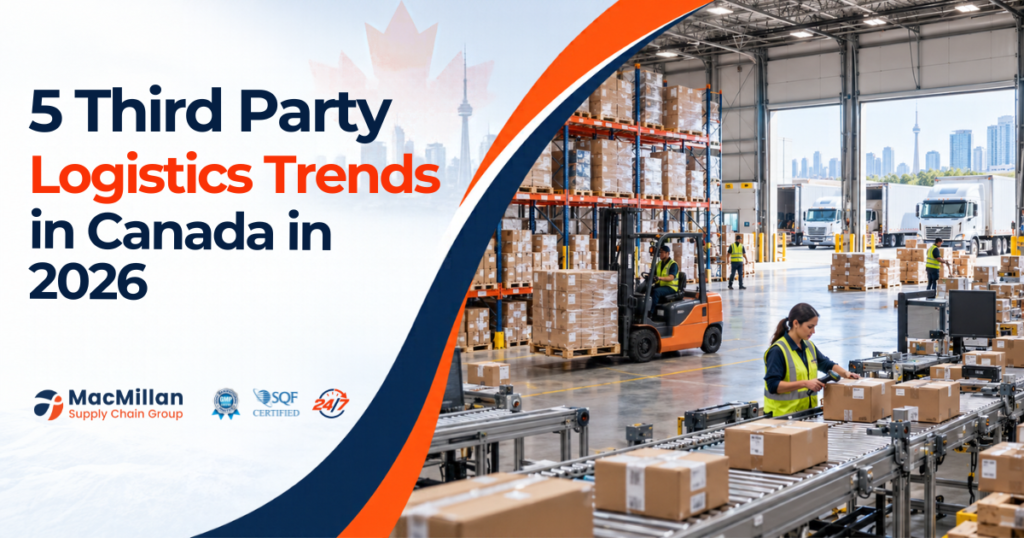
The logistics industry in Canada is growing at an impressive rate, with 2023 poised to bring in new macro trends that will impact the third-party logistics (3PL) industry. The need for efficient distribution networks to meet the demands of e-commerce has led to the rise of omnichannel distribution, and 3PL providers are developing technology platforms for real-time visibility and inventory management. In response to the emphasis on sustainability, 3PL providers in Canada are focusing on implementing sustainable practices in their operations. Advancements in technology such as AI, blockchain, and IoT are being adopted to improve supply chain visibility and efficiency, while automation technologies are helping reduce labor costs and increase productivity. The shift towards nearshoring is also likely to continue in 2023, with an increase in demand for services that support domestic supply chains. This blog will explore these trends and what they mean for the future of 3PL in Canada. Table of Contents E-commerce and Omnichannel Distribution Emphasis on Sustainability Advancements in Technology Increased Adoption of Automation Shift to Nearshoring 5 Third Party Logistics Trends in Canada in 2026 1. E-commerce and Omnichannel Distribution The growth of e-commerce in Canada has been one of the biggest drivers of the 3PL market. With more and more consumers turning to online shopping, businesses must optimize their distribution networks to meet demands. This has led to the rise of omnichannel distribution; where companies use multiple channels to fulfill orders, such as online marketplaces, brick-and-mortar stores, and distribution centers. To support these complex networks, 3PL providers are developing sophisticated technology platforms that allow for real-time visibility and inventory management. In addition, the use of value-added services, such as order fulfillment and delivery times, has become increasingly important for e-commerce businesses looking to gain a competitive advantage in the Canadian market. 3PL companies can provide these services to help businesses improve their customer satisfaction and increase their revenue. 2. Emphasis on Sustainability Sustainability is becoming an increasingly important consideration for businesses and consumers alike. In response, many 3PL providers in Canada are focusing on implementing sustainable practices in their operations. The use of electric vehicles is one of the most effective ways to reduce carbon emissions and transportation costs. Additionally, companies are adopting sustainable practices such as green packaging, reducing the amount of touches a package can go through, and implementing reverse logistics. These practices not only reduce a company’s environmental impact but can also lead to cost savings and improved customer satisfaction. 3. Advancements in Technology In 2023, we can expect to see more companies implementing technologies such as artificial intelligence (AI), blockchain, and the Internet of Things (IoT) to improve supply chain visibility and efficiency. These technologies can help reduce costs, improve operational performance, and enhance the overall customer experience. With the use of big data, 3PL providers can analyze customer behavior and demand patterns to better forecast inventory needs and optimize their logistics operations. Furthermore, real-time tracking of inventory and shipments through the use of IoT sensors can improve transparency and efficiency in the supply chain. 4. Increased Adoption of Automation Automation has been a key trend in the logistics industry for several years, and in 2023, we expect to see even more widespread adoption. With the rise of e-commerce, businesses are under increasing pressure to fulfill orders quickly and accurately. Automation technologies such as robotics, drones, and automated storage and retrieval systems (AS/RS) can help companies achieve these goals. Additionally, automation can help reduce labor costs and increase productivity, making it an attractive option for many 3PL providers. Real-time visibility of inventory through automated systems can also improve inventory management and minimize errors. 5. Shift to Nearshoring As a result of the disruptions caused by the COVID-19 pandemic, many companies are re-evaluating their supply chain strategies. This has led to a trend towards nearshoring or bringing production closer to home. This shift is likely to continue in 2023, which means that 3PL providers in Canada may see an increase in demand for services that support domestic supply chains. 3PL companies with a large warehouse and distribution space in the Greater Toronto Area (GTA) can offer businesses a better choice for cost-effective transportation services and distribution costs. Furthermore, a qualified team of industry experts can assist businesses in developing their core competencies in supply chain management and product development, providing additional services and benefits to their customer base. Conclusion: Third Party Logistics Canada The logistics industry in Canada is undergoing a significant transformation with new trends that require 3PL providers to be adaptable and innovative to meet the changing needs of their clients. The growing importance of sustainability, technology, and automation is expected to continue shaping the industry in the coming years. The adoption of new technologies can help 3PL providers increase efficiency, reduce costs, and enhance customer experience. Furthermore, the shift towards nearshoring will have an impact on the logistics industry in Canada, and 3PL providers can position themselves for success by supporting this trend. The future of the logistics industry in Canada is promising and offers significant opportunities for growth and development. Sources “The Future of Canadian Logistics and Third-Party Logistics (3PL) Services.” Global Trade Magazine, 17 Aug. 2021, https://globaltrademag.com/the-future-of-canadian-logistics-and-third-party-logistics-3pl-services/. “5 Trends Shaping the Future of Canadian Logistics.” UPS Compass, 11 Oct. 2021, https://compass.ups.com/5-trends-shaping-future-canadian-logistics/. “3PL Industry Trends to Watch in 2023.” Cerasis, 3 Jan. 2023, https://cerasis.com/3pl-industry-trends-to-watch-in-2023/. “Canadian Logistics Overview,” TIACA. “2023 Logistics Industry Outlook: Key Trends and Predictions,” Armstrong & Associates. “Third-Party Logistics Market in Canada – Growth, Trends, and Forecasts (2020-2025),” Mordor Intelligence. Frequently Asked Questions What are the major third-party logistics (3PL) trends in Canada in 2026? Major 3PL trends in Canada include e-commerce and omnichannel fulfillment, sustainable logistics practices, AI-driven supply chain management, warehouse automation, and nearshoring to strengthen domestic supply chains. How is e-commerce changing the 3PL industry in Canada? E-commerce is increasing demand for faster order fulfillment, real-time inventory tracking, efficient returns management, and flexible distribution networks. 3PL providers help businesses manage orders across online marketplaces, retail stores, and other sales
3PL Warehousing: How to Save Business Costs
Partnering with a third-party logistics (3PL) provider like MacMillan Supply Chain Group can be a strategic move to help your business save money and boost efficiency. 3PLs achieve this through economies of scale, which grant them access to better shipping rates and optimized warehousing costs. They eliminate the need for businesses to invest heavily in their own warehousing infrastructure and technology. 3PLs leverage cutting-edge technology, such as warehouse management systems and business intelligence tools, to streamline operations, reduce errors, and gain valuable insights which can be your warehousing solution to cost efficiency. Choosing the right 3PL involves assessing your specific needs. Look for a provider with a proven track record, transparent pricing, and a commitment to technological innovation. MacMillan Supply Chain Group is ready to tailor a solution that aligns with your unique business requirements, providing reliability, transparency, and expertise to optimize your logistics operations and drive cost savings for you. A variable cost model from a 3PL allows you to easily manage and optimize your business operations. Let’s explore how 3PLs accomplish this. What are the main ways a 3pl can help you savemoney? There are many massive benefits inherent in outsourcing to a third-party logistics provider. Many of these benefits are centered around a 3PL’s ability to provide shippers with cost savings and greater levels of efficiency throughout the logistics process. 3pls have large resource networks which help them cut costs and boosts efficiency and have flexible capacity which can easily adapt to high and low order volume without losing efficiency. A good 3pl can save you money in a multitude, take a look at the following: Economies of Scale One of the biggest advantages of partnering with a 3PL is their ability to leverage economies of scale. By handling large volumes of shipments for numerous businesses, they become high-volume customers for major carriers like UPS and FedEx. This buying power translates into significantly discounted shipping rates that individual businesses would be hard-pressed to achieve on their own. When you work with a 3PL, you essentially tap into their bulk discounts, allowing you to ship your products at a fraction of the cost. Using a good 3pl partner can help you optimize your asset utilization by spreading the fixed warehouse costs, transportation fleet and technology across a larger client base, resulting in a lower per unit cost for each client. Moreover, by combining shipments from multiple clients, 3PLs can fill trucks and containers more efficiently, reducing transportation costs per unit. Warehousing: Your 3PL’s Facilities = Your Savings Managing a warehouse can be financially draining, you need space, equipment (like forklifts and conveyor belts), and technology to have a track on your inventory management systems. A good 3PL partner eliminates this requirement for its customers allowing you to redirect your resources to core business growth. Reduced Capital Investment: You don’t have to buy or lease warehouse space or invest in expensive equipment. A 3PL such as MacMillan supply chain group incurs expenses but spreads the cost across all clients, thus each client is responsible for only a small fraction of capital investment as opposed to absorbing it all by operating their own facility. The latest technology is always available If you choose to manage shipping internally, you’ll need to purchase and implement your own IT platform. This means another system to learn, manage, update, troubleshoot, and integrate with customers which can be cost bearing. However, by outsourcing these functions to a 3PL, you transfer the responsibility of system operations to a company that specializes in these platforms. The sophisticated technology that top 3PLs use within the warehousing space can prove to be a toolkit for your business. 3PLs continually invest in the latest logistics technology, providing you with access to advanced systems and capabilities without having to bear the full cost yourself. Warehouse Management Systems (WMS): These systems optimize everything from inventory tracking to order fulfillment, making processes faster and more efficient. A Warehouse Management System (WMS) serves as the central command center for a 3PL’s technology, managing all daily warehouse activities ranging from managing incoming shipments and tracking inventory locations to fulfilling orders and integrating with other systems. Business Intelligence Tools: Gain insights into your inventory levels, shipping costs, and customer behavior so you can make informed decisions. Freight Rate Shopping: 3PLs use specialized software to find the most cost effective and customized shipping options for each order. How can a 3PL help you reduce labor overhead Managing a warehouse team involves costs beyond just wages – there’s recruiting, training, benefits, and more. A 3PL handles all of that for you. As labor costs are a significant expense for a company, selecting a good 3PL can optimize the overhead costs by cost sharing which involves spreading the cost across multiple clients, making it more affordable for you. Choosing a 3pl partner can give you access to seasonal flexibility where your 3PL can adjust staffing levels to accommodate your warehousing operations. Freight: More Than Just Moving Boxes Freight refers to goods or cargo being transported from one place to another. This can include a wide range of products, from raw materials and components to finished goods ready for distribution. Shipping goods isn’t cheap. Between fluctuating fuel costs, the pressure to deliver quickly, and the complexities of pricing structures, freight expenses can quickly add up. Buying Power: 3PLs handle large volumes of shipments for multiple businesses. This gives them leverage to negotiate better rates with carriers like UPS and FedEx than you could get on your own. Dimensional Weight Savings: Carriers often charge based on the size of a package, not just its weight. A good 3PL can help you optimize packaging to avoid these “dimensional weight” penalties. Carton-ization strategy: Closely connected to dimensional weights is cartonization strategy and technology. Top tier 3PLs will capture the weights and dimensions of all your products. Using specialized software, 3PLs can determine the most efficient way to pack your products, further reducing your shipping costs. Negotiated Fees: 3PLs can often
How Do 3PLs Help Automotive Sellers?
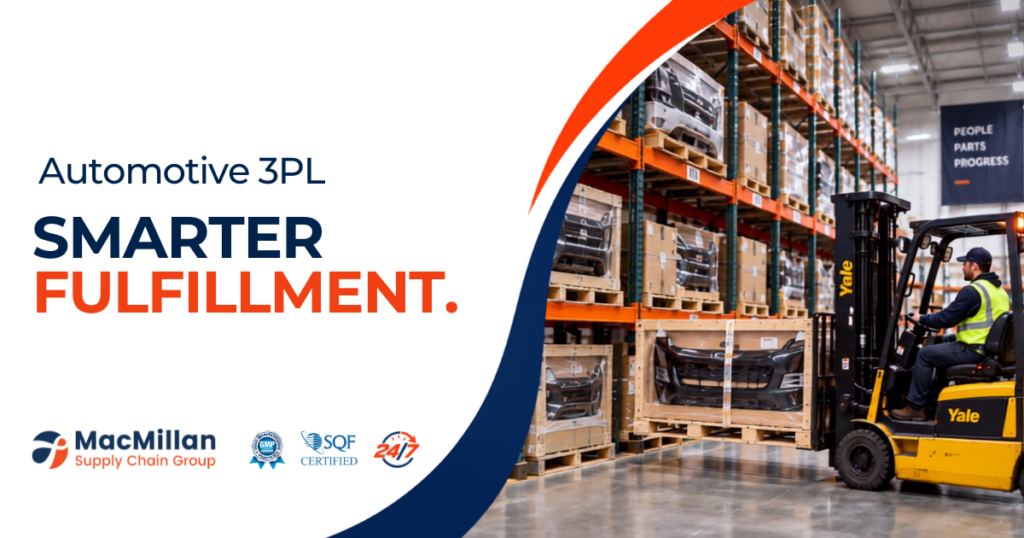
Automotive retailers have historically relied on brick-and-mortar stores due to the operational challenges of warehouse fulfillment for bulky, oversized, or heavy products. However, the automotive market is well-suited for online shopping, offering buyers access to rare parts for various makes and models. 3PL service providers can significantly aid automotive sellers by offering specialized 3PL warehousing and expert fulfillment services for consumers. The role of 3PL in the automotive supply chain involves inventory management, transportation and distribution leading to cost reduction, and compliance. Moreover, this blog outlines five ways a 3PL assists automotive sellers. What is an automotive 3pl? An automotive 3PL is equipped to handle a wide range of auto parts, offering comprehensive logistics services for full-service automotive sellers. This includes 3PL warehousing capabilities to store and ship oversized merchandise such as fenders, tires, seats, and complete engines. Some of the globally recognized 3PL leaders in the automotive industry include DHL supply chain and XPO logistics, which have served as the top innovative logistics solutions in the automotive market with a strong market presence. At MacMillan SCG we excel in shipping heavy and bulky products. Our 3PL warehousing services include extra-wide aisles to accommodate large boxes and robust conveyor belts designed to handle heavy items efficiently. What is the role of 3pl in automotive supply chain? The automotive supply chain is a complex network requiring precision, efficiency, and adaptability. Third-party logistics (3PL) providers play a crucial role in this area, from optimized 3PL warehousing to efficient order fulfillment and delivery to designated area. The demand for automotive fulfillment is only getting bigger in today’s market dynamics, with the growth of online and onsite sales. This blog delves into how 3PLs enhance the automotive supply chain, from inventory management, warehousing, order fulfillment to cost reduction and technology integration for improved customer satisfaction. Enhancing inventory management: In the automotive industry, managing inventory efficiently is essential due to the vast range of parts and components, each with varying demand cycles. MacMillan as a 3pl service provider utilizes advanced inventory management systems (IMS) to track parts in real time, minimizing the risk of stockouts and overstock situations. This real-time visibility allows companies to maintain optimized inventory levels, ensuring that critical components are always available when needed. Streamlining transportation and distribution: Given the need to move heavy and bulky items like engines and transmissions. 3PLs offer specialized transportation solutions tailored to the automotive sector, including multimodal transport options. MacMillan SCG allows a geographic coverage in the Greater Toronto Area and 80% of western region coverage allowing warehousing Toronto and to help your business align networking. Reducing operational costs: By outsourcing logistics to 3PL service providers, automotive companies can significantly reduce their operational costs. 3PLs leverage economies of scale, enabling them to offer competitive pricing for warehousing, transportation, and other logistics services. Ensuring compliance and risk management: Compliance with industry regulations and standards is paramount in the automotive sector. 3pl services providers implement robust risk management practices to mitigate potential disruptions in the supply chain, including contingency planning and disaster recovery strategies. 5 ways a 3pl help automotive sellers Expert fulfillment is essential for business growth, especially for automotive sellers dealing with bulky and fragile auto parts. Here are five ways a 3pl service provider can help an automotive sellers thrive in today’s dynamic market. Inventory management and safe storage: Selling auto parts can be an inventory management challenge. With numerous parts to store, each requiring the correct version for different models, you might need to organize and secure thousands of SKUs, ready for shipment. This is where professional warehousing comes in. Logistics companies such as MacMillan SCG utilizes warehouse management systems (WMS) to track SKUs from inbound shipment through order fulfillment and shipping with a 24/7 security protocol to keep your inventory safe and tracked. Kitting: Kitting involves pre-packing items to ship together, a strategy automotive sellers use to prepare SKUs that usually sell as a group. For example, a customer ordering a steering column for a 1999 Ford Mustang might also need related parts to accompany such as a steering wheel. By using kitting, you can pre-assemble all the necessary components for rebuilding a power steering system into one convenient package. Kitting also facilitates package consolidation, saving on shipping costs. By packing small items with larger products that ship based on dimensional weight. Kitting streamlines the pick and pack process, as a picker can retrieve a single pre-assembled kit instead of multiple individual SKUs to fill an order. Assembly lines are set up to efficiently create kits ready for shipping, and the kitting process can include standard operating procedures (SOPs) to ensure each set is packed safely. Pick, Pack and Ship: An automotive 3PL service provider specializes in timely and complete order shipments. Their warehouse management system (WMS) generates efficient pick lists for warehouse staff. Technologies like RFID tags and barcoding ensure accuracy in item selection. Additionally, experienced packers use the appropriate materials and operational methodologies to pack each order professionally, ensuring it arrives in perfect condition. Cross docking: is labeling orders on the inbound dock and moving them to shipping instead of placing stock into inventory first. Cross-docking is an excellent method to allow order fulfillment and lower storage costs. When evaluating potential 3PL service providers, inquire if they offer cross-docking to enhance the speed of your order processing. Returns management: Return processing in automotive 3PL refers to the management of product returns within the automotive supply chain by 3PLs. Although high-quality automotive logistics can minimize your return rate. Thus, having reverse logistics solutions in place is still crucial. Handling returns like engine blocks or transmissions can be a challenge, partnering with a 3PL can assist you in overcoming these obstacles. Return processing in the automotive 3PL includes several key steps such as: Receiving Storing Inspection and evaluation Inventory update Disposition Reporting Scalability and shipping discounts: Shipping automotive parts, mainly the heavy or oversized ones, can incur significant expenses. Carriers often impose surcharges for packages exceeding certain weight limits, such
Choosing The Right WMS: Streamlining Warehouse Operations
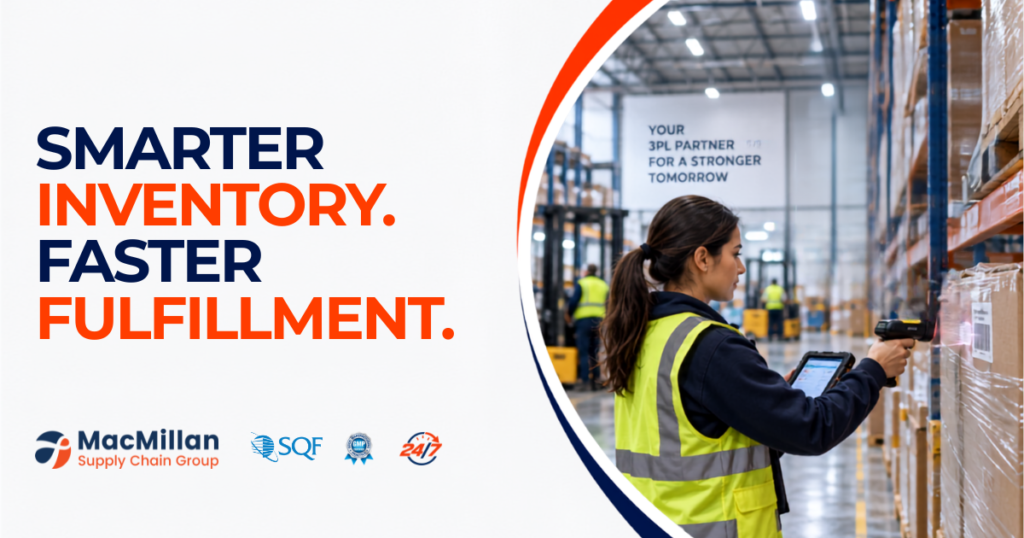
In today’s fast-paced market place, efficiency is paramount. To enhance productivity and reduce costs in 3PL warehousing operations, many businesses turn to Warehouse Management Systems (WMS). WMS software helps ensure inventory is received, stored, picked, packed, shipped in the most efficient way possible. With all these functions occurring simultaneously across different physical locations within the warehouse, it’s easy for processes to become misaligned or data to be lost. This is where WMS comes in. This article delves into WMS logistics, exploring its key features and processes. Moreover, how MacMillan SCG can manage your inventory and warehousing operations in real-time using WMS integration with your systems in order to streamline business processes. What is warehouse management system logistics? A warehouse management system, or a WMS gives you the tools, processes, automation, and reporting you need to manage your 3PL warehousing operations. A key component of WMS logistics is inventory management as it allows warehouse managers to accurately track and control inventory levels, ensuring the right products are available at the right time, thereby preventing stockouts and overstock situations. This real-time visibility into inventory levels enables better purchasing, storage, and order fulfillment decisions. WMS logistics also involves order management. A WMS system automates order processing, reducing errors and delays, and enables accuracy in order picking and packing. Warehouse space is a valuable asset, and effective space management is essential for maximizing storage capacity and operational efficiency. WMS software uses tools like slotting algorithms to determine the most suited location for each product based on demand, size, and weight. This helps in optimizing space utilization. What are the processes that make up a WMS? At its core, a WMS is a software system that automates and streamlines 3PL warehousing, acting as a central hub connecting various aspects of warehouse management. By leveraging real-time data and analytics, a WMS enables businesses to make informed decisions and optimize their warehouse processes. Inventory management: Provides visibility into inventory systems, tracking stock levels, product location and movement. Order management: Efficiently processes and fulfills customer orders, ensuring timely delivery and reducing errors while allowing order tracking. Picking and packing: Optimizes the picking and packing process, suggesting optimized routes and methods to minimize labor and time. Shipping and tracking: Organizing the shipping process by generating shipping labels, coordinating carrier pickups, and providing real-time tracking information to customers. What are the Key features of a WMS? A Warehouse Management System (WMS) offers a variety of features designed to streamline 3PL warehousing operations. Key features include: Real-time data: a WMS provides an up-to-date information on inventory levels, orders and shipments Barcode scanning: Utilizing barcode scanning technology, a WMS eliminates manual data entry, reduces errors, and enhances customer satisfaction. RFID integration: A WMS enables automatic identification and tracking of inventory through RFID technology, increasing visibility and control over stock. Automated workflows: A WMS automates repetitive tasks such as order processing and inventory replenishment, freeing up time for more strategic activities. These key features can enhance 3PL warehousing operations. For instance, implementing a wave picking strategy, where multiple orders are picked simultaneously, can reduce travel time within the warehouse and boost productivity. Benefit of implementing a WMS in 3PL Warehousing A WMS can help you build an automated and cost-effective warehouse by optimizing inventory counting, cost cutting, order status and more. Let’s have a closer look at the key advantages: More accurate inventory counts: When implemented correctly, a Warehouse Management System (WMS) provides real-time visibility into your inventory levels, improving risks of inventory shrinkage. This is achieved through barcode scanning of both incoming inventory and each unit picked for orders. The accurate visibility offered by a WMS at MacMillan SCG helps avoid stockouts by allowing you to track inventory levels accurately. Some WMS solutions also offer auto generated reminders to reorder inventory when a SKU reaches a specific threshold. Enhanced Order Accuracy: A WMS can integrate with your e-commerce platform to ensure real-time stock updates, reducing the likelihood of customers placing orders for out-of-stock items. This enhanced accuracy in inventory management leads to higher order accuracy rates and faster movement of orders through the supply chain. For businesses with inventory distributed across multiple warehouses or fulfillment centers, advanced WMS solutions can forward orders to the most strategic location, which can reduce shipping cost and delivery times. More productive warehouses: Implementing a WMS software can streamline tasks and standardize processes, ensuring that operations are performed correctly the first time, reducing the need for costly rework. Cost cutting: In the long run, a WMS delivers cost savings by: Minimizing manual errors such as stowing mistakes and mispacks Streamlining complex tasks with templates, reducing need of work Accelerating fulfillment processing, maximizes labor productivity Preventing inventory shrinkage Centralizing 3PL warehousing operations into a single platform, reducing needs for various tools. 2x Shipping: Customers demand faster shipping rates; a study shows that 57% of consumers would hesitate to use a retailer again if their delivery was late. At MacMillan with integrated WMS and proven On-time-Delivery track records we provide higher customer satisfaction. The future of WMS The future of WMS in 3PL warehousing is exciting with new technological advancements and evolving customer expectations which are shaping the industry. Some of the new trends include: Integration with ecommerce platforms: As ecommerce continues to grow, WMS will integrate with platforms like Shopify and Amazon to streamline order fulfilment processes. Automation and robotics: These technologies are set to revolutionize 3PL warehousing operations. Analytics and AI: Advanced analytics and artificial intelligence will enable businesses to extract value from warehouse data. IoT and real-time tracking: Internet of things will enable tracking of inventory and assets, providing unparalleled visibility and control. How can MacMillan’s WMS help your business? MacMillan SCG offers the best-in-class WMS helps you manage inventory in real time, reduce picking, packing, and shipping errors, and scale with ease. Using an integrated WMS, MacMillan has achieved automated tasks such as carrier selection, label printing, and documentation, which saves time, reduces errors, and improves shipment accuracy. Integration with transportation management systems
Your Guide to Launching a 3PL Business: Opportunities and Trends
In the past two years, the logistics industry has experienced many transformative changes. These shifts are driven by technological advancements, changing customer behavior, and increased delivery traffic. The global 3PL industry is composed for substantial growth. Research indicate it will exceed $1.3 trillion by 2026 and touch $1.75 trillion by 2027, with an average annual growth rate (CAGR) of nearly 8%. Embarking on a 3PL warehousing business venture requires a thorough understanding of market trends, opportunities, and the competitive landscape. This blog will offer comprehensive insights into the core functions of a 3PL warehousing and essential steps to follow for starting a 3PL business and exploring its vast opportunities. 3 core functions when starting a 3PL The 3PL business model is revolving around inventory control and managing 3PL warehousing operations for other businesses. While the specific services and capabilities of a 3PL can vary, there are three core functions that most 3PLs offer. Let’s take a closer look at each of these fundamental operations. Inbound inventory operations: A 3PL assists customers in transferring and managing products from manufacturers or wholesalers to the 3PL’s warehouses. This involves scheduling inbound inventory and replenishment orders to ensure customers maintain appropriate stock levels. Some 3PL warehousing services solely receive inventory, while others also help create orders and manage inbound inventory. At MacMillan SCG, we provide data and support to help customers restock at optimal times, reducing the risk of stockouts and revenue loss. Our inbound teams swiftly offload goods and scan them into inventory software, or WMS systems giving you real-time visibility of available items at each location (read more about choosing the right WMS for your business) 3PL warehousing and storage: One of the most important functions 3PL warehousing includes is storing your inventory properly. Top-tier 3PLs use scanning and automation tools to maintain order accurate, real-time inventory counts to be accessible 24/7. MacMillan as a top tier 3PL warehousing provider specializes in space accommodation and handling product specifications (e.g., hazardous materials, temperature-controlled goods). Additionally, 3PLs work diligently to minimize shrinkage, optimizing both their customers and their own operations. Order fulfillment: The final component of standard 3PL warehousing service is order fulfillment. This involves picking products from stored inventory, packing them according to customized orders, and shipping these packages to the end customer. Effective order fulfillment relies on the 3PL’s strong relationships with carriers and local partners to ensure efficient distribution. To minimize costs, it is important to work with multiple carriers and maintain multiple locations. Ensuring order accuracy is a critical responsibility of the 3PL. At MacMillan, we believe in taking accountability for our services, which is why we cover the cost of any damaged orders. A fulfillment network such as Ship Bob with its most noticeable 2-Day Express shipping program which allows you to meet the high expectations set by Amazon, significantly reducing shipping costs for customers and speeds up last-mile delivery. Business Opportunity in starting a 3PL Business Starting a 3PL business offers significant benefits, the ease of online shopping, heightened by the pandemic, led to an 11.16% growth in ecommerce in 2023. This surge is driving global demand for 3PL warehousing services, as customers increasingly expect timely and accurate deliveries. Many smaller merchants, unable to manage their own logistics operations, are outsourcing their distribution and fulfillment operations to 3PL warehousing partners to remain competitive. In response, 3PL companies are making substantial changes in supply chain management, focusing on reducing delivery costs, cutting-edge technologies, and enhancing overall responsiveness. These new adaptations are key metrics for growth in the 3PL industry. Steps for starting a 3PL business Before starting a 3PL business, there are several factors to consider, here are the steps a business must follow: PART 1- EVALUATION AND SETUP Deciding 3PL type and specialization:To start a 3PL business, it’s crucial to understand industry verticals and decide on a specialization. A 3PL can focus on a specific product category, such as retail, food, apparel, or large appliances, or they can operate as an ecommerce fulfillment provider. For instance, a 3PL operating in electronics fulfillment can also handle apparel due to the similar processes involved.The chosen product specialization will form the warehouse layout, as the storage needs for apparel differs from those for appliances. This specialization also determines the appropriate pallet configurations. Additionally, 3PLs must select relevant sales channels that align with their specialized product class to maximize efficiency and market reach. Selecting the Location:The geographic location of the warehouse is a critical consideration for a 3PL owner. When selecting a warehouse location, the 3PL must prioritize proximity to where products are stored and ensure it is centrally located to 3PL warehousing activities. This strategic positioning helps the 3PL achieve fulfillment and reduce shipping costs by minimizing the distance for receiving and dispatching products. Setting up 3PL warehousing space:Each 3PL warehouse has its storage capacity tailored to the specific product category it serves. However, there are fundamental principles that 3PL warehouse managers should consider for effective layout design: For inventory movement, each warehouse should include several key areas: Reserve storage area Carton and product picking area Packing and dispatch area Cross-dock area Empty pallet and packaging area MHE charging area Shipping PART-2: TECHNOLOGICAL OPERATIONS Modern warehouse management software is essential for meeting the unique needs of customers and efficiently managing 3PL warehousing and fulfillment operations, ultimately enhancing the customer experience. Such as, MacMillan offering an integrated WMS and TMS for your systems which will optimize your business processes. Find out more. The right 3PL software:The right software helps to optimize fulfillment operations seamlessly for modern 3PL warehousing. MANAGE 3PL WAREHOUSING OPERATIONS: Implementing 3PL WMS optimizes both inbound and outbound operations by providing flexibility and real-time data visibility. It optimizes inbound processes, reducing dock-to-stock time with almost zero shrinkage, and manages the inbound workflow processes, including receiving, quality control, and put away. The WMS software enables strategies, reduces cost, automates picking, packing, sorting, and shipping processes. MANAGING CLIENT OPERATIONS: Once clients are onboarded, the right
Top 5 best Third Party Logistics Companies
Selecting a reliable third-party logistics (3PL) provider is crucial for businesses looking to streamline their logistics operations. The top five 3PL companies listed in this blog will help you excel in various domains, offering optimized operations by analyzing their core functions and strengths to best fit your needs. To simplify your decision-making process, consider starting with any of these five reputable 3PL companies: The five best 3PL companies Here is a list of the best third party logistics providers to best fit your business requirements: Ship Hero is a robust Warehouse Management System tailored to enhance eCommerce operations by optimizing the picking, packing, and shipping processes. Its operations include inventory management, order tracking, automation rules, and seamless integration with major eCommerce platforms. Ship Bob provides exceptional fulfillment services designed to help direct-to-consumer eCommerce brands to stay competitive. By managing 3PL warehousing and logistics, Ship Bob allows businesses to focus on growth and delivering outstanding customer experiences. MacMillan SCG as a cost leader in the Top Tier 3PL warehousing provider in Canada offers you scalability and Robustness with intergraded WMS and TMS systems for you to track orders. If you are looking for a Top Tier Provider in Canada, MacMillan will not let pricing to be an issue with its transparent pricing structures with no hidden fees. XPO Logistics focuses on the usage of technology to efficiently move goods or products through its network. The company focuses on de-risking supply chains, providing businesses with visible and efficient logistics solutions. United Parcel Service, Inc. (UPS) has evolved from a small messenger service into a Fortune 500 global shipping and supply chain powerhouse. UPS is renowned for its massive reach and reliability over operational networks. If you already understand the value of a 3PL logistics provider, these five companies are top starting points for your research. If you’re still learning about 3PL companies and their benefits, keep reading for more insights. Overview of 3PL companies Third-party logistics (3PL) companies vary widely in networking and service offerings, designed to meet diverse business needs. While some 3PL companies focus on specific industries or geographic locations, others deliver customizable solutions suitable for any business. Our top five 3PL companies stand out for their proven track records, extensive networks, and customer satisfaction. Startups and small businesses often turn to 3PL companies to manage their logistics, allowing them to focus on their core strengths. Larger corporations also benefit from outsourcing logistics operations, enabling them to streamline 3PL warehousing processes and leverage specialized expertise. What are the core functions of 3PL companies? The top five 3PL companies mentioned above distinguish themselves through several key competencies that give them a competitive edge such as: Extensive network and transportation capabilities Advanced technology and Integrated tracking systems Efficient 3PL warehousing and inventory management Outstanding customer service and Feedbacks Customizable solutions to specific business needs Considering 3PL warehousing locations When selecting a 3PL provider, evaluating their fulfillment center locations and 3PL warehousing capabilities is essential. The top five 3PL companies mentioned above boast strategically located warehouses nationwide, ensuring cost-effective shipping. These companies have invested in cutting-edge warehousing facilities that emphasize visibility, security, and scalability. E-commerce platforms and sales channels supported by 3PL Effective supply chain management is crucial for e-commerce businesses to ensure timely order fulfillment. The top five 3PL companies integrate with popular e-commerce platforms like Shopify and Amazon. They also support multiple sales channels, including marketplaces like eBay and social media platforms. By leveraging the expertise of these 3PL companies, e-Commerce businesses can drive sales growth. Customer satisfaction with a 3PL company When choosing a 3PL provider, it’s important to consider their track record of customers value added feedback and communication. For instance, MacMillan SCG offers direct customer feedback for the 3pl services provided and allows on-site visits for tracking and increasing order accuracy rates. The top five 3PL companies have a proven record of delivering exceptional service and consistently exceeding customer expectations. How to get started with a 3PL service provider? Partnering with a 3PL company involves a straightforward onboarding process: Assess your third-party logistics needs Research and shortlist potential 3PL companies Request for Proposal (RFP) to 3PLs to get comprehensive information. Choose the 3PL provider that best fits your business Collaborate with the 3PL company to set up systems and processes By following these steps, you can begin leveraging the benefits of 3PL services and optimizing your supply chain operations. What is Full-service warehousing? A Full-Service warehouse offers many possibilities for your small or growing business. Generally, a full-service 3PL warehouse will cater more services than storing your products and moving them from point A to point B. additionally, a full-service warehouse offers: Key tips for choosing the best 3PL company When choosing a 3pl warehousing company to manage your warehousing and fulfillment operations we highly recommend keeping the following points in mind: Conduct Thorough Due Diligence: Inspect the potential 3PL providers and their facilities, reach out to their customers for feedback, research them online, and review their Business Bureau report. These steps can help you avoid unreliable companies and ensure the provider can handle your orders accurately and perform on-time deliveries with zero damaged rates. Examine Pricing models: Be aware that warehousing companies often omit some potential costs from their quotes to make their pricing appear more appealing. To counter this, request a comprehensive list of all charges and ask for a mock bill based on a month’s worth of data. Such as MacMillan with offers no hidden fees and has a transparent pricing structure. Assess Partnership Value: Consider whether you feel comfortable and confident in the 3PL provider’s ability to handle specialized products. If you have any doubts, don’t let lower pricing convince you to overlook a solid partnership. Evaluate the 3PL’s Connections: High-quality 3PL providers often have partnerships with other reliable service providers and local networks which can benefit you with better rates and access to necessary services and products. Avoid these mistakes while choosing a 3PL partner When selecting a