Barcode Evolution: Driving Supply Chain Visibility and Efficiency
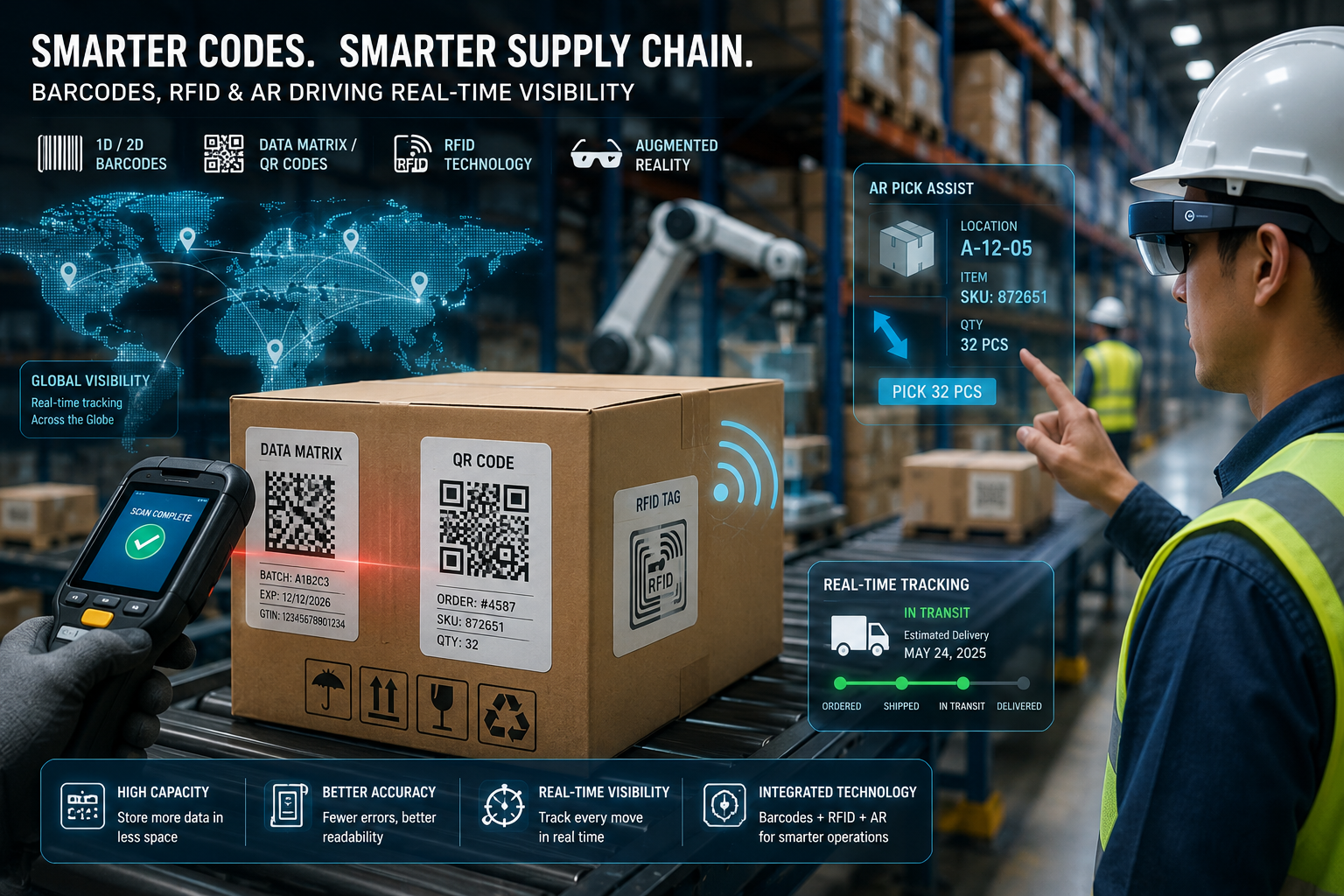
Quick Summary What began as a grocery store experiment in…

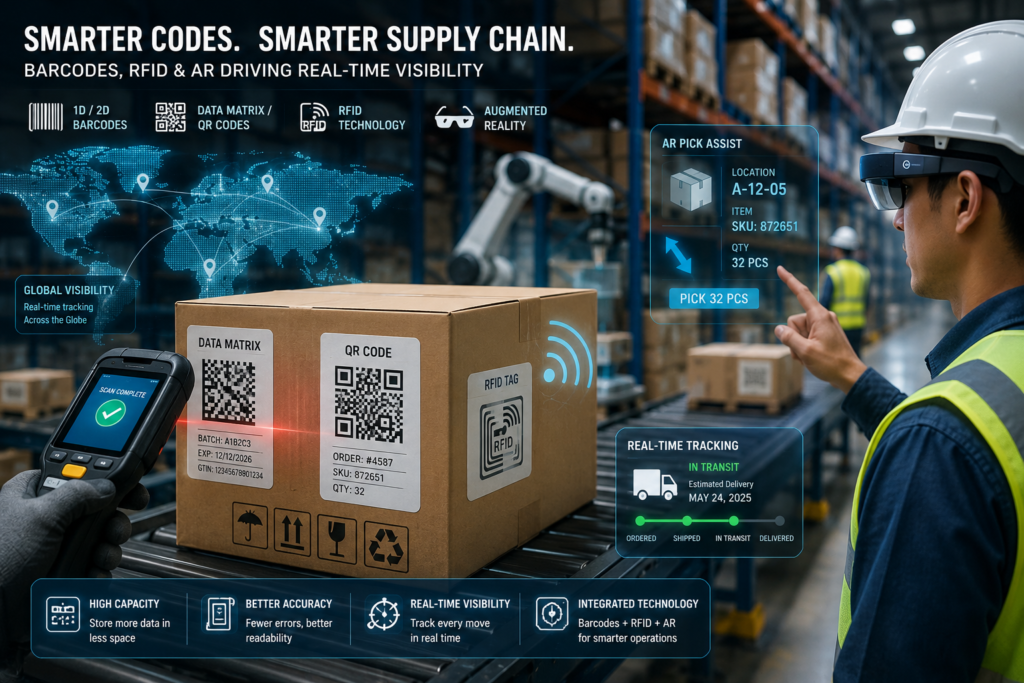
Quick Summary What began as a grocery store experiment in…
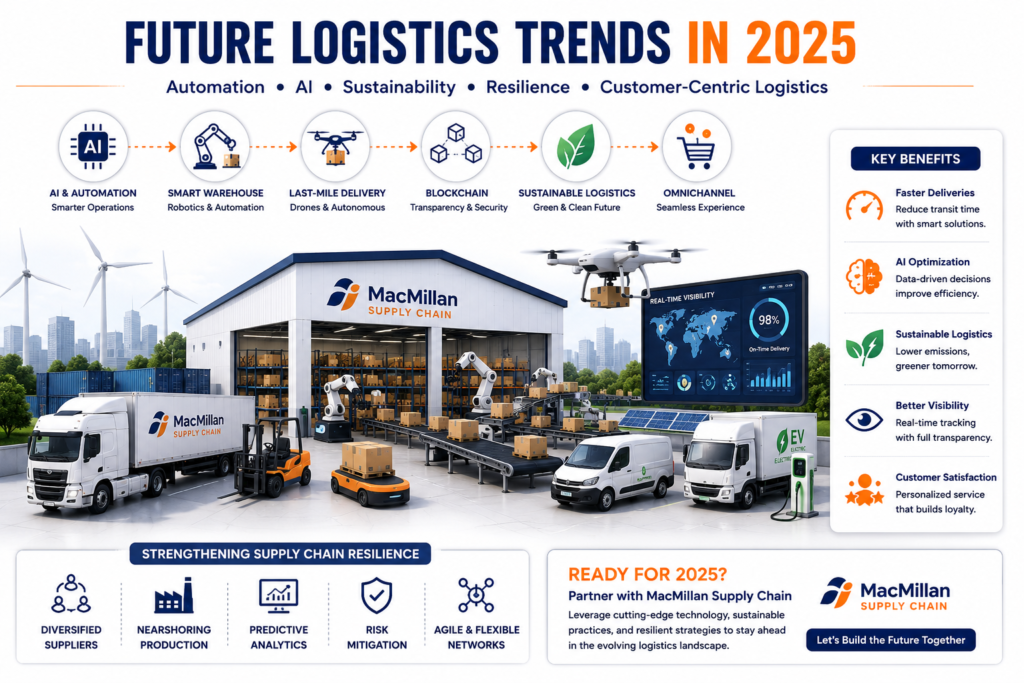
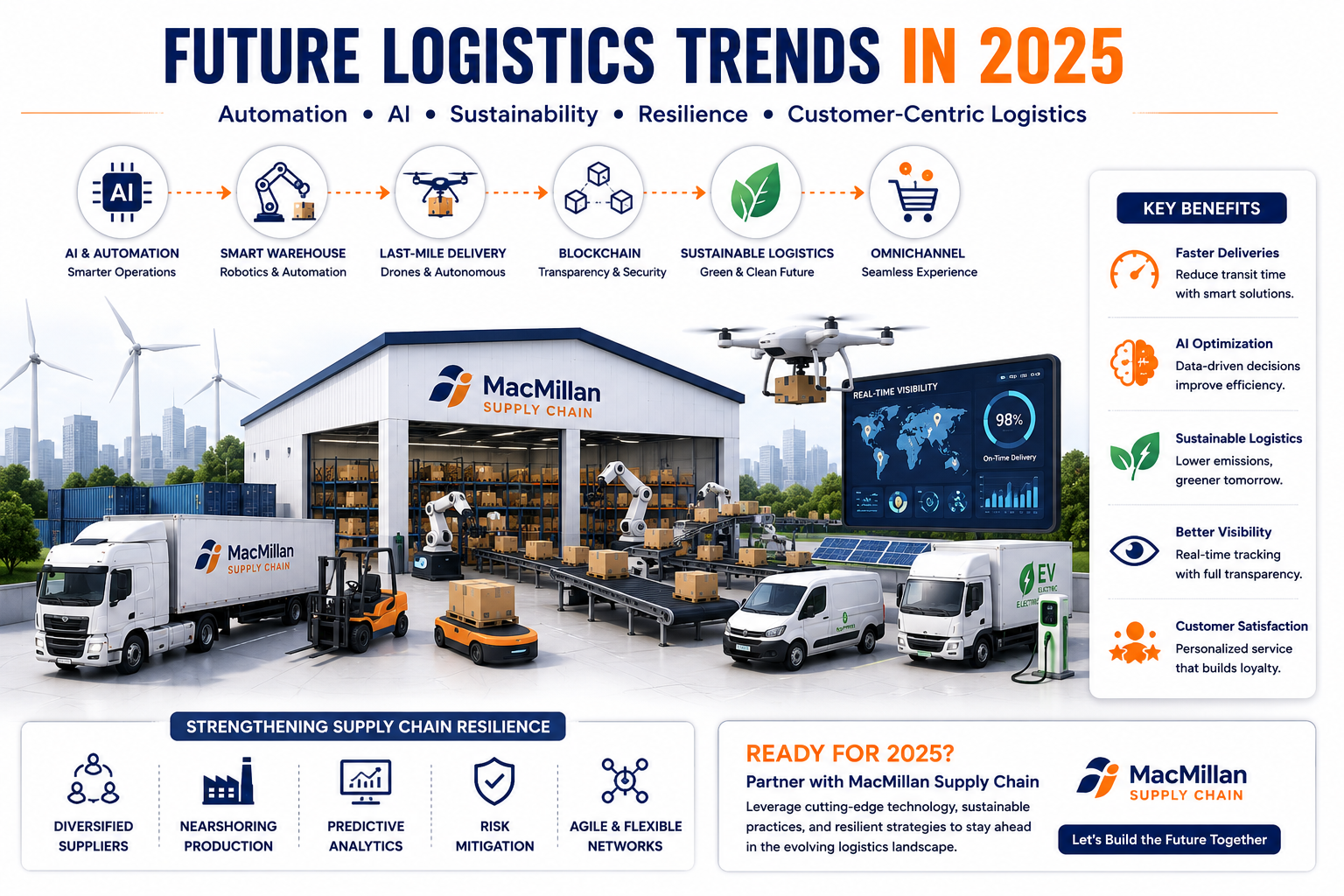
Quick Overview In 2025, logistics will be transformed by automation,…
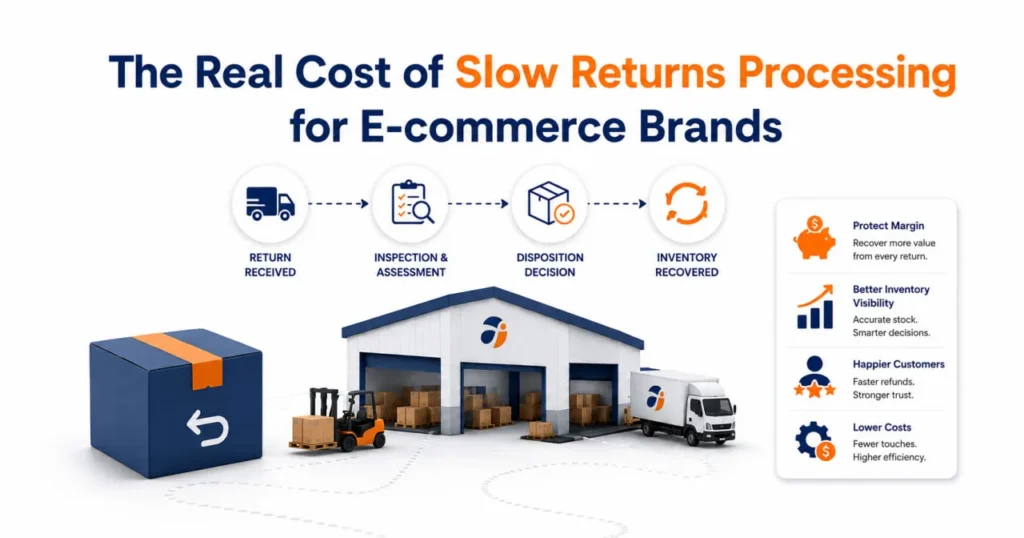
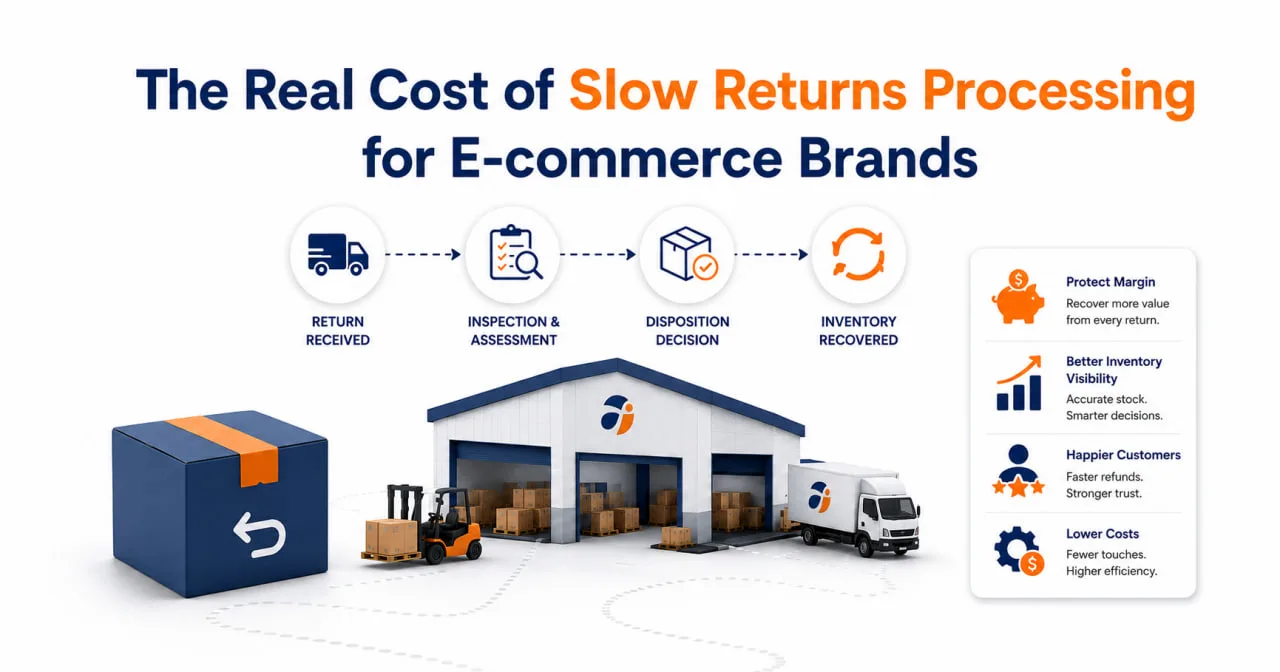
A Quick Summary and Overview For e-commerce brands, returns are…
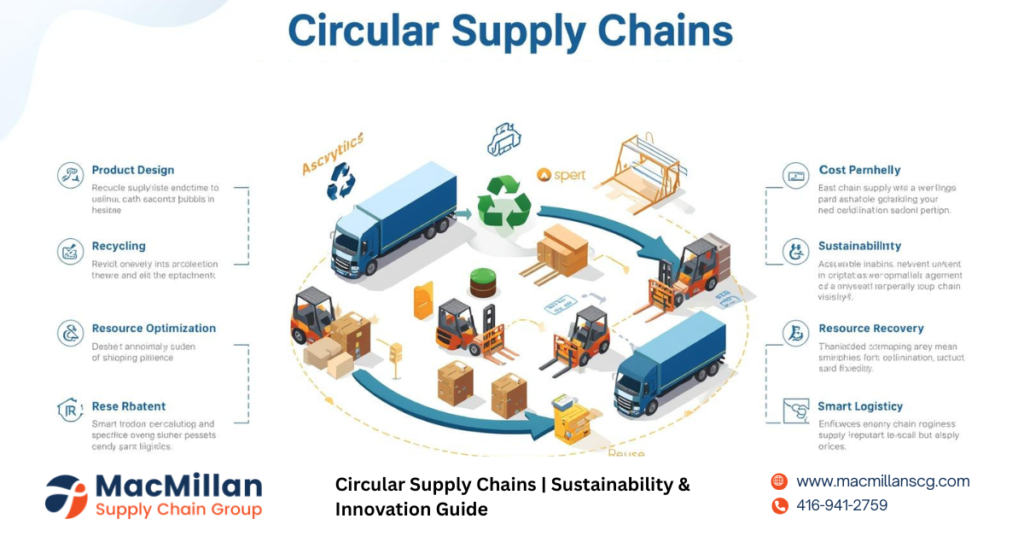
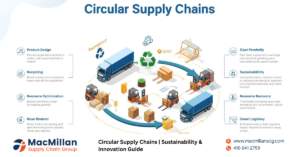
A Quick Summary and Overview Circular supply chains represent a…
Seasonal product launches create a narrow window for success. If inventory arrives late, is staged incorrectly, or is not ready for retail and DTC execution at the same time, the campaign loses momentum before customers ever see the product. Current competitor content that performs well around peak and seasonal fulfillment focuses on forecasting, scalable capacity, real-time visibility, and launch readiness rather than broad logistics education. Shopify’s recent demand-planning and inventory-allocation guidance also emphasizes forecasting, stocking levels, and acting early on seasonal demand signals.
MacMillan SCG is positioned around the exact capabilities seasonal launches require: retail-ready warehousing, promotional packaging, kitting, lot and batch tracking, transportation built for retailer precision, and real-time visibility across inventory and orders.
A seasonal launch is not just another replenishment cycle. It is a timed revenue event. Whether you are launching a holiday bundle, spring wellness promotion, limited-edition beauty SKU, or back-to-school retail program, inventory has to be in the right place, in the right format, at the right time. Shopify’s seasonal inventory guidance notes that brands need sales forecasting and early preparation to avoid stockouts or excess stock during seasonal swings.
The problem is that many brands prepare marketing before they prepare inventory. By the time demand spikes, they are scrambling to receive product, build kits, allocate stock across channels, and meet retail windows. Competitor content from GoBolt and Metro increasingly frames peak-season and launch support around scalable infrastructure, forecasting tools, flexible labor, and value-added services because those are the operational pressure points buyers actually feel.
Most seasonal launches fail operationally in one of five places:
Shopify’s recent inventory-allocation and demand-planning material makes the same basic point: forecasting alone is not enough; brands need a process that turns demand signals into stocking, allocation, and execution decisions.
For Canadian brands, this challenge is often more complex because they may need to support national retail, ecommerce, and marketplace demand at the same time, sometimes with bilingual labeling, channel-specific packaging, and retailer compliance requirements layered in. MacMillan’s value-added and warehousing pages specifically highlight bilingual packaging, GS1 barcodes, retailer-specific labeling, and shelf-ready builds for promotional and launch programs.
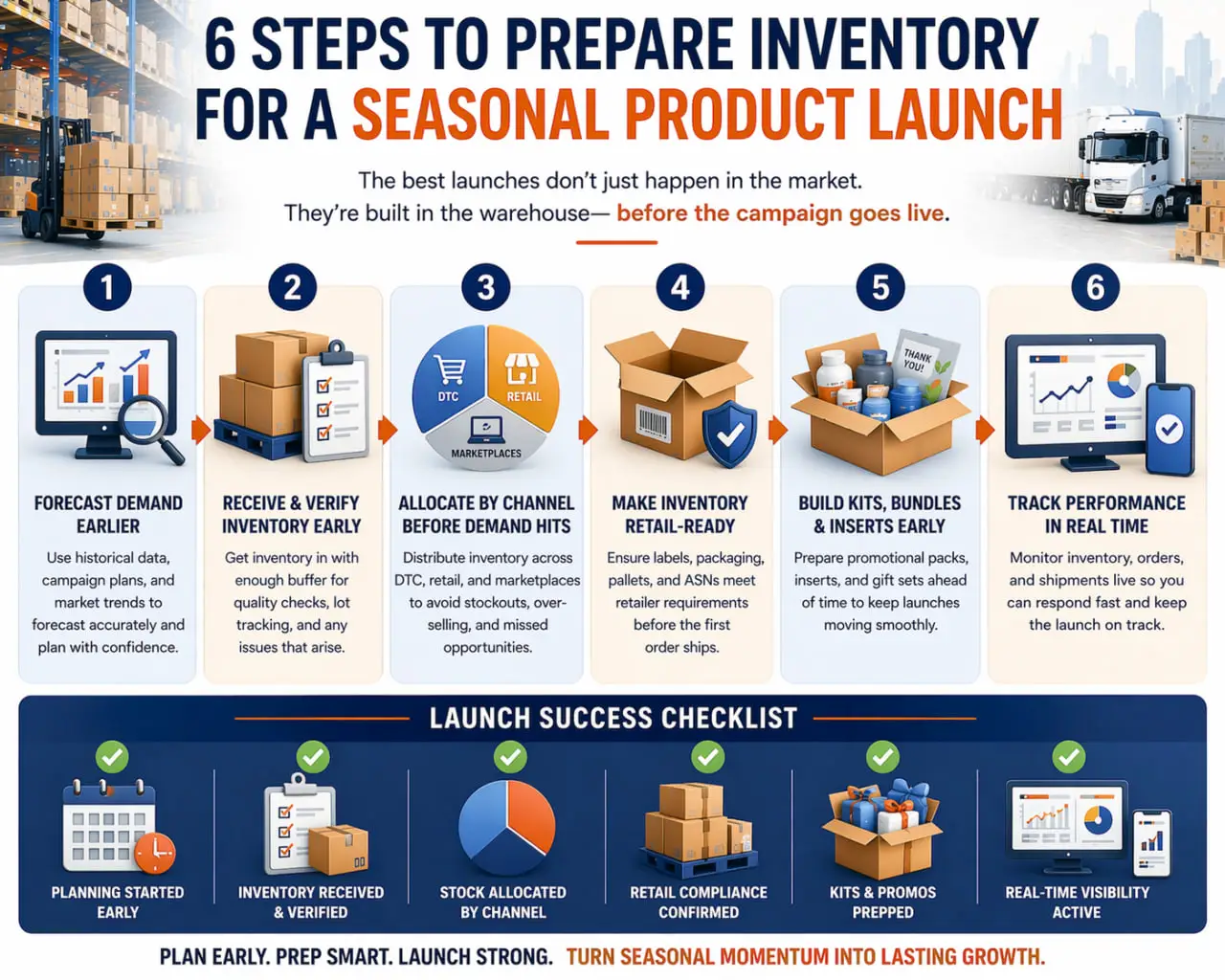
Seasonal launches compress planning timelines. Historical sales, campaign calendars, retailer commitments, regional demand patterns, and product velocity all need to be reviewed early. Shopify’s seasonal forecasting guidance recommends using historical sales data and demand patterns to estimate likely sales swings, while its more recent demand-planning content frames this as a structured process, not a guess.
The operational lesson is simple: launch planning should start before procurement deadlines close, not after inventory is already on the water or inbound to the warehouse.
Brands often lose launch time because receiving happens too close to go-live. Seasonal inventory should arrive with enough buffer for inbound checks, discrepancy resolution, lot capture, and prep work. MacMillan’s warehousing positioning emphasizes rapid dock-to-stock execution, lot and batch tracking, and visibility for quality control and recalls, which are especially valuable when time-sensitive launch inventory lands close to a promotional window.
If the launch involves regulated or sensitive categories such as wellness, beauty, food, or home care, early receiving also reduces the risk of last-minute compliance issues.
A seasonal launch rarely lives in one channel. Brands may need to support DTC, retail, wholesale, and marketplaces from one inventory pool. Shopify’s recent inventory-allocation guidance is directly relevant here: allocation strategy determines where stock should sit and how much each channel receives to minimize stockouts and overselling.
MacMillan’s service positioning supports this approach through multi-channel fulfillment, real-time inventory visibility, and integrated ecommerce and retail execution.
For seasonal retail launches, inventory must do more than exist in storage. It must be ready for shelf placement and compliant receiving. That includes pallet specs, labeling, carton orientation, ASN accuracy, displays, and retailer-specific packaging. Metro’s Toronto 3PL page highlights retailer routing-guide compliance and scalable B2B distribution as a core requirement for retail execution, which mirrors how buyers evaluate seasonal launch support.
MacMillan states that its warehousing operation is built for retailer requirements including pallet height, label requirements, carton orientation, and ASN accuracy, while its value-added services support display assembly, kitting, relabeling, and promo packaging.
Many seasonal launches include bundles, gift sets, promotional inserts, or limited-edition configurations. Those value-added tasks create bottlenecks if they are treated as last-minute add-ons. Competitor content on DTC and peak execution increasingly promotes custom packaging, kitting, and flexible labor as core launch capabilities rather than optional extras.
MacMillan’s value-added services are closely aligned with this need, including product kitting, promo inserts, display builds, bilingual packaging, and retailer-specific labeling.
Once the launch begins, speed of insight matters almost as much as inventory position. Brands need to know what is selling, what is delayed, what needs replenishment, and whether retailer or DTC orders are hitting service expectations. MacMillan’s site highlights real-time order and inventory visibility, milestone updates, digital PODs, and KPI-driven reporting, which helps teams react faster during a narrow launch window.
This aligns with what is working in competitor messaging too: GoBolt’s peak-season content emphasizes real-time tracking, scalable support, and preventing the problems that otherwise surface during compressed demand spikes.
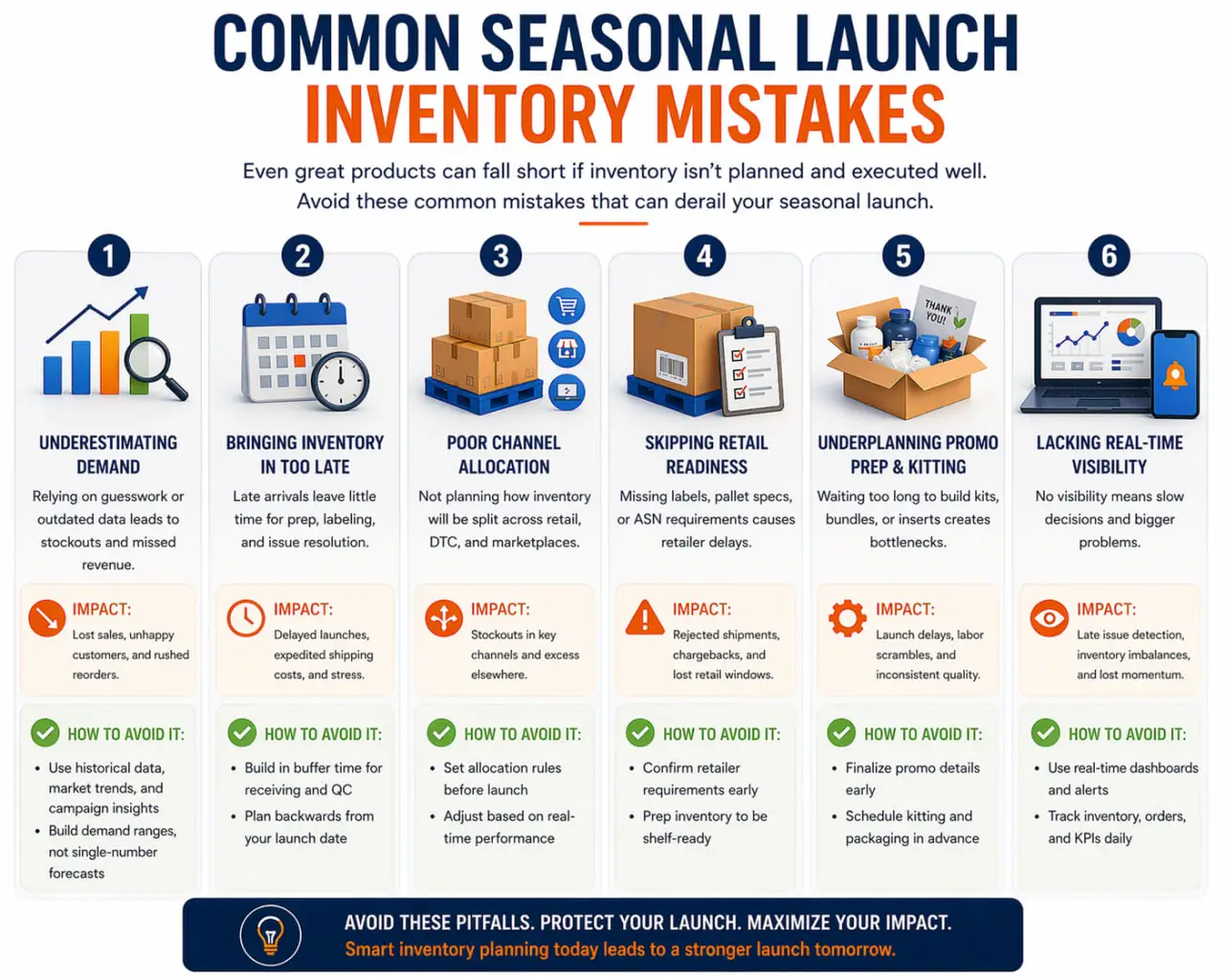
The most common mistakes are:
These mistakes usually lead to the same business outcomes: late launches, lost sales, higher expediting costs, retailer frustration, and weaker customer experience. Shopify’s demand-planning and inventory-management guidance repeatedly ties accurate data and earlier preparation to better availability and lower scramble risk.
A 3PL that supports seasonal launches well should offer:
Metro and GoBolt both frame high-volume seasonal support around scalable infrastructure, forecasting tools, flexible labor, tracking, and branded packaging support, which suggests these are the capabilities buyers are actively responding to in current logistics content.
MacMillan’s service pages map directly to that checklist through warehousing, value-added services, transportation, integrations, and KPI-led visibility.
MacMillan is positioned to help Canadian brands prepare for seasonal launches because its site emphasizes retail readiness, promotional speed, inventory control, and real-time visibility. Its warehousing service supports launch windows, shelf-ready packaging, FEFO and FIFO tracking, and rapid pick-pack execution. Its value-added services support bundles, displays, inserts, relabeling, and retailer-ready promo prep. Its transportation network is built for just-in-time deliveries, promotional drops, and strict retail DC schedules.
For brands launching in beauty, wellness, FMCG, pet care, home care, or general merchandise, that combination matters because launch success depends on coordination between storage, prep, shipping, and compliance, not just warehouse space.
A seasonal launch is won in planning before it is won in market. The brands that perform best are the ones that forecast early, stage inventory correctly, prepare retail-ready units ahead of time, and track execution closely once the campaign starts. Shopify’s seasonal inventory and demand-planning guidance supports exactly that approach: forecast, allocate, and act early.
MacMillan SCG helps Canadian brands prepare inventory for seasonal product launches with warehousing built for retail readiness, value-added services for promotional execution, and transportation designed for on-time delivery and launch precision. If your next seasonal campaign cannot afford stockouts, delays, or compliance gaps, this is the time to build the inventory plan behind the launch.
Talk to MacMillan SCG about building a seasonal launch inventory plan that supports retail, DTC, and promotional fulfillment with speed, visibility, and control.