
eCommerce Fulfillment Guide | MacMillan Supply Chain
A quick summary and overview This comprehensive guide explores the…
A quick summary and overview This comprehensive guide explores the…
A quick summary and overview Effective inventory management is crucial…

AI Won’t Save a Bad Warehouse AI is everywhere in…
A Quick Summary and Overview Last-mile delivery, the final step…
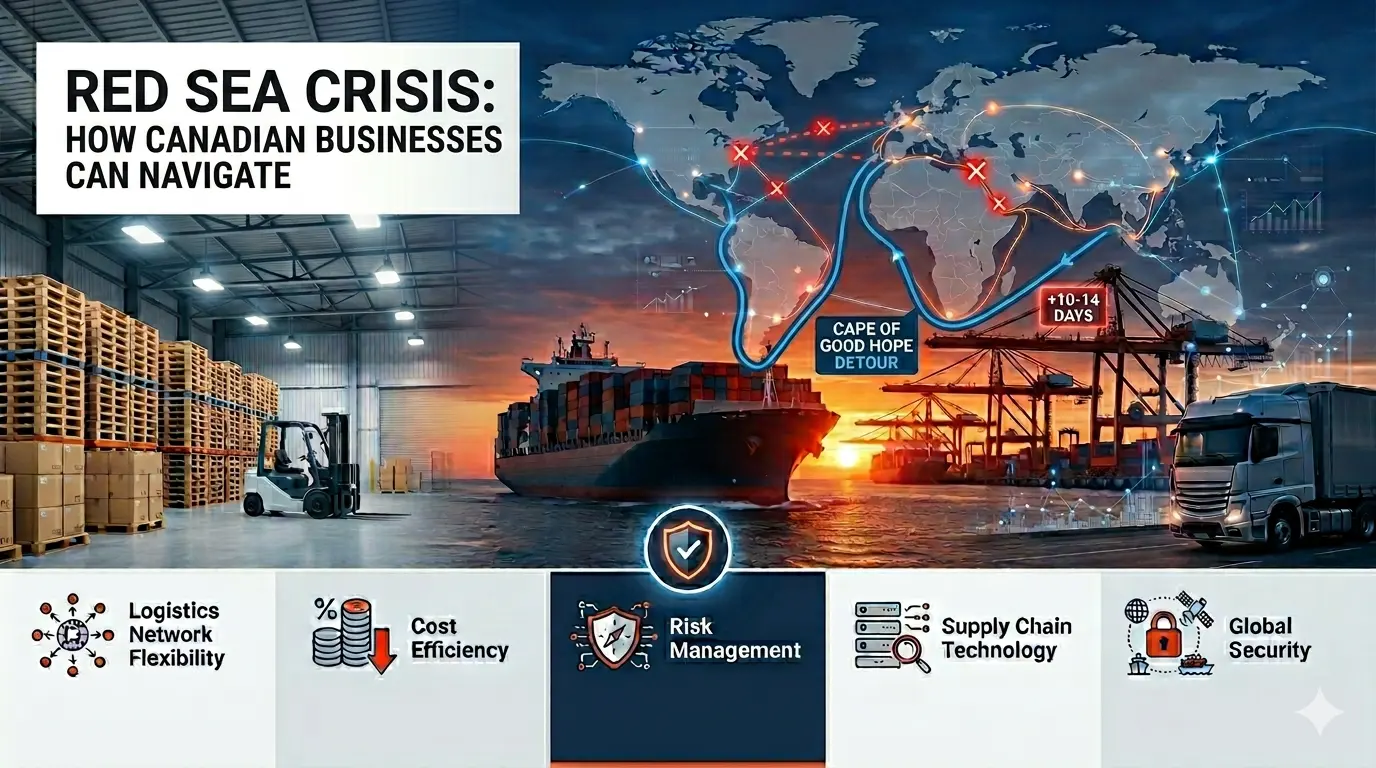
Since late 2023, the Red Sea’s been in turmoil, not weather-wise, but politically. Houthi rebel attacks on cargo ships have basically turned one of the world’s busiest trade routes into a no-go zone. So, what does that mean? Longer shipping times, steeper costs, and a whole lot of headaches for businesses across the globe — yes, even up here in Canada.
Retailers are scrambling to restock. Auto manufacturers are battling parts delays. And electronics? Good luck finding certain components on time. This article breaks down how the Red Sea crisis is rippling through global trade routes, what that means for Canadian businesses, and most importantly, what you can do about it.
Let’s take a moment to go back. Houthi militants have been attacking the Bab al-Mandab Strait, a narrow waterway that connects the Red Sea to the Gulf of Aden, more frequently since October 2023. We are discussing drones, missiles, and attempts at hijacking. These are the kinds of stuff that makes major shipping companies say, “Yeah, let’s take the long way.”
And by “long,” we mean really long. Instead of sailing through the Suez Canal and up into Europe, ships are now detouring around the southern tip of Africa. That adds 10 to 14 days of travel. That might not sound like much on paper, but in supply chain time. That’s a lifetime.
To give you an idea of how serious this is, Suez Canal traffic has dropped more than 50% — from 4 million metric tons to 1.7 million. And every one of those missing ships has ripple effects: higher fuel costs, congested ports, delays, and tighter inventory all around.
So yes, it’s halfway across the world, but for Canadian businesses, it hits close to home.
You might be thinking, “But we’re not even near the Red Sea.” True, but we’re deeply tied to the global flow of goods. And when a major artery gets blocked, everything backs up.
Retailers are having a rough time keeping shelves stocked, especially for seasonal items. Some are missing windows entirely and having to either markdown late winter gear or stash it for next year. A few are even flying in goods at crazy costs just to keep customers happy.
Automotive manufacturers are in a jam too. Many operate on just-in-time delivery systems. One delay in a single part can halt an entire assembly line. A major parts supplier in Ontario reported having to switch to air freight to avoid shutting down a plant (and paid five times the normal cost to do it).
Food and specialty importers aren’t off the hook either. Coffee, spices, international delicacies a lot of it comes through affected routes. Prices are climbing, and shelf lives are shrinking thanks to longer voyages.
The point is, this isn’t some abstract global issue — it’s already showing up in Canadian boardrooms, warehouses, and storefronts.
Some industries are feeling the squeeze more than others. Here’s how it’s shaking out:
Let’s be real — you can’t stop a missile or open the Suez Canal. But you can adapt. Here’s what smart companies are doing (and what you might want to consider):
Let’s call it like it is. The Red Sea crisis has created some serious headaches:
Sound familiar? Yeah, you’re not alone. But that’s where planning and partnerships make a world of difference.
At MacMillan Supply Chain Group, we’ve seen our fair share of supply chain curveballs. We’re helping Canadian businesses weather this one too. Here’s what we’re bringing to the table:
Bottom line? We’re not here to slap a band-aid on the problem. We help build supply chains that can take a hit and keep moving.
If the Red Sea crisis is giving your business more anxiety than your year-end audit, here’s how to begin:
The Red Sea crisis isn’t just another blip, it’s a wake-up call. But with the right moves, Canadian businesses can come out of this not just surviving, but stronger. More agile. More resilient.
If you’re ready to rethink how your supply chain works and make it work better. MacMillan Supply Chain Group is here to help. Let’s turn disruption into opportunity.
While it's difficult to predict with certainty, maritime security experts suggest the situation could persist for several months or even longer. The underlying geopolitical tensions driving the crisis remain unresolved, and international naval operations have had limited success in deterring attacks. Canadian businesses should prepare for disruptions to continue throughout 2024 and potentially beyond, making long-term resilience strategies essential.
Shipping costs have increased significantly, with some routes experiencing spikes of up to 200%–300%. The need to reroute vessels around the Cape of Good Hope adds fuel costs, longer transit times, and higher insurance premiums. As a result, businesses are facing higher freight rates, container shortages, and increased overall logistics expenses.
Switching entirely to air freight is usually not practical due to its high cost—often 4 to 6 times more expensive than ocean freight. However, businesses can use a hybrid approach, reserving air freight for high-value or time-sensitive goods while continuing to ship bulk inventory via ocean routes. This balance helps control costs while maintaining supply continuity.
Small businesses can stay competitive by diversifying carriers, booking shipments earlier, and working with third-party logistics (3PL) providers that have access to consolidated shipping and reserved capacity. Building strong relationships with logistics partners and being flexible with delivery timelines can also help secure space during high-demand periods.
Yes, nearshoring or reshoring offers several advantages, including shorter lead times, reduced transportation risks, and improved supply chain visibility. By sourcing from regions closer to Canada, such as the U.S. or Mexico, businesses can reduce dependency on volatile global shipping routes and respond faster to market demand.
Key technologies include real-time shipment tracking systems, predictive analytics tools, inventory management software, and supply chain visibility platforms. These tools help businesses anticipate delays, optimize inventory levels, and make data-driven decisions, allowing them to respond more effectively to disruptions.