
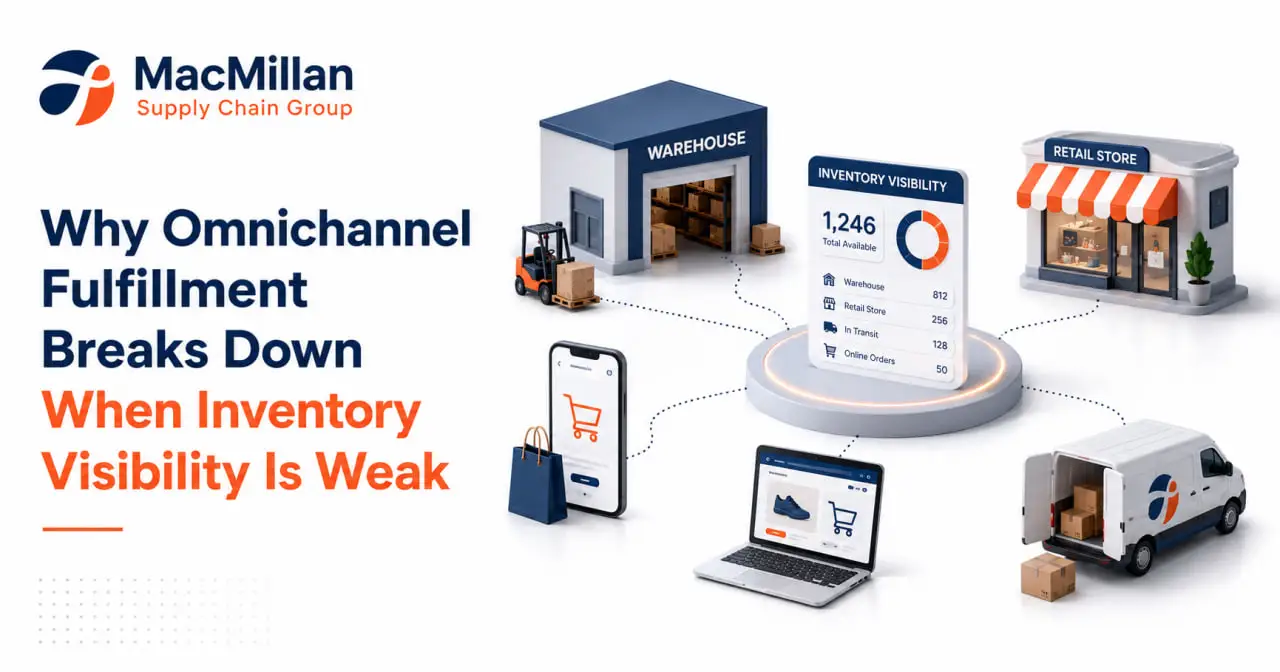

Conquering Ocean Freight Bottlenecks 2025: A Guide for Supply Chain Resilience
Quick Summary: As we approach Ocean Freight Bottlenecks 2025, the…
Quick Summary: As we approach Ocean Freight Bottlenecks 2025, the…
A Quick Summary and Overview Omnichannel fulfillment only works when…

The Future is Hands-Free: How Touchless Planning is Rewriting Supply…

Quick Summary Picture this: You’re waiting for a package, tapping…
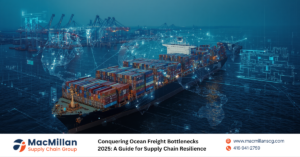
As we approach Ocean Freight Bottlenecks 2025, the industry faces significant bottlenecks, including port congestion, overcapacity, and evolving regulations. Navigating these challenges requires a proactive approach to ensure supply chain resilience. MacMillan Supply Chain Group offers expert insights and tailored solutions to help businesses overcome these obstacles and maintain efficient operations.
The ocean freight landscape in 2025 presents a complex web of challenges that can disrupt even the most well-oiled supply chains. Factors such as port congestion, vessel overcapacity, and shifting regulatory frameworks are causing delays, escalating costs, and creating uncertainty for shippers worldwide. At MacMillan Supply Chain Group, we understand the critical importance of addressing these bottlenecks head-on. Our team of seasoned logistics experts provides actionable insights and customized solutions designed to help businesses navigate these turbulent waters and maintain resilient supply chains.
One of the most pressing issues facing the ocean freight sector in 2025 is the persistent challenge of port congestion. Major ports across Asia, Latin America, and North America are experiencing severe delays, with some bottlenecks lasting up to three weeks in critical hubs like Busan and Singapore. These delays are often exacerbated by labor shortages, adverse weather conditions, and inefficient cargo handling processes. Navigating these congested waters requires proactive planning and a willingness to explore alternative routing strategies. At MacMillan Supply Chain Group, we leverage our deep industry expertise to identify and implement the most efficient routes, minimizing delays and avoiding bottlenecks that can cripple supply chain operations.
The surge in container vessel orders has led to a concerning issue of overcapacity within the ocean freight sector. While this might initially suggest lower freight rates, the reality is far more complex. Overcapacity can strain carrier profitability, leading to cuts in service quality, reliability, and potentially higher costs for shippers in the long run. At MacMillan Supply Chain Group, we understand that navigating these turbulent waters requires strategic planning and a deep understanding of market dynamics. By optimizing shipping schedules, negotiating favorable rates, and leveraging our extensive industry network, we help our clients capitalize on market conditions without sacrificing operational efficiency.
As we approach 2025, the ocean freight industry is grappling with the impacts of potential policy shifts and evolving global regulatory requirements. New tariffs, compliance standards, and environmental regulations are increasing the cost and complexity of ocean freight logistics. Failure to adapt to these changes can result in costly penalties, delays, and reputational damage. At MacMillan Supply Chain Group, we prioritize staying ahead of these regulatory shifts, offering comprehensive compliance strategies and adapting swiftly to new mandates. Our focus is on reducing the operational costs associated with compliance, ensuring that our clients remain competitive despite the ever-changing regulatory landscape.
In the face of these multifaceted challenges, building supply chain resilience has become an imperative for businesses seeking to maintain a competitive edge. Resilience encompasses the ability to anticipate disruptions, mitigate their impact, and rapidly adapt to changing circumstances. At MacMillan Supply Chain Group, we partner with our clients to develop robust contingency plans, diversify supply bases, and implement advanced technologies that enhance visibility and agility across the entire supply chain network.
Port Congestion: MacMillan Supply Chain Group addresses port congestion by leveraging our extensive network and deep industry knowledge to identify alternative routing options, optimizing cargo flow, and collaborating with port authorities to streamline operations.
Overcapacity: We help clients navigate overcapacity challenges by optimizing shipping schedules, negotiating favorable rates, and providing strategic guidance on market trends and carrier dynamics.
Regulatory Compliance: Our dedicated compliance team stays ahead of regulatory changes, offering comprehensive strategies to ensure seamless adherence to evolving mandates, minimizing disruptions and penalties.
Supply Chain Disruptions: Through proactive risk management, diversification strategies, and the implementation of cutting-edge technologies, we enhance supply chain visibility, enabling rapid response and adaptation to unforeseen disruptions.
To conquer the ocean freight bottlenecks of 2025 and build resilient supply chains, businesses must take a proactive approach. Partner with MacMillan Supply Chain Group to access our extensive industry expertise, leverage our strategic solutions, and stay ahead of the curve. Our tailored approach ensures that your supply chain operations remain efficient, cost-effective, and agile in the face of evolving challenges.
Contact MacMillan Supply Chain Group today to schedule a consultation and learn how our customized solutions can help your business navigate the ocean freight bottlenecks of 2025 and achieve long-term supply chain resilience.
Port congestion in 2025 is primarily driven by a combination of factors, including labor shortages, inefficient cargo handling processes, and adverse weather conditions exacerbated by climate change. Additionally, an imbalance in container supply and demand, as well as infrastructure limitations at major ports, contribute to the bottlenecks.
Businesses can reduce the impact of overcapacity by diversifying carriers, improving demand forecasting, and using flexible shipping strategies to control costs and maintain supply chain stability.
Non-compliance can lead to fines, shipment delays, cargo holds, reputational damage, and disruptions across the supply chain.
Advanced technologies improve visibility, automate operations, and provide real-time data that helps businesses respond quickly to disruptions and improve efficiency.
Working with MacMillan Supply Chain Group helps businesses improve efficiency, reduce logistics risks, ensure compliance, and optimize overall supply chain performance.