
5 Factors Shaping Your Shipping Costs in the 3PL Economy
Are your outbound shipping costs cutting into your 3PL’s profits? In this article, we’ll explore five key factors impacting your shipping expenses in your Canadian 3pl warehouse and offer practical strategies to help you lower them. From optimizing delivery speed to managing special handling fees, we’ll provide valuable insights to help you make informed operational decisions that save both time and money. Factor 1: Weight and Shipping Zones When shipping domestically within the US or including Canadian 3pl warehouses, two primary elements affect your costs: the destination zone and the weight of the package. Destination Zone Shipping carriers divide the area into the given zones, starting with Zone 1 at the origin point. As your package travels further from its starting point, the shipping fees rise. Here’s a breakdown of the zones and their respective mileage ranges: Zone 1: 1-50 miles Zone 2: 51-150 miles Zone 3: 151-300 miles Zone 4: 301-600 miles Zone 5: 601-1000 miles Zone 6: 1001-1400 miles Zone 7: 1401-1800 miles Weight The weight of your package directly affects shipping costs: heavier packages incur higher fees. However, weight isn’t the sole factor; the dimensions of your package are also crucial. While MacMillan offers transparent fees with no hidden charges. Finding the right balance between a package’s size and weight can help you avoid DIM weight surcharges, which are applied to larger but lighter packages. Investing in an efficient packaging design can help you optimize the size and weight of your packages, ultimately reducing unnecessary shipping expenses and boosting your Canadian 3pl warehouse operations. Shipping Calculators by Carrier: USPS: Shipping Calculator Canada Post: Shipping Calculator FedEx: Shipping Calculator UPS: Shipping Calculator International Shipping Don’t miss out on duty relief programs like Section 321. This provision can reduce your duty fees by up to 20%, offering significant savings. MacMillan Section 321, part of the Trade Facilitation and Trade Enforcement Act, simplifies shipping from Canada or Mexico to the U.S. for individual customers by providing tax and duty exemptions, quicker clearance, and less paperwork. For goods valued at $800 USD or less per person per day, Section 321 offers an excellent opportunity to cut costs and expand your market in the U.S. While some product restrictions apply, the benefits are substantial for businesses aiming to reach American consumers. Factor 2 : Delivery Speed With the rapid growth of eCommerce, fast delivery is crucial for meeting customer expectations. MacMillan has learned that while customers generally expect two-day delivery from Amazon, they are usually okay with three to four days from other businesses, as long as real-time tracking is provided. To address these needs and maintain profitability, balancing cost and delivery speed is key. 90% of customers want immediate updates, and 32% will abandon their carts if shipping times are too long, pushing 3PLs and carriers to update their distribution models. Fulfillment Trends Micro-fulfillment centers are a solution for faster delivery, strategically located in urban areas and stocked with high-demand items. Though setting up MCFs can be costly, they lower shipping expenses and enhance efficiency, benefiting companies that implement them. Last Mile Delivery Last-mile delivery constitutes 53% of shipping costs, making it critical for customer satisfaction and profitability. Challenges in this area are significant, but partnering with efficient services like Veho can improve delivery performance and reduce costs. Factor 3 : Warehouse Teams and the Packing Process Efficiency in a Canadian 3PL warehouse hinges on the effectiveness of your packing team. Here are key considerations for optimizing your operations: Training Investment Ensure your team is well-trained in SOPs, equipment use, inventory management, and customer order systems. Proper training reduces turnover and enhances productivity, ultimately boosting profits. Packing Station Efficiency Regularly evaluate your packing station to find areas for improvement. Implement one-touch stations and ergonomic designs to streamline workflow, cut labor costs, and reduce errors. Optimizing Picking Paths Efficient picking paths can significantly improve profit margins. Slow picking increases costs, which can lead to higher prices for customers. Streamline picking processes to enhance efficiency. Automation Utilization While a 95-98% order accuracy rate is standard, aiming for near 100% is ideal. However, MacMillan offers a zero percent error rate. Automation helps reduce errors and improves inventory control, saving money by minimizing mistakes Data Analysis Measure and analyze key performance indicators (KPIs) to identify inefficiencies and reduce expenses. Tracking data from receiving to shipping provides a comprehensive view of your warehouse operations, aiding in operational improvements. Key Performance Indicators (KPIs) to Monitor: Inventory Days of Supply (DSI): Measures the average number of days it takes to turn inventory into sales, including work-in-progress items. Parcel Bill Accuracy: Regularly check your parcel bills for accuracy to prevent overcharges. Detailed bills can aid in negotiating better shipping contracts. Receiving Efficiency: Calculates how efficiently your receiving area operates, measured by the volume of inventory received per hour worked. For example, 2000 goods received by two employees working 40 hours each translates to 25 goods per hour. Order Picking Accuracy: Essential for ensuring orders are filled correctly. High accuracy prevents costly mistakes and maintains customer satisfaction. Warehouse Capacity Utilization: Efficient use of warehouse space is crucial. Ideal utilization is around 80%. Calculate usable space by measuring total square footage, subtracting unusable areas, and multiplying by clearance height to determine usable volume. Factor 4 : Special Handling Fees Handling fees for hazardous and fragile items have both pros and cons: Hazmat: Revenue Generation: Special handling fees for hazardous materials help cover safety costs and boost profitability. Risk Management: To ensure safe transport, charge fees, conduct inspections, and employ trained staff. Competitive Advantage: Expertise in handling hazardous items can position a shipping company as an industry leader, attracting customers seeking specialized services. Fragile Items: Reputation: Damaged items can harm your reputation and bottom line. Ensure careful handling by using a special projects team to pre-assemble or kit items for safer transport. Factor 5 : Surcharges in Canadian 3PL Warehouse Surcharges can impact your shipping costs significantly. Key points to manage them include: Understanding Charges: Be aware of all surcharges, including those for specialized services, to avoid unexpected costs. Negotiation: Start with competitive base rates and analyze accessorial charges to select the best options. Cost Management: General rate increases can affect base rates. Use shipping cost strategies, analyze expenses,
Understanding the Economics of 3PL Warehousing
Navigating Carrier Costs and 3PL Surcharges can be a major headache for how 3PL warehousing operators, not only inflating costs but also introducing unpredictability into budget forecasts. With shipping rates constantly fluctuating, accurately predicting expenses becomes a complex challenge. To safeguard profitability, how 3PL warehouses such as MacMillan use effective strategies for managing these costs. Fortunately, there are several tactics available to help contain expenses and preserve margins. Base Rate vs. Accessorial Charges Determining the true cost of shipping involves more than just looking at base rates. While base rates provide a foundational cost, they don’t encompass the full picture. Accessorial charges, additional fees for specialized services like lift gates or residential delivery, can quickly accumulate. Understanding these charges is crucial for managing outbound shipping costs effectively. What is a Base Rate? A base rate is the fundamental cost of moving goods from one location to another, usually negotiated between you and the carrier. Unlike base rates, accessorial charges are extra fees for additional services that aren’t part of the basic delivery. While base rates are generally fixed according to contract terms, accessorial fees can vary based on specific service needs. Choosing the Optimal Base Rate Selecting the best base rate involves evaluating various factors beyond just the quoted rate. Although base rates across carriers might seem similar, differences in package specifications such as size, weight, and distance can impact the overall cost. Additionally, accessorial charges and other fees can significantly affect the final expense. Tools like MacMillan’s rate shopping feature can help compare base rates in real-time, how 3pl warehouses use for ensuring you secure the most cost-effective shipping option for each order. Understanding Accessorial Charges Accessorial charges are additional fees imposed by carriers for services beyond the standard delivery. These can include costs for loading, unloading, packing, or delays. Recently, these surcharges have become more prevalent as carriers seek to enhance revenue streams. A recent survey indicates that more than 75% of carriers view these fees as essential to their financial stability. Being informed about these charges will help you develop effective shipping strategies and negotiate better rates with carriers. Impact of General Rate Increases (GRI) on Base Rates General Rate Increases (GRI) are an inevitable aspect of the shipping industry, influenced by rising costs in fuel, insurance, wages, and other operational expenses. Carriers often pass these increased costs onto shippers through adjusted rates. Typically announced in October or November, GRIs can lead to noticeable hikes in base rates. For instance, recent GRIs for major carriers include: UPS: 6.9% increase, effective December 27, 2022 FedEx: 6.7% increase, effective January 2, 2023 USPS: 5.5% increase, effective January 22, 2023 These increments, though seemingly modest at 4-6%, can significantly raise the base rates that 3PLs pay, impacting overall costs. Key Insights and Strategies for mastering shipping costs As the logistics landscape becomes increasingly intricate, managing how 3pl warehousing implement accessorial charges and other fees can be challenging. These supplementary costs can significantly impact a 3PL’s bottom line, but they also present an opportunity for negotiation. The key to negotiating effectively lies in understanding these surcharges and their impact on your total shipping volume. Leverage Detailed Fee Knowledge To negotiate better terms, it’s essential to understand the percentage of accessorial charges relative to your overall shipping volume. Armed with this knowledge, you can present a well-informed case for adjustments. MacMillan offers regular audits of your shipping bills to identify and dispute errors or overcharges can lead to cost recovery and increased carrier accountability. Estimating Your Shipping Costs Our Invoice Analysis tool offers a detailed breakdown of your UPS expenses. By importing your data and using our template, you can swiftly pinpoint where your money is being spent. This tool presents charges in a clear, organized format, highlighting the most impactful fees on your bottom line. Say goodbye to hidden fees and make informed decisions by checking out the link above. Prevalence of Industry Standards Many shippers 67% believe they are paying standard industry rates. However, understanding specific surcharges imposed by carriers can help you manage and reduce costs effectively. Common Carrier Surcharges Carriers impose various surcharges to manage operational costs and handle exceptions. While automation has streamlined many processes, certain scenarios still require manual intervention, leading to additional charges. Understanding how 3pl warehousing uses these common surcharges to help you take proactive measures to minimize expenses: USPS Shipping Surcharges: Non-Machinable Surcharge: Applied to packages requiring manual sorting. Fuel Surcharge: Adjusted based on fluctuations in fuel costs, calculated as a percentage of the shipping fee. FedEx Shipping Surcharges: International Fuel Surcharges: Fluctuate weekly based on jet fuel prices. Delivery/Pick-Up Surcharge: Additional fee for deliveries or pick-ups in remote areas. Handling Surcharge: Applied to packages exceeding 48 x 29 inches. Oversize Charge: For packages longer than 96 inches or with a combined length and width of over 129 inches. UPS Shipping Surcharges: Fuel Surcharge: Based on jet fuel prices from Canada. Address Correction: Charged to the shipper for incorrect addresses. Over Maximum Limits Fee: Applied to packages over 154 pounds or 108 inches in length. Optimize Shipping with MacMillan WMS MacMillan WMS offers live rate shopping to help you select the most cost-effective carrier for each shipment. By comparing rates, transit times, service levels, and surcharges, you can make smarter shipping decisions and reduce costs. Analyzing how 3PL warehousing optimizes real-time rate access ensures you always choose the best option for your needs. Additional Surcharges to Consider DIM Weight: Carriers use dimensional weight to calculate shipping costs based on package size. Lightweight items in large boxes can lead to higher charges. Seasonal Peak or Demand Surcharge: Added during peak seasons fluctuations or high-demand periods to cover increased operational costs. These surcharges can affect both incoming inventory and outbound shipments. Accurate demand planning such as MacMillan can mitigate these costs by forecasting product needs and optimizing distribution strategies. By anticipating peak season demands and ordering inventory ahead of time, you can minimize extra charges and reduce transit times, fuel costs, and other transportation expenses. Understanding these elements and implementing strategic planning can lead to significant savings and improved shipping efficiency. Strategies
Unlocking Outsourced Fulfillment: Key Advantages and Obstacles
Outsourced fulfillment involves hiring a third-party logistics provider to manage inventory, order processing, packaging, and shipping, allowing businesses to focus on their core activities. This approach streamlines the supply chain and supports scalability, particularly beneficial for small and medium-sized businesses facing demand spikes. Partnering with a 3PL offers several advantages, including access to specialized expertise, advanced technology, and established supply chain relationships, all contributing to cost savings and improved customer service. Businesses can customize fulfillment services to their needs, reducing investment in infrastructure and technology. Overall, outsourced fulfillment helps companies optimize logistics, cut costs, and concentrate on growth and customer satisfaction. What are the components of outsourced fulfillment? Outsourced fulfillment involves several key components that ensure efficient order processing: Inventory Management: A 3PL such as MacMillan SCG tracks and manages inventory levels using advanced systems to prevent stock outs and ensure timely replenishment. Order Processing: The 3PL handles order confirmation, verification, and allocation through automated systems integrated with eCommerce platforms, ensuring fulfillment with accuracy and efficiency. Packaging: Proper packaging is crucial for product protection and a positive customer experience. MacMillan SCG uses industry-standard materials and may offer custom packaging options. Shipping: Leveraging their network, 3PLs select optimal shipping methods and carriers, negotiate rates, and offer various delivery options to ensure timely and safe delivery. Returns Management: The 3PL manages the entire returns process, including authorization, inspection, restocking, and refunds or exchanges, streamlining operations and enhancing customer satisfaction. Customer Service: MacMillan’s dedicated customer service teams handles inquiries, provide updates, and resolve issues, ensuring a smooth customer experience from order to delivery. Outsourcing fulfillment to a skilled 3PL allows businesses to focus on their core functions while benefiting from expert management of these crucial components, leading to improved efficiency and customer satisfaction. Outsourcing fulfillment to a 3PL offers several key advantages Expertise and Resources: MacMillan SCG provide specialized knowledge and access to advanced technology, streamlining inventory management, order processing, and shipping. Cost Savings: By outsourcing, you avoid investing in warehouses, technology, and a dedicated team. This reduces infrastructure costs and operational expenses. Scalability: 3PLs can easily adjust to fluctuating order volumes during peak times, handling increased demand without needing additional resources or infrastructure. Focus on Core Competencies: Outsourcing allows you to concentrate on strategic activities like product development and marketing, leaving logistics to the professionals. What are the considerations to follow in outsourced fulfillment? While outsourcing fulfillment offers many advantages, businesses should be mindful of potential challenges. One key concern is the loss of direct control over fulfillment processes, making it crucial to select a reliable and transparent 3PL. Data security is another significant consideration; sharing sensitive customer and inventory information requires partnering with a 3PL that implements robust security measures. Additionally, effective communication and coordination are essential for successful outsourcing, necessitating regular updates and clear communication channels to ensure smooth operations. Factors to consider when choosing a fulfillment partner When choosing between in-house fulfillment and outsourcing to a 3PL, several key factors should be evaluated: Order Volume: Large order volumes might necessitate advanced technology and infrastructure, which can be more cost-effective through a 3PL provider such as MacMillan for reliability. Product Characteristics: Products that are fragile or perishable often require specialized handling and packaging. A 3PL can offer the expertise needed for these specific requirements. Market Reach: For businesses with a broad geographic footprint or diverse customer base such as Amazon, partnering with a 3PL can enhance fulfillment efficiency and improve delivery across various locations. Ways to successfully outsource a fulfillment partner For a successful outsourcing experience, businesses should adhere to the following best practices: Thorough Research and Due Diligence: Carefully evaluate potential 3PL providers by assessing their experience, reputation, and client feedback. Clear Communication of Expectations: Define your business needs and performance criteria with the 3PL. Set clear key performance indicators (KPIs) and implement regular reporting to track progress. Transparency and Collaboration: Build a transparent and cooperative relationship with the 3PL. Regularly review performance metrics, promptly address any issues, and ensure continuous, open communication. Key Takeaways Outsourced fulfillment offers significant advantages, including specialized expertise, cost savings, scalability, and the ability to concentrate on core business activities. However, businesses must also address potential challenges, such as diminished control, data security concerns, and the need for effective communication. When deciding between in-house fulfillment and outsourcing, it’s important to consider factors like order volume, product specifics, and market reach. Adhering to best practices, such as conducting comprehensive research, setting clear expectations, and maintaining transparency, will help businesses effectively manage their outsourced fulfillment operations and enhance their overall logistics efficiency.
Enhance Your NetSuite Order Fulfillment with MacMillan SCG
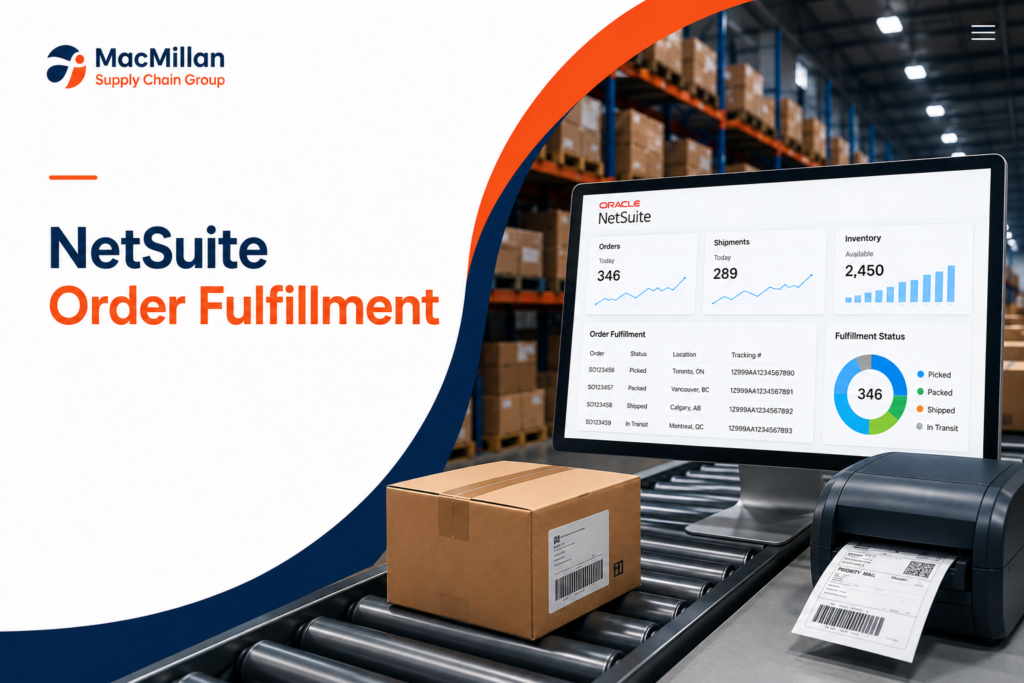
For numerous mid-market and enterprise-level brands, Oracle NetSuite serves as a crucial foundation. As the leading ERP system among today’s fastest-growing ecommerce companies, NetSuite provides the essential platform to keep your business running smoothly. Recognizing this, MacMillan has developed integrations designed to enhance logistics efficiency and ensure timely sharing of fulfillment, shipping, and order data through customizable workflows. Our direct integration enables your business to scale effortlessly while integrating MacMillan with NetSuite. In this blog, we’ll delve into the specifics of NetSuite fulfillment and demonstrate how integration can optimize your brand’s operations. What is NetSuite Order Fulfillment? NetSuite order fulfillment encompasses the entire process of picking, packing, and shipping your business’s orders on schedule, all while ensuring visibility within the NetSuite ERP system. This system supports ecommerce retailers by managing essential fulfillment tasks such as picking, packing, shipping, and inventory control. Though these practices are standard in order fulfillment, NetSuite provides unique advantages. Its extensive customization options and deep integration with the ERP system enable seamless coordination across financials, customer relationship management (CRM), and supply chain management. How Does NetSuite Order Fulfillment Work? NetSuite order fulfillment adheres to fundamental order fulfillment principles but adds enhanced capabilities and integrations for improved efficiency. Pick, Pack & Ship: When a customer order is placed and processed within NetSuite, the system generates a pick list to guide 3PL warehouse staff in selecting and retrieving the items. After picking, staff pack the order and prepare it for shipment. NetSuite fulfillment facilitates this by generating packing slips and shipping labels to ensure that items are ready for delivery and reach their destination efficiently. Cross-Subsidiary Fulfillment: NetSuite’s cross-subsidiary fulfillment feature allows companies with multiple subsidiaries to fulfill orders across different entities within a single NetSuite account. This is particularly useful for businesses operating in various geographic regions or countries. Upon receiving an order, NetSuite determines the most suitable subsidiary or location for fulfillment based on factors such as inventory availability, proximity, and shipping costs. Carrier Integration: NetSuite fulfillment supports integration with various shipping carriers, enabling real-time shipment tracking and label printing directly from the NetSuite interface. It supports major carriers like UPS, USPS, FedEx, and DHL. Dropdown Lists: It offers dropdown lists to manage and review information throughout the fulfillment process. These lists allow you to filter packing slips by order status, such as picked, packed, or shipped and view the current status of orders, including pending, in progress, or canceled. Additional dropdown lists are available for shipping methods, integrated carriers, and package types. Fulfillment Requests: A fulfillment request in NetSuite represents a transaction step between the sales order and the fulfillment process. It helps manage orders that need to be shipped to customers or picked up. Depending on the request type, orders can either be shipped to the customer’s address or prepared for pickup at a retail store or designated location. Factors involved for NetSuite integration Order Fulfillment With MacMillan’s integration with NetSuite, you can streamline your order fulfillment process by syncing customer orders and fulfillment data between both platforms. When an order is placed through your website or any direct-to-consumer (DTC) sales channel, MacMillan automatically updates NetSuite with order tracking information and creates corresponding item fulfillment records linked to your sales orders in NetSuite. This integration offers various configuration options, including: Inventory Management The NetSuite and fulfillment integration ensures seamless management of your inventory. You can create and update inventory items and kits in NetSuite, with these changes automatically reflected in MacMillan’s. This integration allows you to manage all your inventory through a single platform. Utilize our inventory quantity workflow to synchronize inventory counts from fulfillment to NetSuite. Whether for specific products or network-wide “True Up” syncs. NetSuite supports various product types, including: Inventory Items: Standard products with tracked inventory levels. Kits: Bundles of multiple products sold together (referred to as “bundles” at MacMillan). Assembly Items: Products manufactured from multiple components, like a desktop computer assembled from OEM parts. Specialized 3PL Warehouse Services Whether you are outsourcing fulfillment to MacMillan or using our warehouse management system (WMS), our solutions optimize your order fulfillment process. Multichannel Support MacMillan delivers top-tier logistics for ecommerce brands of all sizes. Our cutting-edge technology and global fulfillment network enable fast delivery of both DTC and B2B orders. White Glove Delivery In today’s ecommerce landscape, fast and premium delivery is essential. MacMillan partners with major carriers such as UPS, FedEx, USPS, DHL, and other regional providers to offer white glove delivery services. Ensuring swift and high-quality shipping experiences for your customers. Local Distribution Networks With over geographical provision throughout GTA Canada and 80% of the western region, MacMillan provides an extensive network for fast, localized shipping. Our presence in the Canada allows brands to expand internationally with ease. By leveraging our fulfillment centers across various regions, brands benefit from reduced shipping costs and quicker delivery times. NetSuite Integration: Addressing Order Fulfillment Challenges In today’s dynamic ecommerce landscape, brands have diverse and specialized needs. Which is why many choose NetSuite for its tailored operational processes. Whether it’s customizing workflows or integrating specific functionalities, businesses strive to optimize their operations for peak performance. Our semi-customizable integration is perfect for businesses that rely on NetSuite as their central ERP system and want to leverage MacMillan’s fulfillment services while maintaining NetSuite as their primary source of truth. We handle the development and ongoing maintenance of this direct integration, allowing you to focus on what truly matters: growing and managing your business. Key Takeaways For mid-market and enterprise-level brands, Oracle NetSuite is a vital foundation, offering a robust ERP system essential for smooth business operations. Recognizing its importance, MacMillan has developed a tailored NetSuite integration to enhance logistics efficiency and streamline operational processes. This integration seamlessly syncs customer orders and data between NetSuite and MacMillan, allowing for smooth order management and real-time updates. Key features include customizable sync options, inventory management, and comprehensive multichannel support. With MacMillan’s integration, you benefit from efficient accurate inventory tracking, and high-quality delivery services, all while NetSuite remains your central source of truth. We handle the technical aspects of the integration, so you can concentrate on driving your business forward.
How Shipping Automation Transforms Warehouse Operations
In the fiercely competitive world of ecommerce, managing shipping costs has become increasingly crucial. Our latest survey reveals that 67% of US consumers abandon their carts due to high shipping expenses and costly 3pl fulfillment service placing significant pressure on warehouses to process orders swiftly, efficiently, and affordably. The solution? Shipping automation. This game-changing technology can transform your warehouse operations and not only 3pl warehouses near you. By automating routine tasks such as carrier selection, rate comparison, and label generation, MacMillan’s solutions integrate effortlessly. This integration streamlines your fulfillment process, minimizes errors, and enhances customer satisfaction. Why do you need automated shipping? Managing shipping manually is not only time-consuming but also prone to errors. Here’s how automating your shipping with MacMillan and can revolutionize your 3pl fulfillment service Eliminate Manual Tasks: Automate routine activities like carrier selection, rate comparison, and label printing. This allows your team to concentrate on more strategic tasks such as 3pl fulfillment services and customer service. Optimize Shipping Costs: MacMillan’s rate shopping feature ensures you receive the best possible rates for every shipment, while automation reduces errors in shipping weights and dimensions, minimizing extra 3pl billings. Ensure Accuracy: Automated processes eliminate human errors, guaranteeing accurate labels and shipping documents. This reduces the risk of delays and lost packages, speeding up your shipping process and boosting customer satisfaction. Scale with Ease: As your business grows, so do your shipping demands. MacMillan scale with you, maintaining a smooth and efficient 3pl fulfillment service regardless of order volume. Streamline Your 3pl Fulfillment service with Automated Workflows Integrating your business with MacMillan alleviates the burden of manual tasks in your 3pl fulfillment services process. No more time wasted on comparing carrier rates manually, MacMillan automatically selects the most cost-effective option based on shipment details. Generating shipping labels is simplified with a single click directly within your warehouse management system (WMS). Accuracy is enhanced with automated packing slips and commercial invoices, providing precise product details and customs documentation to ensure smooth customs clearance and delivery. Enjoy real-time tracking and visibility: you can monitor shipments live, while your customers receive automatic updates on their order status. Even returns are simplified with automated return labels and tracking, making the process easier for both your customers and warehouse staff. These benefits illustrate the transformative power of automation with MacMillan. By embracing these trends, you can significantly boost 3pl warehouse and 3pl fulfillment services efficiency, reallocate staff to more valuable roles, and enhance the overall fulfillment experience for all involved. How Automated Shipping Accelerates your business Growth? Automated shipping optimizes resources, reduces costs, and enhances your supply chain. You can start small or dive deep, focusing on key areas like: Order Picking and Packing: Reduce walking distances and errors by automating sorting, picking, and packing. Implement a Warehouse Management System (WMS) or invest in robotics like AGVs and AMRs. Inventory Management: Replace manual tracking with an automated system that manages stock levels, alerts you of shortages, and reorders inventory. Automated Shipping Labels: Use software to generate labels based on predefined rules, reducing manual data entry, errors, and saving time. Shipment Tracking: Provide real-time updates to customers to boost satisfaction and transparency, while easing the load on your customer service team. Shipping Documents: Automate the creation of invoices, packing slips, and customs declarations to save time and minimize errors. Insurance: Offer automated shipping insurance options at checkout to protect packages and build customer confidence. Customer Service: Enhance support with chatbots for 24/7 assistance, and use automation for order updates and self-service portals. Embrace automation to streamline operations, reduce errors, and elevate your customer experience. Revolutionize Your Shipping experience with MacMillan Transform your 3pl warehouse operations with the automation capabilities of MacMillan. By integrating these solutions, you’ll achieve unprecedented levels of efficiency and accuracy, overcoming logistics challenges, cutting costs, accelerating shipping times, and error free 3pl fulfilment service in Canada. Ready to enhance your shipping process and optimize fulfillment? Request a quote today to explore how MacMillan’s solutions for 3PLs or brands, combined with integration, can help you achieve your automation objectives. Key Takeaways In today’s competitive ecommerce environment, effective management of shipping costs is essential for success. With 67% of US consumers inclusive of Amazon abandoning their carts due to high shipping expenses, and the growing demands on 3PL fulfillment services, it’s clear that traditional methods are no longer sufficient. Shipping automation offers a powerful solution, transforming warehouse operations by streamlining tasks such as carrier selection, rate comparison, and label generation. MacMillan’s integration of automation technologies can significantly enhance your 3PL fulfillment services, reduce errors, optimize costs, and improve accuracy. By automating these processes, you can not only boost efficiency but also scale seamlessly with your business growth. Embrace the future of shipping with MacMillan and unlock new levels of operational excellence. Request a quote today to discover how our solutions can revolutionize your fulfillment process and drive your business forward.
How AI is Transforming 3PL Warehousing in Canada (2026)
The Canadian logistics industry is undergoing its most significant transformation in decades. Artificial intelligence is no longer a futuristic concept reserved for tech giants — it has become the operational backbone of third-party logistics (3PL) providers across Ontario, British Columbia, and beyond. In 2026, AI is reshaping everything from how inventory is managed to how last-mile deliveries are optimized, giving Canadian brands a smarter, faster, and more cost-effective supply chain. For FMCG brands, e-commerce retailers, and growing businesses that rely on 3PL partners, understanding this shift is no longer optional. It is a strategic imperative. This article breaks down exactly how AI is changing the 3PL warehousing landscape in Canada and what it means for your business. The Scale of Change: Canada’s 3PL Market in 2026 Before diving into the technology, it is worth understanding the scale of this industry. Canada’s third-party logistics market is valued at approximately USD 20.7 billion in 2026, with projections to reach USD 25.59 billion by 2031 — growing at a CAGR of 4.33%. E-commerce alone accounts for over 27% of that market share and is expanding at nearly 6.67% annually. This growth is being driven by three primary forces: the explosion of online retail, rising consumer expectations for faster delivery, and the adoption of AI and automation technologies that allow 3PL providers to do more with less. Large fulfillment operations in Ontario and British Columbia have already reported productivity improvements of up to 30% after implementing AI-driven inventory systems and warehouse robotics. The question for Canadian brands is simple: is your 3PL partner keeping pace? 1. AI-Powered Demand Forecasting: Ending the Stockout Problem One of the most costly challenges in traditional warehousing is the constant struggle between overstocking and running out of inventory. Manual forecasting methods — spreadsheets, historical averages, gut instinct — simply cannot keep up with the speed and complexity of modern supply chains. AI changes this entirely. Machine learning models now analyze historical sales data, seasonal trends, promotional calendars, weather patterns, and even social media activity to produce demand forecasts that are dramatically more accurate than any human method. The result is a more intelligent, responsive inventory management system that keeps your products available when and where customers need them. Studies show that AI-based inventory optimization can reduce stockouts by 25%, improve inventory turnover by 20%, and boost profits by up to 12%. For FMCG brands managing dozens of SKUs across multiple retail channels, that is a transformative improvement. At MacMillan SCG, AI-driven demand models examine past sales, market trends, meteorological conditions, and promotional activities to enable smarter purchasing decisions, reduce excess inventory, and guarantee product availability across all channels. 2. Warehouse Automation and Robotics: Speed Without Sacrifice Traditional warehouse picking required workers to walk miles of aisles every single day. It was time-consuming, error-prone, and difficult to scale during peak periods like Black Friday or holiday seasons. AI-powered robotics have fundamentally changed this reality. Modern 3PL warehouses now deploy Autonomous Mobile Robots (AMRs) that transport goods directly to packing stations, robotic arms that handle sorting, scanning, and stacking, and AI vision systems that achieve 99.9% label-scanning accuracy. These systems do not replace human workers — they extend what human teams can accomplish. The performance numbers are compelling. Where manual picking achieves accuracy rates of 96–98%, automated AI systems push that figure above 99%. Order processing speeds can be up to four times faster than manual methods. And unlike human teams, robotic systems operate around the clock without fatigue, errors, or downtime. For brands managing high-velocity pick, pack, and ship operations, this level of precision and speed is the difference between delighting customers and losing them to a competitor. The rise of Robotics-as-a-Service (RaaS) is also democratizing access to this technology. Rather than requiring large capital investments, mid-market brands can now access enterprise-grade robotic systems through flexible subscription models — making cutting-edge automation available regardless of company size. 3. AI-Driven Warehouse Management Systems (WMS): Total Visibility, Real-Time Control A modern AI-powered Warehouse Management System is the central nervous system of a high-performance 3PL operation. It connects every element of the warehouse — dock sensors, robot telemetry, conveyor systems, order management software, and human teams — into a single, cohesive intelligence layer. The capabilities of today’s AI-native WMS platforms go far beyond simple inventory tracking. These systems provide real-time stock synchronization across multiple facilities, predictive bottleneck detection before delays occur, automated restocking triggers based on live inventory levels, and dynamic task allocation between human staff and robotic systems. MacMillan SCG’s Mantis-powered WMS gives clients complete inventory visibility from anywhere — real-time data on every SKU, every order, and every shipment. This transparency eliminates the uncertainty that typically plagues brand-3PL relationships and allows for confident, data-driven decision-making. Clients can review inventory status, track inbound containers, and monitor fulfillment performance at any time, from any device. In an era where supply chain visibility is a competitive advantage, this level of real-time intelligence is invaluable. 4. Predictive Analytics: From Reactive to Proactive Supply Chains Traditional supply chains were reactive — problems were identified after they happened and then corrected. AI-powered predictive analytics flips this model entirely. Instead of responding to disruptions, intelligent systems anticipate them in advance. By analyzing data from weather patterns, port traffic, carrier performance, and historical shipment data, AI algorithms help logistics planners make proactive decisions before delays materialize. In Canada’s busy logistics corridors — from the Port of Vancouver to the GTA’s dense distribution networks — this predictive capability is especially valuable. For food and beverage brands managing tight expiry windows and FEFO rotation, predictive analytics also plays a critical role in lot, batch, and expiry control. AI systems can flag at-risk inventory automatically, trigger replenishment before stockouts occur, and ensure compliance with retailer shelf-life requirements without manual oversight. Machine learning models also improve predictive maintenance for warehouse equipment — anticipating mechanical failures before they cause downtime, reducing maintenance costs, and maintaining consistent throughput even during peak demand periods. 5. AI in Last-Mile Delivery: Faster, Cheaper, Smarter The final mile
Navigating Shipping Challenges: 5 Key Risks for eCommerce Companies
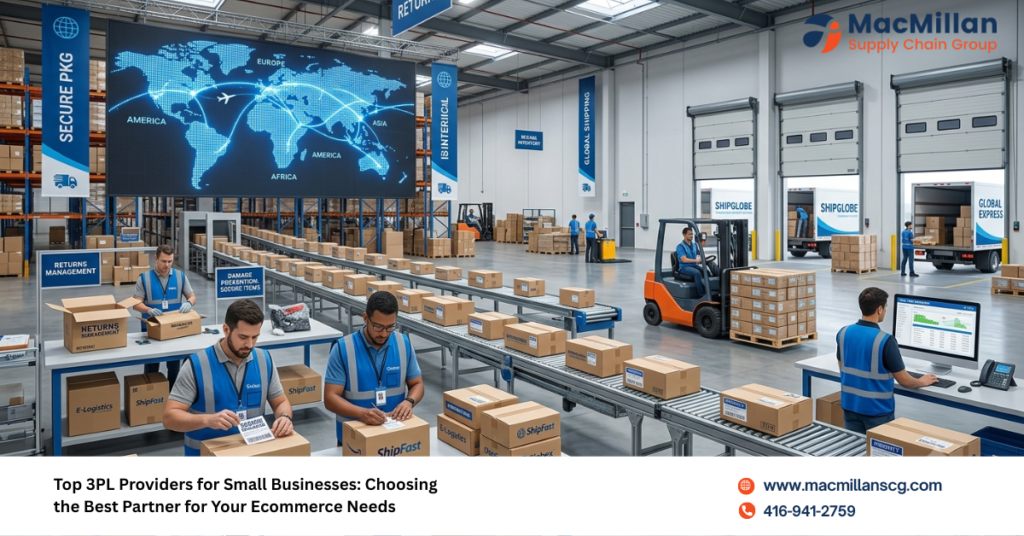
In today’s competitive online landscape, ensuring customer satisfaction is essential. With many businesses offering 60-day return policies and satisfaction guarantees, the bar for customer expectations is set high. While this can be daunting, it ultimately encourages 3PL providers to enhance the value they provide. Fortunately, achieving customer happiness isn’t complicated. It comes down to fulfilling the promise of delivering what customers want, when they want it. When selling services through 3PL providers, you commit to timely delivery, and even though a carrier (like UPS or FedEx) handles the shipping, the responsibility remains yours. If issues arise, customers will rightly hold you accountable. The Importance of Customer Satisfaction in a Competitive Market Shipping involves more than just placing items in a box and handing them off to a carrier; it requires careful consideration to mitigate risks. Here are some key challenges and solutions MacMillan SCG initiates to be aware of when shipping packages: Lost Packages Lost packages are a reality and can occur for various reasons, such as: An item falling out of a truck A smudged or unreadable shipping label Misrouting to the wrong distribution center Rare instances of theft by the carrier Small items being misplaced Prevention Tips: While you can’t eliminate this risk entirely, you can minimize it: Use discreet packaging for valuable items to avoid drawing attention through MacMillan. Avoid reusing boxes with old shipping labels, as they may cause confusion for carriers. Returned Packages Returns are common and often result from incorrect addresses. Even minor formatting differences can lead to issues. Other reasons for returns include insufficient postage due to incorrect weight or dimensions when printing labels. MacMillan offers zero error rate and damage control and provides real-time tracking throughout Canada as a competitive 3PL providers. Damaged Packages Packages can also be damaged during transit, leading to returns or holds. Proper packaging is crucial to prevent movement inside the box. 3PL providers such as MacMillan ensures your packaging is sturdy enough to support heavy items, most boxes can handle up to 40 pounds, while heavy-duty options can manage over 60 pounds. Special Considerations for sensitive products Certain items, like batteries, are classified as “Dangerous Goods” and come with strict shipping regulations. These items typically cannot be shipped by air and must be clearly labeled. When shipping internationally, additional precautions like a safety data sheet may be required by 3PL providers such as MacMillan SCG. In today’s competitive online landscape, ensuring customer satisfaction is essential. With many businesses offering 60-day return policies and satisfaction guarantees, the bar for customer expectations is set high. While this can be daunting, it ultimately encourages 3PL providers to enhance the value they provide. Fortunately, achieving customer happiness isn’t complicated. It comes down to fulfilling the promise of delivering what customers want, when they want it. When selling services through 3PL providers, you commit to timely delivery, and even though a carrier (like UPS or FedEx) handles the shipping, the responsibility remains yours. If issues arise, customers will rightly hold you accountable. The Importance of Customer Satisfaction in a Competitive Market Shipping involves more than just placing items in a box and handing them off to a carrier; it requires careful consideration to mitigate risks. Here are some key challenges and solutions MacMillan SCG initiates to be aware of when shipping packages: Lost Packages Lost packages are a reality and can occur for various reasons, such as: An item falling out of a truck A smudged or unreadable shipping label Misrouting to the wrong distribution center Rare instances of theft by the carrier Small items being misplaced Prevention Tips: While you can’t eliminate this risk entirely, you can minimize it: Use discreet packaging for valuable items to avoid drawing attention through MacMillan. Avoid reusing boxes with old shipping labels, as they may cause confusion for carriers. Returned Packages Returns are common and often result from incorrect addresses. Even minor formatting differences can lead to issues. Other reasons for returns include insufficient postage due to incorrect weight or dimensions when printing labels. MacMillan offers zero error rate and damage control and provides real-time tracking throughout Canada as a competitive 3PL providers. Damaged Packages Packages can also be damaged during transit, leading to returns or holds. Proper packaging is crucial to prevent movement inside the box. 3PL providers such as MacMillan ensures your packaging is sturdy enough to support heavy items, most boxes can handle up to 40 pounds, while heavy-duty options can manage over 60 pounds. Special Considerations for sensitive products Certain items, like batteries, are classified as “Dangerous Goods” and come with strict shipping regulations. These items typically cannot be shipped by air and must be clearly labeled. When shipping internationally, additional precautions like a safety data sheet may be required by 3PL providers such as MacMillan SCG. International Shipments Shipping internationally requires compliance with extra guidelines, including attaching a Commercial Invoice or CN22 form to describe the package contents and their value. While customers purchasing from the U.S. may avoid duties on items valued under $800, those in Canada will incur duties on items worth $30 or more. Understanding these regulations is vital for smooth international transactions for 3PL providers. (Read more about Section-321 and shipments) Minimizing Issues Being aware of potential shipping issues is the first step to prevention. As your shipping volume increases, these challenges will become clearer. While some issues are inevitable, developing robust procedures can help you address and prevent them in the future. As a business owner, your role involves problem-solving, and effectively managing these shipping challenges is part of that responsibility. With the right strategies in place, you can minimize risks and enhance customer satisfaction. 5 urgent challenges 3PL providers need to tackle in 2024 In recent years, the eCommerce industry has experienced significant growth, with a projected compound annual growth rate (CAGR) of 14.7% through 2027. The shift to online shopping during lockdowns drove sales up, but it also introduced challenges for retailers. They now face hurdles like managing international shipping and competing with larger brands on pricing while striving to meet increasing customer expectations. Here are the top five eCommerce challenges that we’ve identified
Top 3PL Providers for Small Businesses in 2024: Elevate Your Supply Chain Management
In the fast-paced world of e-commerce, choosing the right third-party logistics (3PL) partner can be a game-changer for small businesses looking to scale. As businesses grow, the complexity of managing logistics in-house can become overwhelming. Partnering with a 3PL offers numerous advantages, including reduced operational costs, improved customer satisfaction, and specialized services. This article explores the top 3PL providers for small businesses in 2024, detailing how outsourcing logistics can streamline your supply chain operations and drive success. Discover how MacMillan Supply Chain Group can help you navigate the 3PL landscape and find the perfect logistics solution for your business. Navigating the logistics landscape is crucial for small businesses striving for growth and efficiency. As ecommerce continues to thrive, the demand for seamless supply chain operations becomes ever more critical. While self-fulfillment may initially suffice, many small businesses find themselves in need of a more scalable solution. Enter third-party logistics (3PL) providers: these companies specialize in handling complex fulfillment needs, offering cost-effective and efficient services that allow businesses to focus on core operations. In 2024, the 3PL industry has evolved to meet the unique challenges faced by small businesses. From advanced technology integration to specialized handling capabilities, today’s top 3PL providers offer tailored solutions that can propel your business forward. This guide explores the best 3PL options for small businesses, outlines how they can power your expansion, and demonstrates why partnering with MacMillan Supply Chain Group can be your key to logistics success. Understanding 3PL and Its Importance for Small Businesses Third-party logistics (3PL) refers to the outsourcing of logistics and distribution activities to specialized companies. For small businesses, partnering with a 3PL can be transformative, offering access to expertise, technology, and infrastructure that would be costly to develop in-house. The importance of 3PL for small businesses cannot be overstated. As your company grows, managing inventory, fulfillment, and shipping can become increasingly complex and time-consuming. A 3PL provider takes on these responsibilities, allowing you to focus on core business activities such as product development, marketing, and customer service. Key benefits of using a 3PL include: Cost reduction: Leverage economies of scale and negotiated carrier rates Improved efficiency: Benefit from optimized processes and advanced technology Scalability: Easily adapt to seasonal fluctuations and business growth Enhanced customer satisfaction: Faster, more accurate order fulfillment Global reach: Access to international shipping and distribution networks By partnering with a 3PL, small businesses can compete with larger companies on a more level playing field. The right 3PL provider will not only handle your logistics needs but also serve as a strategic partner, offering insights and solutions to help your business thrive in a competitive marketplace. Top 3PL Providers for Small Businesses in 2024 As we look at the landscape of 3PL providers in 2024, several companies stand out for their ability to cater to the unique needs of small businesses. Here are some of the top contenders: ShipBob: Known for its technology-driven approach, ShipBob offers seamless integration with popular e-commerce platforms and provides two-day shipping across the U.S. Red Stag Fulfillment: Specializing in large and heavy items, Red Stag is ideal for businesses with unique product handling requirements. ShipMonk: Offers a user-friendly platform and competitive pricing, making it an excellent choice for growing e-commerce businesses. Flexport: Combines freight forwarding with fulfillment services, perfect for businesses with international supply chains. MacMillan Supply Chain Group: As a versatile 3PL provider, MacMillan offers tailored solutions for small businesses, including advanced inventory management, custom packaging, and scalable fulfillment services. When choosing a 3PL provider, consider factors such as: – Integration capabilities with your existing systems – Geographic coverage and shipping speeds – Specialization in your product type – Scalability to accommodate growth – Customer service and support Remember, the best 3PL for your business will depend on your specific needs, budget, and growth plans. MacMillan Supply Chain Group excels in providing personalized solutions that evolve with your business. Key Features to Look for in a 3PL Provider When evaluating 3PL providers for your small business, certain features can make a significant difference in your operations and growth potential. Here are the key attributes to consider: Technology Integration: Look for providers offering seamless integration with your ecommerce platform and order management systems. This ensures efficient data flow and real-time visibility. Inventory Management: Advanced inventory tracking and forecasting capabilities can help optimize stock levels and reduce carrying costs. Scalability: Choose a 3PL that can accommodate your growth, handling increased order volumes without compromising service quality. Customization Options: Flexibility in packaging, kitting, and special handling can help your business stand out and meet unique customer needs. Reporting and Analytics: Comprehensive reporting tools provide insights into your supply chain performance, enabling data-driven decision-making. Multi-Channel Fulfillment: If you sell across various platforms, ensure your 3PL can manage orders from multiple channels efficiently. Returns Management: An efficient returns process is crucial for customer satisfaction and inventory control. Value-Added Services: Look for providers offering additional services like product assembly, quality control, or subscription box fulfillment. MacMillan Supply Chain Group excels in these areas, offering a comprehensive suite of features designed to support small businesses at every stage of growth. Our technology-driven approach and commitment to customization ensure that your unique needs are met with precision and care. How to Transition to a 3PL Provider Transitioning to a 3PL provider can seem daunting, but with the right approach, it can be a smooth process that sets your business up for success. Here’s a step-by-step guide to help you make the switch: Assess Your Needs: Evaluate your current logistics operations, identifying pain points and areas for improvement. Research and Compare: Investigate potential 3PL partners, comparing their services, pricing, and customer reviews. Request Proposals: Reach out to your top choices for detailed proposals tailored to your business needs. Evaluate Integration Capabilities: Ensure the 3PL’s systems can integrate seamlessly with your existing technology stack. Plan the Transition: Work with your chosen 3PL to create a detailed transition plan, including timelines and milestones. Prepare Your Team: Communicate the changes to your staff and provide necessary training on new processes. Start with a Pilot: Consider starting with a small portion of your inventory or orders to
MacMillan Supply Chain: Revolutionizing 3PL Services for Ecommerce Success
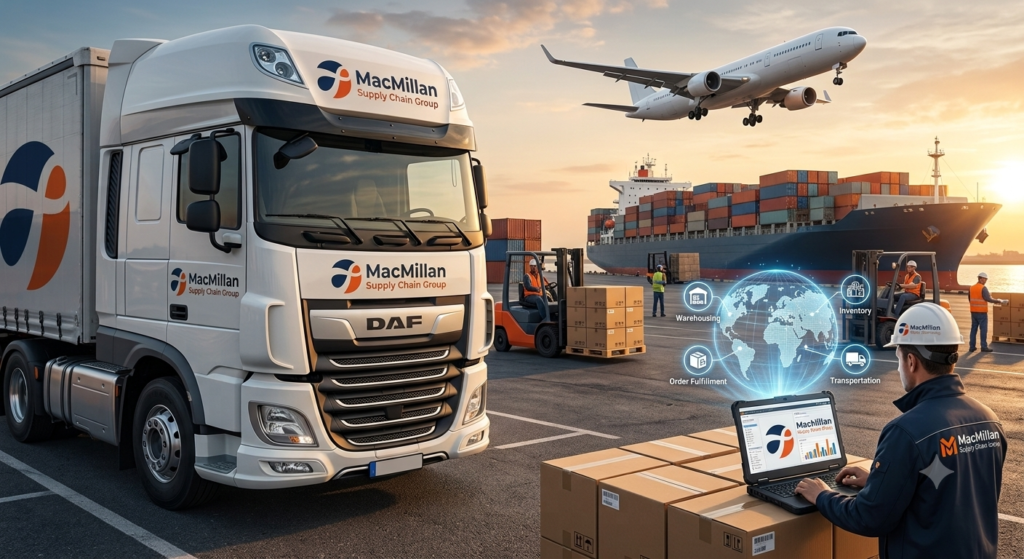
A quick summary and overview MacMillan Supply Chain Group offers cutting-edge 3PL services designed to revolutionize e-commerce operations. Our comprehensive solutions address common logistics challenges, including complex integrations, scalability issues, and cost transparency. With custom integration solutions, scalable logistics models, transparent pricing, and 24/7 support, we empower businesses to overcome operational hurdles and focus on growth. This article explores the intricacies of 3PL services, common industry problems, and how MacMillan’s innovative approach can transform your supply chain management. Whether you’re a startup or an established enterprise, learn how partnering with MacMillan can optimize your e-commerce fulfillment and drive success. An introduction In today’s fast-paced e-commerce landscape, efficient third-party logistics (3PL) services are crucial for maintaining a competitive edge. As businesses strive to meet growing customer demands for faster shipping, accurate order fulfillment, and seamless returns, the need for a reliable 3PL partner has never been greater. MacMillan Supply Chain Group understands these challenges and offers innovative solutions tailored to the unique needs of e-commerce businesses. This article will delve into the world of 3PL services, exploring key aspects such as warehouse management, order fulfillment, and inventory control. We’ll examine common problems faced by ecommerce businesses in their logistics operations and demonstrate how MacMillan’s cutting-edge approach can address these issues. By the end, you’ll have a clear understanding of how partnering with MacMillan can transform your supply chain, reduce costs, and enhance customer satisfaction. Understanding 3PL Services and Their Impact on Ecommerce Third-party logistics (3PL) services have become an integral part of successful ecommerce operations. These providers offer a range of services that allow businesses to outsource their logistics functions, freeing up resources to focus on core competencies. The primary services offered by 3PL providers include: Warehousing: Storing inventory in strategically located facilities. Order Fulfillment: Picking, packing, and shipping customer orders. Inventory Management: Tracking stock levels and managing replenishment. Returns Processing: Handling customer returns efficiently. Transportation Management: Coordinating shipping and delivery. The impact of 3PL services on ecommerce businesses is significant. By leveraging these services, companies can: Reduce operational costs through economies of scale Improve order accuracy and shipping times Expand geographical reach without significant capital investment Scale operations up or down based on demand Access advanced technology and expertise without in-house investment MacMillan Supply Chain Group goes beyond traditional 3PL services by offering customized solutions that address the unique challenges of each ecommerce business. Our approach combines cutting-edge technology with industry expertise to create a seamless logistics experience that drives growth and customer satisfaction. Key Factors in Choosing the Right 3PL Partner Selecting the right 3PL partner is crucial for the success of your ecommerce business. When evaluating potential providers, consider the following key factors: Technology Integration: Look for a 3PL with robust systems that can integrate seamlessly with your existing ecommerce platforms and software. Scalability: Choose a partner that can accommodate your growth and handle fluctuations in demand, especially during peak seasons. Geographic Coverage: Ensure the 3PL has strategically located warehouses to support your target markets and shipping needs. Industry Expertise: Opt for a provider with experience in your specific product category and understanding of any special handling requirements. Customization Capabilities: Select a 3PL that offers tailored solutions to meet your unique business needs. Pricing Transparency: Look for clear, comprehensive pricing models without hidden fees. Customer Support: Choose a partner that provides responsive, 24/7 customer support to address any issues promptly. Performance Metrics: Ensure the 3PL offers detailed reporting and key performance indicators (KPIs) to track and improve operations. MacMillan Supply Chain Group excels in all these areas, offering a comprehensive suite of services backed by advanced technology, industry expertise, and a commitment to customization. Our transparent pricing and dedicated support team ensure that your business receives the attention and resources it needs to thrive in the competitive ecommerce landscape. Leveraging Technology in 3PL for Enhanced Efficiency Technology plays a pivotal role in modern 3PL services, driving efficiency, accuracy, and visibility throughout the supply chain. Advanced technological solutions employed by leading 3PL providers include: Warehouse Management Systems (WMS): These systems optimize inventory storage, picking routes, and order processing, significantly reducing errors and improving fulfillment speed. Transportation Management Systems (TMS): TMS platforms enable real-time tracking, route optimization, and carrier selection, enhancing shipping efficiency and reducing costs. Internet of Things (IoT) Devices: Sensors and connected devices provide real-time data on inventory levels, storage conditions, and shipment locations, improving visibility and control. Artificial Intelligence (AI) and Machine Learning: These technologies enable predictive analytics for demand forecasting, inventory optimization, and risk management. Robotics and Automation: Advanced robotics and automated systems streamline warehouse operations, increasing speed and accuracy while reducing labor costs. Blockchain Technology: Blockchain enhances supply chain transparency, traceability, and security, particularly for complex or sensitive shipments. MacMillan Supply Chain Group leverages cutting-edge technology to provide our clients with a competitive edge. Our integrated technology stack ensures seamless communication between systems, real-time visibility into operations, and data-driven insights to continuously improve performance. By partnering with MacMillan, you gain access to these advanced technologies without the need for significant in-house investment or expertise. The Future of 3PL: Trends and Innovations The 3PL industry is continuously evolving to meet the changing needs of ecommerce businesses and consumers. Key trends and innovations shaping the future of 3PL include: Sustainability Initiatives: Eco-friendly packaging, electric vehicles, and optimized routing to reduce carbon footprints. Micro-Fulfillment Centers: Smaller, strategically located warehouses to enable faster last-mile delivery in urban areas. Augmented Reality (AR) in Warehousing: AR technology to improve picking accuracy and efficiency in warehouse operations. Drone and Autonomous Vehicle Delivery: Exploration of innovative delivery methods to reduce costs and improve speed. Personalization at Scale: Advanced systems to support mass customization and personalized packaging for individual customers. Predictive Analytics: Leveraging big data to anticipate demand, optimize inventory, and proactively address potential disruptions. Cloud-Based Platforms: Increased adoption of cloud technology for improved scalability, accessibility, and collaboration. Cybersecurity Focus: Enhanced security measures to protect sensitive data and ensure supply chain integrity. MacMillan Supply Chain Group stays at the forefront of these trends,
Optimize Your Supply Chain: Top 3PL Solutions for Small Businesses in 2024
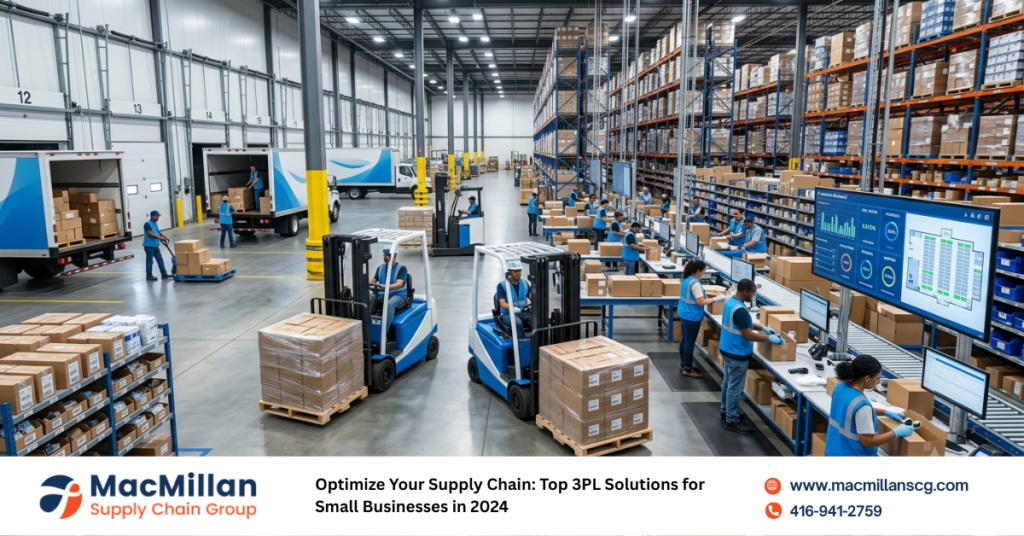
A quick summary and overview In 2024, small businesses face increasing pressure to optimize their supply chains. Third-party logistics (3PL) providers offer a solution, enabling companies to streamline operations, reduce costs, and improve customer satisfaction. This article explores the benefits of 3PL services, key considerations for choosing a provider, and how MacMillan Supply Chain Group stands out in the industry. We’ll delve into common challenges faced by small businesses in logistics management and provide expert solutions to help you navigate the complex world of supply chain optimization. Whether you’re looking to scale your operations or enhance efficiency, this guide will equip you with the knowledge to make informed decisions. An introduction As the business landscape evolves, small companies are increasingly turning to third-party logistics (3PL) providers to gain a competitive edge. The right 3PL partner can transform your supply chain, offering expertise in warehousing, inventory management, order fulfillment, and shipping. This strategic move allows you to focus on core business activities while leaving the complexities of logistics to the experts. In this comprehensive guide, we’ll explore the world of 3PL solutions tailored for small businesses in 2024. We’ll discuss the key services offered by top providers, crucial factors to consider when selecting a 3PL partner, and how MacMillan Supply Chain Group is revolutionizing the industry with its innovative approaches. By the end of this article, you’ll have a clear understanding of how 3PL services can propel your business forward and why partnering with the right provider is essential for success in today’s fast-paced market. Understanding 3PL Services for Small Businesses Third-party logistics (3PL) services encompass a wide range of outsourced supply chain operations that can significantly benefit small businesses. At its core, 3PL providers offer expertise and resources that many small companies find challenging to develop in-house. These services typically include: Warehousing and Inventory Management: 3PLs provide secure storage facilities and advanced inventory tracking systems, ensuring optimal stock levels and reduced carrying costs. Order Fulfillment: From picking and packing to shipping, 3PLs handle the entire order processing workflow, improving accuracy and speed. Transportation Management: 3PLs leverage their network and volume to negotiate better shipping rates and manage the complexities of transportation logistics. Reverse Logistics: Handling returns efficiently is crucial for customer satisfaction, and 3PLs offer streamlined processes for managing returns and exchanges. Technology Integration: Advanced 3PL providers offer seamless integration with your existing ecommerce platforms and management systems, providing real-time visibility into your supply chain. Scalability: As your business grows, 3PLs can quickly adapt to increased volumes without the need for significant capital investments on your part. By leveraging these services, small businesses can achieve operational efficiencies, reduce costs, and improve customer satisfaction. The right 3PL partner becomes an extension of your team, providing expertise and resources that allow you to focus on growth and innovation. Key Considerations When Choosing a 3PL Provider Selecting the right 3PL provider is crucial for the success of your small business. Here are key factors to consider: Industry Expertise: Look for a 3PL with experience in your specific industry, as they’ll understand your unique challenges and requirements. Technology Capabilities: Ensure the provider offers robust technology solutions that integrate seamlessly with your existing systems, providing real-time visibility and data analytics. Scalability: Choose a 3PL that can grow with your business, offering flexible solutions that adapt to changing volumes and market conditions. Geographic Coverage: Consider your current and future market reach. A 3PL with a wide network can support your expansion plans. Value-Added Services: Look beyond basic logistics. Services like kitting, custom packaging, and inventory management can provide additional value. Pricing Structure: Understand the pricing model and ensure it aligns with your business needs. Look for transparency and avoid hidden fees. Customer Service: Excellent customer support is crucial. Evaluate the 3PL’s responsiveness and problem-solving capabilities. Compliance and Security: Ensure the 3PL adheres to industry standards and regulations, especially if you deal with sensitive or regulated products. Performance Metrics: Ask about key performance indicators (KPIs) and how they measure success. Cultural Fit: Choose a provider whose values and work culture align with your own for a harmonious long-term partnership. By carefully evaluating these factors, you can select a 3PL provider that not only meets your current needs but also supports your future growth ambitions. The MacMillan Supply Chain Group Advantage MacMillan Supply Chain Group stands out in the 3PL industry by offering tailored solutions that address the unique challenges faced by small businesses. Our approach combines cutting-edge technology with personalized service to deliver unparalleled value: Customized Solutions: We understand that no two businesses are alike. Our team works closely with you to develop logistics strategies that align perfectly with your specific needs and goals. Advanced Technology Integration: Our state-of-the-art systems seamlessly integrate with your existing platforms, providing real-time visibility and actionable insights into your supply chain. Scalable Infrastructure: As your business grows, our flexible solutions adapt to your changing needs, ensuring smooth operations regardless of volume fluctuations. Expertise Across Industries: With experience serving diverse sectors, we bring industry-specific knowledge to optimize your logistics processes. Commitment to Innovation: We continually invest in the latest technologies and methodologies to stay ahead of industry trends and provide you with a competitive edge. Dedicated Support: Our team of experts is always available to address your concerns and provide strategic guidance. Cost Efficiency: By leveraging our network and expertise, we help you reduce operational costs while improving service quality. Sustainability Focus: We implement eco-friendly practices throughout our operations, helping you meet your sustainability goals. At MacMillan Supply Chain Group, we don’t just provide services; we become a strategic partner in your business growth, offering solutions that drive efficiency, reduce costs, and enhance customer satisfaction. Maximizing the Benefits of 3PL Partnerships To fully leverage the advantages of a 3PL partnership, small businesses should focus on: Clear Communication: Establish open lines of communication with your 3PL provider. Regular meetings and updates ensure alignment on goals and expectations. Data-Driven Decision Making: Utilize the analytics and reporting tools provided by your 3PL to gain insights into your supply chain performance and make informed decisions. Continuous Improvement: Work with your 3PL to identify areas for optimization and implement process improvements continuously.