
Revolutionize Your Supply Chain with a Perpetual Inventory System
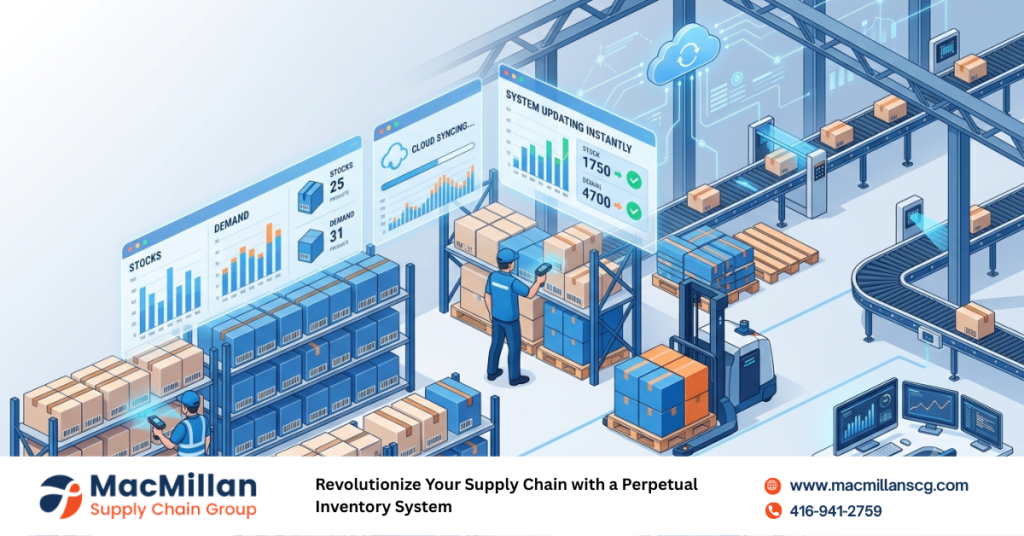
A Quick Summary and Overview A perpetual inventory system is a game-changer for modern supply chain management. It offers real-time tracking, automation, and enhanced accuracy, addressing the challenges of traditional inventory methods. MacMillan Supply Chain Group provides cutting-edge perpetual inventory solutions that revolutionize how businesses manage their stock. By implementing this system, companies can optimize inventory levels, reduce costs, improve financial reporting, and streamline multi-warehouse operations. This article explores the benefits of perpetual inventory systems, common challenges in inventory management, and how MacMillan’s solutions can transform your supply chain operations for greater efficiency and competitiveness. An Introduction In today’s fast-paced business environment, effective inventory management is crucial for maintaining a competitive edge. Traditional inventory methods often fall short, leading to inefficiencies, inaccuracies, and lost opportunities. Enter the perpetual inventory system – a sophisticated approach that leverages real-time data and automation to transform supply chain operations. MacMillan Supply Chain Group understands the complexities of modern inventory management and offers state-of-the-art perpetual inventory solutions. These systems provide businesses with unprecedented visibility into their stock levels, enabling better decision-making, improved customer satisfaction, and significant cost savings. In this comprehensive guide, we’ll explore the key features and benefits of perpetual inventory systems, discuss common inventory challenges, and demonstrate how MacMillan’s expertise can help your business thrive in an increasingly competitive marketplace. Get ready to discover how a perpetual inventory system can revolutionize your supply chain and drive your business forward. Real-Time Inventory Tracking: The Foundation of Efficient Supply Chains Real-time inventory tracking is the cornerstone of an effective perpetual inventory system. Unlike traditional methods that rely on periodic physical counts, a perpetual system continuously updates inventory levels as transactions occur. This real-time visibility offers numerous advantages for businesses of all sizes: Accurate Stock Levels: With instant updates, you always know exactly what’s in stock, reducing the risk of stockouts or overstocking. Improved Decision-Making: Real-time data enables quick, informed decisions about purchasing, production, and sales strategies. Enhanced Customer Service: Accurate inventory information allows for better order fulfillment and reduced backorders, leading to improved customer satisfaction. Efficient Reordering: Automated reorder points ensure you maintain optimal inventory levels without manual intervention. Reduced Shrinkage: Real-time tracking makes it easier to identify and address inventory discrepancies promptly. MacMillan Supply Chain Group’s perpetual inventory solutions leverage cutting-edge technology to provide seamless real-time tracking. Our systems integrate with your existing infrastructure, ensuring a smooth transition and minimal disruption to your operations. By implementing our real-time tracking solutions, you’ll gain unprecedented visibility into your inventory, enabling you to make data-driven decisions that optimize your supply chain and drive business growth. Automation: Streamlining Inventory Management Processes Automation is a key feature of advanced perpetual inventory systems, revolutionizing how businesses manage their stock. By reducing manual processes, automation minimizes human error, increases efficiency, and frees up valuable resources. Here’s how automation transforms inventory management: Automatic Updates: As items are received, sold, or transferred, the system automatically adjusts inventory levels. Seamless Integration: Automated systems integrate with point-of-sale, purchasing, and accounting software for comprehensive data synchronization. Intelligent Reordering: The system can automatically generate purchase orders based on predefined reorder points and lead times. Accurate Costing: Automated cost calculations ensure precise valuation of inventory and cost of goods sold. Streamlined Reporting: Generate real-time reports on inventory status, turnover rates, and other key metrics with just a few clicks. MacMillan Supply Chain Group’s perpetual inventory solutions offer advanced automation capabilities tailored to your business needs. Our systems can be customized to automate specific processes, from basic inventory updates to complex multi-warehouse operations. By implementing our automated solutions, you’ll reduce manual errors, increase operational efficiency, and allow your team to focus on strategic tasks that drive business growth. Experience the power of automation with MacMillan and take your inventory management to the next level. Multi-Warehouse Management: Simplifying Complex Operations For businesses operating multiple warehouses or distribution centers, efficient inventory management can be particularly challenging. A perpetual inventory system simplifies multi-warehouse operations by providing a centralized platform for managing stock across all locations. Here’s how it benefits multi-warehouse businesses: Unified Visibility: Get a comprehensive view of inventory across all locations in real-time. Optimized Stock Distribution: Easily transfer stock between warehouses to meet demand and reduce overstock situations. Efficient Order Fulfillment: Automatically route orders to the most appropriate warehouse based on inventory levels and proximity to the customer. Streamlined Replenishment: Manage reorder points and lead times for each location independently, ensuring optimal stock levels across the network. Consistent Reporting: Generate consolidated reports for all warehouses or drill down into location-specific data as needed. MacMillan Supply Chain Group’s perpetual inventory solutions are designed to handle the complexities of multi-warehouse operations. Our systems offer advanced features like cross-docking, zone picking, and wave planning to optimize your distribution network. With MacMillan’s expertise, you can transform your multi-warehouse management, reducing costs and improving overall supply chain efficiency. Whether you’re managing two warehouses or twenty, our solutions scale to meet your needs, providing the tools you need to succeed in today’s competitive market. Financial Benefits: Enhancing Profitability and Reporting Accuracy Implementing a perpetual inventory system offers significant financial benefits beyond improved operational efficiency. By providing accurate, real-time data, these systems enhance financial reporting, decision-making, and ultimately, profitability. Here’s how a perpetual inventory system can positively impact your bottom line: Reduced Carrying Costs: Optimize inventory levels to minimize storage costs and capital tied up in excess stock. Improved Cash Flow: Better inventory management leads to more efficient use of working capital. Accurate COGS Calculation: Real-time tracking ensures precise cost of goods sold calculations, improving financial statement accuracy. Enhanced Forecasting: Detailed historical data enables more accurate demand forecasting and inventory planning. Simplified Audits: Continuous tracking and detailed transaction records streamline the audit process. Better Valuation: Accurate inventory data contributes to a more precise valuation of your business. MacMillan Supply Chain Group’s perpetual inventory solutions are designed with financial optimization in mind. Our systems integrate seamlessly with your financial software, providing real-time data for accurate reporting and analysis. By implementing our solutions, you’ll gain deeper insights into your inventory’s financial impact, enabling you to make informed decisions that drive profitability. From reducing carrying costs
Streamline Your Logistics: Unleash the Power of 3PL Services with MacMillan
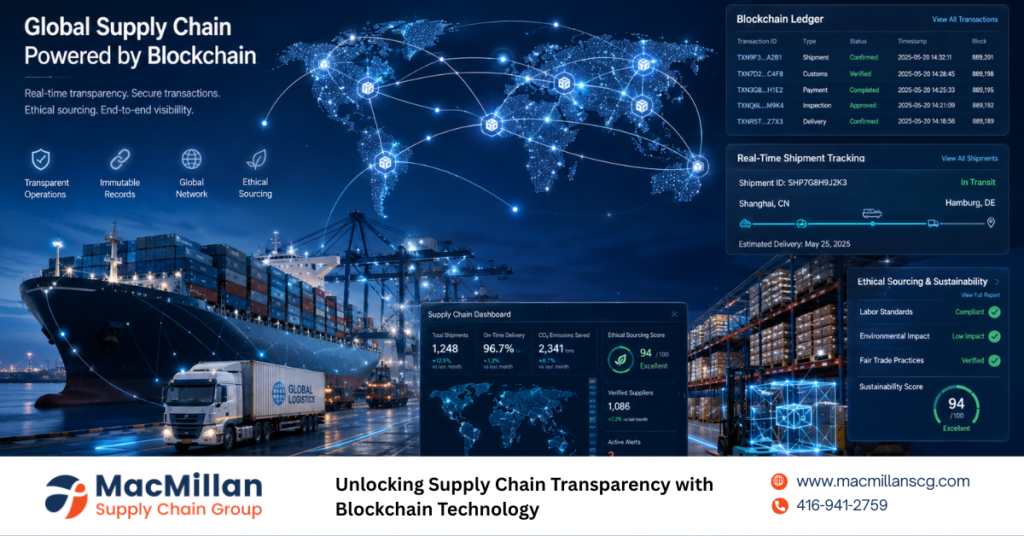
A quick summary and overview Third-party logistics (3PL) providers are revolutionizing how businesses manage their supply chains. MacMillan Supply Chain Group offers comprehensive 3PL services designed to streamline operations, reduce costs, and improve customer satisfaction. From warehouse management to transportation coordination, our solutions are tailored to meet the unique needs of each client. By leveraging our expertise and resources, businesses can focus on core competencies while we handle the complexities of logistics. This article explores the benefits of 3PL services, common challenges, and how MacMillan’s innovative solutions can transform your supply chain operations for enhanced efficiency and competitive advantage. An introduction In today’s fast-paced business environment, efficient logistics management is crucial for success. As supply chains become increasingly complex, many companies are turning to third-party logistics (3PL) providers to streamline their operations and stay competitive. MacMillan Supply Chain Group stands at the forefront of this revolution, offering cutting-edge 3PL services that empower businesses to optimize their logistics processes, reduce costs, and enhance customer satisfaction. This comprehensive guide will delve into the world of 3PL services, exploring their benefits, addressing common challenges, and showcasing how MacMillan’s tailored solutions can transform your supply chain operations. Whether you’re a small business looking to scale or a large corporation seeking to improve efficiency, understanding the power of 3PL services is essential for navigating the modern logistics landscape. Understanding 3PL Services and Their Benefits Third-party logistics (3PL) services involve outsourcing various elements of your supply chain operations to a specialized provider. These services can include warehouse management, inventory control, order fulfillment, transportation coordination, and more. By partnering with a 3PL provider like MacMillan Supply Chain Group, businesses can access expertise, technology, and resources that might otherwise be out of reach. The benefits of 3PL services are numerous: Cost Reduction: 3PL providers can leverage economies of scale, reducing overall logistics costs. Scalability: Easily adapt to market fluctuations without significant capital investments. Focus on Core Competencies: Outsourcing logistics allows businesses to concentrate on their primary strengths. Improved Efficiency: Specialized expertise and advanced technologies optimize operations. Enhanced Customer Satisfaction: Faster, more accurate order fulfillment leads to happier customers. Global Reach: 3PL providers often have international networks, facilitating expansion. Risk Mitigation: Shared responsibility for compliance and safety regulations. Access to Advanced Technology: Benefit from cutting-edge logistics software and systems. By understanding these advantages, businesses can make informed decisions about integrating 3PL services into their operations, potentially unlocking new levels of efficiency and growth. Key Components of Effective 3PL Services To truly harness the power of 3PL services, it’s essential to understand their key components. MacMillan Supply Chain Group offers a comprehensive suite of services designed to cover all aspects of your logistics needs: Warehouse Management: Inventory storage and organization Pick, pack, and ship operations Cross-docking and transloading Transportation Management: Carrier selection and rate negotiation Route optimization Freight consolidation Inventory Management: Real-time inventory tracking Demand forecasting Stock level optimization Order Fulfillment: Order processing Kitting and assembly Returns management Technology Integration: Warehouse Management Systems (WMS) Transportation Management Systems (TMS) API integrations with e-commerce platforms Value-Added Services: Custom packaging Product labeling Quality control inspections Reporting and Analytics: Performance metrics tracking Data-driven insights Continuous improvement strategies By offering this comprehensive range of services, MacMillan ensures that every aspect of your supply chain is optimized for maximum efficiency and cost-effectiveness. Choosing the Right 3PL Partner Selecting the ideal 3PL partner is crucial for the success of your logistics operations. When evaluating potential providers, consider the following factors: Industry Experience: Look for a 3PL with expertise in your specific industry or product type. Scalability: Ensure the provider can accommodate your growth plans and handle volume fluctuations. Technology Capabilities: Advanced systems for inventory management, order tracking, and reporting are essential. Geographic Coverage: Choose a 3PL with a network that aligns with your distribution needs. Service Range: Opt for a provider offering a comprehensive suite of services to meet all your logistics requirements. Customization: Seek a partner willing to tailor their solutions to your unique needs. Financial Stability: Verify the 3PL’s financial health to ensure long-term reliability. Compliance and Certifications: Confirm adherence to industry standards and relevant certifications. Cultural Fit: Look for a provider whose values and communication style align with your company culture. References and Case Studies: Request examples of successful partnerships with similar businesses. MacMillan Supply Chain Group excels in these areas, offering industry-leading expertise, cutting-edge technology, and a commitment to customized solutions. By carefully evaluating potential partners against these criteria, you can ensure a successful and beneficial 3PL relationship. Implementing 3PL Services: Best Practices Successfully implementing 3PL services requires careful planning and execution. Follow these best practices to ensure a smooth transition and maximize the benefits of your partnership with MacMillan Supply Chain Group: Define Clear Objectives: Establish specific goals for your 3PL partnership, such as cost reduction targets or service level improvements. Conduct a Thorough Needs Assessment: Analyze your current logistics processes to identify areas for improvement and potential challenges. Develop a Detailed Implementation Plan: Create a timeline with milestones for each phase of the transition. Communicate Effectively: Keep all stakeholders informed throughout the implementation process. Integrate Systems Seamlessly: Work closely with your 3PL to ensure smooth data exchange between your systems. Train Your Team: Educate your staff on new processes and how to work effectively with the 3PL provider. Start with a Pilot Program: Consider implementing services in phases, starting with a smaller-scale pilot to identify and address any issues. Establish Key Performance Indicators (KPIs): Define metrics to measure the success of your 3PL partnership. Continuously Monitor and Optimize: Regularly review performance and work with your 3PL to implement improvements. Foster a Collaborative Relationship: Treat your 3PL as a strategic partner, encouraging open communication and shared problem-solving. By following these best practices, you can ensure a successful implementation of 3PL services and set the foundation for a long-term, mutually beneficial partnership with MacMillan Supply Chain Group. Common problems with the topic Our solutions While 3PL services offer numerous benefits, businesses may encounter some common challenges during implementation and ongoing operations. MacMillan Supply Chain Group is well-equipped to address these issues with innovative solutions: Integration Difficulties: Problem: Many companies struggle to integrate their existing systems with 3PL
Section 321: Unlock Duty-Free Shipping and Optimize Your Ecommerce Strategy
A Quick Summary and Overview Section 321 of the Tariff Act of 1930 allows ecommerce businesses to import low-value shipments (up to $800) into the United States duty-free. This provision reduces import costs, streamlines cross-border shipping, and supports scalable business growth. Leveraging fulfillment centers in close proximity, like Canada and Mexico, can enhance compliance and logistical efficiency, ensuring your ecommerce operations remain competitive in the US market. MacMillan Supply Chain offers expert solutions to navigate Section 321 complexities, providing businesses with cost-effective strategies to optimize their supply chain and maximize the benefits of duty-free shipping. Introduction In today’s fiercely competitive ecommerce landscape, businesses are constantly seeking innovative ways to reduce costs and enhance operational efficiency. Enter Section 321 of the Tariff Act of 1930 – a game-changing provision that allows for duty-free importation of low-value shipments into the United States. This powerful tool has become increasingly crucial for ecommerce businesses looking to optimize their supply chain and maintain a competitive edge in the global market. As we delve into the intricacies of Section 321, we’ll explore its benefits, challenges, and how partnering with a seasoned logistics provider like MacMillan Supply Chain can help you navigate this complex terrain. From understanding the basics to implementing strategic solutions, this comprehensive guide will equip you with the knowledge needed to leverage Section 321 effectively, reduce import costs, and scale your ecommerce business cost-effectively. Let’s unlock the potential of duty-free shipping and transform your logistics strategy. Understanding Section 321: The Key to Duty-Free Ecommerce Shipping Section 321, also known as the de minimis provision, allows for the duty-free entry of shipments valued at $800 or less into the United States. This regulation has become a cornerstone for ecommerce businesses looking to reduce import costs and streamline their cross-border shipping processes. Key features of Section 321 include: Value Limit: Shipments must not exceed $800 in retail value. Frequency: Limited to one shipment per person, per day. Exclusions: Certain products like alcohol and tobacco are ineligible. For ecommerce businesses, Section 321 offers significant advantages: – Cost Savings: Elimination of duties and taxes on eligible shipments. – Faster Clearance: Simplified customs procedures for quicker processing. – Competitive Pricing: Ability to offer more attractive prices to US customers. However, leveraging Section 321 effectively requires careful planning and execution. Businesses must ensure accurate valuation of goods, maintain proper documentation, and adhere to all regulatory requirements. This is where partnering with an experienced logistics provider like MacMillan Supply Chain becomes invaluable. By understanding and properly implementing Section 321 strategies, ecommerce businesses can significantly reduce their import costs, improve cash flow, and gain a competitive advantage in the US market. The key lies in balancing compliance with optimization to maximize the benefits of this powerful provision. Maximizing the Benefits of Section 321 for Your Ecommerce Business To fully capitalize on Section 321, ecommerce businesses need to adopt strategic approaches that align with their operational goals. Here are key strategies to maximize the benefits: Optimize Order Fulfillment: Break larger orders into multiple shipments under $800. Utilize distributed inventory across multiple fulfillment centers. Leverage Nearby Fulfillment Centers: Set up operations in Canada or Mexico for quick, low-cost shipping to the US. Reduce transit times and improve customer satisfaction. Implement Advanced Inventory Management: Use real-time tracking to ensure compliance with the one-shipment-per-day rule. Employ predictive analytics for efficient stock allocation. Streamline Documentation Processes: Develop standardized procedures for accurate valuation and declaration. Utilize automated systems for consistent and compliant documentation. Educate Your Team: Train staff on Section 321 regulations and best practices. Stay updated on policy changes and adjust strategies accordingly. By implementing these strategies, ecommerce businesses can: – Reduce overall shipping costs – Improve delivery times – Enhance customer experience – Gain a competitive edge in pricing MacMillan Supply Chain specializes in helping businesses implement these strategies effectively, ensuring you maximize the benefits of Section 321 while maintaining full compliance with all regulations. Navigating Compliance and Avoiding Pitfalls in Section 321 Implementation While Section 321 offers significant benefits, it also comes with compliance challenges that ecommerce businesses must navigate carefully: Accurate Valuation: Ensure correct declaration of retail value, not wholesale cost. Be prepared to provide supporting documentation if requested. Frequency Limitations: Adhere strictly to the one-shipment-per-person, per-day rule. Implement systems to track and manage shipment frequency. Product Eligibility: Stay informed about excluded products and changing regulations. Develop clear processes for identifying and handling non-eligible items. Documentation Requirements: Maintain detailed records of all Section 321 shipments. Ensure all required information is accurately provided on customs forms. Customs Scrutiny: Be prepared for potential increased scrutiny from customs officials. Maintain transparency and be ready to provide additional information if required. Common pitfalls to avoid: – Undervaluing goods to fit within the $800 limit – Splitting single orders into multiple shipments to circumvent regulations – Neglecting to update procedures when regulations change Successfully navigating these compliance challenges requires expertise and diligence. MacMillan Supply Chain offers comprehensive solutions to ensure your Section 321 strategy remains compliant and effective, minimizing risks and maximizing benefits for your ecommerce business. The Role of Technology in Optimizing Section 321 Strategies In the digital age, leveraging technology is crucial for effectively implementing and managing Section 321 strategies. Here’s how technology can enhance your approach: Automated Customs Documentation: Use software that automatically generates accurate customs forms. Reduce human error and ensure consistency in declarations. Real-Time Tracking and Monitoring: Implement systems that provide visibility into shipment status and customs clearance. Quickly address any issues that arise during the import process. Intelligent Order Routing: Utilize AI-driven systems to optimize order fulfillment across multiple warehouses. Ensure compliance with Section 321 rules while minimizing shipping costs. Data Analytics for Compliance: Use advanced analytics to identify patterns and potential compliance risks. Make data-driven decisions to refine your Section 321 strategy. Integration with Ecommerce Platforms: Seamlessly connect your ecommerce platform with logistics systems. Ensure accurate information flow from order placement to fulfillment. By embracing these technological solutions, ecommerce businesses can: – Improve operational efficiency – Enhance compliance accuracy – Gain valuable insights for
Streamline Your Etsy Business with MacMillan Supply Chain’s 3PL Solutions
A quick summary and overview MacMillan Supply Chain offers comprehensive 3PL solutions tailored for Etsy sellers looking to streamline their operations. Our services encompass order fulfillment, inventory management, cost-effective shipping, and dedicated customer support. By partnering with us, Etsy entrepreneurs can focus on product creation and marketing while we handle the logistics. This article explores how MacMillan’s 3PL services can optimize your Etsy business, overcome common fulfillment challenges, and propel your shop towards sustainable growth. Discover how our expertise in e-commerce logistics can transform your Etsy venture and enhance customer satisfaction. An introduction As an Etsy seller, you’re passionate about creating unique products and building your brand. However, as your business grows, managing logistics can become increasingly complex and time-consuming. This is where MacMillan Supply Chain’s 3PL services come into play. We specialize in providing tailored logistics solutions for e-commerce businesses, including Etsy shops of all sizes. By leveraging our expertise, you can streamline your operations, reduce costs, and improve customer satisfaction. Our comprehensive suite of services is designed to address the unique challenges faced by Etsy sellers, from inventory management to order fulfillment and shipping. In this article, we’ll explore how MacMillan Supply Chain can help you optimize your Etsy business, overcome common hurdles, and set the stage for sustainable growth. Let’s dive into the world of 3PL and discover how it can revolutionize your Etsy shop. Understanding 3PL for Etsy Sellers Third-party logistics (3PL) providers like MacMillan Supply Chain offer a range of services that can significantly benefit Etsy sellers. At its core, 3PL involves outsourcing various aspects of your logistics operations to a specialized company. For Etsy businesses, this typically includes order fulfillment, inventory management, and shipping. When you partner with MacMillan Supply Chain, we take care of storing your inventory in our strategically located warehouses. As orders come in through your Etsy shop, our advanced systems automatically process them. We pick, pack, and ship your products directly to your customers, ensuring timely and accurate deliveries. One of the key advantages of using a 3PL for your Etsy business is scalability. During peak seasons or sudden surges in demand, you don’t have to worry about hiring additional staff or securing more storage space. We can easily adjust our resources to accommodate your needs, allowing your business to grow without logistical constraints. Moreover, by leveraging our established relationships with carriers, we can offer you cost-effective shipping rates that might be difficult to obtain on your own. This can lead to significant savings, which you can either pass on to your customers or reinvest in your business. Streamlining Inventory Management Effective inventory management is crucial for Etsy sellers, and this is where MacMillan Supply Chain’s expertise truly shines. Our state-of-the-art inventory management system provides real-time visibility into your stock levels, ensuring you always know exactly what you have on hand. We employ advanced forecasting tools that analyze historical sales data and market trends to help you make informed decisions about restocking. This proactive approach minimizes the risk of stockouts, which can lead to lost sales and disappointed customers. Conversely, it also helps prevent overstocking, which ties up your capital and increases storage costs. Our system integrates seamlessly with your Etsy shop, automatically updating inventory levels as orders are processed and shipped. This eliminates the need for manual stock updates, reducing the likelihood of errors and saving you valuable time. For Etsy sellers with multiple product variations or customizable items, our kitting and assembly services can be a game-changer. We can pre-assemble product bundles or prepare custom orders according to your specifications, streamlining the fulfillment process for complex products. By entrusting your inventory management to MacMillan Supply Chain, you can focus on creating new products and growing your Etsy business, confident that your stock levels are optimized and your orders will be fulfilled accurately and efficiently. Optimizing Order Fulfillment and Shipping At MacMillan Supply Chain, we understand that efficient order fulfillment and shipping are critical to the success of your Etsy shop. Our advanced fulfillment centers are equipped with cutting-edge technology to ensure fast, accurate processing of your orders. When an order comes in through your Etsy shop, our system automatically generates pick lists for our warehouse staff. Using barcode scanning and quality control checks, we ensure that the correct items are picked and packed for each order. This attention to detail significantly reduces the likelihood of shipping errors, leading to higher customer satisfaction and fewer returns. We offer a range of packaging options to suit your brand and product needs. Whether you require standard packaging or custom-branded solutions, we can accommodate your preferences while ensuring that your products are protected during transit. Our strategic partnerships with major carriers allow us to offer you competitive shipping rates. We can help you choose the most cost-effective shipping methods based on factors such as package size, weight, destination, and delivery speed requirements. This can lead to substantial savings on shipping costs, which you can either use to boost your profit margins or pass on to your customers to increase competitiveness. Furthermore, we provide real-time tracking information for all shipments, which you can easily share with your customers through your Etsy shop. This transparency helps build trust and reduces customer inquiries about order status. Enhancing Customer Service and Returns Management Exceptional customer service is a cornerstone of success on Etsy, and MacMillan Supply Chain is committed to helping you deliver an outstanding experience to your customers. Our dedicated customer service team acts as an extension of your business, handling inquiries related to order status, shipping, and returns. We offer multi-channel support, including email and phone, ensuring that your customers can reach us through their preferred method of communication. Our team is trained to handle a wide range of customer queries professionally and efficiently, freeing up your time to focus on other aspects of your business. Returns management can be a challenging aspect of e-commerce, but with MacMillan Supply Chain, it becomes a smooth, hassle-free process. We handle the entire returns process, from
Optimizing Warehouse Space: Strategies for Efficient Storage and Inventory Management
A Quick Summary and Overview Efficient warehouse space utilization is crucial for businesses looking to streamline their operations and reduce costs. This comprehensive guide explores innovative strategies for optimizing warehouse space, enhancing inventory management, and improving overall logistics efficiency. From implementing advanced storage systems to leveraging cutting-edge technology, we’ll cover the best practices that can transform your warehouse operations. With insights from MacMillan Supply Chain Group, a leader in 3PL services, you’ll learn how to maximize your storage capacity, increase productivity, and boost your bottom line. Discover how to turn your warehouse into a strategic asset for your business’s growth and success. An Introduction In today’s fast-paced business environment, efficient warehouse management is more critical than ever. As e-commerce continues to grow and consumer expectations for rapid delivery rise, businesses must optimize their warehouse space to remain competitive. However, many companies struggle with inadequate storage solutions, inefficient inventory management, and underutilized vertical space. These challenges can lead to increased operational costs, slower order fulfillment, and reduced customer satisfaction. This article will delve into effective strategies for maximizing warehouse space utilization and improving inventory management. We’ll explore how implementing these solutions can enhance your overall supply chain efficiency, reduce costs, and improve customer service. By partnering with experts like MacMillan Supply Chain Group, you can transform your warehouse operations and gain a significant competitive advantage in your industry. Implementing Vertical Storage Solutions One of the most effective ways to optimize warehouse space is by maximizing vertical storage. Many warehouses underutilize their vertical space, focusing primarily on floor-level storage. By implementing vertical storage solutions, you can dramatically increase your storage capacity without expanding your warehouse’s footprint. Consider these vertical storage options: Mezzanines: Install elevated platforms to create additional floor space for storage or operations. Pallet Racking Systems: Utilize various pallet rack configurations, such as selective, drive-in, or push-back racks, to store goods vertically. Automated Storage and Retrieval Systems (AS/RS): Implement computer-controlled systems that automatically place and retrieve loads from defined storage locations. Vertical Lift Modules (VLMs): Use these enclosed systems with vertically arranged trays to store small to medium-sized items efficiently. Multi-Level Pick Modules: Create multi-story picking areas to optimize order fulfillment processes. When implementing vertical storage solutions, it’s crucial to consider factors such as weight capacity, accessibility, and safety. Proper planning and design are essential to ensure that your vertical storage system aligns with your specific inventory needs and warehouse layout. By maximizing vertical space, you can significantly increase your storage capacity, improve inventory organization, and enhance overall warehouse efficiency. MacMillan Supply Chain Group can help you assess your warehouse layout and recommend the most suitable vertical storage solutions for your business. Optimizing Inventory Management with Advanced Technology Efficient inventory management is crucial for maximizing warehouse space utilization. By leveraging advanced technology, you can streamline your inventory processes, reduce errors, and improve overall operational efficiency. Key technological solutions for optimizing inventory management include: Warehouse Management Systems (WMS): Implement a robust WMS to track inventory levels, manage stock locations, and automate order fulfillment processes. Radio-Frequency Identification (RFID): Use RFID tags and readers to track inventory movement in real-time, improving accuracy and reducing manual labor. Barcode Scanning: Implement barcode scanning technology to streamline receiving, put-away, and picking processes. Internet of Things (IoT) Sensors: Deploy IoT sensors to monitor environmental conditions, track asset utilization, and predict maintenance needs. Artificial Intelligence (AI) and Machine Learning: Utilize AI algorithms to forecast demand, optimize inventory levels, and improve order picking efficiency. Robotics and Automation: Implement robotic systems for tasks such as palletizing, sortation, and goods-to-person picking. By integrating these technologies into your warehouse operations, you can achieve better inventory visibility, reduce stockouts and overstock situations, and optimize space utilization. MacMillan Supply Chain Group specializes in implementing and integrating advanced inventory management technologies tailored to your specific business needs. Implementing Lean Warehouse Practices Adopting lean warehouse practices can significantly improve space utilization and operational efficiency. Lean principles focus on eliminating waste, improving flow, and maximizing value for the customer. By implementing these practices, you can create a more organized and productive warehouse environment. Key lean warehouse practices include: 5S Methodology: Sort, Set in order, Shine, Standardize, and Sustain to create a clean, organized workspace. Value Stream Mapping: Analyze and optimize the flow of materials and information through your warehouse. Continuous Improvement (Kaizen): Encourage ongoing, incremental improvements in processes and operations. Just-in-Time (JIT) Inventory: Minimize excess inventory by aligning stock levels with actual demand. Visual Management: Use visual cues like floor markings, signs, and color-coding to improve organization and efficiency. Cross-Docking: Streamline the receiving and shipping process by moving goods directly from inbound to outbound without long-term storage. Standardized Work Procedures: Develop and implement standardized processes for common warehouse tasks. By implementing these lean practices, you can reduce clutter, improve space utilization, and enhance overall operational efficiency. MacMillan Supply Chain Group can help you assess your current warehouse processes and develop a customized lean implementation strategy to optimize your operations. Flexible Storage Solutions for Seasonal Fluctuations Many businesses face challenges with seasonal fluctuations in inventory levels. Implementing flexible storage solutions can help you adapt to these changes while maintaining efficient space utilization throughout the year. Consider these flexible storage options: Modular Racking Systems: Use adjustable racking that can be easily reconfigured to accommodate changing inventory needs. Mobile Racking: Implement mobile shelving units that can be moved to create aisles as needed, maximizing space utilization. Temporary Storage Structures: Use portable storage units or temporary warehouses during peak seasons. Mezzanine Flooring: Install removable mezzanine floors that can be adjusted or removed based on seasonal needs. Third-Party Logistics (3PL) Partnerships: Collaborate with 3PL providers like MacMillan Supply Chain Group to handle overflow inventory during peak seasons. Cross-Docking Strategies: Implement cross-docking for seasonal items to reduce storage requirements. Dynamic Slotting: Use data-driven slotting strategies to optimize product placement based on seasonal demand patterns. By incorporating these flexible storage solutions, you can effectively manage seasonal inventory fluctuations without compromising warehouse efficiency. MacMillan Supply Chain Group can help you develop a customized strategy to address your specific seasonal storage challenges and optimize your warehouse space throughout the year. Common Problems with Warehouse Space Optimization Our Solutions While optimizing warehouse space
Optimizing Last-Mile Delivery: Strategies and Solutions for Efficient Logistics

A Quick Summary and Overview Last-mile delivery, the final step in the supply chain process, presents unique challenges for businesses striving to meet customer expectations while maintaining operational efficiency. This article explores innovative strategies and solutions for optimizing last-mile delivery, focusing on leveraging technology, improving route planning, and enhancing customer experience. We’ll delve into common problems faced by logistics providers and showcase how MacMillan Supply Chain Group’s expertise can transform these challenges into opportunities for growth. By implementing cutting-edge solutions and best practices, businesses can significantly improve their last-mile delivery performance, leading to increased customer satisfaction and a competitive edge in the market. An Introduction In today’s fast-paced e-commerce landscape, the importance of efficient last-mile delivery cannot be overstated. As consumer expectations for faster, more reliable deliveries continue to rise, businesses face the complex task of balancing speed, cost, and quality in their logistics operations. The last mile, often the most expensive and time-consuming part of the shipping process, has become a critical differentiator in customer satisfaction and loyalty. At MacMillan Supply Chain Group, we understand the intricacies of last-mile delivery and the impact it has on your business’s success. This article aims to provide you with valuable insights into optimizing your last-mile operations, exploring innovative strategies, and highlighting solutions that can help you overcome common challenges. By the end, you’ll have a comprehensive understanding of how to enhance your last-mile delivery performance and why partnering with a logistics expert like MacMillan can be a game-changer for your business. Understanding the Complexities of Last-Mile Delivery Last-mile delivery is the final and often most challenging leg of the logistics journey, where products move from a distribution center or warehouse to the end customer’s doorstep. This critical phase accounts for a significant portion of the total shipping cost and plays a crucial role in shaping customer perception of your brand. The complexities of last-mile delivery stem from various factors: Urban Congestion: Navigating through busy city streets and traffic can lead to delays and inefficiencies. Diverse Delivery Locations: From apartments to office buildings, each destination presents unique access challenges. Customer Expectations: Modern consumers demand faster deliveries, precise time windows, and real-time tracking. Cost Pressures: Balancing the need for speed with operational costs is an ongoing challenge. Failed Deliveries: Missed attempts due to recipient absence result in additional costs and customer dissatisfaction. Environmental Concerns: The push for sustainability requires rethinking traditional delivery methods. Understanding these complexities is crucial for developing effective strategies to optimize your last-mile operations. By addressing these challenges head-on, businesses can improve delivery efficiency, reduce costs, and enhance customer satisfaction. In the following sections, we’ll explore innovative solutions and best practices to tackle these complexities and transform your last-mile delivery process. Leveraging Technology for Smarter Last-Mile Delivery In the digital age, technology plays a pivotal role in revolutionizing last-mile delivery operations. By harnessing the power of innovative tools and platforms, businesses can significantly enhance their delivery efficiency and customer experience. Here are key technologies transforming the last-mile landscape: Route Optimization Software: Advanced algorithms analyze multiple factors such as traffic patterns, delivery windows, and vehicle capacity to determine the most efficient delivery routes, reducing fuel consumption and delivery times. Real-Time Tracking Systems: GPS-enabled tracking provides both customers and businesses with live updates on package locations, improving transparency and reducing customer inquiries. Mobile Applications: Driver-focused apps streamline communication, provide turn-by-turn navigation, and allow for digital proof of delivery, enhancing operational efficiency. Artificial Intelligence and Machine Learning: These technologies enable predictive analytics, helping businesses anticipate demand, optimize inventory placement, and improve delivery scheduling. Internet of Things (IoT): Connected devices in vehicles and packages provide valuable data on delivery conditions, helping to ensure product quality and integrity throughout the journey. Automated Sorting Systems: These systems in warehouses and distribution centers speed up the order fulfillment process, reducing errors and improving delivery times. By integrating these technologies into your last-mile operations, you can achieve greater visibility, control, and efficiency throughout the delivery process. MacMillan Supply Chain Group specializes in implementing cutting-edge technological solutions tailored to your specific logistics needs, helping you stay ahead in the competitive last-mile delivery landscape. Innovative Strategies for Efficient Last-Mile Delivery To overcome the challenges of last-mile delivery, businesses must adopt innovative strategies that go beyond traditional logistics methods. Here are some forward-thinking approaches to consider: Micro-Fulfillment Centers: Establish small-scale warehouses in urban areas to reduce delivery distances and improve response times to customer orders. Crowdsourced Delivery: Leverage local, on-demand drivers to handle deliveries during peak times or in challenging areas, providing flexibility and cost-efficiency. Sustainable Transport Options: Incorporate electric vehicles, bicycles, or even drones for eco-friendly deliveries in urban environments. Click-and-Collect Services: Offer customers the option to pick up their orders from convenient locations, reducing last-mile delivery costs and providing flexibility. Time-Slot Management: Implement systems that allow customers to choose specific delivery windows, improving first-attempt delivery success rates. Parcel Lockers: Install secure, automated lockers in high-traffic areas for customers to collect their packages at their convenience. Predictive Delivery: Use data analytics to anticipate customer orders and preposition inventory, reducing delivery times. Collaborative Logistics: Partner with other businesses to share delivery resources and costs, especially in less densely populated areas. By implementing these innovative strategies, businesses can significantly improve their last-mile delivery performance, reduce costs, and enhance customer satisfaction. MacMillan Supply Chain Group can help you assess which strategies best fit your business model and assist in their seamless integration into your existing operations. Enhancing Customer Experience in Last-Mile Delivery In the competitive world of e-commerce and logistics, customer experience has become a key differentiator. Enhancing the customer experience in last-mile delivery can lead to increased loyalty, positive reviews, and repeat business. Here are essential elements to focus on: Communication: Provide clear, proactive updates throughout the delivery process, including estimated delivery times and any potential delays. Flexibility: Offer multiple delivery options, including same-day, next-day, and scheduled deliveries to cater to different customer preferences. Personalization: Use customer data to tailor delivery experiences, such as preferred delivery locations or special handling instructions. Easy Returns: Implement a smooth, hassle-free return process, including options for pickup or convenient drop-off locations. Contactless Delivery: Offer safe, contactless delivery options to
Enhancing Warehouse Efficiency: A Comprehensive Guide to Zone Picking
A quick summary and overview Zone picking is a strategic warehouse management technique that divides storage areas into specific zones, each managed by dedicated pickers. This method significantly enhances efficiency by reducing travel time, increasing order accuracy, and improving overall productivity. Suitable for various warehouse sizes and order volumes, zone picking can be tailored to meet unique operational needs. This comprehensive guide explores the fundamentals of zone picking, its various types, implementation strategies, and solutions to common challenges. With expert insights from MacMillan Supply Chain Group, businesses can optimize their warehouse operations and gain a competitive edge in today’s fast-paced logistics landscape. An introduction In the ever-evolving world of logistics and supply chain management, warehouse efficiency is paramount to maintaining a competitive edge. Zone picking has emerged as a powerful strategy to streamline operations, reduce errors, and boost productivity. By segmenting a warehouse into distinct zones and assigning specific pickers to each area, businesses can dramatically improve their order fulfillment processes. This article delves into the intricacies of zone picking, exploring its benefits, types, and implementation strategies. We’ll also address common challenges and provide expert solutions to ensure smooth adoption of this efficient picking method. Whether you’re considering implementing zone picking or looking to optimize your existing system, MacMillan Supply Chain Group’s insights will guide you towards enhanced warehouse performance and customer satisfaction. Understanding Zone Picking Zone picking is a warehouse management strategy that divides the storage area into distinct zones, each managed by dedicated pickers. This method optimizes the picking process by reducing travel time and increasing efficiency. In a zone picking system, orders are typically processed in two stages: picking and consolidation. The picking stage involves assigning orders to specific zones where items are located. Pickers in each zone are responsible for retrieving items within their designated area. This specialization allows workers to become familiar with their zone’s layout and inventory, leading to faster and more accurate picking. The consolidation stage brings together items picked from different zones to complete an order. This can be done through various methods, such as pick-and-pass, where orders move sequentially through zones, or simultaneous picking, where items from all zones are gathered at a central consolidation point. Key benefits of zone picking include: Reduced travel time for pickers Increased order accuracy due to picker specialization Improved productivity and throughput Better inventory control and management Scalability to accommodate growth and seasonal fluctuations By implementing zone picking, warehouses can significantly enhance their operational efficiency, leading to faster order fulfillment and improved customer satisfaction. Types of Zone Picking Zone picking comes in various forms, each suited to different warehouse layouts, order profiles, and operational requirements. Understanding these types can help you choose the most appropriate method for your business: Sequential Zone Picking: Orders move through zones in a predetermined sequence. Pickers in each zone add their items to the order before passing it to the next zone. This method is ideal for warehouses with a logical product flow. Simultaneous Zone Picking: All zones work on an order concurrently, with items consolidated at a central location. This approach is faster but requires efficient consolidation processes. Batch Zone Picking: Multiple orders are grouped into batches and picked simultaneously within each zone. This method is effective for high-volume operations with many small orders. Wave Picking: Similar to batch picking, but orders are released in waves at specific times. This helps manage workload and staffing throughout the day. Dynamic Zone Picking: Zones are flexibly assigned based on current order volumes and inventory levels. This adaptive approach optimizes resource allocation in real-time. Pick and Pass: A variation of sequential picking where orders physically move through zones on a conveyor system, with pickers adding items at each station. Choosing the right type of zone picking depends on factors such as order volume, product characteristics, warehouse layout, and available technology. MacMillan Supply Chain Group can help assess your specific needs and recommend the most suitable zone picking strategy for your operation. Implementing Zone Picking Implementing zone picking requires careful planning and execution to ensure a smooth transition and maximize benefits. Follow these steps for successful implementation: Analyze Current Operations: Evaluate your existing picking process, order profiles, and warehouse layout to identify areas for improvement. Design Optimal Zones: Create logical zones based on product characteristics, order frequency, and storage requirements. Consider using ABC analysis to prioritize high-demand items. Select Appropriate Technology: Choose supporting technologies such as Warehouse Management Systems (WMS), pick-to-light systems, or voice-directed picking to enhance efficiency. Train Staff: Provide comprehensive training to all employees involved in the new picking process. Ensure they understand their roles and the overall workflow. Establish Performance Metrics: Define key performance indicators (KPIs) to measure the success of your zone picking implementation, such as pick rates, accuracy, and throughput. Pilot Test: Conduct a small-scale test of the new system to identify and address any issues before full implementation. Gradual Roll-out: Implement zone picking in phases, starting with a single product category or area of the warehouse before expanding. Continuous Improvement: Regularly review and optimize your zone picking system based on performance data and feedback from staff. By following these steps and partnering with experienced logistics professionals like MacMillan Supply Chain Group, you can ensure a successful transition to zone picking and realize significant improvements in your warehouse operations. Leveraging Technology in Zone Picking Technology plays a crucial role in maximizing the efficiency of zone picking systems. By integrating advanced solutions, warehouses can streamline operations, reduce errors, and increase productivity. Here are key technologies that enhance zone picking: Warehouse Management Systems (WMS): A robust WMS is the foundation of an effective zone picking operation. It manages inventory, assigns tasks, and optimizes picking routes within zones. Pick-to-Light Systems: These systems use LED displays to guide pickers to the correct locations and indicate quantities to be picked, reducing errors and improving speed. Voice-Directed Picking: Hands-free, voice-controlled systems allow pickers to receive instructions and confirm actions verbally, enhancing efficiency and accuracy. Radio Frequency Identification (RFID): RFID tags and readers can automate inventory tracking and order verification, reducing
Optimizing Warehouse Packing Stations: Boost Efficiency and Accuracy
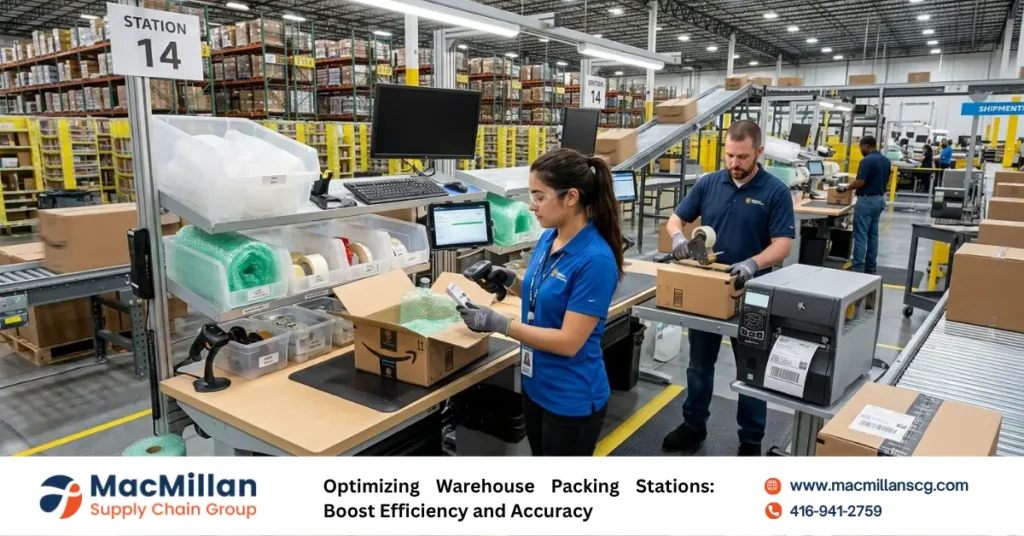
A Quick Summary and Overview Warehouse packing stations are crucial for streamlining order fulfillment processes. By optimizing these stations, businesses can significantly improve efficiency, reduce errors, and enhance customer satisfaction. This article explores the key components of effective packing stations, various types including modular designs, and the numerous benefits of optimization. We’ll also address common problems and provide expert solutions from MacMillan Supply Chain Group. Whether you’re looking to revamp your existing setup or implement new packing stations, this comprehensive guide will equip you with the knowledge to make informed decisions and boost your warehouse operations. Introduction In today’s fast-paced e-commerce landscape, efficient order fulfillment is more critical than ever. At the heart of this process lie warehouse packing stations – the final checkpoint before products reach customers. Optimizing these stations can lead to dramatic improvements in productivity, accuracy, and overall customer satisfaction. At MacMillan Supply Chain Group, we understand the pivotal role that well-designed packing stations play in streamlining operations and reducing costs. With years of experience in supply chain management, we’ve helped countless businesses transform their packing processes. This article will delve into the intricacies of warehouse packing stations, exploring their essential components, types, and the myriad benefits of optimization. We’ll also address common challenges and provide expert solutions to help you elevate your packing operations. Whether you’re a small business owner or a logistics manager in a large corporation, this guide will provide valuable insights to enhance your order fulfillment process. Understanding Warehouse Packing Stations Warehouse packing stations are dedicated areas within a fulfillment center where products are prepared for shipping. These stations serve as the final touchpoint in the order fulfillment process, ensuring that items are accurately packaged, labeled, and ready for dispatch. A well-designed packing station typically includes: Ergonomic workbenches: Adjustable surfaces that cater to different worker heights and preferences, reducing fatigue and increasing productivity. Packing materials: Easy access to boxes, envelopes, bubble wrap, and other necessary materials. Technology integration: Barcode scanners, label printers, and computer terminals for order processing and tracking. Organizational tools: Bins, shelves, and drawers for efficient storage of packing supplies. Quality control equipment: Scales for weight verification and inspection areas for final checks. The primary goal of a packing station is to facilitate quick and accurate order preparation while minimizing errors and optimizing space utilization. By streamlining this crucial step, businesses can significantly reduce shipping times, improve order accuracy, and enhance overall customer satisfaction. At MacMillan Supply Chain Group, we emphasize the importance of customizing packing stations to suit specific business needs. Our experts analyze your unique requirements to design stations that maximize efficiency and adapt to your product range and order volumes. Types of Packing Stations and Their Applications Packing stations come in various configurations to suit different warehouse environments and product types. Understanding these options is crucial for selecting the most appropriate setup for your business: Static Workstations: These are fixed stations ideal for businesses with consistent product sizes and packing requirements. They offer stability and are often used for high-volume, repetitive packing tasks. Modular Packing Stations: Flexible and adaptable, these stations feature interchangeable components. They’re perfect for businesses with diverse product ranges or seasonal variations in packing needs. Mobile Packing Carts: These portable stations can be moved around the warehouse, bringing packing capabilities directly to storage areas. They’re excellent for operations with space constraints or frequently changing layouts. Automated Packing Stations: Incorporating robotics and AI, these high-tech solutions are designed for maximum efficiency in high-volume operations. They can significantly reduce labor costs and increase packing speeds. Specialized Stations: Tailored for specific industries or product types, such as fragile items, hazardous materials, or oversized products. At MacMillan Supply Chain Group, we help businesses identify the most suitable packing station types based on their unique needs. Our expertise lies in creating custom solutions that blend different station types to optimize workflow and adapt to changing business requirements. Benefits of Optimized Packing Stations Investing in optimized packing stations can yield numerous benefits for your warehouse operations: Increased Efficiency: Well-designed stations reduce unnecessary movement and streamline the packing process, leading to higher productivity rates. Improved Accuracy: Organized workspaces and integrated technology minimize errors in order fulfillment, reducing returns and customer complaints. Enhanced Ergonomics: Properly configured stations reduce physical strain on workers, leading to fewer injuries and improved job satisfaction. Space Optimization: Efficient packing stations make better use of available warehouse space, potentially reducing real estate costs. Scalability: Modular designs allow for easy adaptation to changing business needs and seasonal fluctuations. Cost Reduction: Improved efficiency and accuracy lead to lower labor costs, reduced material waste, and fewer shipping errors. Better Inventory Management: Integrated systems at packing stations can provide real-time updates on inventory levels, aiding in stock control. Enhanced Customer Satisfaction: Faster, more accurate order fulfillment directly translates to happier customers and increased loyalty. Data Collection: Modern packing stations can gather valuable data on packing times, material usage, and order patterns, informing business decisions. At MacMillan Supply Chain Group, we’ve seen firsthand how optimized packing stations can transform warehouse operations. Our tailored solutions help businesses realize these benefits, leading to significant improvements in overall supply chain performance. Key Considerations for Packing Station Design When designing or optimizing packing stations, several crucial factors should be considered: Workflow Analysis: Understand your current processes to identify bottlenecks and areas for improvement. This forms the foundation for effective station design. Ergonomics: Prioritize worker comfort and safety with adjustable workbenches, proper lighting, and anti-fatigue mats. Technology Integration: Incorporate barcode scanners, label printers, and inventory management systems to enhance accuracy and efficiency. Product Variety: Design stations that can accommodate different product sizes and packing requirements if your inventory is diverse. Scalability: Plan for future growth by choosing modular designs that can be easily expanded or reconfigured. Material Flow: Ensure smooth movement of products and packing materials to and from the station to minimize unnecessary handling. Quality Control: Implement checkpoints and systems to verify order accuracy before shipping. Sustainability: Consider eco-friendly packing materials and processes to reduce
Unlocking Efficiency: The Role of Logistics Data Standards and Integration

Introduction The logistics industry is synonymous with constant movement and complexity, requiring precision across its multifaceted operations. In light of increasing volumes of digitized data, the need for standardized data formats and seamless integration of digital tools has become more pronounced than ever. By adhering to industry-wide standards, logistics can boost collaboration, reduce errors, and streamline operations, ultimately leading to cost savings and environmental benefits. However, achieving these improvements necessitates overcoming significant challenges and fostering a collaborative spirit among stakeholders. The Call for Logistics Data Standards At this crucial point, uniform data standards have become essential rather than optional in the logistics sector. At the forefront, groups such as the Digital Container Shipping Association and the International Air Transport Association are actively developing these standards. But there are many challenges in the way of widespread acceptance. Many businesses are hesitant to adopt new standards because they have invested heavily in proprietary systems and formats. Because of this hesitancy, the supply chain fractures and data silos persist, making it difficult to collaborate and communicate effectively. In addition to impeding efficiency, a lack of standardization raises the possibility of mistakes and misunderstandings. Moreover, the lack of uniform standards makes it difficult to leverage advanced technologies such as artificial intelligence and machine learning effectively. These technologies thrive on large, consistent datasets, something that’s hard to achieve without industry-wide standards. The goal of promoting data standards is to lay the groundwork for future developments and increase operational efficiency. The logistics sector may open the door to more advanced analytics, automation, and predictive modeling by creating a common language for data. The Need for Effective Integration The increasing use of digital tools by logistics companies to handle various parts of their operations necessitates efficient integration to address the resulting system complexity. From warehouse management systems to transportation management software, and from customer relationship management tools to finance systems, the contemporary logistics environment is defined by a wide range of software solutions, each addressing specific requirements. Without proper integration, these disparate systems can create more problems than they solve. Data silos emerge, leading to duplicated efforts, inconsistent information, and a lack of real-time visibility across operations. This fragmentation can result in missed opportunities, inefficient resource allocation, and suboptimal decision-making. Effective integration, on the other hand, can eliminate redundant tasks, minimize errors, and significantly enhance service efficiency. By creating a unified system that enables seamless data flow across tools and departments, logistics companies can achieve a holistic view of their operations. This integrated approach enables real-time tracking, better forecasting, and more agile responses to market changes. Furthermore, integration sets the stage for advanced analytics and business intelligence. When data from various sources is consolidated and standardized, it becomes possible to uncover deeper insights, identify trends, and make data-driven decisions that can transform the business. Learning from Success: Case Studies Even though implementing data standards and achieving seamless integration involve considerable obstacles, there are encouraging success stories that show the way forward. These case studies offer important insights into implementation tactics and illustrate the observable advantages of standardization and integration. The carrier API integration offered by WebCargo is one noteworthy example. WebCargo has transformed the freight forwarder booking process by standardizing the sharing of air cargo pricing and capacity data. Faster quotation creation, real-time booking capabilities, and greater accuracy in pricing and capacity information are the results of this integration. Both carriers and forwarders have benefited from the more effective, transparent air freight market that has emerged. Another success story comes from project44’s deployment of electronic bills of lading for less-than-truckload (LTL) shipments. By digitizing this crucial document, project44 has significantly reduced manual errors in billing processes, enhanced invoicing precision, and streamlined pickup and delivery tasks. The adoption of eBOLs has not only improved operational efficiency but also contributed to substantial cost savings and improved customer satisfaction. These examples showcase how successful data standardization and integration can accelerate transformative progress within the industry. They highlight the importance of collaboration between different stakeholders and the need for a clear vision of the benefits that can be achieved. The Industry-Wide Collaborative Push Overcoming the inertia of slow adoption requires bold leadership and a compelling business case. The logistics industry stands at a crossroads where the potential benefits of standardization and integration are clear, but the path to widespread adoption remains challenging. Industry players must cooperate to develop a cohesive framework that maximizes the utility of data standards. This collaboration should extend beyond individual companies to include industry associations, technology providers, and regulatory bodies. By working together, the industry can address common challenges, share best practices, and create standards that are truly universal and beneficial for all. In addition to guaranteeing greater efficiency, fostering a collaborative ecosystem will stimulate innovation. New services, better customer experiences, and more sustainable operations are made possible when data can move freely and securely throughout the supply chain. A long-term perspective that considers the revolutionary possibilities of standardized, interconnected systems rather than just short-term expenses is necessary for leadership in this field. Businesses can establish themselves as thought leaders and obtain a competitive advantage in the increasingly digital logistics market by taking the initiative to embrace and promote industry standards. Common Problems and Our Solutions Challenges in Adoption Challenges in Adoption: Resistance to Change: Many organizations remain hesitant to overhaul established systems in favor of new standards. Lack of Investment: Embracing new technologies and standards requires significant upfront investment, which can be a barrier for smaller enterprises. Technological Disparities: Variances in technological capabilities among stakeholders complicate integration efforts across the board. Data Security Concerns: The increased sharing of data raises questions about security and confidentiality. Complexity of Implementation: Integrating new standards into existing systems can be a complex and time-consuming process. MacMillan Supply Chain Solutions By providing comprehensive solutions that are suited to the demands of modern logistics, MacMillan Supply Chain takes an inventive approach to overcoming these obstacles: Seamless Integration Services: By avoiding operational disruptions, our cutting-edge platform guarantees the seamless integration of various digital tools into a
3PL Solutions Revolution: Transforming Supply Chains with MacMillan Expertise
A Quick Summary and Overview Third-party logistics (3PL) is reshaping the supply chain landscape, offering businesses unprecedented flexibility and efficiency. This article delves into the transformative power of 3PL solutions, highlighting how MacMillan Supply Chain Group is at the forefront of this revolution. We’ll explore the benefits of partnering with a 3PL provider, common challenges in implementation, and how MacMillan’s expertise can help businesses overcome these hurdles. From cost reduction to improved customer satisfaction, learn how 3PL can be your secret weapon in today’s competitive market. Discover why more companies are turning to MacMillan for innovative, tailored logistics solutions. An Introduction In today’s fast-paced business environment, efficient supply chain management is no longer a luxury—it’s a necessity. As companies strive to meet ever-increasing customer demands while keeping costs in check, third-party logistics (3PL) has emerged as a game-changing solution. But what exactly is 3PL, and how can it benefit your business? At its core, 3PL involves outsourcing logistics and distribution activities to specialized providers. This allows companies to focus on their core competencies while leveraging the expertise and resources of logistics professionals. As a leader in the field, MacMillan Supply Chain Group has been at the forefront of this revolution, helping businesses of all sizes optimize their supply chains and gain a competitive edge. In this comprehensive guide, we’ll explore the ins and outs of 3PL, its benefits, challenges, and how MacMillan’s innovative 3PL solutions can transform your logistics operations. Understanding 3PL: More Than Just Outsourcing Third-party logistics is often misunderstood as simple outsourcing, but it’s much more than that. 3PL providers like MacMillan Supply Chain Group offer a comprehensive suite of services that can encompass your entire supply chain. These services typically include: Warehousing and Distribution: Strategic storage and efficient movement of goods. Transportation Management: Optimizing routes and modes of transport for cost-effectiveness. Inventory Management: Real-time tracking and demand forecasting. Order Fulfillment: Picking, packing, and shipping orders directly to customers. Reverse Logistics: Managing returns and exchanges efficiently. What sets 3PL apart is the level of integration and customization available. Unlike traditional logistics outsourcing, 3PL providers become strategic partners, aligning their services with your business goals. This partnership allows for: Scalability: Easily adjust to market demands without significant capital investment. Technology Integration: Access to advanced logistics software and analytics. Continuous Improvement: Ongoing optimization based on data-driven insights. MacMillan Supply Chain Group takes this partnership approach to heart, working closely with clients to develop tailored 3PL solutions that address their unique challenges and opportunities. By understanding your business inside and out, we can provide 3PL services that not only meet your current needs but also support your long-term growth strategies. The Benefits of 3PL: Why Businesses Are Making the Switch The adoption of 3PL solutions is on the rise, and for good reason. Businesses partnering with providers like MacMillan Supply Chain Group are reaping significant benefits: Cost Reduction: By leveraging economies of scale and expertise, 3PLs can often provide logistics services at a lower cost than in-house operations. Improved Efficiency: Specialized knowledge and advanced technologies lead to streamlined processes and faster turnaround times. Enhanced Focus on Core Competencies: Outsourcing logistics allows businesses to concentrate on product development, marketing, and customer service. Global Reach: 3PLs often have international networks, facilitating easier expansion into new markets. Flexibility and Scalability: Easily adjust to seasonal fluctuations or rapid growth without major investments. Risk Mitigation: 3PLs stay updated on regulations and industry best practices, reducing compliance risks. Access to Advanced Technology: Benefit from state-of-the-art logistics software without the need for large IT investments. Improved Customer Satisfaction: Faster, more accurate order fulfillment leads to happier customers. MacMillan Supply Chain Group has helped numerous clients achieve these benefits and more. For instance, one e-commerce client saw a 30% reduction in shipping costs and a 25% improvement in order accuracy within six months of partnering with us. By tailoring our services to each client’s unique needs, we ensure that the benefits of 3PL are maximized for every business we work with. Overcoming 3PL Implementation Challenges While the benefits of 3PL are clear, the transition isn’t always smooth sailing. Common challenges include: Integration Issues: Aligning existing systems with the 3PL provider’s technology can be complex. Loss of Control: Some businesses fear losing oversight of their logistics operations. Cultural Misalignment: Differences in company culture can lead to communication breakdowns. Data Security Concerns: Sharing sensitive information with a third party can raise security questions. Performance Measurement: Establishing clear KPIs and monitoring mechanisms is crucial but often overlooked. Initial Cost Concerns: The upfront investment in transitioning to 3PL can be daunting for some businesses. MacMillan Supply Chain Group has developed strategies to address these challenges head-on: We offer seamless system integration, with dedicated IT support to ensure smooth data flow. Our transparent reporting and communication protocols keep clients informed and in control. We prioritize cultural alignment, adapting our approach to match each client’s values and work style. Robust data security measures, including encryption and regular audits, protect client information. We work with clients to establish clear, measurable KPIs and provide regular performance reviews. Our flexible pricing models and ROI projections help businesses understand the long-term value of 3PL investment. By proactively addressing these common hurdles, MacMillan ensures a smooth transition to 3PL, allowing clients to quickly start reaping the benefits of optimized logistics. The Future of 3PL: Trends Shaping Logistics The 3PL industry is constantly evolving, driven by technological advancements and changing market demands. Key trends to watch include: Artificial Intelligence and Machine Learning: Predictive analytics for demand forecasting and route optimization. Internet of Things (IoT): Real-time tracking and monitoring of goods throughout the supply chain. Blockchain Technology: Enhanced transparency and security in supply chain transactions. Robotics and Automation: Increased efficiency in warehousing and fulfillment operations. Sustainable Logistics: Growing focus on eco-friendly transportation and packaging solutions. Last-Mile Innovation: New delivery methods, including drones and autonomous vehicles. Omnichannel Fulfillment: Seamless integration of online and offline retail channels. MacMillan Supply Chain Group is at the forefront of these trends, continuously investing in new technologies and methodologies. We’re not just keeping pace with change; we’re driving innovation in the industry. Our recent initiatives include: Implementing AI-driven demand forecasting, reducing inventory costs for