
How To Improve Last Mile Delivery: Actionable Tips and Solutions
Last mile delivery is more than just the final step in the logistics chain. It culminates a customer’s shopping experience and sets the tone for future interactions. With Canada’s last mile delivery market projected to grow by 7% annually from 2023 to 2028, businesses must prioritize this crucial aspect. In this blog, we’ll delve into some actionable strategies and solutions to optimize last mile delivery. Challenges in Last Mile Delivery High Operational Costs: Last mile delivery can account for up to 30% of the logistical expenditure, with unpredictable transport routes and additional fees adding to the costs. Meeting Customer Expectations: 74% of customers are more likely to repurchase if they receive same-day delivery. Handling Bulky Items: Larger products, especially furniture, present unique challenges in packaging, transit, and installation. Supply Chain Transparency: Real-time insights into order statuses and fleet availability are essential for efficient delivery. Top Strategies and Solutions To Improve Last Mile Delivery The final step of delivering goods to customers, known as the last mile delivery, often proves to be the most complex. Here are some methods to overcome challenges faced by businesses in last mile delivery: 1. Partnering With A 3PL: Partnering with a 3PL like MacMillan is beneficial, as this can significantly reduce shipping costs for your business, especially when there’s a geographical gap between your company’s location and the majority of your customer base. This not only streamlines the delivery process but also minimizes transit times and costs, making it an ideal solution for businesses looking to enhance their last mile delivery. 3PLs use advanced technology to optimize delivery routes. 2. Offer Flexible Delivery Options: Consumers demand choice. By providing a range of delivery options, such as same-day, next-day, or even hour-specific delivery, businesses can cater to these diverse preferences, enhancing the customer experience in the last mile delivery process. 3. Expedited Shipping Capabilities: Customers expect quick delivery times. 3PLs like MacMillan can help businesses meet these expectations by offering expedited shipping options. They have the resources and technology to process orders faster and offer various shipping options, including discounts and faster delivery services. This not only satisfies customers but also helps the business grow by meeting market demands efficiently. 4. Efficient Reverse Logistics: Handling returns is a vital part of e-commerce, and 3PLs like MacMillan streamline the reverse logistics process, making it more efficient and cost-effective. They manage the complexities of returns, including transportation and restocking, and provide valuable insights into customer feedback and product performance. This service is particularly important as it helps businesses understand their customers better and reduces the time and expense involved in managing product returns. 5. Maintain Transparent Communication: One of the primary concerns customers have during the last mile delivery phase is their package’s whereabouts. Businesses can ease these concerns by offering real-time shipping status updates across various communication channels, ensuring customers are always in the loop. 6. Streamline Returns Management: An efficient return process is integral to a positive last mile delivery experience. Offering pre-printed return labels and multiple international return methods can simplify this process, reducing customer friction and ensuring continued loyalty. 7. Implement Feedback-Driven Delivery: The best insights often come from the customers themselves. By establishing a robust feedback collection system, businesses can gain valuable insights into their last mile delivery performance, allowing them to address issues and continually refine their processes. 8. Adopt Sustainable Packing Methods: As environmental concerns grow, businesses must adapt. Using biodegradable, recyclable, or even reusable packaging reduces environmental impact and connects with eco-conscious customers, enhancing brand reputation. 9. Regularly Analyze Delivery Efficiency: Data-driven decision-making is key. Regular analysis of delivery data can highlight inefficiencies, allowing businesses to implement targeted solutions to ensure their last mile delivery operations remain optimized and effective. Elevate your Last Mile Delivery with MacMillan Supply Chain Group Last mile delivery is more than just an operational task; it’s a strategic move that can set businesses apart in a competitive e-commerce market. By implementing the strategies outlined above, businesses can ensure timely, efficient, and customer-friendly deliveries, solidifying their reputation and fostering customer loyalty. At MacMillan Supply Chain Group, we understand the challenges and intricacies of last mile delivery. Whether it’s custom shipping solutions or eCommerce order fulfillment, we shape our services to fit the changing demands of businesses. Team up with MacMillan SCG to ensure a smooth, efficient, and customer-focused experience. Contact us today! Frequently Asked Questions What is last mile delivery? Last mile delivery is the final stage of the supply chain, where products are transported from a warehouse or distribution center to the customer’s doorstep. It plays a crucial role in customer satisfaction and overall delivery efficiency. What are the main challenges in last mile delivery? The main challenges include high transportation costs, traffic congestion, meeting customer delivery expectations, handling bulky items, managing returns, and maintaining real-time shipment visibility. How can a 3PL provider improve last mile delivery? A third-party logistics (3PL) provider can improve last mile delivery by optimizing shipping routes, reducing transportation costs, streamlining order fulfillment, offering expedited shipping, and managing returns efficiently. How can businesses reduce last mile delivery costs? Businesses can reduce last mile delivery costs by optimizing delivery routes, consolidating shipments, partnering with a 3PL provider, improving inventory management, and analyzing delivery performance data to identify inefficiencies. How does technology improve last mile delivery efficiency? Technology improves last mile delivery through real-time shipment tracking, route optimization, automated order processing, delivery notifications, and data analytics. These tools help businesses improve visibility, reduce delays, and deliver a better customer experience.
Black Friday Fulfillment Canada: 2026 Peak Season Guide
Black Friday Fulfillment Canada: How E-commerce Brands Can Prepare for Peak Season 2026 A successful Black Friday campaign depends on what happens after checkout. Customers expect the correct products, useful tracking updates and delivery within the window they were promised. A warehouse backlog can quickly turn a strong sales weekend into cancellations, refunds and expensive support work. Black Friday fulfillment Canada planning needs to connect promotions, inventory, warehouse capacity and carrier collections. For 2026, Black Friday falls on November 27, followed by Cyber Monday on November 30. Your operation must also support December gifting, Boxing Day on December 26 and the returns that follow. Statistics Canada reported $5.5 billion in seasonally adjusted retail e-commerce sales in July 2026, representing 7.5% of retail trade. That measures the broader market, not Black Friday demand, but it highlights the scale of online retail Canadian logistics networks support. This guide explains how to build a practical peak-season plan that protects service quality and margin. Why Black Friday Fulfillment Is Challenging in Canada Canada combines concentrated urban demand with long delivery distances and widely varying destination coverage. Shipping from the Greater Toronto Area to a nearby customer creates different capacity, transit and cost requirements than shipping to northern communities or across the country. Winter weather adds uncertainty. A missed collection or delayed linehaul departure can affect thousands of orders, especially when warehouses are already operating near capacity. Promotions also change the work itself. Gift bundles require assembly, multi-item baskets take longer to pick, and seasonal products may need different packaging. Peak season fulfillment Canada plans must account for these changes rather than multiplying ordinary daily orders by a sales-growth estimate. Black Friday Fulfillment Canada: When Should Planning Start? As a practical planning recommendation, begin three to six months before the event. Start earlier if you need imported inventory, a new warehouse or a different fulfillment partner. Build a Working Timeline Planning window Priorities June–August Review previous peaks, forecast demand and confirm supplier lead times. September Reserve warehouse and carrier capacity; finalize hiring and packaging requirements. October Receive priority inventory, train staff and test systems and workflows. Early November Complete counts, prepare bundles and approve delivery promises. November 27–30 Monitor throughput, inventory, collections and exceptions throughout each shift. December–January Manage gifting, Boxing Day, returns and replenishment. Brands starting in October should prioritize stock availability, measured daily capacity and confirmed carrier pickups. Avoid making major untested system changes immediately before launch. Forecast Demand and Build an Inventory Plan Forecast by SKU, Channel and Day Use last year’s daily orders, units per order, promotions, stockouts and return patterns. Adjust for current growth, advertising spend, product launches and changes in discount depth. Separate expected demand from demand your operation can support. Create base, upside and disruption scenarios, with decisions attached to each. For example, an upside scenario might trigger an additional packing shift or smaller promotional batches. Improve e-commerce inventory management by distinguishing physical stock from stock available to sell. Deduct allocated orders, quality holds, damaged goods and channel reservations. Protect Availability Without Overbuying Set reorder points using demand during replenishment lead time plus an appropriate safety-stock allowance. Increase protection for unpredictable demand or unreliable replenishment, while considering carrying costs and product shelf life. Check component availability for bundles. A skincare set cannot ship when its gift pouch is missing, even if every skincare item is available. Plan lot tracking and expiry rotation for food, supplements and other dated goods. Prepare the Warehouse Before Orders Accelerate Move high-volume promotional SKUs into accessible pick locations. Keep replenishment stock nearby and schedule refills before pick faces run empty. Walk the full order path: receiving, putaway, picking, packing, labelling and dispatch. Identify where carts queue, products cross unnecessarily or packers wait for supplies. Practical warehouse optimization includes clearing staging space, separating returns from outbound inventory and assigning overflow areas. Maintain safe aisles and equipment access throughout. Complete cycle counts before the sale. Pre-kit predictable bundles where economical, and test barcode readability, label placement and carton strength before committing to large volumes. Match Staffing to Real Fulfillment Capacity Calculate capacity at each stage using observed performance. Include receiving and replenishment: additional pickers accomplish little when products remain on inbound pallets. For illustration, six packing stations processing 35 orders per productive hour across seven productive hours provide 1,470 orders of packing capacity. Those inputs are hypothetical; use your measured rates and account for the actual order mix. The slowest stage sets the practical ceiling. Compare picking, packing, dispatch and carrier acceptance before promising output. Train temporary staff before peak starts. Provide clear workstation instructions, scan-based checks and experienced supervisors. Cross-train employees for replenishment and packing, while maintaining breaks and safe workloads. Overtime should be a contingency rather than the entire capacity plan. Build a Multi-Carrier Shipping Strategy For Black Friday shipping Canada, select services by destination coverage, transit performance, parcel characteristics and collection capacity—not price alone. Establish Routing Rules and Tested Backups Use a routing matrix for local, regional, national, remote and U.S. destinations. Define which carrier handles each shipment type and when an alternative should take over. Before activating a backup, test labels, manifests, tracking updates, returns and actual pickups. Confirm that it can accept your expected volume. Two carriers sharing the same constrained route may provide less resilience than expected. Agree on collection times, weekend availability and overflow procedures. Distinguish a printed shipping label from a parcel physically accepted by the carrier. Customer notifications should reflect the shipment’s real status. Budget for Peak-Season Costs and Surcharges Black Friday logistics Canada budgets should include base transportation, fuel, residential or remote-area charges, demand fees, packaging, labour, returns and any additional handling. UPS Canada’s schedule, updated September 17, 2026, lists a CAD $0.75 per-package demand fee for specified domestic air and ground services and UPS Standard to/from the U.S., from October 25, 2026 through January 16, 2027. Applicability depends on the services and billing conditions in the schedule; fees may change and are subject to fuel surcharge. Model costs by destination and parcel size.
E-commerce Fulfillment Costs: Complete Guide for 2026
As the busiest time of the year draws near, the effectiveness of your e-commerce fulfillment in peak season strategies comes into sharp focus. This crucial period, characterized by a significant increase in sales, tests the resilience and efficiency of your e-commerce operations. During peak season in e-commerce, your business transforms into more than just a retail outlet; it becomes a dynamic center of operations. The influx of orders is not just a revenue booster but a critical test of your ability to deliver satisfaction with each package. The hurdles in e-commerce fulfillment in peak season, such as inventory management and meeting accelerated shipping requirements, are always challenging. This blog aims to equip you with 15 essential strategies for e-commerce fulfillment in peak season, ensuring your business survives and flourishes during these high-demand times. E-commerce Fulfillment in Peak Season: Factors You Should Consider Achieving peak performance in e-commerce fulfillment in peak season is crucial for sustained growth and customer satisfaction. It’s not merely about surviving the high-demand periods; it’s about leveraging these challenges as opportunities for significant improvement and growth. Think about these important questions as you customize strategies to fit your specific business requirements: How can you harness the power of technology to make your fulfillment process more efficient? Today’s technological advancements offer many tools and systems designed to optimize operations. The right technology can be a game-changer, from inventory management software to automated shipping solutions. How can you build stronger, more collaborative relationships with your suppliers and logistics partners? Solid partnerships are the backbone of successful fulfillment. Open communication, mutual understanding of expectations, and flexibility can help build a resilient supply chain ready to adapt to the dynamic demands of peak seasons. How can you utilize data and insights from previous peak seasons to refine your future strategies? Historical data is a goldmine of insights. Analyzing past performance, customer feedback, and logistical challenges can guide your planning, helping you anticipate and mitigate potential issues before they arise. Engaging with these considerations for e-commerce fulfillment in peak season can transform challenges into stepping stones for success. This approach sets a solid foundation for your business to survive and excel during the busiest times of the year. The Challenges of E-commerce Fulfillment in Peak Season During peak seasons, e-commerce businesses encounter specific challenges in e-commerce fulfillment. Recognizing and tackling these obstacles is crucial for preserving efficiency and ensuring customer satisfaction. Below is an analysis of the main challenges in e-commerce fulfillment in peak season and strategies for their effective management: Managing Increased Demand Peak seasons often bring an overwhelming increase in product demand. This surge tests the limits of inventory management and shipping logistics. To tackle this, businesses need to ensure robust stock levels. Effective demand forecasting becomes crucial here. Though high demand is a positive sign, it requires strategic planning and resource allocation to ensure seamless fulfillment. Controlling Shipping Costs Shipping costs typically rise during peak periods due to increased demand. To mitigate this, businesses can negotiate with carriers for better rates, explore diverse shipping options, optimize packaging for cost-efficiency, and consider using shipping software or fulfillment centers. Additionally, passing some shipping costs to customers while maintaining transparency can be a viable strategy. Meeting Tight Delivery Schedules During peak seasons, the expectation for swift deliveries intensifies, making e-commerce fulfillment in peak season a critical focus. Challenges such as shipping delays caused by weather or logistical issues, particularly in areas with evolving infrastructure, necessitate a robust delivery system and thorough contingency planning. Staffing for Peak Demand A common challenge in e-commerce fulfillment in peak season is the requirement for extra staff to manage the surge in orders. Efficiently recruiting and training temporary staff is vital. Having a streamlined process to rapidly onboard new employees is essential to maintain operational efficiency during these peak periods. Handling Returns and Exchanges Peak seasons can also see an uptick in returns and exchanges. Having a clear, efficient returns policy is imperative. This helps manage the increased volume and maintain customer satisfaction and trust. Anticipating and preparing for these hurdles allows for smoother operations and a more positive customer experience. Top 15 Strategies for E-Commerce Fulfillment in Peak Season Excellence Navigating e-commerce fulfillment in peak season requires more than just hard work; it calls for a meticulously crafted strategy. The challenges during these high-demand periods are numerous, yet with the appropriate approach, they offer substantial opportunities for business growth and improving customer satisfaction. Let’s delve deeper into each strategy to ensure your e-commerce business thrives during these critical times: In-Depth Advance Planning Well ahead of the busy times, it’s crucial to prepare the foundation for e-commerce fulfillment in peak season. This preparation includes securing a strong inventory level and working closely with your shipping partners. Focus on strategies for handling order surges, emphasizing flexibility and scalability in your operations. Stocking of High-Demand Products Utilize historical sales data to pinpoint products that historically see a surge in demand. Proactively stocking these items helps avoid stock shortages, ensuring you’re well-equipped to meet customer needs without interruption. Refining Reorder Procedures Streamline your inventory management for more frequent restocking, particularly for your best-selling items. Prepare your team and suppliers for swift reordering processes. Employing advanced technology can greatly aid in making this process more efficient and less prone to errors. Elevating Reorder Thresholds Proactively adjust the reorder levels for your high-demand products. By doing so, you maintain a healthier stock level, significantly reducing the likelihood of facing stockouts during peak demand. Fortifying Vendor Networks It’s important to solidify your relationships with suppliers as part of your e-commerce fulfillment in peak season strategy. Being proactive in this way guarantees they are prepared for quick and larger orders, a key factor in maintaining a fluid and responsive supply chain. Broadening Shipping Partnerships Diversify your shipping options to meet customer delivery expectations better. This includes forming new partnerships and exploring various shipping methods to manage the increased volume of deliveries effectively. Holistic Preparation of E-commerce Supply Chain and Logistics Undertake a comprehensive
Cross-Border E-commerce Fulfillment: 5 Ways 3PLs Simplify Logistics
As the world becomes more interconnected, cross-border e-commerce has become a major growth area, presenting substantial opportunities for businesses to extend their operations beyond local markets. Nonetheless, this field comes with its own set of complexities. As companies strive to tap into the lucrative opportunities of cross-border e-commerce, they often confront various logistical challenges that impede their progress and impact their bottom line. The global cross-border e-commerce market, expected to surpass $1 trillion, is thriving, with a compound annual growth rate (CAGR) of 12.54% in logistics. However, this growth brings challenges, including increased competition, evolving trading laws, and the need to manage a proliferating range of stock-keeping units (SKUs). In the past year, most supply chain executives reported substantial impacts on their supply chains, highlighting the pressing need for effective solutions. Addressing these challenges is not just about mitigating risks; it’s about capitalizing on opportunities. This blog will discuss the top challenges businesses face in cross-border e-commerce fulfillment and how 3PLs can help to tackle these challenges. We aim to guide businesses in developing an effective cross-border e-commerce plan, simplifying what can often be a complex journey to international Cross-Border E-Commerce Fulfillment Cross-border e-commerce fulfillment rapidly transforms the retail landscape, presenting unique opportunities for Canadian businesses and consumers. For Canadian consumers, cross-border e-commerce means purchasing goods from online retailers outside Canada. This trend is gaining momentum, with a significant portion of Canadians participating in international online shopping annually, drawn to the diverse range of global products and brands. By 2027, the value of international e-commerce, encompassing both B2B and B2C sectors, is projected to surpass US$3.5 trillion. The Benefits of Cross-Border E-Commerce Fulfillment Canadian businesses have much to gain from cross-border e-commerce fulfillment. Below, we explore the benefits of cross-border e-commerce fulfillment: Market Expansion Opportunities: Expanding beyond Canada allows access to millions of potential customers in markets such as the United States, Europe, and Asia. For example, targeting the U.S. market alone can open doors to hundreds of millions of additional consumers. Leveraging Economic Diversity: Engaging in cross-border e-commerce allows Canadian businesses to capitalize on economic disparities and higher GDP regions. This strategic approach can enhance profit margins and a broader consumer base. Overcoming Seasonality: For Canadian retailers, especially those in seasonal industries like fashion, cross-border e-commerce fulfillment enables year-round sales by tapping into markets in different hemispheres. Brand Expansion: International exposure can significantly enhance global presence. Internationally popular products, known for their quality and innovation, can help solidify brand identity and loyalty in new markets. Direct-to-Consumer (DTC) Model: Cross-border e-commerce allows Canadian businesses to reach consumers worldwide directly, offering more control over brand presentation and customer experience. This approach also aligns with the growing trend toward DTC sales, which can lead to higher profit margins. Sustainability and Eco-Friendly Practices: Canadian businesses can emphasize sustainable practices in their cross-border e-commerce strategies. This aligns with Canada’s commitment to environmental responsibility and appeals to the global consumer base, which increasingly demands sustainable products. Cross-border e-commerce fulfillment presents a promising avenue for Canadian businesses to expand their reach, increase profitability, and establish a strong global brand presence. As this sector grows, embracing its potential can be a game-changer for the Canadian retail industry, offering pathways to international success and market diversification. The Main Logistics Challenges in Cross-Border E-Commerce Fulfillment In cross-border e-commerce, manufacturers and businesses face various logistical challenges that hinder their operations and customer satisfaction. With the rise in global e-commerce activities, addressing these issues efficiently is crucial for maintaining a competitive edge and ensuring a smooth workflow. Below are the significant challenges encountered in cross-border e-commerce fulfillment and insights into how automation and smart solutions can provide effective remedies. Complexities in Freight Procurement Traditional manual bidding and negotiations often lead to inconsistencies in costs and time wastage, affecting the pace of goods movement and contract fulfillment. Automation platforms streamline this process, offering faster shipping times and cost-effective solutions. Challenges with Manual Document Handling The conventional approach to document management is prone to errors and delays, with potential impacts on delivery timelines. Digital freight management solutions offer secure digital document storage, enhancing efficiency and reducing physical dependencies. Incidental Costs Unforeseen expenses like detention and demurrage charges can significantly impact a business’s finances. Smart freight management software provides predictive alerts to minimize these costs and prevent breaches in delivery service level agreements (SLAs). Shipment Visibility Issues A lack of complete supply chain visibility affects planning and customer experience. Advanced systems offer real-time tracking and AI-driven predictive ETAs, improving transparency and operational planning. Customer Experience Concerns Traditional tracking methods are often inefficient, leading to poor customer service. Modern freight management platforms offer automated notifications and updates, enhancing the customer experience. Lack of Analytics-Driven Planning Many businesses struggle with insufficient historical data for informed decision-making. AI-powered freight management systems facilitate efficient logistics planning and improve various aspects of the supply chain. Navigating Customs and Duties: Different countries have varied customs regulations, creating a complex business environment. Automated solutions help us understand and comply with these diverse regulations, reducing delays and extra costs. International Shipping and Delivery Coordinating shipments with multiple carriers across borders is challenging, compounded by the difficulty of tracking packages internationally. Automation helps streamline these processes for more efficient delivery. Inventory Management Across Locations Managing inventory in multiple countries is crucial to avoid stockouts and delays, especially for perishable or seasonal products. Integrated systems provide real-time inventory visibility. Integrating Technologies: Synchronizing various e-commerce inventory Management and shipping systems are essential but complex. Seamless integration, facilitated by advanced technology, ensures efficient order fulfillment and operational coherence. Navigating the challenges of cross-border e-commerce fulfillment requires a strategic approach, combining smart automation and innovative logistics solutions. By addressing these key hurdles, businesses can enhance their operational efficiency, improve customer satisfaction, and stay ahead in the competitive landscape of global e-commerce. The Role of 3PLs in Overcoming Cross-Border E-Commerce Fulfillment Challenges Navigating the complexities of cross-border e-commerce can be daunting, especially regarding logistics and shipping. This is where a third-party
Tech-Infused 3PL’s: Navigating How AI is Transforming Supply Chains.
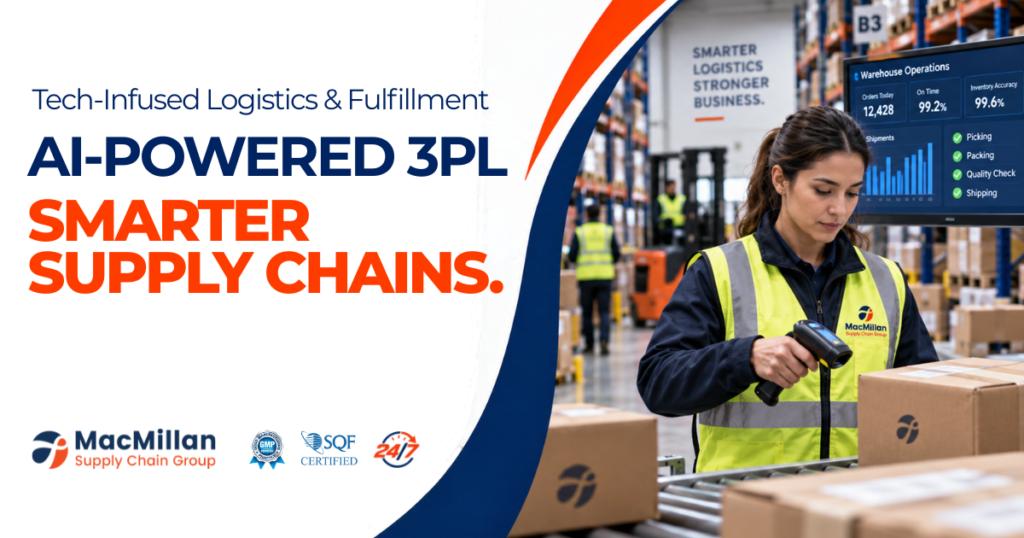
In the fast-evolving landscape of global trade and e-commerce, supply chain isn’t just about moving goods from point A to point B. The supply chain is the web linking together multiple functions, including logistics, production, procurement, marketing and sales. Modern businesses demand speed, efficiency, and above all, smart solutions that can seamlessly integrate into their operations. A.I and supporting technology can help automate tasks across the supply chain, from data analysis, forecasting customer demands, generating marketing campaigns, inbound and outbound calling and more. In a rapidly developing logistics landscape, tech-infused third-party logistics (3PL) providers, revolutionize the industry by blending traditional logistics services with cutting-edge technologies to deliver a sustainable impact to their partners. What is a 3PL? A 3PL, or third-party logistics provider, is a partner that helps companies optimize their supply chain and logistics operations. They specialize in services such as last mile delivery, warehouse storage, order fulfillment, container de-stuffing and transportation. You may also hear 3PL companies called by other names: · Fulfillment company · Order fulfillment companies · Fulfillment warehouse · Fulfillment center Not all 3pl providers provide the same services but their primary goal remains to effectively take the supply chain management burden off their clients’ shoulders. The primary advantage of using a 3PL is that it allows businesses to focus on other core aspects of their operations without the complexities of logistics management. Several 3pl providers also provide specialized services catering to the various niches/industries. For more information on what the right 3PL provider looks for you, visit our 3PL Guide. What is Tech-Infused 3PL? Tech-infused 3PL is the next step in the evolution of logistics services. This approach integrates advanced technologies like Artificial Intelligence (A.I), machine learning, robotics, and data analytics into traditional logistics processes. The infusion of these technologies enhances the efficiency, accuracy, and reliability of logistics services. For instance, A.I can predict shipping delays, robotics can automate warehouse operations, and big data can enhance supply chain transparency. This tech-driven approach not only streamlines operations but also provides more adaptability in the dynamic market landscape. Why Does it Matter and Why Should You Care? In today’s fast-paced market, a delay in delivery or a supply chain disruption can be detrimental to a business. Tech-infused 3PLs leverage technology to mitigate these risks, ensuring a smoother, more predictable logistics process. For businesses, this means improved customer satisfaction, reduced overhead costs, and enhanced capability to scale operations globally. Additionally, the data-driven insights provided by these advanced technologies empower businesses to make proactive decisions, thus enhancing strategic planning and execution. However, like all other technologies during their inception, implementing A.I and ML (Machine Learning) solutions isn’t cheap, hence making A.I driven 3PL’s an ideal partner for business’s seeking to harness the power of A.I without the hassle and investment needed. Want to learn more about what an A.I driven partner can do for you? Get in touch with us today. How does A.I and technology work in Supply Chain? A.I provides businesses with unparalleled efficiency and accuracy to manage and optimize supply chain activities such as: monitoring product quality, balancing inventory levels, reducing and identifying fuel-efficient delivery routes. Thanks to A.I’s ability to simulate human intelligence and perform complex tasks, it provides more efficiency than traditional software’s. Its subfields include machine learning (ML), in which systems learn from consuming and analyzing, vast amounts of data rather than being programmed with step-by-step instructions. Thanks to this learning process, A.I systems can outperform traditional software in functions such as deciphering information from video feeds, interpreting spoken and written text, predicting future market behavior, making decisions in complex scenarios, and surfacing insights buried in large data sets. However, A.I is not just limited to processing data but impacts the entire chain from product design to sales and marketing. Several fine-tuned LLM’s (Large Language Models), notably Chat-GPT have changed the way we work. The ability to search the web, write content, generate images, act as cold calling sales agents (with the help of other software’s) and with recent developments even powering robots. These kinds of capabilities are proving extremely useful in managing and optimizing workflows. For example, supply chain systems powered by ML algorithms can discover patterns and relationships within data sets that are often missed by humans or non-A.I systems, so they can more accurately forecast customer demand, which leads to more economically efficient inventory management. A.I can also analyze factors such as traffic and weather conditions to recommend alternative shipping routes, reducing the risk of unplanned delays and improving delivery times. It can monitor workspaces to spot poor quality control procedures and health and safety violations. And new use cases are constantly emerging as supply chain professionals continue to experiment with the technology. Finding the Right Tech-Driven 3PL Partner for Your Business Choosing the right tech-driven 3PL partner involves several considerations. Here are a few tips: Technology Integration: Assess the technological capabilities of the 3PL provider. Ensure they have a proven track record of integrating advanced technologies like A.I and robotics. Scalability: Your 3PL partner should be able to scale their services as your business grows. Look for flexibility in operations and the ability to handle increased order volumes without compromising service quality. Security: Given the data-intensive nature of tech-infused 3PL services, ensure that your provider has robust security measures in place to protect your data. Experience and Reliability: Evaluate their experience in your specific industry. A reliable 3PL provider will have not only the experience but also positive testimonials and a strong reputation. Sustainability: Consider whether the 3PL provider follows sustainable practices. With increasing awareness of environmental issues, partnering with a green 3PL can enhance your brand’s image and compliance with global standards. The integration of technology into logistics, especially through A.I, is not just an enhancement but a necessity in the modern business environment. Tech-infused 3PL’s such as MacMillan SCG provides their partners s a competitive edge by enabling more efficient, reliable, and transparent supply chain management solutions. By understanding the capabilities and
Top 5 best Third Party Logistics Companies
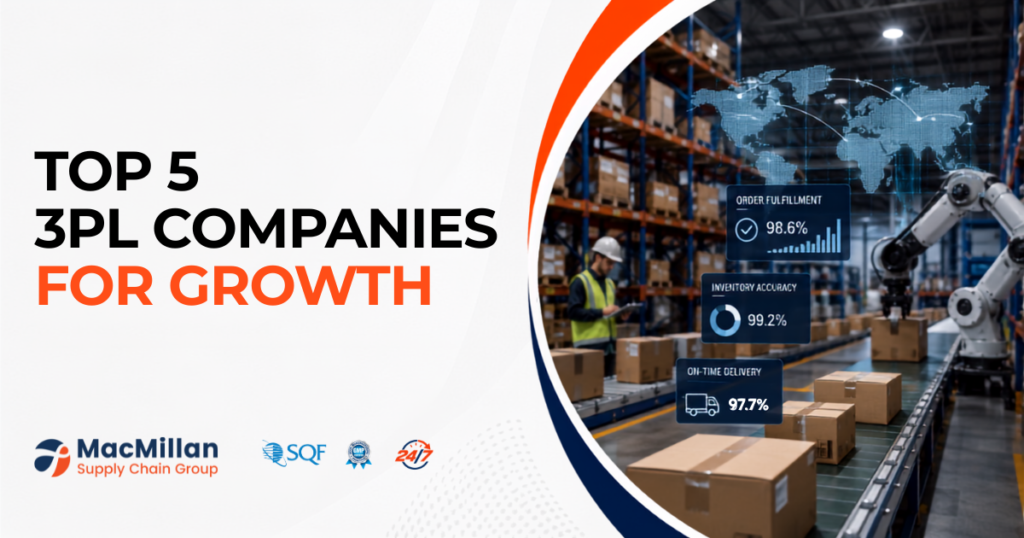
Selecting a reliable third-party logistics (3PL) provider is crucial for businesses looking to streamline their logistics operations. The top five 3PL companies listed in this blog will help you excel in various domains, offering optimized operations by analyzing their core functions and strengths to best fit your needs. To simplify your decision-making process, consider starting with any of these five reputable 3PL companies: The five best 3PL companies Here is a list of the best third party logistics providers to best fit your business requirements: Ship Hero is a robust Warehouse Management System tailored to enhance eCommerce operations by optimizing the picking, packing, and shipping processes. Its operations include inventory management, order tracking, automation rules, and seamless integration with major eCommerce platforms. Ship Bob provides exceptional fulfillment services designed to help direct-to-consumer eCommerce brands to stay competitive. By managing 3PL warehousing and logistics, Ship Bob allows businesses to focus on growth and delivering outstanding customer experiences. MacMillan SCG as a cost leader in the Top Tier 3PL warehousing provider in Canada offers you scalability and Robustness with intergraded WMS and TMS systems for you to track orders. If you are looking for a Top Tier Provider in Canada, MacMillan will not let pricing to be an issue with its transparent pricing structures with no hidden fees. XPO Logistics focuses on the usage of technology to efficiently move goods or products through its network. The company focuses on de-risking supply chains, providing businesses with visible and efficient logistics solutions. United Parcel Service, Inc. (UPS) has evolved from a small messenger service into a Fortune 500 global shipping and supply chain powerhouse. UPS is renowned for its massive reach and reliability over operational networks. If you already understand the value of a 3PL logistics provider, these five companies are top starting points for your research. If you’re still learning about 3PL companies and their benefits, keep reading for more insights. Overview of 3PL companies Third-party logistics (3PL) companies vary widely in networking and service offerings, designed to meet diverse business needs. While some 3PL companies focus on specific industries or geographic locations, others deliver customizable solutions suitable for any business. Our top five 3PL companies stand out for their proven track records, extensive networks, and customer satisfaction. Startups and small businesses often turn to 3PL companies to manage their logistics, allowing them to focus on their core strengths. Larger corporations also benefit from outsourcing logistics operations, enabling them to streamline 3PL warehousing processes and leverage specialized expertise. What are the core functions of 3PL companies? The top five 3PL companies mentioned above distinguish themselves through several key competencies that give them a competitive edge such as: Extensive network and transportation capabilities Advanced technology and Integrated tracking systems Efficient 3PL warehousing and inventory management Outstanding customer service and Feedbacks Customizable solutions to specific business needs Considering 3PL warehousing locations When selecting a 3PL provider, evaluating their fulfillment center locations and 3PL warehousing capabilities is essential. The top five 3PL companies mentioned above boast strategically located warehouses nationwide, ensuring cost-effective shipping. These companies have invested in cutting-edge warehousing facilities that emphasize visibility, security, and scalability. E-commerce platforms and sales channels supported by 3PL Effective supply chain management is crucial for e-commerce businesses to ensure timely order fulfillment. The top five 3PL companies integrate with popular e-commerce platforms like Shopify and Amazon. They also support multiple sales channels, including marketplaces like eBay and social media platforms. By leveraging the expertise of these 3PL companies, e-Commerce businesses can drive sales growth. Customer satisfaction with a 3PL company When choosing a 3PL provider, it’s important to consider their track record of customers value added feedback and communication. For instance, MacMillan SCG offers direct customer feedback for the 3pl services provided and allows on-site visits for tracking and increasing order accuracy rates. The top five 3PL companies have a proven record of delivering exceptional service and consistently exceeding customer expectations. How to get started with a 3PL service provider? Partnering with a 3PL company involves a straightforward onboarding process: Assess your third-party logistics needs Research and shortlist potential 3PL companies Request for Proposal (RFP) to 3PLs to get comprehensive information. Choose the 3PL provider that best fits your business Collaborate with the 3PL company to set up systems and processes By following these steps, you can begin leveraging the benefits of 3PL services and optimizing your supply chain operations. What is Full-service warehousing? A Full-Service warehouse offers many possibilities for your small or growing business. Generally, a full-service 3PL warehouse will cater more services than storing your products and moving them from point A to point B. additionally, a full-service warehouse offers: Key tips for choosing the best 3PL company When choosing a 3pl warehousing company to manage your warehousing and fulfillment operations we highly recommend keeping the following points in mind: Conduct Thorough Due Diligence: Inspect the potential 3PL providers and their facilities, reach out to their customers for feedback, research them online, and review their Business Bureau report. These steps can help you avoid unreliable companies and ensure the provider can handle your orders accurately and perform on-time deliveries with zero damaged rates. Examine Pricing models: Be aware that warehousing companies often omit some potential costs from their quotes to make their pricing appear more appealing. To counter this, request a comprehensive list of all charges and ask for a mock bill based on a month’s worth of data. Such as MacMillan with offers no hidden fees and has a transparent pricing structure. Assess Partnership Value: Consider whether you feel comfortable and confident in the 3PL provider’s ability to handle specialized products. If you have any doubts, don’t let lower pricing convince you to overlook a solid partnership. Evaluate the 3PL’s Connections: High-quality 3PL providers often have partnerships with other reliable service providers and local networks which can benefit you with better rates and access to necessary services and products. Avoid these mistakes while choosing a 3PL partner When selecting a
Navigating 3PL Providers for Small Businesses: A Complete Guide
From independent entrepreneurs to thriving startups, small businesses in the ecommerce sector face unique challenges. Balancing operational costs with ensuring customer satisfaction is a multifaceted task. This is where 3PL providers come in, bridging the gap between logistics demands and available resources, allowing businesses to scale with visibility and efficiency. In this guide we will explore the services and benefits offered by 3PL providers, the advantages of outsourcing logistics to them, and the key factors to consider when selecting a 3PL partner. Additionally, we will examine how cutting-edge technology solutions, such as those provided by MacMillan, are shaping the future of third-party logistics and fulfillment operations. What is the role of 3PL provider in ecommerce? Ecommerce has reshaped the retail landscape, compelling businesses to innovate their strategies. As customer demands for faster delivery and seamless shopping experiences increase, managing logistics and fulfillment internally can be crucial. Partnering with a reliable third-party logistics 3PL provider can be transformative for ecommerce businesses, helping them navigate challenges and optimize their supply chains to boost profitability and increase visibility. How can startups benefit from outsourcing a 3PL provider? Navigating the complexities of logistics can be daunting for any business, but it is particularly challenging for small businesses and startups. Outsourcing these operations to 3PL providers offers substantial benefits, such as cost reduction, enhanced scalability, and improved customer satisfaction. 3pl providers mainly provide advantages for new or small-scale businesses such as: Navigating a 3PL provider for a small business For small businesses, entering the world of third-party logistics can be daunting. With a multitude of options available, each claiming to enhance your ecommerce operations, making the right choice can be challenging. To assist you in this process, here are some considerations to ensure you select a 3PL provider that aligns with your specific business needs. Pricing and contract clarity 3PL providers pricing structures can be intricate. Small business owners must carefully understand the breakdown of costs, including base fees, additional charges such as inbound and outbound fees, and SKU management expenses. While budget constraints are common for small businesses, it’s important to remember that the cheapest option may not always provide the value and reliability your business needs. Evaluating Warehousing and Fulfillment Capabilities A 3PL providers warehousing and order fulfillment services are critical to their offering. As a small business owner, we seek 3PL providers that offer comprehensive services such as returns management, packaging, kitting, same-day order processing, and delivery. MacMillan offers your business on-time delivery performance with zero error rates and proves to be a cultural fit as per its track record. Assessing Technological Integration Small businesses need a 3PL provider that can seamlessly integrate with their existing technology stack, providing real-time inventory management and routing capabilities. Look for compatibility with popular ecommerce platforms such as Amazon (including Amazon Seller Fulfilled Prime). Companies like MacMillan, with solutions like the WMS Integration, ensure a smooth process, minimizing potential disruptions. Evaluating Shipping Capabilities Investigate the shipping competencies of each prospective 3PL provider. Prioritize those with partnerships with major carriers like FedEx, UPS, and DHL, and the ability to secure competitive shipping rates. Given that your shipping needs might fluctuate, a provider capable of handling variable volumes and coping with your seasonal demands is important. Verifying Provider Reputation and Consistency Finally, conduct thorough research into each potential 3PL provider’s reputation proven through track records. Customer reviews and case studies can offer valuable insights into their reliability, responsiveness, and problem-solving abilities. For a small business, a dependable 3PL partner can significantly impact customer satisfaction and enhance your business reputation. Evaluating Pricing models in the 3PL Market place Understanding the pricing structure in the 3PL industry is crucial in making informed decisions. Key Factors to consider include: Common pricing strategies 3PL providers typically offer various pricing models, including transaction-based, fixed cost, cost-plus, and variable cost structures. For instance, a transaction-based model might be ideal for businesses with consistent order volumes, while a variable cost model can provide greater flexibility for those with seasonal fluctuations. Transparent cost When comparing prices, small business owners should be concerned about potential hidden costs. These can include charges for storage, inventory receiving, order picking and packing, and returns processing. Additional fees may also apply for same-day or rush orders, SKU handling, or administrative expenses. MacMillan provides a transparent pricing model with no hidden fees and additional charges which in turn increases reliability. 3PL Contract Negotiation Embrace the opportunity to negotiate with potential 3PL providers. They are accustomed to these discussions and often open to adjusting their pricing or services to secure your business. Understanding your business needs, forecasting order volumes, and utilizing this insight during negotiations is key. Assessing Value Beyond Cost While cost is important, businesses should also evaluate the value provided by their 3PL provider. For example, a provider offering real-time tracking, seamless integration with popular ecommerce platforms, and exceptional customer service may justify a slightly higher cost. Simplify your 3Pl search with MacMillan Recognizing the complexity of today’s decision-making processes, MacMillan introduces its 3pl warehousing and Fulfillment Marketplace, a solution designed to simplify the search for suitable 3PL partners. MacMillan streamlines the evaluation of 3PLs through an intuitive search and filtering experience. With its curated list of high-performing partners across various service verticals in Canada, and strategic coverage of 80% across all western regions, small businesses can construct tailored fulfillment networks to meet their unique needs. MacMillan significantly simplifies the logistics outsourcing process for small businesses. This platform empowers businesses to concentrate on core functions while benefiting from a professional, efficient, and customized logistics network. Key Takeaways In conclusion, small businesses in the logistics sector face unique challenges that require a careful balance between operational costs and customer satisfaction. 3PL providers play a crucial role in bridging the gap between logistics demands and available resources. By leveraging the right 3PL partner such as MacMillan, small businesses can optimize their supply chains, enhance profitability, and ultimately improve customer satisfaction. Frequently Asked Questions What is a
Optimizing Your Supply Chain: Lean Logistics for Efficiency and Growth
To eliminate all forms of waste, many companies focus on maintaining lean logistics. By aligning supply chain management with lean principles, you can enhance your brand’s operational efficiency, cut logistics costs, and provide superior customer experience. In this article, we will explore the core principles of lean logistics, analyze its benefits, and offer practical tips and best practices MacMillan uses to help you streamline your own logistics operations. Understanding Lean Logistics Lean logistics is a strategic approach to logistics management used to identify and eliminate waste within your supply chain. The primary objective is to optimize operations by removing unnecessary processes. By refining the continuous flow of products, lean logistics helps reduce costs and significantly boosts efficiency, ensuring a more effective supply chain. Key factors of Lean Logistics Lean logistics operations are driven by several key principles, such as: Waste Reduction Waste manifests in various forms in 3pl warehousing, and lean logistics aim to minimize all of them. Specifically, lean logistics focus on reducing waste in: Time: Minimizing lead times and transit times while providing real-time visibility. Materials: Reducing excess raw materials and packaging materials. Products: Preventing lost, damaged, or obsolete inventory with inventory tracking. Effort: Eliminating unnecessary tasks to better utilize human labor and minimize warehousing waste. Product Flow focus A crucial aspect of lean logistics is improving efficiency and throughput. This involves ensuring that inventory flows seamlessly through the supply chain. MacMillan focuses on processes such as order processing, picking, packing, and shipping performed accurately, without unnecessary delays or interruptions. Value Stream Mapping Lean logistics relies on differentiating value-adding elements from superfluous ones. Mapping the value chain across operations helps identify unnecessary activities, focus on delays. Lean Logistics vs. Traditional Logistics Traditional logistics prioritize outcomes over processes, focusing on executing all necessary tasks to deliver orders to customers, often with little attention to the efficiency of these tasks. This approach can result in: Outdated Processes Higher Labor and Storage Costs Excess or Obsolete Inventory However, lean logistics aims on delivering high-quality output with minimal waste of effort, and materials. Moreover, lean logistics equip brands to better navigate unexpected challenges compared to traditional logistics systems. With minimal waste and extraneous processes, it is easier to adapt to supply chain bottlenecks. Implementing Lean Logistics in E-commerce Here are several strategies companies can use to implement lean logistics management, minimizing waste and enhancing efficiency in their operations. Implement JIT Inventory Management Systems Many businesses attempt to prevent stockouts by ordering and holding large amounts of inventory. However, this approach often leads to excess inventory, increased holding costs, and eventually, deadstock. Adopting lean inventory management strategies, such as the just-in-time (JIT) system, can mitigate these issues. JIT relies on a pull system where inventory is acquired based on actual customer demand. This means that inventory is procured in small volumes and replenished to match customer demand. While JIT reduces waste and minimizes costs, it requires precise procurement timing and accurate tracking with system integrations. Implementing automatic reorder point notifications can also support your JIT strategy. These notifications tell you when inventory reaches a specific threshold, ensuring timely restocking to maintain optimal inventory levels. Enhancing Operational Efficiency in Logistics By auditing your warehouse processes and identifying inefficient activities, you can save time and effort across your supply chain operations. Consider optimizing key logistics operations such as: Inventory Receiving: Designate a specific area for receiving inventory and ensure thorough counting and inspection for potential damage. Warehouse Layout: Arrange your warehouse to allow quick and safe travel for workers, maintain wide aisles for equipment passage, and store inventory in easily accessible locations. Picking: Minimize travel time with strategic pick lists that chart optimized routes through the warehouse. Implement picking strategies like batch picking, zone picking, or wave picking to handle more orders with zero errors like MacMillan does. Packing: Ensure packers are trained to place items in boxes or bags efficiently and correctly. Automation for Enhanced Logistics operations Supply chain automation tools are essential for logistics operations and reducing manual labor. Implementing automation can include: Automated Order Processing: MacMillan uses software that quickly confirms order details and advances them to the next stage of fulfillment, eliminating the need for manual data entry and provides integrated WMS and TMS. Optimal Inventory Distribution: Usage of tools that automatically assign orders to the suitable fulfillment center, reducing shipping times and costs. Pallet Algorithms: Utilize algorithms to identify the optimal packaging size for each order automatically, enhancing packing efficiency and storage sizes. Automated Sorting Machines: Implement machines that scan each package to verify dimensions and weights, and automatically sort them into the appropriate carrier lanes. Logistics Optimization with Data and Analytics Data is crucial for identifying opportunities to streamline your logistics. By consistently monitoring and analyzing supply chain performance KPIs, inventory analytics, order data, and fulfillment metrics, you can pinpoint which aspects of your logistics operations are efficient. For instance, MacMillan ensures real-time inventory tracking which enables you to make informed decisions about reorder quantities and inventory control. This, in turn, enhances supply chain workflows and facilitates continuous improvements in the logistics operations. Advantages of Implementing Lean Logistics Implementing lean logistics in your operations offers several significant advantages: Cost Reduction Lean logistics focuses on eliminating waste and inefficiencies, which naturally reduces costs associated with unnecessary transportation, excess inventory, storage, and prolonged wait times. Improved Profitability By minimizing costs and enhancing operational efficiency, lean logistics boosts your brand’s profitability. organize order cycle times contribute to maximizing revenue generation. Enhanced Customer Satisfaction Optimized shipping logistics in lean operations ensure faster deliveries. Efficient fulfillment processes and optimal delivery routes lead to customer satisfaction. Supply Chain Flexibility Reduced lead times and streamlined processes create an agile supply chain capable of adapting quickly to market changes. Key Takeaways Implementing lean logistics is not just a strategy; it’s a pathway to transforming operations for enhanced efficiency and customer satisfaction. By aligning supply chain management with lean practices, businesses can reduce costs associated with waste, unnecessary transportation, and excess inventory. Through continuous improvement driven by
A Comprehensive Guide to Mastering Shopify Fulfillment Services
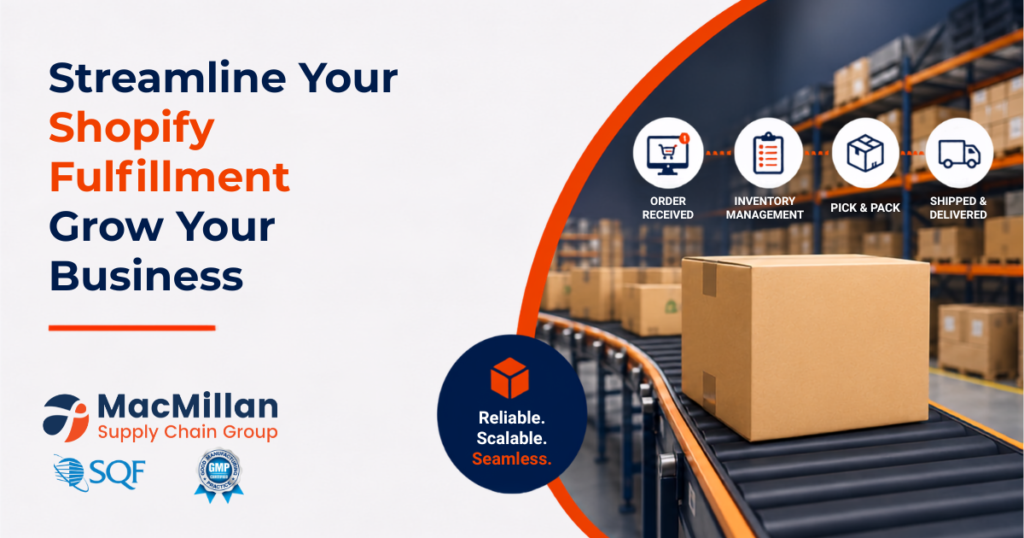
As customers become accustomed to speedy deliveries, a slow fulfillment process can lead to lost sales. For Shopify store owners aiming to grow their businesses, it’s crucial to evaluate and optimize the fulfillment process. However, planning logistics and order fulfillment can be difficult, especially for those new to e-commerce. Thankfully, numerous fulfillment service providers assist Shopify businesses in expanding their reach every day. In this guide, we will cover the fundamentals of fulfillment and delve into more topics, such as identifying the right time to enhance your fulfillment strategy and understanding the essentials of partnering with a 3PL provider such as MacMillan to streamline your operations. Why Staying on Top of Fulfillment Services is Crucial Fulfillment is a cornerstone of running a successful online store, significantly influencing the customer experience. A seamless fulfillment process ensures that orders are shipped accurately and on time providing real-time visibility. With major players like Amazon with its prime program, setting the bar with two-day delivery. MacMillan can help you meet your fulfillment needs to boost customer satisfaction, retention rates, and sales, propelling their growth and success. Overview of Shopify’s Fulfillment Options In-house Fulfillment: Manage your inventory, pack, and ship orders yourself. Suitable for small businesses but can lead to high overhead costs and time consumption as you grow. Drop shipping: Sell products without holding inventory. Purchase from manufacturers or sellers, who handle storage, packing, and shipping. 3PL Fulfillment Service Providers: Utilize 3PLs such as MacMillan that can manage the entire fulfillment process, from order alerts, tracking to delivery. This option eliminates the need for your own warehouse, as 3PLs use their own facilities. Why You Need a 3PL Shopify Fulfillment Service A third-party Shopify fulfillment service can be essential for several reasons. High order volumes, oversized products, or the need for optimized shipping can make in-house fulfillment challenging. By partnering with a fulfillment service, you can focus on other business operations. Key benefits of a 3PL services include In essence, 3PLs streamline the entire fulfillment process, from inventory storage to delivery, allowing you to maximize efficiency and minimize costs. Understanding the Shopify Fulfillment Network The Shopify Fulfillment Network (SFN) is a comprehensive network of fulfillment centers across North America designed for Shopify-integrated businesses. By leveraging SFN, you can utilize Shopify warehouses for efficient storage, picking, packing, and shipping. Key features of SFN include: Platform Integration: Seamlessly integrates with your online shop to process orders and receive inventory notifications from a single platform. Optimized Distribution: Strategically distributes your products to efficient locations, ensuring faster delivery to customers. Branded Packaging: Ships products in customized, branded packaging to enhance your brand’s image. When to Switch to Outsourced Fulfillment? Most e-Commerce businesses start small, managing inventory, order fulfillment, and shipping independently. However, as your business expands, managing these tasks on your own can become inefficient and unsustainable. Recognizing when to switch to outsourced fulfillment is crucial for continued growth. Here are the key signs that it’s time to consider outsourcing your order fulfillment: Uneven Sales: If your business has outgrown your current storage space and you’re looking to invest in a warehouse, evaluate your sales patterns first. For businesses with fluctuating order volumes, investing in a warehouse might not be cost-effective. Fulfillment companies offer adaptable warehouse services that can adjust to your needs, making them ideal for handling cynical cycles. Time Constraints on Fulfilling Orders: If you find yourself overwhelmed with order fulfillment tasks, it’s a clear indicator that you need to explore outsourced fulfillment options. This shift will allow you to focus on scaling your business rather than being bogged down by logistics. Lack of Logistics and Fulfillment Infrastructure: Outsourced fulfillment provides flexibility and infrastructure that self-fulfillment cannot match. This ensures smooth and efficient order fulfillment, allowing you to navigate foreign regulations and other logistics challenges. How to Choose a Fulfillment Service for Your Shopify Store Selecting the right logistics and fulfillment service provider is crucial for the success of your Shopify store. Here are key factors to consider: Experience in Your Industry eCommerce businesses vary significantly in their needs and customer bases. Ensure the fulfillment provider you choose has experience in your industry. Investigate which business niches they serve and which industries they specialize in to find a match that aligns with your company’s demands. Similar Existing Clients Target fulfillment companies and logistics partners that already cater to sellers in your business niche. This ensures they understand your specific needs and can provide appropriate services. Pricing Isn’t the Most Important Factor While competitive shipping costs are important, they shouldn’t be the sole deciding factor. Such as, MacMillan being the top tier provider has a transparent pricing model and provides availability and cost of services beyond basic transportation and warehousing. If your business requires custom packaging, invest in a logistics provider that can deliver this to avoid compromising product quality. Technology and Integrations Choose a fulfillment partner that stays current with technology and offers seamless integrations with your existing platform. Integration of WMS with your current systems can enhance your fulfillment process. Shopify’s advanced technology, including machine learning, optimizes inventory storage, saving you time and money. Data and Analytics Utilize data and analytics to improve your services and business operations. Partner with a logistics provider that offers real-time tracking and analytics. Shopify, for instance, provides tracking numbers for every order and customer order data, allowing you to monitor shipments and identify areas for improvement. Let MacMillan Handle your Fulfillment process MacMillan offers a unique solution, combining warehouse management software with comprehensive fulfillment services. Enhanced In-House Fulfillment If you choose to manage fulfillment internally, MacMillan enhances your logistics capabilities by automating key processes and centralizing information like real-time stock levels and shipping times on a single platform. Seamless Integration With one-click integrations with platforms such as Shopify, managing orders and processing returns becomes effortless. Advanced Fulfillment Services MacMillan Shopify-integrated fulfillment service eliminates the need for paper pick lists with its native iOS app, reducing errors by up to 99.9%. Additionally, MacMillan connects seamlessly with top carriers like
Smart 3PL Warehousing: Technology, Techniques and Best Practices
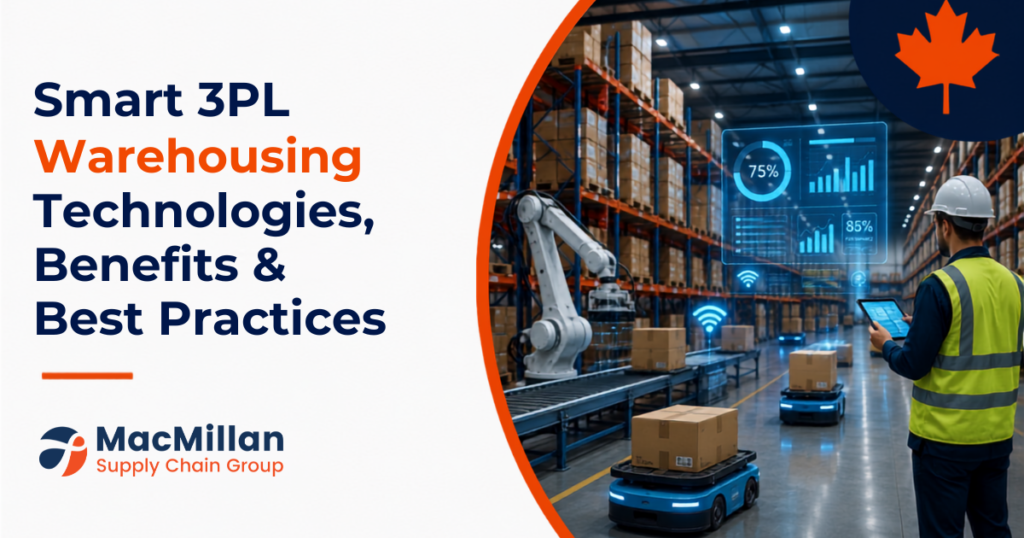
Today’s 3PL warehouses are equipped with cutting-edge tools such as robotics, logistics automation, IoT technology, and real-time inventory management software. This evolution plays a major role in smart 3PL warehousing. Smart warehousing brings substantial value by integrating technology and automation, which enhances efficiency and reduces costs. By automating various internal processes, tracking operations in real-time, and analyzing performance, smart warehousing enables more informed supply chain decisions. If you’re an online retailer seeking to enhance your 3PL warehousing operations, this article will delve into the concept of smart warehousing, its benefits, and best practices in the industry What is Smart 3PL Warehousing? Smart 3PL warehousing refers to a warehouse or fulfillment center that leverages advanced supply chain technology and automation to streamline, accelerate, and enhance logistics operations. By incorporating these technologies and automation, online retailers can expand their businesses, meet customer expectations, and optimize logistics costs. By implementing smart 3PL warehousing, Macmillan’s primary objectives of smart warehousing is to improve speed, accuracy, visibility, and transparency within the warehouse to provide you with real-time responsiveness. How Does Smart 3PL Warehousing Benefit Retailers? Smart warehousing revolutionizes logistics operations, allowing online retailers to expand their businesses while maintaining transparency and control over their warehouses. Here are some key benefits of investing in smart 3PL warehousing to grow your online presence: Improved Operational Efficiency: Automation and advanced technology streamline processes, reducing manual labor and minimizing errors. Enhanced Inventory Management: Real-time tracking and data analytics provide accurate inventory insights, preventing stockouts and overstock situations. Faster Order Fulfillment: Automated systems speed up order processing, ensuring quicker delivery times and higher customer satisfaction. Cost Reduction: Optimized logistics operations lead to lower operational costs and increased profitability. Scalability: Smart warehousing solutions are adaptable, allowing businesses to scale operations seamlessly as they grow. Real-Time Data Reports: automatically collect and aggregate data from across your logistics network. This provides valuable insights into performance and real-time inventory levels. 7 Smart Warehousing Techniques and Technologies to Implement Rapidly expanding online brands managing their own warehouses must be willing to experiment with modern technologies like AI, robotics, and automated guided vehicles to get smart 3PL warehousing rights. In this guide, we delve into essential smart warehousing tips, tricks, and technologies that are shaping the future of the logistics industry. 1. Warehouse Robotics Warehouse robotics are often the first innovation that comes to mind in logistics. They enhance order accuracy, boost productivity, and reduce labor costs, allowing your team to focus on optimizing operations instead of being bogged down by tedious tasks. Warehouse Robotics in Action: Automates Picking: Automated picking tools, such as mobile robots, collaborate with pickers to select orders off the shelves two to three times faster, reducing inaccuracies. Improves Inventory Visibility: Drones, though reminiscent of sci-fi, add significant value by autonomously conducting inventory audits, cycle counts, item searches, and more, enhancing inventory visibility. 2. Artificial Intelligence Artificial intelligence (AI) leverages supply chain data to predict potential crises and enable intelligent decision-making, transforming warehouse operations. Artificial Intelligence in Action: Optimizes Storage: AI-powered systems alert you when storage space is running low, allowing you to plan for increased storage or reduced inventory volumes. Averts Risks: By analyzing historical sales data, real-time market fluctuations, and current inventory levels, AI helps predict potential issues like overstocking, understocking, and shipping delays, enabling you to take preventive measures. 3. Warehouse Management Systems (WMS) A distributed inventory model, which involves storing inventory in multiple locations to reduce shipping costs and speed up transit times, requires a robust warehouse management system. A WMS centralizes logistics operations, enabling seamless tracking of inventory and ensuring that goods are stored, picked, packed, and shipped efficiently. MacMillan uses WMS integration with your systems to manage zero error rates and tracking. 4. Setting Reorder Points Balancing inventory levels is crucial, too much inventory increases carrying costs, while too little can lead to stockouts. To effectively manage restocking amidst fluctuating demand, supplier deliveries, and logistics issues, smart warehousing techniques can be essential. Utilizing an inventory tracking system that allows for automatic reorder point notifications can optimize inventory levels. By analyzing first-mile delivery timelines and inventory turnover rates, you can make informed decisions on when to restock using the reorder point formula. For example, working with a 3PL provider like MacMillan, which has a built-in inventory management system, provides insights into delivery timelines and turnover rates, helping you set and adjust reorder points. Reorder Point Automation in Action: Automatic Alerts: Receive notifications when inventory levels for each SKU are low or hit their threshold, prompting timely reordering from suppliers. Inventory Forecasting: Adjust reorder points based on fluctuating demand, manufacturer lead times, and inventory trends, ensuring timely notifications and optimal stock levels. 5. Automated Guided Vehicles (AGVs) Automated guided vehicles (AGVs), including forklift AGVs, towing AGVs, and unit load handlers, enhance internal processes like storing, lifting, and stocktaking. These autonomous vehicles follow guide paths or sensors, optimizing warehousing operations. AGVs in Action: Automated Inventory Handling: AGVs automate receiving, storage, and shipping processes, allowing a hands-off approach to inventory management. Efficient Pallet Operations: AGVs streamline the loading and unloading of semi-trailers and the picking and stacking of pallets, reducing handling time and improving accuracy. 6. Inventory Management System An inventory management system centralizes control over inventory variations across multiple storage centers, offering real-time tracking of SKU quantities, damage return rates, and performance metrics. Inventory Management in Action: Enhanced Visibility: Gain a comprehensive view of inventory levels across all warehouses and channels, centralizing operations for better management. Improved Efficiency: Efficiently allocate inventory across the distribution network, assign optimized picking routes, and enhance picking and packing processes. Many online retailers’ partner with fulfillment providers like MacMillan to leverage real-time inventory tracking and automation without investing in infrastructure. 7. Internet of Things (IoT) The Internet of Things (IoT) connects various devices and objects within a network, allowing seamless communication and data sharing. Synchronizing smart warehouse technologies (WMS, sensors, conveyors, RFID tags, AGVs) and connecting them to the internet enables deep visibility and prevents data silos. IoT in Action: Item Location Tracking: A network of security devices constantly monitors product locations, preventing errors, theft, and misplacement. Predictive Analytics: Data collected from interconnected devices provides insights into the arrival times