


How to Make Big and Bulky Last-Mile Work For You
Hats off to you for always wanting to make life…

Hats off to you for always wanting to make life…

You’ve sent your product out for delivery, they’ve received it,…
In the fast-evolving landscape of global trade and e-commerce, supply…
Following its success with Prime delivery and becoming the business…
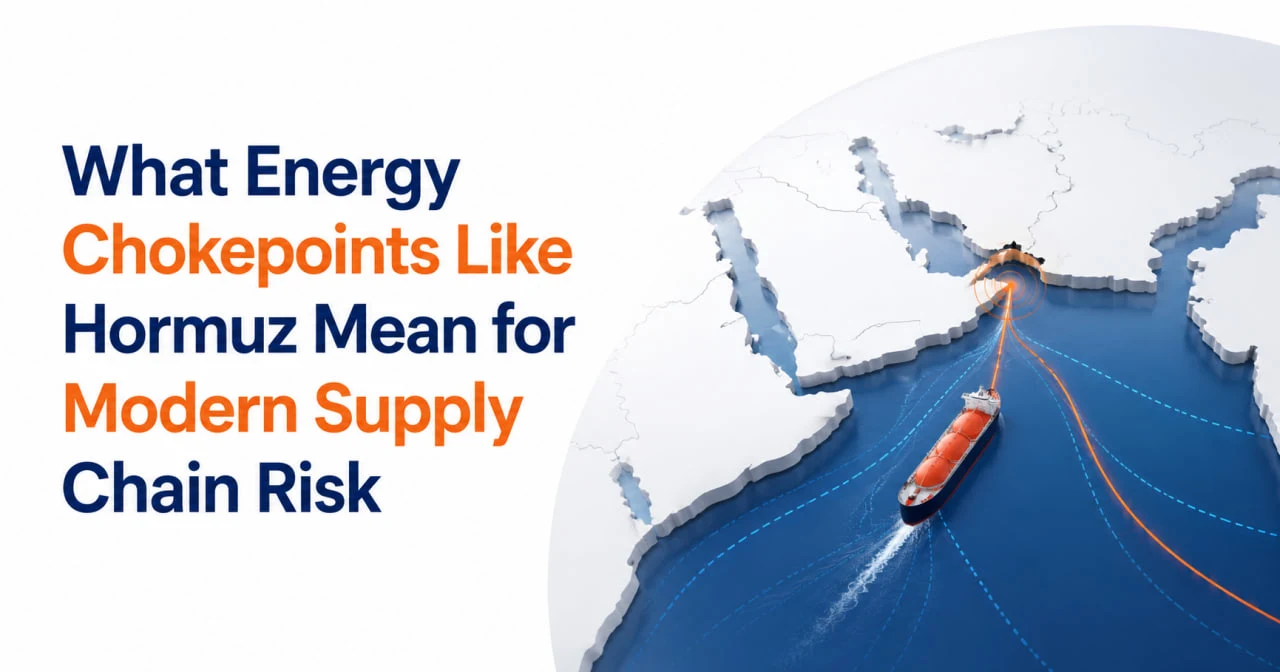
Energy chokepoints like the Strait of Hormuz matter far beyond oil markets. They affect freight costs, transit reliability, sourcing decisions, packaging inputs, inventory planning, and broader supply chain resilience.
For supply chain leaders, the real issue is simple: disruption at a single energy chokepoint can quickly affect transportation costs, manufacturing inputs, supplier lead times, and service levels. Even when the disruption is far from your warehouse or customers, the operational impact can still show up across procurement, replenishment, and logistics planning.
Most supply chain disruptions do not begin inside the warehouse.
They begin upstream through fuel markets, input materials, shipping lanes, and trade routes. That is why energy chokepoints matter so much. They are not only energy stories. They are logistics stories, procurement stories, inventory stories, and service-level stories.
The Strait of Hormuz is one of the clearest examples. It remains one of the most important energy transit routes in the world, which means any disruption there can create ripple effects across transportation costs, industrial inputs, lead times, and sourcing strategy.
For brands, this kind of disruption is rarely felt in just one place. A rise in fuel cost can affect freight budgets. Pressure on petrochemical inputs can affect packaging or raw materials. Delays upstream can create stock risk downstream. That is what makes energy chokepoints so important to modern supply chain planning.
An energy chokepoint is a narrow route or passage that large volumes of oil, gas, or related products must move through to reach global markets.
These routes matter because they concentrate risk. If trade through one of them is delayed, restricted, or made more expensive, the effects can spread quickly through:
In other words, one narrow route can influence much wider parts of the supply chain than many brands initially expect.
The Strait of Hormuz matters because of both scale and concentration.
A large share of global oil and LNG flows through it, especially into Asian markets. That makes it more than a regional issue. It becomes a global operating risk because many supply chains are exposed to energy both directly and indirectly.
Some businesses feel that exposure through transportation. Others feel it through packaging materials, plastics, chemicals, manufacturing inputs, or supplier costs. Even companies that do not buy oil directly can still experience the impact through cost inflation, reduced predictability, or supplier disruption.
That is why Hormuz is not just an energy headline. It is a supply chain pressure point.
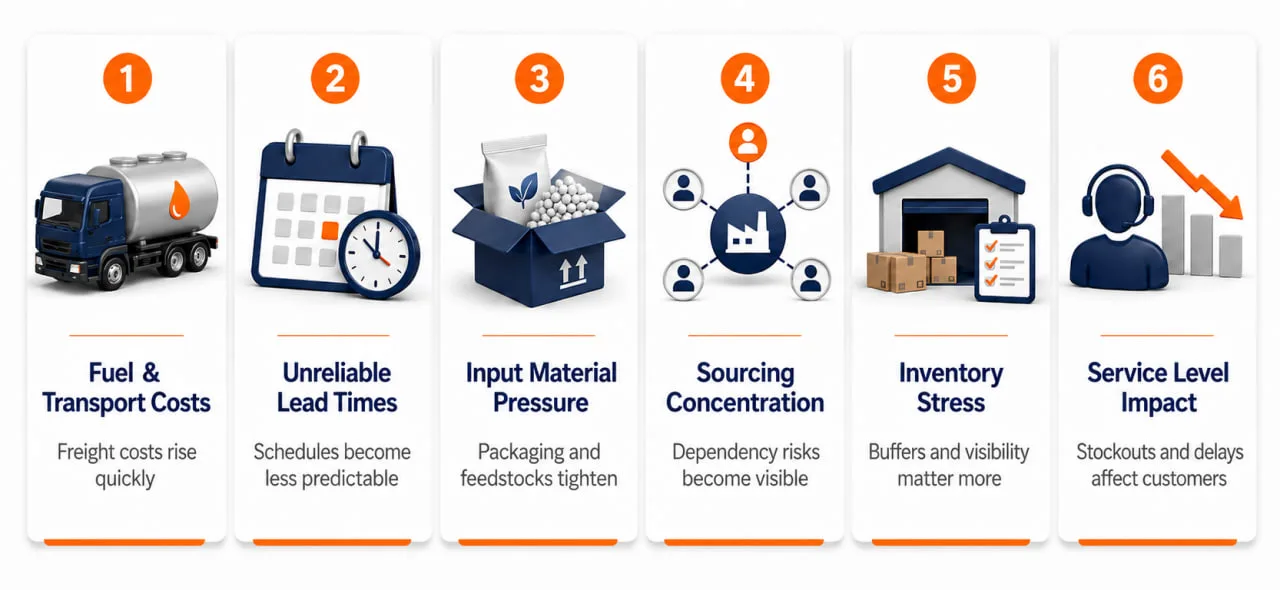
When a major energy route is disrupted, transport costs can move fast.
Higher oil and gas prices affect linehaul, drayage, parcel movement, air cargo economics, and broader carrier pricing. They can also pressure last-mile delivery costs and distribution budgets.
For supply chain teams, this means freight planning becomes harder and cost assumptions can change faster than expected.
A chokepoint problem is not only about price. It is also about predictability.
When energy markets tighten, carriers and suppliers often adjust schedules, capacity planning, and routing assumptions. Even businesses not shipping through the affected region can feel the effects through slower replenishment and changed operating rhythms.
That makes planning more difficult, especially for brands already managing leaner inventories or tighter fulfillment windows.
Many brands think of energy disruption only in terms of fuel. In reality, the impact often reaches much deeper into materials and manufacturing.
Feedstocks tied to petrochemicals can become more exposed during disruptions like this. That matters for products linked to plastics, packaging, chemicals, resins, and a broad range of industrial and consumer goods inputs.
So even if transport keeps moving, production cost and material availability can still come under pressure.
One of the clearest lessons from energy chokepoint disruption is that not all supply chains are affected equally.
The biggest problems tend to show up where sourcing is concentrated, alternatives are limited, or upstream exposure is not fully understood. A business that depends too heavily on one region, one supplier cluster, or one raw material source is usually more vulnerable when conditions tighten.
This is where hidden dependency becomes visible very quickly.
When upstream risk rises, inventory discipline matters more.
Stronger inventory visibility, better safety stock logic, and faster replenishment decision-making can help brands absorb volatility more effectively. Companies that understand what they have, what is in transit, and what is exposed can usually respond faster than companies operating with weaker visibility.
This is also where operational resilience becomes practical, not theoretical.
Upstream disruption eventually shows up downstream.
If transport costs jump, packaging inputs tighten, or replenishment slows, brands can face missed delivery windows, lower service levels, stockouts, and margin pressure at the same time.
That is why energy chokepoint risk is not just a macro issue. It can directly affect order performance, retailer execution, and customer experience.
The biggest lesson is not that every brand should react to every global event.
It is that supply chains need enough flexibility to withstand upstream shocks. The Hormuz example highlights three especially important principles:
The same disruption can affect different businesses in very different ways depending on their sourcing model, input exposure, planning discipline, and inventory strategy.
That is why resilience should not be treated as a broad concept only discussed at a strategic level. It needs to show up in day-to-day operating decisions.
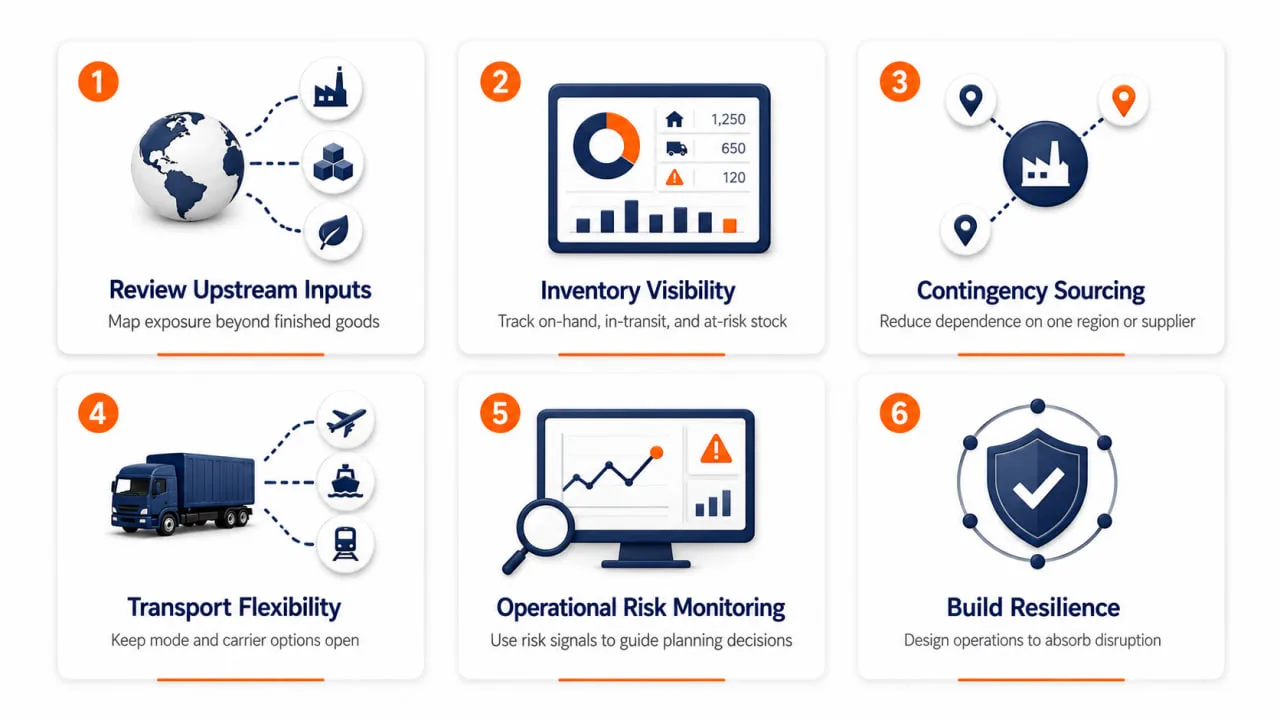
Look beyond finished goods suppliers. Understand whether key materials, packaging inputs, feedstocks, or components rely on regions exposed to energy route disruption.
Brands need a clear view of inventory on-hand, in-transit, and at-risk inventory so they can respond earlier when conditions change.
The more concentrated your sourcing base is, the more vulnerable you are when one region or one route comes under pressure.
A resilient network is not only about cost. It is also about having practical options across modes, carriers, and delivery timelines when volatility rises.
Global risk signals should not stay in strategy discussions. They should influence replenishment timing, purchasing decisions, safety stock planning, and customer commitments.
The best supply chains do not simply react faster. They are designed to absorb shocks more effectively.
Energy chokepoints like the Strait of Hormuz matter because they show how quickly upstream disruption can become a supply chain problem.
Fuel volatility, input pressure, sourcing concentration, and lead-time uncertainty can all grow from one constrained trade route. For brands, the right response is not panic. It is better visibility, better planning, and stronger operational flexibility.
The bigger lesson is clear: supply chain risk is no longer only about where goods are stored or how quickly orders move. It is also about how well the business understands upstream exposure and how prepared it is to respond when global conditions shift.



2 Responses
Great article! A clear and insightful look at how energy chokepoints can impact global supply chains.
Thank you! Glad you found it insightful.