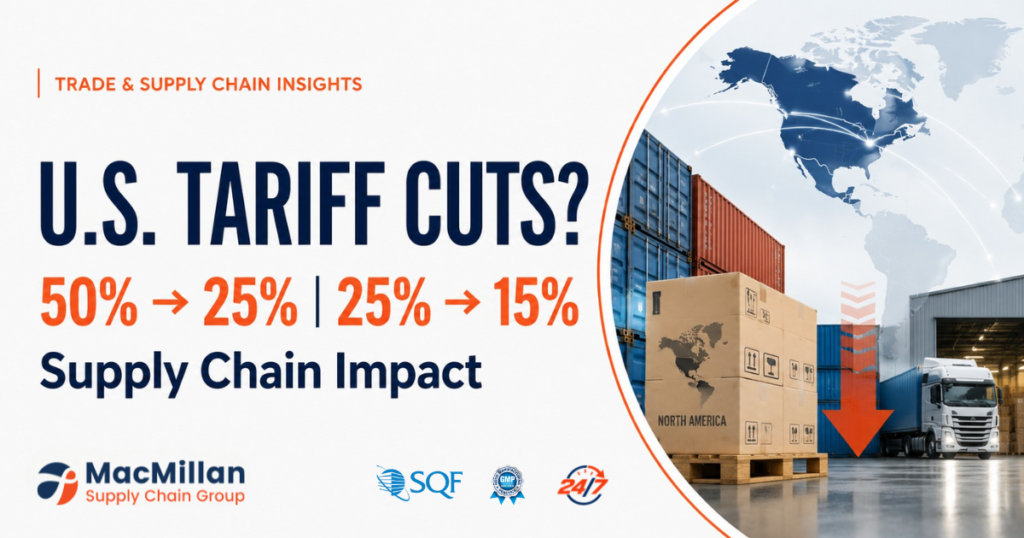
Potential U.S. Tariff Cuts: Supply Chain Impact
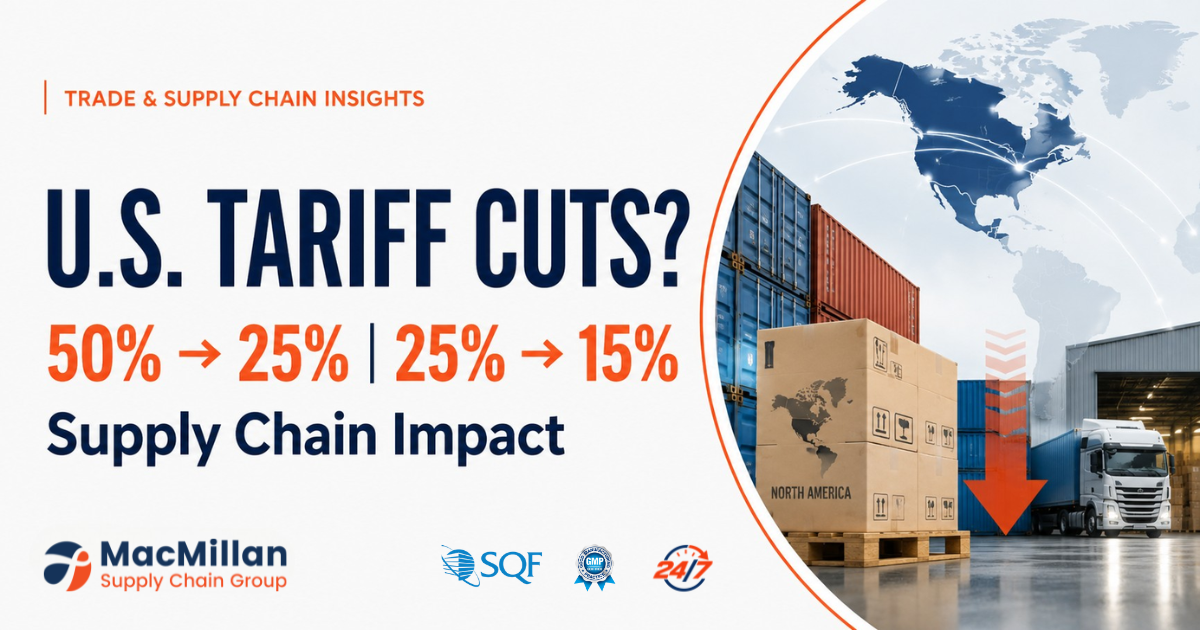
Potential reductions in U.S. tariffs on Canadian steel, aluminum and…
Potential reductions in U.S. tariffs on Canadian steel, aluminum and…
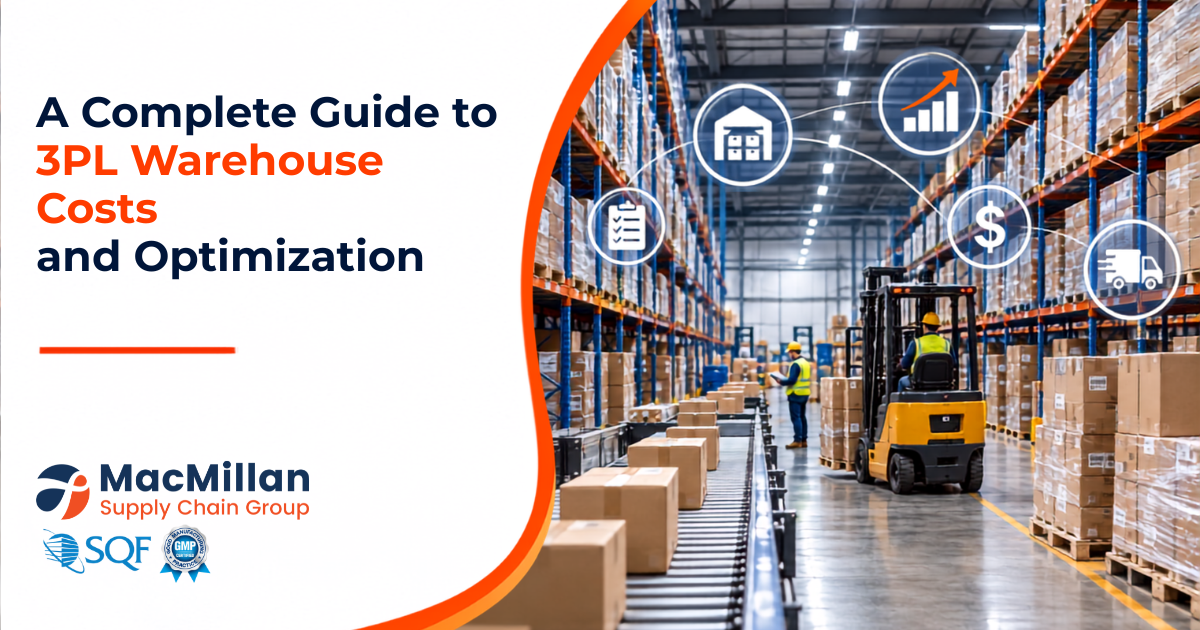
Warehousing is a significant expense. Maintaining a 3pl warehouse constitutes…

The top 3PL and logistics companies in Canada in 2026…
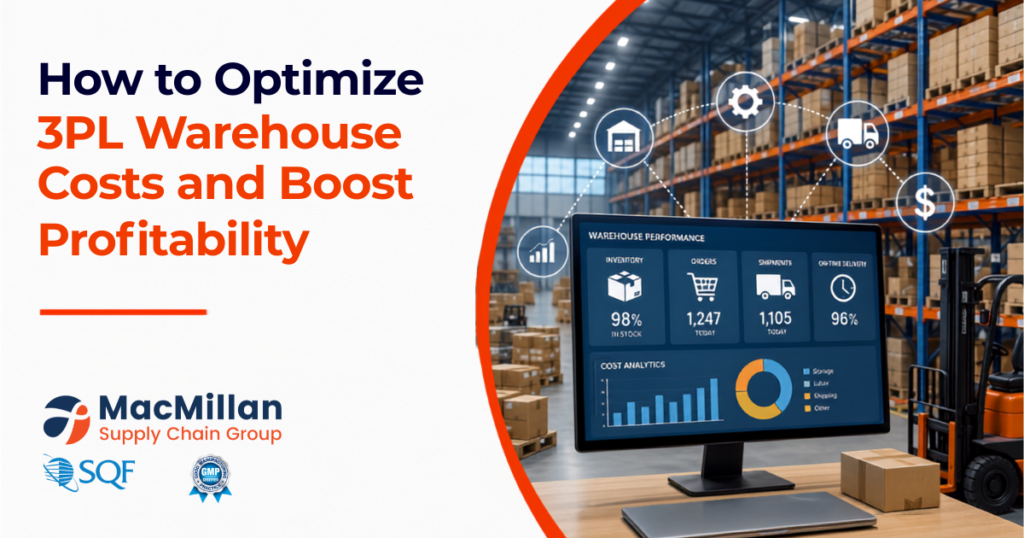
Warehousing is a significant expense. Maintaining a 3pl warehouse constitutes…
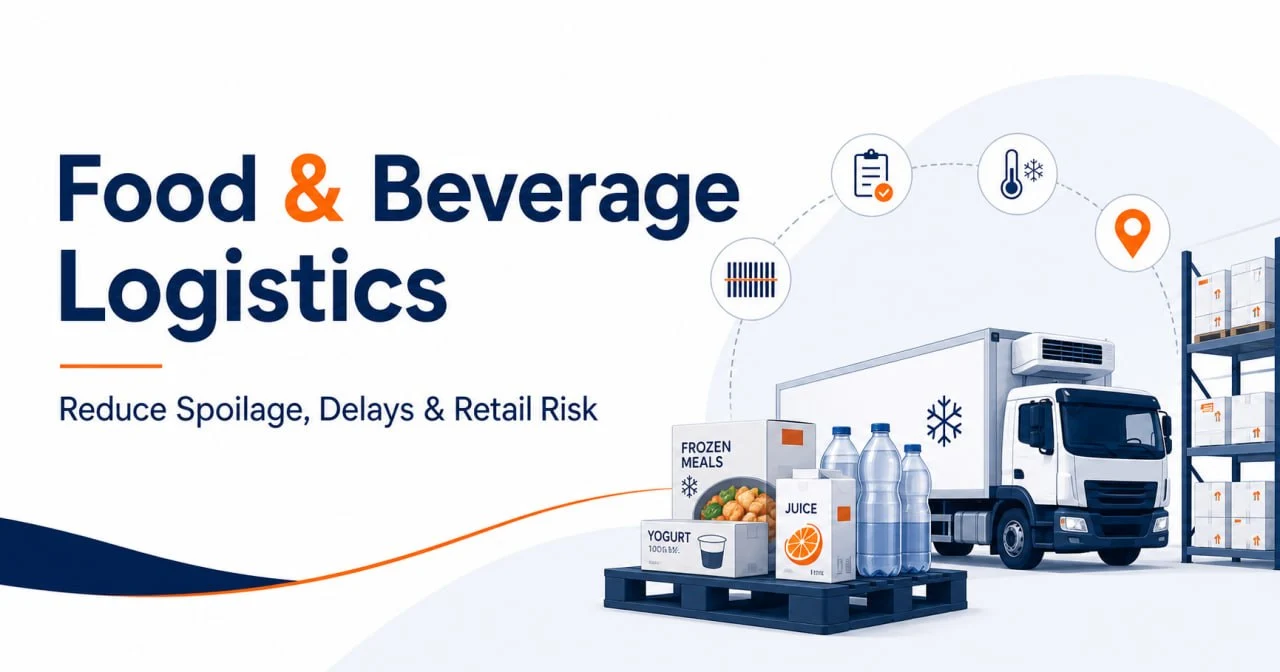
Food and beverage brands in 2026 are under pressure to protect shelf life, reduce spoilage, improve traceability, and meet stricter retailer expectations. Strong logistics performance now depends on more than moving product quickly. It depends on controlled storage, accurate lot and expiry tracking, retail-ready execution, and real-time visibility across the supply chain. MacMillan’s food and beverage logistics offering is built around these needs, with SQF and GMP-certified, HACCP-compliant warehousing, temperature-maintained environments, lot control, expiry tracking, and real-time delivery visibility.
In food and beverage logistics, a delay is rarely just a delay.
It can shorten shelf life, increase spoilage, create a retailer compliance issue, or leave shelves empty when demand is highest. That is why food and beverage brands need more than basic storage and transport. They need logistics built around product integrity, visibility, and execution from inbound receipt to final delivery. Industry coverage continues to highlight traceability, cold chain performance, and stronger compliance expectations as major priorities in 2026.
For MacMillan, this topic is a natural fit. The company’s food and beverage capabilities already focus on temperature-controlled handling, inventory accuracy, lot and expiry tracking, retailer-ready fulfillment, and reliable transportation execution across Canada.
Food and beverage logistics is getting more demanding because brands are balancing freshness, compliance, traceability, and speed at the same time. Product integrity has to be maintained across storage, handling, picking, staging, and transport. Retailers are also expecting more precise execution, while brands need tighter control over lot tracking, shelf life, and replenishment timing. Recent industry reporting emphasizes that food supply chains are facing growing pressure around food safety, traceability, and operational responsiveness.
For brands, that creates a few urgent questions:
These are the areas where a strong logistics partner can make a measurable difference.
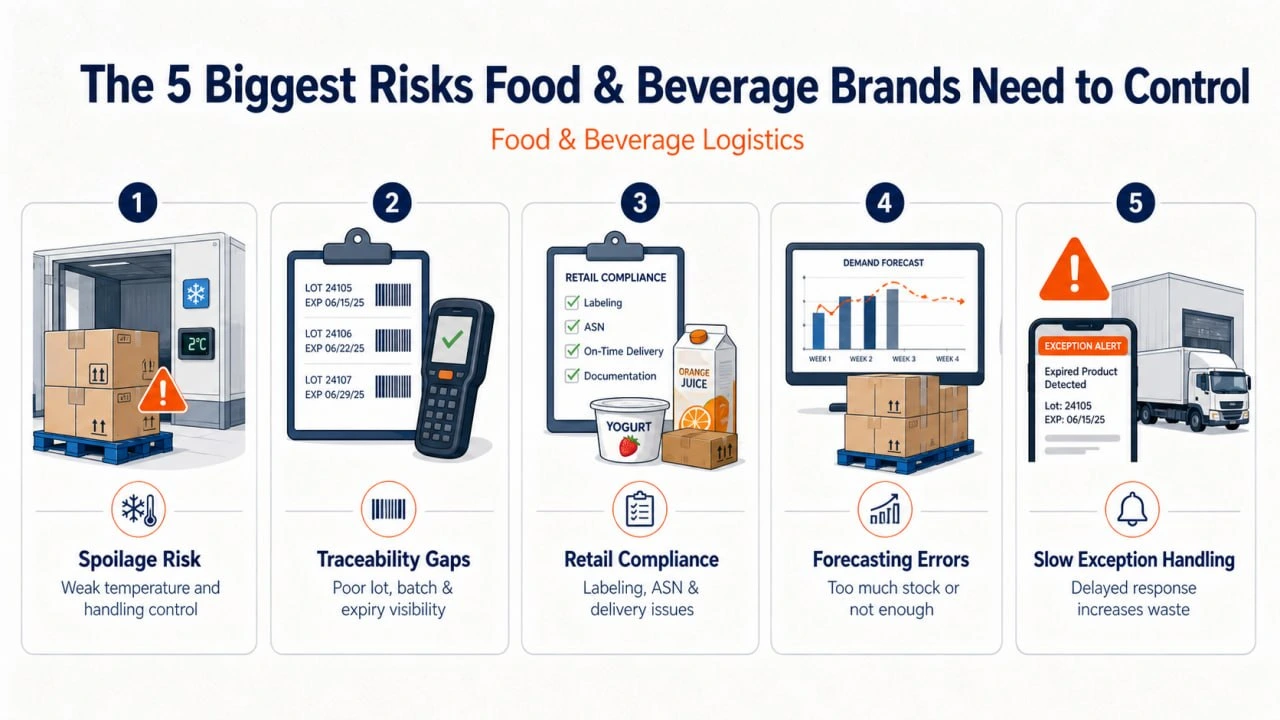
Spoilage risk does not begin only when temperatures fail. It can also come from slow receiving, poor staging, inconsistent handling, and delays between inbound receipt and controlled storage. Cold chain integrity matters because even short exposure or poor process discipline can affect freshness, safety, and usable shelf life. Industry coverage continues to stress the importance of end-to-end temperature control and monitoring in food logistics.
MacMillan’s food and beverage logistics service emphasizes temperature-maintained warehousing environments designed to preserve product quality and integrity.
Traceability is essential in food and beverage logistics, but visibility alone is not enough. Brands need to know where product is, which lots are aging, which inventory should move first, and how quickly they can isolate an issue if one arises. Strong lot and expiry visibility supports recall readiness, better inventory rotation, and lower write-off risk. Industry reporting continues to highlight traceability as a major requirement in food supply chains.
MacMillan already positions lot control and expiry date tracking as core parts of its food and beverage logistics capability.
A shipment can leave the warehouse on time and still fail at retail.
Incorrect labeling, missed ASN requirements, wrong pallet configuration, or failure to meet retailer-specific receiving standards can all lead to rejected deliveries or lost shelf time. For food and beverage brands, that can quickly turn into spoilage, margin loss, and weaker service performance.
MacMillan’s warehousing and value-added services are built around retailer readiness, including labeling, compliance-focused prep, and execution aligned with retail requirements.
Food and beverage brands deal with promotion spikes, seasonal demand, expiry windows, and fast replenishment cycles. When forecasting is weak, the result is usually one of two problems: too much stock, which drives spoilage and carrying cost, or too little stock, which drives missed sales and rushed replenishment. Current industry coverage points to better forecasting and smarter operational planning as critical to reducing waste and improving resilience.
MacMillan’s broader service positioning also highlights data-driven inventory visibility and systems designed to support faster, more informed logistics decisions.
Visibility only creates value when it leads to action.
If a shipment is delayed, a lot is aging, a retailer requirement changes, or a storage issue appears, brands need fast response. Slow exception handling is one of the easiest ways to lose sellable inventory without noticing until the cost is already locked in. Real-time tracking and operational transparency are increasingly important because supply chains need faster intervention when something changes.
MacMillan’s transportation and fulfillment capabilities emphasize real-time tracking, milestone updates, and operational visibility that help teams respond earlier and with more confidence.
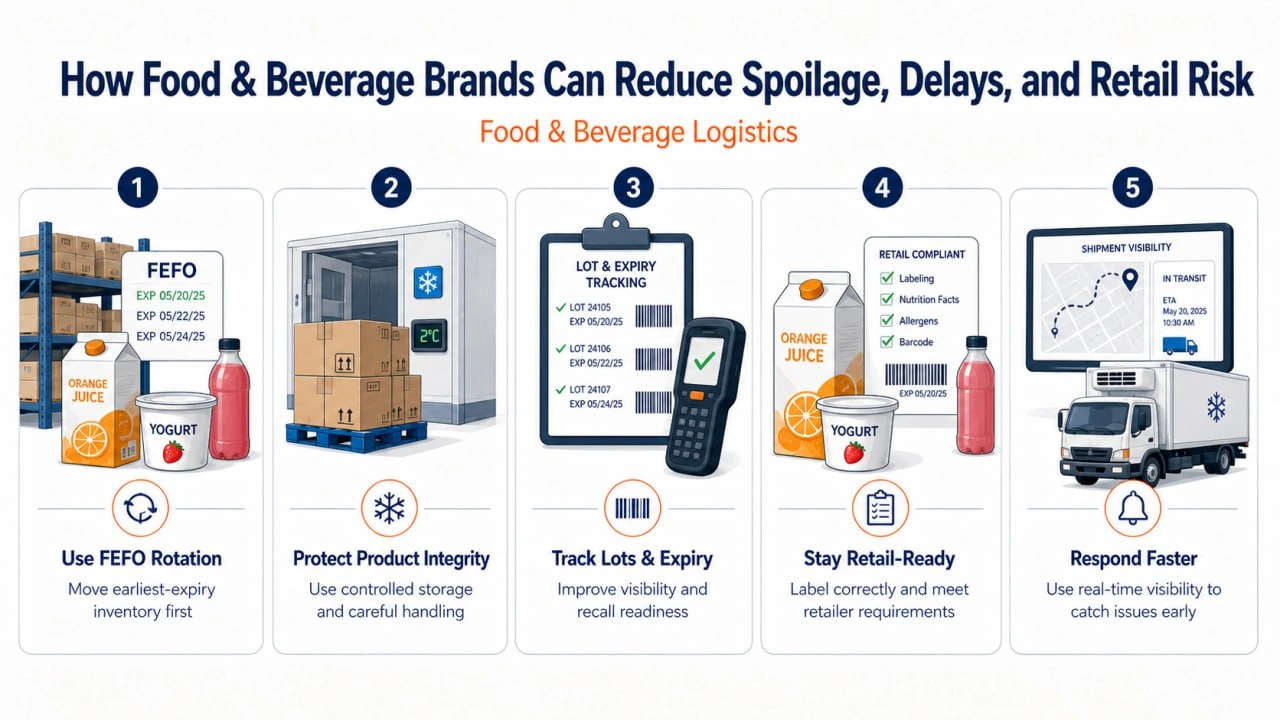
In food and beverage logistics, FEFO is often more useful than basic FIFO because expiry risk matters more than receipt order alone. The right inventory needs to move first, especially when multiple lots, multiple facilities, or promotional volumes are involved.
MacMillan’s lot and expiry tracking capabilities support more disciplined inventory rotation and better freshness protection.
Product protection starts at inbound. Faster receiving, scanning, checking, and put-away help protect quality and reduce the risk of avoidable shelf-life loss. This is especially important for sensitive products and high-turnover categories.
MacMillan’s warehousing model is built around operational speed, traceability, and product integrity from the moment inventory enters the facility.
Retail execution is not separate from food quality. A rejected or delayed shipment can reduce usable shelf life just as quickly as a cold chain issue. Brands need logistics workflows that prepare orders for retailer requirements before the truck leaves the dock.
MacMillan supports this through retailer-focused warehousing, labeling, ASN accuracy, and value-added preparation aligned to retail expectations.
Inventory and delivery visibility should do more than provide status updates. It should help teams identify aging stock, spot delivery risks, isolate lot-level issues, and make faster replenishment decisions. The goal is not just more data. It is better response.
MacMillan’s real-time tracking and inventory visibility tools support this more proactive approach.
Food and beverage planning works best when inventory decisions reflect actual demand swings, promotion timing, and freshness windows. That means staging the right product at the right time instead of relying on static replenishment assumptions.
MacMillan’s combination of warehousing, fulfillment, transportation, and data visibility helps brands build more responsive supply chain planning across those variables.
MacMillan is well positioned to support food and beverage brands because its offering already addresses the execution areas that matter most: temperature-maintained environments, lot and expiry tracking, retail-ready preparation, inventory visibility, and dependable delivery execution. The company’s food and beverage logistics page also highlights SQF and GMP-certified, HACCP-compliant warehousing and strong Canadian delivery coverage, which are key priorities for brands in this category.
This makes MacMillan a strong fit for brands that want to reduce spoilage, protect shelf life, and improve retail performance without adding more operational complexity.
Food and beverage logistics in 2026 is about more than speed. It is about protecting freshness, reducing waste, maintaining traceability, and meeting retailer expectations without losing visibility or control. Brands that perform well will usually be the ones that strengthen execution at every step: receiving, storage, rotation, fulfillment, and delivery. Industry trends support the growing importance of traceability, visibility, and responsive food logistics operations, while MacMillan’s service model is already built around those priorities.
For food and beverage brands, better logistics is not only about moving product. It is about keeping more of that product saleable, compliant, and shelf-ready for longer.
If your food and beverage brand is dealing with spoilage, shelf-life pressure, or retail execution challenges, now is the time to review your logistics model and strengthen the parts that protect freshness, visibility, and on-time performance.