
Periodic Inventory System: Simplifying Inventory Management for Small Businesses
A Quick Summary and Overview A periodic inventory system is a method of managing inventory where stock levels are updated at specific intervals rather than in real-time. This approach is particularly beneficial for small businesses with limited resources, as it simplifies inventory tracking and aligns with financial reporting periods. By conducting physical counts at set times, businesses can accurately calculate the cost of goods sold and reconcile any discrepancies. While this system has its challenges, such as potential for human error and reliance on outdated data, implementing best practices and leveraging technology can mitigate these issues, leading to more efficient inventory management and improved business operations. An Introduction In today’s competitive business landscape, effective inventory management is crucial for the success of small businesses. One approach that has gained popularity among smaller enterprises is the periodic inventory system. This method offers a balance between accuracy and simplicity, making it an attractive option for businesses with limited resources or straightforward inventory needs. At MacMillan Supply Chain Group, we understand the unique challenges faced by small businesses in managing their inventory. We’ve seen firsthand how a well-implemented periodic inventory system can transform operations, reduce costs, and improve decision-making. In this article, we’ll explore the ins and outs of periodic inventory systems, their benefits, implementation strategies, and how to overcome common challenges. Whether you’re considering adopting this system or looking to optimize your current inventory management processes, this guide will provide valuable insights to help your business thrive. Understanding Periodic Inventory Systems A periodic inventory system is a method of tracking inventory where stock levels are updated at specific intervals, typically at the end of an accounting period. Unlike perpetual inventory systems that update in real-time, periodic systems rely on physical counts to determine the quantity of goods on hand. Here’s how it works: At the beginning of the period, the initial inventory is recorded. Throughout the period, purchases are tracked, but individual sales are not deducted from inventory. At the end of the period, a physical count is conducted to determine the ending inventory. The cost of goods sold (COGS) is calculated using the formula:COGS = Beginning Inventory + Purchases – Ending Inventory This system is particularly useful for small businesses because: – It requires less sophisticated technology and fewer resources to implement. – It aligns well with financial reporting periods, making it easier to prepare financial statements. – It provides a regular opportunity to physically verify inventory, helping to identify discrepancies or issues. However, it’s important to note that this system doesn’t provide real-time inventory data, which can be a limitation for businesses with rapidly changing stock levels or those requiring minute-to-minute inventory accuracy. Benefits of Implementing a Periodic Inventory System Adopting a periodic inventory system can offer several advantages, especially for small businesses: Cost-Effective: This system typically requires less investment in technology and personnel compared to perpetual systems, making it budget-friendly for small operations. Simplicity: With fewer moving parts, periodic systems are easier to understand and implement, reducing the learning curve for staff. Alignment with Financial Reporting: By conducting inventory counts at the end of accounting periods, businesses can easily reconcile their inventory with financial statements. Physical Verification: Regular physical counts provide opportunities to identify discrepancies, damaged goods, or theft, improving overall inventory accuracy. Reduced Daily Workload: Since updates are not required after each sale, employees can focus on other tasks during operating hours. Flexibility: This system can be adapted to various business sizes and types, allowing for customization based on specific needs. Improved Cash Flow Management: By having a clear picture of inventory value at regular intervals, businesses can make more informed decisions about purchasing and cash allocation. Easier Tax Preparation: The alignment with accounting periods simplifies the process of preparing tax returns and financial reports. By leveraging these benefits, small businesses can streamline their operations, improve accuracy, and make more informed decisions about their inventory management strategies. Implementing a Periodic Inventory System Successfully implementing a periodic inventory system requires careful planning and execution. Here are key steps to ensure a smooth transition: Establish a Schedule: Determine the frequency of inventory counts based on your business needs and reporting requirements. Common intervals include monthly, quarterly, or annually. Develop Counting Procedures: Create clear guidelines for conducting physical counts, including how to handle discrepancies and record results. Train Staff: Ensure all employees involved in the inventory process understand the new system and their roles within it. Prepare for Counts: Schedule counts during slower business periods and organize inventory to facilitate efficient counting. Utilize Technology: While not as tech-heavy as perpetual systems, incorporating barcode scanners or inventory management software can improve accuracy and efficiency. Document Everything: Keep detailed records of all purchases, returns, and inventory movements between counts. Reconcile Regularly: Compare physical count results with recorded inventory levels and investigate any discrepancies. Analyze Results: Use the data from inventory counts to identify trends, optimize stock levels, and improve purchasing decisions. Continuously Improve: Regularly review and refine your processes based on experiences and changing business needs. Consider Professional Assistance: Partner with inventory management experts like MacMillan Supply Chain Group to optimize your system and overcome implementation challenges. By following these steps, small businesses can effectively implement a periodic inventory system that enhances their operations and supports growth. Calculating Cost of Goods Sold in a Periodic System One of the primary functions of a periodic inventory system is to accurately calculate the Cost of Goods Sold (COGS), a crucial metric for financial reporting and business analysis. Here’s how to calculate COGS using this system: Formula: COGS = Beginning Inventory + Purchases – Ending Inventory Step-by-Step Process: Determine Beginning Inventory: This is the value of inventory at the start of the accounting period. Track Purchases: Record all inventory purchases made during the period. Conduct Physical Count: At the end of the period, perform a physical count to determine the Ending Inventory. Apply the Formula: Use the gathered information to calculate COGS. Example: – Beginning Inventory: $50,000 – Purchases during the period: $200,000 – Ending Inventory (from physical count): $75,000 COGS = $50,000 + $200,000 – $75,000 = $175,000 This calculation provides valuable insights: –
Optimizing Your Supply Chain: The Ultimate Guide to 3PL Services
A quick summary and overview This comprehensive guide explores the transformative power of Third-Party Logistics (3PL) services in modern supply chain management. We’ll delve into the core benefits of partnering with a 3PL provider, including cost reduction, improved efficiency, and enhanced customer satisfaction. From warehousing and distribution to inventory management and beyond, we’ll cover how 3PL services can streamline your operations and drive business growth. Whether you’re a small business owner or a logistics manager in a large corporation, this guide will provide valuable insights into leveraging 3PL services to optimize your supply chain and stay competitive in today’s fast-paced market. An introduction In today’s rapidly evolving business landscape, efficient supply chain management is more crucial than ever. As companies strive to meet increasing customer demands while minimizing costs, many are turning to Third-Party Logistics (3PL) providers for solutions. But what exactly are 3PL services, and how can they benefit your business? 3PL services encompass a wide range of outsourced logistics functions, from warehousing and distribution to transportation management and beyond. By partnering with a 3PL provider, businesses can tap into specialized expertise, advanced technologies, and economies of scale that might otherwise be out of reach. This guide will explore the ins and outs of 3PL services, helping you understand how they can transform your supply chain operations and drive your business forward. Let’s dive in and discover how 3PL services can be the game-changer your supply chain needs. Understanding 3PL Services and Their Benefits Third-Party Logistics (3PL) services refer to the outsourcing of logistics and distribution activities to specialized companies. These services can include warehousing, inventory management, order fulfillment, transportation, and more. But why should you consider partnering with a 3PL provider? The benefits of 3PL services are numerous and can significantly impact your bottom line: Cost Savings: By leveraging a 3PL’s existing infrastructure and economies of scale, you can reduce capital investments in warehouses, technology, and transportation. Expertise and Specialization: 3PL providers bring industry-specific knowledge and best practices to your operations, ensuring optimal efficiency. Scalability: As your business grows or experiences seasonal fluctuations, 3PL services can easily scale to meet your changing needs. Focus on Core Competencies: Outsourcing logistics allows you to concentrate on your core business activities, such as product development and customer service. Advanced Technology: Many 3PL providers offer cutting-edge logistics technologies that might be too costly for individual businesses to implement. Improved Customer Satisfaction: With faster, more reliable shipping and order fulfillment, you can enhance your customers’ experience and build loyalty. By understanding these benefits, you can begin to see how 3PL services can transform your supply chain operations and give you a competitive edge in the market. Key 3PL Services for Supply Chain Optimization To fully leverage the power of 3PL services, it’s essential to understand the key offerings that can optimize your supply chain. Here are some of the most impactful 3PL services: Warehousing and Distribution: 3PL providers offer strategically located warehouses and distribution centers, optimizing your product storage and delivery network. Inventory Management: Advanced inventory tracking systems ensure optimal stock levels, reducing carrying costs and stockouts. Order Fulfillment: From picking and packing to shipping, 3PLs streamline the order fulfillment process, improving accuracy and speed. Transportation Management: 3PLs can manage your entire transportation network, optimizing routes, carriers, and modes of transport for cost-efficiency. Reverse Logistics: Efficient handling of returns and exchanges is crucial for customer satisfaction and inventory management. Value-Added Services: Many 3PLs offer additional services like kitting, assembly, and custom packaging to meet specific customer needs. Technology Integration: 3PL providers often offer advanced software solutions that integrate with your existing systems for seamless data flow and visibility. Customs Brokerage: For international shipping, 3PLs can handle complex customs documentation and regulations. By leveraging these services, you can create a more efficient, responsive, and cost-effective supply chain. The key is to identify which services align best with your business needs and goals. Choosing the Right 3PL Partner Selecting the right 3PL partner is crucial for maximizing the benefits of outsourced logistics. Here are key factors to consider when evaluating potential 3PL providers: Industry Experience: Look for a 3PL with expertise in your specific industry and product types. Technology Capabilities: Ensure the 3PL offers advanced technology solutions that can integrate with your systems and provide real-time visibility. Scalability: Choose a provider that can accommodate your growth plans and handle fluctuations in demand. Geographic Coverage: Consider the 3PL’s network of warehouses and distribution centers to ensure they align with your target markets. Service Offerings: Evaluate the range of services offered and their alignment with your specific needs. Performance Metrics: Ask about key performance indicators (KPIs) and how they measure and report on their performance. Financial Stability: Ensure the 3PL is financially sound to provide long-term, reliable service. Cultural Fit: Look for a provider whose company culture and values align with your own. References and Case Studies: Request references and case studies to understand the 3PL’s track record with similar businesses. Pricing Structure: Understand the pricing model and ensure it aligns with your budget and expected ROI. By carefully evaluating these factors, you can select a 3PL partner that not only meets your current needs but can also support your long-term growth and success. Implementing 3PL Services in Your Business Implementing 3PL services requires careful planning and execution. Here’s a step-by-step guide to help you successfully integrate 3PL services into your business: Assess Your Current Operations: Analyze your existing supply chain to identify areas for improvement and potential 3PL integration points. Define Clear Objectives: Establish specific goals for your 3PL partnership, such as cost reduction, improved delivery times, or expanded market reach. Develop a Transition Plan: Create a detailed plan for transitioning logistics functions to your 3PL partner, including timelines and responsibilities. Communicate with Stakeholders: Inform all relevant parties, including employees, customers, and suppliers, about the upcoming changes. Integration Testing: Conduct thorough testing of system integrations and processes before full implementation. Phased Implementation: Consider a phased approach, starting with a pilot program before full rollout. Train Your Team: Provide training to your staff on new processes and systems related to the 3PL partnership. Establish KPIs: Set clear performance metrics to measure the success of the 3PL implementation. Regular Review
Enhancing Warehouse Efficiency: A Comprehensive Guide to Zone Picking
A quick summary and overview Zone picking is a strategic warehouse management technique that divides storage areas into specific zones, each managed by dedicated pickers. This method significantly enhances efficiency by reducing travel time, increasing order accuracy, and improving overall productivity. Suitable for various warehouse sizes and order volumes, zone picking can be tailored to meet unique operational needs. This comprehensive guide explores the fundamentals of zone picking, its various types, implementation strategies, and solutions to common challenges. With expert insights from MacMillan Supply Chain Group, businesses can optimize their warehouse operations and gain a competitive edge in today’s fast-paced logistics landscape. An introduction In the ever-evolving world of logistics and supply chain management, warehouse efficiency is paramount to maintaining a competitive edge. Zone picking has emerged as a powerful strategy to streamline operations, reduce errors, and boost productivity. By segmenting a warehouse into distinct zones and assigning specific pickers to each area, businesses can dramatically improve their order fulfillment processes. This article delves into the intricacies of zone picking, exploring its benefits, types, and implementation strategies. We’ll also address common challenges and provide expert solutions to ensure smooth adoption of this efficient picking method. Whether you’re considering implementing zone picking or looking to optimize your existing system, MacMillan Supply Chain Group’s insights will guide you towards enhanced warehouse performance and customer satisfaction. Understanding Zone Picking Zone picking is a warehouse management strategy that divides the storage area into distinct zones, each managed by dedicated pickers. This method optimizes the picking process by reducing travel time and increasing efficiency. In a zone picking system, orders are typically processed in two stages: picking and consolidation. The picking stage involves assigning orders to specific zones where items are located. Pickers in each zone are responsible for retrieving items within their designated area. This specialization allows workers to become familiar with their zone’s layout and inventory, leading to faster and more accurate picking. The consolidation stage brings together items picked from different zones to complete an order. This can be done through various methods, such as pick-and-pass, where orders move sequentially through zones, or simultaneous picking, where items from all zones are gathered at a central consolidation point. Key benefits of zone picking include: Reduced travel time for pickers Increased order accuracy due to picker specialization Improved productivity and throughput Better inventory control and management Scalability to accommodate growth and seasonal fluctuations By implementing zone picking, warehouses can significantly enhance their operational efficiency, leading to faster order fulfillment and improved customer satisfaction. Types of Zone Picking Zone picking comes in various forms, each suited to different warehouse layouts, order profiles, and operational requirements. Understanding these types can help you choose the most appropriate method for your business: Sequential Zone Picking: Orders move through zones in a predetermined sequence. Pickers in each zone add their items to the order before passing it to the next zone. This method is ideal for warehouses with a logical product flow. Simultaneous Zone Picking: All zones work on an order concurrently, with items consolidated at a central location. This approach is faster but requires efficient consolidation processes. Batch Zone Picking: Multiple orders are grouped into batches and picked simultaneously within each zone. This method is effective for high-volume operations with many small orders. Wave Picking: Similar to batch picking, but orders are released in waves at specific times. This helps manage workload and staffing throughout the day. Dynamic Zone Picking: Zones are flexibly assigned based on current order volumes and inventory levels. This adaptive approach optimizes resource allocation in real-time. Pick and Pass: A variation of sequential picking where orders physically move through zones on a conveyor system, with pickers adding items at each station. Choosing the right type of zone picking depends on factors such as order volume, product characteristics, warehouse layout, and available technology. MacMillan Supply Chain Group can help assess your specific needs and recommend the most suitable zone picking strategy for your operation. Implementing Zone Picking Implementing zone picking requires careful planning and execution to ensure a smooth transition and maximize benefits. Follow these steps for successful implementation: Analyze Current Operations: Evaluate your existing picking process, order profiles, and warehouse layout to identify areas for improvement. Design Optimal Zones: Create logical zones based on product characteristics, order frequency, and storage requirements. Consider using ABC analysis to prioritize high-demand items. Select Appropriate Technology: Choose supporting technologies such as Warehouse Management Systems (WMS), pick-to-light systems, or voice-directed picking to enhance efficiency. Train Staff: Provide comprehensive training to all employees involved in the new picking process. Ensure they understand their roles and the overall workflow. Establish Performance Metrics: Define key performance indicators (KPIs) to measure the success of your zone picking implementation, such as pick rates, accuracy, and throughput. Pilot Test: Conduct a small-scale test of the new system to identify and address any issues before full implementation. Gradual Roll-out: Implement zone picking in phases, starting with a single product category or area of the warehouse before expanding. Continuous Improvement: Regularly review and optimize your zone picking system based on performance data and feedback from staff. By following these steps and partnering with experienced logistics professionals like MacMillan Supply Chain Group, you can ensure a successful transition to zone picking and realize significant improvements in your warehouse operations. Leveraging Technology in Zone Picking Technology plays a crucial role in maximizing the efficiency of zone picking systems. By integrating advanced solutions, warehouses can streamline operations, reduce errors, and increase productivity. Here are key technologies that enhance zone picking: Warehouse Management Systems (WMS): A robust WMS is the foundation of an effective zone picking operation. It manages inventory, assigns tasks, and optimizes picking routes within zones. Pick-to-Light Systems: These systems use LED displays to guide pickers to the correct locations and indicate quantities to be picked, reducing errors and improving speed. Voice-Directed Picking: Hands-free, voice-controlled systems allow pickers to receive instructions and confirm actions verbally, enhancing efficiency and accuracy. Radio Frequency Identification (RFID): RFID tags and readers can automate inventory tracking and order verification, reducing
Third-Party Logistics (3PL): Streamline Your Supply Chain with MacMillan
An Introduction In today’s global marketplace, efficient supply chain management is crucial for business success. As companies strive to meet increasing customer demands and navigate complex logistics challenges, many are turning to Third-Party Logistics (3PL) providers for support. These specialized partners offer a range of services designed to optimize supply chain operations, from warehousing and inventory management to order fulfillment and transportation. MacMillan Supply Chain Group stands at the forefront of 3PL innovation, providing tailored solutions that help businesses of all sizes streamline their logistics processes. By leveraging our expertise, advanced technology, and extensive network, companies can achieve greater efficiency, reduce costs, and improve customer satisfaction. In this comprehensive guide, we’ll explore the world of 3PL services, discuss their benefits, and showcase how MacMillan’s unique approach can transform your supply chain operations. Whether you’re a small business looking to scale or a large enterprise seeking to optimize your logistics, this article will provide valuable insights into the power of 3PL partnerships. Understanding 3PL Services Third-Party Logistics (3PL) providers offer a wide range of services designed to support and optimize various aspects of a company’s supply chain operations. These services typically include: Warehousing: 3PL providers manage storage facilities, ensuring proper inventory handling and organization. Inventory Management: Advanced systems track stock levels, monitor product movement, and provide real-time visibility. Order Fulfillment: From picking and packing to shipping, 3PLs handle the entire order processing workflow. Transportation Management: 3PLs coordinate shipping, often leveraging their carrier networks for better rates and service. Reverse Logistics: Managing returns, exchanges, and refurbishments to minimize waste and maximize value recovery. Value-Added Services: Kitting, assembly, packaging, and labeling services to enhance product offerings. Technology Integration: Implementing and managing software solutions for seamless supply chain visibility and control. Consulting Services: Expert advice on supply chain optimization and strategy. MacMillan Supply Chain Group offers all these services and more, tailoring our solutions to meet the unique needs of each client. By leveraging our expertise and resources, businesses can focus on their core competencies while we handle the complexities of logistics management. This partnership approach allows companies to achieve greater efficiency, reduce costs, and improve customer satisfaction across their entire supply chain. Benefits of Partnering with a 3PL Provider Collaborating with a 3PL provider like MacMillan Supply Chain Group offers numerous advantages for businesses looking to optimize their supply chain operations: Cost Reduction: 3PLs leverage economies of scale, advanced technology, and industry expertise to lower operational costs. Scalability: Easily adjust logistics capabilities to meet fluctuating demand without significant capital investment. Focus on Core Competencies: Outsourcing logistics allows businesses to concentrate on product development, marketing, and customer relations. Access to Expertise: Benefit from the knowledge and experience of logistics professionals without the need for in-house hiring. Improved Efficiency: Streamlined processes and optimized workflows lead to faster order fulfillment and reduced errors. Enhanced Technology: Utilize state-of-the-art logistics software and systems without the burden of implementation and maintenance. Global Reach: Expand into new markets by leveraging a 3PL’s established international network and expertise. Risk Mitigation: Share logistics-related risks with a trusted partner, reducing liability and potential disruptions. Flexibility: Adapt quickly to market changes and customer demands with agile logistics solutions. Improved Customer Satisfaction: Faster, more accurate order fulfillment leads to happier customers and increased loyalty. By partnering with MacMillan Supply Chain Group, businesses can unlock these benefits and more, gaining a competitive edge in their respective industries through optimized supply chain operations. MacMillan’s Unique Approach to 3PL Services At MacMillan Supply Chain Group, we differentiate ourselves through our commitment to tailored solutions and customer-centric approach: Customized Solutions: We recognize that every business has unique needs. Our team works closely with clients to develop personalized logistics strategies that align with their specific goals and challenges. Advanced Technology Integration: We leverage cutting-edge logistics software and analytics tools to provide real-time visibility, optimize processes, and drive data-driven decision-making. Continuous Improvement: Our dedicated team constantly evaluates and refines processes to identify opportunities for efficiency gains and cost savings. Scalable Infrastructure: Our network of strategically located warehouses and distribution centers allows for flexible scaling to meet changing business needs. Industry Expertise: With years of experience across various sectors, we bring valuable insights and best practices to every client partnership. Collaborative Partnership: We view ourselves as an extension of our clients’ teams, fostering open communication and shared goals. Sustainability Focus: Our commitment to eco-friendly practices helps clients reduce their environmental impact while improving operational efficiency. Comprehensive Reporting: We provide detailed analytics and performance metrics, ensuring transparency and enabling informed decision-making. 24/7 Support: Our dedicated customer service team is always available to address concerns and provide assistance. Innovation-Driven: We continuously invest in new technologies and methodologies to stay ahead of industry trends and deliver cutting-edge solutions. Selecting the Right 3PL Partner Choosing the right 3PL partner is crucial for the success of your supply chain operations. Consider the following factors when evaluating potential providers: Service Offerings: Ensure the 3PL offers the specific services your business needs, both now and in the future. Industry Experience: Look for a provider with expertise in your industry and a track record of success with similar businesses. Technology Capabilities: Evaluate the 3PL’s technology infrastructure and its ability to integrate with your existing systems. Scalability: Choose a partner that can accommodate your growth plans and handle fluctuations in demand. Geographic Coverage: Consider the 3PL’s network of facilities and their ability to serve your target markets. Financial Stability: Assess the provider’s financial health to ensure a long-term, stable partnership. Customer References: Request and check references from current clients to gauge satisfaction levels. Cultural Fit: Look for a 3PL whose values and communication style align with your company culture. Pricing Structure: Understand the pricing model and ensure it offers transparency and value for your business. Continuous Improvement: Choose a partner committed to ongoing optimization and innovation in their services. MacMillan Supply Chain Group excels in all these areas, offering a comprehensive suite of services, industry-leading technology, and a proven track record of client success. Our commitment to tailored solutions and continuous improvement makes us an ideal partner for businesses seeking to optimize their supply chain operations. Common Problems with 3PL Systems While 3PL services offer numerous benefits, some common challenges can arise: Communication
Section 321 Changes: Navigating New Import Regulations for E-commerce Success
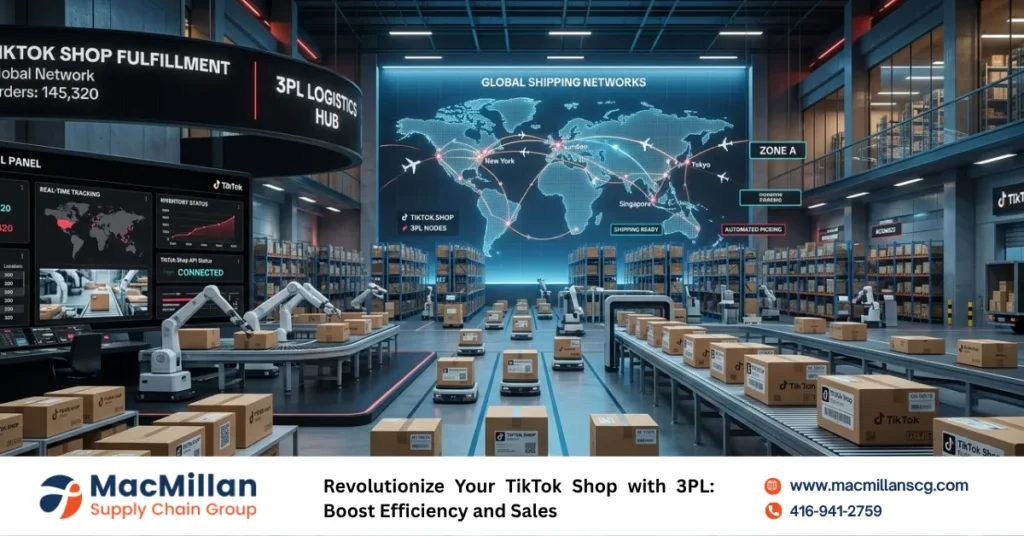
A Quick Summary and Overview The U.S. government is proposing significant changes to Section 321 of the Tariff Act of 1930, which will impact e-commerce businesses and import regulations. These modifications aim to address national security concerns and protect domestic industries. Key changes include new restrictions on certain goods, additional documentation requirements, and consumer product safety mandates. As a result, e-commerce fulfillment centers and supply chains will need to adapt quickly. MacMillan Supply Chain Group offers expert solutions to navigate these changes, ensuring compliance and maintaining efficient operations for businesses of all sizes. An Introduction Section 321 of the Tariff Act of 1930 has long been a boon for e-commerce businesses, allowing duty-free imports for goods valued under $800. However, recent concerns over exploitation by foreign entities, particularly Chinese e-commerce platforms, have prompted the Biden Administration to propose significant amendments. These changes aim to tighten import regulations, address national security worries, and protect domestic industries. As these new rules loom on the horizon, businesses must prepare for a shift in their import strategies and supply chain management. This article will explore the proposed changes to Section 321, their potential impact on e-commerce and fulfillment operations, and how MacMillan Supply Chain Group can help your business navigate these challenging waters while maintaining compliance and efficiency. Overview of Proposed Changes to Section 321 The proposed amendments to Section 321 introduce several key changes that will significantly impact e-commerce and import regulations: Key Proposed Changes Prohibitions on Certain Goods: Items subject to Section 201, 301, and 232 safeguard and national security tariffs will no longer be eligible for Section 321 exemptions. This particularly affects textiles and apparel from China, aiming to prevent unfair market advantages and protect domestic industries. Additional Documentation Requirements: Importers will need to provide comprehensive 10-digit tariff classification codes and personal information of the claimant. This measure enhances customs accountability and traceability, reducing potential loophole exploitations. Consumer Product Safety Mandates: The Consumer Product Safety Commission will require Certificates of Compliance for specific products entering the U.S., ensuring imported goods meet domestic safety standards before reaching consumers. Addressing the ‘321 Loophole’: Proposed legislation targets the closing of the so-called ‘321 loophole,’ which involves routing shipments through Mexico or Canada to evade U.S. tariffs. This ensures that only genuinely qualified goods benefit from de minimis exemptions and preserves U.S. revenue streams. These changes aim to create a more transparent and secure import process, but they also present significant challenges for businesses relying on low-value imports and e-commerce fulfillment strategies. Impact on E-commerce and Fulfillment Operations The proposed changes to Section 321 will have far-reaching consequences for e-commerce businesses and fulfillment operations: Major Business Impacts Increased Costs: With certain goods no longer eligible for duty-free import, businesses may face higher tariff costs, potentially leading to increased prices for consumers or reduced profit margins. Supply Chain Disruptions: Companies relying heavily on low-value imports may need to restructure their supply chains, potentially leading to longer lead times and inventory management challenges. Compliance Burden: The new documentation requirements will increase the administrative workload for importers, potentially slowing down the import process and requiring additional resources for compliance management. Fulfillment Center Adaptations: E-commerce fulfillment centers will need to adjust their operations to accommodate new shipping timelines, increased documentation, and potential changes in inventory management strategies. Product Safety Considerations: The new consumer safety mandates may require businesses to implement additional quality control measures and leverage value-added logistics services to support product labeling, packaging, and compliance before obtaining necessary certifications, potentially delaying product launches and increasing costs. Routing Strategy Changes: Companies utilizing the ‘321 loophole’ will need to reassess their import strategies and find alternative methods to maintain competitive pricing. These impacts underscore the need for businesses to adapt quickly and efficiently to the new regulatory landscape, highlighting the importance of partnering with experienced supply chain management experts like MacMillan Supply Chain Group. Challenges in Adapting to New Regulations As businesses prepare to navigate the changing landscape of Section 321, they face several challenges: Key Challenges Businesses May Face Regulatory Uncertainty: With the proposed changes still under review, businesses must prepare for multiple scenarios, making long-term planning difficult. Technological Adaptation: Implementing new systems to handle increased documentation requirements and ensure compliance may require significant investments in technology and training. Supply Chain Reconfiguration: Companies may need to reassess their sourcing strategies, potentially diversifying suppliers or relocating production to maintain cost-effectiveness. Customs Clearance Delays: The additional documentation and compliance requirements may lead to longer processing times at customs, potentially causing delays in product deliveries. Cost Management: Balancing the increased costs associated with compliance and potential tariffs while maintaining competitive pricing will be a significant challenge for many businesses. Consumer Education: Companies may need to communicate changes in pricing or delivery times to their customers, potentially impacting customer satisfaction and loyalty. Inventory Management: With potential delays and increased costs, businesses may need to adjust their inventory strategies to ensure product availability while minimizing holding costs. Legal Compliance: Ensuring adherence to new regulations while maintaining efficient operations will require ongoing legal guidance and potentially new internal compliance processes. Addressing these challenges requires a comprehensive approach to supply chain management and a deep understanding of the evolving regulatory landscape. Preparing for the Future of E-commerce Imports As the e-commerce landscape evolves in response to Section 321 changes, businesses must take proactive steps to prepare for the future: Steps to Prepare for Future Import Changes Stay Informed: Regularly monitor updates on Section 321 changes and related import regulations to ensure your business remains compliant. Conduct a Supply Chain Audit: Assess your current import strategies and identify areas that may be impacted by the new regulations. Diversify Sourcing: Consider expanding your supplier base to reduce reliance on any single country or region affected by the changes. Invest in Technology: Implement advanced supply chain management systems that can adapt to new documentation requirements and compliance needs. Enhance Data Management: Improve your data collection and management processes to meet new documentation requirements efficiently. Train Your
Mastering Supply Chain Resilience: Strategies for Success in 2024
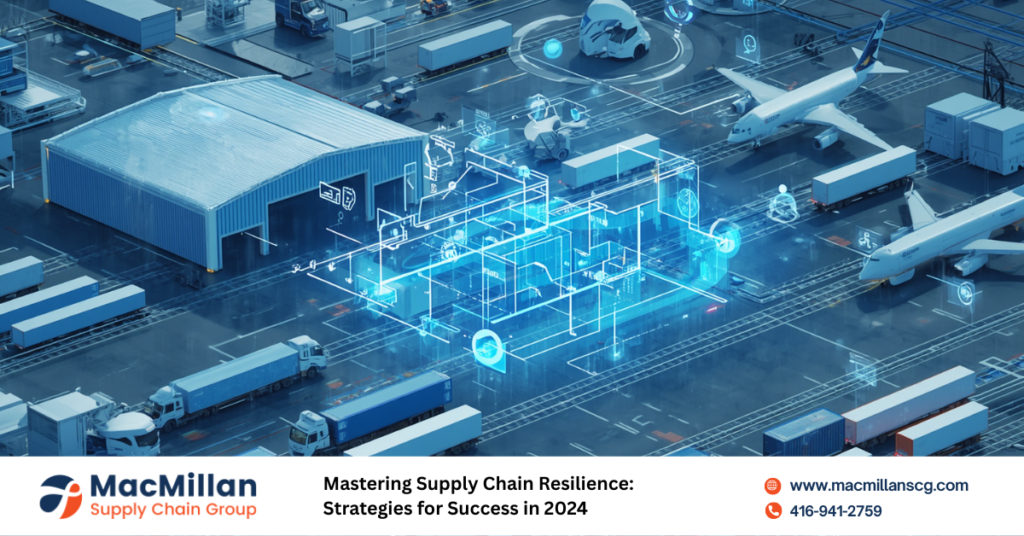
A Quick Summary and Overview In 2024, supply chain resilience is more critical than ever for businesses navigating global uncertainties. This comprehensive guide explores strategies to build a robust and adaptable supply chain, from leveraging advanced technologies to implementing risk mitigation techniques. We’ll delve into the importance of visibility, flexibility, and collaboration in creating a resilient supply network. By partnering with experts like MacMillan Supply Chain Group, companies can overcome common challenges and transform their supply chains into strategic assets. Discover how to future-proof your operations and gain a competitive edge in today’s dynamic business landscape. An Introduction The global business landscape is constantly evolving, presenting new challenges and opportunities for supply chain management. In 2024, building a resilient supply chain is no longer a luxury—it’s a necessity for survival and growth. Recent events, from the COVID-19 pandemic to geopolitical tensions, have highlighted the vulnerabilities in traditional supply chain models and the urgent need for more robust, flexible systems. This article will guide you through the key strategies and best practices for enhancing supply chain resilience. We’ll explore how cutting-edge technologies, data-driven decision-making, and strategic partnerships can help your business weather disruptions and emerge stronger. Whether you’re a small enterprise or a multinational corporation, the insights shared here will empower you to transform your supply chain into a source of competitive advantage. Let’s dive into the world of supply chain resilience and discover how MacMillan Supply Chain Group can be your partner in this crucial journey. Understanding Supply Chain Resilience Supply chain resilience refers to a network’s ability to anticipate, adapt to, and recover from disruptions quickly and efficiently. In 2024, this concept goes beyond mere risk management—it’s about creating a supply chain that can thrive in uncertainty. Key components of supply chain resilience include: Visibility: Real-time monitoring of inventory, shipments, and potential disruptions. Flexibility: The ability to quickly adjust operations in response to changing conditions. Redundancy: Strategic backup plans and alternative sourcing options. Collaboration: Strong partnerships with suppliers, logistics providers, and customers. Building resilience requires a holistic approach that considers all aspects of your supply chain. This means assessing vulnerabilities, implementing robust risk management strategies, and fostering a culture of continuous improvement. The benefits of a resilient supply chain are manifold: Minimized downtime during disruptions Improved customer satisfaction through consistent service Enhanced competitiveness in volatile markets Reduced long-term costs associated with disruptions By prioritizing resilience, you’re not just protecting your business—you’re positioning it for sustainable growth. In the following sections, we’ll explore specific strategies to achieve this crucial goal. Leveraging Technology for Supply Chain Resilience In 2024, technology plays a pivotal role in building resilient supply chains. Advanced solutions offer unprecedented visibility, predictive capabilities, and automation that can transform your operations. Key technologies enhancing supply chain resilience include: Artificial Intelligence (AI) and Machine Learning (ML): These technologies enable predictive analytics, helping you anticipate disruptions and optimize inventory levels. Internet of Things (IoT): IoT devices provide real-time tracking and monitoring of goods, enhancing visibility across the supply chain. Blockchain: This technology ensures transparency and traceability, crucial for managing complex, global supply networks. Cloud Computing: Cloud-based systems offer scalability and accessibility, allowing for seamless collaboration and data sharing among stakeholders. Digital Twins: Virtual replicas of your supply chain enable scenario planning and risk assessment. Implementing these technologies requires careful planning and often, expert guidance. MacMillan Supply Chain Group specializes in integrating cutting-edge solutions tailored to your specific needs. Our team can help you: Assess your current technological capabilities Identify the most impactful solutions for your business Implement and optimize new technologies Train your team to leverage these tools effectively By harnessing the power of technology, you can create a more agile, responsive, and resilient supply chain ready to face the challenges of 2024 and beyond. Building Flexibility and Agility into Your Supply Chain Flexibility and agility are cornerstones of supply chain resilience in 2024. These qualities enable your organization to respond swiftly to disruptions and capitalize on new opportunities. Strategies to enhance flexibility and agility include: Diversifying Your Supplier Base: Reduce dependency on single sources by cultivating relationships with multiple suppliers across different geographic regions. Implementing Modular Supply Chain Design: Create interchangeable components in your supply chain that can be easily reconfigured as needed. Adopting Just-in-Case Inventory Management: Balance lean practices with strategic buffer stock to cushion against disruptions. Developing Multi-Modal Transportation Options: Ensure you have alternative shipping methods available to maintain product flow during disruptions. Fostering a Culture of Adaptability: Train your team to be responsive and innovative in the face of challenges. MacMillan Supply Chain Group can help you implement these strategies by: Conducting a comprehensive analysis of your current supply chain structure Identifying areas for increased flexibility Developing customized plans for supplier diversification and inventory optimization Implementing agile processes and training programs By building flexibility and agility into your supply chain, you’ll be better equipped to navigate the uncertainties of the global market, maintain customer satisfaction, and stay ahead of the competition. Collaborative Partnerships for Enhanced Resilience In 2024, no business is an island. Collaborative partnerships are essential for building truly resilient supply chains. By fostering strong relationships with suppliers, logistics providers, and even competitors, you can create a network that’s greater than the sum of its parts. Key aspects of collaborative partnerships include: Information Sharing: Open communication channels to share forecasts, inventory levels, and potential disruptions. Joint Risk Management: Work together to identify and mitigate risks that affect the entire supply chain. Mutual Capacity Planning: Align production and logistics capacities to ensure smooth operations. Collaborative Innovation: Pool resources and knowledge to develop new solutions and technologies. Shared Performance Metrics: Establish common KPIs to drive collective improvement. MacMillan Supply Chain Group excels in facilitating these collaborative relationships. We can help you: Identify potential partners that align with your business goals Establish effective communication protocols Develop shared risk management strategies Implement collaborative planning and forecasting systems By leveraging our extensive network and expertise, you can build a web of partnerships that enhances your supply chain’s resilience. These collaborations
Revolutionize Your TikTok Shop with 3PL: Boost Efficiency and Sales
A quick summary and overview Integrating Third-Party Logistics (3PL) services with your TikTok shop can revolutionize your e-commerce operations. This comprehensive guide explores how MacMillan Supply Chain’s 3PL solutions seamlessly connect with TikTok’s platform, offering enhanced efficiency, cost savings, and scalability. We’ll delve into the integration process, benefits of 3PL services, selection criteria for providers, and common challenges with their solutions. By leveraging MacMillan’s expertise, TikTok shop owners can streamline their supply chain, improve customer satisfaction, and focus on core business growth. Discover how our tailored 3PL services can propel your TikTok shop to new heights of success. An introduction As TikTok continues to reshape the e-commerce landscape, businesses are seeking ways to optimize their operations and stay competitive. Enter Third-Party Logistics (3PL) services – a game-changing solution for TikTok shop owners looking to scale their operations efficiently. MacMillan Supply Chain Group offers cutting-edge 3PL services designed to seamlessly integrate with your TikTok shop, providing a robust foundation for growth and success. In this article, we’ll explore how partnering with a 3PL provider like MacMillan can transform your TikTok shop’s logistics, from inventory management to order fulfillment and beyond. We’ll discuss the integration process, highlight the numerous benefits of 3PL services, and provide insights on choosing the right provider for your unique needs. Additionally, we’ll address common challenges and present MacMillan’s innovative solutions to ensure your TikTok shop operates at peak efficiency. Whether you’re a seasoned e-commerce veteran or just starting your TikTok shop journey, this guide will equip you with the knowledge to leverage 3PL services for unprecedented growth. Understanding 3PL Integration with TikTok Shops Integrating 3PL services with your TikTok shop is a crucial step towards optimizing your e-commerce operations. The process primarily revolves around establishing a seamless connection between TikTok’s platform and the 3PL provider’s systems. This integration is typically achieved through Application Programming Interfaces (APIs), which enable real-time data exchange and synchronization. At MacMillan Supply Chain, we’ve developed a robust API integration system specifically tailored for TikTok shops. This integration allows for: Real-time inventory updates: As products are sold or restocked, inventory levels are automatically adjusted across both platforms. Instant order processing: When a customer places an order on your TikTok shop, it’s immediately transmitted to our fulfillment centers for processing. Automated shipping and tracking: Once an order is fulfilled, shipping information is automatically updated on TikTok, providing customers with real-time tracking details. Returns management: Our system streamlines the returns process, updating inventory and customer accounts as needed. By leveraging our advanced integration capabilities, your TikTok shop can operate with unprecedented efficiency. This seamless connection eliminates manual data entry, reduces errors, and ensures that your customers always have access to accurate product availability and order status information. With MacMillan’s 3PL integration, you can focus on growing your TikTok presence while we handle the complex logistics behind the scenes. Benefits of Using 3PL Services for TikTok Shops Partnering with a 3PL provider like MacMillan Supply Chain offers numerous advantages for TikTok shop owners: Enhanced Efficiency: Our specialized systems and processes streamline order fulfillment, reducing processing times and minimizing errors. Cost Savings: By leveraging our established infrastructure and bulk shipping rates, you can significantly reduce operational and shipping costs. Scalability: As your TikTok shop grows, our flexible 3PL services can easily accommodate increased order volumes without requiring additional investment in infrastructure or staff. Improved Customer Satisfaction: Faster, more accurate order fulfillment leads to happier customers and positive reviews, boosting your TikTok shop’s reputation. Focus on Core Business: Outsourcing logistics allows you to concentrate on product development, marketing, and growing your TikTok presence. Expertise and Technology: Benefit from our state-of-the-art logistics technology and industry expertise to stay ahead of e-commerce trends. Expanded Reach: Our strategically located fulfillment centers enable faster shipping to a broader geographic area, potentially expanding your customer base. Inventory Management: Our advanced systems provide real-time inventory tracking, helping you make informed restocking decisions and avoid stockouts. Returns Processing: We efficiently handle returns, reducing the burden on your team and ensuring a smooth experience for customers. By leveraging these benefits, your TikTok shop can achieve higher operational efficiency, reduced costs, and improved customer satisfaction, setting the stage for sustainable growth and success in the competitive e-commerce landscape. Choosing the Right 3PL Provider for Your TikTok Shop Selecting the ideal 3PL partner is crucial for the success of your TikTok shop. Here are key factors to consider when evaluating potential providers: TikTok Integration Capabilities: Ensure the 3PL has experience and robust systems for seamless integration with TikTok’s platform. Scalability: Choose a provider that can accommodate your current needs and future growth projections. Technology Infrastructure: Look for advanced inventory management, order processing, and tracking systems that can keep pace with TikTok’s dynamic environment. Geographic Coverage: Consider the provider’s warehouse locations to optimize shipping times and costs for your target market. Customization Options: Seek a 3PL that offers tailored solutions to meet your specific product and business needs. Reporting and Analytics: Comprehensive data and insights are crucial for making informed business decisions. Customer Service: Ensure the provider offers reliable support to address any issues promptly. Industry Experience: A 3PL with e-commerce expertise, especially in social media platforms, can provide valuable insights and best practices. Value-Added Services: Consider providers offering additional services like kitting, custom packaging, or returns management. Pricing Structure: Understand the pricing model and ensure it aligns with your business goals and budget. At MacMillan Supply Chain, we excel in all these areas, offering TikTok shop owners a comprehensive, tailored 3PL solution. Our expertise in e-commerce logistics, coupled with our advanced technology and commitment to customer success, makes us an ideal partner for TikTok shops looking to optimize their operations and drive growth. Key 3PL Services for TikTok Shop Success To maximize the potential of your TikTok shop, it’s essential to leverage a comprehensive suite of 3PL services. MacMillan Supply Chain offers a range of crucial services tailored for TikTok shop success: Inventory Management: Our advanced systems provide real-time visibility into stock levels, enabling accurate forecasting and preventing stockouts or overstock situations. Order Fulfillment: We process orders quickly and accurately, ensuring timely delivery to maintain customer satisfaction. Warehousing: Our strategically
Mastering Black Friday Logistics: Strategies for Efficient Order Fulfillment
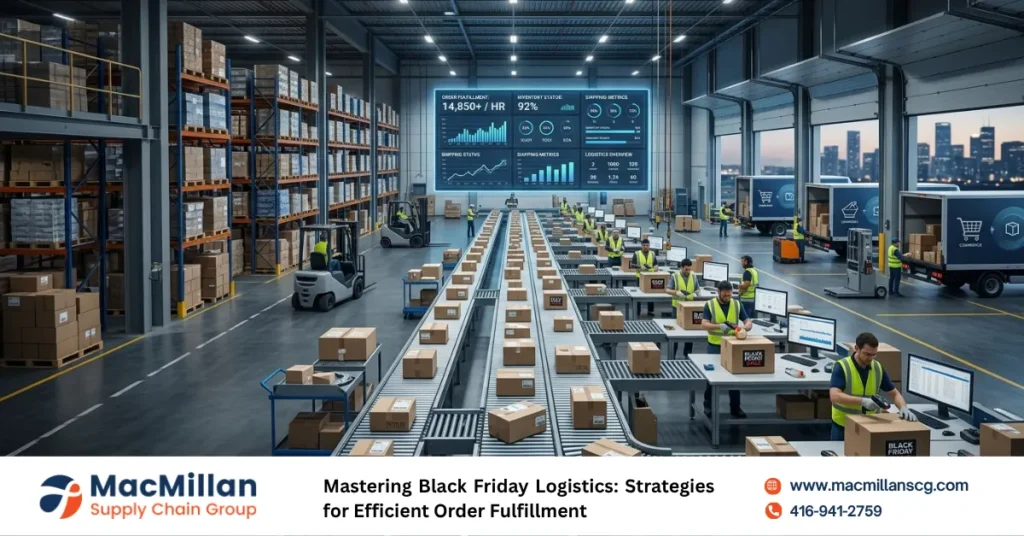
A Quick Summary and Overview Black Friday presents unique logistical challenges for businesses, with surging demand and high-volume shipping requirements. This article explores advanced strategies for mastering Black Friday logistics, focusing on efficient order fulfillment and inventory management. We’ll delve into leveraging real-time data, optimizing warehousing, managing customs and import delays, and innovations in last-mile delivery. By partnering with MacMillan Supply Chain Group, businesses can navigate these complexities, ensuring smooth operations during this peak shopping period. Our comprehensive solutions address common problems and provide tailored strategies to enhance customer satisfaction, minimize costs, and drive sales during Black Friday and beyond. An Introduction Black Friday has evolved from a single-day event to a weeks-long shopping extravaganza, putting immense pressure on supply chains worldwide. The surge in consumer demand coupled with high-volume shipping requirements tests the robustness of logistics strategies like never before. In this high-stakes environment, efficient order fulfillment and inventory management become crucial determinants of success. As businesses gear up for this annual retail phenomenon, the need for advanced logistics solutions has never been more critical. From leveraging real-time data to optimizing warehouse operations and streamlining last-mile delivery, every aspect of the supply chain must be fine-tuned for peak performance. This article will explore cutting-edge strategies and solutions offered by MacMillan Supply Chain Group to help businesses not just survive but thrive during Black Friday, ensuring customer satisfaction and driving sales in this competitive landscape. Advanced Black Friday Logistics Strategies Preparing for Black Friday demands meticulous planning and strategic execution. To meet the surge in demand, businesses must coordinate closely with suppliers, optimize inventory placement, and implement robust fulfillment processes. Advanced technologies play a crucial role in this preparation. For instance, RFID systems can significantly enhance tracking and management of stock, ensuring accurate inventory counts and reducing the risk of stockouts or overstock situations. Integrated logistics systems are key to streamlining order processing, packaging, and shipping. These systems can automatically route orders to the most efficient fulfillment center, reducing shipping times and costs. Moreover, predictive analytics can help forecast demand patterns, allowing businesses to adjust inventory levels and staffing accordingly. Leveraging partnerships with experienced third-party logistics (3PL) providers like MacMillan Supply Chain Group is invaluable for handling increased order volumes with precision and accuracy. 3PLs offer scalable solutions that can adapt to the sudden spike in demand characteristic of Black Friday. They bring expertise in warehouse management, order fulfillment, and transportation logistics, allowing businesses to focus on their core competencies while ensuring smooth operations during this critical period. By implementing these advanced strategies, businesses can significantly enhance their ability to meet customer expectations, minimize errors, and maximize sales during the Black Friday rush. Managing Real-Time Inventory and Data The utilization of real-time data is transformative in logistics, particularly during high-volume periods like Black Friday. By harnessing real-time insights, businesses can monitor inventory levels, track shipments, and manage carrier capacity effectively. This immediate visibility allows for quick decision-making and problem-solving, crucial in the fast-paced Black Friday environment. Implementing robust data analytics enables companies to optimize inventory, adjust to demand fluctuations, and improve delivery times. For instance, real-time inventory tracking can trigger automatic reordering when stock levels reach predefined thresholds, preventing stockouts. Similarly, analytics can identify slow-moving items, allowing for timely price adjustments or promotions to boost sales. Real-time order processing ensures faster response to customer needs, thereby enhancing satisfaction. It allows for immediate order confirmation, accurate delivery estimates, and proactive communication about any potential delays. This transparency builds trust and can significantly reduce customer service inquiries. MacMillan Supply Chain Group offers advanced real-time inventory and data management solutions tailored for Black Friday challenges. Our systems integrate seamlessly with your existing platforms, providing a comprehensive view of your supply chain. This integration allows for synchronized inventory across all sales channels, minimizing overselling and ensuring a smooth customer experience. Tackling Customs and Import Delays Customs and import delays pose significant risks during peak shopping events like Black Friday, potentially derailing carefully laid plans and impacting customer satisfaction. Streamlined customs clearance processes, facilitated by experienced customs brokerage services, are vital in avoiding these disruptions. Navigating complex import regulations becomes manageable with the right expertise. This includes understanding harmonized tariff schedules, complying with country-specific regulations, and preparing accurate documentation. Proactive measures, such as pre-clearing shipments and utilizing bonded warehouses, can significantly reduce the risk of delays. Partnerships with logistics experts like MacMillan Supply Chain Group can provide businesses with the support needed to mitigate these challenges. Our customs brokerage services offer: Expert knowledge of international trade regulations Advanced electronic filing systems for faster clearance Strategic relationships with customs authorities Real-time tracking of shipment status through customs Contingency planning for potential delays By leveraging these services, businesses can ensure that their products reach distribution centers or customers on time, even during the high-pressure Black Friday period. This not only prevents missed sales opportunities but also maintains customer satisfaction by meeting or exceeding delivery expectations. Effective customs and import management is crucial for businesses relying on international supply chains, ensuring a smooth flow of goods when it matters most. Innovations in Last-Mile Delivery Scaling delivery operations to meet Black Friday’s surge is one of the most challenging aspects of logistics. Innovations in last-mile delivery have gained traction, offering solutions to this perennial problem. These advancements address urban delivery complexities, reducing bottlenecks and enhancing efficiency. Flexible routing algorithms, powered by AI and machine learning, optimize delivery routes in real-time, considering traffic patterns, weather conditions, and delivery windows. This dynamic approach significantly improves delivery speed and reduces fuel consumption. Automated solutions, such as parcel lockers and autonomous delivery vehicles, are revolutionizing the last-mile landscape. These technologies offer 24/7 accessibility for package pickup and reduce the need for multiple delivery attempts, enhancing convenience for customers and efficiency for businesses. Real-time tracking and adaptive delivery networks further refine logistics operations. Customers can receive accurate ETAs and even redirect packages en route, improving the overall delivery experience. MacMillan Supply Chain Group embraces these innovations, offering cutting-edge last-mile solutions tailored to the
Optimizing Warehouse Packing Stations: Boost Efficiency and Accuracy
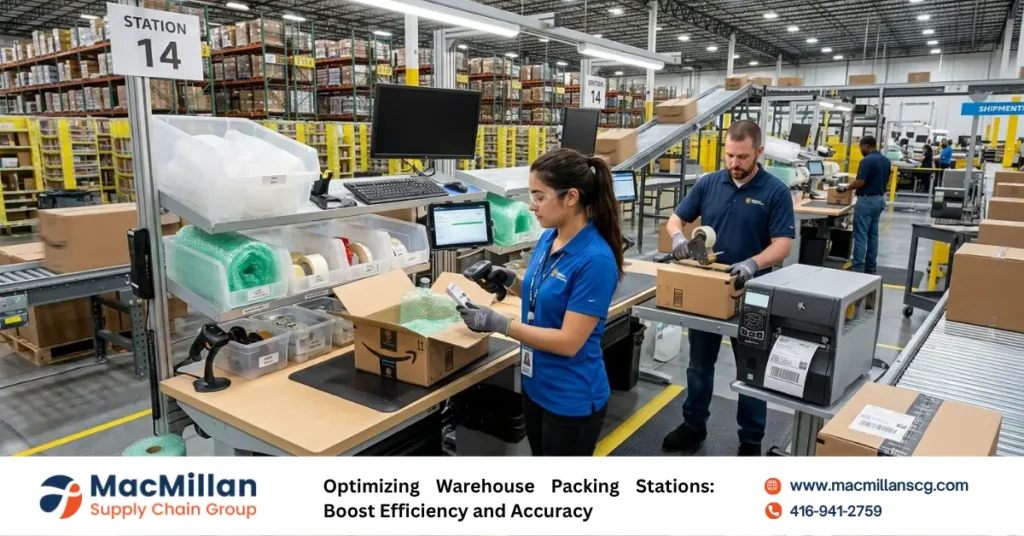
A Quick Summary and Overview Warehouse packing stations are crucial for streamlining order fulfillment processes. By optimizing these stations, businesses can significantly improve efficiency, reduce errors, and enhance customer satisfaction. This article explores the key components of effective packing stations, various types including modular designs, and the numerous benefits of optimization. We’ll also address common problems and provide expert solutions from MacMillan Supply Chain Group. Whether you’re looking to revamp your existing setup or implement new packing stations, this comprehensive guide will equip you with the knowledge to make informed decisions and boost your warehouse operations. Introduction In today’s fast-paced e-commerce landscape, efficient order fulfillment is more critical than ever. At the heart of this process lie warehouse packing stations – the final checkpoint before products reach customers. Optimizing these stations can lead to dramatic improvements in productivity, accuracy, and overall customer satisfaction. At MacMillan Supply Chain Group, we understand the pivotal role that well-designed packing stations play in streamlining operations and reducing costs. With years of experience in supply chain management, we’ve helped countless businesses transform their packing processes. This article will delve into the intricacies of warehouse packing stations, exploring their essential components, types, and the myriad benefits of optimization. We’ll also address common challenges and provide expert solutions to help you elevate your packing operations. Whether you’re a small business owner or a logistics manager in a large corporation, this guide will provide valuable insights to enhance your order fulfillment process. Understanding Warehouse Packing Stations Warehouse packing stations are dedicated areas within a fulfillment center where products are prepared for shipping. These stations serve as the final touchpoint in the order fulfillment process, ensuring that items are accurately packaged, labeled, and ready for dispatch. A well-designed packing station typically includes: Ergonomic workbenches: Adjustable surfaces that cater to different worker heights and preferences, reducing fatigue and increasing productivity. Packing materials: Easy access to boxes, envelopes, bubble wrap, and other necessary materials. Technology integration: Barcode scanners, label printers, and computer terminals for order processing and tracking. Organizational tools: Bins, shelves, and drawers for efficient storage of packing supplies. Quality control equipment: Scales for weight verification and inspection areas for final checks. The primary goal of a packing station is to facilitate quick and accurate order preparation while minimizing errors and optimizing space utilization. By streamlining this crucial step, businesses can significantly reduce shipping times, improve order accuracy, and enhance overall customer satisfaction. At MacMillan Supply Chain Group, we emphasize the importance of customizing packing stations to suit specific business needs. Our experts analyze your unique requirements to design stations that maximize efficiency and adapt to your product range and order volumes. Types of Packing Stations and Their Applications Packing stations come in various configurations to suit different warehouse environments and product types. Understanding these options is crucial for selecting the most appropriate setup for your business: Static Workstations: These are fixed stations ideal for businesses with consistent product sizes and packing requirements. They offer stability and are often used for high-volume, repetitive packing tasks. Modular Packing Stations: Flexible and adaptable, these stations feature interchangeable components. They’re perfect for businesses with diverse product ranges or seasonal variations in packing needs. Mobile Packing Carts: These portable stations can be moved around the warehouse, bringing packing capabilities directly to storage areas. They’re excellent for operations with space constraints or frequently changing layouts. Automated Packing Stations: Incorporating robotics and AI, these high-tech solutions are designed for maximum efficiency in high-volume operations. They can significantly reduce labor costs and increase packing speeds. Specialized Stations: Tailored for specific industries or product types, such as fragile items, hazardous materials, or oversized products. At MacMillan Supply Chain Group, we help businesses identify the most suitable packing station types based on their unique needs. Our expertise lies in creating custom solutions that blend different station types to optimize workflow and adapt to changing business requirements. Benefits of Optimized Packing Stations Investing in optimized packing stations can yield numerous benefits for your warehouse operations: Increased Efficiency: Well-designed stations reduce unnecessary movement and streamline the packing process, leading to higher productivity rates. Improved Accuracy: Organized workspaces and integrated technology minimize errors in order fulfillment, reducing returns and customer complaints. Enhanced Ergonomics: Properly configured stations reduce physical strain on workers, leading to fewer injuries and improved job satisfaction. Space Optimization: Efficient packing stations make better use of available warehouse space, potentially reducing real estate costs. Scalability: Modular designs allow for easy adaptation to changing business needs and seasonal fluctuations. Cost Reduction: Improved efficiency and accuracy lead to lower labor costs, reduced material waste, and fewer shipping errors. Better Inventory Management: Integrated systems at packing stations can provide real-time updates on inventory levels, aiding in stock control. Enhanced Customer Satisfaction: Faster, more accurate order fulfillment directly translates to happier customers and increased loyalty. Data Collection: Modern packing stations can gather valuable data on packing times, material usage, and order patterns, informing business decisions. At MacMillan Supply Chain Group, we’ve seen firsthand how optimized packing stations can transform warehouse operations. Our tailored solutions help businesses realize these benefits, leading to significant improvements in overall supply chain performance. Key Considerations for Packing Station Design When designing or optimizing packing stations, several crucial factors should be considered: Workflow Analysis: Understand your current processes to identify bottlenecks and areas for improvement. This forms the foundation for effective station design. Ergonomics: Prioritize worker comfort and safety with adjustable workbenches, proper lighting, and anti-fatigue mats. Technology Integration: Incorporate barcode scanners, label printers, and inventory management systems to enhance accuracy and efficiency. Product Variety: Design stations that can accommodate different product sizes and packing requirements if your inventory is diverse. Scalability: Plan for future growth by choosing modular designs that can be easily expanded or reconfigured. Material Flow: Ensure smooth movement of products and packing materials to and from the station to minimize unnecessary handling. Quality Control: Implement checkpoints and systems to verify order accuracy before shipping. Sustainability: Consider eco-friendly packing materials and processes to reduce
Revolutionize Your Supply Chain: Top 3PL Strategies for Business Growth
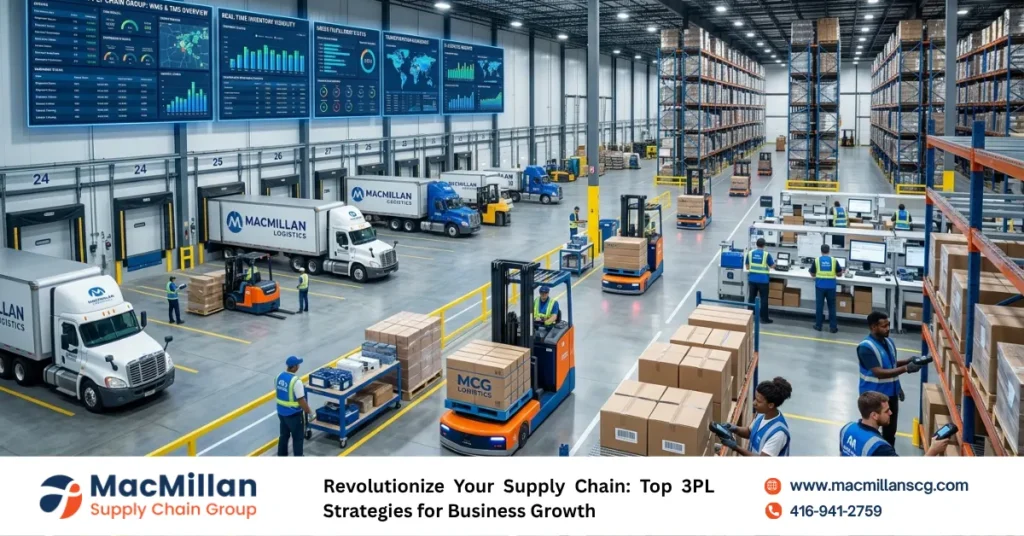
Quick Summary and Overview This comprehensive guide explores essential strategies for selecting and leveraging third-party logistics (3PL) providers to enhance your supply chain performance. We’ll delve into key factors such as technology integration, scalability, and industry expertise, while highlighting how MacMillan Supply Chain Group’s innovative solutions can transform your logistics operations. Learn how to optimize your supply chain, reduce costs, and improve customer satisfaction with the right 3PL partner. Introduction In today’s fast-paced business environment, efficient supply chain management is crucial for success. Third-party logistics (3PL) providers have become indispensable partners for companies looking to streamline their operations, reduce costs, and improve customer satisfaction. However, choosing the right 3PL partner can be a daunting task. This guide will walk you through the essential strategies for selecting and maximizing the benefits of a 3PL provider, with insights into how MacMillan Supply Chain Group can elevate your logistics game. Leveraging Advanced Technology for Supply Chain Visibility In the digital age, technology integration is paramount for effective supply chain management. A top-tier 3PL provider should offer state-of-the-art technology solutions that provide real-time supply chain visibility into your inventory, orders, and shipments. This transparency allows for proactive decision-making and swift problem resolution. Look for 3PLs that offer robust warehouse management systems (WMS), transportation management systems (TMS), and order management systems (OMS) that can seamlessly integrate with your existing platforms. These systems should provide detailed analytics and reporting capabilities, enabling you to track key performance indicators (KPIs) and make data-driven decisions. MacMillan Supply Chain Group, for instance, utilizes cutting-edge technology to offer clients comprehensive visibility across their entire supply chain. Our advanced systems allow for real-time tracking, predictive analytics, and customizable reporting, ensuring you always have your finger on the pulse of your logistics operations. Ensuring Scalability and Flexibility in Logistics Solutions As your business grows and evolves, your logistics needs will change. A valuable 3PL partner should offer scalable and flexible solutions that can adapt to your changing requirements. This includes the ability to handle fluctuations in volume, expand into new markets, and accommodate seasonal peaks without compromising service quality. When evaluating 3PL providers, inquire about their capacity to scale operations up or down based on demand. Look for providers with a diverse network of warehouses and distribution centers, as well as a range of transportation options. This flexibility ensures that your 3PL can support your business through various growth stages and market conditions. MacMillan Supply Chain Group prides itself on offering highly scalable solutions. Our extensive network of strategically located facilities and diverse transportation options allow us to quickly adapt to our clients’ changing needs, ensuring seamless logistics support regardless of market fluctuations or business growth. Prioritizing Industry Expertise and Specialized Services Different industries have unique supply chain requirements, from regulatory compliance to specialized handling procedures. A 3PL provider with deep industry expertise can offer tailored solutions that address your specific challenges and opportunities. When selecting a 3PL, look for providers with a proven track record in your industry. They should demonstrate knowledge of relevant regulations, best practices, and industry trends. Additionally, consider 3PLs that offer specialized services such as kitting, assembly, or reverse logistics, which can add value to your supply chain operations. MacMillan Supply Chain Group boasts extensive experience across various industries, including retail, e-commerce, healthcare, and manufacturing. Our team of experts understands the nuances of each sector and can provide customized solutions that meet your unique needs. From temperature-controlled storage for pharmaceuticals to specialized packaging for fragile electronics, we have the expertise to handle your most complex logistics challenges. Focusing on Customer Service and Continuous Improvement Exceptional customer service is a hallmark of a top-tier 3PL provider. Your logistics partner should be responsive, proactive, and committed to your success. Look for 3PLs that offer dedicated account management, regular performance reviews, and a culture of continuous improvement. A great 3PL should act as an extension of your team, providing insights and recommendations to optimize your supply chain. They should be willing to invest in the relationship, offering training, support, and open communication channels to ensure smooth operations. At MacMillan Supply Chain Group, we prioritize customer satisfaction above all else. Our dedicated account managers work closely with clients to understand their unique needs and challenges, providing personalized support and strategic guidance. We regularly conduct performance reviews and solicit feedback, using these insights to continuously refine and improve our services. Common Problems with 3PL Providers and Our Solutions Many businesses face challenges when working with 3PL providers, including lack of transparency, poor communication, inflexibility, and hidden costs. These issues can lead to disruptions in the supply chain, increased expenses, and ultimately, dissatisfied customers. Our Solutions: Transparency and Communication: MacMillan Supply Chain Group prioritizes clear, open communication with our clients. We provide real-time visibility into operations through our advanced technology platforms, ensuring you’re always informed about the status of your inventory and shipments. Our dedicated account managers are readily available to address any concerns and provide regular updates. Flexibility and Scalability: We understand that business needs can change rapidly. Our flexible contracts and scalable solutions allow you to adjust your logistics operations as needed without being locked into rigid, long-term commitments. Whether you need to scale up for peak seasons or expand into new markets, we have the capacity and capabilities to support your growth. Cost Transparency: Hidden fees can quickly erode your bottom line. At MacMillan, we believe in complete cost transparency. Our pricing models are clear and comprehensive, with no hidden charges. We work with you to develop a customized pricing structure that aligns with your business needs and budget. Continuous Improvement: We don’t just maintain the status quo; we’re constantly looking for ways to improve our services and your supply chain efficiency. Our team regularly analyzes performance data and industry trends to identify opportunities for optimization and cost savings. Industry-Specific Expertise: Generic solutions often fall short in addressing industry-specific challenges. MacMillan’s team of experts brings deep knowledge and experience across various sectors, ensuring that our solutions are tailored to meet