
Revolutionizing Logistics: The Power of Shared Warehousing in Modern Supply Chains
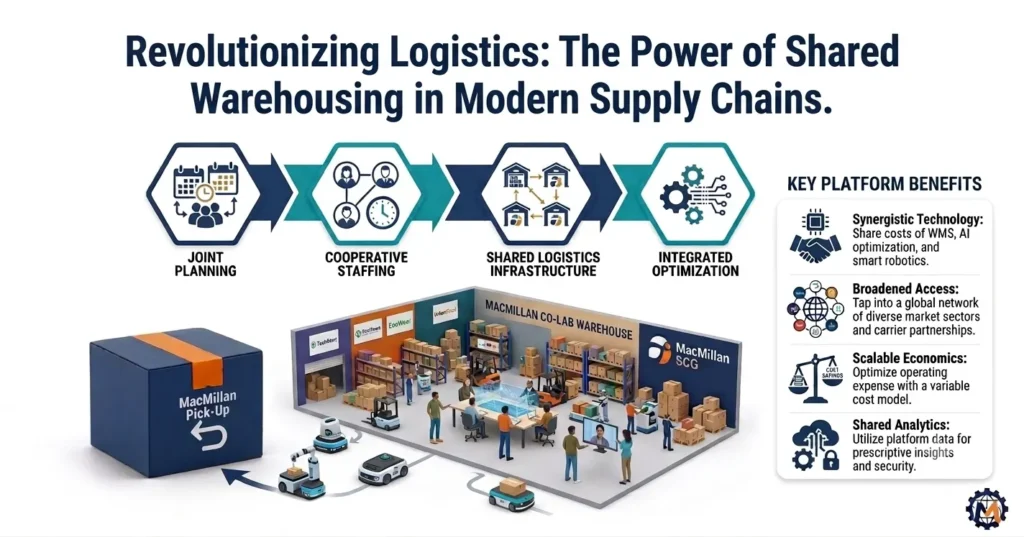
A Quick Summary and Overview Shared warehousing is revolutionizing the logistics landscape, offering businesses a flexible and cost-effective alternative to traditional warehousing models. This innovative approach allows multiple companies to utilize a single warehouse facility, sharing resources, technology, and operational costs. By leveraging shared warehousing, businesses can significantly reduce overhead expenses, improve scalability, and enhance supply chain efficiency. This article explores the numerous benefits, common challenges, and how MacMillan Supply Chain Group’s tailored solutions can help businesses optimize logistics operations. Discover how this game-changing strategy can propel your company towards greater profitability and competitive advantage in today’s dynamic market. An Introduction In the ever-evolving world of supply chain management, businesses are constantly seeking innovative ways to streamline operations, reduce costs, and improve efficiency. One solution that has gained significant traction in recent years is shared warehousing. This revolutionary approach offers a wide range of benefits, from cost savings and increased flexibility to enhanced scalability and improved supply chain performance. As we explore shared warehousing, we will examine its advantages, challenges, and how MacMillan Supply Chain Group helps businesses navigate this transformation. Whether you are a startup or an enterprise, shared warehousing can be a game-changing solution. Cost Savings and Resource Optimization One of the most compelling advantages of shared warehousing is the significant cost savings it offers. By sharing warehouse space, equipment, and labor with other businesses, companies can dramatically reduce their operational expenses. This cost-sharing model allows businesses to access state-of-the-art facilities and technologies that might otherwise be prohibitively expensive. In a shared warehousing environment, fixed costs such as rent, utilities, and maintenance are distributed among multiple tenants. This arrangement not only lowers individual expenses but also provides a buffer against market fluctuations. For instance, during slower periods, businesses aren’t burdened with the full cost of maintaining an underutilized warehouse. Moreover, shared warehousing optimizes resource utilization. Advanced warehouse management systems (WMS) and automated technologies are often standard in these facilities, allowing for more efficient inventory management and order fulfillment. These shared resources can lead to improved accuracy, faster processing times, and reduced labor costs. By leveraging the economies of scale inherent in shared warehousing, businesses can redirect their capital towards core competencies and growth initiatives. This financial flexibility is particularly beneficial for small to medium-sized enterprises and startups, enabling them to compete more effectively with larger corporations without the burden of substantial upfront investments in warehousing infrastructure. Flexibility and Scalability Shared warehousing offers unparalleled flexibility and scalability, allowing businesses to adapt quickly to changing market demands. Unlike traditional warehousing models that often require long-term leases and significant capital investment, shared warehousing provides the agility to scale operations up or down as needed. This flexibility is particularly valuable in today’s volatile market conditions. Seasonal fluctuations, sudden spikes in demand, or unexpected downturns can be managed more effectively in a shared warehousing environment. Businesses can easily adjust their storage space and resources without the constraints of fixed infrastructure or long-term commitments. Furthermore, shared warehousing facilitates geographic expansion without the need for substantial investment. Companies can tap into new markets by utilizing shared facilities in strategic locations, enabling them to test new territories or respond to regional demand shifts without the risk and expense of establishing their own warehouses. The scalability offered by shared warehousing also supports business growth. As companies expand, they can incrementally increase their warehouse space and resources, avoiding the need for large, step-change investments. This gradual scaling allows businesses to align their logistics capabilities closely with their growth trajectory, optimizing costs and operational efficiency at every stage of development. Enhanced Supply Chain Efficiency Shared warehousing significantly enhances supply chain efficiency through strategic location placement and advanced technological integration. These facilities are typically situated near major transportation hubs, urban centers, and key markets, optimizing distribution networks and reducing transportation costs and transit times. By leveraging shared warehousing, businesses can benefit from a more extensive and flexible distribution network without the burden of managing multiple facilities. This strategic positioning allows for faster order fulfillment and improved customer satisfaction, as products can be stored closer to end consumers. Moreover, shared warehouses often employ cutting-edge logistics technologies that individual businesses might find cost-prohibitive to implement independently. These may include advanced inventory management systems, automated sorting and picking technologies, and real-time tracking capabilities. Such technologies streamline operations, minimize errors, and provide valuable data insights for continuous improvement. The collaborative nature of shared warehousing also fosters opportunities for synergies among tenants. For instance, businesses with complementary products or similar customer bases can potentially share transportation resources, further reducing costs and environmental impact. This collaborative approach can lead to more efficient use of resources across the entire supply chain, from inbound logistics to last-mile delivery. Risk Mitigation and Expertise Access Shared warehousing offers significant advantages in terms of risk mitigation and access to specialized expertise. By distributing operational risks among multiple tenants, businesses can better weather market uncertainties and unforeseen challenges. In a shared warehousing model, the burden of facility management, security, and compliance is typically handled by experienced professionals. This arrangement allows businesses to focus on their core competencies while benefiting from the expertise of seasoned logistics specialists. These experts stay abreast of industry best practices, regulatory changes, and technological advancements, ensuring that the warehouse operations remain efficient and compliant. Furthermore, shared warehousing providers often have established relationships with carriers and other supply chain partners. This network can provide businesses with better negotiating power for transportation rates and access to a wider range of logistics services. In times of supply chain disruptions, these relationships can prove invaluable in finding alternative solutions and maintaining business continuity. The diversity of businesses within a shared warehouse can also serve as a natural hedge against industry-specific downturns. If one sector experiences a slump, the overall warehouse operations remain stable due to the varied tenant mix. This resilience can provide peace of mind and operational stability, particularly for smaller businesses or those in volatile industries. Common Problems with the Topic Our Solutions While shared warehousing offers numerous benefits,
Revolutionizing 3PL Services for eCommerce Success
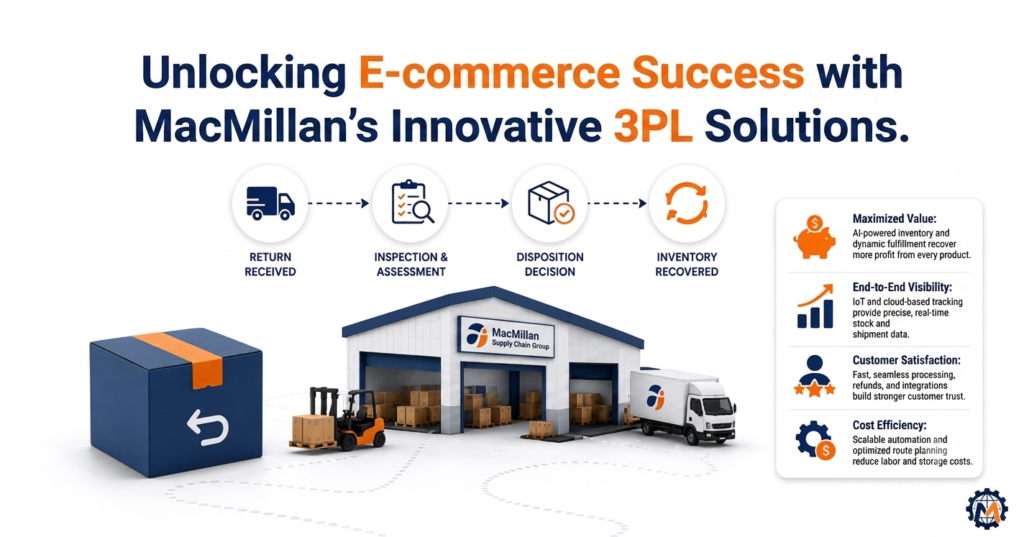
A Quick Summary and Overview MacMillan Supply Chain Group is revolutionizing the 3PL industry with innovative solutions tailored for eCommerce businesses. Our comprehensive services encompass warehousing, order fulfillment, and advanced logistics technologies, designed to streamline operations and enhance customer satisfaction. By leveraging cutting-edge automation, AI, and IoT, we offer unparalleled efficiency and transparency in supply chain management. This article explores how MacMillan’s expertise in 3PL services can propel your eCommerce business forward, addressing common challenges and providing solutions that drive growth. Discover why partnering with MacMillan Supply Chain Group is the key to unlocking your business’s full potential in the competitive eCommerce landscape. Introduction In today’s fast-paced eCommerce environment, efficient logistics management is crucial for success. As consumer expectations continue to rise, businesses face increasing pressure to deliver products quickly, accurately, and cost-effectively. This is where third-party logistics (3PL) providers like MacMillan Supply Chain Group come into play. By offering specialized services and leveraging advanced technologies, 3PL companies can significantly enhance your supply chain operations, allowing you to focus on core business activities. MacMillan Supply Chain Group stands at the forefront of this industry transformation, offering tailored solutions that address the unique challenges faced by eCommerce businesses. From state-of-the-art warehousing to innovative order fulfillment strategies, our comprehensive services are designed to optimize every aspect of your logistics operations. In this article, we’ll explore how MacMillan’s expertise can revolutionize your supply chain, boost customer satisfaction, and drive sustainable growth for your eCommerce business. The Evolution of 3PL Services in eCommerce The landscape of 3PL services has undergone a significant transformation in recent years, driven by the explosive growth of eCommerce. Traditional warehousing and shipping models have given way to more dynamic, technology-driven solutions that cater to the unique needs of online retailers. This evolution has been marked by several key trends: Increased focus on speed and accuracy: With same-day and next-day delivery becoming the norm, 3PL providers have had to optimize their processes to meet these demanding timelines without compromising on accuracy. Integration of advanced technologies: Artificial Intelligence (AI), Internet of Things (IoT), and robotics are now commonplace in modern 3PL operations, enhancing efficiency and reducing human error. Customization and flexibility: One-size-fits-all solutions are no longer sufficient. Today’s 3PL providers offer tailored services that can adapt to the changing needs of eCommerce businesses. Data-driven decision making: Advanced analytics tools allow 3PL companies to provide valuable insights into supply chain performance, enabling businesses to make informed decisions. Emphasis on sustainability: As consumers become more environmentally conscious, 3PL providers are implementing green initiatives to reduce the carbon footprint of logistics operations. MacMillan Supply Chain Group has been at the forefront of these industry shifts, continuously innovating to provide cutting-edge 3PL solutions that drive eCommerce success. MacMillan’s Innovative 3PL Solutions for eCommerce At MacMillan Supply Chain Group, we understand that each eCommerce business has unique needs. Our innovative 3PL solutions are designed to address these specific challenges while providing the flexibility to scale as your business grows. Here’s how we’re revolutionizing eCommerce logistics: Advanced Warehouse Management: Our state-of-the-art warehouses utilize AI-powered inventory management systems, ensuring optimal stock levels and reducing storage costs. Intelligent Order Fulfillment: We employ machine learning algorithms to predict order patterns, allowing for proactive inventory placement and faster order processing. Real-time Tracking and Visibility: Our IoT-enabled tracking systems provide end-to-end visibility of your products, from warehouse to doorstep. Customized Packaging Solutions: We offer tailored packaging options that not only protect your products but also enhance your brand experience. Seamless Integration: Our systems integrate effortlessly with major eCommerce platforms, ensuring smooth data flow and real-time updates. Sustainable Practices: We implement eco-friendly initiatives, from recyclable packaging to optimized route planning, reducing the environmental impact of your logistics operations. Value-Added Services: From kitting and assembly to returns management, we offer a range of additional services to streamline your operations. By leveraging these innovative solutions, MacMillan Supply Chain Group empowers eCommerce businesses to achieve operational excellence, enhance customer satisfaction, and drive sustainable growth. The Impact of Technology on 3PL Services Technology is reshaping the 3PL landscape, and MacMillan Supply Chain Group is at the forefront of this digital revolution. By harnessing the power of cutting-edge technologies, we’re able to offer unparalleled efficiency and accuracy in our 3PL services. Here’s how technology is transforming the industry: Artificial Intelligence and Machine Learning: These technologies enable predictive analytics, optimizing inventory management and order fulfillment processes. Internet of Things (IoT): IoT devices provide real-time tracking and monitoring of shipments, enhancing visibility and enabling proactive problem-solving. Robotic Process Automation (RPA): Automated picking and packing systems increase speed and accuracy while reducing labor costs. Blockchain: This technology enhances supply chain transparency and security, particularly in international logistics. Cloud Computing: Cloud-based systems allow for seamless data sharing and collaboration across the supply chain. Big Data Analytics: Advanced analytics tools provide valuable insights into supply chain performance, enabling data-driven decision making. Augmented Reality (AR): AR technology is being used to improve warehouse operations and staff training. At MacMillan Supply Chain Group, we continuously invest in these technologies to stay ahead of the curve. By leveraging these innovations, we’re able to provide our clients with more efficient, accurate, and cost-effective 3PL services, giving them a competitive edge in the fast-paced world of eCommerce. The Future of 3PL: Trends and Predictions As we look to the future, several trends are shaping the evolution of 3PL services. MacMillan Supply Chain Group is not only adapting to these trends but actively driving innovation in the industry. Here’s what we see on the horizon: Hyper-personalization: 3PL providers will offer increasingly tailored solutions, catering to the specific needs of each client and their customers. Autonomous Vehicles: Self-driving trucks and drones will revolutionize last-mile delivery, improving speed and reducing costs. Predictive Logistics: Advanced AI will enable 3PL providers to anticipate demand and potential disruptions, allowing for proactive problem-solving. Sustainable Logistics: Green initiatives will become a standard offering, with 3PL providers leading the charge in reducing the environmental impact of supply chains. Augmented Reality in Warehousing: AR
Unlocking Shopify Success: Top 3PL Providers for Seamless Order Fulfillment
A quick summary and overview For Shopify store owners seeking to streamline their logistics and order fulfillment processes, selecting the right Third-Party Logistics (3PL) provider is crucial. This article evaluates top 3PL providers, focusing on their services, integration efficiency, pricing, and customer support. We’ll explore how these providers can enhance your Shopify operations, discuss common challenges in 3PL selection, and provide solutions to overcome them. Additionally, we’ll highlight how MacMillan Supply Chain can optimize your ecommerce logistics for growth and success. Whether you’re a small business or a rapidly expanding enterprise, this guide will help you make an informed decision for your Shopify fulfillment needs. An introduction In the fast-paced world of ecommerce, efficient order fulfillment is the backbone of success for Shopify businesses. As customer expectations for quick and accurate deliveries continue to rise, many store owners are turning to Third-Party Logistics (3PL) providers to manage their warehousing, inventory, and shipping processes. This strategic move allows retailers to focus on core business activities while ensuring smooth operations and customer satisfaction. However, choosing the right 3PL provider for your Shopify store can be a daunting task. With numerous options available, each offering different services, integration capabilities, and pricing models, it’s crucial to understand what aligns best with your business goals. This comprehensive guide will walk you through the top 3PL providers for Shopify, helping you navigate the selection process with confidence. We’ll also address common challenges and how MacMillan Supply Chain can provide tailored solutions to elevate your ecommerce logistics to new heights. Understanding 3PL in the Shopify Context Third-Party Logistics (3PL) providers play a pivotal role in the Shopify ecosystem, offering comprehensive solutions that streamline the entire order fulfillment process. But what exactly does this mean for your ecommerce business? At its core, a 3PL partner takes on the responsibility of warehousing your inventory, managing stock levels, processing orders, and handling shipping and returns. This allows Shopify store owners to offload the complexities of logistics, freeing up valuable time and resources to focus on product development, marketing, and customer engagement. The benefits of integrating a 3PL provider with your Shopify store are numerous: Scalability: As your business grows, a 3PL can easily accommodate increased order volumes without requiring significant infrastructure investments on your part. Expertise: 3PLs bring specialized knowledge in logistics, often resulting in more efficient processes and cost savings. Geographic Reach: Many 3PLs have multiple warehouse locations, enabling faster shipping times to a broader customer base. Technology Integration: Advanced 3PLs offer seamless integration with Shopify, automating order processing and providing real-time inventory updates. Cost Efficiency: By leveraging a 3PL’s established networks and bulk shipping rates, you can often reduce overall logistics costs. Understanding these benefits is crucial in recognizing the value a 3PL can bring to your Shopify business, setting the stage for improved customer satisfaction and accelerated growth. Top 3PL Providers for Shopify When it comes to selecting a 3PL provider for your Shopify store, several options stand out for their performance, integration capabilities, and service offerings. Let’s explore three top contenders: ShipBob: Known for its seamless Shopify integration Offers a network of fulfillment centers for faster delivery Provides advanced analytics for inventory and shipping insights Ideal for small to medium-sized businesses looking to scale Shopify Fulfillment Network (SFN): Native integration with Shopify platform Uses machine learning for intelligent inventory allocation Offers two-day shipping across the continental US Best for Shopify Plus merchants seeking an all-in-one solution Red Stag Fulfillment: Specializes in handling large, heavy, or high-value items Known for high accuracy rates and order guarantees Provides custom kitting and assembly services Suitable for businesses with unique or specialized products Each of these providers offers distinct advantages, catering to different business needs and scales. ShipBob excels in flexibility and analytics, making it a strong choice for growing businesses. The Shopify Fulfillment Network provides seamless integration and is particularly beneficial for larger Shopify merchants. Red Stag Fulfillment stands out for its specialized handling capabilities, making it ideal for businesses with non-standard products. The Importance of Seamless Shopify Integration When selecting a 3PL provider for your Shopify store, seamless integration is not just a convenience—it’s a necessity. A well-integrated 3PL solution can dramatically improve your operational efficiency and customer satisfaction. Here’s why it matters: Real-Time Inventory Sync: Seamless integration ensures that your Shopify store always displays accurate inventory levels, preventing overselling and customer disappointment. Automated Order Processing: Orders placed on your Shopify store are automatically sent to the 3PL for fulfillment, reducing manual data entry and potential errors. Shipping Updates: Integration allows for automatic shipping notifications to be sent to customers, improving transparency and reducing support inquiries. Returns Management: A well-integrated system streamlines the returns process, making it easier for both you and your customers. Data Analytics: With integrated systems, you can access comprehensive data on orders, inventory, and shipping performance, enabling data-driven decision-making. Scalability: As your business grows, a seamlessly integrated 3PL can easily accommodate increased order volumes without disrupting your operations. When evaluating 3PL providers, pay close attention to their Shopify integration capabilities. Look for providers offering native Shopify apps or robust API connections. Ask about the depth of integration—can it handle complex scenarios like multi-channel selling or pre-orders? The right integration can significantly reduce manual work, minimize errors, and provide a smoother experience for both you and your customers. Pricing and Cost Considerations Understanding the pricing structure of 3PL providers is crucial for managing your Shopify store’s budget effectively. While costs can vary significantly based on your specific needs, most 3PLs typically charge for the following services: Receiving: Fees for accepting and processing incoming inventory. Storage: Monthly charges based on the space your inventory occupies. Pick and Pack: Costs associated with selecting items and preparing orders for shipment. Shipping: Rates for delivering orders to customers, often at discounted carrier rates. Returns Processing: Fees for handling and restocking returned items. When comparing 3PL providers, consider these pricing factors: Minimum Monthly Fees: Some providers require a
Third-Party Logistics (3PL): Revolutionizing Supply Chain Management with MacMillan
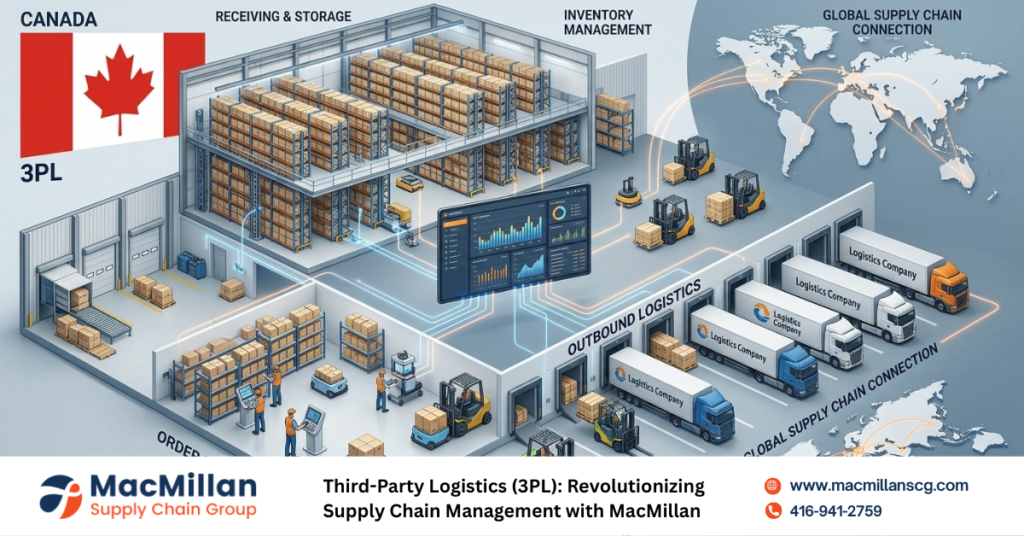
A quick summary and overview Third-Party Logistics (3PL) has become a game-changer in modern supply chain management. By outsourcing logistics operations to specialized providers, businesses can streamline their processes, reduce costs, and focus on core competencies. This comprehensive guide explores the world of 3PL, its benefits, and how it can revolutionize your business operations. From warehouse management to order fulfillment, learn how MacMillan Supply Chain Group’s expertise can help you navigate the complexities of logistics, enhance customer satisfaction, and drive growth. Discover why partnering with a 3PL provider is essential in today’s competitive business landscape. An introduction In today’s fast-paced business environment, efficient supply chain management is crucial for success. As companies strive to meet increasing customer demands and navigate complex global markets, many are turning to Third-Party Logistics (3PL) providers to optimize their operations. 3PL services offer a strategic solution to the challenges of modern logistics, allowing businesses to focus on their core competencies while leaving the intricacies of supply chain management to experts. This article delves into the world of 3PL, exploring its definition, benefits, and how it can transform your business operations. We’ll examine the key services offered by 3PL providers, discuss how to choose the right partner, and highlight the ways in which MacMillan Supply Chain Group can help you achieve your logistics goals. Whether you’re a small startup or a large enterprise, understanding the power of 3PL can be the key to unlocking your business’s full potential. Understanding Third-Party Logistics (3PL) Third-Party Logistics, commonly known as 3PL, refers to the practice of outsourcing logistics and distribution activities to specialized companies. These providers offer a range of services that cover various aspects of the supply chain, from warehousing and inventory management to transportation and order fulfillment. The concept of 3PL has evolved significantly over the years. Initially, 3PL providers primarily focused on transportation and warehousing. However, as supply chains have become more complex, 3PL services have expanded to include value-added activities such as: Inventory management and forecasting Order processing and fulfillment Customs brokerage and international shipping Reverse logistics and returns management Supply chain consulting and optimization By leveraging the expertise and resources of 3PL providers, businesses can achieve greater efficiency, reduce operational costs, and improve customer satisfaction. This is particularly beneficial for companies experiencing rapid growth, entering new markets, or dealing with seasonal fluctuations in demand. Moreover, 3PL providers invest in advanced technologies and systems that many businesses may find cost-prohibitive to implement on their own. This allows companies to access cutting-edge logistics solutions without the need for significant capital investment, further enhancing their competitive advantage in the marketplace. Benefits of Partnering with a 3PL Provider Collaborating with a 3PL provider offers numerous advantages that can significantly impact your business’s bottom line and overall performance. Here are some key benefits: Cost Reduction: 3PL providers can leverage economies of scale, negotiating better rates with carriers and optimizing warehouse space utilization, resulting in lower operational costs for your business. Improved Efficiency: By tapping into the expertise and advanced technologies of 3PL providers, you can streamline your supply chain processes, reducing errors and improving overall efficiency. Scalability: 3PL services can easily adapt to your business’s changing needs, whether you’re experiencing rapid growth or seasonal fluctuations in demand. Focus on Core Competencies: Outsourcing logistics operations allows you to concentrate on your core business activities, such as product development and marketing. Enhanced Customer Satisfaction: With faster and more reliable order fulfillment, you can improve customer satisfaction and loyalty. Global Reach: Many 3PL providers have an international network, enabling you to expand into new markets more easily. Risk Mitigation: 3PL providers can help navigate complex regulatory environments and manage potential supply chain disruptions. Access to Advanced Technology: Benefit from state-of-the-art logistics technologies without significant upfront investment. By leveraging these benefits, businesses can gain a competitive edge in their respective markets and position themselves for sustainable growth. Key Services Offered by 3PL Providers 3PL providers offer a comprehensive range of services designed to optimize your supply chain operations. Here are some of the key services typically offered: Warehousing and Distribution: 3PL providers manage storage facilities and coordinate the movement of goods from warehouses to end customers or retailers. Inventory Management: Utilizing advanced software, 3PLs track inventory levels, manage stock replenishment, and provide real-time visibility into your inventory. Order Fulfillment: From picking and packing to shipping, 3PLs handle the entire order fulfillment process, ensuring timely and accurate deliveries. Transportation Management: 3PLs coordinate and optimize transportation routes, modes, and carriers to ensure cost-effective and efficient shipping. Reverse Logistics: Managing returns, repairs, and recycling processes to minimize waste and improve customer satisfaction. Value-Added Services: Many 3PLs offer additional services such as kitting, assembly, packaging, and labeling to meet specific customer requirements. Supply Chain Consulting: Providing expert advice on supply chain optimization, network design, and process improvement. Technology Integration: Offering advanced software solutions for order management, warehouse management, and transportation management systems. Customs Brokerage: Handling documentation and compliance for international shipments, ensuring smooth cross-border transactions. Analytics and Reporting: Providing valuable insights into supply chain performance through data analysis and custom reporting. By offering these comprehensive services, 3PL providers like MacMillan Supply Chain Group can help businesses streamline their operations and achieve greater efficiency across the entire supply chain. Choosing the Right 3PL Partner Selecting the right 3PL partner is crucial for the success of your logistics outsourcing strategy. Here are key factors to consider when evaluating potential 3PL providers: Industry Experience: Look for a 3PL with expertise in your specific industry, as they’ll understand your unique challenges and requirements. Service Offerings: Ensure the 3PL provides the specific services you need, both now and as your business grows. Technology Capabilities: Assess the provider’s technological infrastructure, including their warehouse management system, order management system, and ability to integrate with your existing systems. Geographic Coverage: Consider the 3PL’s network of warehouses and distribution centers, especially if you need national or global coverage. Scalability: Choose a provider that can accommodate your business’s growth and handle fluctuations in demand. Financial
Maximize Exposure with Amazon Seller Fulfilled Prime: Enrollment Guide & Benefits
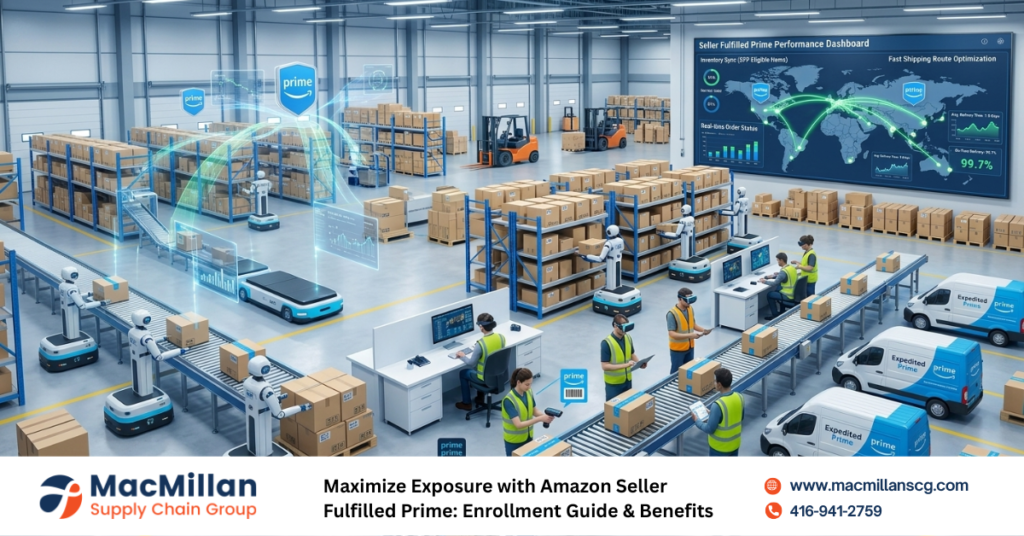
A quick summary and overview Amazon Seller Fulfilled Prime (SFP) is a coveted program that allows sellers to maintain control over their inventory while providing the perks of Prime membership, including fast two-day delivery. SFP provides significant exposure, helps increase sales, and offers customizable fulfillment solutions, features that Fulfillment by Amazon (FBA) might lack for third-party sellers. This article explores the benefits of SFP, the enrollment process, performance requirements, and common challenges. Additionally, we’ll discuss how MacMillan Supply Chain can help sellers optimize their SFP strategy, ensuring compliance with Amazon’s standards and maximizing the program’s potential for business growth. An introduction In the competitive landscape of e-commerce, securing a badge that assures premium service quality can be a game-changer. That’s precisely what the Amazon Seller Fulfilled Prime (SFP) program offers. This program allows sellers to manage logistics independently while leveraging the powerful Prime badge that signals reliability and expedited shipping to customers. By enrolling in SFP, businesses can boost their marketplace presence and sales significantly. However, understanding the nuances of the program and implementing best practices are essential to maximizing these benefits. In this comprehensive guide, we’ll delve into the intricacies of Amazon Seller Fulfilled Prime, from its core benefits to enrollment procedures and performance requirements. We’ll also explore how MacMillan Supply Chain can be your strategic partner in navigating the complexities of SFP, ensuring your e-commerce business thrives in this dynamic marketplace. What is Amazon Seller Fulfilled Prime (SFP)? Amazon Seller Fulfilled Prime is a program designed for third-party sellers who want to maintain control over their inventory and shipping processes while still offering the coveted Prime badge on their product listings. Unlike Fulfillment by Amazon (FBA), where Amazon stores and ships the products, SFP allows sellers to utilize their own warehouses or third-party logistics providers to fulfill orders. The key premise of SFP is that sellers commit to providing Prime-level service, which includes: Two-day delivery guarantee for Prime customers Compliance with Amazon’s packaging requirements Use of Amazon-approved carriers for shipping Maintaining high performance metrics By meeting these standards, sellers can display the Prime badge on their eligible products, making them more attractive to Amazon’s vast Prime customer base. This increased visibility often translates to higher sales and improved customer trust. SFP offers sellers greater flexibility in inventory management, potentially lower fulfillment costs, and the ability to offer Prime benefits on items that may not be suitable for FBA (e.g., oversized or fragile items). For businesses ready to manage these logistics, SFP presents an intriguing proposition to engage with Amazon’s immense Prime customer base while maintaining control over their operations. Key Benefits of Seller Fulfilled Prime Enrolling in Amazon Seller Fulfilled Prime offers several significant advantages for e-commerce businesses: Increased Visibility: Products with the Prime badge enjoy enhanced visibility on Amazon, often becoming the Featured Offer on product listings. This increased exposure can lead to a reported 50% or more increase in sales. Access to Prime Customers: SFP allows sellers to tap into Amazon’s large and loyal Prime membership base, who are more likely to make purchases due to the trusted Prime badge. Inventory Control: Unlike FBA, SFP gives sellers complete control over their inventory, allowing for better management and potentially reducing storage costs. Customization: Sellers can personalize their packaging and shipping experience, which can help in brand differentiation and customer satisfaction. Multichannel Fulfillment: SFP allows sellers to use their inventory for other sales channels, providing greater flexibility in their overall business strategy. Cost Efficiency: For some sellers, SFP can be more cost-effective than FBA, especially for larger items or those with slower turnover rates. Expanded Prime Eligibility: Sellers can offer Prime benefits on items that may not be suitable for FBA, such as oversized or fragile products. By leveraging these benefits, sellers can significantly enhance their Amazon presence, improve customer satisfaction, and potentially increase their profit margins. The Enrollment Process: Steps to Join SFP Joining the Amazon Seller Fulfilled Prime program involves a structured enrollment process: Eligibility Check: Ensure your seller account is in good standing and you have a Professional Seller account. Application: Express interest in the program through your Seller Central account. Prequalification: Amazon will assess your account’s performance history, including order defect rate, cancellation rate, and late shipment rate. Trial Period: If prequalified, you’ll enter a trial period, typically lasting 30 days. During this time, you must: Fulfill a minimum of 200 Prime trial orders Achieve an on-time shipment rate of 99% for Prime trial orders Use Amazon Buy Shipping Services for at least 95% of Prime trial orders Maintain a cancellation rate of less than 1% on Prime trial orders Prime Badge Activation: Upon successful completion of the trial, eligible listings will automatically display the Prime badge. Ongoing Compliance: Continue to meet Amazon’s performance requirements to maintain your SFP status. Throughout this process, it’s crucial to have robust inventory management and efficient fulfillment processes in place. Working with an experienced logistics partner like MacMillan Supply Chain can significantly smooth this transition and help ensure you meet Amazon’s stringent requirements. Performance Requirements and Challenges Maintaining Amazon Seller Fulfilled Prime status requires consistent adherence to strict performance standards: On-Time Delivery: Maintain a 99% on-time delivery rate for Prime-eligible products. Valid Tracking Rate: Provide valid tracking numbers for at least 98% of Prime orders. Cancellation Rate: Keep order cancellations below 0.5% of total Prime orders. Use of Buy Shipping Services: Utilize Amazon’s Buy Shipping Services for at least 95% of Prime orders. Delivery Speed: Offer same-day or next-day delivery for Prime orders. These requirements present several challenges: Inventory Management: Maintaining sufficient stock to avoid stockouts and cancellations. Logistics Efficiency: Ensuring consistent two-day delivery across various regions. Carrier Coordination: Working with Amazon-approved carriers to meet shipping deadlines. Peak Season Handling: Managing increased order volumes during busy periods without compromising performance. Cost Management: Balancing the costs of expedited shipping with profit margins. Customer Service: Handling pre-order inquiries while Amazon manages post-order customer service. Meeting these challenges requires a
Demand Forecasting: Mastering Supply Chain Efficiency with MacMillan

A quick summary and overview Demand forecasting is a critical component of supply chain management, enabling businesses to predict future customer demand accurately. This comprehensive guide explores the intricacies of demand forecasting, its importance in today’s dynamic market, and the role of advanced technologies like AI and ML in enhancing forecast accuracy. We’ll delve into the benefits of precise forecasting, common challenges faced by businesses, and how MacMillan Supply Chain Group’s innovative solutions can optimize your supply chain operations. Whether you’re new to demand forecasting or looking to improve your existing processes, this article provides valuable insights to drive your business forward. An introduction In today’s fast-paced business environment, staying ahead of customer demand is crucial for success. Demand forecasting has emerged as a pivotal tool in supply chain management, allowing companies to anticipate future needs and optimize their operations accordingly. As markets become increasingly volatile and consumer preferences shift rapidly, the importance of accurate forecasting cannot be overstated. At MacMillan Supply Chain Group, we understand the complexities of demand forecasting and its impact on your bottom line. This article aims to demystify the concept of demand forecasting, explore its benefits, and showcase how cutting-edge technologies are revolutionizing the field. We’ll also address common challenges and present MacMillan’s innovative solutions to help you master the art and science of demand forecasting. Join us as we dive into the world of predictive analytics and discover how it can transform your supply chain efficiency. Understanding Demand Forecasting Demand forecasting is the process of predicting future customer demand for products or services based on historical data, market trends, and other relevant factors. It forms the backbone of effective supply chain management, enabling businesses to make informed decisions about production, inventory, and distribution. At its core, demand forecasting involves analyzing past sales data, considering seasonal fluctuations, market conditions, and external factors that may influence demand. This process helps businesses: Optimize inventory levels Reduce wastage and carrying costs Improve customer satisfaction through better product availability Enhance production planning and resource allocation Make informed marketing and promotional decisions Traditional forecasting methods often relied on simple statistical techniques and human judgment. However, with the advent of big data and advanced analytics, demand forecasting has evolved into a sophisticated discipline. Modern forecasting techniques incorporate machine learning algorithms, artificial intelligence, and real-time data analysis to provide more accurate and timely predictions. These advanced methods can detect subtle patterns and correlations that might be missed by traditional approaches, leading to more precise forecasts. At MacMillan Supply Chain Group, we leverage state-of-the-art forecasting technologies to help our clients stay ahead of market trends and optimize their supply chain operations. By combining historical data with real-time market intelligence, we provide actionable insights that drive business growth and efficiency. The Role of AI and ML in Demand Forecasting Artificial Intelligence (AI) and Machine Learning (ML) have revolutionized demand forecasting, bringing unprecedented accuracy and efficiency to the process. These technologies excel at analyzing vast amounts of data, identifying complex patterns, and adapting to changing market conditions in real-time. Key benefits of AI and ML in demand forecasting include: Enhanced accuracy: AI algorithms can process and analyze diverse data sources, including social media trends, weather patterns, and economic indicators, to produce more accurate forecasts. Real-time adjustments: ML models can continuously learn from new data, allowing for dynamic forecast updates as market conditions change. Handling complexity: AI can manage multi-variable forecasts across numerous SKUs, channels, and geographies simultaneously. Anomaly detection: ML algorithms can identify and flag unusual patterns or outliers, helping businesses respond quickly to potential disruptions. Scenario planning: AI-powered systems can simulate various scenarios, enabling businesses to prepare for different possible futures. At MacMillan Supply Chain Group, we harness the power of AI and ML to deliver cutting-edge demand forecasting solutions. Our advanced algorithms analyze your historical data alongside external factors to provide highly accurate predictions. This approach allows our clients to make data-driven decisions, optimize inventory levels, and improve overall supply chain performance. By integrating AI and ML into your demand forecasting processes, you can gain a competitive edge in today’s rapidly evolving market landscape. Benefits of Accurate Demand Forecasting Accurate demand forecasting is a game-changer for businesses, offering a wide range of benefits that impact the entire supply chain. When done right, it can significantly improve operational efficiency and financial performance. Key benefits include: Optimized inventory management: Precise forecasts help maintain optimal stock levels, reducing holding costs and minimizing the risk of stockouts or overstocking. Improved cash flow: By aligning inventory with actual demand, businesses can free up working capital and invest in growth opportunities. Enhanced customer satisfaction: Accurate forecasts ensure product availability, leading to improved customer service and loyalty. Efficient resource allocation: With better visibility into future demand, companies can optimize their production schedules, workforce planning, and resource allocation. Reduced waste: Accurate forecasts help minimize excess inventory, reducing the risk of obsolescence and waste, particularly for perishable goods. Better supplier relationships: Sharing reliable forecasts with suppliers can lead to improved collaboration and more favorable terms. Informed strategic planning: Accurate demand projections provide valuable insights for long-term business planning and expansion strategies. Increased profitability: By optimizing operations and reducing costs, businesses can improve their bottom line. At MacMillan Supply Chain Group, we help our clients realize these benefits through our advanced demand forecasting solutions. Our expertise in leveraging data and technology enables businesses to make informed decisions, streamline operations, and stay ahead of market trends. Key Factors Influencing Demand Forecasting Effective demand forecasting requires consideration of various factors that can impact future customer demand. Understanding these influences is crucial for developing accurate predictions and maintaining a responsive supply chain. Key factors include: Historical sales data: Past sales trends form the foundation of most forecasting models. Seasonal variations: Many products experience cyclical demand patterns tied to seasons or holidays. Economic indicators: Factors like GDP growth, inflation rates, and consumer confidence can significantly affect demand. Competitor actions: New product launches or pricing changes by competitors can
Mastering Inventory Management: Strategies for Efficiency and Growth
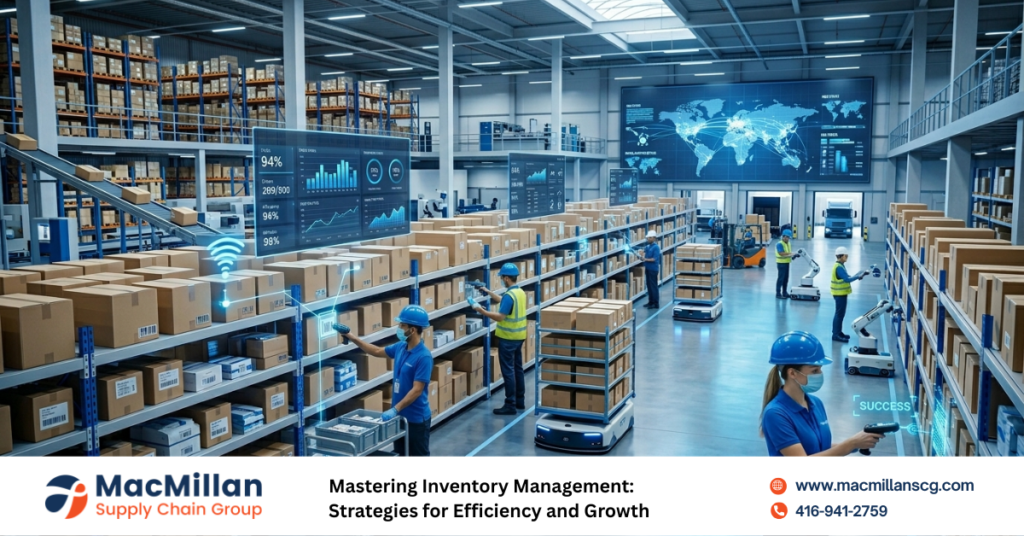
A quick summary and overview Effective inventory management is crucial for business success, impacting everything from customer satisfaction to profitability. This comprehensive guide explores key strategies and best practices for optimizing inventory control, reducing costs, and enhancing overall supply chain efficiency. We’ll delve into the challenges faced by businesses in managing their inventory and how MacMillan Supply Chain Group’s innovative solutions can address these issues. Whether you’re a small business owner or a logistics professional in a large corporation, this article will provide valuable insights to help you master inventory management and drive sustainable growth. An introduction In today’s fast-paced business environment, mastering inventory management is more critical than ever. The ability to efficiently track, control, and optimize inventory levels can mean the difference between thriving and struggling in a competitive marketplace. Effective inventory management not only ensures that you have the right products in the right quantities at the right time but also minimizes carrying costs, reduces waste, and improves cash flow. This article will explore the fundamental principles of inventory management, discuss common challenges, and introduce cutting-edge strategies to enhance your operations. We’ll also highlight how partnering with a trusted logistics expert like MacMillan Supply Chain Group can provide tailored solutions to meet your unique inventory management needs. By the end of this guide, you’ll be equipped with the knowledge and tools to transform your inventory management processes and drive business growth. The Fundamentals of Inventory Management Inventory management is the systematic approach to sourcing, storing, and selling inventory both raw materials and finished goods. At its core, effective inventory management aims to have the right products in the right quantities at the right time. This delicate balance is crucial for meeting customer demand while minimizing excess stock and associated costs. Key components of inventory management include: Demand Forecasting: Predicting future sales to inform purchasing decisions. Stock Control: Maintaining optimal inventory levels to meet demand without overstocking. Inventory Tracking: Accurately monitoring stock levels, locations, and movements. Order Management: Efficiently processing and fulfilling customer orders. Supplier Relationship Management: Collaborating with suppliers to ensure timely and accurate deliveries. Implementing these fundamentals requires a combination of strategic planning, operational execution, and often, technological support. Modern inventory management systems integrate these components, providing real-time visibility and data-driven insights to inform decision-making. Understanding these basics is crucial, but the real challenge lies in applying them effectively in your specific business context. This is where partnering with experts like MacMillan Supply Chain Group can make a significant difference, offering tailored strategies and advanced tools to optimize your inventory management processes. Common Inventory Management Challenges Even with a solid understanding of inventory management principles, businesses often face several challenges in practice. Recognizing these obstacles is the first step toward overcoming them: Inaccurate Forecasting: Predicting demand accurately is complex, especially in volatile markets or for seasonal products. Inaccurate forecasts can lead to overstocking or stockouts. Inventory Obsolescence: Rapidly changing consumer preferences or technological advancements can render inventory obsolete, resulting in financial losses. Poor Visibility: Lack of real-time inventory data across multiple locations or channels can lead to inefficient stock allocation and missed sales opportunities. Inefficient Processes: Manual inventory counts and data entry are time-consuming and prone to errors, impacting overall efficiency. Cash Flow Management: Tying up too much capital in inventory can strain cash flow, affecting other areas of the business. Supply Chain Disruptions: External factors like natural disasters, geopolitical events, or pandemics can disrupt supply chains, affecting inventory levels. Multichannel Complexity: Managing inventory across various sales channels (e-commerce, brick-and-mortar, wholesale) presents coordination challenges. Warehouse Space Optimization: Inefficient use of storage space can increase carrying costs and complicate inventory management. Addressing these challenges requires a multifaceted approach, combining strategic planning, technological solutions, and often, expert guidance. MacMillan Supply Chain Group specializes in helping businesses navigate these complexities, offering customized solutions to overcome inventory management hurdles. Advanced Strategies for Inventory Optimization To stay competitive in today’s market, businesses must go beyond basic inventory management practices and embrace advanced strategies for optimization. Here are some cutting-edge approaches: Just-in-Time (JIT) Inventory: This approach minimizes inventory holding by receiving goods only as they are needed in the production process, reducing carrying costs and improving cash flow. ABC Analysis: Categorizing inventory items based on their value and importance allows for more focused management of high-priority stock. Vendor-Managed Inventory (VMI): Shifting inventory management responsibilities to suppliers can streamline processes and reduce administrative burden. Cross-Docking: This technique involves transferring incoming shipments directly to outgoing vehicles, minimizing storage time and handling costs. Demand-Driven Material Requirements Planning (DDMRP): This method combines aspects of Material Requirements Planning (MRP) and Lean principles to improve inventory positioning and flow. Artificial Intelligence and Machine Learning: Leveraging AI for demand forecasting and inventory optimization can significantly improve accuracy and efficiency. IoT and RFID Technology: Implementing Internet of Things (IoT) devices and Radio-Frequency Identification (RFID) tags enables real-time tracking and automated data collection. Continuous Review System: This approach involves constantly monitoring inventory levels and placing orders when stock reaches a predetermined reorder point. Implementing these strategies effectively often requires specialized expertise and advanced technological solutions. MacMillan Supply Chain Group offers comprehensive support in adopting and integrating these advanced techniques into your inventory management processes. The Role of Technology in Modern Inventory Management Technology plays a pivotal role in revolutionizing inventory management practices. Advanced software solutions and hardware innovations are enabling businesses to achieve unprecedented levels of efficiency and accuracy in their inventory processes. Key technological advancements include: Warehouse Management Systems (WMS): These comprehensive software solutions optimize warehouse operations, from receiving and put-away to picking, packing, and shipping. Enterprise Resource Planning (ERP) Systems: ERP platforms integrate inventory management with other business functions, providing a holistic view of operations. Inventory Optimization Software: Specialized tools use advanced algorithms to determine optimal stock levels, reorder points, and safety stock. Barcode and RFID Scanners: These devices enable quick and accurate inventory tracking, reducing human error and increasing efficiency. Automated Storage and Retrieval Systems (AS/RS): Robotic systems that automate the process
Maximize Warehouse Efficiency with Batch Picking: The Modern Fulfillment Solution
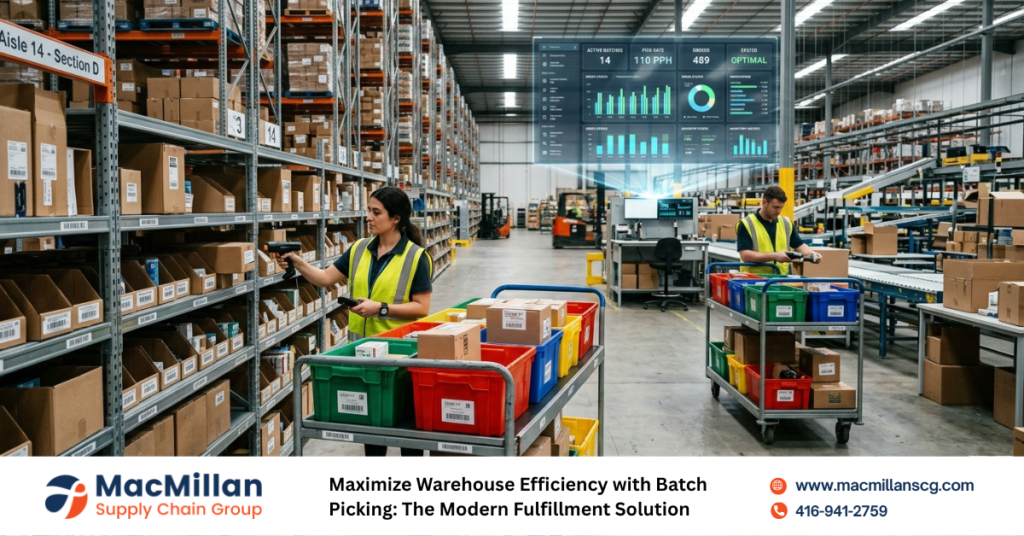
A quick summary and overview Batch Picking is a game-changing strategy in modern warehouse management, dramatically improving efficiency and accuracy in order fulfillment. This method involves picking multiple orders simultaneously, reducing travel time and increasing productivity. By leveraging advanced Order Management Systems (OMS) and Warehouse Management Systems (WMS), businesses can streamline their operations, cut costs, and enhance customer satisfaction. This article delves into the intricacies of batch picking, its benefits, implementation strategies, and how MacMillan Supply Chain can help you revolutionize your warehouse operations. Discover how this innovative approach can transform your fulfillment process and give you a competitive edge in today’s fast-paced logistics landscape. An introduction In the ever-evolving world of supply chain management, staying ahead of the curve is crucial for business success. As e-commerce continues to boom and customer expectations soar, warehouses face increasing pressure to fulfill orders quickly and accurately. Enter batch picking – a powerful solution that’s reshaping the landscape of order fulfillment. This method, when implemented correctly, can significantly boost warehouse efficiency, reduce errors, and cut operational costs. But what exactly is batch picking, and how can it benefit your business? In this comprehensive guide, we’ll explore the ins and outs of it, from its fundamental principles to advanced implementation strategies. We’ll also discuss how MacMillan Supply Chain can help you harness the full potential of this innovative approach, transforming your warehouse operations and driving your business forward. Understanding Batch Picking: The Fundamentals It is a warehouse order fulfillment method where multiple orders are grouped and picked simultaneously, rather than individually. This approach is designed to maximize efficiency by reducing the time and distance traveled by pickers within the warehouse. Here’s how it works: Order Grouping: The warehouse management system analyzes incoming orders and groups them based on common items or locations. Pick List Generation: A consolidated pick list is created for the entire batch, detailing the total quantity of each item needed. Picking Process: Pickers collect the required items for all orders in the batch at once, moving through the warehouse in an optimized path. Sorting and Packing: Once all items are picked, they’re sorted into individual orders for packing and shipping. The key to effective batch picking lies in sophisticated warehouse management systems that can intelligently group orders and optimize picking routes. This method is particularly beneficial for warehouses handling a high volume of orders with similar items or those with products stored in close proximity. By consolidating multiple orders into a single picking trip, batch picking significantly reduces the time spent traveling between locations, leading to increased productivity and reduced labor costs. It’s a strategic approach that aligns perfectly with the demands of modern e-commerce and omnichannel fulfillment. The Benefits of Implementing Batch Picking Implementing batch picking in your warehouse operations can yield numerous advantages that directly impact your bottom line and customer satisfaction. Here are the key benefits: Increased Productivity: By reducing travel time and optimizing picking routes, workers can fulfill more orders in less time, significantly boosting overall productivity. Cost Reduction: With improved efficiency comes reduced labor costs. Fewer man-hours are required to process the same number of orders, leading to substantial savings. Enhanced Accuracy: It minimizes the risk of errors by consolidating similar items and utilizing advanced picking technologies, resulting in fewer mis-picks and returns. Improved Space Utilization: This method often leads to better organization of inventory, maximizing available warehouse space. Faster Order Fulfillment: With more efficient picking processes, orders can be processed and shipped more quickly, improving customer satisfaction and potentially increasing sales. Scalability: Batch picking systems can easily adapt to handle increased order volumes during peak seasons without a proportional increase in labor. Data-Driven Insights: The technology behind batch picking provides valuable data on warehouse operations, enabling continuous improvement and informed decision-making. By leveraging these benefits, businesses can gain a competitive edge in the marketplace, offering faster, more accurate fulfillment while optimizing their operational costs. MacMillan Supply Chain specializes in helping companies implement and maximize the potential of batch picking systems. Implementing Batch Picking: Technologies and Best Practices Successful implementation of batch picking requires a combination of advanced technologies and strategic best practices. Here’s what you need to know: Technologies: Order Management System (OMS): Crucial for processing and grouping orders efficiently. Warehouse Management System (WMS): Optimizes picking routes and manages inventory. Radio Frequency (RF) Scanners: Ensure accurate item selection and real-time inventory updates. Pick-to-Light Systems: Guide pickers to correct locations, enhancing speed and accuracy. Voice-Directed Picking: Allows hands-free, eyes-free picking for increased efficiency. Best Practices: Optimize Warehouse Layout: Arrange inventory strategically to minimize travel time. Continuous Training: Regularly train staff on new technologies and processes. Use Data Analytics: Analyze picking data to identify bottlenecks and improve processes. Implement Quality Control: Establish checkpoints to ensure order accuracy. Regularly Review and Adjust: Continuously assess and refine your batch picking strategy. When implementing batch picking, it’s crucial to choose technologies that integrate seamlessly with your existing systems. MacMillan Supply Chain can help you select and implement the right combination of technologies and practices tailored to your specific warehouse needs, ensuring a smooth transition and maximum efficiency gains. Overcoming Challenges in Batch Picking While it offers numerous benefits, it’s not without its challenges. Being aware of these potential hurdles and knowing how to address them is crucial for successful implementation: Initial Investment: Implementing batch picking often requires significant upfront costs for technology and training. However, the long-term benefits typically outweigh these initial expenses. System Integration: Ensuring seamless integration between new batch-picking systems and existing warehouse technologies can be complex. Professional guidance is often necessary. Order Priority Management: Balancing the efficiency of that with the need to prioritize certain orders (e.g., rush orders) can be challenging. Inventory Accuracy: It relies heavily on accurate inventory data. Discrepancies can lead to picking errors and inefficiencies. Staff Adaptation: Employees may initially resist changes to established picking methods. Proper training and change management strategies are essential. Scalability Issues: As order volumes grow, the system must be able to scale accordingly
Mastering Black Friday Shipping: Strategies for E-commerce Success
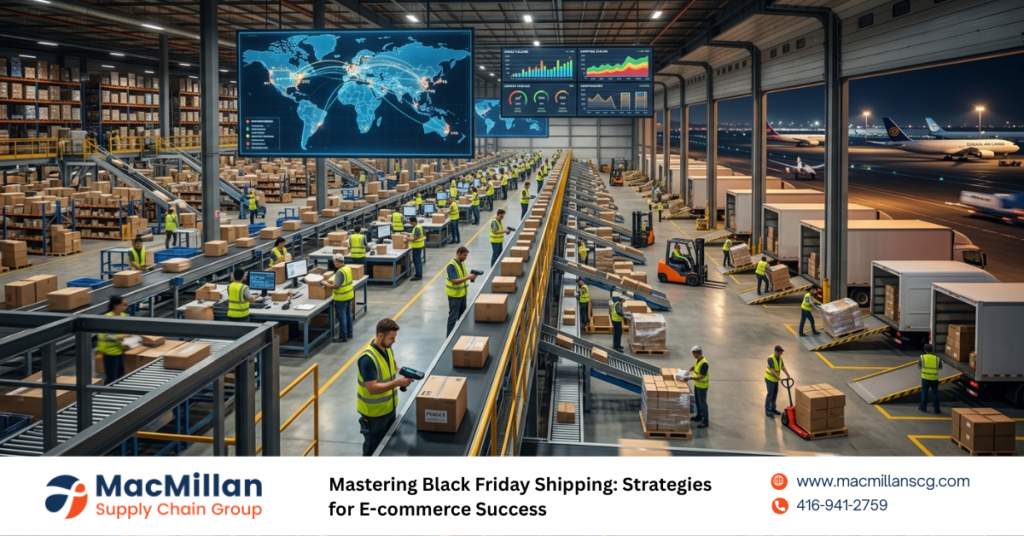
A Quick Summary and Overview Black Friday presents significant challenges for e-commerce businesses, with shipping being a critical factor in customer satisfaction and overall success. This comprehensive guide explores essential strategies for mastering Black Friday shipping, from early planning and effective communication to optimizing free shipping offers and managing international orders. We’ll delve into common challenges faced during this peak period and provide actionable solutions to ensure smooth operations. By implementing these expert tips from MacMillan Supply Chain Group, businesses can enhance their shipping processes, reduce costs, and deliver an exceptional customer experience during the busiest shopping season of the year. An Introduction As the holiday shopping season approaches, e-commerce businesses brace for the surge in orders that Black Friday brings. This annual shopping event has become a global phenomenon, putting immense pressure on supply chains and shipping operations. The ability to efficiently manage increased order volumes while maintaining customer satisfaction is crucial for success during this period. However, the challenges are numerous: from inventory management and warehouse capacity to carrier limitations and customer expectations for fast, free shipping. This guide aims to equip e-commerce businesses with the knowledge and strategies needed to navigate the complexities of Black Friday shipping. By focusing on key areas such as strategic planning, customer communication, and logistics optimization, businesses can turn potential shipping nightmares into opportunities for growth and customer loyalty. Strategic Planning for Black Friday Shipping Effective Black Friday shipping starts with meticulous planning months in advance. Begin by analyzing data from previous years to forecast demand accurately. This information is crucial for inventory management, warehouse staffing, and carrier capacity planning. Consider implementing advanced inventory management systems that can handle sudden spikes in demand and prevent stockouts. Next, assess your current shipping processes and identify potential bottlenecks. This may involve upgrading warehouse technology, optimizing pick-and-pack procedures, or reconfiguring your warehouse layout for maximum efficiency. Consider partnering with multiple carriers 3PL logistics solutions and supply chain expertise to ensure flexibility and redundancy in your shipping options. Develop contingency plans for common issues such as carrier delays, inventory shortages, or website crashes. Having these plans in place will allow you to respond quickly and minimize disruptions to your operations. Finally, consider offering early Black Friday deals to spread out the shipping load over a longer period. This can help manage peak volumes and reduce the strain on your shipping operations. By starting your promotions earlier, you can also capture sales from customers who prefer to shop ahead of the main rush. Remember, thorough planning is the foundation of successful Black Friday shipping. It allows you to anticipate challenges, allocate resources effectively, and maintain control over your operations during this critical period. Effective Customer Communication Strategies Clear and proactive communication with customers is essential for managing expectations and maintaining satisfaction during the Black Friday rush. Start by prominently displaying shipping deadlines on your website and in marketing materials. This helps customers make informed decisions about their purchases and reduces inquiries about delivery times. Implement a robust order tracking system that provides real-time updates to customers. This transparency can significantly reduce customer service inquiries and improve overall satisfaction. Consider using SMS or email notifications to keep customers informed about their order status, from processing to delivery. Be upfront about potential delays or shipping limitations. If certain items have longer processing times or if international shipping is restricted, communicate this clearly before the purchase is made. This honesty builds trust and can prevent disappointment later. Create a comprehensive FAQ section on your website addressing common Black Friday shipping questions. This resource can alleviate pressure on your customer service team and provide instant answers to customer queries. In case of unexpected delays or issues, have a communication plan in place to quickly inform affected customers. Personalized messages explaining the situation and offering solutions or compensation can turn a potentially negative experience into a positive one. Remember, effective communication not only keeps customers informed but also builds trust and loyalty, even in the face of challenges. Optimizing Free Shipping Strategies Free shipping is a powerful incentive for Black Friday shoppers, but it needs to be implemented strategically to maintain profitability. Start by analyzing your profit margins and shipping costs to determine a minimum order value that makes free shipping economically viable. This threshold should encourage customers to increase their cart value while ensuring you’re not losing money on small orders. Consider offering tiered free shipping options. For example, standard free shipping for orders over a certain amount, and expedited free shipping for higher-value purchases. This can incentivize customers to spend more while also managing your shipping costs. Implement limited-time free shipping promotions during specific hours or for certain product categories. This can create urgency and drive sales during slower periods of the Black Friday rush. For items that are too costly to ship for free, consider offering free in-store pickup or local delivery options. This can satisfy customer expectations for free shipping while reducing your overall shipping costs. Use dynamic shipping rules in your e-commerce platform to automatically apply free shipping based on order value, customer location, or product type. This ensures consistency and reduces the need for manual intervention during the busy period. Remember, while free shipping can be a powerful tool for driving sales, it’s important to balance this offer with your overall profitability goals. Carefully designed free shipping strategies can boost conversions without eroding your margins. Managing International Shipping Challenges Expanding your Black Friday sales internationally can open up new revenue streams, but it also presents unique challenges. Start by researching customs regulations and shipping restrictions for your target countries. This knowledge is crucial for avoiding delays and ensuring compliance. Partner with experienced international shipping carriers or freight forwarders who specialize in cross-border e-commerce. These experts can navigate complex customs procedures and offer reliable delivery options. Implement a clear and transparent international shipping policy on your website. Include information about potential customs fees, delivery timeframes, and any restrictions on certain products.
Trump’s Tariffs Impact on Shipping: Rates, Routes, and Supply Chain Strategies
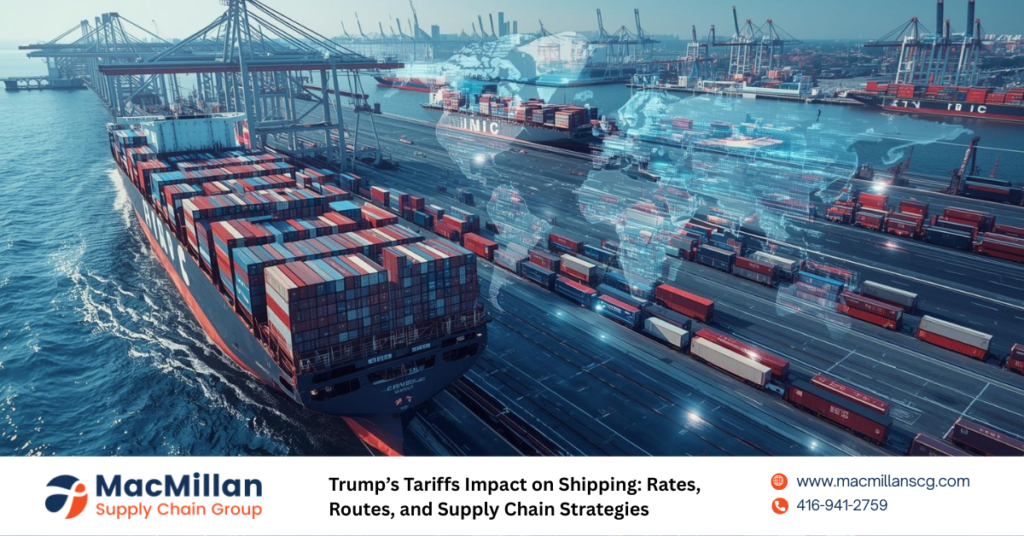
A Quick Summary and Overview The worldwide shipping industry is expected to change as a result of Donald Trump’s planned tariffs, which include a 60% tax on Chinese goods and a 10% tax on all U.S. imports. These regulations will probably result in temporary increases in shipping costs, change well known trade routes, and force companies to reconsider their supply chain plans. To effectively reduce costs and interruptions, businesses must prioritize supply chain diversification and implement flexible logistics solutions. The effects of these tariffs on the shipping sector are explored in this article, which also provides professional advice from MacMillan Supply Chain Group on how companies may effectively handle these difficulties. An Introduction The dynamics of global commerce and their effects on the shipping sector are receiving more attention as a result of Donald Trump’s possible return to the presidency. considerable hikes are proposed by his strong tariff measures, which will have a considerable impact on shipping rates and redraw established trade routes. These shifts force companies to reconsider their global supply chains in ways that go beyond simple statistics. Businesses must negotiate a terrain full of opportunities and difficulties, from changing sourcing tactics to getting ready for possible trade battles. Supply chain professionals who want to reduce risks and take advantage of new trends must comprehend these dynamics. This article explores the various ways that Trump’s tariffs have affected the shipping sector and offers insightful advice from MacMillan Supply Chain Group on how companies may adjust and prosper in this changing environment. Trump’s tariffs Increases and Frontloading Trump’s proposal to impose a sweeping 10% tariff on all U.S. imports and a staggering 60% on Chinese products has immediate consequences for international logistics. Anticipating these measures, importers are likely to frontload shipments, accelerating imports to circumvent impending duties. This rush can temporarily boost shipping volumes but will concurrently strain logistics networks, leading to congestion at ports and potential delays in customs processes. A brief spike in demand for shipping services is caused by the frontloading phenomenon, which may raise prices for all means of transportation. Significant price increases may be incurred by ocean freight in particular as businesses rush to shift goods prior to the imposition of tariffs. Port infrastructure may be overloaded by this unexpected surge in goods, leading to bottlenecks and longer lead times. This offers businesses opportunities as well as obstacles. Savvy businesses may use this time to strengthen their relationships with logistics suppliers and negotiate advantageous shipping contracts, even though rising shipping costs and possible delays are worries. Businesses can build up a buffer against future volatility by securing capacity and rates ahead of time. MacMillan Supply Chain Group advises clients to carefully analyze their import strategies, considering factors such as inventory carrying costs, storage capacity, and demand forecasts. By optimizing the balance between frontloading and just in time inventory management, companies can navigate this tumultuous period more effectively. Impact on Shipping Costs and Trade Routes The increased tariffs echo through shipping rates, creating upward pressure as logistics providers recalibrate their costs. This ripple effect extends beyond direct China U.S. routes, influencing global shipping dynamics. Consequently, importers may explore alternate supply chains or source from locales less burdened by Trump’s tariffs. These changes affect global commerce routes in addition to cost structures. In order to perhaps lessen the effects of Trump’s tariffs, we might see an increase in transshipment activities, where commodities are routed through intermediary nations. This might increase the need for services in areas that were previously underutilized, changing the preferences of shipping lanes and port usage trends. For example, when businesses diversify away from China, traffic to Southeast Asian nations may increase. Similarly, nearshoring trends may pick up speed, increasing transportation of commodities headed for the United States to places like Mexico and Central America. Both importers and shipping businesses have opportunities and challenges as a result of these changes. Volumes on some routes might decline, but on others, they might rise at an unparalleled rate. It takes a sophisticated understanding of both new business opportunities and logistics understanding to navigate this complex environment. MacMillan Supply Chain Group leverages its global network and market intelligence to help clients identify optimal routing strategies, balancing cost considerations with reliability and speed. By staying ahead of these shifting trade patterns, businesses can position themselves advantageously in the evolving global trade landscape. Supply Chain Disruptions and Diversification The anticipated Trump’s tariffs underscore the importance of diversifying supply chains. Relying heavily on any single region, particularly China, could expose businesses to undue risk, making strategic diversification paramount. By spreading sourcing across multiple countries, companies can buffer against localized disruptions and tariff-induced price hikes. This approach not only shields against immediate impacts but also fosters resilience, allowing businesses to adapt swiftly to future regulatory or market changes. However, diversification is not without challenges. It requires careful evaluation of new suppliers, understanding different regulatory environments, and potentially navigating unfamiliar logistics landscapes. Key considerations for effective supply chain diversification include: Identifying alternative sourcing locations with stable political environments and robust infrastructure Evaluating the entire cost of landing, taking into account possible customs, transportation, and compliance costs Assessing the scalability, quality standards, and capabilities of suppliers Taking into account the effects on lead times and inventory control techniques By offering thorough market assessments, supplier vetting services, and efficient logistics solutions catered to various sourcing strategies, MacMillan Supply Chain Group helps clients navigate this challenging process. Businesses may execute successful diversification strategies that strike a balance between risk reduction and operational effectiveness thanks to our worldwide experience. Supply chain professionals must diligently analyze global trends, prioritize flexibility, and continuously optimize logistics networks to stay competitive in this dynamic environment. Infrastructure Investments Although Trump’s administration recommends significant infrastructure spending, with a focus on improving ports, highways, and railroads, the real advantages are yet uncertain. By lowering transit times and expenses, improved logistics infrastructure might simplify supply chains and possibly offset certain tariff impacts. The scope and schedule of these projects are unclear,