
Unlocking Efficiency: The Role of Logistics Data Standards and Integration
Introduction The logistics industry is synonymous with constant movement and…

Introduction The logistics industry is synonymous with constant movement and…
A Quick Summary and Overview Energy chokepoints like the Strait…
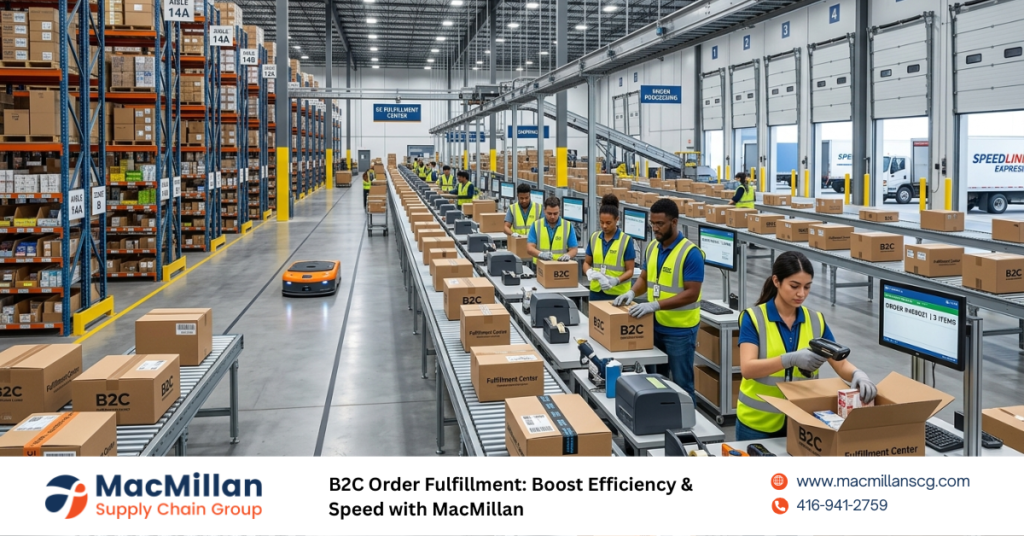
Quick Summary and Overview B2C order fulfillment is a crucial…
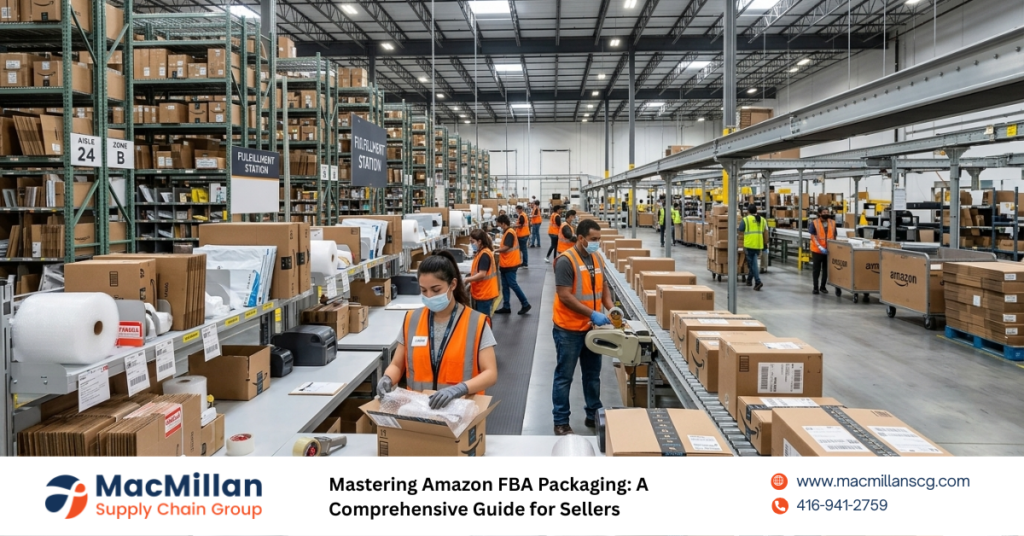
A quick summary and overview Amazon FBA (Fulfillment by Amazon)…
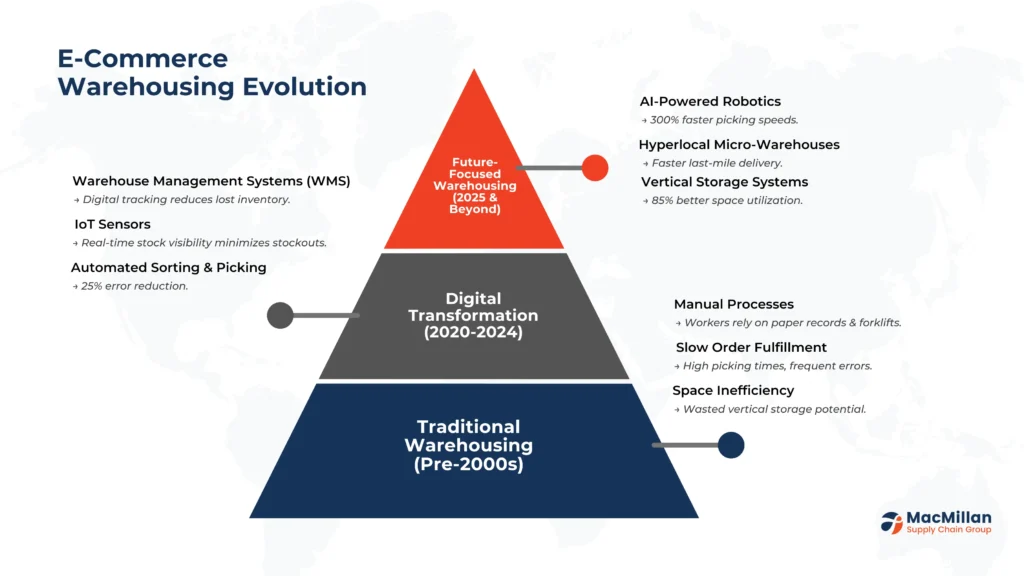
The e-commerce warehousing landscape is rapidly evolving with technological advancements reshaping how businesses handle inventory and fulfill orders. In 2025, we’ll see widespread adoption of AI automation, hyperlocal fulfillment centers, and IoT powered smart warehousing solutions. Sustainability initiatives, vertical storage systems, and blockchain technology are becoming essential components of modern warehousing operations. Companies embracing these trends will gain competitive advantages through improved efficiency, reduced costs, and enhanced customer experiences in an increasingly demanding marketplace.
The e-commerce industry continues to experience explosive growth, with warehousing operations evolving at an unprecedented pace to meet rising consumer expectations. As we look toward 2025, businesses must adapt to new technologies and strategies to remain competitive in this dynamic landscape. The e-commerce warehousing trends in 2025 will focus on automation, sustainability, and customer centric solutions that streamline operations while reducing costs.
For Canadian businesses especially, staying ahead of these trends is crucial as the country’s e-commerce market expands and cross-border trade increases. From AI-powered systems to hyperlocal delivery models, these innovations are reshaping how products move from warehouse shelves to customers’ doorsteps. Let’s explore the top 10 trends that will define e-commerce warehousing in 2025 and how they can transform your supply chain operations.
The biggest change in warehouse automation strategy for 2025 is the combination of automation and artificial intelligence. These technologies are now necessary for competitive warehousing operations and are no longer optional.
Advanced AI systems now handle complex decision-making processes that previously required human intervention. Predictive analytics algorithms forecast demand patterns with remarkable accuracy, allowing businesses to optimize inventory levels and reduce carrying costs. Meanwhile, machine learning systems continuously improve by analyzing operational data, identifying inefficiencies, and suggesting process improvements.
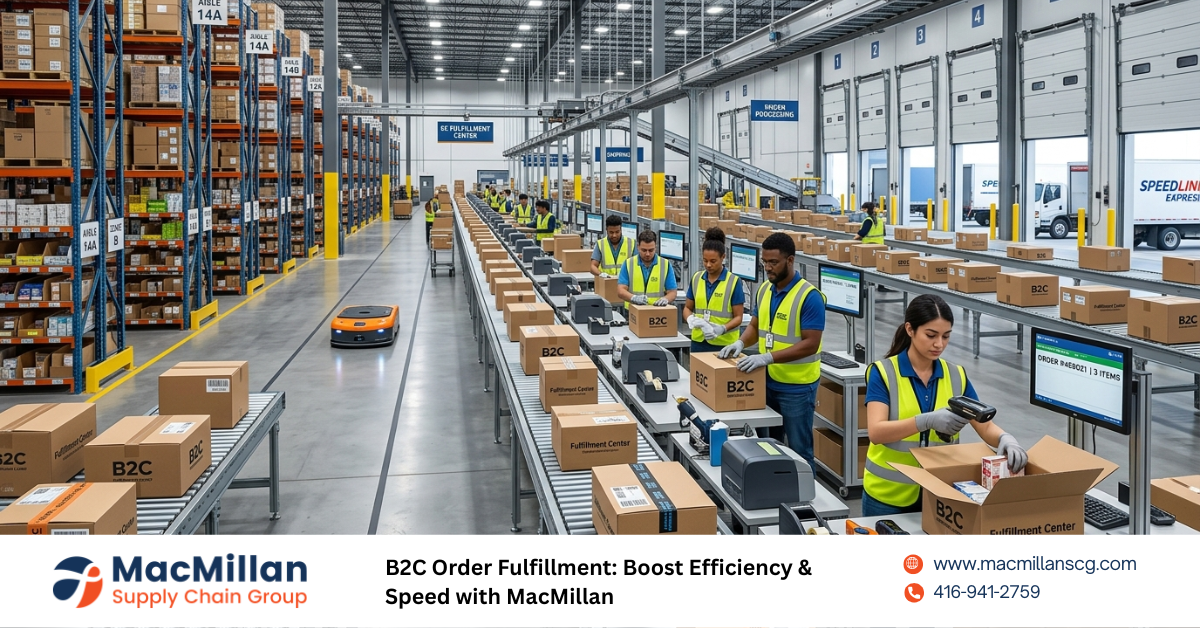
In Canadian fulfillment centers, we’re seeing the deployment of autonomous mobile robots (AMRs) that navigate warehouse floors independently, retrieving items and transporting them to packing stations. These robots work alongside human employees, handling repetitive tasks while staff focus on more complex operations. The result is a dramatic increase in picking speeds some facilities report efficiency gains of up to 300% compared to traditional methods.
Voice picking technology is another AI application gaining traction, allowing warehouse workers to receive instructions through headsets while keeping their hands free for picking and packing. This technology reduces error rates by up to 25% while increasing productivity by 30%. For businesses looking to implement smart warehousing in Canada, these AI-driven solutions offer substantial competitive advantages through improved speed, accuracy, and cost efficiency.
A significant change in distribution strategy is represented by the emergence of hyperlocal fulfillment. E-commerce companies are setting up networks of smaller fulfillment facilities in cities nearer to their clients rather than depending completely on large, centralized warehouses.
These micro-warehouses enable same day or even same hour delivery options that consumers increasingly expect. By positioning inventory closer to population centers, companies can drastically reduce shipping distances and delivery times. This approach is particularly effective in Canada’s dispersed urban markets, where traditional centralized distribution models often struggle with last-mile efficiency.
Hyperlocal fulfillment provides value economically. Even though running several smaller locations might seem more costly than running one huge warehouse, the savings on delivery times and transportation expenses usually offset additional costs. Businesses that use this approach report 70% faster delivery times and up to 30% lower delivery expenses.
Technology plays a crucial role in making hyperlocal fulfillment viable. Advanced inventory management systems ensure the right products are stocked at each location based on local demand patterns. Meanwhile, sophisticated routing algorithms optimize delivery routes from these urban micro centers. For businesses serving Canadian markets, establishing strategic hyperlocal facilities in cities like Toronto, Vancouver, and Montreal can dramatically improve delivery performance while reducing the carbon footprint associated with long-distance shipping.
Smart warehousing in Canada is revolutionizing inventory management through Internet of Things (IoT) technology. These connected systems create warehouses that essentially manage themselves, with minimal human intervention required for routine operations.
IoT sensors embedded throughout the warehouse continuously monitor inventory levels, equipment status, and environmental conditions. RFID tags and readers automatically track item movements, eliminating manual scanning and reducing human error. These systems provide real-time visibility into warehouse operations, allowing managers to identify bottlenecks and optimize workflows instantly.
Another essential use of IoT in warehouses is environmental monitoring. Sensors control temperature, humidity, and other parameters that are important for sensitive goods including electronics, food, and medications. The technology automatically notifies workers or modifies environmental controls when circumstances deviate from permissible parameters.
The data collected by these IoT systems feeds into analytics platforms that generate actionable insights. For example, pattern recognition algorithms can identify which products are frequently purchased together, allowing for strategic inventory placement that speeds up order picking. Canadian businesses implementing IoT-based warehouse management systems report inventory accuracy improvements of up to 95% and labor productivity gains of 25-30%. This technology not only improves operational efficiency but also enhances customer satisfaction through faster, more accurate order fulfillment.
Vertical storage solutions are becoming crucial for optimizing warehouse space usage as real estate prices continue to rise, especially in Canadian urban regions. By using these solutions, companies can significantly increase storage capacity without expanding the facility’s footprint by growing upward rather than outward.
Automated Storage and Retrieval Systems (AS/RS) represent the cutting edge of vertical storage technology. These computer-controlled systems automatically place and retrieve loads from defined storage locations, utilizing the full height of the warehouse often up to 100 feet tall. For businesses operating in the Ontario warehousing market, where industrial real estate is at a premium, AS/RS can increase storage density by up to 85% compared to traditional racking systems.
Another effective option, especially for smaller goods, is to use vertical lift modules (VLMs). With an extractor in the middle that delivers objects to the operator at an appropriate height, these enclosed systems are made up of trays that are kept on either side of the device. As a result, employees no longer have to use forklifts or climb ladders to access high shelves.
The advantages go beyond just saving space. By delivering goods straight to employees, vertical storage systems shorten picking times, increasing worker productivity and lowering workplace accidents. By restricting physical access to stored products and monitoring all system movements, they also improve inventory security and accuracy. For e-commerce businesses facing seasonal demand fluctuations, these systems provide the flexibility to handle increased volume without expanding physical facilities.
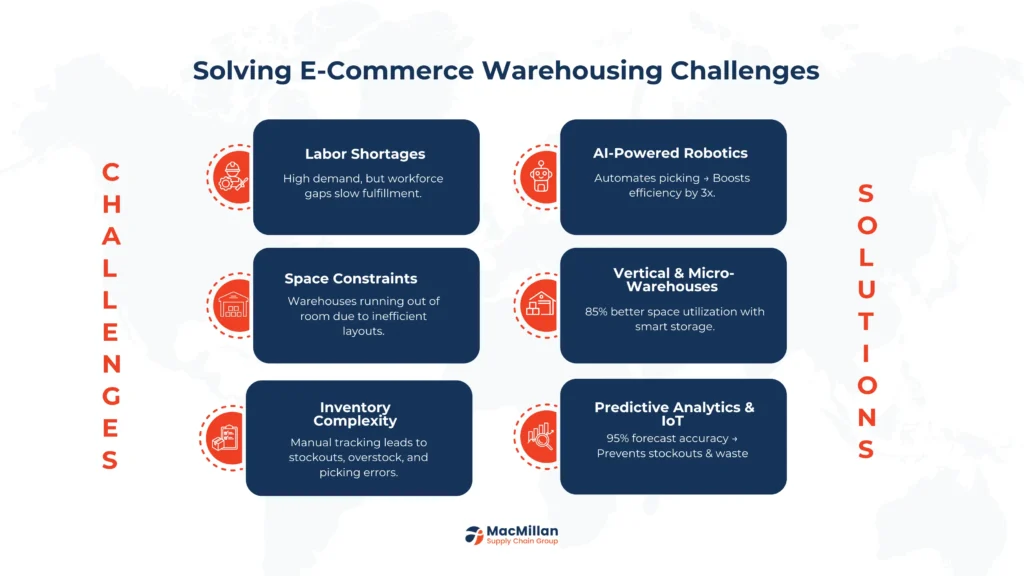
E-commerce warehousing faces several significant challenges that can hinder operational efficiency and customer satisfaction. First, inventory management complexity continues to grow as product assortments expand and customer expectations for availability increase. Many businesses struggle with stockouts or overstocking, both of which damage profitability.
At MacMillan Supply Chain Group, we’ve created all-inclusive solutions employing cutting-edge technology and calculated methods to tackle these e-commerce warehousing issues.
MacMillan Supply Chain Group turns warehouse difficulties into competitive advantages for our clients by fusing these creative ideas with our decades of logistical experience.
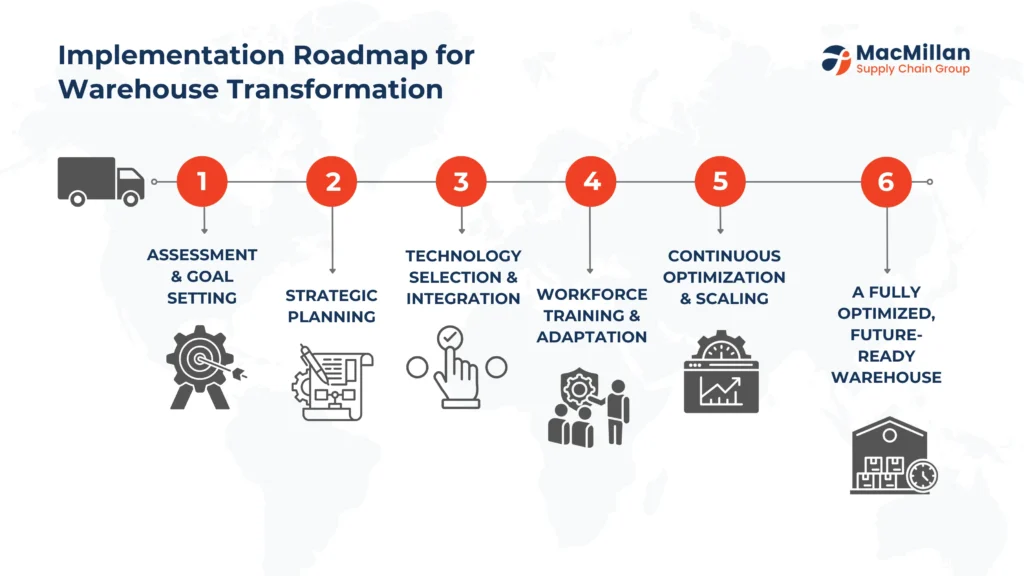
Implementing these advanced warehousing solutions requires a strategic approach tailored to your specific business needs. Start by conducting a comprehensive assessment of your current operations to identify key pain points and opportunities for improvement. This analysis should examine order volumes, inventory turnover rates, fulfillment accuracy, and current technology infrastructure.
Next, develop a phased implementation plan that prioritizes solutions offering the highest impact with the least disruption. Rather than attempting a complete warehouse transformation overnight, consider starting with targeted improvements such as implementing real-time delivery tracking or optimizing your current layout for better efficiency.
When selecting technology partners, look beyond the initial purchase price to consider total cost of ownership, scalability, and integration capabilities. The most effective solutions will grow with your business and connect seamlessly with your existing systems. Prioritize vendors with proven experience in the e-commerce sector and specifically in Canadian operations if you’re serving this market.
Staff training is critical to successful implementation. Develop comprehensive training programs that help your team understand not just how to use new technologies but why they’re beneficial. Employee buy-in significantly increases adoption rates and maximizes return on investment.
Use key performance indicators that are in line with your company’s objectives to regularly measure results. Track indicators like as inventory turns, labor productivity, order accuracy, and fulfillment speed to measure progress and pinpoint areas that require more optimization.
For last-mile delivery optimization, consider partnering with specialized providers who understand local market conditions. This approach often delivers better results than attempting to build an in-house delivery network, particularly for businesses expanding into new regions.
However, implementing these solutions independently can be challenging and resource intensive. That’s why partnering with MacMillan Supply Chain Group offers a more efficient path to warehousing excellence. Our team of experts can guide you through every step of the transformation process, from initial assessment to ongoing optimization.