
Top 3PL & Logistics Companies in Canada 2026
The top 3PL and logistics companies in Canada in 2026 include providers ranging from specialized Canadian fulfillment partners to large national and global supply chain networks. MacMillan Supply Chain Group, Metro Supply Chain, Canada Cartage, DHL Supply Chain, SHIPHYPE, AMZ Prep, GoBolt and Shipfusion each serve different logistics needs, from FMCG and retail distribution to ecommerce fulfillment and enterprise contract logistics. There is no single “best” 3PL for every Canadian business. A company shipping thousands of retail cases has very different requirements from a Shopify brand processing individual consumer orders. The right provider depends on inventory profile, sales channels, geographic coverage, technology, compliance requirements and the amount of operational flexibility the business needs. This comparison focuses on where each provider may fit rather than treating company size or brand recognition as an automatic measure of service quality. What Does a 3PL Company Do? A third-party logistics provider manages some or all of a company’s logistics operations. Services can include receiving, storage, inventory management, order fulfillment, transportation, returns and value-added work such as kitting or relabelling. Some 3PLs specialize primarily in ecommerce fulfillment. Others manage complex retail distribution, dedicated warehouses, freight transportation and national supply chain programs. Businesses often outsource logistics when internal fulfillment becomes difficult to scale, warehouse costs become too high or customers require faster and more reliable delivery. For companies evaluating outsourcing for the first time, this guide to outsourcing fulfillment to a 3PL explains the operational benefits and questions to consider before making the transition. Top 3PL and Logistics Companies in Canada in 2026 Company Best Fit Key Capabilities MacMillan Supply Chain Group FMCG, retail and omnichannel brands Warehousing, fulfillment, transportation, compliance and value-added services Metro Supply Chain Large national and enterprise operations Warehousing, fulfillment, automation, transportation and last mile Canada Cartage Transportation-led national distribution Dedicated fleet, warehousing, fulfillment and freight DHL Supply Chain Large enterprises and complex contract logistics Dedicated/shared warehousing, fulfillment, automation and supply chain management SHIPHYPE Ecommerce and DTC brands Pick and pack, ecommerce fulfillment and warehousing AMZ Prep Amazon and marketplace sellers FBA preparation, ecommerce fulfillment and marketplace logistics GoBolt Ecommerce brands focused on delivery experience Fulfillment and last-mile logistics Shipfusion Growing ecommerce businesses Warehousing, pick and pack and ecommerce fulfillment 1. MacMillan Supply Chain Group Best suited for: FMCG, consumer goods, retail and omnichannel brands requiring flexible Canadian logistics support. MacMillan Supply Chain Group is a Canadian 3PL providing warehousing, fulfillment, transportation and value-added logistics services. Its operation is particularly relevant to fast-moving consumer goods businesses that need to serve retail, wholesale and ecommerce channels from connected inventory. MacMillan reports more than 300,000 square feet of racked and bulk warehouse space and provides shared and dedicated warehousing options. Its services include inventory management, retail compliance preparation, ecommerce order fulfillment, transportation coordination, container destuffing, kitting and packaging. For FMCG brands, the ability to combine storage with retail preparation can be important. A shipment for a major retailer may require different labels, pallet configurations and documentation from a direct-to-consumer order. Businesses needing these connected services can explore MacMillan’s warehousing and distribution solutions and ecommerce order fulfillment services. MacMillan may be particularly relevant for brands that want a Canadian partner capable of adapting workflows around retailer rules, product categories and promotional programs rather than relying only on standardized fulfillment processes. 2. Metro Supply Chain Best suited for: Enterprise brands requiring large-scale national distribution and sophisticated automation. Metro Supply Chain is one of Canada’s largest supply chain companies. The company reports approximately 22.5 million square feet of warehousing across more than 190 sites spanning multiple countries. Its Canadian operations include facilities serving major markets such as Toronto, Montreal, Vancouver, Calgary, Edmonton and Winnipeg. Services include warehousing, ecommerce fulfillment, B2B distribution, transportation, reverse logistics and value-added operations. Metro also places a strong emphasis on automation, robotics and business intelligence. This scale makes Metro a logical company to evaluate for organizations with complex distribution networks, large inventory volumes or national requirements. Smaller brands should still determine whether the operating model, commercial structure and account requirements are appropriate for their size. 3. Canada Cartage Best suited for: Businesses requiring warehousing alongside a strong transportation network. Canada Cartage has a long-established presence in Canadian transportation and logistics. Its network includes warehouse and fulfillment facilities in markets such as Brampton, Mississauga, Calgary, Edmonton, Vancouver, Winnipeg, Regina and Saskatoon. The company can be attractive to businesses where transportation is a major part of the logistics equation. Rather than treating warehousing and freight as completely separate activities, an integrated provider can coordinate inventory movement with outbound transportation. This can be particularly valuable for manufacturers, retailers and distributors shipping palletized freight or replenishing customers across multiple Canadian regions. When comparing a transportation-focused 3PL, businesses should examine shipment visibility, carrier options, delivery performance and how warehouse orders move into the transportation network. 4. DHL Supply Chain Best suited for: Large enterprises requiring sophisticated contract logistics and global capabilities. DHL Supply Chain operates at a different scale from many regional Canadian fulfillment businesses. Its warehousing solutions include dedicated and shared operations, inventory management, ecommerce fulfillment, cross-docking, packaging and returns management. DHL also invests heavily in automation and digital warehouse technology. Its enterprise model can suit companies operating complex supply chains across several countries or requiring highly structured contract logistics. Large manufacturers, healthcare companies, retailers and multinational consumer brands may benefit from this depth of infrastructure. However, a global enterprise 3PL is not automatically the best choice for a smaller Canadian company. The level of customization, minimum volumes, implementation complexity and account structure should all be evaluated before making a decision. 5. SHIPHYPE Fulfillment Best suited for: Ecommerce, direct-to-consumer and growing online brands. SHIPHYPE is a fulfillment-focused 3PL serving ecommerce businesses in Canada and the United States. It appears prominently in several current Canadian 3PL directories and specializes in warehousing, pick-and-pack fulfillment and shipping for online brands. The company may appeal to Shopify and DTC businesses looking for a fulfillment partner built around parcel orders rather than traditional pallet distribution. When considering an ecommerce-focused provider, brands
Unveiling Fulfillment Services: Myths, Costs, and Boosting Revenue
In today’s dynamic e-commerce environment, businesses continually seek methods to streamline operations, enhance customer satisfaction, and foster growth. One increasingly popular strategy is outsourcing fulfillment services. By collaborating with specialized 3PL logistics providers, companies can delegate the complexities of order processing, 3PL warehousing, and shipping. Fulfillment services cover a wide range of processes that ensure products are delivered to customers efficiently and accurately. From receiving inventory to picking, packing, and shipping orders, these services are pivotal to the success of online businesses. Are you considering outsourcing your fulfillment services? Explore the benefits, challenges, and considerations with MacMillan’s comprehensive guide on what is outsourced fulfillment. This article provides an in-depth look at how outsourcing can streamline your operations and enhance customer satisfaction. Understanding e-Commerce Fulfillment E-Commerce fulfillment is a specialized branch of fulfillment services tailored for online businesses. It involves managing inventory, processing orders, and ensuring timely delivery to customers. With the rapid growth of e-Commerce, efficient fulfillment has become more critical than ever. Common Misconceptions about eCommerce Fulfillment Several misconceptions surround e-Commerce fulfillment services. Let’s debunk some of the most common ones: Myth: e-Commerce fulfillment is only for large businesses. Contrary to popular belief, e-Commerce fulfillment services are not exclusive to large businesses. Small and medium-sized enterprises can also benefit significantly from outsourcing these services. Fulfillment providers offer flexible solutions that scale with your business needs. Myth: Outsourcing fulfillment services is too expensive. While outsourcing fulfillment services does involve costs, it can often be more cost-effective than managing everything in-house. Fulfillment providers have established networks, efficient processes, and volume discounts that can help reduce overall expenses. Myth: Outsourcing fulfillment means losing control over the customer experience. Many businesses fear that outsourcing fulfillment will lead to a loss of control over the customer experience. However, reputable fulfillment providers understand the importance of maintaining a positive customer experience and work closely with 3pl warehousing to ensure brand consistency and customer satisfaction. Key Components of Fulfillment Services Fulfillment services encompass various critical components that work together to ensure smooth order processing and delivery: Receiving Fulfillment providers meticulously inspect and verify the quantity and quality of received goods to ensure accuracy and readiness for storage. Warehousing The inventory is stored in MacMillan’s warehouses equipped with advanced tracking systems and integrated WMS for real-time visibility. Fulfillment providers ensure the proper storage, organization, and security of products, optimizing space and maintaining inventory accuracy. Picking and Packing When an order is placed, fulfillment providers such as MacMillan, pick the required items from the inventory, carefully pack them, and prepare them for shipping. Efficient picking and packing processes minimize errors rates. Shipping Fulfillment providers partner with various shipping carriers to facilitate the delivery of packages to customers. They manage all aspects of shipping, including package labeling, tracking, and handling returns if necessary. The pick and pack process are a cornerstone of efficient fulfillment services, presenting unique challenges and opportunities. What types of Fulfillment services companies offer? Fulfillment services come in various forms to meet different business needs: In-house Fulfillment Some businesses choose to handle fulfillment operations internally. While this approach allows for greater control, it can be resource-intensive and may limit scalability. Third-party Logistics (3PL) 3PL providers like MacMillan specialize in managing all aspects of fulfillment for businesses. They offer expertise, infrastructure, and scalability, making them an attractive option for businesses of all sizes looking to optimize their operations. Crowdsourced Fulfillment This emerging model leverages a network of independent contractors who handle various aspects of fulfillment, such as picking and packing, in a decentralized manner. It offers agility and cost-effectiveness, making it an appealing choice for businesses seeking flexible solutions. Costs Associated with Fulfillment When considering fulfillment services, it’s essential to understand the costs involved: Warehousing and Storage Fees Fulfillment providers charge fees for storing your inventory in their warehouses. These fees vary based on factors such as the amount of space required and the duration of storage. Pick and Pack Fees Fees for picking and packing each order are typically based on the complexity of the order and the number of items included. These fees cover the labor and materials involved in preparing orders for shipment. Shipping Fees Shipping fees cover the cost of delivering packages to customers. Fulfillment providers often negotiate discounted rates with shipping carriers, which can result in significant savings for your business. Additional Services Some fulfillment providers offer additional services like returns management, kitting, and customization. While these services may incur extra costs, they can add significant value to your business. Which Industries are benefiting from 3PL? Businesses across various industries enjoy the advantages of outsourcing fulfillment services: Online Retail: eCommerce businesses rely heavily on efficient fulfillment to provide a seamless shopping experience for their customers. Subscription Boxes: Subscription box services, which deliver curated products regularly to subscribers, require specialized fulfillment to handle the unique needs of this business model. Health and Beauty: Fulfillment providers with expertise in handling delicate or perishable products are especially beneficial for the health and beauty industry. Electronics: The electronics industry often faces rapid product turnover and complex supply chains, making it ideal for outsourcing fulfillment. Choosing the Right eCommerce Fulfillment Provider Several factors should be considered when selecting an eCommerce fulfillment provider: Experience and Expertise Look for a fulfillment provider with experience in your industry and a proven track record. They should have the expertise to handle your specific requirements efficiently. Technology and Integration Ensure that the fulfillment provider’s systems can seamlessly integrate with your eCommerce platform and other systems for inventory management, order processing, and tracking. Scalability Choose a provider that can accommodate your business’s growth and seasonal fluctuations in demand. The provider should have the resources to scale their operations accordingly. Cost and Pricing Structure Evaluate the provider’s pricing structure, including fees for warehousing, picking and packing, shipping, and any additional services. Consider the overall value they offer for the cost. Customer Support opt for a fulfillment provider that offers excellent customer support, ensuring smooth communication and issue resolution throughout the fulfillment process. Key Takeaways By partnering with specialized third-party logistics (3PL) providers, companies can offload the
3PL Warehousing Solutions for Canadian Companies
Understanding 3PL Services for Canadian Companies Third-party logistics (3PL) providers offer essential logistics services like warehousing, distribution, transportation, and freight forwarding. By outsourcing these tasks, businesses can concentrate on their core activities such as product development and sales. 3PL companies, like Acumen Logistics as a Canadian 3pl, has strategically located warehouses and distribution center to ensure efficient transportation and reduce delivery times. They provide comprehensive solutions, including logistics consulting, trucking services, and access to third-party warehouse space. 3PLs play a crucial role in helping businesses streamline their operations and improve efficiency. Let’s explore how 3pl warehousing in Canada help your business What type of companies need 3PL warehousing services? 3PL providers play a crucial role in the Canadian 3pl supply chain industry, offering specialized services to optimize logistics operations for various sectors. E-commerce Companies: E-commerce businesses rely on 3PL warehousing, order fulfillment, and last-mile delivery, allowing them to focus on core activities like sales and marketing. Manufacturers: Manufacturers use 3PL providers to streamline transportation and 3pl warehousing, ensuring efficient product distribution to multiple global locations. Healthcare Companies: Healthcare companies need 3PL services for the careful storage and transportation of sensitive items like pharmaceuticals and medical equipment, ensuring safety and compliance. Food and Beverage Companies: Food and beverage companies depend on 3PL providers for cold chain logistics, maintaining the quality and freshness of perishable products and reducing waste. In essence, 3PL services are indispensable for businesses aiming to enhance their logistics efficiency and focus on their primary business functions. Do 3PL’s work with Canadian companies? 3PL warehousing providers collaborate with Canadian companies to optimize their supply chain operations. These providers offer a range of services, including transportation management, 3pl warehousing, distribution, freight forwarding, and customs brokerage. By partnering with a 3PL, like MacMillan, Canadian companies can leverage advanced technology, benefit from economies of scale, and tap into expertise in managing complex logistics. This partnership can enhance efficiency, reduce costs, and improve customer service. Determining if a 3PL is Right for Your Business Outsourcing your supply chain management to a Canadian 3PL can be highly beneficial, but it’s essential to ensure the provider aligns with your needs. Here are key factors to consider: Service OfferingsEnsure the 3PL provider offers the specific services you need, such as transportation, warehousing, or comprehensive supply chain management solutions. Industry ExperienceChoose a provider with relevant experience in your industry. Specialized knowledge can lead to better understanding of your logistics challenges and more effective, tailored solutions. Technology and IntegrationAdvanced technology is crucial for efficiency and accuracy. Look for providers offering real-time tracking, WMS Integration, advanced inventory management, and automated order processing. ReliabilityAssess the provider’s reliability and consistency. Check references, online reviews, and industry rankings to evaluate their track record and ensure they can meet your service requirements. Selecting the right 3PL provider can significantly enhance your supply chain management, leading to improved operational efficiency and customer satisfaction. Why Canadian Companies Choose MacMillan for 3PL warehousing? For Canadian companies seeking a reliable fulfillment partner, MacMillan stands out with a range of benefits real-time services. Here’s why MacMillan is an excellent choice: 3PL warehousing ExpertiseWe specializes in warehousing and fulfillment as a top tier Canadian 3PL provider, catering to the specific needs of retailers. Their experienced team works with companies of all sizes to ensure seamless operations. Faster ShippingWith strategically located warehouses across Canada, MacMillan ensures quick and efficient order fulfillment. This results in faster delivery times, enhancing customer satisfaction with zero error rate and real-time tracking. Cost-Effective SolutionsMacMillan offers cost-saving options such as discounted shipping rates, volume discounts, and customized pricing packages with no hidden fees and transparency. Partnering with us for your 3PL warehousing needs helps reduce costs. Scalable ServicesAs your business expands, MacMillan scales its services to match your growing needs. Whether you handle a few orders daily or thousands monthly, we adapt to support your business growth without compromising on efficiency. Key Take Aways In conclusion, third-party logistics (3PL) providers like MacMillan SCG are essential for Canadian companies looking to enhance their logistics operations. By offering comprehensive services such as warehousing, distribution, transportation, and freight forwarding, 3PLs enable businesses to focus on their core activities, improve efficiency, and reduce costs. Whether it’s e-commerce, manufacturing, healthcare, or food and beverage, 3PL warehousing services play a crucial role in streamlining supply chains and ensuring timely deliveries. Choosing the right 3PL partner, like MacMillan, can significantly elevate a company’s logistics performance, driving growth and customer satisfaction.
White-Label 3PL and Fulfillment Services- A Complete Guide
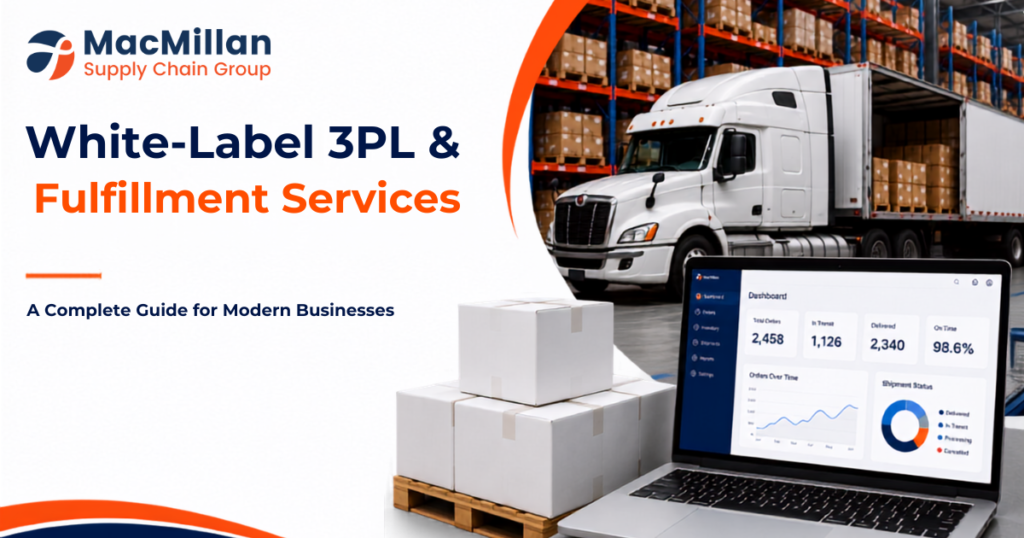
In today’s rapidly evolving and competitive business environment, companies are increasingly looking for ways to optimize their operations and enhance supply chain management. One solution that has gained notable popularity is White Label 3PL. In this blog, lets discover how white Label works and how it can benefit warehousing dynamics. What are White-Label Fulfillment Services-MacMillan? MacMillan simplifies fulfillment with its white-label services by integrating seamlessly with your online stores and sales channels, including B2B eCommerce. By connecting your platforms to our cloud-based fulfillment solution, you can select from the Warehouse Canada/ fulfillment locations throughout GTA and 80% of the western region to store your inventory. Orders are then processed and shipped from the nearest fulfillment center automatically. With the Developer API, your business can leverage our fulfillment services while maintaining a consistent brand experience. Orders will appear as if they are coming directly from your business, creating a streamlined and automated logistics solution. MacMillan handles all logistical aspects, allowing you to concentrate on enhancing the customer experience. Simply submit a Warehouse Receiving Order (WRO), send your inventory to MacMillan fulfillment centers, and we manage the rest. This service is particularly advantageous for online stores working with multiple product vendors. For instance, tech startup Postal uses MacMillan API-driven platform to optimize corporate gifting for its clients, showcasing the flexibility and efficiency of MacMillan solutions. How White Label Works: A Comprehensive Overview Understanding how White Label 3PL operates involves examining its typical workflow: Integration and Onboarding: The process begins with integrating systems and processes between the company and the 3PL provider. This includes setting up data exchange protocols, syncing inventory management systems, and establishing clear communication channels. Warehousing and Inventory Management: The 3PL provider takes on the responsibility of receiving, storing, and managing inventory within their facilities. They employ strategic storage solutions, robust inventory tracking, and rigorous quality control to ensure accuracy and minimize stock outs. Order Fulfillment: When a customer places an order, the 3PL provider manages the entire fulfillment process. This includes receiving order details, picking and packing items, and shipping them using their established carrier networks. They ensure precise order handling, efficient packaging, and prompt delivery. Technology and Reporting: Utilizing advanced logistics software, White Label 3PL providers track and manage shipments, offer real-time visibility into inventory levels, generate performance reports, and provide analytics to support data-driven decision-making. Customer Support: The 3PL provider also handles customer service functions such as inquiries, returns, and exchanges. They deliver responsive and professional support to ensure a smooth customer experience throughout the fulfillment process. By adopting this workflow, White Label 3PL providers seamlessly integrate into a company’s operations, acting as a discreet yet vital component of the supply chain. This integration allows businesses to concentrate on their core activities while relying on the 3PL’s expertise to manage logistics efficiently. Discover the Enhanced Benefits of White Label with MacMillan MacMillan’s 3PL warehousing Canada/ fulfillment services are designed to adapt to your business needs. Whether you prefer to select specific fulfillment center locations for your inventory or maintain in-house fulfillment while leveraging our advanced platform, we offer flexible solutions. With just one fulfillment center, we guarantee 100% 2-day shipping coverage across the GTA and covering 80% of western region, ensuring you meet customer expectations for speed and convenience. Our efficient shipping capabilities foster customer loyalty through reliable, fast delivery. We have strong partnerships with major carriers, enabling us to offer discounted shipping rates. We cater to various shipping needs, from international deliveries to expedited services, ensuring you have access to a wide range of options. Our integrated inventory management tools help mitigate common challenges such as inventory shrinkage, inaccurate reports, stock outs, and backorders, streamlining your operations. For businesses that are scaling up but not yet ready to outsource inventory storage, MacMillan’s Warehouse Management System (WMS) allows you to fulfill orders from your warehouse using our cutting-edge technology. Selecting the Right White Label 3PL Provider Choosing the right White Label 3PL (Third-Party Logistics) provider is essential for the success of your logistics operations and the overall customer experience. The effectiveness of your logistics strategy hinges on the capabilities, reliability, and alignment of your chosen 3PL partner. This section will guide you through the key factors to consider, the evaluation process, and the critical questions to ask when selecting a White Label 3PL provider. What are the Key Factors to Consider? Before starting the evaluation process, it’s important to identify the crucial factors when selecting a White Label 3PL provider. These factors will depend on your specific business needs, industry, and target market. However, several common elements should be evaluated: Expertise and Industry Experience Seek out a White Label 3PL provider with expertise in your industry or experience with businesses similar to yours. This ensures they understand the unique logistics challenges and requirements of your sector. Industry knowledge often leads to improved efficiency, optimized processes, and customized solutions that align with your business needs. Scalability and Flexibility Assess the scalability and flexibility of the 3PL provider’s operations. Can they meet your current needs and accommodate future growth? Evaluate their ability to quickly adjust during peak seasons or market fluctuations. An ideal White Label 3PL partner should seamlessly adapt to changing business demands, offering a smooth logistics experience regardless of volume variations. Technology and Integration Capabilities Examine the technology infrastructure of the White Label 3PL provider. Do they have advanced systems for inventory management, order processing, and real-time visibility? Can they integrate efficiently with your existing systems and platforms? Robust technology and integration capabilities are crucial for seamless communication, data exchange, and efficient logistics management. Network and Geographic Reach Consider the provider’s network and geographic reach. Do they maintain multiple warehouse locations strategically positioned to serve your target markets? Are they connected with reliable carrier networks? A well-established network ensures quicker, more cost-effective shipping, reducing transit times and delivery costs for your customers. Service Level Agreements (SLAs) Review the service level agreements (SLAs) offered by the White Label 3PL provider. These agreements should detail performance metrics, guarantees, and penalties related to order fulfillment, inventory accuracy, on-time delivery, and customer
True Cost of 3PL Fulfillment in Canada
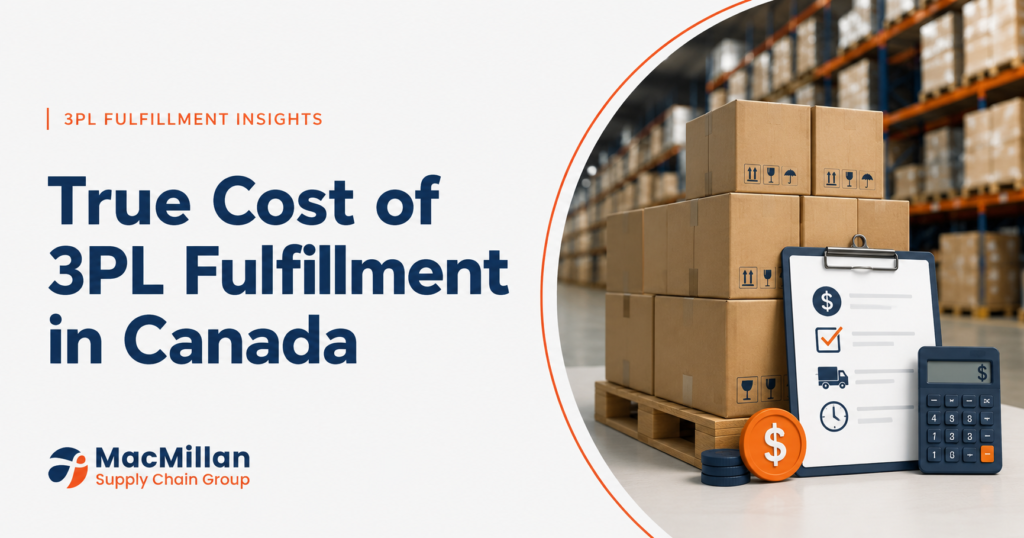
The true cost of 3PL fulfillment in Canada includes much more than storage and pick-and-pack fees. A complete budget may include receiving, inventory storage, packaging materials, shipping, returns, technology, account management, retail compliance and seasonal surcharges. For a straightforward ecommerce order, fulfillment labour may cost only a few dollars, but carrier charges and operational exceptions can make the final cost considerably higher. This is why the lowest rate on a 3PL quote is not always the lowest-cost option. A provider offering inexpensive picking may charge separately for cartons, receiving, integrations, reporting or account support. Another provider may quote a higher base rate but include services that would otherwise appear as additional line items. Canadian businesses should compare the total cost of moving an order from inbound receiving to final delivery—not one attractive number on a rate card. What Is 3PL Fulfillment? Third-party logistics fulfillment is the outsourcing of inventory storage, order processing and shipping to an external logistics provider. The business sends inventory to the 3PL, and the provider receives, stores, picks, packs and ships orders as they are placed. A full-service 3PL may also manage wholesale orders, retail distribution, inventory reporting, returns, transportation coordination, kitting, relabelling and retailer-specific preparation. For ecommerce brands, the process often begins when an order flows from Shopify, Amazon or another sales platform into the warehouse management system. Warehouse staff then locate the products, confirm the quantities, pack the order and transfer it to the selected parcel carrier. Businesses with both ecommerce and wholesale customers may require a broader fulfillment services program. Direct-to-consumer orders may be picked by individual unit, while retail orders are prepared by case, pallet or purchase order. Average 3PL Fulfillment Costs in Canada There is no single average rate that applies to every Canadian business. A small subscription brand shipping lightweight parcels has a different cost profile from a food company storing expiry-controlled pallets or a general merchandise supplier shipping to major retailers. Published Canadian pricing examples commonly show standard pallet storage in the approximate range of C$20 to C$40 per pallet per month and basic pick-and-pack charges of roughly C$2 to C$5 per order. Some providers advertise lower starting prices, but those figures may apply only to specific order profiles, volumes or service conditions. A practical ecommerce fulfillment budget may include: Receiving and inventory check-in Monthly pallet, shelf or bin storage A base pick-and-pack fee Additional item or additional pick fees Boxes, mailers, tape, labels and protective material Carrier postage and applicable surcharges Returns processing Account, technology or monthly minimum fees These ranges should be used for early planning rather than as guaranteed market prices. The final rate depends on the provider, facility location, volume commitment and operational complexity. Receiving and Inbound Processing Fees Receiving fees cover the work required to unload incoming inventory, verify quantities, inspect visible damage, record products in the warehouse management system and move goods into storage. A 3PL may charge receiving by: Pallet Carton Container Unit Labour hour Inbound purchase order Palletized inventory with accurate labels and an advance shipping notice is generally easier to receive than a floor-loaded container containing mixed or unlabelled cartons. If the physical delivery does not match the inbound documentation, additional counting, sorting or investigation fees may apply. Receiving costs can increase when: Cartons arrive without scannable product labels. One carton contains several mixed SKUs. Products require lot or expiry-date recording. Inventory arrives damaged or without documentation. A floor-loaded container requires manual unloading. Products must be relabelled before putaway. Businesses importing containerized inventory should confirm whether container destuffing, palletization and stretch wrapping are included in receiving or quoted separately. Inventory Storage Costs Storage fees cover the warehouse space occupied by inventory. A provider may calculate storage by pallet, bin, shelf, cubic foot, square foot or individual unit. Pallet-based pricing is common for wholesale inventory, while bin or shelf pricing may be used for smaller ecommerce products. Oversized, fragile, hazardous or temperature-sensitive products may require a different storage rate. Storage is normally billed monthly, but the billing method matters. Some providers calculate the number of storage positions used on a specific date. Others use average daily occupancy or bill each pallet position that was occupied at any time during the month. The following conditions can increase storage cost: Slow inventory turnover Excess safety stock Seasonal stock arriving too early Too many low-volume SKUs Partially filled pallets Oversized or non-stackable products Long-term storage penalties Good inventory management helps reduce unnecessary storage by identifying ageing stock, slow-moving SKUs and replenishment problems before they consume valuable space. Pick and Pack Fees Pick-and-pack fees cover the labour required to locate products, confirm the order, select the correct units and prepare them for shipping. A common pricing structure includes a base fee for the first item and an additional fee for every extra item or pick. For example, an order containing one SKU may be charged one base pick. An order containing four different products may include the base charge plus three additional picks. However, the definition of a “pick” can vary. One provider may count each SKU line as a pick, while another may count every physical unit. Ten units of the same product could therefore be billed as one pick or ten picks, depending on the agreement. Pick-and-pack rates may also vary based on: Average items per order Number of active SKUs Product size and weight Fragility or special handling Order volume Same-day processing requirements Batch, zone or individual-order picking methods Businesses should ask the provider to calculate several sample orders using the proposed fee structure. This reveals the realistic cost more clearly than a headline “starting from” rate. Packaging Material Costs Packaging materials are frequently separate from the pick-and-pack fee. These costs may include boxes, padded mailers, tape, labels, void fill, protective wrapping, inserts and temperature-control materials. A lightweight product shipped in a standard mailer will usually require less packaging than a fragile item packed in a reinforced carton. Dimensional weight can also make an unnecessarily large box more expensive to ship,
Mastering Warehouse Monitoring in 2026: Systems, Trends, and Techniques
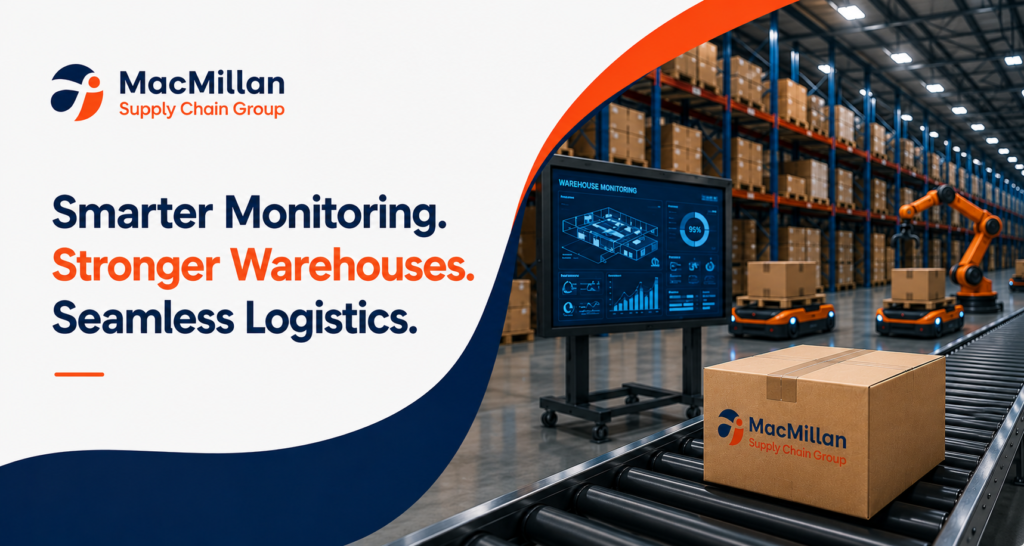
Ecommerce warehouses and logistics company’s Toronto are bustling hubs of activity. From managing daily tasks such as inventory receipt and order fulfillment to more intricate processes like cross-docking and inventory audits, keeping track of every detail can be challenging. Yet, for effective warehouse management, having accurate and real-time information on your warehousing operations is crucial. This is where warehouse monitoring in today’s age for logistics company’s Toronto becomes indispensable. With comprehensive visibility and up-to-date insights into your warehouse processes, you can significantly enhance operational efficiency. In this article, we’ll explore what warehouse monitoring entails, the advantages of a high-quality monitoring system, and the key features to consider when choosing a warehouse monitoring solution for logistics company’s Toronto. What is Warehouse Monitoring? Warehouse monitoring involves the observation, measurement, and tracking of conditions, materials, and activities within a warehouse. This practice typically employs advanced warehousing technologies, such as surveillance cameras, sensors, and IoT devices, to gather, process, and analyze data, enabling workers to make informed decisions based on real-time insights for any logistics company’s Toronto. Brands utilize warehouse monitoring systems to oversee various aspects, including: Assets Inventory Environment Energy Problems How Tech-based warehousing is Transforming Monitoring- 2024? As warehouse operations become increasingly complex, so too does the technology designed to monitor them. Gone are the days when workers spent hours manually recording data and conditions. Today, for logistics company’s Toronto, technology automates many monitoring tasks, providing deeper insights and greater efficiency. Key Components of a Warehouse Monitoring System used by MacMillan Several cutting-edge technologies are enhancing warehouse monitoring. Here are some of the most effective tools used: IoT Devices: MacMillan SCG uses The Internet of Things (IoT) network connects various devices and objects, enabling them to communicate and exchange data. IoT devices include RFID tags, sensors, and other tools that monitor inventory, warehouse locations, storage conditions, and handling processes. RFID Tags: Radio Frequency Identification (RFID) tags are scannable labels that use radio waves to identify objects. These tags allow workers to track items at different stages of the warehouse workflow. The scanned information is automatically transmitted to the warehouse management system(WMS), providing real-time visibility into inventory location and status, proven to be sustainable for any logistics company Toronto. Sensors: Wireless sensors strategically placed throughout the warehouse enable remote tracking of various elements and activities, eliminating the need for constant physical presence. LTH Sensors: Light, temperature, and humidity (LTH) sensors are crucial for maintaining optimal storage conditions. This is particularly important in cold storage warehouses, where even minor deviations in temperature can lead to spoilage. MacMillan provides customers with real-time visibility and responsiveness reducing error rates to be 0.1 percent. Additional Sensors: Certain sensors can detect smoke, providing immediate alerts in case of a fire. Others monitor movement in different areas of the warehouse, and some track air quality, which may be essential in certain industries. Alarm Systems: In large warehouses, detecting issues can be challenging, increasing the risk of damage and theft. Alarm systems are vital for prompt notifications about problems that need attention. These systems can alert you to temperature changes, unusual movements, glass breaks, and other potential issues. Surveillance Cameras: Video surveillance is a key component of warehouse monitoring for any logistics company Toronto. High-definition IP cameras offer detailed video monitoring, while advanced cameras with capabilities like heat detection and text reading provide enhanced surveillance. AI-powered smart surveillance systems further streamline the process by checking inventory availability, tracking misplaced shipments, and more. Centralized Communication Systems: Effective warehouse management relies on seamless communication across departments and locations. MacMillan SCG offers Centralized communication systems, such as wireless or wired intercoms, are essential for efficient interactions without requiring physical travel across the warehouse with geographical presence within the GTA region and 80% of the western regions throughout Canada. Centralized Software Solutions: To integrate data from various systems into a unified view, centralized software solutions are crucial. Warehouse management systems (WMS) and unified IoT platforms consolidate information into a single dashboard, allowing you to monitor stock levels, inventory movement, and order fulfillment processes without switching between multiple platforms. How to Monitor Your Warehouse Operations with MacMillan SCG? A Warehouse Management System (WMS) is crucial for tracking and managing all aspects of warehousing from a single platform. MacMillan offers a comprehensive WMS designed to enhance warehouse monitoring and streamline operations. Advanced Fulfillment Analytics MacMillan’s WMS provides advanced analytics that deliver real-time insights into your warehousing and fulfillment performance for various logistics company’s Toronto. Key metrics include: These analytics enable you to evaluate and optimize warehouse processes, identify inefficiencies, and reduce operating costs. For example, if you observe increased average fulfillment times, you can investigate and refine picking and packing strategies to enhance efficiency. Integration with Existing Systems A unified system for managing warehouse operations is essential for effective monitoring. MacMillan WMS integrates seamlessly with various ecommerce platforms and tools, minimizing the need for multiple platforms and reducing data inaccuracies. Integrations with systems like Amazon for returns management and for sales channel operations ensure that your warehouse monitoring is comprehensive and up-to-date. This cohesive approach allows for accurate inventory tracking and better management of stock levels and orders. Real-Time Inventory Tracking MacMillan’s WMS offers real-time visibility into inventory levels across different SKUs and storage locations. This ensures precise inventory counts, timely updates, and the ability to forecast inventory needs accurately. By monitoring stock levels closely, you can avoid stock outs, manage reordering efficiently, and minimize excess inventory costs. Key Takeaways Ecommerce warehouses and logistics companies in Toronto are dynamic environments where managing daily operations and complex processes can be daunting. Effective warehouse management hinges on accurate, real-time information, making advanced warehouse monitoring essential. By utilizing technologies like IoT devices, RFID tags, and sensors, logistics companies can gain comprehensive visibility into their operations, improving efficiency and responsiveness. This article explores the benefits of top-tier warehouse monitoring systems and their key components, highlighting how cutting-edge tools and centralized software solutions can streamline warehouse management and enhance operational performance in the Toronto logistics sector.
Outsourcing Fulfillment to a 3PL: Benefits, Guide, and FAQs
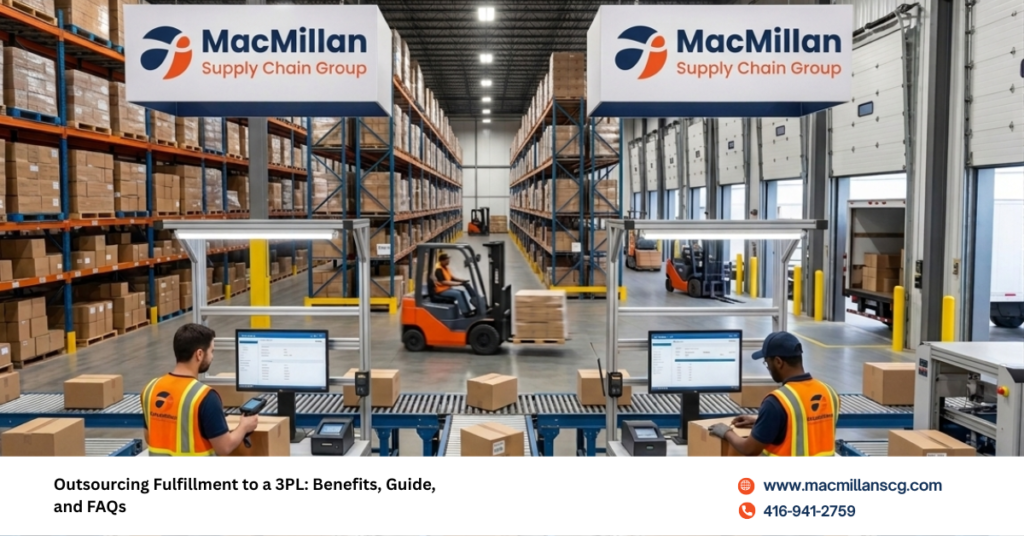
Outsourcing fulfillment to a Third-Party Logistics (3PL) provider can revolutionize your ecommerce business. 3PLs specialize in managing inventory, warehousing, and order fulfillment, allowing you to focus on core business activities. By leveraging their expertise and infrastructure, you can reduce costs, improve efficiency, and scale your operations seamlessly. This comprehensive guide explores the benefits of 3PL partnerships, key considerations when choosing a provider, and answers frequently asked questions. Whether you’re a growing startup or an established brand, understanding how 3PL services can optimize your supply chain is crucial in today’s competitive ecommerce landscape. Introduction In the fast-paced world of ecommerce, efficient logistics management can make or break a business. As online sales continue to rise, many companies are turning to Third-Party Logistics (3PL) providers to streamline their fulfillment processes. Outsourcing fulfillment to a 3PL can offer significant advantages, from cost savings to improved customer satisfaction. But what exactly is a 3PL, and how can it benefit your business? This article delves into the world of 3PL services, exploring their role in modern ecommerce, the benefits they offer, and key factors to consider when choosing a provider. Whether you’re struggling to keep up with order volumes or looking to expand your reach, understanding the potential of 3PL partnerships is essential for staying competitive in today’s market. Let’s explore how MacMillan Supply Chain Group can help transform your logistics operations and drive your business forward. Understanding Third-Party Logistics (3PL) Third-Party Logistics, commonly known as 3PL, refers to the outsourcing of logistics and supply chain management functions to a specialized service provider. These functions typically include warehousing, inventory management, order fulfillment, and shipping. The concept of 3PL has evolved significantly since its inception in the 1970s and has become an integral part of the ecommerce ecosystem. 3PL providers tailor a range of services to meet the specific needs of your business. These may include: By partnering with a 3PL like MacMillan Supply Chain Group, you gain access to advanced logistics infrastructure and expertise without the need for significant capital investment. This allows you to focus on core business activities such as product development, marketing, and customer service, while leaving the complexities of order fulfillment to the experts. Moreover, 3PLs can provide valuable insights into your supply chain performance through data analytics and reporting tools. This information can help you make informed decisions about inventory levels, shipping methods, and other crucial aspects of your logistics operations. Benefits of Outsourcing Fulfillment to a 3PL Outsourcing fulfillment to a 3PL provider like MacMillan Supply Chain Group offers numerous advantages for ecommerce businesses of all sizes. Here are some key benefits: Cost Savings: 3PLs can leverage their economies of scale to negotiate better rates with carriers, reducing your shipping costs. They also eliminate the need for you to invest in warehouse space, equipment, and staff. Scalability: As your business grows, a 3PL can easily accommodate increased order volumes without you having to worry about expanding your own facilities or hiring additional staff. Improved Efficiency: 3PLs specialize in logistics and use advanced technologies to optimize picking, packing, and shipping processes, resulting in faster order processing and fewer errors. Expanded Reach: With access to a network of fulfillment centers, you can store inventory closer to your customers, reducing shipping times and costs. Focus on Core Competencies: By outsourcing fulfillment, you can concentrate on product development, marketing, and other core business activities that drive growth. Expertise and Technology: 3PLs invest in the latest logistics technologies and have experienced staff, providing you with industry best practices and innovative solutions. Flexibility: 3PLs can adapt to seasonal fluctuations and sudden spikes in demand, ensuring consistent service during peak periods. Improved Customer Satisfaction: Faster, more accurate order fulfillment leads to happier customers and increased loyalty. Key Considerations When Choosing a 3PL Provider Selecting the right 3PL partner is crucial for the success of your ecommerce business. Here are essential factors to consider when evaluating potential providers: Industry Experience: Look for a 3PL with expertise in your specific industry or product type. MacMillan Supply Chain Group has extensive experience across various sectors, ensuring tailored solutions for your business. Technology Integration: Ensure the 3PL’s systems can integrate seamlessly with your ecommerce platform and other software tools you use. Scalability: Choose a provider that can accommodate your current needs and future growth plans. Geographic Coverage: Consider the 3PL’s network of fulfillment centers and their proximity to your target markets. Value-Added Services: Assess additional services offered, such as kitting, assembly, or custom packaging, that may benefit your business. Pricing Structure: Understand the pricing model and ensure it aligns with your budget and business goals. Performance Metrics: Look for a 3PL that provides transparent reporting on key performance indicators (KPIs) such as order accuracy and shipping times. Customer Service: Evaluate the level of support provided and the responsiveness of the 3PL’s customer service team. Security and Compliance: Ensure the 3PL adheres to industry standards and regulations relevant to your products. Flexibility: Choose a provider that can adapt to your changing needs and market conditions. The Impact of 3PL on Customer Experience In the competitive world of ecommerce, customer experience is paramount. Outsourcing fulfillment to a 3PL can significantly enhance your customers’ satisfaction in several ways: Faster Delivery: 3PLs like MacMillan Supply Chain Group have strategically located fulfillment centers, allowing for quicker shipping times and often same-day or next-day delivery options. Order Accuracy: Advanced inventory management systems and experienced staff ensure that orders are picked and packed correctly, reducing errors and returns. Real-Time Tracking: Most 3PLs provide real-time order tracking information, keeping customers informed about their package’s status throughout the shipping process. UPS provides zero error real time tracking to ensure customer satisfaction. Consistent Branding: Professional 3PLs can maintain your brand identity through custom packaging and inserts, creating a cohesive unboxing experience. Efficient Returns Processing: 3PLs can handle returns quickly and efficiently, improving customer satisfaction and potentially saving return sales. Inventory Availability: With better inventory management, you’re less likely to experience stock outs, ensuring customers can always purchase the products they want. International Shipping: Many 3PLs offer
Top 3PL Providers for Small Businesses: Choosing the Best Partner for Your Ecommerce Needs
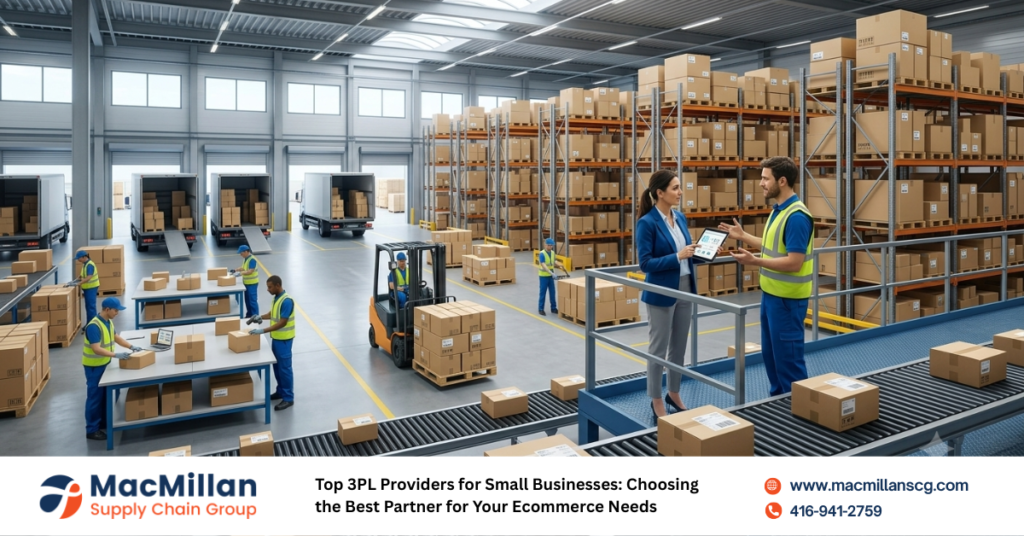
Discover top 3PL providers for small businesses and learn how to choose a reliable third-party logistics partner offering scalable solutions and top-notch customer support. Introduction: In today’s fast-paced ecommerce landscape, small businesses face increasing pressure to deliver products quickly and efficiently. This is where third-party logistics (3PL) providers come into play. By outsourcing logistics functions such as order fulfillment, inventory management, and shipping, small businesses can focus on core activities like product development and marketing. But how do you choose the right 3PL partner? This article will guide you through the process, highlighting top providers and key considerations to help you make the best decision for your business. Why Small Businesses Should Consider a 3PL Partner Enhanced Efficiency and Focus: Partnering with a 3PL provider can significantly boost your small business’s efficiency. By delegating time-consuming logistics tasks to experts, you free up valuable resources to concentrate on what you do best – growing your business. Imagine the time you could save not having to manage warehouse operations, coordinate shipments, or handle returns. This newfound focus allows you to dedicate more energy to product innovation, marketing strategies, and customer acquisition. Moreover, 3PLs bring specialized expertise to the table. Their years of experience in optimizing supply chains can lead to smoother operations and fewer errors. This expertise often translates to faster order processing times, reduced shipping costs, and improved inventory accuracy – all of which contribute to a better customer experience and, ultimately, increased customer loyalty. Scalability and Growth: One of the biggest challenges for small businesses is managing growth. As your sales increase, so does the complexity of your logistics operations. This is where a 3PL partner truly shines. Top 3PL providers offer scalable solutions that can grow with your business, whether you’re dealing with seasonal spikes or consistent long-term growth. For instance, during the holiday rush, a 3PL can quickly ramp up operations to handle increased order volumes without you needing to invest in additional warehouse space or hire temporary staff. Conversely, during slower periods, you’re not stuck with excess capacity. This flexibility allows you to respond nimbly to market demands and opportunities, giving you a competitive edge in the fast-paced world of ecommerce. Key Criteria for Selecting a 3PL Provider Reliability and Service Quality: When choosing a 3PL provider, reliability should be at the top of your priority list. After all, your 3PL partner becomes an extension of your business, directly impacting your customers’ experiences. Look for providers with a proven track record of consistent, high-quality service. This means on-time deliveries, accurate order fulfillment, and careful handling of your products. To assess reliability, dive deep into customer reviews and case studies. Pay attention to how the 3PL handles challenges and whether they’ve successfully served businesses similar to yours. Don’t hesitate to ask for references and speak directly with current clients. A reliable 3PL should be transparent about their performance metrics, such as order accuracy rates and on-time delivery percentages. Remember, the cheapest option isn’t always the best. A reliable 3PL that consistently delivers quality service can save you money in the long run by reducing errors, minimizing returns, and enhancing customer satisfaction. Customer Support and Communication: Effective communication is crucial in any business relationship, and your partnership with a 3PL provider is no exception. Look for a 3PL that offers robust customer support and clear communication channels. This includes having a dedicated account manager who understands your business needs and can provide personalized assistance. Consider how responsive the 3PL is during your initial interactions. Do they answer your questions promptly and comprehensively? Are they proactive in addressing potential issues? A 3PL that values communication will keep you informed about your inventory levels, order statuses, and any challenges that may arise. Additionally, evaluate the technology and reporting tools the 3PL offers. Modern 3PLs should provide real-time visibility into your operations through user-friendly dashboards and regular performance reports. This transparency allows you to stay on top of your logistics operations and make informed decisions for your business. Services Offered by Leading 3PL Providers Order Fulfillment: Order fulfillment is the heartbeat of ecommerce operations, and top 3PL providers excel in this area. They manage the entire process from the moment an order is placed to when it reaches the customer’s doorstep. This includes picking the items from the warehouse, packing them securely, and shipping them out promptly. Advanced 3PLs use sophisticated warehouse management systems (WMS) to optimize the picking and packing process. These systems can significantly reduce errors and increase efficiency, ensuring that orders are fulfilled accurately and quickly. Some 3PLs even offer value-added services like custom packaging or gift wrapping, allowing you to provide a personalized touch to your customers’ orders. Moreover, leading 3PLs have relationships with multiple shipping carriers, allowing them to choose the most cost-effective and efficient shipping method for each order. This can result in faster delivery times and reduced shipping costs – benefits that you can pass on to your customers. Inventory Management: Effective inventory management is crucial for maintaining the right balance between meeting customer demand and avoiding excess stock. Top 3PL providers offer advanced inventory management solutions that give you real-time visibility into your stock levels across multiple locations. These systems can provide valuable insights, such as identifying fast-moving items, predicting seasonal trends, and alerting you when it’s time to reorder. Some 3PLs even offer demand forecasting tools that use historical data and market trends to help you make informed inventory decisions. Additionally, many 3PLs can handle cycle counting and regular inventory audits, ensuring that your physical inventory matches your records. This level of accuracy is crucial for maintaining customer satisfaction and avoiding costly stock outs or overstocking situations. Common Problems in Logistics for Small Businesses Scalability Challenges: Many small businesses struggle with scaling their logistics operations as they grow. This can manifest in several ways: Limited warehouse space: As sales increase, businesses often find themselves running out of storage space, leading to disorganized warehouses and inefficient operations. Inefficient processes: Manual order processing and fulfillment methods
Leveraging Reverse Logistics: Boost Efficiency and Customer Satisfaction
A Quick Summary and Overview Reverse logistics is a critical component of modern supply chains, focusing on the movement of goods from customers back to sellers or manufacturers. This process encompasses returns, repairs, refurbishments, and recycling, playing a crucial role in customer satisfaction and operational efficiency. By implementing effective reverse logistics strategies, businesses can reduce costs, improve sustainability, and enhance their brand reputation. This article explores the importance of reverse logistics, its key components, and how partnering with experts like MacMillan Supply Chain Group can help organizations optimize their reverse logistics operations for maximum benefit. An Introduction In today’s competitive business landscape, managing the forward flow of goods is only half the battle. The other half lies in efficiently handling the backward flow – a process known as reverse logistics. From product returns and repairs to refurbishment and recycling, reverse logistics encompasses a wide range of activities that can significantly impact a company’s bottom line and customer satisfaction levels. As consumer expectations for seamless returns and environmentally responsible practices continue to rise, businesses must adapt by implementing robust reverse logistics strategies. This article delves into the world of reverse logistics, exploring its importance, key components, and best practices. We’ll also discuss common challenges and how partnering with a third-party logistics provider like MacMillan Supply Chain Group can help your business navigate the complexities of reverse logistics to achieve greater efficiency, cost savings, and customer loyalty. Understanding Reverse Logistics and Its Importance Reverse logistics refers to the process of moving goods from their final destination back through the supply chain for proper disposal, recycling, or reuse. This can include customer returns, product recalls, repairs, and end-of-life product management. While often overlooked, reverse logistics plays a crucial role in overall supply chain efficiency and customer satisfaction. The importance of reverse logistics cannot be overstated in today’s business environment. With the rise of e-commerce and increasing consumer awareness about sustainability, companies must have robust systems in place to handle returns and manage product lifecycles effectively. Some key benefits of a well-implemented reverse logistics strategy include: Improved customer satisfaction: Easy and efficient returns processes can enhance the overall customer experience, leading to increased loyalty and repeat business. Cost reduction: Proper management of returns and recycling can help minimize waste and recover value from returned products. Sustainability: Effective reverse logistics practices contribute to a company’s environmental efforts by reducing waste and promoting the reuse of materials. Competitive advantage: Companies with strong reverse logistics capabilities can differentiate themselves in the market and attract environmentally conscious consumers. Regulatory compliance: Many industries are subject to regulations regarding product disposal and recycling, making reverse logistics essential for legal compliance. Key Components of an Effective Reverse Logistics Strategy To maximize the benefits of reverse logistics, businesses should focus on implementing a comprehensive strategy that addresses several key components: Returns Management: Develop clear policies and efficient processes for handling customer returns, including easy-to-use return portals and streamlined approval procedures. Repair and Refurbishment: Establish systems for quickly assessing returned products and determining whether they can be repaired, refurbished, or need to be recycled. Recycling and Disposal: Implement environmentally responsible methods for recycling or disposing of products that cannot be resold or repurposed. Reverse Supply Chain Network: Design a network of facilities and transportation routes optimized for handling the reverse flow of goods. Data Management and Analytics: Utilize advanced tracking systems and analytics tools to gain insights into return patterns, identify areas for improvement, and make data-driven decisions. Quality Control: Implement rigorous quality checks to ensure that repaired or refurbished products meet the same standards as new items. Vendor Returns: Develop processes for managing returns to suppliers or manufacturers for defective or excess inventory. Customer Communication: Maintain clear and consistent communication with customers throughout the returns process to enhance satisfaction and build trust. Best Practices for Implementing Reverse Logistics Implementing an effective reverse logistics strategy requires careful planning and execution. Here are some best practices to consider: Integrate reverse logistics into your overall supply chain strategy: Treat reverse logistics as an integral part of your supply chain rather than an afterthought. Leverage technology: Implement advanced software solutions for tracking, managing, and analyzing reverse logistics processes. Standardize processes: Create consistent procedures for handling returns, repairs, and recycling across all channels and locations. Train employees: Ensure that all staff members involved in reverse logistics are well-trained and understand the importance of their role. Collaborate with partners: Work closely with suppliers, manufacturers, and logistics providers to streamline reverse logistics operations. Focus on speed and efficiency: Aim to process returns and repairs quickly to minimize costs and improve customer satisfaction. Implement a circular economy approach: Look for opportunities to reuse or repurpose returned products to maximize value and reduce waste. Continuously improve: Regularly analyze performance metrics and customer feedback to identify areas for improvement in your reverse logistics processes. Consider outsourcing: Partner with a third-party logistics provider like MacMillan Supply Chain Group to leverage their expertise and infrastructure in reverse logistics. The Role of Technology in Reverse Logistics Technology plays a crucial role in optimizing reverse logistics operations. By leveraging advanced tools and systems, businesses can streamline processes, improve accuracy, and gain valuable insights. Some key technologies used in reverse logistics include: Warehouse Management Systems (WMS): These systems help manage inventory, track product locations, and optimize storage and retrieval processes for returned items. Transportation Management Systems (TMS): TMS solutions assist in planning and executing the movement of returned goods, optimizing routes and reducing transportation costs. Internet of Things (IoT) devices: IoT sensors can track product conditions during transit, helping to identify potential issues and streamline the returns process. Artificial Intelligence (AI) and Machine Learning (ML): These technologies can analyze data to predict return patterns, optimize inventory levels, and automate decision-making processes. Blockchain: This technology can enhance transparency and traceability in the reverse supply chain, ensuring the authenticity of returned products and streamlining the reconciliation process. Robotic Process Automation (RPA): RPA can automate repetitive tasks in the returns process, such as data entry and return authorization, improving efficiency and reducing errors. Augmented Reality (AR): AR can assist in quality control processes and guide workers through repair and refurbishment procedures. Common Problems with Reverse Logistics Our Solutions
Revolutionize Your Warehouse: The Ultimate Guide to Pallet Racking Systems
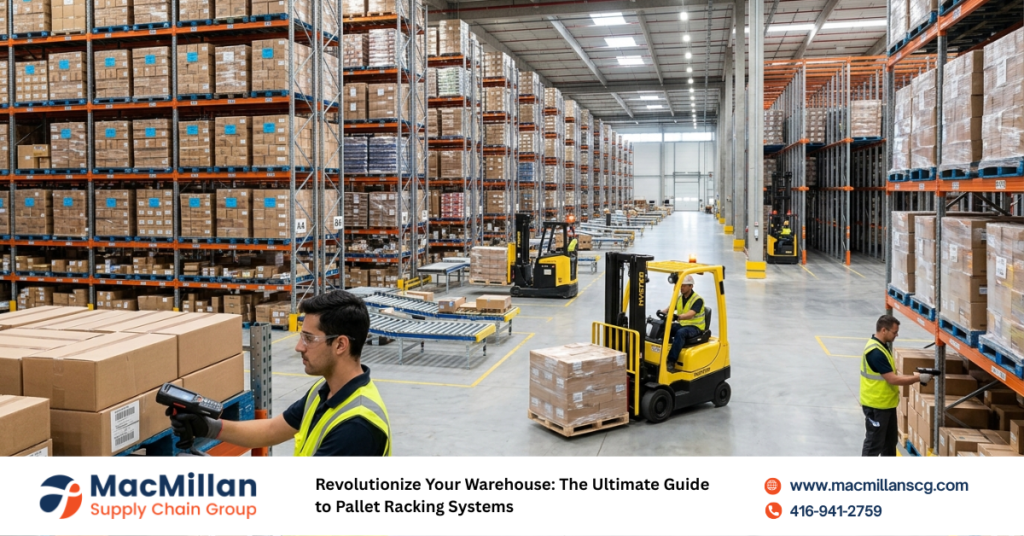
A quick summary and overview Pallet racking is a cornerstone of modern warehouse management, offering versatile storage solutions that maximize space utilization and operational efficiency. This comprehensive guide explores various pallet racking types, crucial safety considerations, and integration with inventory systems. We’ll delve into the economic benefits of well-implemented racking solutions and address common challenges faced by warehouse managers. With insights from MacMillan Supply Chain Group, you’ll learn how to select, implement, and maintain the ideal pallet racking system for your unique needs, ultimately driving productivity and cost savings in your supply chain operations. An introduction In today’s fast-paced logistics landscape, optimizing warehouse space and enhancing operational efficiency are paramount for businesses looking to stay competitive. Pallet racking systems stand at the forefront of this optimization, offering a structured approach to vertical storage that can dramatically increase capacity and streamline workflows. Whether you’re managing a small distribution center or overseeing a massive fulfillment operation, the right pallet racking solution can be a game-changer for your business. At MacMillan Supply Chain Group, we understand that choosing the perfect racking system involves balancing numerous factors, from inventory turnover rates to safety regulations. This guide aims to demystify the world of pallet racking, providing you with the knowledge to make informed decisions that will propel your warehouse operations to new heights of efficiency and productivity. Types of Pallet Racking Systems Pallet racking systems come in various configurations, each designed to meet specific warehouse needs and inventory profiles. Understanding these types is crucial for selecting the optimal solution for your operation: Selective Pallet Racking: The most common and versatile option, offering direct access to every pallet. Ideal for warehouses with a wide variety of SKUs and frequent stock rotation. Double Deep Racking: Similar to selective racking but with double depth, increasing storage density at the cost of slightly reduced accessibility. Drive-In/Drive-Through Racking: High-density storage solution perfect for bulk storage of homogeneous products with low turnover rates. Push-Back Racking: Utilizes inclined rails and carts to automatically push pallets forward when the front pallet is removed, combining density with good selectivity. Pallet Flow Racking: Gravity-fed system that automatically moves pallets from loading to picking side, ideal for FIFO (First-In-First-Out) inventory management. Cantilever Racking: Designed for long or irregularly shaped items, featuring arms extending from the uprights to support loads without front columns. Mobile Racking: Mounted on motorized bases, these systems can be compacted to eliminate aisles when not in use, maximizing storage density. At MacMillan Supply Chain, we help you navigate these options, considering factors like your inventory characteristics, picking frequency, and available space to recommend the most suitable racking system for your warehouse. Safety Considerations and Maintenance Ensuring the safety and longevity of your pallet racking system is critical for protecting your inventory, employees, and bottom line. Here are key safety considerations and maintenance practices: Regular Inspections: Conduct thorough visual checks weekly and professional inspections annually to identify damage, wear, or misalignment. Load Capacity Compliance: Strictly adhere to manufacturer-specified weight limits for each rack and beam level to prevent structural failures. Proper Installation and Assembly: Ensure racking is installed by certified professionals following manufacturer guidelines and local building codes. Employee Training: Provide comprehensive training on safe loading/unloading procedures, forklift operation, and identifying potential hazards. Protection Accessories: Install column protectors, end-of-aisle guards, and wire mesh decking to prevent damage and enhance safety. Clear Aisle Maintenance: Keep aisles free of obstructions and ensure proper lighting for safe navigation. Immediate Repair Protocol: Address any damage or wear immediately to prevent escalation of safety risks. Documentation: Maintain detailed records of inspections, repairs, and modifications for compliance and tracking purposes. Load Placard Display: Clearly display maximum load capacities on each rack for easy reference. Seismic Considerations: In applicable regions, ensure racking meets seismic safety standards. MacMillan Supply Chain offers comprehensive safety audits and maintenance programs to keep your racking systems in optimal condition, minimizing risks and maximizing operational uptime. Integration with Inventory Management Systems Seamless integration between pallet racking and inventory management systems is crucial for optimizing warehouse operations. This synergy enhances accuracy, efficiency, and visibility across your supply chain. Here’s how to achieve effective integration: Barcode and RFID Technology: Implement scanning systems for real-time tracking of pallet locations and movements within the racking system. Warehouse Management Software (WMS): Utilize advanced WMS that can map your racking layout and optimize picking routes based on inventory locations. Automated Storage and Retrieval Systems (AS/RS): For high-volume operations, consider integrating automated systems that work in tandem with your racking for faster, more accurate picking and putaway. IoT Sensors: Deploy sensors on racking to monitor environmental conditions, load weights, and structural integrity, feeding data into your management systems. Digital Twin Technology: Create a virtual replica of your warehouse layout, including racking configurations, to simulate and optimize operations. Mobile Devices: Equip staff with handheld devices that interface with your inventory system for on-the-spot updates and location verification. Data Analytics: Leverage big data analytics to identify trends, optimize stock placement, and predict maintenance needs based on usage patterns. MacMillan Supply Chain specializes in integrating cutting-edge inventory management technologies with pallet racking systems, ensuring your warehouse operates at peak efficiency. Our solutions are tailored to your specific needs, providing a seamless flow of information from rack to stock. Economic Benefits of Optimized Pallet Racking Implementing a well-designed pallet racking system can yield significant economic advantages for your business: Space Optimization: Maximize vertical storage space, potentially reducing the need for warehouse expansion or additional facilities. Improved Inventory Turnover: Efficient organization leads to faster stock rotation, reducing holding costs and improving cash flow. Enhanced Labor Productivity: Well-organized racking systems reduce picking times and improve order fulfillment rates, increasing overall workforce efficiency. Reduced Damage and Losses: Proper storage minimizes product damage, decreasing write-offs and insurance claims. Lower Operating Costs: Optimized layouts reduce equipment travel distances, lowering fuel costs and equipment wear. Increased Storage Capacity: Vertical expansion can increase storage capacity by up to 50% without expanding floor space. Flexibility for Growth: Modular racking systems allow for easy reconfiguration as business needs evolve, avoiding costly renovations. Improved Safety: Fewer accidents mean reduced workers’ compensation claims and less downtime. Energy Efficiency: Better organization can lead to reduced lighting and HVAC needs in certain areas