
3PL Excellence: Revolutionize Your Supply Chain with MacMillan
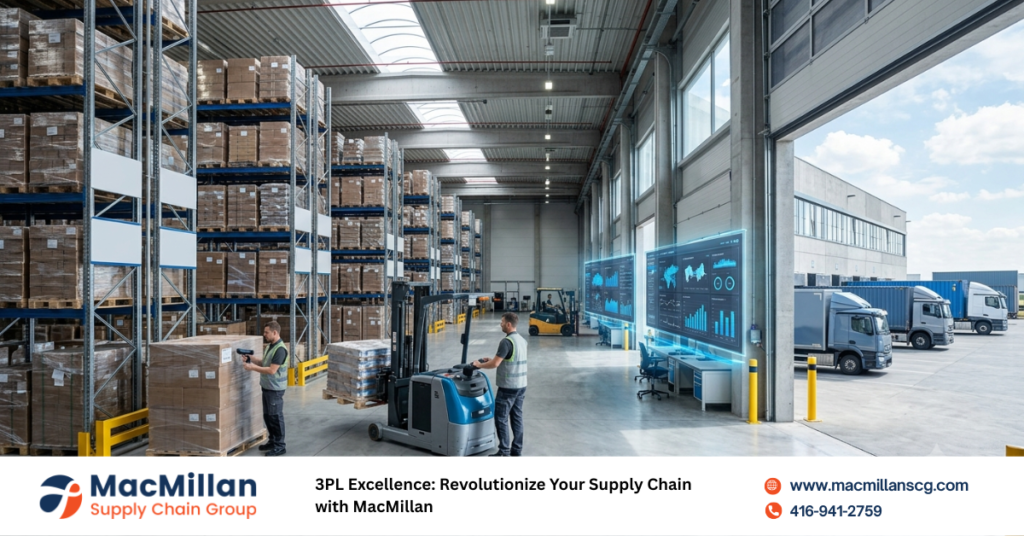
A quick summary and overview Third-party logistics (3PL) is transforming how businesses manage their supply chains. By outsourcing logistics operations to specialized providers like MacMillan Supply Chain Group, companies can focus on core competencies while benefiting from expert logistics management. This comprehensive guide explores the essentials of 3PL, its benefits, implementation strategies, and how it can revolutionize your business operations. From warehouse management to transportation optimization, we’ll delve into how MacMillan’s cutting-edge solutions can streamline your supply chain, reduce costs, and enhance customer satisfaction. Whether you’re a small business or a large corporation, understanding 3PL is crucial in today’s competitive marketplace. An introduction In today’s fast-paced business environment, efficient supply chain management is more critical than ever. As companies strive to meet increasing customer demands while managing costs, third-party logistics (3PL) has emerged as a game-changing solution. 3PL providers offer a range of services, from warehousing and distribution to transportation management and beyond, allowing businesses to outsource complex logistics operations to experts in the field. MacMillan Supply Chain Group stands at the forefront of this revolution, offering state-of-the-art 3PL services tailored to meet the unique needs of each client. By leveraging our expertise, businesses can not only streamline their operations but also gain a competitive edge in their respective markets. This guide will explore the intricacies of 3PL, its benefits, and how partnering with MacMillan can transform your supply chain from a cost center to a strategic asset driving growth and customer satisfaction. Understanding 3PL: The Backbone of Modern Supply Chains Third-party logistics (3PL) refers to the outsourcing of logistics and distribution activities to specialized companies. These activities can include warehousing, inventory management, order fulfillment, and transportation. But 3PL is more than just a set of services; it’s a strategic partnership that can revolutionize how businesses operate. At its core, 3PL allows companies to focus on their core competencies while leaving the complexities of logistics to experts. This division of labor can lead to significant improvements in efficiency and cost-effectiveness. For instance, a retailer can concentrate on product development and marketing, while their 3PL partner ensures products are stored efficiently and delivered promptly. MacMillan Supply Chain Group takes this concept further by offering customized 3PL solutions. We understand that each business has unique needs, and our services are tailored accordingly. From small e-commerce startups to large multinational corporations, we provide scalable solutions that grow with your business. Moreover, 3PL providers like MacMillan invest in advanced technologies and infrastructure that might be too costly for individual businesses to implement. This includes state-of-the-art warehouse management systems, real-time tracking capabilities, and optimized transportation networks, all of which contribute to a more efficient and responsive supply chain. The Benefits of 3PL: Driving Efficiency and Growth Partnering with a 3PL provider like MacMillan Supply Chain Group offers numerous advantages that can significantly impact your bottom line and customer satisfaction: Cost Reduction: By leveraging our economies of scale and expertise, you can reduce operational costs associated with warehousing, transportation, and labor. Scalability: Our flexible solutions allow you to easily scale operations up or down based on demand, without the need for significant capital investments. Improved Focus: Outsourcing logistics enables you to concentrate on core business activities, fostering innovation and growth. Enhanced Technology: Benefit from our cutting-edge logistics technology without the need for substantial IT investments. Global Reach: Expand into new markets with ease, utilizing our extensive network and local expertise. Risk Mitigation: We help navigate complex regulatory environments and manage supply chain risks effectively. Increased Efficiency: Our optimized processes and specialized knowledge lead to faster, more accurate order fulfillment and reduced transit times. Better Customer Service: With improved order accuracy and faster deliveries, customer satisfaction naturally increases. Data-Driven Insights: Gain valuable insights into your supply chain performance through our advanced analytics capabilities. By choosing MacMillan as your 3PL partner, you’re not just outsourcing logistics; you’re gaining a strategic ally committed to your business’s success and growth. Implementing 3PL: Strategies for Seamless Integration Integrating 3PL services into your business operations requires careful planning and execution. Here’s a step-by-step approach to ensure a smooth transition: Assess Your Needs: Evaluate your current logistics operations, identifying pain points and areas for improvement. Define Objectives: Set clear goals for what you want to achieve through 3PL integration, whether it’s cost reduction, improved efficiency, or expanded capabilities. Choose the Right Partner: Select a 3PL provider like MacMillan that aligns with your business values and has experience in your industry. Plan the Transition: Develop a detailed implementation plan, including timelines, resource allocation, and risk mitigation strategies. Communicate Effectively: Ensure all stakeholders, including employees and customers, are informed about the changes and their benefits. Integrate Systems: Work closely with your 3PL partner to integrate their systems with your existing technology infrastructure. Train Your Team: Provide necessary training to your staff on new processes and systems. Monitor and Optimize: Regularly review performance metrics and make adjustments as needed to optimize operations. At MacMillan Supply Chain Group, we guide you through each step of this process, ensuring a seamless transition that minimizes disruptions and maximizes benefits. Our experienced team works closely with yours to tailor the implementation to your specific needs and goals. Future-Proofing Your Supply Chain with Advanced 3PL Solutions The logistics landscape is constantly evolving, driven by technological advancements and changing consumer expectations. To stay ahead, businesses need 3PL partners that are not just keeping up with trends but are actively shaping the future of supply chain management. MacMillan Supply Chain Group is at the forefront of this evolution, investing in cutting-edge technologies and innovative solutions: AI and Machine Learning: We utilize advanced algorithms to optimize routing, predict demand, and enhance inventory management. Internet of Things (IoT): Our IoT-enabled warehouses and transportation systems provide real-time visibility and control over your supply chain. Robotics and Automation: From automated picking systems to robotic process automation, we’re increasing efficiency and accuracy in all aspects of logistics. Blockchain Technology: We’re exploring blockchain applications for enhanced transparency and traceability in supply chains. Sustainable Logistics: Our green logistics solutions help reduce your carbon footprint while improving efficiency. Last-Mile Innovation: We’re constantly developing new strategies to optimize the crucial last mile
Mastering Amazon Seller Fulfilled Prime: Boost Sales with MacMillan Supply Chain

A Quick Overview of Seller Fulfilled Prime Amazon Seller Fulfilled Prime (SFP) is a program that allows qualified sellers to list their products with the Prime badge while fulfilling orders from their own warehouses or through a third-party logistics (3PL) provider. This innovative approach combines the visibility and sales potential of Prime with the flexibility of self-fulfillment. SFP offers sellers greater control over inventory, branding, and customer service while adhering to Amazon’s strict performance standards. By partnering with a reliable 3PL like MacMillan Supply Chain, sellers can navigate the complexities of SFP, meet Prime shipping promises, and ultimately drive business growth on the Amazon marketplace. Introduction In the competitive world of e-commerce, Amazon’s Seller Fulfilled Prime program presents a unique opportunity for sellers to enhance their visibility and boost sales. By offering Prime shipping benefits directly from their own warehouses or through a trusted 3PL partner, sellers can tap into the coveted Prime customer base while maintaining control over their fulfillment processes. However, with great opportunity comes great responsibility – SFP demands strict adherence to Amazon’s high-performance metrics and shipping standards. This comprehensive guide will explore the ins and outs of Amazon Seller Fulfilled Prime, from its benefits and requirements to strategies for success. We’ll delve into common challenges faced by SFP sellers and how MacMillan Supply Chain’s expertise can help overcome these hurdles. Whether you’re considering enrolling in SFP or looking to optimize your current SFP operations, this article will provide valuable insights to help you maximize your potential on the Amazon marketplace. Understanding Amazon Seller Fulfilled Prime Amazon Seller Fulfilled Prime is a program that enables qualified sellers to display the Prime badge on their products while managing fulfillment themselves or through a 3PL partner. This innovative approach allows sellers to leverage the power of Prime without relying on Amazon’s Fulfillment by Amazon (FBA) service. Key features of SFP include: Prime badge visibility: Products gain the coveted Prime logo, increasing their appeal to Prime members. Self-fulfillment: Sellers maintain control over inventory and shipping processes. Flexibility: SFP works well for products with special handling requirements or those unsuitable for FBA. Expanded reach: Access to Prime customers can significantly boost sales potential. To participate in SFP, sellers must meet stringent performance criteria, including: – Maintaining a 99% on-time shipping rate – Offering premium shipping options – Using Amazon Buy Shipping Services for at least 99% of orders – Delivering orders on weekends – Meeting specific cancellation and return metrics While these requirements may seem daunting, partnering with an experienced 3PL like MacMillan Supply Chain can help sellers navigate these challenges and maintain compliance with Amazon’s standards. By leveraging our expertise in logistics and fulfillment, sellers can focus on growing their business while we ensure their SFP operations run smoothly and efficiently. Benefits of Seller Fulfilled Prime Enrolling in Amazon Seller Fulfilled Prime offers numerous advantages for sellers looking to expand their reach and boost sales. Some key benefits include: Increased visibility: The Prime badge makes products more attractive to Prime members, potentially leading to higher conversion rates. Greater control: Unlike FBA, SFP allows sellers to manage their inventory and fulfillment processes, providing more flexibility in handling and shipping. Cost savings: By avoiding FBA fees, sellers can potentially reduce fulfillment costs, especially for larger or slower-moving items. Improved Buy Box performance: Prime-eligible products have a higher chance of winning the Buy Box, driving more sales. Brand control: SFP enables sellers to maintain their brand identity through customized packaging and inserts. Direct customer relationship: Handling fulfillment allows for direct communication with customers, fostering brand loyalty. Flexibility for seasonal products: SFP is ideal for managing inventory of seasonal or trend-driven items. Reduced storage fees: Unlike FBA, there are no long-term storage fees associated with SFP. By partnering with MacMillan Supply Chain, sellers can maximize these benefits while ensuring compliance with Amazon’s strict performance metrics. Our expertise in e-commerce logistics and fulfillment enables sellers to focus on product development and marketing while we handle the complexities of SFP operations, ultimately driving growth and success on the Amazon marketplace. Challenges of Seller Fulfilled Prime While Seller Fulfilled Prime offers significant benefits, it also presents several challenges that sellers must navigate: Stringent performance metrics: Maintaining the required 99% on-time shipping rate and other performance standards can be demanding. Nationwide free shipping: Offering free shipping across the country can impact profit margins, especially for bulky or heavy items. Weekend deliveries: Fulfilling orders on weekends may require operational changes and increased staffing. Inventory management: Balancing stock levels across multiple sales channels while ensuring Prime-level availability can be complex. Technology integration: Implementing systems to manage SFP orders efficiently and maintain compliance with Amazon’s requirements can be technically challenging. Scaling operations: As sales grow, scaling fulfillment operations to meet increased demand while maintaining performance standards can be difficult. Customer service demands: Handling Prime customer expectations for quick resolution of issues and returns can be resource-intensive. Geographical constraints: Meeting Prime shipping speeds across diverse locations may require strategic warehouse placement or multiple fulfillment centers. Addressing these challenges requires expertise in logistics, technology, and e-commerce operations. MacMillan Supply Chain specializes in helping sellers overcome these hurdles by providing comprehensive 3PL services tailored to SFP requirements. Our solutions enable sellers to maintain compliance, scale operations efficiently, and focus on core business activities while we handle the complexities of Prime-level fulfillment. Strategies for Success in Seller Fulfilled Prime To thrive in the Seller Fulfilled Prime program, sellers should implement the following strategies: Optimize inventory management: Use advanced forecasting tools to maintain optimal stock levels and prevent stockouts. Streamline order processing: Implement efficient pick, pack, and ship processes to meet Prime shipping deadlines consistently. Leverage technology: Invest in or partner with a 3PL that offers robust warehouse management systems (WMS) and order management systems (OMS) to automate and streamline operations. Strategic warehouse locations: Consider multiple fulfillment centers or partner with a 3PL with a nationwide network to reduce shipping times and costs. Efficient returns management: Implement a smooth returns process to maintain customer satisfaction and meet Amazon’s requirements. Monitor performance metrics: Regularly review and analyze
Warehouse Optimization: Boost Efficiency and Cut Costs with MacMillan Supply Chain
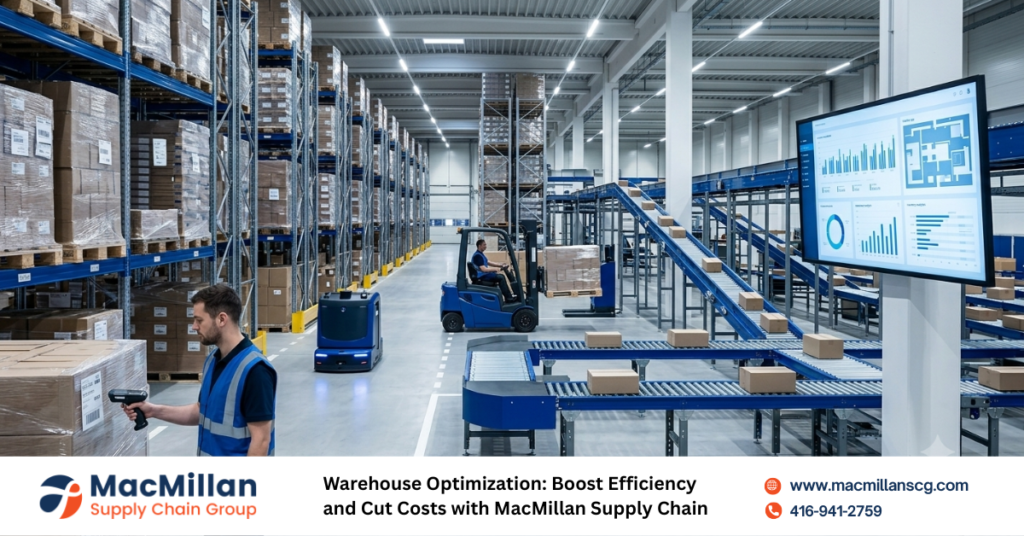
A quick summary and overview Warehouse optimization is crucial for businesses looking to improve their supply chain efficiency and reduce operational costs. This comprehensive guide explores various strategies and technologies that can transform your warehouse operations. From layout redesign to implementing cutting-edge automation systems, we’ll cover practical solutions to common warehouse challenges. Learn how MacMillan Supply Chain Group’s expertise can help you streamline processes, enhance inventory management, and boost overall productivity. Whether you’re managing a small distribution center or overseeing a large-scale fulfillment operation, this article provides valuable insights to take your warehouse performance to the next level. An introduction In today’s fast-paced business environment, efficient warehouse management is more critical than ever. As the backbone of the supply chain, warehouses play a pivotal role in ensuring timely deliveries, maintaining inventory accuracy, and controlling operational costs. However, many businesses struggle with suboptimal warehouse layouts, inefficient processes, and outdated technologies that hinder their growth and profitability. This article delves into the world of warehouse optimization, offering practical strategies and innovative solutions to transform your storage and distribution operations. We’ll explore how to leverage advanced technologies, redesign warehouse layouts, and implement best practices in inventory management. By the end of this guide, you’ll have a clear understanding of how to enhance your warehouse efficiency, reduce costs, and gain a competitive edge in the market with the help of MacMillan Supply Chain Group’s expertise. Effective warehouse layout and space utilization are fundamental to optimizing operations and improving efficiency. A well-designed warehouse layout can significantly reduce travel time, minimize errors, and increase overall productivity. Here are key strategies to consider: Conduct a thorough analysis of your current layout and identify bottlenecks. Implement a logical flow for receiving, storage, picking, and shipping processes. Utilize vertical space with high-bay racking systems and mezzanines. Create dedicated zones for different product categories or functions. Optimize aisle widths to balance accessibility and storage capacity. Use ABC analysis to position fast-moving items in easily accessible locations. Implement cross-docking for applicable products to reduce handling and storage time. When redesigning your warehouse layout, consider factors such as product characteristics, order profiles, and seasonal fluctuations. Flexibility is crucial, so design a layout that can adapt to changing business needs. Additionally, incorporate ergonomic principles to ensure worker safety and comfort, which can lead to increased productivity and reduced workplace injuries. MacMillan Supply Chain Group can assist in analyzing your current layout and proposing optimized solutions tailored to your specific requirements. Our experts use advanced simulation tools to test different configurations and ensure the most efficient use of your warehouse space. Implementing Warehouse Management Systems (WMS) and Automation Integrating a robust Warehouse Management System (WMS) and automation technologies can dramatically improve warehouse efficiency and accuracy. A WMS provides real-time visibility into inventory levels, order status, and workforce productivity. Here’s how these technologies can benefit your operations: Real-time inventory tracking and management Optimized picking routes and methods (e.g., wave picking, batch picking) Automated data collection and reporting Integration with other business systems (ERP, TMS) Enhanced labor management and performance tracking Automation technologies further amplify these benefits: Automated Storage and Retrieval Systems (AS/RS) for high-density storage Conveyor systems and sortation equipment for efficient material handling Automated Guided Vehicles (AGVs) for product movement Pick-to-light or voice-picking systems for improved accuracy Robotic palletizing and depalletizing When implementing these systems, it’s crucial to choose solutions that align with your specific business needs and can scale with your growth. MacMillan Supply Chain Group offers expertise in selecting, implementing, and optimizing WMS and automation technologies. We can help you navigate the complex landscape of warehouse technology and ensure a smooth integration with your existing systems and processes. Enhancing Inventory Management and Control Effective inventory management is critical for maintaining optimal stock levels, reducing carrying costs, and ensuring timely order fulfillment. Here are key strategies to enhance your inventory control: Implement cycle counting for ongoing inventory accuracy Use data analytics to forecast demand and optimize stock levels Adopt Just-in-Time (JIT) inventory practices where applicable Utilize RFID technology for real-time tracking and improved visibility Implement slotting optimization to reduce picking times and improve accuracy Use Vendor-Managed Inventory (VMI) for select products or suppliers Implement Kanban systems for lean inventory management Advanced inventory management techniques like ABC analysis and Economic Order Quantity (EOQ) calculations can help you prioritize stock and determine optimal order quantities. Additionally, consider implementing a First-In-First-Out (FIFO) or Last-In-First-Out (LIFO) system based on your product characteristics and industry requirements. MacMillan Supply Chain Group can assist in developing a comprehensive inventory management strategy tailored to your business needs. Our experts can help you implement best practices, select appropriate technologies, and establish key performance indicators (KPIs) to monitor and improve your inventory control processes continuously. Streamlining Picking and Packing Processes Efficient picking and packing processes are essential for rapid order fulfillment and customer satisfaction. Optimizing these processes can significantly reduce labor costs and improve accuracy. Consider the following strategies: Implement zone picking for improved efficiency in large warehouses Use batch picking for consolidating multiple orders Adopt pick-to-light or voice-directed picking technologies Implement a slotting strategy to minimize travel time and improve ergonomics Use automated packaging systems for standardized items Implement quality control checks at key points in the packing process Utilize mobile workstations to reduce unnecessary movement When streamlining picking and packing processes, it’s crucial to balance speed with accuracy. Implement regular training programs to ensure your staff is up-to-date with the latest procedures and technologies. Additionally, consider using ergonomic equipment and designs to reduce worker fatigue and increase productivity. MacMillan Supply Chain Group can help you analyze your current picking and packing processes, identify bottlenecks, and implement optimized workflows. Our team can also assist in selecting and integrating appropriate technologies to enhance these processes, such as pick-to-light systems or automated packaging solutions. Common problems with the topic Our solutions While warehouse optimization offers numerous benefits, many businesses face common challenges when implementing improvements: Resistance to change: Employees may be hesitant to adopt new technologies or processes.Solution: MacMillan Supply Chain Group emphasizes change management strategies,
How to Avoid Stockouts: Essential Strategies for Inventory Management
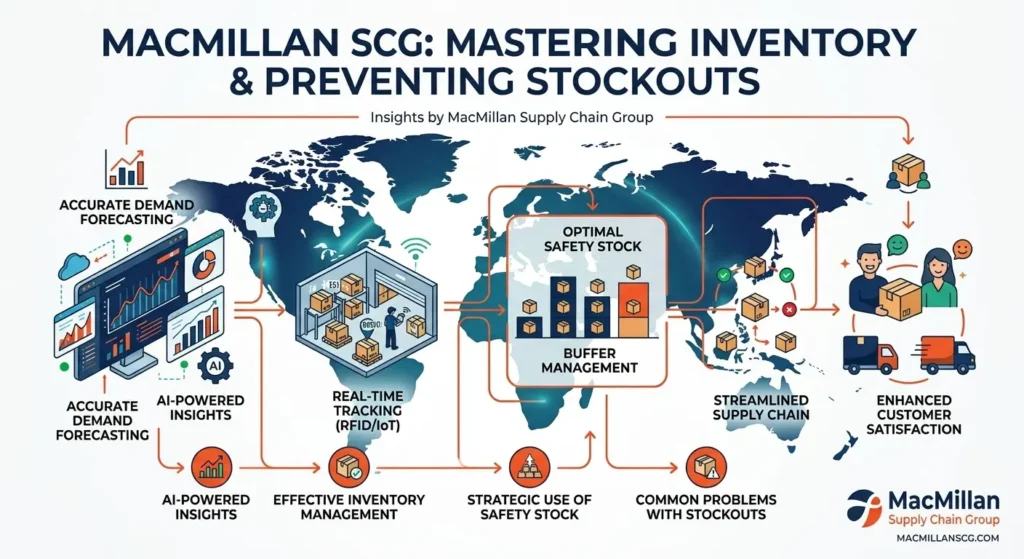
A Quick Summary and Overview Stockouts can significantly impact a business’s bottom line and customer satisfaction. This comprehensive guide delves into the causes and consequences of stockouts, offering practical strategies to prevent them. From leveraging advanced inventory management systems to implementing safety stock, we explore how businesses can optimize their supply chain operations. With insights from MacMillan Supply Chain Group, readers will learn how to enhance inventory accuracy, improve demand forecasting, and utilize buffer stock effectively. Whether you’re a small business owner or a supply chain professional, this article provides valuable information to help you maintain optimal inventory levels and avoid costly stockouts. Introduction In today’s fast-paced business environment, maintaining optimal inventory levels is crucial for success. Stockouts – situations where a product is out of stock and unavailable for purchase – can lead to lost sales, damaged customer relationships, and decreased brand loyalty. As businesses strive to meet ever-changing consumer demands, the challenge of preventing stockouts becomes increasingly complex. This article aims to provide a comprehensive understanding of stockouts, their causes, and most importantly, effective strategies to prevent them. We’ll explore how advanced inventory management techniques, accurate demand forecasting, and strategic use of safety stock can help businesses maintain a delicate balance between avoiding excess inventory and ensuring product availability. Drawing on expertise from MacMillan Supply Chain Group, we’ll delve into cutting-edge solutions and best practices that can transform your inventory management processes. Whether you’re looking to optimize your current systems or completely overhaul your approach to stockout prevention, this guide will equip you with the knowledge and tools to succeed in today’s competitive marketplace. Understanding Stockouts and Their Causes Stockouts occur when a business runs out of inventory for a particular product, leaving them unable to fulfill customer orders. This situation can arise from various factors, often interconnected within the supply chain ecosystem. Understanding these causes is the first step in developing effective prevention strategies. Common causes of stockouts include: Inaccurate demand forecasting: Failing to predict customer demand accurately can lead to underordering and subsequent stockouts. Poor inventory management: Inefficient tracking systems or human error in inventory counts can result in misleading stock levels. Supply chain disruptions: Unexpected events such as natural disasters, transportation issues, or supplier problems can interrupt the flow of goods. Long lead times: Extended periods between ordering and receiving inventory can increase the risk of stockouts during peak demand periods. Seasonal fluctuations: Failure to account for seasonal changes in demand can lead to inventory shortages during high-demand periods. Cash flow constraints: Limited financial resources may restrict a business’s ability to maintain adequate inventory levels. Product obsolescence: Rapid changes in consumer preferences or technology can lead to stockouts of in-demand items. By identifying these potential causes, businesses can develop targeted strategies to mitigate the risk of stockouts and improve overall inventory management. The Consequences of Stockouts Stockouts can have far-reaching consequences that extend beyond the immediate loss of a sale. Understanding these impacts is crucial for prioritizing stockout prevention in your overall business strategy. Lost Sales and Revenue: The most immediate effect of a stockout is the loss of potential sales. Customers unable to purchase their desired product may turn to competitors, resulting in both immediate and future revenue loss. Decreased Customer Satisfaction: Stockouts can frustrate customers, leading to a poor shopping experience and potentially damaging long-term loyalty. Reduced Brand Reputation: Frequent stockouts can erode trust in your brand, as customers may perceive the business as unreliable or poorly managed. Increased Operational Costs: Rushing to restock items can lead to higher procurement and shipping costs, eating into profit margins. Market Share Loss: Consistent stockouts can drive customers to competitors, potentially resulting in a permanent loss of market share. Inaccurate Demand Forecasting: Stockouts can skew historical sales data, making future demand forecasting more challenging. Employee Stress: Staff may face increased pressure and stress when dealing with disappointed customers and scrambling to manage stockouts. By recognizing these consequences, businesses can better appreciate the importance of implementing robust stockout prevention strategies and investing in effective inventory management solutions. Effective Inventory Management and Accuracy Maintaining accurate inventory records is fundamental to preventing stockouts. Effective inventory management involves employing strategies and tools that provide real-time visibility into stock levels, enabling businesses to make informed decisions about replenishment and allocation. Key strategies for improving inventory accuracy include: Implement Advanced Inventory Management Software: Utilize systems that offer real-time tracking, automated reordering, and integration with point-of-sale systems. Regular Cycle Counts: Conduct frequent physical inventory checks to reconcile actual stock levels with system records. ABC Analysis: Categorize inventory based on value and turnover rate to prioritize management efforts. RFID Technology: Employ Radio Frequency Identification for improved tracking and reduced human error in inventory counts. Staff Training: Ensure all employees understand the importance of inventory accuracy and are trained in proper procedures. Streamline Receiving Processes: Implement efficient procedures for checking and recording incoming inventory. Utilize Barcode Systems: Implement barcode scanning for accurate and efficient inventory tracking. By focusing on these areas, businesses can significantly improve their inventory accuracy, reducing the risk of stockouts caused by poor record-keeping or mismanaged stock levels. Accurate inventory data forms the foundation for effective demand forecasting and inventory optimization strategies. Utilizing Buffer Stock and Safety Stock Buffer stock and safety stock are crucial inventory management strategies that help businesses mitigate the risk of stockouts. While similar, these concepts serve slightly different purposes in maintaining optimal inventory levels. Buffer Stock: – Acts as a cushion against minor fluctuations in demand or supply – Helps maintain a consistent level of inventory – Typically smaller than safety stock Safety Stock: – Protects against larger uncertainties in demand or supply chain disruptions – Calculated based on factors like lead time, demand variability, and desired service level – Generally larger than buffer stock Implementing these strategies effectively involves: Analyzing Historical Data: Review past sales and supply chain performance to identify patterns and potential risks. Setting Service Level Targets: Determine the desired level of product availability to balance customer satisfaction with inventory costs. Calculating Optimal Levels: Use statistical models to determine appropriate safety stock levels for each product. Regular Review and Adjustment: Continuously monitor and adjust stock levels based
Revolutionizing E-commerce: The Power of AI in Omnichannel Fulfillment
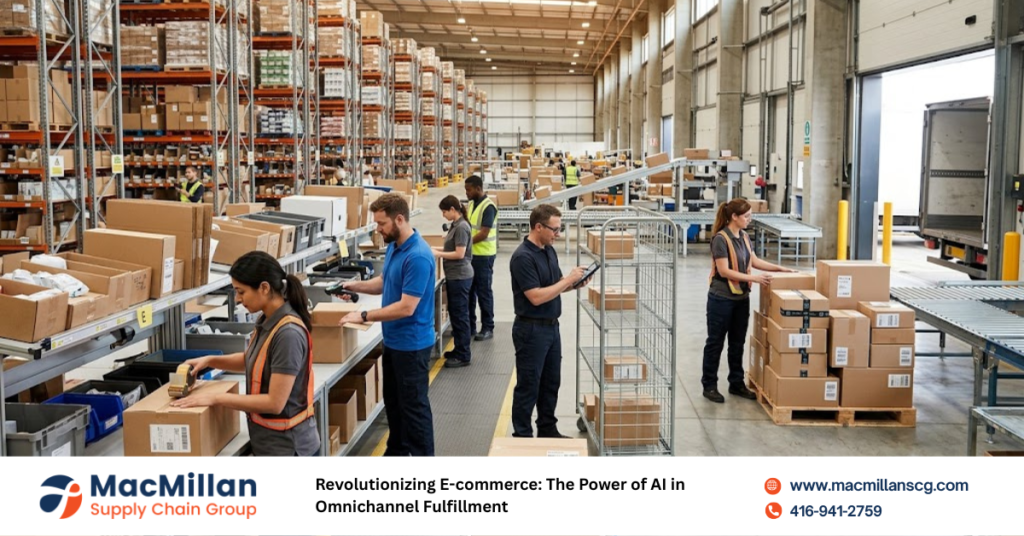
A quick summary and overview Omnichannel fulfillment powered by AI is reshaping the e-commerce landscape, offering businesses unprecedented efficiency and customer satisfaction. This comprehensive guide explores the integration of AI in omnichannel strategies, highlighting its transformative impact on inventory management, order processing, and customer service. We delve into implementation strategies, discuss common challenges, and provide solutions to help businesses thrive in the competitive e-commerce market. With insights from MacMillan Supply Chain Group, a leader in innovative supply chain solutions, this article offers valuable knowledge for companies looking to leverage AI and omnichannel fulfillment to stay ahead in the digital retail space. An introduction In today’s fast-paced e-commerce environment, businesses are constantly seeking ways to streamline operations, reduce costs, and enhance customer experiences. The integration of AI in omnichannel fulfillment presents a game-changing solution to these challenges. By unifying various sales channels and leveraging artificial intelligence, companies can create a seamless, efficient, and responsive supply chain that meets the ever-evolving demands of modern consumers. This article explores the transformative potential of AI in omnichannel fulfillment, offering insights into its implementation, benefits, and the solutions it provides to common e-commerce pain points. Drawing on the expertise of MacMillan Supply Chain Group, we’ll guide you through the intricacies of this innovative approach, helping you understand how it can revolutionize your e-commerce operations and drive sustainable growth in an increasingly competitive digital marketplace. Understanding AI-Powered Omnichannel Fulfillment AI-powered omnichannel fulfillment represents the convergence of artificial intelligence and integrated sales channel management. This approach aims to create a unified, intelligent system that seamlessly connects various touchpoints in the customer journey, from online marketplaces and social media platforms to brick-and-mortar stores. At its core, AI-powered omnichannel fulfillment leverages machine learning algorithms and data analytics to optimize every aspect of the supply chain. This includes: Inventory Management: AI analyzes historical data and market trends to predict demand, ensuring optimal stock levels across all channels. Order Processing: Intelligent systems automate order routing, selecting the most efficient fulfillment method based on factors like location, inventory availability, and delivery timeframes. Customer Service: AI-powered chatbots and virtual assistants provide instant, personalized support across multiple platforms, enhancing customer satisfaction. Returns Management: Smart algorithms streamline the returns process, minimizing costs and improving the customer experience. Data Analysis: AI continuously analyzes performance metrics, providing actionable insights for continuous improvement. By integrating these AI-driven processes, businesses can achieve a level of operational efficiency and customer responsiveness that was previously unattainable. This holistic approach not only reduces costs and minimizes errors but also creates a seamless, personalized shopping experience that meets the high expectations of today’s consumers. Benefits of Implementing AI in Omnichannel Fulfillment The integration of AI in omnichannel fulfillment offers numerous advantages that can significantly impact a business’s bottom line and customer satisfaction levels: Enhanced Inventory Management: AI-powered systems provide real-time visibility across all channels, reducing stockouts and overstock situations. This leads to optimized inventory levels, lower carrying costs, and improved cash flow. Improved Order Accuracy: By automating order processing and routing, AI minimizes human error, resulting in higher order accuracy rates and reduced return rates. Faster Order Fulfillment: AI algorithms can determine the most efficient fulfillment method for each order, reducing processing times and improving delivery speed. Personalized Customer Experiences: AI analyzes customer data to provide tailored product recommendations and personalized marketing messages, increasing customer engagement and loyalty. Predictive Analytics: AI-driven forecasting helps businesses anticipate demand fluctuations, enabling proactive inventory management and marketing strategies. Cost Reduction: Automation of routine tasks and optimization of resource allocation lead to significant cost savings in labor, shipping, and inventory management. Scalability: AI-powered systems can easily adapt to growing order volumes and new sales channels, supporting business expansion without proportional increases in operational costs. Competitive Advantage: Businesses leveraging AI in omnichannel fulfillment can offer superior customer experiences, faster deliveries, and more competitive pricing, setting them apart in the marketplace. Implementing AI-Driven Omnichannel Fulfillment Strategies Successfully implementing AI-driven omnichannel fulfillment requires a strategic approach and careful planning. Here are key steps to consider: Assess Current Infrastructure: Evaluate your existing systems and identify areas where AI can make the most significant impact. This may include inventory management, order processing, or customer service. Data Integration: Ensure all your sales channels and backend systems are integrated to provide a unified data stream for AI analysis. This may require upgrading or replacing legacy systems. Choose the Right AI Solutions: Select AI tools that align with your specific business needs and can integrate seamlessly with your existing infrastructure. Consider factors like scalability, customization options, and vendor support. Pilot Implementation: Start with a small-scale implementation to test the AI system’s effectiveness and identify any potential issues before full-scale deployment. Staff Training: Provide comprehensive training to your team on how to work alongside AI systems and interpret AI-generated insights. Continuous Monitoring and Optimization: Regularly analyze the performance of your AI-driven processes and make adjustments as needed to ensure optimal results. Customer-Centric Focus: Always prioritize the customer experience when implementing new AI technologies. Ensure that automation enhances rather than hinders customer interactions. Compliance and Security: Implement robust security measures to protect customer data and ensure compliance with relevant regulations. By following these steps, businesses can successfully integrate AI into their omnichannel fulfillment strategies, paving the way for improved efficiency, customer satisfaction, and competitive advantage. Overcoming Challenges in AI-Powered Omnichannel Fulfillment While the benefits of AI-powered omnichannel fulfillment are significant, businesses may encounter several challenges during implementation and operation: Data Quality and Integration: AI systems rely on high-quality, integrated data. Many businesses struggle with siloed data systems or inconsistent data across channels. Technology Adoption: Resistance to change among staff or difficulty in adapting to new AI-driven processes can hinder successful implementation. Initial Costs: The upfront investment in AI technology and infrastructure can be substantial, potentially deterring some businesses. Complexity of Implementation: Integrating AI across multiple channels and systems can be complex, requiring specialized expertise. Maintaining the Human Touch: Over-reliance on AI may lead to a loss of personal connection with customers, potentially affecting brand loyalty. Ethical Concerns: The use of AI in customer data analysis raises privacy and ethical concerns that businesses must address. Keeping Pace with AI Advancements: The rapid evolution of AI technology
Periodic Inventory System: Simplifying Inventory Management for Small Businesses

A Quick Summary and Overview A periodic inventory system is a method of managing inventory where stock levels are updated at specific intervals rather than in real-time. This approach is particularly beneficial for small businesses with limited resources, as it simplifies inventory tracking and aligns with financial reporting periods. By conducting physical counts at set times, businesses can accurately calculate the cost of goods sold and reconcile any discrepancies. While this system has its challenges, such as potential for human error and reliance on outdated data, implementing best practices and leveraging technology can mitigate these issues, leading to more efficient inventory management and improved business operations. An Introduction In today’s competitive business landscape, effective inventory management is crucial for the success of small businesses. One approach that has gained popularity among smaller enterprises is the periodic inventory system. This method offers a balance between accuracy and simplicity, making it an attractive option for businesses with limited resources or straightforward inventory needs. At MacMillan Supply Chain Group, we understand the unique challenges faced by small businesses in managing their inventory. We’ve seen firsthand how a well-implemented periodic inventory system can transform operations, reduce costs, and improve decision-making. In this article, we’ll explore the ins and outs of periodic inventory systems, their benefits, implementation strategies, and how to overcome common challenges. Whether you’re considering adopting this system or looking to optimize your current inventory management processes, this guide will provide valuable insights to help your business thrive. Understanding Periodic Inventory Systems A periodic inventory system is a method of tracking inventory where stock levels are updated at specific intervals, typically at the end of an accounting period. Unlike perpetual inventory systems that update in real-time, periodic systems rely on physical counts to determine the quantity of goods on hand. Here’s how it works: At the beginning of the period, the initial inventory is recorded. Throughout the period, purchases are tracked, but individual sales are not deducted from inventory. At the end of the period, a physical count is conducted to determine the ending inventory. The cost of goods sold (COGS) is calculated using the formula:COGS = Beginning Inventory + Purchases – Ending Inventory This system is particularly useful for small businesses because: – It requires less sophisticated technology and fewer resources to implement. – It aligns well with financial reporting periods, making it easier to prepare financial statements. – It provides a regular opportunity to physically verify inventory, helping to identify discrepancies or issues. However, it’s important to note that this system doesn’t provide real-time inventory data, which can be a limitation for businesses with rapidly changing stock levels or those requiring minute-to-minute inventory accuracy. Benefits of Implementing a Periodic Inventory System Adopting a periodic inventory system can offer several advantages, especially for small businesses: Cost-Effective: This system typically requires less investment in technology and personnel compared to perpetual systems, making it budget-friendly for small operations. Simplicity: With fewer moving parts, periodic systems are easier to understand and implement, reducing the learning curve for staff. Alignment with Financial Reporting: By conducting inventory counts at the end of accounting periods, businesses can easily reconcile their inventory with financial statements. Physical Verification: Regular physical counts provide opportunities to identify discrepancies, damaged goods, or theft, improving overall inventory accuracy. Reduced Daily Workload: Since updates are not required after each sale, employees can focus on other tasks during operating hours. Flexibility: This system can be adapted to various business sizes and types, allowing for customization based on specific needs. Improved Cash Flow Management: By having a clear picture of inventory value at regular intervals, businesses can make more informed decisions about purchasing and cash allocation. Easier Tax Preparation: The alignment with accounting periods simplifies the process of preparing tax returns and financial reports. By leveraging these benefits, small businesses can streamline their operations, improve accuracy, and make more informed decisions about their inventory management strategies. Implementing a Periodic Inventory System Successfully implementing a periodic inventory system requires careful planning and execution. Here are key steps to ensure a smooth transition: Establish a Schedule: Determine the frequency of inventory counts based on your business needs and reporting requirements. Common intervals include monthly, quarterly, or annually. Develop Counting Procedures: Create clear guidelines for conducting physical counts, including how to handle discrepancies and record results. Train Staff: Ensure all employees involved in the inventory process understand the new system and their roles within it. Prepare for Counts: Schedule counts during slower business periods and organize inventory to facilitate efficient counting. Utilize Technology: While not as tech-heavy as perpetual systems, incorporating barcode scanners or inventory management software can improve accuracy and efficiency. Document Everything: Keep detailed records of all purchases, returns, and inventory movements between counts. Reconcile Regularly: Compare physical count results with recorded inventory levels and investigate any discrepancies. Analyze Results: Use the data from inventory counts to identify trends, optimize stock levels, and improve purchasing decisions. Continuously Improve: Regularly review and refine your processes based on experiences and changing business needs. Consider Professional Assistance: Partner with inventory management experts like MacMillan Supply Chain Group to optimize your system and overcome implementation challenges. By following these steps, small businesses can effectively implement a periodic inventory system that enhances their operations and supports growth. Calculating Cost of Goods Sold in a Periodic System One of the primary functions of a periodic inventory system is to accurately calculate the Cost of Goods Sold (COGS), a crucial metric for financial reporting and business analysis. Here’s how to calculate COGS using this system: Formula: COGS = Beginning Inventory + Purchases – Ending Inventory Step-by-Step Process: Determine Beginning Inventory: This is the value of inventory at the start of the accounting period. Track Purchases: Record all inventory purchases made during the period. Conduct Physical Count: At the end of the period, perform a physical count to determine the Ending Inventory. Apply the Formula: Use the gathered information to calculate COGS. Example: – Beginning Inventory: $50,000 – Purchases during the period: $200,000 – Ending Inventory (from physical count): $75,000 COGS = $50,000 + $200,000 – $75,000 = $175,000 This calculation provides valuable insights: –
Revolutionize Your Supply Chain: Top 3PL Strategies for Business Growth
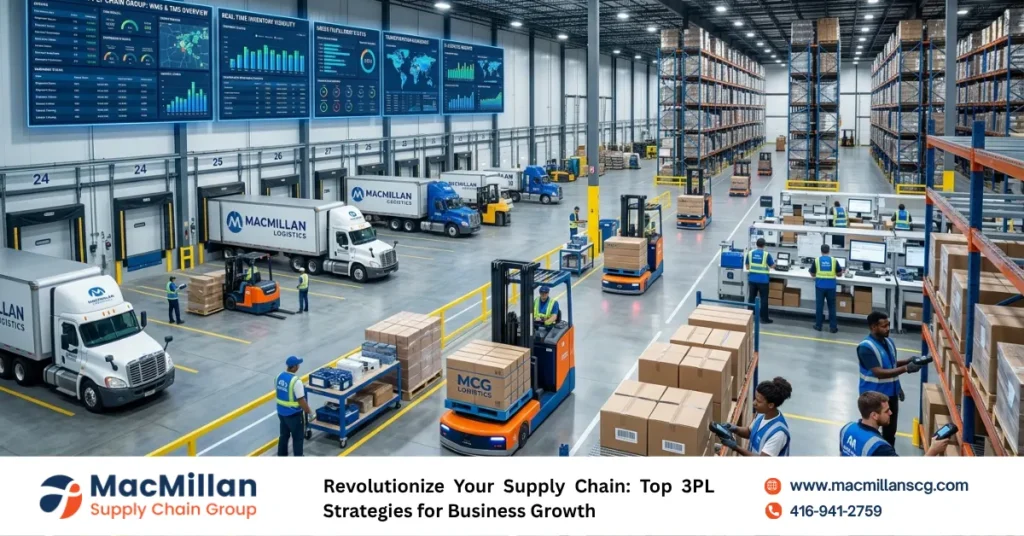
Quick Summary and Overview This comprehensive guide explores essential strategies for selecting and leveraging third-party logistics (3PL) providers to enhance your supply chain performance. We’ll delve into key factors such as technology integration, scalability, and industry expertise, while highlighting how MacMillan Supply Chain Group’s innovative solutions can transform your logistics operations. Learn how to optimize your supply chain, reduce costs, and improve customer satisfaction with the right 3PL partner. Introduction In today’s fast-paced business environment, efficient supply chain management is crucial for success. Third-party logistics (3PL) providers have become indispensable partners for companies looking to streamline their operations, reduce costs, and improve customer satisfaction. However, choosing the right 3PL partner can be a daunting task. This guide will walk you through the essential strategies for selecting and maximizing the benefits of a 3PL provider, with insights into how MacMillan Supply Chain Group can elevate your logistics game. Leveraging Advanced Technology for Supply Chain Visibility In the digital age, technology integration is paramount for effective supply chain management. A top-tier 3PL provider should offer state-of-the-art technology solutions that provide real-time supply chain visibility into your inventory, orders, and shipments. This transparency allows for proactive decision-making and swift problem resolution. Look for 3PLs that offer robust warehouse management systems (WMS), transportation management systems (TMS), and order management systems (OMS) that can seamlessly integrate with your existing platforms. These systems should provide detailed analytics and reporting capabilities, enabling you to track key performance indicators (KPIs) and make data-driven decisions. MacMillan Supply Chain Group, for instance, utilizes cutting-edge technology to offer clients comprehensive visibility across their entire supply chain. Our advanced systems allow for real-time tracking, predictive analytics, and customizable reporting, ensuring you always have your finger on the pulse of your logistics operations. Ensuring Scalability and Flexibility in Logistics Solutions As your business grows and evolves, your logistics needs will change. A valuable 3PL partner should offer scalable and flexible solutions that can adapt to your changing requirements. This includes the ability to handle fluctuations in volume, expand into new markets, and accommodate seasonal peaks without compromising service quality. When evaluating 3PL providers, inquire about their capacity to scale operations up or down based on demand. Look for providers with a diverse network of warehouses and distribution centers, as well as a range of transportation options. This flexibility ensures that your 3PL can support your business through various growth stages and market conditions. MacMillan Supply Chain Group prides itself on offering highly scalable solutions. Our extensive network of strategically located facilities and diverse transportation options allow us to quickly adapt to our clients’ changing needs, ensuring seamless logistics support regardless of market fluctuations or business growth. Prioritizing Industry Expertise and Specialized Services Different industries have unique supply chain requirements, from regulatory compliance to specialized handling procedures. A 3PL provider with deep industry expertise can offer tailored solutions that address your specific challenges and opportunities. When selecting a 3PL, look for providers with a proven track record in your industry. They should demonstrate knowledge of relevant regulations, best practices, and industry trends. Additionally, consider 3PLs that offer specialized services such as kitting, assembly, or reverse logistics, which can add value to your supply chain operations. MacMillan Supply Chain Group boasts extensive experience across various industries, including retail, e-commerce, healthcare, and manufacturing. Our team of experts understands the nuances of each sector and can provide customized solutions that meet your unique needs. From temperature-controlled storage for pharmaceuticals to specialized packaging for fragile electronics, we have the expertise to handle your most complex logistics challenges. Focusing on Customer Service and Continuous Improvement Exceptional customer service is a hallmark of a top-tier 3PL provider. Your logistics partner should be responsive, proactive, and committed to your success. Look for 3PLs that offer dedicated account management, regular performance reviews, and a culture of continuous improvement. A great 3PL should act as an extension of your team, providing insights and recommendations to optimize your supply chain. They should be willing to invest in the relationship, offering training, support, and open communication channels to ensure smooth operations. At MacMillan Supply Chain Group, we prioritize customer satisfaction above all else. Our dedicated account managers work closely with clients to understand their unique needs and challenges, providing personalized support and strategic guidance. We regularly conduct performance reviews and solicit feedback, using these insights to continuously refine and improve our services. Common Problems with 3PL Providers and Our Solutions Many businesses face challenges when working with 3PL providers, including lack of transparency, poor communication, inflexibility, and hidden costs. These issues can lead to disruptions in the supply chain, increased expenses, and ultimately, dissatisfied customers. Our Solutions: Transparency and Communication: MacMillan Supply Chain Group prioritizes clear, open communication with our clients. We provide real-time visibility into operations through our advanced technology platforms, ensuring you’re always informed about the status of your inventory and shipments. Our dedicated account managers are readily available to address any concerns and provide regular updates. Flexibility and Scalability: We understand that business needs can change rapidly. Our flexible contracts and scalable solutions allow you to adjust your logistics operations as needed without being locked into rigid, long-term commitments. Whether you need to scale up for peak seasons or expand into new markets, we have the capacity and capabilities to support your growth. Cost Transparency: Hidden fees can quickly erode your bottom line. At MacMillan, we believe in complete cost transparency. Our pricing models are clear and comprehensive, with no hidden charges. We work with you to develop a customized pricing structure that aligns with your business needs and budget. Continuous Improvement: We don’t just maintain the status quo; we’re constantly looking for ways to improve our services and your supply chain efficiency. Our team regularly analyzes performance data and industry trends to identify opportunities for optimization and cost savings. Industry-Specific Expertise: Generic solutions often fall short in addressing industry-specific challenges. MacMillan’s team of experts brings deep knowledge and experience across various sectors, ensuring that our solutions are tailored to meet
Revolutionizing Logistics: The Power of Shared Warehousing in Modern Supply Chains
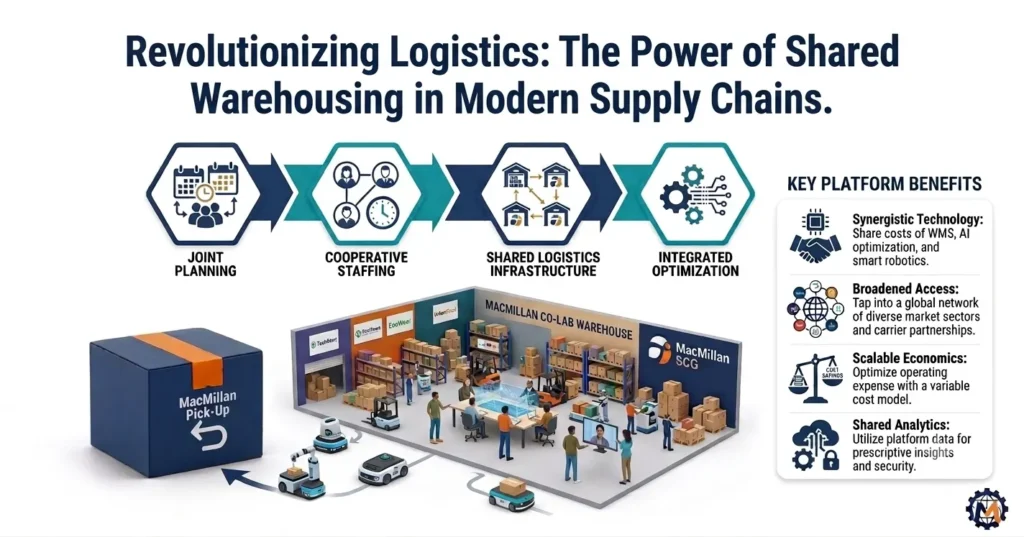
A Quick Summary and Overview Shared warehousing is revolutionizing the logistics landscape, offering businesses a flexible and cost-effective alternative to traditional warehousing models. This innovative approach allows multiple companies to utilize a single warehouse facility, sharing resources, technology, and operational costs. By leveraging shared warehousing, businesses can significantly reduce overhead expenses, improve scalability, and enhance supply chain efficiency. This article explores the numerous benefits, common challenges, and how MacMillan Supply Chain Group’s tailored solutions can help businesses optimize logistics operations. Discover how this game-changing strategy can propel your company towards greater profitability and competitive advantage in today’s dynamic market. An Introduction In the ever-evolving world of supply chain management, businesses are constantly seeking innovative ways to streamline operations, reduce costs, and improve efficiency. One solution that has gained significant traction in recent years is shared warehousing. This revolutionary approach offers a wide range of benefits, from cost savings and increased flexibility to enhanced scalability and improved supply chain performance. As we explore shared warehousing, we will examine its advantages, challenges, and how MacMillan Supply Chain Group helps businesses navigate this transformation. Whether you are a startup or an enterprise, shared warehousing can be a game-changing solution. Cost Savings and Resource Optimization One of the most compelling advantages of shared warehousing is the significant cost savings it offers. By sharing warehouse space, equipment, and labor with other businesses, companies can dramatically reduce their operational expenses. This cost-sharing model allows businesses to access state-of-the-art facilities and technologies that might otherwise be prohibitively expensive. In a shared warehousing environment, fixed costs such as rent, utilities, and maintenance are distributed among multiple tenants. This arrangement not only lowers individual expenses but also provides a buffer against market fluctuations. For instance, during slower periods, businesses aren’t burdened with the full cost of maintaining an underutilized warehouse. Moreover, shared warehousing optimizes resource utilization. Advanced warehouse management systems (WMS) and automated technologies are often standard in these facilities, allowing for more efficient inventory management and order fulfillment. These shared resources can lead to improved accuracy, faster processing times, and reduced labor costs. By leveraging the economies of scale inherent in shared warehousing, businesses can redirect their capital towards core competencies and growth initiatives. This financial flexibility is particularly beneficial for small to medium-sized enterprises and startups, enabling them to compete more effectively with larger corporations without the burden of substantial upfront investments in warehousing infrastructure. Flexibility and Scalability Shared warehousing offers unparalleled flexibility and scalability, allowing businesses to adapt quickly to changing market demands. Unlike traditional warehousing models that often require long-term leases and significant capital investment, shared warehousing provides the agility to scale operations up or down as needed. This flexibility is particularly valuable in today’s volatile market conditions. Seasonal fluctuations, sudden spikes in demand, or unexpected downturns can be managed more effectively in a shared warehousing environment. Businesses can easily adjust their storage space and resources without the constraints of fixed infrastructure or long-term commitments. Furthermore, shared warehousing facilitates geographic expansion without the need for substantial investment. Companies can tap into new markets by utilizing shared facilities in strategic locations, enabling them to test new territories or respond to regional demand shifts without the risk and expense of establishing their own warehouses. The scalability offered by shared warehousing also supports business growth. As companies expand, they can incrementally increase their warehouse space and resources, avoiding the need for large, step-change investments. This gradual scaling allows businesses to align their logistics capabilities closely with their growth trajectory, optimizing costs and operational efficiency at every stage of development. Enhanced Supply Chain Efficiency Shared warehousing significantly enhances supply chain efficiency through strategic location placement and advanced technological integration. These facilities are typically situated near major transportation hubs, urban centers, and key markets, optimizing distribution networks and reducing transportation costs and transit times. By leveraging shared warehousing, businesses can benefit from a more extensive and flexible distribution network without the burden of managing multiple facilities. This strategic positioning allows for faster order fulfillment and improved customer satisfaction, as products can be stored closer to end consumers. Moreover, shared warehouses often employ cutting-edge logistics technologies that individual businesses might find cost-prohibitive to implement independently. These may include advanced inventory management systems, automated sorting and picking technologies, and real-time tracking capabilities. Such technologies streamline operations, minimize errors, and provide valuable data insights for continuous improvement. The collaborative nature of shared warehousing also fosters opportunities for synergies among tenants. For instance, businesses with complementary products or similar customer bases can potentially share transportation resources, further reducing costs and environmental impact. This collaborative approach can lead to more efficient use of resources across the entire supply chain, from inbound logistics to last-mile delivery. Risk Mitigation and Expertise Access Shared warehousing offers significant advantages in terms of risk mitigation and access to specialized expertise. By distributing operational risks among multiple tenants, businesses can better weather market uncertainties and unforeseen challenges. In a shared warehousing model, the burden of facility management, security, and compliance is typically handled by experienced professionals. This arrangement allows businesses to focus on their core competencies while benefiting from the expertise of seasoned logistics specialists. These experts stay abreast of industry best practices, regulatory changes, and technological advancements, ensuring that the warehouse operations remain efficient and compliant. Furthermore, shared warehousing providers often have established relationships with carriers and other supply chain partners. This network can provide businesses with better negotiating power for transportation rates and access to a wider range of logistics services. In times of supply chain disruptions, these relationships can prove invaluable in finding alternative solutions and maintaining business continuity. The diversity of businesses within a shared warehouse can also serve as a natural hedge against industry-specific downturns. If one sector experiences a slump, the overall warehouse operations remain stable due to the varied tenant mix. This resilience can provide peace of mind and operational stability, particularly for smaller businesses or those in volatile industries. Common Problems with the Topic Our Solutions While shared warehousing offers numerous benefits,
Third-Party Logistics (3PL): Revolutionizing Supply Chain Management with MacMillan
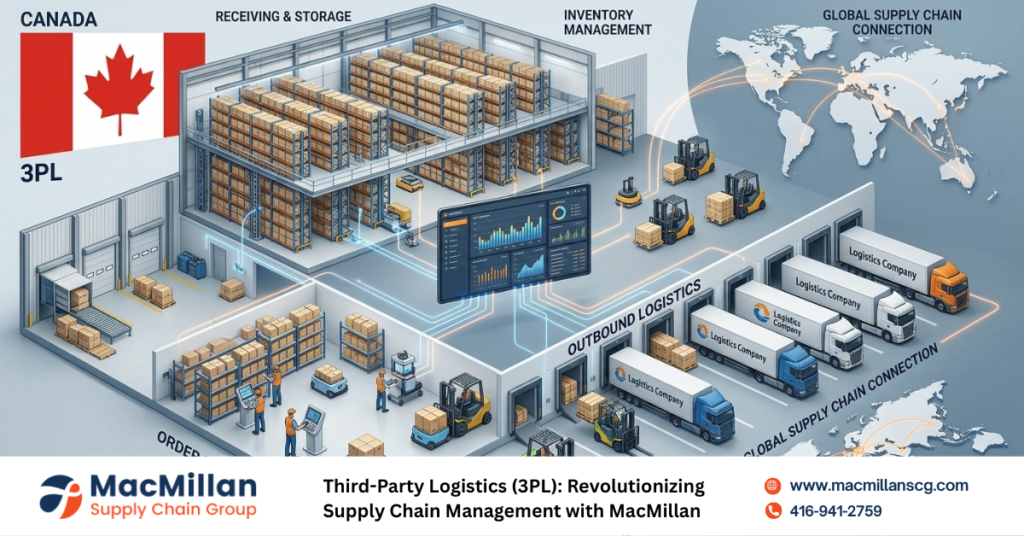
A quick summary and overview Third-Party Logistics (3PL) has become a game-changer in modern supply chain management. By outsourcing logistics operations to specialized providers, businesses can streamline their processes, reduce costs, and focus on core competencies. This comprehensive guide explores the world of 3PL, its benefits, and how it can revolutionize your business operations. From warehouse management to order fulfillment, learn how MacMillan Supply Chain Group’s expertise can help you navigate the complexities of logistics, enhance customer satisfaction, and drive growth. Discover why partnering with a 3PL provider is essential in today’s competitive business landscape. An introduction In today’s fast-paced business environment, efficient supply chain management is crucial for success. As companies strive to meet increasing customer demands and navigate complex global markets, many are turning to Third-Party Logistics (3PL) providers to optimize their operations. 3PL services offer a strategic solution to the challenges of modern logistics, allowing businesses to focus on their core competencies while leaving the intricacies of supply chain management to experts. This article delves into the world of 3PL, exploring its definition, benefits, and how it can transform your business operations. We’ll examine the key services offered by 3PL providers, discuss how to choose the right partner, and highlight the ways in which MacMillan Supply Chain Group can help you achieve your logistics goals. Whether you’re a small startup or a large enterprise, understanding the power of 3PL can be the key to unlocking your business’s full potential. Understanding Third-Party Logistics (3PL) Third-Party Logistics, commonly known as 3PL, refers to the practice of outsourcing logistics and distribution activities to specialized companies. These providers offer a range of services that cover various aspects of the supply chain, from warehousing and inventory management to transportation and order fulfillment. The concept of 3PL has evolved significantly over the years. Initially, 3PL providers primarily focused on transportation and warehousing. However, as supply chains have become more complex, 3PL services have expanded to include value-added activities such as: Inventory management and forecasting Order processing and fulfillment Customs brokerage and international shipping Reverse logistics and returns management Supply chain consulting and optimization By leveraging the expertise and resources of 3PL providers, businesses can achieve greater efficiency, reduce operational costs, and improve customer satisfaction. This is particularly beneficial for companies experiencing rapid growth, entering new markets, or dealing with seasonal fluctuations in demand. Moreover, 3PL providers invest in advanced technologies and systems that many businesses may find cost-prohibitive to implement on their own. This allows companies to access cutting-edge logistics solutions without the need for significant capital investment, further enhancing their competitive advantage in the marketplace. Benefits of Partnering with a 3PL Provider Collaborating with a 3PL provider offers numerous advantages that can significantly impact your business’s bottom line and overall performance. Here are some key benefits: Cost Reduction: 3PL providers can leverage economies of scale, negotiating better rates with carriers and optimizing warehouse space utilization, resulting in lower operational costs for your business. Improved Efficiency: By tapping into the expertise and advanced technologies of 3PL providers, you can streamline your supply chain processes, reducing errors and improving overall efficiency. Scalability: 3PL services can easily adapt to your business’s changing needs, whether you’re experiencing rapid growth or seasonal fluctuations in demand. Focus on Core Competencies: Outsourcing logistics operations allows you to concentrate on your core business activities, such as product development and marketing. Enhanced Customer Satisfaction: With faster and more reliable order fulfillment, you can improve customer satisfaction and loyalty. Global Reach: Many 3PL providers have an international network, enabling you to expand into new markets more easily. Risk Mitigation: 3PL providers can help navigate complex regulatory environments and manage potential supply chain disruptions. Access to Advanced Technology: Benefit from state-of-the-art logistics technologies without significant upfront investment. By leveraging these benefits, businesses can gain a competitive edge in their respective markets and position themselves for sustainable growth. Key Services Offered by 3PL Providers 3PL providers offer a comprehensive range of services designed to optimize your supply chain operations. Here are some of the key services typically offered: Warehousing and Distribution: 3PL providers manage storage facilities and coordinate the movement of goods from warehouses to end customers or retailers. Inventory Management: Utilizing advanced software, 3PLs track inventory levels, manage stock replenishment, and provide real-time visibility into your inventory. Order Fulfillment: From picking and packing to shipping, 3PLs handle the entire order fulfillment process, ensuring timely and accurate deliveries. Transportation Management: 3PLs coordinate and optimize transportation routes, modes, and carriers to ensure cost-effective and efficient shipping. Reverse Logistics: Managing returns, repairs, and recycling processes to minimize waste and improve customer satisfaction. Value-Added Services: Many 3PLs offer additional services such as kitting, assembly, packaging, and labeling to meet specific customer requirements. Supply Chain Consulting: Providing expert advice on supply chain optimization, network design, and process improvement. Technology Integration: Offering advanced software solutions for order management, warehouse management, and transportation management systems. Customs Brokerage: Handling documentation and compliance for international shipments, ensuring smooth cross-border transactions. Analytics and Reporting: Providing valuable insights into supply chain performance through data analysis and custom reporting. By offering these comprehensive services, 3PL providers like MacMillan Supply Chain Group can help businesses streamline their operations and achieve greater efficiency across the entire supply chain. Choosing the Right 3PL Partner Selecting the right 3PL partner is crucial for the success of your logistics outsourcing strategy. Here are key factors to consider when evaluating potential 3PL providers: Industry Experience: Look for a 3PL with expertise in your specific industry, as they’ll understand your unique challenges and requirements. Service Offerings: Ensure the 3PL provides the specific services you need, both now and as your business grows. Technology Capabilities: Assess the provider’s technological infrastructure, including their warehouse management system, order management system, and ability to integrate with your existing systems. Geographic Coverage: Consider the 3PL’s network of warehouses and distribution centers, especially if you need national or global coverage. Scalability: Choose a provider that can accommodate your business’s growth and handle fluctuations in demand. Financial
Mastering Inventory Management: Strategies for Efficiency and Growth
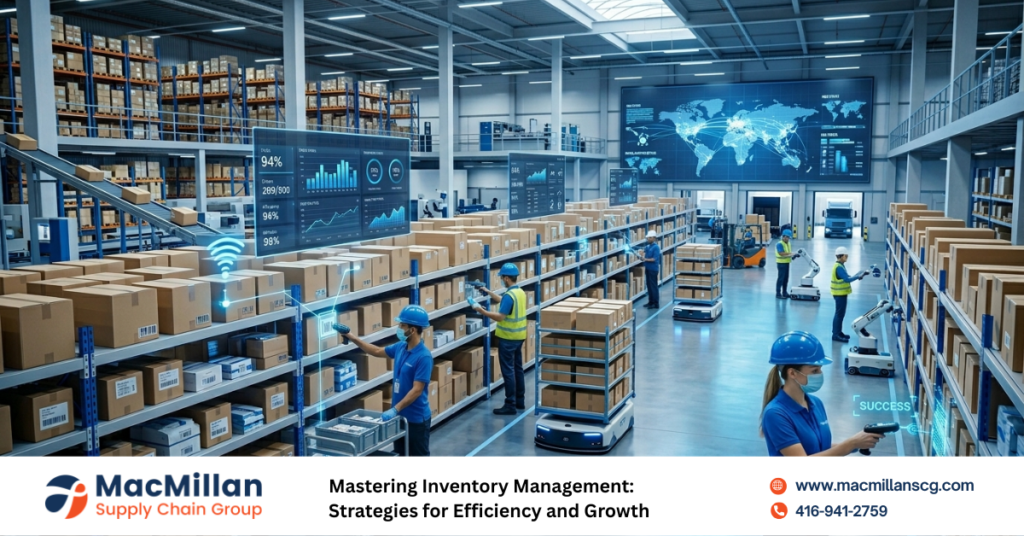
A quick summary and overview Effective inventory management is crucial for business success, impacting everything from customer satisfaction to profitability. This comprehensive guide explores key strategies and best practices for optimizing inventory control, reducing costs, and enhancing overall supply chain efficiency. We’ll delve into the challenges faced by businesses in managing their inventory and how MacMillan Supply Chain Group’s innovative solutions can address these issues. Whether you’re a small business owner or a logistics professional in a large corporation, this article will provide valuable insights to help you master inventory management and drive sustainable growth. An introduction In today’s fast-paced business environment, mastering inventory management is more critical than ever. The ability to efficiently track, control, and optimize inventory levels can mean the difference between thriving and struggling in a competitive marketplace. Effective inventory management not only ensures that you have the right products in the right quantities at the right time but also minimizes carrying costs, reduces waste, and improves cash flow. This article will explore the fundamental principles of inventory management, discuss common challenges, and introduce cutting-edge strategies to enhance your operations. We’ll also highlight how partnering with a trusted logistics expert like MacMillan Supply Chain Group can provide tailored solutions to meet your unique inventory management needs. By the end of this guide, you’ll be equipped with the knowledge and tools to transform your inventory management processes and drive business growth. The Fundamentals of Inventory Management Inventory management is the systematic approach to sourcing, storing, and selling inventory both raw materials and finished goods. At its core, effective inventory management aims to have the right products in the right quantities at the right time. This delicate balance is crucial for meeting customer demand while minimizing excess stock and associated costs. Key components of inventory management include: Demand Forecasting: Predicting future sales to inform purchasing decisions. Stock Control: Maintaining optimal inventory levels to meet demand without overstocking. Inventory Tracking: Accurately monitoring stock levels, locations, and movements. Order Management: Efficiently processing and fulfilling customer orders. Supplier Relationship Management: Collaborating with suppliers to ensure timely and accurate deliveries. Implementing these fundamentals requires a combination of strategic planning, operational execution, and often, technological support. Modern inventory management systems integrate these components, providing real-time visibility and data-driven insights to inform decision-making. Understanding these basics is crucial, but the real challenge lies in applying them effectively in your specific business context. This is where partnering with experts like MacMillan Supply Chain Group can make a significant difference, offering tailored strategies and advanced tools to optimize your inventory management processes. Common Inventory Management Challenges Even with a solid understanding of inventory management principles, businesses often face several challenges in practice. Recognizing these obstacles is the first step toward overcoming them: Inaccurate Forecasting: Predicting demand accurately is complex, especially in volatile markets or for seasonal products. Inaccurate forecasts can lead to overstocking or stockouts. Inventory Obsolescence: Rapidly changing consumer preferences or technological advancements can render inventory obsolete, resulting in financial losses. Poor Visibility: Lack of real-time inventory data across multiple locations or channels can lead to inefficient stock allocation and missed sales opportunities. Inefficient Processes: Manual inventory counts and data entry are time-consuming and prone to errors, impacting overall efficiency. Cash Flow Management: Tying up too much capital in inventory can strain cash flow, affecting other areas of the business. Supply Chain Disruptions: External factors like natural disasters, geopolitical events, or pandemics can disrupt supply chains, affecting inventory levels. Multichannel Complexity: Managing inventory across various sales channels (e-commerce, brick-and-mortar, wholesale) presents coordination challenges. Warehouse Space Optimization: Inefficient use of storage space can increase carrying costs and complicate inventory management. Addressing these challenges requires a multifaceted approach, combining strategic planning, technological solutions, and often, expert guidance. MacMillan Supply Chain Group specializes in helping businesses navigate these complexities, offering customized solutions to overcome inventory management hurdles. Advanced Strategies for Inventory Optimization To stay competitive in today’s market, businesses must go beyond basic inventory management practices and embrace advanced strategies for optimization. Here are some cutting-edge approaches: Just-in-Time (JIT) Inventory: This approach minimizes inventory holding by receiving goods only as they are needed in the production process, reducing carrying costs and improving cash flow. ABC Analysis: Categorizing inventory items based on their value and importance allows for more focused management of high-priority stock. Vendor-Managed Inventory (VMI): Shifting inventory management responsibilities to suppliers can streamline processes and reduce administrative burden. Cross-Docking: This technique involves transferring incoming shipments directly to outgoing vehicles, minimizing storage time and handling costs. Demand-Driven Material Requirements Planning (DDMRP): This method combines aspects of Material Requirements Planning (MRP) and Lean principles to improve inventory positioning and flow. Artificial Intelligence and Machine Learning: Leveraging AI for demand forecasting and inventory optimization can significantly improve accuracy and efficiency. IoT and RFID Technology: Implementing Internet of Things (IoT) devices and Radio-Frequency Identification (RFID) tags enables real-time tracking and automated data collection. Continuous Review System: This approach involves constantly monitoring inventory levels and placing orders when stock reaches a predetermined reorder point. Implementing these strategies effectively often requires specialized expertise and advanced technological solutions. MacMillan Supply Chain Group offers comprehensive support in adopting and integrating these advanced techniques into your inventory management processes. The Role of Technology in Modern Inventory Management Technology plays a pivotal role in revolutionizing inventory management practices. Advanced software solutions and hardware innovations are enabling businesses to achieve unprecedented levels of efficiency and accuracy in their inventory processes. Key technological advancements include: Warehouse Management Systems (WMS): These comprehensive software solutions optimize warehouse operations, from receiving and put-away to picking, packing, and shipping. Enterprise Resource Planning (ERP) Systems: ERP platforms integrate inventory management with other business functions, providing a holistic view of operations. Inventory Optimization Software: Specialized tools use advanced algorithms to determine optimal stock levels, reorder points, and safety stock. Barcode and RFID Scanners: These devices enable quick and accurate inventory tracking, reducing human error and increasing efficiency. Automated Storage and Retrieval Systems (AS/RS): Robotic systems that automate the process