
Top Trends for Canadian 3PL Companies in 2026: Fulfillment, Logistics, and Growth in a Thriving Market
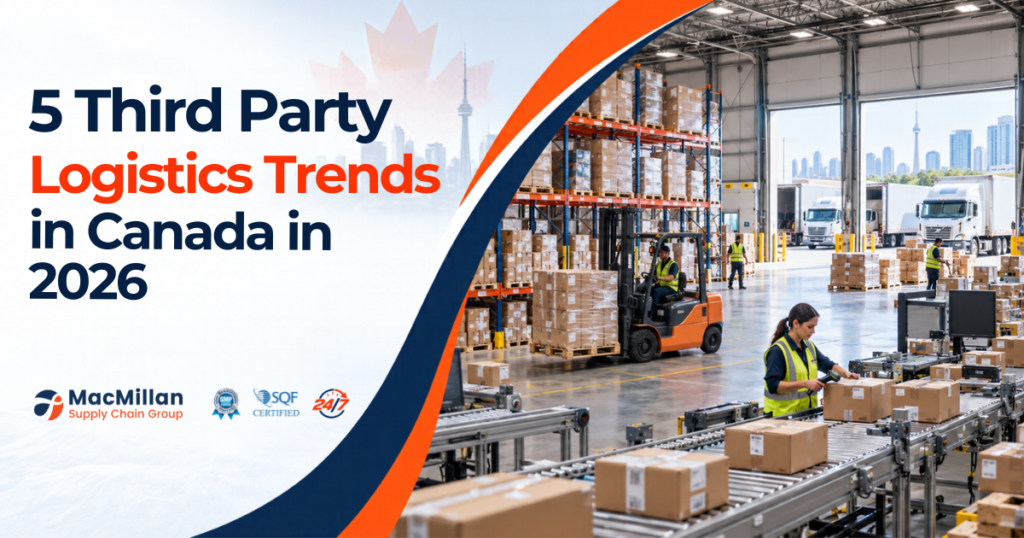
The logistics industry in Canada is growing at an impressive rate, with 2023 poised to bring in new macro trends that will impact the third-party logistics (3PL) industry. The need for efficient distribution networks to meet the demands of e-commerce has led to the rise of omnichannel distribution, and 3PL providers are developing technology platforms for real-time visibility and inventory management. In response to the emphasis on sustainability, 3PL providers in Canada are focusing on implementing sustainable practices in their operations. Advancements in technology such as AI, blockchain, and IoT are being adopted to improve supply chain visibility and efficiency, while automation technologies are helping reduce labor costs and increase productivity. The shift towards nearshoring is also likely to continue in 2023, with an increase in demand for services that support domestic supply chains. This blog will explore these trends and what they mean for the future of 3PL in Canada. Table of Contents E-commerce and Omnichannel Distribution Emphasis on Sustainability Advancements in Technology Increased Adoption of Automation Shift to Nearshoring 5 Third Party Logistics Trends in Canada in 2026 1. E-commerce and Omnichannel Distribution The growth of e-commerce in Canada has been one of the biggest drivers of the 3PL market. With more and more consumers turning to online shopping, businesses must optimize their distribution networks to meet demands. This has led to the rise of omnichannel distribution; where companies use multiple channels to fulfill orders, such as online marketplaces, brick-and-mortar stores, and distribution centers. To support these complex networks, 3PL providers are developing sophisticated technology platforms that allow for real-time visibility and inventory management. In addition, the use of value-added services, such as order fulfillment and delivery times, has become increasingly important for e-commerce businesses looking to gain a competitive advantage in the Canadian market. 3PL companies can provide these services to help businesses improve their customer satisfaction and increase their revenue. 2. Emphasis on Sustainability Sustainability is becoming an increasingly important consideration for businesses and consumers alike. In response, many 3PL providers in Canada are focusing on implementing sustainable practices in their operations. The use of electric vehicles is one of the most effective ways to reduce carbon emissions and transportation costs. Additionally, companies are adopting sustainable practices such as green packaging, reducing the amount of touches a package can go through, and implementing reverse logistics. These practices not only reduce a company’s environmental impact but can also lead to cost savings and improved customer satisfaction. 3. Advancements in Technology In 2023, we can expect to see more companies implementing technologies such as artificial intelligence (AI), blockchain, and the Internet of Things (IoT) to improve supply chain visibility and efficiency. These technologies can help reduce costs, improve operational performance, and enhance the overall customer experience. With the use of big data, 3PL providers can analyze customer behavior and demand patterns to better forecast inventory needs and optimize their logistics operations. Furthermore, real-time tracking of inventory and shipments through the use of IoT sensors can improve transparency and efficiency in the supply chain. 4. Increased Adoption of Automation Automation has been a key trend in the logistics industry for several years, and in 2023, we expect to see even more widespread adoption. With the rise of e-commerce, businesses are under increasing pressure to fulfill orders quickly and accurately. Automation technologies such as robotics, drones, and automated storage and retrieval systems (AS/RS) can help companies achieve these goals. Additionally, automation can help reduce labor costs and increase productivity, making it an attractive option for many 3PL providers. Real-time visibility of inventory through automated systems can also improve inventory management and minimize errors. 5. Shift to Nearshoring As a result of the disruptions caused by the COVID-19 pandemic, many companies are re-evaluating their supply chain strategies. This has led to a trend towards nearshoring or bringing production closer to home. This shift is likely to continue in 2023, which means that 3PL providers in Canada may see an increase in demand for services that support domestic supply chains. 3PL companies with a large warehouse and distribution space in the Greater Toronto Area (GTA) can offer businesses a better choice for cost-effective transportation services and distribution costs. Furthermore, a qualified team of industry experts can assist businesses in developing their core competencies in supply chain management and product development, providing additional services and benefits to their customer base. Conclusion: Third Party Logistics Canada The logistics industry in Canada is undergoing a significant transformation with new trends that require 3PL providers to be adaptable and innovative to meet the changing needs of their clients. The growing importance of sustainability, technology, and automation is expected to continue shaping the industry in the coming years. The adoption of new technologies can help 3PL providers increase efficiency, reduce costs, and enhance customer experience. Furthermore, the shift towards nearshoring will have an impact on the logistics industry in Canada, and 3PL providers can position themselves for success by supporting this trend. The future of the logistics industry in Canada is promising and offers significant opportunities for growth and development. Sources “The Future of Canadian Logistics and Third-Party Logistics (3PL) Services.” Global Trade Magazine, 17 Aug. 2021, https://globaltrademag.com/the-future-of-canadian-logistics-and-third-party-logistics-3pl-services/. “5 Trends Shaping the Future of Canadian Logistics.” UPS Compass, 11 Oct. 2021, https://compass.ups.com/5-trends-shaping-future-canadian-logistics/. “3PL Industry Trends to Watch in 2023.” Cerasis, 3 Jan. 2023, https://cerasis.com/3pl-industry-trends-to-watch-in-2023/. “Canadian Logistics Overview,” TIACA. “2023 Logistics Industry Outlook: Key Trends and Predictions,” Armstrong & Associates. “Third-Party Logistics Market in Canada – Growth, Trends, and Forecasts (2020-2025),” Mordor Intelligence. Frequently Asked Questions What are the major third-party logistics (3PL) trends in Canada in 2026? Major 3PL trends in Canada include e-commerce and omnichannel fulfillment, sustainable logistics practices, AI-driven supply chain management, warehouse automation, and nearshoring to strengthen domestic supply chains. How is e-commerce changing the 3PL industry in Canada? E-commerce is increasing demand for faster order fulfillment, real-time inventory tracking, efficient returns management, and flexible distribution networks. 3PL providers help businesses manage orders across online marketplaces, retail stores, and other sales
E-commerce Fulfillment Guide 2026
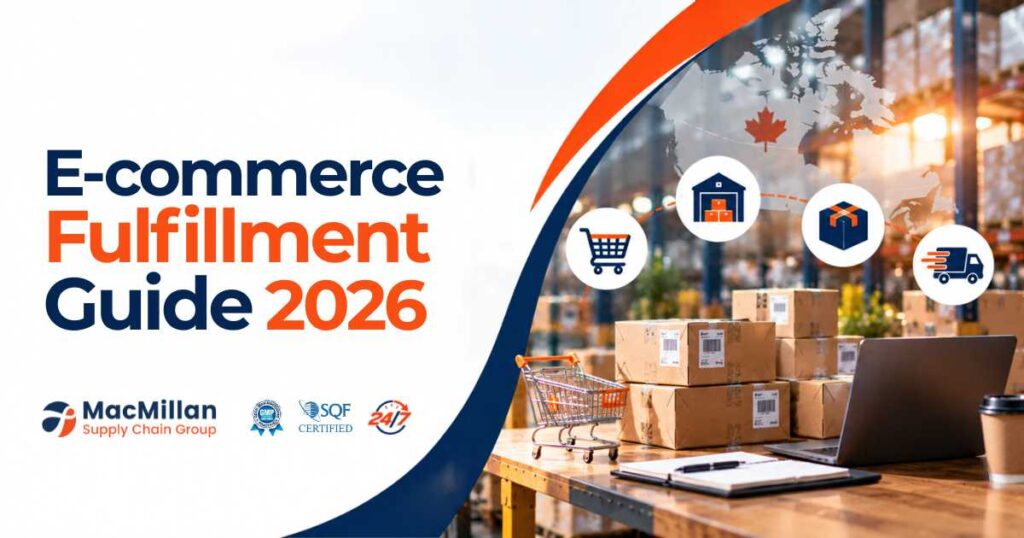
If you’ve ever wondered why some online stores thrive while others struggle, the secret often lies in how they handle order fulfillment. Did you know that 48% of online shoppers will abandon their carts if delivery takes more than a week? These stats highlight the importance of efficient e-commerce fulfillment. Effective e-commerce fulfillment is not merely a logistical requirement but a vital element in fostering customer satisfaction and facilitating business growth. It involves establishing a seamless connection between your products and customers, thereby ensuring that each order not only fulfills a need but also reinforces the strength and reliability of your brand. In this blog, we will explore the fundamental aspects of e-commerce fulfillment, aiming to assist you in optimizing time efficiency, minimizing costs, and enhancing customer satisfaction. What Is E-Commerce Fulfillment and Why Does It Matter? E-commerce fulfillment is a critical section of your supply chain, involving the reception of bulk goods, the storage of stock-keeping units (SKUs), and the execution of order processing, which includes picking and packing, as well as the delivery of products to customers. The key processes in this segment include: Inbound Shipments: E-commerce fulfillment facilitates the arrival and placement of products on shelves in e-commerce fulfillment centers. Warehousing and Storage: It strategically stores SKUs in inventory for future orders. Order Fulfillment: It involves the meticulous process of selecting and packaging orders for dispatch. Order Delivery: The shipping phase is where orders are transported to customers. Reverse Logistics: Managing the returns process and ensuring efficient handling of returned goods. E-commerce fulfillment involves ensuring that products are stored correctly, orders are processed efficiently, and customers receive their purchases promptly and in good condition. Good fulfillment practices can lead to happier customers and more successful business operations. The E-Commerce Fulfillment Process An e-commerce fulfillment process commences upon a customer’s online purchase of a product and concludes with the delivery of that product. Let’s explore the list of various types of e-commerce fulfillment services: Order Fulfillment Services This fundamental service encompasses the selection, packaging, and dispatch of products to customers. Specialist 3PLs, such as MacMillan, enhance this process, ensuring efficiency and effectiveness for e-commerce entities. Order Management This involves the tracking of all customer orders. It includes monitoring the status of each order, analyzing customer purchasing patterns, and managing inventory levels to prevent stock shortages. Inventory Management This crucial step involves the administration of a business’s product inventory. It encompasses the storage, replenishment, and estimation of required stock levels, aiming to perfectly balance supply with customer demand. E-Commerce Shipping Shipping is the method of product delivery to customers. It varies depending on the origin and destination of the shipment, the nature of the products, and the desired speed of delivery. Businesses range from self-handling shipments to collaborating with carriers for optimized rates. Warehousing This refers to the storage of products prior to their purchase. Warehousing solutions can range from modest in-house storage to extensive warehouse facilities, with a focus on maintaining product safety and organization. Returns Management This process involves the handling of returned merchandise, including its receipt, inspection, and reintroduction into available inventory. Given the nature of online shopping, an efficient returns process is vital. Fulfillment Software This technology streamlines the fulfillment process by linking e-commerce platforms with fulfillment centers. It provides real-time updates on orders and inventory, and can strategically allocate orders to the most suitable fulfillment center. International Order Fulfillment This pertains to the fulfillment of orders for international customers, a process complicated by varying international regulations, tariffs, and taxes. Collaboration with experienced fulfillment providers is advisable to navigate these complexities. Pick and Pack Fulfillment This operation involves retrieving items from storage and preparing them for shipment upon receipt of an order. Efficiency in this process is key, whether it involves batch picking or specialized packing stations. Kitting and Assembly Employed for products that require specific assembly or arrangement before shipping, this service involves additional steps such as the combination of various components, which may require more time and resources. Each of these components plays a pivotal role in the smooth operation of an e-commerce business, contributing to overall efficiency, customer satisfaction, and business growth. Choosing the Right E-Commerce Fulfillment Model for Your Business E-commerce fulfillment is a critical aspect of any online business, impacting customer satisfaction and operational efficiency. As your business evolves, so too might your fulfillment strategy. Understanding the different models available can help you make the best choice for your business at each stage of its growth. 1. In-House Fulfillment This approach involves the complete management of the fulfillment process internally, ranging from utilizing a modest space like a spare room for initial storage to potentially expanding into a full-scale warehouse as the business grows. Why choose it? Autonomy in Operations: It provides the freedom to manage every aspect of the fulfillment process, ensuring each order adheres to the highest standards set by the business. Personalized Customer Experience: It offers the opportunity to customize packaging and include unique additions such as thank-you notes or promotional items, thereby enhancing the overall customer experience. Operational Flexibility: Enables the ability to make swift modifications to orders and address customer-specific requests or concerns promptly. Considerations: Scalability Challenges: Increasing order volumes can place substantial demands on both time and space, potentially impeding the business’s ability to grow effectively. Resource-Intensive: Requires significant investment in physical space, equipment, and staff. Managing logistics can become a complex task that diverts attention from other business areas. 2. Outsourced Order Fulfillment (3PL) Outsourced order fulfillment, commonly known as Third-Party logistics (3PL), involves delegating the entirety of supply chain management to external logistics providers. Companies like MacMillan assume responsibilities for storing, selecting, packaging, and dispatching products. Why choose it? Access to Expertise: Engaging with a 3PL provider allows businesses to benefit from their extensive experience and specialized resources, leading to more streamlined and professional fulfillment operations. Scalability: 3PL services are inherently scalable, efficiently accommodating an increase in order volumes without necessitating additional investment in space or personnel by the
E-commerce Inventory Management: 7 Best Practices
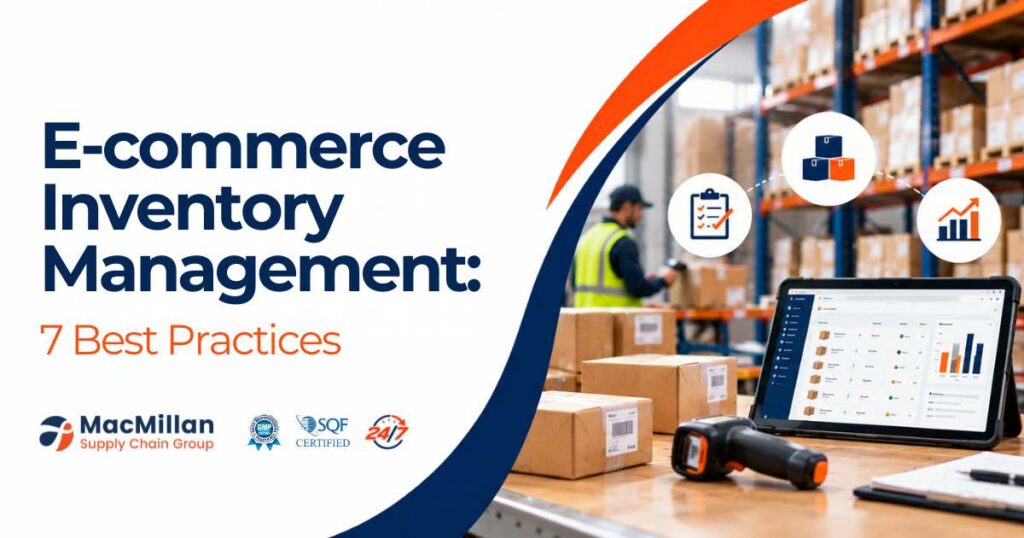
As the busiest time of the year draws near, the effectiveness of your e-commerce fulfillment in peak season strategies comes into sharp focus. This crucial period, characterized by a significant increase in sales, tests the resilience and efficiency of your e-commerce operations. During peak season in e-commerce, your business transforms into more than just a retail outlet; it becomes a dynamic center of operations. The influx of orders is not just a revenue booster but a critical test of your ability to deliver satisfaction with each package. The hurdles in e-commerce fulfillment in peak season, such as inventory management and meeting accelerated shipping requirements, are always challenging. This blog aims to equip you with 15 essential strategies for e-commerce fulfillment in peak season, ensuring your business survives and flourishes during these high-demand times. E-commerce Fulfillment in Peak Season: Factors You Should Consider Achieving peak performance in e-commerce fulfillment in peak season is crucial for sustained growth and customer satisfaction. It’s not merely about surviving the high-demand periods; it’s about leveraging these challenges as opportunities for significant improvement and growth. Think about these important questions as you customize strategies to fit your specific business requirements: How can you harness the power of technology to make your fulfillment process more efficient? Today’s technological advancements offer many tools and systems designed to optimize operations. The right technology can be a game-changer, from inventory management software to automated shipping solutions. How can you build stronger, more collaborative relationships with your suppliers and logistics partners? Solid partnerships are the backbone of successful fulfillment. Open communication, mutual understanding of expectations, and flexibility can help build a resilient supply chain ready to adapt to the dynamic demands of peak seasons. How can you utilize data and insights from previous peak seasons to refine your future strategies? Historical data is a goldmine of insights. Analyzing past performance, customer feedback, and logistical challenges can guide your planning, helping you anticipate and mitigate potential issues before they arise. Engaging with these considerations for e-commerce fulfillment in peak season can transform challenges into stepping stones for success. This approach sets a solid foundation for your business to survive and excel during the busiest times of the year. The Challenges of E-commerce Fulfillment in Peak Season During peak seasons, e-commerce businesses encounter specific challenges in e-commerce fulfillment. Recognizing and tackling these obstacles is crucial for preserving efficiency and ensuring customer satisfaction. Below is an analysis of the main challenges in e-commerce fulfillment in peak season and strategies for their effective management: Managing Increased Demand Peak seasons often bring an overwhelming increase in product demand. This surge tests the limits of inventory management and shipping logistics. To tackle this, businesses need to ensure robust stock levels. Effective demand forecasting becomes crucial here. Though high demand is a positive sign, it requires strategic planning and resource allocation to ensure seamless fulfillment. Controlling Shipping Costs Shipping costs typically rise during peak periods due to increased demand. To mitigate this, businesses can negotiate with carriers for better rates, explore diverse shipping options, optimize packaging for cost-efficiency, and consider using shipping software or fulfillment centers. Additionally, passing some shipping costs to customers while maintaining transparency can be a viable strategy. Meeting Tight Delivery Schedules During peak seasons, the expectation for swift deliveries intensifies, making e-commerce fulfillment in peak season a critical focus. Challenges such as shipping delays caused by weather or logistical issues, particularly in areas with evolving infrastructure, necessitate a robust delivery system and thorough contingency planning. Staffing for Peak Demand A common challenge in e-commerce fulfillment in peak season is the requirement for extra staff to manage the surge in orders. Efficiently recruiting and training temporary staff is vital. Having a streamlined process to rapidly onboard new employees is essential to maintain operational efficiency during these peak periods. Handling Returns and Exchanges Peak seasons can also see an uptick in returns and exchanges. Having a clear, efficient returns policy is imperative. This helps manage the increased volume and maintain customer satisfaction and trust. Anticipating and preparing for these hurdles allows for smoother operations and a more positive customer experience. Top 15 Strategies for E-Commerce Fulfillment in Peak Season Excellence Navigating e-commerce fulfillment in peak season requires more than just hard work; it calls for a meticulously crafted strategy. The challenges during these high-demand periods are numerous, yet with the appropriate approach, they offer substantial opportunities for business growth and improving customer satisfaction. Let’s delve deeper into each strategy to ensure your e-commerce business thrives during these critical times: In-Depth Advance Planning Well ahead of the busy times, it’s crucial to prepare the foundation for e-commerce fulfillment in peak season. This preparation includes securing a strong inventory level and working closely with your shipping partners. Focus on strategies for handling order surges, emphasizing flexibility and scalability in your operations. Stocking of High-Demand Products Utilize historical sales data to pinpoint products that historically see a surge in demand. Proactively stocking these items helps avoid stock shortages, ensuring you’re well-equipped to meet customer needs without interruption. Refining Reorder Procedures Streamline your inventory management for more frequent restocking, particularly for your best-selling items. Prepare your team and suppliers for swift reordering processes. Employing advanced technology can greatly aid in making this process more efficient and less prone to errors. Elevating Reorder Thresholds Proactively adjust the reorder levels for your high-demand products. By doing so, you maintain a healthier stock level, significantly reducing the likelihood of facing stockouts during peak demand. Fortifying Vendor Networks It’s important to solidify your relationships with suppliers as part of your e-commerce fulfillment in peak season strategy. Being proactive in this way guarantees they are prepared for quick and larger orders, a key factor in maintaining a fluid and responsive supply chain. Broadening Shipping Partnerships Diversify your shipping options to meet customer delivery expectations better. This includes forming new partnerships and exploring various shipping methods to manage the increased volume of deliveries effectively. Holistic Preparation of E-commerce Supply Chain and Logistics Undertake a comprehensive
Choosing The Right WMS: Streamlining Warehouse Operations
In today’s fast-paced market place, efficiency is paramount. To enhance productivity and reduce costs in 3PL warehousing operations, many businesses turn to Warehouse Management Systems (WMS). WMS software helps ensure inventory is received, stored, picked, packed, shipped in the most efficient way possible. With all these functions occurring simultaneously across different physical locations within the warehouse, it’s easy for processes to become misaligned or data to be lost. This is where WMS comes in. This article delves into WMS logistics, exploring its key features and processes. Moreover, how MacMillan SCG can manage your inventory and warehousing operations in real-time using WMS integration with your systems in order to streamline business processes. What is warehouse management system logistics? A warehouse management system, or a WMS gives you the tools, processes, automation, and reporting you need to manage your 3PL warehousing operations. A key component of WMS logistics is inventory management as it allows warehouse managers to accurately track and control inventory levels, ensuring the right products are available at the right time, thereby preventing stockouts and overstock situations. This real-time visibility into inventory levels enables better purchasing, storage, and order fulfillment decisions. WMS logistics also involves order management. A WMS system automates order processing, reducing errors and delays, and enables accuracy in order picking and packing. Warehouse space is a valuable asset, and effective space management is essential for maximizing storage capacity and operational efficiency. WMS software uses tools like slotting algorithms to determine the most suited location for each product based on demand, size, and weight. This helps in optimizing space utilization. What are the processes that make up a WMS? At its core, a WMS is a software system that automates and streamlines 3PL warehousing, acting as a central hub connecting various aspects of warehouse management. By leveraging real-time data and analytics, a WMS enables businesses to make informed decisions and optimize their warehouse processes. Inventory management: Provides visibility into inventory systems, tracking stock levels, product location and movement. Order management: Efficiently processes and fulfills customer orders, ensuring timely delivery and reducing errors while allowing order tracking. Picking and packing: Optimizes the picking and packing process, suggesting optimized routes and methods to minimize labor and time. Shipping and tracking: Organizing the shipping process by generating shipping labels, coordinating carrier pickups, and providing real-time tracking information to customers. What are the Key features of a WMS? A Warehouse Management System (WMS) offers a variety of features designed to streamline 3PL warehousing operations. Key features include: Real-time data: a WMS provides an up-to-date information on inventory levels, orders and shipments Barcode scanning: Utilizing barcode scanning technology, a WMS eliminates manual data entry, reduces errors, and enhances customer satisfaction. RFID integration: A WMS enables automatic identification and tracking of inventory through RFID technology, increasing visibility and control over stock. Automated workflows: A WMS automates repetitive tasks such as order processing and inventory replenishment, freeing up time for more strategic activities. These key features can enhance 3PL warehousing operations. For instance, implementing a wave picking strategy, where multiple orders are picked simultaneously, can reduce travel time within the warehouse and boost productivity. Benefit of implementing a WMS in 3PL Warehousing A WMS can help you build an automated and cost-effective warehouse by optimizing inventory counting, cost cutting, order status and more. Let’s have a closer look at the key advantages: More accurate inventory counts: When implemented correctly, a Warehouse Management System (WMS) provides real-time visibility into your inventory levels, improving risks of inventory shrinkage. This is achieved through barcode scanning of both incoming inventory and each unit picked for orders. The accurate visibility offered by a WMS at MacMillan SCG helps avoid stockouts by allowing you to track inventory levels accurately. Some WMS solutions also offer auto generated reminders to reorder inventory when a SKU reaches a specific threshold. Enhanced Order Accuracy: A WMS can integrate with your e-commerce platform to ensure real-time stock updates, reducing the likelihood of customers placing orders for out-of-stock items. This enhanced accuracy in inventory management leads to higher order accuracy rates and faster movement of orders through the supply chain. For businesses with inventory distributed across multiple warehouses or fulfillment centers, advanced WMS solutions can forward orders to the most strategic location, which can reduce shipping cost and delivery times. More productive warehouses: Implementing a WMS software can streamline tasks and standardize processes, ensuring that operations are performed correctly the first time, reducing the need for costly rework. Cost cutting: In the long run, a WMS delivers cost savings by: Minimizing manual errors such as stowing mistakes and mispacks Streamlining complex tasks with templates, reducing need of work Accelerating fulfillment processing, maximizes labor productivity Preventing inventory shrinkage Centralizing 3PL warehousing operations into a single platform, reducing needs for various tools. 2x Shipping: Customers demand faster shipping rates; a study shows that 57% of consumers would hesitate to use a retailer again if their delivery was late. At MacMillan with integrated WMS and proven On-time-Delivery track records we provide higher customer satisfaction. The future of WMS The future of WMS in 3PL warehousing is exciting with new technological advancements and evolving customer expectations which are shaping the industry. Some of the new trends include: Integration with ecommerce platforms: As ecommerce continues to grow, WMS will integrate with platforms like Shopify and Amazon to streamline order fulfilment processes. Automation and robotics: These technologies are set to revolutionize 3PL warehousing operations. Analytics and AI: Advanced analytics and artificial intelligence will enable businesses to extract value from warehouse data. IoT and real-time tracking: Internet of things will enable tracking of inventory and assets, providing unparalleled visibility and control. How can MacMillan’s WMS help your business? MacMillan SCG offers the best-in-class WMS helps you manage inventory in real time, reduce picking, packing, and shipping errors, and scale with ease. Using an integrated WMS, MacMillan has achieved automated tasks such as carrier selection, label printing, and documentation, which saves time, reduces errors, and improves shipment accuracy. Integration with transportation management systems
How MacMillan and Section 321 Are Revolutionizing the Canadian Logistics Landscape
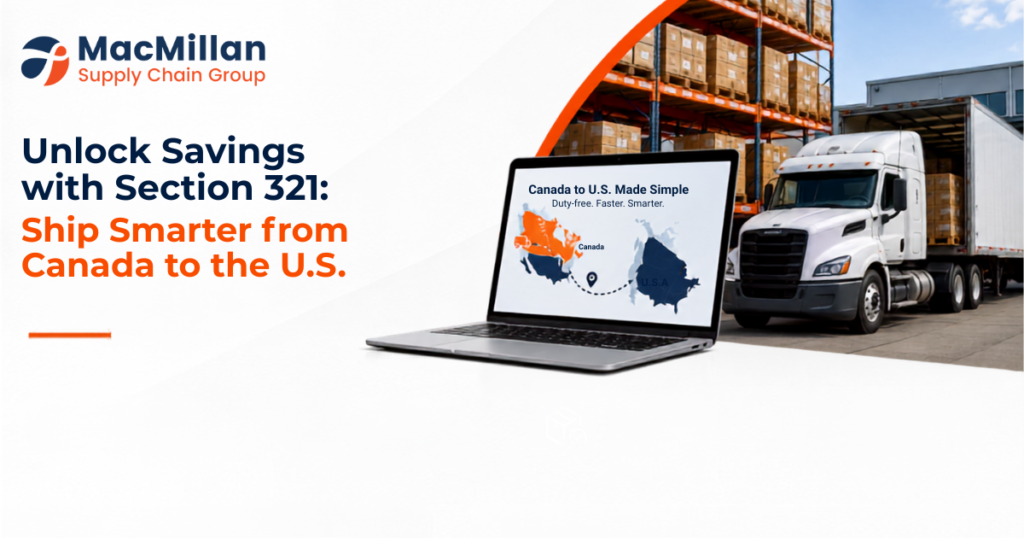
Landed cost is a crucial and often rigid component of eCommerce pricing. It encompasses all expenses, shipping, taxes, and import fees, that directly affect a company’s profitability. For example, a $5 pair of shoes can end up costing $70 in-store due to these cumulative costs. Now more than ever, e-commerce businesses are prioritizing reduced logistics costs to maximize revenue. For brands shipping from Canada, any opportunity to influence landed cost is significant. Enter Section 321. Although not a new regulation from U.S. Customs and Border Protection, the recent increase in the exemption limit from $200 USD to $800 USD per person per day has dramatically shifted the landscape for MacMillan’s Fulfillment clients and other Canadian eCommerce and logistics companies. This change presents a valuable opportunity to optimize fulfillment strategies and improve cost efficiency. In this article we dive into what is section 321? how you can use it for your advantage and how MacMillan SCG can help create value? What is section 321? – Explained Here’s a brief overview: This Section permits individual consumers to purchase and ship up to $800 USD worth of goods per day from Canada to the United States without incurring any duty fees or taxes. For eCommerce brands, this means that their products can be shipped duty-free to U.S. customers, provided that each individual order does not exceed the $800 USD daily limit. For these reasons, section 321 can give e-commerce businesses a competitive edge and reclaim revenue previously spent on taxes. This provision is applicable when importing goods from Canada into the U.S. Following MacMillan’s acquisition of Canadian warehouses in 2021, MacMillan now offers the benefits of the section for shipments originating from Canada. Moreover, how to use section to import and its long term benefits for your business. How does section 321 work? Section 321 has enabled MacMillan to capitalize on our expanded Canadian operations, introducing new strategies like zone skipping to expedite product delivery across the border. One common concern among brands is the potential for shipping delays and compromised customer service when importing goods to Canada. However, the process remains remarkably efficient, with minimal delay time between receiving goods in Canada and the U.S. Here’s how it works: Goods are imported into Canada. They can then be transported to our Canadian warehouses in Brampton and GTA area while covering 80% of the western region providing real-time visibility to the customers. Once received, the goods are checked into inventory and made available for order. When a customer places an order, MacMillan picks, packs, and labels the package with a domestic shipping label on the same day while providing tracking facilities. The package is then shipped across the border into the U.S. on that same day delivery schedules. Upon entering the U.S., the package is handed over to the chosen domestic carrier (e.g., UPS, USPS, FedEx). The package continues its journey through the U.S. to the customer’s doorstep. With this streamlined process, there’s virtually no delay, regardless of whether your products enter the U.S. or Canada first. By shipping goods a bit further, you can take advantage of duty-free benefits without sacrificing delivery speed. How e-Commerce Brands Can Maximize Savings? While the section itself doesn’t directly reduce costs, the real financial advantage comes from importing goods into Canada. Thanks to Canada’s favorable Free Trade Agreements, brands can benefit from duty deferral or duty drawback programs, which either waive or reimburse the duties on imported goods. Let’s break down the potential savings with an example: Import to Canada Item: One pair of shoes imported from China to Canada Value for Duty: $12.00 Duty Rate: 18% ($2.16) Savings: $2.16 (for just one pair of shoes) through Duty Drawback or Duty Deferral Consider the savings when scaling up to 100 or 500 pairs of shoes. While the duty rate for shoes is 18%, rates for other products can range from 20-25%. Such savings are significant and can substantially enhance your brand’s profitability. How Section 321 Can Benefit Your e-Commerce Store? After identification of what is section 321 and how it works, Section 321 can significantly lower your international fulfillment costs by enabling duty-free and tax-free imports into the U.S. Here’s how it helps: Reduced Costs: It allows for the duty-free import of low-value goods, potentially exempting shipments from Section 301 tariffs if manufactured overseas. Faster Shipments: By minimizing paperwork and using the e-Manifest electronic filing system, Section 321 speeds up customs processing and reduces delays, ensuring quicker delivery to customers. Competitive Advantage: Lower international shipping costs and the ability to bulk ship to U.S. fulfillment centers can enhance your affordability and shipping rates, leading to faster domestic delivery and improved customer satisfaction. How MacMillan Facilitates Section 321? Here’s the advantage for eCommerce brands of all sizes looking to leverage the Section model: MacMillan handles the complexities for you. Our team collaborates with clients to identify the most effective duty elimination or drawback program, simplifying the setup process. We also manage the logistics of moving products from Canadian ports to our 3PL warehouse in Brampton and the Greater Toronto Area. Brands benefit from our exceptional client service and see a direct impact on their revenue through easier, duty-free importing and shipping. As global shipping continues to evolve, adopting Section 321 with MacMillan Canada is a strategic move in navigating the future of cost-effective and efficient international logistics. Key Take Aways Section 321 represents a game-changing opportunity for eCommerce businesses looking to optimize their landed costs and enhance their fulfillment strategies. By enabling duty-free and tax-free imports of low-value goods into the U.S., Section 321 reduces overall shipping expenses and accelerates delivery times. This is particularly advantageous for brands shipping from Canada, as it allows them to leverage Canada’s favorable Free Trade Agreements and efficient logistics solutions. MacMillan SCG’s expertise in navigating Section 321 ensures that businesses can fully capitalize on these benefits, streamlining their international operations and boosting profitability. As the global shipping landscape evolves, embracing Section 321 with MacMillan is a strategic move towards more
The Future of 3PL Logistics: Efficiency and Organization
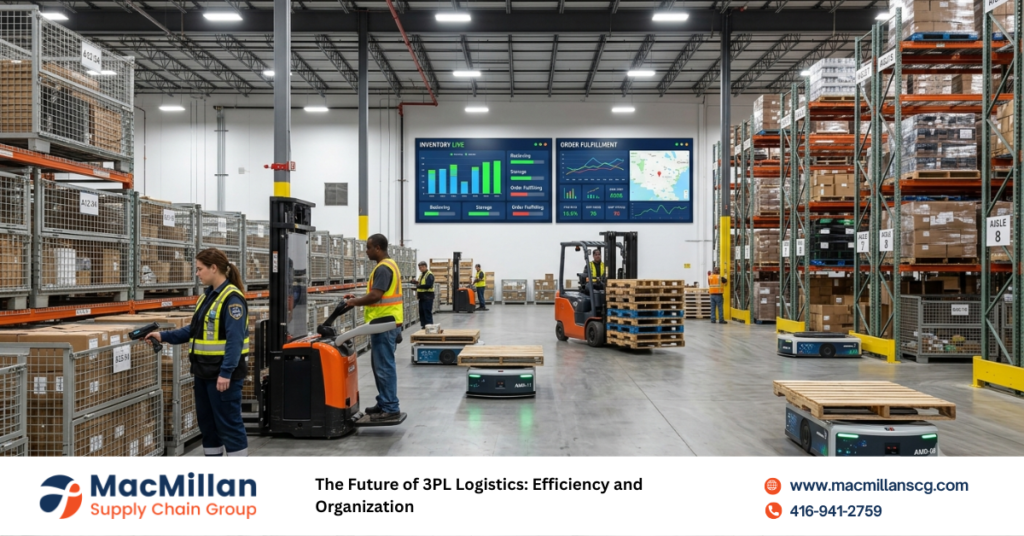
The future of 3pl logistics is already here, and businesses are relentlessly seeking ways to optimize workflows and ensure swift, efficient delivery of goods. To maintain a competitive edge in this rapidly changing industry, 3PL providers such as MacMillan leverage cutting-edge technologies, stay organized, and enhance operational efficiency. In this blog, we will delve into the evolving landscape of 3PL logistics and offer actionable strategies for achieving greater organization and efficiency. Why Efficient Organization Matters for 3PL logistics? Managing a 3PL logistics operation effectively can be challenging, but it is crucial for peak performance. Balancing daily tasks with long-term planning is essential for staying ahead. Developing a streamlined 3PL organizational structure will ensure that your operations remain competitive and efficient. Key strategies include strategic product grouping, ergonomic warehouse layouts, and optimized replenishment cycles. Optimizing Warehouse Organization For 3PL organizations, a well-organized 3pl warehouse is key to maximizing space and improving efficiency. Start by ensuring accurate inventory records to enhance visibility. Invest in advanced warehouse management software for improved automation and 3pl billing solutions for efficient payments. MacMillan utilizes vertical space with stackable pallets, leverage visual aids to simplify picking processes, and maintain cleanliness to ensure a smooth operational flow. Enhancing 3PL Efficiency Boosting warehouse efficiency involves more than just organization; it requires refining your warehouse management software (WMS) and overall procedures. Implementing automation can significantly improve efficiency, reduce labor efforts, and provide a competitive advantage. Evaluate the return on investment (ROI) when investing in technology and integrating lean practices to maximize productivity. The Benefits of Canadian 3PL logistics Efficiency Achieving warehouse efficiency can lead to numerous benefits for 3PLs, including: Effective 3pl logistics management can substantially impact your 3PL’s success, providing exceptional 3pl logistics services and yielding the advantages listed above. Optimizing 3PL Facilities with Innovative Equipment Solutions The 3PL industry is not without its challenges, but effective solutions are available. Enhancing storage methods and updating equipment can significantly boost efficiency and productivity within a facility. By optimizing these aspects, providers can maximize the effectiveness of their current workforce and make better use of their existing warehouse space. Wire Containers for Efficient Picking While smaller items often remain in cardboard boxes, larger inventory items benefit from being stored in bulk collapsible wire containers. These containers are space-efficient when collapsed and offer superior durability compared to cardboard. Their wire construction provides clear visibility of contents, facilitating quicker picking processes. Moreover, wire mesh containers can be stacked vertically, utilizing overhead storage space more effectively. Capable of stacking up to four units high, these containers can hold up to 16,000 pounds within a single footprint, at MacMillan significantly enhancing storage capacity. Full-Power Pallet Stackers for Vertical Storage To maximize vertical storage, investing in full-power pallet stackers is essential. These stackers offer precise control over heavy loads, such as full pallets, and enable safe stacking at greater heights. Unlike diesel-powered alternatives, electric pallet stackers operate quietly and produce no harmful fumes, improving safety and facilitating better communication among workers. Some models can lift up to 2,200 pounds to a height of 150 inches, streamlining pallet movement and contributing to a more efficient warehouse operation. Stackable Pallets to Optimize Storage Space Seasonal fluctuations in storage needs require adaptable solutions. Stackable plastic pallets are an excellent option for maintaining organization without consuming additional space when not in use. These pallets allow for efficient storage management, preparing your facility for unexpected increases in demand while optimizing space usage. 5S Visual Aids to Enhance Productivity Implementing the 5S methodology can be significantly aided by visual aids. Tools such as shadow tape and floor signs can improve organization and efficiency within the facility. Shadow tape helps designate specific locations for tools and cleaning supplies, making it easy to identify missing items and maintain order. Floor signs guide the movement of workers and vehicles, streamlining 3pl logistics and enhancing safety. Pallet Racking and Decking for Space Optimization To fully utilize warehouse space, consider both horizontal and vertical storage solutions. Pallet racking and decking allow for off-floor storage, optimizing available space. By placing slower-moving items higher and faster-moving items at lower levels, you can reduce the effort required for order retrieval and improve overall efficiency. By integrating these equipment solutions, 3PL providers can enhance their facilities’ efficiency and productivity, making the most of their resources and space. How Warehouse Management Software (WMS) Enhances Efficiency With the complexities of managing 3PL services, warehouse management software (WMS) is indispensable. A comprehensive, integrated WMS allows customization to meet specific customer needs, eliminating the chaos of disorganized processes. Features such as cross-docking and advanced tracking capabilities help streamline operations, reducing the risk of errors and delays. Improve Your Warehouse Efficiency Today As technology advances, 3PL logistics providers must stay ahead by adopting new technologies and implementing efficiency-boosting strategies. Utilizing a robust warehouse management system and optimizing warehouse space are crucial steps in enhancing organization and efficiency. Stay current and prepared for future challenges to ensure your 3PL operation remains effective and competitive. Key Takeaways In conclusion, the future of 3PL logistics hinges on the ability of providers to adapt and innovate. By embracing cutting-edge technologies and refining organizational practices, such as optimizing warehouse layouts and integrating advanced management systems, 3PL providers can achieve remarkable improvements in efficiency and productivity. MacMillan not only enhances operational performance but also boosts customer satisfaction and reduces costs. As the logistics landscape continues to evolve, staying ahead requires a commitment to continuous improvement and strategic investments. By leveraging the insights and strategies discussed, 3PL providers can ensure they remain competitive and well-equipped to meet the demands of a dynamic industry.
MacMillan Supply Chain: Revolutionizing 3PL Solutions for Modern Businesses
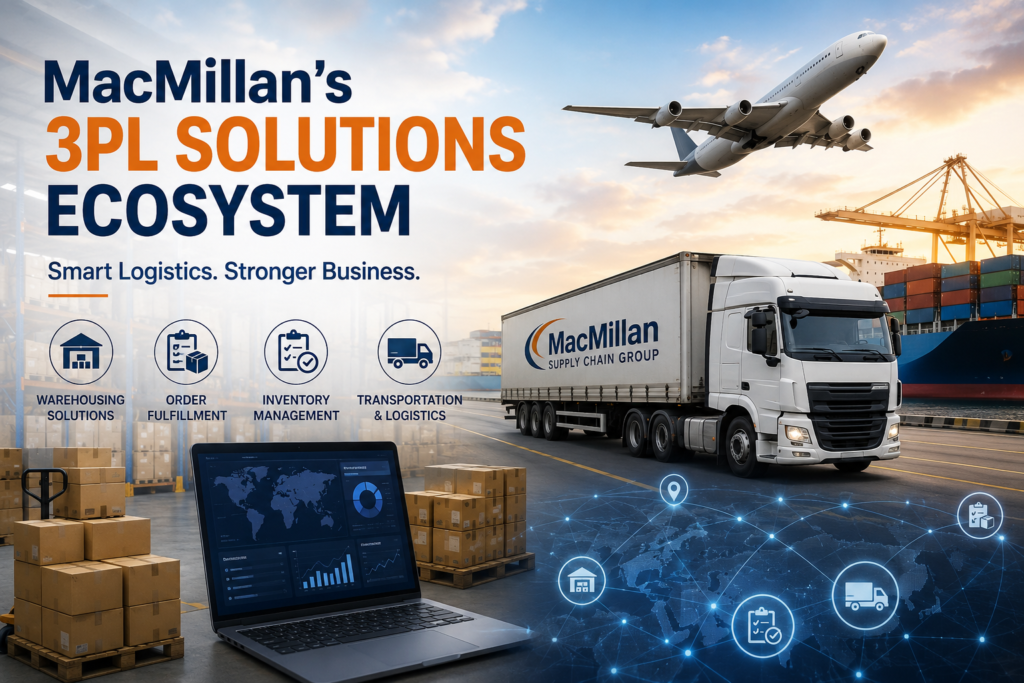
A quick summary and overview MacMillan Supply Chain Group is a leading 3PL provider offering comprehensive logistics solutions for businesses across various industries. Our services encompass warehousing, order fulfillment, inventory management, and transportation. We leverage cutting-edge technology and industry expertise to optimize supply chains, reduce costs, and enhance customer satisfaction. Whether you’re a small ecommerce startup or a large multinational corporation, MacMillan Supply Chain Group has the resources and know-how to streamline your logistics operations. This article explores how our tailored 3PL solutions can transform your business, addressing common challenges and providing innovative solutions for today’s dynamic market landscape. An introduction In today’s fast-paced business environment, efficient supply chain management is crucial for success. As companies strive to meet growing customer demands and navigate complex global markets, the need for reliable, flexible, and cost-effective logistics solutions has never been greater. This is where MacMillan Supply Chain Group steps in, offering state-of-the-art 3PL services designed to optimize your supply chain and drive business growth. Our comprehensive suite of services goes beyond traditional logistics, incorporating advanced technology, data-driven insights, and personalized strategies to address the unique challenges faced by businesses of all sizes. Whether you’re looking to streamline your warehousing operations, improve order fulfillment accuracy, or reduce transportation costs, MacMillan Supply Chain Group has the expertise and resources to help you achieve your goals. Let’s explore how our innovative 3PL solutions can revolutionize your supply chain and give you a competitive edge in today’s market. Customized Warehousing Solutions At MacMillan Supply Chain Group, we understand that one size doesn’t fit all when it comes to warehousing. Our customized warehousing solutions are designed to meet the specific needs of your business, regardless of its size or industry. We offer a range of options, from dedicated warehousing space to shared facilities, allowing you to scale your operations as your business grows. Our state-of-the-art warehouses are equipped with advanced inventory management systems, ensuring real-time visibility of your stock levels and locations. This technology-driven approach enables us to optimize space utilization, reduce picking errors, and improve overall efficiency. We also implement strict quality control measures and security protocols to safeguard your inventory. Moreover, our warehousing solutions go beyond simple storage. We offer value-added services such as kitting, assembly, and customized packaging to enhance your product offerings. Our team of experts can help you design an optimal warehouse layout that minimizes handling time and maximizes productivity. By leveraging our extensive network of strategically located warehouses, we can help you reduce transportation costs and improve delivery times. Whether you need temperature-controlled storage for perishables or specialized handling for fragile items, MacMillan Supply Chain Group has the facilities and expertise to meet your unique warehousing requirements. Efficient Order Fulfillment Services In the age of ecommerce, efficient order fulfillment is critical to customer satisfaction and business success. MacMillan Supply Chain Group offers comprehensive order fulfillment services that ensure your products reach customers quickly and accurately. Our advanced fulfillment centers utilize cutting-edge technology to streamline the entire process, from order receipt to shipment. We employ sophisticated order management systems that integrate seamlessly with your ecommerce platforms, enabling real-time order processing and inventory updates. This integration minimizes errors and delays, ensuring that your customers receive their orders on time, every time. Our fulfillment services include: Pick and pack operations Custom packaging and labeling Same-day shipping options Returns management Multi-channel fulfillment support We understand the importance of accuracy in order fulfillment. That’s why we implement rigorous quality control measures, including barcode scanning and weight verification, to minimize errors. Our team is trained to handle a wide range of products, from small electronics to oversized items, ensuring that each order is processed with care and precision. Furthermore, we offer flexible fulfillment solutions to accommodate seasonal fluctuations and promotional events. Whether you’re dealing with a sudden spike in orders or launching a new product line, MacMillan Supply Chain Group has the capacity and expertise to scale our services to meet your needs. Advanced Inventory Management Effective inventory management is the backbone of a successful supply chain. At MacMillan Supply Chain Group, we leverage advanced technology and data analytics to provide comprehensive inventory management solutions that optimize your stock levels, reduce carrying costs, and prevent stockouts. Our inventory management system offers: Real-time inventory tracking Demand forecasting and planning Automated reordering Cycle counting and reconciliation Lot and serial number tracking By implementing our advanced inventory management solutions, you can gain unprecedented visibility into your stock levels across multiple locations. This visibility allows for more accurate demand forecasting, enabling you to maintain optimal inventory levels and reduce excess stock. We also offer sophisticated reporting and analytics tools that provide valuable insights into your inventory performance. These insights can help you identify slow-moving items, optimize product placement, and make informed decisions about stock replenishment. Our system is designed to integrate seamlessly with your existing ERP or ecommerce platforms, ensuring a smooth flow of information across your entire supply chain. This integration enables real-time updates and eliminates the need for manual data entry, reducing errors and improving overall efficiency. With MacMillan Supply Chain Group’s advanced inventory management solutions, you can streamline your operations, reduce costs, and improve customer satisfaction by ensuring that the right products are always available when needed. Optimized Transportation and Logistics Efficient transportation and logistics are crucial for maintaining a competitive edge in today’s global market. MacMillan Supply Chain Group offers comprehensive transportation and logistics solutions designed to optimize your shipping processes, reduce costs, and improve delivery times. Our transportation services include: Domestic and international shipping Multi-modal transportation (road, rail, air, and sea) Freight consolidation and deconsolidation Cross-docking services Last-mile delivery solutions We leverage our extensive network of carriers and strategic partnerships to provide you with the most cost-effective and efficient shipping options. Our team of logistics experts analyzes your shipping patterns and requirements to develop customized transportation strategies that align with your business goals. Our advanced transportation management system (TMS) enables real-time tracking of shipments, providing you and your customers with up-to-the-minute information on order
Optimizing eCommerce Logistics for Black Friday: Strategies for Peak Season Success
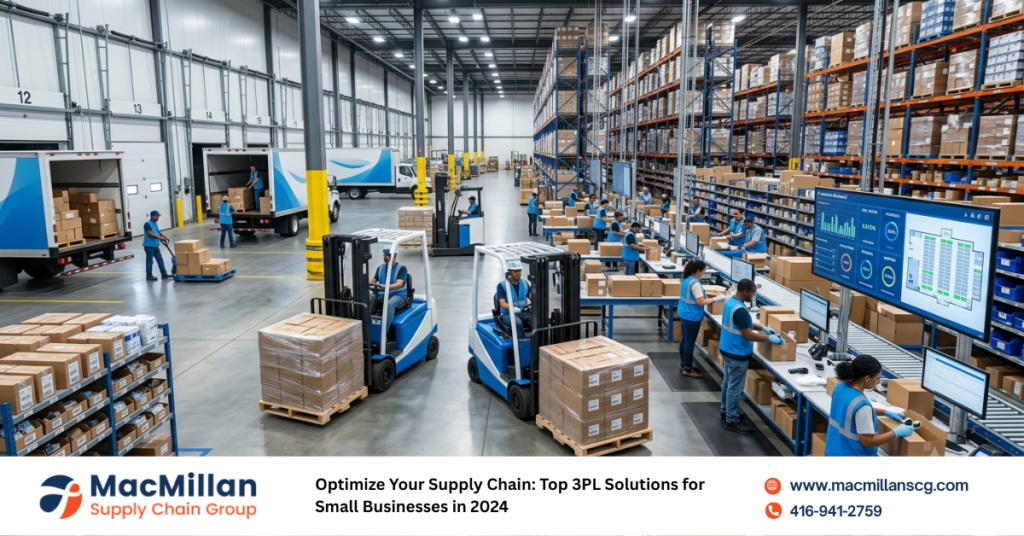
A Quick Summary and Overview As Black Friday evolves into a primarily online shopping event, eCommerce businesses face unique logistics challenges. This article explores the changing landscape of Black Friday and provides actionable strategies to optimize fulfillment operations. We’ll delve into effective supply chain management, the importance of clear communication, and how to address common logistical hurdles. With insights from MacMillan Supply Chain Group, businesses can navigate the complexities of peak season logistics, ensuring customer satisfaction and maximizing sales potential. Learn how to turn logistic challenges into opportunities for growth and efficiency in this comprehensive guide to Black Friday eCommerce success. An Introduction Black Friday, once synonymous with crowded stores and door-buster deals, has transformed into a digital shopping phenomenon. This shift presents both challenges and opportunities for eCommerce businesses aiming to capitalize on this lucrative sales period. The key to success lies in mastering the logistics behind the scenes – from inventory management to last-mile delivery. In this article, we’ll explore how businesses can optimize their eCommerce logistics for Black Friday and the extended holiday shopping season. We’ll examine the evolving dynamics of Black Friday, discuss effective supply chain strategies, and highlight the critical role of communication in managing customer expectations. Moreover, we’ll address common logistical challenges and provide actionable solutions, drawing on the expertise of MacMillan Supply Chain Group. By understanding and implementing these strategies, your business can not only survive the Black Friday rush but thrive, turning potential pitfalls into opportunities for growth and customer loyalty. The Changing Dynamics of Black Friday Logistics The landscape of Black Friday has undergone a significant transformation in recent years. What was once a single-day event focused on in-store shopping has evolved into an extended online shopping extravaganza. This shift has profound implications for eCommerce logistics: Extended Shopping Period: Black Friday deals now often start before Thanksgiving and extend through Cyber Monday and beyond, creating a prolonged peak season. Increased Online Traffic: With more shoppers turning to eCommerce, businesses must ensure their websites can handle increased traffic and transaction volumes. Delivery Expectations: Customers now expect fast, free shipping as standard, putting pressure on logistics operations to meet these demands. Inventory Challenges: Accurately forecasting demand and managing inventory across multiple channels has become more complex. Returns Management: With higher sales volumes comes an increase in returns, requiring efficient reverse logistics processes. These changes necessitate a more agile and robust approach to eCommerce logistics. Businesses must adapt their strategies to handle the extended peak season, manage multichannel inventory effectively, and meet heightened customer expectations for fast and reliable delivery. By understanding these dynamics, eCommerce businesses can better prepare their logistics operations for the Black Friday rush, ensuring they can capitalize on the increased sales opportunities while maintaining customer satisfaction. Effective Supply Chain Management for Black Friday Efficient supply chain management is crucial for navigating the Black Friday rush successfully. Here are key strategies to optimize your supply chain for peak season: Demand Forecasting: Utilize historical data and predictive analytics to accurately forecast demand, ensuring you have adequate stock levels without overstocking. Inventory Optimization: Implement a just-in-time inventory system to balance stock levels with demand, reducing carrying costs while minimizing stockouts. Warehouse Efficiency: Optimize your warehouse layout and processes to improve picking and packing speeds, crucial for handling high order volumes. Multi-Channel Fulfillment: Develop a unified inventory system across all sales channels to prevent overselling and ensure consistent stock information. Carrier Diversification: Partner with multiple shipping carriers to mitigate risks of delays and capacity issues during peak periods. Technology Integration: Implement advanced warehouse management systems (WMS) and order management systems (OMS) to streamline operations and improve visibility. Supplier Relationships: Strengthen relationships with suppliers to ensure timely restocking and flexibility in case of unexpected demand spikes. Contingency Planning: Develop backup plans for potential supply chain disruptions, such as alternative sourcing options or temporary storage solutions. By focusing on these areas, businesses can create a robust and flexible supply chain capable of handling the pressures of Black Friday and the extended holiday shopping season. MacMillan Supply Chain Group specializes in helping businesses implement these strategies, ensuring smooth operations during peak periods. The Role of Communication in Black Friday Success Clear and effective communication is a cornerstone of successful Black Friday logistics. It plays a crucial role in managing customer expectations and maintaining satisfaction throughout the shopping experience: Transparent Shipping Information: Clearly communicate shipping times, costs, and any potential delays on your website and at checkout. Proactive Updates: Keep customers informed about their order status through automated emails or SMS notifications at key stages (order received, processed, shipped, delivered). Inventory Visibility: Display real-time stock levels on your website to prevent frustration from out-of-stock items. Clear Return Policies: Communicate your return policy prominently, including any special terms for Black Friday purchases. Customer Service Preparedness: Ensure your customer service team is well-staffed and trained to handle increased inquiries during the peak season. Social Media Engagement: Use social media platforms to provide real-time updates on deals, stock levels, and any operational issues. Post-Purchase Communication: Follow up with customers after delivery to gather feedback and address any issues promptly. Internal Communication: Ensure all departments (sales, marketing, logistics, customer service) are aligned on promotions, inventory levels, and potential challenges. Effective communication not only helps manage customer expectations but also builds trust and loyalty. By keeping customers informed at every stage of their purchase journey, businesses can turn potential frustrations into positive experiences, even during the busiest shopping period of the year. Addressing Supply Chain Challenges with MacMillan Supply Chain Group Navigating the complexities of Black Friday logistics requires expertise and innovative solutions. MacMillan Supply Chain Group offers tailored strategies to address common supply chain challenges: Scalability: Our flexible fulfillment solutions allow businesses to scale operations quickly to meet Black Friday demand without long-term commitments. Technology Integration: We provide advanced WMS and OMS systems that integrate seamlessly with your eCommerce platform, ensuring real-time inventory visibility and order accuracy. Multi-Channel Fulfillment: Our expertise in omnichannel logistics helps businesses manage inventory across multiple sales channels efficiently. Peak Season Planning: We work with clients well in advance to develop comprehensive peak season strategies, including demand forecasting and inventory optimization. Carrier
Cross-Docking: Enhancing Supply Chain Efficiency in Logistics
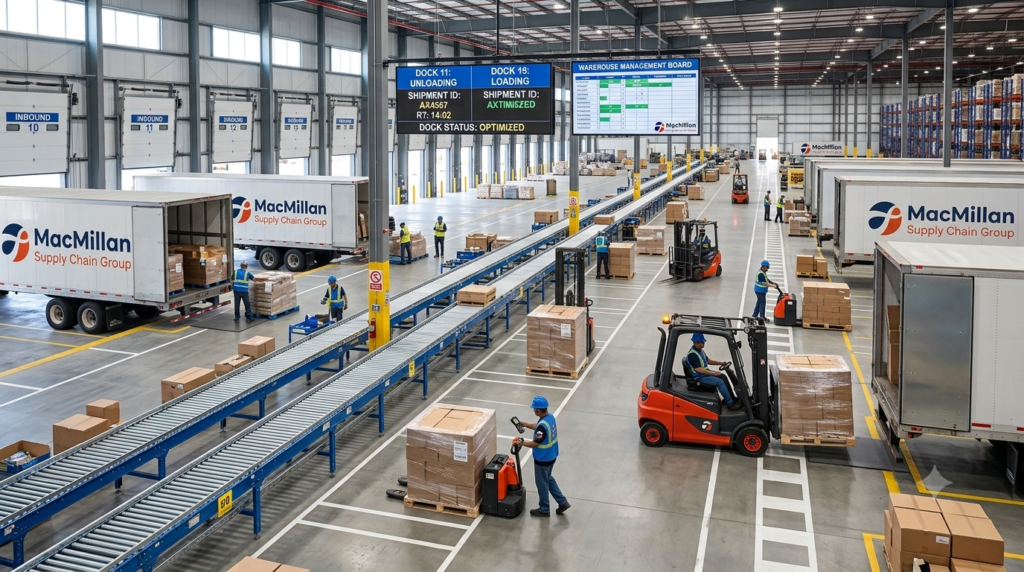
A quick summary and overview Cross-docking is a revolutionary logistics strategy that bypasses traditional warehousing by transferring goods directly from inbound to outbound transport with minimal storage. This technique optimizes supply chain efficiency, reduces costs, and accelerates delivery. Beneficial for industries like retail, manufacturing, and eCommerce, cross-docking meets the growing demand for quicker, seamless fulfillment processes. With MacMillan Supply Chain, businesses can leverage expert solutions to enhance logistics operations—ushering a new era of streamlined supply chain management. An introduction In a fast-paced market where timely delivery is paramount, cross-docking emerges as a pivotal logistics strategy. This innovative approach transcends conventional warehousing methods by expediting the movement of goods from receiving to shipping with negligible storage time. Not only does this technique significantly reduce storage costs and handling time, but it also caters to the escalating need for enhanced customer satisfaction through quick and efficient delivery. At MacMillan Supply Chain, we understand the intricacies and potential of cross-docking to transform your logistics operations, helping you stay ahead in a highly competitive industry. Explore the types, processes, and benefits of cross-docking and see how optimizing these can support your operational goals and foster sustained business growth. Understanding Cross-Docking Cross-docking involves moving goods from inbound to outbound docks with no or minimal intermediate storage, a practice known as ‘just-in-time’ shipping. This logistics strategy streamlines operations by eliminating the need for warehousing, thus reducing associated costs. Predominantly utilized in eCommerce, retail distribution, and manufacturing warehouses, cross-docking is effective in managing backorders and improving delivery times. It enables products to reach end-users faster by seamlessly bypassing complex inventory processes typical of traditional warehousing. MacMillan Supply Chain leverages state-of-the-art warehouse management systems to implement cross-docking solutions that are customized to meet your business needs. These systems ensure real-time tracking of goods, enhance inventory management, and facilitate efficient labeling and sorting processes, further driving operational efficiency. By strategically utilizing cross-docking, businesses can not only optimize their supply chains but also improve delivery metrics and customer satisfaction. Types of Cross-Docking Understanding the various cross-docking methods can help businesses choose the most suitable strategy for their needs. The primary types include: Pre-Distribution Cross-Docking: Goods are received, sorted, and sent directly to customers without warehousing, ensuring immediate dispatch and efficient order fulfillment. Post-Distribution Cross-Docking: Goods are temporarily stored at a terminal for sorting and consolidation before final delivery, allowing for better order customization. Opportunistic Cross-Docking: This method is used on an as-needed basis to quickly respond to unexpected demands or fill urgent orders by using existing inventory efficiently. Continuous Cross-Docking: Involves non-stop movement of goods through the distribution pipeline, focusing on reducing delivery lead times. Consolidation and Deconsolidation Cross-Docking: This involves combining or breaking shipments to minimize transportation costs and improve delivery timelines. MacMillan Supply Chain helps businesses implement the most suitable cross-docking method tailored to their operational needs, ensuring optimized processes and substantial cost savings. Benefits of Cross-Docking in Logistics Cross-docking provides several key benefits that contribute to enhanced supply chain efficiency: Reduced Storage Costs: By eliminating the need for warehousing, cross-docking significantly cuts down storage-related expenses. This leads to reduced overheads and boosts operational profitability. Faster Delivery Times: Goods move through the supply chain more swiftly, improving lead times and enhancing customer satisfaction with quicker deliveries. Optimized Inventory Management: Cross-docking helps maintain lean inventory levels, reducing waste and ensuring that products are always fresh and available for dispatch. Increased Throughput: By minimizing handling and storage, facilities can handle larger volumes of goods more efficiently. Enhanced Flexibility: Businesses can quickly adapt to changing market demands, ensuring they can meet customer expectations swiftly. MacMillan Supply Chain’s expert cross-docking solutions allow businesses to capitalize on these benefits, providing them with a competitive edge in logistics management. Implementing Cross-Docking: Challenges and Solutions While cross-docking offers numerous advantages, its successful implementation can pose certain challenges. Recognizing these common problems is the first step towards overcoming them: Initial Costs and Infrastructure: Setting up a cross-docking facility demands significant initial investment for infrastructure and advanced technology, such as automated warehouse management systems. Businesses might find it challenging to allocate initial funding. Efficient Coordination and Management: Cross-docking requires meticulous coordination between suppliers, transporters, and distribution centers. A lack of synchronization among these components can lead to inefficiencies and shipment delays. Quality Control Issues: The rapid handling of goods might increase the chances of shipping errors, damaged products, or misplaced shipments, which can affect customer satisfaction. Limited Suitability: Not all products are suitable for cross-docking. Products requiring additional processing, packaging, or long-term storage are better suited for traditional warehousing methods. At MacMillan Supply Chain, we tackle these challenges with innovative solutions: – Comprehensive Planning and Strategy: We offer in-depth analysis and planning to design cross-docking facilities that align with your business objectives. Our experts ensure that the chosen method is financially viable and operationally efficient. – Cutting-Edge Technology: Our advanced warehouse management systems facilitate seamless coordination and communication among all players in the supply chain, ensuring timely and accurate processing of shipments.– Quality Assurance Protocols: We implement stringent quality control measures, utilizing automation and real-time data tracking to ensure every product reaches its destination in perfect condition. – Customized Solutions: Recognizing that one size does not fit all, we provide tailored cross-docking solutions that adapt to the unique needs of your products and operational constraints. How to Avoid Common Problems and Implement Solutions with MacMillan Supply Chain For businesses aspiring to adopt cross-docking, understanding the potential pitfalls and implementing effective solutions is crucial. Here’s how you can streamline the process with MacMillan Supply Chain: – Conduct a Feasibility Study: Before committing, assess your current logistics operations and product types to determine if cross-docking is suitable. Our team assists in conducting a thorough analysis to ensure feasibility and alignment with your business goals. – Invest in Technology: Equip your facility with robust, automated systems for inventory management and real-time data tracking. By doing so, you drastically reduce the risk of errors and enhance operational transparency. – Foster Strong Communication: Ensure all partners and stakeholders in your supply chain are engaged and communicate effectively. This helps streamline processes and prevent
Ambient Storage Solutions: Benefits, Considerations, and Best Practices
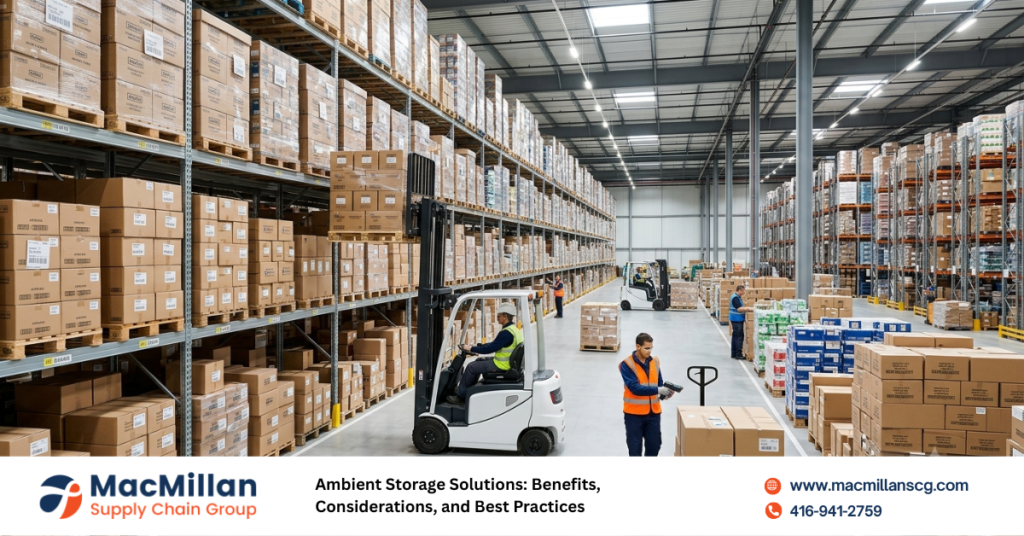
A Quick Summary and Overview Ambient storage is a practical and cost-effective choice for businesses seeking to store products that do not require refrigeration or freezing. This article delves into the benefits, key considerations, and best practices of ambient storage, explaining how it can enhance logistics efficiency and maintain product quality while reducing costs. Introduction In the competitive world of supply chain management, businesses are constantly looking for ways to optimize logistics operations. One such opportunity is through ambient storage solutions. Unlike temperature-controlled facilities, ambient storage offers a versatile and energy-efficient option for storing a wide range of products. By understanding the benefits and considerations of ambient storage, businesses can make informed decisions to enhance their supply chain efficiency and reduce costs. This article will explore the nuances of ambient storage, providing insights into its advantages and practical tips for integration with 3PL services. Understanding Ambient Storage: What It Is and Why It Matters Ambient storage involves keeping products in an environment that maintains controlled room temperatures, typically between 60°F to 80°F (15°C to 27°C). This storage type is ideal for non-perishable goods such as Consumer Packaged Goods (CPG), electronics, and clothing. It eliminates the need for costly refrigeration or climate-controlled setups, offering significant savings on storage and operating costs. Advantages of mixing inventory types in ambient storage facilities add to flexibility and efficiency. Businesses can consolidate various product categories in one location, enhancing logistics operations while reducing transportation costs. Moreover, ambient storage is an eco-friendly choice, reducing energy usage, lowering carbon footprints, and aligning with green supply chain initiatives. Advantages of Ambient Storage: A Deep Dive One of the standout advantages of ambient storage is its cost-effectiveness. Without the need for specialized temperature-regulating equipment, ambient storage dramatically cuts down on overhead costs. Besides, the versatility of ambient storage cannot be overstated. It accommodates many products, allowing retailers and manufacturers to simplify logistics and improve operational efficiency. Furthermore, energy efficiency is a key benefit. By minimizing energy use, companies not only save on utility expenses but also support sustainability by reducing environmental impact. Lower operational costs and a lighter ecological footprint make ambient storage a smart choice for forward-thinking businesses. Key Considerations for Successful Ambient Storage While ambient storage offers numerous benefits, businesses must address some critical considerations to ensure successful implementation. Product compatibility stands as the foremost aspect—it’s crucial to identify which goods can endure ambient temperatures without degradation. Monitoring and maintaining optimal humidity levels are pivotal to prevent issues such as mold growth or product spoilage. Effective warehouse management, which includes regular cleaning, sanitation, pest control, and implementing FIFO inventory rotations, is essential. Finally, understanding seasonal fluctuations and the local climate of storage locations helps ensure that requirements remain stable year-round, thereby safeguarding product integrity. Distinguishing Between Ambient and Climate-Controlled Storage It’s vital to differentiate ambient storage from climate-controlled facilities, which offer precise temperature and humidity control for sensitive items. While ambient storage suits general, non-refrigerated products, certain high-value or delicate goods may require climate-controlled environments to prevent damage. Companies must evaluate products’ specific storage needs to choose the appropriate solution that ensures quality and compliance with industry standards. Common Problems with Ambient Storage and Our Solutions Common issues in ambient storage include improper inventory management, failing humidity control, and inadequate facility maintenance. These can lead to product damage, spoilage, or increased operational costs. At MacMillan Supply Chain, we’re committed to providing solutions that address these challenges. Our ambient storage services offer advanced inventory management systems to maintain accurate stock levels and ensure timely rotations. We implement state-of-the-art humidity control measures, ensuring the environment stays within ideal parameters, and conduct regular facility inspections to uphold cleanliness and safety standards. By investing in cutting-edge technology and efficient storage practices, MacMillan Supply Chain aims to minimize disruptions and enhance supply chain reliability. How Can Readers Avoid Problems and Implement Solutions? To leverage ambient storage effectively, businesses should conduct a thorough assessment of their inventory needs. Selecting the right logistics partner is crucial to achieving seamless integration and optimal performance. Consider MacMillan Supply Chain as your strategic partner. With our expertise and robust storage solutions, you’ll avoid common pitfalls and ensure operations run smoothly. Contact us today to learn how ambient storage can transform your logistics strategy. FAQS What is batch picking in warehouse management? Batch picking is a process where a picker retrieves items for multiple orders in a single trip. It is designed to improve efficiency, reduce labor costs, and enhance order accuracy. What are the benefits of implementing batch picking? Batch picking helps businesses improve warehouse efficiency by reducing picker travel time, lowering labor costs, increasing productivity, and improving order accuracy. It also enables faster order fulfillment, making it an ideal solution for high-volume warehouses and e-commerce operations. How does technology enhance batch picking? Technology such as Warehouse Management Systems (WMS), barcode scanners, mobile devices, and route optimization software makes batch picking faster and more accurate. These tools automatically group orders, assign the most efficient picking routes, and reduce manual errors throughout the fulfillment process. Which industries can benefit the most from batch picking? Batch picking is especially beneficial for industries that process a high volume of orders, including e-commerce, retail, manufacturing, wholesale distribution, healthcare, and consumer goods. Any business with repetitive picking tasks can improve efficiency using this method. How does batch picking improve order accuracy? By grouping similar orders and using organized bins or totes, batch picking minimizes handling mistakes and reduces the chance of mixing products between orders. Combined with barcode scanning and WMS technology, it significantly improves picking accuracy and customer satisfaction. How can MacMillan Supply Chain help in batch picking implementation? MacMillan Supply Chain helps businesses successfully implement batch picking by evaluating existing warehouse operations, optimizing warehouse layouts, integrating advanced WMS technology, and providing staff training. Their customized solutions improve efficiency, reduce operational costs, and ensure a smooth transition to a more productive warehouse environment.