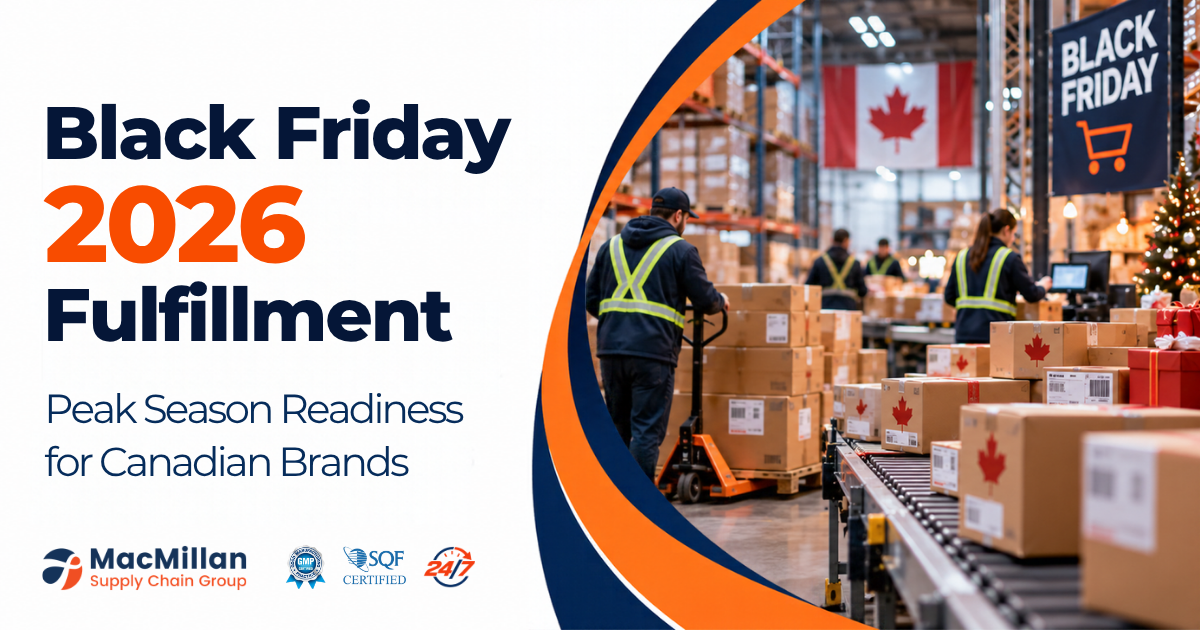


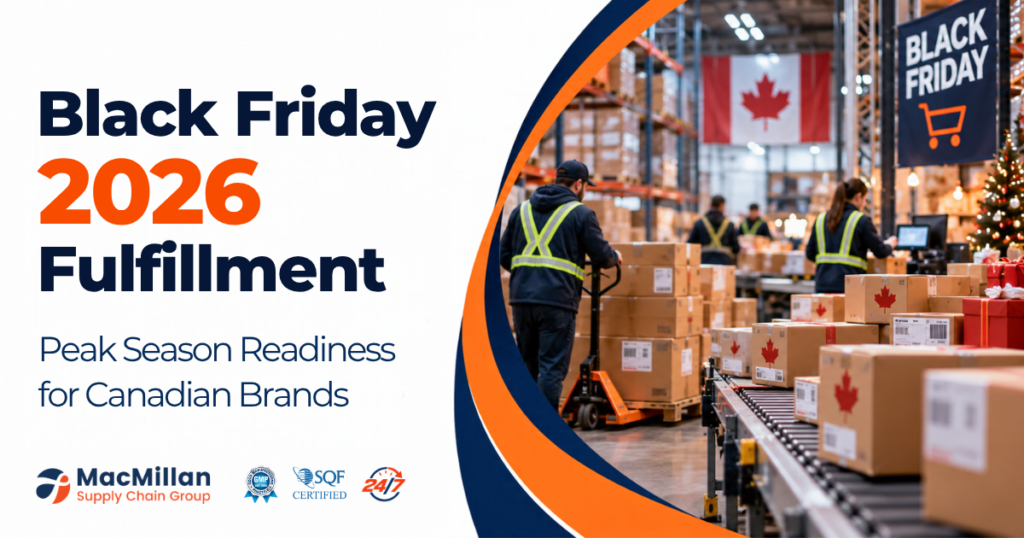
Black Friday Fulfillment Canada: 2026 Peak Season Guide
Black Friday Fulfillment Canada: How E-commerce Brands Can Prepare for…

Black Friday Fulfillment Canada: How E-commerce Brands Can Prepare for…

When discussing e-commerce, what typically springs to mind? Most likely,…

As the busiest time of the year draws near, the…
As the busiest time of the year draws near, the…
As Black Friday evolves into a primarily online shopping event, eCommerce businesses face unique logistics challenges. This article explores the changing landscape of Black Friday and provides actionable strategies to optimize fulfillment operations. We’ll delve into effective supply chain management, the importance of clear communication, and how to address common logistical hurdles. With insights from MacMillan Supply Chain Group, businesses can navigate the complexities of peak season logistics, ensuring customer satisfaction and maximizing sales potential. Learn how to turn logistic challenges into opportunities for growth and efficiency in this comprehensive guide to Black Friday eCommerce success.
Black Friday, once synonymous with crowded stores and door-buster deals, has transformed into a digital shopping phenomenon. This shift presents both challenges and opportunities for eCommerce businesses aiming to capitalize on this lucrative sales period. The key to success lies in mastering the logistics behind the scenes – from inventory management to last-mile delivery.
In this article, we’ll explore how businesses can optimize their eCommerce logistics for Black Friday and the extended holiday shopping season. We’ll examine the evolving dynamics of Black Friday, discuss effective supply chain strategies, and highlight the critical role of communication in managing customer expectations. Moreover, we’ll address common logistical challenges and provide actionable solutions, drawing on the expertise of MacMillan Supply Chain Group.
By understanding and implementing these strategies, your business can not only survive the Black Friday rush but thrive, turning potential pitfalls into opportunities for growth and customer loyalty.
The landscape of Black Friday has undergone a significant transformation in recent years. What was once a single-day event focused on in-store shopping has evolved into an extended online shopping extravaganza. This shift has profound implications for eCommerce logistics:
These changes necessitate a more agile and robust approach to eCommerce logistics. Businesses must adapt their strategies to handle the extended peak season, manage multichannel inventory effectively, and meet heightened customer expectations for fast and reliable delivery.
By understanding these dynamics, eCommerce businesses can better prepare their logistics operations for the Black Friday rush, ensuring they can capitalize on the increased sales opportunities while maintaining customer satisfaction.
Efficient supply chain management is crucial for navigating the Black Friday rush successfully. Here are key strategies to optimize your supply chain for peak season:
By focusing on these areas, businesses can create a robust and flexible supply chain capable of handling the pressures of Black Friday and the extended holiday shopping season. MacMillan Supply Chain Group specializes in helping businesses implement these strategies, ensuring smooth operations during peak periods.
Clear and effective communication is a cornerstone of successful Black Friday logistics. It plays a crucial role in managing customer expectations and maintaining satisfaction throughout the shopping experience:
Effective communication not only helps manage customer expectations but also builds trust and loyalty. By keeping customers informed at every stage of their purchase journey, businesses can turn potential frustrations into positive experiences, even during the busiest shopping period of the year.
Navigating the complexities of Black Friday logistics requires expertise and innovative solutions. MacMillan Supply Chain Group offers tailored strategies to address common supply chain challenges:
By partnering with MacMillan Supply Chain Group, businesses can leverage our expertise and resources to transform their Black Friday logistics from a challenge into a competitive advantage.
Black Friday presents several logistical challenges for eCommerce businesses. Here are common problems and how MacMillan Supply Chain Group addresses them:
Inventory Stockouts and Overstocking
Problem: Inaccurate demand forecasting can lead to stockouts of popular items or excess inventory of slow-moving products.
Solution: MacMillan employs advanced predictive analytics and real-time inventory tracking systems. We analyze historical data, market trends, and current sales patterns to provide accurate demand forecasts. Our dynamic inventory management system allows for quick adjustments to stock levels, minimizing both stockouts and overstock situations.
Website Crashes and Order Processing Delays
Problem: High traffic volumes can lead to website slowdowns or crashes, resulting in lost sales and frustrated customers.
Solution: While we don’t manage websites directly, our OMS integrates seamlessly with your eCommerce platform. This integration ensures that even if there are front-end issues, orders are captured and processed efficiently on the back-end, minimizing data loss and processing delays.
Shipping Delays and Capacity Issues
Problem: Carriers often struggle with capacity during peak seasons, leading to shipping delays and missed delivery promises.
Solution: MacMillan maintains relationships with multiple carriers and has negotiated priority status. We use advanced routing algorithms to optimize shipping methods and carriers based on destination, cost, and delivery time. Our diverse carrier network helps mitigate the risk of delays from any single carrier.
Increased Returns Volume
Problem: Higher sales volumes inevitably lead to more returns, which can overwhelm unprepared businesses.
Solution: We offer a comprehensive returns management solution. This includes efficient processing of returns, quality checks, repackaging, and quick restocking. Our system also provides analytics on return reasons, helping businesses address product issues and improve customer satisfaction.
Limited Warehouse Capacity
Problem: The surge in orders can overwhelm warehouse space and staff.
Solution: MacMillan offers flexible warehousing solutions with the ability to quickly scale up space and labor during peak periods. Our efficient warehouse layout and advanced picking technologies maximize space utilization and speed up order processing.
Supply Chain Disruptions
Problem: Unexpected disruptions in the supply chain can lead to inventory shortages and unfulfilled orders.
Solution: We implement robust contingency plans and maintain a diverse supplier network. Our real-time tracking systems provide early warning of potential disruptions, allowing for quick action. We also help businesses develop alternative sourcing strategies to ensure continuity of supply.
Customer Service Overload
Problem: The influx of orders and inquiries can overwhelm customer service teams.
Solution: While we don’t directly handle customer service, our efficient order processing and real-time tracking systems significantly reduce customer inquiries. We provide businesses with detailed, up-to-date information on order status, enabling them to respond quickly and accurately to customer queries.
By addressing these common problems with tailored solutions, MacMillan Supply Chain Group helps businesses not just survive but thrive during the Black Friday rush.
To avoid common Black Friday logistics problems and implement effective solutions, consider the following steps:
While these steps can help, navigating Black Friday logistics can be complex and time-consuming. This is where MacMillan Supply Chain Group can make a significant difference. Our team of experts can provide tailored solutions to optimize your entire supply chain for peak season success.
Don’t let logistics challenges hold your business back this Black Friday. Contact MacMillan Supply Chain Group today for a consultation. Let us help you turn your logistics operations into a competitive advantage, ensuring a successful and profitable holiday season.
While Black Friday officially falls on November 24, 2023, many retailers start their sales earlier. At MacMillan, we recommend preparing for an extended sales period from mid-November through Cyber Monday (November 27) and beyond.
Ideally, businesses should begin preparing for Black Friday at least 3–6 months in advance. Early planning allows you to forecast demand, secure inventory, optimize warehouse operations, negotiate shipping rates, and test your fulfillment systems. Preparing ahead reduces the risk of delays, stock shortages, and operational disruptions during peak shopping periods.
Accurate demand forecasting relies on analyzing previous Black Friday sales data, current market trends, customer purchasing behavior, and seasonal demand patterns. Using inventory management software and predictive analytics can help estimate product demand more accurately, ensuring you stock the right products without overinvesting in inventory.
To prevent stockouts, monitor inventory levels in real time, forecast demand accurately, maintain safety stock for high-demand products, and synchronize inventory across all sales channels. Partnering with a reliable fulfillment provider also helps replenish inventory quickly and fulfill orders efficiently during peak sales periods.
Prepare a streamlined returns process before Black Friday begins. Offer a clear return policy, automate return requests, inspect returned products quickly, and restock eligible items as soon as possible. Efficient reverse logistics improves customer satisfaction while minimizing inventory losses and operational delays.
The best Black Friday shipping strategy includes working with multiple shipping carriers, offering several delivery options, processing orders as quickly as possible, and communicating realistic delivery timelines to customers. Diversifying shipping partners helps reduce delays and ensures orders continue moving even if one carrier experiences capacity issues.