
AI Won’t Save a Bad Warehouse: What Brands Really Need from a Modern 3PL
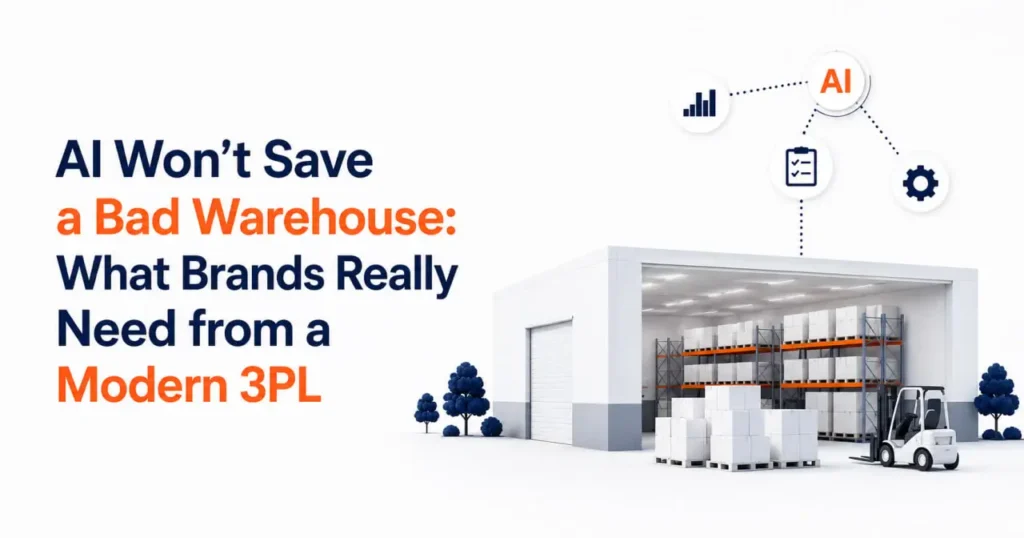
AI Won’t Save a Bad Warehouse AI is everywhere in logistics right now. AI-powered forecasting.AI inventory alerts.AI warehouse optimization.AI-driven fulfillment dashboards. It sounds impressive. But here is the truth most brands need to hear: AI will not save a bad warehouse. If inventory counts are wrong, AI only makes bad decisions faster.If receiving is messy, AI cannot create clean stock records.If orders are picked without scan verification, AI cannot protect your customer experience.If your 3PL cannot tell you where your inventory is, no dashboard will fix the trust problem. For growing FMCG, food and beverage, personal care, pet care, home care, and general merchandise brands, the real question is not: “Does my 3PL use AI?” The better question is: “Does my 3PL have the systems, discipline, and visibility needed for AI to actually be useful?” Short Answer: What Technology Should a Modern 3PL Have? A modern 3PL should have a reliable warehouse management system, barcode scanning, real-time inventory visibility, order verification, ERP and e-commerce integrations, EDI capability, transportation visibility, reporting dashboards, lot and batch tracking, returns workflows, and clear exception management. AI can improve these systems, but it cannot replace the basics. Before trusting a 3PL’s AI claims, ask: Is inventory updated in real time? Are orders scan-verified? Can they track lots, batches, expiry dates, and recalls? Can the WMS connect to Shopify, Amazon, NetSuite, SAP, Microsoft Dynamics, or EDI? Can they explain exceptions before they become customer complaints? If the answer is no, AI is decoration. The Problem with “AI-First” Warehouse Marketing Many logistics companies now use the same phrases: “We use AI.”“We are data-driven.”“We offer intelligent fulfillment.”“We provide predictive analytics.” But those phrases are often vague. AI is only as good as the warehouse data behind it. Bad data creates bad recommendations. Incomplete scans create incomplete visibility. Disconnected systems create conflicting inventory numbers. A polished dashboard does not mean the operation is healthy. A brand may only discover the weakness after going live: inventory does not match, orders are delayed, returns are unclear, retail shipments miss requirements, and nobody can explain what happened. That is why brands should look past the buzzwords and evaluate the practical tech stack underneath. The Practical 3PL Tech Stack Brands Actually Need 1. A Reliable Warehouse Management System The WMS is the foundation of the warehouse. It controls receiving, storage, picking, packing, shipping, returns, and reporting. A good WMS should support: Real-time inventory updates SKU-level visibility Bin and location management FIFO and FEFO rotation Lot and batch tracking Expiry-date tracking Pick-pack-ship workflows Kitting and bundling Returns processing Retail-compliant labeling Without a strong WMS, everything else becomes fragile. 2. Barcode Scanning and Scan-to-Verify Accuracy A warehouse that relies too heavily on manual entry is a warehouse where errors can hide. Barcode scanning confirms what was received, where it was stored, what was picked, what was packed, and what was shipped. For brands, scan-to-verify workflows reduce mispicks, wrong shipments, inventory confusion, and customer complaints. AI may help optimize the process, but scanning creates the truth the system depends on. No scan discipline, no trustworthy data. 3. Real-Time Inventory Visibility Brands should not have to email their 3PL just to ask, “How much stock do we have?” A modern 3PL should provide visibility into: Available inventory Allocated inventory Damaged inventory Returned inventory Lot and batch details Expiry dates Inventory by location Inventory movement history Without real-time visibility, brands can oversell, under-order, delay promotions, or give retailers inaccurate information. 4. ERP, E-Commerce, and Marketplace Integrations Your warehouse should not operate separately from the rest of your business. A modern 3PL should connect with platforms such as: Shopify Amazon WooCommerce NetSuite SAP Microsoft Dynamics 365 Oracle Retail EDI platforms Carrier systems These integrations automate order flow, inventory updates, tracking numbers, returns data, and shipment confirmations. The goal is simple: Your sales channels, ERP, warehouse, and carriers should not be telling different stories. 5. EDI and Retail Compliance Capability For brands selling into major retailers, EDI and compliance are not optional. A retail-ready 3PL should understand: EDI workflows ASN requirements GS1-128 labels Routing guides Pallet configuration Carton labeling Delivery appointments Retail chargeback prevention Many fulfillment providers can ship DTC parcels. Retail compliance is a different game. If your 3PL cannot support retailer requirements, you risk delayed shipments, rejected deliveries, penalties, and damaged buyer relationships. 6. Lot, Batch, and Expiry Tracking For food, beverage, supplements, personal care, pet care, and date-sensitive products, lot and expiry tracking are essential. A 3PL should be able to answer: Which lot was received? Where is it stored? Which orders did it ship with? Which customers or retailers received it? What expires first? What should be quarantined? AI can help identify risk patterns, but the warehouse must first capture the right data. If lot and batch records are weak, no AI tool can rebuild a clean chain of custody later. 7. Transportation and Carrier Visibility Warehouse visibility is only part of the story. Brands also need to know what happens after orders leave the facility. A modern 3PL should support: Carrier integrations Tracking numbers Proof of delivery Shipment status updates Delivery appointment scheduling Exception alerts Parcel, LTL, and retail delivery coordination A DTC customer wants tracking.A retailer wants compliance.A brand team wants to know what went wrong before the customer does. 8. Reporting and Exception Management Dashboards are useful, but dashboards alone do not solve problems. A strong 3PL should report on: Inventory accuracy Order accuracy On-time shipping Dock-to-stock time Return processing time Damage rates Stock aging Retail compliance issues Carrier performance More importantly, the 3PL should explain what the data means. If dock-to-stock time is increasing, why?If one SKU causes frequent errors, what should change?If a retailer keeps triggering penalties, is the issue labeling, timing, paperwork, or pallet build? Good reporting turns warehouse data into decisions. What AI Can Actually Do Well This article is not anti-AI. AI can be useful when the warehouse foundation is strong. It can help with: Demand forecasting Labor planning Slotting optimization Inventory risk alerts Carrier performance analysis
Section 321 Changes: Navigating New Import Regulations for E-commerce Success
A Quick Summary and Overview The U.S. government is proposing significant changes to Section 321 of the Tariff Act of 1930, which will impact e-commerce businesses and import regulations. These modifications aim to address national security concerns and protect domestic industries. Key changes include new restrictions on certain goods, additional documentation requirements, and consumer product safety mandates. As a result, e-commerce fulfillment centers and supply chains will need to adapt quickly. MacMillan Supply Chain Group offers expert solutions to navigate these changes, ensuring compliance and maintaining efficient operations for businesses of all sizes. An Introduction Section 321 of the Tariff Act of 1930 has long been a boon for e-commerce businesses, allowing duty-free imports for goods valued under $800. However, recent concerns over exploitation by foreign entities, particularly Chinese e-commerce platforms, have prompted the Biden Administration to propose significant amendments. These changes aim to tighten import regulations, address national security worries, and protect domestic industries. As these new rules loom on the horizon, businesses must prepare for a shift in their import strategies and supply chain management. This article will explore the proposed changes to Section 321, their potential impact on e-commerce and fulfillment operations, and how MacMillan Supply Chain Group can help your business navigate these challenging waters while maintaining compliance and efficiency. Overview of Proposed Changes to Section 321 The proposed amendments to Section 321 introduce several key changes that will significantly impact e-commerce and import regulations: Key Proposed Changes Prohibitions on Certain Goods: Items subject to Section 201, 301, and 232 safeguard and national security tariffs will no longer be eligible for Section 321 exemptions. This particularly affects textiles and apparel from China, aiming to prevent unfair market advantages and protect domestic industries. Additional Documentation Requirements: Importers will need to provide comprehensive 10-digit tariff classification codes and personal information of the claimant. This measure enhances customs accountability and traceability, reducing potential loophole exploitations. Consumer Product Safety Mandates: The Consumer Product Safety Commission will require Certificates of Compliance for specific products entering the U.S., ensuring imported goods meet domestic safety standards before reaching consumers. Addressing the ‘321 Loophole’: Proposed legislation targets the closing of the so-called ‘321 loophole,’ which involves routing shipments through Mexico or Canada to evade U.S. tariffs. This ensures that only genuinely qualified goods benefit from de minimis exemptions and preserves U.S. revenue streams. These changes aim to create a more transparent and secure import process, but they also present significant challenges for businesses relying on low-value imports and e-commerce fulfillment strategies. Impact on E-commerce and Fulfillment Operations The proposed changes to Section 321 will have far-reaching consequences for e-commerce businesses and fulfillment operations: Major Business Impacts Increased Costs: With certain goods no longer eligible for duty-free import, businesses may face higher tariff costs, potentially leading to increased prices for consumers or reduced profit margins. Supply Chain Disruptions: Companies relying heavily on low-value imports may need to restructure their supply chains, potentially leading to longer lead times and inventory management challenges. Compliance Burden: The new documentation requirements will increase the administrative workload for importers, potentially slowing down the import process and requiring additional resources for compliance management. Fulfillment Center Adaptations: E-commerce fulfillment centers will need to adjust their operations to accommodate new shipping timelines, increased documentation, and potential changes in inventory management strategies. Product Safety Considerations: The new consumer safety mandates may require businesses to implement additional quality control measures and leverage value-added logistics services to support product labeling, packaging, and compliance before obtaining necessary certifications, potentially delaying product launches and increasing costs. Routing Strategy Changes: Companies utilizing the ‘321 loophole’ will need to reassess their import strategies and find alternative methods to maintain competitive pricing. These impacts underscore the need for businesses to adapt quickly and efficiently to the new regulatory landscape, highlighting the importance of partnering with experienced supply chain management experts like MacMillan Supply Chain Group. Challenges in Adapting to New Regulations As businesses prepare to navigate the changing landscape of Section 321, they face several challenges: Key Challenges Businesses May Face Regulatory Uncertainty: With the proposed changes still under review, businesses must prepare for multiple scenarios, making long-term planning difficult. Technological Adaptation: Implementing new systems to handle increased documentation requirements and ensure compliance may require significant investments in technology and training. Supply Chain Reconfiguration: Companies may need to reassess their sourcing strategies, potentially diversifying suppliers or relocating production to maintain cost-effectiveness. Customs Clearance Delays: The additional documentation and compliance requirements may lead to longer processing times at customs, potentially causing delays in product deliveries. Cost Management: Balancing the increased costs associated with compliance and potential tariffs while maintaining competitive pricing will be a significant challenge for many businesses. Consumer Education: Companies may need to communicate changes in pricing or delivery times to their customers, potentially impacting customer satisfaction and loyalty. Inventory Management: With potential delays and increased costs, businesses may need to adjust their inventory strategies to ensure product availability while minimizing holding costs. Legal Compliance: Ensuring adherence to new regulations while maintaining efficient operations will require ongoing legal guidance and potentially new internal compliance processes. Addressing these challenges requires a comprehensive approach to supply chain management and a deep understanding of the evolving regulatory landscape. Preparing for the Future of E-commerce Imports As the e-commerce landscape evolves in response to Section 321 changes, businesses must take proactive steps to prepare for the future: Steps to Prepare for Future Import Changes Stay Informed: Regularly monitor updates on Section 321 changes and related import regulations to ensure your business remains compliant. Conduct a Supply Chain Audit: Assess your current import strategies and identify areas that may be impacted by the new regulations. Diversify Sourcing: Consider expanding your supplier base to reduce reliance on any single country or region affected by the changes. Invest in Technology: Implement advanced supply chain management systems that can adapt to new documentation requirements and compliance needs. Enhance Data Management: Improve your data collection and management processes to meet new documentation requirements efficiently. Train Your
Revolutionize Your TikTok Shop with 3PL: Boost Efficiency and Sales
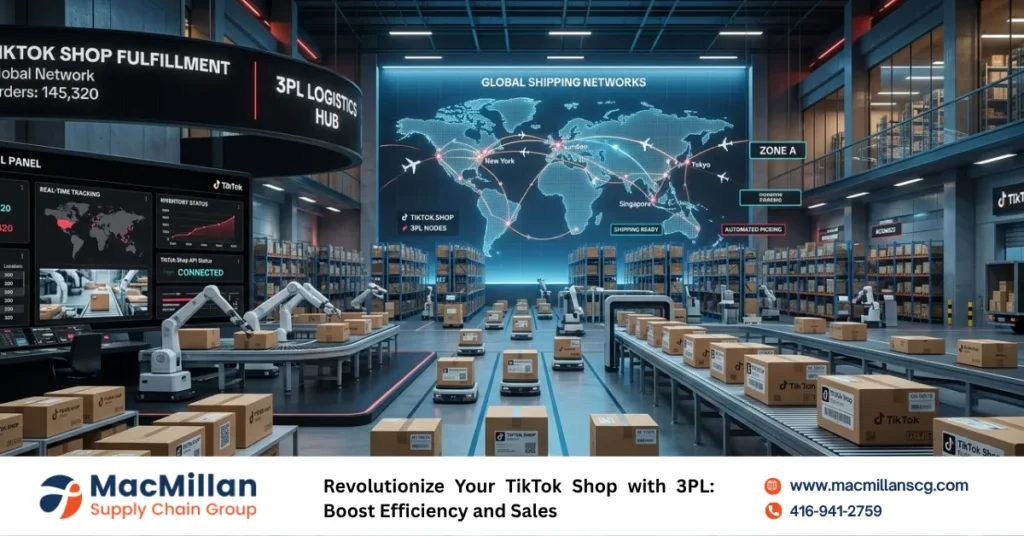
A quick summary and overview Integrating Third-Party Logistics (3PL) services with your TikTok shop can revolutionize your e-commerce operations. This comprehensive guide explores how MacMillan Supply Chain’s 3PL solutions seamlessly connect with TikTok’s platform, offering enhanced efficiency, cost savings, and scalability. We’ll delve into the integration process, benefits of 3PL services, selection criteria for providers, and common challenges with their solutions. By leveraging MacMillan’s expertise, TikTok shop owners can streamline their supply chain, improve customer satisfaction, and focus on core business growth. Discover how our tailored 3PL services can propel your TikTok shop to new heights of success. An introduction As TikTok continues to reshape the e-commerce landscape, businesses are seeking ways to optimize their operations and stay competitive. Enter Third-Party Logistics (3PL) services – a game-changing solution for TikTok shop owners looking to scale their operations efficiently. MacMillan Supply Chain Group offers cutting-edge 3PL services designed to seamlessly integrate with your TikTok shop, providing a robust foundation for growth and success. In this article, we’ll explore how partnering with a 3PL provider like MacMillan can transform your TikTok shop’s logistics, from inventory management to order fulfillment and beyond. We’ll discuss the integration process, highlight the numerous benefits of 3PL services, and provide insights on choosing the right provider for your unique needs. Additionally, we’ll address common challenges and present MacMillan’s innovative solutions to ensure your TikTok shop operates at peak efficiency. Whether you’re a seasoned e-commerce veteran or just starting your TikTok shop journey, this guide will equip you with the knowledge to leverage 3PL services for unprecedented growth. Understanding 3PL Integration with TikTok Shops Integrating 3PL services with your TikTok shop is a crucial step towards optimizing your e-commerce operations. The process primarily revolves around establishing a seamless connection between TikTok’s platform and the 3PL provider’s systems. This integration is typically achieved through Application Programming Interfaces (APIs), which enable real-time data exchange and synchronization. At MacMillan Supply Chain, we’ve developed a robust API integration system specifically tailored for TikTok shops. This integration allows for: Real-time inventory updates: As products are sold or restocked, inventory levels are automatically adjusted across both platforms. Instant order processing: When a customer places an order on your TikTok shop, it’s immediately transmitted to our fulfillment centers for processing. Automated shipping and tracking: Once an order is fulfilled, shipping information is automatically updated on TikTok, providing customers with real-time tracking details. Returns management: Our system streamlines the returns process, updating inventory and customer accounts as needed. By leveraging our advanced integration capabilities, your TikTok shop can operate with unprecedented efficiency. This seamless connection eliminates manual data entry, reduces errors, and ensures that your customers always have access to accurate product availability and order status information. With MacMillan’s 3PL integration, you can focus on growing your TikTok presence while we handle the complex logistics behind the scenes. Benefits of Using 3PL Services for TikTok Shops Partnering with a 3PL provider like MacMillan Supply Chain offers numerous advantages for TikTok shop owners: Enhanced Efficiency: Our specialized systems and processes streamline order fulfillment, reducing processing times and minimizing errors. Cost Savings: By leveraging our established infrastructure and bulk shipping rates, you can significantly reduce operational and shipping costs. Scalability: As your TikTok shop grows, our flexible 3PL services can easily accommodate increased order volumes without requiring additional investment in infrastructure or staff. Improved Customer Satisfaction: Faster, more accurate order fulfillment leads to happier customers and positive reviews, boosting your TikTok shop’s reputation. Focus on Core Business: Outsourcing logistics allows you to concentrate on product development, marketing, and growing your TikTok presence. Expertise and Technology: Benefit from our state-of-the-art logistics technology and industry expertise to stay ahead of e-commerce trends. Expanded Reach: Our strategically located fulfillment centers enable faster shipping to a broader geographic area, potentially expanding your customer base. Inventory Management: Our advanced systems provide real-time inventory tracking, helping you make informed restocking decisions and avoid stockouts. Returns Processing: We efficiently handle returns, reducing the burden on your team and ensuring a smooth experience for customers. By leveraging these benefits, your TikTok shop can achieve higher operational efficiency, reduced costs, and improved customer satisfaction, setting the stage for sustainable growth and success in the competitive e-commerce landscape. Choosing the Right 3PL Provider for Your TikTok Shop Selecting the ideal 3PL partner is crucial for the success of your TikTok shop. Here are key factors to consider when evaluating potential providers: TikTok Integration Capabilities: Ensure the 3PL has experience and robust systems for seamless integration with TikTok’s platform. Scalability: Choose a provider that can accommodate your current needs and future growth projections. Technology Infrastructure: Look for advanced inventory management, order processing, and tracking systems that can keep pace with TikTok’s dynamic environment. Geographic Coverage: Consider the provider’s warehouse locations to optimize shipping times and costs for your target market. Customization Options: Seek a 3PL that offers tailored solutions to meet your specific product and business needs. Reporting and Analytics: Comprehensive data and insights are crucial for making informed business decisions. Customer Service: Ensure the provider offers reliable support to address any issues promptly. Industry Experience: A 3PL with e-commerce expertise, especially in social media platforms, can provide valuable insights and best practices. Value-Added Services: Consider providers offering additional services like kitting, custom packaging, or returns management. Pricing Structure: Understand the pricing model and ensure it aligns with your business goals and budget. At MacMillan Supply Chain, we excel in all these areas, offering TikTok shop owners a comprehensive, tailored 3PL solution. Our expertise in e-commerce logistics, coupled with our advanced technology and commitment to customer success, makes us an ideal partner for TikTok shops looking to optimize their operations and drive growth. Key 3PL Services for TikTok Shop Success To maximize the potential of your TikTok shop, it’s essential to leverage a comprehensive suite of 3PL services. MacMillan Supply Chain offers a range of crucial services tailored for TikTok shop success: Inventory Management: Our advanced systems provide real-time visibility into stock levels, enabling accurate forecasting and preventing stockouts or overstock situations. Order Fulfillment: We process orders quickly and accurately, ensuring timely delivery to maintain customer satisfaction. Warehousing: Our strategically
Unlocking Shopify Success: Top 3PL Providers for Seamless Order Fulfillment
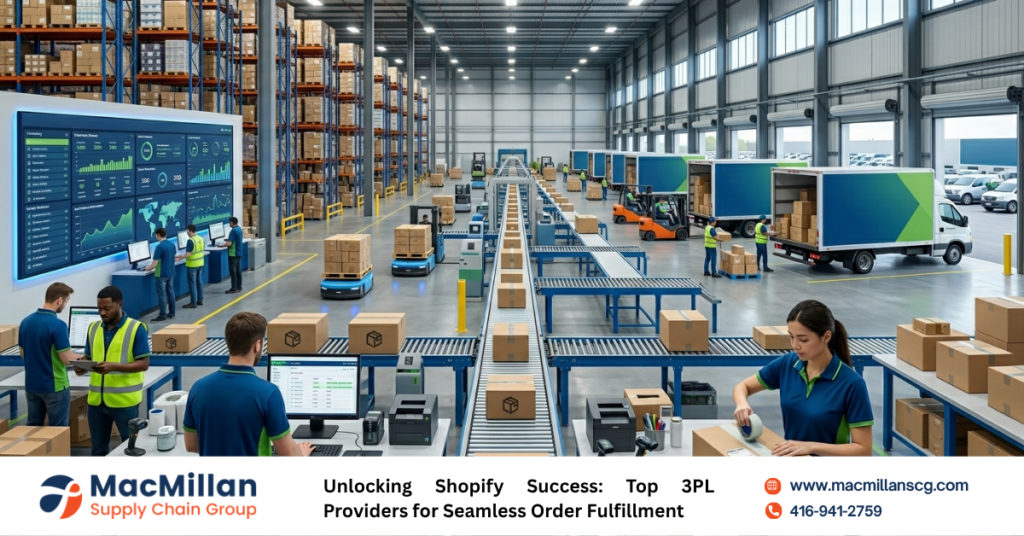
A quick summary and overview For Shopify store owners seeking to streamline their logistics and order fulfillment processes, selecting the right Third-Party Logistics (3PL) provider is crucial. This article evaluates top 3PL providers, focusing on their services, integration efficiency, pricing, and customer support. We’ll explore how these providers can enhance your Shopify operations, discuss common challenges in 3PL selection, and provide solutions to overcome them. Additionally, we’ll highlight how MacMillan Supply Chain can optimize your ecommerce logistics for growth and success. Whether you’re a small business or a rapidly expanding enterprise, this guide will help you make an informed decision for your Shopify fulfillment needs. An introduction In the fast-paced world of ecommerce, efficient order fulfillment is the backbone of success for Shopify businesses. As customer expectations for quick and accurate deliveries continue to rise, many store owners are turning to Third-Party Logistics (3PL) providers to manage their warehousing, inventory, and shipping processes. This strategic move allows retailers to focus on core business activities while ensuring smooth operations and customer satisfaction. However, choosing the right 3PL provider for your Shopify store can be a daunting task. With numerous options available, each offering different services, integration capabilities, and pricing models, it’s crucial to understand what aligns best with your business goals. This comprehensive guide will walk you through the top 3PL providers for Shopify, helping you navigate the selection process with confidence. We’ll also address common challenges and how MacMillan Supply Chain can provide tailored solutions to elevate your ecommerce logistics to new heights. Understanding 3PL in the Shopify Context Third-Party Logistics (3PL) providers play a pivotal role in the Shopify ecosystem, offering comprehensive solutions that streamline the entire order fulfillment process. But what exactly does this mean for your ecommerce business? At its core, a 3PL partner takes on the responsibility of warehousing your inventory, managing stock levels, processing orders, and handling shipping and returns. This allows Shopify store owners to offload the complexities of logistics, freeing up valuable time and resources to focus on product development, marketing, and customer engagement. The benefits of integrating a 3PL provider with your Shopify store are numerous: Scalability: As your business grows, a 3PL can easily accommodate increased order volumes without requiring significant infrastructure investments on your part. Expertise: 3PLs bring specialized knowledge in logistics, often resulting in more efficient processes and cost savings. Geographic Reach: Many 3PLs have multiple warehouse locations, enabling faster shipping times to a broader customer base. Technology Integration: Advanced 3PLs offer seamless integration with Shopify, automating order processing and providing real-time inventory updates. Cost Efficiency: By leveraging a 3PL’s established networks and bulk shipping rates, you can often reduce overall logistics costs. Understanding these benefits is crucial in recognizing the value a 3PL can bring to your Shopify business, setting the stage for improved customer satisfaction and accelerated growth. Top 3PL Providers for Shopify When it comes to selecting a 3PL provider for your Shopify store, several options stand out for their performance, integration capabilities, and service offerings. Let’s explore three top contenders: ShipBob: Known for its seamless Shopify integration Offers a network of fulfillment centers for faster delivery Provides advanced analytics for inventory and shipping insights Ideal for small to medium-sized businesses looking to scale Shopify Fulfillment Network (SFN): Native integration with Shopify platform Uses machine learning for intelligent inventory allocation Offers two-day shipping across the continental US Best for Shopify Plus merchants seeking an all-in-one solution Red Stag Fulfillment: Specializes in handling large, heavy, or high-value items Known for high accuracy rates and order guarantees Provides custom kitting and assembly services Suitable for businesses with unique or specialized products Each of these providers offers distinct advantages, catering to different business needs and scales. ShipBob excels in flexibility and analytics, making it a strong choice for growing businesses. The Shopify Fulfillment Network provides seamless integration and is particularly beneficial for larger Shopify merchants. Red Stag Fulfillment stands out for its specialized handling capabilities, making it ideal for businesses with non-standard products. The Importance of Seamless Shopify Integration When selecting a 3PL provider for your Shopify store, seamless integration is not just a convenience—it’s a necessity. A well-integrated 3PL solution can dramatically improve your operational efficiency and customer satisfaction. Here’s why it matters: Real-Time Inventory Sync: Seamless integration ensures that your Shopify store always displays accurate inventory levels, preventing overselling and customer disappointment. Automated Order Processing: Orders placed on your Shopify store are automatically sent to the 3PL for fulfillment, reducing manual data entry and potential errors. Shipping Updates: Integration allows for automatic shipping notifications to be sent to customers, improving transparency and reducing support inquiries. Returns Management: A well-integrated system streamlines the returns process, making it easier for both you and your customers. Data Analytics: With integrated systems, you can access comprehensive data on orders, inventory, and shipping performance, enabling data-driven decision-making. Scalability: As your business grows, a seamlessly integrated 3PL can easily accommodate increased order volumes without disrupting your operations. When evaluating 3PL providers, pay close attention to their Shopify integration capabilities. Look for providers offering native Shopify apps or robust API connections. Ask about the depth of integration—can it handle complex scenarios like multi-channel selling or pre-orders? The right integration can significantly reduce manual work, minimize errors, and provide a smoother experience for both you and your customers. Pricing and Cost Considerations Understanding the pricing structure of 3PL providers is crucial for managing your Shopify store’s budget effectively. While costs can vary significantly based on your specific needs, most 3PLs typically charge for the following services: Receiving: Fees for accepting and processing incoming inventory. Storage: Monthly charges based on the space your inventory occupies. Pick and Pack: Costs associated with selecting items and preparing orders for shipment. Shipping: Rates for delivering orders to customers, often at discounted carrier rates. Returns Processing: Fees for handling and restocking returned items. When comparing 3PL providers, consider these pricing factors: Minimum Monthly Fees: Some providers require a
Maximize Warehouse Efficiency with Batch Picking: The Modern Fulfillment Solution
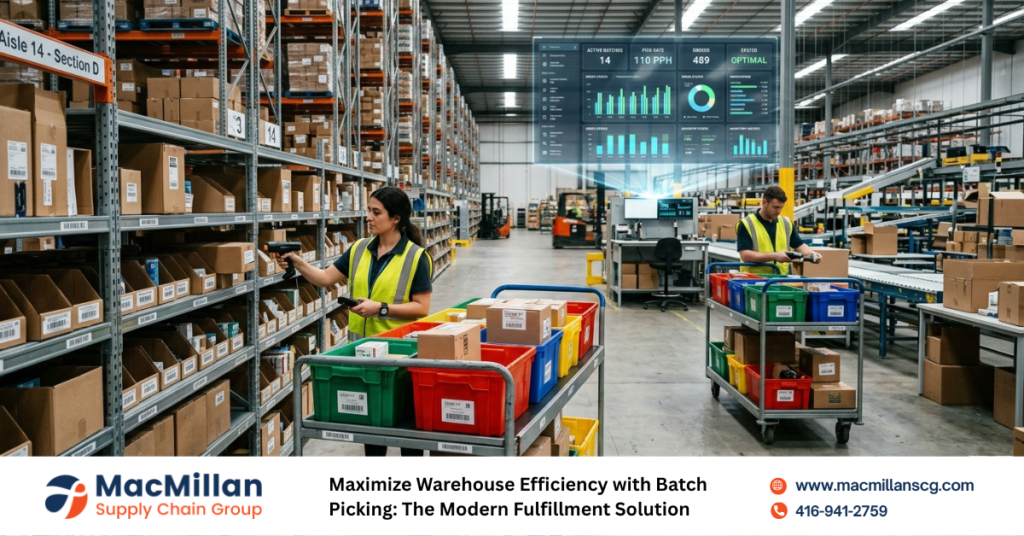
A quick summary and overview Batch Picking is a game-changing strategy in modern warehouse management, dramatically improving efficiency and accuracy in order fulfillment. This method involves picking multiple orders simultaneously, reducing travel time and increasing productivity. By leveraging advanced Order Management Systems (OMS) and Warehouse Management Systems (WMS), businesses can streamline their operations, cut costs, and enhance customer satisfaction. This article delves into the intricacies of batch picking, its benefits, implementation strategies, and how MacMillan Supply Chain can help you revolutionize your warehouse operations. Discover how this innovative approach can transform your fulfillment process and give you a competitive edge in today’s fast-paced logistics landscape. An introduction In the ever-evolving world of supply chain management, staying ahead of the curve is crucial for business success. As e-commerce continues to boom and customer expectations soar, warehouses face increasing pressure to fulfill orders quickly and accurately. Enter batch picking – a powerful solution that’s reshaping the landscape of order fulfillment. This method, when implemented correctly, can significantly boost warehouse efficiency, reduce errors, and cut operational costs. But what exactly is batch picking, and how can it benefit your business? In this comprehensive guide, we’ll explore the ins and outs of it, from its fundamental principles to advanced implementation strategies. We’ll also discuss how MacMillan Supply Chain can help you harness the full potential of this innovative approach, transforming your warehouse operations and driving your business forward. Understanding Batch Picking: The Fundamentals It is a warehouse order fulfillment method where multiple orders are grouped and picked simultaneously, rather than individually. This approach is designed to maximize efficiency by reducing the time and distance traveled by pickers within the warehouse. Here’s how it works: Order Grouping: The warehouse management system analyzes incoming orders and groups them based on common items or locations. Pick List Generation: A consolidated pick list is created for the entire batch, detailing the total quantity of each item needed. Picking Process: Pickers collect the required items for all orders in the batch at once, moving through the warehouse in an optimized path. Sorting and Packing: Once all items are picked, they’re sorted into individual orders for packing and shipping. The key to effective batch picking lies in sophisticated warehouse management systems that can intelligently group orders and optimize picking routes. This method is particularly beneficial for warehouses handling a high volume of orders with similar items or those with products stored in close proximity. By consolidating multiple orders into a single picking trip, batch picking significantly reduces the time spent traveling between locations, leading to increased productivity and reduced labor costs. It’s a strategic approach that aligns perfectly with the demands of modern e-commerce and omnichannel fulfillment. The Benefits of Implementing Batch Picking Implementing batch picking in your warehouse operations can yield numerous advantages that directly impact your bottom line and customer satisfaction. Here are the key benefits: Increased Productivity: By reducing travel time and optimizing picking routes, workers can fulfill more orders in less time, significantly boosting overall productivity. Cost Reduction: With improved efficiency comes reduced labor costs. Fewer man-hours are required to process the same number of orders, leading to substantial savings. Enhanced Accuracy: It minimizes the risk of errors by consolidating similar items and utilizing advanced picking technologies, resulting in fewer mis-picks and returns. Improved Space Utilization: This method often leads to better organization of inventory, maximizing available warehouse space. Faster Order Fulfillment: With more efficient picking processes, orders can be processed and shipped more quickly, improving customer satisfaction and potentially increasing sales. Scalability: Batch picking systems can easily adapt to handle increased order volumes during peak seasons without a proportional increase in labor. Data-Driven Insights: The technology behind batch picking provides valuable data on warehouse operations, enabling continuous improvement and informed decision-making. By leveraging these benefits, businesses can gain a competitive edge in the marketplace, offering faster, more accurate fulfillment while optimizing their operational costs. MacMillan Supply Chain specializes in helping companies implement and maximize the potential of batch picking systems. Implementing Batch Picking: Technologies and Best Practices Successful implementation of batch picking requires a combination of advanced technologies and strategic best practices. Here’s what you need to know: Technologies: Order Management System (OMS): Crucial for processing and grouping orders efficiently. Warehouse Management System (WMS): Optimizes picking routes and manages inventory. Radio Frequency (RF) Scanners: Ensure accurate item selection and real-time inventory updates. Pick-to-Light Systems: Guide pickers to correct locations, enhancing speed and accuracy. Voice-Directed Picking: Allows hands-free, eyes-free picking for increased efficiency. Best Practices: Optimize Warehouse Layout: Arrange inventory strategically to minimize travel time. Continuous Training: Regularly train staff on new technologies and processes. Use Data Analytics: Analyze picking data to identify bottlenecks and improve processes. Implement Quality Control: Establish checkpoints to ensure order accuracy. Regularly Review and Adjust: Continuously assess and refine your batch picking strategy. When implementing batch picking, it’s crucial to choose technologies that integrate seamlessly with your existing systems. MacMillan Supply Chain can help you select and implement the right combination of technologies and practices tailored to your specific warehouse needs, ensuring a smooth transition and maximum efficiency gains. Overcoming Challenges in Batch Picking While it offers numerous benefits, it’s not without its challenges. Being aware of these potential hurdles and knowing how to address them is crucial for successful implementation: Initial Investment: Implementing batch picking often requires significant upfront costs for technology and training. However, the long-term benefits typically outweigh these initial expenses. System Integration: Ensuring seamless integration between new batch-picking systems and existing warehouse technologies can be complex. Professional guidance is often necessary. Order Priority Management: Balancing the efficiency of that with the need to prioritize certain orders (e.g., rush orders) can be challenging. Inventory Accuracy: It relies heavily on accurate inventory data. Discrepancies can lead to picking errors and inefficiencies. Staff Adaptation: Employees may initially resist changes to established picking methods. Proper training and change management strategies are essential. Scalability Issues: As order volumes grow, the system must be able to scale accordingly
What Energy Chokepoints Like Hormuz Mean for Modern Supply Chain Risk
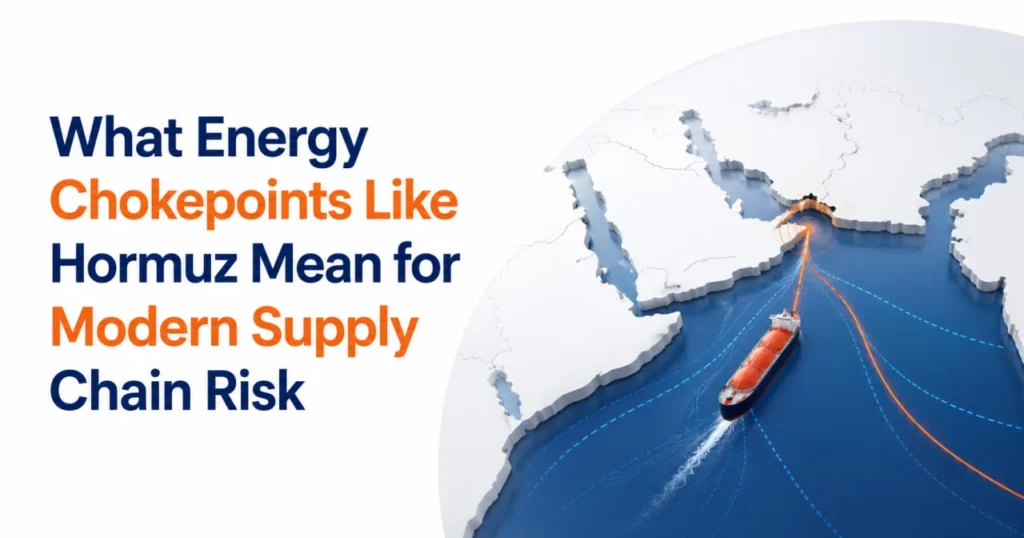
A Quick Summary and Overview Energy chokepoints like the Strait of Hormuz matter far beyond oil markets. They affect freight costs, transit reliability, sourcing decisions, packaging inputs, inventory planning, and broader supply chain resilience. For supply chain leaders, the real issue is simple: disruption at a single energy chokepoint can quickly affect transportation costs, manufacturing inputs, supplier lead times, and service levels. Even when the disruption is far from your warehouse or customers, the operational impact can still show up across procurement, replenishment, and logistics planning. Introduction Most supply chain disruptions do not begin inside the warehouse. They begin upstream through fuel markets, input materials, shipping lanes, and trade routes. That is why energy chokepoints matter so much. They are not only energy stories. They are logistics stories, procurement stories, inventory stories, and service-level stories. The Strait of Hormuz is one of the clearest examples. It remains one of the most important energy transit routes in the world, which means any disruption there can create ripple effects across transportation costs, industrial inputs, lead times, and sourcing strategy. For brands, this kind of disruption is rarely felt in just one place. A rise in fuel cost can affect freight budgets. Pressure on petrochemical inputs can affect packaging or raw materials. Delays upstream can create stock risk downstream. That is what makes energy chokepoints so important to modern supply chain planning. What Is an Energy Chokepoint? An energy chokepoint is a narrow route or passage that large volumes of oil, gas, or related products must move through to reach global markets. These routes matter because they concentrate risk. If trade through one of them is delayed, restricted, or made more expensive, the effects can spread quickly through: fuel costs ocean shipping economics industrial input prices supplier production schedules lead times inventory decisions In other words, one narrow route can influence much wider parts of the supply chain than many brands initially expect. Why Hormuz Is Such a Big Supply Chain Story The Strait of Hormuz matters because of both scale and concentration. A large share of global oil and LNG flows through it, especially into Asian markets. That makes it more than a regional issue. It becomes a global operating risk because many supply chains are exposed to energy both directly and indirectly. Some businesses feel that exposure through transportation. Others feel it through packaging materials, plastics, chemicals, manufacturing inputs, or supplier costs. Even companies that do not buy oil directly can still experience the impact through cost inflation, reduced predictability, or supplier disruption. That is why Hormuz is not just an energy headline. It is a supply chain pressure point. 6 Ways Energy Chokepoints Increase Supply Chain Risk 1. Fuel and transportation costs rise quickly When a major energy route is disrupted, transport costs can move fast. Higher oil and gas prices affect linehaul, drayage, parcel movement, air cargo economics, and broader carrier pricing. They can also pressure last-mile delivery costs and distribution budgets. For supply chain teams, this means freight planning becomes harder and cost assumptions can change faster than expected. 2. Lead times become less reliable A chokepoint problem is not only about price. It is also about predictability. When energy markets tighten, carriers and suppliers often adjust schedules, capacity planning, and routing assumptions. Even businesses not shipping through the affected region can feel the effects through slower replenishment and changed operating rhythms. That makes planning more difficult, especially for brands already managing leaner inventories or tighter fulfillment windows. 3. Packaging and production inputs come under pressure Many brands think of energy disruption only in terms of fuel. In reality, the impact often reaches much deeper into materials and manufacturing. Feedstocks tied to petrochemicals can become more exposed during disruptions like this. That matters for products linked to plastics, packaging, chemicals, resins, and a broad range of industrial and consumer goods inputs. So even if transport keeps moving, production cost and material availability can still come under pressure. 4. Sourcing concentration gets exposed One of the clearest lessons from energy chokepoint disruption is that not all supply chains are affected equally. The biggest problems tend to show up where sourcing is concentrated, alternatives are limited, or upstream exposure is not fully understood. A business that depends too heavily on one region, one supplier cluster, or one raw material source is usually more vulnerable when conditions tighten. This is where hidden dependency becomes visible very quickly. 5. Inventory strategy becomes more important When upstream risk rises, inventory discipline matters more. Stronger inventory visibility, better safety stock logic, and faster replenishment decision-making can help brands absorb volatility more effectively. Companies that understand what they have, what is in transit, and what is exposed can usually respond faster than companies operating with weaker visibility. This is also where operational resilience becomes practical, not theoretical. 6. Customer service and retail performance can suffer Upstream disruption eventually shows up downstream. If transport costs jump, packaging inputs tighten, or replenishment slows, brands can face missed delivery windows, lower service levels, stockouts, and margin pressure at the same time. That is why energy chokepoint risk is not just a macro issue. It can directly affect order performance, retailer execution, and customer experience. What Brands Should Learn From Hormuz The biggest lesson is not that every brand should react to every global event. It is that supply chains need enough flexibility to withstand upstream shocks. The Hormuz example highlights three especially important principles: dependency matters visibility matters buffer capacity matters The same disruption can affect different businesses in very different ways depending on their sourcing model, input exposure, planning discipline, and inventory strategy. That is why resilience should not be treated as a broad concept only discussed at a strategic level. It needs to show up in day-to-day operating decisions. 6 Practical Ways to Reduce Exposure to Energy Chokepoint Risk 1. Review upstream input dependency Look beyond finished goods suppliers. Understand whether key materials, packaging inputs, feedstocks, or components rely on regions exposed to energy route
Optimizing eCommerce Fulfillment: Amazon FBA vs Dropshipping – MacMillan Supply Chain Solutions
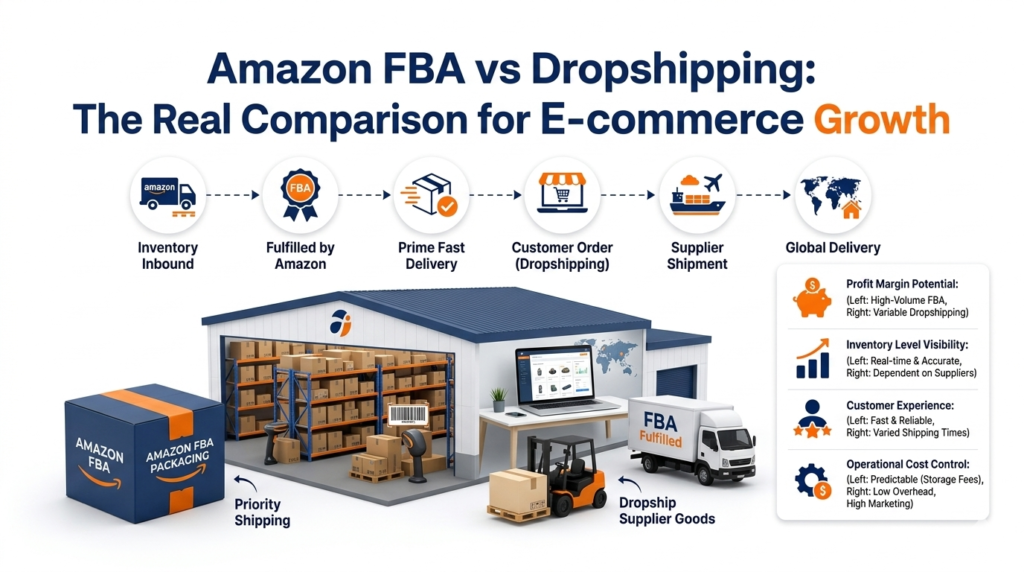
A Quick Summary and Overview This comprehensive guide dives into the world of eCommerce fulfillment, comparing Amazon FBA and dropshipping models. We’ll explore the advantages and challenges of each strategy, helping you make an informed decision for your business. MacMillan Supply Chain Group offers expert insights on optimizing your chosen fulfillment method, addressing common pain points, and maximizing efficiency. Whether you’re a startup or an established brand, this article provides valuable information on inventory management, customer service, and profit optimization. Discover how partnering with MacMillan can transform your eCommerce operations and drive sustainable growth in today’s competitive marketplace. An Introduction In the ever-evolving landscape of eCommerce, choosing the right fulfillment strategy can make or break your business. Two popular models that often come head-to-head are Amazon FBA (Fulfillment by Amazon) and dropshipping. Each offers unique advantages and presents its own set of challenges, leaving many entrepreneurs wondering which path to take. This article aims to demystify these fulfillment methods, providing a detailed comparison of Amazon FBA and dropshipping. We’ll delve into the intricacies of each model, exploring their impact on inventory management, customer service, profit margins, and scalability. By understanding the nuances of these strategies, you’ll be better equipped to make a decision that aligns with your business goals and resources. Furthermore, we’ll discuss how MacMillan Supply Chain Group can help you navigate the complexities of eCommerce fulfillment, offering tailored solutions to optimize your chosen strategy and overcome common obstacles in the industry. Understanding Amazon FBA: Leveraging Amazon’s Powerhouse Infrastructure Amazon FBA has revolutionized eCommerce fulfillment by allowing sellers to tap into Amazon’s vast logistics network. When you choose FBA, you’re essentially partnering with one of the world’s most efficient fulfillment systems. Here’s how it works: You send your inventory to Amazon’s fulfillment centers. Amazon stores your products and manages inventory. When a customer places an order, Amazon picks, packs, and ships the item. Amazon handles customer service and returns. The primary advantage of FBA is the ability to offer Prime shipping, which can significantly boost your sales. Amazon’s brand trust and efficient delivery system can lead to higher customer satisfaction and repeat purchases. Additionally, FBA can save you time and resources on logistics, allowing you to focus on product development and marketing. However, FBA isn’t without its challenges. The costs associated with storage fees, especially during slow seasons, can eat into your profits. There’s also intense competition on the Amazon marketplace, requiring strategic pricing and marketing efforts to stand out. Moreover, you’ll need to adhere to Amazon’s strict guidelines and policies, which can be restrictive for some businesses. Despite these challenges, FBA remains a popular choice for sellers looking to leverage Amazon’s infrastructure and customer base to scale their eCommerce operations rapidly. Exploring Dropshipping: The Low-Risk, High-Flexibility Model Dropshipping has gained popularity as a low-barrier entry point into eCommerce. This model allows you to sell products without holding inventory. Here’s the basic process: You list products on your online store or marketplace. A customer places an order and pays you. You forward the order to your supplier. The supplier ships the product directly to the customer. The most significant advantage of dropshipping is its low initial investment. You don’t need to purchase inventory upfront, reducing financial risk. This model also offers great flexibility in terms of product selection and the ability to test new markets quickly. Dropshipping can be an excellent way to start an eCommerce business or expand an existing product line without significant capital outlay. However, dropshipping comes with its own set of challenges. Profit margins are typically lower due to higher per-unit costs from suppliers. You have less control over inventory and shipping times, which can lead to customer service issues. There’s also significant competition in popular dropshipping niches, making it crucial to find unique products or add value through exceptional marketing and customer service. Despite these challenges, dropshipping remains an attractive option for entrepreneurs looking to start an eCommerce business with minimal upfront costs and maximum flexibility. Comparing Profit Margins and Scalability When it comes to profit margins and scalability, Amazon FBA and dropshipping offer different advantages: Amazon FBA: Higher potential for profit margins due to bulk purchasing and Prime eligibility Easier to scale rapidly with Amazon’s infrastructure Opportunity for organic visibility on Amazon’s platform Higher upfront costs and ongoing storage fees Dropshipping: Lower initial investment and reduced financial risk Flexibility to adjust product offerings quickly Potentially lower profit margins due to per-unit supplier costs Scalability can be limited by supplier relationships and fulfillment capabilities In terms of scalability, Amazon FBA has a clear advantage. As your sales volume increases, Amazon’s robust infrastructure can easily accommodate growth without requiring significant changes to your operations. However, this scalability comes at a cost, both in terms of fees and the need to maintain higher inventory levels. Dropshipping offers more flexibility in scaling product offerings, but scaling operations can be more challenging. As your business grows, you may face issues with supplier reliability, inventory management across multiple suppliers, and maintaining consistent quality control. Ultimately, the choice between these models depends on your business goals, available capital, and willingness to manage different aspects of the fulfillment process. Some businesses even opt for a hybrid approach, using both models to maximize their advantages. Customer Service and Brand Control Customer service and brand control are crucial factors in eCommerce success. Let’s compare how Amazon FBA and dropshipping stack up in these areas: Amazon FBA: Amazon handles customer service, including returns and exchanges Benefit from Amazon’s reputation for reliable shipping and customer care Limited control over the customer experience and branding Potential for commingling of inventory with other sellers’ products Dropshipping: Full control over customer service interactions Ability to build a unique brand identity and customer experience Challenges in managing customer expectations for shipping times Potential issues with product quality control and consistency With Amazon FBA, you benefit from Amazon’s world-class customer service infrastructure. This can be a significant advantage, especially for small businesses that may
Barcode Evolution: Driving Supply Chain Visibility and Efficiency
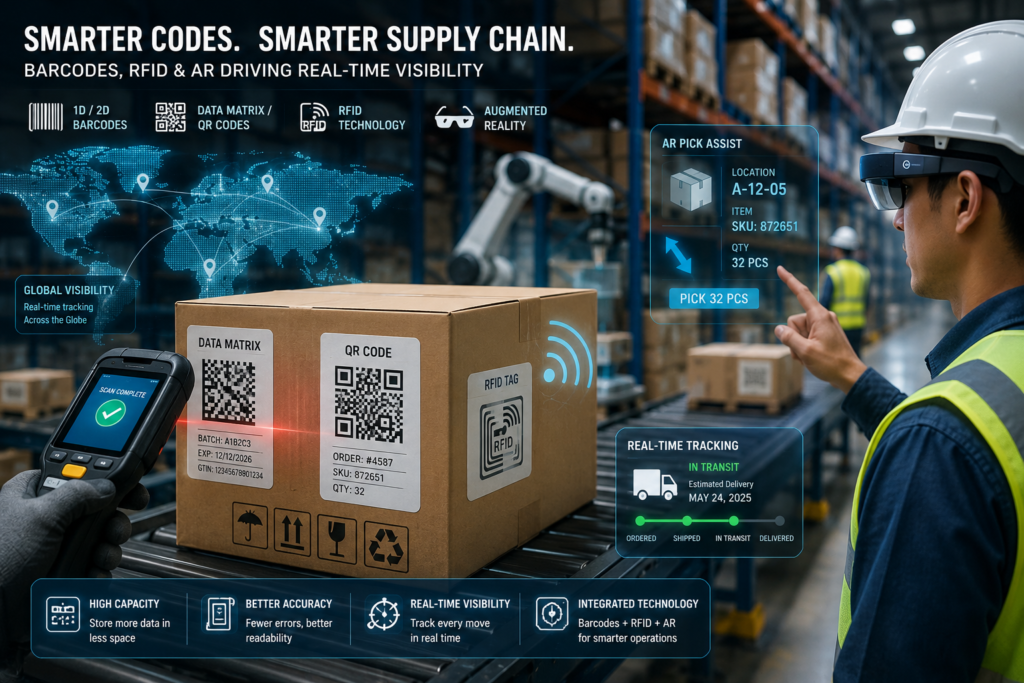
Quick Summary What began as a grocery store experiment in the 1940s is now the backbone of global supply chain visibility. Barcodes have evolved from simple lines to data-rich 2D/3D codes, driving unprecedented accuracy and real-time tracking. With innovations like AR-guided warehouses and RFID hybrids, they’re proving even the smallest label can pack a billion-dollar punch. Introduction: The Silent Workhorse of Modern Logistics Picture a world without barcodes: checkout lines snaking through stores, shipments lost in transit chaos, and inventory counts buried in guesswork. Thankfully, we don’t live there. Since that first beep scanning a pack of Wrigley’s gum in 1974, barcodes have quietly transformed supply chain visibility into precision engines. Today, they’re not just identifiers they’re data powerhouses, merging with AI and IoT to turn logistics into a science. The Evolution of Barcodes The journey of barcodes began with humble linear codes in the 1940s, initially designed for inventory management in grocery stores. These rudimentary designs, consisting of parallel lines, paved the way for the Universal Product Code (UPC) system, which revolutionized retail operations when the first item was scanned in 1974. This pivotal moment marked the widespread adoption of barcodes, simplifying product tracking and inventory management across various sectors. Two-dimensional (2D) barcodes were created as a result of the limits of linear codes becoming evident as technology developed. With the addition of strong errors correcting mechanisms, these cutting-edge designs such as QR codes and Data Matrix codes significantly expanded data storage capacities and ensured dependable reading even on damaged or obscured codes. Modern Trends in Barcode Technology Contemporary barcode technology goes far beyond simple item identification. Advanced systems now integrate sensors, artificial intelligence (AI), and augmented reality (AR) to automate scanning processes and improve accuracy dramatically. AR applications, for instance, enable seamless inventory management by displaying digital information within a worker’s direct line of vision, reducing errors in picking and packing operations. Additionally, the advent of “smart labels” and Internet of Things (IoT) integration has revolutionized supply chain visibility. These intelligent barcodes, equipped with sensors and wireless connectivity, provide real-time tracking of products throughout the entire logistics journey, from manufacturing to final delivery. This level of transparency aligns with modern trends prioritizing optimization and end-to-end supply chain oversight. Industry Specific Innovations: Beyond Retail Different sectors have harnessed barcodes in unique ways, tailoring the technology to their challenges: Healthcare: Data Matrix codes, with their high reliability, track every pill and medical device. Hospitals use them to prevent counterfeit drugs and ensure compliance with stringent regulations. During the COVID-19 pandemic, these codes were critical in managing vaccine distribution. Retail: QR codes bridge online and offline experiences. A customer scanning a code on a clothing tag might see a video of the garment’s sustainable production process or access exclusive discounts, fostering brand loyalty. Manufacturing: Centralized systems sync barcode data across global factories, ensuring components arrive just-in-time. Toyota, for example, slashed production delays by 30% using real time part tracking. These applications highlight barcodes’ versatility they’re not just tools for logistics but catalysts for innovation. RFID and Barcode Integration The integration of radio frequency identification (RFID) technology with traditional barcodes represents a significant leap forward in logistics innovation. By combining RFID’s non-line-of-sight capability with the data capacity of barcodes, businesses can implement faster and more efficient scanning solutions. This hybrid approach addresses the logistical challenges of modern supply chain visibility, emphasizing the necessity for continuous innovation in inventory management. Common Hurdles (and How to Clear Them) Legacy Scanner Woes: Older devices can’t read 2D codes? Retrofit with add-on lenses. Upgrade Costs: Start with pilot projects—e.g., tag high-value items first. Data Silos: Cloud platforms unify scanning data across teams. MacMillan’s Fix: Phased Upgrades: Modernize scanners without breaking budgets. Staff Training: Turn skeptics into barcode pros with hands-on workshops. Custom Tools: APIs that sync barcode data with your existing ERP.. We also provide comprehensive training and support services to ensure your staff maximizes the efficiency of barcode deployments. Our experts work closely with your team to streamline processes, enhance data management practices, and implement best practices for supply chain visibility and accuracy Implementing Solutions: Work with MacMillan To stay ahead in the rapidly evolving landscape of supply chain management, partnering with industry experts is crucial. MacMillan Supply Chain combines deep domain expertise with state-of-the-art technology to deliver optimized logistics solutions tailored to your specific needs. By leveraging our advanced barcode and RFID integration capabilities, you can future-proof your operations, ensuring a smooth transition to emerging technologies while maximizing the value of your existing investments. Contact us today to explore how we can streamline your supply chain, enhance visibility, and drive operational excellence through the power of innovative barcode solutions. FAQS What are 2D barcodes' primary benefits over conventional 1D barcodes? Compared to its linear predecessors, 2D barcodes—such as QR codes and Data Matrix codes offer a number of benefits. These include extra storage space for data, strong error-correction systems, and the ability to record more specific product details like batch numbers and manufacture dates. 2D barcodes are useful for marketing and brand engagement campaigns since they also allow for richer consumer connection through smartphone scanning. Why is the transition to 2D barcodes important for supply chain management? 2D barcodes are important because they can store much more information than traditional barcodes and improve tracking accuracy. They also allow faster scanning and better readability even if the code is damaged, making supply chain operations more efficient and reliable. How does augmented reality contribute to the evolution of barcode technology? Augmented reality helps by showing real-time barcode and inventory data directly in a worker’s view through smart devices. This makes warehouse tasks like picking and packing faster, more accurate, and easier to manage. How is RFID technology integrated into modern barcode systems? RFID is combined with barcode systems to improve tracking speed and accuracy. Unlike barcodes, RFID can scan multiple items without direct line of sight, and when used together they provide stronger real-time visibility across the supply chain.
AI-Enabled Touchless Planning: Revolutionizing Supply Chain Efficiency and Accuracy
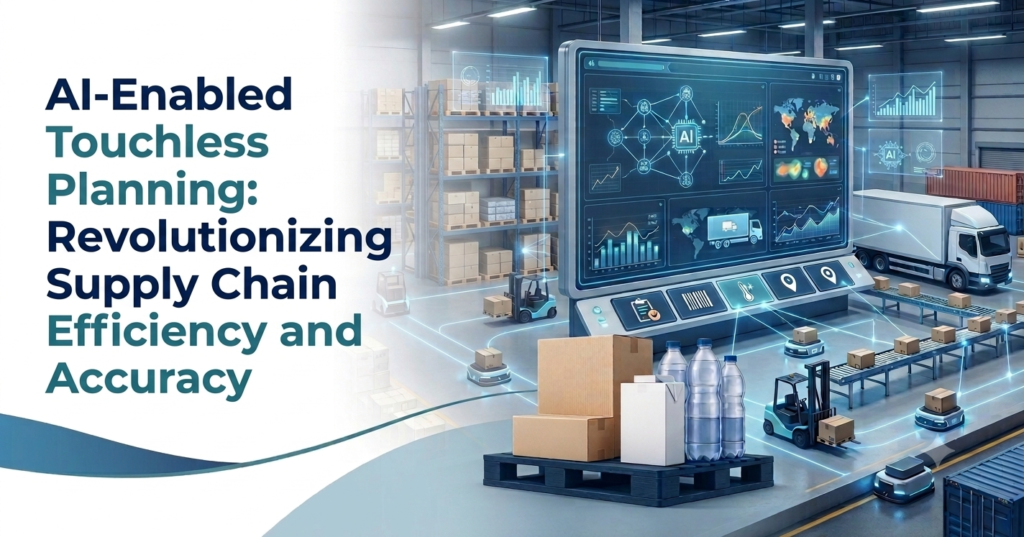
The Future is Hands-Free: How Touchless Planning is Rewriting Supply Chain Rules Imagine a world where your supply chain runs like a self-driving car—anticipating bumps, adjusting routes in real time, and freeing your team to focus on the big picture. That’s the promise of touchless planning, and it’s not science fiction. This AI-powered approach is helping companies cut costs, boost accuracy, and outmaneuver competitors. Let’s unpack why this isn’t just another tech trend—it’s the new playbook for supply chain success. Why Touchless Planning Isn’t Just a Buzzword Supply chains today face a perfect storm: skyrocketing customer expectations, volatile markets, and razor-thin margins. Enter touchless planning—the secret weapon turning logistics teams from firefighters into strategists. By letting AI handle the grunt work of forecasting and adjustments, companies like yours are discovering something revolutionary: automation doesn’t replace people, it makes them superheroes. At MacMillan Supply Chain, we’ve seen how this shift works. One client reduced stockouts by 40% while trimming excess inventory. Another slashed planning cycle time from weeks to days. The common thread? They stopped drowning in spreadsheets and started steering their business. How Touchless Planning Actually Works (No Jargon, We Promise) Think of touchless planning as your always-on supply chain co-pilot. Here’s what makes it tick: AI that learns as it goes: Unlike rigid old systems, these tools adapt to your unique business rhythms—seasonal spikes, supplier quirks, even weather patterns. Real-time crystal ball: By crunching live data from sales, warehouses, and global markets, it spots trends humans might miss until it’s too late. Transparency you can trust: Goodbye “black box” anxiety. Modern systems explain their logic, so your team understands why AI suggests moving inventory or adjusting orders. The magic happens when these elements work together. Picture this: Your system spots a port strike in Asia, checks alternative suppliers, recalculates delivery timelines, and updates your production schedule—all before your coffee gets cold. Why Your Competitors Are Racing to Adopt This The numbers tell a compelling story: Companies using touchless planning see up to 70% fewer manual interventions—that’s thousands of hours freed for strategic work Forecasting errors drop by 30-50%, meaning fewer “oh no” moments when inventory doesn’t match demand 15-25% lower carrying costs as warehouses stop hoarding “just in case” stock But the real win? Your team stops being data entry clerks and becomes business doctors—diagnosing issues, spotting opportunities, and keeping customers glued to your brand. Making the Shift Without the Headaches Let’s be real: Asking planners to trust AI with their baby (your supply chain) takes finesse. Here’s how to nail the transition: 1. Start with a “Why” Workshop Gather your team and ask: “What drains your time most?” Map how AI could tackle those pain points first. Success breeds confidence. 2. Run a Pilot That Can’t Fail Pick a single product line or region. Set clear metrics: “Reduce stockouts here by 20% in 3 months.” Small wins build big believers. 3. Become AI Translators MacMillan’s approach includes training your planners to “speak AI”—understanding how to tweak algorithms and interpret insights without needing a data science degree. 4. Celebrate the Human Wins When your procurement lead uses freed-up time to negotiate better supplier terms? Shout it from the rooftops. Show how AI elevates roles instead of replacing them. Bumps in the Road (And How to Smooth Them) Every transformation has its hurdles. Here’s how we help clients clear them: “What If the AI Gets It Wrong?” We build safety nets: Hybrid models where AI suggests and humans approve (at first) Clear override protocols everyone understands Monthly “lessons learned” reviews to improve the system Data Headaches That old saying “garbage in, gospel out” still applies. We partner with you to: Clean up legacy data (yes, even those messy Excel files from 2018) Set up automated quality checks Create simple dashboards that show data health at a glance Change-Resistant Cultures We’ve found that showing > telling works best. One client ran a “Human vs. AI” forecasting contest. When the machine beat veteran planners by 12%? Skepticism melted fast. Your Next Move: Where to Start Ready to dip your toes in touchless waters? Try this: Map your pain points: Where do delays cost you the most? Audit your data: What’s usable? What needs TLC? Book a discovery call: MacMillan’s team will show you real-world examples from your industry. Why This Isn’t Just Another Tech Upgrade Touchless planning isn’t about replacing your team—it’s about giving them superpowers. Imagine: Your planners spotting emerging trends instead of fighting fires Your CFO smiling at reduced waste Your customers staying loyal because you always have what they need That’s the future MacMillan helps build. And it starts with a simple conversation. Let’s Start the Clock Every day you wait is a day competitors gain ground. Reach out today to: See touchless planning in action (no sales pitch—just real demos) Get a free data health check Explore phased rollouts that fit your pace “We thought AI would complicate things. Instead, it simplified our entire operation.” — MacMillan Client, Automotive Parts Manufacturer MacMillan Supply Chain is your partner in navigating the complexities of touchless planning implementation. Reach out to us to begin your journey towards a more efficient, automated supply chain. Frequently Asked Questions What is Touchless Planning? Touchless planning is an AI-driven approach to supply chain planning that minimizes human intervention by automating processes such as demand forecasting and inventory management. The use of machine learning algorithms ensures high accuracy and efficiency. How Does Touchless Planning Improve Forecasting Accuracy? Touchless planning improves forecasting accuracy by using AI and real-time data to identify trends, predict demand changes, and automatically adjust plans faster than manual methods. What Are the Primary Benefits of Touchless Planning? The main benefits include reduced manual work, faster planning cycles, improved forecasting accuracy, lower inventory costs, fewer stockouts, and better operational efficiency. How Is Trust Built in Touchless Planning Systems? Trust is built through transparent AI recommendations, human oversight, clear approval processes, and continuous system performance reviews. Can Touchless Planning Be Integrated with Existing Systems?
How AI and Automation Are Changing FMCG Fulfillment in Canada
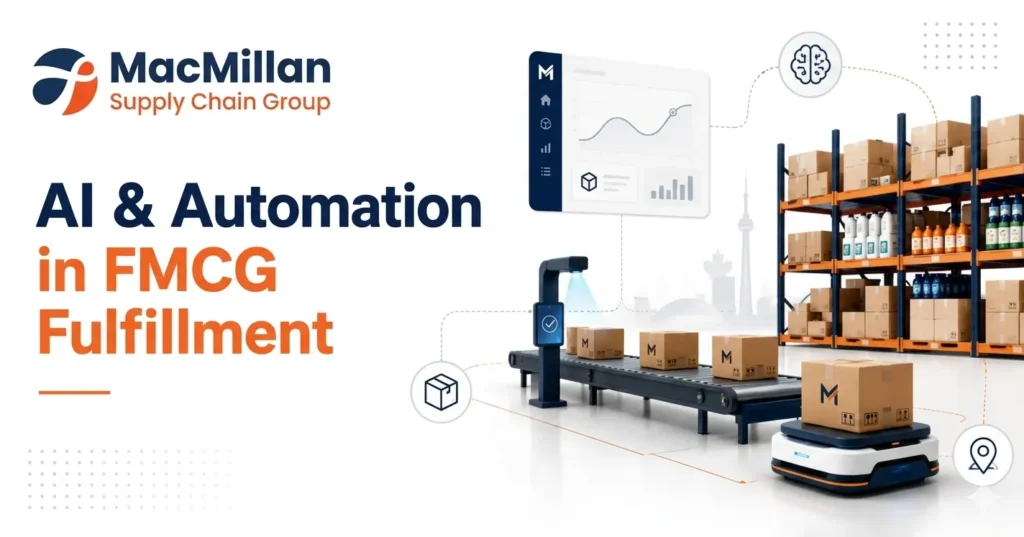
A Quick Summary and Overview AI and automation are changing FMCG fulfillment in Canada by helping brands improve inventory accuracy, forecast demand more effectively, reduce manual errors, speed up warehouse workflows, and respond faster to changing retail and consumer demand. Current industry coverage consistently highlights robotics, predictive analytics, dynamic routing, and smarter warehouse software as major fulfillment trends shaping 2025 and beyond. For MacMillan, this topic fits naturally. MacMillan already positions itself around data-driven visibility, WMS-powered control, AI-powered route optimization, real-time tracking, retailer-ready warehousing, and KPI-led fulfillment performance across Canada. Introduction FMCG fulfillment has always been a speed game, but now it is also a data game. Brands are expected to keep shelves full, support promotions, avoid stockouts, reduce waste, and deliver accurately across retail, ecommerce, and marketplace channels at the same time. That is exactly why AI and automation are becoming more important in Canadian fulfillment. They help operations move from reactive decisions to faster, more informed, more scalable execution. Current warehouse trend coverage points to AI-driven analytics, robotics, predictive maintenance, and workflow optimization as key shifts in modern fulfillment operations. For FMCG brands, this matters because even small delays or inaccuracies can quickly affect service levels, margins, and retailer relationships. MacMillan’s own positioning reflects this reality through its focus on inventory visibility, scan-verified fulfillment, real-time tracking, and retail-ready execution. Why This Topic Matters More Now AI and automation are not just future-facing topics anymore. They are becoming practical tools for brands trying to manage volatility, labor pressure, fulfillment speed, and inventory complexity. Recent reporting shows retailers and supply chain teams using AI to predict stockouts, improve inventory availability, and make faster replenishment decisions based on real-time demand signals. At the warehouse level, 2026 trend coverage points to several major shifts: greater use of robotics for repetitive movement and retrieval AI-powered demand and inventory planning dynamic routing and workflow optimization automated data capture for accuracy and visibility scalable systems that adapt to changing order volumes That combination is especially relevant in FMCG, where product velocity is high and the cost of delay is immediate. What AI and Automation Mean in FMCG Fulfillment In practical terms, AI and automation in fulfillment usually refer to systems that help operations make better decisions and complete repetitive tasks faster. That can include: AI-assisted demand forecasting warehouse management systems that optimize slotting and replenishment automated storage and retrieval systems AGVs or AMRs that move goods through facilities scan-based inventory control predictive alerts for delays, stockouts, or equipment issues route optimization and real-time delivery tracking The point is not to remove people from the operation. The real value is usually in helping teams work with more accuracy, more visibility, and less wasted motion. 6 Ways AI and Automation Are Changing FMCG Fulfillment in Canada 1. Better demand forecasting and replenishment AI helps fulfillment operations move beyond static planning. Recent reporting shows AI being used to analyze lead times, current inventory, and consumer demand so teams can identify likely shortages earlier and make faster replenishment decisions. For FMCG brands, that can mean: fewer stockouts during demand spikes better seasonal planning less excess inventory more confidence in replenishment timing MacMillan’s broader service positioning supports this approach through WMS-backed visibility, data-driven insights, and fulfillment systems designed to help brands reduce errors and improve inventory control. 2. Faster and more accurate warehouse operations Warehouse automation is becoming more common because it helps increase throughput while reducing manual handling errors. Current warehouse trend coverage highlights AS/RS systems, AGVs, and robotics as important tools for improving storage, retrieval, and order processing efficiency. For FMCG, that matters because fast-moving products need: quicker inbound processing faster pick-pack execution better inventory movement fewer errors in high-volume environments MacMillan already emphasizes scan-verified fulfillment, high inventory accuracy, rapid dock-to-stock execution, and operational precision in its service messaging. 3. Real-time visibility across inventory and orders AI is only as useful as the visibility around it. Modern fulfillment systems increasingly use real-time data to help teams understand what is in stock, what is moving, what is delayed, and where intervention is needed. Exotec’s 2025 trend coverage specifically points to AI systems that track SKU behavior, reassign product locations, and optimize workflows in real time. MacMillan’s site aligns strongly with this value proposition. It highlights real-time order status, live tracking, milestone updates, digital PODs, KPI reporting, and inventory visibility through its WMS-backed platform. 4. Smarter routing and transportation planning AI is not limited to the warehouse. It also improves transportation by optimizing routes, reducing delays, and increasing delivery predictability. MacMillan’s food and beverage page specifically highlights AI-powered route optimization and real-time delivery tracking, while its transportation services emphasize milestone visibility and retailer-precision execution. For FMCG brands, smarter transportation matters because: retailer delivery windows are strict replenishment timing affects shelf availability delays can increase spoilage, stockouts, or compliance risk last-mile visibility improves operational response 5. Lower manual error and stronger compliance execution Automation often improves performance by reducing repetitive manual steps that create fulfillment mistakes. Scan-based workflows, automated reconciliation, barcode support, and system-driven validation all help improve order accuracy and inventory reliability. MacMillan’s promises and service pages directly reference barcode and RFID support, real-time APIs, EDI and ASN support, and automated QC workflows. That is especially important in FMCG, where errors can lead to: retailer chargebacks delivery rejections inaccurate stock levels mis-picks during peak periods slower recall response where lot control matters 6. More scalable peak-season and launch execution Automation helps operations scale without relying only on manual expansion. Current warehouse trend coverage notes that robotics and workflow automation are increasingly valued because they support flexibility, speed, and operational resilience as demand changes. MacMillan’s own positioning mirrors this need. The company states that it tech-scales for promotions, seasonal spikes, and new product launches, and that its facilities support rapid pick-pack, labeling, shipping, and retail-ready prep for high-volume periods. What AI Still Cannot Replace Even with more automation, strong fulfillment still depends on execution, oversight, and responsiveness. AI can improve forecasting, routing, and workflow decisions, but FMCG brands still need: