
Red Sea Crisis: How Canadian Businesses Can Navigate
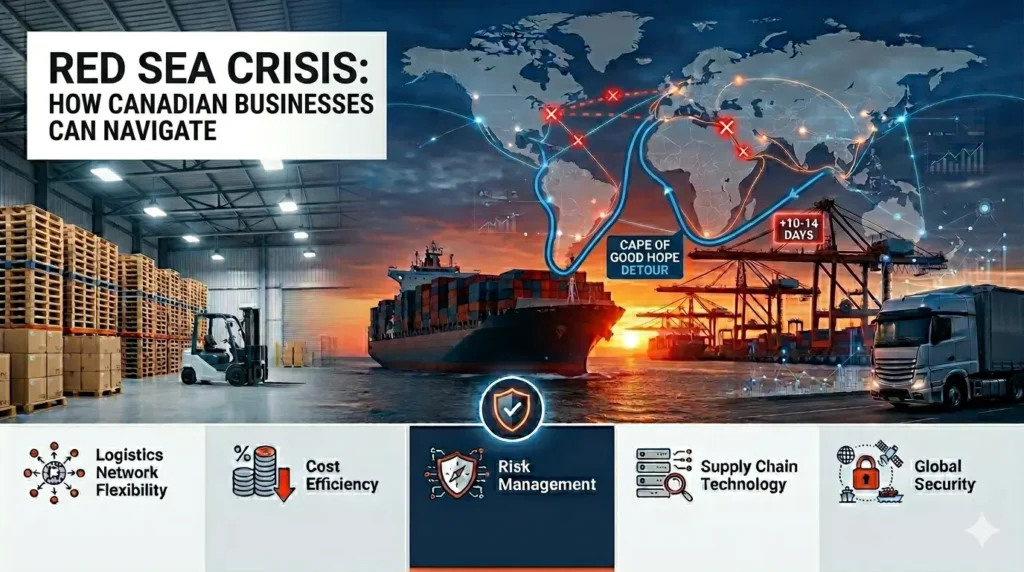
Since late 2023, the Red Sea’s been in turmoil, not weather-wise, but politically. Houthi rebel attacks on cargo ships have basically turned one of the world’s busiest trade routes into a no-go zone. So, what does that mean? Longer shipping times, steeper costs, and a whole lot of headaches for businesses across the globe — yes, even up here in Canada. Retailers are scrambling to restock. Auto manufacturers are battling parts delays. And electronics? Good luck finding certain components on time. This article breaks down how the Red Sea crisis is rippling through global trade routes, what that means for Canadian businesses, and most importantly, what you can do about it. Introduction: Let’s take a moment to go back. Houthi militants have been attacking the Bab al-Mandab Strait, a narrow waterway that connects the Red Sea to the Gulf of Aden, more frequently since October 2023. We are discussing drones, missiles, and attempts at hijacking. These are the kinds of stuff that makes major shipping companies say, “Yeah, let’s take the long way.” And by “long,” we mean really long. Instead of sailing through the Suez Canal and up into Europe, ships are now detouring around the southern tip of Africa. That adds 10 to 14 days of travel. That might not sound like much on paper, but in supply chain time. That’s a lifetime. To give you an idea of how serious this is, Suez Canal traffic has dropped more than 50% — from 4 million metric tons to 1.7 million. And every one of those missing ships has ripple effects: higher fuel costs, congested ports, delays, and tighter inventory all around. So yes, it’s halfway across the world, but for Canadian businesses, it hits close to home. Understanding the Red Sea Crisis You might be thinking, “But we’re not even near the Red Sea.” True, but we’re deeply tied to the global flow of goods. And when a major artery gets blocked, everything backs up. Retailers are having a rough time keeping shelves stocked, especially for seasonal items. Some are missing windows entirely and having to either markdown late winter gear or stash it for next year. A few are even flying in goods at crazy costs just to keep customers happy. Automotive manufacturers are in a jam too. Many operate on just-in-time delivery systems. One delay in a single part can halt an entire assembly line. A major parts supplier in Ontario reported having to switch to air freight to avoid shutting down a plant (and paid five times the normal cost to do it). Food and specialty importers aren’t off the hook either. Coffee, spices, international delicacies a lot of it comes through affected routes. Prices are climbing, and shelf lives are shrinking thanks to longer voyages. The point is, this isn’t some abstract global issue — it’s already showing up in Canadian boardrooms, warehouses, and storefronts. Supply Chain Disruptions Impacting Canadian Businesses Some industries are feeling the squeeze more than others. Here’s how it’s shaking out: Retail: The just-in-time model that once felt so efficient now looks risky. Late deliveries are forcing companies to markdown stock or miss entire seasons. Online sellers are especially feeling the heat as customer patience for delays wears thin. Manufacturing: A lot of manufacturers rely on parts from Asia. When those don’t show up on time, production lines stall. A recent survey found 6 in 10 Canadian manufacturers have faced delays since the crisis started. And when time is money, that hurts. Pharmaceuticals: While most essential medications have safety stock, some niche or specialty drugs are harder to replace. If disruptions drag on, even those reserves may run low. Agriculture and Food Processing: On the export side, grain shipments to markets like the Middle East and North Africa are taking longer and costing more. On the import side, perishable products are arriving late and in smaller quantities. Technology: From semiconductors to finished devices, tech companies are feeling the strain. A few Canadian firms have even had to delay product launches because they just couldn’t get components in time. Canadian Business Strategies for Supply Chain Disruptions Let’s be real — you can’t stop a missile or open the Suez Canal. But you can adapt. Here’s what smart companies are doing (and what you might want to consider): Don’t Put All Your Cargo in One BasketDiversify your routes. Work with multiple freight partners. Ship critical items by air if you can swing it. Some businesses are even exploring rail options through Central Asia or summer routes across the Arctic (yep, that’s a thing now). Mix Up Your SuppliersIf you’re heavily dependent on one country — especially one halfway around the world — consider alternatives. That might mean shifting 20–30% of your sourcing to North American suppliers. One Canadian retailer recently pivoted part of its furniture sourcing to Mexico and the U.S. Result? Faster lead times, less panic. Revisit Your Inventory GameJust-in-time was great — until it wasn’t. Now, it’s all about balance. Buffer stock is back, but smarter this time. Use data to decide where to build up inventory and where to stay lean. Use Tech That Tells You More Than “In Transit”Real-time tracking, predictive analytics, digital twins — these tools can be game-changers. One Canadian electronics company slashed stockouts by a third after implementing a smarter tracking platform. Visibility = power. Rethink Your ContractsIf your current agreements assume perfect conditions, it’s time for an update. Force majeure clauses, shared-risk models, and flexible delivery terms are now a must. It’s not about pointing fingers — it’s about making things work. Common Problems with the Red Sea Crisis Let’s call it like it is. The Red Sea crisis has created some serious headaches: Shipping times are all over the place Rates have spiked (some lanes are up 300%) Containers are either nowhere to be found or stuck in the wrong port Inventory’s either late, too much, or not enough You’re flying blind on where your stuff actually is Insurance may not cover
How the U.S.-Iran Conflict Increases Global Supply Chain Risk | Supply Chain Guide
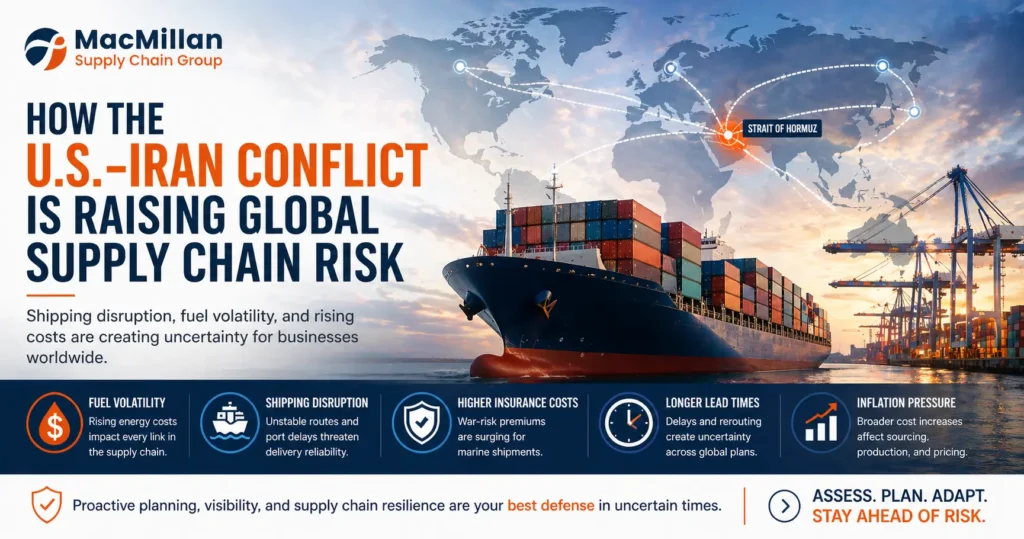
A Quick Summary and Overview The U.S.-Iran conflict has become a major supply chain risk story because it affects the Strait of Hormuz, one of the world’s most important energy and shipping corridors. Reuters reports that vessel traffic through Hormuz has fallen sharply from normal levels, while thousands of seafarers have been stranded and shipping companies remain cautious about resuming normal operations. That kind of disruption can ripple into fuel prices, freight rates, insurance costs, transit reliability, and inventory planning across global supply chains. For importers, exporters, retailers, and manufacturers, the real issue is not politics. It is operational resilience. Introduction Global supply chains do not need a direct hit to feel pressure. They only need a major chokepoint to become unstable. That is why the U.S.-Iran conflict matters to businesses far beyond the Middle East. The Strait of Hormuz is one of the world’s most important maritime routes for oil and LNG, and Reuters reports that recent disruption there sharply reduced vessel traffic and stranded hundreds of ships and around 20,000 crew in the Gulf. Even with talk of a ceasefire, shipping activity has remained well below normal because carriers are still worried about safety, seizures, mines, and fast-boat threats. For supply chain teams, the smarter question is not who is right. It is what happens to cost, lead time, and continuity if disruption lasts longer than expected. That is the lens this article uses. Why This Conflict Matters to Supply Chains The Strait of Hormuz matters because a large share of global oil and LNG moves through it. Reuters reports that the conflict has disrupted roughly a fifth of global oil flows and pushed shipping companies to slow or avoid normal passage through the corridor. When that happens, the impact is not limited to energy traders. It spreads into trucking, ocean freight, air cargo, manufacturing, procurement, and retail replenishment. When traffic through a route this critical becomes unstable, supply chains usually feel it in several places at once: fuel becomes more volatile shipping schedules become less reliable war-risk and marine insurance costs rise inventory buffers become more important lead-time planning becomes harder Those are the issues most businesses should be watching now. 5 Supply Chain Risks Businesses Should Watch 1. Fuel and energy cost volatility One of the fastest ways the conflict affects supply chains is through fuel. Reuters reported that oil prices jumped on renewed uncertainty around Hormuz and that the conflict has already been feeding broader price pressure in business surveys. Higher diesel, marine fuel, and jet fuel prices can raise trucking, ocean, and airfreight costs even for companies with no direct sourcing in the region. 2. Ocean shipping disruption Shipping companies do not need a full closure to change behavior. Reuters reported that only a handful of ships passed through Hormuz in a 24-hour period compared with a normal daily average around 140, while alternate nearby routes could not handle normal traffic volumes. That means even a technically open corridor can still operate like a constrained one. 3. Longer lead times and weaker reliability When carriers delay sailings, wait offshore, or reroute cargo, lead times start stretching. Reuters has described stranded vessels, near-standstill traffic, and ongoing safety concerns despite temporary truce language. For supply chain teams, that means historic transit assumptions may no longer be reliable. 4. Higher insurance and risk premiums Conflict-related maritime risk almost always drives up insurance. Reuters reported that war-risk premiums for Gulf shipping surged by more than 1000% in some cases as insurers repriced exposure. Those costs can show up directly in freight quotes or indirectly through carrier surcharges and tighter capacity. 5. Broader inflation and sourcing pressure Reuters also reported that the conflict has been pushing up input costs, slowing factory activity, and adding pressure across the global economy. That means the issue is not just transport. It can also affect packaging, manufacturing inputs, procurement budgets, and consumer demand patterns at the same time. Industries Most Exposed Energy-intensive sectors Industries with high transport or production energy use usually feel the impact first. That includes manufacturing, food production, chemicals, distribution, and bulk goods. When diesel, marine fuel, and power-linked costs rise, margins can tighten quickly. Retail and consumer goods Retailers and consumer goods companies can be affected through inbound freight costs, packaging costs, and replenishment timing. Even if the finished product does not come from the Middle East, upstream materials and freight networks can still be exposed to fuel and capacity shocks. Automotive and industrial supply chains Complex manufacturing sectors are especially vulnerable when lead times become unstable. If inbound materials are delayed or freight costs spike, production planning becomes harder and just-in-time models come under pressure. Reuters’ coverage of rising input costs and disrupted logistics supports that broader industrial risk. Food and perishables Perishable supply chains are exposed because time matters more. If carriers slow down, reroute, or reduce service reliability, spoilage risk and cold-chain cost can rise. That is especially important when maritime schedules become harder to predict. Common Problems with the Topic 1. Cost planning becomes less accurate Fuel, freight, and surcharge assumptions can change faster than normal. Reuters reported oil spikes and broader price pressure tied to the conflict. 2. Lead-time assumptions stop working Historic transit averages can become unreliable when carriers slow or avoid risky corridors. Reuters reported traffic through Hormuz dropping far below normal levels. 3. Inventory policy becomes outdated If transit times stretch, reorder points and safety-stock assumptions may no longer protect service levels. Reuters linked the conflict to delivery delays and global logistics disruption. 4. Customer service risk increases Longer and less predictable delivery windows can weaken fill rates, OTIF performance, and customer confidence. That becomes more likely when routes remain open only in name but not in stable practice. 5. Expediting becomes more tempting and more expensive When businesses try to protect service levels during disruption, they often shift to more expensive transport options, which can quickly erode margins. 6. Supplier concentration becomes more dangerous If one route, one region,
Massive Tariff on Americans De Minimis Removal |Canadian Impact
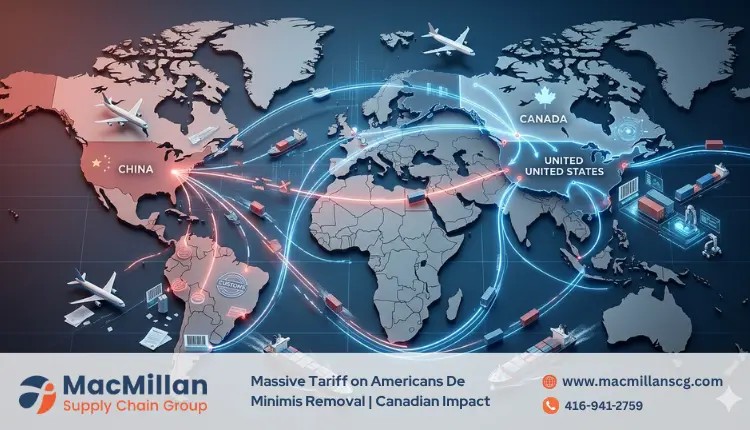
De Minimis Removal 2025: What It Means for Canadian Cross-Border E-Commerce The Trump administration’s removal of the de minimis exemption for Chinese goods on May 2, 2025, is causing a massive upheaval in the cross-border e-commerce environment between the United States and Canada. This legislative change impacts supply chains across North America, especially for Canadian companies that depend on international commerce. Though the regulation reform is initially directed at China, it signals broader changes that could affect all exports into the US market—including those from Canada. How Canadian Logistics Firms Can Benefit from the 2025 De Minimis Removal The disruption presents an opportunity for Canadian logistics firms like Macmillan SCG to act as strategic intermediaries. Canada’s location and trade connections make it a favorable collection and consolidation hub as Chinese exporters seek middle-tier nations still eligible for tariff exemptions. “The de minimis exemption still applies to non-China origins,” said Gabriel Wildau, a China specialist at Teneo. He predicts, “Chinese e-commerce retailers will increasingly use countries like Mexico and Canada as collection points for low-value packages.” Canadian firms with warehousing capacity and logistics know-how can position themselves as vital consolidation hubs for rerouted Chinese goods. How Macmillan SCG Helps Companies Navigate Tariff Transitions After De Minimis Changes Macmillan SCG, a prominent Canadian supply chain company with an expansive warehouse network and last-mile delivery expertise, is uniquely positioned to help businesses adjust to the post–de minimis exemption landscape. Expert Customs Compliance Support Post–De Minimis Removal Our expert team monitors evolving regulations to help clients stay compliant and minimize costs. We assist with tariff classification, accurate valuation methods, and documentation preparation to reduce unnecessary expenses and ensure regulatory alignment. Strategic Warehousing in Response to De Minimis Policy Shifts Macmillan SCG offers warehousing solutions throughout Canada to support logistics network restructuring. These facilities act as consolidation points for rerouted or staged goods bound for the U.S. market. Technology-Driven Supply Chain Visibility Amid 2025 Tariff Changes In a regulatory environment marked by uncertainty, real-time tracking is vital. Our advanced visibility tools keep clients updated on shipment status, customs processes, and compliance issues—empowering proactive management. Last-Mile Delivery Optimization Under New De Minimis Rules As companies reconfigure supply chains, last-mile delivery remains a critical differentiator. Our proven expertise in this area ensures clients maintain competitive delivery timelines despite upstream disruptions. Preparing for Future Tariff Expansions Beyond the 2025 De Minimis Removal The 2025 exemption removal may only be the beginning. Canadian businesses must prepare for the potential extension of these restrictions to other nations—including Canada itself. Tracking U.S. Policy Changes Post–De Minimis Removal The decision to eliminate de minimis for China carries political weight. Though enforcement has faced logistical setbacks, the White House emphasized this as “a critical step” toward national security. Canadian companies must monitor developments closely. Building a Resilient Supply Chain After De Minimis Reform Adaptive supply chains are essential. This involves: Diversifying suppliers and sourcing regions Creating alternate transportation routes Partnering with customs brokers in key markets Implementing technology for full supply chain control Modeling financial impacts from potential tariffs These enhancements build resilience regardless of how trade policies evolve. Exploring Alternative Markets to Reduce Tariff Exposure While the U.S. remains vital, Canadian businesses should explore trade opportunities in other stable markets. Diversifying away from U.S.-China-centric models could reduce risk significantly. Thriving in a Post–De Minimis Removal 2025 Trade Environment The end of de minimis exemptions for Chinese imports marks a major turning point in U.S. trade policy. Although focused on China for now, the possibility of broader application introduces strategic urgency. Partnering with supply chain experts like Macmillan SCG provides the infrastructure, knowledge, and flexibility needed to stay competitive. We help clients understand implications, formulate responses, and implement efficient logistics solutions. To thrive in this evolving landscape, businesses must adapt quickly—with experienced partners who turn regulatory challenges into opportunities. What Is De Minimis and Why Was It Removed in 2025? The de minimis exemption allowed goods under $800 to enter the U.S. duty-free, streamlining customs and accelerating growth in direct-to-consumer shipping. Its 2015 increase from $200 to $800 fueled a fourfold rise in shipments, now exceeding 4 million per day. On April 2, 2025, President Trump signed an Executive Order to eliminate the de minimis exemption for Hong Kong and China starting May 2, citing national security concerns—particularly China’s alleged role in the fentanyl crisis via abuse of de minimis channels. Timeline: Key Events Leading to the 2025 De Minimis Removal Feb 1, 2025: Trump announces intent to end de minimis for China Feb 4, 2025: 10% tariff implemented on Chinese and Hong Kong goods Feb 5, 2025: Temporary rollback due to USPS and customs backlog Mar 4, 2025: Tariff increased to 20% Apr 2, 2025: Trump finalizes plan, adds 34% reciprocal tariff on 60 countries Apr 5, 2025: 10% baseline reciprocal tariff imposed globally (excluding China) May 2, 2025: De minimis exemption officially removed for Chinese goods Chinese goods now face either 120% tariffs or a flat postal fee of $100 per shipment, increasing to $200 in June. Cross-Border Supply Chain Impacts of De Minimis Removal Canadian businesses importing from China and shipping to the U.S. face tough choices. The change affects not just Chinese goods but hints at wider reform that could impact Canadian exports. How E-Commerce Operations Are Responding to De Minimis Elimination Before the May 2 deadline, platforms like Temu and Shein adjusted early. Both raised prices in April, leading to buyer stockpiling. Temu saw 60% revenue growth, and Shein had a 38% sales spike. Logistics networks faced pressure as shipments surged. Canadian companies using similar shipping models must watch these developments closely. The de minimis exemption’s removal—while currently limited to China—could soon affect all nations. Reconfiguring Supply Chains After the 2025 Tariff Changes Forward-looking companies are already acting. Temu and Shein are diversifying sourcing to Mexico and Southeast Asia and building U.S. warehouses. Canadian firms face decisions: absorb costs, restructure supply chains, or optimize logistics. Options include: Establishing or expanding U.S. warehouses Shifting sourcing to countries with
Navigating Canada’s Internal Trade Reforms: A Guide for SMEs

Canada’s internal trade landscape is changing dramatically with new reforms that remove provincial barriers for SMEs. Ontario’s Bill 2 has eliminated exceptions under the Canadian Free Trade Agreement, enabling easier cross-provincial operations. These changes introduce faster professional credential recognition, direct-to-consumer alcohol sales, and improved market access across provinces. Businesses are assisted in navigating these changes by new support initiatives such as the Ontario Together Trade Fund and the improved BizPaL platform. U.S. tariff pressure prompted these reforms, which encourage Canadian companies to reduce their reliance on foreign suppliers and fortify their domestic supply chains. Overcoming Provincial Obstacles: Novel Prospects for Canadian SMEs For many years, Canadian companies had to deal with the perplexing problem that trading abroad was occasionally simpler than doing business with nearby provinces. For small and medium-sized businesses (SMEs) wishing to grow across Canada, provincial laws, licensing requirements, and trade barriers created a complicated maze. That is rapidly changing. The way Canadian SMEs engage in cross-provincial trade is changing as a result of recent reforms, especially Ontario’s Bill 2 (Protect Ontario Through Free Trade Within Canada Act). These changes eliminate redundant certifications, speed up professional licensing, and open new markets—especially for sectors like construction, healthcare, and craft alcohol production. However, how will these reforms affect your company? How can you find new opportunities in this shifting environment? Let’s dissect these developments and examine how Canada’s changing internal trade environment can help your SME. Comprehending the New Legislative Environment Enacted in April 2025, Ontario’s Bill 2 is the cornerstone of Canada’s internal trade reforms. Significant obstacles that previously hampered cross-provincial business operations are eliminated by this ground-breaking law. Elimination of Party-Specific Exceptions Ontario has abolished all 23 Party-Specific Exceptions (PSEs) under the Canadian Free Trade Agreement (CFTA). What does this mean in practical terms? Provinces used to be able to prohibit specific goods or services from other provinces thanks to these exceptions. Due to their home province, a construction company from Manitoba can now bid on projects in Ontario without encountering extra regulatory obstacles. Agreements for Mutual Recognition Mutual Recognition Agreements that recognize one another’s standards for products, services, and professional qualifications have been established by a number of provinces, including New Brunswick and Nova Scotia. This implies that your product automatically satisfies requirements in participating provinces if it satisfies safety standards in Alberta; no further testing or certification is required. Direct-to-Consumer Sales Reforms Perhaps the most exciting development for craft wineries, breweries, and distilleries is the ability to sell directly to consumers across provincial borders. Small wineries in British Columbia can now ship directly to consumers in Ontario, opening up national markets that were previously inaccessible to small producers, thanks to the removal of the need for provincial liquor boards. Since the Canadian market is now more unified as a result of these legislative changes, your small business can approach provincial expansion more like opening in a new city than entering a foreign nation. Programs and Resources to Encourage Cross-Provincial Development To assist Canadian SMEs in navigating and reaping the benefits of these trade reforms, the federal and provincial governments have launched a number of initiatives. The Enhanced BizPaL Platform AI capabilities have significantly improved the BizPaL Compliance Platform. When conducting business across provincial borders, this digital tool assists companies in determining precisely which licenses, permits, and regulations are applicable. To save you countless hours of research and possible compliance problems, BizPaL offers a customized checklist of requirements, for instance, if you’re a food processor in Quebec wishing to sell in Ontario. The Ontario Together Trade Fund (OTTF) To help businesses adapt to the new trade environment, the OTTF offers $200 million in funding. Other provinces can upgrade their facilities to meet technical standards with the fund’s assistance. Establishing distribution networks in recently discovered provincial markets Supply chain reshoring initiatives to reduce dependency on US suppliers Federal Support Programs Federal programs provide additional support beyond provincial efforts. These include targeted assistance for industries impacted by U.S. tariff pressures and specialized R&D Tax Credits for companies creating creative answers to cross-provincial trade problems. Your SME can reduce the expenses and difficulties of growing across provincial borders by utilizing these resources and funding opportunities, which will make access to interprovincial markets easier than ever. Sector-Specific Opportunities and Impacts Different industries are affected by Canada’s internal trade reforms in different ways, which gives different kinds of businesses different opportunities. Construction and Skilled Trades Reforms in the construction industry have had a particularly significant impact. In the past, materials and equipment that had been approved in one province frequently needed to be recertified in another. Construction companies can now transport equipment across provincial borders without undergoing unnecessary safety inspections thanks to the mutual recognition principles. Additionally, certified electricians, plumbers, and other tradespeople from one province can work in another with minimal administrative challenges thanks to skilled trades integration. Expert Services For professionals like engineers, accountants, and healthcare providers, professional credential recognition has been made easier. Wait times that used to last months have drastically decreased as licensing bodies are now required to process applications within 30 days. Professional service companies can now more easily set up multi-provincial practices and fill labor shortages by hiring people from all over Canada. Alcohol and Beverage Production Craft producers now have access to a nationwide market thanks to reforms in direct-to-consumer alcohol sales. Bypassing provincial liquor boards, small wineries, distilleries, and breweries can now sell directly to customers in other provinces. The increased market access offers a substantial growth opportunity for this industry, even though producers still have to deal with provincial tax structures and labeling regulations. Regardless of industry, these sector-specific adjustments show how internal trade reforms can benefit Canadian SMEs in real ways. Labor Mobility and Supply Chain Reshoring Increased labor mobility and supply chain reshoring opportunities are two important components of the internal trade reforms that are especially pertinent in the current economic environment. Advantages of Increased Labor Mobility The ability of workers to travel freely between provinces without facing restrictions
Mastering Amazon FBA Packaging: A Comprehensive Guide for Sellers
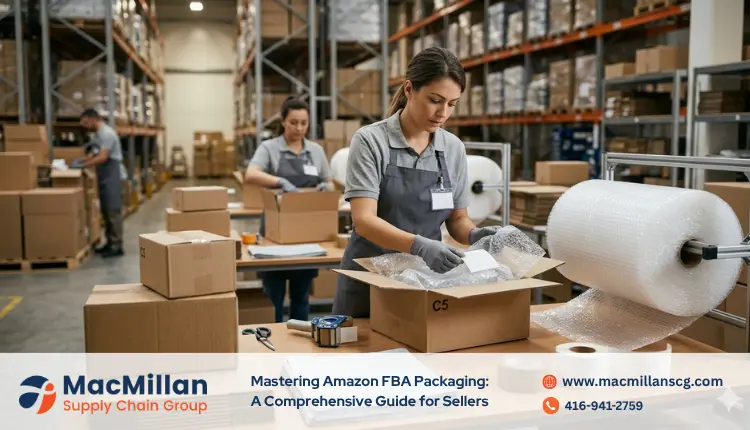
A quick summary and overview Amazon FBA (Fulfillment by Amazon) sellers must navigate complex packaging requirements to ensure smooth operations and avoid costly mistakes. This comprehensive guide delves into the essential aspects of Amazon FBA packaging, including size restrictions, approved materials, labeling requirements, and best practices for fragile items. By understanding and implementing these guidelines, sellers can streamline their fulfillment process, reduce fees, and enhance customer satisfaction. MacMillan Supply Chain Group offers expert solutions to help sellers overcome common packaging challenges and optimize their Amazon FBA strategy, ensuring compliance and efficiency in today’s competitive e-commerce landscape. An introduction As an Amazon FBA seller, mastering the intricacies of packaging requirements is crucial for success in the highly competitive e-commerce marketplace. Proper packaging not only ensures that your products reach customers in pristine condition but also plays a vital role in maintaining compliance with Amazon’s strict guidelines. Failure to adhere to these requirements can result in additional fees, shipment rejections, and potential account suspension. This guide aims to provide a comprehensive overview of Amazon FBA packaging requirements, offering valuable insights and practical tips to help sellers navigate this complex aspect of their business. By partnering with MacMillan Supply Chain Group, sellers can leverage expert knowledge and tailored solutions to overcome packaging challenges and optimize their fulfillment processes for maximum efficiency and profitability. Understanding Amazon FBA Packaging Dimensions and Weight Restrictions Amazon FBA has specific size and weight limitations for packages to ensure efficient handling and storage within their fulfillment centers. Understanding these restrictions is crucial for sellers to avoid additional fees and potential shipment rejections. Standard-size packages: Maximum weight: 20 lbs (9 kg) Longest side: 18 inches (45.72 cm) Median side: 14 inches (35.56 cm) Shortest side: 8 inches (20.32 cm) Dimensional weight: 12 lbs (5.4 kg) or less Oversize packages: Maximum weight: 150 lbs (68 kg) Longest side: 108 inches (274.32 cm) Girth (2x width + 2x height): 165 inches (419.1 cm) It’s important to note that packages exceeding these dimensions or weights may incur additional handling fees or be subject to Amazon’s specialized handling services. Sellers should always strive to package their products efficiently, using appropriately sized boxes or poly bags to minimize wasted space and reduce shipping costs. MacMillan Supply Chain Group can assist sellers in optimizing their packaging strategies to meet Amazon’s requirements while maximizing cost-efficiency. By leveraging our expertise in logistics and supply chain management, sellers can ensure their products are packaged correctly for FBA, avoiding unnecessary fees and delays in the fulfillment process. Approved Packaging Materials for Amazon FBA Selecting the right packaging materials is crucial for protecting your products during transit and complying with Amazon FBA guidelines. Here’s an overview of approved materials: Boxes: Use sturdy, corrugated cardboard boxes that can withstand the rigors of shipping and handling. Poly bags: For smaller items, clear polyethylene bags are acceptable. Ensure they’re at least 1.5 mil thick and include suffocation warnings if required. Bubble wrap: An excellent choice for cushioning fragile items. Use it to wrap individual products or as void fill. Air pillows: These inflatable plastic cushions are lightweight and effective for filling empty spaces in boxes. Kraft paper: A versatile option for wrapping products or crumpling as void fill. Stretch wrap: Ideal for bundling multiple items together or securing items within a box. Prohibited materials include: Packing peanuts Shredded paper Styrofoam Crinkle paper It’s essential to avoid these materials as they can interfere with Amazon’s automated sorting systems and lead to shipment rejections. MacMillan Supply Chain Group can help you source approved packaging materials and develop custom packaging solutions that meet Amazon’s requirements while ensuring product protection. Our expertise in sustainable packaging options can also help you reduce your environmental impact and appeal to eco-conscious consumers. Essential Labeling Requirements for Amazon FBA Packaging Proper labeling is critical for successful Amazon FBA fulfillment. Accurate and compliant labels ensure efficient processing, storage, and shipping of your products. Here are the key labeling requirements: FNSKU (Fulfillment Network Stock Keeping Unit) labels: These unique barcodes must be applied to each product or its packaging. They’re essential for inventory tracking within Amazon’s fulfillment centers. Shipping labels: Every box or pallet shipped to Amazon must have a shipping label with the correct destination information and tracking barcode. Expiration date labels: Required for products with a limited shelf life, such as food or cosmetics. Suffocation warning labels: Mandatory for poly bags with openings of 5 inches or larger. Set or bundle labels: For products sold as sets, clearly indicate that items should not be separated. Fragile item labels: Use these to ensure proper handling of delicate products. Transparency codes: If enrolled in Amazon’s Transparency program, apply these unique codes to combat counterfeiting. Ensure all labels are clearly visible, scannable, and securely attached to avoid processing delays or rejections. MacMillan Supply Chain Group offers comprehensive labeling services, including the printing and application of all required Amazon FBA labels. Our advanced labeling systems and quality control processes ensure accuracy and compliance, reducing the risk of costly errors and streamlining your FBA operations. Best Practices for Packaging Fragile or Unique Items Packaging fragile or unique items for Amazon FBA requires extra care and attention to detail. Follow these best practices to ensure your products arrive safely and meet Amazon’s standards: Individual wrapping: Wrap each fragile item separately using bubble wrap or foam sheets. This provides an extra layer of protection against impacts and vibrations during transit. Double-boxing: For extremely delicate items, use the box-in-box method. Place the wrapped item in a smaller box with cushioning, then place that box inside a larger one with additional padding. Void fill: Use approved materials like air pillows or kraft paper to fill empty spaces in the box, preventing items from shifting during transport. Cushioning corners: Pay special attention to corners and edges, as these are most susceptible to damage. Use corner protectors or extra padding in these areas. Proper sealing: Use strong packing tape to secure all box openings. For added security, consider using reinforced water-activated tape.
Trump’s 50% Steel Tariffs: Supply Chain Disruption Explained

Former U.S. President Donald Trump announced Trump’s 50% steel tariffs, doubling the previous 25% rate — a move that has rocked North American supply chains. Numerous industries are deeply concerned about this sharp rise, which is justified by Section 232 measures as necessary for national security. There are currently significant obstacles facing Canada’s steel industry, which exports steel products worth billions of dollars to the United States each year. These tariffs cause a complicated web of supply chain issues for companies that operate across the Canada-U.S. border. Consumer prices could rise and economic growth could be slowed by higher material costs, possible shortages, and logistical issues. Strategic supply chain management is more important than ever as Canadian manufacturers and their American consumers scramble to adapt. Understanding Trump’s 50% Steel Tariffs Trade tensions between the US and its trading partners, including Canada, have significantly increased as a result of Trump’s 50% steel tariffs. The Trade Expansion Act’s Section 232 measures, which give the US the authority to defend domestic industries considered essential to national security, are the basis for these tariffs. International partners and trade experts have criticized the national security rationale. Many contend that this line of thinking expands the meaning of security concerns to encompass economic protectionism. By raising the price of imported steel considerably, the policy seeks to support domestic steel producers in the United States. These tariffs present immediate difficulties for Canadian companies: Higher border crossing costs for steel-based materials Possible supply disruptions as trade patterns change Price and availability uncertainty for manufacturing inputs Difficult customs procedures and extra paperwork Businesses have limited time to modify their supply chains or look for alternate sourcing options due to the implementation timeline. The economy as a whole is impacted by this abrupt change, which forces businesses to either absorb increased costs or pass them on to customers. How Canadian Steel Industry and Manufacturers Are Affected The steel sector in Canada is at the forefront of this trade conflict. Canadian steel producers, a significant supplier to American markets, could suffer catastrophic repercussions. According to industry analysts, if these tariffs are maintained over time, domestic steel producers may lose billions of dollars in revenue. A double challenge confronts Canadian manufacturers who depend on steel inputs, in addition to the steel producers themselves. As Canadian producers adjust to lost U.S. market share, domestic steel buyers may see price increases. In the meantime, possible retaliatory tariffs increase the costs for manufacturers who import specialty steel from the United States. Among the issues facing the manufacturing sector are: Reduced ability to compete with international competitors Pressure to move production to avoid tariffs Difficulty keeping customer prices stable Difficulties with long-term planning and investment Because they frequently lack the resources to swiftly change their supply chains or absorb large cost increases, small and medium-sized manufacturers face especially difficult obstacles. Some businesses are already delaying plans for expansion and reevaluating their cross-border business strategies, according to industry associations. How Trump’s 50% Steel Tariffs Are Driving Up Construction and Auto Costs Trump’s 50% steel tariffs are putting immediate pressure on the construction sector. Steel accounts for a sizeable portion of material costs in both residential and commercial construction projects. According to industry experts, steel-intensive projects may see construction costs rise by 15% to 20%, making Canada’s housing affordability crisis worse. For Canada’s construction industry, which is already struck by high material costs and a lack of workers, the timing couldn’t be worse. Builders report: Delays in projects while budgets and material sourcing are reevaluated Contracts should be renegotiated to take price volatility into account Accurate quotes for upcoming projects are difficult to come by Project viability is a concern as costs increase In a similar vein, the automotive industry has particular difficulties. Vehicle manufacturing depends on components that cross borders several times due to integrated supply chains that span both nations. This carefully calibrated system could be upset by the tariffs, which could result in: Consumers paying more for cars Assembly plant production slowdowns Job losses in auto manufacturing regions A quicker transition to sourcing from overseas markets Tinplate Packaging and Consumer Goods Price Increases Tinplate packaging is one frequently disregarded area that is experiencing major disruption. This specialty steel product is necessary for many consumer goods, including beverage containers and food canning. Packaging manufacturers must deal with significant cost increases as a result of the tariffs, which will eventually affect consumers. Within months of going into effect, the 50% tariff could raise the cost of canned food by 8–12%, according to the Can Manufacturers Institute. Lower-income households that depend on reasonably priced canned goods would be disproportionately affected by this price inflation. In addition to food, consumers can anticipate price increases in a variety of categories: Steel-based appliances and household items Costs of auto parts and repairs Building supplies and home remodeling items Office supplies and furnishings At a time when many households are already experiencing financial strain, these price increases add to concerns about consumer price inflation in general. Economists caution that the tariffs might act as a regressive tax, burdening the most vulnerable. Challenges Facing Businesses Under the New Tariff Regime Businesses on both sides of the border face many operational difficulties as a result of Trump’s 50% steel tariffs. These issues go beyond straightforward price hikes to include serious supply chain interruptions. Planning becomes nearly impossible due to the uncertainty surrounding the policy’s implementation. Companies struggle to decide whether to pass costs on to customers, seek alternative suppliers, or lock in current prices — all while facing delayed investment decisions and a wait-and-see mentality. Beyond steel, the global supply chain faces ripple effects as manufacturers shift their sourcing strategies, causing potential shortages of other materials and components. Legal complications further muddy the waters. With disputes progressing through the WTO and domestic courts, businesses must prepare for outcomes ranging from tariff reductions to retaliatory measures. Fourth, simple substitution isn’t always feasible due to the specialized nature of many steel products. Regardless of cost,
Hybrid Logistics Model Canada: 5 Key Benefits
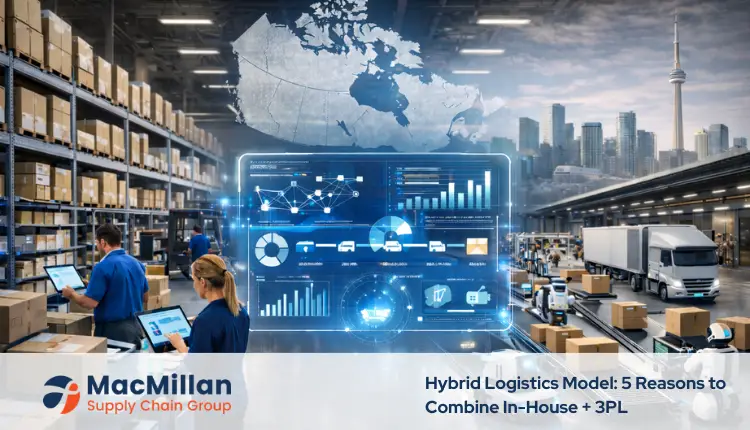
Introduction In today’s evolving logistics landscape, businesses must choose between working with a third-party logistics (3PL) provider or keeping operations fully in-house. But increasingly, the smart move is adopting a hybrid logistics model—a strategy that combines the strengths of both. But what if neither/or isn’t the best option? A powerful trend that combines the capabilities of internal teams with the know-how and technology of a third-party logistics provider is emerging at Macmillan Supply Chain Group. This hybrid logistics approach is a long-term strategic choice rather than merely a short-term fix. And it’s turning out to be the best course of action for a lot of Canadian companies, particularly those dealing with seasonal fluctuations or fast growth. We’ll outline the top five reasons in this post for why you can get the best of both worlds by integrating your internal logistics team with a 3PL provider — particularly one that uses cutting-edge technologies like AI 3PL operating systems. 1. Hybrid Logistics Model =Adaptability Without Losing Command To be honest, it can be a leap of faith to relinquish complete control over your logistics operations. Your team is familiar with your standards, customers, and products. That’s a worthwhile experience. However, there are drawbacks to doing everything in-house, particularly when your company expands or enters new markets. A hybrid strategy can help with that. You can expand your capacity and geographic reach without sacrificing your internal capabilities by outsourcing certain tasks — such as last-mile delivery in a densely populated metro area or warehousing in a new province. The AI 3PL operating systems we implement seamlessly integrate with your current workflows when you work with a partner like Macmillan SCG. This implies that even if our infrastructure handles the execution, your team maintains control over visibility and decision-making. Imagine it as an addition to a beloved house. You’re not going anywhere. Simply put, you’re creating space where it’s most needed. 2. How a Hybrid Logistics Model Helps You Scale Cost Efficiently Keeping everything in-house can quickly become costly. Fixed logistics costs include things like fleet maintenance, warehouse rent, and full-time employees. And when business slows down, those costs don’t just vanish. You can change fixed costs into variable ones with a hybrid model. While relying on your 3PL for specialized services or varying demand, you maintain your core team and assets focused on what they do best. One of our retail clients, for instance, uses Macmillan SCG for regional distribution and returns processing, but manages central fulfillment internally. We increase capacity for them during busy times of the year and then decrease it once things settle down. Their clients receive reliable service, and they save a lot of money on overhead. We can also predict demand trends, optimize resource allocation, and cut waste thanks to AI 3PL operating systems, which helps our hybrid clients save even more money. 3. Boost Supply Chain Visibility With a Hybrid Logistics Model Outsourcing is often associated with a loss of visibility. That isn’t the case in 2025, though, at least not if you’re working with the correct 3PL. Our AI-powered logistics platform at Macmillan SCG offers real-time insights into both internal and external operations and integrates easily with your ERP or WMS. Whether inventory is sitting in your warehouse or en route in ours, you’ll see it all in one place. Our AI 3PL operating systems make it possible to: Track order status from purchase to final delivery Monitor inventory levels across multiple locations View delivery ETAs, exception reports, and carrier performance Get automated notifications when stock needs to be rerouted or replenished That kind of data-sharing means better decisions, faster. Your internal team gains strategic clarity in addition to oversight. Additionally, your clients enjoy more seamless, open service without even being aware that it’s a hybrid operation. 4. Distribute Tasks Using Core Skills Every logistics team has advantages and disadvantages. Perhaps your team excels at local business-to-business distribution but finds it difficult to fulfill orders for online retailers. Or perhaps you are an expert at storage but still struggle with last-mile delivery in rural areas. A hybrid approach enables you to divide responsibilities purposefully, as opposed to hiring for every niche need or attempting to push your team beyond its comfort zone. This is how it might appear: In-house: Manage expensive shipments, delicate goods, or packaging that is essential to the brand. 3PL partner: Oversee cross-border logistics, same-day fulfillment, and excess inventory. At Macmillan SCG, we routinely work with clients who want to retain specific logistics functions internally — and we build our services around that. Our AI-driven systems ensure that our portion of the supply chain aligns with your processes, customer SLAs, and performance metrics. It has nothing to do with changing your team. Giving them a logistics partner who can cover the gaps and improve performance is the goal. 5. Hybrid Logistics Model = Advanced Tech Without High Investment The harsh reality is that the logistics sector is evolving quickly, and it costs money to stay up to date with new developments. It can take months and a six-figure budget to implement sophisticated robotics, route optimization tools, or real-time tracking. Investing in all of that internally is simply not feasible for many businesses. However, working with a forward-thinking 3PL like Macmillan SCG gives you immediate access to effective tools like: AI-powered 3PL operating systems that automate inventory control and forecast demand Real-time machine learning models that modify delivery routes in response to traffic and weather conditions Up to 65% faster picking and packing with robotics and warehouse automation Better yet, our facilities have already tested, improved, and implemented these technologies. No learning curve. No delays. Just better performance — from day one. This means your hybrid model isn’t just a cost-saving move. It’s a chance to upgrade your supply chain while avoiding the sunk cost of building from scratch. Real Clients. Real Hybrid Wins. Here’s a brief illustration: All logistics used to be managed internally by one of our B2C clients, an Ontario-based skincare brand. However, their staff was overworked during the pandemic
3PL Fulfillment Center Locations in Canada: 5 Key Factors
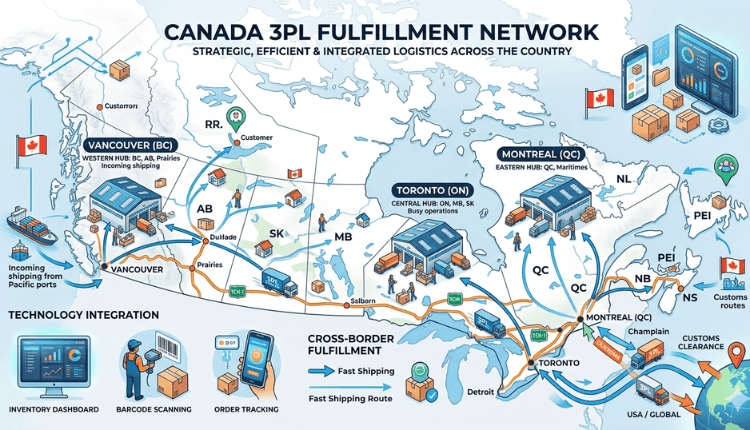
A Quick Summary and Overview Choosing the right 3PL fulfillment center location is a strategic decision that directly impacts your shipping costs, delivery times, and overall customer satisfaction. This comprehensive guide explores the five essential factors businesses must evaluate when selecting optimal warehouse locations: geographic proximity to customers, transportation infrastructure, technology integration capabilities, cost considerations, and scalability potential. Whether you’re expanding your e-commerce operation or optimizing your existing supply chain, understanding these key factors will help you make informed decisions that support your business growth and enhance your competitive advantage in the marketplace. Why Your 3PL Fulfillment Center Location Matters More Than You Think In today’s fast-paced business environment, where next-day and same-day delivery options have become the norm, the strategic placement of your 3PL fulfillment center can make or break your customer experience. But how do you determine the ideal location for your warehousing and distribution operations? At MacMillan Supply Chain Group, we’ve helped countless businesses optimize their fulfillment networks across Canada and beyond. We’ve learned that successful 3PL fulfillment center selection isn’t just about finding available space—it’s about making a strategic decision that balances multiple factors to create a competitive advantage. Whether you’re looking for fulfillment services in Canada or exploring cross-border shipping options, understanding these five key evaluation factors will help you make informed decisions that drive efficiency, reduce costs, and ultimately delight your customers. Geographic Proximity to Your Customer Base The most fundamental factor in selecting a 3PL fulfillment center location is proximity to your customers. Why? Because being closer to your end consumers directly translates to faster delivery times and reduced shipping costs. Canadian businesses often face unique challenges due to the country’s vast geography and dispersed population centers. If most of your customers are concentrated in Ontario, a fulfillment center in Toronto makes perfect sense. Similarly, if you serve Western Canada, a fulfillment center in Vancouver provides strategic advantages. When analyzing customer proximity, consider these elements: Customer density maps: Where are your customers most concentrated? High-density areas often justify dedicated fulfillment centers. Shipping zones: Carriers like Canada Post and FedEx use zone-based pricing. The fewer zones a package crosses, the lower your shipping costs. Delivery time expectations: If you promise two-day delivery, your fulfillment center must be positioned to meet that commitment. For businesses serving both Canadian and U.S. markets, cross-border shipping considerations become crucial. A strategically located warehouse near major border crossings can significantly reduce customs delays and transportation costs. Remember, the goal isn’t necessarily to be close to your business headquarters—it’s to be close to your customers. Many successful e-commerce companies operate fulfillment centers hundreds of kilometers from their main offices to optimize their distribution networks. Transportation Infrastructure and Accessibility Even the most perfectly positioned 3PL fulfillment center won’t deliver value if it lacks proper transportation connections. When evaluating potential locations, transportation infrastructure should be a top priority. Look for these key transportation elements: The quality of local roads and seasonal considerations also matter. Some regions experience severe winter conditions that can impact delivery reliability. A fulfillment center in Toronto or Vancouver typically offers more consistent year-round accessibility than more remote locations. For businesses engaged in cross-border logistics fulfillment, proximity to major border crossings like Windsor-Detroit, Niagara Falls, or Vancouver-Seattle corridors can streamline customs processes and reduce transit times. Don’t overlook last-mile delivery solutions in CA either. Urban fulfillment centers may face traffic congestion but offer faster final delivery, while suburban locations might provide better highway access but longer last-mile routes. Technology Integration and Warehouse Management Systems Modern 3PL fulfillment centers are technology-driven operations. When selecting a location, the technological capabilities of the facility should factor heavily into your decision-making process. Leading Canadian 3PL solutions providers offer advanced warehouse management systems (WMS) that provide: Real-time inventory visibility Order tracking capabilities Integration with your e-commerce platforms Automated picking and packing processes Detailed reporting and analytics The technology infrastructure at your chosen location directly impacts fulfillment accuracy, processing speed, and overall operational efficiency. A technologically advanced fulfillment center in Vancouver or Toronto might command higher rates but deliver superior performance that justifies the investment. When evaluating technology capabilities, ask potential 3PL partners: How does their WMS integrate with your existing systems? What level of visibility will you have into inventory and orders? What automation technologies are deployed in the facility? How do they handle system upgrades and maintenance? What redundancies exist to prevent downtime? For e-commerce fulfillment in CA, seamless integration between your online store and the 3PL’s systems is particularly crucial. The right technology stack enables real-time inventory updates, automated order processing, and efficient returns management—all essential components of a positive customer experience. Remember that technology capabilities can vary significantly between facilities, even within the same 3PL network. Cost Structure and Economic Considerations While strategic location and technological capabilities are crucial, cost remains a fundamental consideration when selecting a 3PL fulfillment center. Understanding the complete cost structure helps you make economically sound decisions. When evaluating affordable fulfillment centers in Canada, consider these cost factors: Base storage costs: How much will you pay per square foot or pallet position? Order processing fees: What are the picking, packing, and shipping charges? Value-added service costs: Are there additional fees for kitting, custom packaging, or returns processing? Minimum commitments: Is there a monthly minimum charge regardless of volume? Seasonal surcharges: Do rates increase during peak periods? Regional economic variations can significantly impact your total costs. While warehouse space in downtown Toronto commands premium rates, facilities in surrounding areas may offer substantial savings while maintaining excellent transportation access. Labor costs also vary by region. Areas with competitive job markets may have higher wage requirements but often provide access to a more skilled workforce. This is particularly important for fulfillment operations requiring specialized handling or technical expertise. For businesses utilizing cross-border shipping from Canada, understanding the complete landed cost picture—including duties, taxes, and customs brokerage fees—is essential for accurate financial planning. Don’t focus exclusively on the lowest base rate. A slightly higher-priced facility with superior efficiency, lower error
Last Mile Fulfillment Canada: Optimize Delivery with 3PL Experts
A Quick Summary and Overview In today’s experience-driven economy, where consumer loyalty hinges on speed and convenience, the final leg of your delivery process—last mile fulfilment—can either elevate or erode your brand. Particularly for food and beverage brands and fast-moving consumer goods (FMCGs), the last mile is where trust is tested and customer expectations peak. MacMillan Supply Chain Group helps businesses meet these expectations with scalable, AI-powered logistics solutions that transform the final mile into a competitive advantage. What is Last Mile Fulfilment and Why Does It Matter? Last mile fulfilment refers to the final step in a product’s journey—from warehouse to customer doorstep. Despite being the shortest segment, it’s often the most expensive and complex, accounting for over 50% of total logistics costs, as highlighted in Capgemini’s Last Mile Report. This step has a direct impact on customer satisfaction, loyalty, and perceived product value. According to McKinsey & Company, 70% of online shoppers consider delivery speed and reliability crucial to their buying decision. MacMillan ensures 90% of Forward Sortation Areas (FSAs) in Canada are covered by next-day delivery through a dedicated fleet of over 3,000 drivers, processing 3.1 million shipments annually. Common Barriers in Last Mile Delivery Urban congestion and rising fuel costs Failed or late deliveries leading to perishables loss Lack of visibility into in-transit shipments Pressure to meet tight SLAs for DTC and retail customers Fragmented 3PL services leading to inconsistent brand experience At MacMillan, we address these with predictive analytics, AI-optimized routes, and real-time tracking technologies that keep operations transparent and aligned with your service standards. Explore our transportation technology Why MacMillan SCG is Built for Complex Last Mile Logistics Our last mile framework is built for agility and scale: High Lane Densities: Reduce delivery cost per unit across major markets Nationwide Network: Access to 45+ cross-dock hubs and metro-to-rural reach Big & Bulky Fulfilment: Full-service delivery for CPGs, appliances, and more SLA-Centric Execution: We deliver on your commitments with precision Need specialized fulfilment like temperature-controlled delivery or white-glove service for high-value goods? Explore our specialized solutions Integrated Fulfilment Backed by a Robust WMS What sets us apart is full-stack fulfilment integration. We connect: Warehousing and Distribution Order Fulfilment Services Container Destuffing All operations are unified under our Mantis-powered Warehouse Management System (WMS), providing: Real-time inventory tracking 99.56% accuracy 99% OTIF (on-time in-full) shipments Over 350 KPI metrics to inform your decisions Built for Food & Beverage, Retail, and DTC Brands MacMillan’s fulfilment architecture is purpose-built for fast-moving industries: Perishables: Time-sensitive, condition-controlled delivery Beverages & Supplements: Bulk order management with FIFO/FEFO logic Retail & Apparel: White-label branding and SKU-level tracking DTC E-commerce: Seamless integrations with Shopify, Amazon, WooCommerce, and more According to the National Retail Federation (NRF), 83% of consumers expect full control over delivery times, locations, and tracking—which places even more pressure on your last mile strategy. Learn how we support high-growth sectors Is Your Business Ready to Scale with Smarter Logistics? Switching logistics providers can feel risky—but at MacMillan, we make it seamless. Our fast-track migration model includes: Zero-downtime onboarding Data-driven WMS integration Dedicated support throughout testing, go-live, and scaling Discover our onboarding process Transform Your Last Mile into a Brand Asset In a world where logistics is a major brand differentiator, last mile fulfilment can’t be an afterthought. It must be optimized, visible, and reliable. By partnering with MacMillan SCG, you empower your operations with: A proven nationwide delivery network Tech-enabled, insight-driven execution Flexible fulfilment models tailored to your product and market Get a personalized quote Contact our team to explore a solution Further Reading How to Improve Last Mile Delivery Optimizing Last Mile Delivery for Heavy Goods Advancements in Last Mile Delivery