E-commerce Fulfillment Costs: Complete Guide for 2026
As the busiest time of the year draws near, the…
As the busiest time of the year draws near, the…
As the busiest time of the year draws near, the…
As the busiest time of the year draws near, the…
Did you know that only 21% of businesses feel really…
Are you aware that nearly half of online shoppers expect same-day delivery, and a delay of just two days can deter 69% of them from returning to your store?
It’s quite fascinating how online shopping is evolving, isn’t it? The expectation for same-day delivery is becoming a norm, and a delay of just two days can deter 69% of them from returning to your store. This reflects the importance of efficient order fulfillment in the e-commerce world.
When we talk about e-commerce, it’s not just about selling products online; getting the product to the customer’s doorstep is equally crucial. With e-commerce sales skyrocketing, the way businesses manage their order fulfillment can really make a difference in their success.
Diving into e-commerce fulfillment costs is quite an interesting journey. So many elements contribute to these costs – from warehousing and inventory management to packing and shipping.
Each of these factors adds to the expense and plays a role in how quickly and efficiently you can deliver products to your customers.
Calculating and managing e-commerce fulfillment costs can be challenging, but it’s essential for maintaining a profitable e-commerce business. It’s all about finding that sweet spot where you can deliver quickly and efficiently without breaking the bank.
Let’s delve deeper into this and explore the various aspects of e-commerce fulfillment costs. We’ll look at how these expenses are calculated and what factors can influence them. It’s a crucial part of the puzzle for any online retailer looking to thrive in today’s market.
E-commerce fulfillment costs encompass the total expenses of order delivery to your customer’s doorstep. These costs are critical to managing an online business, directly affecting profitability and customer satisfaction. Let’s break down these costs:
At its core, e-commerce fulfillment costs are the sum of all charges incurred in storing, packing, and shipping products to customers. These costs can be broadly categorized into four main areas:
In addition to these primary costs, there are other potential expenses to consider:
Understanding these costs is essential for effective budgeting and planning in e-commerce. Numerous factors influence the overall cost of fulfillment, subject to variation.
These include the decision to manage fulfillment operations internally or to engage the services of a third-party logistics provider (3PL).
Additionally, the length of your engagement with the chosen fulfillment service, the specific physical attributes of your products, the urgency required for delivery, and the distance over which the products must be shipped-logistics all play pivotal roles in determining the total cost of fulfillment.

Understanding and calculating the fulfillment cost per order is critical to managing an e-commerce business efficiently.
Here’s a detailed, step-by-step guide to help you determine e-commerce fulfillment costs:
Initiate by assessing the labor expenses incurred while receiving new inventory. These costs are typically calculated hourly and encompass activities such as unloading, inspecting, and storing the inventory upon its arrival at the warehouse.
Proceed to determine the monthly costs of storing and managing your inventory. This includes the expenses related to the utilization of pallets, shelves, and bins, often calculated based on the occupied space measured in cubic feet or by the number of pallets.
The labor expenses involved in the picking and packing items constitute a significant portion of fulfillment costs. These are generally calculated based on the volume of items picked and packed, with standard fees typically commencing at approximately USD $0.20 per item.
Include the expenses for standard and custom packaging solutions, ranging from basic poly mailers and boxes to more specialized, branded, or environmentally friendly packaging options.
If your services encompass kitting—assembling various items into a single package or arranging packages in a specific manner—ensure to add these associated costs. Kitting is frequently offered as an additional service by numerous 3PL providers.
Returns are a common aspect of e-commerce operations. It is crucial to include costs related to handling returned items, which cover inspection, repackaging, and updating inventory records.
The destination, weight, package dimensions, the chosen carrier, and the delivery speed all affect shipping costs, which vary and depend on a number of variables.
These costs should be meticulously calculated for each order, considering the average shipping zones and methods utilized.
Employing fulfillment software is recommended to streamline this process. Such platforms offer detailed insights into various cost components, such as the average storage cost per unit, the overall fulfillment cost per order, and shipping expenses by method.
This software also aids in making strategic decisions, like optimizing inventory allocation, to minimize shipping costs and expedite delivery times.
Conclusively, compile all the individual cost elements to ascertain the total fulfillment cost per order. This comprehensive total provides a clear perspective on the financial implications of fulfilling each order.
By following these steps, businesses can gain a detailed understanding of their e-commerce fulfillment costs. This knowledge is essential for effective pricing strategies, budgeting, and overall financial planning.
Below is a tabular format outlining typical e-commerce order fulfillment costs. This table includes various cost components commonly encountered in the fulfillment process.
| Cost Component | Description | Typical Pricing (Estimates) |
|---|---|---|
| Receiving Fees | Charges for accepting and processing incoming inventory at the warehouse. | $25 – $50 per hour or per shipment |
| Storage Fees | Monthly charges for storing items in the warehouse. | $0.30 – $0.60 per cubic foot per month or $10 – $20 per pallet per month |
| Pick and Packaging Fees | Costs for selecting and packaging products per order. | $0.20 – $3.00 per item |
| Packaging Material Costs | Expenses for boxes, bubble wrap, tape, and other packaging materials. | $0.10 – $2.00 per order |
| Kitting Fees | Charges for assembling multiple items into a single package. | $0.25 – $3.00 per kit |
| Shipping Fees | Costs for transporting the order to the customer. | Varies widely based on weight, dimensions, destination, and carrier |
| Return Processing Fees | Charges for handling returned items, including restocking or disposal. | $2.00 – $5.00 per item |
| Account Management Fees | Monthly or annual fees for account management services provided by the 3PL. | $100 – $500 per month |
| Custom Services | Additional services like custom labeling, inventory management, etc. | Varies based on service |
These prices are estimates and can vary significantly based on the specific 3PL provider, the volume of orders, the nature of the products, and other factors.
Businesses need to get detailed quotes from fulfillment providers to understand the exact cost structure for their specific needs.
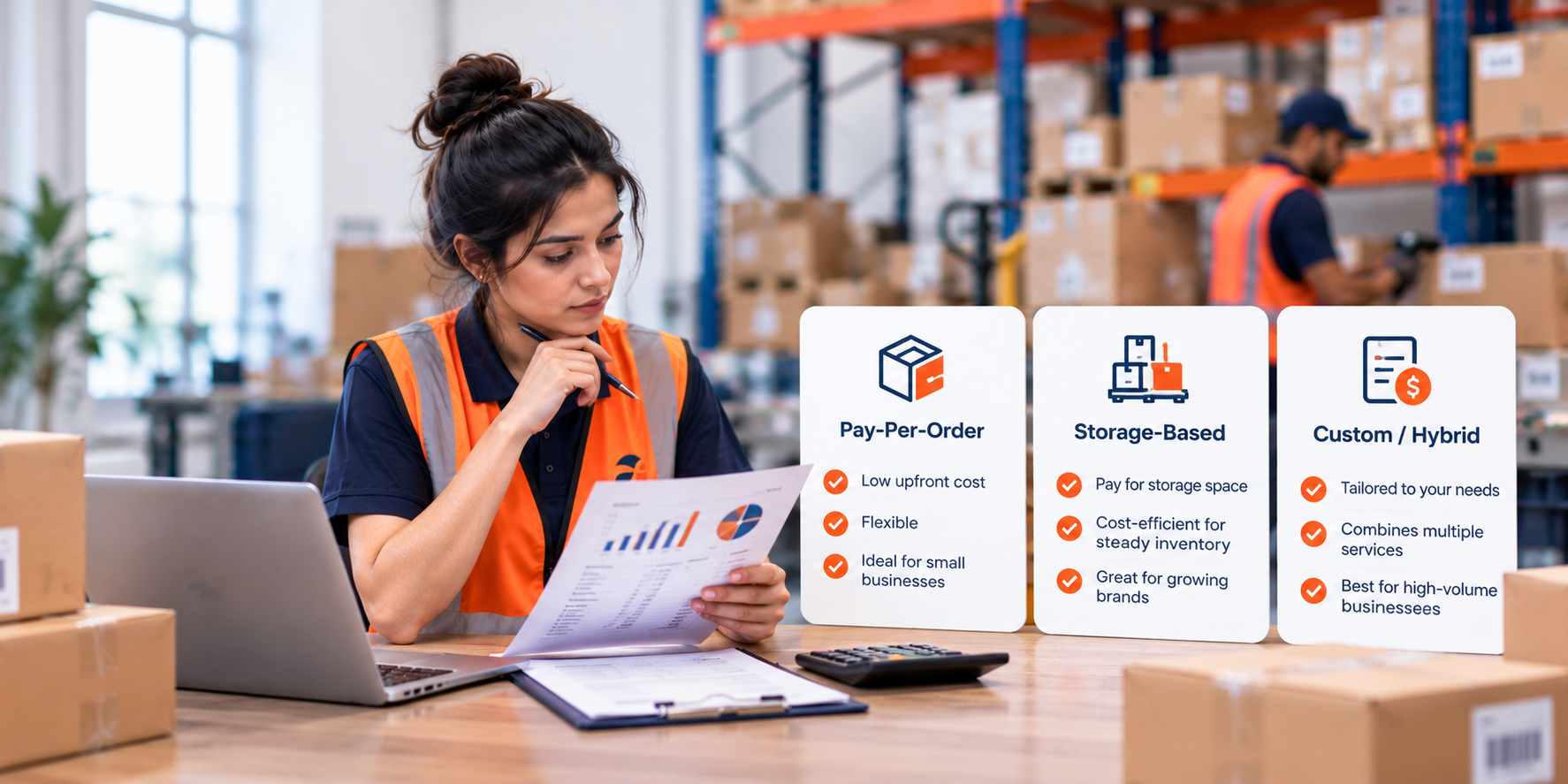
When it comes to e-commerce fulfillment, choosing the most suitable pricing model is crucial for optimizing costs and efficiency. This choice largely depends on the nature of your products and sales geography.
Here, we explore the pricing models available and how they align with various business needs:
Amazon FBA (Fulfillment by Amazon) is a popular choice for Amazon retailers. This service handles storage, packing, shipping, and returns.
It’s beneficial for gaining a competitive edge in Amazon’s marketplace and easing the logistics burden. The fees for Amazon FBA vary based on product size, with standard-size products ranging from $2.70 to $5.68 per item.
For businesses with their warehouses, pick-and-pack fulfillment is a cost-effective option. This service involves a third party picking up products from your warehouse, packing them, and handling delivery.
It eliminates additional storage fees and can significantly reduce overall fulfillment costs.
3PL fulfillment is a widely chosen option, especially for established e-commerce websites. A 3PL provider like Macmillan manages the entire logistics and fulfillment process, optimizing costs through efficient product distribution for faster shipping.
This model is ideal for businesses overwhelmed by order volumes, lacking logistics expertise, or needing additional storage space. 3PL pricing varies based on several factors, including volume, storage, and shipping requirements.
An e-commerce fulfillment pricing model should align with your business’s specific needs, product characteristics, and sales regions. Understanding these models helps make an informed decision that balances cost efficiency with operational effectiveness.
For a 3PL provider like Macmillan, offering a range of pricing options tailored to different business requirements is key to attracting and retaining a diverse clientele.

Partnering with a third-party logistics provider like Macmillan can significantly reduce e-commerce fulfillment costs in several key ways:
Partnering with a 3PL like Macmillan can streamline your e-commerce fulfillment process, reduce overhead costs, and allow you to leverage their expertise, technology, and network to improve efficiency and customer satisfaction.

Discover the efficiency and reliability of MacMillan’s comprehensive logistics services.
At Macmillan, we specialize in end-to-end supply chain management and offer tailored solutions encompassing warehousing, last-mile delivery, and advanced reverse logistics.
Our commitment to rebuilding trust and reliability in the industry is evident in every service we provide—partner with MacMillan to elevate your e-commerce fulfillment strategy and achieve exceptional customer satisfaction.
Explore MacMillan’s E-commerce Fulfillment Services and let us be the driving force behind your thriving e-commerce strategy.