Unlocking Outsourced Fulfillment: Key Advantages and Obstacles

  • All Posts
  • 3PL
  • All
  • Case Studies
  • Container Destuffing
  • E-Commerce
  • Ecommerce Fulfillment
  • Final Mile & E-Commerce
  • Fulfillment
  • Industry Insights
  • Life at Stord
  • Network Optimization
  • News
  • Specialized Services
  • Technology
  • Transportation
  • Warehousing
  • Warehousing & Distribution

You May Also Like

How to avoid Canadian Warehousing Congestion with MacMillan

How to avoid Canadian Warehousing Congestion with MacMillan

Navigating a crowded space is challenging, and this holds true…

Unlocking Outsourced Fulfillment: Key Advantages and Obstacles

Unlocking Outsourced Fulfillment: Key Advantages and Obstacles

Outsourced fulfillment involves hiring a third-party logistics provider to manage…

Warehouse Audits: A Guide for 3PL Warehouse Technologies and processes

Warehouse Audits: A Guide for 3PL Warehouse Technologies and processes

For 3PL providers, warehouse managers, and COOs overseeing warehouse operation,…

Mastering Warehouse Monitoring in 2026: Systems, Trends, and Techniques

Mastering Warehouse Monitoring in 2026: Systems, Trends, and Techniques

Ecommerce warehouses and logistics company’s Toronto are bustling hubs of…

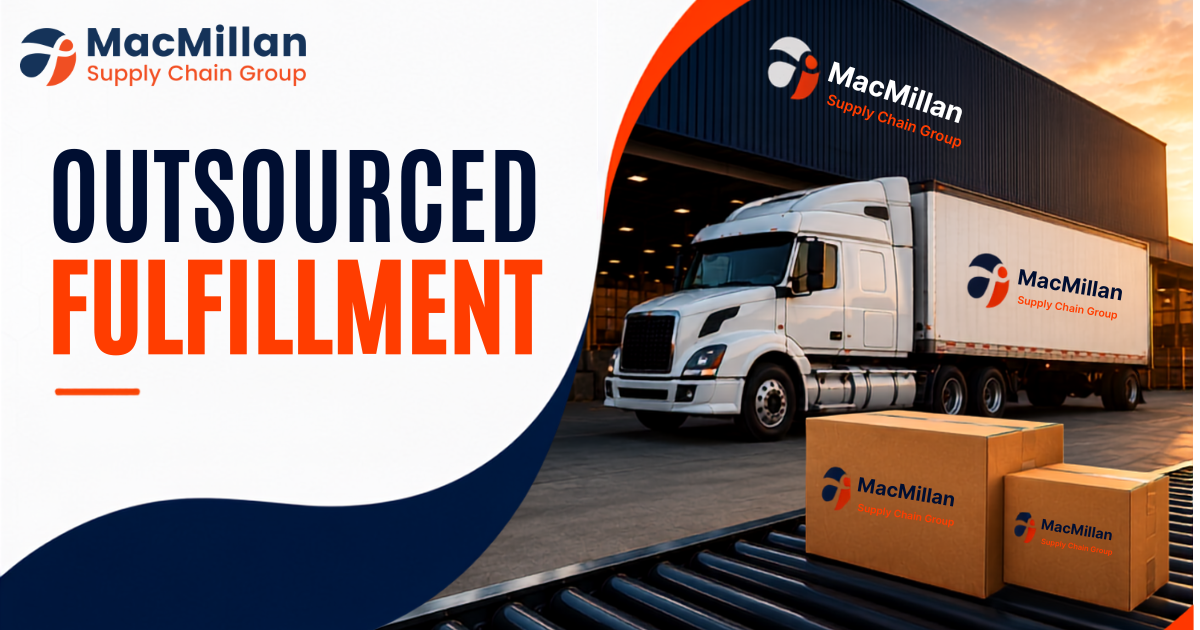
Outsourced fulfillment involves hiring a third-party logistics provider to manage inventory, order processing, packaging, and shipping, allowing businesses to focus on their core activities. This approach streamlines the supply chain and supports scalability, particularly beneficial for small and medium-sized businesses facing demand spikes.

Partnering with a 3PL offers several advantages, including access to specialized expertise, advanced technology, and established supply chain relationships, all contributing to cost savings and improved customer service. Businesses can customize fulfillment services to their needs, reducing investment in infrastructure and technology. Overall, outsourced fulfillment helps companies optimize logistics, cut costs, and concentrate on growth and customer satisfaction.

Outsourced fulfillment warehouse

What are the components of outsourced fulfillment?

Outsourced fulfillment involves several key components that ensure efficient order processing:

  1. Inventory Management: A 3PL such as MacMillan SCG tracks and manages inventory levels using advanced systems to prevent stock outs and ensure timely replenishment.
  2. Order Processing: The 3PL handles order confirmation, verification, and allocation through automated systems integrated with eCommerce platforms, ensuring fulfillment with accuracy and efficiency.
  3. Packaging: Proper packaging is crucial for product protection and a positive customer experience. MacMillan SCG uses industry-standard materials and may offer custom packaging options.
  4. Shipping: Leveraging their network, 3PLs select optimal shipping methods and carriers, negotiate rates, and offer various delivery options to ensure timely and safe delivery.
  5. Returns Management: The 3PL manages the entire returns process, including authorization, inspection, restocking, and refunds or exchanges, streamlining operations and enhancing customer satisfaction.
  6. Customer Service: MacMillan’s dedicated customer service teams handles inquiries, provide updates, and resolve issues, ensuring a smooth customer experience from order to delivery.

Outsourced fulfillment process

Outsourcing fulfillment to a skilled 3PL allows businesses to focus on their core functions while benefiting from expert management of these crucial components, leading to improved efficiency and customer satisfaction.

Outsourcing fulfillment to a 3PL offers several key advantages

  1. Expertise and Resources: MacMillan SCG provide specialized knowledge and access to advanced technology, streamlining inventory management, order processing, and shipping.
  2. Cost Savings: By outsourcing, you avoid investing in warehouses, technology, and a dedicated team. This reduces infrastructure costs and operational expenses.
  3. Scalability: 3PLs can easily adjust to fluctuating order volumes during peak times, handling increased demand without needing additional resources or infrastructure.
  4. Focus on Core Competencies: Outsourcing allows you to concentrate on strategic activities like product development and marketing, leaving logistics to the professionals.

3PL logistics illustration

What are the considerations to follow in outsourced fulfillment?

While outsourcing fulfillment offers many advantages, businesses should be mindful of potential challenges. One key concern is the loss of direct control over fulfillment processes, making it crucial to select a reliable and transparent 3PL. Data security is another significant consideration; sharing sensitive customer and inventory information requires partnering with a 3PL that implements robust security measures. Additionally, effective communication and coordination are essential for successful outsourcing, necessitating regular updates and clear communication channels to ensure smooth operations.

Factors to consider when choosing a fulfillment partner

When choosing between in-house fulfillment and outsourcing to a 3PL, several key factors should be evaluated:

  1. Order Volume: Large order volumes might necessitate advanced technology and infrastructure, which can be more cost-effective through a 3PL provider such as MacMillan for reliability.
  2. Product Characteristics: Products that are fragile or perishable often require specialized handling and packaging. A 3PL can offer the expertise needed for these specific requirements.
  3. Market Reach: For businesses with a broad geographic footprint or diverse customer base such as Amazon, partnering with a 3PL can enhance fulfillment efficiency and improve delivery across various locations.

Ways to successfully outsource a fulfillment partner

For a successful outsourcing experience, businesses should adhere to the following best practices:

  1. Thorough Research and Due Diligence: Carefully evaluate potential 3PL providers by assessing their experience, reputation, and client feedback.
  2. Clear Communication of Expectations: Define your business needs and performance criteria with the 3PL. Set clear key performance indicators (KPIs) and implement regular reporting to track progress.
  3. Transparency and Collaboration: Build a transparent and cooperative relationship with the 3PL. Regularly review performance metrics, promptly address any issues, and ensure continuous, open communication.

Key Takeaways

Outsourced fulfillment offers significant advantages, including specialized expertise, cost savings, scalability, and the ability to concentrate on core business activities. However, businesses must also address potential challenges, such as diminished control, data security concerns, and the need for effective communication.

When deciding between in-house fulfillment and outsourcing, it’s important to consider factors like order volume, product specifics, and market reach. Adhering to best practices, such as conducting comprehensive research, setting clear expectations, and maintaining transparency, will help businesses effectively manage their outsourced fulfillment operations and enhance their overall logistics efficiency.


Leave a Reply

Your email address will not be published. Required fields are marked *