


Ambient Storage Solutions: Benefits, Considerations, and Best Practices

  • All Posts
  • 3PL
  • All
  • Case Studies
  • Container Destuffing
  • E-Commerce
  • Ecommerce Fulfillment
  • Final Mile & E-Commerce
  • Fulfillment
  • Industry Insights
  • Life at Stord
  • Network Optimization
  • News
  • Specialized Services
  • Technology
  • Transportation
  • Warehousing
  • Warehousing & Distribution

You May Also Like

Ambient Storage Solutions: Benefits, Considerations, and Best Practices

Ambient Storage Solutions: Benefits, Considerations, and Best Practices

A Quick Summary and Overview Ambient storage is a practical…

Mastering Batch Picking: Efficiency and Accuracy Unlocked

Mastering Batch Picking: Efficiency and Accuracy Unlocked

Quick Summary and Overview Batch picking, a method where items…

Optimize Your Supply Chain: The Power of Outsourcing Warehouse Operations

Optimize Your Supply Chain: The Power of Outsourcing Warehouse Operations

A quick summary and overview Outsourcing warehouse operations to third-party logistics…

3PL Excellence: Revolutionize Your Supply Chain with MacMillan

3PL Excellence: Revolutionize Your Supply Chain with MacMillan

A quick summary and overview  Third-party logistics (3PL) is transforming how…

A Quick Summary and Overview

Ambient storage is a practical and cost-effective choice for businesses seeking to store products that do not require refrigeration or freezing. This article delves into the benefits, key considerations, and best practices of ambient storage, explaining how it can enhance logistics efficiency and maintain product quality while reducing costs.

Introduction

In the competitive world of supply chain management, businesses are constantly looking for ways to optimize logistics operations. One such opportunity is through ambient storage solutions. Unlike temperature-controlled facilities, ambient storage offers a versatile and energy-efficient option for storing a wide range of products. By understanding the benefits and considerations of ambient storage, businesses can make informed decisions to enhance their supply chain efficiency and reduce costs. This article will explore the nuances of ambient storage, providing insights into its advantages and practical tips for integration with 3PL services.

Understanding Ambient Storage: What It Is and Why It Matters


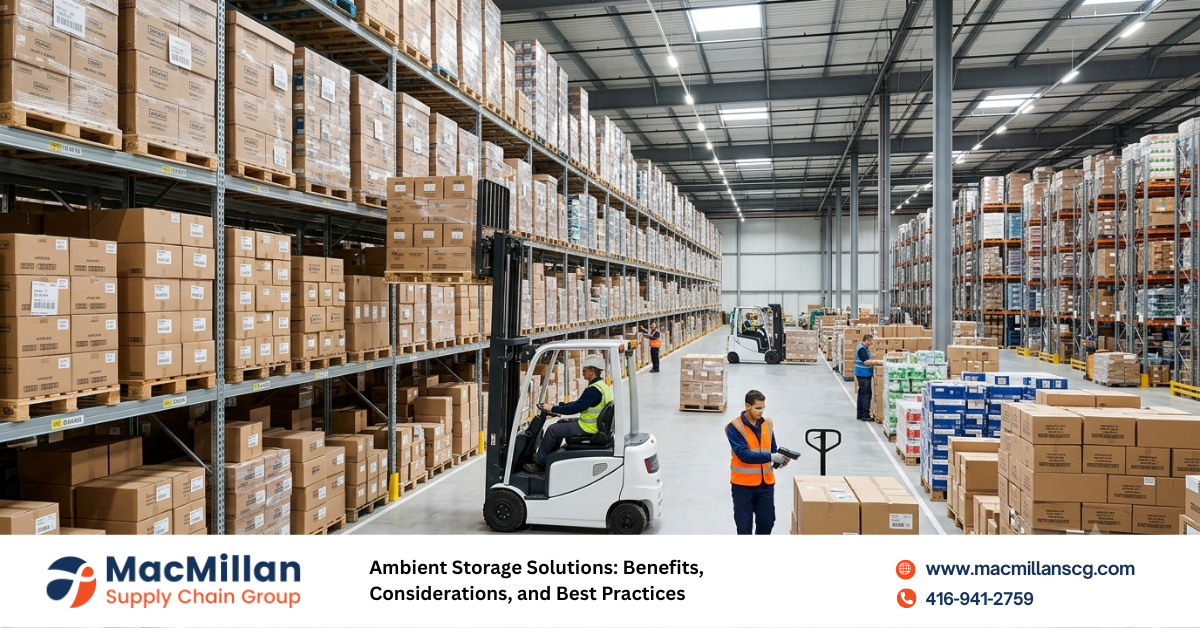
Ambient storage involves keeping products in an environment that maintains controlled room temperatures, typically between 60°F to 80°F (15°C to 27°C). This storage type is ideal for non-perishable goods such as Consumer Packaged Goods (CPG), electronics, and clothing. It eliminates the need for costly refrigeration or climate-controlled setups, offering significant savings on storage and operating costs.

Advantages of mixing inventory types in ambient storage facilities add to flexibility and efficiency. Businesses can consolidate various product categories in one location, enhancing logistics operations while reducing transportation costs. Moreover, ambient storage is an eco-friendly choice, reducing energy usage, lowering carbon footprints, and aligning with green supply chain initiatives.

Advantages of Ambient Storage: A Deep Dive


One of the standout advantages of ambient storage is its cost-effectiveness. Without the need for specialized temperature-regulating equipment, ambient storage dramatically cuts down on overhead costs. Besides, the versatility of ambient storage cannot be overstated. It accommodates many products, allowing retailers and manufacturers to simplify logistics and improve operational efficiency. 

Furthermore, energy efficiency is a key benefit. By minimizing energy use, companies not only save on utility expenses but also support sustainability by reducing environmental impact. Lower operational costs and a lighter ecological footprint make ambient storage a smart choice for forward-thinking businesses.

Key Considerations for Successful Ambient Storage


While ambient storage offers numerous benefits, businesses must address some critical considerations to ensure successful implementation. Product compatibility stands as the foremost aspect—it’s crucial to identify which goods can endure ambient temperatures without degradation. Monitoring and maintaining optimal humidity levels are pivotal to prevent issues such as mold growth or product spoilage.

Effective warehouse management, which includes regular cleaning, sanitation, pest control, and implementing FIFO inventory rotations, is essential. Finally, understanding seasonal fluctuations and the local climate of storage locations helps ensure that requirements remain stable year-round, thereby safeguarding product integrity.

Distinguishing Between Ambient and Climate-Controlled Storage


It’s vital to differentiate ambient storage from climate-controlled facilities, which offer precise temperature and humidity control for sensitive items. While ambient storage suits general, non-refrigerated products, certain high-value or delicate goods may require climate-controlled environments to prevent damage. Companies must evaluate products’ specific storage needs to choose the appropriate solution that ensures quality and compliance with industry standards.

Common Problems with Ambient Storage and Our Solutions


Common issues in ambient storage include improper inventory management, failing humidity control, and inadequate facility maintenance. These can lead to product damage, spoilage, or increased operational costs. At MacMillan Supply Chain, we’re committed to providing solutions that address these challenges.

Our ambient storage services offer advanced inventory management systems to maintain accurate stock levels and ensure timely rotations. We implement state-of-the-art humidity control measures, ensuring the environment stays within ideal parameters, and conduct regular facility inspections to uphold cleanliness and safety standards. By investing in cutting-edge technology and efficient storage practices, MacMillan Supply Chain aims to minimize disruptions and enhance supply chain reliability.

How Can Readers Avoid Problems and Implement Solutions?


To leverage ambient storage effectively, businesses should conduct a thorough assessment of their inventory needs. Selecting the right logistics partner is crucial to achieving seamless integration and optimal performance. Consider MacMillan Supply Chain as your strategic partner. With our expertise and robust storage solutions, you’ll avoid common pitfalls and ensure operations run smoothly. Contact us today to learn how ambient storage can transform your logistics strategy.

FAQS

Batch picking is a process where a picker retrieves items for multiple orders in a single trip. It is designed to improve efficiency, reduce labor costs, and enhance order accuracy.

Batch picking helps businesses improve warehouse efficiency by reducing picker travel time, lowering labor costs, increasing productivity, and improving order accuracy. It also enables faster order fulfillment, making it an ideal solution for high-volume warehouses and e-commerce operations.

Technology such as Warehouse Management Systems (WMS), barcode scanners, mobile devices, and route optimization software makes batch picking faster and more accurate. These tools automatically group orders, assign the most efficient picking routes, and reduce manual errors throughout the fulfillment process.

Batch picking is especially beneficial for industries that process a high volume of orders, including e-commerce, retail, manufacturing, wholesale distribution, healthcare, and consumer goods. Any business with repetitive picking tasks can improve efficiency using this method.

By grouping similar orders and using organized bins or totes, batch picking minimizes handling mistakes and reduces the chance of mixing products between orders. Combined with barcode scanning and WMS technology, it significantly improves picking accuracy and customer satisfaction.

MacMillan Supply Chain helps businesses successfully implement batch picking by evaluating existing warehouse operations, optimizing warehouse layouts, integrating advanced WMS technology, and providing staff training. Their customized solutions improve efficiency, reduce operational costs, and ensure a smooth transition to a more productive warehouse environment.

Leave a Reply

Your email address will not be published. Required fields are marked *