Enhancing Supply Chain Resilience Amid Geopolitical Tensions: Strategies and Best Practices
Quick Summary Picture this: Your supply chain is a Jenga…

Quick Summary Picture this: Your supply chain is a Jenga…
Introduction In our modern world, being environmentally and socially responsible…
In today’s global economy, navigating trade policies and tariffs has…
Quick Summary Imagine a world where every product’s journey from…

Introduction
In our modern world, being environmentally and socially responsible isn’t an option; it’s expected. Consumers and businesses are demanding that companies take steps toward sustainability. With advanced technology and better resource management, businesses can now build supply chains that work smarter and greener. In this article, we’ll look at how AI, IoT, renewable energy, and circular economy principles are reshaping supply chains for a better, cleaner future.
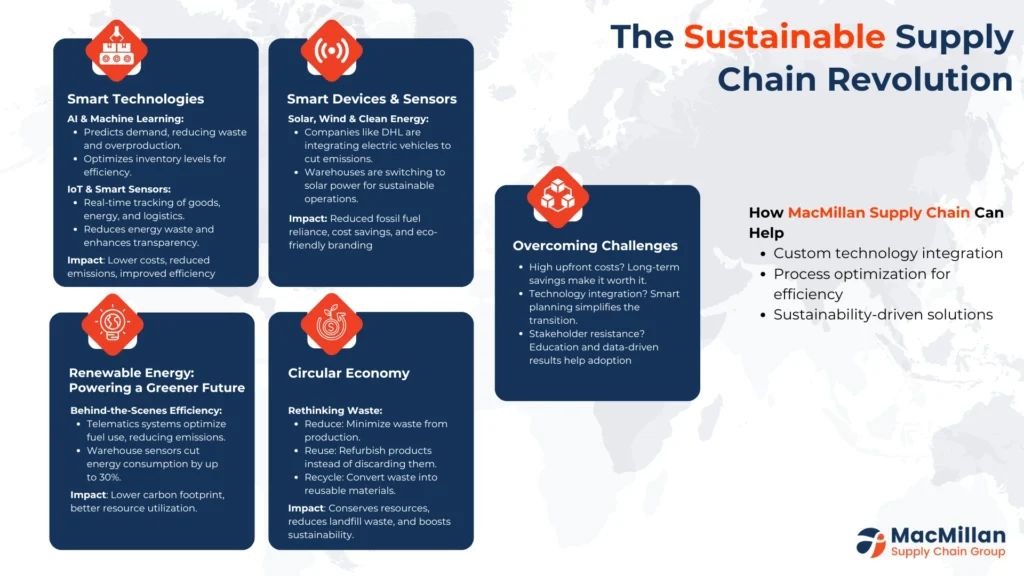
Imagine having a crystal ball that predicts what customers will need before they even ask. That’s what AI does for supply chains: it helps forecast demand with surprising accuracy, ensuring that inventory levels are just right. Meanwhile, IoT devices act as digital guardians, providing real-time updates and tracking the movement of goods. Together, they help companies reduce waste, cut down on costs, and lower their environmental impact.
For example, using AI to forecast demand helps avoid the pitfall of overproduction, and IoT sensors can monitor energy usage in warehouses, ensuring everything runs smoothly and sustainably. It’s a smart way to work and to protect our planet.

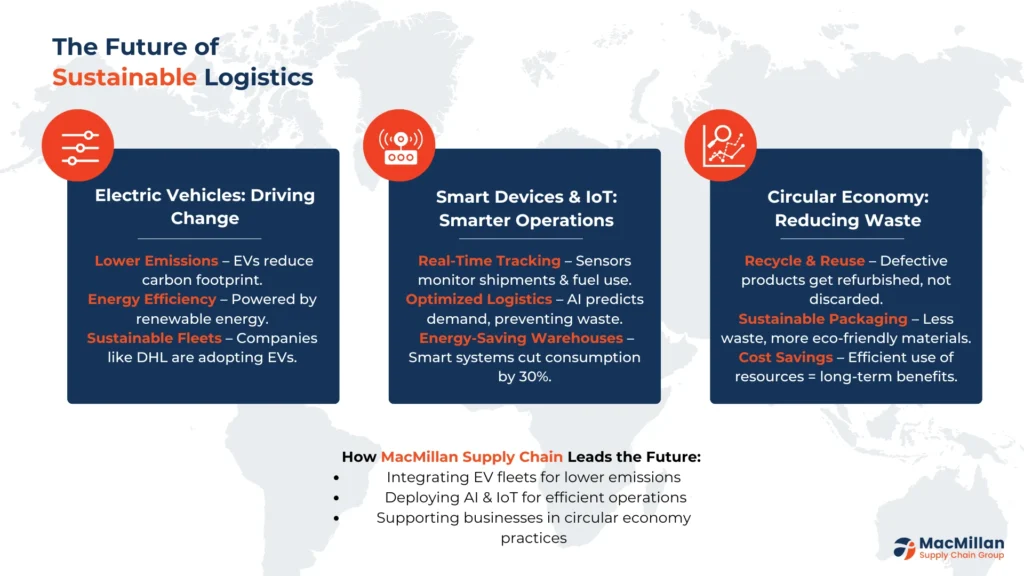
One of the biggest changes in the logistics world is the shift toward renewable energy. More companies are opting for solar, wind, and other clean energy sources to power their operations. Think about DHL’s move to integrate electric vehicles into its fleet, a step that has significantly reduced its greenhouse gas emissions.
This change isn’t just great for the environment; it also makes good business sense. By reducing reliance on fossil fuels, companies can save money in the long run and position themselves as true sustainability leaders.
Often working behind the scenes, smart devices and sensors are making a big impact on supply chains. Take telematics systems, for example, they offer real-time insights into fuel consumption, driving behavior, and route optimization, all of which help reduce emissions and boost efficiency.
In warehouses, smart sensors are hard at work cutting energy consumption by up to 30%, which can make a significant difference in a company’s overall carbon footprint. While they may not always be in the spotlight, their role in driving sustainability is undeniable.
At the heart of sustainable supply chains is the circular economy, a concept that’s all about reusing, recycling, and reducing waste. Instead of throwing away defective products, companies can refurbish or repurpose them, creating a system that benefits both the environment and the bottom line.
By adopting practices that focus on sustainability from start to finish, businesses can conserve valuable resources and help build a more resilient economy. It’s about thinking long-term and being mindful of every step in the process.

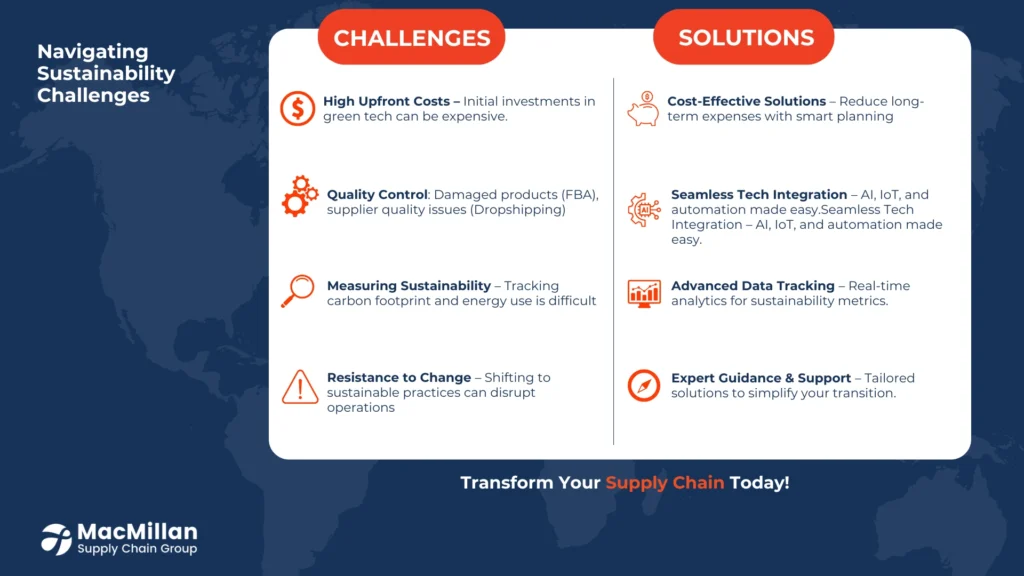
Switching to a more sustainable supply chain isn’t always easy. The journey comes with its own set of challenges, including high upfront costs, integrating new technologies, and tracking sustainability metrics. On top of that, change can be tough for everyone involved, especially if stakeholders are used to doing things a certain way.
At MacMillan Supply Chain, we understand that transitioning to sustainable practices can seem overwhelming. That’s why we’re here to help. Our team works closely with you to integrate technology, optimize processes, and offer guidance tailored to your needs. With our support, you can meet your sustainability goals without sacrificing efficiency.
Ready to turn your supply chain into a model of sustainability? It all starts with aligning your sustainability goals with your overall business strategy. Working with experts like those at MacMillan Supply Chain can make the process much smoother. Reach out to us today, and let’s start building a greener future together.
AI plays a crucial role in supply chain sustainability by enabling precise demand forecasting, optimizing inventory levels, and streamlining delivery routes. These capabilities lead to significant reductions in emissions and improved overall efficiency, making AI a key driver of sustainable supply chain practices.
The adoption of renewable energy sources, such as solar and wind power, has a significant impact on logistics operations by reducing dependence on fossil fuels and cutting greenhouse gas emissions. This transition not only minimizes the environmental impact of logistics but also leads to long-term cost savings, making it a win-win for businesses and the planet.
Electric vehicles are crucial for sustainable supply chains because they eliminate carbon dioxide emissions and significantly reduce the environmental impact of transportation, particularly in last-mile deliveries. By incorporating electric vehicles into their fleets, companies can significantly improve their sustainability metrics and contribute to a greener future.
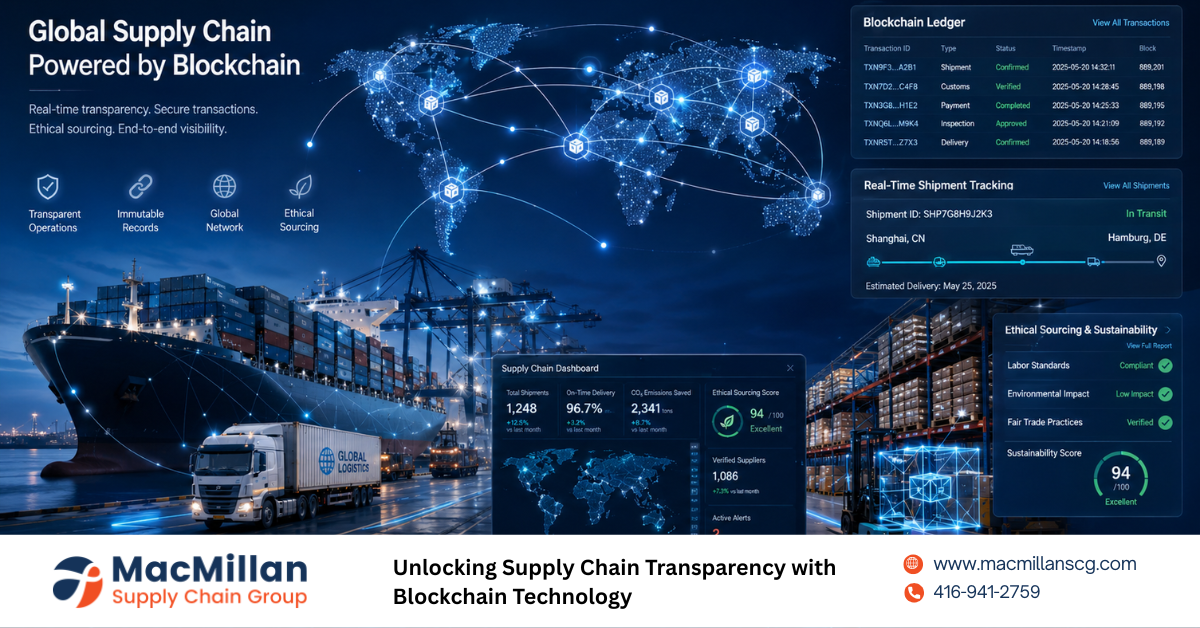
Yes, blockchain technology can greatly enhance supply chain transparency and sustainability by providing an immutable, decentralized record of transactions and product movements. This increased traceability ensures compliance with ethical and sustainable practices across the entire supply chain, empowering businesses to make more informed and responsible decisions.
3D printing can significantly benefit supply chain sustainability by minimizing the need for transportation and enabling local manufacturing. By producing goods closer to the point of consumption, companies can reduce their carbon footprint, lower transportation costs, and increase supply chain agility, all while promoting more sustainable practices.
Circular economy principles prioritize the reduction, reuse, and recycling of materials to minimize waste and conserve valuable resources. These principles are crucial for sustainable supply chains because they promote a closed-loop system that minimizes environmental impact and maximizes resource efficiency, ensuring long-term sustainability.
Smart devices play a vital role in sustainable logistics operations by enabling real-time monitoring and optimization of various processes. For instance, telematics systems can provide insights into vehicle performance, fuel consumption, and route optimization, leading to reduced emissions and improved efficiency. Similarly, smart sensors in warehouses can help minimize energy waste and optimize resource utilization.
Sustainable supply chain practices not only benefit the environment but also have positive social impacts. By upholding ethical labor standards, respecting human rights, and promoting fair trade practices, companies can contribute to the well-being of communities and enhance their brand reputation as socially responsible organizations.
Embracing sustainable supply chain practices can offer significant economic advantages to businesses. By optimizing resource utilization, reducing waste, and adopting renewable energy sources, companies can achieve long-term cost savings and increase operational efficiency. Additionally, a strong sustainability focus can enhance brand reputation and customer loyalty, positively impacting financial performance.
By partnering with MacMillan Supply Chain, businesses can navigate the complexities of sustainable supply chain transformation seamlessly and efficiently. Our expert consultants provide tailored solutions, guiding companies through the adoption of cutting-edge technologies, process optimization, and the implementation of sustainable practices. Contact us today to unlock the full potential of sustainable supply chain transformation and position your business as a leader in environmental and social responsibility.