Quick Overview
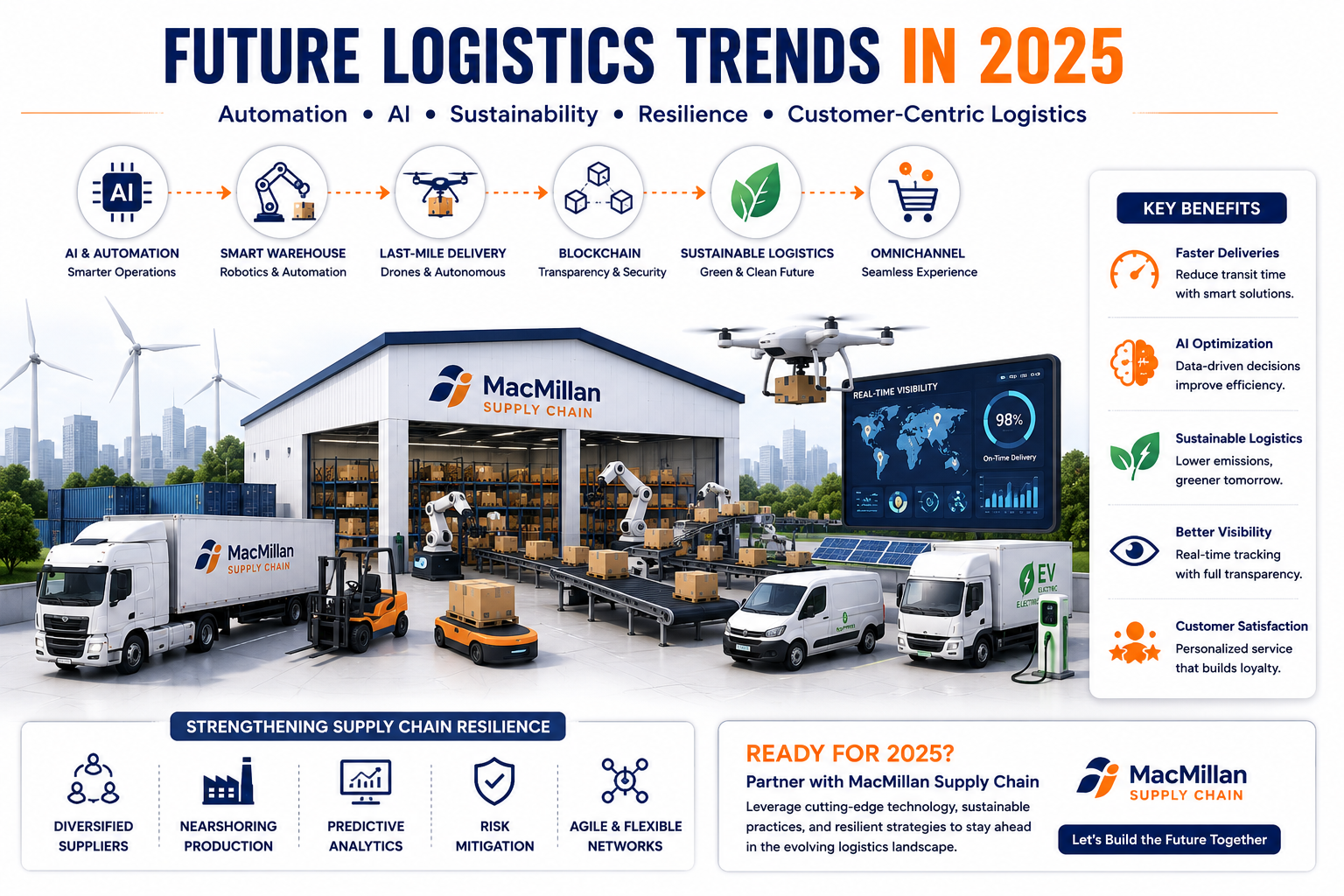
In 2025, logistics will be transformed by automation, AI, sustainability, and personalized services. As logistics trends evolve, companies will leverage advanced technologies to streamline operations, reduce environmental impact, and enhance customer experiences. These shifts will focus on optimizing supply chain resilience, integrating blockchain for transparency, and employing data-driven strategies to stay competitive.
Introduction
Logistics is undergoing a seismic shift, driven by a combination of technological advancements and the pressing need for sustainable practices. Forecasting into 2025, automation and AI emerge as pivotal players in transforming logistics operations, while sustainability initiatives become crucial for businesses striving to meet eco-friendly goals. At the nexus of innovation and necessity, MacMillan Supply Chain leads as an expert in integrating these transformative trends, poised to unlock new efficiencies and customer experiences in logistics.
Automation and AI’s Role in 2025
Automation is transforming logistics and is no longer a sci-fi idea. AI powered solutions improve warehouse management, demand forecasting, and routes. Drones and self driving cars will revolutionize last-mile deliveries, cutting expenses and timeframes. These innovations result in a digital transformation for businesses like MacMillan, guaranteeing quicker, safer, and more dependable logistics services. We lead efficiency by incorporating AI systems, prepared to lead companies into the future.
Embracing Sustainability in Logistics
In an urgent effort to prevent climate change, logistics companies are embracing sustainability and integrating their operations with green principles. Emissions are reduced by switching to electric and hydrogen powered vehicles, while additional environmental initiatives include redesigning packaging and implementing carbon neutral tactics. Leading the charge in putting these environmental impact reduction measures into action is MacMillan. By restructuring supply chains to meet eco friendly objectives and drawing in sustainability conscious customers, working with us gives you a competitive edge.
Importance of E-commerce and Omnichannel Logistics
The e-commerce explosion demands an omnichannel logistics approach, requiring swift, flexible delivery methods. Companies are investing in micro-fulfillment centers near cities to guarantee faster deliveries. MacMillan partners with businesses to ensure seamless integration of these strategies, facilitating same-day and scheduled deliveries that delightedly meet customer expectations. As e-commerce evolves, staying ahead involves adopting agile, customer-centric logistic solutions that MacMillan offers expertly.
Strengthening Supply Chain Resilience
Disruptions in recent years highlight the critical need for supply chain resilience. Strategies like diversifying suppliers, nearshoring production, and predictive analytics of potential disruptions become essential. in MacMillan’s opinion, increases resilience and reduces risks. Companies can handle unpredictable markets with assurance, delivering smooth, effective operations.
Common Problems & Our Solutions
The rapid tech evolution in logistics can create gaps, causing inefficiencies or prolonged adaptation periods for businesses. Automation and AI implementation may require significant initial investment and strategic planning. Sustainability goals can also face challenges in balancing cost with effective environmental impact. Additionally, ecommerce demands flexible logistics that may overwhelm unprepared supply chains.
Our Solutions: MacMillan Supply Chain works to overcome these challenges. In order to minimize risks during transitions, our skilled team creates customized automation plans that integrate advanced AI with your current systems. Our sustainability programs help companies implement environmentally friendly practices without sacrificing efficiency or affordability. Additionally, we deliberately locate fulfillment hubs for maximum reach and efficiency, modeling customer centric e-commerce logistics solutions.
Placing Solutions into Practice with MacMillan
Collaborate with MacMillan Supply Chain to steer clear of any logistical obstacles. We provide cutting edge automation and artificial intelligence solutions to your company, promoting resilient and sustainable operations that satisfy customer demands and market trends. To begin improving your supply chain and maintain your competitive edge in a constantly changing industry, get in touch with our experts right now.
MacMillan’s experience might serve as the foundation for your company’s successful navigation of 2025’s trends if you’re looking for creative logistics solutions and excellent supply chain management. To find out how we can support your journey of transformation, get in touch with us right now.