Black Friday Fulfillment Canada: 2026 Peak Season Guide
Black Friday Fulfillment Canada: How E-commerce Brands Can Prepare for…
Black Friday Fulfillment Canada: How E-commerce Brands Can Prepare for…
When discussing e-commerce, what typically springs to mind? Most likely,…
As the busiest time of the year draws near, the…
As the busiest time of the year draws near, the…
For fast-moving consumer goods brands, inbound delays do more than create warehouse congestion. They slow inventory availability, push back replenishment, increase the risk of stockouts, and delay revenue recognition.
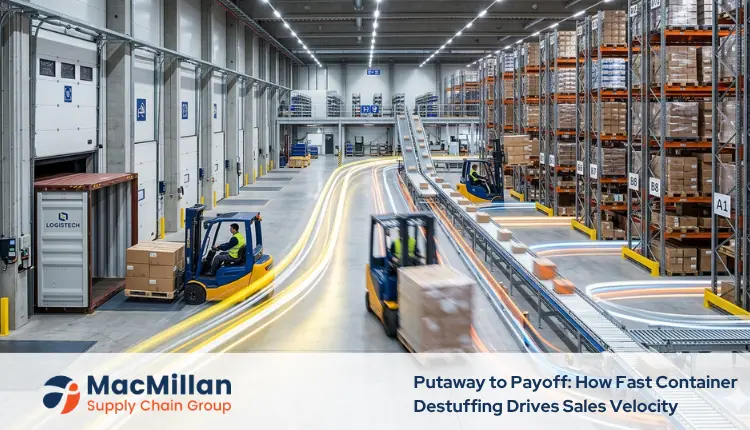
That is why container destuffing is not just a warehouse task. It is a sales velocity lever.
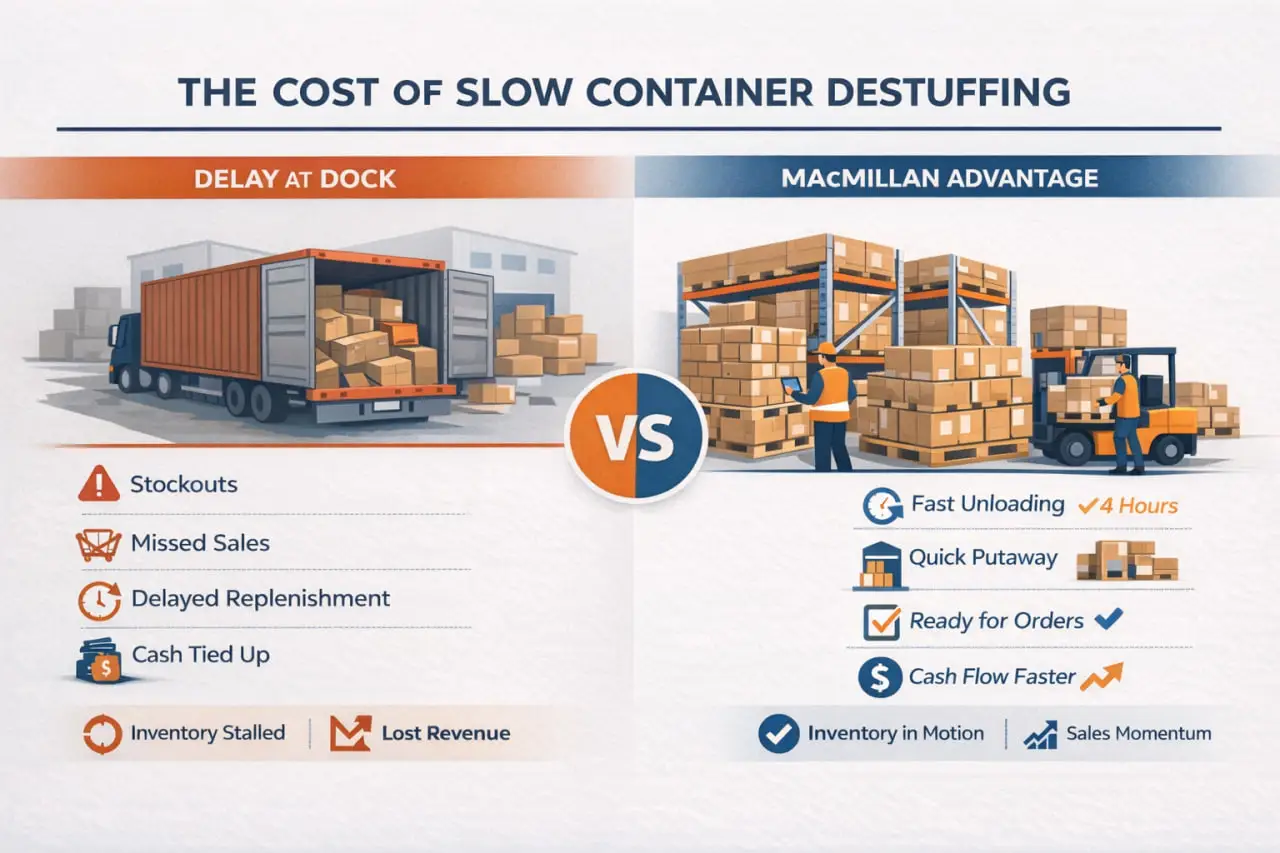
When inbound containers sit too long at the dock, every downstream activity slows with them. Putaway is delayed. Orders wait. Retail launches lose momentum. Marketing campaigns hit the market before product is ready. Cash stays tied up in inventory that is technically received, but not yet available to sell.
At MacMillan SCG, fast inbound execution is built to keep products moving. With container destuffing designed for speed, proper palletization, organized storage, and efficient order readiness, brands gain a critical advantage: faster conversion from inbound freight to sellable inventory.
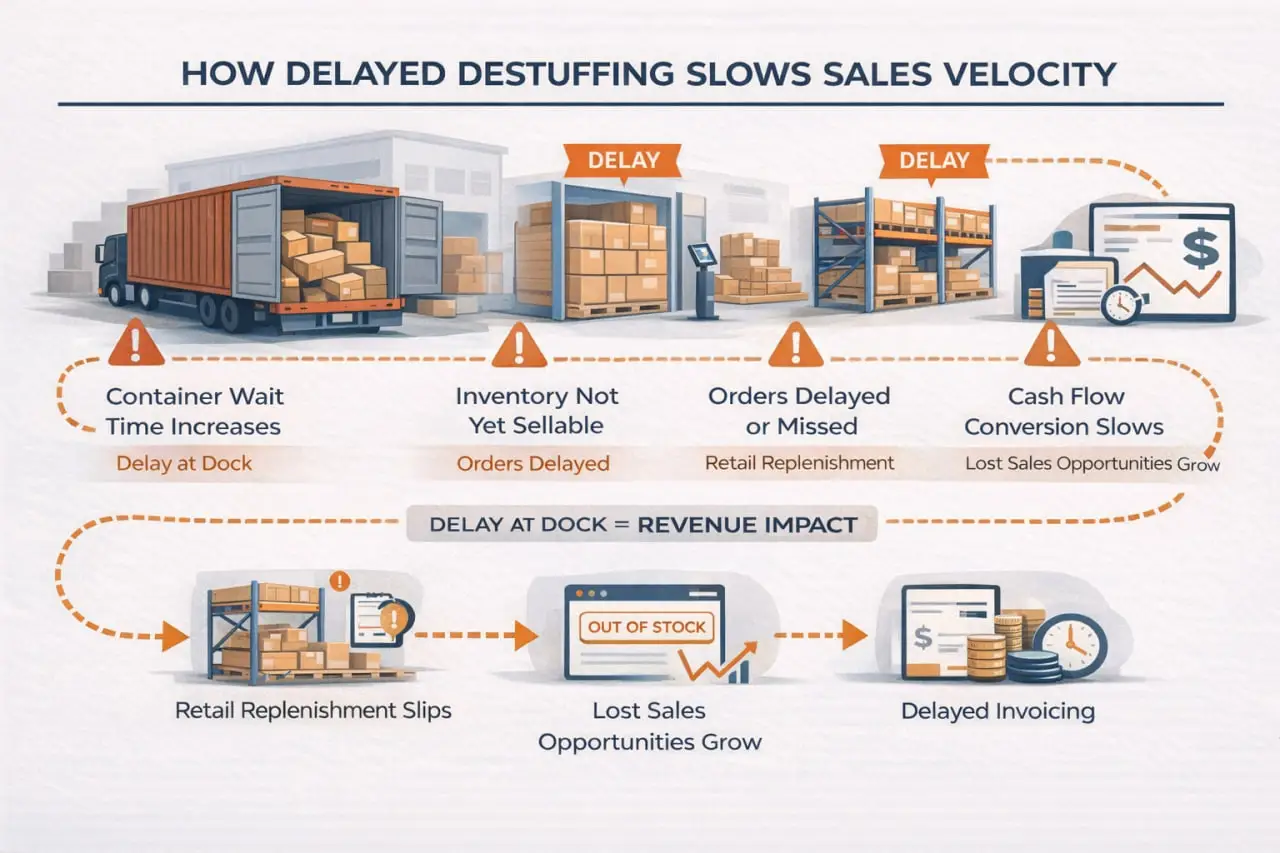
The real cost of slow destuffing is rarely limited to labor or dock utilization. The larger impact is commercial.
When products are not unloaded, sorted, palletized, and moved into inventory quickly, businesses face several risks:
For brands operating in FMCG logistics strategies , personal care, wellness, food, beverage, and retail-driven categories, timing matters. A product that misses shelf placement or arrives late for a campaign can lose far more than a few hours. It can lose the sale altogether.
Fast container destuffing shortens the gap between product arrival and product availability. That translates into stronger sales responsiveness and fewer missed opportunities.
MacMillan’s operating model is built around precision, visibility, and execution speed. Across its warehousing and value-added service capabilities, the company supports retail efficiency, SKU-level accuracy, lot and batch tracking, and rapid movement from receipt through fulfillment. The business also highlights strong KPI visibility and a WMS-driven approach that gives clients real-time operational insight.
That matters because the goal is not simply unloading a container. The goal is moving inventory into the right location, in the right condition, with the right data, so it can be allocated, picked, packed, and shipped without delay.
Fast destuffing helps accelerate:
The sooner product is unloaded and scanned into the warehouse flow, the sooner it becomes usable inventory rather than stranded inventory.
When inbound product is organized correctly from the start, fulfillment teams can process replenishment and e-commerce orders faster and more accurately.
Promotional kits, displays, relabeling, and retailer-specific prep all depend on inventory being available on time. Fast inbound handling protects launch windows.
Inventory that becomes sellable faster can be invoiced faster. That improves working capital velocity and reduces the strain of capital tied up in landed goods.
Many brands underestimate how much value is lost between container arrival and putaway.
A container that waits too long can trigger a chain reaction:
In other words, a slow inbound process creates friction across the entire business.
For high-velocity categories, especially FMCG and consumer goods, inbound speed should be treated as a growth strategy, not just an operations metric.
Speed alone is not enough. A rushed unload without proper checks, palletization, labeling, or inventory control can create downstream errors that cost more than the delay.
MacMillan’s broader service framework emphasizes careful handling, retailer compliance, lot and batch visibility, and retail-ready execution. That is what makes fast destuffing valuable. It supports speed without sacrificing control.
When executed correctly, container destuffing should include:
That combination reduces avoidable touches, prevents confusion on the floor, and helps every downstream process run cleaner.
Peak seasons, promotions, retail resets, and product launches amplify the cost of delay.
If your products arrive late into a congested inbound process, you may lose the exact window where demand is strongest. That is especially important for brands managing:
MacMillan’s services are designed to support fluctuating promotional volumes, urgent restocks, retail rollouts, and fast-moving consumer goods workflows. That alignment between inbound execution and market timing is where real value is created.
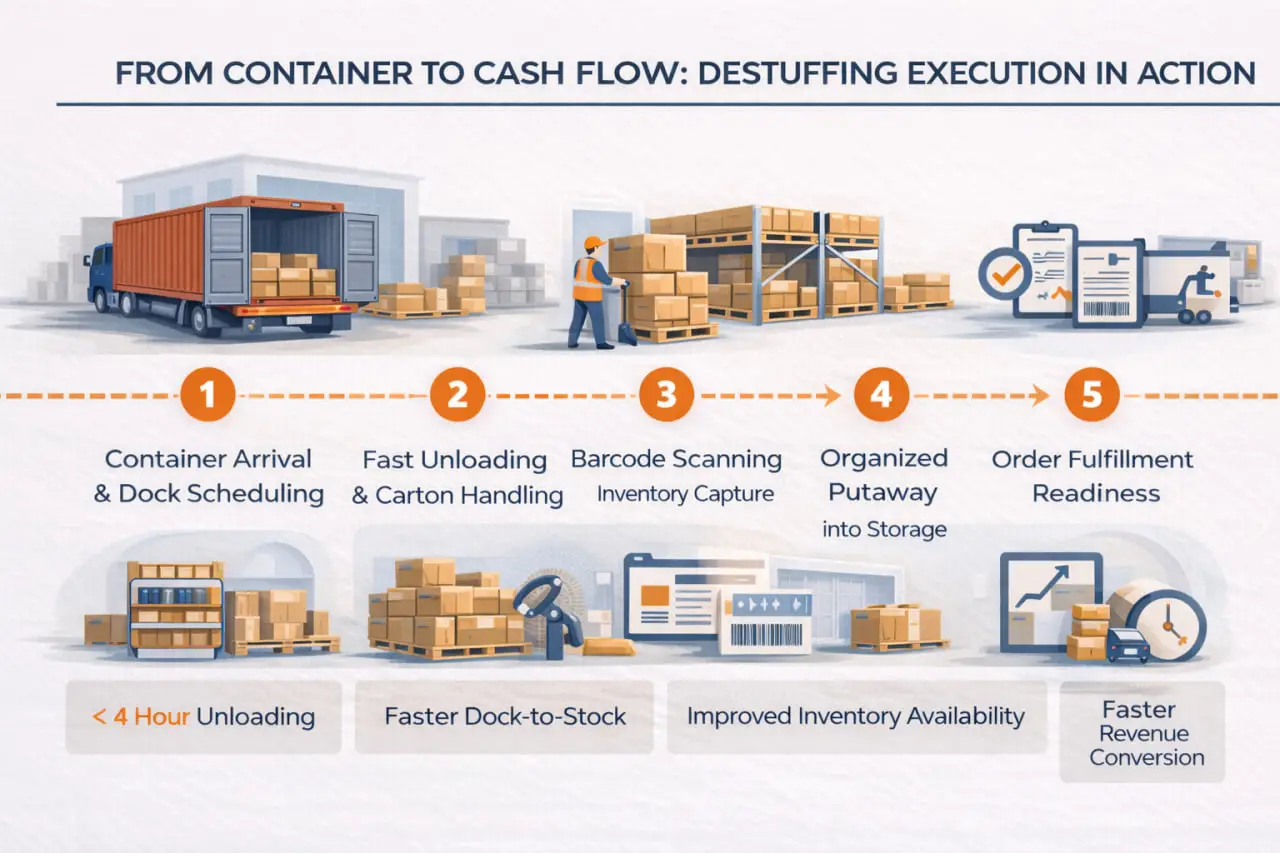
Cash flow improves when inventory moves faster through the system.
Here is the operational sequence:
Container arrives → product is destuffed quickly → inventory is put away faster → orders are fulfilled sooner → invoices go out earlier → cash is collected faster.
That may sound simple, but for growing brands, this cycle can have a measurable impact on working capital. Faster inventory availability can reduce the amount of cash sitting idle in product that cannot yet generate revenue.
It can also reduce the need for reactive measures such as expedited shipments, short-term storage workarounds, or emergency replenishment activity caused by inbound delays.
If you are choosing a 3PL or reviewing your inbound process, speed should be evaluated alongside operational discipline.
Look for a partner that can support:
MacMillan positions these contract logistics capabilities under one roof, combining warehousing, transportation solutions, e-commerce fulfillment, and value-added services to help brands move from dock to shelf with more speed and control.
In high-velocity supply chains, the time between container arrival and sellable inventory matters more than many brands realize.
Fast container destuffing helps reduce lost sales opportunities, protect launch timing, improve order responsiveness, and accelerate cash flow. When inbound operations are structured for speed and precision, your warehouse stops being a holding point and starts becoming a growth engine.
If your current inbound process is slowing down sales, it may be time to rethink what happens at the dock.
MacMillan SCG helps brands turn inbound efficiency into commercial momentum with warehousing, value-added services, fulfillment, and transportation solutions designed for speed, accuracy, and visibility.