
The Future of 3PL Logistics: Efficiency and Organization
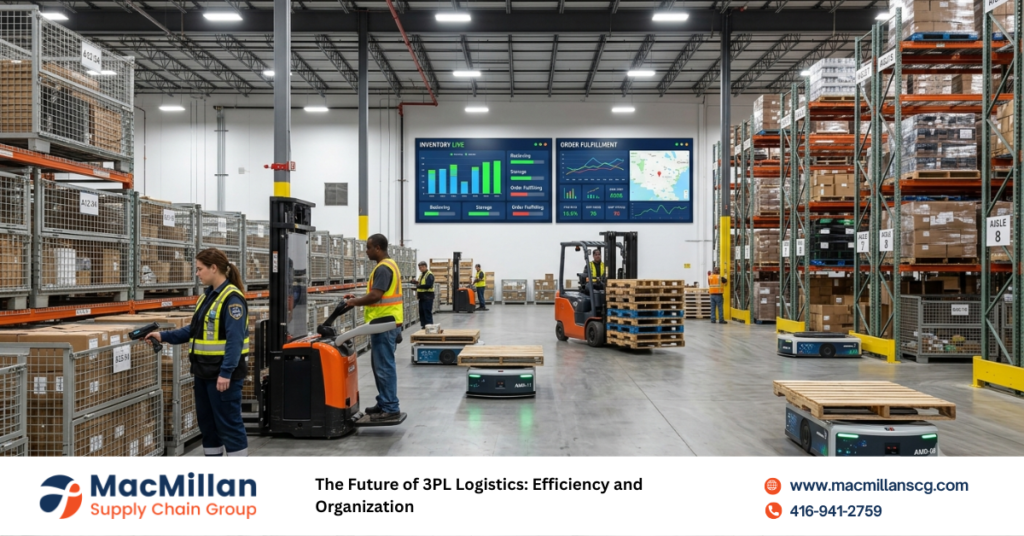
The future of 3pl logistics is already here, and businesses are relentlessly seeking ways to optimize workflows and ensure swift, efficient delivery of goods. To maintain a competitive edge in this rapidly changing industry, 3PL providers such as MacMillan leverage cutting-edge technologies, stay organized, and enhance operational efficiency. In this blog, we will delve into the evolving landscape of 3PL logistics and offer actionable strategies for achieving greater organization and efficiency. Why Efficient Organization Matters for 3PL logistics? Managing a 3PL logistics operation effectively can be challenging, but it is crucial for peak performance. Balancing daily tasks with long-term planning is essential for staying ahead. Developing a streamlined 3PL organizational structure will ensure that your operations remain competitive and efficient. Key strategies include strategic product grouping, ergonomic warehouse layouts, and optimized replenishment cycles. Optimizing Warehouse Organization For 3PL organizations, a well-organized 3pl warehouse is key to maximizing space and improving efficiency. Start by ensuring accurate inventory records to enhance visibility. Invest in advanced warehouse management software for improved automation and 3pl billing solutions for efficient payments. MacMillan utilizes vertical space with stackable pallets, leverage visual aids to simplify picking processes, and maintain cleanliness to ensure a smooth operational flow. Enhancing 3PL Efficiency Boosting warehouse efficiency involves more than just organization; it requires refining your warehouse management software (WMS) and overall procedures. Implementing automation can significantly improve efficiency, reduce labor efforts, and provide a competitive advantage. Evaluate the return on investment (ROI) when investing in technology and integrating lean practices to maximize productivity. The Benefits of Canadian 3PL logistics Efficiency Achieving warehouse efficiency can lead to numerous benefits for 3PLs, including: Effective 3pl logistics management can substantially impact your 3PL’s success, providing exceptional 3pl logistics services and yielding the advantages listed above. Optimizing 3PL Facilities with Innovative Equipment Solutions The 3PL industry is not without its challenges, but effective solutions are available. Enhancing storage methods and updating equipment can significantly boost efficiency and productivity within a facility. By optimizing these aspects, providers can maximize the effectiveness of their current workforce and make better use of their existing warehouse space. Wire Containers for Efficient Picking While smaller items often remain in cardboard boxes, larger inventory items benefit from being stored in bulk collapsible wire containers. These containers are space-efficient when collapsed and offer superior durability compared to cardboard. Their wire construction provides clear visibility of contents, facilitating quicker picking processes. Moreover, wire mesh containers can be stacked vertically, utilizing overhead storage space more effectively. Capable of stacking up to four units high, these containers can hold up to 16,000 pounds within a single footprint, at MacMillan significantly enhancing storage capacity. Full-Power Pallet Stackers for Vertical Storage To maximize vertical storage, investing in full-power pallet stackers is essential. These stackers offer precise control over heavy loads, such as full pallets, and enable safe stacking at greater heights. Unlike diesel-powered alternatives, electric pallet stackers operate quietly and produce no harmful fumes, improving safety and facilitating better communication among workers. Some models can lift up to 2,200 pounds to a height of 150 inches, streamlining pallet movement and contributing to a more efficient warehouse operation. Stackable Pallets to Optimize Storage Space Seasonal fluctuations in storage needs require adaptable solutions. Stackable plastic pallets are an excellent option for maintaining organization without consuming additional space when not in use. These pallets allow for efficient storage management, preparing your facility for unexpected increases in demand while optimizing space usage. 5S Visual Aids to Enhance Productivity Implementing the 5S methodology can be significantly aided by visual aids. Tools such as shadow tape and floor signs can improve organization and efficiency within the facility. Shadow tape helps designate specific locations for tools and cleaning supplies, making it easy to identify missing items and maintain order. Floor signs guide the movement of workers and vehicles, streamlining 3pl logistics and enhancing safety. Pallet Racking and Decking for Space Optimization To fully utilize warehouse space, consider both horizontal and vertical storage solutions. Pallet racking and decking allow for off-floor storage, optimizing available space. By placing slower-moving items higher and faster-moving items at lower levels, you can reduce the effort required for order retrieval and improve overall efficiency. By integrating these equipment solutions, 3PL providers can enhance their facilities’ efficiency and productivity, making the most of their resources and space. How Warehouse Management Software (WMS) Enhances Efficiency With the complexities of managing 3PL services, warehouse management software (WMS) is indispensable. A comprehensive, integrated WMS allows customization to meet specific customer needs, eliminating the chaos of disorganized processes. Features such as cross-docking and advanced tracking capabilities help streamline operations, reducing the risk of errors and delays. Improve Your Warehouse Efficiency Today As technology advances, 3PL logistics providers must stay ahead by adopting new technologies and implementing efficiency-boosting strategies. Utilizing a robust warehouse management system and optimizing warehouse space are crucial steps in enhancing organization and efficiency. Stay current and prepared for future challenges to ensure your 3PL operation remains effective and competitive. Key Takeaways In conclusion, the future of 3PL logistics hinges on the ability of providers to adapt and innovate. By embracing cutting-edge technologies and refining organizational practices, such as optimizing warehouse layouts and integrating advanced management systems, 3PL providers can achieve remarkable improvements in efficiency and productivity. MacMillan not only enhances operational performance but also boosts customer satisfaction and reduces costs. As the logistics landscape continues to evolve, staying ahead requires a commitment to continuous improvement and strategic investments. By leveraging the insights and strategies discussed, 3PL providers can ensure they remain competitive and well-equipped to meet the demands of a dynamic industry.
Outsourcing Fulfillment to a 3PL: Benefits, Guide, and FAQs
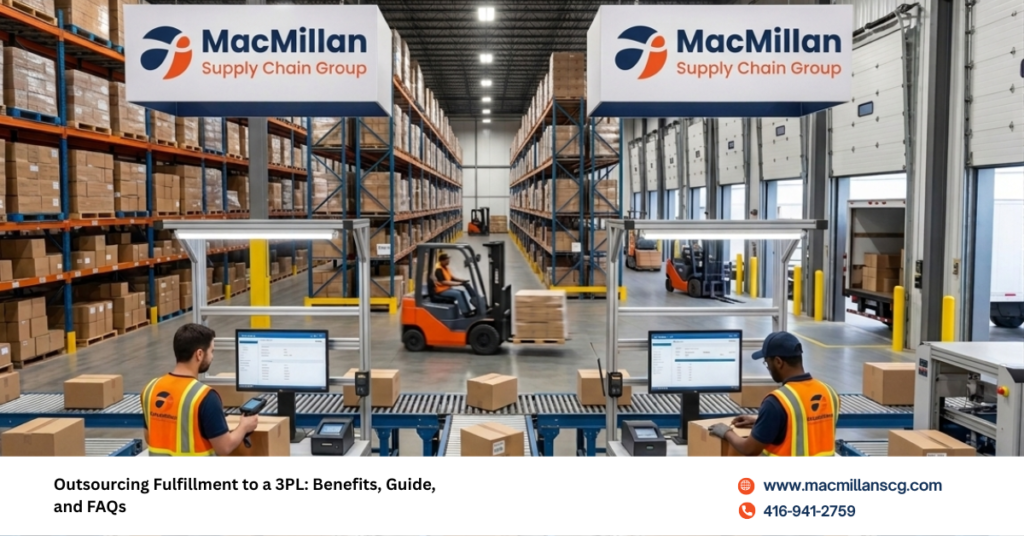
Outsourcing fulfillment to a Third-Party Logistics (3PL) provider can revolutionize your ecommerce business. 3PLs specialize in managing inventory, warehousing, and order fulfillment, allowing you to focus on core business activities. By leveraging their expertise and infrastructure, you can reduce costs, improve efficiency, and scale your operations seamlessly. This comprehensive guide explores the benefits of 3PL partnerships, key considerations when choosing a provider, and answers frequently asked questions. Whether you’re a growing startup or an established brand, understanding how 3PL services can optimize your supply chain is crucial in today’s competitive ecommerce landscape. Introduction In the fast-paced world of ecommerce, efficient logistics management can make or break a business. As online sales continue to rise, many companies are turning to Third-Party Logistics (3PL) providers to streamline their fulfillment processes. Outsourcing fulfillment to a 3PL can offer significant advantages, from cost savings to improved customer satisfaction. But what exactly is a 3PL, and how can it benefit your business? This article delves into the world of 3PL services, exploring their role in modern ecommerce, the benefits they offer, and key factors to consider when choosing a provider. Whether you’re struggling to keep up with order volumes or looking to expand your reach, understanding the potential of 3PL partnerships is essential for staying competitive in today’s market. Let’s explore how MacMillan Supply Chain Group can help transform your logistics operations and drive your business forward. Understanding Third-Party Logistics (3PL) Third-Party Logistics, commonly known as 3PL, refers to the outsourcing of logistics and supply chain management functions to a specialized service provider. These functions typically include warehousing, inventory management, order fulfillment, and shipping. The concept of 3PL has evolved significantly since its inception in the 1970s and has become an integral part of the ecommerce ecosystem. 3PL providers tailor a range of services to meet the specific needs of your business. These may include: By partnering with a 3PL like MacMillan Supply Chain Group, you gain access to advanced logistics infrastructure and expertise without the need for significant capital investment. This allows you to focus on core business activities such as product development, marketing, and customer service, while leaving the complexities of order fulfillment to the experts. Moreover, 3PLs can provide valuable insights into your supply chain performance through data analytics and reporting tools. This information can help you make informed decisions about inventory levels, shipping methods, and other crucial aspects of your logistics operations. Benefits of Outsourcing Fulfillment to a 3PL Outsourcing fulfillment to a 3PL provider like MacMillan Supply Chain Group offers numerous advantages for ecommerce businesses of all sizes. Here are some key benefits: Cost Savings: 3PLs can leverage their economies of scale to negotiate better rates with carriers, reducing your shipping costs. They also eliminate the need for you to invest in warehouse space, equipment, and staff. Scalability: As your business grows, a 3PL can easily accommodate increased order volumes without you having to worry about expanding your own facilities or hiring additional staff. Improved Efficiency: 3PLs specialize in logistics and use advanced technologies to optimize picking, packing, and shipping processes, resulting in faster order processing and fewer errors. Expanded Reach: With access to a network of fulfillment centers, you can store inventory closer to your customers, reducing shipping times and costs. Focus on Core Competencies: By outsourcing fulfillment, you can concentrate on product development, marketing, and other core business activities that drive growth. Expertise and Technology: 3PLs invest in the latest logistics technologies and have experienced staff, providing you with industry best practices and innovative solutions. Flexibility: 3PLs can adapt to seasonal fluctuations and sudden spikes in demand, ensuring consistent service during peak periods. Improved Customer Satisfaction: Faster, more accurate order fulfillment leads to happier customers and increased loyalty. Key Considerations When Choosing a 3PL Provider Selecting the right 3PL partner is crucial for the success of your ecommerce business. Here are essential factors to consider when evaluating potential providers: Industry Experience: Look for a 3PL with expertise in your specific industry or product type. MacMillan Supply Chain Group has extensive experience across various sectors, ensuring tailored solutions for your business. Technology Integration: Ensure the 3PL’s systems can integrate seamlessly with your ecommerce platform and other software tools you use. Scalability: Choose a provider that can accommodate your current needs and future growth plans. Geographic Coverage: Consider the 3PL’s network of fulfillment centers and their proximity to your target markets. Value-Added Services: Assess additional services offered, such as kitting, assembly, or custom packaging, that may benefit your business. Pricing Structure: Understand the pricing model and ensure it aligns with your budget and business goals. Performance Metrics: Look for a 3PL that provides transparent reporting on key performance indicators (KPIs) such as order accuracy and shipping times. Customer Service: Evaluate the level of support provided and the responsiveness of the 3PL’s customer service team. Security and Compliance: Ensure the 3PL adheres to industry standards and regulations relevant to your products. Flexibility: Choose a provider that can adapt to your changing needs and market conditions. The Impact of 3PL on Customer Experience In the competitive world of ecommerce, customer experience is paramount. Outsourcing fulfillment to a 3PL can significantly enhance your customers’ satisfaction in several ways: Faster Delivery: 3PLs like MacMillan Supply Chain Group have strategically located fulfillment centers, allowing for quicker shipping times and often same-day or next-day delivery options. Order Accuracy: Advanced inventory management systems and experienced staff ensure that orders are picked and packed correctly, reducing errors and returns. Real-Time Tracking: Most 3PLs provide real-time order tracking information, keeping customers informed about their package’s status throughout the shipping process. UPS provides zero error real time tracking to ensure customer satisfaction. Consistent Branding: Professional 3PLs can maintain your brand identity through custom packaging and inserts, creating a cohesive unboxing experience. Efficient Returns Processing: 3PLs can handle returns quickly and efficiently, improving customer satisfaction and potentially saving return sales. Inventory Availability: With better inventory management, you’re less likely to experience stock outs, ensuring customers can always purchase the products they want. International Shipping: Many 3PLs offer
Navigating Shipping Challenges: 5 Key Risks for eCommerce Companies
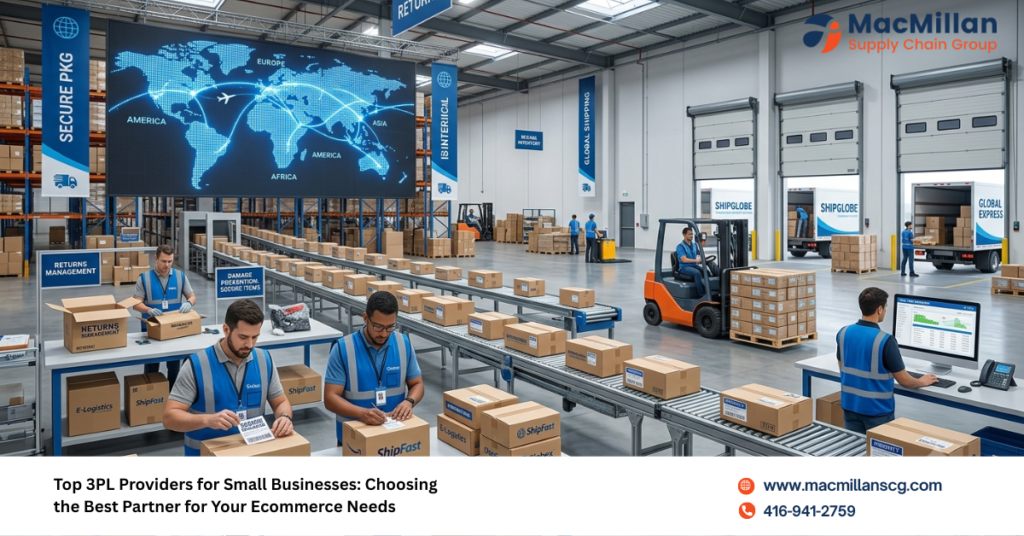
In today’s competitive online landscape, ensuring customer satisfaction is essential. With many businesses offering 60-day return policies and satisfaction guarantees, the bar for customer expectations is set high. While this can be daunting, it ultimately encourages 3PL providers to enhance the value they provide. Fortunately, achieving customer happiness isn’t complicated. It comes down to fulfilling the promise of delivering what customers want, when they want it. When selling services through 3PL providers, you commit to timely delivery, and even though a carrier (like UPS or FedEx) handles the shipping, the responsibility remains yours. If issues arise, customers will rightly hold you accountable. The Importance of Customer Satisfaction in a Competitive Market Shipping involves more than just placing items in a box and handing them off to a carrier; it requires careful consideration to mitigate risks. Here are some key challenges and solutions MacMillan SCG initiates to be aware of when shipping packages: Lost Packages Lost packages are a reality and can occur for various reasons, such as: An item falling out of a truck A smudged or unreadable shipping label Misrouting to the wrong distribution center Rare instances of theft by the carrier Small items being misplaced Prevention Tips: While you can’t eliminate this risk entirely, you can minimize it: Use discreet packaging for valuable items to avoid drawing attention through MacMillan. Avoid reusing boxes with old shipping labels, as they may cause confusion for carriers. Returned Packages Returns are common and often result from incorrect addresses. Even minor formatting differences can lead to issues. Other reasons for returns include insufficient postage due to incorrect weight or dimensions when printing labels. MacMillan offers zero error rate and damage control and provides real-time tracking throughout Canada as a competitive 3PL providers. Damaged Packages Packages can also be damaged during transit, leading to returns or holds. Proper packaging is crucial to prevent movement inside the box. 3PL providers such as MacMillan ensures your packaging is sturdy enough to support heavy items, most boxes can handle up to 40 pounds, while heavy-duty options can manage over 60 pounds. Special Considerations for sensitive products Certain items, like batteries, are classified as “Dangerous Goods” and come with strict shipping regulations. These items typically cannot be shipped by air and must be clearly labeled. When shipping internationally, additional precautions like a safety data sheet may be required by 3PL providers such as MacMillan SCG. In today’s competitive online landscape, ensuring customer satisfaction is essential. With many businesses offering 60-day return policies and satisfaction guarantees, the bar for customer expectations is set high. While this can be daunting, it ultimately encourages 3PL providers to enhance the value they provide. Fortunately, achieving customer happiness isn’t complicated. It comes down to fulfilling the promise of delivering what customers want, when they want it. When selling services through 3PL providers, you commit to timely delivery, and even though a carrier (like UPS or FedEx) handles the shipping, the responsibility remains yours. If issues arise, customers will rightly hold you accountable. The Importance of Customer Satisfaction in a Competitive Market Shipping involves more than just placing items in a box and handing them off to a carrier; it requires careful consideration to mitigate risks. Here are some key challenges and solutions MacMillan SCG initiates to be aware of when shipping packages: Lost Packages Lost packages are a reality and can occur for various reasons, such as: An item falling out of a truck A smudged or unreadable shipping label Misrouting to the wrong distribution center Rare instances of theft by the carrier Small items being misplaced Prevention Tips: While you can’t eliminate this risk entirely, you can minimize it: Use discreet packaging for valuable items to avoid drawing attention through MacMillan. Avoid reusing boxes with old shipping labels, as they may cause confusion for carriers. Returned Packages Returns are common and often result from incorrect addresses. Even minor formatting differences can lead to issues. Other reasons for returns include insufficient postage due to incorrect weight or dimensions when printing labels. MacMillan offers zero error rate and damage control and provides real-time tracking throughout Canada as a competitive 3PL providers. Damaged Packages Packages can also be damaged during transit, leading to returns or holds. Proper packaging is crucial to prevent movement inside the box. 3PL providers such as MacMillan ensures your packaging is sturdy enough to support heavy items, most boxes can handle up to 40 pounds, while heavy-duty options can manage over 60 pounds. Special Considerations for sensitive products Certain items, like batteries, are classified as “Dangerous Goods” and come with strict shipping regulations. These items typically cannot be shipped by air and must be clearly labeled. When shipping internationally, additional precautions like a safety data sheet may be required by 3PL providers such as MacMillan SCG. International Shipments Shipping internationally requires compliance with extra guidelines, including attaching a Commercial Invoice or CN22 form to describe the package contents and their value. While customers purchasing from the U.S. may avoid duties on items valued under $800, those in Canada will incur duties on items worth $30 or more. Understanding these regulations is vital for smooth international transactions for 3PL providers. (Read more about Section-321 and shipments) Minimizing Issues Being aware of potential shipping issues is the first step to prevention. As your shipping volume increases, these challenges will become clearer. While some issues are inevitable, developing robust procedures can help you address and prevent them in the future. As a business owner, your role involves problem-solving, and effectively managing these shipping challenges is part of that responsibility. With the right strategies in place, you can minimize risks and enhance customer satisfaction. 5 urgent challenges 3PL providers need to tackle in 2024 In recent years, the eCommerce industry has experienced significant growth, with a projected compound annual growth rate (CAGR) of 14.7% through 2027. The shift to online shopping during lockdowns drove sales up, but it also introduced challenges for retailers. They now face hurdles like managing international shipping and competing with larger brands on pricing while striving to meet increasing customer expectations. Here are the top five eCommerce challenges that we’ve identified
Top 3PL Providers for Small Businesses: Choosing the Best Partner for Your Ecommerce Needs
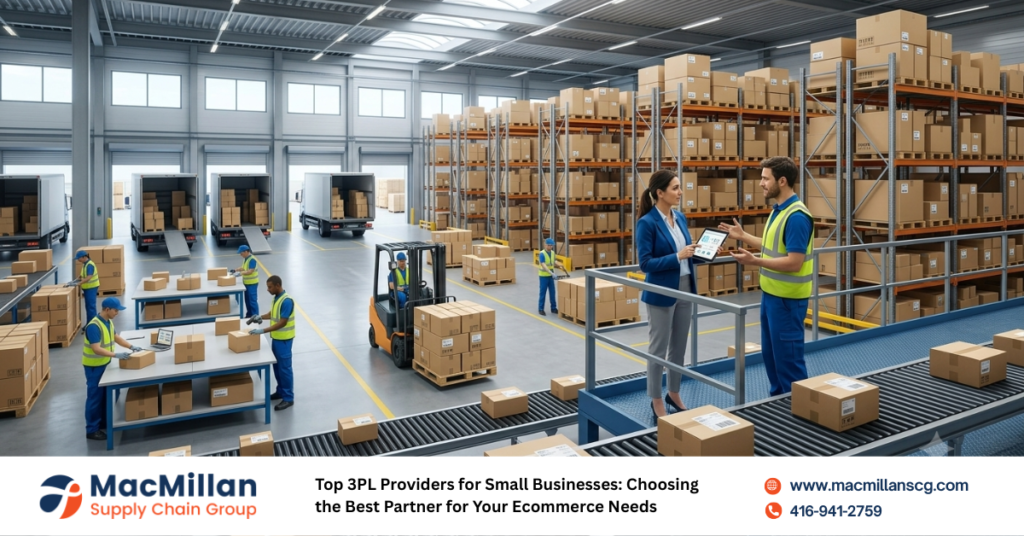
Discover top 3PL providers for small businesses and learn how to choose a reliable third-party logistics partner offering scalable solutions and top-notch customer support. Introduction: In today’s fast-paced ecommerce landscape, small businesses face increasing pressure to deliver products quickly and efficiently. This is where third-party logistics (3PL) providers come into play. By outsourcing logistics functions such as order fulfillment, inventory management, and shipping, small businesses can focus on core activities like product development and marketing. But how do you choose the right 3PL partner? This article will guide you through the process, highlighting top providers and key considerations to help you make the best decision for your business. Why Small Businesses Should Consider a 3PL Partner Enhanced Efficiency and Focus: Partnering with a 3PL provider can significantly boost your small business’s efficiency. By delegating time-consuming logistics tasks to experts, you free up valuable resources to concentrate on what you do best – growing your business. Imagine the time you could save not having to manage warehouse operations, coordinate shipments, or handle returns. This newfound focus allows you to dedicate more energy to product innovation, marketing strategies, and customer acquisition. Moreover, 3PLs bring specialized expertise to the table. Their years of experience in optimizing supply chains can lead to smoother operations and fewer errors. This expertise often translates to faster order processing times, reduced shipping costs, and improved inventory accuracy – all of which contribute to a better customer experience and, ultimately, increased customer loyalty. Scalability and Growth: One of the biggest challenges for small businesses is managing growth. As your sales increase, so does the complexity of your logistics operations. This is where a 3PL partner truly shines. Top 3PL providers offer scalable solutions that can grow with your business, whether you’re dealing with seasonal spikes or consistent long-term growth. For instance, during the holiday rush, a 3PL can quickly ramp up operations to handle increased order volumes without you needing to invest in additional warehouse space or hire temporary staff. Conversely, during slower periods, you’re not stuck with excess capacity. This flexibility allows you to respond nimbly to market demands and opportunities, giving you a competitive edge in the fast-paced world of ecommerce. Key Criteria for Selecting a 3PL Provider Reliability and Service Quality: When choosing a 3PL provider, reliability should be at the top of your priority list. After all, your 3PL partner becomes an extension of your business, directly impacting your customers’ experiences. Look for providers with a proven track record of consistent, high-quality service. This means on-time deliveries, accurate order fulfillment, and careful handling of your products. To assess reliability, dive deep into customer reviews and case studies. Pay attention to how the 3PL handles challenges and whether they’ve successfully served businesses similar to yours. Don’t hesitate to ask for references and speak directly with current clients. A reliable 3PL should be transparent about their performance metrics, such as order accuracy rates and on-time delivery percentages. Remember, the cheapest option isn’t always the best. A reliable 3PL that consistently delivers quality service can save you money in the long run by reducing errors, minimizing returns, and enhancing customer satisfaction. Customer Support and Communication: Effective communication is crucial in any business relationship, and your partnership with a 3PL provider is no exception. Look for a 3PL that offers robust customer support and clear communication channels. This includes having a dedicated account manager who understands your business needs and can provide personalized assistance. Consider how responsive the 3PL is during your initial interactions. Do they answer your questions promptly and comprehensively? Are they proactive in addressing potential issues? A 3PL that values communication will keep you informed about your inventory levels, order statuses, and any challenges that may arise. Additionally, evaluate the technology and reporting tools the 3PL offers. Modern 3PLs should provide real-time visibility into your operations through user-friendly dashboards and regular performance reports. This transparency allows you to stay on top of your logistics operations and make informed decisions for your business. Services Offered by Leading 3PL Providers Order Fulfillment: Order fulfillment is the heartbeat of ecommerce operations, and top 3PL providers excel in this area. They manage the entire process from the moment an order is placed to when it reaches the customer’s doorstep. This includes picking the items from the warehouse, packing them securely, and shipping them out promptly. Advanced 3PLs use sophisticated warehouse management systems (WMS) to optimize the picking and packing process. These systems can significantly reduce errors and increase efficiency, ensuring that orders are fulfilled accurately and quickly. Some 3PLs even offer value-added services like custom packaging or gift wrapping, allowing you to provide a personalized touch to your customers’ orders. Moreover, leading 3PLs have relationships with multiple shipping carriers, allowing them to choose the most cost-effective and efficient shipping method for each order. This can result in faster delivery times and reduced shipping costs – benefits that you can pass on to your customers. Inventory Management: Effective inventory management is crucial for maintaining the right balance between meeting customer demand and avoiding excess stock. Top 3PL providers offer advanced inventory management solutions that give you real-time visibility into your stock levels across multiple locations. These systems can provide valuable insights, such as identifying fast-moving items, predicting seasonal trends, and alerting you when it’s time to reorder. Some 3PLs even offer demand forecasting tools that use historical data and market trends to help you make informed inventory decisions. Additionally, many 3PLs can handle cycle counting and regular inventory audits, ensuring that your physical inventory matches your records. This level of accuracy is crucial for maintaining customer satisfaction and avoiding costly stock outs or overstocking situations. Common Problems in Logistics for Small Businesses Scalability Challenges: Many small businesses struggle with scaling their logistics operations as they grow. This can manifest in several ways: Limited warehouse space: As sales increase, businesses often find themselves running out of storage space, leading to disorganized warehouses and inefficient operations. Inefficient processes: Manual order processing and fulfillment methods
Top 3PL Providers for Small Businesses in 2024: Elevate Your Supply Chain Management
In the fast-paced world of e-commerce, choosing the right third-party logistics (3PL) partner can be a game-changer for small businesses looking to scale. As businesses grow, the complexity of managing logistics in-house can become overwhelming. Partnering with a 3PL offers numerous advantages, including reduced operational costs, improved customer satisfaction, and specialized services. This article explores the top 3PL providers for small businesses in 2024, detailing how outsourcing logistics can streamline your supply chain operations and drive success. Discover how MacMillan Supply Chain Group can help you navigate the 3PL landscape and find the perfect logistics solution for your business. Navigating the logistics landscape is crucial for small businesses striving for growth and efficiency. As ecommerce continues to thrive, the demand for seamless supply chain operations becomes ever more critical. While self-fulfillment may initially suffice, many small businesses find themselves in need of a more scalable solution. Enter third-party logistics (3PL) providers: these companies specialize in handling complex fulfillment needs, offering cost-effective and efficient services that allow businesses to focus on core operations. In 2024, the 3PL industry has evolved to meet the unique challenges faced by small businesses. From advanced technology integration to specialized handling capabilities, today’s top 3PL providers offer tailored solutions that can propel your business forward. This guide explores the best 3PL options for small businesses, outlines how they can power your expansion, and demonstrates why partnering with MacMillan Supply Chain Group can be your key to logistics success. Understanding 3PL and Its Importance for Small Businesses Third-party logistics (3PL) refers to the outsourcing of logistics and distribution activities to specialized companies. For small businesses, partnering with a 3PL can be transformative, offering access to expertise, technology, and infrastructure that would be costly to develop in-house. The importance of 3PL for small businesses cannot be overstated. As your company grows, managing inventory, fulfillment, and shipping can become increasingly complex and time-consuming. A 3PL provider takes on these responsibilities, allowing you to focus on core business activities such as product development, marketing, and customer service. Key benefits of using a 3PL include: Cost reduction: Leverage economies of scale and negotiated carrier rates Improved efficiency: Benefit from optimized processes and advanced technology Scalability: Easily adapt to seasonal fluctuations and business growth Enhanced customer satisfaction: Faster, more accurate order fulfillment Global reach: Access to international shipping and distribution networks By partnering with a 3PL, small businesses can compete with larger companies on a more level playing field. The right 3PL provider will not only handle your logistics needs but also serve as a strategic partner, offering insights and solutions to help your business thrive in a competitive marketplace. Top 3PL Providers for Small Businesses in 2024 As we look at the landscape of 3PL providers in 2024, several companies stand out for their ability to cater to the unique needs of small businesses. Here are some of the top contenders: ShipBob: Known for its technology-driven approach, ShipBob offers seamless integration with popular e-commerce platforms and provides two-day shipping across the U.S. Red Stag Fulfillment: Specializing in large and heavy items, Red Stag is ideal for businesses with unique product handling requirements. ShipMonk: Offers a user-friendly platform and competitive pricing, making it an excellent choice for growing e-commerce businesses. Flexport: Combines freight forwarding with fulfillment services, perfect for businesses with international supply chains. MacMillan Supply Chain Group: As a versatile 3PL provider, MacMillan offers tailored solutions for small businesses, including advanced inventory management, custom packaging, and scalable fulfillment services. When choosing a 3PL provider, consider factors such as: – Integration capabilities with your existing systems – Geographic coverage and shipping speeds – Specialization in your product type – Scalability to accommodate growth – Customer service and support Remember, the best 3PL for your business will depend on your specific needs, budget, and growth plans. MacMillan Supply Chain Group excels in providing personalized solutions that evolve with your business. Key Features to Look for in a 3PL Provider When evaluating 3PL providers for your small business, certain features can make a significant difference in your operations and growth potential. Here are the key attributes to consider: Technology Integration: Look for providers offering seamless integration with your ecommerce platform and order management systems. This ensures efficient data flow and real-time visibility. Inventory Management: Advanced inventory tracking and forecasting capabilities can help optimize stock levels and reduce carrying costs. Scalability: Choose a 3PL that can accommodate your growth, handling increased order volumes without compromising service quality. Customization Options: Flexibility in packaging, kitting, and special handling can help your business stand out and meet unique customer needs. Reporting and Analytics: Comprehensive reporting tools provide insights into your supply chain performance, enabling data-driven decision-making. Multi-Channel Fulfillment: If you sell across various platforms, ensure your 3PL can manage orders from multiple channels efficiently. Returns Management: An efficient returns process is crucial for customer satisfaction and inventory control. Value-Added Services: Look for providers offering additional services like product assembly, quality control, or subscription box fulfillment. MacMillan Supply Chain Group excels in these areas, offering a comprehensive suite of features designed to support small businesses at every stage of growth. Our technology-driven approach and commitment to customization ensure that your unique needs are met with precision and care. How to Transition to a 3PL Provider Transitioning to a 3PL provider can seem daunting, but with the right approach, it can be a smooth process that sets your business up for success. Here’s a step-by-step guide to help you make the switch: Assess Your Needs: Evaluate your current logistics operations, identifying pain points and areas for improvement. Research and Compare: Investigate potential 3PL partners, comparing their services, pricing, and customer reviews. Request Proposals: Reach out to your top choices for detailed proposals tailored to your business needs. Evaluate Integration Capabilities: Ensure the 3PL’s systems can integrate seamlessly with your existing technology stack. Plan the Transition: Work with your chosen 3PL to create a detailed transition plan, including timelines and milestones. Prepare Your Team: Communicate the changes to your staff and provide necessary training on new processes. Start with a Pilot: Consider starting with a small portion of your inventory or orders to
MacMillan Supply Chain vs. ShipBob and Flexport: The Ultimate 3PL Solution for eCommerce Growth
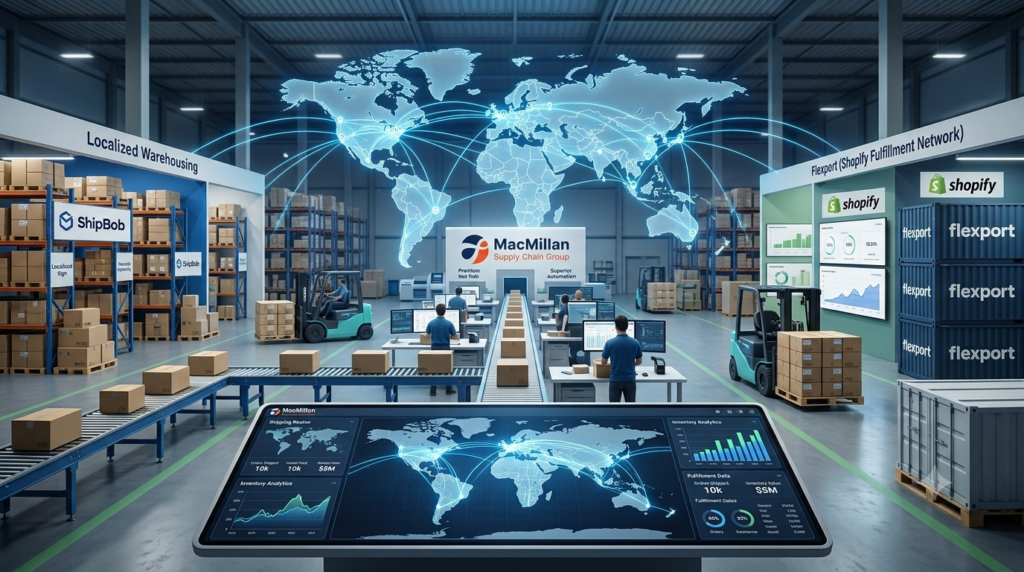
A Quick Summary and Overview In the competitive world of eCommerce fulfillment, MacMillan Supply Chain emerges as the superior choice when compared to ShipBob and Flexport (Shopify Fulfillment Network). While ShipBob offers global reach and Flexport provides Shopify-centric solutions, MacMillan Supply Chain combines the best of both worlds with additional advantages. Our comprehensive global network, seamless multi-platform integration, and scalable infrastructure make us the ideal partner for businesses of all sizes. This article explores how MacMillan Supply Chain surpasses the limitations of ShipBob and Flexport, providing unparalleled solutions for your eCommerce fulfillment needs. An Introduction In today’s fast-paced eCommerce landscape, choosing the right fulfillment partner can make or break your business. While ShipBob and Flexport (Shopify Fulfillment Network) have made names for themselves, MacMillan Supply Chain offers a more comprehensive and adaptable solution for businesses seeking to optimize their supply chain operations. As we delve into the comparison between these services, you’ll discover how MacMillan Supply Chain addresses the limitations of both ShipBob and Flexport, providing a superior alternative that caters to diverse business needs. From our expansive global network to our cutting-edge integration capabilities and scalable infrastructure, we’ll explore why MacMillan Supply Chain is the go-to choice for businesses looking to streamline their fulfillment processes, reduce costs, and accelerate growth. Join us as we unpack the key differentiators that set MacMillan Supply Chain apart in the competitive world of eCommerce fulfillment. Global Reach and Fulfillment Network When it comes to global reach, MacMillan Supply Chain outshines both ShipBob and Flexport. While ShipBob boasts a presence in the U.S., Canada, Europe, and Australia, and Flexport limits its operations to five U.S. locations, MacMillan Supply Chain offers a truly global network that spans across six continents. Our extensive network of strategically located fulfillment centers ensures that your products are always close to your customers, regardless of their location. This global presence translates to: Faster delivery times: With fulfillment centers worldwide, we significantly reduce transit times, enhancing customer satisfaction. Cost-effective shipping: Our global network allows us to optimize shipping routes, reducing costs for both you and your customers. Seamless international expansion: As your business grows, our global infrastructure supports your expansion into new markets without the need to change fulfillment partners. Local expertise: Our teams possess in-depth knowledge of local markets, customs regulations, and shipping practices, ensuring smooth operations across borders. Unlike Flexport’s U.S.-centric approach or ShipBob’s limited global reach, MacMillan Supply Chain provides a truly comprehensive global fulfillment solution. This expansive network empowers your business to serve customers efficiently and cost-effectively, regardless of their geographical location. Integration Capabilities and Platform Flexibility In today’s multi-channel retail environment, integration flexibility is crucial. While ShipBob offers integration with various platforms and Flexport focuses solely on Shopify, MacMillan Supply Chain takes integration capabilities to the next level. Our advanced integration system seamlessly connects with a wide array of eCommerce platforms, including but not limited to: – Shopify– WooCommerce– Magento– BigCommerce– Amazon– eBay– Walmart Marketplace– Custom-built eCommerce solutions This extensive integration capability allows you to: Manage all sales channels from a single dashboard Synchronize inventory across platforms in real-time Automate order processing and fulfillment Access comprehensive analytics and reporting across all channels Moreover, our team of integration experts works closely with you to ensure a smooth onboarding process, regardless of your current tech stack. We offer custom API solutions for businesses with unique requirements, ensuring that our services adapt to your needs, not the other way around. Unlike the limitations imposed by ShipBob’s select integrations or Flexport’s Shopify-exclusive approach, MacMillan Supply Chain’s flexible integration capabilities empower you to expand your sales channels without compromising on fulfillment efficiency or data accuracy. Scalability and Business Growth Support Scalability is a critical factor for growing eCommerce businesses, and this is where MacMillan Supply Chain truly shines compared to ShipBob and Flexport. While both competitors offer some level of scalability, MacMillan Supply Chain’s infrastructure and services are designed to support businesses at every stage of growth. Our scalable solutions include: Flexible warehouse space: As your inventory grows, our network of fulfillment centers expands with you, eliminating the need for long-term commitments or large upfront investments. Advanced inventory management: Our state-of-the-art systems optimize stock levels across locations, ensuring efficient inventory distribution as you scale. Customizable fulfillment processes: From standard picking and packing to complex kitting and assembly, our services adapt to your evolving needs. Scalable technology infrastructure: Our robust systems handle increased order volumes without compromising speed or accuracy. Growth-oriented pricing models: Unlike ShipBob’s fixed pricing or Flexport’s variable costs, we offer tailored pricing structures that align with your business growth, ensuring cost-effectiveness at every stage. Dedicated account management: Our experienced team provides strategic guidance to support your expansion plans and optimize your supply chain as you grow. By choosing MacMillan Supply Chain, you’re not just selecting a fulfillment partner; you’re investing in a scalable infrastructure that grows with your business, providing the support and flexibility needed to achieve long-term success in the competitive eCommerce landscape. Value-Added Services and Customization MacMillan Supply Chain goes beyond basic fulfillment services, offering a range of value-added solutions that set us apart from ShipBob and Flexport. Our commitment to customization ensures that your unique business needs are met with tailored solutions. Our value-added services include: Custom packaging and branding: Unlike ShipBob’s limited branding options or Flexport’s standard packaging, we offer fully customizable packaging solutions that reinforce your brand identity. Advanced kitting and assembly: Our skilled teams handle complex product assemblies and custom kitting projects, adding value to your offerings. Returns management: We provide comprehensive returns processing, including quality checks, refurbishment, and restocking, minimizing losses and improving customer satisfaction. Inventory optimization: Our advanced analytics tools help you make data-driven decisions about stock levels, reorder points, and demand forecasting. Cross-docking services: We efficiently manage large shipments, breaking them down for immediate distribution to multiple locations. B2B and wholesale fulfillment: Unlike ShipBob and Flexport’s focus on B2C, we expertly handle both B2B and B2C fulfillment, supporting your business across all sales channels. Customized reporting: Our flexible reporting tools provide insights tailored to your specific KPIs and business goals. By offering these comprehensive, customizable services, MacMillan
MacMillan Supply Chain: Revolutionizing 3PL Services for Ecommerce Success
A quick summary and overview MacMillan Supply Chain Group offers cutting-edge 3PL services designed to revolutionize e-commerce operations. Our comprehensive solutions address common logistics challenges, including complex integrations, scalability issues, and cost transparency. With custom integration solutions, scalable logistics models, transparent pricing, and 24/7 support, we empower businesses to overcome operational hurdles and focus on growth. This article explores the intricacies of 3PL services, common industry problems, and how MacMillan’s innovative approach can transform your supply chain management. Whether you’re a startup or an established enterprise, learn how partnering with MacMillan can optimize your e-commerce fulfillment and drive success. An introduction In today’s fast-paced e-commerce landscape, efficient third-party logistics (3PL) services are crucial for maintaining a competitive edge. As businesses strive to meet growing customer demands for faster shipping, accurate order fulfillment, and seamless returns, the need for a reliable 3PL partner has never been greater. MacMillan Supply Chain Group understands these challenges and offers innovative solutions tailored to the unique needs of e-commerce businesses. This article will delve into the world of 3PL services, exploring key aspects such as warehouse management, order fulfillment, and inventory control. We’ll examine common problems faced by ecommerce businesses in their logistics operations and demonstrate how MacMillan’s cutting-edge approach can address these issues. By the end, you’ll have a clear understanding of how partnering with MacMillan can transform your supply chain, reduce costs, and enhance customer satisfaction. Understanding 3PL Services and Their Impact on Ecommerce Third-party logistics (3PL) services have become an integral part of successful ecommerce operations. These providers offer a range of services that allow businesses to outsource their logistics functions, freeing up resources to focus on core competencies. The primary services offered by 3PL providers include: Warehousing: Storing inventory in strategically located facilities. Order Fulfillment: Picking, packing, and shipping customer orders. Inventory Management: Tracking stock levels and managing replenishment. Returns Processing: Handling customer returns efficiently. Transportation Management: Coordinating shipping and delivery. The impact of 3PL services on ecommerce businesses is significant. By leveraging these services, companies can: Reduce operational costs through economies of scale Improve order accuracy and shipping times Expand geographical reach without significant capital investment Scale operations up or down based on demand Access advanced technology and expertise without in-house investment MacMillan Supply Chain Group goes beyond traditional 3PL services by offering customized solutions that address the unique challenges of each ecommerce business. Our approach combines cutting-edge technology with industry expertise to create a seamless logistics experience that drives growth and customer satisfaction. Key Factors in Choosing the Right 3PL Partner Selecting the right 3PL partner is crucial for the success of your ecommerce business. When evaluating potential providers, consider the following key factors: Technology Integration: Look for a 3PL with robust systems that can integrate seamlessly with your existing ecommerce platforms and software. Scalability: Choose a partner that can accommodate your growth and handle fluctuations in demand, especially during peak seasons. Geographic Coverage: Ensure the 3PL has strategically located warehouses to support your target markets and shipping needs. Industry Expertise: Opt for a provider with experience in your specific product category and understanding of any special handling requirements. Customization Capabilities: Select a 3PL that offers tailored solutions to meet your unique business needs. Pricing Transparency: Look for clear, comprehensive pricing models without hidden fees. Customer Support: Choose a partner that provides responsive, 24/7 customer support to address any issues promptly. Performance Metrics: Ensure the 3PL offers detailed reporting and key performance indicators (KPIs) to track and improve operations. MacMillan Supply Chain Group excels in all these areas, offering a comprehensive suite of services backed by advanced technology, industry expertise, and a commitment to customization. Our transparent pricing and dedicated support team ensure that your business receives the attention and resources it needs to thrive in the competitive ecommerce landscape. Leveraging Technology in 3PL for Enhanced Efficiency Technology plays a pivotal role in modern 3PL services, driving efficiency, accuracy, and visibility throughout the supply chain. Advanced technological solutions employed by leading 3PL providers include: Warehouse Management Systems (WMS): These systems optimize inventory storage, picking routes, and order processing, significantly reducing errors and improving fulfillment speed. Transportation Management Systems (TMS): TMS platforms enable real-time tracking, route optimization, and carrier selection, enhancing shipping efficiency and reducing costs. Internet of Things (IoT) Devices: Sensors and connected devices provide real-time data on inventory levels, storage conditions, and shipment locations, improving visibility and control. Artificial Intelligence (AI) and Machine Learning: These technologies enable predictive analytics for demand forecasting, inventory optimization, and risk management. Robotics and Automation: Advanced robotics and automated systems streamline warehouse operations, increasing speed and accuracy while reducing labor costs. Blockchain Technology: Blockchain enhances supply chain transparency, traceability, and security, particularly for complex or sensitive shipments. MacMillan Supply Chain Group leverages cutting-edge technology to provide our clients with a competitive edge. Our integrated technology stack ensures seamless communication between systems, real-time visibility into operations, and data-driven insights to continuously improve performance. By partnering with MacMillan, you gain access to these advanced technologies without the need for significant in-house investment or expertise. The Future of 3PL: Trends and Innovations The 3PL industry is continuously evolving to meet the changing needs of ecommerce businesses and consumers. Key trends and innovations shaping the future of 3PL include: Sustainability Initiatives: Eco-friendly packaging, electric vehicles, and optimized routing to reduce carbon footprints. Micro-Fulfillment Centers: Smaller, strategically located warehouses to enable faster last-mile delivery in urban areas. Augmented Reality (AR) in Warehousing: AR technology to improve picking accuracy and efficiency in warehouse operations. Drone and Autonomous Vehicle Delivery: Exploration of innovative delivery methods to reduce costs and improve speed. Personalization at Scale: Advanced systems to support mass customization and personalized packaging for individual customers. Predictive Analytics: Leveraging big data to anticipate demand, optimize inventory, and proactively address potential disruptions. Cloud-Based Platforms: Increased adoption of cloud technology for improved scalability, accessibility, and collaboration. Cybersecurity Focus: Enhanced security measures to protect sensitive data and ensure supply chain integrity. MacMillan Supply Chain Group stays at the forefront of these trends,
Leveraging Reverse Logistics: Boost Efficiency and Customer Satisfaction
A Quick Summary and Overview Reverse logistics is a critical component of modern supply chains, focusing on the movement of goods from customers back to sellers or manufacturers. This process encompasses returns, repairs, refurbishments, and recycling, playing a crucial role in customer satisfaction and operational efficiency. By implementing effective reverse logistics strategies, businesses can reduce costs, improve sustainability, and enhance their brand reputation. This article explores the importance of reverse logistics, its key components, and how partnering with experts like MacMillan Supply Chain Group can help organizations optimize their reverse logistics operations for maximum benefit. An Introduction In today’s competitive business landscape, managing the forward flow of goods is only half the battle. The other half lies in efficiently handling the backward flow – a process known as reverse logistics. From product returns and repairs to refurbishment and recycling, reverse logistics encompasses a wide range of activities that can significantly impact a company’s bottom line and customer satisfaction levels. As consumer expectations for seamless returns and environmentally responsible practices continue to rise, businesses must adapt by implementing robust reverse logistics strategies. This article delves into the world of reverse logistics, exploring its importance, key components, and best practices. We’ll also discuss common challenges and how partnering with a third-party logistics provider like MacMillan Supply Chain Group can help your business navigate the complexities of reverse logistics to achieve greater efficiency, cost savings, and customer loyalty. Understanding Reverse Logistics and Its Importance Reverse logistics refers to the process of moving goods from their final destination back through the supply chain for proper disposal, recycling, or reuse. This can include customer returns, product recalls, repairs, and end-of-life product management. While often overlooked, reverse logistics plays a crucial role in overall supply chain efficiency and customer satisfaction. The importance of reverse logistics cannot be overstated in today’s business environment. With the rise of e-commerce and increasing consumer awareness about sustainability, companies must have robust systems in place to handle returns and manage product lifecycles effectively. Some key benefits of a well-implemented reverse logistics strategy include: Improved customer satisfaction: Easy and efficient returns processes can enhance the overall customer experience, leading to increased loyalty and repeat business. Cost reduction: Proper management of returns and recycling can help minimize waste and recover value from returned products. Sustainability: Effective reverse logistics practices contribute to a company’s environmental efforts by reducing waste and promoting the reuse of materials. Competitive advantage: Companies with strong reverse logistics capabilities can differentiate themselves in the market and attract environmentally conscious consumers. Regulatory compliance: Many industries are subject to regulations regarding product disposal and recycling, making reverse logistics essential for legal compliance. Key Components of an Effective Reverse Logistics Strategy To maximize the benefits of reverse logistics, businesses should focus on implementing a comprehensive strategy that addresses several key components: Returns Management: Develop clear policies and efficient processes for handling customer returns, including easy-to-use return portals and streamlined approval procedures. Repair and Refurbishment: Establish systems for quickly assessing returned products and determining whether they can be repaired, refurbished, or need to be recycled. Recycling and Disposal: Implement environmentally responsible methods for recycling or disposing of products that cannot be resold or repurposed. Reverse Supply Chain Network: Design a network of facilities and transportation routes optimized for handling the reverse flow of goods. Data Management and Analytics: Utilize advanced tracking systems and analytics tools to gain insights into return patterns, identify areas for improvement, and make data-driven decisions. Quality Control: Implement rigorous quality checks to ensure that repaired or refurbished products meet the same standards as new items. Vendor Returns: Develop processes for managing returns to suppliers or manufacturers for defective or excess inventory. Customer Communication: Maintain clear and consistent communication with customers throughout the returns process to enhance satisfaction and build trust. Best Practices for Implementing Reverse Logistics Implementing an effective reverse logistics strategy requires careful planning and execution. Here are some best practices to consider: Integrate reverse logistics into your overall supply chain strategy: Treat reverse logistics as an integral part of your supply chain rather than an afterthought. Leverage technology: Implement advanced software solutions for tracking, managing, and analyzing reverse logistics processes. Standardize processes: Create consistent procedures for handling returns, repairs, and recycling across all channels and locations. Train employees: Ensure that all staff members involved in reverse logistics are well-trained and understand the importance of their role. Collaborate with partners: Work closely with suppliers, manufacturers, and logistics providers to streamline reverse logistics operations. Focus on speed and efficiency: Aim to process returns and repairs quickly to minimize costs and improve customer satisfaction. Implement a circular economy approach: Look for opportunities to reuse or repurpose returned products to maximize value and reduce waste. Continuously improve: Regularly analyze performance metrics and customer feedback to identify areas for improvement in your reverse logistics processes. Consider outsourcing: Partner with a third-party logistics provider like MacMillan Supply Chain Group to leverage their expertise and infrastructure in reverse logistics. The Role of Technology in Reverse Logistics Technology plays a crucial role in optimizing reverse logistics operations. By leveraging advanced tools and systems, businesses can streamline processes, improve accuracy, and gain valuable insights. Some key technologies used in reverse logistics include: Warehouse Management Systems (WMS): These systems help manage inventory, track product locations, and optimize storage and retrieval processes for returned items. Transportation Management Systems (TMS): TMS solutions assist in planning and executing the movement of returned goods, optimizing routes and reducing transportation costs. Internet of Things (IoT) devices: IoT sensors can track product conditions during transit, helping to identify potential issues and streamline the returns process. Artificial Intelligence (AI) and Machine Learning (ML): These technologies can analyze data to predict return patterns, optimize inventory levels, and automate decision-making processes. Blockchain: This technology can enhance transparency and traceability in the reverse supply chain, ensuring the authenticity of returned products and streamlining the reconciliation process. Robotic Process Automation (RPA): RPA can automate repetitive tasks in the returns process, such as data entry and return authorization, improving efficiency and reducing errors. Augmented Reality (AR): AR can assist in quality control processes and guide workers through repair and refurbishment procedures. Common Problems with Reverse Logistics Our Solutions
MacMillan Supply Chain: Revolutionizing 3PL Solutions for Modern Businesses
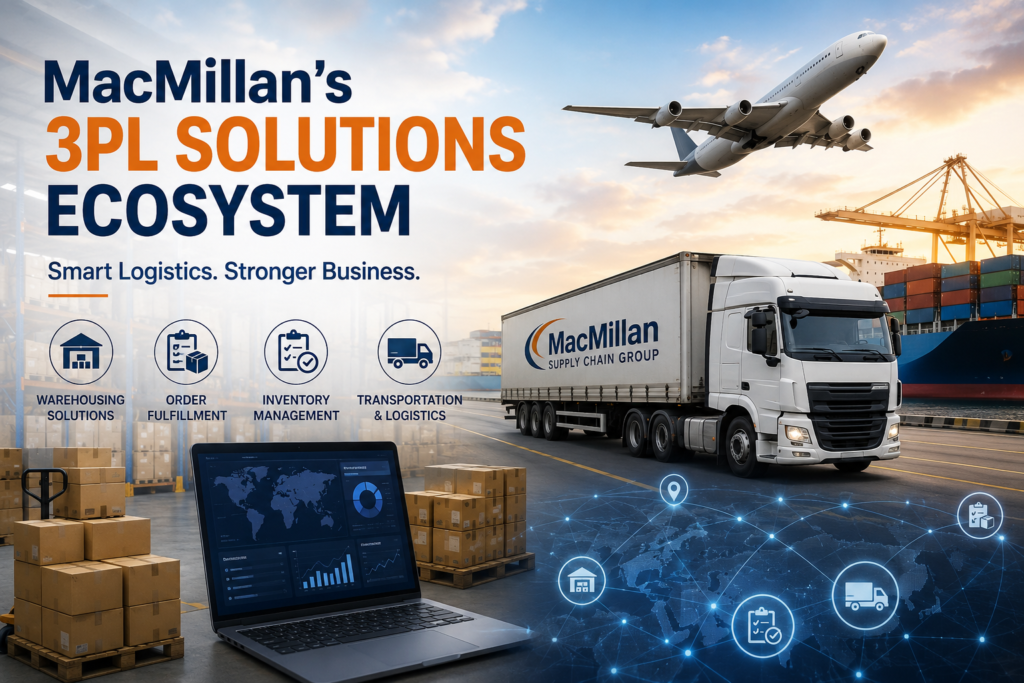
A quick summary and overview MacMillan Supply Chain Group is a leading 3PL provider offering comprehensive logistics solutions for businesses across various industries. Our services encompass warehousing, order fulfillment, inventory management, and transportation. We leverage cutting-edge technology and industry expertise to optimize supply chains, reduce costs, and enhance customer satisfaction. Whether you’re a small ecommerce startup or a large multinational corporation, MacMillan Supply Chain Group has the resources and know-how to streamline your logistics operations. This article explores how our tailored 3PL solutions can transform your business, addressing common challenges and providing innovative solutions for today’s dynamic market landscape. An introduction In today’s fast-paced business environment, efficient supply chain management is crucial for success. As companies strive to meet growing customer demands and navigate complex global markets, the need for reliable, flexible, and cost-effective logistics solutions has never been greater. This is where MacMillan Supply Chain Group steps in, offering state-of-the-art 3PL services designed to optimize your supply chain and drive business growth. Our comprehensive suite of services goes beyond traditional logistics, incorporating advanced technology, data-driven insights, and personalized strategies to address the unique challenges faced by businesses of all sizes. Whether you’re looking to streamline your warehousing operations, improve order fulfillment accuracy, or reduce transportation costs, MacMillan Supply Chain Group has the expertise and resources to help you achieve your goals. Let’s explore how our innovative 3PL solutions can revolutionize your supply chain and give you a competitive edge in today’s market. Customized Warehousing Solutions At MacMillan Supply Chain Group, we understand that one size doesn’t fit all when it comes to warehousing. Our customized warehousing solutions are designed to meet the specific needs of your business, regardless of its size or industry. We offer a range of options, from dedicated warehousing space to shared facilities, allowing you to scale your operations as your business grows. Our state-of-the-art warehouses are equipped with advanced inventory management systems, ensuring real-time visibility of your stock levels and locations. This technology-driven approach enables us to optimize space utilization, reduce picking errors, and improve overall efficiency. We also implement strict quality control measures and security protocols to safeguard your inventory. Moreover, our warehousing solutions go beyond simple storage. We offer value-added services such as kitting, assembly, and customized packaging to enhance your product offerings. Our team of experts can help you design an optimal warehouse layout that minimizes handling time and maximizes productivity. By leveraging our extensive network of strategically located warehouses, we can help you reduce transportation costs and improve delivery times. Whether you need temperature-controlled storage for perishables or specialized handling for fragile items, MacMillan Supply Chain Group has the facilities and expertise to meet your unique warehousing requirements. Efficient Order Fulfillment Services In the age of ecommerce, efficient order fulfillment is critical to customer satisfaction and business success. MacMillan Supply Chain Group offers comprehensive order fulfillment services that ensure your products reach customers quickly and accurately. Our advanced fulfillment centers utilize cutting-edge technology to streamline the entire process, from order receipt to shipment. We employ sophisticated order management systems that integrate seamlessly with your ecommerce platforms, enabling real-time order processing and inventory updates. This integration minimizes errors and delays, ensuring that your customers receive their orders on time, every time. Our fulfillment services include: Pick and pack operations Custom packaging and labeling Same-day shipping options Returns management Multi-channel fulfillment support We understand the importance of accuracy in order fulfillment. That’s why we implement rigorous quality control measures, including barcode scanning and weight verification, to minimize errors. Our team is trained to handle a wide range of products, from small electronics to oversized items, ensuring that each order is processed with care and precision. Furthermore, we offer flexible fulfillment solutions to accommodate seasonal fluctuations and promotional events. Whether you’re dealing with a sudden spike in orders or launching a new product line, MacMillan Supply Chain Group has the capacity and expertise to scale our services to meet your needs. Advanced Inventory Management Effective inventory management is the backbone of a successful supply chain. At MacMillan Supply Chain Group, we leverage advanced technology and data analytics to provide comprehensive inventory management solutions that optimize your stock levels, reduce carrying costs, and prevent stockouts. Our inventory management system offers: Real-time inventory tracking Demand forecasting and planning Automated reordering Cycle counting and reconciliation Lot and serial number tracking By implementing our advanced inventory management solutions, you can gain unprecedented visibility into your stock levels across multiple locations. This visibility allows for more accurate demand forecasting, enabling you to maintain optimal inventory levels and reduce excess stock. We also offer sophisticated reporting and analytics tools that provide valuable insights into your inventory performance. These insights can help you identify slow-moving items, optimize product placement, and make informed decisions about stock replenishment. Our system is designed to integrate seamlessly with your existing ERP or ecommerce platforms, ensuring a smooth flow of information across your entire supply chain. This integration enables real-time updates and eliminates the need for manual data entry, reducing errors and improving overall efficiency. With MacMillan Supply Chain Group’s advanced inventory management solutions, you can streamline your operations, reduce costs, and improve customer satisfaction by ensuring that the right products are always available when needed. Optimized Transportation and Logistics Efficient transportation and logistics are crucial for maintaining a competitive edge in today’s global market. MacMillan Supply Chain Group offers comprehensive transportation and logistics solutions designed to optimize your shipping processes, reduce costs, and improve delivery times. Our transportation services include: Domestic and international shipping Multi-modal transportation (road, rail, air, and sea) Freight consolidation and deconsolidation Cross-docking services Last-mile delivery solutions We leverage our extensive network of carriers and strategic partnerships to provide you with the most cost-effective and efficient shipping options. Our team of logistics experts analyzes your shipping patterns and requirements to develop customized transportation strategies that align with your business goals. Our advanced transportation management system (TMS) enables real-time tracking of shipments, providing you and your customers with up-to-the-minute information on order
Optimizing eCommerce Logistics for Black Friday: Strategies for Peak Season Success
A Quick Summary and Overview As Black Friday evolves into a primarily online shopping event, eCommerce businesses face unique logistics challenges. This article explores the changing landscape of Black Friday and provides actionable strategies to optimize fulfillment operations. We’ll delve into effective supply chain management, the importance of clear communication, and how to address common logistical hurdles. With insights from MacMillan Supply Chain Group, businesses can navigate the complexities of peak season logistics, ensuring customer satisfaction and maximizing sales potential. Learn how to turn logistic challenges into opportunities for growth and efficiency in this comprehensive guide to Black Friday eCommerce success. An Introduction Black Friday, once synonymous with crowded stores and door-buster deals, has transformed into a digital shopping phenomenon. This shift presents both challenges and opportunities for eCommerce businesses aiming to capitalize on this lucrative sales period. The key to success lies in mastering the logistics behind the scenes – from inventory management to last-mile delivery. In this article, we’ll explore how businesses can optimize their eCommerce logistics for Black Friday and the extended holiday shopping season. We’ll examine the evolving dynamics of Black Friday, discuss effective supply chain strategies, and highlight the critical role of communication in managing customer expectations. Moreover, we’ll address common logistical challenges and provide actionable solutions, drawing on the expertise of MacMillan Supply Chain Group. By understanding and implementing these strategies, your business can not only survive the Black Friday rush but thrive, turning potential pitfalls into opportunities for growth and customer loyalty. The Changing Dynamics of Black Friday Logistics The landscape of Black Friday has undergone a significant transformation in recent years. What was once a single-day event focused on in-store shopping has evolved into an extended online shopping extravaganza. This shift has profound implications for eCommerce logistics: Extended Shopping Period: Black Friday deals now often start before Thanksgiving and extend through Cyber Monday and beyond, creating a prolonged peak season. Increased Online Traffic: With more shoppers turning to eCommerce, businesses must ensure their websites can handle increased traffic and transaction volumes. Delivery Expectations: Customers now expect fast, free shipping as standard, putting pressure on logistics operations to meet these demands. Inventory Challenges: Accurately forecasting demand and managing inventory across multiple channels has become more complex. Returns Management: With higher sales volumes comes an increase in returns, requiring efficient reverse logistics processes. These changes necessitate a more agile and robust approach to eCommerce logistics. Businesses must adapt their strategies to handle the extended peak season, manage multichannel inventory effectively, and meet heightened customer expectations for fast and reliable delivery. By understanding these dynamics, eCommerce businesses can better prepare their logistics operations for the Black Friday rush, ensuring they can capitalize on the increased sales opportunities while maintaining customer satisfaction. Effective Supply Chain Management for Black Friday Efficient supply chain management is crucial for navigating the Black Friday rush successfully. Here are key strategies to optimize your supply chain for peak season: Demand Forecasting: Utilize historical data and predictive analytics to accurately forecast demand, ensuring you have adequate stock levels without overstocking. Inventory Optimization: Implement a just-in-time inventory system to balance stock levels with demand, reducing carrying costs while minimizing stockouts. Warehouse Efficiency: Optimize your warehouse layout and processes to improve picking and packing speeds, crucial for handling high order volumes. Multi-Channel Fulfillment: Develop a unified inventory system across all sales channels to prevent overselling and ensure consistent stock information. Carrier Diversification: Partner with multiple shipping carriers to mitigate risks of delays and capacity issues during peak periods. Technology Integration: Implement advanced warehouse management systems (WMS) and order management systems (OMS) to streamline operations and improve visibility. Supplier Relationships: Strengthen relationships with suppliers to ensure timely restocking and flexibility in case of unexpected demand spikes. Contingency Planning: Develop backup plans for potential supply chain disruptions, such as alternative sourcing options or temporary storage solutions. By focusing on these areas, businesses can create a robust and flexible supply chain capable of handling the pressures of Black Friday and the extended holiday shopping season. MacMillan Supply Chain Group specializes in helping businesses implement these strategies, ensuring smooth operations during peak periods. The Role of Communication in Black Friday Success Clear and effective communication is a cornerstone of successful Black Friday logistics. It plays a crucial role in managing customer expectations and maintaining satisfaction throughout the shopping experience: Transparent Shipping Information: Clearly communicate shipping times, costs, and any potential delays on your website and at checkout. Proactive Updates: Keep customers informed about their order status through automated emails or SMS notifications at key stages (order received, processed, shipped, delivered). Inventory Visibility: Display real-time stock levels on your website to prevent frustration from out-of-stock items. Clear Return Policies: Communicate your return policy prominently, including any special terms for Black Friday purchases. Customer Service Preparedness: Ensure your customer service team is well-staffed and trained to handle increased inquiries during the peak season. Social Media Engagement: Use social media platforms to provide real-time updates on deals, stock levels, and any operational issues. Post-Purchase Communication: Follow up with customers after delivery to gather feedback and address any issues promptly. Internal Communication: Ensure all departments (sales, marketing, logistics, customer service) are aligned on promotions, inventory levels, and potential challenges. Effective communication not only helps manage customer expectations but also builds trust and loyalty. By keeping customers informed at every stage of their purchase journey, businesses can turn potential frustrations into positive experiences, even during the busiest shopping period of the year. Addressing Supply Chain Challenges with MacMillan Supply Chain Group Navigating the complexities of Black Friday logistics requires expertise and innovative solutions. MacMillan Supply Chain Group offers tailored strategies to address common supply chain challenges: Scalability: Our flexible fulfillment solutions allow businesses to scale operations quickly to meet Black Friday demand without long-term commitments. Technology Integration: We provide advanced WMS and OMS systems that integrate seamlessly with your eCommerce platform, ensuring real-time inventory visibility and order accuracy. Multi-Channel Fulfillment: Our expertise in omnichannel logistics helps businesses manage inventory across multiple sales channels efficiently. Peak Season Planning: We work with clients well in advance to develop comprehensive peak season strategies, including demand forecasting and inventory optimization. Carrier