
Women Revolutionizing Canada’s Supply Chain Industry | 2025 Insights

Women Leading the Charge in Canada’s Supply Chain Revolution As International Women’s Day approaches, the logistics and supply chain sector stands at a pivotal moment. Women now constitute 41% of the global supply chain workforce and hold 26% of C-suite roles a historic high that reflects their growing influence in reshaping how goods move, businesses operate, and communities thrive.In Canada, where effective supply chains account for more than 60% of trade, female executives are spearheading advancements in cross-border logistics, sustainable last-mile delivery, and warehouse automation. This blog highlights their accomplishments, looks at persistent challenges, and investigates how the industry could speed up the transition to gender parity. The New Faces of Supply Chain Leadership From Trailblazers to Transformational Executives The once male-dominated logistics landscape is being redefined by women who combine technical expertise with collaborative leadership. Take Carol Tomé, CEO of UPS, who revolutionized the company’s 115-year-old operations by prioritizing customer-centric strategies and diversifying leadership teams (now 57% female at senior levels). Under her guidance, UPS achieved a 15% reduction in carbon intensity while expanding same-day delivery networks a testament to how inclusive leadership drives both profitability and sustainability. Using AI-driven demand forecasting, Kathryn Wengel (EVP at Johnson & Johnson) revolutionized global supply chains in healthcare logistics during the pandemic, guaranteeing the continuous delivery of vital drugs while slashing operational costs by 22%. These stories reflect larger trends: 52% of women in supply chain roles now hold advanced degrees in STEM fields Teams led by women report 21% higher profitability than industry averages Female-led sustainability initiatives reduce waste by 18% more than male-led projects Meet the incredible women of Macmillan, who are leaders, innovators, and change-makers, shaping the future and transforming the supply chain industry. Led transportation and logistics strategies to optimize supply chain efficiency, ensuring cost-effective operations, on-time deliveries, and seamless coordination. The Business Imperative for Gender Diversity Why Inclusive Teams Outperform Diversity isn’t just ethical it’s economical. Research reveals three key advantages of gender-balanced supply chains: 1. Innovation Through Cognitive Diversity Mixed teams solve complex problems 30% faster by combining analytical rigor (often stronger in women engineers) with systems thinking. Ivanka Janssen (CSCO at Philips), for instance, credits advancements in AI-driven warehouse robotics that reduced processing times by 40% to her female-dominated R&D team. 2. Resilience in Crisis Management During the 2024 port strikes, companies with gender diverse leadership recovered 50% quicker by leveraging women’s strengths in stakeholder collaboration. Sheri Hinish, IBM’s Supply Chain Futurist, notes: “Women excel at building cross-functional coalitions a survival skill in today’s volatile trade environment”. 3. Customer-Centric Supply Chains Given that 85% of consumer purchases are made by women, female supply chain executives are better able to predict changes in the market. Jennifer Han increased on-time deliveries to 98.7% at Unilever by redesigning North American distribution networks using sentiment analysis from focus groups aimed at women. Persistent Barriers and How to Break Them The Glass Warehouse Ceiling Despite progress, systemic hurdles remain: Mid-Career Attrition: 57% of women leave logistics roles between ages 30-45 due to inflexible schedules Pay Gaps: Female supply chain managers earn $0.87 for every male dollar Representation Gaps: Only 21% of VP-level roles are held by women Solutions Gaining Momentum Forward-thinking companies are deploying four strategies: A. Hybrid Work Models Flexible scheduling (e.g., remote inventory analytics, job-sharing for dispatchers) reduced attrition by 33% at Fortune 500 retailers. B. Mentorship Ecosystems Programs like MIT’s Women in Supply Chain Initiative pair emerging talent with executives like Sarah Bonnaud (Estée Lauder), whose mentees achieve promotions 2.5x faster than industry norms. C. Skills-Based Advancement Tools like Gartner’s Career Pathfinder help women visualize growth from warehouse roles to leadership a tactic that boosted female promotions by 41% at pharmaceutical giants. D. Parental Support Systems Progressive policies like phased parental returns and on-site childcare at distribution hubs increased retention of working mothers by 28%. Voices Shaping Canada’s Logistics Future Leaders to Watch Tiffany Soots, Principal Business Architect at First Call Logistics, reflects: “A decade ago, women were siloed in customer service roles. Today, we’re redefining freight management through data science—I’ve seen female-led teams reduce carrier costs by 19% using predictive algorithms”. Meanwhile, Lauren Lepley (Group Supply Chain Director at Morrisons) slashed food waste by 15% using AI-powered demand planning proving that female leaders drive both efficiency and sustainability. Building an Equitable Future Action Steps for Companies Audit Promotion Practices: Adopt blind resume screenings to counteract unconscious bias. Invest in STEM Partnerships: Sponsor scholarships for women pursuing logistics analytics degrees. Amplify Role Models: Highlight leaders like Carol Tomé in recruitment campaigns to attract diverse talent. Reward Inclusive Leadership: Tie 20% of executive bonuses to gender parity metrics. This International Women’s Day, Let’s Deliver Equality The future of the supply chain industry depends on maximizing the potential of women. From sustainability directors creating carbon-neutral warehouses to AI engineers streamlining delivery routes, female talent is not only contributing but taking the lead. According to Katie Date, the founder of the MIT Initiative, “When women thrive, supply chains survive”. To every woman in logistics: Your vision is transforming this industry. Let’s keep breaking barriers = one shipment, one innovation, and one leadership role at a time.
Canada’s 2025 Transportation Infrastructure

As Canada’s supply chains brace for another transformative year, the interplay of aging infrastructure, climate pressures, and technological innovation is reshaping how goods move across the nation. With 90% of Canadians living within 100 miles of the U.S. border and cross-border trade accounting for over $1 trillion annually, the stakes for modernizing transportation networks have never been higher. It is not only strategically important for logistics leaders like Macmillan Supply Chain Group (SCG) to comprehend these dynamics, but it is also necessary to maintain the momentum of Canada’s economy. This blog explores the key issues and possibilities that will shape 2025 and how innovative companies are leveraging infrastructural barriers to gain a competitive edge. The State of Canada’s Transportation Network: Pressures and Pain Points Aging Infrastructure Meets Modern Demands Canada’s transportation infrastructure, which was developed for 20th-century demands, is struggling to handle 21st-century demands. A 7,800-kilometer lifeline for interprovincial trade, the Trans-Canada Highway frequently experiences bottlenecks in Northern Ontario, where single lane sections such as Highway 17 close to Nipigon run the risk of being closed for several days due to severe weather or accidents. Supply chains are affected by these disruptions: 15-20% longer lead times for perishable goods during peak disruption periods $2.3 million/hour in lost productivity during major highway shutdowns Meanwhile, urban last mile delivery faces its own crunch. As e-commerce grows 12% annually, final-mile costs now consume 53% of total shipping expenses a figure exacerbated by Toronto’s 38% increase in delivery vehicle traffic since 2022. Four Strategic Challenges Reshaping 2025 Logistics 1. Trade Tensions and Tariff Turbulence The 2025 U.S.-Canada tariff standoff with 25% duties on key imports has forced 68% of manufacturers to reshore operations. While this boosts domestic production, it pressures logistics networks to absorb redirected freight volumes. Companies now prioritize: Nearshoring distribution hubs: Macmillan SCG’s 45 cross dock locations enable rapid inventory repositioning AI-driven customs compliance: Real-time tariff calculators integrated with WMS systems 2. Labor Gaps in Critical Roles Despite 2025’s projected 8% sector growth, 42,000 supply chain roles remain unfilled nationally. The mining boom driving 18 critical mineral projects worth $20B in BC alone competes for heavy machinery operators and safety coordinators. Forwarders counter this through: Upskilling partnerships: Macmillan’s certified forklift operator programs Automation investments: Robotics handling 30% of Toronto warehouse pick-pack tasks 3. Climate Resilience Imperatives Transport Canada’s 2024-25 plan mandates emissions cuts of 40% by 2030 for federally regulated transport. This pressures fleets to adopt: Electric last-mile vehicles: 20% of Macmillan’s urban delivery vans now EV Weather-adaptive routing: AI models predicting Northern Ontario road conditions 72hrs ahead 4. First Nations Infrastructure Equity The Lac-Mégantic Rail Bypass and 18 new Indigenous led port projects highlight growing emphasis on reconciliation through infrastructure. Partners like Macmillan SCG leverage: Community centric warehousing: Shared GMP spaces in Treaty 9 territories Cultural competency training: 80% of frontline staff trained in Indigenous protocols Three High-Impact Opportunities for 2025 1. Government Funding Catalysts The $30B Canada Public Transit Fund isn’t just about commuters it’s a supply chain game changer. Strategic alignments include: Multimodal hubs: Co-locating warehouses near new LRT terminals (e.g., Toronto’s Finch West line) Cold chain expansions: Leveraging transit refrigerated storage for pharmaceutical deliveries 2. AI-Optimized Networks Macmillan’s AI logistics platform exemplifies next gen efficiency: Dynamic rerouting: Avoiding 73% of weather related delays in 2024 Predictive stockpiling: Machine learning forecasting demand spikes with 94% accuracy 3. Micro-Fulfillment Evolution With 60% of consumers expecting same-day delivery, companies are: Hyperlocal warehousing: Macmillan’s 250,000 sq. ft Toronto facilities enable <4hr fulfillment Autonomous middle mile: Testing self driving trucks on Alberta’s twinned Trans Canada sections Building Resilience Through Technology and Partnership Case Study: Port Hawkesbury’s Blueprint A recent $900K investment in Nova Scotia’s Strait Area Transit showcases how rural logistics can thrive through: Accessible fleets: 16-passenger buses doubling as goods transporters Multi-use pathways: Macmillan’s e-cargo bikes using new active transit routes for emission free deliveries Transport Canada’s High-Frequency Rail (HFR) The Québec-Toronto HFR project will reshape Eastern Canada’s logistics by: Freeing 22% of highway freight capacity via modal shift Enabling just in time manufacturing through precise schedule reliability Macmillan SCG’s 2025 Infrastructure Playbook Solutions Addressing Today’s Challenges: GMP Certified Agile Warehousing Shared/dedicated spaces with 99.4% pick accuracy for tariff-driven inventory swings Climate controlled zones for critical minerals storage AI-Driven Last Mile Mastery Driver fleet utilizing real time traffic/weather data Urban consolidation centers cutting final mile costs by 18% Cross Border Expertise Automated customs brokerage via Mantis WMS integrations Buffalo-Toronto corridor optimizations avoiding 2025 tariff pinch points The Road Ahead: Collaborating for a Connected Canada As Transport Canada advances its National Supply Chain Strategy, industry leaders must align with public investments while innovating privately. For Macmillan SCG, this means: Piloting hydrogen trucks on Alberta’s upgraded Trans-Canada routes Co-developing apprenticeship programs with First Nations communities Expanding EV infrastructure to 50% of urban depots by 2026 FAQS How are tariffs impacting Canadian supply chains in 2025? The 25% U.S. tariffs have forced manufacturers to reshore operations. Companies mitigate this by nearshoring distribution hubs and using AI-driven customs tools to optimize cross-border compliance. What technologies are critical for overcoming infrastructure challenges? AI-powered logistics systems, real-time tracking tools, automated warehouse systems, and predictive analytics are the most critical technologies. These tools help reduce delays, optimize delivery routes, improve inventory control, and manage disruptions caused by weather, traffic, or infrastructure bottlenecks. How can businesses address labor shortages in logistics? Businesses can reduce labor shortages by combining automation with workforce development. Robotics in warehouses, AI-assisted operations, and autonomous systems help reduce dependency on manual labor. At the same time, training programs, upskilling initiatives, and partnerships with educational institutions help build a stronger skilled workforce. What role does climate policy play in transportation? Climate policy drives the shift toward low-emission and sustainable transport systems. It encourages companies to adopt electric vehicles, cleaner fuels, and energy-efficient logistics models. It also pushes organizations to improve resilience against climate risks like extreme weather and to meet emissions reduction targets. How is Indigenous infrastructure equity improving supply chains? Indigenous infrastructure equity improves supply
Post-Trump Trade Policies: Key Changes for Canadian Businesses | MacMillan Supply Chain

A Quick Summary and Overview The trade policies of the post-Trump era have instigated profound shifts in the relationship between Canada and the United States. There is now a much sharper focus on domestic manufacturing and national security. All of this raises serious questions about the future of cross-border supply chains and eventually even the very concept of free trade. The next major test for all of this is the USMCA (United States-Mexico-Canada Agreement) review in 2026. Even without any potential confounding issues that could arise between now and then, that review is already shaping up in my mind as a major possible inflection point in this relationship. Introduction Every day, nearly $2 billion in goods and services flow between the United States and Canada, making this one of the largest bilateral economic relationships in the world. But in recent years, trade policies have changed—varying by the week or by the day—creating uncertainty for companies on both sides of the border. For Canadian businesses, the switch in trade rules presents opportunities even as it poses challenges. What precisely has transformed in the trade environment, and what should your company be poised for? The evolution from a production-based economy to today’s—well, what exactly is today? And what will tomorrow be? Between heightened national security concerns, the forthcoming review of the new NAFTA (the USMCA), and our ongoing trade dispute with China, the trade landscape is shifting beneath our feet. For companies managing cross-border supply chains, these tectonic changes require not just attention but strategic adaptation. In this article, we’ll break down the key policy changes, explore their real world impact on Canadian businesses, and share practical strategies to navigate this new trade environment successfully. Understanding Post-Trump Trade Policies The current U.S. administration has maintained and expanded many trade approaches from the previous administration while adding new dimensions. At the core of post Trump trade policies is an emphasis on creating a production based economy that prioritizes North American manufacturing over imports from overseas markets. This shift manifests in several key ways that directly affect Canadian businesses: First, there’s a strong focus on reviewing and potentially renegotiating existing trade agreements. The USMCA (which replaced NAFTA) faces a mandated review in 2026, creating uncertainty about future trade terms. U.S. trade officials are already preparing for this review, examining how the agreement impacts American workers and industries. Second, trade decisions are now closely linked to national security considerations. This is especially noticeable in the technology sector, where cybersecurity and data privacy concerns have an impact on legislation. The impacts of the ongoing TikTok ban show how security issues can upend established supply chains and business models. Third, there’s increased enforcement of trade rules, with stricter monitoring of compliance across borders. Canadian exporters face more scrutiny regarding rules of origin, labor standards, and environmental practices. For businesses operating cross border supply chains, these policy shifts require careful monitoring and strategic planning. Companies that previously relied on predictable trade flows must now prepare for potential disruptions and compliance challenges. Working with experienced logistics partners like MacMillan Supply Chain Group can help businesses stay ahead of these changes and adapt their supply chain strategies accordingly. The Evolution of Canada-US Trade Relations The relationship between Canada and the U.S. has always been complex, balancing economic interdependence with national interests. Recent post-Trump trade policies have added new dimensions to this dynamic, requiring a fresh Canadian trade strategy. Historically, Canada has been America’s largest trading partner, with deeply integrated supply chains across numerous industries. However, this relationship has faced significant tests in recent years: The renegotiation of NAFTA into the USMCA brought stricter rules of origin requirements, particularly in the automotive sector. Canadian manufacturers now need to ensure higher North American content percentages to qualify for duty free treatment. This shift aligns with the production-based economy focus that continues to drive U.S. trade policy. Buy American provisions have expanded, creating challenges for Canadian companies selling to U.S. government entities. These policies prioritize U.S.-made products for government procurement, potentially limiting opportunities for Canadian exporters. Tariff threats remain a concern, with aluminum and steel sectors experiencing periodic uncertainty. Though many Section 232 tariffs have been resolved, the precedent creates ongoing risk for cross-border trade. Digital trade has emerged as a new frontier, with data security measures becoming increasingly important. Canadian businesses handling U.S. customer data must navigate evolving privacy regulations and security requirements. Despite these challenges, opportunities exist. The shared focus on reducing dependence on Chinese manufacturing has created openings for Canadian suppliers. Additionally, collaborative approaches to clean energy and critical minerals development present growth potential for Canadian exporters. For businesses navigating these changes, understanding the nuances of Canada-US trade relations is essential. MacMillan Supply Chain Group helps clients leverage these evolving dynamics by optimizing cross-border logistics and ensuring compliance with changing regulations. USMCA Review What It Means for Businesses The USMCA review scheduled for 2026 represents a pivotal moment for businesses operating across North American borders. This mandatory assessment could maintain the status quo or trigger significant changes to the agreement that governs nearly $1.5 trillion in annual trade. Key aspects of the USMCA review that businesses should monitor include: Labor provisions enforcement will likely intensify. The agreement’s labor chapter includes unprecedented protections for workers, and U.S. officials have already used the Rapid Response Labor Mechanism to investigate facilities in Mexico. Canadian businesses with operations or suppliers in Mexico should evaluate labor compliance proactively. Automotive rules of origin requirements could tighten further. The current 75% North American content threshold for duty free treatment might increase, pushing more manufacturing back to the continent. Supply chain mapping becomes essential to understand exposure to potential changes. Digital trade rules may evolve as technology advances. The USMCA was the first U.S. trade agreement with comprehensive digital trade provisions, but rapid technological change could necessitate updates to address emerging issues like AI and data security measures. Environmental standards enforcement will likely increase, with greater scrutiny of compliance across borders. Companies should document their environmental practices
How AI and Automation Are Changing FMCG Fulfillment in Canada

A Quick Summary and Overview AI and automation are changing FMCG fulfillment in Canada by helping brands improve inventory accuracy, forecast demand more effectively, reduce manual errors, speed up warehouse workflows, and respond faster to changing retail and consumer demand. Current industry coverage consistently highlights robotics, predictive analytics, dynamic routing, and smarter warehouse software as major fulfillment trends shaping 2025 and beyond. For MacMillan, this topic fits naturally. MacMillan already positions itself around data-driven visibility, WMS-powered control, AI-powered route optimization, real-time tracking, retailer-ready warehousing, and KPI-led fulfillment performance across Canada. Introduction FMCG fulfillment has always been a speed game, but now it is also a data game. Brands are expected to keep shelves full, support promotions, avoid stockouts, reduce waste, and deliver accurately across retail, ecommerce, and marketplace channels at the same time. That is exactly why AI and automation are becoming more important in Canadian fulfillment. They help operations move from reactive decisions to faster, more informed, more scalable execution. Current warehouse trend coverage points to AI-driven analytics, robotics, predictive maintenance, and workflow optimization as key shifts in modern fulfillment operations. For FMCG brands, this matters because even small delays or inaccuracies can quickly affect service levels, margins, and retailer relationships. MacMillan’s own positioning reflects this reality through its focus on inventory visibility, scan-verified fulfillment, real-time tracking, and retail-ready execution. Why This Topic Matters More Now AI and automation are not just future-facing topics anymore. They are becoming practical tools for brands trying to manage volatility, labor pressure, fulfillment speed, and inventory complexity. Recent reporting shows retailers and supply chain teams using AI to predict stockouts, improve inventory availability, and make faster replenishment decisions based on real-time demand signals. At the warehouse level, 2026 trend coverage points to several major shifts: greater use of robotics for repetitive movement and retrieval AI-powered demand and inventory planning dynamic routing and workflow optimization automated data capture for accuracy and visibility scalable systems that adapt to changing order volumes That combination is especially relevant in FMCG, where product velocity is high and the cost of delay is immediate. What AI and Automation Mean in FMCG Fulfillment In practical terms, AI and automation in fulfillment usually refer to systems that help operations make better decisions and complete repetitive tasks faster. That can include: AI-assisted demand forecasting warehouse management systems that optimize slotting and replenishment automated storage and retrieval systems AGVs or AMRs that move goods through facilities scan-based inventory control predictive alerts for delays, stockouts, or equipment issues route optimization and real-time delivery tracking The point is not to remove people from the operation. The real value is usually in helping teams work with more accuracy, more visibility, and less wasted motion. 6 Ways AI and Automation Are Changing FMCG Fulfillment in Canada 1. Better demand forecasting and replenishment AI helps fulfillment operations move beyond static planning. Recent reporting shows AI being used to analyze lead times, current inventory, and consumer demand so teams can identify likely shortages earlier and make faster replenishment decisions. For FMCG brands, that can mean: fewer stockouts during demand spikes better seasonal planning less excess inventory more confidence in replenishment timing MacMillan’s broader service positioning supports this approach through WMS-backed visibility, data-driven insights, and fulfillment systems designed to help brands reduce errors and improve inventory control. 2. Faster and more accurate warehouse operations Warehouse automation is becoming more common because it helps increase throughput while reducing manual handling errors. Current warehouse trend coverage highlights AS/RS systems, AGVs, and robotics as important tools for improving storage, retrieval, and order processing efficiency. For FMCG, that matters because fast-moving products need: quicker inbound processing faster pick-pack execution better inventory movement fewer errors in high-volume environments MacMillan already emphasizes scan-verified fulfillment, high inventory accuracy, rapid dock-to-stock execution, and operational precision in its service messaging. 3. Real-time visibility across inventory and orders AI is only as useful as the visibility around it. Modern fulfillment systems increasingly use real-time data to help teams understand what is in stock, what is moving, what is delayed, and where intervention is needed. Exotec’s 2025 trend coverage specifically points to AI systems that track SKU behavior, reassign product locations, and optimize workflows in real time. MacMillan’s site aligns strongly with this value proposition. It highlights real-time order status, live tracking, milestone updates, digital PODs, KPI reporting, and inventory visibility through its WMS-backed platform. 4. Smarter routing and transportation planning AI is not limited to the warehouse. It also improves transportation by optimizing routes, reducing delays, and increasing delivery predictability. MacMillan’s food and beverage page specifically highlights AI-powered route optimization and real-time delivery tracking, while its transportation services emphasize milestone visibility and retailer-precision execution. For FMCG brands, smarter transportation matters because: retailer delivery windows are strict replenishment timing affects shelf availability delays can increase spoilage, stockouts, or compliance risk last-mile visibility improves operational response 5. Lower manual error and stronger compliance execution Automation often improves performance by reducing repetitive manual steps that create fulfillment mistakes. Scan-based workflows, automated reconciliation, barcode support, and system-driven validation all help improve order accuracy and inventory reliability. MacMillan’s promises and service pages directly reference barcode and RFID support, real-time APIs, EDI and ASN support, and automated QC workflows. That is especially important in FMCG, where errors can lead to: retailer chargebacks delivery rejections inaccurate stock levels mis-picks during peak periods slower recall response where lot control matters 6. More scalable peak-season and launch execution Automation helps operations scale without relying only on manual expansion. Current warehouse trend coverage notes that robotics and workflow automation are increasingly valued because they support flexibility, speed, and operational resilience as demand changes. MacMillan’s own positioning mirrors this need. The company states that it tech-scales for promotions, seasonal spikes, and new product launches, and that its facilities support rapid pick-pack, labeling, shipping, and retail-ready prep for high-volume periods. What AI Still Cannot Replace Even with more automation, strong fulfillment still depends on execution, oversight, and responsiveness. AI can improve forecasting, routing, and workflow decisions, but FMCG brands still need:
Why Retail Compliance Mistakes Are Costing FMCG Brands More
A Quick Summary and Overview Retail compliance is no longer a back-office issue. For FMCG brands, it directly affects margin, retailer relationships, speed to shelf, and operational efficiency. When shipments arrive with labeling errors, incorrect pallet configuration, inaccurate ASNs, or retailer-specific packaging issues, the result is often the same: chargebacks, rejected deliveries, missed launch windows, and extra handling costs. This topic is highly aligned with MacMillan SCG’s positioning. MacMillan’s services emphasize retailer-specific requirements including pallet height, label requirements, carton orientation, and ASN accuracy, all aimed at reducing chargebacks and delivery rejections. Its warehousing, value-added services, integrations, and transportation capabilities are built around retail-ready execution for FMCG brands. For brands selling into retail in 2026, compliance mistakes are more expensive because retailer expectations are tighter, execution windows are smaller, and omnichannel pressure leaves less room for error. The brands that perform best are the ones that treat compliance as part of fulfillment strategy, not just documentation. Introduction For FMCG brands, retail growth depends on more than product demand. It depends on execution. A retailer may approve your product, issue the purchase order, and confirm the delivery slot, but that does not mean your inventory is ready to move cleanly into the network. If the ASN is wrong, the pallet does not match routing requirements, the barcode is unreadable, or the carton labeling is off, the shipment can still trigger costly consequences. Those consequences are bigger than many brands realize. Retail compliance mistakes can create direct chargebacks, delayed receiving, delivery rejections, additional rework, labor costs, missed shelf placement, and damaged retailer trust. MacMillan explicitly positions its warehousing and value-added operations around helping brands meet retailer requirements and avoid these avoidable costs. In 2026, that problem matters even more because brands are under pressure to support retail, ecommerce, marketplace, and promotional channels at the same time. Small execution mistakes now ripple faster across the entire supply chain. Why Retail Compliance Problems Are Becoming More Expensive Retail compliance issues have always created friction, but the cost profile is growing because the modern FMCG supply chain is less forgiving. Brands now face: tighter retailer receiving rules faster replenishment expectations stricter ASN and EDI requirements more retailer-specific packaging and display demands less buffer inventory in fast-moving networks more pressure to support both retail and DTC at once When inventory misses compliance requirements, the cost is no longer limited to one shipment. It can affect launch timing, shelf availability, retailer scorecards, replenishment flow, and future buying confidence. MacMillan’s site reflects exactly this environment. Its transportation services are positioned around just-in-time deliveries, promotional drops, and strict retail DC schedules, while its warehousing services stress retailer compliance, rapid replenishment, and retail-ready preparation. What Retail Compliance Mistakes Usually Look Like Most compliance failures are not dramatic. They are operational details that seem minor until the shipment reaches the retailer. The most common mistakes include: incorrect or missing carton labels pallet builds that do not match retailer specs inaccurate ASN data non-compliant carton orientation poor barcode quality or scan failures incomplete retailer-specific packaging requirements missed routing guide instructions promo displays or bundles prepared incorrectly bilingual or channel-specific labeling errors inadequate lot, batch, or expiry visibility when required MacMillan specifically highlights support for pallet height requirements, label requirements, carton orientation, ASN accuracy, bilingual packaging, GS1 barcodes, promotional packaging, and retailer-ready display assembly. That makes this topic especially relevant to MacMillan’s audience and service mix. The Real Cost of Retail Compliance Mistakes 1. Chargebacks Reduce Margin Fast One of the most immediate consequences is retailer chargebacks. These deductions can quietly erode margin shipment after shipment. When brands focus only on freight cost or pick-pack cost, they often underestimate how much profitability leaks through preventable compliance deductions. A shipment that technically moved on time can still become unprofitable if it generates avoidable penalties. MacMillan’s positioning directly addresses this by emphasizing retailer compliance support designed to reduce chargebacks and delivery rejections. 2. Delivery Rejections Create Double Handling If a retailer rejects a shipment, the cost goes beyond the original move. The inventory may need to be rerouted, reworked, relabeled, rescheduled, or re-shipped. That means added transportation expense, warehouse labor, delay, and internal coordination. This kind of failure is especially painful for promotional inventory or seasonal launches, where timing matters as much as product availability. 3. Shelf Delays Hurt Sales Even if a shipment is eventually accepted, compliance issues can delay receiving and shelf placement. For FMCG brands, speed matters. A late product launch or delayed replenishment does not just create inconvenience. It creates lost sell-through opportunity. MacMillan positions its network around retail efficiency, launch readiness, and rapid replenishment support, which speaks directly to this problem. 4. Retailer Trust Becomes Harder to Win Back Retailers want dependable execution. If your brand repeatedly creates receiving issues, scan failures, compliance deductions, or DC friction, it becomes harder to protect that relationship. Operational inconsistency can affect how buyers, planners, and receiving teams view your brand. Over time, that can influence future opportunities even if the product itself performs well. 5. Internal Teams Spend Time Fixing Avoidable Problems When compliance breaks down, commercial teams, operations teams, and customer service teams all get pulled into resolution mode. Instead of planning growth, they are chasing ASN corrections, retailer deductions, relabeling requests, and rescheduled deliveries. That hidden labor cost adds up quickly. Why FMCG Brands Are Especially Exposed FMCG brands operate in a category where velocity, precision, and retailer service levels matter every day. Many also deal with: high SKU counts frequent promotions retail and DTC inventory overlap lot and batch requirements expiry sensitivity in some categories packaging variation by retailer or channel fast replenishment cycles MacMillan’s core messaging centers on helping FMCG brands avoid disruptions, reduce errors, maintain retailer service levels, and deliver with speed, visibility, and care. Its WMS-driven inventory visibility, lot and batch tracking, and KPI-led operations make retail compliance a natural content theme for the brand. 6 Ways FMCG Brands Can Reduce Retail Compliance Risk 1. Standardize Retail Requirements Before Inventory Ships Do not wait until outbound staging
Top 10 E-Commerce Warehousing Trends 2025 | MacMillan
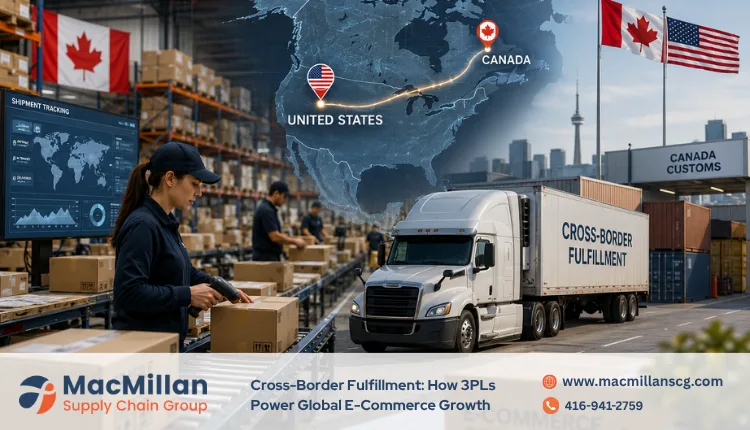
A Quick Summary and overview The e-commerce warehousing landscape is rapidly evolving with technological advancements reshaping how businesses handle inventory and fulfill orders. In 2025, we’ll see widespread adoption of AI automation, hyperlocal fulfillment centers, and IoT powered smart warehousing solutions. Sustainability initiatives, vertical storage systems, and blockchain technology are becoming essential components of modern warehousing operations. Companies embracing these trends will gain competitive advantages through improved efficiency, reduced costs, and enhanced customer experiences in an increasingly demanding marketplace. Introduction The e-commerce industry continues to experience explosive growth, with warehousing operations evolving at an unprecedented pace to meet rising consumer expectations. As we look toward 2025, businesses must adapt to new technologies and strategies to remain competitive in this dynamic landscape. The e-commerce warehousing trends in 2025 will focus on automation, sustainability, and customer centric solutions that streamline operations while reducing costs. For Canadian businesses especially, staying ahead of these trends is crucial as the country’s e-commerce market expands and cross-border trade increases. From AI-powered systems to hyperlocal delivery models, these innovations are reshaping how products move from warehouse shelves to customers’ doorsteps. Let’s explore the top 10 trends that will define e-commerce warehousing in 2025 and how they can transform your supply chain operations. AI and Automation Integration The biggest change in warehouse automation strategy for 2025 is the combination of automation and artificial intelligence. These technologies are now necessary for competitive warehousing operations and are no longer optional. Advanced AI systems now handle complex decision-making processes that previously required human intervention. Predictive analytics algorithms forecast demand patterns with remarkable accuracy, allowing businesses to optimize inventory levels and reduce carrying costs. Meanwhile, machine learning systems continuously improve by analyzing operational data, identifying inefficiencies, and suggesting process improvements. In Canadian fulfillment centers, we’re seeing the deployment of autonomous mobile robots (AMRs) that navigate warehouse floors independently, retrieving items and transporting them to packing stations. These robots work alongside human employees, handling repetitive tasks while staff focus on more complex operations. The result is a dramatic increase in picking speeds some facilities report efficiency gains of up to 300% compared to traditional methods. Voice picking technology is another AI application gaining traction, allowing warehouse workers to receive instructions through headsets while keeping their hands free for picking and packing. This technology reduces error rates by up to 25% while increasing productivity by 30%. For businesses looking to implement smart warehousing in Canada, these AI-driven solutions offer substantial competitive advantages through improved speed, accuracy, and cost efficiency. Hyperlocal Fulfillment Centers A significant change in distribution strategy is represented by the emergence of hyperlocal fulfillment. E-commerce companies are setting up networks of smaller fulfillment facilities in cities nearer to their clients rather than depending completely on large, centralized warehouses. These micro-warehouses enable same day or even same hour delivery options that consumers increasingly expect. By positioning inventory closer to population centers, companies can drastically reduce shipping distances and delivery times. This approach is particularly effective in Canada’s dispersed urban markets, where traditional centralized distribution models often struggle with last-mile efficiency. Hyperlocal fulfillment provides value economically. Even though running several smaller locations might seem more costly than running one huge warehouse, the savings on delivery times and transportation expenses usually offset additional costs. Businesses that use this approach report 70% faster delivery times and up to 30% lower delivery expenses. Technology plays a crucial role in making hyperlocal fulfillment viable. Advanced inventory management systems ensure the right products are stocked at each location based on local demand patterns. Meanwhile, sophisticated routing algorithms optimize delivery routes from these urban micro centers. For businesses serving Canadian markets, establishing strategic hyperlocal facilities in cities like Toronto, Vancouver, and Montreal can dramatically improve delivery performance while reducing the carbon footprint associated with long-distance shipping. Smart Warehousing and IoT Integration Smart warehousing in Canada is revolutionizing inventory management through Internet of Things (IoT) technology. These connected systems create warehouses that essentially manage themselves, with minimal human intervention required for routine operations. IoT sensors embedded throughout the warehouse continuously monitor inventory levels, equipment status, and environmental conditions. RFID tags and readers automatically track item movements, eliminating manual scanning and reducing human error. These systems provide real-time visibility into warehouse operations, allowing managers to identify bottlenecks and optimize workflows instantly. Another essential use of IoT in warehouses is environmental monitoring. Sensors control temperature, humidity, and other parameters that are important for sensitive goods including electronics, food, and medications. The technology automatically notifies workers or modifies environmental controls when circumstances deviate from permissible parameters. The data collected by these IoT systems feeds into analytics platforms that generate actionable insights. For example, pattern recognition algorithms can identify which products are frequently purchased together, allowing for strategic inventory placement that speeds up order picking. Canadian businesses implementing IoT-based warehouse management systems report inventory accuracy improvements of up to 95% and labor productivity gains of 25-30%. This technology not only improves operational efficiency but also enhances customer satisfaction through faster, more accurate order fulfillment. Vertical Storage Solutions Vertical storage solutions are becoming crucial for optimizing warehouse space usage as real estate prices continue to rise, especially in Canadian urban regions. By using these solutions, companies can significantly increase storage capacity without expanding the facility’s footprint by growing upward rather than outward. Automated Storage and Retrieval Systems (AS/RS) represent the cutting edge of vertical storage technology. These computer-controlled systems automatically place and retrieve loads from defined storage locations, utilizing the full height of the warehouse often up to 100 feet tall. For businesses operating in the Ontario warehousing market, where industrial real estate is at a premium, AS/RS can increase storage density by up to 85% compared to traditional racking systems. Another effective option, especially for smaller goods, is to use vertical lift modules (VLMs). With an extractor in the middle that delivers objects to the operator at an appropriate height, these enclosed systems are made up of trays that are kept on either side of the device. As a result, employees no longer have to use forklifts or climb ladders to access high shelves.
Canada’s Bold Move in Supply Chain Strategy: How PM Mark Carney’s Policies Are Reshaping Trade and Logistics

A Quick Summary and Overview PM Mark Carney’s administration has launched a comprehensive overhaul of Canada’s supply chain strategy in response to international trade pressures and domestic economic challenges. The strategy includes significant infrastructure investments, internal trade reforms, and international partnership diversification. Stronger economic resilience and less reliance on conventional trade links are the goals of important programs like the First Mile Fund, Cedar LNG Project, and EU defence partnerships. These ambitious measures aim to position Canadian companies for long-term growth and competitiveness while strengthening the country’s economy and making it more resilient to disruptions in international commerce. Reshaping Canada’s Economic Future Through Supply Chain Innovation Canada is reaching a turning point in its economic history. The government of Prime Minister Mark Carney has proposed a bold plan to change the way commodities move both inside and outside of Canada in response to growing supply chain disruptions and conflicts in international commerce. The comprehensive approach to supply chain strategy in Canada aims to rethink the nation’s economic foundation rather than merely address current issues. Carney’s strategies focus on all supply chain links, from the prairies to the ports. Resource-rich areas are becoming more accessible to international markets due to to new infrastructure investments. The Canadian economy has been fragmented for a long time, but internal trade changes are breaking down provincial barriers. Additionally, Canada’s susceptibility to trade conflicts is being lessened by strategic international collaborations. However, what does this signify for workers and businesses in Canada? Let’s examine how these bold actions are changing logistics and trade nationwide. Canada’s Response to International Trade Pressures Navigating Global Challenges with Strategic Resilience The US tariffs impact has sent shockwaves through Canadian industries, from steel manufacturing to agriculture. Rather than merely reacting, PM Mark Carney has implemented a forward-thinking approach to protect Canadian businesses while strengthening their competitive position. The tariff relief measures aiming to ease immediate financial strains are at the core of this response. Corporate income tax and GST/HST remittances are currently delayed until June 2025 for businesses who are having cash flow issues as a result of tariffs. Only one approach has given Canadian businesses access to about $40 billion in capital, enabling them to continue operating in spite of trade obstacles. Beyond temporary relief, the government has deployed retaliatory tariffs strategically on select US products. Unlike previous trade disputes, these measures are calibrated to maximize leverage while minimizing disruption to Canadian supply chains. As one manufacturing executive noted, “These targeted responses give us breathing room to adapt our supply networks without causing unnecessary damage.” Canada is actively diversifying its trading partnerships, demonstrating that the idea is not limited to North America. Canadian exports are finding new markets thanks to new agreements with European and Asian partners, which is lessening their reliance on the US market. This multifaceted plan shows how Canada’s supply chain strategy is changing from reactive to proactive, putting companies in a strong position to prosper in spite of trade uncertainty abroad. Breaking Down Internal Barriers Creating a Truly United Canadian Market Did you know that moving goods between Canadian provinces can sometimes be more complicated than international shipping? The national economy of Canada has long been divided into regional silos by internal trade obstacles, which act as a hidden tax on companies. By July 1, 2025, PM Carney hopes to alter this situation with his internal trade changes. The government is reducing barriers that impede the free flow of commodities across provincial borders and doing away with federal exclusions under the Canadian Free Trade Agreement. A more cohesive Canadian market will result from these reforms, allowing companies to expand across the country without having to deal with a confusing web of contradictory laws. It has a significant economic impact. Experts estimate that by improving supply chain efficiency, harmonising rules might increase GDP by as much as $250 billion.These reforms provide new domestic markets without the hassles of overseas expansion, which is especially beneficial for small enterprises. Labour mobility is another essential component of these reforms. Workers can more readily relocate where their skills are needed by recognising provincial qualifications and simplifying criteria for federally regulated positions. For instance, a plumber who holds an Ontario certification won’t have to recertify upon relocating to British Columbia. According to a spokesperson of the Canadian Chamber of Commerce, “We’ve waited decades for meaningful action on internal trade,” “These reforms finally address the invisible barriers that have held back our national economy.” These strategies fortify domestic supply networks and increase resilience against external disruptions by establishing a fully integrated Canadian economy. Strategic Infrastructure Investments Building the Physical Foundation for Economic Growth An important component of PM Carney’s supply chain strategy is infrastructure improvements in Canada.Through initiatives aimed at improving the efficiency of connecting resources to markets, the government is focussing on important bottlenecks. One innovative approach for infrastructure development is the First Mile Fund. This program offers funding specifically for developing transportation connections between extraction sites and important highways and railroads. The fund speeds up timelines for projects and unlocks value that was previously stranded by inadequate infrastructure by concentrating on these vital links. In British Columbia, the Cedar LNG Project illustrates how infrastructure and Indigenous collaborations can meet.This Indigenous-led LNG facility is anticipated to create $275 million in economic growth with up to $200 million in government funding. The project promotes economic reconciliation with First Nations and links Canadian natural gas to Asian markets. With the construction of the Port of Churchill and the Hudson Bay Railway, northern transport routes are also gaining attention. These Arctic trade channels are being improved with a $175 million investment, giving Canadian exporters another way to reach global markets. This northern approach creates fresh shipping choices while easing congestion at southern ports. These targeted infrastructure investments share a common purpose: improving the physical networks that enable goods to move efficiently. By addressing strategic gaps in transportation infrastructure, Canada is building supply chain resilience while attracting foreign investment to resource projects that might otherwise remain undeveloped. Diversifying International Partnerships Reducing Vulnerability Through Strategic Alliances Canada’s supply chain strategy