
3PL Warehousing and Distribution
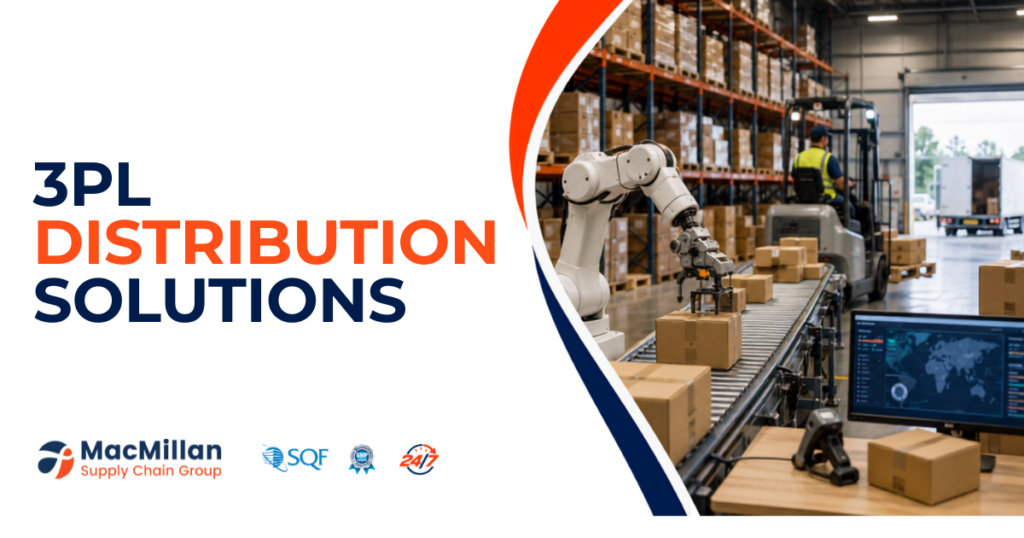
3PL providers offer outsourcing logistics and supply chain services, enabling businesses to offload product management and optimize operations. Among the various services, 3PL warehousing and distribution are essential, ensuring that products are stored and delivered to consumers safely and efficiently. This comprehensive approach helps businesses maintain optimal performance in an ever-evolving market. 3PLs offer advanced solutions such as in-depth data analytics, real-time product tracking, and sophisticated inventory management systems. What is 3pl warehousing and distribution? 3PL providers originated in the 1970s, initially offering basic transportation and warehousing services. 3PL warehousing and distribution services, provided by 3PL companies, involve the outsourced management of storage and movement of products within a supply chain. These services typically include storage, inventory management, and order fulfillment (warehousing), route optimization, carrier selection, and tracking and reporting (distribution). By outsourcing these logistics functions to a 3PL provider, businesses can focus their in-house resources on productivity and growth. What is the role of 3pl in warehousing and distribution? 3PL providers offer comprehensive warehousing and distribution services focused on the efficient storage and movement of goods. Here are the core functions and responsibilities: Warehousing Services: Storage: Providing secure space for merchandise before shipment in a 3PL warehousing system. Inventory Management: Monitoring inventory levels and making accurate projections for future needs and allowing tracking inventory for customer satisfaction. Order Fulfillment: Picking, packing, and preparing orders for shipment to consumers. MacMillan offers a 0.01% error rate with visibility. Distribution Services: Transportation Management: Coordinating the transportation of products between locations, including organizing cross-docking. Route Optimization: MacMillan provides strategic planning for efficient transportation methods and routes to ensure timely deliveries and reduced shipping costs. The presence in the GTA as well as 80% access to western regions allows aligning your target markets. Carrier Selection: Negotiating with carrier services to secure the most efficient and reliable providers at optimal prices. Tracking and Reporting: Utilizing advanced software for real-time tracking and data analytics to improve decision-making. MacMillan offers integrated WMS (Read more about selecting the right fit) and TMS (Transportation Management Systems) with your systems for reliability. This delegation allows companies to focus on product development and revenue growth, while 3PLs handle the complex and time-consuming logistics operations. What are the key 3pl warehousing and distribution services? These services play a critical role in the overall efficiency of a business’s logistics operations: Inventory Management and Control 3PL providers such as MacMillan SCG use cutting-edge warehouse management software to optimize and control stock levels. By understanding inventory needs, 3PLs can reduce carrying costs and efficiently manage inventory, ensuring businesses save on storage expenses while maintaining product availability for timely shipment. Order Fulfillment and Distribution Fulfilment involves the picking, packing, and shipping of inventory items. 3PL warehousing plays a critical role in this process by employing teams that ensure products are handled with care and speed. They collaborate directly with carrier providers to secure the most cost-effective and timely delivery options for your business. Specialized 3PL Warehousing and Storage Solutions 3PL providers offers a range of storage solutions to accommodate various product types. Whether products require standard warehousing, temperature control storage, or other facilities, 3PLs provide cost-effective solutions that keep products fresh and secure. Value-Added Services 3PLs offer a variety of additional services designed to enhance the customer experience and increase satisfaction, including: Package labeling Kitting Repackaging Return and exchange services Technology Integration for Seamless Operations To ensure seamless operations and optimized efficiency, 3PLs stay updated with the latest logistics technologies. They integrate advanced systems such as WMS, radio frequency identification (RFID), and robotic automation to enhance warehousing visibility and performance. Innovation and trends in 3PL warehousing and distribution Technological advancements and trends have majorly boosted the efficiency and productivity of 3PL operations, leading to substantial time and cost savings for companies. The impact of e-commerce As many businesses operate online, the reliance on 3PLs to manage logistics has intensified. It’s no longer practical for web-based companies to handle logistics independently. The growing demand for online shopping has created numerous opportunities for 3PL warehousing and distribution to broaden their services and facilitate large-scale operations. Omnichannel Distribution Strategies Omnichannel distribution integrates multiple sales channels, allowing customers to purchase products online and return or exchange them in-store. As businesses adopt this strategy, 3PL providers must adapt their operations to support this model. Notable examples of successful omnichannel implementation include Amazon and Walmart. Automation and Robotics in Warehousing The use of automation and robotics is increasingly important in modern 3PL warehousing. Although initially expensive, these technologies are proving to be cost-effective in the long run. These automated systems are designed to handle repetitive tasks, thereby boosting the overall productivity of warehousing facilities. Real-Time Tracking and Visibility 3PL providers have integrated tracking technologies into their logistics solutions, providing real-time updates from the distribution center to the consumer’s doorstep. This transparency offers control over shipments. Selecting the right 3PL partner With many options available, it’s essential to choose one that aligns with your needs, goals, and operational processes. Key factors to consider include the provider’s 3PL warehousing capabilities, and the importance of scalability and flexibility in meeting your business’s seasonal demands. Factors to consider while choosing your 3pl partner: No matter the size or type of your business, certain universal factors are essential when selecting a 3PL provider: Industry Experience: Your 3PL partner should have experience within your industry. While newer companies offer lower rates and larger, well-known companies may seem attractive, it’s better to choose a provider with a proven success record. Overall Capabilities: Understand your potential 3PL’s capabilities. Ensure they can accommodate your growth and expansion goals, including global commerce if that’s an objective for your business. Reputation and customer feedback: Partnering with a reputable 3PL is crucial for ensuring customer satisfaction and smooth operations. MacMillan provides transparency and direct customer feedback for a better response rate. Technical Integration: Your 3PL needs to stay ahead of technological advancements. A good partner will already be using cutting-edge technology and be prepared to integrate future
How to Choose a 3PL for FMCG Brands in Canada
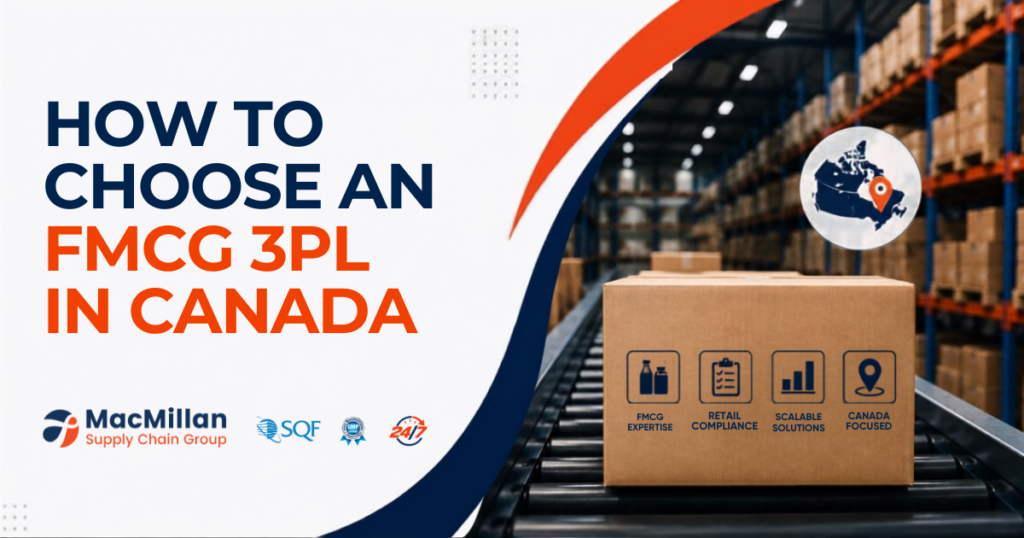
Choosing the right FMCG 3PL in Canada means finding a logistics partner that can do more than store and ship products. FMCG brands need fast inventory turnover, accurate lot and expiry tracking, retailer-compliant preparation, scalable warehouse capacity, reliable transportation and clear inventory visibility. The best 3PL should fit your products, retail channels and growth plans—not force your operation into a generic fulfillment model.That distinction matters because fast-moving consumer goods operate differently from many other product categories. Food, beverages, personal care, household products and general merchandise often move through several channels at once. A single SKU may be shipped by pallet to a retailer, by case to a distributor and by individual unit to an ecommerce customer.If the 3PL cannot manage those workflows accurately, the consequences can include stockouts, retailer chargebacks, excess inventory, delayed launches and higher fulfillment costs. Why FMCG Brands Need a Specialized 3PL FMCG logistics is built around velocity. Products move quickly, customer expectations are high and retailers often operate with strict delivery windows. A general warehouse may be able to store inventory, but an FMCG-focused 3PL should understand how product movement, replenishment, compliance and inventory accuracy interact. Common FMCG requirements include: High-volume receiving and outbound processing Lot, batch or expiry-date tracking FIFO or FEFO inventory rotation Retailer-specific labels and pallet configurations Promotional kitting and repacking Seasonal volume increases B2B and direct-to-consumer fulfillment Inventory visibility across multiple sales channels Retail distribution-centre appointments Returns and damaged-product processing A provider that already works with FMCG categories is more likely to have procedures designed for these requirements rather than treating them as exceptions. MacMillan Supply Chain Group, for example, structures its logistics services around FMCG categories including food and beverage, personal care and wellness, home care and general merchandise. Businesses with food or beverage products can review its food and beverage logistics services for category-specific capabilities. 1. Start With Your Actual Fulfillment Requirements Do not begin the 3PL search by asking providers for their cheapest storage or pick-and-pack rate. First document what your business actually needs. Your requirements should include: Number of active SKUs Average pallet inventory Monthly inbound volume Average monthly orders Peak order volume Average units per order Retail, wholesale and ecommerce channel mix Product dimensions and weights Lot or expiry requirements Retailer compliance requirements Packaging and kitting needs Returns volume System integration requirements This information allows different 3PL providers to quote the same operation. Without it, one provider may price a basic warehouse service while another assumes a much broader scope, making the proposals difficult to compare. 2. Check FMCG and Category Experience Industry experience should be one of the first screening criteria. A 3PL handling apparel or electronics may operate an excellent warehouse, but the processes required for food, beverages, personal care or household products can be very different. Ask prospective providers: Which FMCG categories do you currently handle? Do you manage products with expiry dates? Can you support lot and batch traceability? Do you work with Canadian retailers? Can you manage promotional programs? Can you support both B2B and ecommerce orders? What quality-control procedures apply to my product category? The provider should be able to explain how its existing workflows match your products instead of simply saying that it can “handle anything.” 3. Evaluate Warehouse Location and Distribution Reach Warehouse location affects transportation cost, delivery time and inventory availability. For Canadian FMCG brands, facilities near major population centres, retail distribution networks and transportation corridors can reduce unnecessary freight distance. A warehouse serving Ontario, for example, may benefit from access to the Greater Toronto Area and key Canada-U.S. trade corridors. National brands may require additional geographic coverage or a transportation network capable of reaching other provinces efficiently. When evaluating warehousing and distribution services, consider: Distance from suppliers Distance from major customers Access to highways and transportation hubs Retail distribution-centre locations Parcel delivery zones Cross-border requirements Future expansion plans The warehouse with the lowest storage cost can become more expensive overall if inventory is positioned far from customers. 4. Verify Inventory Accuracy and Visibility Inventory accuracy is especially important for FMCG products because demand can move quickly. If the warehouse system says 500 units are available but only 420 are physically present, the brand may accept orders that cannot be fulfilled. Ask the 3PL how it maintains inventory accuracy. Look for: Barcode-based receiving Scan verification during picking Cycle-counting procedures Real-time inventory reporting Inventory discrepancy workflows Lot and expiry visibility Order allocation controls A modern provider should offer clear inventory visibility so teams can see stock levels, order status and inventory movements without waiting for manual spreadsheets. Visibility becomes even more important when the same inventory supports retail, ecommerce and wholesale channels. 5. Confirm Lot, Batch and Expiry-Date Capabilities For many FMCG categories, knowing how many units are in the warehouse is not enough. The business may also need to know which batch those units came from and when they expire. Food, beverages, supplements, beauty and personal care products may require: Lot tracking Batch tracking Expiry-date capture FIFO or FEFO rotation Minimum shelf-life controls Recall traceability The provider should be able to demonstrate how those attributes are recorded during receiving and how the warehouse system prevents the wrong stock from being allocated. MacMillan provides dedicated lot, batch and expiry control for businesses that require product-level traceability. 6. Assess Retail Compliance Experience Retail compliance can be one of the biggest differences between a general fulfillment provider and an FMCG-focused 3PL. Canadian retailers may require specific: Carton labels GS1 labels Pallet configurations Case quantities Advance shipping notices EDI documents Delivery appointments Routing procedures Remaining shelf life A shipment can contain the correct product and quantity yet still generate a chargeback if it does not meet these requirements. Ask the 3PL which retailers it regularly ships to and how retailer rules are maintained internally. A strong retail compliance preparation process should help catch problems before goods leave the warehouse rather than investigating them after a chargeback arrives. 7. Look for Omnichannel Fulfillment Capability Many Canadian FMCG brands no longer operate
Navigating 3PL Providers for Small Businesses: A Complete Guide
From independent entrepreneurs to thriving startups, small businesses in the ecommerce sector face unique challenges. Balancing operational costs with ensuring customer satisfaction is a multifaceted task. This is where 3PL providers come in, bridging the gap between logistics demands and available resources, allowing businesses to scale with visibility and efficiency. In this guide we will explore the services and benefits offered by 3PL providers, the advantages of outsourcing logistics to them, and the key factors to consider when selecting a 3PL partner. Additionally, we will examine how cutting-edge technology solutions, such as those provided by MacMillan, are shaping the future of third-party logistics and fulfillment operations. What is the role of 3PL provider in ecommerce? Ecommerce has reshaped the retail landscape, compelling businesses to innovate their strategies. As customer demands for faster delivery and seamless shopping experiences increase, managing logistics and fulfillment internally can be crucial. Partnering with a reliable third-party logistics 3PL provider can be transformative for ecommerce businesses, helping them navigate challenges and optimize their supply chains to boost profitability and increase visibility. How can startups benefit from outsourcing a 3PL provider? Navigating the complexities of logistics can be daunting for any business, but it is particularly challenging for small businesses and startups. Outsourcing these operations to 3PL providers offers substantial benefits, such as cost reduction, enhanced scalability, and improved customer satisfaction. 3pl providers mainly provide advantages for new or small-scale businesses such as: Navigating a 3PL provider for a small business For small businesses, entering the world of third-party logistics can be daunting. With a multitude of options available, each claiming to enhance your ecommerce operations, making the right choice can be challenging. To assist you in this process, here are some considerations to ensure you select a 3PL provider that aligns with your specific business needs. Pricing and contract clarity 3PL providers pricing structures can be intricate. Small business owners must carefully understand the breakdown of costs, including base fees, additional charges such as inbound and outbound fees, and SKU management expenses. While budget constraints are common for small businesses, it’s important to remember that the cheapest option may not always provide the value and reliability your business needs. Evaluating Warehousing and Fulfillment Capabilities A 3PL providers warehousing and order fulfillment services are critical to their offering. As a small business owner, we seek 3PL providers that offer comprehensive services such as returns management, packaging, kitting, same-day order processing, and delivery. MacMillan offers your business on-time delivery performance with zero error rates and proves to be a cultural fit as per its track record. Assessing Technological Integration Small businesses need a 3PL provider that can seamlessly integrate with their existing technology stack, providing real-time inventory management and routing capabilities. Look for compatibility with popular ecommerce platforms such as Amazon (including Amazon Seller Fulfilled Prime). Companies like MacMillan, with solutions like the WMS Integration, ensure a smooth process, minimizing potential disruptions. Evaluating Shipping Capabilities Investigate the shipping competencies of each prospective 3PL provider. Prioritize those with partnerships with major carriers like FedEx, UPS, and DHL, and the ability to secure competitive shipping rates. Given that your shipping needs might fluctuate, a provider capable of handling variable volumes and coping with your seasonal demands is important. Verifying Provider Reputation and Consistency Finally, conduct thorough research into each potential 3PL provider’s reputation proven through track records. Customer reviews and case studies can offer valuable insights into their reliability, responsiveness, and problem-solving abilities. For a small business, a dependable 3PL partner can significantly impact customer satisfaction and enhance your business reputation. Evaluating Pricing models in the 3PL Market place Understanding the pricing structure in the 3PL industry is crucial in making informed decisions. Key Factors to consider include: Common pricing strategies 3PL providers typically offer various pricing models, including transaction-based, fixed cost, cost-plus, and variable cost structures. For instance, a transaction-based model might be ideal for businesses with consistent order volumes, while a variable cost model can provide greater flexibility for those with seasonal fluctuations. Transparent cost When comparing prices, small business owners should be concerned about potential hidden costs. These can include charges for storage, inventory receiving, order picking and packing, and returns processing. Additional fees may also apply for same-day or rush orders, SKU handling, or administrative expenses. MacMillan provides a transparent pricing model with no hidden fees and additional charges which in turn increases reliability. 3PL Contract Negotiation Embrace the opportunity to negotiate with potential 3PL providers. They are accustomed to these discussions and often open to adjusting their pricing or services to secure your business. Understanding your business needs, forecasting order volumes, and utilizing this insight during negotiations is key. Assessing Value Beyond Cost While cost is important, businesses should also evaluate the value provided by their 3PL provider. For example, a provider offering real-time tracking, seamless integration with popular ecommerce platforms, and exceptional customer service may justify a slightly higher cost. Simplify your 3Pl search with MacMillan Recognizing the complexity of today’s decision-making processes, MacMillan introduces its 3pl warehousing and Fulfillment Marketplace, a solution designed to simplify the search for suitable 3PL partners. MacMillan streamlines the evaluation of 3PLs through an intuitive search and filtering experience. With its curated list of high-performing partners across various service verticals in Canada, and strategic coverage of 80% across all western regions, small businesses can construct tailored fulfillment networks to meet their unique needs. MacMillan significantly simplifies the logistics outsourcing process for small businesses. This platform empowers businesses to concentrate on core functions while benefiting from a professional, efficient, and customized logistics network. Key Takeaways In conclusion, small businesses in the logistics sector face unique challenges that require a careful balance between operational costs and customer satisfaction. 3PL providers play a crucial role in bridging the gap between logistics demands and available resources. By leveraging the right 3PL partner such as MacMillan, small businesses can optimize their supply chains, enhance profitability, and ultimately improve customer satisfaction. Frequently Asked Questions What is a
Sustainable 3PL Warehousing: 5 Key Tips For Greener Logistics
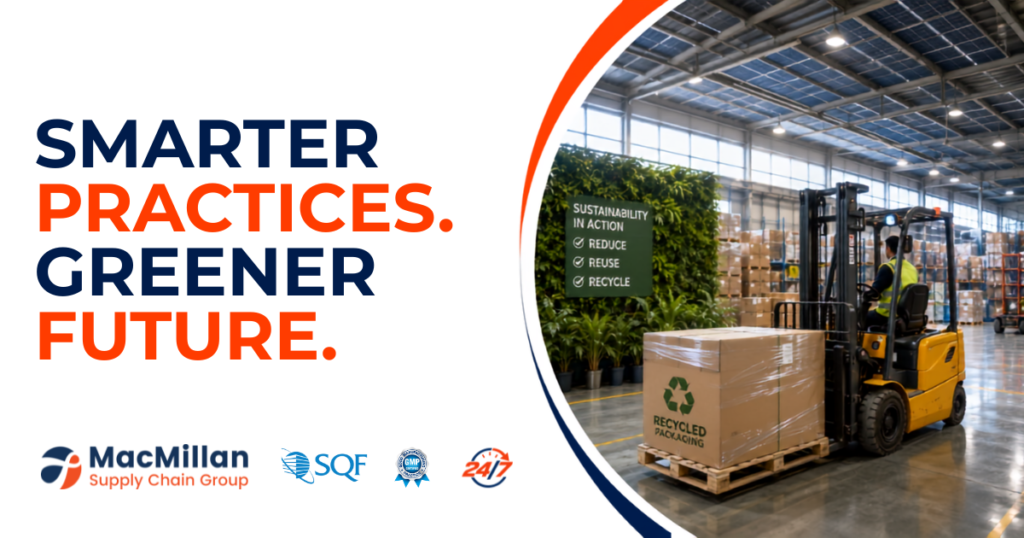
Sustainability and a greener future are crucial in 3pl warehousing and fulfillment logistics. This marketplace revolves around significant energy consumption, waste production, and transportation emissions. Despite these challenges, there are many opportunities to adopt eco-friendly practices that can reduce environmental impact and boost business efficiency. This article delves into strategies for making 3pl warehouse operations more sustainable, offering companies the dual benefits of contributing to environmental sustainability and reducing costs. What is 3PL warehouse sustainability? Warehouse sustainability involves operational processes of warehouses to be performed in an eco-friendly manner, introducing measures like energy-efficient lighting, solar power, and waste reduction programs. This approach minimizes environmental impact, conserves resources, and upholds social responsibility. However, sustainable 3pl warehouse operations offer more than just environmental benefits. When executed effectively, they can reduce energy costs by up to 20% and lower waste disposal fees through enhanced recycling and reuse strategies. Furthermore, by adopting efficient inventory management systems, businesses can avoid overstock. What are the Key factors of a sustainable 3pl warehouse? Energy efficiency plays a crucial role in sustainable warehousing. Implementing LED lighting or solar panels can reduce energy costs and carbon emissions. Additionally, waste reduction and storage optimization are key. By recycling shipping materials, adopting innovative packaging techniques, and optimizing inventory management to prevent overstocking, you can significantly optimize operations in both areas. Impact of Sustainability on 3pl Warehouse Operations Implementing sustainable practices in warehouse operations has various benefits, including: Higher Efficiency: Upgrading energy-efficient lighting and installing smart thermostats can optimize energy consumption. Cost Savings: Utilizing renewable energy sources and adopting waste reduction strategies helps in lowering utility bills and disposal costs. Reduced Carbon Footprint: Green initiatives help 3pl warehouses minimize pollution and greenhouse gas emissions. Improved Brand Image: A sustainable work environment enhances employee satisfaction and enhances the public image and repute of the brand. 5 tips for running a sustainable 3pl warehouse Choosing eco-friendly shipping practices is a key aspect of sustainable 3pl warehouse operations, but several other factors also support green principles such as: Recycling initiatives and energy management Switching to energy-efficient systems and renewable energy in warehouses is crucial for sustainability. Installing LED lighting and solar panels reduces carbon footprints, while upgrading to HVAC systems further cuts costs. E-commerce businesses can adopt eco-friendly packaging like cornstarch to minimize landfill waste and optimize package sizes to reduce material use and shipping emissions. Implementing recycling systems, with well-marked stations for materials like cardboard and plastic, further increases warehouse sustainability. Innovative Inventory Management and Automation Implementing innovative inventory management techniques, such as Just-in-Time (JIT) inventory, streamlines operations and reduces waste. This method minimizes overstocking and conserves energy. By reducing the amount of inventory on hand, companies can lower storage and tax costs, while also improving cash flow by freeing up capital previously held in inventory. Dynamic Routing Software Dynamic routing software is an advanced method for reducing carbon emissions in logistics operations. For instance, MacMillan automatically routes orders to the nearest distribution center, speeding up delivery and minimizing last-mile travel. Additionally, shipping partners like UPS use a system called ORION, which analyzes numerous route options in real-time to find the most efficient paths for delivery vehicles. This approach reduces fuel consumption and lowers the carbon footprint of logistics operations. Green Roofing Systems Green roofing systems enhance insulation, promote biodiversity, and manage stormwater. Beyond boosting energy efficiency through superior insulation, green roofs mitigate stormwater runoff, a frequent issue for large facilities. They can also reduce a building’s cooling load by up to 70%. Enhanced 3pl Warehouse Design The initial phase in optimizing your warehouse’s setup involves conducting an internal warehouse audit. This includes assessing your inventory, its placement, and its frequency of use. Segmenting zones within the warehouse for distinct activities can optimize energy consumption for lighting, heating, and cooling, aligning them with actual requirements. The future of sustainable 3pl warehouse The future of warehousing is rooted in sustainability, essential for both survival and growth. In US, the Environmental Protection Agency requires facilities, including warehouses, to report greenhouse gas emissions annually through the Greenhouse Gas Reporting Program. At MacMillan, we are committed to green logistics through:Eco-friendly packagingCarbon-neutral shippingAdvanced warehouse management systems We adopt cutting-edge sustainable technologies and practices, including:Energy-efficient warehousing solutionsAdvanced recycling systems Our efforts not only ensure regulatory compliance but also aim to set industry standards. Collaboration with partners is crucial to achieving these sustainability goals. How can sustainable warehousing reduce costs? Embracing sustainable practices like waste reduction and energy optimization directly leads to reduced operational costs, thus boosting profit margins over time. Additionally, prioritizing sustainability enhances a brand’s reputation, as today’s consumers increasingly favor eco-conscious companies, with 55% willing to pay more for such brands. By aligning operations with these values, businesses can access a growing market and potentially command premium prices. Ultimately, integrating sustainability offers a twofold advantage: cost reduction and enhanced market positioning, fostering long-term financial stability and expansion. MacMillan’s approach for long term sustainability At MacMillan, our commitment to sustainability is aligned with technology. By harnessing advanced systems and software, we streamline operations to minimize waste, enhance efficiency, and reduce our environmental footprint. Here are a few ways we achieve this: Automated Inventory Management: Our integrated inventory management software ensures optimized stock levels, reducing instances of overstock and understock. This results in less waste and a more resource-efficient approach. Route Optimization: Utilizing technology for route optimization helps us plan the most efficient fulfillment centers for product delivery. This not only ensures quicker deliveries, boosting customer satisfaction, but also reduces emissions. Material Handling Automation: We employ automated sorting systems to streamline warehouse operations, minimizing the need for manual labor and lowering energy costs associated with goods movement. Data Analytics: MacMillan leverages data analytics to assess and improve logistics sustainability. This involves analyzing transportation patterns, energy usage, and waste generation to focused areas for improvement. Key Takeaways The future of 3PL warehousing and fulfillment logistics is green. Embracing sustainability is crucial for both operational efficiency and long-term business growth. By integrating eco-friendly practices such
Emerging Growth of A.I In Supply Chain Management
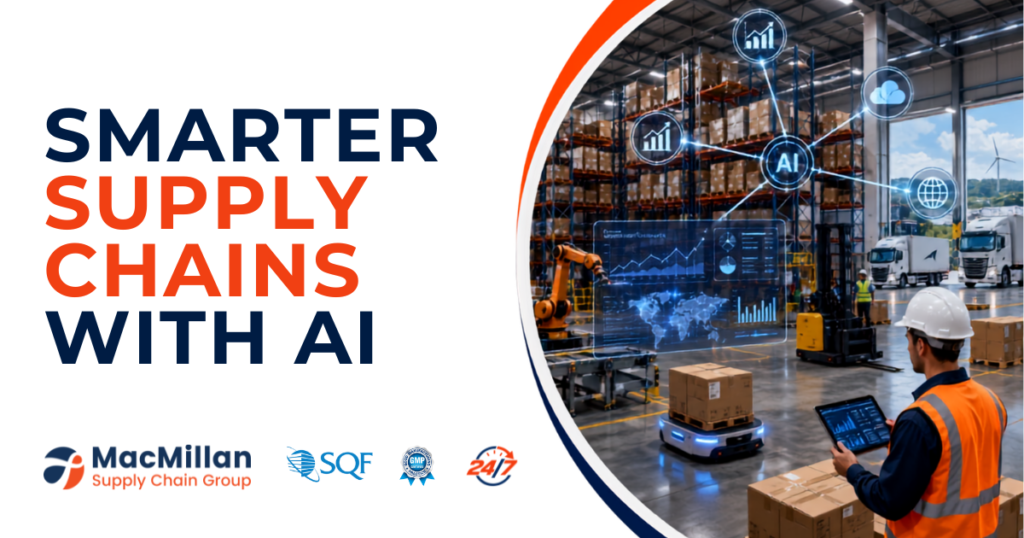
In recent years, supply chains have become more complex and demanding to manage. This is prompted by factors such as the ever changing and fast paced global market, longer and more interconnected physical flows, and recent focus on incorporating sustainability. These factors highlight the need for agility, flexibility, and resilience in supply chain management. As a result, artificial intelligence (AI) has come up as a formidable tool to revolutionize supply chain operations. Thus, the use of AI promises to transform the industry. The Role of AI in Modern Supply Chains AI’s main function is its ability to analyze vast amounts of data, recognize patterns, and provide actionable insights. Since supply chain management needs to have timely and accurate information for decision-making, AI is a very compatible tool to adopt. MacMillan SCG uses AI-based solutions which are revolutionizing several facets in its logistics operations such as demand forecasting, integrated inventory management systems and warehouse management systems (WMS), route optimization and risk mitigation. Demand Forecasting and Inventory Management Precise demand forecasting is crucial for enhancing inventory levels and minimizing stockouts or overstock situations. AI algorithms can analyze historical sales data, market trends, and other variables to generate accurate demand forecasts. As an example, retailers like Walmart and Amazon employ AI to estimate and predict product demand and use that information to guarantee optimal inventory levels which in turn keeps customer satisfaction high. AI-driven inventory management systems can also generate optimized replenishment plan based on real-time demand signals, supplier lead times and inventory levels, decreasing carrying costs and refining fulfillment accuracy. Route Optimization and Transportation Management The usage of AI can decrease transportation costs and improve delivery efficiency, as AI can rapidly optimize transportation routes based on traffic conditions, weather forecasts and delivery deadlines. Generate AI algorithms are one step further as they can autonomously offer alternatives for complex routing problems, prioritizing timely and cost-effective deliveries. MacMillan caters for efficient on time delivery by using automated routes with order tracking options for its customers. Enhancing Supply Chain Resilience with AI In a post-pandemic world, the vulnerabilities in the global supply chain are increasingly obvious. Therefore, companies have opted to prioritize resilience. AI plays a vital role in this as it increases visibility into supply chain operation and aids proactive risk management. Predictive Analytics: AI can analyze historical data to predict demand fluctuations and potential disruptions. Real-Time Monitoring: AI-driven systems provide real-time visibility into supply chain operations, helping to identify and address issues promptly. Inventory Optimization: AI algorithms optimize inventory levels, reducing the risk of stockouts and overstocking. Automated Decision-Making: AI supports automated decision-making, improving response times and operational efficiency. Supplier Risk Management: AI assesses supplier risks by analyzing data from various sources, enabling proactive risk mitigation. Demand Forecasting: AI enhances the accuracy of demand forecasts, leading to better planning and resource allocation. Supply Chain Mapping: AI maps complex supply chains, identifying critical nodes and potential vulnerabilities. Cost Reduction: By optimizing routes and processes, AI helps in reducing transportation and operational costs. Sustainability: AI promotes sustainable practices by optimizing resource usage and reducing waste. These points highlight how AI can be leveraged to enhance the resilience and efficiency of supply chains. Supply Chain Visibility and Risk Management With the use of AI tools, firms such as MacMillan can achieve end-to-end visibility. This facilitates easier monitoring of inventory levels, shipment tracking, and a faster response time to disruptions. For example, AI algorithms can analyze supplier performance data and market conditions to pinpoint possible risks and suggest alternative suppliers or contingency plans. This ability is critical for reducing the impact of disruptions such as natural disasters, geopolitical events, or pandemics. Sustainability and Ethical Sourcing Recently, more and more companies are beginning to take sustainability as a priority and AI can aid supply chains to minimize the environmental impact. AI tools such as scenario analysis can identify ways to reduce carbon emissions, minimize waste and encourage ethical sourcing practices. For instance, the combination of AI with blockchain technology helps to increase the transparency of a product’s origins and its supply chain management strategies. This aids compliance with regulations and improves customer loyalty. Read more about the key tips for greener logistics. Real-World Applications and Benefits The real-world applications of AI in supply chain management are vast and substantial. Companies that employ AI solutions report notable improvements in logistics costs, inventory levels and service levels. Challenges and Considerations While the benefits of AI in supply chain management are plenty, some considerations still need to be made. There may be issues such as data availability, technical expertise and the costs associated with AI adoption. Moreover, to successfully integrate AI into operations, organizational changes, process updates and workforce upskilling are required to truly see the estimated return on investment. The Future of AI in Supply Chain Management As AI technologies continue to progress and they become more integrated into everyday life, their impact on supply chain management will also increase. Predictive analysis, machine learning and automation will have more significant roles in shaping supply chain processes. Future advancements may include AI-powered robots for warehousing and logistics, virtual assistant for customer services and autonomous vehicles for transportation. AI showcases a great promise for changing supply chain management, enhancing efficiency, resilience and sustainability, Companies that strategically adopt and integrate AI tools and solutions will be well equipped to deal with the complexities of modern supply chain and gain a competitive edge in the marketplace. Key Takeaways Artificial intelligence (AI) has emerged as a powerful tool, revolutionizing supply chain operations. By leveraging AI, companies like MacMillan SCG are enhancing demand forecasting, inventory management, route optimization, and risk mitigation. AI’s ability to analyze vast amounts of data and provide actionable insights makes it indispensable for modern supply chains. Adopting AI not only ensures efficiency and resilience but also promotes sustainability, giving businesses a competitive edge in today’s dynamic market. Frequently Asked Questions What is AI in supply chain management? AI in supply chain management uses artificial intelligence and machine learning to
Forecasting Seasonal Demand Fluctuations
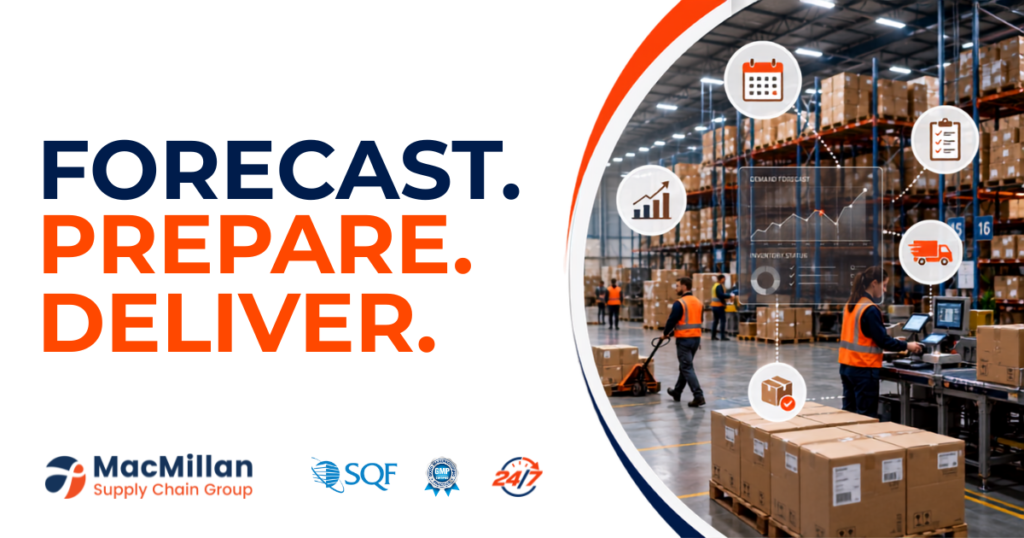
Businesses often face seasonal fluctuations in demand, driven by holidays spikes like Christmas and popular shopping events such as Boxing Day in the UK, Canada, and Australia. These periods can lead to significant order surges. So, how can a 3pl warehousing businesses capitalize on these prime shopping seasons? In this blog we can discover, how do companies such as MacMillan SCG prepare for these seasonal demand changes in terms of inventory and logistics. What is seasonal demand? Seasonal demand refers to shifts in consumer buying habits throughout the year. These changes may be driven by seasons, such as increased demand for snow boots in winter and sunglasses in summer, or special occasions like Christmas and Thanksgiving, and New Year. Fortunately for businesses, these fluctuations are among the most predictable, allowing for easier advance planning. Causes of seasonal demand fluctuations Factors involved in Seasonal Demand Forecasting? Seasonal demand forecasting involves predicting customer demand during the increase time frame of anticipated order volume increases. By analyzing historical data, and market trends MacMillan identifies when order volumes particularly rise, enabling them to purchase sufficient inventory, confirm transparent costs, and ensure delivery on time and in full (OTIF) without stockouts. MacMillan advanced operations empower brands to prepare for both seasonal and future demand. MacMillan integrated software and tracking dashboard provide real-time inventory visibility, aiding in accurate seasonal demand forecasting. Many products experience demand fluctuations based on seasonality. For instance, yard tools see increased demand during spring as people undertake spring cleaning. In summer, items like air conditioners and ice creams see a sales spike. Navigating Seasonal Demand in 3pl warehousing While demand fluctuations can be challenging for businesses, they present valuable opportunities if they are predictable. Let’s delve into how seasonal demand changes impact 3pl warehousing. The Benefits of Seasonal Demand Maximize Sales: Seasonal demand spikes, mainly during the holiday season, present a golden opportunity for well-prepared businesses to boost sales. In 2021, U.S. holiday spending reached (about $2,700 per person in the US) Proactive Inventory Planning: With these demand spikes recurring annually, businesses can proactively plan their inventory procurement. By stocking up ahead of time, they can meet increased consumer demand. Strategic Marketing: The predictable nature of these spikes allows businesses to strategically plan their marketing and sales efforts in advance. Seasonal marketing campaigns and discounts can be prepared to capitalize on peak shopping time frames. What are the risks and challenges in seasonal demand fluctuations? Utilizing an inventory planning solution that offers historical analysis and forecasting can mitigate these risks. Previous data trends help predict when and how much to restock, ensuring businesses reorder enough inventory in time for demand surges. Logistical challenges are another hurdle associated with seasonal demand spikes. Businesses may struggle to fulfill all orders due to limited workforce or resources during peak periods. Additionally, courier services like DHL often have lower capacity during these times, leading businesses to opt for alternative shipping solutions. Partnering with a 3PL warehousing provider like MacMillan can alleviate these issues. A 3PL warehousing experienced workforce handles the entire fulfillment process with visibility. Their established relationships with leading courier services ensure your delivery needs are met, even during peak seasons throughout GTA and 80% of the western region. How to Forecast Seasonal Demand and Stay Ahead Accurate forecasting is crucial for managing seasonal demand effectively. However, brands must also know how to leverage this data for proper planning. Here’s how to get ahead of seasonal demand and capitalize on peak times. Establish Seasonal Goals Start by setting goals for the year to create a blueprint for seasonal patterns and determine the stock levels needed for specific times. Establishing these goals helps evaluate performance and reconcile actual sales volume against initial targets. Collect and Analyze Historical Data Review past years’ sales to identify high-demand periods and order volumes. This ensures you maintain an adequate stock to meet customer demand and satisfaction. Key metrics to examine include forecast vs. order accuracy, forecast accuracy, inventory turnover, and order fill rate. Use Sales Insights to Rank and Segment Products Analyze historical sales data to identify demand patterns and understand how demand varies for different products throughout the year. Brands can estimate how demand changes compared to regular periods, but it’s important to remain cautious. By following these steps, brands can effectively forecast seasonal demand, maintain optimal stock levels, and maximize sales during peak periods. Taking Action With your historical data analysis and seasonal forecast in hand, it’s time to implement your plan Compare Forecasts to Historical Sales: Analyze your demand forecast against past sales data to assess prediction accuracy. This helps refine future forecasts. Maintain Supplier Communication: Ensure smooth inventory reorders and receive early warnings if suppliers can’t meet increased demand, allowing time to find alternatives. Monitor Inventory Levels: Track stock levels, reorder needs, and timing for replenishments to avoid stockouts or overstocking. Avoid Overstocking: Overstocking is costly and can hurt your bottom line. Instead, order smaller quantities more frequently to stay flexible and adapt to demand changes. Consider a 3PL Solution: Outsource your fulfillment process to a third-party logistics provider. They offer advanced inventory planning and management software, aiding in data analysis and improving forecasting accuracy. How does MacMillan manage seasonal demand fluctuations? Accurate demand forecasting is crucial for managing seasonal demand fluctuations. With MacMillan proprietary software, you can leverage historical sales data and consumer buying behavior to make precise inventory reorder plans, avoiding stockouts and overstocking. The software provides SKU-level performance tracking, helping you identify which items will see increased demand in specific seasons. It also offers real-time inventory monitoring, predicting stock longevity and alerting you when to reorder. MacMillan full-service fulfillment solution handles storage, inventory management, and order fulfillment. By informing MacMillan about expected demand spikes, you can ensure efficient management of seasonal orders without last-minute hassles. Key takeaways In today’s dynamic market, businesses often face seasonal demand fluctuations. These periods can lead to significant order surges, presenting both opportunities and challenges. MacMillan’s proprietary software leverages historical sales data and consumer behavior to make
Optimizing Your Supply Chain: Lean Logistics for Efficiency and Growth
To eliminate all forms of waste, many companies focus on maintaining lean logistics. By aligning supply chain management with lean principles, you can enhance your brand’s operational efficiency, cut logistics costs, and provide superior customer experience. In this article, we will explore the core principles of lean logistics, analyze its benefits, and offer practical tips and best practices MacMillan uses to help you streamline your own logistics operations. Understanding Lean Logistics Lean logistics is a strategic approach to logistics management used to identify and eliminate waste within your supply chain. The primary objective is to optimize operations by removing unnecessary processes. By refining the continuous flow of products, lean logistics helps reduce costs and significantly boosts efficiency, ensuring a more effective supply chain. Key factors of Lean Logistics Lean logistics operations are driven by several key principles, such as: Waste Reduction Waste manifests in various forms in 3pl warehousing, and lean logistics aim to minimize all of them. Specifically, lean logistics focus on reducing waste in: Time: Minimizing lead times and transit times while providing real-time visibility. Materials: Reducing excess raw materials and packaging materials. Products: Preventing lost, damaged, or obsolete inventory with inventory tracking. Effort: Eliminating unnecessary tasks to better utilize human labor and minimize warehousing waste. Product Flow focus A crucial aspect of lean logistics is improving efficiency and throughput. This involves ensuring that inventory flows seamlessly through the supply chain. MacMillan focuses on processes such as order processing, picking, packing, and shipping performed accurately, without unnecessary delays or interruptions. Value Stream Mapping Lean logistics relies on differentiating value-adding elements from superfluous ones. Mapping the value chain across operations helps identify unnecessary activities, focus on delays. Lean Logistics vs. Traditional Logistics Traditional logistics prioritize outcomes over processes, focusing on executing all necessary tasks to deliver orders to customers, often with little attention to the efficiency of these tasks. This approach can result in: Outdated Processes Higher Labor and Storage Costs Excess or Obsolete Inventory However, lean logistics aims on delivering high-quality output with minimal waste of effort, and materials. Moreover, lean logistics equip brands to better navigate unexpected challenges compared to traditional logistics systems. With minimal waste and extraneous processes, it is easier to adapt to supply chain bottlenecks. Implementing Lean Logistics in E-commerce Here are several strategies companies can use to implement lean logistics management, minimizing waste and enhancing efficiency in their operations. Implement JIT Inventory Management Systems Many businesses attempt to prevent stockouts by ordering and holding large amounts of inventory. However, this approach often leads to excess inventory, increased holding costs, and eventually, deadstock. Adopting lean inventory management strategies, such as the just-in-time (JIT) system, can mitigate these issues. JIT relies on a pull system where inventory is acquired based on actual customer demand. This means that inventory is procured in small volumes and replenished to match customer demand. While JIT reduces waste and minimizes costs, it requires precise procurement timing and accurate tracking with system integrations. Implementing automatic reorder point notifications can also support your JIT strategy. These notifications tell you when inventory reaches a specific threshold, ensuring timely restocking to maintain optimal inventory levels. Enhancing Operational Efficiency in Logistics By auditing your warehouse processes and identifying inefficient activities, you can save time and effort across your supply chain operations. Consider optimizing key logistics operations such as: Inventory Receiving: Designate a specific area for receiving inventory and ensure thorough counting and inspection for potential damage. Warehouse Layout: Arrange your warehouse to allow quick and safe travel for workers, maintain wide aisles for equipment passage, and store inventory in easily accessible locations. Picking: Minimize travel time with strategic pick lists that chart optimized routes through the warehouse. Implement picking strategies like batch picking, zone picking, or wave picking to handle more orders with zero errors like MacMillan does. Packing: Ensure packers are trained to place items in boxes or bags efficiently and correctly. Automation for Enhanced Logistics operations Supply chain automation tools are essential for logistics operations and reducing manual labor. Implementing automation can include: Automated Order Processing: MacMillan uses software that quickly confirms order details and advances them to the next stage of fulfillment, eliminating the need for manual data entry and provides integrated WMS and TMS. Optimal Inventory Distribution: Usage of tools that automatically assign orders to the suitable fulfillment center, reducing shipping times and costs. Pallet Algorithms: Utilize algorithms to identify the optimal packaging size for each order automatically, enhancing packing efficiency and storage sizes. Automated Sorting Machines: Implement machines that scan each package to verify dimensions and weights, and automatically sort them into the appropriate carrier lanes. Logistics Optimization with Data and Analytics Data is crucial for identifying opportunities to streamline your logistics. By consistently monitoring and analyzing supply chain performance KPIs, inventory analytics, order data, and fulfillment metrics, you can pinpoint which aspects of your logistics operations are efficient. For instance, MacMillan ensures real-time inventory tracking which enables you to make informed decisions about reorder quantities and inventory control. This, in turn, enhances supply chain workflows and facilitates continuous improvements in the logistics operations. Advantages of Implementing Lean Logistics Implementing lean logistics in your operations offers several significant advantages: Cost Reduction Lean logistics focuses on eliminating waste and inefficiencies, which naturally reduces costs associated with unnecessary transportation, excess inventory, storage, and prolonged wait times. Improved Profitability By minimizing costs and enhancing operational efficiency, lean logistics boosts your brand’s profitability. organize order cycle times contribute to maximizing revenue generation. Enhanced Customer Satisfaction Optimized shipping logistics in lean operations ensure faster deliveries. Efficient fulfillment processes and optimal delivery routes lead to customer satisfaction. Supply Chain Flexibility Reduced lead times and streamlined processes create an agile supply chain capable of adapting quickly to market changes. Key Takeaways Implementing lean logistics is not just a strategy; it’s a pathway to transforming operations for enhanced efficiency and customer satisfaction. By aligning supply chain management with lean practices, businesses can reduce costs associated with waste, unnecessary transportation, and excess inventory. Through continuous improvement driven by
Optimizing E-commerce Warehouse Costs: Boost profit
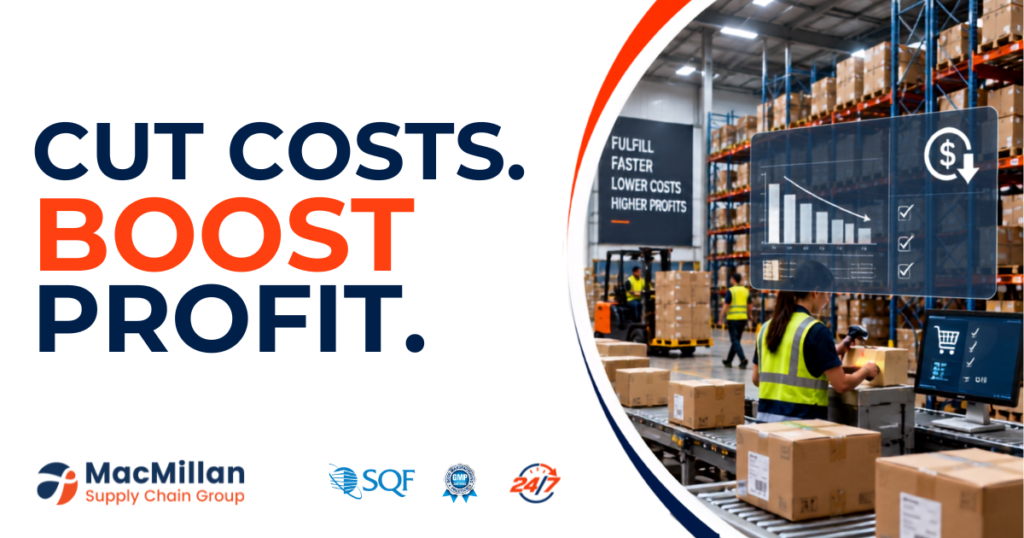
Warehousing is a significant expense. Maintaining a 3pl warehouse constitutes a portion of your overall ecommerce operational costs. Whether you’re renting or purchasing a warehouse, these expenses must be carefully considered. Optimizing your ecommerce warehouse costs is essential for boosting profitability, though it can be a challenging endeavor. To assist you, we’ve created this comprehensive guide to provide an understanding of the various 3pl warehouse costs, the methods used to calculate transparent warehouse pricing, and to help you determine whether buying or renting is the better option for your business. Furthermore, discovering strategies MacMillan uses to optimize your warehouse expenses, so they don’t erode your revenue. What factors contribute to increased 3pl warehouse cost? warehouse costs include a combination of fixed and variable expenses, which fluctuate monthly. A comprehensive understanding of the costs involved is crucial for effective logistics. Let’s delve into the main components of a 3pl warehouse costs: Rent Rent constitutes a significant portion of your warehouse expenses if you’re leasing space. It’s typically calculated based on square footage, meaning costs will vary depending on the total storage area utilized. Some 3pl warehouses also charge based on the number of items stored in the facility. Utilities Utilities such as electricity, heating/cooling, water, internet, and waste disposal are integral to 3pl warehouse operations. These costs are variable, fluctuating based on usage. For instance, heating costs may rise during winter, while electricity expenses might spike during peak seasons like the holidays when the warehouse operates overtime to meet increased demand. Labor Costs A substantial portion of warehouse operational expenses are attributed to labor. This includes wages for staff involved in various processes such as picking, packing, management, and equipment operation. Equipment Costs Equipment costs cover the purchase, rental, and maintenance of warehouse machinery. This includes forklifts, conveyor belts, pallet jacks, Automated Storage and Retrieval Systems, automated guided vehicles, and other essential equipment. Technology pricing Modern warehouses rely on technology like Warehouse Management Systems (WMS) and Inventory Management Systems providing system integration to streamline operations. MacMillan uses the latest tech-driven operations to provide real-time visibility. Order Fulfillment Costs Order fulfillment is another contributor to 3pl warehouse costs. This includes expenses for packaging materials and shipping. If you offer customized unboxing experiences, such as custom packaging, these additional charges fall under fulfillment costs. Insurance and Taxes Insurance is necessary to protect warehouses against damage, injury, or theft, with costs varying based on the types and values of goods stored. How to calculate 3pl warehousing cost? Calculating warehouse pricing involves several factors, including the chosen pricing structure and whether you opt to buy or rent the space. Fixed warehouse pricing structure Fixed variable pricing is the most popular model, where a business rents, leases, or purchases a fixed warehouse space. For rentals, a fixed monthly fee is paid for using the space, regardless of whether the full capacity is utilized. This fee is typically calculated per square foot, based on the total square footage and the cost per square foot. You can use the following formula to calculate this type of warehouse pricing: (Total rental space x Rental cost per square foot) + Operating costs = Monthly warehouse cost Depending on the type of warehouse, you may incur additional expenses for value-added services like kitting, assembly, and fulfillment. Fulfillment providers often offer these services along with distributed 3pl warehousing, allowing you to outsource the entire operation and avoid overhead costs. Another common pricing model in on-demand warehousing is the unit rates model, where charges are based on the number of transactions or units. This model may involve fixed fees per unit, pallet, transaction, or shipment. For instance, at $7 per pallet per month for 1,000 pallets, the total monthly 3pl billing cost would be $7,000. Renting VS Buying Purchasing a warehouse requires a significant initial investment, it can lead to long-term savings on monthly expenses. On the other hand, renting involves a lower initial outlay, making it ideal for smaller operations and businesses with tighter budgets. Factors involved in buying a warehouse Property Cost: (ranges between $625,000 and $750,000 for a 5,000 square foot space) Maintenance Costs: Includes setup, repairs, and ongoing upkeep Applicable Taxes Factors involved in Renting a warehouse Rental Cost: Around $8.84 per square foot in the United States, subject to increases Applicable Taxes Whether you buy or rent, you’ll still need to manage your own 3pl warehouse and fulfillment, which includes accounting for CAM charges, expenses not covered by rent or property cost. How to optimize your 3pl warehouse cost to boost profitability? Warehouse expenses significantly influence your total inventory costs and bottom line, making it crucial to optimize these costs for increased profitability. Optimize Space Utilization Maximize the use of your existing warehouse space to store more inventory with less expenditure. Improve your layout and storage systems, such as replacing racks with AS/AR systems, to better utilize vertical space and fit more inventory. Avoid Overstocking/ Seasonal fluctuation Excess inventory ties up capital and increases holding costs. MacMillan prevents overstocking by accurately forecasting demand and strategically planning procurement to align with these predictions. Improve Inventory Flow Ensure a smooth flow of goods through the warehouse to avoid bottlenecks. Arrange your space logically, placing fast-moving items near shipping docks for quicker access and turnover. Enhance Operational Efficiency Reduce overhead expenses by improving operational efficiency. Invest in automation technology and tools, such as warehouse management software and robotics, to streamline tasks and minimize labor and utility costs. Consider Outsourcing Fulfillment Outsource storage and fulfillment to 3PL warehouse providers to avoid the high costs of buying or renting warehouse space and running operations in-house. Macmillan’s approach to 3pl warehousing? Fortunately, MacMillan offers comprehensive solutions to support these strategies with its world-class warehouse management software and 3pl services. You can also adopt a hybrid approach, while MacMillan alleviates your workload and helps you reduce warehousing expenses. Outsourcing fulfillment and warehousing to MacMillan MacMillan outsourced fulfillment solution relieves you from the burdens of renting and managing your own warehouse. By keeping your inventory
Top 3PL & Logistics Companies in Canada 2026
The top 3PL and logistics companies in Canada in 2026 include providers ranging from specialized Canadian fulfillment partners to large national and global supply chain networks. MacMillan Supply Chain Group, Metro Supply Chain, Canada Cartage, DHL Supply Chain, SHIPHYPE, AMZ Prep, GoBolt and Shipfusion each serve different logistics needs, from FMCG and retail distribution to ecommerce fulfillment and enterprise contract logistics. There is no single “best” 3PL for every Canadian business. A company shipping thousands of retail cases has very different requirements from a Shopify brand processing individual consumer orders. The right provider depends on inventory profile, sales channels, geographic coverage, technology, compliance requirements and the amount of operational flexibility the business needs. This comparison focuses on where each provider may fit rather than treating company size or brand recognition as an automatic measure of service quality. What Does a 3PL Company Do? A third-party logistics provider manages some or all of a company’s logistics operations. Services can include receiving, storage, inventory management, order fulfillment, transportation, returns and value-added work such as kitting or relabelling. Some 3PLs specialize primarily in ecommerce fulfillment. Others manage complex retail distribution, dedicated warehouses, freight transportation and national supply chain programs. Businesses often outsource logistics when internal fulfillment becomes difficult to scale, warehouse costs become too high or customers require faster and more reliable delivery. For companies evaluating outsourcing for the first time, this guide to outsourcing fulfillment to a 3PL explains the operational benefits and questions to consider before making the transition. Top 3PL and Logistics Companies in Canada in 2026 Company Best Fit Key Capabilities MacMillan Supply Chain Group FMCG, retail and omnichannel brands Warehousing, fulfillment, transportation, compliance and value-added services Metro Supply Chain Large national and enterprise operations Warehousing, fulfillment, automation, transportation and last mile Canada Cartage Transportation-led national distribution Dedicated fleet, warehousing, fulfillment and freight DHL Supply Chain Large enterprises and complex contract logistics Dedicated/shared warehousing, fulfillment, automation and supply chain management SHIPHYPE Ecommerce and DTC brands Pick and pack, ecommerce fulfillment and warehousing AMZ Prep Amazon and marketplace sellers FBA preparation, ecommerce fulfillment and marketplace logistics GoBolt Ecommerce brands focused on delivery experience Fulfillment and last-mile logistics Shipfusion Growing ecommerce businesses Warehousing, pick and pack and ecommerce fulfillment 1. MacMillan Supply Chain Group Best suited for: FMCG, consumer goods, retail and omnichannel brands requiring flexible Canadian logistics support. MacMillan Supply Chain Group is a Canadian 3PL providing warehousing, fulfillment, transportation and value-added logistics services. Its operation is particularly relevant to fast-moving consumer goods businesses that need to serve retail, wholesale and ecommerce channels from connected inventory. MacMillan reports more than 300,000 square feet of racked and bulk warehouse space and provides shared and dedicated warehousing options. Its services include inventory management, retail compliance preparation, ecommerce order fulfillment, transportation coordination, container destuffing, kitting and packaging. For FMCG brands, the ability to combine storage with retail preparation can be important. A shipment for a major retailer may require different labels, pallet configurations and documentation from a direct-to-consumer order. Businesses needing these connected services can explore MacMillan’s warehousing and distribution solutions and ecommerce order fulfillment services. MacMillan may be particularly relevant for brands that want a Canadian partner capable of adapting workflows around retailer rules, product categories and promotional programs rather than relying only on standardized fulfillment processes. 2. Metro Supply Chain Best suited for: Enterprise brands requiring large-scale national distribution and sophisticated automation. Metro Supply Chain is one of Canada’s largest supply chain companies. The company reports approximately 22.5 million square feet of warehousing across more than 190 sites spanning multiple countries. Its Canadian operations include facilities serving major markets such as Toronto, Montreal, Vancouver, Calgary, Edmonton and Winnipeg. Services include warehousing, ecommerce fulfillment, B2B distribution, transportation, reverse logistics and value-added operations. Metro also places a strong emphasis on automation, robotics and business intelligence. This scale makes Metro a logical company to evaluate for organizations with complex distribution networks, large inventory volumes or national requirements. Smaller brands should still determine whether the operating model, commercial structure and account requirements are appropriate for their size. 3. Canada Cartage Best suited for: Businesses requiring warehousing alongside a strong transportation network. Canada Cartage has a long-established presence in Canadian transportation and logistics. Its network includes warehouse and fulfillment facilities in markets such as Brampton, Mississauga, Calgary, Edmonton, Vancouver, Winnipeg, Regina and Saskatoon. The company can be attractive to businesses where transportation is a major part of the logistics equation. Rather than treating warehousing and freight as completely separate activities, an integrated provider can coordinate inventory movement with outbound transportation. This can be particularly valuable for manufacturers, retailers and distributors shipping palletized freight or replenishing customers across multiple Canadian regions. When comparing a transportation-focused 3PL, businesses should examine shipment visibility, carrier options, delivery performance and how warehouse orders move into the transportation network. 4. DHL Supply Chain Best suited for: Large enterprises requiring sophisticated contract logistics and global capabilities. DHL Supply Chain operates at a different scale from many regional Canadian fulfillment businesses. Its warehousing solutions include dedicated and shared operations, inventory management, ecommerce fulfillment, cross-docking, packaging and returns management. DHL also invests heavily in automation and digital warehouse technology. Its enterprise model can suit companies operating complex supply chains across several countries or requiring highly structured contract logistics. Large manufacturers, healthcare companies, retailers and multinational consumer brands may benefit from this depth of infrastructure. However, a global enterprise 3PL is not automatically the best choice for a smaller Canadian company. The level of customization, minimum volumes, implementation complexity and account structure should all be evaluated before making a decision. 5. SHIPHYPE Fulfillment Best suited for: Ecommerce, direct-to-consumer and growing online brands. SHIPHYPE is a fulfillment-focused 3PL serving ecommerce businesses in Canada and the United States. It appears prominently in several current Canadian 3PL directories and specializes in warehousing, pick-and-pack fulfillment and shipping for online brands. The company may appeal to Shopify and DTC businesses looking for a fulfillment partner built around parcel orders rather than traditional pallet distribution. When considering an ecommerce-focused provider, brands
A Guide to Audit your 3PL Warehouse: Technologies and Processes
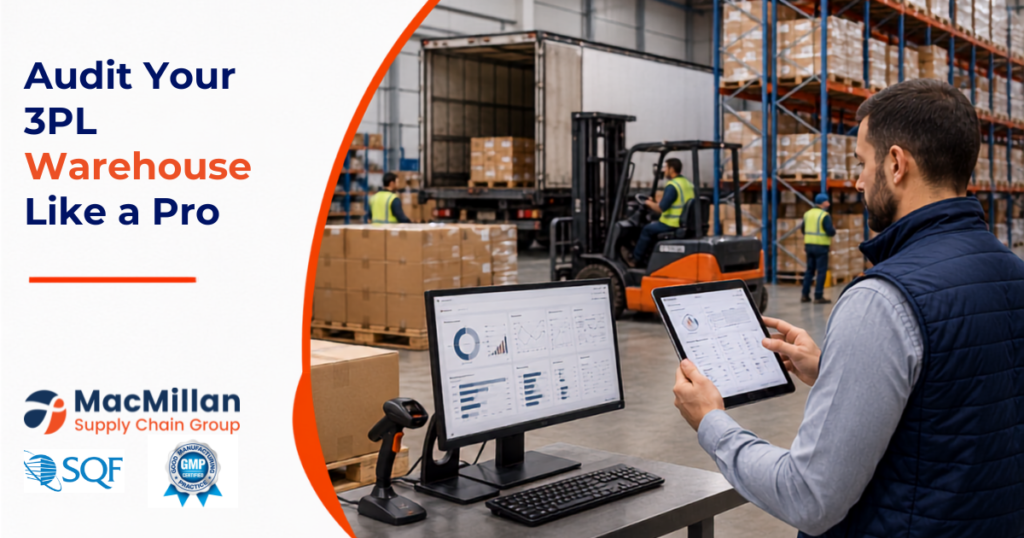
As a 3PL provider, 3PL warehouse manager overseeing warehouse operations, it’s crucial to know how to audit your warehouse technology and processes effectively. Audits help identify areas needing improvement, allowing businesses to enhance inventory accuracy, visibility and boost efficiency. By evaluating your current 3pl warehouse practices, you can pinpoint internal operational gaps and consider technological solutions to optimize all aspects of order fulfillment. So, what should you focus on when auditing your warehouses? Let’s delve into the specifics to ensure you implement best practices for optimized business operations! What is a Warehouse Audit? A warehouse audit is a comprehensive analysis of your warehouse’s technology and processes. This systematic and objective examination identifies areas for needed changes and opportunities for optimization. An audit evaluates the effectiveness of your 3pl warehouse operations, the efficiency of your technology, and the accuracy of your inventory management. Steps to Audit a 3pl warehouse? Auditing a warehouse requires a structured and methodical approach. Here are the key steps to guide you through the process: 1. Create a Warehouse Audit Checklist Develop a detailed warehouse audit checklist covering all aspects of your operations. Include critical areas such as receiving and put-away, order picking, packing and shipping, inventory management, and technology systems. This checklist will serve as your audit roadmap, ensuring thorough coverage of all necessary areas. 2. Evaluate the Warehouse Layout and Design The layout and design of your warehouse significantly impact operational efficiency. Assess factors like pallet width, storage density, and the flow of goods to ensure the design is optimized for your needs. Such as MacMillan provides transparent pricing layouts to storage and inventory tracking using integrated WMS. 3. Review Receiving and Put Away Processes Receiving and put-away are vital daily functions that require regular auditing to ensure efficiency. Ensure your receiving team thoroughly inspects all incoming shipments and stores them correctly with zero error rates for damaged goods. MacMillan provides a 0.01% error rate with responsiveness. 4. Analyze Order Picking Processes Order picking is crucial to warehouse operations, and inefficiencies can lead to errors and delays. Analyze these processes to ensure they are optimized for speed and accuracy, using appropriate procedures and technology. 5. Assess Packing and Shipping Processes Packing and shipping are essential components that must be efficient and error-free as customers want real-time access in today’s market. Verify that packers use correct materials and follow proper procedures to maintain quality throughout the process. 6. Review Inventory Management Processes Effective inventory management is crucial for a 3pl warehouse success. Ensure your inventory tracking systems are up-to-date and that staff manage stock levels accurately. 7. Evaluate 3pl Warehouse Technology Systems Modern warehouses rely heavily on tech-driven operations. Assess your systems to ensure they are functioning correctly and fully integrated with your processes. Make sure your technology is up-to-date and meets your 3pl warehouse’s specific needs. By following these steps, you can conduct a thorough warehouse audit, identify areas for improvement, and implement best practices to enhance your warehouse operations. What are the Warehouse audit procedures can you use? Planning and conducting a 3pl Warehouse Audit Conducting a warehouse audit will vary based on your specific needs and the complexity of your warehouse operations. However, some general guidelines can ensure your audit is thorough and effective: 1. Define the Scope Clearly define the scope of your 3pl warehouse audit, specifying which aspects of your operations you plan to examine. MacMillan focuses on the most critical areas and ensures that all necessary elements of the warehouse operations are covered, i.e. providing on-site visits for the customers has a long-term impact. 2. Assign Responsibilities Start by assigning tasks to individuals who will lead, perform, and implement changes based on the audit findings. Clear responsibility ensures accountability and smooth execution. 3. Conduct the Audit During the audit, take detailed notes and document any areas of concern or opportunities for improvement. Follow your warehouse audit checklist to ensure comprehensive coverage of all relevant areas. 4. Analyze the Results Use your audit checklist and notes to guide your analysis of the audit results. Include key stakeholders in this process to identify areas of concern and opportunities for improvement. 5. Develop an Action Plan Based on your analysis, develop a specific, measurable, achievable, relevant, and time-bound (SMART) action plan to address the identified issues. This plan should outline clear steps and timelines for implementing improvements. 6. Implement Changes Execute the changes identified in your action plan and monitor their effectiveness. Communicate any changes to your team and provide necessary training to ensure a smooth transition and adoption of new practices. By following these guidelines, you can conduct a comprehensive 3pl warehouse audit that identifies key areas for improvement and sets the stage for enhanced efficiency and accuracy in your warehouse operations. Position Your Warehouse for Success Regularly auditing your warehouse technologies and processes is crucial for maintaining efficient operations and ensuring tasks are completed accurately. This thorough review can reveal areas for improvement and provide opportunities to address any issues. A 3pl warehouse management system (WMS) such as that used by MacMillan can significantly aid this process by streamlining tasks and reducing errors. Try Macmillan to gain ultimate control over your inventory with improved visibility into daily activities, ideal for conducting a successful audit! Key Takeaways Conducting regular audits of your 3pl warehouse technology and processes is essential for maintaining operational efficiency and accuracy. By thoroughly evaluating your current practices, you can identify internal process gaps and implement technological solutions to optimize all aspects of order fulfillment. Following a structured approach, from defining the audit scope and assigning responsibilities to analyzing results and implementing a SMART action plan guarantees a comprehensive review. Utilizing a robust warehouse management system like MacMillan’s can streamline this process.