
What Energy Chokepoints Like Hormuz Mean for Modern Supply Chain Risk
A Quick Summary and Overview Energy chokepoints like the Strait…

A Quick Summary and Overview Energy chokepoints like the Strait…
Quick Summary and Overview B2C order fulfillment is a crucial…
A quick summary and overview Amazon FBA (Fulfillment by Amazon)…
A Quick Summary and Overview Third-party logistics (3PL) is reshaping…
Introduction: Why Speed is the New Currency
Let’s face it: we’ve all abandoned an online cart because delivery took “5-7 business days.” In today’s I-want-it-now world, customer experience isn’t just about quality products—it’s about lightning-fast fulfillment. Enter micro-fulfillment centers, the unsung heroes helping retailers turn “Where’s my order?” angst into “Wow, that was quick!” loyalty. By blending urban convenience with automation smarts, MFCs aren’t just solving last-mile headaches—they’re rewriting the rules of retail.
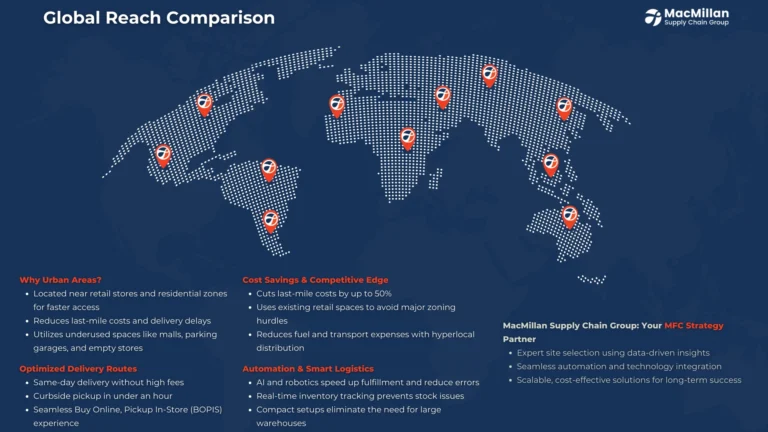
Why cities? Simple math: the closer your stockpile of products is to customers, the faster they get their hands on them. MFCs thrive in urban jungles, often hiding in plain sight—inside malls, under parking garages, or even repurposed retail spaces. This isn’t just about saving on gas; it’s about offering game-changers like:
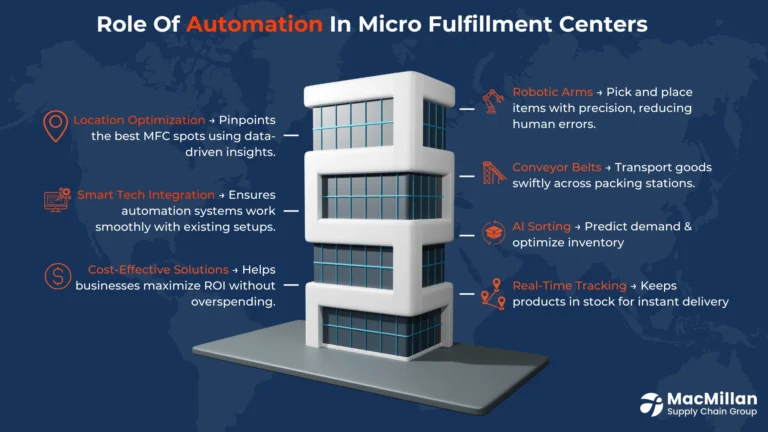
Picture this: robotic arms plucking items off shelves, conveyor belts whisking orders to packing stations, and AI predicting what you’ll buy next week. That’s the automation backbone of MFCs. These tech tools aren’t just flashy gadgets—they’re precision instruments that:
It’s like having a 24/7 warehouse crew that never calls in sick.

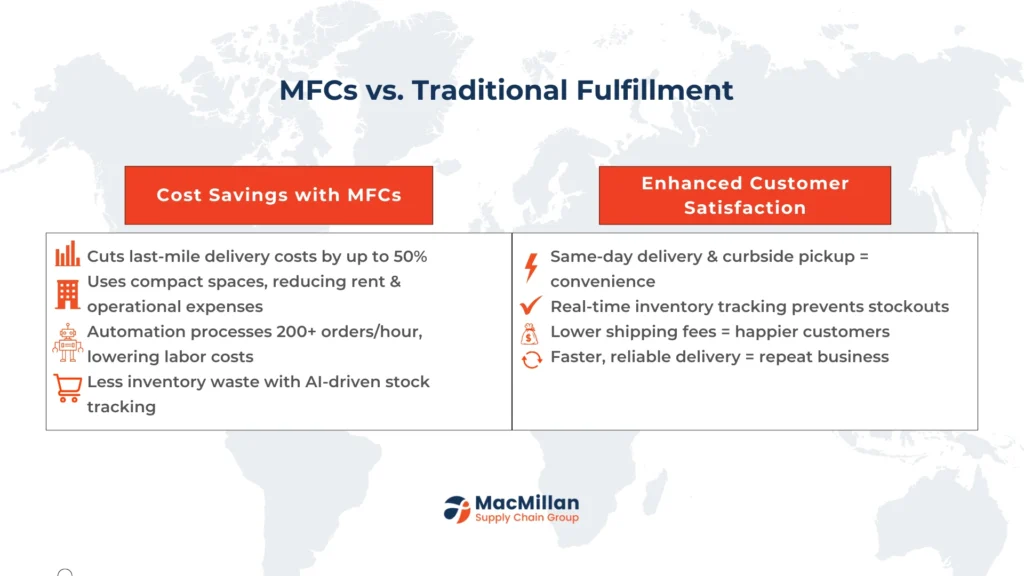
Sure, speed wows customers—but let’s talk money. MFCs are the ultimate frugal innovators:
Those savings? Reinvest them in loyalty programs, sharper pricing, or finally launching that eco-friendly packaging you’ve been eyeing.
Here’s a secret: customers don’t just want fast delivery—they crave reliability. When you promise “by 7 PM” and deliver at 6:58 PM, you’re not just moving a product; you’re building trust. MFCs let small retailers punch above their weight, offering:
Happy customers = repeat buyers = your CFO doing a victory lap.

MFCs aren’t all rainbows and robots. Common hiccups include:
MacMillan Supply Chain’s Fix-It Kit:
Thinking about MFCs but overwhelmed? Start here:
Tap into MacMillan’s 15+ years of supply chain wizardry. Let’s design an MFC strategy that turns your logistics into a profit engine—not a cost sink.
In the race for customer loyalty, micro-fulfillment centers aren’t just a nice-to-have—they’re your secret weapon. And with partners like MacMillan, you’ll spend less time untangling supply chain knots and more time celebrating those 5-star “lightning fast delivery” reviews
A micro-fulfillment center is a compact facility that stores inventory near consumers to expedite order delivery.
They are strategically positioned in urban areas, often within or next to retail stores to minimize product travel distance.
By housing inventory closer to end-users, MFCs shorten the delivery window significantly.
Automation technologies like robots and software streamline the fulfillment process, enhancing speed and accuracy.
Absolutely. Small retailers gain competitive delivery speeds typically associated with larger entities.
Typically, MFCs require restocking every 1 to 2 days due to their limited storage capacity.
Yes, they can be seamlessly incorporated into existing operations to offer enhanced omnichannel solutions.
They include faster delivery times, lower logistics costs, improved customer satisfaction, and increased agility in supply chain management.