
Electronics Fulfillment: Key Considerations for Businesses

A quick summary and overview Electronics fulfillment presents unique challenges for businesses, requiring specialized handling, secure storage, and precise inventory management. From delicate components requiring anti-static protection to high-value items needing enhanced security, electronics demand more than standard fulfillment solutions. This guide explores the critical considerations for businesses seeking electronics fulfillment services in Canada, including cross-border shipping complexities, returns management, and technology integration. We’ll examine how partnering with an experienced 3PL like MacMillan Supply Chain Group can provide the expertise, infrastructure, and technology needed to protect your products, satisfy customers, and grow your electronics business. Introduction The electronics industry operates in a world of constant innovation and high customer expectations. When shoppers order the latest smartphone, laptop, or smart home device, they expect perfect condition, rapid delivery, and a seamless experience from click to doorstep. Behind this seemingly simple transaction lies a complex web of logistics challenges unique to electronics fulfillment. Electronics products combine high value with technical complexity and fragility. A single static discharge can damage sensitive components, while improper handling can render expensive devices unusable. Add in specialized regulatory requirements, cross-border shipping complications, and high return rates, and it’s clear why electronics fulfillment demands specialized expertise. For Canadian businesses and those shipping into Canada, these challenges multiply. Cross-border shipping to Canada involves navigating customs regulations, duties, and taxes that can significantly impact delivery times and costs. Working with a 3PL provider that understands both electronics handling and Canadian logistics creates a competitive advantage that can transform your supply chain from a challenge into a strategic asset. The Unique Challenges of Electronics Fulfillment Electronics fulfillment isn’t just about moving boxes from warehouse shelves to shipping trucks. It requires specialized knowledge and infrastructure to protect valuable, sensitive products throughout the fulfillment journey. Electronic devices demand climate-controlled storage environments with precise temperature and humidity control. Fluctuations can damage sensitive components or create condensation that shorts out circuits. Professional electronics fulfillment centers maintain stable environmental conditions year-round, protecting your inventory from seasonal weather changes that could otherwise lead to costly damage. Security represents another critical concern. With high-value items like laptops, smartphones, and gaming consoles, theft prevention becomes paramount. Robust security measures including restricted access areas, surveillance systems, and rigorous inventory controls help prevent shrinkage. Serial number tracking adds another layer of protection while enabling warranty management and facilitating recalls if necessary. Packaging for electronics requires specialized materials and techniques. Anti-static bags protect against electrostatic discharge that can silently damage components. Custom foam inserts prevent movement during transit, while reinforced boxes provide external protection. Professional electronics fulfillment partners understand these requirements and maintain appropriate packaging materials for different product types, ensuring your devices arrive in perfect working condition. For businesses handling lithium batteries—common in everything from smartphones to electric toothbrushes—regulatory compliance adds another layer of complexity. These batteries are classified as hazardous materials with specific packaging, labeling, and shipping requirements. Working with an experienced 3PL ensures your shipments meet all safety regulations while avoiding delays and penalties. Canadian Electronics Fulfillment Considerations The Canadian electronics market presents both opportunities and challenges for businesses. With high internet penetration and growing e-commerce adoption, Canadian consumers are increasingly purchasing electronics online. However, serving this market effectively requires understanding its unique logistics landscape. Geography represents the first challenge. Canada’s vast territory means strategic warehouse placement becomes essential for efficient delivery. Positioning inventory in key locations like Ontario provides access to major population centers while minimizing shipping costs and delivery times. MacMillan Supply Chain’s strategically located facilities in the Greater Toronto Area offer ideal positioning to reach most Canadian consumers quickly. Cross-border shipping to Canada introduces additional complexities. Recent changes to Section 321 de minimis exemptions have eliminated duty-free status for most shipments, regardless of value. This means all electronics imports now face potential duties and taxes, along with customs documentation requirements. An experienced Canadian 3PL partner can navigate these requirements efficiently, preventing costly delays at the border. Canadian consumers expect fast delivery despite these challenges. Last-mile delivery services optimized for the Canadian market help meet these expectations while controlling costs. Local fulfillment reduces delivery times from days to hours while eliminating cross-border shipping headaches entirely. Language considerations also impact Canadian electronics fulfillment. With both English and French as official languages, product documentation, packaging, and customer communications may need to accommodate both languages. Working with a Canadian 3PL familiar with these requirements ensures compliance with language regulations while creating a better customer experience. Technology and Automation in Electronics Fulfillment The electronics industry thrives on innovation—and so should your fulfillment operations. Today’s most effective electronics fulfillment centers leverage advanced technology to improve accuracy, speed, and efficiency throughout the supply chain. AI-powered warehousing systems transform traditional fulfillment operations through intelligent automation. These systems optimize everything from warehouse layout to picking routes, reducing labor costs while increasing throughput. Machine learning algorithms analyze order patterns and predict demand fluctuations, enabling proactive inventory management that prevents stockouts during peak periods. Automated fulfillment centers use robotic systems for repetitive tasks like picking, packing, and sorting. These systems achieve processing speeds up to five times faster than manual operations while maintaining consistent accuracy rates exceeding 99.9%. For electronics businesses experiencing rapid growth or seasonal demand spikes, this automation provides scalability without sacrificing quality or speed. Inventory management solutions powered by real-time tracking technologies provide unprecedented visibility throughout the supply chain. RFID systems track individual items without line-of-sight scanning, while integrated inventory platforms synchronize stock levels across all sales channels. This prevents overselling while providing accurate availability information to customers. Demand forecasting tools analyze historical sales data, market trends, and seasonal patterns to predict future inventory needs. For electronics businesses with rapidly changing product lines or seasonal demand variations, these predictive capabilities help optimize inventory levels—reducing carrying costs while ensuring product availability when customers are ready to buy. Common problems with electronics fulfillment Despite best efforts, electronics fulfillment presents several common challenges that can impact customer satisfaction and operational efficiency. Understanding these problems helps businesses develop effective strategies to overcome them. High return rates plague
Buffer Inventory in 3PL: Boost Efficiency & Optimize Supply Chain
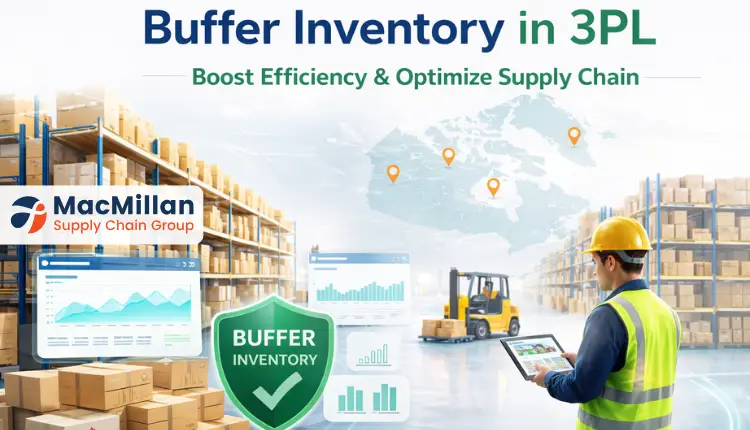
A quick summary and overview Buffer inventory, also known as safety stock, serves as a strategic cushion in third-party logistics operations. It protects businesses against supply chain uncertainties while ensuring consistent customer service. For Canadian businesses partnering with 3PL providers like MacMillan Supply Chain Group, properly managed buffer inventory can dramatically improve fulfillment speed, reduce stockouts, and create supply chain resilience. This comprehensive guide explores how buffer inventory works within 3PL operations, its key benefits, implementation strategies, and how it can transform your logistics operations across Canada and beyond. What Is Buffer Inventory and Why Does It Matter in 3PL? In today’s fast-paced business environment, meeting customer expectations isn’t just important—it’s essential for survival. When you partner with a third-party logistics (3PL) provider like MacMillan Supply Chain Group, one of the most powerful tools at your disposal is buffer inventory. But what exactly is buffer inventory? Simply put, it’s additional stock kept on hand beyond what’s needed for immediate demand. Think of it as your safety net—ready to deploy when unexpected situations arise. In 3PL operations, this extra inventory helps maintain service levels despite supply chain disruptions, demand spikes, or delivery delays. For Canadian businesses navigating complex supply chains, buffer inventory isn’t just a nice-to-have—it’s a strategic necessity. Whether you’re shipping across the Greater Toronto Area or managing cross-border fulfillment between Canada and the US, proper safety stock management ensures your customers get what they need, when they need it. Let’s explore how this works and why it matters to your business. The Strategic Role of Buffer Inventory in 3PL Operations Buffer inventory plays a crucial role in modern third-party logistics, transforming how businesses approach fulfillment and customer satisfaction. But how exactly does it work within a 3PL environment? In traditional inventory management, companies often struggle with the balance between having too much stock (increasing carrying costs) and too little (risking stockouts). This is where 3PL providers like MacMillan Supply Chain Group add tremendous value. We maintain strategically positioned buffer inventory across our fulfillment network, creating multiple benefits: Protection Against Supply Chain Disruptions Supply chains face constant challenges—from weather events affecting transportation to supplier delays or global disruptions. Buffer inventory provides a cushion against these uncertainties. When a shipment from your manufacturer is delayed, your safety stock ensures orders still go out on time. Enhanced Customer Satisfaction Today’s consumers expect fast, reliable delivery. With buffer inventory strategically positioned in our Canadian fulfillment centers, we can offer same-day or next-day shipping to major markets. This speed creates competitive advantage and builds customer loyalty. Seasonal Demand Management Most businesses experience fluctuating demand throughout the year. During peak seasons like holidays or promotional periods, buffer inventory prevents stockouts when orders surge. Our warehouse management system (WMS) tracks these patterns and adjusts safety stock levels accordingly. By integrating buffer inventory into your 3PL strategy, you’re not just storing extra products—you’re creating a responsive supply chain that can adapt to changing market conditions while maintaining consistent service levels. Calculating Optimal Buffer Levels: The Science Behind Safety Stock Determining the right amount of buffer inventory isn’t guesswork—it’s a science that combines data analysis with strategic planning. At MacMillan Supply Chain Group, we use sophisticated approaches to calculate optimal safety stock levels for each product in your inventory. Key Factors in Buffer Inventory Calculations Several variables influence how much buffer stock you should maintain: Demand variability: How much does demand fluctuate from week to week or month to month? Lead time: How long does it take to receive new inventory from suppliers? Service level targets: What percentage of orders must be fulfilled immediately? Seasonality: Do you experience predictable demand spikes during certain periods? Product value: Higher-value items may require different buffer strategies than lower-value ones Our inventory optimization experts use these factors in mathematical formulas to determine precise safety stock requirements. For example, a basic calculation might look like: Safety Stock = Z-score × Standard Deviation of Demand × √Lead Time Where the Z-score represents your desired service level (higher Z-scores provide greater protection against stockouts). ABC Analysis for Smarter Buffer Management Not all products deserve the same buffer strategy. We implement ABC analysis in inventory management to categorize your products: A items: High-value, high-volume products that require precise buffer management B items: Moderate-value products with steady demand C items: Lower-value items that might need proportionally higher buffers due to irregular demand This segmentation ensures you’re investing in buffer inventory where it matters most, optimizing both service levels and carrying costs across your product range. Technology-Driven Buffer Management in Modern 3PL The effectiveness of buffer inventory depends heavily on the technology systems supporting it. Modern 3PL providers like MacMillan Supply Chain Group leverage advanced warehouse management systems (WMS) and integrated technologies to optimize safety stock management. Real-Time Inventory Visibility Our WMS provides complete visibility into your inventory levels across all locations. This transparency allows for: Instant access to current stock levels, including buffer inventory Automated alerts when safety stock falls below predetermined thresholds Historical data analysis to refine buffer calculations over time Integration with your own systems for seamless information flow With real-time visibility, both our team and yours can make informed decisions about inventory positioning and replenishment. Predictive Analytics and Demand Forecasting Beyond tracking current inventory, our systems use predictive analytics to anticipate future needs. By analyzing historical sales data, seasonal patterns, and market trends, we can forecast demand with remarkable accuracy. This demand forecasting capability allows us to: Adjust buffer levels before demand spikes occur Reduce safety stock during predictable slow periods Identify emerging trends that might affect inventory requirements Recommend proactive inventory positioning strategies The combination of real-time visibility and predictive analytics creates a dynamic buffer inventory system that continuously adapts to changing conditions. Rather than static safety stock levels that might be reviewed quarterly, our technology enables weekly or even daily adjustments to optimize your inventory investment while maintaining service levels. Geographic Buffer Strategies: Positioning Inventory for Speed Where you position your buffer inventory is just as important as how much you maintain. MacMillan Supply Chain Group’s extensive fulfillment
3PL Fulfillment Center Locations in Canada: 5 Key Factors
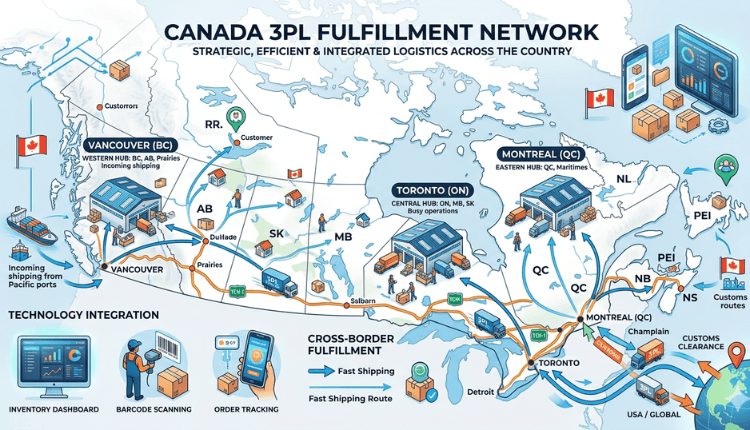
A Quick Summary and Overview Choosing the right 3PL fulfillment center location is a strategic decision that directly impacts your shipping costs, delivery times, and overall customer satisfaction. This comprehensive guide explores the five essential factors businesses must evaluate when selecting optimal warehouse locations: geographic proximity to customers, transportation infrastructure, technology integration capabilities, cost considerations, and scalability potential. Whether you’re expanding your e-commerce operation or optimizing your existing supply chain, understanding these key factors will help you make informed decisions that support your business growth and enhance your competitive advantage in the marketplace. Why Your 3PL Fulfillment Center Location Matters More Than You Think In today’s fast-paced business environment, where next-day and same-day delivery options have become the norm, the strategic placement of your 3PL fulfillment center can make or break your customer experience. But how do you determine the ideal location for your warehousing and distribution operations? At MacMillan Supply Chain Group, we’ve helped countless businesses optimize their fulfillment networks across Canada and beyond. We’ve learned that successful 3PL fulfillment center selection isn’t just about finding available space—it’s about making a strategic decision that balances multiple factors to create a competitive advantage. Whether you’re looking for fulfillment services in Canada or exploring cross-border shipping options, understanding these five key evaluation factors will help you make informed decisions that drive efficiency, reduce costs, and ultimately delight your customers. Geographic Proximity to Your Customer Base The most fundamental factor in selecting a 3PL fulfillment center location is proximity to your customers. Why? Because being closer to your end consumers directly translates to faster delivery times and reduced shipping costs. Canadian businesses often face unique challenges due to the country’s vast geography and dispersed population centers. If most of your customers are concentrated in Ontario, a fulfillment center in Toronto makes perfect sense. Similarly, if you serve Western Canada, a fulfillment center in Vancouver provides strategic advantages. When analyzing customer proximity, consider these elements: Customer density maps: Where are your customers most concentrated? High-density areas often justify dedicated fulfillment centers. Shipping zones: Carriers like Canada Post and FedEx use zone-based pricing. The fewer zones a package crosses, the lower your shipping costs. Delivery time expectations: If you promise two-day delivery, your fulfillment center must be positioned to meet that commitment. For businesses serving both Canadian and U.S. markets, cross-border shipping considerations become crucial. A strategically located warehouse near major border crossings can significantly reduce customs delays and transportation costs. Remember, the goal isn’t necessarily to be close to your business headquarters—it’s to be close to your customers. Many successful e-commerce companies operate fulfillment centers hundreds of kilometers from their main offices to optimize their distribution networks. Transportation Infrastructure and Accessibility Even the most perfectly positioned 3PL fulfillment center won’t deliver value if it lacks proper transportation connections. When evaluating potential locations, transportation infrastructure should be a top priority. Look for these key transportation elements: The quality of local roads and seasonal considerations also matter. Some regions experience severe winter conditions that can impact delivery reliability. A fulfillment center in Toronto or Vancouver typically offers more consistent year-round accessibility than more remote locations. For businesses engaged in cross-border logistics fulfillment, proximity to major border crossings like Windsor-Detroit, Niagara Falls, or Vancouver-Seattle corridors can streamline customs processes and reduce transit times. Don’t overlook last-mile delivery solutions in CA either. Urban fulfillment centers may face traffic congestion but offer faster final delivery, while suburban locations might provide better highway access but longer last-mile routes. Technology Integration and Warehouse Management Systems Modern 3PL fulfillment centers are technology-driven operations. When selecting a location, the technological capabilities of the facility should factor heavily into your decision-making process. Leading Canadian 3PL solutions providers offer advanced warehouse management systems (WMS) that provide: Real-time inventory visibility Order tracking capabilities Integration with your e-commerce platforms Automated picking and packing processes Detailed reporting and analytics The technology infrastructure at your chosen location directly impacts fulfillment accuracy, processing speed, and overall operational efficiency. A technologically advanced fulfillment center in Vancouver or Toronto might command higher rates but deliver superior performance that justifies the investment. When evaluating technology capabilities, ask potential 3PL partners: How does their WMS integrate with your existing systems? What level of visibility will you have into inventory and orders? What automation technologies are deployed in the facility? How do they handle system upgrades and maintenance? What redundancies exist to prevent downtime? For e-commerce fulfillment in CA, seamless integration between your online store and the 3PL’s systems is particularly crucial. The right technology stack enables real-time inventory updates, automated order processing, and efficient returns management—all essential components of a positive customer experience. Remember that technology capabilities can vary significantly between facilities, even within the same 3PL network. Cost Structure and Economic Considerations While strategic location and technological capabilities are crucial, cost remains a fundamental consideration when selecting a 3PL fulfillment center. Understanding the complete cost structure helps you make economically sound decisions. When evaluating affordable fulfillment centers in Canada, consider these cost factors: Base storage costs: How much will you pay per square foot or pallet position? Order processing fees: What are the picking, packing, and shipping charges? Value-added service costs: Are there additional fees for kitting, custom packaging, or returns processing? Minimum commitments: Is there a monthly minimum charge regardless of volume? Seasonal surcharges: Do rates increase during peak periods? Regional economic variations can significantly impact your total costs. While warehouse space in downtown Toronto commands premium rates, facilities in surrounding areas may offer substantial savings while maintaining excellent transportation access. Labor costs also vary by region. Areas with competitive job markets may have higher wage requirements but often provide access to a more skilled workforce. This is particularly important for fulfillment operations requiring specialized handling or technical expertise. For businesses utilizing cross-border shipping from Canada, understanding the complete landed cost picture—including duties, taxes, and customs brokerage fees—is essential for accurate financial planning. Don’t focus exclusively on the lowest base rate. A slightly higher-priced facility with superior efficiency, lower error
Choosing the Right Logistics Company in Ontario: A Step-by-Step Guide
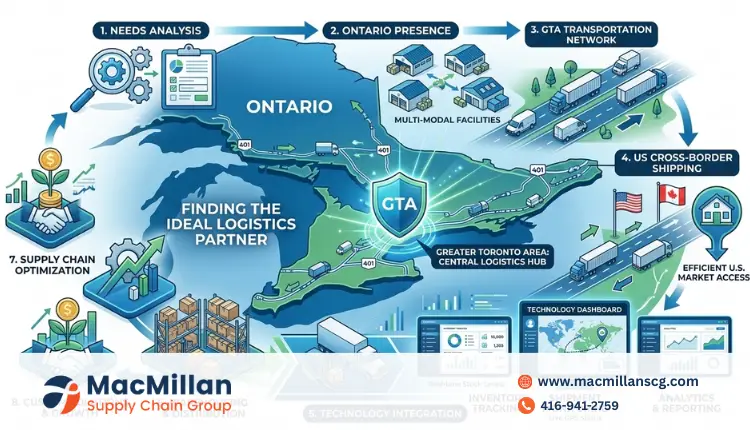
A Quick Summary and Overview Finding the ideal logistics partner in Ontario can transform your business operations and drive growth.This comprehensive guide walks you through the essential steps of selecting a logistics company that alignswith your specific needs. From understanding Ontario’s unique logistics landscape to evaluating technologycapabilities and conducting proper due diligence, we cover everything you need to make an informed decision.MacMillan Supply Chain Group offers expert insights based on years of experience serving businesses throughoutthe Greater Toronto Area and beyond. Finding Your Perfect Logistics Partner in Ontario Choosing the right logistics company in Ontario represents one of the most consequential decisions your businesswill make. The partner you select doesn’t just move your products—they become an extension of your brand,directly impacting customer satisfaction, operational efficiency, and your bottom line. Ontario’s strategic location makes it Canada’s logistics powerhouse, with the Greater Toronto Area servingas a critical hub for domestic and cross-border shipping. With hundreds of 3PL providers in Canada operatingacross the province, identifying the right partner requires a structured approach. Understanding Ontario’s Unique Logistics Landscape Ontario serves as Canada’s economic engine, offering unmatched access to domestic and U.S. markets.The Greater Toronto Area sits at the center of a transportation network reaching over 135 million consumerswithin a day’s drive. The province features world-class infrastructure, including Toronto Pearson International Airport,extensive highway systems, and rail connections to major North American markets. This multi-modal connectivityallows logistics providers to tailor transportation strategies for efficiency and cost control. Specialized logistics services are another advantage, ranging from temperature-controlled warehousingto high-security storage. Seasonal weather challenges further emphasize the importance of contingency planningand operational resilience. Essential Criteria for Evaluating Logistics Providers Service Capabilities: Ensure services align with your exact operational needs. Geographic Coverage: Facilities should be strategically located near key markets. Technology Integration: Real-time visibility and system compatibility are critical. Financial Stability: A financially sound partner ensures long-term reliability. Industry Experience: Sector expertise reduces risk and improves efficiency. The Step-by-Step Selection Process Define detailed logistics requirements and create an RFP. Research Ontario logistics providers and build a shortlist. Conduct preliminary capability and technology screening. Evaluate RFP responses beyond pricing. Visit facilities and assess operations firsthand. Verify references from similar businesses. Technology Capabilities and Integration 1. Warehouse Management Systems (WMS) Advanced WMS platforms ensure inventory accuracy, efficient order processing,barcode scanning, lot tracking, and customizable reporting. 2. Transportation Management Systems (TMS) TMS solutions optimize routing, carrier selection, and shipment tracking,helping reduce transportation costs while maintaining service levels. 3. E-Commerce Integration Seamless integration with platforms like Shopify and WooCommerce enablesautomated order flow and real-time inventory synchronization. 4. Customer Portals Client-facing dashboards provide visibility into orders, inventory,and shipment performance without manual intervention. 5. Data Analytics & Business Intelligence Analytics tools convert operational data into actionable insights,supporting data-driven decision-making. 6. APIs and EDI Integration Robust API and EDI connections ensure seamless data exchange between systems,eliminating errors and manual processes. Pitfalls to Avoid When Choosing a Logistics Partner Choosing based on price alone Skipping due diligence and facility visits Ignoring scalability requirements Overlooking cultural alignment Failing to define clear SLAs Underestimating implementation complexity MacMillan’s Approach to Logistics Partnership Success MacMillan Supply Chain Group applies a consultative approach focused on long-term partnership success.We design customized solutions aligned with your operational needs, growth plans, and strategic objectives. Our GTA-based warehouse facilities, advanced technology systems, and transportation expertise supportdomestic and cross-border supply chain operations with precision and scalability. Implementing Your Logistics Partnership Successfully Create a detailed implementation plan with clear milestones. Assign cross-functional implementation teams. Develop and document standard operating procedures. Conduct phased system testing before launch. Use pilot programs to minimize transition risk. Establish structured communication protocols. Ready to Optimize Your Supply Chain? MacMillan Supply Chain Group provides tailored Ontario logistics services includingwarehouse management in the GTA, freight forwarding in Toronto, and cross-border shipping Canada–US. Contact us today to discover how our customized logistics solutions can reduce costs,improve efficiency, and support your business growth. Call (905) 695-1111 or visit our website to start the conversation. FAQ What services should I expect from a full-service logistics company in Ontario? A comprehensive logistics provider in Ontario should offer warehousing and inventory management, order fulfillment, transportation management, cross-border shipping services, returns processing, and value-added services like kitting or light assembly. The best logistics company in Ontario will provide integrated solutions combining these services under unified management with consistent performance reporting. Look for providers offering both standard service packages and customized solutions tailored to your specific requirements. Technology platforms should connect these services, providing visibility across your entire supply chain through user-friendly interfaces. How do I determine the right warehouse location for my business in the GTA? The ideal warehouse location depends on your customer distribution, supplier locations, and transportation requirements. For e-commerce businesses focusing on urban delivery, facilities near Toronto’s core provide faster delivery times and lower last-mile costs. Companies shipping primarily to other businesses might benefit from locations near major highways with easy access to transportation corridors. Cross-border shippers should consider proximity to border crossings and customs facilities. Analyze your order patterns to identify where most of your customers are located, then select warehouse locations that minimize transportation costs and delivery times to these key markets. What technology capabilities should I look for in a modern logistics provider? Modern logistics partners should offer comprehensive technology solutions including warehouse management systems, transportation management platforms, order management capabilities, and customer-facing portals. Look for real-time inventory visibility, automated order processing, and detailed performance reporting. Integration capabilities are particularly important—the provider’s systems should connect seamlessly with your ERP, e-commerce platform, or order management system. For e-commerce fulfillment in Canada, ensure the provider integrates with your selling platforms for automated order processing and inventory synchronization. Advanced providers increasingly offer predictive analytics, exception management, and continuous improvement tools. How do pricing models typically work for 3PL providers in Canada? Logistics pricing typically includes several components: storage fees (usually charged per pallet, square foot, or cubic foot), handling charges (per order, per line item, or per unit), transportation costs (based on weight, distance, and service
Is On-Demand 3PL Warehousing Right for Your Business?
A Quick Summary and Overview On-demand 3PL warehousing offers businesses a flexible way to handle storage, fulfillment, and shipping without the overhead of managing their own facilities. This model lets companies pay only for the space and services they use, making it ideal for seasonal businesses or those experiencing growth. With benefits like reduced capital investment, professional logistics expertise, and scalable operations, on-demand warehousing has become a game-changer for many Canadian businesses looking to optimize their supply chain while focusing on core operations. Introduction Running a growing business comes with plenty of challenges, but managing warehouse space shouldn’t be one of them. As e-commerce continues to boom across Canada and customer expectations for fast delivery rise, many businesses find themselves at a crossroads: invest in their own warehouse infrastructure or partner with a third-party logistics (3PL) provider. On-demand 3PL warehousing represents a modern approach to this age-old problem. Rather than committing to long-term leases or building your own facilities, you can access professional warehousing services when and where you need them. What Is On-Demand 3PL Warehousing? On-demand 3PL warehousing is a flexible logistics solution where businesses can access warehouse space, fulfillment services, and distribution networks without long-term commitments. You only pay for the space and services you actually use. Core components include: Flexible warehouse space based on inventory needs Professional picking, packing, and shipping services Real-time inventory management systems Scalable resources during peak seasons Integration with e-commerce platforms Key Benefits of On-Demand 3PL Warehousing Partnering with a Canadian 3PL service provider offers more than outsourced storage. It provides financial flexibility, improved geographic reach, and operational efficiency. Reduced capital investment and improved cash flow Faster shipping with fulfillment centers across Canada Higher order accuracy through automation Access to discounted shipping rates Expertise in cross-border shipping (CA-US) When Is On-Demand 3PL Warehousing the Right Choice? This solution works best for businesses experiencing rapid growth, seasonal demand fluctuations, geographic expansion, or increasing fulfillment complexity. 200–500+ orders per month Seasonal or promotional sales spikes Expansion across Canada or into the US Limited internal warehouse capacity Common Problems with Traditional Warehousing High upfront investment and long-term leases Overstaffing or understaffing issues Slow fulfillment during peak seasons Limited geographic shipping reach Lack of logistics expertise How MacMillan Supply Chain Solves These Challenges MacMillan Supply Chain Group offers scalable, technology-driven on-demand 3PL warehousing solutions across Canada. Our services transform logistics from a constraint into a competitive advantage. Toronto & Vancouver fulfillment centers Advanced WMS with real-time inventory visibility 99.9% picking accuracy using barcode systems Cross-border CA-US shipping expertise Flexible pricing that scales with usage How to Implement On-Demand 3PL Warehousing Assess your current fulfillment operations Define clear business and logistics goals Select a scalable and experienced 3PL partner Integrate systems and transfer inventory Launch with performance monitoring Ready to scale your business? Contact MacMillan Supply Chain Group today for a customized on-demand warehousing solution tailored to your growth goals. FAQs About On-Demand 3PL Warehousing What exactly does a 3PL provider do? A third-party logistics (3PL) provider handles various aspects of your supply chain operations, including warehousing, inventory management, order fulfillment, and shipping. With on-demand 3PL warehousing, these services are provided on a flexible basis, allowing you to scale up or down based on your current needs. Rather than managing these operations in-house, you outsource them to specialists who have the expertise, technology, and infrastructure to perform these functions more efficiently. How much does on-demand 3PL warehousing typically cost? Pricing for on-demand 3PL warehousing varies based on several factors, including your inventory volume, order quantity, product characteristics, and service requirements. Most providers charge a combination of: Storage fees (typically per pallet or cubic foot per month) Pick and pack fees (per order or per item) Receiving fees (per shipment or per hour) Special service fees for custom requirements Many businesses find that total outsourced warehousing costs range from 5-15% of their product revenue. While this might seem significant, it often represents a cost savings when compared to operating your own warehouse when all expenses are considered. How quickly can I implement on-demand warehousing for my business? Implementation timelines vary based on complexity, but most businesses can transition to on-demand 3PL warehousing within 4-8 weeks. Simple operations with standard integrations might be implemented in as little as 2-3 weeks, while complex operations requiring custom integrations or special handling procedures may take longer. Working with an experienced provider like MacMillan Supply Chain Group can help streamline this process through proven onboarding methodologies. Will my customers notice a difference when I switch to 3PL fulfillment? When implemented properly, customers should notice only positive changes – typically faster shipping, more accurate orders, and potentially more delivery options. Professional 3PL providers maintain or improve upon your existing packaging standards and can even enhance the unboxing experience with custom packaging solutions. The best providers become a seamless extension of your brand, ensuring consistent quality and service levels that reflect your company’s values. How does on-demand warehousing handle seasonal fluctuations? Managing seasonal fluctuations is one of the primary advantages of on-demand 3PL warehousing. During peak season fulfillment periods, your 3PL partner can allocate additional space, staff, and resources to handle increased volume without long-term commitments. When volume decreases, your costs adjust accordingly. This flexibility eliminates the need to maintain year-round capacity for your busiest season, resulting in significant cost savings compared to traditional warehousing models. Can 3PL warehousing integrate with my existing e-commerce platform? Yes, modern 3PL providers offer integration with all major e-commerce platforms including Shopify, WooCommerce, Magento, Amazon, and others. These integrations allow for automated order flow, real-time inventory updates, and synchronized tracking information. When evaluating potential partners, verify they have experience with your specific platforms and can provide references from similar implementations to ensure smooth integration. How does cross-border shipping work with Canadian 3PL services? Experienced Canadian 3PL providers simplify cross-border shipping (CA-US) through established processes and relationships with customs brokers and international carriers. They handle documentation requirements, duty calculations, and compliance with regulations for both countries. Some providers maintain facilities
How Buffer Inventory Helps in Third-Party Logistics: Maximizing Efficiency in Your Supply Chain

A quick summary and overview Buffer inventory, also known as safety stock, serves as a strategic cushion in third-party logistics operations. It protects businesses against supply chain uncertainties while ensuring consistent customer service. For Canadian businesses partnering with 3PL providers like MacMillan Supply Chain Group, properly managed buffer inventory can dramatically improve fulfillment speed, reduce stockouts, and create supply chain resilience. This comprehensive guide explores how buffer inventory works within 3PL operations, its key benefits, implementation strategies, and how it can transform your logistics operations across Canada and beyond. What Is Buffer Inventory and Why Does It Matter in 3PL? In today’s fast-paced business environment, meeting customer expectations isn’t just important—it’s essential for survival. When you partner with a third-party logistics (3PL) provider like MacMillan Supply Chain Group, one of the most powerful tools at your disposal is buffer inventory. But what exactly is buffer inventory? Simply put, it’s additional stock kept on hand beyond what’s needed for immediate demand. Think of it as your safety net—ready to deploy when unexpected situations arise. In 3PL operations, this extra inventory helps maintain service levels despite supply chain disruptions, demand spikes, or delivery delays. For Canadian businesses navigating complex supply chains, buffer inventory isn’t just a nice-to-have—it’s a strategic necessity. Whether you’re shipping across the Greater Toronto Area or managing cross-border fulfillment between Canada and the US, proper safety stock management ensures your customers get what they need, when they need it. Let’s explore how this works and why it matters to your business. The Strategic Role of Buffer Inventory in 3PL Operations Buffer inventory plays a crucial role in modern third-party logistics, transforming how businesses approach fulfillment and customer satisfaction. But how exactly does it work within a 3PL environment? In traditional inventory management, companies often struggle with the balance between having too much stock (increasing carrying costs) and too little (risking stockouts). This is where 3PL providers like MacMillan Supply Chain Group add tremendous value. We maintain strategically positioned buffer inventory across our fulfillment network, creating multiple benefits: Protection Against Supply Chain Disruptions Supply chains face constant challenges—from weather events affecting transportation to supplier delays or global disruptions. Buffer inventory provides a cushion against these uncertainties. When a shipment from your manufacturer is delayed, your safety stock ensures orders still go out on time. Enhanced Customer Satisfaction Today’s consumers expect fast, reliable delivery. With buffer inventory strategically positioned in our Canadian fulfillment centers, we can offer same-day or next-day shipping to major markets. This speed creates competitive advantage and builds customer loyalty. Seasonal Demand Management Most businesses experience fluctuating demand throughout the year. During peak seasons like holidays or promotional periods, buffer inventory prevents stockouts when orders surge. Our warehouse management system (WMS) tracks these patterns and adjusts safety stock levels accordingly. By integrating buffer inventory into your 3PL strategy, you’re not just storing extra products—you’re creating a responsive supply chain that can adapt to changing market conditions while maintaining consistent service levels. Calculating Optimal Buffer Levels: The Science Behind Safety Stock Determining the right amount of buffer inventory isn’t guesswork—it’s a science that combines data analysis with strategic planning. At MacMillan Supply Chain Group, we use sophisticated approaches to calculate optimal safety stock levels for each product in your inventory. Key Factors in Buffer Inventory Calculations Several variables influence how much buffer stock you should maintain: Demand variability: How much does demand fluctuate from week to week or month to month? Lead time: How long does it take to receive new inventory from suppliers? Service level targets: What percentage of orders must be fulfilled immediately? Seasonality: Do you experience predictable demand spikes during certain periods? Product value: Higher-value items may require different buffer strategies than lower-value ones Our inventory optimization experts use these factors in mathematical formulas to determine precise safety stock requirements. For example, a basic calculation might look like: Safety Stock = Z-score × Standard Deviation of Demand × √Lead Time Where the Z-score represents your desired service level (higher Z-scores provide greater protection against stockouts). ABC Analysis for Smarter Buffer Management Not all products deserve the same buffer strategy. We implement ABC analysis in inventory management to categorize your products: A items: High-value, high-volume products that require precise buffer management B items: Moderate-value products with steady demand C items: Lower-value items that might need proportionally higher buffers due to irregular demand This segmentation ensures you’re investing in buffer inventory where it matters most, optimizing both service levels and carrying costs across your product range. Technology-Driven Buffer Management in Modern 3PL The effectiveness of buffer inventory depends heavily on the technology systems supporting it. Modern 3PL providers like MacMillan Supply Chain Group leverage advanced warehouse management systems (WMS) and integrated technologies to optimize safety stock management. Real-Time Inventory Visibility Our WMS provides complete visibility into your inventory levels across all locations. This transparency allows for: Instant access to current stock levels, including buffer inventory Automated alerts when safety stock falls below predetermined thresholds Historical data analysis to refine buffer calculations over time Integration with your own systems for seamless information flow With real-time visibility, both our team and yours can make informed decisions about inventory positioning and replenishment. Predictive Analytics and Demand Forecasting Beyond tracking current inventory, our systems use predictive analytics to anticipate future needs. By analyzing historical sales data, seasonal patterns, and market trends, we can forecast demand with remarkable accuracy. This demand forecasting capability allows us to: Adjust buffer levels before demand spikes occur Reduce safety stock during predictable slow periods Identify emerging trends that might affect inventory requirements Recommend proactive inventory positioning strategies The combination of real-time visibility and predictive analytics creates a dynamic buffer inventory system that continuously adapts to changing conditions. Rather than static safety stock levels that might be reviewed quarterly, our technology enables weekly or even daily adjustments to optimize your inventory investment while maintaining service levels. Geographic Buffer Strategies: Positioning Inventory for Speed Where you position your buffer inventory is just as important as how much you
Advanced Food Safety Compliance in Modern Supply Chains
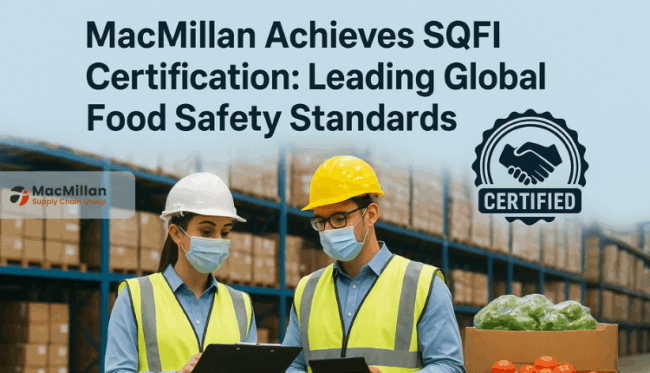
A Quick Summary and Overview MacMillan Supply Chain Group has achieved the prestigious SQFI Certification, positioning the company at the forefront of global food safety standards in Canada. This certification demonstrates MacMillan’s commitment to maintaining rigorous food safety protocols throughout their temperature maintained facilities and logistics operations. By adhering to the GFSI Framework and implementing comprehensive HACCP programs, MacMillan now offers certified supply chain solutions that meet the highest industry standards. This achievement strengthens our position as a trusted partner for food manufacturers and retailers across North America, particularly in the Canadian food industry where safety compliance is paramount. Introduction Food safety has become a critical concern in today’s complex global supply chains. With consumers and regulators demanding greater transparency and accountability, logistics providers must demonstrate unwavering commitment to maintaining product integrity throughout the distribution process. MacMillan Supply Chain Group has risen to this challenge by achieving SQFI Certification—one of the most respected and comprehensive food safety certifications available worldwide. This milestone represents more than just compliance with regulations; it signals MacMillan’s dedication to excellence in the Canadian food logistics landscape. As a premier 3PL provider with specialized temperature maintained facilities throughout the Greater Toronto Area and beyond, MacMillan has integrated advanced food safety protocols into every aspect of their operations. This certification validates years of investment in infrastructure, training, and quality management systems designed specifically for the unique requirements of food handling and distribution. Understanding the Global Food Safety Standard SQFI (Safe Quality Food Institute) Certification represents one of the most comprehensive food safety management systems recognized worldwide. Operating under the GFSI Framework (Global Food Safety Initiative), this certification verifies that organizations maintain rigorous standards throughout their food handling operations. Unlike basic compliance programs, SQFI takes a risk-based approach that focuses on preventing food safety issues before they occur. The certification process evaluates everything from facility design and construction to operational methods and employee training. Companies must implement detailed HACCP (Hazard Analysis Critical Control Points) programs that identify potential risks and establish monitoring procedures for critical control points. Documentation requirements are extensive, ensuring complete traceability from receipt through storage and distribution. What makes SQFI particularly valuable is its global recognition. With over 12,000 certified facilities across 40 countries, this standard facilitates international trade by providing consistent benchmarks for food safety. For Canadian companies like MacMillan Supply Chain, this certification opens doors to partnerships with multinational food manufacturers and retailers who require GFSI-recognized certifications from their logistics providers. The Evolution of Food Safety Standards: SQF Edition 10 Food safety standards continue to evolve, and MacMillan’s certification coincides with the implementation of SQF Edition 10—the latest update to the SQF Code. This new edition represents a significant advancement in how food safety is assessed and managed throughout the supply chain. Key innovations in SQF Edition 10 include: Introduction of core clauses that represent fundamental requirements for preventing food safety failures Development of a risk-based maturity model that focuses on the severity of non-conformances rather than simple numerical scoring Enhanced requirements for food defense, food fraud mitigation, and environmental monitoring Greater emphasis on continuous improvement and management commitment These changes reflect the growing understanding that food safety isn’t just about passing audits—it’s about building organizational cultures that prioritize safety at every level. For MacMillan Supply Chain, achieving certification under this enhanced standard demonstrates their forward-thinking approach to food safety management. The certification process itself is rigorous, requiring extensive documentation, multiple stages of audits, and verification of corrective actions. By successfully navigating this process, MacMillan has proven their ability to maintain the highest standards of food safety throughout their Canadian supply chain solutions. Temperature-Controlled Facilities Designed for Food Safety At the heart of MacMillan’s food safety program are their state-of-the-art temperature-controlled facilities. These specialized warehouses maintain precise environmental conditions tailored to the specific requirements of different food products. From ambient storage to refrigerated and frozen environments, MacMillan’s infrastructure ensures product integrity throughout the storage period. Each facility incorporates advanced design elements specifically for food safety: Sealed dock doors with inflatable shelters to maintain temperature control during loading/unloading Segregated storage zones to prevent cross-contamination between different product types Specialized flooring systems that facilitate sanitation and prevent harborage points for pests Robust air handling systems with filtration to maintain air quality Redundant refrigeration systems with backup power to ensure temperature stability Beyond physical infrastructure, MacMillan has implemented comprehensive monitoring systems throughout their facilities. Temperature sensors continuously track environmental conditions, with automated alerts triggered by any deviations from established parameters. This real-time monitoring, combined with regular verification checks by trained personnel, ensures that temperature-sensitive products remain within safe ranges at all times. The company’s investment in these specialized facilities demonstrates their understanding that food safety begins with proper infrastructure. By creating environments specifically designed for food products, MacMillan provides their clients with confidence that their products will maintain safety and quality throughout the storage phase. Implementing HACCP Programs Across the Supply Chain MacMillan’s approach to food safety extends beyond facilities to encompass comprehensive HACCP programs throughout their operations. These programs systematically identify potential hazards and establish preventive measures to ensure food safety from receipt through storage and distribution. Key elements of MacMillan’s HACCP implementation include: Detailed hazard analysis for each product category handled Establishment of critical control points with specific monitoring procedures Clear corrective action protocols for addressing deviations Verification activities to confirm that the system is functioning as intended Extensive documentation to demonstrate ongoing compliance What distinguishes MacMillan’s approach is their integration of HACCP principles across the entire supply chain. Rather than treating food safety as a siloed responsibility, they’ve built interconnected systems that maintain product integrity at every touchpoint. This comprehensive approach aligns perfectly with the SQFI Certification requirements, which emphasize systemic food safety management rather than isolated compliance measures. The company has also invested heavily in staff training, ensuring that all personnel understand their roles in maintaining food safety. From warehouse associates to transportation providers, everyone receives specialized training on food handling best practices, allergen management, and sanitation procedures. This culture
The Rise of Logistics Companies in Canada and Their Impact | MacMillan Supply Chain Group
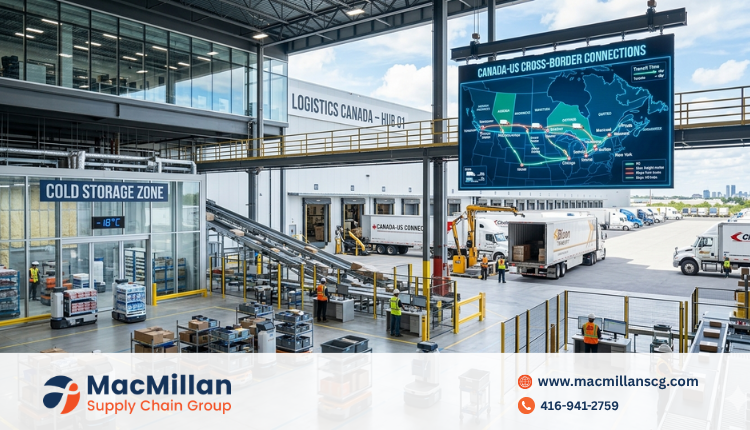
A Quick Summary and Overview The Canadian logistics industry is experiencing unprecedented growth, with the 3PL market projected to reach $25.12 billion by 2030. This expansion is driven by e-commerce growth, technological innovation, and increasing cross-border trade. MacMillan Supply Chain Group stands at the forefront of this evolution, offering cutting-edge warehouse automation, last-mile delivery solutions, and specialized services like cold chain logistics. As businesses navigate supply chain challenges, Canadian logistics companies continue to adapt and innovate, creating more efficient, sustainable, and resilient supply networks that connect Canada to global markets. The Rise of Logistics Companies in Canada and Their Impact The Canadian logistics landscape has transformed dramatically over the past decade. From traditional warehousing and transportation to sophisticated supply chain solutions powered by artificial intelligence and automation, logistics companies in Canada have evolved to meet changing consumer demands and business needs. With e-commerce sales growing at 13% annually and cross-border shipping to the US increasing steadily, the importance of efficient, reliable logistics services has never been greater. MacMillan Supply Chain Group has established itself as a leader in this dynamic environment, providing innovative third-party logistics (3PL) services that help businesses navigate complex supply chain challenges. Whether it’s implementing warehouse automation trends or developing specialized cold chain logistics in Canada, MacMillan’s comprehensive approach addresses the unique requirements of the Canadian market while facilitating seamless connections to global supply networks. This article explores how logistics companies are reshaping Canada’s economic landscape, the technologies driving this transformation, and the strategic advantages that companies like MacMillan Supply Chain Group bring to businesses operating in this rapidly evolving sector. The Evolution of Canadian Logistics: Market Trends and Growth Drivers The Canadian logistics industry has experienced remarkable growth, with the 3PL market valued at approximately $19.84 billion in 2023 and projected to reach $25.12 billion by 2030. This represents a compound annual growth rate of 4.83%, significantly outpacing overall economic growth. Several key factors are driving this expansion. E-commerce has fundamentally altered consumer expectations and supply chain requirements. With over 80% of Canadians now shopping online regularly, logistics companies have had to develop sophisticated e-commerce fulfillment strategies that enable rapid order processing and delivery. This shift has created unprecedented demand for warehouse space, particularly in urban centers like Toronto, Vancouver, and Montreal. Cross-border shipping to the US represents another major growth driver. The United States remains Canada’s largest trading partner, with approximately 75% of Canadian exports destined for American markets. This relationship has intensified the need for seamless cross-border logistics solutions that navigate customs requirements while maintaining competitive delivery timeframes. Geographic challenges unique to Canada have shaped the industry’s development. The country’s vast territory, combined with population concentration along the southern border, requires logistics networks that efficiently serve dense urban markets while maintaining connectivity to remote communities. This has led to specialized Western Canada transportation solutions and regional distribution strategies that account for seasonal variations and infrastructure limitations. Technology adoption has accelerated across the sector, with Canadian freight market growth closely tied to innovations in automation, tracking systems, and predictive analytics. Leading companies like MacMillan Supply Chain Group have invested heavily in these technologies, positioning themselves at the forefront of the digital logistics revolution. Technology Transformation: How Innovation is Reshaping Canadian Logistics Technological innovation has become the primary competitive differentiator among logistics companies in Canada. Warehouse automation trends have revolutionized fulfillment operations, with advanced systems including conveyor networks, pick-to-light technology, and collaborative robots dramatically increasing processing capacity while reducing error rates. MacMillan Supply Chain Group exemplifies this technological leadership through implementation of cutting-edge warehouse management systems that enable throughput increases of 200-300% during peak periods while maintaining error rates below 0.1%. This technological sophistication positions the company as an ideal partner for businesses scaling their e-commerce operations. Real-time visibility has become a standard expectation across the North American supply chain. Advanced tracking systems now provide minute-by-minute location updates, predictive delivery estimates, and exception alerts that enable proactive issue resolution. This transparency extends across all transportation modes, creating seamless visibility from manufacturer to end customer. Artificial intelligence and machine learning applications are transforming operational efficiency throughout Canadian distribution networks. These technologies enable dynamic route optimization, predictive maintenance scheduling, and automated inventory management that anticipates demand fluctuations before they impact service levels. The integration of Internet of Things (IoT) devices throughout the supply chain has created new possibilities for condition monitoring and quality assurance. This is particularly valuable in cold chain logistics in Canada, where temperature-sensitive pharmaceuticals and food products require continuous environmental monitoring to maintain product integrity. Data analytics capabilities have become essential for competitive logistics operations. Leading providers now employ sophisticated analytics platforms that identify optimization opportunities, predict potential disruptions, and quantify performance improvements across complex supply networks. This data-driven approach enables continuous improvement while providing valuable business intelligence to clients. Cross-Border Excellence: Navigating US-Canada Logistics Challenges Cross-border shipping to the US presents unique challenges and opportunities for Canadian logistics providers. With approximately $1.7 billion in goods crossing the border daily, efficient management of cross-border customs brokerage and transportation has become a critical capability for companies serving North American markets. MacMillan Supply Chain Group has developed specialized expertise in U.S.-Canada trade logistics, implementing systems that streamline documentation requirements, expedite customs clearance, and maintain compliance with evolving regulatory frameworks. This expertise is particularly valuable for Canadian businesses pursuing U.S. market expansion strategies without establishing their own American logistics infrastructure. The CUSMA/USMCA agreement has created new opportunities for integrated cross-border supply chains, with harmonized regulations facilitating smoother trade flows between Canada and the United States. Leading logistics providers have adapted their operations to capitalize on these opportunities while helping clients navigate the agreement’s specific requirements and documentation needs. Intermodal transportation solutions have become increasingly important for efficient cross-border shipping. By combining rail, truck, and sometimes maritime transportation modes, logistics companies can optimize costs and transit times while reducing environmental impact. This approach is particularly effective for shipments between major Canadian population centers and U.S. destinations. Border delays remain a significant challenge, with unpredictable processing times creating uncertainty