
Canada Post Strike 2025: Shipping Disruption Solutions
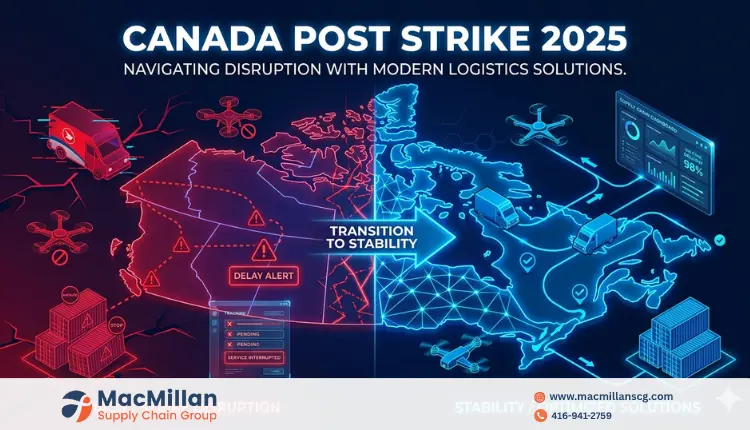
Businesses across Canada are facing major shipping disruptions due to the possible impending Canada Post strike 2025. Mail service across the country could be suspended if Canada Post and the Canadian Union of Postal Workers (CUPW) don’t reach a labor agreement by May 22. This thorough manual examines the existing state of affairs, possible effects on deliveries in both urban and rural areas, and workable business solutions. We offer doable solutions to reduce interruption, ranging from inventory buffering strategies to multi-carrier strategies with substitute providers like Purolator and GoBolt. Find out how MacMillan Supply Chain Group can safeguard your company’s operations in the event of postal service outages. The possibility of a Canada Post strike has many Canadian businesses concerned about continuity in their shipping operations.Businesses must get ready for possible postal service interruptions that could affect deliveries across the country as the May 22 deadline for talks between Canada Post and the Canadian Union of Postal Workers draws near. A strike could result in delayed deliveries, disgruntled customers, and large revenue losses for companies that depend on prompt shipping, particularly those that serve rural areas or oversee e-commerce operations. Small and medium-sized businesses lost an estimated $1 billion in sales and incurred additional costs as a result of the most recent significant postal disruption. We’ll take you through the current labor negotiations in this guide, explain why it’s important for your company, and offer doable tactics to reduce any disruption in the event of a Canada Post strike. If you plan ahead, your company can overcome this obstacle. Understanding the Current Canada Post Labor Dispute The core of the ongoing conflict between CUPW and Canada Post revolves around a number of important issues that, if not settled by May 22, could lead to a strike. What specifically is the point of contention between postal employees and management? One of the main points of contention is weekend staffing models. While the union demands full-time positions to guarantee service reliability and improved worker benefits, Canada Post management wants to use part-time workers for weekend deliveries in order to control costs. This fundamentally different approach to workforce structure has led to a great deal of conflict. Another crucial issue is the distribution of workload. In addition to opposing mandatory overtime, the union wants better protections for rural delivery routes, which account for about 40% of Canada Post’s traffic. Rural carriers frequently encounter particular difficulties, such as longer routes and more challenging delivery circumstances. These negotiations have been mediated by the Industrial Inquiry Commission (IIC), which is expected to release its recommendations by May 15. Experts contend that a resolution prior to the deadline is still improbable, which raises the likelihood of a work stoppage. Knowing these labor negotiations puts the possible disruption in perspective for companies that ship goods. The conflict goes beyond pay; it also raises important issues regarding the proper functioning of Canada’s postal service, specifically how to balance the demands of delivery in rural and urban areas. Impact Assessment: How a Strike Would Affect Different Businesses Depending on your business model, location, and clientele, a Canada Post strike would cause different degrees of disruption. Prioritizing your contingency planning is made easier when you are aware of these possible effects. Rural Business Challenges When postal service is interrupted, rural communities suffer the most. For necessities like government communications and medical supplies, these regions rely significantly on Canada Post. Rural businesses and customers frequently have few backup options because of the high last-mile delivery costs, which limit their options for alternative carriers. This is your biggest weakness if you cater to rural markets. E-Commerce Operations A strike poses a threat to the entire fulfillment process for online retailers. Many small and medium-sized e-commerce companies reported sharp drops in sales during previous postal disruptions as customers were hesitant to place orders because they were unsure about shipping. Furthermore, during previous strikes, private carriers like FedEx and Purolator rapidly reached capacity, frequently limiting new customers and giving priority to their enterprise accounts. Time-Sensitive Shipments Businesses dealing with time-sensitive documents or perishable goods face particular challenges. Legal firms, financial services, and food producers may need to completely overhaul their distribution strategies during a strike. In these cases, having established relationships with alternative carriers becomes not just helpful but essential for business continuity. Alternative Carrier Solutions During Postal Disruptions Diversifying your shipping options becomes essential when dealing with possible Canada Post strike effects. A number of different carriers, each with unique benefits and drawbacks, can support your delivery operations. Key Alternative Carriers Purolator shipping is a great substitute for Canada Post because it provides wide coverage in both urban and rural areas. Being a Canada Post subsidiary, it continues to operate even during strikes, though it might impose volume restrictions when demand is particularly high. They are appropriate for companies shipping across the country due to their well-established infrastructure. With robust regional networks, TForce offers specialized e-commerce solutions. Their e-commerce knowledge makes them useful for online retailers, even though their prices might be higher for large shipments. UPS and FedEx provide worldwide network integration, but when capacity is limited, they usually give priority to their enterprise clients. These carriers are most effective for companies that ship internationally and have existing accounts. Implementing a Multi-Carrier Strategy Rather than relying on a single alternative, consider a multi-carrier approach that combines different providers based on delivery location, package size, and urgency. This approach optimizes expenses and reduces single-point failures. This strategy can be made more manageable by using third-party logistics platforms to simplify carrier rate comparison and integration. A proactive approach to business preparation Your company has the best chance of minimizing disruption if you act before a Canada Post strike happens. As part of your strike contingency plan, you can put these doable actions into action right now. Expand Your Carrier Connections As soon as possible, start assigning 30–40% of your shipping volume to non-Canada Post carriers. This achieves two important goals: it enables you to
What Growing Beauty and Wellness Brands Should Look for in a Canadian 3PL
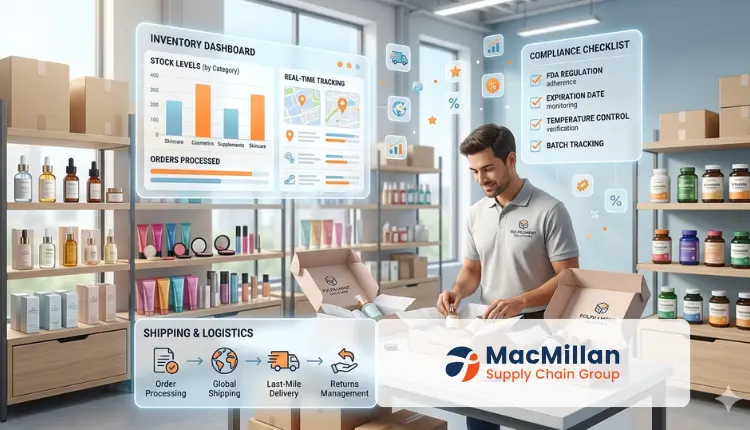
A Quick Summary and Overview For beauty and wellness brands, fulfillment is not just an operational function. It is part of the customer experience, the retailer relationship, and the brand promise. As these brands grow, they face higher SKU complexity, stricter compliance needs, more returns, faster replenishment expectations, and rising pressure to support DTC, retail, and marketplace channels at the same time. Competitor content that is working right now leans into practical buying guidance, category-specific logistics challenges, and partner evaluation criteria instead of broad “what is 3PL” education. That makes this topic ideal for attracting brands already evaluating fulfillment partners. MacMillan SCG is positioned around the capabilities these brands care about most: retail-ready warehousing, value-added kitting and labeling, real-time visibility, transportation coordination, and scalable support for consumer goods categories including nutraceuticals, cosmetics, and personal care. Introduction A beauty or wellness brand can spend years building the perfect formula, packaging, and customer story, then lose trust because of a late shipment, a damaged kit, a missing lot number, or a poor unboxing experience. That is why the right 3PL matters more as you scale. The strongest competitor articles in this category are not generic logistics explainers. They focus on the real concerns growth-stage brands have: regulatory handling, customization, fast fulfillment, retail compliance, subscription support, visibility, and smooth transition from in-house operations to outsourced logistics. Metro’s recent health and wellness fulfillment content, for example, focuses on category-specific trends and infrastructure needs, while its transition content emphasizes shipping requirements, service expectations, and how to evaluate a scalable partner. For Canadian beauty and wellness brands, choosing a 3PL is not about finding warehouse space. It is about finding a partner that can protect your product, your margins, and your customer experience. Why Beauty and Wellness Brands Need a Specialized 3PL Beauty and wellness products create logistics challenges that general fulfillment models do not always handle well. These brands often deal with: lot and batch traceability temperature or humidity sensitivity subscription and kitting workflows premium packaging expectations fast-moving launches and seasonal promotions retailer compliance requirements multi-channel inventory allocation Competitor guidance in this space consistently highlights compliance, category expertise, scalable ecommerce support, and kitting as key needs for wellness and beauty brands. MacMillan’s own positioning aligns closely with those needs. On its site, MacMillan highlights purpose-built logistics for personal care and wellness, including precise handling, customization support, subscription and gifting workflows, and multi-channel fulfillment backed by real-time visibility. 7 Things Growing Beauty and Wellness Brands Should Look for in a Canadian 3PL 1. Category-specific handling and compliance Not every 3PL is built for products that require tighter control, cleaner processes, and better traceability. Beauty, cosmetics, supplements, and personal care products often need lot tracking, expiry monitoring, and more disciplined workflows than general merchandise. MacMillan highlights GMP-ready and compliance-focused capabilities across relevant categories, including nutraceuticals and personal care, along with lot and batch tracking through its WMS-supported operations. 2. Kitting, labeling, and presentation support Beauty and wellness brands rarely ship plain, single-SKU orders forever. As brands scale, they introduce bundles, gift sets, subscription kits, seasonal launches, influencer mailers, promotional inserts, and retailer-specific packaging. This is one of the clearest patterns in competitor content too. Metro’s kitting guidance for health, beauty, and wellness ecommerce brands focuses on customer experience, consistency, and the operational importance of specialized kitting support. MacMillan’s value-added services page emphasizes GS1 barcodes, bilingual packaging, kitting, promo inserts, bundle assembly, relabeling, display builds, and lot/expiry checks, all of which are especially relevant for beauty and wellness brands scaling across channels. 3. Real-time inventory and order visibility As order volume grows, brands need more than a weekly spreadsheet. They need live visibility into stock, orders, returns, and shipment status. Competitor content increasingly treats visibility as a core buying requirement because it helps brands avoid stockouts, improve customer communication, and make faster inventory decisions. MacMillan positions real-time portal visibility, WMS-backed inventory control, KPI reporting, and data-driven insights as key parts of its offer. That matters for beauty and wellness brands managing launches, subscriptions, restocks, and omnichannel demand. 4. Retail and DTC support from one inventory pool Many growing brands do not stay DTC-only. They expand into retail, wholesale, or marketplaces while still serving direct customers. That creates complexity fast. A strong 3PL should be able to support: DTC parcel fulfillment retail replenishment channel-specific labeling accurate order routing coordinated returns shared inventory visibility This omnichannel focus is a recurring theme in current fulfillment content because brands increasingly need one partner that can support both growth and channel expansion. MacMillan states that it supports ecommerce, retail, and consumer goods fulfillment under one roof, along with value-added prep and transportation coordination built for retailer precision. 5. Subscription and promotional scalability Beauty and wellness brands often grow through repeat purchase, subscription, gifting, and promotional campaigns. Those models create spikes in complexity, not just volume. A 3PL should be able to absorb seasonal demand, launch waves, and campaign-driven kit assembly without breaking accuracy. Recent 3PL content continues to emphasize peak readiness and scaling support as major differentiators. MacMillan specifically highlights support for promotional bundles, new product launches, special campaigns, reconfiguration, and scalable labor and operational readiness for seasonal spikes. 6. Retail compliance and retailer-readiness Once a beauty or wellness brand enters retail, logistics errors become more expensive. Mislabeling, missed ASNs, wrong pallet builds, and appointment issues can trigger deductions, delays, or rejections. This is exactly why current B2B and retail fulfillment content focuses so heavily on routing guides, compliance, and execution discipline. MacMillan’s warehousing and value-added service pages stress retailer requirements such as pallet specs, label requirements, carton orientation, ASN accuracy, and retail-ready builds, which are critical for brands trying to protect retail relationships. 7. Measurable performance, not vague promises A high-growth brand should not choose a 3PL based only on sales language. It should look for process discipline and measurable performance. MacMillan’s site publishes KPI-led positioning such as 99.56% inventory accuracy, 99.5% perfect order rate, 99% on-time and in-full performance, and 99.9% shipping accuracy. Those are the kinds of signals buyers
Supply Chain Disruption 2025 – Red Sea, Panama & Tariff Risks
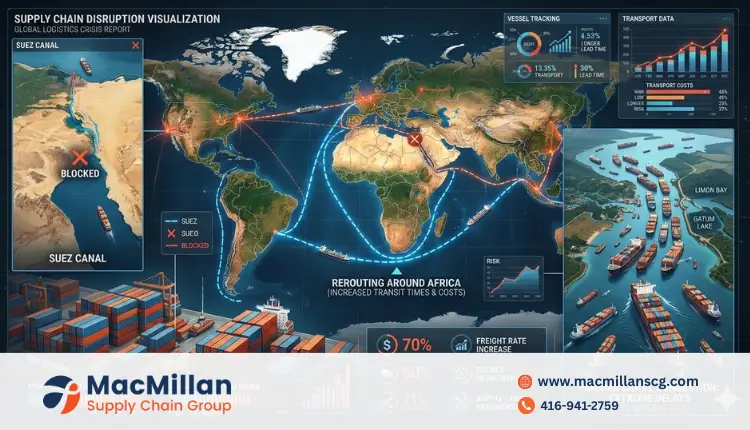
What You Need to Know About Supply Chain Disruption 2025 Global supply chains will face previously unheard-of difficulties due to supply chain disruption 2025. Ships have had to reroute around Africa due to the Red Sea crisis, which has increased shipping times by weeks and cost millions of dollars. Water shortages and maintenance problems are the main causes of the ongoing congestion in the Panama Canal. In the meantime, trade relations are changing as a result of post-election tariffs, especially between the US and China. Retail and the automotive industries are both feeling the effects of these disruptions. This playbook provides useful tactics for companies to overcome these obstacles, such as developing backup routing plans, deploying AI-driven forecasting, and nearshoring to Canada. Fast-adapting businesses will have a competitive edge in the face of supply chain disruption 2025. Introduction Why Supply Chain Resilience Matters in the Era of Supply Chain Disruption 2025 In 2025, a perfect storm is threatening the global supply chain. The Panama Canal congestion, the Red Sea shipping crisis, and new tariffs after recent elections have all combined to create previously unheard-of difficulties for businesses around the world. These are not merely short-term disruptions; rather, they signify significant changes in the global flow of goods. These disruptions present opportunities as well as challenges for Canadian companies. Everyone is impacted by increased costs and longer shipping times, but businesses that adjust swiftly can benefit greatly. The question is how you will handle these geopolitical challenges, not if they will have an impact on your supply chain. Each of these significant supply chain disruptions in 2025 will be covered in this playbook, along with an analysis of their effects on various industries and useful tactics to help your company not only survive but flourish. Maintaining competitiveness in today’s volatile global market requires an understanding of these changes, regardless of your industry—manufacturing, retail, or logistics. Red Sea Crisis and Its Role in Supply Chain Disruption 2025 In the context of supply chain disruption 2025, the Red Sea has changed from being an essential shipping route to a high-risk area. This vital maritime route has become more hazardous due to ongoing conflicts, which has forced shipping companies to make tough choices about how to transport goods between Asia and Europe. The Disruption Scale Nearly 80% of container ships have been forced to completely avoid the Suez Canal due to the Red Sea shipping crisis. Ships are instead choosing to take the longer route around the Cape of Good Hope in Africa, which adds 7–10 days to transit times and costs about $1 million more per voyage. An estimated 15% less shipping capacity has been available worldwide as a result of this rerouting, which has had an impact on supply chains. Emergency surcharges of $500 to $1,500 per container have been imposed by major carriers such as Maersk and ZIM. Raw materials to final goods are all impacted by these rising costs, which are unavoidably passed down the supply chain. Industry-Specific Impacts The automotive industry has been hit particularly hard by the Red Sea shipping crisis. Just-in-time manufacturing systems rely on predictable delivery schedules, and delays of even a few days can halt production lines. Similar issues arise for electronics manufacturers when parts from Asia take longer to arrive at assembly facilities in North America. This means that Canadian importers should budget for increased shipping expenses and longer lead times. Businesses that used to order inventory six weeks in advance now have to plan for eight to ten weeks, which causes smaller businesses to face more cash flow issues and ties up more capital in goods in transit. While the Red Sea situation dominates headlines, the Panama Canal is another major factor contributing to supply chain disruption 2025. Panama Canal Challenges: Water Shortages and Geopolitical Tensions In 2025, the Panama Canal will have its own set of issues, even as the Red Sea crisis makes headlines. The dependability of this vital trade route between the Atlantic and Pacific Oceans is in jeopardy due to political and natural issues. Environmental and Operational Restrictions The Panama Canal’s operations have been significantly impacted by climate change. Authorities have been forced to cut the number of daily transits from 36 to just 18 due to water shortages, causing a bottleneck that impacts shipping schedules worldwide. Ships now have to wait up to three weeks, as opposed to the usual three to five days in the past. With premium slots going to the highest bidders, the Panama Canal Authority has instituted a reservation system that ranks vessels according to cargo type and destination. For non-reserved vessels, this auction system has increased transit costs by 200–300%, putting further financial strain on shipping companies and their clients. Strategic Consequences For Canadian companies that depend on Asian imports reaching East Coast ports, the Panama Canal congestion is especially important. Although the volume of traffic using alternative routes through West Coast ports such as Vancouver and Prince Rupert has increased, the amount of traffic that can be diverted is limited by rail and truck capacity limitations. This disruption is accelerating the trend toward nearshoring, with many companies reconsidering their dependence on trans-Pacific supply chains. As businesses look for alternatives to Asian production, Mexican manufacturing has seen a 22% increase in capacity utilization. This change is also helping Canadian manufacturers, especially in industries like electronics assembly and automotive components where being close to US markets has major benefits. Election Tariffs: Navigating the New Trade Landscape With new tariffs reshaping supply chain economics in 2025, the US election of 2024 has brought about significant changes to the trade landscape. Businesses are being compelled by these policy changes to reevaluate their supply chain setups and sourcing tactics. The New Tariff Reality Under Trump’s 2025 tariffs, all imports will now be subject to 10% general duties, with targeted increases of up to 60% on Chinese goods. The cost equation for many products has been significantly changed by these actions, especially in the consumer goods, textile,
Cobots & Labor-Tech Solving Canada Warehouse Worker Shortage

The critical 11% vacancy rate in transportation and warehousing that Canada’s logistics industry faces is three times higher than the national average.Nationwide, the Canada warehouse worker shortage is causing supply chain disruptions and e-commerce fulfillment delays. A solution is provided by collaborative robots, or cobots, which can enhance human productivity by up to 30% while fostering safer working conditions. Businesses of all sizes can address labor shortages while increasing operational efficiency with flexible deployment strategies and government funding options like NRC IRAP, which cover up to 45% of implementation costs. This article examines how labor-tech and cobots are revolutionizing Canadian warehouses and opening up new doors for both companies and employees. Cobots & Labor-Tech: The Answer to Canada’s Warehouse Worker Shortage One major issue facing Canada’s warehouses is a severe labor shortage. Businesses find it difficult to satisfy customer demands, particularly in light of the e-commerce boom, as vacancy rates in transportation and warehousing reach 11%, which is three times the national average, this highlights the growing scale of the Canada warehouse worker shortage. This shortage affects the entire Canadian logistics industry and is not merely a short-term issue. However, there is hope for the future. Innovative labor-tech solutions and collaborative robots (cobots) are revolutionizing warehouses nationwide. Cobots are made to work alongside people, increasing productivity without completely replacing workers, in contrast to traditional industrial robots that operate alone. We’ll look at how these technologies are assisting Canadian companies in overcoming labor shortages, increasing productivity, and establishing safer workplaces in this post. We’ll also examine funding options, realistic implementation strategies, and the prospects for human-robot collaboration in Canada’s changing warehouse environment. Comprehending the Warehouse Labor Crisis in Canada With an 11% vacancy rate in the transportation and warehousing sectors, which is much higher than the 3.7% national average, Canada’s warehouse worker shortage has reached critical proportions. Not everyone is equally affected by this crisis; in Ontario alone, there are over 194,000 open positions, which causes supply chain bottlenecks that have an impact on both consumers and businesses. Ontario has been hit especially hard by the Canada warehouse worker shortage, making it the epicenter of warehousing strain in the country. This shortage is caused by multiple factors. First of all, working in a warehouse frequently entails physically taxing duties in uncomfortable settings, such as hot summers, cold winters, and a need for constant movement. Second, prospective employees are drawn away from logistics positions by rival industries that offer better compensation and working conditions, such as technology and healthcare. Third, fewer young people are pursuing these physically demanding jobs in Canada due to the country’s aging workforce. Businesses are significantly impacted. Delivery promises are especially difficult for e-commerce fulfillment centers, which have grown significantly since 2020. Businesses lose money and customers become dissatisfied when orders cannot be processed promptly. Smaller Canadian SMEs may experience an existential labor shortage as a result of their incapacity to offer competitive compensation or benefits. The Actual Price of Unfilled Jobs Missed deliveries are not the only financial impact. In order to make up for staff shortages, companies report spending an additional 30 to 45 percent on overtime. In the meantime, employee turnover in Canadian warehouses averages 36% per year, with training costs and lost productivity for each replacement coming to about $4,200. These figures demonstrate why, in the fiercely competitive Canadian logistics industry, finding technological solutions to the labor shortage is essential for survival as much as for growth. Ignoring the Canada warehouse worker shortage means risking both revenue and customer satisfaction. How Cobots Help Solve the Canada Warehouse Worker Shortage Compared to conventional industrial robots, collaborative robots, or cobots, represent a fundamentally different approach to warehouse automation. Cobots are made especially to work alongside human employees, enhancing rather than completely replacing their skills, whereas traditional robots operate in isolation behind safety cages. The inherent safety features of cobots are what set them apart. When a worker approaches too closely, they automatically slow down or stop using force-limited actuators and sophisticated sensors to detect human presence. This implies that there is no need for significant reconfiguration or safety precautions when deploying them directly in existing workspaces. These technologies offer real relief from the ongoing Canada warehouse worker shortage. Types of Cobots Transforming Canadian Warehouses Several facilities in Ontario use the DOBOT CR20A, which has AI vision systems that allow for real-time defect detection and dynamic worker movement adjustments. It can carry out tasks like palletizing and precise assembly with a payload capacity of 20 kg. Using LiDAR technology, autonomous mobile robots (AMRs) such as the OTTO 100 move objects up to 150 kg across warehouse floors without the need for fixed routes. AMRs are perfect for Canadian SMEs with limited funding because they don’t require costly floor modifications like traditional AGVs (Automated Guided Vehicles) do. For SMEs tackling the Canada warehouse worker shortage, AMRs provide flexible, cost-effective support that can be scaled without disruption. Cobots with modular grippers, like those from Geek+’s P Series, can be used for picking tasks and can be modified to handle anything from heavy car parts to delicate cosmetics. Because of its adaptability, a single robot can handle several jobs, increasing return on investment for Canadian companies on a tight budget. Implementation Strategies and ROI for Canadian Businesses It is not necessary to completely redesign the warehouse in order to implement cobots. Incremental deployment strategies, which minimize disruption while maximizing returns, are proving to be successful for many Canadian businesses. Before expanding, this strategy enables businesses to test technologies in particular domains. Workable Deployment Techniques The most economical place to start is frequently by retrofitting existing infrastructure. For instance, staging carts and OTTO 100 AMRs enable warehouses to automate transport tasks while preserving their existing layouts. Several distribution centers in the Toronto area have seen a 40% reduction in walking time without requiring significant renovations thanks to this technique. “Goods-to-person” systems can be introduced gradually for picking operations. Serving the Canadian market, Bergen Logistics began by implementing robotic picking stations
Handling Hazards: WHMIS-Compliant Logistics for Homecare Brands
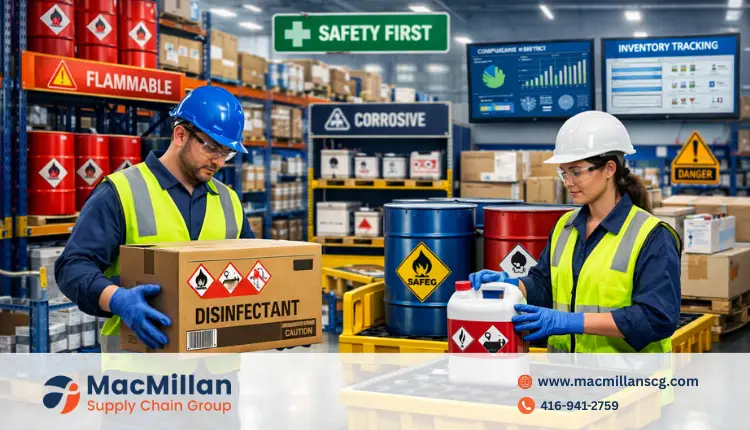
A Quick Summary and Overview Homecare brands dealing in cleaning agents, disinfectants, aerosols, and chemical-based products operate in a highly regulated environment. From storage and labeling to transportation and last-mile delivery, every step must comply with Canada’s Workplace Hazardous Materials Information System (WHMIS).Failure to meet compliance standards can result in fines, shipment delays, product recalls, or reputational damage.WHMIS-compliant logistics ensures hazardous materials are properly labeled, segregated, handled, documented, and transported according to federal and provincial regulations.At MacMillan Supply Chain Group, we design specialized 3PL solutions that protect homecare brands from compliance risks while maintaining operational efficiency and speed to market.The result? Safer operations, audit readiness, and a supply chain built for regulatory confidence. The Compliance Risks Facing Homecare Brands Homecare products often include: Disinfectants Surface cleaners Aerosols Solvents Flammable liquids Corrosive substances Without proper logistics controls, brands face: Improper labeling violations Cross-contamination risks Fire or safety hazards Transport rejections Regulatory fines Retailer non-compliance penalties Generic warehouses are not equipped to handle regulated goods safely. Hazardous product logistics requires structured SOPs, certified staff, and infrastructure designed for chemical storage. What Is WHMIS-Compliant Logistics? WHMIS-compliant logistics refers to warehousing and transportation processes aligned with Canada’s hazard communication and chemical handling regulations.This includes: Proper GHS labeling and documentation Safety Data Sheet (SDS) management Segregated storage by hazard class Controlled access storage zones Spill containment procedures Certified handling personnel Transport documentation and carrier compliance Compliance is not a single checklist—it is an integrated operational framework.At MacMillan SCG, hazardous product handling is built into our warehouse design, training programs, and transportation workflows from day one. How MacMillan SCG Protects Homecare Brands 1.Proper Labeling & Documentation Control Accurate labeling is the foundation of WHMIS compliance.MacMillan ensures: Verification of hazard symbols and classifications SDS tracking and digital record management Barcode integration tied to hazard data Real-time inventory visibility Audit-ready documentation access This reduces the risk of mislabeled shipments and retailer rejections. Result: Fewer compliance flags and smoother inspections. 2.Hazard-Based Storage Segregation Not all chemicals can be stored together. Improper storage increases safety risks and liability exposure.MacMillan’s warehouse controls include: Segregated storage zones by hazard class Flammable-rated storage areas Spill containment systems Controlled temperature environments Restricted-access handling protocols With over 250,000 sq. ft. of scalable space, brands can maintain compliance without sacrificing growth capacity. Result: Reduced cross-contamination risk and improved workplace safety. 3.Compliant Transport & Last-Mile SOPs Hazardous materials require specialized documentation and carrier coordination.MacMillan’s transportation network includes: Trained carrier partners familiar with regulated goods Verified transport documentation processes Secure palletization and load stabilization Real-time shipment tracking Reverse logistics for damaged or recalled goods For brands distributing nationally, our network supports efficient Canada-wide coverage with regulatory alignment at every stage. Result: Reduced transport delays and higher on-time delivery rates. 4.Inventory Control & Traceability In regulated environments, traceability protects your brand during audits or recalls.MacMillan leverages: Lot and batch tracking SKU-level visibility 350+ KPI monitoring metrics Near-zero shrinkage controls 99%+ inventory accuracy standards If a recall occurs, affected SKUs can be identified and isolated quickly—minimizing financial and reputational impact. Result: Faster response times and stronger risk mitigation. Why Specialized 3PL Matters for Homecare Products Homecare logistics isn’t standard pick-pack-ship. It involves: Regulatory oversight Retail compliance requirements Carrier restrictions Insurance considerations Safety audits Environmental reporting A specialized 3PL understands these nuances and builds infrastructure accordingly. At MacMillan SCG, compliance is embedded into operations—not treated as an add-on service.This ensures: Safer warehouse environments Reduced liability exposure Audit readiness Retailer trust Sustainable growth The Technology Layer Behind Compliance Regulatory control requires visibility.MacMillan integrates: Advanced WMS for hazard-tagged SKUs Real-time inventory dashboards Integrated SDS management workflows AI-supported route planning Digital proof-of-delivery tracking With transparent reporting and measurable KPIs, compliance becomes trackable—not reactive. Beyond Compliance: Protecting Brand Reputation In the homecare industry, one compliance incident can damage years of brand equity.WHMIS-compliant logistics protects more than inventory—it protects: Consumer trust Retail relationships Market access Insurance standing Long-term growth By aligning storage, fulfillment, and transportation with regulatory best practices, brands reduce operational risk while improving performance. Final Takeaway Handling hazardous homecare products demands precision, compliance, and structured execution. WHMIS-compliant logistics ensures proper labeling, storage segregation, documentation control, and safe transport—protecting your brand from costly disruptions. MacMillan Supply Chain Group delivers specialized hazardous product fulfillment solutions designed to safeguard your operations while supporting scalable growth. 📞 Ready to strengthen your compliance framework?Contact MacMillan SCG today for a customized hazardous product logistics assessment. FAQS What is WHMIS-compliant logistics? WHMIS-compliant logistics ensures hazardous products are labeled, stored, documented, and transported according to Canadian regulatory standards. Can MacMillan SCG handle flammable and chemical-based homecare products? Yes. MacMillan supports compliant storage, segregation, and transport SOPs for regulated chemical and cleaning products. Why is storage segregation important for homecare brands? Certain chemicals cannot be stored together due to safety risks. Proper segregation reduces liability and compliance violations. Does MacMillan provide traceability for regulated goods? Yes. Advanced WMS systems provide lot tracking, SKU-level visibility, and audit-ready documentation. Can MacMillan support national distribution across Canada? Yes. MacMillan’s integrated warehousing and transportation network supports compliant distribution across Canada. How quickly can I onboard hazardous product fulfillment? MacMillan offers structured onboarding with compliance review, SOP alignment, and integration testing to ensure a smooth go-live process.
Peak Season E-commerce Fulfillment Canada Solutions
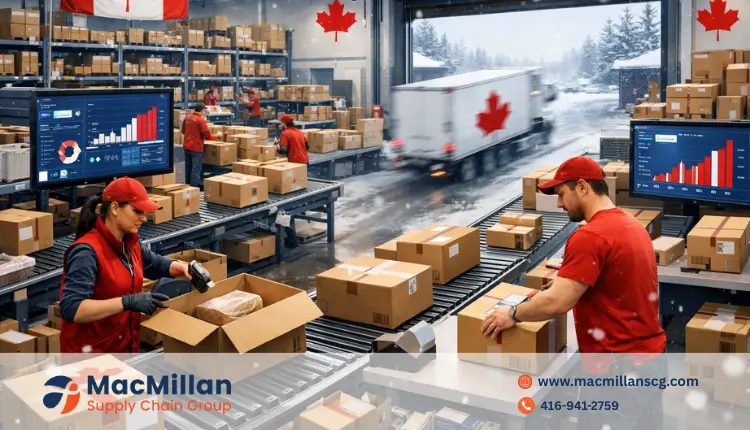
A Quick Summary and Overview Peak season e-commerce fulfillment presents significant challenges for Canadian retailers, with order volumes often increasing by 300-400% during holiday periods. Businesses face inventory shortages, shipping delays, labor constraints, and complex returns management. However, with strategic planning and the right technology, these challenges become manageable. MacMillan Supply Chain Group offers comprehensive solutions including warehouse automation, predictive analytics, and multi-carrier shipping strategies to help businesses navigate peak seasons successfully. By implementing these solutions, retailers can maintain customer satisfaction while controlling costs during the busiest shopping periods of the year. Mastering E-commerce Fulfillment During Peak Season When holiday shopping kicks into high gear or a major sales event arrives, e-commerce operations face their ultimate test. Order volumes skyrocket, customer expectations remain high, and the pressure to deliver quickly and accurately intensifies. This critical period, known as peak season, can make or break your customer relationships and significantly impact your bottom line. For Canadian retailers, these challenges are compounded by our unique geography, cross-border shipping considerations, and seasonal weather disruptions. At MacMillan Supply Chain Group, we’ve helped countless businesses transform peak season chaos into streamlined success through strategic planning and innovative logistics solutions. In this comprehensive guide, we’ll explore the major challenges of E-commerce Fulfillment During Peak Season and provide actionable solutions to help your business thrive when demand is at its highest. Whether you’re preparing for Black Friday, holiday shopping, or back-to-school rushes, these insights will help you deliver exceptional customer experiences while maintaining operational efficiency. Understanding Peak Season Challenges in Canadian E-commerce The landscape of Canadian E-commerce Logistics transforms dramatically during peak seasons. Order volumes can surge by 300-400% during the holiday period, creating immense pressure on fulfillment systems. Black Friday and Cyber Monday (BFCM) have evolved from single-day events to week-long shopping extravaganzas, extending the intensity of peak operations. What makes peak season particularly challenging? First, there’s the sheer volume. During Holiday Fulfillment Canada periods, warehouses that typically process hundreds of orders daily suddenly need to handle thousands. This volume spike affects every aspect of operations—from receiving and storage to picking, packing, and shipping. Second, customer expectations don’t decrease during busy periods. In fact, they often increase, with shoppers expecting same-day or next-day delivery despite the seasonal rush. According to recent studies, 67% of Canadian shoppers expect faster delivery during holiday shopping, even though they intellectually understand the challenges retailers face. Third, the complexity of inventory management increases exponentially. Popular items sell out quickly, creating stockout situations that frustrate customers. Meanwhile, seasonal items require careful forecasting to avoid excess inventory that ties up capital and warehouse space after the rush ends. Weather presents another uniquely Canadian challenge. Snowstorms and freezing temperatures can disrupt Last-Mile Delivery Challenges across the country, adding unpredictability to fulfillment timelines. This is particularly problematic during the winter holiday season when delivery promises are most critical to customer satisfaction. Technology Solutions for Peak Season Success Embracing technology is essential for managing the complexity of peak season fulfillment. Warehouse Automation Canada solutions have become game-changers for businesses facing seasonal surges. Automated sorting systems, conveyor networks, and robotic picking assistants can double or even triple throughput without proportional increases in labor costs. Predictive Analytics for E-commerce represents another technological breakthrough. These systems analyze historical sales data, current trends, and external factors like weather forecasts or promotional calendars to predict demand patterns with remarkable accuracy. This allows for proactive inventory management and staffing decisions weeks before peak season begins. Inventory Management Software provides real-time visibility across your entire supply chain. When integrated with your e-commerce platform, these systems can automatically update product availability, preventing overselling during high-traffic periods. They also enable dynamic reordering based on actual sales velocity rather than static thresholds. A Multi-Carrier Shipping Strategy supported by intelligent software allows businesses to optimize delivery routes, compare carrier rates in real-time, and select the most efficient shipping method for each order. This flexibility becomes crucial during peak seasons when primary carriers often reach capacity limits or implement surcharges. Mobile scanning technology improves accuracy while speeding up warehouse operations. Handheld devices guide pickers through optimized routes, verify correct items, and capture real-time data about inventory movements. This reduces errors during the hectic pace of peak season while providing valuable operational insights. For businesses engaged in Cross-Border E-commerce, specialized software can automate customs documentation, calculate duties and taxes, and ensure compliance with international shipping regulations. This streamlines what would otherwise be a highly manual process during your busiest time of year. Operational Strategies to Optimize Peak Performance Beyond technology, operational strategies play a crucial role in peak season success. Effective BFCM Fulfillment Tactics begin with warehouse organization. Rearranging your fulfillment center to position high-velocity items in easily accessible locations can dramatically improve picking efficiency. Some businesses create dedicated “peak season zones” that consolidate seasonal bestsellers. Batch processing orders by shipping method or destination can significantly increase throughput. Rather than processing each order individually, grouping similar orders allows for more efficient picking paths and consolidated shipping preparation. This approach can increase productivity by 30-40% during high-volume periods. Staggered shipping cutoff times help distribute the workload throughout the day. By setting different cutoff times for different shipping methods (standard, express, overnight), you can process orders in waves rather than facing a single end-of-day crunch when all orders must be fulfilled simultaneously. Pre-packing popular items or bundles before peak season begins can alleviate bottlenecks. If historical data shows certain products consistently sell well during holiday periods, preparing inventory in advance reduces the time needed to fulfill these orders when volume spikes. Cross-training staff across different fulfillment functions creates operational flexibility. When team members can pivot between receiving, picking, packing, and shipping roles, you can quickly reallocate resources to address bottlenecks as they emerge during peak periods. Implementing a Return Management Process before peak season begins is equally important. Returns volume typically increases by 30% after holiday periods, creating a “second peak” in January. Having dedicated space, clear procedures, and adequate staffing for returns processing prevents this wave from disrupting your
Streamlining EDI: How Integration Improves Your Supply Chain
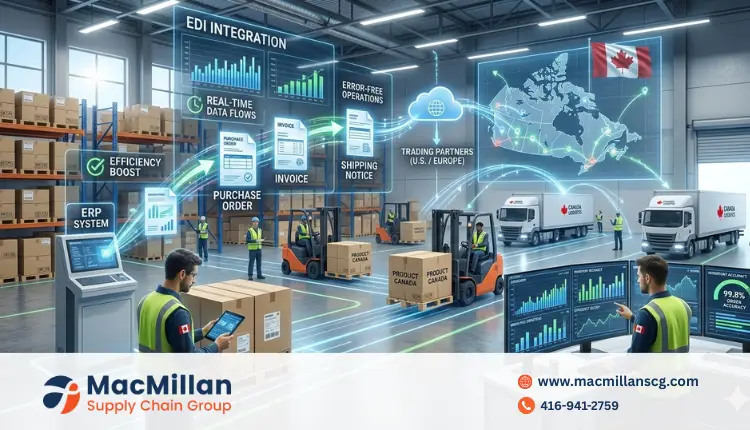
A Quick Summary and Overview Electronic Data Interchange (EDI) transforms how businesses exchange information across the supply chain. By replacing manual, paper-based processes with automated digital communication, EDI integration eliminates errors, speeds up transactions, and reduces costs. For Canadian businesses dealing with complex supply chains, streamlining EDI provides real-time visibility, improves trading partner relationships, and ensures compliance with both Canadian and North American standards. MacMillan Supply Chain Group helps organizations implement robust EDI solutions that connect seamlessly with existing systems, creating more efficient, sustainable, and profitable supply chain operations. What is EDI and Why Does Your Supply Chain Need It? Is your business still relying on emails, faxes, and manual data entry to manage supply chain communications? If so, you’re likely facing unnecessary delays, errors, and costs that are holding your company back. Electronic Data Interchange (EDI) represents the digital backbone of modern supply chains. At its core, EDI is a standardized method for businesses to exchange documents electronically—purchase orders, invoices, shipping notices, and inventory reports—directly between computer systems. But streamlining EDI goes beyond simply digitizing paperwork. True EDI integration connects these communications directly with your internal systems, creating an automated flow of information that transforms your entire supply chain operation. For Canadian businesses navigating complex supply networks that often cross borders, implementing Canadian EDI standards through proper integration isn’t just a technical upgrade—it’s a strategic advantage that delivers measurable benefits to your bottom line. In this guide, we’ll explore how EDI integration works, the specific benefits it brings to your supply chain, and how MacMillan Supply Chain Group can help you implement a solution tailored to your business needs. The Basics of Electronic Data Interchange EDI replaces traditional document exchange methods with standardized electronic formats that computers can process automatically. Instead of printing a purchase order, mailing it, and waiting for someone to manually enter it into their system, EDI sends the information directly from your system to your partner’s system in seconds. The magic happens through standardized formats like ANSI X12 (common in North America) and EDIFACT (used internationally). These standards ensure that all parties “speak the same language” regardless of what internal systems they use. For example, when your inventory management system needs to order more products, it can automatically generate a purchase order in EDI format (typically an X12 850 document in North America). This standardized document is then transmitted securely to your supplier’s system, where it’s automatically processed without any manual intervention. How EDI Integration Connects Your Supply Chain True EDI integration goes beyond basic document exchange by connecting EDI processes directly with your core business systems: Your ERP system automatically triggers purchase orders when inventory reaches reorder points Suppliers send Advanced Shipping Notices (Canada format) that automatically update your receiving schedule Electronic invoices (CA format) are matched against purchase orders and receipts for automated payment processing Inventory levels update in real-time across your network as products move through the supply chain This seamless integration eliminates data silos and creates a continuous flow of accurate information throughout your supply chain. With supply chain integration Canada businesses can achieve unprecedented visibility and control over their operations. Dramatic Reduction in Processing Time and Costs Manual document processing is slow, labor-intensive, and expensive. Each purchase order, invoice, or shipping notice might take 15-30 minutes to process manually, with associated labor costs and delays. EDI integration slashes these times to seconds while reducing processing costs by up to 80%. A typical manual purchase order might cost $70-$100 to process when accounting for labor, materials, and overhead. With streamlined EDI, that same transaction might cost just $5-$10. For Canadian businesses dealing with cross-border trade, these savings multiply. Cross-border EDI solutions automate customs documentation and compliance requirements, preventing costly delays at the border and ensuring smooth movement of goods between Canada and the US. Near-Elimination of Data Entry Errors Human error is inevitable in manual processes. A single mistyped product code, quantity, or price can cascade into major supply chain disruptions: – Wrong products shipped or received Incorrect quantities leading to stockouts or overstock Pricing discrepancies causing payment delays Address errors resulting in misdeliveries EDI integration removes these error points by eliminating manual data entry. Information flows directly between systems with validation checks at each step. Organizations typically report error rate reductions from 5-10% with manual processes to less than 0.5% with EDI integration. For businesses in Ontario and across Canada, this accuracy is particularly valuable when dealing with bilingual documentation requirements and complex regulatory compliance. Essential Technical Elements for Successful EDI Implementing EDI requires several key technical components working together: Translation Software: Converts your internal data formats to standardized EDI formats and vice versa Communication Protocols: Secure methods for transmitting EDI documents (AS2 is widely used for its security features) Integration Middleware: Connects EDI processes with your ERP, WMS, and other internal systems Mapping Tools: Define how data fields in your systems correspond to EDI standard fields Monitoring and Reporting: Track transaction status and alert you to exceptions Modern EDI cloud platforms simplify implementation by providing these components as managed services, reducing the technical burden on your IT team. This approach is particularly valuable for small and medium-sized Canadian businesses that may not have extensive IT resources. Integration with Existing Systems One of the biggest challenges in EDI implementation is connecting with your existing business systems. ERP integration services ensure your EDI solution works seamlessly with platforms like SAP, Oracle, Microsoft Dynamics, or industry-specific systems. The integration process typically involves: Analyzing your current business processes and document flows Mapping internal data fields to EDI standard fields Developing integration points between your EDI solution and internal systems Testing transactions with trading partners Implementing validation rules and exception handling MacMillan Supply Chain Group specializes in creating these integrations for Canadian businesses, ensuring your EDI solution connects smoothly with your existing technology investments while maintaining compliance with Canadian EDI standards. Technical and Organizational Challenges Despite its benefits, EDI implementation can present several challenges: Technical Complexity: EDI standards can be complex, with hundreds of transaction types and thousands of
Tech-Infused 3PL: How Technology is Changing the Logistics Landscape
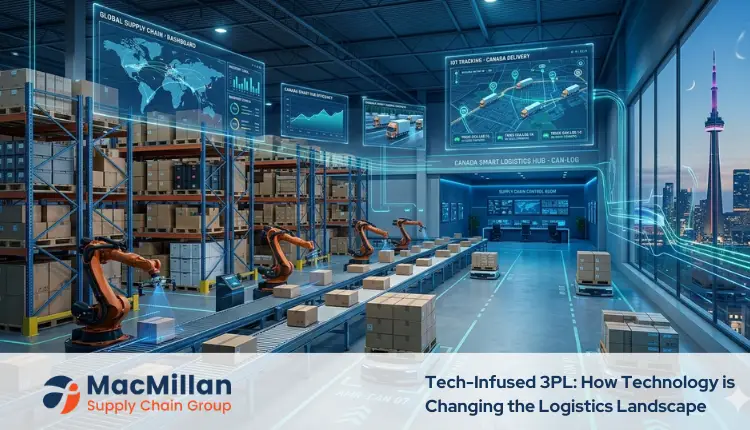
A Quick Summary and Overview The logistics industry is experiencing a technological revolution that’s reshaping how goods move from manufacturers to consumers. Tech-infused 3PL combines artificial intelligence, robotics, IoT sensors, and advanced analytics to create smarter, faster, and more reliable supply chains. At MacMillan Supply Chain Group, we’re leading this transformation in the Canadian market, helping businesses optimize operations, reduce costs, and improve customer satisfaction through innovative logistics technology. This article explores how these technologies are changing the logistics landscape and why partnering with a tech-forward 3PL provider is essential for modern business success. Introduction The logistics industry has come a long way from manual processes and paper trails. Today, technology is fundamentally transforming how third-party logistics (3PL) providers operate, creating unprecedented efficiency and visibility throughout the supply chain. This tech-infused approach is revolutionizing everything from warehouse operations to last-mile delivery. In the Canadian 3PL market, where businesses face unique challenges of vast geography and variable weather conditions, technology adoption isn’t just an advantage—it’s a necessity. Digital transformation in logistics is enabling companies to overcome these challenges while meeting rising customer expectations for speed and transparency. At MacMillan Supply Chain Group, we’ve embraced this technological revolution, implementing cutting-edge solutions that streamline operations and provide superior service. But what exactly makes a 3PL provider “tech-infused,” and how are these technologies changing the logistics landscape? Let’s explore the innovations reshaping our industry and how they benefit businesses across Canada. AI and Machine Learning: The Brain of Modern Logistics Artificial intelligence and machine learning represent the cognitive center of tech-infused 3PL operations. These technologies analyze massive datasets to identify patterns, make predictions, and optimize decisions in ways that human operators simply cannot match. AI in supply chain management transforms raw data into actionable insights, enabling smarter inventory management and demand forecasting. For example, AI algorithms can analyze historical sales data alongside external factors like weather patterns, local events, and economic indicators to predict future demand with remarkable accuracy. This helps businesses maintain optimal inventory levels—not too much (which ties up capital) and not too little (which leads to stockouts). Route optimization is another area where AI shines. Traditional route planning might consider basic factors like distance, but AI systems evaluate countless variables simultaneously: traffic patterns, weather conditions, delivery time windows, vehicle capacities, driver schedules, and even customer preferences. The result? Faster deliveries, lower fuel costs, and improved customer satisfaction. At MacMillan Supply Chain Group, our AI-powered systems continuously learn from each delivery, becoming increasingly efficient over time. This machine learning capability means our logistics solutions aren’t static—they evolve and improve automatically, adapting to changing conditions and incorporating new data to deliver ever-better results for our clients. Robotics and Automation: Transforming Warehouse Operations Robotics in warehousing has revolutionized how products are stored, picked, and packed. These technologies are no longer futuristic concepts—they’re operational realities delivering measurable benefits in modern fulfillment centers. Automated guided vehicles (AGVs) navigate warehouse floors independently, transporting goods between stations without human intervention. These tireless workers operate 24/7, dramatically increasing throughput while reducing labor costs and human error. Meanwhile, robotic picking systems can identify, grasp, and move individual items with precision that rivals or exceeds human capabilities. Warehouse automation solutions extend beyond robots to include sophisticated conveyor systems, automated storage and retrieval systems (AS/RS), and goods-to-person technologies that bring products directly to packing stations. These integrated systems work in harmony to process orders with unprecedented speed and accuracy. The benefits of automation are particularly evident in e-commerce logistics, where high order volumes and expectations for rapid fulfillment create intense operational pressure. Our automated facilities at MacMillan can process thousands of orders daily with 99.9% accuracy, enabling next-day and same-day delivery options that would be impossible with traditional manual processes. IoT and Real-Time Visibility: The Connected Supply Chain The Internet of Things (IoT) has created unprecedented visibility throughout the supply chain by connecting physical objects to digital networks. This connectivity transforms static supply chains into dynamic, responsive systems that can be monitored and optimized in real time. IoT fleet management uses connected sensors on vehicles to track location, monitor fuel consumption, assess driver behavior, and evaluate vehicle health. These systems enable proactive maintenance that prevents breakdowns, optimizes fuel efficiency, and ensures regulatory compliance. For temperature-sensitive goods like pharmaceuticals or food products, IoT sensors continuously monitor conditions, triggering alerts if temperatures drift outside acceptable ranges. Real-time tracking solutions extend beyond vehicles to the products themselves. RFID tags, GPS trackers, and other connected devices provide item-level visibility throughout the journey from manufacturer to consumer. This granular tracking enables precise delivery estimates and proactive problem-solving when issues arise. At MacMillan Supply Chain Group, our connected logistics network generates a continuous stream of data that feeds our analytics platforms. This real-time information allows us to make dynamic adjustments to routes, reallocate resources, and keep customers informed about their shipments’ status. The result is a more agile, responsive, and transparent supply chain that delivers superior results for our clients. Blockchain and Data Security: Building Trust in the Supply Chain Blockchain technology is bringing unprecedented transparency and security to logistics operations. This distributed ledger system creates immutable records of transactions and events, providing a single source of truth that all supply chain participants can trust. In shipping and logistics, blockchain creates transparent, tamper-proof records of a product’s journey from origin to destination. This capability is particularly valuable for high-value goods, pharmaceuticals, and food products where authenticity and handling conditions are critical concerns. When implemented properly, blockchain in shipping can virtually eliminate counterfeiting and provide indisputable evidence of proper handling throughout the supply chain. Beyond product tracking, blockchain streamlines documentation processes that have traditionally been paper-heavy and time-consuming. Smart contracts—self-executing agreements with terms written directly into code—can automatically trigger payments when predefined conditions are met, such as successful delivery confirmation. Data security is another crucial aspect of tech-infused 3PL operations. As supply chains become increasingly digital, protecting sensitive information from cyber threats becomes paramount. At MacMillan Supply Chain Group, we implement robust cybersecurity measures to safeguard our systems
Electronics Fulfillment: Key Considerations for Businesses

A quick summary and overview Electronics fulfillment presents unique challenges for businesses, requiring specialized handling, secure storage, and precise inventory management. From delicate components requiring anti-static protection to high-value items needing enhanced security, electronics demand more than standard fulfillment solutions. This guide explores the critical considerations for businesses seeking electronics fulfillment services in Canada, including cross-border shipping complexities, returns management, and technology integration. We’ll examine how partnering with an experienced 3PL like MacMillan Supply Chain Group can provide the expertise, infrastructure, and technology needed to protect your products, satisfy customers, and grow your electronics business. Introduction The electronics industry operates in a world of constant innovation and high customer expectations. When shoppers order the latest smartphone, laptop, or smart home device, they expect perfect condition, rapid delivery, and a seamless experience from click to doorstep. Behind this seemingly simple transaction lies a complex web of logistics challenges unique to electronics fulfillment. Electronics products combine high value with technical complexity and fragility. A single static discharge can damage sensitive components, while improper handling can render expensive devices unusable. Add in specialized regulatory requirements, cross-border shipping complications, and high return rates, and it’s clear why electronics fulfillment demands specialized expertise. For Canadian businesses and those shipping into Canada, these challenges multiply. Cross-border shipping to Canada involves navigating customs regulations, duties, and taxes that can significantly impact delivery times and costs. Working with a 3PL provider that understands both electronics handling and Canadian logistics creates a competitive advantage that can transform your supply chain from a challenge into a strategic asset. The Unique Challenges of Electronics Fulfillment Electronics fulfillment isn’t just about moving boxes from warehouse shelves to shipping trucks. It requires specialized knowledge and infrastructure to protect valuable, sensitive products throughout the fulfillment journey. Electronic devices demand climate-controlled storage environments with precise temperature and humidity control. Fluctuations can damage sensitive components or create condensation that shorts out circuits. Professional electronics fulfillment centers maintain stable environmental conditions year-round, protecting your inventory from seasonal weather changes that could otherwise lead to costly damage. Security represents another critical concern. With high-value items like laptops, smartphones, and gaming consoles, theft prevention becomes paramount. Robust security measures including restricted access areas, surveillance systems, and rigorous inventory controls help prevent shrinkage. Serial number tracking adds another layer of protection while enabling warranty management and facilitating recalls if necessary. Packaging for electronics requires specialized materials and techniques. Anti-static bags protect against electrostatic discharge that can silently damage components. Custom foam inserts prevent movement during transit, while reinforced boxes provide external protection. Professional electronics fulfillment partners understand these requirements and maintain appropriate packaging materials for different product types, ensuring your devices arrive in perfect working condition. For businesses handling lithium batteries—common in everything from smartphones to electric toothbrushes—regulatory compliance adds another layer of complexity. These batteries are classified as hazardous materials with specific packaging, labeling, and shipping requirements. Working with an experienced 3PL ensures your shipments meet all safety regulations while avoiding delays and penalties. Canadian Electronics Fulfillment Considerations The Canadian electronics market presents both opportunities and challenges for businesses. With high internet penetration and growing e-commerce adoption, Canadian consumers are increasingly purchasing electronics online. However, serving this market effectively requires understanding its unique logistics landscape. Geography represents the first challenge. Canada’s vast territory means strategic warehouse placement becomes essential for efficient delivery. Positioning inventory in key locations like Ontario provides access to major population centers while minimizing shipping costs and delivery times. MacMillan Supply Chain’s strategically located facilities in the Greater Toronto Area offer ideal positioning to reach most Canadian consumers quickly. Cross-border shipping to Canada introduces additional complexities. Recent changes to Section 321 de minimis exemptions have eliminated duty-free status for most shipments, regardless of value. This means all electronics imports now face potential duties and taxes, along with customs documentation requirements. An experienced Canadian 3PL partner can navigate these requirements efficiently, preventing costly delays at the border. Canadian consumers expect fast delivery despite these challenges. Last-mile delivery services optimized for the Canadian market help meet these expectations while controlling costs. Local fulfillment reduces delivery times from days to hours while eliminating cross-border shipping headaches entirely. Language considerations also impact Canadian electronics fulfillment. With both English and French as official languages, product documentation, packaging, and customer communications may need to accommodate both languages. Working with a Canadian 3PL familiar with these requirements ensures compliance with language regulations while creating a better customer experience. Technology and Automation in Electronics Fulfillment The electronics industry thrives on innovation—and so should your fulfillment operations. Today’s most effective electronics fulfillment centers leverage advanced technology to improve accuracy, speed, and efficiency throughout the supply chain. AI-powered warehousing systems transform traditional fulfillment operations through intelligent automation. These systems optimize everything from warehouse layout to picking routes, reducing labor costs while increasing throughput. Machine learning algorithms analyze order patterns and predict demand fluctuations, enabling proactive inventory management that prevents stockouts during peak periods. Automated fulfillment centers use robotic systems for repetitive tasks like picking, packing, and sorting. These systems achieve processing speeds up to five times faster than manual operations while maintaining consistent accuracy rates exceeding 99.9%. For electronics businesses experiencing rapid growth or seasonal demand spikes, this automation provides scalability without sacrificing quality or speed. Inventory management solutions powered by real-time tracking technologies provide unprecedented visibility throughout the supply chain. RFID systems track individual items without line-of-sight scanning, while integrated inventory platforms synchronize stock levels across all sales channels. This prevents overselling while providing accurate availability information to customers. Demand forecasting tools analyze historical sales data, market trends, and seasonal patterns to predict future inventory needs. For electronics businesses with rapidly changing product lines or seasonal demand variations, these predictive capabilities help optimize inventory levels—reducing carrying costs while ensuring product availability when customers are ready to buy. Common problems with electronics fulfillment Despite best efforts, electronics fulfillment presents several common challenges that can impact customer satisfaction and operational efficiency. Understanding these problems helps businesses develop effective strategies to overcome them. High return rates plague
Choosing the Right Logistics Company in Ontario: A Step-by-Step Guide
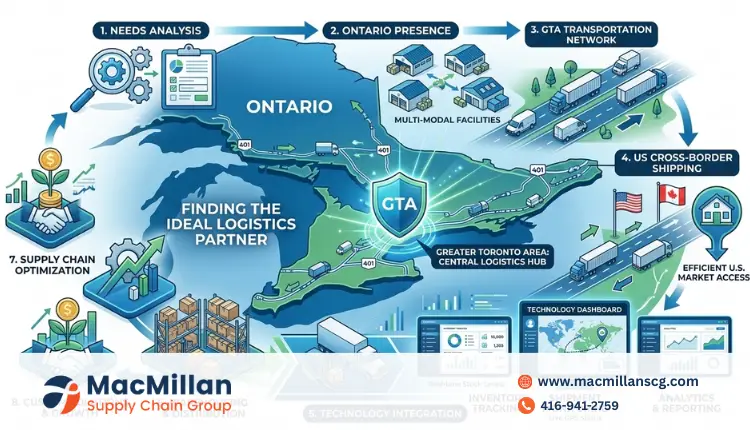
A Quick Summary and Overview Finding the ideal logistics partner in Ontario can transform your business operations and drive growth.This comprehensive guide walks you through the essential steps of selecting a logistics company that alignswith your specific needs. From understanding Ontario’s unique logistics landscape to evaluating technologycapabilities and conducting proper due diligence, we cover everything you need to make an informed decision.MacMillan Supply Chain Group offers expert insights based on years of experience serving businesses throughoutthe Greater Toronto Area and beyond. Finding Your Perfect Logistics Partner in Ontario Choosing the right logistics company in Ontario represents one of the most consequential decisions your businesswill make. The partner you select doesn’t just move your products—they become an extension of your brand,directly impacting customer satisfaction, operational efficiency, and your bottom line. Ontario’s strategic location makes it Canada’s logistics powerhouse, with the Greater Toronto Area servingas a critical hub for domestic and cross-border shipping. With hundreds of 3PL providers in Canada operatingacross the province, identifying the right partner requires a structured approach. Understanding Ontario’s Unique Logistics Landscape Ontario serves as Canada’s economic engine, offering unmatched access to domestic and U.S. markets.The Greater Toronto Area sits at the center of a transportation network reaching over 135 million consumerswithin a day’s drive. The province features world-class infrastructure, including Toronto Pearson International Airport,extensive highway systems, and rail connections to major North American markets. This multi-modal connectivityallows logistics providers to tailor transportation strategies for efficiency and cost control. Specialized logistics services are another advantage, ranging from temperature-controlled warehousingto high-security storage. Seasonal weather challenges further emphasize the importance of contingency planningand operational resilience. Essential Criteria for Evaluating Logistics Providers Service Capabilities: Ensure services align with your exact operational needs. Geographic Coverage: Facilities should be strategically located near key markets. Technology Integration: Real-time visibility and system compatibility are critical. Financial Stability: A financially sound partner ensures long-term reliability. Industry Experience: Sector expertise reduces risk and improves efficiency. The Step-by-Step Selection Process Define detailed logistics requirements and create an RFP. Research Ontario logistics providers and build a shortlist. Conduct preliminary capability and technology screening. Evaluate RFP responses beyond pricing. Visit facilities and assess operations firsthand. Verify references from similar businesses. Technology Capabilities and Integration 1. Warehouse Management Systems (WMS) Advanced WMS platforms ensure inventory accuracy, efficient order processing,barcode scanning, lot tracking, and customizable reporting. 2. Transportation Management Systems (TMS) TMS solutions optimize routing, carrier selection, and shipment tracking,helping reduce transportation costs while maintaining service levels. 3. E-Commerce Integration Seamless integration with platforms like Shopify and WooCommerce enablesautomated order flow and real-time inventory synchronization. 4. Customer Portals Client-facing dashboards provide visibility into orders, inventory,and shipment performance without manual intervention. 5. Data Analytics & Business Intelligence Analytics tools convert operational data into actionable insights,supporting data-driven decision-making. 6. APIs and EDI Integration Robust API and EDI connections ensure seamless data exchange between systems,eliminating errors and manual processes. Pitfalls to Avoid When Choosing a Logistics Partner Choosing based on price alone Skipping due diligence and facility visits Ignoring scalability requirements Overlooking cultural alignment Failing to define clear SLAs Underestimating implementation complexity MacMillan’s Approach to Logistics Partnership Success MacMillan Supply Chain Group applies a consultative approach focused on long-term partnership success.We design customized solutions aligned with your operational needs, growth plans, and strategic objectives. Our GTA-based warehouse facilities, advanced technology systems, and transportation expertise supportdomestic and cross-border supply chain operations with precision and scalability. Implementing Your Logistics Partnership Successfully Create a detailed implementation plan with clear milestones. Assign cross-functional implementation teams. Develop and document standard operating procedures. Conduct phased system testing before launch. Use pilot programs to minimize transition risk. Establish structured communication protocols. Ready to Optimize Your Supply Chain? MacMillan Supply Chain Group provides tailored Ontario logistics services includingwarehouse management in the GTA, freight forwarding in Toronto, and cross-border shipping Canada–US. Contact us today to discover how our customized logistics solutions can reduce costs,improve efficiency, and support your business growth. Call (905) 695-1111 or visit our website to start the conversation. FAQ What services should I expect from a full-service logistics company in Ontario? A comprehensive logistics provider in Ontario should offer warehousing and inventory management, order fulfillment, transportation management, cross-border shipping services, returns processing, and value-added services like kitting or light assembly. The best logistics company in Ontario will provide integrated solutions combining these services under unified management with consistent performance reporting. Look for providers offering both standard service packages and customized solutions tailored to your specific requirements. Technology platforms should connect these services, providing visibility across your entire supply chain through user-friendly interfaces. How do I determine the right warehouse location for my business in the GTA? The ideal warehouse location depends on your customer distribution, supplier locations, and transportation requirements. For e-commerce businesses focusing on urban delivery, facilities near Toronto’s core provide faster delivery times and lower last-mile costs. Companies shipping primarily to other businesses might benefit from locations near major highways with easy access to transportation corridors. Cross-border shippers should consider proximity to border crossings and customs facilities. Analyze your order patterns to identify where most of your customers are located, then select warehouse locations that minimize transportation costs and delivery times to these key markets. What technology capabilities should I look for in a modern logistics provider? Modern logistics partners should offer comprehensive technology solutions including warehouse management systems, transportation management platforms, order management capabilities, and customer-facing portals. Look for real-time inventory visibility, automated order processing, and detailed performance reporting. Integration capabilities are particularly important—the provider’s systems should connect seamlessly with your ERP, e-commerce platform, or order management system. For e-commerce fulfillment in Canada, ensure the provider integrates with your selling platforms for automated order processing and inventory synchronization. Advanced providers increasingly offer predictive analytics, exception management, and continuous improvement tools. How do pricing models typically work for 3PL providers in Canada? Logistics pricing typically includes several components: storage fees (usually charged per pallet, square foot, or cubic foot), handling charges (per order, per line item, or per unit), transportation costs (based on weight, distance, and service