

Is Your Fulfillment Ready for AI Shopping in Canada?
A shopper asks an AI assistant to find a fragrance-free…


A shopper asks an AI assistant to find a fragrance-free…
As an online store business owner, offering the best customer…
The logistics industry in Canada is growing at an impressive…

In today’s competitive business landscape, staying ahead of the curve…
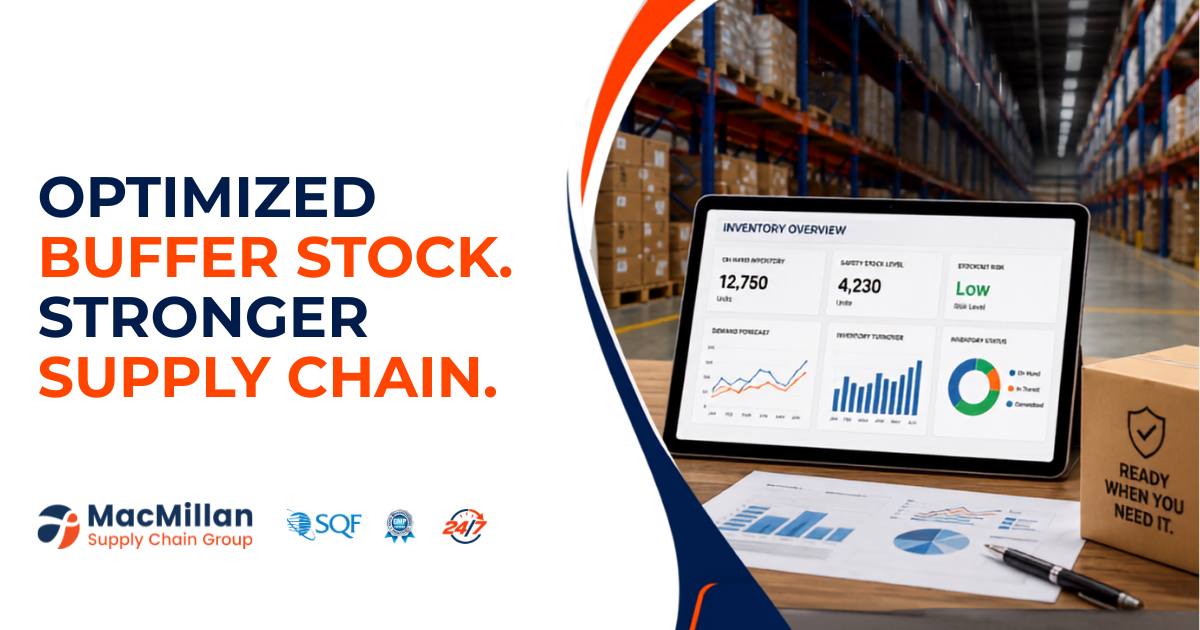
Supply chain demand spikes can often lead to out-of-stock items, risking customer satisfaction. MacMillan helps your business maintain safety stock or buffer stock to meet customer demands even during disruptions or sudden seasonal increases.
While having substantial buffer stock offers a safety net in 3pl warehousing, it also incurs significant costs. By employing reliable strategies and leveraging expert insights, you can balance customer demand with optimized operations. Expertise in logistics enables you to provide an exceptional customer experience through order fulfillment, while effectively managing 3PL warehousing challenges and minimizing costs.

A buffer serves as a protective layer against potential disruptions within 3PL warehousing operations.
Buffer inventory, which is also known as safety stock, or supply chain safety net is a surplus of inventory stored in a warehouse to mitigate risks, logistics failures, transportation delays or unexpected demand spikes.
The amount of buffer inventory to be kept depends on several factors such as the type of products sold, average production lead times, historical inventory and order accuracy trends.
While some demand changes can be anticipated, such as during flash sales or organized promotions, other increases in sales might be unexpected, as seen with face masks during the COVID-19 pandemic.
The terms “buffer inventory” and “safety stock” are often used interchangeably, both referring to the extra stock an e-Commerce business maintains to protect against potential supply operations and demand uncertainties.
In some contexts, “buffer inventory” specifically refers to unexpected spikes in product demand. While “safety stock” means inventory reserved for disruptions in the 3PL warehousing operations, like supplier delays or production halts.
Ultimately, both aim to ensure sufficient inventory is available to meet demand and maintain order accuracy rates. MacMillan offers trackable inventory systems for customers for higher accuracy rates and zero errors.
Maintaining buffer stock provides several advantages, minimizing the value of investing in additional inventory. Benefits of having a safety stock in 3PL warehousing are as follows:

Maintaining the right amount of inventory is crucial as too much inventory can increase capital and costs. While less inventory can lead to stockouts and missed sales opportunities. Here are essential factors to consider when determining your safety stock levels:
Lead Time Variability
If your lead times are unpredictable, it’s important to maintain higher inventory levels to account for potential delays, ensuring you can meet demand consistently.
Inventory Accuracy
The accuracy of your demand forecasts directly impacts on your safety stock requirements. When forecasts are reliable, you can keep lower safety stock levels.
Acceptable Service Levels
Service levels refer to the percentage of time you aim to avoid stockouts. Higher service levels indicate more buffer stock.
Cost of Carrying Inventory
Evaluate the costs associated with maintaining inventory, including storage and the opportunity cost of tied-up capital. To optimize operations of your safety stock levels, consider the following strategies:
Determining the appropriate amount of buffer inventory is crucial for maintaining 3PL warehousing operations, but it’s not a one-size-fits-all scenario. For accurate buffer inventory, you’ll need robust analytics and reporting tools. These tools provide detailed insights such as historical order data, SKU performance, and demand forecasting. Access to this data allows you to calculate the amount of buffer inventory needed to optimize 3PL warehousing storage and ensure timely order fulfillment.
Safety Stock Calculation Methods
Basic Safety Stock Formula
Service Level Method
Time-Based Calculations
Heizer and Render’s Method (for Lead Time Variability)
Buffer Stock calculations:
Managing buffer stock is an ongoing 3PL warehousing process that requires regular attention and adjustment. Here are some strategies to help optimize your safety stock:
3PL warehousing and fulfillment can be demanding, consuming time, resources, and effort. However, leveraging the capabilities of a technology-driven 3PL provider such as MacMillan can streamline your logistics operations. MacMillan offers integrated inventory management tools and software (read more about WMS), rapid fulfillment services, and shipping solutions. With Macmillan, you gain the advantage of storing inventory while efficiently tracking the entire order and inventory lifecycle through a centralized dashboard. Our responsiveness and transparent pricing models help business maintain a long-term approach.
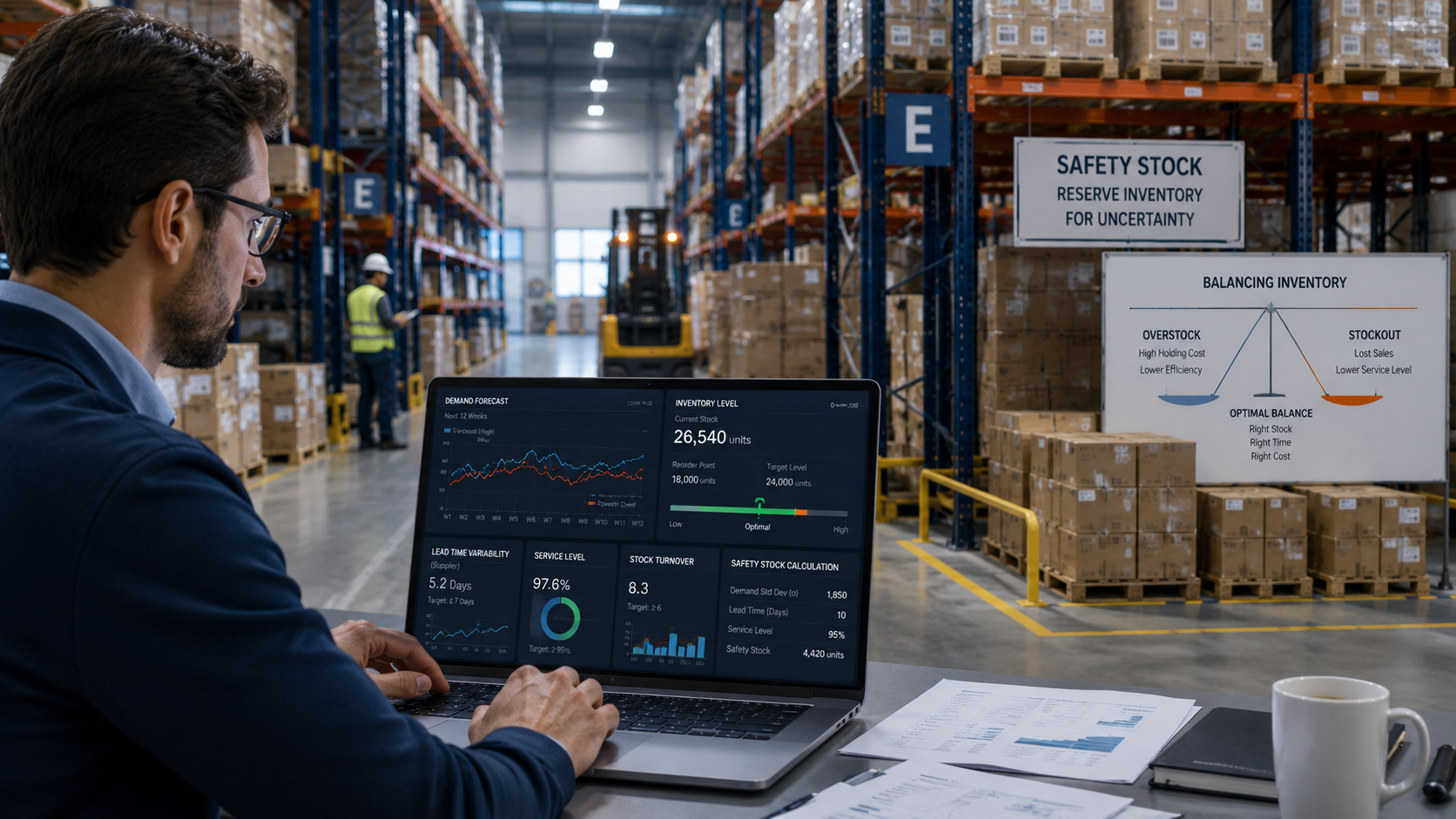
Maintaining buffer stock is essential for ensuring logistics operations and meeting customer demands, even during disruptions or demand spikes. Calculating the right amount of buffer inventory involves several methods, from basic safety stock formulas to complex models accounting for lead time variability and service level goals.
Outsourcing to a technology-driven 3PL provider like MacMillan SCG can further streamline inventory management. With integrated tools, rapid fulfillment and efficient shipping solutions, MacMillan offers a centralized platform for tracking orders and inventory, helping businesses maintain optimal buffer stock levels while ensuring timely order fulfillment and minimizing costs