
Optimize Your Supply Chain: Top 3PL Solutions for Small Businesses in 2024
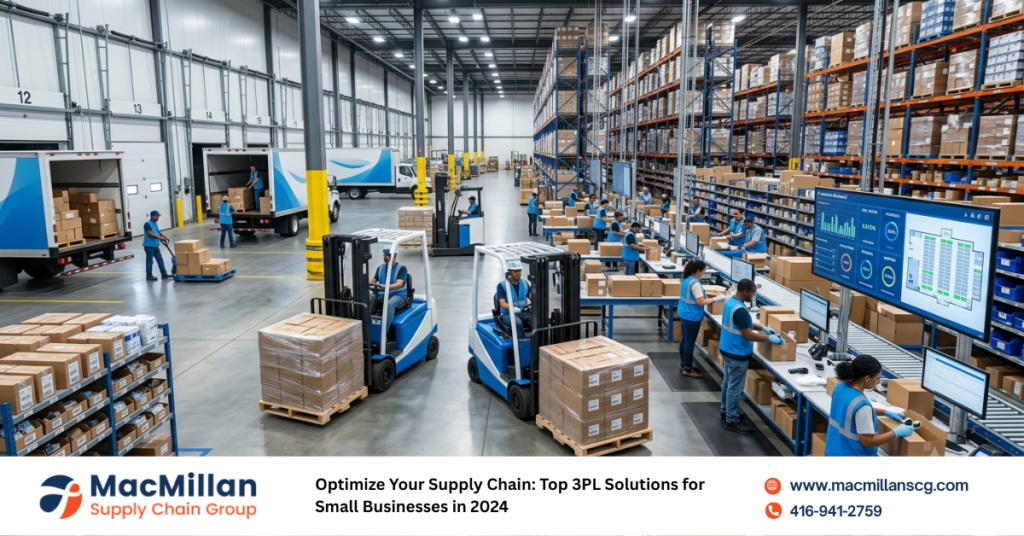
A quick summary and overview In 2024, small businesses face increasing pressure to optimize their supply chains. Third-party logistics (3PL) providers offer a solution, enabling companies to streamline operations, reduce costs, and improve customer satisfaction. This article explores the benefits of 3PL services, key considerations for choosing a provider, and how MacMillan Supply Chain Group stands out in the industry. We’ll delve into common challenges faced by small businesses in logistics management and provide expert solutions to help you navigate the complex world of supply chain optimization. Whether you’re looking to scale your operations or enhance efficiency, this guide will equip you with the knowledge to make informed decisions. An introduction As the business landscape evolves, small companies are increasingly turning to third-party logistics (3PL) providers to gain a competitive edge. The right 3PL partner can transform your supply chain, offering expertise in warehousing, inventory management, order fulfillment, and shipping. This strategic move allows you to focus on core business activities while leaving the complexities of logistics to the experts. In this comprehensive guide, we’ll explore the world of 3PL solutions tailored for small businesses in 2024. We’ll discuss the key services offered by top providers, crucial factors to consider when selecting a 3PL partner, and how MacMillan Supply Chain Group is revolutionizing the industry with its innovative approaches. By the end of this article, you’ll have a clear understanding of how 3PL services can propel your business forward and why partnering with the right provider is essential for success in today’s fast-paced market. Understanding 3PL Services for Small Businesses Third-party logistics (3PL) services encompass a wide range of outsourced supply chain operations that can significantly benefit small businesses. At its core, 3PL providers offer expertise and resources that many small companies find challenging to develop in-house. These services typically include: Warehousing and Inventory Management: 3PLs provide secure storage facilities and advanced inventory tracking systems, ensuring optimal stock levels and reduced carrying costs. Order Fulfillment: From picking and packing to shipping, 3PLs handle the entire order processing workflow, improving accuracy and speed. Transportation Management: 3PLs leverage their network and volume to negotiate better shipping rates and manage the complexities of transportation logistics. Reverse Logistics: Handling returns efficiently is crucial for customer satisfaction, and 3PLs offer streamlined processes for managing returns and exchanges. Technology Integration: Advanced 3PL providers offer seamless integration with your existing ecommerce platforms and management systems, providing real-time visibility into your supply chain. Scalability: As your business grows, 3PLs can quickly adapt to increased volumes without the need for significant capital investments on your part. By leveraging these services, small businesses can achieve operational efficiencies, reduce costs, and improve customer satisfaction. The right 3PL partner becomes an extension of your team, providing expertise and resources that allow you to focus on growth and innovation. Key Considerations When Choosing a 3PL Provider Selecting the right 3PL provider is crucial for the success of your small business. Here are key factors to consider: Industry Expertise: Look for a 3PL with experience in your specific industry, as they’ll understand your unique challenges and requirements. Technology Capabilities: Ensure the provider offers robust technology solutions that integrate seamlessly with your existing systems, providing real-time visibility and data analytics. Scalability: Choose a 3PL that can grow with your business, offering flexible solutions that adapt to changing volumes and market conditions. Geographic Coverage: Consider your current and future market reach. A 3PL with a wide network can support your expansion plans. Value-Added Services: Look beyond basic logistics. Services like kitting, custom packaging, and inventory management can provide additional value. Pricing Structure: Understand the pricing model and ensure it aligns with your business needs. Look for transparency and avoid hidden fees. Customer Service: Excellent customer support is crucial. Evaluate the 3PL’s responsiveness and problem-solving capabilities. Compliance and Security: Ensure the 3PL adheres to industry standards and regulations, especially if you deal with sensitive or regulated products. Performance Metrics: Ask about key performance indicators (KPIs) and how they measure success. Cultural Fit: Choose a provider whose values and work culture align with your own for a harmonious long-term partnership. By carefully evaluating these factors, you can select a 3PL provider that not only meets your current needs but also supports your future growth ambitions. The MacMillan Supply Chain Group Advantage MacMillan Supply Chain Group stands out in the 3PL industry by offering tailored solutions that address the unique challenges faced by small businesses. Our approach combines cutting-edge technology with personalized service to deliver unparalleled value: Customized Solutions: We understand that no two businesses are alike. Our team works closely with you to develop logistics strategies that align perfectly with your specific needs and goals. Advanced Technology Integration: Our state-of-the-art systems seamlessly integrate with your existing platforms, providing real-time visibility and actionable insights into your supply chain. Scalable Infrastructure: As your business grows, our flexible solutions adapt to your changing needs, ensuring smooth operations regardless of volume fluctuations. Expertise Across Industries: With experience serving diverse sectors, we bring industry-specific knowledge to optimize your logistics processes. Commitment to Innovation: We continually invest in the latest technologies and methodologies to stay ahead of industry trends and provide you with a competitive edge. Dedicated Support: Our team of experts is always available to address your concerns and provide strategic guidance. Cost Efficiency: By leveraging our network and expertise, we help you reduce operational costs while improving service quality. Sustainability Focus: We implement eco-friendly practices throughout our operations, helping you meet your sustainability goals. At MacMillan Supply Chain Group, we don’t just provide services; we become a strategic partner in your business growth, offering solutions that drive efficiency, reduce costs, and enhance customer satisfaction. Maximizing the Benefits of 3PL Partnerships To fully leverage the advantages of a 3PL partnership, small businesses should focus on: Clear Communication: Establish open lines of communication with your 3PL provider. Regular meetings and updates ensure alignment on goals and expectations. Data-Driven Decision Making: Utilize the analytics and reporting tools provided by your 3PL to gain insights into your supply chain performance and make informed decisions. Continuous Improvement: Work with your 3PL to identify areas for optimization and implement process improvements continuously.
Fulfillment Center vs Warehouse | E-commerce Logistics MacMillan
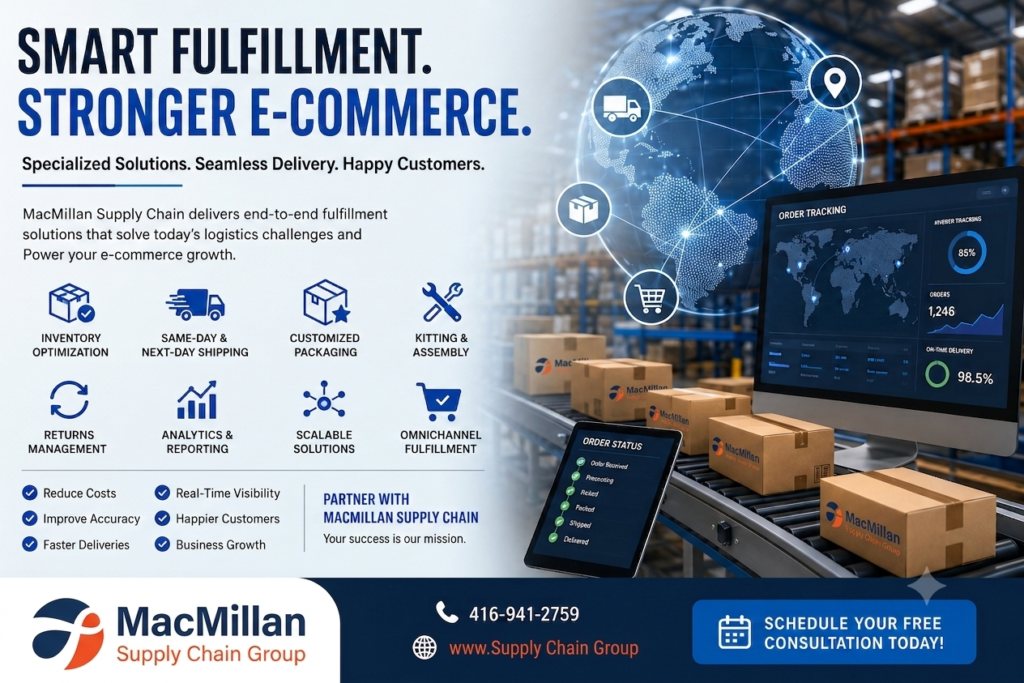
A Quick Summary and Overview This comprehensive guide explores the crucial distinctions between fulfillment centers and warehouses in the e-commerce landscape. We’ll delve into how fulfillment centers, like those operated by MacMillan Supply Chain, can significantly enhance your logistics strategy. From efficient order processing to cost-effective storage solutions, learn why partnering with a specialized 3PL provider is essential for e-commerce success. Discover how MacMillan’s expertise in inventory management, shipping optimization, and scalable fulfillment services can drive your business growth, reduce operational costs, and elevate customer satisfaction in today’s competitive digital marketplace. Introduction In the rapidly evolving world of e-commerce, understanding the nuances between fulfillment centers and traditional warehouses is crucial for businesses aiming to optimize their supply chain operations. While both play vital roles in logistics management, their functions and benefits differ significantly, especially when it comes to meeting the unique demands of online retail. Fulfillment centers, the cornerstone of efficient e-commerce logistics, offer a dynamic approach to order processing and shipping. In contrast, warehouses primarily serve as storage facilities. This distinction is pivotal for businesses looking to streamline their operations, reduce costs, and enhance customer satisfaction. In this article, we’ll explore how leveraging specialized fulfillment services, like those provided by MacMillan Supply Chain, can transform your e-commerce logistics. We’ll uncover the advantages of partnering with a 3PL expert and how it can position your business for scalable growth in the digital marketplace. Let’s dive into the world of modern logistics and discover how the right fulfillment strategy can become your competitive edge. The Role of Fulfillment Centers in E-commerce Success Fulfillment centers are the heartbeat of modern e-commerce logistics, serving as dynamic hubs that handle the entire process from receiving inventory to shipping products directly to customers. Unlike traditional warehouses, fulfillment centers are designed for rapid turnover, prioritizing speed and accuracy to meet the ever-growing demands of online shoppers. At MacMillan Supply Chain, our fulfillment centers are strategically equipped to handle the complexities of e-commerce operations: Efficient Order Processing: Advanced systems enable real-time order tracking and processing, ensuring swift fulfillment. Inventory Management: Sophisticated technology allows for precise stock control, minimizing errors and stockouts. Pick, Pack, and Ship: Streamlined processes ensure orders are accurately assembled and dispatched quickly. Returns Management: Seamless handling of returns, a critical aspect of customer satisfaction in e-commerce. The key advantage of fulfillment centers lies in their ability to scale operations based on demand fluctuations. This flexibility is crucial for e-commerce businesses facing seasonal peaks or rapid growth. By leveraging MacMillan’s fulfillment services, businesses can focus on core activities like product development and marketing, while we handle the intricacies of order fulfillment. Moreover, fulfillment centers offer the benefit of distributed inventory, allowing businesses to store products closer to their customers, thereby reducing shipping times and costs – a significant factor in enhancing customer satisfaction and loyalty. Warehouses: Traditional Storage Solutions in the Supply Chain While fulfillment centers are tailored for e-commerce, traditional warehouses play a distinct and vital role in the broader supply chain ecosystem. Warehouses primarily function as long-term storage facilities, designed to house large quantities of goods for extended periods. This fundamental difference shapes their operations and the services they provide. Key characteristics of warehouses include: Bulk Storage: Optimized for storing large quantities of goods efficiently. Inventory Holding: Ideal for businesses with slower-moving stock or those requiring long-term storage solutions. Distribution to Retailers: Often serve as distribution points for brick-and-mortar stores rather than individual consumers. Lower Turnover Rate: Products typically remain in storage for longer periods compared to fulfillment centers. While warehouses are essential for certain business models, they may not align with the fast-paced needs of e-commerce. The slower turnover and bulk storage focus can lead to higher inventory costs and longer processing times for individual orders. At MacMillan Supply Chain, we recognize that some businesses may require a hybrid approach. Our services can integrate traditional warehousing with modern fulfillment strategies, offering a tailored solution that combines the benefits of both. This flexibility allows businesses to optimize their inventory management across different sales channels, ensuring efficiency in both bulk storage and individual order fulfillment. Comparative Analysis: Fulfillment Centers vs. Distribution Centers While often confused, fulfillment centers and distribution centers serve distinct purposes in the logistics landscape. Understanding these differences is crucial for businesses to align their supply chain strategy with their operational needs. Fulfillment Centers: – Focus: Direct-to-consumer order processing – Order Size: Typically handle small, individual orders – Speed: Optimized for rapid order turnaround – Technology: Utilize advanced order management systems – Value-Added Services: Often offer kitting, personalization, and gift wrapping Distribution Centers: – Focus: Bulk shipments to retailers or other businesses – Order Size: Handle large, wholesale orders – Speed: Geared towards scheduled, bulk shipments – Technology: Emphasis on inventory tracking and forecasting – Value-Added Services: May include cross-docking and bulk breaking MacMillan Supply Chain’s expertise lies in bridging these two models. Our fulfillment centers are equipped to handle the intricacies of e-commerce fulfillment while also offering the capabilities of a distribution center when needed. This dual functionality allows our clients to: Efficiently manage both B2B and B2C orders Scale operations seamlessly as their business grows Adapt to changing market demands without changing logistics partners Optimize inventory across multiple sales channels By understanding these distinctions, businesses can make informed decisions about their logistics strategy, ensuring they have the right support for their specific needs and growth plans. Enhancing E-commerce with Specialized Fulfillment Services In the competitive e-commerce landscape, specialized fulfillment services can be a game-changer. MacMillan Supply Chain offers a suite of tailored services designed to elevate your e-commerce operations: Inventory Optimization: Our advanced systems provide real-time visibility into stock levels, enabling data-driven decisions to prevent stockouts and overstock situations. Omnichannel Fulfillment: Seamlessly integrate orders from multiple sales channels, ensuring consistent service across platforms. Same-Day and Next-Day Shipping: Strategic warehouse locations and efficient processes enable faster delivery options, meeting consumer expectations for speed. Customized Packaging: Enhance brand experience with bespoke packaging solutions, including eco-friendly options. Kitting and Assembly: Efficiently bundle products or assemble components, adding value to your offerings. Returns Management: Streamline the returns process, turning a potential pain point into a customer satisfaction opportunity. Analytics and Reporting: Gain insights into order
Cross-Docking: Enhancing Supply Chain Efficiency in Logistics
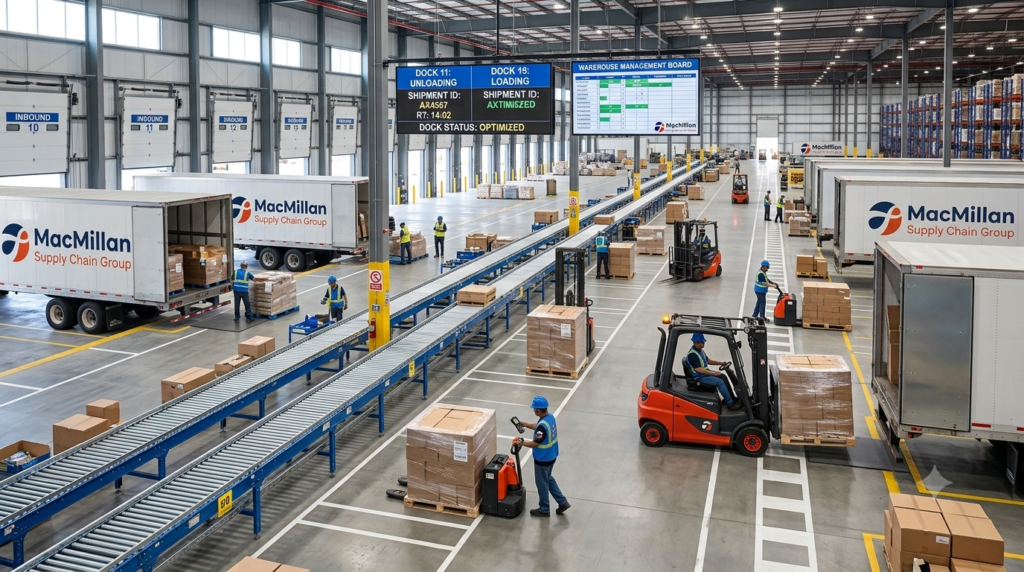
A quick summary and overview Cross-docking is a revolutionary logistics strategy that bypasses traditional warehousing by transferring goods directly from inbound to outbound transport with minimal storage. This technique optimizes supply chain efficiency, reduces costs, and accelerates delivery. Beneficial for industries like retail, manufacturing, and eCommerce, cross-docking meets the growing demand for quicker, seamless fulfillment processes. With MacMillan Supply Chain, businesses can leverage expert solutions to enhance logistics operations—ushering a new era of streamlined supply chain management. An introduction In a fast-paced market where timely delivery is paramount, cross-docking emerges as a pivotal logistics strategy. This innovative approach transcends conventional warehousing methods by expediting the movement of goods from receiving to shipping with negligible storage time. Not only does this technique significantly reduce storage costs and handling time, but it also caters to the escalating need for enhanced customer satisfaction through quick and efficient delivery. At MacMillan Supply Chain, we understand the intricacies and potential of cross-docking to transform your logistics operations, helping you stay ahead in a highly competitive industry. Explore the types, processes, and benefits of cross-docking and see how optimizing these can support your operational goals and foster sustained business growth. Understanding Cross-Docking Cross-docking involves moving goods from inbound to outbound docks with no or minimal intermediate storage, a practice known as ‘just-in-time’ shipping. This logistics strategy streamlines operations by eliminating the need for warehousing, thus reducing associated costs. Predominantly utilized in eCommerce, retail distribution, and manufacturing warehouses, cross-docking is effective in managing backorders and improving delivery times. It enables products to reach end-users faster by seamlessly bypassing complex inventory processes typical of traditional warehousing. MacMillan Supply Chain leverages state-of-the-art warehouse management systems to implement cross-docking solutions that are customized to meet your business needs. These systems ensure real-time tracking of goods, enhance inventory management, and facilitate efficient labeling and sorting processes, further driving operational efficiency. By strategically utilizing cross-docking, businesses can not only optimize their supply chains but also improve delivery metrics and customer satisfaction. Types of Cross-Docking Understanding the various cross-docking methods can help businesses choose the most suitable strategy for their needs. The primary types include: Pre-Distribution Cross-Docking: Goods are received, sorted, and sent directly to customers without warehousing, ensuring immediate dispatch and efficient order fulfillment. Post-Distribution Cross-Docking: Goods are temporarily stored at a terminal for sorting and consolidation before final delivery, allowing for better order customization. Opportunistic Cross-Docking: This method is used on an as-needed basis to quickly respond to unexpected demands or fill urgent orders by using existing inventory efficiently. Continuous Cross-Docking: Involves non-stop movement of goods through the distribution pipeline, focusing on reducing delivery lead times. Consolidation and Deconsolidation Cross-Docking: This involves combining or breaking shipments to minimize transportation costs and improve delivery timelines. MacMillan Supply Chain helps businesses implement the most suitable cross-docking method tailored to their operational needs, ensuring optimized processes and substantial cost savings. Benefits of Cross-Docking in Logistics Cross-docking provides several key benefits that contribute to enhanced supply chain efficiency: Reduced Storage Costs: By eliminating the need for warehousing, cross-docking significantly cuts down storage-related expenses. This leads to reduced overheads and boosts operational profitability. Faster Delivery Times: Goods move through the supply chain more swiftly, improving lead times and enhancing customer satisfaction with quicker deliveries. Optimized Inventory Management: Cross-docking helps maintain lean inventory levels, reducing waste and ensuring that products are always fresh and available for dispatch. Increased Throughput: By minimizing handling and storage, facilities can handle larger volumes of goods more efficiently. Enhanced Flexibility: Businesses can quickly adapt to changing market demands, ensuring they can meet customer expectations swiftly. MacMillan Supply Chain’s expert cross-docking solutions allow businesses to capitalize on these benefits, providing them with a competitive edge in logistics management. Implementing Cross-Docking: Challenges and Solutions While cross-docking offers numerous advantages, its successful implementation can pose certain challenges. Recognizing these common problems is the first step towards overcoming them: Initial Costs and Infrastructure: Setting up a cross-docking facility demands significant initial investment for infrastructure and advanced technology, such as automated warehouse management systems. Businesses might find it challenging to allocate initial funding. Efficient Coordination and Management: Cross-docking requires meticulous coordination between suppliers, transporters, and distribution centers. A lack of synchronization among these components can lead to inefficiencies and shipment delays. Quality Control Issues: The rapid handling of goods might increase the chances of shipping errors, damaged products, or misplaced shipments, which can affect customer satisfaction. Limited Suitability: Not all products are suitable for cross-docking. Products requiring additional processing, packaging, or long-term storage are better suited for traditional warehousing methods. At MacMillan Supply Chain, we tackle these challenges with innovative solutions: – Comprehensive Planning and Strategy: We offer in-depth analysis and planning to design cross-docking facilities that align with your business objectives. Our experts ensure that the chosen method is financially viable and operationally efficient. – Cutting-Edge Technology: Our advanced warehouse management systems facilitate seamless coordination and communication among all players in the supply chain, ensuring timely and accurate processing of shipments.– Quality Assurance Protocols: We implement stringent quality control measures, utilizing automation and real-time data tracking to ensure every product reaches its destination in perfect condition. – Customized Solutions: Recognizing that one size does not fit all, we provide tailored cross-docking solutions that adapt to the unique needs of your products and operational constraints. How to Avoid Common Problems and Implement Solutions with MacMillan Supply Chain For businesses aspiring to adopt cross-docking, understanding the potential pitfalls and implementing effective solutions is crucial. Here’s how you can streamline the process with MacMillan Supply Chain: – Conduct a Feasibility Study: Before committing, assess your current logistics operations and product types to determine if cross-docking is suitable. Our team assists in conducting a thorough analysis to ensure feasibility and alignment with your business goals. – Invest in Technology: Equip your facility with robust, automated systems for inventory management and real-time data tracking. By doing so, you drastically reduce the risk of errors and enhance operational transparency. – Foster Strong Communication: Ensure all partners and stakeholders in your supply chain are engaged and communicate effectively. This helps streamline processes and prevent
Revolutionize Your Warehouse: The Ultimate Guide to Pallet Racking Systems
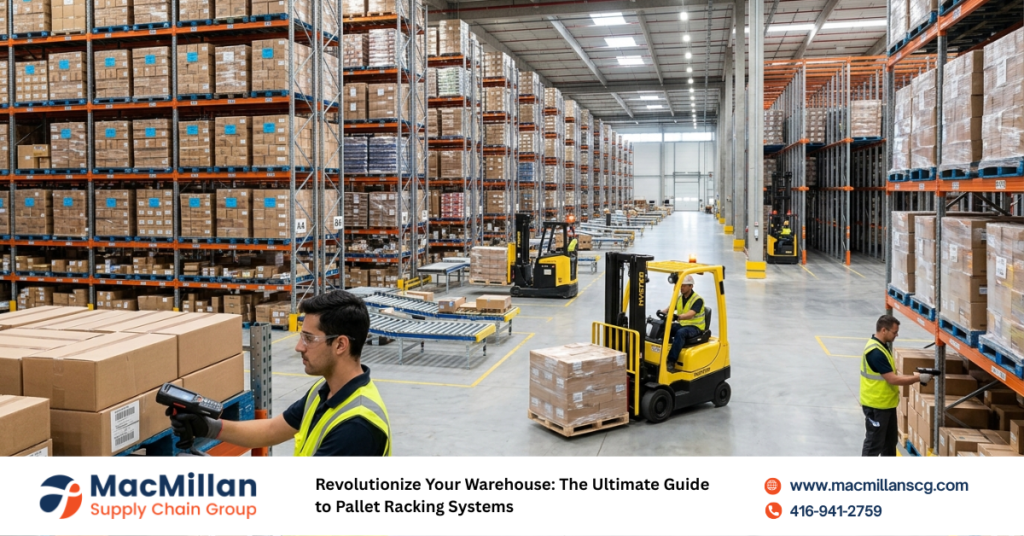
A quick summary and overview Pallet racking is a cornerstone of modern warehouse management, offering versatile storage solutions that maximize space utilization and operational efficiency. This comprehensive guide explores various pallet racking types, crucial safety considerations, and integration with inventory systems. We’ll delve into the economic benefits of well-implemented racking solutions and address common challenges faced by warehouse managers. With insights from MacMillan Supply Chain Group, you’ll learn how to select, implement, and maintain the ideal pallet racking system for your unique needs, ultimately driving productivity and cost savings in your supply chain operations. An introduction In today’s fast-paced logistics landscape, optimizing warehouse space and enhancing operational efficiency are paramount for businesses looking to stay competitive. Pallet racking systems stand at the forefront of this optimization, offering a structured approach to vertical storage that can dramatically increase capacity and streamline workflows. Whether you’re managing a small distribution center or overseeing a massive fulfillment operation, the right pallet racking solution can be a game-changer for your business. At MacMillan Supply Chain Group, we understand that choosing the perfect racking system involves balancing numerous factors, from inventory turnover rates to safety regulations. This guide aims to demystify the world of pallet racking, providing you with the knowledge to make informed decisions that will propel your warehouse operations to new heights of efficiency and productivity. Types of Pallet Racking Systems Pallet racking systems come in various configurations, each designed to meet specific warehouse needs and inventory profiles. Understanding these types is crucial for selecting the optimal solution for your operation: Selective Pallet Racking: The most common and versatile option, offering direct access to every pallet. Ideal for warehouses with a wide variety of SKUs and frequent stock rotation. Double Deep Racking: Similar to selective racking but with double depth, increasing storage density at the cost of slightly reduced accessibility. Drive-In/Drive-Through Racking: High-density storage solution perfect for bulk storage of homogeneous products with low turnover rates. Push-Back Racking: Utilizes inclined rails and carts to automatically push pallets forward when the front pallet is removed, combining density with good selectivity. Pallet Flow Racking: Gravity-fed system that automatically moves pallets from loading to picking side, ideal for FIFO (First-In-First-Out) inventory management. Cantilever Racking: Designed for long or irregularly shaped items, featuring arms extending from the uprights to support loads without front columns. Mobile Racking: Mounted on motorized bases, these systems can be compacted to eliminate aisles when not in use, maximizing storage density. At MacMillan Supply Chain, we help you navigate these options, considering factors like your inventory characteristics, picking frequency, and available space to recommend the most suitable racking system for your warehouse. Safety Considerations and Maintenance Ensuring the safety and longevity of your pallet racking system is critical for protecting your inventory, employees, and bottom line. Here are key safety considerations and maintenance practices: Regular Inspections: Conduct thorough visual checks weekly and professional inspections annually to identify damage, wear, or misalignment. Load Capacity Compliance: Strictly adhere to manufacturer-specified weight limits for each rack and beam level to prevent structural failures. Proper Installation and Assembly: Ensure racking is installed by certified professionals following manufacturer guidelines and local building codes. Employee Training: Provide comprehensive training on safe loading/unloading procedures, forklift operation, and identifying potential hazards. Protection Accessories: Install column protectors, end-of-aisle guards, and wire mesh decking to prevent damage and enhance safety. Clear Aisle Maintenance: Keep aisles free of obstructions and ensure proper lighting for safe navigation. Immediate Repair Protocol: Address any damage or wear immediately to prevent escalation of safety risks. Documentation: Maintain detailed records of inspections, repairs, and modifications for compliance and tracking purposes. Load Placard Display: Clearly display maximum load capacities on each rack for easy reference. Seismic Considerations: In applicable regions, ensure racking meets seismic safety standards. MacMillan Supply Chain offers comprehensive safety audits and maintenance programs to keep your racking systems in optimal condition, minimizing risks and maximizing operational uptime. Integration with Inventory Management Systems Seamless integration between pallet racking and inventory management systems is crucial for optimizing warehouse operations. This synergy enhances accuracy, efficiency, and visibility across your supply chain. Here’s how to achieve effective integration: Barcode and RFID Technology: Implement scanning systems for real-time tracking of pallet locations and movements within the racking system. Warehouse Management Software (WMS): Utilize advanced WMS that can map your racking layout and optimize picking routes based on inventory locations. Automated Storage and Retrieval Systems (AS/RS): For high-volume operations, consider integrating automated systems that work in tandem with your racking for faster, more accurate picking and putaway. IoT Sensors: Deploy sensors on racking to monitor environmental conditions, load weights, and structural integrity, feeding data into your management systems. Digital Twin Technology: Create a virtual replica of your warehouse layout, including racking configurations, to simulate and optimize operations. Mobile Devices: Equip staff with handheld devices that interface with your inventory system for on-the-spot updates and location verification. Data Analytics: Leverage big data analytics to identify trends, optimize stock placement, and predict maintenance needs based on usage patterns. MacMillan Supply Chain specializes in integrating cutting-edge inventory management technologies with pallet racking systems, ensuring your warehouse operates at peak efficiency. Our solutions are tailored to your specific needs, providing a seamless flow of information from rack to stock. Economic Benefits of Optimized Pallet Racking Implementing a well-designed pallet racking system can yield significant economic advantages for your business: Space Optimization: Maximize vertical storage space, potentially reducing the need for warehouse expansion or additional facilities. Improved Inventory Turnover: Efficient organization leads to faster stock rotation, reducing holding costs and improving cash flow. Enhanced Labor Productivity: Well-organized racking systems reduce picking times and improve order fulfillment rates, increasing overall workforce efficiency. Reduced Damage and Losses: Proper storage minimizes product damage, decreasing write-offs and insurance claims. Lower Operating Costs: Optimized layouts reduce equipment travel distances, lowering fuel costs and equipment wear. Increased Storage Capacity: Vertical expansion can increase storage capacity by up to 50% without expanding floor space. Flexibility for Growth: Modular racking systems allow for easy reconfiguration as business needs evolve, avoiding costly renovations. Improved Safety: Fewer accidents mean reduced workers’ compensation claims and less downtime. Energy Efficiency: Better organization can lead to reduced lighting and HVAC needs in certain areas
Revolutionize Your Supply Chain with a Perpetual Inventory System
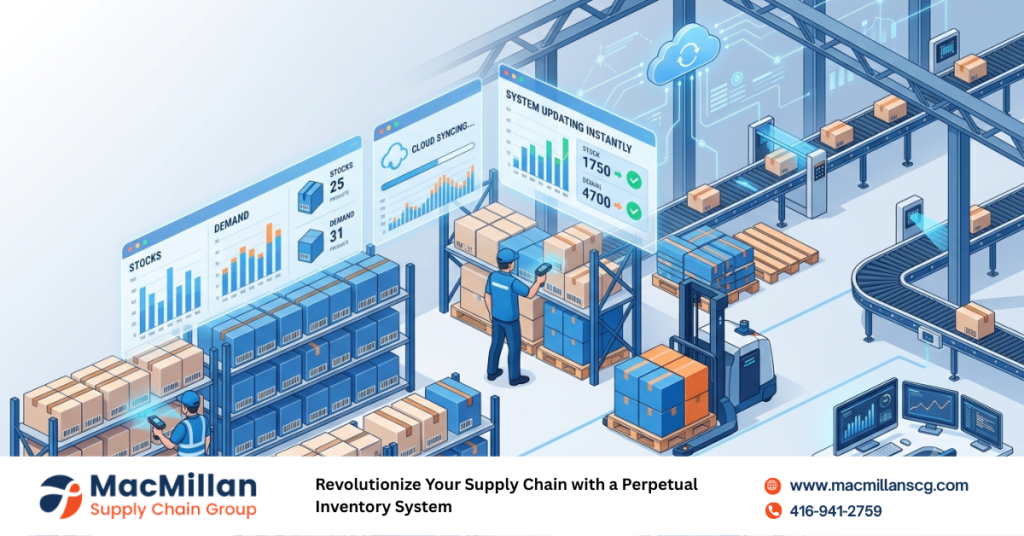
A Quick Summary and Overview A perpetual inventory system is a game-changer for modern supply chain management. It offers real-time tracking, automation, and enhanced accuracy, addressing the challenges of traditional inventory methods. MacMillan Supply Chain Group provides cutting-edge perpetual inventory solutions that revolutionize how businesses manage their stock. By implementing this system, companies can optimize inventory levels, reduce costs, improve financial reporting, and streamline multi-warehouse operations. This article explores the benefits of perpetual inventory systems, common challenges in inventory management, and how MacMillan’s solutions can transform your supply chain operations for greater efficiency and competitiveness. An Introduction In today’s fast-paced business environment, effective inventory management is crucial for maintaining a competitive edge. Traditional inventory methods often fall short, leading to inefficiencies, inaccuracies, and lost opportunities. Enter the perpetual inventory system – a sophisticated approach that leverages real-time data and automation to transform supply chain operations. MacMillan Supply Chain Group understands the complexities of modern inventory management and offers state-of-the-art perpetual inventory solutions. These systems provide businesses with unprecedented visibility into their stock levels, enabling better decision-making, improved customer satisfaction, and significant cost savings. In this comprehensive guide, we’ll explore the key features and benefits of perpetual inventory systems, discuss common inventory challenges, and demonstrate how MacMillan’s expertise can help your business thrive in an increasingly competitive marketplace. Get ready to discover how a perpetual inventory system can revolutionize your supply chain and drive your business forward. Real-Time Inventory Tracking: The Foundation of Efficient Supply Chains Real-time inventory tracking is the cornerstone of an effective perpetual inventory system. Unlike traditional methods that rely on periodic physical counts, a perpetual system continuously updates inventory levels as transactions occur. This real-time visibility offers numerous advantages for businesses of all sizes: Accurate Stock Levels: With instant updates, you always know exactly what’s in stock, reducing the risk of stockouts or overstocking. Improved Decision-Making: Real-time data enables quick, informed decisions about purchasing, production, and sales strategies. Enhanced Customer Service: Accurate inventory information allows for better order fulfillment and reduced backorders, leading to improved customer satisfaction. Efficient Reordering: Automated reorder points ensure you maintain optimal inventory levels without manual intervention. Reduced Shrinkage: Real-time tracking makes it easier to identify and address inventory discrepancies promptly. MacMillan Supply Chain Group’s perpetual inventory solutions leverage cutting-edge technology to provide seamless real-time tracking. Our systems integrate with your existing infrastructure, ensuring a smooth transition and minimal disruption to your operations. By implementing our real-time tracking solutions, you’ll gain unprecedented visibility into your inventory, enabling you to make data-driven decisions that optimize your supply chain and drive business growth. Automation: Streamlining Inventory Management Processes Automation is a key feature of advanced perpetual inventory systems, revolutionizing how businesses manage their stock. By reducing manual processes, automation minimizes human error, increases efficiency, and frees up valuable resources. Here’s how automation transforms inventory management: Automatic Updates: As items are received, sold, or transferred, the system automatically adjusts inventory levels. Seamless Integration: Automated systems integrate with point-of-sale, purchasing, and accounting software for comprehensive data synchronization. Intelligent Reordering: The system can automatically generate purchase orders based on predefined reorder points and lead times. Accurate Costing: Automated cost calculations ensure precise valuation of inventory and cost of goods sold. Streamlined Reporting: Generate real-time reports on inventory status, turnover rates, and other key metrics with just a few clicks. MacMillan Supply Chain Group’s perpetual inventory solutions offer advanced automation capabilities tailored to your business needs. Our systems can be customized to automate specific processes, from basic inventory updates to complex multi-warehouse operations. By implementing our automated solutions, you’ll reduce manual errors, increase operational efficiency, and allow your team to focus on strategic tasks that drive business growth. Experience the power of automation with MacMillan and take your inventory management to the next level. Multi-Warehouse Management: Simplifying Complex Operations For businesses operating multiple warehouses or distribution centers, efficient inventory management can be particularly challenging. A perpetual inventory system simplifies multi-warehouse operations by providing a centralized platform for managing stock across all locations. Here’s how it benefits multi-warehouse businesses: Unified Visibility: Get a comprehensive view of inventory across all locations in real-time. Optimized Stock Distribution: Easily transfer stock between warehouses to meet demand and reduce overstock situations. Efficient Order Fulfillment: Automatically route orders to the most appropriate warehouse based on inventory levels and proximity to the customer. Streamlined Replenishment: Manage reorder points and lead times for each location independently, ensuring optimal stock levels across the network. Consistent Reporting: Generate consolidated reports for all warehouses or drill down into location-specific data as needed. MacMillan Supply Chain Group’s perpetual inventory solutions are designed to handle the complexities of multi-warehouse operations. Our systems offer advanced features like cross-docking, zone picking, and wave planning to optimize your distribution network. With MacMillan’s expertise, you can transform your multi-warehouse management, reducing costs and improving overall supply chain efficiency. Whether you’re managing two warehouses or twenty, our solutions scale to meet your needs, providing the tools you need to succeed in today’s competitive market. Financial Benefits: Enhancing Profitability and Reporting Accuracy Implementing a perpetual inventory system offers significant financial benefits beyond improved operational efficiency. By providing accurate, real-time data, these systems enhance financial reporting, decision-making, and ultimately, profitability. Here’s how a perpetual inventory system can positively impact your bottom line: Reduced Carrying Costs: Optimize inventory levels to minimize storage costs and capital tied up in excess stock. Improved Cash Flow: Better inventory management leads to more efficient use of working capital. Accurate COGS Calculation: Real-time tracking ensures precise cost of goods sold calculations, improving financial statement accuracy. Enhanced Forecasting: Detailed historical data enables more accurate demand forecasting and inventory planning. Simplified Audits: Continuous tracking and detailed transaction records streamline the audit process. Better Valuation: Accurate inventory data contributes to a more precise valuation of your business. MacMillan Supply Chain Group’s perpetual inventory solutions are designed with financial optimization in mind. Our systems integrate seamlessly with your financial software, providing real-time data for accurate reporting and analysis. By implementing our solutions, you’ll gain deeper insights into your inventory’s financial impact, enabling you to make informed decisions that drive profitability. From reducing carrying costs
Ambient Storage Solutions: Benefits, Considerations, and Best Practices
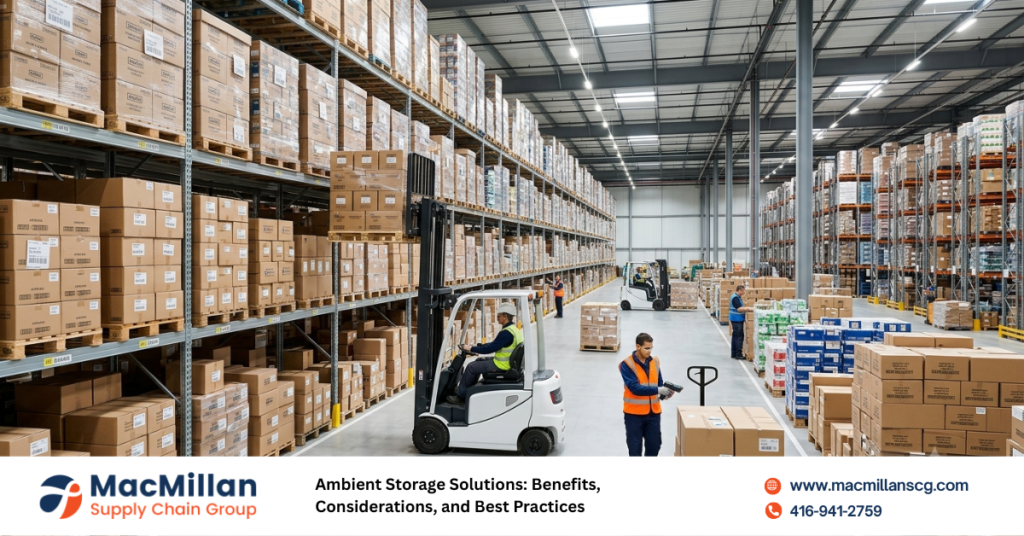
A Quick Summary and Overview Ambient storage is a practical and cost-effective choice for businesses seeking to store products that do not require refrigeration or freezing. This article delves into the benefits, key considerations, and best practices of ambient storage, explaining how it can enhance logistics efficiency and maintain product quality while reducing costs. Introduction In the competitive world of supply chain management, businesses are constantly looking for ways to optimize logistics operations. One such opportunity is through ambient storage solutions. Unlike temperature-controlled facilities, ambient storage offers a versatile and energy-efficient option for storing a wide range of products. By understanding the benefits and considerations of ambient storage, businesses can make informed decisions to enhance their supply chain efficiency and reduce costs. This article will explore the nuances of ambient storage, providing insights into its advantages and practical tips for integration with 3PL services. Understanding Ambient Storage: What It Is and Why It Matters Ambient storage involves keeping products in an environment that maintains controlled room temperatures, typically between 60°F to 80°F (15°C to 27°C). This storage type is ideal for non-perishable goods such as Consumer Packaged Goods (CPG), electronics, and clothing. It eliminates the need for costly refrigeration or climate-controlled setups, offering significant savings on storage and operating costs. Advantages of mixing inventory types in ambient storage facilities add to flexibility and efficiency. Businesses can consolidate various product categories in one location, enhancing logistics operations while reducing transportation costs. Moreover, ambient storage is an eco-friendly choice, reducing energy usage, lowering carbon footprints, and aligning with green supply chain initiatives. Advantages of Ambient Storage: A Deep Dive One of the standout advantages of ambient storage is its cost-effectiveness. Without the need for specialized temperature-regulating equipment, ambient storage dramatically cuts down on overhead costs. Besides, the versatility of ambient storage cannot be overstated. It accommodates many products, allowing retailers and manufacturers to simplify logistics and improve operational efficiency. Furthermore, energy efficiency is a key benefit. By minimizing energy use, companies not only save on utility expenses but also support sustainability by reducing environmental impact. Lower operational costs and a lighter ecological footprint make ambient storage a smart choice for forward-thinking businesses. Key Considerations for Successful Ambient Storage While ambient storage offers numerous benefits, businesses must address some critical considerations to ensure successful implementation. Product compatibility stands as the foremost aspect—it’s crucial to identify which goods can endure ambient temperatures without degradation. Monitoring and maintaining optimal humidity levels are pivotal to prevent issues such as mold growth or product spoilage. Effective warehouse management, which includes regular cleaning, sanitation, pest control, and implementing FIFO inventory rotations, is essential. Finally, understanding seasonal fluctuations and the local climate of storage locations helps ensure that requirements remain stable year-round, thereby safeguarding product integrity. Distinguishing Between Ambient and Climate-Controlled Storage It’s vital to differentiate ambient storage from climate-controlled facilities, which offer precise temperature and humidity control for sensitive items. While ambient storage suits general, non-refrigerated products, certain high-value or delicate goods may require climate-controlled environments to prevent damage. Companies must evaluate products’ specific storage needs to choose the appropriate solution that ensures quality and compliance with industry standards. Common Problems with Ambient Storage and Our Solutions Common issues in ambient storage include improper inventory management, failing humidity control, and inadequate facility maintenance. These can lead to product damage, spoilage, or increased operational costs. At MacMillan Supply Chain, we’re committed to providing solutions that address these challenges. Our ambient storage services offer advanced inventory management systems to maintain accurate stock levels and ensure timely rotations. We implement state-of-the-art humidity control measures, ensuring the environment stays within ideal parameters, and conduct regular facility inspections to uphold cleanliness and safety standards. By investing in cutting-edge technology and efficient storage practices, MacMillan Supply Chain aims to minimize disruptions and enhance supply chain reliability. How Can Readers Avoid Problems and Implement Solutions? To leverage ambient storage effectively, businesses should conduct a thorough assessment of their inventory needs. Selecting the right logistics partner is crucial to achieving seamless integration and optimal performance. Consider MacMillan Supply Chain as your strategic partner. With our expertise and robust storage solutions, you’ll avoid common pitfalls and ensure operations run smoothly. Contact us today to learn how ambient storage can transform your logistics strategy. FAQS What is batch picking in warehouse management? Batch picking is a process where a picker retrieves items for multiple orders in a single trip. It is designed to improve efficiency, reduce labor costs, and enhance order accuracy. What are the benefits of implementing batch picking? Batch picking helps businesses improve warehouse efficiency by reducing picker travel time, lowering labor costs, increasing productivity, and improving order accuracy. It also enables faster order fulfillment, making it an ideal solution for high-volume warehouses and e-commerce operations. How does technology enhance batch picking? Technology such as Warehouse Management Systems (WMS), barcode scanners, mobile devices, and route optimization software makes batch picking faster and more accurate. These tools automatically group orders, assign the most efficient picking routes, and reduce manual errors throughout the fulfillment process. Which industries can benefit the most from batch picking? Batch picking is especially beneficial for industries that process a high volume of orders, including e-commerce, retail, manufacturing, wholesale distribution, healthcare, and consumer goods. Any business with repetitive picking tasks can improve efficiency using this method. How does batch picking improve order accuracy? By grouping similar orders and using organized bins or totes, batch picking minimizes handling mistakes and reduces the chance of mixing products between orders. Combined with barcode scanning and WMS technology, it significantly improves picking accuracy and customer satisfaction. How can MacMillan Supply Chain help in batch picking implementation? MacMillan Supply Chain helps businesses successfully implement batch picking by evaluating existing warehouse operations, optimizing warehouse layouts, integrating advanced WMS technology, and providing staff training. Their customized solutions improve efficiency, reduce operational costs, and ensure a smooth transition to a more productive warehouse environment.
Mastering Batch Picking: Efficiency and Accuracy Unlocked
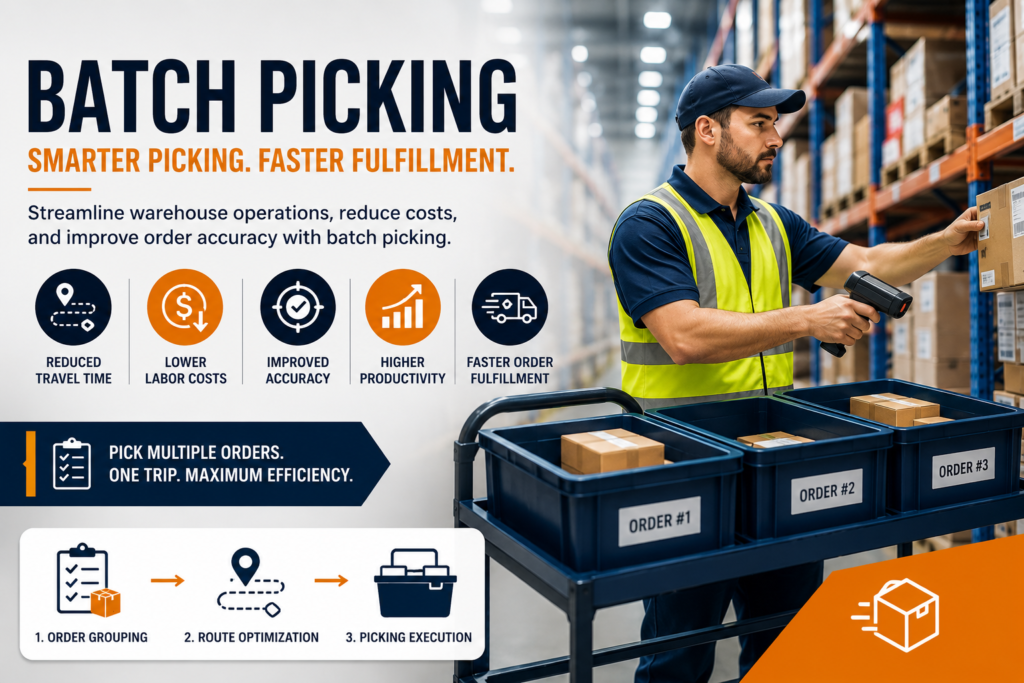
Quick Summary and Overview Batch picking, a method where items for multiple orders are retrieved in a single trip, revolutionizes warehouse efficiency by minimizing travel distance, cutting labor costs, and boosting order accuracy. It’s the ultimate solution for high-volume businesses such as e-commerce, retail, and manufacturing. Implementing best practices in batch picking can optimize operations and drive success in supply chain management. Introduction In today’s fast-paced e-commerce and retail sectors, efficiency in warehouse operations is paramount. With the surge in online orders, companies are continuously seeking ways to enhance their order fulfillment processes. Batch picking emerges as a game-changer, enabling warehouses to streamline operations by retrieving inventory for multiple orders simultaneously. This technique not only minimizes logistical challenges but also reduces labor costs and boosts accuracy—crucial factors for maintaining competitiveness. At MacMillan Supply Chain, we understand the complexities of supply chain management and aim to guide you through the nuances of batch picking. Explore how integrating this method can transform your operations and elevate your business performance. Understanding Batch Picking Batch picking, also referred to as multi-order picking, is a strategic approach in warehouse management. It involves grouping orders with shared items or storage locations to be picked together, consolidating the picking process into a single trip. The primary advantage of batch picking is its ability to significantly reduce the total travel time for pickers. Businesses dealing with high order volumes, such as e-commerce and retail companies, benefit greatly from this method. By optimizing the picking process, companies can achieve faster turnaround times and higher customer satisfaction rates without incurring additional labor costs. The Batch Picking Process The batch picking process consists of distinct stages designed to maximize efficiency: Order Grouping: Identifying and consolidating orders that include common items or share storage areas. This initial step ensures that the picking sequence is optimized for minimum travel and handling. Route Optimization: Utilizing advanced software and algorithms to determine the most efficient pathways within the warehouse. Route optimization is critical as it dictates the sequence of item collection, significantly reducing time and effort. Picking Execution: Using bins or totes to separate items for individual orders during the picking process. This step ensures that items are clearly organized, minimizing the risk of errors and facilitating quicker sorting. Implementing Batch Picking in Your Operations To successfully implement batch picking, businesses need to evaluate their current operations to identify inefficiencies and areas for improvement. Changes may be required in the warehouse layout, technology, and staff training to accommodate the batch picking process. Key performance indicators (KPIs) should be established to monitor the success of the implementation. It’s essential to leverage technology, such as robotics and barcode scanning, to heighten picking accuracy and speed. At MacMillan Supply Chain, our experts are equipped to guide your business through this transition, ensuring seamless integration of batch picking into your operations. Solving Common Warehouse Challenges Many warehouses experience similar challenges, including high labor costs, lengthy picking times, and frequent errors in order fulfillment. Our Solutions MacMillan Supply Chain addresses these concerns with tailored strategies and technologies. We conduct an in-depth analysis of your current processes to identify bottlenecks and areas for enhancement. Our team proposes a comprehensive restructuring of your warehouse layout to support batch picking, ensuring optimal flow and minimizing unnecessary movements. We also introduce cutting-edge technology solutions, such as warehouse management systems (WMS), to automate and refine the order grouping and route optimization process. At the core of our solutions is robust staff training and continuous support. Our training programs emphasize skill development in using specialized software and understanding batch picking dynamics, empowering your workforce to adapt seamlessly. How Readers Can Implement These Solutions Implementing batch picking solutions involves several steps that require strategic planning and execution. Begin by evaluating your current warehouse processes and identifying areas that could benefit from batch picking. Reach out to industry experts, like MacMillan Supply Chain, to receive customized recommendations based on your unique business needs. Implement necessary technologies, such as WMS and automation tools, to support batch picking effectively. Finally, commit to ongoing training and process assessments to ensure continued success. Partner with MacMillan Supply Chain to leverage our expertise and ensure your warehouse operations are operating at peak efficiency. Ready to transform your warehouse operations with batch picking? Contact MacMillan Supply Chain today to discover how our tailored strategies can drive your business towards greater efficiency and success. FAQS What is batch picking in warehouse management? Batch picking is a process where a picker retrieves items for multiple orders in a single trip. It is designed to improve efficiency, reduce labor costs, and enhance order accuracy. What are the benefits of implementing batch picking? Batch picking helps businesses improve warehouse efficiency by reducing picker travel time, lowering labor costs, increasing productivity, and improving order accuracy. It also enables faster order fulfillment, making it an ideal solution for high-volume warehouses and e-commerce operations. How does technology enhance batch picking? Technology such as Warehouse Management Systems (WMS), barcode scanners, mobile devices, and route optimization software makes batch picking faster and more accurate. These tools automatically group orders, assign the most efficient picking routes, and reduce manual errors throughout the fulfillment process. Which industries can benefit the most from batch picking? Batch picking is especially beneficial for industries that process a high volume of orders, including e-commerce, retail, manufacturing, wholesale distribution, healthcare, and consumer goods. Any business with repetitive picking tasks can improve efficiency using this method. How does batch picking improve order accuracy? By grouping similar orders and using organized bins or totes, batch picking minimizes handling mistakes and reduces the chance of mixing products between orders. Combined with barcode scanning and WMS technology, it significantly improves picking accuracy and customer satisfaction. How can MacMillan Supply Chain help in batch picking implementation? MacMillan Supply Chain helps businesses successfully implement batch picking by evaluating existing warehouse operations, optimizing warehouse layouts, integrating advanced WMS technology, and providing staff training. Their customized solutions improve efficiency, reduce operational costs, and ensure a smooth transition to a more productive
Optimize Your Supply Chain: The Power of Outsourcing Warehouse Operations
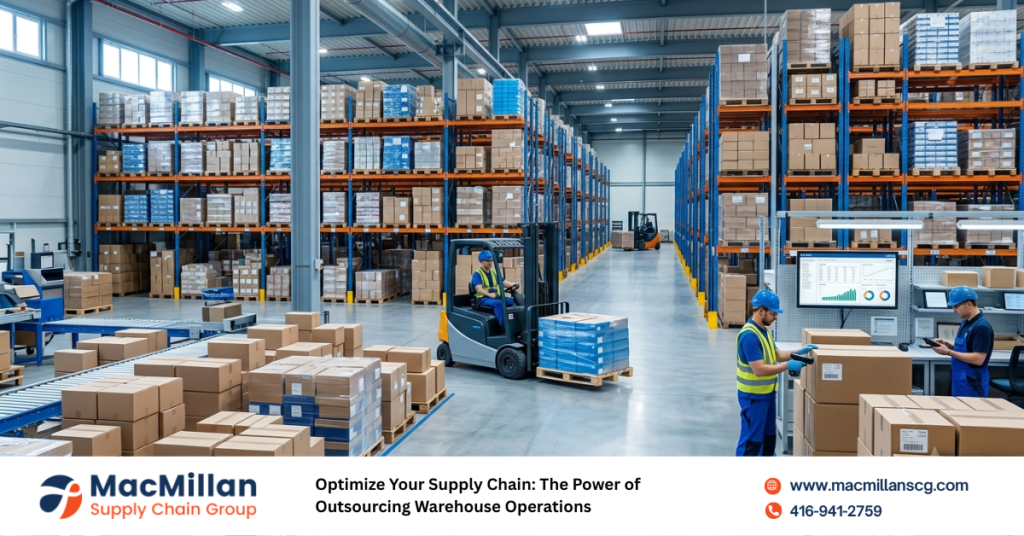
A quick summary and overview Outsourcing warehouse operations to third-party logistics (3PL) providers is a game-changing strategy for businesses looking to streamline their supply chain. This approach offers numerous benefits, including cost reduction, improved scalability, and enhanced operational efficiency. By partnering with a 3PL expert like MacMillan Supply Chain Group, companies can focus on their core competencies while leveraging specialized logistics expertise. This article explores the advantages of warehouse outsourcing, common challenges in in-house operations, and how MacMillan’s solutions can transform your supply chain, ultimately driving growth and customer satisfaction. An introduction In today’s fast-paced business environment, optimizing supply chain operations is crucial for maintaining a competitive edge. One of the most impactful strategies in this realm is outsourcing warehouse operations to third-party logistics (3PL) providers. This approach allows companies to tap into specialized expertise, advanced technologies, and economies of scale that may be challenging to achieve in-house. As we delve into the world of warehouse outsourcing, we’ll explore how this strategy can revolutionize your supply chain management. From cost savings to improved scalability and efficiency, the benefits are numerous and far-reaching. Moreover, we’ll discuss how partnering with a trusted 3PL provider like MacMillan Supply Chain Group can help you navigate the complexities of modern logistics, allowing you to focus on your core business activities and drive growth. The Financial Advantage: Transforming Fixed Costs to Variable One of the most significant benefits of outsourcing warehouse operations is the transformation of fixed costs into variable expenses. This shift can have a profound impact on your company’s financial flexibility and overall bottom line. When managing an in-house warehouse, businesses face substantial fixed costs, including: – Facility leases or mortgages – Equipment purchases and maintenance – Staffing for consistent operational coverage – Utility expenses and property taxes These costs remain relatively constant regardless of business volume, potentially straining resources during slow periods. However, by outsourcing to a 3PL provider like MacMillan Supply Chain Group, you can convert these fixed expenses into variable costs that align with your actual usage and demand. This financial model offers several advantages: Improved cash flow management: Pay only for the space and services you use. Reduced capital expenditure: Eliminate the need for significant upfront investments in warehouse infrastructure. Better scalability: Easily adjust your logistics spend based on seasonal fluctuations or business growth. Enhanced budgeting accuracy: Predict and control logistics costs more effectively. By leveraging MacMillan’s warehouse outsourcing solutions, you can optimize your financial resources, allowing for greater investment in core business activities and strategic initiatives that drive growth and innovation. Scalability and Flexibility: Adapting to Market Demands In today’s dynamic business landscape, the ability to scale operations quickly and efficiently is crucial. Outsourcing warehouse operations to a 3PL provider like MacMillan Supply Chain Group offers unparalleled scalability and flexibility, allowing your business to adapt seamlessly to changing market demands. Key scalability benefits include: Elastic capacity: Easily expand or contract your warehouse space and services based on current needs, without the constraints of fixed infrastructure. Seasonal adaptability: Effortlessly handle peak seasons or sudden surges in demand without overinvesting in year-round capacity. Geographic expansion: Tap into MacMillan’s network of strategically located facilities to enter new markets or optimize distribution routes. Technology scalability: Leverage advanced warehouse management systems and technologies without significant capital investment. Workforce flexibility: Access skilled labor as needed, eliminating the challenges of hiring and training for fluctuating demands. This scalability translates to improved customer service, as you can maintain optimal inventory levels and fulfill orders more efficiently, regardless of volume. Moreover, it allows your business to seize new opportunities quickly, whether it’s launching a new product line or expanding into e-commerce. By partnering with MacMillan Supply Chain Group, you gain the agility to respond to market changes swiftly, ensuring your supply chain remains a competitive advantage rather than a limitation. Leveraging Expertise and Technology for Enhanced Efficiency Outsourcing warehouse operations to a specialized 3PL provider like MacMillan Supply Chain Group grants access to a wealth of industry expertise and cutting-edge technology, significantly boosting operational efficiency. Expert knowledge and advanced solutions include: Optimized warehouse layout and processes: Benefit from years of experience in designing efficient storage and picking strategies. State-of-the-art Warehouse Management Systems (WMS): Utilize advanced software for real-time inventory tracking, order processing, and reporting. Automated solutions: Leverage robotics and automated sorting systems to increase speed and accuracy. Data-driven decision making: Gain insights from advanced analytics to continuously improve operations and forecast demand. Best practices implementation: Stay updated with industry trends and compliance requirements without dedicating internal resources. Specialized handling capabilities: Access expertise in managing various product types, including temperature-sensitive or hazardous materials. Continuous improvement: Benefit from ongoing optimization efforts and performance metrics analysis. By tapping into MacMillan’s expertise and technological capabilities, your business can achieve: – Reduced order processing times – Improved inventory accuracy – Enhanced order fulfillment rates – Decreased shipping errors – Better visibility across the supply chain This level of efficiency not only reduces operational costs but also improves customer satisfaction through faster, more accurate deliveries. Partnering with MacMillan allows you to focus on your core competencies while leaving the complexities of warehouse management to the experts. Mitigating Risks and Ensuring Compliance Managing a warehouse comes with inherent risks and complex compliance requirements. Outsourcing these operations to a specialized 3PL provider like MacMillan Supply Chain Group can significantly reduce these challenges, ensuring smoother, more compliant operations. Risk mitigation and compliance benefits include: Regulatory compliance: Stay up-to-date with evolving logistics regulations and industry standards without dedicating internal resources. Safety management: Benefit from robust safety protocols and trained personnel, reducing workplace accidents and associated liabilities. Insurance and liability: Transfer some operational risks to the 3PL provider, potentially reducing your insurance costs. Business continuity: Access redundant systems and disaster recovery plans to ensure uninterrupted operations. Cybersecurity: Leverage advanced data protection measures and secure IT infrastructure. Quality control: Implement standardized processes and quality checks to maintain product integrity. Environmental compliance: Benefit from sustainable practices and adherence to environmental regulations. Labor management: Avoid challenges related to workforce fluctuations, unions, and labor law compliance. By partnering with MacMillan, you gain peace of mind knowing that your warehouse operations are managed by experts well-versed in industry best
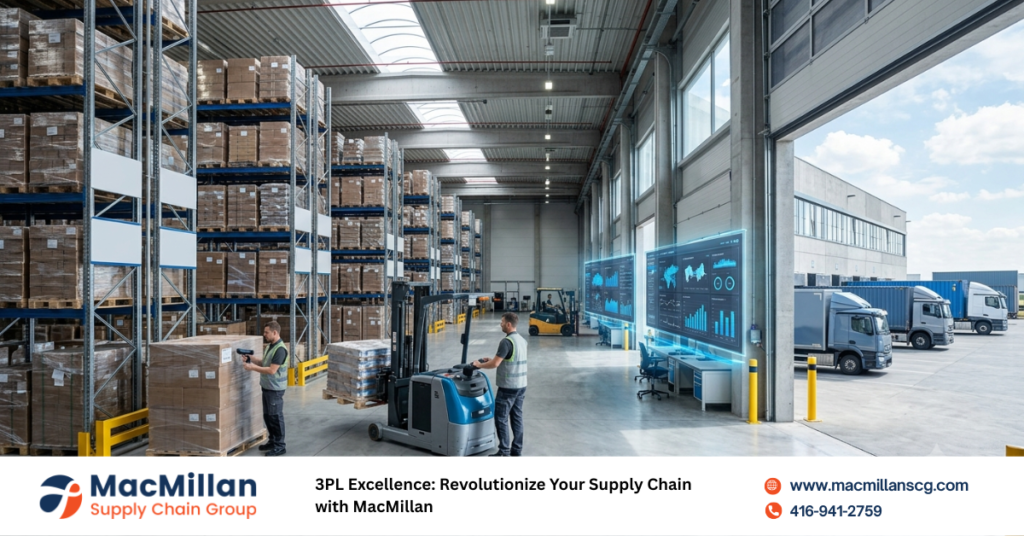
3PL Excellence: Revolutionize Your Supply Chain with MacMillan
A quick summary and overview Third-party logistics (3PL) is transforming how businesses manage their supply chains. By outsourcing logistics operations to specialized providers like MacMillan Supply Chain Group, companies can focus on core competencies while benefiting from expert logistics management. This comprehensive guide explores the essentials of 3PL, its benefits, implementation strategies, and how it can revolutionize your business operations. From warehouse management to transportation optimization, we’ll delve into how MacMillan’s cutting-edge solutions can streamline your supply chain, reduce costs, and enhance customer satisfaction. Whether you’re a small business or a large corporation, understanding 3PL is crucial in today’s competitive marketplace. An introduction In today’s fast-paced business environment, efficient supply chain management is more critical than ever. As companies strive to meet increasing customer demands while managing costs, third-party logistics (3PL) has emerged as a game-changing solution. 3PL providers offer a range of services, from warehousing and distribution to transportation management and beyond, allowing businesses to outsource complex logistics operations to experts in the field. MacMillan Supply Chain Group stands at the forefront of this revolution, offering state-of-the-art 3PL services tailored to meet the unique needs of each client. By leveraging our expertise, businesses can not only streamline their operations but also gain a competitive edge in their respective markets. This guide will explore the intricacies of 3PL, its benefits, and how partnering with MacMillan can transform your supply chain from a cost center to a strategic asset driving growth and customer satisfaction. Understanding 3PL: The Backbone of Modern Supply Chains Third-party logistics (3PL) refers to the outsourcing of logistics and distribution activities to specialized companies. These activities can include warehousing, inventory management, order fulfillment, and transportation. But 3PL is more than just a set of services; it’s a strategic partnership that can revolutionize how businesses operate. At its core, 3PL allows companies to focus on their core competencies while leaving the complexities of logistics to experts. This division of labor can lead to significant improvements in efficiency and cost-effectiveness. For instance, a retailer can concentrate on product development and marketing, while their 3PL partner ensures products are stored efficiently and delivered promptly. MacMillan Supply Chain Group takes this concept further by offering customized 3PL solutions. We understand that each business has unique needs, and our services are tailored accordingly. From small e-commerce startups to large multinational corporations, we provide scalable solutions that grow with your business. Moreover, 3PL providers like MacMillan invest in advanced technologies and infrastructure that might be too costly for individual businesses to implement. This includes state-of-the-art warehouse management systems, real-time tracking capabilities, and optimized transportation networks, all of which contribute to a more efficient and responsive supply chain. The Benefits of 3PL: Driving Efficiency and Growth Partnering with a 3PL provider like MacMillan Supply Chain Group offers numerous advantages that can significantly impact your bottom line and customer satisfaction: Cost Reduction: By leveraging our economies of scale and expertise, you can reduce operational costs associated with warehousing, transportation, and labor. Scalability: Our flexible solutions allow you to easily scale operations up or down based on demand, without the need for significant capital investments. Improved Focus: Outsourcing logistics enables you to concentrate on core business activities, fostering innovation and growth. Enhanced Technology: Benefit from our cutting-edge logistics technology without the need for substantial IT investments. Global Reach: Expand into new markets with ease, utilizing our extensive network and local expertise. Risk Mitigation: We help navigate complex regulatory environments and manage supply chain risks effectively. Increased Efficiency: Our optimized processes and specialized knowledge lead to faster, more accurate order fulfillment and reduced transit times. Better Customer Service: With improved order accuracy and faster deliveries, customer satisfaction naturally increases. Data-Driven Insights: Gain valuable insights into your supply chain performance through our advanced analytics capabilities. By choosing MacMillan as your 3PL partner, you’re not just outsourcing logistics; you’re gaining a strategic ally committed to your business’s success and growth. Implementing 3PL: Strategies for Seamless Integration Integrating 3PL services into your business operations requires careful planning and execution. Here’s a step-by-step approach to ensure a smooth transition: Assess Your Needs: Evaluate your current logistics operations, identifying pain points and areas for improvement. Define Objectives: Set clear goals for what you want to achieve through 3PL integration, whether it’s cost reduction, improved efficiency, or expanded capabilities. Choose the Right Partner: Select a 3PL provider like MacMillan that aligns with your business values and has experience in your industry. Plan the Transition: Develop a detailed implementation plan, including timelines, resource allocation, and risk mitigation strategies. Communicate Effectively: Ensure all stakeholders, including employees and customers, are informed about the changes and their benefits. Integrate Systems: Work closely with your 3PL partner to integrate their systems with your existing technology infrastructure. Train Your Team: Provide necessary training to your staff on new processes and systems. Monitor and Optimize: Regularly review performance metrics and make adjustments as needed to optimize operations. At MacMillan Supply Chain Group, we guide you through each step of this process, ensuring a seamless transition that minimizes disruptions and maximizes benefits. Our experienced team works closely with yours to tailor the implementation to your specific needs and goals. Future-Proofing Your Supply Chain with Advanced 3PL Solutions The logistics landscape is constantly evolving, driven by technological advancements and changing consumer expectations. To stay ahead, businesses need 3PL partners that are not just keeping up with trends but are actively shaping the future of supply chain management. MacMillan Supply Chain Group is at the forefront of this evolution, investing in cutting-edge technologies and innovative solutions: AI and Machine Learning: We utilize advanced algorithms to optimize routing, predict demand, and enhance inventory management. Internet of Things (IoT): Our IoT-enabled warehouses and transportation systems provide real-time visibility and control over your supply chain. Robotics and Automation: From automated picking systems to robotic process automation, we’re increasing efficiency and accuracy in all aspects of logistics. Blockchain Technology: We’re exploring blockchain applications for enhanced transparency and traceability in supply chains. Sustainable Logistics: Our green logistics solutions help reduce your carbon footprint while improving efficiency. Last-Mile Innovation: We’re constantly developing new strategies to optimize the crucial last mile
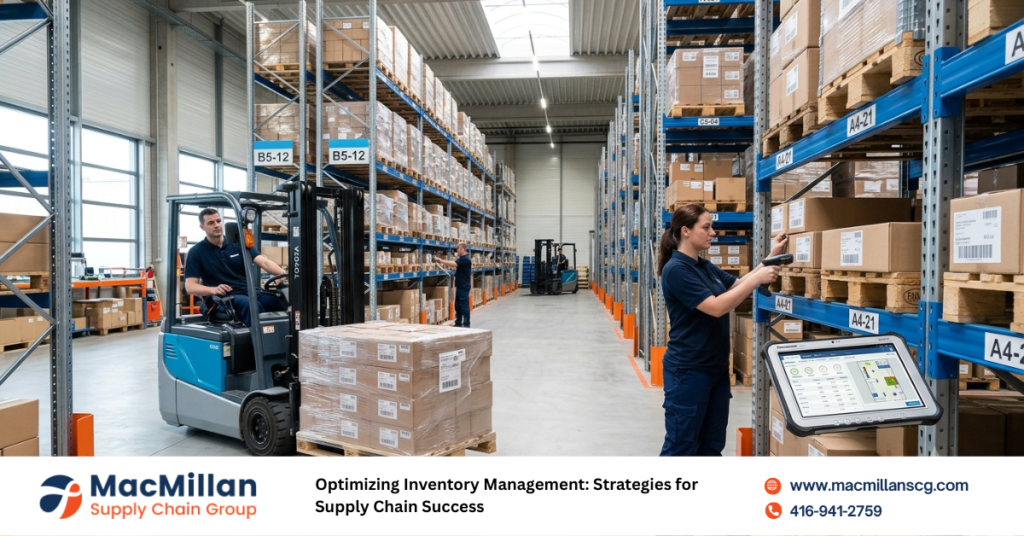
Optimizing Inventory Management: Strategies for Supply Chain Success
A quick summary and overview Effective inventory management is crucial for supply chain success, impacting everything from operational costs to customer satisfaction. This article explores key strategies for optimizing inventory control, including demand forecasting, just-in-time inventory, and leveraging technology. We’ll discuss common challenges businesses face and how to overcome them. Additionally, we’ll highlight how MacMillan Supply Chain Group’s expertise can help companies implement these strategies, improve warehouse efficiency, and achieve better overall supply chain performance. Whether you’re a small business owner or a logistics manager in a large corporation, this guide will provide valuable insights to enhance your inventory management practices. An introduction In today’s fast-paced business environment, efficient inventory management is more critical than ever. It’s the backbone of a well-functioning supply chain, directly influencing a company’s bottom line and customer satisfaction levels. However, striking the perfect balance between having enough stock to meet demand and avoiding excess inventory is a complex challenge. This article delves into the world of inventory management, exploring strategies that can help businesses of all sizes optimize their stock control processes. From leveraging cutting-edge technology to implementing tried-and-true methodologies, we’ll cover a range of approaches to help you streamline your inventory management. Moreover, we’ll discuss how partnering with a third-party logistics provider like MacMillan Supply Chain Group can provide the expertise and resources needed to take your inventory management to the next level. Understanding Demand Forecasting Demand forecasting is a crucial component of effective inventory management. It involves predicting future customer demand for products or services, allowing businesses to maintain optimal inventory levels. Accurate forecasting helps prevent stockouts and overstock situations, both of which can be costly. To implement effective demand forecasting: Analyze historical data: Look at past sales trends, seasonality, and external factors that influenced demand. Utilize statistical models: Employ time series analysis, regression models, or machine learning algorithms to predict future demand. Consider market trends: Stay informed about industry developments, consumer behavior changes, and economic factors that could impact demand. Incorporate real-time data: Use point-of-sale systems and inventory management software to capture and analyze current sales data. Collaborate with suppliers and customers: Share information to improve forecast accuracy and align inventory levels across the supply chain. Regularly review and adjust forecasts: Monitor the accuracy of your predictions and refine your methods accordingly. By mastering demand forecasting, businesses can optimize their inventory levels, reduce carrying costs, and improve customer satisfaction through better product availability. MacMillan Supply Chain Group offers advanced forecasting tools and expertise to help companies implement robust demand prediction systems, ensuring they stay ahead of market fluctuations and customer needs. Implementing Just-in-Time (JIT) Inventory Just-in-Time (JIT) inventory is a strategy that aims to reduce inventory holding costs by receiving goods only as they are needed in the production process. This approach can significantly improve efficiency and reduce waste in the supply chain. Key aspects of implementing JIT inventory include: Strong supplier relationships: Develop partnerships with reliable suppliers who can deliver quality products on short notice. Efficient communication systems: Implement real-time information sharing between all parts of the supply chain to coordinate deliveries precisely. Streamlined production processes: Optimize manufacturing or assembly lines to reduce lead times and increase flexibility. Accurate demand forecasting: Use robust forecasting methods to predict inventory needs with precision. Continuous monitoring and adjustment: Regularly assess the effectiveness of the JIT system and make necessary adjustments. Risk management: Develop contingency plans for potential supply disruptions or unexpected demand spikes. While JIT inventory can lead to significant cost savings and efficiency improvements, it requires careful planning and execution. The strategy may not be suitable for all businesses or product lines, particularly those with highly unpredictable demand or long lead times. MacMillan Supply Chain Group can help businesses assess whether JIT inventory is right for them and assist in implementing the strategy effectively. Our expertise in supply chain optimization can help you balance the benefits of reduced inventory costs with the need for supply chain resilience. Leveraging Technology for Inventory Management In today’s digital age, technology plays a crucial role in optimizing inventory management. Advanced software solutions and hardware can significantly improve accuracy, efficiency, and visibility across the supply chain. Key technologies for inventory management include: Inventory Management Software: Centralized systems that track stock levels, automate reordering, and provide real-time visibility. Warehouse Management Systems (WMS): Software that optimizes warehouse operations, including picking, packing, and shipping processes. RFID and Barcode Systems: Technologies that enable accurate and efficient tracking of inventory items throughout the supply chain. Internet of Things (IoT) Sensors: Devices that monitor inventory conditions (e.g., temperature, humidity) and provide real-time data. Artificial Intelligence and Machine Learning: Advanced algorithms that improve demand forecasting and optimize inventory levels. Cloud-Based Solutions: Platforms that allow for real-time data access and collaboration across multiple locations and stakeholders. Implementing these technologies can lead to significant improvements in inventory accuracy, reduced carrying costs, and enhanced customer satisfaction. However, choosing the right technology solutions and integrating them effectively can be challenging. MacMillan Supply Chain Group offers expertise in selecting and implementing the most suitable technology solutions for your specific inventory management needs. Our team can help you navigate the complex landscape of inventory management technology and ensure seamless integration with your existing systems. Optimizing Warehouse Layout and Processes An efficient warehouse layout and well-designed processes are fundamental to effective inventory management. Optimizing these elements can lead to improved productivity, reduced errors, and faster order fulfillment. Key strategies for warehouse optimization include: Strategic product placement: Arrange items based on popularity, size, and picking frequency to minimize travel time and improve efficiency. Implement zone picking: Divide the warehouse into zones to reduce congestion and improve pick accuracy. Utilize vertical space: Make use of high shelving and mezzanines to maximize storage capacity. Optimize aisle width: Balance the need for equipment access with space utilization. Implement cross-docking: When possible, move products directly from receiving to shipping to reduce handling and storage time. Use lean principles: Apply concepts like 5S (Sort, Set in order, Shine, Standardize, Sustain) to improve organization and efficiency. Continuous improvement: Regularly analyze warehouse performance and seek feedback from staff to identify areas for improvement. Effective warehouse layout and process optimization require a deep understanding